Laos to launch fast-track immigration service for China soon
InternationalOct 24. 2020Wattay International Airport in Vientiane is a popular entry point to the country. Laos expects to implement a fast-track immigration service with China next week.
By Souksakhone Vaenkeo Vientiane Times/ANN
Laos is set to begin a fast-track immigration service next week that will allow Chinese nationals to cross the border more easily with shorter quarantine time amid the travel restrictions in place to prevent the spread of Covid-19.
Several brand-new measures are expected to be employed to facilitate travel for Chinese nationals while ensuring that the coronavirus is kept in check, Vice Chairman of the National Taskforce for Covid-19 Prevention and Control, Dr Phouthone Meuangpak, said on Wednesday.
Incomers are expected to spend a shorter time in quarantine and will be allowed to quarantine at home instead of undergoing the normal 14-day compulsory quarantine at government-designated centres or hotels.
The required quarantine period is still under discussion and the taskforce will meet for further talks in the coming days.
Authorities are also considering the use of electronic devices that would monitor incomers around the clock about their whereabouts, said Dr Phouthone, who is Deputy Minister of Health.
“One option is that they (new arrivals) quarantine at home and take their temperature every morning and evening,” he told a press conference.
Prior to entering Laos, incomers are required to be tested for Covid-19 and those with negative results (provided within 72 hours before their departure) are eligible to enter the country. Upon their arrival, travellers are required to have another test.
“If the virus is not detected, people can quarantine at home,” the deputy minister said, adding that a shorter quarantine period would mean that new arrivals could begin work sooner.
In the future, this policy will also apply to citizens of countries with no recent outbreak of Covid-19, he added.
The taskforce is currently working with the World Health Organisation (WHO) to identify countries that have no community or cluster outbreaks.
“If we can identify the countries that have no community outbreak, then we can also initiate the fast-track immigration system for their nationals,” Dr Phouthone said, adding that this would only be set in motion following a bilateral agreement between both countries involved.
Authorities are studying the possibility of a shorter quarantine period in line with WHO’s guidance.
Some countries have reduced the quarantine time from 14 to 10 days, and some have cut it to seven days.
The taskforce will meet in coming days to review and revise the current virus prevention measures before making any changes in November. The government updates the measures every month based on the situation surrounding the pandemic.
“Anyway, we will not take any risks,” Dr Phouthone said.
He addressed the press conference to inform reporters about the latest confirmed case of Covid-19 in Laos, after a man returning from studies in Russia tested positive for the virus on October 20.
Asked if Laos would tighten up the measures the government relaxed last month given this latest case, Dr Phouthone said this would be decided during upcoming talks.
He added that the government’s intention was to re-open the country to ease the impact on the economy, while ensuring the virus was kept at bay.
By Nina A. Loasana and Dian Septiari The Jakarta Post/ANN
United States Secretary of State Mike Pompeo is scheduled to visit Indonesia next week, with an itinerary that includes a bilateral meeting and attending an event held by an Islamic youth group, Foreign Minister Retno LP Marsudi has said.
“We have continued to discuss the preparations, including during my meeting [on Wednesday] with the new US ambassador to Indonesia, Sung Yong Kim,” Retno told journalists on Thursday.
In addition to attending bilateral meetings, Pompeo is set to attend a dialogue on religion and civilization organized by GP Ansor, the youth wing of Indonesia’s largest Islamic organization Nahdlatul Ulama (NU), she added.
“The commitment to increase our partnership with the US is reflected through the intensive visits from officials of both countries even amid the pandemic,” she said. Pompeo’s expected trip to Jakarta comes following Defense Minister Prabowo Subianto’s visit to Washington, DC, for a meeting with US Defense Secretary Mark Esper last week.
In September, US Acting Under Secretary of Defense for Policy James H. Anderson also visited Indonesia and met with Retno and Prabowo.
“The delegations from the US International Development Finance Corporation (DFC) will also visit Indonesia this week,” Retno said.
The US and Indonesia have agreed to further tighten defense and maritime security cooperation between the two countries following a meeting between Prabowo and Esper, during which they discussed regional security, bilateral defense priorities and defense acquisitions, the US Department of Defense reported in a statement issued on Oct. 16.
Retno expressed hope that Pompeo’s visit would strengthen the bilateral ties between Indonesia and the US. “The US is one of Indonesia’s important partners. We hope to continuously build a strong and beneficial partnership with the US,” she said.
InternationalOct 24. 2020Gino Benford, 7, from Johnstown, Pa., attends a Trump rally in the Villages, Fla. Both campaigns are planning to make their final pitches in Florida and other swing states in the coming days. MUST CREDIT: Photo by Evelyn Hockstein for The Washington Post
By The Washington Post · Annie Linskey, Philip Rucker, Sean Sullivan · NATIONAL, POLITICS WASHINGTON – An upbeat President Donald Trump moved swiftly Friday to capitalize on what his campaign saw as a well-executed debate performance, cutting an ad that includes Biden stumbling over energy policy, touting a record day of digital fundraising and considering adding events to his schedule in the campaign’s final days.
“I thought I did great,” Trump told reporters in the Oval Office.
Joe Biden and his allies took a different tack, seeking to refocus the conversation on the president’s handling of the coronavirus pandemic, which the campaign believes is overwhelmingly the most important issue to voters.
In a speech in Wilmington, Del., Biden hardly mentioned the debate and instead talked about Trump’s handling of the contagion, saying, “The president quit on you.”
With their last direct matchup in the rearview mirror and the scheduled events of the campaign now over, both teams plunged into a final, unscripted stretch, with fewer opportunities to make a fresh argument to the American people – or to stumble.
Trump hopes that holding several massive rallies over the next few days can help him drive home the themes from the debate, in which he used unverified news reports to cast Biden as corrupt, said the former vice president has little to show for his five decades in Washington and sought to paint Biden as a big-government liberal.
But in a contest that has remained remarkably stable, the president faces challenges to any effort to reset the race with 10 days to go. Millions of voters have already cast ballots, and few remain undecided. The Trump campaign has less money to spend than Biden’s, and coronavirus cases are spiking in many places, underlining the Democratic message.
Still, Trump’s camp worked Friday to amplify Biden’s inartful response during an exchange on energy policy, when the former vice president said on the debate stage that he would “transition” away from the oil industry.
Jason Miller, a senior strategist on the Trump campaign, called that a “massive stumble” that “probably will put the nail in the coffin for Joe Biden in Pennsylvania,” a state both campaigns view as must-win and where Biden has held a consistent lead.
Trump advisers suggested that the moment could also help them in other industrial Midwestern states, including Michigan, Minnesota, Ohio and Wisconsin.
Biden supporters dismissed the notion that the comment was some kind of game-changer. The Democrat clearly did not mean he would shut down the oil industry in the short term, they said, and in any case the energy industry is already shifting toward renewables on its own.
“Joe Biden is right: We need to transition off of fossil fuels to stop the climate crisis and prevent needless pain and death,” said Evan Weber, political director of the Sunrise Movement, a climate activist group that has sometimes been critical of Biden. “The reality is the oil industry is already bleeding jobs.”
Still, Biden’s team appeared to sense at least a potential danger. The candidate moved quickly to clarify his remarks, telling reporters after the debate that he was referring to ending federal oil subsidies, not the industry itself. On Friday, campaigning in Atlanta, Biden’s running mate, Sen. Kamala Harris of California, fended off questions about his remarks.
“The president likes to put everything out of context,” Harris said. “But let’s be clear: What Joe was talking about was banning subsidies, but he will not ban fracking.”
Some Democrats in oil states distanced themselves from Biden’s comments. “Here’s one of the places Biden and I disagree,” said Rep. Kendra Horn, D-Okla., who is in a tight race. “We must stand up for our oil and gas industry.”
“I disagree with VP Biden’s statement tonight,” tweeted Rep. Xochitl Torres Small, D-N.M. “Energy is part of the backbone of New Mexico’s economy.”
Some Biden allies acknowledged that it wasn’t a good moment. “That was by far the only thing that could be categorized as a slip-up,” said former Pennsylvania governor Ed Rendell.
Other Democrats said the comment would not change how most voters see Biden – or Trump. “We’ve been talking about getting rid of the subsidies around fossil fuel for a long, long time,” said Rep. Tim Ryan, D-Ohio. “Trump is trying to make a little bit more of it than it was.”
Beyond the energy flare-up, Trump conducted himself with more decorum in Thursday’s debate than in the previous faceoff, avoiding some of the interruptions and rancor from that exchange, and he offered sharper attacks on Biden’s long government service than he had in the past.
On Friday the president said he thought that his aggressive posture in the first debate was “more effective in terms of business and life” but that his more sedate performance Thursday was “obviously a more popular way of doing it.”
“You know, I wanted to play by the rules,” Trump said of the second debate. “They felt very strongly about it. It’s two different styles. I’m able to do different styles, you know, if you had to. But this seemed to be much more popular.”
Biden supporters said the president was benefiting from extremely low expectations after his bullying performance in the first debate. “Trump did better than he did last time, but all he had to do is show up and shut his mouth,” Rendell said.
Biden sought to steer the focus back to Trump’s handling of the pandemic, criticizing his suggestion that the country is “rounding the corner” as coronavirus cases spike across the nation.
“If this is success, what’s a failure look like?” Biden said.
The Democrat outlined the steps he would take to combat the crisis, including implementing mask mandates, expanding testing capacity and ensuring that a vaccine, when ready, is distributed fairly.
“Imagine a day in the not-too-distant future when you can enjoy dinner with your friends and your family and maybe even go out to a movie,” Biden said.
Both candidates plan to spend the final days of the campaign making their closing arguments in swing states. Trump will head to his adopted home state of Florida for a series of rallies and to cast his own ballot. In the coming days, he also plans to hold events in North Carolina, Ohio, Wisconsin and New Hampshire.
Biden has scheduled stops over the weekend in Pennsylvania and will appear on an episode of the popular podcast “Pod Save America.” His campaign plans to repeat its longtime message that Trump’s botching of the coronavirus makes him unfit for the White House.
But after weeks of bad news – from troubling polls to money struggles to leadership changes – the Trump camp seized on the debate as a glimmer of hope.
The campaign said Friday that it had raised about $26 million via online donations after the debate, the reelection effort’s largest digital fundraising day and a number that eclipsed donations that came in around the previous debate.
The infusion comes at a critical time. This week Trump was forced to cancel $24.6 million worth of ad buys in 10 states, pulling the most money out of TV in Florida and Ohio – two must-win states – and yanking some ad reservations in Pennsylvania, according to Advertising Analytics, which tracks spending on television spots.
Biden, who has outraised Trump in the past few months, has added $16 million to his television budget for the final days of the campaign, according to the firm. The biggest chunks are going to Florida, where his campaign is deploying former president Barack Obama over the weekend, and Pennsylvania.
There’s also a stark difference in ad buys that are already slotted for the next two weeks. Biden has paid for ads worth $43.6 million, while Trump is at $12.4 million, meaning he will have a harder time projecting his message on the airwaves.
The campaign’s basic dynamic, Biden suggested, is far more important than Trump moderately restraining himself in a single debate.
“A slight change of tone from the president for one night doesn’t cover up the lies he told,” Biden tweeted. “It doesn’t change the fact that over 220,000 Americans have died from COVID-19 on his watch. We can’t take another four years of Donald Trump’s failed leadership.”
Spin, hyperbole and deception: How Trump claimed credit for an Obama veterans achievement
InternationalOct 24. 2020Democratic presidential nominee Joe Biden, vice presidential nominee Kamala Harris (center) and Cindy McCain pay respects to the service of American Indian veterans at the Heard Museum in Phoenix, Ariz., on Oct. 8, 2020. MUST CREDIT: Washington Post photo by Demetrius Freeman
By The Washington Post · Ashley Parker · NATIONAL, HEALTH, POLITICS, NATIONAL-SECURITY WASHINGTON – The first time President Donald Trump claimed false credit for the Veterans Access, Choice and Accountability Act – which President Barack Obama signed into law in 2014 – was on June 6, 2018. That day, as Trump signed the Mission Act, a modest update to the bipartisan VA Choice legislation, he seemed to conflate the two.
“So it’s now my great honor to sign the VA Mission Act, or as we all know it, the Choice Act, and to make Veterans Choice the permanent law of our great country,” the president said, standing in the Rose Garden. “And nobody deserves it more than our veterans.”
In the coming weeks, Trump began systematically erasing from the legislation’s history not just Obama but also the late Sen. John McCain, R-Ariz., who not only co-sponsored the VA Choice Act but also was so instrumental in passing the Mission Act that he is one of three senators for whom the act is officially named.
That didn’t stop Trump from falsely claiming – as he did at a tank factory in Lima, Ohio, in March 2019 – that McCain, his frequent political rival, failed to make any progress on the VA Choice Act.
“McCain didn’t get the job done for our great vets and the VA, and they knew it,” Trump said.
More than two years after signing the Mission Act, which made limited changes to the much broader Obama veterans law, Trump has repeated some version of his VA Choice Act mistruth more than 156 times, according to an analysis by The Washington Post’s Fact Checker, eventually claiming full credit for the bill codified by his predecessor.
“We’ve got Choice approved,” Trump told a Fox-affiliate reporter in Michigan in January. “I mean, nobody thought we could possibly get Choice approved. We have Veterans Choice approved.”
And, with that, Trump’s alternative history was complete.
– – –
Nearly four years into the presidency, Trump has made more than 22,000 false or misleading claims, according to The Post’s Fact Checker – falsehoods that go well beyond mere political exaggeration. He has obfuscated, he has deceived, and he has spun. Trump’s mendacity has become a hallmark of his presidency.
The president’s handling of the VA Choice legislation offers a crystalline window into the anatomy of a Trump lie: the initial false claim, the subsequent embellishment and gilding, the incessant repetition and the clear evidence that he knows the truth but chooses to keep telling the falsehood – all enabled by aides either unwilling or unable to rein him in.
“A lot of the problem with the president is he’s just using the wrong words,” said Jeremy Butler, the CEO of Iraq and Afghanistan Veterans of America, a nonpartisan veterans advocacy and support group. “He’s calling it ‘Choice,’ when he means the Mission Act, but to the average listener, the Mission Act doesn’t mean anything, but ‘Choice’ does.”
Butler said Trump’s inaccurate language also undermines his efforts on improving veteran care: “The real question is: Is this legislation working? Is it doing what it needs to be doing? But it’s hard not to get sucked into misstatements and mistruths and half-truths, whether it’s intentional or not.”
Trump has used the VA Choice assertion in part to create a false sense of accomplishment and to elevate himself while diminishing McCain and Obama.
As Trump repeated the mistruth, he grew bolder, claiming falsely that the legislation had, as he said at one 2018 event, “eluded us for 40 years? 50 years?” He also downplayed McCain’s role, using the legislation as a cudgel to attack the former Vietnam prisoner of war and diminish his contributions.
“I disagree with John McCain on the way he handled the vets, because I said, ‘You got to get to Choice,’ ” Trump said as he departed for Marine One in May 2019. “He was never able to get Choice. I got Choice.”
His rhetoric also had the benefit of minimizing the role of Sen. Bernie Sanders, I-Vt., a co-sponsor of VA Choice with McCain and a candidate for the Democratic presidential nomination in 2016 and 2020.
Research shows that Trump’s repetition of a false claim may help cement it as appearing to be true, at least to the casual observer, said Daniel Effron, a professor of organizational behavior at London Business School who studies the psychology of lies.
“If you repeatedly hear the same false claim and you don’t know whether it’s true or not, you might guess that it’s true,” Effron said. “If you tell people the same falsehood a number of times, people will start to believe it.”
TJ Ducklo, a spokesman for former vice president Joe Biden’s presidential campaign, said Trump’s deception on VA Choice is indicative of the president’s problematic behavior more generally.
“All he cares about is his own political future,” Ducklo said. “Donald Trump doesn’t actually care about veterans and military families – he uses VA Choice as a political talking point to help himself.”
– – –
White House officials and allies of the president say that when Trump talks about VA Choice, he is not actually referring to the bill Obama signed but to the general concept of providing veterans with more choice when it comes to their health care – not unlike school choice.
The VA Choice bill largely sprang up in response to a massive Veterans Affairs scandal in 2014, in which scheduling staff at VA hospitals across the country had been instructed to falsify their waiting lists to cover up the long waits for even basic care. The problem was especially pronounced at one VA medical center in Phoenix. According to an interim independent report by VA’s inspector general, officials at the Phoenix hospital falsified records, and veterans waited 115 days on average for an initial primary care appointment. Some died while waiting.
Most stakeholders agree that VA Choice – a bipartisan compromise that expanded veterans’ ability to go to private doctors – was a flawed if well-intentioned program that required an update and expansion at some point. And in June 2018, Trump signed just that in the form of the Mission Act.
The newer legislation makes it easier for veterans to seek private care and offers improvements such as allowing veterans to see non-VA doctors for primary care if their drive to a VA facility is more than 30 minutes, rather than 40 miles, or if their wait for an appointment is more than 20 days, rather than 30. According to estimates from the Congressional Budget Office, an additional 640,000 veterans each year will seek care outside the VA system, and the legislation requires VA to negotiate a contract for veterans to seek care at private walk-in clinics.
White House press secretary Kayleigh McEnany said in a statement that Trump’s improvements to the VA system go well beyond what Obama accomplished during his two terms.
“After finding in 2015 that as many as 307,000 veterans could have died waiting for care on Obama and Biden’s watch, another 2017 VA Inspector General report found that President Obama created ‘several barriers’ to veterans receiving outside care,” McEnany wrote. “President Trump fixed Obama’s broken VA and offered actual, permanent choice to millions of veterans.”
McEnany was citing a statistic that was fact-checked as false when Trump first started using it in 2015. The number is derived from a database that predates the Obama administration, and there is no evidence that so many veterans died waiting for care.
Privately, Trump aides and veterans groups had mixed reactions to the way Trump has talked about the veterans legislation. At least one White House staffer raised the issue several times, said a former administration official, recognizing that, at the very least, Trump’s false claims would cause fact-checking problems for the administration.
But the president and his speechwriters were wedded to the language of “VA Choice,” the language of the Obama-era bill, in part because they believed the public didn’t know what exactly the Mission Act meant and felt “choice” was a more appealing term, according to this official, who spoke on the condition of anonymity to share private discussions.
Others in Trump’s orbit said that using the Obama law’s name accurately conveyed the spirit of both bills and Trump’s ultimate goal – offering veterans more choice and options when it came to their health care.
For some Republicans, Trump’s co-opting of VA Choice was so thorough that they didn’t realize the initial legislation had been signed into law under Obama.
During the Republican National Convention in August, several speakers said, unprompted, they wanted to mention VA Choice in their remarks because they believed it was a “big deal” and an area where Trump had done “a great job,” said one administration official, who spoke on the condition of anonymity to reveal internal discussions.
Trump himself mentioned the topic during his acceptance speech in Charlotte, saying, “We also passed VA Accountability and VA Choice.” The first reference pertains to a 2017 accountability law that made it easier for VA to fire employees for misconduct.
“Our great veterans,” Trump continued, “we’re taking care of our veterans.”
– – –
Butler said he’s not sure why Trump continues to claim credit for VA Choice, but he and his team “learned pretty quickly that it’s not worth the time or effort to focus on that part of the discussion.”
“If you’re going to focus the little bit of time that we get to interact with the VA, or even less time we get to spend with the White House, if we’re going to spend that little bit of time trying to split hairs, trying to say, ‘Well, Obama passed VA Choice, and then you passed the Mission Act,’ you’re really going down a rabbit hole,” Butler said.
If anything frustrates some veterans, Butler added, it is how Trump talks about the importance of respecting and honoring veterans, “but then does seem to have this ongoing personal feud with the memory of Sen. McCain.”
The animosity is so pronounced that, last month, Cindy McCain, the senator’s widow, endorsed Biden – an expression of support that came as Trump was speaking at a rally in Moon Township, Pa., where he again claimed sole credit for the VA Choice legislation shepherded by McCain and passed under Obama.
Robert McDonald, Obama’s VA secretary when he signed VA Choice, said he ultimately only cares that veterans receive the quality medical care they deserve.
“My point of view is simple: I don’t care who gets credit,” said McDonald, a fellow at the George W. Bush Presidential Center and a member of the Biden campaign’s transition team. “Our job was to improve outcomes for veterans. That was our job.”
Others, however, view Trump’s rhetoric as more problematic. Will Goodwin, director of government relations for VoteVets, a liberal political action committee that supports veteran candidates and mobilizes the veteran vote, said he believes the president is “actively lying and doesn’t care” and that such an approach toward veterans issues is emblematic of bigger challenges.
“Delivering for veterans requires constant attention from the White House on both the legislative front and how the department operates, and if the president can’t even remember the name of the largest VA legislation to pass in the last decade, how can he possibly be a competent administrator of the VA?” Goodwin said. “That’s kind of the crux of the problem with this.”
Dan Pfeiffer, who served as a senior adviser to Obama when the VA Choice law was passed, said the sheer pointlessness of the false claim makes it all the more galling. “He could just as easily say, ‘I passed the Mission Act,’ and that would be just as politically beneficial,” he said. “Either he likes lying too much to stop lying, or his staff is too afraid to tell him he’s wrong so he keeps on perpetuating this falsehood.”
Dan Caldwell, a senior adviser for Concerned Veterans for America – a veterans advocacy group that is part of the conservative Koch political network – offered a different perspective, saying that one of Trump’s key 2016 campaign promises was giving veterans more choice, which Trump ultimately delivered.
“As implemented, the Obama administration law didn’t give veterans true choice,” Caldwell said. “The president deserves a lot of credit for making progress on this issue.”
He suggested the current progress on providing veterans with more health-care options is really an outgrowth of an inadvertently “strong synergy” between Trump and John McCain.
“Bizarrely, had you not had Sen. McCain being such a strong advocate for it, and if you had not had President Trump being such a strong advocate for it, you likely would not have the Veterans Choice we’re seeing now,” Caldwell said. “President Trump deserves significant credit for Veterans Choice, and so does Sen. McCain, and it doesn’t make sense to argue over who deserves more credit because without either one, you wouldn’t have the Veterans Choice we have now.”
For all his attempts to usurp credit for VA Choice, Trump continues to trail Biden in most polls when it comes to the military, as well as his overall trustworthiness.
An NBC-Wall Street Journal poll from September found that 47 percent of U.S. adults said Biden would do a better job on supporting and respecting the military and veterans, compared with 42 percent who said Trump would perform better. A July Quinnipiac poll found 51 percent of voters disapproving of how Trump handled the military and 41 percent approving – a low point in his approval rating on the military in the Quinnipiac poll, which had him more evenly divided in early 2019.
A May 2019 Pew Research Center survey found that 42% of Americans trusted Trump “a great deal” or “a fair amount” to make the right decisions about the use of military force, while a 56% majority said they trusted him “not much” or “not at all.” The same Pew survey, however, also found that 58% of veterans said they trusted Trump to make the right decisions about the use of military force.
Meanwhile, voters have penalized Trump for his litany of mistruths. A September CNN poll asked Americans which of the two candidates was more honest and trustworthy: 53 percent named Biden, and 36 percent said Trump. And in an August Fox News poll that asked about Trump’s honesty, 61 percent of registered voters said Trump was not honest and trustworthy, while 36 percent said he was.
– – –
In recent weeks, there have been some efforts to push Trump and his team to modulate their language on VA Choice, even slightly. In response to rigorous fact-checks in the media, aides have at times tweaked the president’s prepared remarks to say “Mission Act” rather than “VA Choice,” a senior administration official said.
Pete Hegseth, a “Fox & Friends” weekend co-host and Army veteran, has pressed the argument on his show and in conversations with Trump that the VA Choice law didn’t offer veterans real choice, but that Trump’s updates to the legislation have done so, according to one person familiar with the private conversations, who spoke on the condition of anonymity to discuss internal deliberations.
In a video Trump shared on Twitter this month, he seemed to echo Hegseth: “For more than 45 years, they were trying to get Choice,” the president said. “Obama gave you a weak version that didn’t work. It was a joke. I gave you the Mission Act, which is phenomenal, and it’s worked out fantastically well.”
Speaking to reporters in early September, the president again criticized McCain but this time was more precise in talking about the veterans legislation.
“The VA is running much better now – and we did with the Mission Act, and the Accountability, and all the things we’ve done for the VA,” Trump said.
Two days later, VA Secretary Robert Wilkie appeared on CNN’s “State of the Union,” where he was pressed by Dana Bash about Trump’s false statements on the topic of VA Choice. “Now, I know President Trump expanded it in 2018,” Bash said, “but why does he insist on repeating that he’s responsible for passing it, when it was President Obama?”
Wilkie called the issue one of “semantics” but also said that the Mission Act ultimately “expands choice to all veterans” – and is catchier to say.
“Choice is much easier to understand than the Mission Act, which was the title that the Congress put on the president’s program, because it’s an acronym that has six or seven different words in it,” Wilkie said. “But what we are talking about is permanent choice, not what the Obama administration, Obama-Biden, foisted on the country.”
Before long, though, Trump resumed falsely boasting that he passed VA Choice. The line has become a staple of recent campaign rallies in front of crowds from Macon, Ga., to Prescott, Ariz.
Speaking in Erie, Pa., two weeks before Election Day, Trump bragged again about the legislation that passed under Obama: “And for our great veterans, we passed VA Choice and VA Accountability,” Trump said.
The falsehood was greeted with cheers from the crowd.
By The Washington Post · Ellen Nakashima · NATIONAL, WORLD, TECHNOLOGY, POLITICS, NATIONAL-SECURITY WASHINGTON – The United States on Friday sanctioned a Russian government lab that built what experts say is potentially the world’s deadliest hacking tool – malware designed to disrupt industrial control safety systems that protect human life.
The Treasury Department’s designation of an institute of the State Research Center of the Russian Federation marks the first time the United States has sanctioned hackers for targeting industrial control systems, analysts said.
“The Russian Government continues to engage in dangerous cyber activities aimed at the United States and our allies,” Treasury Secretary Steven Mnuchin said in a statement. “This Administration will continue to aggressively defend the critical infrastructure of the United States from anyone attempting to disrupt it.”
The lab – the Central Scientific Research Institute of Chemistry and Mechanics in Moscow – created the Triton malware, also known as Trisis and HatMan, used in an attack on a Saudi petrochemical facility in 2017 that resulted in tens of millions of dollars in lost production. Dozens of people could have been killed, but a coding error prevented the malware from working as intended, and a potential catastrophe was averted, experts said.
The lab is believed to have links to the Russian military spy agency the GRU.
The hackers who attacked the Saudi plant also have scanned and probed U.S. energy facilities, as well as oil and gas companies in Europe and the Persian Gulf, experts said. The Saudi plant was identified by E & E News in 2017 as Petro Rabigh.
The malware at Petro Rabigh was found almost by accident, said John Hultquist, senior director of intelligence analysis at the cybersecurity company Mandiant, which was among the firms called in to investigate the incident. The hackers tripped the system, causing the plant to shut down, which led to the cyber investigation, he said.
“This malware is a threat to human life,” Hultquist said. Mandiant in 2018 linked the malware to the Russian lab.
The sanctions are “a very significant move by the U.S. government,” said Robert Lee, a co-founder of Dragos, a cybersecurity firm that, like Mandiant, identified the malware. “It’s a good norm-setting moment. It’s a signal to say, ‘Hands off’ of industrial control equipment.”
The sanctions freeze any assets the institute holds in the United States, and Americans are barred from engaging in transactions with the lab.
It remains unclear why Russia targeted the Saudi plant.
The Treasury Department said in a news release that the use of the Triton malware “against our partners is particularly troubling given the Russian government’s involvement in malicious and dangerous cyber-enabled activities.”
Just this week, the United States unsealed charges against GRU operatives in connection with the NotPetya cyberattack, the costliest cyber intrusion in history, which damaged institutions across the globe. Russian hackers also have targeted the U.S. energy grid, potentially to enable future offensive operations, as well as the Organization for the Prohibition of Chemical Weapons and the World Anti-Doping Agency.
Four years ago, the GRU hacked and leaked Democratic emails, disrupting the presidential election. Russian hackers also probed state and local election systems in 2016, penetrating several, though they did not alter votes or manipulate information.
As Obama stumps for Biden, another chance to vanquish Trump and protect his own legacy
InternationalOct 24. 2020Former President Barack Obama speaks in support of Joe Biden during a drive-in rally in Philadelphia on Wednesday. MUST CREDIT: Washington Post photo by Bonnie Jo Mount
By The Washington Post · David Nakamura, Sean Sullivan · NATIONAL, POLITICS WASHINGTON – In the final weeks of the 2016 campaign, then-president Barack Obama was a ubiquitous presence stumping for Democratic nominee Hillary Clinton, making her case as a worthy successor but also emphasizing that his own legacy was on the ballot.
Obama is back in the role of surrogate-in-chief for Joe Biden with 10 days left in the 2020 cycle, and though his message is not as pointed, the fate of the 44th president’s enduring impact on the nation is again in the balance.
President Donald Trump has systemically sought to dismantle Obama’s policies and degrade his broad popularity, repeatedly leveling false attacks that the previous administration spied on his campaign. Last week, Trump promoted a baseless conspiracy theory that Obama and Biden had faked the killing of Osama bin Laden.
Limited by public safety concerns amid the coronavirus pandemic, Obama had until recently confined his activism to virtual fundraisers and targeted media hits. But he debuted on the campaign trail with a passion this week, delivering a punishing takedown of Trump’s presidency and personal character at a drive-in rally in Philadelphia on Wednesday.
Biden campaign aides said Obama will play a key role until voters go to the polls Nov. 3, with his tour continuing Saturday at a drive-in rally in Miami.
For Biden, the former president’s presence puts the Democratic Party’s most popular figure on the trail to rally key constituencies. Although Biden has made inroads with suburban voters, seniors and other moderates, he has struggled at times to energize young people, African Americans and Latinos.
Obama also feels fewer inhibitions than Biden to impugn Trump with red-meat attacks that appeal to the liberal base, as Biden aims his closing pitch at centrists and swing voters, people familiar with the campaign’s playbook said.
For Obama, another campaign against Trump offers an opportunity to settle the score by helping his former vice president topple him. Biden has pledged to quickly undo many of Trump’s policies and strengthen projects started under Obama, such as the Affordable Care Act, which Trump has sought to undermine.
Rep. Cedric Richmond, D-La., national co-chair of the Biden campaign, said Obama is “reminding Democrats what’s at stake, reminding them of what he and Joe Biden accomplished.”
But he added that Obama’s forcefulness reflects a former president who will not be shy about “getting some things off his chest” about Trump in the waning days of the campaign.
Obama has plenty riding on the outcome. The first installment of his long-awaited autobiography of his White House tenure is set to be published next month, shortly after the election. The results of the 2020 race could go a long way to determine the extent to which his legacy is tied to Trump’s.
Obama aides said it was a mistake to frame his view of the election in such personal terms, suggesting that his urgency was based on a broader fear of what a second Trump term could do to the country’s basic foundations. Obama has pushed back on attempts from Trump to discredit voting by mail and has attempted to tie the mass social justice protests to the election, urging demonstrators to turn their anger and energy into power in the voting booth.
“He’s not focused on legacy. He wants to help make sure we save democracy,” said Eric Schultz, a senior adviser to the former president. “The stakes of this election are historic, given everything that’s on the line.”
The difference this year from 2016, Schultz added, “is that nobody needs to take our word for what a Trump presidency would look like. We are living it every day. We can look back at people’s experiences over the last four years.”
Trump has sought to appeal to younger Black and Latino men, whom his campaign believes could be attracted to the president’s tough talk and some policies he has pursued. At his debate with Biden in Nashville on Thursday, Trump touted his work on criminal justice reform and criticized Biden’s support of a crime bill in the 1990s that established harsh penalties for nonviolent drug crimes, which the former vice president has recently called a mistake.
“Nobody has done more for the Black community than Donald Trump,” the president said, prompting Biden to call him “one of the most racist presidents” in modern U.S. history.
Trump also took broad aim at Obama’s tenure, saying their administration had failed to produce results. “I ran because of Barack Obama, because you did a poor job,” he told Biden.
In a statement this week, Trump campaign communications director Tim Murtaugh suggested that Obama’s decision to wait until late in the Democratic primaries to formally endorse Biden was a sign of lackluster support of his former vice president.
In 2016, Obama bashed Trump in a stump speech that included hits that Trump’s critics still deploy – denouncing him for not releasing his tax records, puncturing his record as a business executive, mocking his Twitter beefs with pop culture figures.
In a speech in Miami five days before that year’s election, Obama took aim at Trump over the unearthed audio recording from a taping of “Access Hollywood” in which he spoke lewdly about assaulting women. “You want a voice who’s bragging about how being famous lets you get away with what would qualify as sexual assault, and calls women pigs, and dogs, and slobs?” Obama asked.
But Obama’s barnstorming of the country that fall often took on the feel of a farewell tour for his own nearly eight years in office – he drew large, adoring crowds and took to casting a Clinton presidency as, effectively, a third term of his own. Imploring African Americans to rally around her, Obama cast it in personal terms, telling the Congressional Black Caucus he would consider it a “personal insult” if they failed to turn out constituents at the polls.
“You want to give me a good send-off?” Obama told the group in September 2016. “Go vote.”
Former Pennsylvania governor Ed Rendell, a Democrat, said he senses a greater urgency among Democrats than four years ago, when Trump carried his state, which had voted for Obama in 2008 and 2012.
“The Obama people had the same problem the Democrats did and that is they were overconfident,” he said.
Despite Obama’s exhortations, turnout among Black voters in 2016 fell for the first time in 20 years, dropping to 59.6% after reaching a record-high 66.6% in 2012, according to a Pew Research Center study.
“No single politician has the ability to fully transfer what they can do when their name is on the ballot to somebody else,” said Brian Fallon, executive director of Demand Justice who worked as a spokesman on Clinton’s campaign.
Fallon called Obama an “extremely gifted communicator” and a major asset for any Democratic campaign. But he emphasized that “endorsements get excess credit when they work out. The idea that he couldn’t deliver Pennsylvania just shows his support is not 100 percent transferrable. That was true for Hillary and it will be true for Biden, too.”
Obama remains broadly popular. An NBC News/Wall Street Journal poll in August found 54% of Americans rated the former president positively and 34% negatively – far better numbers than Trump or Biden.
Aides said the former president has had to reassess the best ways to reach voters this year, given the restrictions imposed by the pandemic. Although Trump is continuing to hold large-scale rallies at airport hangars, Biden and his surrogates, including Obama, have opted for smaller-scale and virtual events.
In 2016, the Clinton campaign asked the Obama team to focus on six swing states – Ohio, Florida, Pennsylvania, North Carolina, Iowa and New Hampshire. But he also traveled to Michigan on the eve of Election Day, a sign that the Clinton team was nervous about Trump’s appeal in the Upper Midwest. Trump swept Michigan, Wisconsin and Pennsylvania en route to his upset victory.
This cycle, Obama has focused on get-out-the-vote efforts among more marginalized communities. He posted a video to social media demonstrating how to vote by mail by filling out his absentee ballot from Chicago on camera.
Four years ago, the night before the election, Obama and Clinton met up in Philadelphia for a mega-rally with Bruce Springsteen. Aides to Obama and Biden declined to disclose plans for the next 10 days, but they emphasized that the threat of the pandemic has made that kind of event unrealistic.
Former first lady Michelle Obama, who delivered an impassioned videotaped endorsement of Biden during the Democratic National Convention in August, has continued to promote him in video messages. But she is not planning the kind of in-person rallies she did in 2016 at the request of the Clinton campaign.
“We always talked in the White House that it’s not about the number or quantity of events,” said Jen Psaki, who served as communications director in the Obama White House. “It’s about the impact of the moment. That’s even more the case with [the virus]. If we were in a different universe where Trump was doing six events a day, maybe former president Obama and Michelle Obama would be doing more. But that’s not what’s happening.”
InternationalOct 23. 2020A user in Osaka edits a news article on a website that features user-generated content. (This photo image has been partially modified. – The Yomiuri Shimbun)
By The Yomiuri Shimbun The Japan News/ANN
The number of incidents of fake news being posted on websites with user-generated content is continuing to increase. Because the revenue of such sites is dependent upon the number of viewers they receive, many of these sites will post information that is either inaccurate or unconfirmed if it means the number of viewers will increase.
Back in July 2017, a man in his 40s, who once was employed part-time, was described on such a website as “an extremely biased person” and “a left-wing activist.” The article also made it seem as though he was urging others to take part in an anti-war demonstration in front of the Diet Building.
In reality, however, the source was a post from a different person on social media. Even though none of the article’s information had been fact-checked, his real name had been posted and he was defamed as someone who “has been unable to get married or become a regular employee mostly because of his eccentric personality and social activism.”
At that time, that particular website was estimated to have gotten as many as 2 million views a month, and the article was quickly spread around on social media. Not only was his home address posted online, but the location of his office was as well, leading to his employer receiving a barrage of emails demanding that he be dismissed. Since this incident, the man has become afraid of being recognized when out on the street and no longer feels safe enough to leave his home except when going to work.
Why was such information about an ordinary man posted on such a website in the first place? Along with that particular article, a video clip of the man making an appearance under his real name on a special TV program on the subject of non-regular employment was also posted. Therefore, there is a possibility that someone who watched the program posted false information with the aim of “flaming” him, or purposefully spreading false or malicious information.
The victim requested that the website operator delete the article, but he said that he received no reply. As a result, in April 2019, the victim, together with four others who were the victims of defamation on the same website, brought a suit before the Tokyo District Court against the operator and other entities for a combined total of ¥16.5 million in damages. Meanwhile, the operator has made clear its intention of fully fighting back against the claim, saying that the article in question “does not constitute defamation.”
■ Operator’s request
“I was asked by the website’s operator to write articles with content that was as extreme as possible,” said a former writer for the website. A few years prior, the writer had undergone a job interview for the website that took place over the phone, lasted only a few minutes and concluded with the writer agreeing to an outsourcing contract with the operator.
The assigned task was to write two articles a day. According to the editing manual used at that time, the amount writers were paid for an article was decided based on the number of times their piece was shared on Facebook. If that number was less than 500, there was no pay. The pay scale increased gradually: If the number of shares surpassed 10,000, writers would be paid between ¥3,000 and ¥6,700. The former writer recalls there also being a topic category specifically for flaming on that particular website.
“I found that my articles became rather extreme the more I tried to gain a higher number of views.”
There has also been an increase in the number of individuals establishing their own websites in a similar style. An Osaka man in his 20s launched his own website around autumn last year, wanting to earn income outside of his regular job and hoping to earn revenue from advertisements. He decides the subject of his articles by watching TV programs, YouTube videos, and browsing social media.
Writing an article only takes a few hours.
“It would be an inefficient use of time to check whether the news is accurate or not. In order to get as many page views as possible, I don’t really have a choice but to include information that may not be true.”
■ Experts caution govt intervention
Misinformation and infringement of copyright related to such websites have long been an issue.
In 2016, IT firm DeNA Co. suspended all 10 of its websites — including those related to medical care — for reasons including misinformation and the use of information without permission. Last month, a website called “Naver Matome,” operated by the LINE group and the subject of a controversy related to the unauthorized use of photographs and videos, was shut down.
This February, an expert panel at the Internal Affairs and Communications Ministry presented measures for dealing with fake news. While cautioning the government over its intervention methods, citing freedom of expression, the panel urged each social media operator to take voluntary preventative action as well.
Singapore private home prices rise by faster 0.8% in Q3 amid Covid-19 recession
InternationalOct 23. 2020Private home prices have edged up 0.1 per cent to date in 2020. ST PHOTO: KUA CHEE SIONG
By Grace Leong The Straits Times/ANN
SINGAPORE – Private home prices in Singapore rose 0.8 per cent in the third quarter from the previous three months, defying a Covid-19 recession, according to final data from the Urban Redevelopment Authority (URA) on Friday (Oct 23).
The 0.8 per cent gain in the third quarter of 2020 was unchanged from URA’s flash estimate released on Oct 1.
It comes after a 0.3 per cent increase in the second quarter of this year and a 1 per cent drop in the first quarter, the first quarterly decline in a year.
This means private home prices have edged up 0.1 per cent to date this year.
The price increase was driven by landed homes and a burst of buying in the city fringes and suburbs after the two-month circuit breaker ended on June 1, said Ms Christine Sun, OrangeTee & Tie’s head of research & consultancy.
“Many long-term investors and wealthy buyers are on the prowl for properties as many are repositioning their wealth from riskier assets,” Ms Sun said.
According to URA’s final data, the total number of residential transactions excluding ECs spiked by 164.5 per cent from 2,664 units in the second quarter to 7,047 units in Q3, she noted.
Developers sold 3,517 units (excluding executive condominums or ECs), up 105 per cent from the 1,713 units taken up in the second quarter. They launched 3,791 units (excluding ECs), compared with 1,852 units in the previous quarter.
Ms Sun noted that: “Investor exuberance for real estate properties seemed to have spilt over from the primary market to the secondary market.”
The resale market registered a steeper quarter-on-quarter increase of 271.6 per cent from 933 units to 3,467 units in Q3. Resale homes also accounted for a bigger proportion of total sales at 49.2 per cent, when compared to 35.0 per cent in the preceding quarter, Ms Sun said.
For the third quarter, prices of non-landed properties rose 0.1 per cent from the previous three months, compared with the 0.4 per cent increase in the previous quarter.
Analysts said that although a Covid-19 recession has hit Singapore, with aviation and tourism worst off, other segments of the economy like technology, precision manufacturing, healthcare and biomed are holding up. Those not affected may still have the confidence to buy, they said.
Further, in the years preceding the pandemic, private home price increases have been somewhat marginal, due largely to the slew of cooling measures. This is unlike the years preceding the global financial crisis, where there was a sharper increase in prices and therefore a sharper correction following the crisis, said analysts.
Giving a breakdown by region, the URA said that prices of non-landed properties in the prime or core central region fell 3.8 per cent in Q3, compared with the 2.7 per cent drop in the previous quarter. Prices of non-landed properties in the city fringe or rest of central region jumped 2.5 per cent, compared with the 1.7 per cent fall in the previous quarter.
Prices in the suburbs or outside central region jumped 1.7 per cent, compared with the 0.1 per cent gain in the previous quarter.
The URA also said that prices of landed properties jumped 3.7 per cent in the third quarter this year, after remaining unchanged in the second quarter.
Unlike prices, rents of private residential properties continued to weaken in the third quarter. Rents dipped 0.5 per cent from the previous three months, easing from a drop of 1.2 per cent in the second quarter.
Just like in the second quarter, developers did not launch any EC units for sale in the third quarter, and sold 164 EC units in the quarter. In comparison, they sold 71 EC units in the previous quarter.
As at the end of Q3, there was a total supply of 50,369 uncompleted private residential units (excluding ECs) in the pipeline with planning approvals, compared with 49,090 units in the previous quarter.
Of this number, 26,483 units or more than half remained unsold as at the end of Q3, compared with the 27,977 units in the previous quarter.
After adding the supply of 4,104 EC units in the pipeline, there were 54,473 units in the pipeline with planning approvals. Of the EC units in the pipeline, 2,244 remain unsold.
In total, 28,727 units with planning approvals (including ECs) remain unsold, down from 29,876 units in the previous quarter.
InternationalOct 23. 2020Delegates pose for a group photo. —VNS Photo
By Viet Nam News/ANN
HÀ NỘI — The international Franconomics forum, a multidisciplinary dialogue on important socio-economic topics of countries in the French-speaking community, kicked off on Thursday in Hà Nội under the theme ‘From Start-up to Smart-up’.
The forum was connected with more than 50 other locations across five continents and served as a platform for delegates to discuss innovative start-up (smart-up) in the Fourth Industrial Revolution, which is a trend in a number of economic sectors around the world.
Delegates to the forum agreed that smart-up not only meant establishing a business which offered new products and services, but also operating the business in a smart way. Smart-ups should create high economic profits with low risks based on the application of information technology combined with modern management methods, along with with digital transformation and the application of new technology.
Using digital transformation, start-ups had a lot of opportunities but also faced challenges. The Fourth Industrial Revolution increased competitiveness inside and outside the country. In that context, how should we help start-ups reduce risks, optimise sources and develop sustainably? How should we promote the growth of a national innovative smart-up system?, Phạm Bảo Sơn, deputy director of the Vietnam National University, Hanoi, asked.
Being one of the leading research and training institutes in technology in Việt Nam, the Vietnam National University, Hanoi always focused on research and training co-operation with localities and enterprises, he said.
Louise Mushikiwabo, secretary general of the International Organisation of La Francophonie (OIF), said the organisation was moving towards digital transformation.
Students in the OIF had been equipped with digital transformation skills as well as knowledge about start-ups to better adapt to the labour market. The OIF would hold more training on digital transformation for the youth and women, especially those living in disadvantaged areas, she said.
Đinh Toàn Thắng, head of the European Department at the Vietnamese Ministry of Foreign Affairs, said since Việt Nam had become an official member of the French-speaking community, the country had affirmed its role as a key member of the community in Asia-Pacific, and actively taken part in the community’s activities. Those contributions had been highly appreciated by other partners inside and outside the community.
“Việt Nam is ready to promote co-operation in the French-speaking community in sectors that Việt Nam has experience in such as economic development, agriculture, education, health, information technology and communications,” he said.
Việt Nam attached importance to its partnership with the French-speaking community and was making practical contributions to the community’s summit in Tunisia next year, he added.
Franconomics has been co-organised by the International Francophone Institute (IFI), the Organisation Internationale de la Francophonie (OIF) and the Vietnam National University, Hanoi, and will wrap up on Friday.
Other activities include the second national anthem singing festival, a pitching day for start-ups, and a launch ceremony for Hưng Yên Digital Museum, as well as introductions to other digitalisation projects.
Franconomics is a multidisciplinary dialogue on important socio-economic topics for scientists, businesses, investors, and policymakers both inside and outside the French-speaking community with its 88 members and observers.
Each year it is organised in a different location in Việt Nam to create opportunities for connecting and promoting co-operation, accessing and supplying technology, creating a high-quality workforce, and expanding the Partner Network for Development. — VNS
Prime Minister Chung Sye-kyun on Friday called for a thorough probe into the deaths of people after being vaccinated against seasonal influenza.
As of midnight Thursday, 30 people have died after inoculation, but health authorities found no direct links between the vaccine and fatalities.
“I offer my deep condolences to the bereaved families,” Chung said at a meeting of the Central Disaster and Safety Countermeasure Headquarters.
“The authorities should thoroughly investigate the causal relationship between vaccinations and the deaths, and make public the development transparently.”
He noted the public remains nervous despite experts’ denial of the connection between the deaths and flu shots.
“I call on the Korea Disease Control and Prevention Agency (KDCA) to closely consult experts and do its best to take sufficient measures and explain swiftly so that people can receive vaccinations without anxiety,” he added.
On Thursday, the government affirmed the immunization program will continue despite suspected deaths.
The country has been pushing for the free flu shot scheme for some 19 million people, including teenagers and senior citizens, to curb the possible “twindemic.”
Fears over flu vaccines first emerged last Friday after a 17-year-old boy in the western port city of Incheon died two days after receiving a flu shot.
Similar fatalities have been reported, mostly among senior citizens with underlying diseases. (Yonhap)

 Wattay International Airport in Vientiane is a popular entry point to the country. Laos expects to implement a fast-track immigration service with China next week.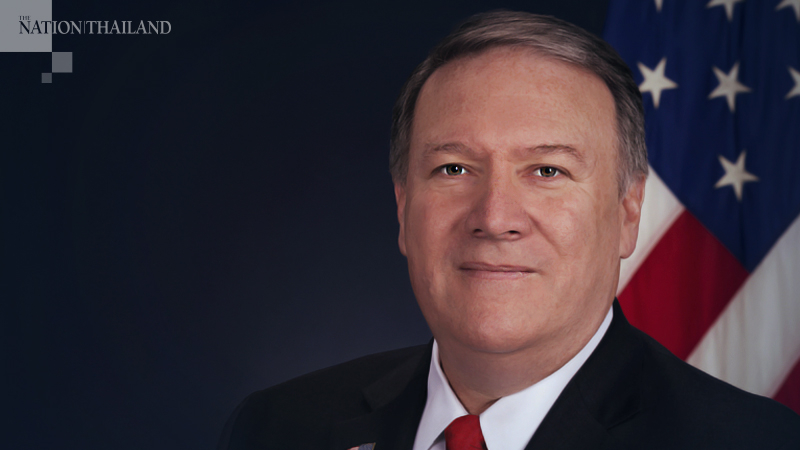
 Gino Benford, 7, from Johnstown, Pa., attends a Trump rally in the Villages, Fla. Both campaigns are planning to make their final pitches in Florida and other swing states in the coming days. MUST CREDIT: Photo by Evelyn Hockstein for The Washington Post
  Democratic presidential nominee Joe Biden, vice presidential nominee Kamala Harris (center) and Cindy McCain pay respects to the service of American Indian veterans at the Heard Museum in Phoenix, Ariz., on Oct. 8, 2020. MUST CREDIT: Washington Post photo by Demetrius Freeman
 Former President Barack Obama speaks in support of Joe Biden during a drive-in rally in Philadelphia on Wednesday. MUST CREDIT: Washington Post photo by Bonnie Jo Mount
  A user in Osaka edits a news article on a website that features user-generated content. (This photo image has been partially modified. – The Yomiuri Shimbun)
  Private home prices have edged up 0.1 per cent to date in 2020. ST PHOTO: KUA CHEE SIONG
  Delegates pose for a group photo. —VNS Photo
  (Yonhap)
