LG Electronics’ new wide-screen monitors pitched at Apple users

ศาสตร์เกษตรดินปุ๋ย : ขอบคุณแหล่งข้อมูล : หนังสือพิมพ์ The Nation

https://www.nationthailand.com/edandtech/30374844

LG Electronics’ new wide-screen monitors pitched at Apple users

Aug 16. 2019
By The Nation

616 Viewed

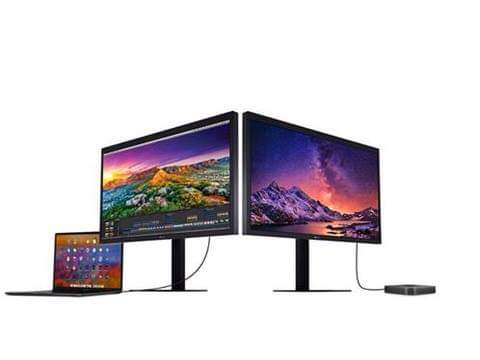
LG Electronics (Thailand) has introduced a 27-inch UltraFineTM 5K Display, which, along with the company’s 24-inch UltraFineTM 4K Display, gives consumers two quality monitors that are designed for the latest Apple products.

LG’s UltraFine displays “deliver amazing image quality when connected to a Mac or iPad Pro”, the company said. Designed to enhance productivity, the LG UltraFineTM 5K delivers powerful all-around performance and the latest connectivity options. With Thunderbolt 3 and USB Type-C support, the monitor works with the latest Mac notebooks and desktops, as well as iPad Pro. LG’s 5K monitor allows users to configure a versatile Mac workstation with video, audio and data transfer through a single cable. And thanks to 94 watts of power, the UltraFineTM 5K can also charge any USB-C compliant host such as Mac or iPad.

Designed to meet the needs of creative designers, photographers and videographers, the LG UltraFineTM 5K is “a superior wide-screen solution that delivers precise detail and colour”, the company said. It boasts a P3 wide colour gamut and 500-nit brightness for optimised images, with no calibration required. The monitor’s 218 pixels per inch (PPI) result in more than 14.7 million pixels that render lifelike images and razor-sharp text for viewing multiple windows and tools simultaneously. The built-in camera, microphone, and stereo speakers provide a rich multimedia experience.

LG UltraFineTM 5K is designed for next-level convenience, with adjustable height and tilt for user comfort. Compatibility with macOS Mojave 10.14.6 and iOS 12.4 enables users to control brightness and volume directly from the Touch Bar or keyboard on MacBook Pro.

“The first LG UltraFineTM series was well received by creative professionals for its exceptional performance and convenience,” said Jang Ik-hwan, head of LG’s IT business division. “Ease of use, seamless integration, and stunning screen quality make LG UltraFineTM monitors a great choice for Apple users.”

N-Squared eCommerce to add Indonesia and Vietnam to online sales reach

ศาสตร์เกษตรดินปุ๋ย : ขอบคุณแหล่งข้อมูล : หนังสือพิมพ์ The Nation

https://www.nationthailand.com/edandtech/30374829

N-Squared eCommerce to add Indonesia and Vietnam to online sales reach

Aug 15. 2019
Nuttapon Boonpinon, managing partner of N-Squared eCommerce, says the company is linking with local partners for its expansion plans in the region.

Nuttapon Boonpinon, managing partner of N-Squared eCommerce, says the company is linking with local partners for its expansion plans in the region.
By Jirapan Boonnoon
The Nation

130 Viewed

Online distributor N-Squared eCommerce plans to expand its business base to Indonesia and Vietnam in the fourth quarter of this year.

The company also expects to generate revenue growth of over 100 per cent by the end of this year and take in Bt2.5 billion next year.

Nuttapon Boonpinon, managing partner at N-Squared eCommerce, said that the expansion plans for Indonesia and Vietnam would build on its operations in Malaysia, Singapore, the Philippines and Thailand.

“I think that Indonesia and Vietnam have high potential for growth for the running of an  online business. The firm therefore will join hands with local partners to develop online shopping to support the market,” said Nuttapon.

He said that the firm now distributes products from more than 60 brands with more than 20,000 items. Around 30 per cent of the product items are from its own brand, with the rest from partners brands such as Tefal, Kleenex and Huawei. The firm expects that next year it will have over 100 partner brands. The firm now has more than 1 million shoppers using its  HomeHuk platform.

The firm offers products to the market via https://nsquared.asia under four main categories:  home and living, home appliances, health and beauty, and others such as sports and food and beverage products.

“The e-commerce market in Asean still has a significant opportunity for growth. Currently, e-commerce sales account for only 3 per cent of the overall retail market, compared to China with 30 per cent and the USA at around 10 per cent,” said Nuttapon.

To support e-commerce market, the firm has also developed proprietary tools and technologies made for the Asean market, including having an omni-channel, enterprise resource planning (ERP) system that streamlines order fulfilment, stock management, and customer database across multiple platform. The firm also uses Big Data to understand consumers’ behaviour.

He said that the firm by the end of this year expects to generate revenue of around Bt1.4 billion, marking growth of around 100 per cent from last year. In 2020, the firm expects to reach revenue of Bt2.5 billion.

Digital content festival seen spurring regional goals

ศาสตร์เกษตรดินปุ๋ย : ขอบคุณแหล่งข้อมูล : หนังสือพิมพ์ The Nation

https://www.nationthailand.com/edandtech/30374770

Digital content festival seen spurring regional goals

Aug 14. 2019
By JIRAPAN BOONNOON
THE NATION

332 Viewed

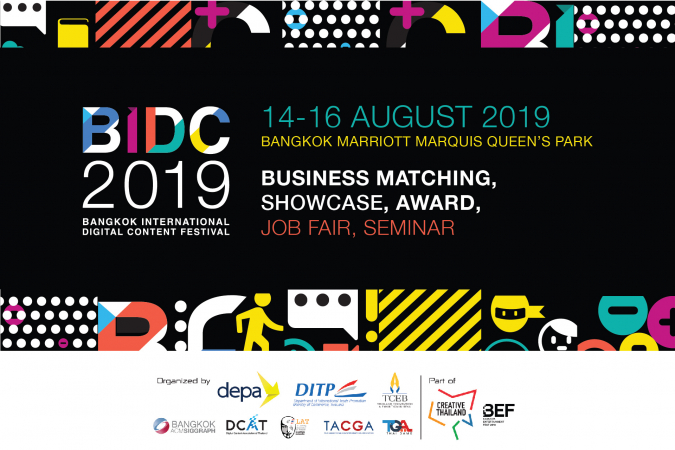
The Bangkok International Digital Content Festival 2019 (BIDC) is aimed at furthering the push for Thailand to become an Asian digital content hub.

Chakarin Komolsiri, assistant director general of the Department of International Trade Promotion under the Ministry of Commerce (DITP) said the event – also known as the 6th BIDC 2019 – comes under the concept of “Digital Co-creation”.

It is intended to create opportunities for entrepreneurs to meet with local and international business partners as well. The event will showcase the readiness of Thai entrepreneurs, Chakarin said.

“The BIDC will highlight capability, promote quality development of digital entrepreneurs, stimulate economic growth in line with the government policy Thailand 4.0, and create opportunities in the business of digital content industries including animation, games, characters, e-learning, computer graphics, virtual reality, including new technologies and education,” Chakarin said.

Chakarin said business matching will be a highlight of the BIDC 2019, opening an opportunity for new entrepreneurs to partner with around 40 international companies from 12 countries, including Japan, South Korea, China, Singapore, India, Indonesia, Taiwan, Finland, Poland, Spain, Hong Kong and Malaysia. These companies includes Walt Disney Company, CCTV Animation of China, Bandai Namco Studios, and Grasshopper Manufacturing.

“The business matching serves as a key mechanism to fuel growth on a continual and sustainable basis. BIDC 2018 recorded many successful business matches with a business value of Bt850 million. BIDC 2019 is expected to support growth in the overall digital content business.” Chakarin said.

He said that the department has collaborated with the private sector to create a digital content ecosystem and drive digital content in Thai market. “The department also has a role as a facilitator to drive the digital content industry in the country via business matching with both local digital content creators and international business. It also creates activities to support digital content industry, both in the domestic and international sphere, in terms of co-production. It now promotes co-production in Taiwan, Japan and South Korea,” Chakarin said.

He said that Thailand has more than 140,000 digital content creators and over 30 courses related digital content with around 3,000 students who graduated with digital content skills each year.

“We have a strategy to drive digital content by developing a digital content ecosystem, starting with leveraging courseware, developing students, business matching and conducting activities to support digital content supply chain,” said Chakarin.

He added that for the past five years, the DITP has organised business matching activities. “Thailand’s readiness to align with the government’s Creative Economy policy and its goals toward Thailand 4.0 have helped the process,” said Chakarin.

“Thailand also has a digital content hub both in the areas of animation and online games in the Asean region. The digital content industry in Thailand last year was valued at Bt30 billion and this year is expected to have a value of Bt33 billion, with growth from last year of around 10 per cent.”

Nop Thamvanich, a representative from the Thai Digital Content Industry Association, as the industry representative, said: “The BIDC 2019 represents a synergistic collaboration with all sectors, both government and industry.”

Thai Digital Content Industry Association has supported members by being an intermediary between the government and entrepreneurs in linking both parts to drive the Thai digital content industry to grow sustainably.

For example, businesses can incorporate futuristic AI technology and virtual reality, which will mark innovations in many industries.

According to DEPA, the digital content industry in Thailand this year will be valued at Bt29.358 billion, beating the Bt27.005 billion posted in 2018. The animation industry is forecast to grow by 9 per cent in 2019, while the games sector is also forecast to grow by the same amount.

In addition, Issari Damrongpitakkul, head of Stickers Line business, said this year is the first year that Line has become a part of the Bangkok International Digital Content Festival 2019. “To drive and strengthen the industry, Line Creators Market team has invited speakers who can share experiences.”

Huawei predicts rapid 5G rollout, home robot adoption, “super sight”, increasing augmented creativit

ศาสตร์เกษตรดินปุ๋ย : ขอบคุณแหล่งข้อมูล : หนังสือพิมพ์ The Nation

https://www.nationthailand.com/edandtech/30374696

Huawei predicts rapid 5G rollout, home robot adoption, “super sight”, increasing augmented creativit

Aug 13. 2019
By The Nation

272 Viewed

Drawing from its own quantitative data and real-world cases of how intelligent technology is permeating every industry, Huawei launched its Global Industry Vision (GIV) report on Tuesday, identifying 10 megatrends currently shaping how we live and work.

GIV also predicts technology trends up until 2025, including 5G coverage, artificial intelligence deployment, home robot adoption, and a big increase in smart assistant use.

Here are 10 key GIV predictions for 2025:

1. Living with bots: Advances in material science, perceptual AI, and network technologies are powering the uptake of robotics in a variety of home and personal scenarios. GIV predicts a 14 per cent global penetration rate of home robots.

2. Super sight: The convergence of 5G, VR/AR, machine learning, and other emerging technologies will let us see beyond distance, distortion, surface, and history, opening up new vistas for people, business, and culture. GIV predicts that the percentage of companies using AR/VR will increase to 10 per cent.

3. Zero search: As data-driven and sensor-equipped appliances and devices begin anticipating our needs, information will find us. Future searches will be button-free, personal social networks will be created effortlessly, and industry will benefit from “zero-search maintenance”. GIV predicts that 90 per cent of smart device owners will use intelligent personal assistants.

4. Tailored streets: Intelligent transport systems will connect people, vehicles, and infrastructure, creating zero congestion, rapid emergency response, and other functions that will make life smoother. GIV predicts that 15 per cent of vehicles will have “Cellular Vehicle-to-Everything” technology.

5. Working with bots: Already transforming many industries, smart automation will take on more hazardous, repetitive and high-precision tasks – a boon for safety and productivity. GIV predicts there will be 103 robots in industry for every 10,000 employees.

6. Augmented creativity: Cloud AI will cut the cost and barrier of entry to scientific experimentation, innovation, and art, opening up a goldmine of creative potential that’s available to all. GIV predicts that 97 per cent of large companies will have deployed AI by 2025.

7. Frictionless communication: AI and big data analytics will create seamless communication between companies and customers and break down language barriers. Accuracy, understanding and trust will underpin tomorrow’s communications. GIV predicts that enterprises will fully use  86 per cent of the data that they produce.

8. Symbiotic economy: Companies across the planet are adopting digital tech and smart applications on unified access platforms. This means greater collaboration, resource-sharing, stronger global ecosystems, and higher productivity. GIV predicts that every company everywhere will be using cloud technology and 85 per cent of business applications will be cloud-based.

9. 5G’s rapid rollout: 5G is here and it’s landing far faster than any previous wireless generation – the potential for individuals, businesses, and society is enormous. GIV predicts that 58 per cent of the world’s population will have access to 5G.

10. Global digital governance: Advancements in digital tech must be balanced by shared data standards and principles for data use. GIV predicts that the annual volume of global data will reach 180 ZB (1 ZB = 1 trillion GB).

“Human exploration will never stop,” said Kevin Zhang, CMO of Huawei ICT Infrastructure. “We should set our sights beyond what we see now and look to the future, shifting from innovation to invention. We’re seeing rapid changes to life, work, and society as every industry adopts AI, 5G, cloud computing, and other emerging technologies. Huawei is committed to building digital platforms, user experiences, and intelligent technology that power ubiquitous connectivity in every scenario. It’s our mission to offer every person, home and organisation an intelligent future and the benefits of new opportunities for growth,” he added.

Samsung partners with Xiaomi on new hi-def image sensor

ศาสตร์เกษตรดินปุ๋ย : ขอบคุณแหล่งข้อมูล : หนังสือพิมพ์ The Nation

https://www.nationthailand.com/edandtech/30374688

Samsung partners with Xiaomi on new hi-def image sensor

Aug 13. 2019
By The Korea Herald

262 Viewed

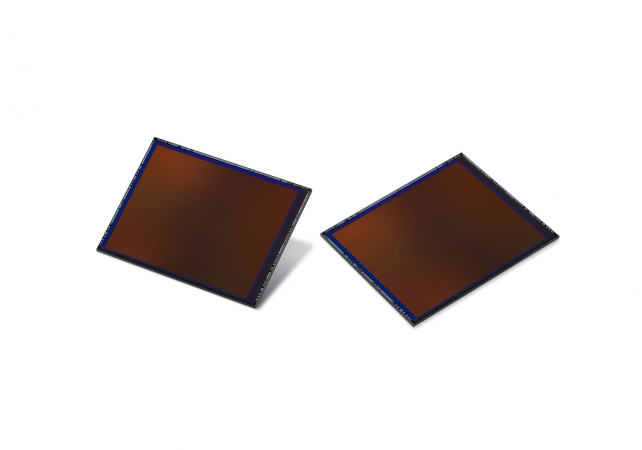
Samsung Electronics said Monday it has developed the highest definition image sensor for mobile devices in collaboration with Chinese smartphone vendor Xiaomi.

The South Korean tech giant revealed it will start production of the industry’s first mobile image sensor with over 100 million pixels, dubbed as ISOCELL Bright HMX.

The sensor boasts 108 megapixels, which enable mobile devices to offer a resolution equivalent to that of a high-end DSLR camera, according to the company.

Samsung has been working closely with Xiaomi for its development, the company said indicating that the partnership is expected to continue.

Image sensors are a part of Samsung’s logic chip business. The company has been accelerating efforts to catch up with Japanese rival Sony in the sector.

“We are very pleased that the picture resolutions previously available only in a few top-tier DSLR cameras can now be designed into smartphones,” said Lin Bin, co-founder and president of Xiaomi. “As we continue our partnership, we anticipate bringing not only new mobile camera experiences but also a platform through which our users can create unique contents.”

The HMX sensor, in particular, can absorb more light in low-lit settings owing to its pixel-merging Tetracell technology to produce bright and clear photographs.

It can also produce clearer photos with its smart-ISO mechanism that intelligently adjusts the level of amplifier gains according to the illumination of the environment.

In bright environments, the mechanism selects low-ISO mode for vivid colors, while switching to high-ISO mode in dark settings.

Samsung is scheduled to start mass production of the latest image sensor this month.

AI-powered recruitment becomes popular in Korea

ศาสตร์เกษตรดินปุ๋ย : ขอบคุณแหล่งข้อมูล : หนังสือพิมพ์ The Nation

https://www.nationthailand.com/edandtech/30374679

AI-powered recruitment becomes popular in Korea

Aug 13. 2019
By The Korea Herald

233 Viewed

With artificial intelligence transforming industries and businesses, South Korean companies are embracing the technology in their recruiting processes.

Ranging from tech companies to financial firms, the country’s popular employers have increased the use of AI-powered recruitment robots in determining employees’ job qualifications and personal characteristics.

One of the latest companies to join the fray was major mobile carrier KT. For its recruitment slated for later this year, KT announced Tuesday it would use an AI algorithm to screen candidates’ job resumes.

“To ensure objectivity in the recruiting process, we are seeking to analyze candidates’ resumes with (an) AI algorithm. It will determine how qualified the candidates are and whether there is plagiarism in the resume,” KT said in a press release.

While AI algorithms are mostly being used at the initial phase of recruitment, various companies have been expanding the scope of AI-powered recruitment to make the hiring process fairer.

According to local AI software company Midas IT, the number of companies using AI for job interviews increased to 140 in August, compared with 45 companies during the same period last year.

Recently, the military announced a plan to adopt an AI system to recruit junior and noncommissioned officers. In June, the Army began a trial service for AI-based job interviews, in which machines read facial expressions to determine candidates’ personalities.

DTAC expands network, sets record with doubled cell sites in a year

ศาสตร์เกษตรดินปุ๋ย : ขอบคุณแหล่งข้อมูล : หนังสือพิมพ์ The Nation

https://www.nationthailand.com/edandtech/30374666

DTAC expands network, sets record with doubled cell sites in a year

Aug 13. 2019
By The Nation

243 Viewed

DTAC has announced a network expansion plan to continue to add new cell sites for its 900 MHz and 700 MHz spectrum in 2019.

The company has also set a new Thai telecom industry record for fastest network expansion over a 12-month period and doubled its customer satisfaction score as a result.

The provider recently set the country’s record for the most cell sites (21,146) added over a year (July 2018  to June 2019). According to a report by the NBTC, the average number of new cell sites added by DTAC in 2017 and 2018 was 10,040 and 9,411 sites respectively, doubling its usual rate of expansion.

“DTAC has rapidly added new cell sites nationwide to respond to customers’ growing demand for mobile internet connectivity. Our customers now consume approximately 400-500 MB per person per day,” said Prathet Tankuranun, the chief technology officer for Total Access Communication PLC or DTAC.

“To keep up with this growth, DTAC has been adding new cell sites at double our average yearly rate. The effects can be felt in our customer satisfaction surveys: DTAC doubled its score between January and July 2019. This is a good sign of improvements in all areas for DTAC.”

The company’s recent moves have resulted in an improved customer satisfaction score and fewer complaints. This is also confirmed in various test results that have been widely published. For instance, Telecomlover has noted that nPerf’s tests of cellular internet connections in Thailand in the first half of 2019 rated DTAC as the operator with the fastest download speeds at 21.04 Mbps, followed by other operators at 19.70 Mbps and 19.65 Mbps.

According to the French network performance measurement company, DTAC also has the highest success ratio for connectivity at 92.88 per cent, followed by other operators at 90.73 per cent and 90.37 per cent.

“Although customers are more satisfied with our network improvements, DTAC is far from perfect and we will never stop improving,” said Prathet in a release on Tuesday.

“In the fourth quarter of this year, we plan to use low-band 900 MHz frequency for mobile services. However, we must solve signal interference issues on 900 MHz spectrum first, which will require a strong collaboration between DTAC, the National Broadcasting and Telecommunications Commission [regulator] and other related parties in the telecom industry, such as operators who own adjacent frequency slots.

“We are confident that the signal interference issues will be solved and the 900 MHz spectrum will be in operation within the fourth quarter of 2019. DTAC plans to deploy 900 MHz together with 700 MHz, and we expect that the NBTC will allow us to officially start using the 700 MHz spectrum on October 1, 2020 or any other date specified by the NBTC. DTAC is confident that the low-band 700 MHz spectrum will significantly improve 4G services and enable better coverage as well as providing a path toward 5G,” said Prathet in the release.

It’s a car. It’s a plane. No, it’s NEC’s personal quadcopter

ศาสตร์เกษตรดินปุ๋ย : ขอบคุณแหล่งข้อมูล : หนังสือพิมพ์ The Nation

https://www.nationthailand.com/edandtech/30374558

It’s a car. It’s a plane. No, it’s NEC’s personal quadcopter

Aug 09. 2019
By The Japan Times

202 Viewed

Government hopes such aircraft will solve traffic problems.

NEC Corp. unveiled a prototype “flying car” quadcopter Monday after months of work on the design. The vehicle roared into the air for an unmanned hover test in the presence of journalists.

The aircraft resembles a drone used by hobbyists the world over. But that is where the similarity ends, as NEC’s four-rotor model is significantly heavier and requires industrial-strength technologies.

With a belief that such aerial vehicles will be a popular form of transportation, NEC aims to develop management systems for autonomous flying cars.

NEC will draw on its expertise in areas such as autonomous control, airport systems and data networks in developing this product and others like it, said Koji Okada, director of NEC’s national security solution department, adding the firm hopes to produce a management system for logistics use in 2023.

To put these technologies together and turn them into the management systems for flying cars, the firm needs flight data, he said. This prototype will produce such data.

The model measures 3.9 meters by 1.3 meters, and weighs 148 kilograms. In the demonstration Monday, at NEC’s Abiko branch in Chiba Prefecture, the vehicle hovered about 3 meters off the ground for a minute.

The point of the experiment was to see how such a heavy aircraft maintains its trim in flight, Okada said. It behaves quite differently from a smaller, commercial drone, he added.

NEC has been running experiments for several months, but the test Monday marked the prototype’s public unveiling.

While it may be hard to imagine a future in which the air is filled with personal copters, the government is serious about using airspace to ease traffic in busy cities and to bring transport to depopulated rural areas. In December, it drafted a road map for the development of flying cars, described as electric aircraft capable of vertical landing and autonomous flight.

The plan aims to introduce flying cars for logistics use in 2023. Personal transport would follow in the mid-2020s for use in rural areas and in the 2030s for urban areas.

The road map acknowledges the role of the private sector, and the fact that companies are beginning tests this year.

The sector is growing increasingly crowded, with dozens of companies reportedly developing aerial vehicles, including Airbus SE, Boeing Co. and Uber Technologies Inc.

Prepare for DDoS attack despite slight lull in summer, warns Kaspersky

ศาสตร์เกษตรดินปุ๋ย : ขอบคุณแหล่งข้อมูล : หนังสือพิมพ์ The Nation

https://www.nationthailand.com/edandtech/30374499

Prepare for DDoS attack despite slight lull in summer, warns Kaspersky

Aug 08. 2019
By The Nation

59 Viewed

According to Kaspersky’s report on DDoS (distributed denial-of-service) attacks, the second quarter experienced 44 per cent fewer attacks, which was not unexpected because such attacks usually dwindle in late spring and summer.

However, compared to the same period last year, DDoS attacks in the second quarter this year rose by 18 per cent and by 25 per cent compared to the same period in 2017.

The report also showed that this seasonal decrease only had a negligible effect on the number of attacks on application layers, dropping by just 4 per cent compared to the previous quarter. These attacks target certain functions of applications that consume not just the network, but also server resources. They are also more difficult to detect and be protected from as they include the performing of legitimate requests.

When compared with the second quarter of 2018, the quantity of these attacks has increased by nearly a third (32 per cent) and the share of such attacks in the second quarter of this year rose to 46 per cent. This marks a 9 per cent increase compared to the first quarter this year and is 15 per cent more than in the same period of 2018.

“Traditionally, the troublemakers who launch DDoS attacks for fun go on holiday during the summer and give up their activity until September. However, statistics for this quarter show that professional attackers, who perform complex DDoS attacks, are working hard even over the summer months. This trend is rather worrying for businesses. Many are well protected against high volumes of junk traffic, but DDoS attacks on the application layer require to identify illegitimate activity even if its volume is low. We therefore recommend that businesses ensure their DDoS protection solutions are ready to withstand these complex attacks,” said Alexey Kiselev, business development manager on the Kaspersky DDoS Protection team.

An analysis of commands received by bots from command and control servers revealed that the longest DDoS attack in the second quarter of this year lasted 509 hours or nearly 21 days. This is the lengthiest attack since Kaspersky started monitoring botnet activity in 2015. Previously, the longest attack lasted 329 hours and was registered in the fourth quarter of 2018.

To help organisations protect themselves from DDoS attacks, Kaspersky recommends the following:

• Ensure that your web and IT resources can handle high traffic;

• Use professional solutions to protect the organisation against attacks.

AIT signs MoU with the National Food Institute for joint research

ศาสตร์เกษตรดินปุ๋ย : ขอบคุณแหล่งข้อมูล : หนังสือพิมพ์ The Nation

https://www.nationthailand.com/edandtech/30374486

AIT signs MoU with the National Food Institute for joint research

Aug 08. 2019
Yongvut Saovapruk, left, and Dr Eden Y Woon

Yongvut Saovapruk, left, and Dr Eden Y Woon
By THE NATION

106 Viewed

The Asian Institute of Technology (AIT) has signed a memorandum of understanding (MoU) with Thailand’s National Food Institute (NFI) to conduct joint research and development and create a network of food researchers.

The MoU was signed by NFI president Yongvut Saovapruk, and AIT president Eden Y Woon.

NFI will also offer internship opportunities to AIT students and participate in the soon-to-be established AIT Entrepreneurship Centre.

The agreement will bring together students, researchers, and practitioners from NFI, AIT and small and medium enterprises. The two institutions will focus on research and development specific to ICT applications to food safety, and generate ideas and suggest solutions relevant to food waste management. The AIT and NFI also propose conducting professional development and technology identification and work towards technology transfer in food safety, food technology, and food waste.