Hybrid cloud: formula to sustaining business success

ศาสตร์เกษตรดินปุ๋ย : ขอบคุณแหล่งข้อมูล : หนังสือพิมพ์ The Nation

https://www.nationthailand.com/edandtech/30374484

Hybrid cloud: formula to sustaining business success

Aug 08. 2019
 Brendan Paget, director of portfolio management in the APAC Office of Technology, Red Hat

Brendan Paget, director of portfolio management in the APAC Office of Technology, Red Hat
By BRENDAN PAGET
SPECIAL TO THE NATION

128 Viewed

The rapid pace of change in the business environment due to digital transformation is giving rise to a new reality for enterprises.

Instead of relying heavily on long-term strategic planning and execution, the key to business growth today lies in an organisation’s ability to pivot quickly. This calls for organisations to configure their business for change without necessarily knowing what the change will be.

Enterprises are increasingly adopting the cloud as a deployment choice, with an eye on a hybrid or multi cloud future. Since a single environment is unlikely to support the business to adapt to changing customer and market needs at scale quickly, 45 per cent of organisations polled for the 2019 Red Hat Global Customer Tech Outlook said that they are using at least two cloud platforms today. In addition, 65 per cent of them are planning to use two or more within the next one to two years. By having a variety of infrastructure options (i.e., on-premises, public cloud or private cloud), hybrid cloud can offer the necessary support to any application to help ensure that they respond consistently regardless of where they reside.

Despite the importance of being able to address changes flexibly, organisations cannot afford to sacrifice the existing capabilities that are necessary for their business operations while in pursuit of becoming more agile. A hybrid cloud, therefore, needs to not only be secure and cost-effective, but also responsive to changes today and in the future.

Similar to how a building is only as strong as its foundation, the effectiveness of a hybrid cloud depends on its underlying platform: the operating system. As such, organisations looking to maximize the potential of their hybrid cloud should ensure that their hybrid cloud is built on an open platform that offers them the following capabilities:

Control over their IT infrastructure

Although adopting new technologies can help address new business needs, the move might also cause organisations to be faced with a complex IT environment and increased IT operational workloads. With more time and effort needed to manage their IT security and compliance, IT teams will have less time to focus on delivering business value.

To overcome this issue, enterprises should ensure that their hybrid cloud is running on an operating system that is more secure and able to deliver resources with integrated control features such as centralized identity management. It should support automated regulatory compliance and security configuration remediation across systems and within containers too.

As the consistent foundation for hybrid cloud, the platform also needs to provide built-in manageability and integration tools to ease IT management across various environments. For instance, it should allow IT teams to control individual systems from an easy-to-use web interface for ongoing management of storage, networking, containers, services and more. Besides that, it could offer automated patch management as well as identification and remediation of anomalies to prevent technical issues before they impact business operations.

Confidence to operate

Digital transformation is well underway in Asia Pacific. The latest Computer Weekly/Tech Target IT Priorities survey revealed that 42 percent of IT decision makers in the region are looking to upgrade their IT infrastructure to support digital transformation initiatives. With business operations becoming increasingly digital, it is crucial for organisations to ensure the resiliency and uptime of their critical workloads, or risk suffering revenue losses and negatively impacting their customer experience. Case in point: organisations in Asia Pacific have lost a total of US$51 million in the last year due to connectivity downtime, according to a study by Ruckus Networks.

To minimize the likelihood of unplanned downtime impacting revenue-generating operations, organizations need their hybrid cloud to run on a proven, reliable, and high-performance foundation. The foundation should therefore provide up to 99.999 percent uptime with advanced hardware and cloud reliability, availability and serviceability. In addition, it should be able to run workloads that demand more bandwidth and storage than traditional applications, so as to effectively support modern business applications.

Freedom to innovate

To gain business agility, enterprises need a hybrid cloud powered by an operating system that provides a consistent foundation for innovation. It should offer the latest stable tools for the development, deployment, and maintenance of applications. Organisations that are armed with such a platform will be empowered to design and build applications based on business needs, independent of the underlying hardware or cloud architectures. Moreover, the flexibility and reliability of the platform can also help resolve the tension between development agility and production stability for modern, cloud-native enterprise applications.

Powering the cloud with open source

Since an effective hybrid cloud is one that can support the needs of the business today and in the future, it is crucial for it to be built on a future-ready platform/operating system. Organisations in Asia Pacific recognize this need, with 52 per cent of them planning to adopt more enterprise open source solutions over the next 12 months, according to a 2019 Red Hat report, “State of Enterprise Open Source”, 48 per cent of the respondents also shared that they intend to use enterprise open source tools to manage their cloud better.

One organisation that has benefited by using open source solutions to build its hybrid cloud is DBS Bank. The Singapore bank gained scalability and agility by using Red Hat Enterprise Linux and other Red Hat solutions to integrate its legacy infrastructure onto a unified cloud platform. With this next-generation architecture, the company now able to develop new solutions and services, as well as enhance its apps with additional features, at a faster pace.

As the business environment evolves at a rapid pace, organisations that want to remain competitive will need to rely on a hybrid cloud that can support their existing infrastructure while enabling them to innovate at speed. This therefore calls for a modern and open operating system that provides a secure and consistent foundation across hybrid cloud deployments and the tools they need to deliver services and workloads faster with less effort – for any application on any footprint at any time.

Brendan Paget is director of portfolio management in the APAC Office of Technology, Red Hat

Huawei strengthens position in China, grabs market share

ศาสตร์เกษตรดินปุ๋ย : ขอบคุณแหล่งข้อมูล : หนังสือพิมพ์ The Nation

https://www.nationthailand.com/edandtech/30374460

Huawei strengthens position in China, grabs market share

Aug 08. 2019
By The Nation

190 Viewed

According to preliminary figures in the IDC Quarterly Mobile Phone Tracker, smartphone shipments in China stood at 98 million units in the second quarter of 2019, down 6 per cent from the same period last year. This was however better than expectations of a 9 per cent contraction.

“In just six weeks, Huawei was able to further strengthen its position in China and grab market share from other players in China. Its success was not only because it brought many of its overseas teams back to China to focus on local distribution, but also because of its strong brand image in the country,” said Will Wong, Research Manager for Client Devices at IDC Asia/Pacific.

While Huawei’s overseas smartphone sales were hampered due to the trade restrictions imposed by the US, in the domestic market, the company leveraged its existing strengths to drive its local market share to a new high. It continued to increase its penetration and influence in tier 4-6 cities with new agents and additional manpower. Its P30 series and the Honor 20 series also launched in June, supported by strong imaging capabilities and by the good word-of- mouth accumulated over previous generations of products.

Meanwhile, vivo’s shipments declined during the quarter, as no new flagships were released. But the vendor strengthened its portfolio in the X series as well as the new S series. Channel coverage expanded for the Z series, which was originally launched for the online market, but now adds to the vendor’s portfolio in the mainstream segment along with the Y series.

OPPO’s A9 model did well in the mainstream segment, and the new Reno series does a better job than its preceding R series in covering a range of prices in the mid-to-high end. But due to the success of Huawei’s nova series in tier 4-6 markets, the new Reno series failed to be as successful as the R15 in the same period last year.

Xiaomi was hampered by both internal organizational changes as well as timing differences in its flagship product, which launched a quarter earlier this year. Xiaomi’s challenges in China include transitioning to new products and managing its offline channels.

Multiple rounds of price adjustments and promotions during the June online shopping period helped Apple’s shipments in China in 2Q19. Its shipment declines thus narrowed from the previous quarter, with its market share being flat year on year.

“The near-term outlook for China’s smartphone market is challenged by channel inventories and replacement cycles that aren’t shortening,” said Wang Xi, Research Manager at IDC China. “At the same time, 5G phones and services are finally hitting the market in the second half of 2019. We expect more adoption next year as prices reach more mainstream price segments, thus being a welcome accelerator in an otherwise challenging market.”

Govt releases white paper on IoT industry in push for digital economy

ศาสตร์เกษตรดินปุ๋ย : ขอบคุณแหล่งข้อมูล : หนังสือพิมพ์ The Nation

https://www.nationthailand.com/edandtech/30374431

Govt releases white paper on IoT industry in push for digital economy

Aug 07. 2019
By The Nation

274 Viewed

The government has launched a white paper on the Internet of Things (IoT) industry to drive the country’s digital economy.

The “Thailand IoT Industry White Paper” was jointly released during a meeting on Wednesday (August 7) in Bangkok. The white paper outlines the framework of Thailand’s IoT technologies, ecosystem and application, which would guide the development of the IoT startups and stimulate the digital economy in the country.

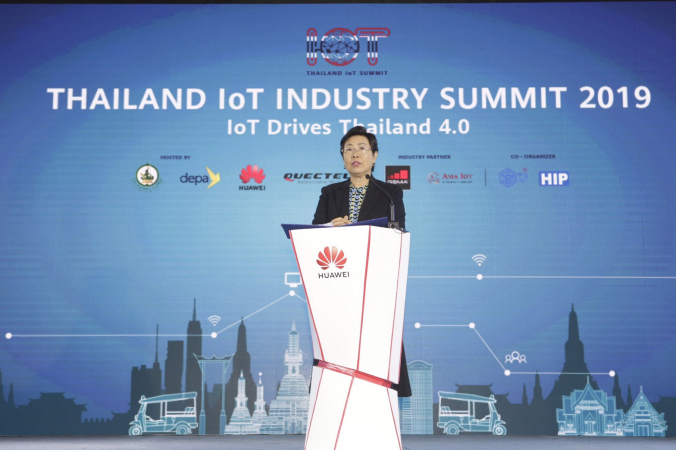
The white paper was released during the Thailand IoT Industry Summit, hosted by the Ministry of Digital Economy and Society, the Digital Economy Promotion Agency, Quectel and Huawei.

Under the theme “IoT, the Engine of Thailand 4.0 to Drive Digital Economy”, the summit brought together more than 300 government officials, international organisations, leading operators, industry experts, and partners to share cutting-edge IoT innovations, and explore their contributions to Thailand 4.0 and the digital economy.

“IoT is an important engine for promoting the Thailand 4.0 initiative and will accelerate the digital transformation of Thailand from smart city, smart industry, and smart life. We believe IoT will play a crucial role for our digital economy development, and therefore improve our people’s lives,” said Ajarin Pattanapanchai, permanent secretary at the Ministry of Digital Economy and Society.  In Thailand, IoT has become as an important engine for digital transformation and produced good social and economic values, she said. Companies like AIS and True Corporation have rolled out their NB-IoT across the country. Motor tracking, caring for kids and smart parking are already at a commercial stage. Innovations such as smart meter and connected cow have also entered trial stage in Thailand.

During the summit, Huawei Thailand officially released its OceanConnect IoT Platform, an open ecosystem built on IoT and public Cloud, which would help local SI partners to be quick IoT developing and faster time to market.

“Today, digital, innovation and technology bring revolutionary and disruptive change to our lives at a pace and on a scale that are unprecedented. Huawei contributes to Thailand’s IoT ecosystem and development by supporting Thailand SI partners, integrating of IoT alliance community for both local and global partnership, and leading more use cases from global to local Thailand,” said Abel Deng, deputy managing director of Huawei Technologies (Thailand).

According to GSMA Intelligence, there are 114 mobile IoT commercial networks launched globally as of May 2019, and the total global IoT connections may rise to 25 billion by 2025. GSMA Intelligence estimates that the Asia Pacific region will be the largest region in terms of revenues hitting approximately $386 billion (Bt11.9 trillion) while global IoT revenue will quadruple to $1.1 trillion in 2025, driven by government promotion and strong industrial IoT connection growth.

“We look forward to seeing an accelerating IoT industry in Thailand with more collaborations to drive the digital economy and Thailand 4.0,” said Abel Deng.

Google to use more recycled material

ศาสตร์เกษตรดินปุ๋ย : ขอบคุณแหล่งข้อมูล : หนังสือพิมพ์ The Nation

https://www.nationthailand.com/edandtech/30374421

Google to use more recycled material

Aug 07. 2019
By The Nation

232 Viewed

In an attempt to reduce its environmental impact and integrate sustainability into its products, Google let the world now through a blog post on Monday by Anna Meegan, head of sustainability for consumer hardware, that Google has added recycled material into its hardware like Pixel phones, Google Home speakers, Chromecast, and accessories like phone cases and charging stands.

Meegan went on to outline Google’s sustainability commitments as follows:

1 All shipments going to or from customers will be carbon neutral by 2020

2 In 2022, 100-per-cent of “Made by Google” products will include recycled materials with a drive to maximize recycled content wherever possible.

3 Google will make technology that puts people first and expands access to the benefits of technology.

She added that from 2017 to 2018, carbon emissions from Google product shipments decreased by 40 per cent.

Google also has launched the Power Project, which they believe bring one million energy- and money-saving Nest thermostats to families in need by 2023. Much of the Nest product portfolio is built with post-consumer recycled plastic.

Lack of alignment and collaboration holding back digital transformation

ศาสตร์เกษตรดินปุ๋ย : ขอบคุณแหล่งข้อมูล : หนังสือพิมพ์ The Nation

https://www.nationthailand.com/edandtech/30374381

Lack of alignment and collaboration holding back digital transformation

Aug 07. 2019
By THE NATION84 Viewed

A lack of strategic ownership is stalling digital transformation plans, NTT writes in its “Digital Means Business” report, explaining that just 11 per cent of organisations are satisfied with those in charge of spearheading digital transformation, despite the fact that almost three-quarters of them are already underway on their journey.

Organisations worldwide are achieving some success with digital transformation, but there’s still a strong belief that this evolution requires radical, far-reaching changes to achieve success. This, when combined with a lack of strong transformational leadership and focus on the need to change people, is holding many companies back:

According to the survey, some 71 per cent of organisations in the early stages of transformation still believe a complete restructuring of the business and operating model is the primary definition of digital transformation.

Only 49 per cent of respondents believe their leadership team has the right skills to manage the execution of digital transformation.

Lack of executive sponsorship or ownership is ranked as the top barrier to success.

The report underlines that this shortfall highlights the need for business leaders to change themselves, build a different environment, and set new behavioural priorities and performance indicators in order to drive a more proactive, tactical, and incremental approach to transformation.

The research also revealed a direct correlation between organisations’ ability to realise relevant, outcomes-driven value from digital transformation on a regular basis, and their digital maturity. Yet, there still exists a discernible sack of alignment between IT teams and the wider business:

Only 29 per cent of organizations are embracing digital transformation as a collaborative effort between business and IT. While 42 per cent of respondents say business and IT are delivering in a more integrated manner, supported in part with the introduction of a Chief Digital Officer function, only 12 per cent are highly satisfied that planning is flowing effectively through to execution.

And almost half of digital transformation projects are still IT-led.

“Organisations are still grappling with how to shape their business to capitalise on a connected future. Digital creates the opportunity for value to be constantly derived from transformation initiatives across the business. Organisations should focus less on perfecting a grand digital plan, and more on taking considered and iterative steps in their transformation journey to progress value and clarity of subsequent moves. For various reasons, an organisation is its own worst enemy, so any change has to be supported by pragmatic, self-aware leaders who are themselves changing,” NTT’s vice-president of Advanced Competencies, Wayne Speechly, noted.

The research surveyed over 1,150 executives, from 15 countries across North America, Europe, Middle East & Africa, and Asia Pacific, and from 11 industry verticals. The results provide invaluable insight into how these leaders perceive the business opportunities presented by digital transformation, the delivery challenges experienced in realising a digital transformation strategy, and the value being achieved.

Design is at the core of new voice-tech boom: Adobe study

ศาสตร์เกษตรดินปุ๋ย : ขอบคุณแหล่งข้อมูล : หนังสือพิมพ์ The Nation

https://www.nationthailand.com/edandtech/30374311

Design is at the core of new voice-tech boom: Adobe study

Aug 06. 2019
By THE NATION147 Viewed

The adoption of voice technology continues to surge with assistants like Amazon Alexa and Google Assistant becoming staples in our everyday lives. And Adobe recently found that a whopping 91 per cent of brands are already making significant investments in voice.

Some 71 per cent of those brands see voice as improving the user experience. But are consumers realising that promise?

Adobe on Tuesday launched a “voice summit”, sharing its findings from a survey of 1,000 voice technology users in the US about their experiences. The results revealed that there’s major opportunity for designers to lead the way as digital experiences are transformed with voice.

Voice usage is growing but to reach everyday adoption, voice needs designers.

Almost all users (94 per cent) consider voice technology easy to use and say it does more than save time – it improves their quality of life.

But more than half report finding the process of using voice technology non-intuitive – with 49 per cent saying they sometimes don’t know where to begin accomplishing a task.

And while users report satisfaction with the ability of voice assistants to work across devices and provide responses to commands, less than half use voice technology daily.

People already use voice for a wide range of straightforward tasks, including driving directions, phone calls, texts, checking the weather and playing music. But most say they wouldn’t use it for more complex tasks like personal banking (61 per cent) or booking travel (52 per cent).

As brands strive to expand voice interactions beyond transactional use cases to more conversational and complex engagements, designers will play perhaps the most critical role in making voice experiences as user-friendly and intuitive as the touchscreen is today.

To help designers create experiences that leverage this new medium, Adobe on August 6 introduced a new way to create voice experiences using our integration with Amazon Alexa.

Not necessarily human-like

Many brands strive to design voice assistants that, like people, can hold conversations. But the jury is out – consumers are split nearly down the middle on whether voice technology should (51 per cent) or should not (49 per cent) have human-like attributes, such as sympathy and humour, as it continues to evolve.

The survey found that 70 per cent of users were satisfied with voice technology’s ability to carry on conversations, but unlike a person, voice assistants often struggle to understand what’s asked of them. Half of users said voice recognition is one of the greatest challenges of using the tech. On average, users say voice technology understands them and is accurate when given a command or asked a question only 69 per cent of the time.

And sometimes, interacting with a digital assistant is just plain uncomfortable. Nearly half of respondents (47 per cent) said they sometimes feel awkward talking to a machine.

UX (user experience) designers know that different contexts of use require unique approaches. And when deciding how human-like a voice assistant should be, designers need to take a discerning look at the needs of their users. For example, a voice-powered microwave probably doesn’t need to have human attributes, but a conversational GPS could be beneficial.

Instead of focusing on simulating humans, brands should prioritise creating voice assistants and experiences that are easy to use and intuitive. By paying attention to context of use – such as where and in what situations consumers are using a voice assistant – designers can create more intuitive and natural-feeling interactions that ultimately drive greater adoption and comfort with this emerging medium.

A future of voice and screen combos

Voice interactions are largely transactional and straightforward today, but Adobe found that many users would like to tap voice for more complex activities like booking a medical appointment (37 per cent), requesting hotel amenities (31 per cent), and grocery delivery (30 per cent). Complexity of tasks is the top reason they would not use voice tech in these situations.

So how can designers simplify these interactions for users? The answer lies in combining voice with a screen.

Smartphones are already the most popular device used for voice technology (85 per cent) – way ahead of smart speakers (39 per cent) – indicating that voice and screens make a winning duo. And most users (80 per cent) agree that visual elements would enable them to use voice technology for a wider variety of tasks, with 83 per cent saying a screen reiterating the command given to confirm understanding would be particularly helpful.

Most importantly, to be effective, a voice interface needs to be intentionally designed.

Designers should equip themselves with first-hand knowledge of voice-enabled products to become experts on the UX of the apps and interactions they will be creating. Designers should use their favourite smart speaker or mobile assistant and get familiar with using voice as a primary interface to learn how their experiences can inform their design approach. They’ll quickly realise which interactions could be improved with a screen element.

Ultimately, voice has the potential to transform the way we approach our interactions with personal technology and brands. Nearly three in five users told Adobe they believe voice will better meet their needs in the next five years.

Users are trusting brands to take voice-driven experiences to the next level, and it falls to the creative community to take the reins as we approach the future of digital engagement.

The world’s top 10 disruptive companies: CNBC

ศาสตร์เกษตรดินปุ๋ย : ขอบคุณแหล่งข้อมูล : หนังสือพิมพ์ The Nation

https://www.nationthailand.com/edandtech/30374309

The world’s top 10 disruptive companies: CNBC

Aug 06. 2019
By China Daily158 Viewed

The US-based business news network CNBC released on May 15 its latest Disruptor 50 list, featuring three Chinese companies – Didi Chuxing in second place, Xiaohongshu in 10th, and Yitu Technology in 20th.

CNBC said the 50 are startups on the cutting edge of huge consumer, technological and business shifts, and are already worth billions.

Let’s take a look at the top 10 disruptors.

1. Indigo Ag – an agricultural technology startup creating seed treatments that optimise the health of a plant in order to increase its yield.

2. Didi Chuxing – a mobile transportation platform providing online ride-hailing services.

3. The We Company – the space made by The We Company features nearly 100 bookable workplace seats in New York available on demand or for pre-booking via its website.

4. Grab – a mobile platform offering transportation and financial services and on-demand groceries.

5. Rent the Runway – the company provides clothing rental services.

6. GoodRx – a platform where consumers can find and compare prescription prices.

7. Airbnb – a platform that connects individuals offering residences or rooms with people interested in short-term rentals.

8. Casper – the company sells memory-foam mattresses online.

9. Peloton – the fitness technology company sells high-end stationary bikes, treadmills and live-streamed classes to customers.

10. Xiaohongshu – a lifestyle platform that integrates community and content with e-commerce.

R&D investment pays off for Huawei as it reports robust first-half results

ศาสตร์เกษตรดินปุ๋ย : ขอบคุณแหล่งข้อมูล : หนังสือพิมพ์ The Nation

https://www.nationthailand.com/edandtech/30374287

R&D investment pays off for Huawei as it reports robust first-half results

Aug 06. 2019

Consumers try out Huawei smartphones at a store in Qingdao, Shandong province. [WANG PEIKE/FOR CHINA DAILY]

Consumers try out Huawei smartphones at a store in Qingdao, Shandong province. [WANG PEIKE/FOR CHINA DAILY]
By China Daily
Asia News Network
300 Viewed

Huawei Technologies Co’s robust half-year financial performance highlights the tech company’s resilience amid US government restrictions and showcases how consistent investment in research and development can help it better withstand headwinds, analysts said on Monday.

The latest financial data from Huawei also sharply contrasted with that of Qualcomm Inc which saw a revenue decline in the second quarter due to poor performance in China, a market the US tech giant heavily relies on, they added.

Xiang Ligang, director-general of the telecom industry association Information Consumption Alliance, said that although Washington banned the use of Huawei’s telecom products in US 5G network construction and restricted it from buying crucial US components and technologies, most of Huawei’s business continued as normal.

The comment came after Huawei posted 401.3 billion yuan ($58.3 billion) in revenue in the first half of 2019, marking a 23.2 percent year-on-year jump. The financial performance came as Huawei faces restrictions from the US government which put the Chinese company on an “entity list” in May, banning the Chinese tech company from buying US technologies without special government approval.

“It shows Huawei’s resilience amid mounting pressure,” Xiang said. Despite some overseas challenges, Huawei also took a record 38 percent of China’s smartphone market in the second quarter of 2019, signifying the highest market share of any vendor in eight years, according to data released by market research company Canalys.

Such a strong performance, however, seems to weigh on the business of US tech giant Qualcomm, with its senior executive citing Huawei as a major factor resulting in the company’s 13 percent year-on-year decline in revenue in the second quarter of 2019.

Steve Mollenkopf, CEO of Qualcomm, said in an earnings call on Wednesday that as a result of the export ban, Huawei shifted its emphasis to building market share in the domestic market, where Qualcomm didn’t see “corresponding benefits in product or licensing revenue”.

That is because Huawei makes the majority of its own smartphone chips and its growing presence in China’s smartphone market did not help Qualcomm. Instead, it could harm the US tech firm’s business, as Huawei is grabbing market shares from rivals such as Xiaomi, Oppo and Vivo which all use Qualcomm’s chips, said Lyu Tingjie, a professor at Beijing University of Posts and Telecommunications.

“Huawei’s in-house chip design capabilities give it ample room to confront the crisis, and that is the result of decades of strong R&D spending,” Lyu said. “Also, Qualcomm’s loss underlines once again the importance of the China market to US tech companies. No one will win from the US ban on Huawei.”

NBTC offers assurances on 5G progress

ศาสตร์เกษตรดินปุ๋ย : ขอบคุณแหล่งข้อมูล : หนังสือพิมพ์ The Nation

https://www.nationthailand.com/edandtech/30374266

NBTC offers assurances on 5G progress

Aug 05. 2019

Takorn Tantasith/Photo by The Nation

Takorn Tantasith/Photo by The Nation
By The Nation363 Viewed

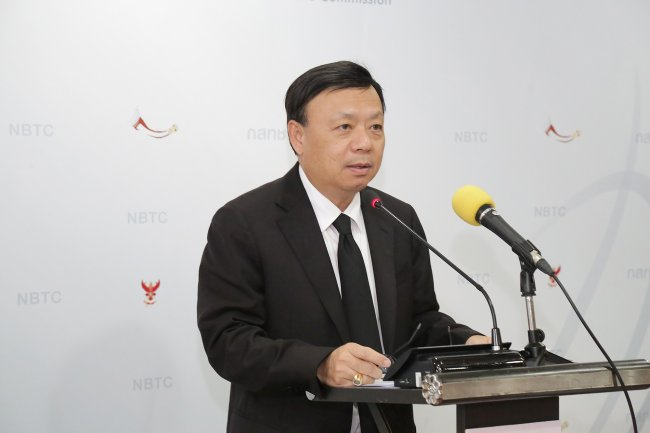
The Office of the National Broadcasting and Telecommunications Commission (NBTC) is aiming to boost private-sector confidence by accelerating 5G development and setting fees that are fair for consumers while guaranteeing operators enough profit to attract further investment.

Secretary-general Takorn Tantasith said he and private licensees and operators are agreed that 5G should be in place as scheduled by the previous government – by late this year or early next.

He said the private sector wants the government to provide full support and ensure that profits cover investments.

The shift from 4G to 5G is vastly more complicated than the move from 3G to 4G and requires different network equipment, so private investment could be in the range of Bt200 billion-Bt300 billion, not including charges to buy into the spectrum at auction.

“The NBTC understands the private sector’s concerns and takes this matter seriously,” Takorn said. “We are working hard to ensure that there are enough spectrum channels available for 5G operations countrywide. And when 5G is finally ready, we will set usage fees that are fair for consumers and still guarantee enough profits for private operators.

“The NBTC’s top-priority mission right now is to make sure that 5G is really happening, and to achieve that, we will work with each operator to troubleshoot any obstacles one by one,” he said. “Next month, on the 4th, the NBTC will host a seminar where private operators are welcome to report problems related to 5G technology implementation and make suggestions. The NBTC will pass the results on to the government.”

The NBTC has assigned three educational institutions to research and recommend suitable prices for channels and usage fees by early October, after which the multi-band spectrum auction will start.

In the early stage, 5G will benefit industrial entrepreneurs, who can use it to restructure their production process and increase efficiency.

Citizens can start utilising technology only when the equipment becomes available, around mid-2020 at the soonest.

Copperwired to list on SET

ศาสตร์เกษตรดินปุ๋ย : ขอบคุณแหล่งข้อมูล : หนังสือพิมพ์ The Nation

https://www.nationthailand.com/edandtech/30374248

Copperwired to list on SET

Aug 05. 2019
By Jirapan Boonnoon
The Nation
290 Viewed

Copperwired is planning to list on the Stock Exchange of Thailand (SET) in the fourth quarter this year. The firm also expects to generate revenue growth of 15 per cent by the end of this year.

Paramate Rienjaroensuk, chief executive officer of Copperwired, said that the firm is preparing to list on the SET in the fourth quarter this year to increase investment and expand its market both in Bangkok and upcountry.

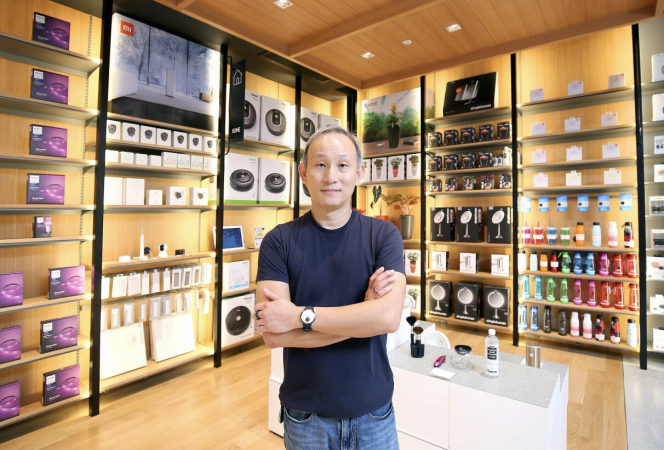
The firm’s current focus is on digital lifestyle products, smartphones, computers and tablets, and services through 14 Copperwired shops and 20 dotlife (.life) shops.

The digital lifestyle products include items for home and office, mobile phones and accessories, smart watches, sports, health and wellbeing, hobby and toys, as well as audio, photos and video products. It offers more than 2,000 items under some 200 brands. Copperwired and dotlife shops sell Apple smartphones, computers and tablets.

The firm provides services via five iServe centres in such prime areas as Ratchaprasong and Siam Square and is planning to spend between Bt40 million and Bt70 million on opening 6 new dotlife shops in Bangkok in 2020.

“I believe that the digital lifestyle products such as hobby items and toys have high potential for growth in Thailand and our six new dot life shops in Bangkok will support that demand,” he said, adding that the firm is currently developing an online retail platform and will officially launch its Omni channel platform next year.

Copperwired expects to generate revenue around Bt3.5 billion this year, an increase of some 15 per cent over 2019 when revenue reached Bt3.2 billion. Forty per cent of this will come from digital lifestyle products followed by the smartphone and computer & tablet categories.

“I also think that growth in the IT market will slow in the second haft of this year but we will be looking at achieving continued growth in the digital lifestyle market,” Paramate said.