Facebook removes pages of far-right group Patriot Prayer
Sep 06. 2020
By The Washington Post · Rachel Lerman · NATIONAL, BUSINESS, TECHNOLOGY Facebook took down the pages of far-right group Patriot Prayer and its founder Joey Gibson on Friday as protests involving the group continue in Portland, Ore.
Patriot Prayer has become an extreme example of divisive and radicalized domestic political organizations in the last few years, experts told The Washington Post. A supporter of the group was fatally shot in Portland this weekend during protests and skirmishes between the group and some Black Lives Matter activists.
The social media company said it removed the pages as part of an attempt to shut down more pages that lead to real world violence. Gibson’s Instagram account was also removed.
“They were removed as part of our ongoing efforts to remove Violent Social Militias from our platform,” Facebook spokesman Andy Stone said.
Stone said Gibson’s personal account was removed because of its connection to Patriot Prayer, and he might be allowed back on in the future if his page was unconnected to that group.
Gibson disputed Facebook’s decision in an emailed statement.
“Antifa groups murdered my friend while he was walking home, and instead of the multibillion dollar company banning Portland antifa pages they ban Patriot Prayer, Joey Gibson, and several other grandmas that are admins,” he said.
A man suspected of doing the shooting, who was a vocal proponent of the far-left antifa movement, was killed in a confrontation of law enforcement this week.
Facebook has also cracked down on pages belonging to supporters of the conspiracy theory QAnon, though it did not issue an outright ban on all related pages. It said it would restrict the spread of QAnon posts and restricted 3,280 pages and groups in August. In June, Facebook removed hundreds of accounts associated with a violent network of followers of the far-right “boogaloo” movement, saying it was designating that faction as a “dangerous organization.”
Gibson’s group has ballooned in size during President Donald Trump’s time in office and is especially active in the Pacific Northwest, where Gibson has held pro-Trump rallies for years.
Even non-famous Twitter users can make money from viral tweets
Sep 04. 2020Signage outside Twitter headquarters in San Francisco on July 16, 2020. CREDIT: Bloomberg photo by David Paul Morris
By Syndication Washington Post, Bloomberg · Michael Tobin · BUSINESS You don’t need to be Twitter famous to make money from viral tweets.
A growing number of Twitter users — many with very few followers of their own — have glommed onto an inventive way to harness the power of tweets that go viral to make a few bucks for themselves.These savvy users do this first by finding a tweet that’s garnering a lot of attention. They then use the reply tool to point the Twitterverse toward a brand, which, in turn, pays a small fee in exchange for the mention. None of this happens through Twitter’s established advertising system, meaning the company doesn’t get a cut of the transaction, and it may break Twitter Inc.’s rules requiring disclosure of payment for promotion.
Here’s how it plays out for Blake Forbes. The 20-year-old college student from Austin, Minnesota, runs the Twitter account @BirdExecutive. It has only about 8,000 followers. That’s paltry compared with the likes of Justin Bieber or Barack Obama, each of whom have more than 110 million followers. But the lack of stardom isn’t stopping Forbes from making some easy money.
Forbes looks for tweets that seem poised to take off — say, a funny joke or a clever play on words. In one case, a picture of a steamroller going over someone’s back. He and his friends then help accelerate the popularity of the postings by sharing them among their accounts, which collectively have tens of thousands of followers. When the tweet goes viral, reaching hundreds of thousands of followers, retweets and likes, a brand might contact Forbes to do a promotion and pay him about $30. Forbes has done about seven or eight promotions, netting him around $200 for posting memes.
“I wouldn’t say it’s a way to make a ton of money, it’s just extra,” Forbes said. It’s mostly about “having fun on Twitter and getting some money as well.”
This ephemeral advertising blitz is the latest, most opportunistic evolution of the social-media based influencer economy, in which regular people get paid to hawk brands to followers. The twist here is that the person whose tweet goes viral and lures advertisers may not have a significant following, or even have an expertise in the brand they’re trying to promote. Sometimes the viral tweets aren’t even original ideas. Forbes’s steamroller gag, for example, had been posted by an account named @meow about three weeks earlier.
Anthony Trucco, a recent college graduate and self-described “meme lord,” also enjoys the extra pocket cash from a viral tweet. Trucco, who has about 6,500 followers on Twitter and 1.3 million on TikTok, overlays scenes from the animated SpongeBob cartoon show with popular songs like “Sicko Mode” by Travis Scott and Drake. When a comedian with a large following shared one of Trucco’s tweets, it got launched into the stratosphere of virality, resulting in a promotion deal for Ocean Galaxy Light.
The product, one of the most frequent promotions on Twitter, projects a light pattern on the ceiling and contains a Bluetooth speaker. The website is run by a few friends in Southern California, all college students, who find viral tweets and contact users to promote their product. Depending on how popular the tweet is, the site pays $20 to $60 for a promotion, said Parsa Khademi, one of the people running the Ocean Galaxy Light website and Twitter account. Khademi looks for promising tweets but lately users have come to him seeking a promotion.
Advertisers find that these social media users with viral tweets can reach new customers.
For Ocean Galaxy, a promotion linked to a viral tweet can yield three or four orders for the lights, which sell for $50, Khademi said. The partners work with a fulfillment center in the U.S. and Japan to process and complete customers’ orders. Ocean Galaxy Light brought in about $7,000 to $8,000 in revenue from Twitter in July, Khademi said. It also advertises on Facebook and Instagram, and racked up $35,000 in sales across all platforms in that month.
Because these transactions take place outside Twitter’s established advertising system, companies have to tread carefully. Failing to disclose payment for a promotion is breaking the social media company’s terms of service, a spokesperson said in an email.
Ocean Galaxy Light changed its marketing practices in April, Khademi said, after running into problems with Twitter’s terms of service. Users with a viral post used to “quote tweet” an old Ocean Galaxy Light tweet to promote the brand, but Khademi shifted to having users tweet the link themselves.
Other advertisers using this tactic include a sink strainer that prevents messes while doing the dishes and another account that sells vintage basketball apparel. The advertisers didn’t respond to requests for comment.
The practice of having people do promotions for products has gained steam on other platforms, such as Instagram, where meme accounts promote artists on Spotify or fashion brands, said Shamsul Chowdhury, vice president of paid social at Jellyfish, a digital marketing company. But Instagram requires paid partnerships to be disclosed. Ads on Instagram can appear in the form of a post by a brand, or an influencer can post branded content with the app’s labeling tool, or disclose that it is an advertisement with the label #ad.
Twitter requires users who are paid to tweet to label that tweet as an ad, though it’s difficult for the company to enforce since the deals happen outside of its advertising system. Twitter doesn’t actively search for violators, but will act on a tweet if it’s reported. “Any enforcement would be dependent on incident specific context,” a spokeswoman said in a statement, adding Twitter could give a warning, limit the tweet’s reach or potentially suspend an account for violating its disclosure rules.
Websites that want to promote their product see ad placement with viral tweets as more cost-effective than competing with other advertisers on Twitter’s main feed, Chowdhury said. Plus, riding the coattails of a viral tweet bypasses the need to use Twitter’s formal advertising system and could allow for a more direct interaction with the user.
Trucco, of SpongeBob Twitter fame, also has a full-time job as a business analyst at Northrop Grumman Corp. But he still finds the time to make memes for artists and brands on social media. He appreciates the money.
“It even means a lot to me,” he said. “I’ll never be somebody who forgets how much $50 is worth. Anybody would appreciate anything, whether it’s 50 bucks or 100 bucks, or 25 bucks. There’s nothing to lose by putting it out there.”
Air Force’s first security satellite Napa-1 launched
Sep 03. 2020
By The Nation
The Royal Thai Air Force’s first security satellite was successfully sent into space on Thursday (September 3) at 8.51am Bangkok time from the Guiana Space Centre in French Guiana.
The Arianespace Vega rocket, Flight VV16, carried 53 satellites from 13 countries, including seven microsatellites weighing a mere 15 kilogram each and 46 nanosatellites, including the Air Force’s first security satellite Napa-1.
This satellite will help the Air Force’s operations in three domains – air, cyber and space – as part of its 20-year strategic plan.
The satellite will also help support the country’s disaster-mitigation measures by providing pertinent data that can be used to prevent forest fires, flooding and drought.
The launch of Napa-1 is an essential first step in space reconnaissance and surveillance for the stability and development of the country.
New York City delays school reopening amid pressure from educators
Sep 02. 2020
Photo credit: freepik
By The Washington Post · Moriah Balingit · NATIONAL, EDUCATION New York City has postponed the start of school for more than 1 million students amid pressure from a teachers union, which said there was not enough time to ready educators and school buildings to teach students safely during the pandemic.
Mayor Bill de Blasio, a Democrat, announced he had reached a deal with the unions representing teachers, principals and food workers to delay reopening for nearly a week, beginning virtual classes for all students on Sept. 16 and in-person classes for some students five days later. School was originally slated to start Sep. 10. Students were given the option of full-time remote classes or a hybrid model – returning to school part-time but taking classes virtually the rest of the time. About 37 percent of students have opted for the all-virtual classes.
His decision came after increasing pressure from the United Federation of Teachers, whose members threatened to strike or take the city to court if the mayor fell short of meeting their health and safety demands. What happened in New York City may foreshadow how fights between teachers unions and elected officials over school reopenings play out in other cities.
“New York City is taking the best practices, the strongest methods from all around the world and applying them here, in our public schools, the highest standard anywhere in the world to protect our kids, our families, our educators, our staff,” de Blasio said in a news conference.
The city’s school system faces a number of challenges, including ensuring that classrooms have adequate ventilation and staggering attendance to allow for social distancing. The city was also still working through how teachers would provide both in-person and virtual instruction.
The city, once the nation’s epicenter of the pandemic, has lost more than 19,000 people to covid-19, and its residents fear another outbreak. But de Blasio said he believes the city has made enough progress against the novel coronavirus that students, many of whom rely on schools for food and refuge, can safely return for face-to-face instruction. Its most recent positivity rating – the percentage of those tested who had contracted the virus – was 1.3 percent, a fifth of the national average.
Reopening schools would mark an incredible milestone for the city, where sirens once echoed constantly and refrigerated trucks had to be set up outside hospitals to handle the dead. It is one of the only urban systems to welcome students back to school buildings.
The postponement comes as districts around the country grapple with the start of the school year, with virtual learning hampered by technology glitches and in-person learning threatened by growing numbers of infections among young people.
President Donald Trump, who has made clear that reopening schools is key to restarting the economy and boosting his reelection bid, has pushed for it even in coronavirus hot spots. Trump-aligned officials in Georgia and Florida have reopened schools contrary to public health advice, and many have been forced to quarantine hundreds of children and employees as infections emerge.
But officials in New York City, a Democratic stronghold, have been critical of Trump. On Tuesday, Michael Mulgrew, president of the United Federation of Teachers, reiterated the frustration over the fractured federal response.
“The story of the public school systems across the United States and what the federal government has done will go down as one of the biggest national disgraces,” Mulgrew said. “The federal government has failed to act, yet no one had any qualms about standing up at press conferences saying how important it is for schools to reopen.”
The teachers union last month laid out its demands for the city, including universal testing for every student and educator who would enter school buildings and putting a nurse in every school. It also said teachers would not show up to buildings unless the union’s health and safety inspectors signed off.
The city was already working toward hiring more school nurses, and it agreed to a program that will test a random sample of employees and students, with parental permission, at every school on a monthly interval.
U.S. will agree to remove plutonium waste from South Carolina
Aug 31. 2020
By Syndication Washington Post, Bloomberg · Jennifer A. Dlouhy, Ari Natter · NATIONAL, SCIENCE-ENVIRONMENT The Trump administration is settling a long-running dispute with South Carolina over cleaning up weapons-grade plutonium stashed in the state.
The agreement is set to be announced Monday by Energy Secretary Dan Brouillette and South Carolina Attorney General Alan Wilson, said two people familiar with the matter who spoke on the condition of anonymity because the deal has not been formally unveiled.
Under the terms of the deal, the government will make an up-front payment to the state. In return, South Carolina will agree for several years not to pursue additional litigation on the matter. It was not immediately clear how much the U.S. will be paying South Carolina under the deal, but it was described by the people as significant and the largest single settlement in the state’s history.
The development comes 17 years after the federal government first committed to clean up more than 11 million tons of radioactive material by 2016, or pay the state $100 million in penalties.
At issue is waste plutonium at a Cold War-era nuclear weapons manufacturing site near the Savannah River. The federal government initially planned to build a reprocessing facility and convert 34 metric tons of the material for re-use as fuel in nuclear power plants.
But in 2018, after the government spent years and some $8 billion of taxpayer money constructing the so-called Mixed Oxide Fuel Fabrication Facility, the Trump administration said it was canceling the project because it would be more cost effective to dilute and dispose of the plutonium than to reprocess it.
The settlement comes after a series of lawsuits by South Carolina over the stalled nuclear cleanup. In one suit filed three years ago, Wilson, a Republican, accused the federal government of trying to make South Carolina a “dumping ground” for plutonium.
The U.S. and South Carolina last month asked the U.S. Court of Appeals for the Federal Circuit to stay proceedings until Aug. 31, because they had entered into settlement negotiations.
Under the administration’s dilute-and-dispose plan for dealing with the plutonium waste, the radioactive material could be stored in other states. But it’s unclear how many other states would go along with that.
The Energy Department has been forced to backtrack on a plan to put at least one metric ton of plutonium in Nevada after a quiet shipment of some of the material from South Carolina sparked outrage there.
In a legal filing last year, Nevada’s attorney general accused the Energy Department of conducting a “secret plutonium smuggling operation” to send the state highly radioactive waste it didn’t want. Under a settlement agreement reached between Nevada and the Energy Department in June, the U.S. government committed to remove the 0.5 metric tons of plutonium it put in the state by the end of 2026, and will not ship another batch it had planned to stash there.
Walmart leaps into TikTok acquisition fray, joining Microsoft’s bid
Aug 28. 2020
By The Washington Post · Jay Greene, Abha Bhattarai · BUSINESS, US-GLOBAL-MARKETS Walmart has joined Microsoft’s bid to acquire the U.S. operations of TikTok, the popular Chinese-owned video app under fire by President Donald Trump.
That news, along with the resignation Wednesday night of the head of TikTok’s U.S. business, has led to speculation that the company’s parent, ByteDance, may soon announce that it’s entered into formal negotiations to sell operations in the United States, Canada, Australia and New Zealand.
Thursday morning, Walmart confirmed that it would work with its longtime technology partner Microsoft on a bid.
“The way TikTok has integrated e-commerce and advertising capabilities in other markets is a clear benefit to creators and users in those markets,” the company said in a statement. “We believe a potential relationship with TikTok US in partnership with Microsoft could add this key functionality and provide Walmart with an important way for us to reach and serve omnichannel customers as well as grow our third-party marketplace and advertising businesses.”
Walmart added that it believes a deal with Microsoft “would meet both the expectations of US TikTok users while satisfying the concerns of US government regulators.”
CNBC first reported Walmart’s participation in the bidding. Microsoft has previously confirmed it was in negotiations, with a deadline of Sept. 15.
TikTok spokeswoman Hilary McQuaide declined to comment on the timing of any announcement regarding a deal.
TikTok is under intense pressure to unload its U.S. operations after Trump issued an executive order this month banning TikTok in the United States beginning the week of Sept. 20. Trump claims TikTok is a national security threat because of the company’s Chinese ownership.
Analysts say the deal could give Walmart an inroad to a coveted demographic that it has long struggled to attract: younger shoppers.
“A social platform like TikTok would give Walmart easy access to the very audience it wants and needs to attract,” Neil Saunders, managing director of GlobalData Retail, wrote in a note to clients. “Over time, the platform could also become a significant channel through which Walmart could directly generate sales.”
Walmart, which makes about half of its annual revenue from grocery sales, has aggressively bought up online apparel companies and other specialty brands, including Moosejaw and Bonobos, in recent years, in hopes of building up its online presence. The company posted $514 billion in revenue last year, nearly double Amazon’s $281 billion. (Amazon founder and chief executive Jeff Bezos owns The Washington Post.)
“Although the world of social media seems a million miles away from selling cans of soup, Walmart’s interest in buying TikTok underlines the seriousness of its digital ambitions,” Saunders said. “The company has already been leaning heavily into e-commerce and has made extensive investments to strengthen its online presence across food and non-food categories.”
Earlier this month, Microsoft confirmed its interest in buying the TikTok service in the United States, Canada, Australia, and New Zealand. At the time, Microsoft acknowledged its chief executive, Satya Nadella, had talked with Trump and that the company had committed to addressing the president’s concerns about the social media platform.
TikTok is pursuing a deal while at the same time fighting for its independence in the United States. On Monday, the company sued the administration, alleging that it was not given due process and asserting that it is not a national security threat.
The Microsoft-Walmart bid could face competition from a possible offer by business-software giant Oracle, which is working with ByteDance’s top U.S. investors, General Atlantic and Sequoia Capital, according to a report in The Wall Street Journal. And Twitter also had preliminary talks to acquire a piece of TikTok’s operations.
Whichever company emerges as TikTok’s preferred suitor needs to move quickly to close a deal. The order Trump signed Aug. 6 gave TikTok 45 days to close a deal before any U.S. business or person is barred from transacting business with the company. Microsoft has said it expects to complete its discussions with TikTok “no later than September 15.”
Trump issued a second order concerning ByteDance on Aug. 14, ordering the company to divest the video app Musical.ly that it acquired in 2017. The Committee on Foreign Investment in the United States had been investigating that merger to determine whether there is a national security concern over the deal. Trump’s order said there is “credible evidence” that the merger “might take action that threatens to impair the national security of the United States.”
Zoom outages last several hours, disrupt schools and businesses
Aug 25. 2020
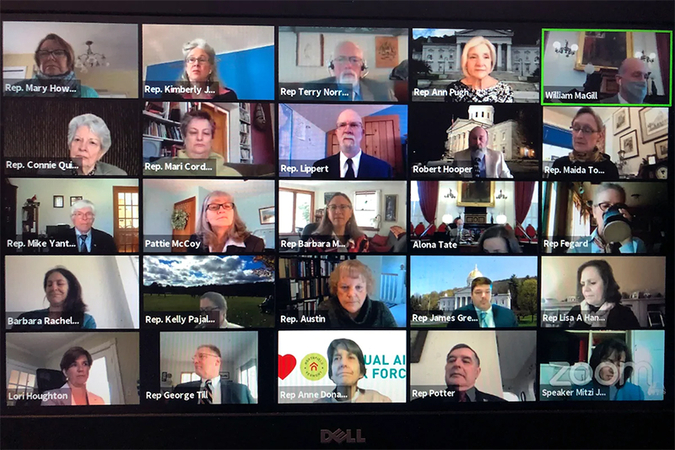
By The Washington Post · Hamza Shaban · BUSINESS, TECHNOLOGY, US-GLOBAL-MARKETS Zoom outages disrupted meetings and classes around the country Monday, highlighting Americans’ growing reliance on video software to keep things running during a public health crisis.
After roughly four hours, the company confirmed it had resolved an issue that kept some users from being able to join Zoom meetings and webinars. “We sincerely apologize for any inconvenience,” the company said in a statement.
Zoom first said it was experiencing partial outages on its status page, which it began investigating before 9 a.m. EDT. It’s unclear how many users were affected; clients in North America and parts of Europe have reported problems, according to the website Downdetector. The platform was back in working order by midday.
Zoom and other videoconferencing tools have become crucial during the pandemic, a form of connection for business, school and social groups when face-to-face interactions are discouraged or prohibited because of the coronavirus. Its stock has more than tripled since the beginning of the year.
Zoom does not disclose the total number of daily active users on its service, a key metric that technology companies and analysts use to measures the size and growth of a platform. But the company reported in April that it has 300 million daily meeting participants, although people in multiple meetings could be counted more than once by that metric. By comparison, Google Meet claims more than 100 million daily meeting participants. And Microsoft reported in the spring that its communications platform Teams has 75 million daily active users.
The surge in video conferencing underscores the massive shift to working from home that has been greatly accelerated by the pandemic. In 2010, less than 10 percent of American workers worked at least part time from home, the Census Bureau found. Now, according Stanford economics professor Nicholas Bloom, a remarkable 42 percent of the U.S. labor force works from home full-time.
“It really shows just how important this kind of technology is and how this technology has, generally speaking, enabled us to pretty seamlessly transition to working from home,” said Julie Samuels, executive director of Tech: NYC, a group that represents New York-based technology firms. “If the pandemic had struck even 10 years go, it’s inconceivable how we would have functioned, and I think this morning kind of indicated that.”
She cautioned, however, that no matter how great the technology is, there are inherent limitations, especially when it comes to simulating in-person collaboration, like in classrooms for young children. Essential service workers employed by grocery stores and hospitals also don’t have the option of working from home.
Zoom’s technical issues interrupted the first day of virtual classes for many schools, colleges and universities. Since the pandemic shuttered schools in March, the platform has been adapted by educators who teach everyone from squirmy preschoolers to doctoral students.
Atlanta Public Schools, which has more than 50,000 students, was set to start the school year virtually Monday, but struggled with Zoom problems. So did Durham Public Schools in North Carolina and Pennsylvania State University, which has nearly 100,000 students. All told, more than 100,000 K-12 schools use Zoom at no cost for online learning.
“We have resolved an issue that caused some users to be unable to start and join Zoom Meetings and Webinars or manage aspects of their account on the Zoom website,” Zoom said. On social media the company is responding to people’s complaints with similar messages.
Zoom’s phone and chat services were not impacted by the outages, the company noted. The disruption was tied to an authentication problem with the company’s website.
As with previous outages of office productivity software, like the workplace chat service Slack, the disruption was met with frustration but also exuberance. Without Zoom, there can be no meetings, at least some people hoped. And as working, learning and socializing from home has dragged on for many Americans, so has the burden of appearing “camera-ready,” of having strangers gaze into people’s most intimate spaces, and of carrying on simulated social interactions without physical and tactile cues, which can be exhausting in its own way.
Aug 21. 2020The Internet of Things (IoT) is made up of up of hundreds, or thousands, of devices connected to the same network.
By Charinee Yuenamporn Special to The Nation
Exploring the pros and cons of connectivity options for IoT-edge device design
In my opinion, the internet connection in my apartment is slow. Really slow. Debilitatingly slow. In fact, it is so difficult to watch Netflix starting a new series is like taking a wild shot in the dark. But I’m persistent and very slowly going through the second season of the “The Crown”.
During the day, when I’m at my job working with IoT-edge designs, my perspective on network speeds is completely different. For instance, last week I was configuring a remote weather sensor to occasionally send small packets of data to a cloud server. The simplicity of that application makes the 10 Mbps that I use to stream The Crown at home seem like a royal indulgence.
Unlike humans, IoT edge devices do not check email or watch TV, so they don’t need the high data rates used in consumer electronics.
However, like humans, IoT devices cluster together in communities. IoT systems often consist of hundreds, or thousands, of connected edge devices. At that scale, seemingly simple design considerations become critical to the success of your product. One difficult design decision you will make is determining how your device connects to a network.
This guide will give you an overview of the most common types of connection methods utilised in IoT applications. Read on to weigh your options and determine how you can put the “I” in your IoT design.
Ethernet
Ethernet is a fast and reliable way of connecting things to the internet. Commonly found in industrial and building automation, Ethernet shines in systems that include many nodes on the same network.
While no network is perfectly secure, it would be a great feat for hackers to break into a private Ethernet network remotely. Power over Ethernet (PoE) also provides the capability to power your device through the Ethernet cable, which eliminates the need for a separate power cable.
Hardwiring does, however, present significant design challenges, and certainly does not make sense for every application. Nodes connected by Ethernet must be close to a router. Even in short-distance applications, such as home and building automation, Ethernet cabling is so bulky that managing and hiding the wires presents a major challenge. Modern buildings can be constructed to accommodate automated lighting systems, but installing an Ethernet IoT system in a building not designed for it is often not feasible.
Wi-Fi
Wi-Fi is the go-to for internet connection and my grandmother’s favourite reason to call me. It provides speed and direct internet connection without the hardwiring constraints of Ethernet. Mainstream devices are also compatible with Wi-Fi, meaning that interfacing with your design can be as simple as reaching for a cell phone or laptop.
Despite its prevalence, adding Wi-Fi capability to an embedded design is typically complex. Wi-Fi is attractive because it is wireless and fast, but those features come at the expense of security vulnerabilities and power consumption. As a result, Wi-Fi-based IoT designs require an engineer to delicately balance security, power and cost.
A favoured internet connection option in consumer electronics, Wi-Fi brings the benefits of high-speed and wireless connection.
Luckily, solutions exist today to help reduce the complexity in Wi-Fi design. Using a Wi-Fi module that has been optimised for IoT will simplify your design and save development time. Modules like ATWINC1500are fully certified, support security protocols and are optimised for battery-powered devices, enabling Wi-Fi connectivity without compromising on cost and power consumption.
Low Power Wide Area Network (LPWAN)
LPWANs are less common in consumer products, so you may not be as familiar with them. They are, however, very popular with IoT systems that require an extensive range, such as environmental monitoring.
The beauty of using IoT for environmental monitoring is that we can monitor rural, offshore and generally inaccessible areas. The issue is that these locations are rural, offshore and generally inaccessible. You cannot give a device floating in the Mariana Trench a quick recharge or connect to Wi-Fi in the Sonoran Desert.
Agriculture is a perfect application of LPWANs because these networks can cover large swathes of area with very little power.
Max ranges in typical LPWAN use seem to hover around 10 kilometres. Data is transferred at very slow rates, but unless your IoT solution is checking email and streaming videos, you probably will not need a high-speed connection.
While commonly used in agricultural and remote applications, LPWANs aren’t exclusive to them. Urban usage is growing, and one of the largest LPWAN commercial IoT deployments in North America is used to track vehicles in auction lots.
There are two common LPWAN protocols: LoRaWAN (from Long Range) and Sigfox. One difference between the two is cost. Sigfox is a subscription-based service and operates much like cellular services. If Sigfox is available in your area, you can connect through a subscription with a local provider. With LoRaWAN, developers can avoid a subscription fee by creating a “do-it-yourself” network, but most still opt to use a local network provider’s LoRa gateway infrastructure and pay a per-usage fee.
Cellular
Cellular coverage blankets much of the world. For embedded systems that need this range, cellular is the only option. However, it is expensive. You must use a provider, and you cannot set up your own network without governmental regulatory approval. The cost of embedded components and provider subscriptions for each node often outweigh the benefits of cellular networks’ extensive reach.
That said, it is important to distinguish the cellular network used for connecting things and the bill you cough up once a month for your phone. IoT-specific cellular networks are popping up to compete with LPWANs. A growing IoT cellular network is LTE CAT-M. The M stands for “machine” and it is a lower speed, lower cost, lower power option optimised for IoT. While you might be used to pricey mobile phone bills, CAT-M plans are typically substantially less expensive. Other options for cellular IoT connections are CAT-0, CAT-1 and the newer NB-IoT (NB for “Narrow Band”).
As 5G rolls out, we can expect it to drive innovation in IoT. Higher 5G speeds could enable more progress in cutting-edge IoT applications, such as autonomous vehicles, albeit at a higher price tag than IoT-targeted networks.
5G coverage is not nearly as pervasive as LTE or 3G, but it is expanding. Some industry analysts have predicted that 5G will reach up to 20 per cent of the world’s population in the next five years.
Satellite
Cell coverage might blanket most of the populated world, but what if you want to connect things in desolate areas?
Satellite connectivity is used for IoT applications such as logistics in remote regions of the Earth that are not covered by cellular service. While expected to change as satellite technology progresses, developing a satellite IoT application is not as accessible as other connectivity options. Many satellite constellations are reserved for defence use, but you can purchase modules from Iridium and ORBCOMM.
While satellites are beneficial for remote areas of the world that are not covered by cell service, options are currently limited for commercial IoT use.
Bluetooth
You’re probably already familiar with Bluetooth. Both Bluetooth Classic and Bluetooth Low Energy (BLE) have max ranges exceeding 100 metres but are typically used for devices that are within a few metres of each other. In our daily lives, we see Bluetooth in accessories for our phone and PC – headphones, keyboards and display technology.
Bluetooth is great for consumer electronics because it is low power (with BLE being exceptionally low power), widely supported and pairs quickly.
Unlike Wi-Fi, Bluetooth does not directly connect to the internet. You will need to set up a gateway to connect to the internet. While setting up your own gateway may seem daunting, it’s often as easy as connecting to a mobile device that also connects to Wi-Fi.
Bluetooth 5 is a recent update that extends Bluetooth’s range so that it can be used in home area networking. Whereas Bluetooth Classic and BLE are typically used to connect devices that are mere metres apart, you can connect an entire home with Bluetooth 5. This extended range brings Bluetooth into the realm of home automation, lighting and industrial applications.
Implementation recommendations
A major way these connectivity methods vary is in ease of implementation. It is easier to prototype with commonly used networks, such as Bluetooth Classic and BLE, because you are likely in possession of one or many compatible devices (like your cellphone). This enables you to connect to your prototype easily and evaluate your design more quickly.
Several certified BLE modules are available to consumers, and many come with open-source code and tutorials on how to program them. Most modules communicate over standard protocols such as SPI, UART and I2C. This makes integrating a wireless module as easy as a digital component. Pre-certification helps prevent you from going through the certification process on your own, which can be expensive and time-consuming.
Easing the Design Process
Microchip’s AVR-BLE and PIC-BLE development boards are examples of streamlined development tools for IoT and other connected applications. These boards are preconfigured to transfer accelerometer and temperature data and integrate with a custom interface in the LightBlue Explorer app. With widespread compatibility to consumer devices such as smartphones, which also can be configured as a gateway to the internet, you can skip much of the nitty-gritty design work and get to what matters: innovating and taking your product to market faster.
The AVR-BLE and PIC-BLE development boards are pre-configured to connect to your BLE enabled device
Through user-friendly, pre-configured tools such as the AVR- and PIC-BLE, building a connected device has never been more accessible. Whether you’re an embedded designer by profession, a maker or just a curious electronics hobbyist, you’re capable of building a robust, multi-faceted IoT system. This powerful accessibility, coupled with an increasingly connected world, ensures that connectivity will continue to drive progress in an unprecedented way.
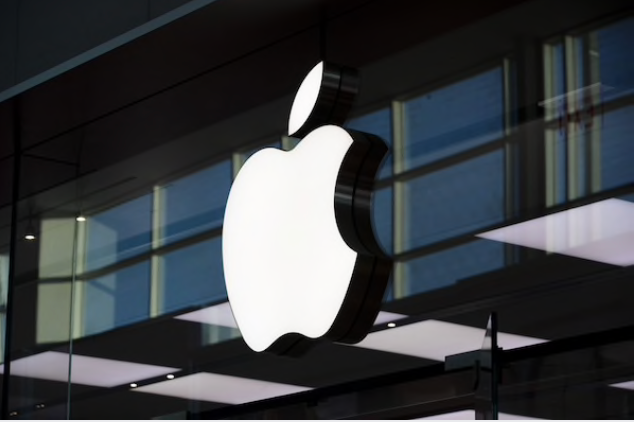
Apple hits $2 trillion in market valuation, making it the first U.S. public company to reach that milestone
Aug 19. 2020
By The Washington Post · Reed Albergotti · BUSINESS, US-GLOBAL-MARKETS Apple became the first publicly traded U.S. company to be valued at $2 trillion Wednesday, a major milestone highlighting the iPhone maker’s ability to thrive in the post-Steve Jobs era.
Despite a pandemic that crippled global supply chains and harmed consumers, Apple has managed to keep producing and selling products, impressing Wall Street and proving that its business is resilient. Investors are also expecting a boost in sales as Apple customers upgrade to 5G, the latest wireless standard that is expected to be included in the new iPhones.
Being valued at $2 trillion also highlights how far the company has come since the death of Jobs in 2011. While Jobs was considered a visionary, current CEO Tim Cook, who succeeded Jobs, has managed to increase the value of the company more than some ever thought possible.
U.K. reverses its use of an algorithm to estimate students’ exam grades
Aug 18. 2020
By The Washington Post · Karla Adam · WORLD, EUROPE
LONDON – Following a national outcry, the British government on Monday made a dramatic U-turn on using an algorithm to estimate how students would have done on exams they weren’t able to take because of the coronavirus lockdown.
The algorithm, which relied heavily on a school’s previous track record on exams used in university admissions, appeared to benefit students at exclusive fee-paying private schools and penalize top-performing students from disadvantaged backgrounds.
The estimates it generated threatened to lose some students the spots they had been offered at universities this fall, and that sparked outrage in a country where educational opportunities disproportionately favor those from elite backgrounds.
Prime Minister Boris Johnson defended the A-level exam results when they were released last week, saying “let’s be in no doubt about it, the exam results that we’ve got today are robust, they’re good, they’re dependable for employers.”
Gavin Williamson, the education sectary, said on Saturday that there would be “no U-turn, no change” on the grading system.
But after mass protests, which included students burning their exam results in Parliament Square, Williamson struck a different tone.
“I am sorry for the distress this has caused young people and their parents but hope this announcement will now provide the certainty and reassurance they deserve,” he said on Monday.
The government announced that official results would be based on whichever is higher: the algorithm approximation or teacher estimates of how their students would have done.
For about 40% of students in England, the algorithm produced lower A-level scores than what their teachers had predicted based on previous academic performance and mock exams.
While to some that suggested grade inflation, the pattern of the discrepancies pointed to something else.
The downgrading impacted state schools more than fee-paying private schools – which usually have an academic selection criteria and often perform well in test results. Official statistics showed that, using the algorithm, the proportion of students who were awarded grades A and above were more than double that of state schools.
Maimuna Hassan was among the 18-year-olds shocked to find her grades downgraded.
Hassan arrived in England from Somalia at age 9 speaking no English. But she was smart and studious – the sort of student who hit the books after school, and kept studying until her mom insisted she turn off the lights and go to bed.
She excelled in academics, especially sciences. As a result, she received offers to study engineering this fall at Cambridge University and Imperial College London, two of Britain’s top universities for science and engineering.
But those offers were conditional on her A-levels. On her mock exams, she earned the highest possible grade – an A* – in math and in computer science and the second highest – an A – in physics. But when she received her results last week, based on the algorithm, she got an A* in computer science, an A in math and a B in physics – not enough to get into either Cambridge or Imperial.
Hassan said the algorithm punished her attending a struggling high school. During her time there, the Chiswick School in west London had five principals in five years
Laura Ellener, the new principal, said in an email that her school wrote to the exam regulator in May “expressing our concerns that this statistical model was unfair on turnaround schools like ours and I am disappointed that having had months to sort this out it has turned into a complete shambles.”
She welcomed the move to allow teacher estimated scores, but she noted that it may be “too late for some students who have had university offers rejected and with courses now full.”
Hassan hopes she can still get into Cambridge, her first choice.
“Hopefully that means I got a space for uni this year or maybe the next,” she said.
For many, the algorithm debacle reflected an educational system that consistently favors elites.
About 7% of students in England go to private schools, some of which can top $50,000 a year, and studies show that those who attend private schools are disproportionately represented in elite jobs.
The Sutton Trust, an education charity aims to increase social mobility, tweeted: “Reverting to teacher assessed grades will bring some long overdue clarity to the students and schools who have been unfairly affected by the adjustment process.
“We must ensure that this move genuinely helps social mobility and undoes some of the injustices that came to light.”

 Signage outside Twitter headquarters in San Francisco on July 16, 2020. CREDIT: Bloomberg photo by David Paul Morris


 The Internet of Things (IoT) is made up of up of hundreds, or thousands, of devices connected to the same network.



 SootinClaimon.Com