Galaxy Fold highly likely to be released in Korea this Friday

ศาสตร์เกษตรดินปุ๋ย : ขอบคุณแหล่งข้อมูล : หนังสือพิมพ์ The Nation

https://www.nationthailand.com/edandtech/30375810

Galaxy Fold highly likely to be released in Korea this Friday

Sep 04. 2019
Galaxy Fold (Samsung Electronics)

Galaxy Fold (Samsung Electronics)
By The Korea Herald
Asia News Network

104 Viewed

Samsung Electronics is making last-minute efforts to release the world’s first foldable display smartphone this week, according to industry sources Tuesday.

It is highly likely that the South Korean tech giant will roll out an initial volume of between 20,000 and 30,000 units of the Galaxy Fold in the Korean market this Friday.

The timing seems to be in line with the company’s plan to publicly exhibit hands-on versions of the foldable gadget for the first time at IFA 2019, the largest trade show in Europe for home electronics, which kicks off this Friday in Berlin.

The retail price of the Galaxy Fold in Korean currency has been set at around 2.39 million won ($1,965), according to some news reports here.

The Fold will come in four colors: black, silver, green and blue, according to the company‘s official homepage. The green and blue versions will have two additional color choices for their hinge between silver and gold.

Its global launch seems imminent too.

Samsung’s US homepage received tech fans’ attention as a flashing signup banner for initial sales was visible in the top right corner of the site, hinting that presales for the US market would begin soon as well.

Samsung, however, officially remained silent about the launch schedule.

“The signup banner on the US homepage has been there since April when the Fold was first making its debut,” said a Samsung official. “Regarding the rumor of the Friday release in Korea, (it) can’t be confirmed yet.”

However, a media event for the Galaxy Fold is expected to be announced soon, according to industry officials.

Your heart on your wrist

ศาสตร์เกษตรดินปุ๋ย : ขอบคุณแหล่งข้อมูล : หนังสือพิมพ์ The Nation

https://www.nationthailand.com/edandtech/30375751

Your heart on your wrist

Sep 03. 2019
By Paisal Chuenprasaeng
The Nation

147 Viewed

The Samsung Galaxy Fit e not only watches over your movements and sleep but is also highly affordable

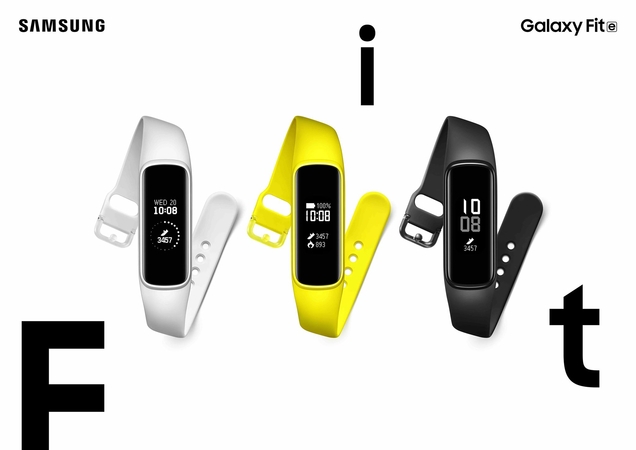
Now available in Thailand, the new Samsung Galaxy Fit e is a fitness tracker with a heart rate sensor that comes in sleek design. It’s light and comfortable to wear too and best of all, comes at a very comfortable price.

Even with a heart rate sensor, it goes for just under Bt1,500 so few will have an excuse for not staying active and healthy.

The Galaxy Fit e has a footprint of only ‎40.2 x 16.0‎ millimetres and weighs just 15 grammes. I found during my test that it was really comfortable to wear even in bed where I used it to monitor my sleep.

The tracker comes with a monochrome 0.74-inch PMOLED display with 128×64 pixels resolution. It has 128 kilobytes of memory for storing your fitness data, such as number of steps walked, amount of calories burned and exercise undertaken, all of it synced to your Samsung Health account.

And even though it’s light and sleek, the Galaxy Fit e is compliant with military-grade durability standards and with a water resistance of 5 ATM so you can use it outdoors even when it’s pouring with rain.

Two apps are required for use with the Fit e. First, you need to install the Samsung Galaxy Wearable app that will connect the Fit e to your smartphone and downloads all the interface software necessary to communicate with the fitness tracker.

Then, you will need to install the Samsung Health app to allow the fitness data from the tracker to be transferred to the cloud storage of your Samsung Health account.

The Galaxy Wearable app will guide you to link the fitness tracker to your smartphone using a Bluetooth connection. Once connected, the fitness tracker will relay notifications from your smartphone to the Fit e. You can use the app to adjust which app can send notifications to the tracker.

You can also use the Galaxy Wearable app to set alarms on the tracker, which will vibrate when the scheduled times come round.

The Galaxy Wearable is also used to select location for weather data to be sent to your Fit e.

The first clock face screen shows the current time, the number of steps you have taken and the calories you have burned. Six more clock faces, including two with the date, can be downloaded.

The factory setting on the watch has four widgets for reporting current accumulated steps, your burned calories, the length of your sleep and the weather. Use the Galaxy Wearable app to add two more widgets – Calendar and Heart rate – or remove the ones already installed. You cycle through the installed widgets by tapping the display.

The tracker automatically detects three activities –walking, running and dynamic workout. You can use the Samsung Health app to manually start and stop and record other exercises, including cycling, swimming, treadmill and exercise bike. Several more exercises are available for download and use via the app, including jump rope, jumping jacks, golf and dancing.

Galaxy Fit e (left) with elder sister, Galaxy Fit (right).

The first time you use Samsung Health, you should specify your birth date, gender, height and weight so that the tracker can accurately calculate the calories you have burned.

The Samsung Health app sets the goal of 6,000 steps each day. The app will display a dashboard that show the progress towards that goal, the amount of active time spent and the number of calories you have burned and as well as how long you slept the previous night.

You can also use the app to update your weight and the number of glasses of water you have drunk and the amount of calories you have consumed.

The Fit e automatically tracks your sleep and analyzes your sleeping patterns throughout three stages of sleep by detecting the movements of your body as you sleep.

During the test, I wore Fit e to walk to the mouth of my soi to exercise and buy dinner. The tracker automatically detected my walk and recorded it automatically. The tracker detected my stop and wait at the food stall, stopped my walk and saved the activity automatically. The distance calculated by the tracker was quite accurate.

The tracker has a good battery life. One full charge lets you use the tracker for six or seven days.

Samsung Galaxy Fitness e is available in white, black and yellow for Bt1,290. The yellow one is particularly attractive and great for anyone who wants a sporty look.

Key specs:

OS: FreeRTOS

Display: 0.74-inch PMOLED with 128×64 pixels

Memory: 128 KB

Sensors: Accelerometer, HR Sensor

Battery: 70 mAh, 6-7 days typical usage time

Dimension (HxW, mm): 40.2 x 16.0

Weight: 15g

LG to expand sales of AI-powered washers in EU

ศาสตร์เกษตรดินปุ๋ย : ขอบคุณแหล่งข้อมูล : หนังสือพิมพ์ The Nation

https://www.nationthailand.com/edandtech/30375744

LG to expand sales of AI-powered washers in EU

Sep 03. 2019
By The Korea Herald

123 Viewed

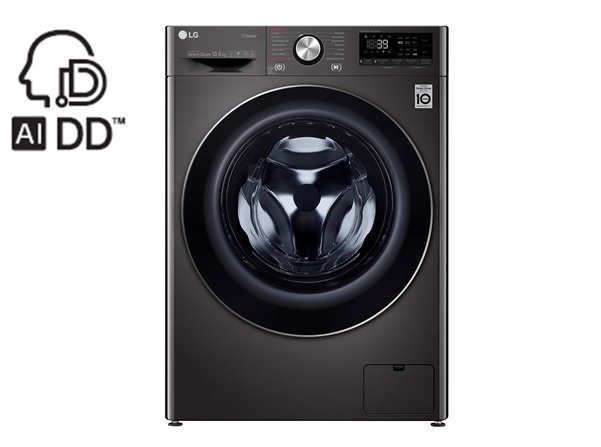
LG Electronics said Monday it will expand sales of its artificial intelligence-powered washers in 30 European countries this year.

The South Korean tech giant has applied AI tech to the core component of its washing machines for smarter, more convenient management of clothes.

LG said it will launch front-loading washing machines equipped with the firm’s flagship Direct Drive motor in 30 European countries, including the Netherlands, Switzerland and Finland, by the end of the year.

The DD motor-equipped washers are currently available only in eight European countries.The motor, which uses around 20,000 pieces of big data, is capable of identifying garment materials and suggesting the most effective way for washing automatically.

The motor’s performance was certified by global institution Intertek in March, when the certifying body concluded that the front-loading washer with an AI motor was better at protecting fabrics than the company’s previous models.

“LG seeks customer satisfaction by introducing differentiated components that enable convenient management of clothes,” said Song Dae-hyun, president of home appliances at LG Electronics.

The company will showcase the product in Berlin at IFA 2019, a home electronics trade show that runs Friday through Wednesday.

How Grab makes Bangkok ‘smarter’

ศาสตร์เกษตรดินปุ๋ย : ขอบคุณแหล่งข้อมูล : หนังสือพิมพ์ The Nation

https://www.nationthailand.com/edandtech/30375704

How Grab makes Bangkok ‘smarter’

Sep 02. 2019
Photo by Grab

Photo by Grab
By The Nation

345 Viewed

With a rising middle-class population, Bangkok is quickly becoming a megacity. While every city has its own set of challenges due to urbanisation and Bangkok is no exception, it has developed a strategic plan, according to Grab research.

The Ministry of Digital Economy and Society earlier this year announced the launch of “Smart City Thailand”, a concept that uses ICT to manage urbanisation based on the unique characteristics of each city to improve the quality of life and be more sustainable.

One of the key pillars of the Smart City policy is Smart Mobility, by which commuters and visitors have more flexibility and convenience thanks to increasing efficiency and connectivity of existing transportation system using Big Data technology.

Traffic congestion and pollution raise serious concerns, especially in large cities. Population growth, inefficient transportation systems and urbanisation have made today’s cities notoriously difficult to navigate, hindering their development. On average, Thais spend 24 days a year (1.5 hour a day) in traffic jams.

Ultimately, traffic congestion is caused by increases in traffic. In Bangkok there are 9.8 million registered private cars and motorcycles, which is right times more than what the existing road infrastructure can accommodate.

To achieve smart mobility, the goal is beyond just increasing mass transit options but also developing an integrated public transport network based on data-driven insights that encourages shift of commuters’ behaviour to using mass transit.

Smart use of data is paramount to realising this goal and ride-hailing platforms can be part of the solution.

Using digital technology, ride-hailing platforms have helped provide Bangkokians with safe and reliable alternative transportation options. From these services, myriad of transit data such as hotspots for pick-up and drop off and peak hours traffic can enable cities to make better decisions about routes, intervals and where to invest.

Data-supported insights that showcase the demand of ride-share services across different areas can also provide valuable inference point for city planners and policymakers to develop an integrated transport system.

To ensure these insights can be derived smartly and accurately, a reliable platform is required to allow a secure, scalable and easy way to share data. Grab’s proprietary Smart Mobility Platform is an example. City planners can easily visualise historical and real-time traffic information calculated from Grab rides on the road using the platform.

Such visualisation can be used for analysis and planning purposes but beyond that, these visualisations also form the basic foundation from which additional layers of information and analysis can be developed to create a wholistic real time road network management system.

Traffic data in Bangkok, visualised on the Smart Mobility Platform – demonstrating how an easy-to-access, versatile and customisable platform facilitates efficient data analysis.

Thailand has high mobile penetration and social media use, so Thais are accustomed to the seamless world they experience online. As a result, commuters are expecting a similar experience when they travel. This expectation can be a key turning point to encourage more use of mass transit by ensuring the journey has minimal transit gaps, making it hassle-free and comfortable.

Ride-hailing services have been helping to close the gap as it provides commuters alternative transportation choices to completing their first-mile-last-mile transit in the city.

The transit experience can be further improved when data from different transportation modes such as buses and trains are combined with ride-hailing data to give commuters accurate road information, allowing better trip planning. Commuters will have full visibility to decide on their preferred journey option based on their preference and other needs, whether that’s to take public transit for most of the distance and use ride-hailing for some part of the way. Mobility services are beneficial not only to city residents but also tourists.

Combining private and public data will not only provides convenience to commuters, it also generates a more comprehensive insight to help create better analysis and planning for the city.

Grab’s Trip Planner pilot – a feature that integrates public transportation options directly into the Grab app, with Grab services offering first-mile-last-mile rides to and from public transit stations or bus stops. This pilot will inform Grab on the next iteration of shared transport integration.

In addition to helping unlock the city’s mobility, e-hailing platforms have the capability to drive exponential positive impact. This is evident in the case of Grab, whose super-app ecosystem has facilitated services such as e-payments and has provided more income opportunities for driver partners, accelerating the digital economy growth of the city.

In partnership with cities and transit agencies, data integration and seamless connectivity can be fostered, allowing an ecosystem with clear and consistent guidelines to enable more innovations.

A future where this sharing economy can benefit not just Bangkok but all cities and provinces, unlocking full digital potential of Thailand.

The new MacBook Air does everything you want and more and it comes at a discount if you’re studying

ศาสตร์เกษตรดินปุ๋ย : ขอบคุณแหล่งข้อมูล : หนังสือพิมพ์ The Nation

https://www.nationthailand.com/edandtech/30375698

The new MacBook Air does everything you want and more and it comes at a discount if you’re studying

Sep 02. 2019
MacBook Air today starts at a lower price  and features a stunning Retina display, now with True Tone.

MacBook Air today starts at a lower price and features a stunning Retina display, now with True Tone.
By Paisal Chuenprasaeng
The Nation

221 Viewed

A computer designed with university students in mind, the new MacBook Air is as slim and light as ever but boasts even better looks and a lower price so as not to overstretch the budgets of the young. It is positively skinny at 41 millimetres to 15.6mm thick and in its lightest configuration weighs just 1.25 kg.

The notebook comes in a sleek aluminum chassis and is available in Space Grey, Silver and Gold. I was given the gold version and it earned plenty of admiring looks when I carried it around with me.

The new MacBook Air comes with a 13.3-inch (diagonal) LED-backlit display with IPS technology and has 2560-by-1600 native resolution at 227 pixels per inch. True Tone technology used on the Air’s retina display gives off a more natural viewing experience.

The True Tone technology automatically adjusts the white point of the display to match the colour temperature of your environment and that makes web pages and email look as natural as the printed page. And the high resolution of 4 million pixels-plus allows you to see images and video in great and realistic detail while text looks sharp and clear.

And since the display has 48 per cent more colours than the previous generation, viewing is rich and vibrant. That is helped by the display being housed in a frame whose borders are 50-per-cent thinner.

During the test, I enjoyed viewing photos and watching HD video clips. High resolution images appeared sharp and clear in vibrant colours and HD videos were beautifully rendered.

The new MacBook Air is designed for students and general use and is more than powerful enough for business and everyday applications, like Microsoft Office. It is powered by 8thGeneration Intel Core i5 dual-core processor running at 1.6 GHz, equipped with 8 gigabytes of 2133 MHz DDR3 working memory or RAM and comes with 128GB SSD storage. A version with 256GB storage is also available. The 128GB storage may sound small but you can expand it with external storage using a USB-C port.

Apple’s popular Back to School promotion is back with great savings for higher education students.

Two Thunderbolt 3 (USB-C) ports are provided and each can be used to recharge the notebook or as a DisplayPort to an external display. The Thunderbolt is capable of outputting data up to 40 Gigabits per second to the external 4K display, for example. The USB-C ports also support the protocol of USB-C 3.1 Gen 2 that has data throughput of 10Gb/s.

The new MacBook Air is not suitable for extensive graphics games as it uses integrated Intel UHD Graphics 617 as its graphics engine. But it supports Thunderbolt 3-enabled external graphics processors (eGPUs) in case you need maximum graphics horse power.

During the test, I found the new MacBook Air performed smoothly and fast when I used business applications, like LibreOffice. Video clips played smoothly and web pages were rendered fast and beautifully.

The new MacBook Air has a better sound system than its predecessor too. Its stereo speakers deliver twice the bass and 25-per-cent more volume than the previous generation. That’s particularly good for watching movies and listening to music.

And the notebook comes with a three-microphone array to capture your voice more accurately when you make FaceTime video calls. The new MacBook Air provides FaceTime HD camera.

And although the new MacBook Air is housed in a 13-inch body, I found that the keyboard is spacious and comfortable to type on. It uses the latest-generation keyboard for MacBook Air that features a “butterfly mechanism”, which provides four times more key stability than a traditional scissor mechanism while also allowing greater comfort and responsiveness. Moreover, each key is LED-backlit and the keyboard comes with an ambient light sensor so you can type in low-light environment.

The keyboard comes with Force Touch trackpad that lets you interact with the notebook in a variety ways based on subtle differences in pressure. It also supports Multi-Touch gestures like pinch and zoom. The new trackpad is also about 20 per cent larger than the previous model.

Group FaceTime makes collaborating on projects easier than ever.

What I liked most about the new MacBook Air is that its keyboard is now integrated with Touch ID and fingerprint reader. The Touch ID sensor is located at the top right corner of the keyboard. You can use your index finger to unlock the MacBook Air, locked documents, notes and system settings immediately without having to retype on the keyboard. You can also use your Touch ID through the fingerprint sensor to pay for online shopping, using Apple Pay.

The new MacBook Air features the Apple T2 Security Chip – the second-generation custom Mac silicon designed by Apple to make MacBook Air even more secure. So when you use Touch ID to unlock your Mac, authenticate a document, or pay a merchant online, your information stays safe.

The notebook runs on macOS Mojave that is intuitive to use and it also comes with powerful built-in apps, such as Pages, Photos, Numbers, iMovie and Safari. The macOS allows you to work with your iPhone by sending and receiving text messages that are sent to your iPhone on the notebook. You can also start a document, email, text, or note on your MacBook and finish it on your iPhone or vice versa.

And Apple has announced that when the new macOS Catalina is released later this year, the new MacBook Air can also be upgraded. Apple says Catalina is packed with cool new features, fresh new apps and powerful new technology for developers. MacOS Catalina comes with Apple’s popular entertainment apps – Apple Music, Apple Podcasts and the Apple TV app – and the all-new Sidecar feature enables users to extend their Mac desktop by using their iPad as a second display or as a high-precision input device.

The notebook uses a 49.9-watt Lithium Polymer battery with about 12 hours of battery life for browsing web pages.

The new MacBook Air with 128 GB storage retails for Bt35,900. University students can show their student ID card to buy it for Bt31,900.

Key specs:

OS: macOS Mojave Version 10.14.5

CPU: 1.6GHz dual-core Intel Core i5, Turbo Boost up to 3.6GHz, with 4MB L3 cache

Memory: 8GB of 2133MHz LPDDR3 onboard memory

Storage: 128GB PCIe-based SSD

Display: 13.3-inch (diagonal) LED-backlit display with IPS technology; 2560-by-1600 native resolution at 227 pixels per inch with support for millions of colors

Graphics: Intel UHD Graphics 617

Camera: 720p FaceTime HD camea

Ports: Two Thunderbolt 3 (USB-C) ports with support for: Charging, DisplayPort

Wireless: 802.11ac Wi-Fi, Bluetooth 4.2

Audio: Stereo speakers, three microphones, 3.5mm headphone jack

Battery: Built-in 49.9 watt hour lithium polymer battery

Dimensions: 0.41-1.56 cm (H) x 30.41 cm (W) x 21.24 cm (D)

Weight: 1.25kg

Face swap app accused of excessive data collection

ศาสตร์เกษตรดินปุ๋ย : ขอบคุณแหล่งข้อมูล : หนังสือพิมพ์ The Nation

https://www.nationthailand.com/edandtech/30375688

Face swap app accused of excessive data collection

Sep 02. 2019
By China Daily
Asia News Network

151 Viewed

A mobile application that enables users to appear as celebrities in hit movies or TV series has been widely accused of excessively collecting personal information, stirring public concerns over privacy and the rights to one’s image.

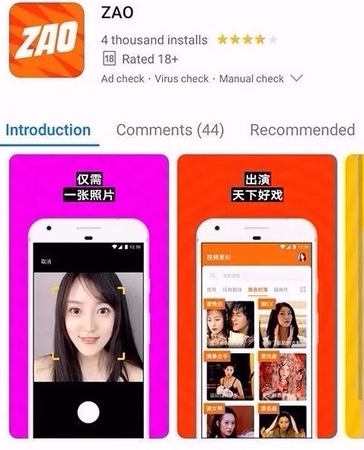
The app, dubbed ZAO, or “make” in Mandarin, allows users to upload photos of their faces and swap them with the faces of celebrities in blockbusters or hit TV series by using artificial intelligence.

It attracted a large number of netizens soon after its debut on Friday night, but many began to worry if their personal information would be disclosed and used by criminals amid the trend of facial recognition payment.

The platform said on Sunday on its Sina Weibo account that “we fully understand your concerns about privacy issues. We have received the questions you have raised and will correct the parts that were not well-considered. It will take some time.”

The app’s sharing link on WeChat, a Chinese social network app, has been shut down, and its web page said that “the page has security hazards and has received many complaints. In order to maintain a good internet environment, access has been stopped.”

The app also modified its user agreement on Saturday, adding a special notice in the front that states content will not be used for other purposes and can be removed from the server.

The original agreement, which sparkled wide controversy online, said “before you upload or post any content, you agree to grant ZAO, its affiliates and ZAO users worldwide the right to irrevocably use your original photo, synthesized photo and videos for free and for good … and to make changes to the portraits of the original holders.”

ZAO became a sensation overnight. Since Friday, social media users have posted videos starring themselves on various digital platforms,-so many that the server was almost paralyzed, the app said on Weibo on Friday night, adding that they probably would have to make stricter traffic restrictions the next day.

On the app, users can choose from a pool of video footage and replace a star’s face with their own by uploading their own high-definition photos featuring a full-frontal shot of their faces.

Then they need to verify their faces following a string of instructions that require them to open their mouths or lift their heads, for example, to make sure the face is really theirs.

The app can automatically analyze and ban photos of public figures. Users cannot share finished videos without face verification.

However, many users noticed the user agreement appeared unreasonable.

“The clauses require the users to fully authorize the image right to the platform … You can’t control what they are going to do with your portrait,” a Weibo user named Tone2 said.

“When you grant authorization to ZAO, all the rights of your face are no longer yours,” another user named stoneyzombie commented.

As users need to log in with a personal phone number, some fear that once the phone number and facial images are disclosed, “criminals can directly talk to your family by using some technical synthesis,” an unidentified Weibo user said.

“The clauses don’t have any legal effect,” said Zhu Wei, an associate professor at China University of Political Science and Law, adding that it is illegal for the company to create such a user agreement when it clearly knows the risks of people taking advantage of the information to do “bad things”.

“The infringement of the right to your image is just one part,” he said. “People are using a mobile client that involves information about personal identity, property, scan codes and mobile payments, and they can’t see exactly what information is obtained by the app. So it is very dangerous.”

Wang Sixin, a professor of internet law at Communication University of China, said the law stipulates that digital platforms should be completely responsible for their content.

Such applications provide conditions and technical availability to the possibility of abusing and infringing on personal rights, and “as long as there is an infringement, the platform will be held accountable,” he said.

He added that such clauses are “invalid and clearly unfair” when the platform tries to shake off all its obligations while passing all of them on to users.

ZAO is not the first mobile application to let users play around with their faces. Late last year, an app called Zepeto, developed in South Korea, became popular in China for creating an animated version of users by taking a selfie. The Russian-developed application Face-App also uses artificial intelligence to transform uploaded personal faces.

Such applications have privacy risks, hence the need for stricter market supervision and preventive measures, Wang said.

SK Broadband introduces kiosks for pharmacies

ศาสตร์เกษตรดินปุ๋ย : ขอบคุณแหล่งข้อมูล : หนังสือพิมพ์ The Nation

https://www.nationthailand.com/edandtech/30375599

SK Broadband introduces kiosks for pharmacies

Aug 30. 2019
Pharmacist poses with On Kiosk. (SK Broadband)

Pharmacist poses with On Kiosk. (SK Broadband)
By The Korea Herald

106 Viewed

SK Broadband said Thursday it had teamed up with pharma marketing company Online Pharm to introduce electronic kiosks for pharmacies.

The stand called On Kiosk, which provides Korean, English, Chinese and Japanese services, will be able to process simple drug prescriptions, offer guidelines for drug intake, and provide a queuing system for consultations.

The kiosks will be able to take over routine tasks, allowing pharmacists to focus more on providing health consultations. It is also equipped with Point Of Sale software that can digitally manage drug inventories, the firm said.

Depending on the size and location of the pharmacies, SK Broadband offers a total of four types of On Kiosk models that vary in size. The smallest model can be placed on top of a desk.

Science ICT ministry seeks 17.3% hike in national R&D budget for 2020

ศาสตร์เกษตรดินปุ๋ย : ขอบคุณแหล่งข้อมูล : หนังสือพิมพ์ The Nation

https://www.nationthailand.com/edandtech/30375533

Science ICT ministry seeks 17.3% hike in national R&D budget for 2020

Aug 29. 2019
By The Korea Herald

117 Viewed

The Ministry of Science and ICT said Thursday that it has proposed a 17.3-percent on-year increase in the national research and development budget for 2020 to allow the country to strive for independence in critical technologies.

The proposal, which is subject to parliamentary approval, set aside 24.1 trillion won ($19.8 billion) for R&D, up from 20.5 trillion won from 2019.

“This is the first time in 10 years that South Korea is aiming for a double digit increase in its R&D spending budget,” the ministry said in a press release. The increase is also far steeper than the overall rise in the government’s annual budget proposal that calls for a 9.3-percent on-year increase, totaling 513.5 trillion won.

The science ministry said it will allocate 2.3 trillion to strengthen the country’s basic R&D infrastructure and train talented engineers and scientists to spur innovative growth.

It said it plans to earmark another 1.7 trillion to build up the country’s capability in critical industrial components so it cannot be impacted by outside developments, like Japan’s recent decision to curb exports of important materials and parts needed to make high-tech products, such as semiconductors and displays.

“Money needs to be injected so the country can make its own critical components without relying on other countries,” the ministry said.

The ministry said it will set aside a further 500 billion won to lay the foundation for a society able to make good use of artificial intelligence and 5G data networks while injecting some 1.7 trillion won to support the growth of system chips, bio-health and future automobiles.

Besides the R&D budget, the ministry called for 9.2-percent on-year hike in its spending expenditure to little over 16.2 trillion won for specific R&D projects that can contribute to sustainable growth, create a more friendly research environment for scientists, and create jobs for expert personnel.

State spending will be used in such areas as combating fine dust air pollution, which sparked public safety concerns earlier this year.

Apple improves Siri’s privacy protections

ศาสตร์เกษตรดินปุ๋ย : ขอบคุณแหล่งข้อมูล : หนังสือพิมพ์ The Nation

https://www.nationthailand.com/edandtech/30375530

Apple improves Siri’s privacy protections

Aug 29. 2019
By The Nation

124 Viewed

Siri has been engineered to protect user privacy from the beginning, Apple announced on Wednesday.

The company said in a press statement that it focuses on doing as much on the device as possible, minimizing the amount of data it collects with Siri.

Apple claimed it does not store Siri data on servers to build a marketing profile and it has never sold the data to anyone. Instead, Apple said, it uses Siri data only to improve Siri, and it is constantly developing technologies to make Siri even more private.

Siri uses as little data as possible to deliver an accurate result. When users ask a question about a sporting event, for example, Siri uses their general location to provide suitable results. But if users ask for the nearest grocery store, more specific location data is used.

If users ask Siri to read their unread messages, Siri simply instructs their device to read aloud their unread messages. The contents of their messages aren’t transmitted to Siri’s servers, because it isn’t necessary to do so.

Siri uses a random identifier — a long string of letters and numbers associated with a single device– to keep track of data while it’s being processed, rather than tying it to the user’s identity through his/her Apple ID or phone number, a process Apple believes is unique among the digital assistants in use today. For further protection, after six months, the device’s data is disassociated from the random identifier, the company added.

In order for Siri to more accurately complete personalised tasks, it collects and stores certain information from users’ devices. For instance, when Siri encounters an uncommon name, it may use names from users’ Contacts to make sure it recognises the name correctly.

Siri also relies on data from users’ interactions with it, stating: “This includes the audio of your request and a computer-generated transcription of it. Apple sometimes uses the audio recording of a request, as well as the transcript, in a machine learning process that ‘trains’ Siri to improve.”

VN has potential to become South-east Asian innovation hub

ศาสตร์เกษตรดินปุ๋ย : ขอบคุณแหล่งข้อมูล : หนังสือพิมพ์ The Nation

https://www.nationthailand.com/edandtech/30375529

VN has potential to become South-east Asian innovation hub

Aug 29. 2019
By Viet Nam News

123 Viewed

Viet Nam has been very successful in the software outsourcing field over the past decade that many countries regard it as an Asian outsourcing hub.

Ngo Van Toan, vice chairman of the Viet Nam Information Technology Outsourcing Alliance (VNITO Alliance) and vice president of Global CyberSoft (Vietnam) JSC, talks to Viet Nam News about this topic.

How does Viet Nam’s information technology sector compare with other countries’?

In the assessment of the world’s leading research and advisory company Gartner and other prestigious organisations that rank software outsourcing services, Viet Nam has been one of the most attractive destinations for information technology in the world in the last five years.

We have a relatively good position. In the field of business process outsourcing (BPO) and IT outsourcing (ITO), we are among the leading outsourcing destinations in the world.

We are also one of the leading countries in providing IT services to the world. These are objective assessments by foreign organisations.

From being an Asian software development hub, Viet Nam now seeks to become a centre for software development and innovation in Southeast Asia. What do you think about this? Can Viet Nam become a regional ‘innovation hub’?

We can absolutely make it because some start-ups and other companies have implemented projects with high levels of new technology.

However, to become an innovation hub and increase the rate and number of companies that can participate in new technology projects depends on the way we train our human resources.

Viet Nam’s exports of IT services have increased significantly in recent years. Looking ahead, how do see the export potential?

The export potential is huge. Currently, we export to a few dozen countries, but Japan, North America and Europe are still the biggest markets.

Key markets such as North America, the EU and Japan have a very high demand for IT services that we do not have sufficient resources and personnel to accept and implement projects from these countries.

How to have capable human resources to enable us to grab this valuable opportunity is among the challenges faced by Viet Nam currently.

The fourth industrial revolution has had a significant impact on Vietnamese businesses in many sectors. What difficulties do IT firms face from the rapid growth of technology during the industry 4.0 era?

Fortunately, Vietnamese are very receptive to and capable in new technological fields. In fact, Vietnamese enterprises are now able to implement projects using the latest technologies such as big data, artificial intelligence, and the internet of things.

Vietnamese engineers can now carry out onsite projects for customers all over the world. This means we are really strong in the new technology field.

What should the IT sector do to add value?

I think there are many issues we need to focus on. But there are two main things we need to prioritise. Firstly, we need to focus on improving human resource so that we can execute international projects.

Secondly, we must continue to enhance innovation in the services we provide and raise the level of our services to add more value to our products and services.

Viet Nam has strength in it because as I said above, in the field of new technologies our engineers are fully receptive and can undertake new technology projects.

How do you assess the human resources in the sector?

Enterprises in the sector face a shortage of human resources in terms of both quality and quantity.

There is still a gap between training and practice. Therefore, enterprises are working with universities to narrow this gap.

Do you think the escalation in the US-China trade war will bring opportunities to the IT sector?

There are many points of views. Opportunities for this innovation industry are already plenty, even without the US-China trade war. The most important thing is if we are ready to grab the opportunities.