Under the brightest spotlight yet, Jill Biden takes on her biggest role
LivingAug 18. 2020Jill Biden, shown introducing her husband at a 2013 event, is taking an active role in his campaign for president. MUST CREDIT: Photo for The Washington Post by Astrid Riecken
By The Washington Post · Jada Yuan, Annie Linskey · NATIONAL, POLITICS, WHITEHOUSE On the chaotic day that Joe Biden called Sen. Kamala Harris to ask whether she’d be his running mate, Los Angeles Mayor Eric Garcetti’s phone rang.
As one of four co-chairs on Biden’s vice-presidential selection committee, Garcetti was one of a handful of people on the planet privy to that extensive and secretive process. On the other end of the line was someone even more involved in the decision: Joe’s wife of 43 years, Jill.
So central was Jill Biden’s role in the process that the selection committee had presented their initial findings to the Bidens as a pair. With Jill’s input, Joe narrowed the field of more than 20 to the 11 whom he then interviewed one on one. Joe called the other contenders to tell them Harris was his choice, and Jill was the one calling the four selection committee co-chairs to tell them the news.
The extent of Jill Biden’s influence on big decisions in her husband’s campaign to unseat President Donald Trump is both mysterious and not. “It’s a marriage” is her standard line, which is to say, of course they’ve talked about this, they bounce things off each other all the time, and we don’t get to know the details. (Her staff declined to make her available for an interview.)
Here’s something we do know: The Jill Biden who will address the Democratic National Convention on Tuesday night is playing a far more active role in her husband’s campaign than she has in his past two White House bids, in 1988 and 2008, according to close friends and confidants. Though she’s spent eight years in and near the White House, her speech at the virtual convention will probably serve as a reintroduction to voters – a big moment for a potential first lady, even under these circumstances.
And what kind of first lady would she be? By all indications, a hands-on one. “I think she has a combination of Michelle Obama, Eleanor Roosevelt and Hillary Clinton,” said Randi Weingarten, president of the American Federation of Teachers, AFL-CIO, noting that all three were passionate about education but the latter two operated in the foreground, while Obama seemed more comfortable asserting her power behind the scenes. It’s likely Jill Biden would be a far more public and active first lady than Melania Trump.
– – –
Jill likes to tell the story of how in 2003, when party brass were at her house trying to get Joe to run, she marched past them in a bikini with “NO” written in marker on her stomach. This time, she’s pitched in on the campaign’s education unity task force, helping merge policy ideas from Sen. Bernie Sanders’s camp and her husband’s. She’s reached out to Hispanic leaders, trying to forge a tie with a group of voters that has been slow to warm to her husband. She has taken on routine but meaningful duties like informing Garcetti and other members of the vice-presidential search team of her husband’s pick, which was first reported by USA Today. At times, she’s even taken a turn as impromptu bodyguard, twice fending off protesters storming the stage while Joe was speaking.
With Joe largely campaigning from their home in Wilmington, Del., because of the coronavirus pandemic, she is the one who is physically with him on most days, while top advisers have scattered across the country. Family dynamics have changed, too, since the last time Joe ran for office – particularly after Beau Biden’s 2015 death of brain cancer at 46. Beau’s absence as his father’s confidant has left a vacuum that Jill has filled, according to friends.
And Jill herself has changed.
“When we started campaigning in 2008, she was a little nervous,” says Cathy Russell, Jill’s former chief of staff, who’s known and been working with the Bidens at different times since 1987. This time around, Russell was in Iowa for a month, sometimes meeting up with the former second lady as she maintained a packed schedule – often busier than Joe’s, according to staffers and outside observers. Jill would invite Iowa grandmothers out for wine and give her contact information to people who told her of sons dying of cancer or in the military. “She’s just really good!” says Russell, who recalled Jill going around to small crowds in rural towns trying to convince every reluctant voter individually. “She’s just so much more experienced and self-assured, what is it? Twelve years later?” (For all her effort, Joe Biden came in fourth in Iowa this year.)
The Iowa caucuses, too, feel like they were, what is it, 12 years ago? Since then, Biden has managed to become his party’s nominee, and the situation in the country he’s trying to inherit has only become more dire. Beating Donald Trump is not Jill Biden’s job, but she’s made it clear that she intends to help her husband do it, and that she, too, is eager to get to work.
During the Obama presidency, Michelle Obama and Jill Biden traveled together as part of their Joining Forces initiative in support of military families, and the former first lady once described what it was like flying with her counterpart.
“Jill is always grading papers,” Obama said in their joint 2016 White House exit interview with People Magazine. “Which is funny because I’d forget, ‘Oh yeah, you have a day job!’ And then she pulls out her papers and she’s so diligent and I’m like, ‘Look at you! You have a job! Tell me! Tell me what it’s like!’ “
Jill Biden had been a rarity: a second lady with a second gig. She was an English composition professor at Northern Virginia Community College (NOVA), a job she started in 2009, part of a long career in education that included stints at public high schools, at an adolescent psychiatric facility and at Delaware Technical Community College.
The enduring image former staff members repeatedly say they have of Jill Biden during the Obama administration is her carrying a stack of papers she had to grade on state trips to places like Israel, Japan or the Democratic Republic of Congo. One time, Jill asked to leave her office hours 10 minutes early, recalls Jim McClellan, NOVA’s liberal arts dean, because Joe was sitting in Air Force Two waiting for her to show up so they could do a three-country tour of Latin America. “I said, ‘Well, since the jet is revving up and using gas sitting on the runway, go ahead,’ ” McClellan says. She left with a stack of papers to grade and had them all done in time to be back in the office at 7 a.m. for her Tuesday classes.
If Joe Biden, who is 77, wins the presidency, Jill, 69, would not be the first first lady with an education background – Michelle Obama has been an associate dean of student services at the University of Chicago, and Laura Bush was a schoolteacher and a librarian – but she is among the most accomplished. Campaign and Obama-era staffers call her “Dr. Biden” in recognition of the PhD it took her 15 years to get while raising three children – Beau and Hunter from Joe’s first marriage and Ashley, the daughter they had together. At NOVA, she works out of a cubicle and goes by the quasi-clandestine moniker “Dr. B.” (Her name isn’t listed in the course book.) When she had a Secret Service detail, she asked them to dress like students.
Her first year, she taught English as a Second Language and was so moved by her students’ stories that, according to McClellan, she’d write them on Post-it notes and leave them on the bathroom mirror of the vice president’s residency for Joe to read. Since then, she’s preferred teaching freshman composition and developmental English, which is meant to bring remedial students up to college writing level. Her reviews on RateMyProfessors.com, a website where users leave anonymous notes on college teachers, range from effusive – “literally my favorite professor” – to skull-and-crossbones-level warnings, all about her making them endlessly write journals and being a tough grader: “No sense of humor even though she tries to look nice.” “Be ready to writeeeee alotttttt !!”
– – –
This year’s campaign marks the first time she’s taken a break from teaching since she gave birth to Ashley in 1981. “She said she felt that if she didn’t give it her best shot, and that the election turned out not to be favorable to her husband, that she would regret not having done more,” McClellan says. Still, she’s attended voluntary training in online teaching and has said she intends to go back to NOVA even if Joe wins and they move into the White House. It would be the first time a first lady kept a day job outside the home, according to Anita McBride, who runs the First Ladies Initiative at American University and was Bush’s chief of staff. “This would be a precedent,” she says.
Education activists are practically giddy about the prospect of having Jill Biden in the White House, bending Joe’s ear. “They sit and talk about education issues over breakfast every morning,” says Lily Eskelsen García, president of the National Education Association, which is also Jill Biden’s union.
Weingarten, the American Federation of Teachers president, tells the story of how in 2010, a high school in Central Falls, R.I., fired all 93 teachers and staff members because of failing test scores – a move that President Barack Obama and his education secretary, Arne Duncan, backed publicly. Weingarten, who was vehemently opposed to evaluating teachers by test scores, says she had “a very heated discussion with the vice president,” who over the next few days got “very involved.” The educators were rehired later that year.
“He said to me, ‘I did my homework,’ ” Weingarten says, and she suspects Dr. B might have had a hand in that education. (The Biden campaign declined to comment on a personal conversation.)
Lately, Jill Biden has been chatting with lawmakers in the Congressional Hispanic Caucus over Zoom. Joe has promised to pass comprehensive immigration reform in his first 100 days in office, and for six weeks beginning in April, Jill’s job was to listen while members of the caucus talked about their hopes for higher education and vented their frustrations with the 3 million deportations that took place under the Obama administration. Her placement on the issue seemed to signal how serious the campaign is about wooing their support. Jill is also working on learning Spanish via the Babbel app.
She’d take notes, said she’d convey their concerns to Joe and report back on her conversations with him at the next meeting. “And when we did meet with him on certain issues, he’d say, ‘Yeah, my wife, Jill, talked to me about that, and I’m all over it,’ ” says Rep. Tony Cárdenas, D-Calif., who chaired the meetings. Every person who asked Jill to meet with their district got an immediate follow-up and usually saw her jump onto their Zooms that week.
As for Jill’s language skills, “It’s always kind of cute when somebody speaks Spanish and their accent is not as organic,” Cárdenas says, politely. Overall, “The big theme that emerged to me is that everyone was nodding their heads, saying, ‘I’m looking forward to working with her,’ ” he said. “She’s going to be a very active first lady.”
– – –
Jill was not a professional model like Melania Trump, but she did pose for local advertisements shot by a photographer friend, one of which caught the eye of 32-year-old first-term Sen. Joe Biden as he walked through the Wilmington airport in 1975.
As it turned out, his brother Frank knew Jill and gave Joe her number. The rest is history, which the Bidens have written themselves in their many books: Jill was about nine years younger, a tough-cookie “Philly girl,” the oldest of five girls who had once punched a bully in the face for throwing worms on one of her sisters. He was a widower who had lost his wife in a 1972 car crash that also killed his baby daughter and badly injured his young sons. Jill and Joe’s romance was a whirlwind, but it took five marriage proposals before she said yes; she’d been married and divorced young (“to a tall ex-football player who drove a fast yellow Camero,” she wrote in her 2019 memoir, “Where the Light Enters”) and she wanted to make sure, for the sake of Beau and Hunter, that this wouldn’t end in another divorce. She adopted the boys and raised them.
Senate payroll records reviewed by The Washington Post also show that Jill worked as a “staff assistant” for four and a half months in Joe Biden’s office, from Sept. 10, 1975, until Jan. 25, 1976. This was before they married in 1977, and she used her prior married name, Jill T. Stevenson. It is not mentioned in her book and seems to be mostly lost from their biographical narrative. A Biden campaign aide downplayed her role, saying she was answering the phone in a front office when he was short-staffed.
A 1977 newspaper article says that a month after their wedding, she was still traveling once a week to work at his downstate office in between volunteering at a child abuse center and learning to play the piano. (Joe, laughing, said he’d had no idea she was working for him.) Jill didn’t speak for that article, either, and Joe asked for privacy on her behalf, telling Wilmington’s Sunday News Journal, “I don’t want to get her into the political thing.”
– – –
Tragedy struck again when Beau, an Iraq War veteran and former attorney general of Delaware, died in 2015 after two years with cancer. Jill, who lost her mother during the 2008 campaign, writes candidly about how grief changed her, describing herself as feeling “like a piece of china that’s been glued back together again” and admitting that she lost her faith and stopped going to church.
“I thought at the time, and I still think now, that when she wrote it, she didn’t think her husband was going to run,” says Connie Schultz, a journalist and wife of Sen. Sherrod Brown, D-Ohio, who reviewed Jill’s memoir for The Washington Post. The book came out in May 2019, a couple of weeks after Joe declared his candidacy. “If he had been planning to run, I have to believe there are people in the campaign who would have said, ‘I don’t think you want to be telling Catholic voters you no longer know what you think about God.’ ” (Jill told PBS’s Judy Woodruff that she’s regained her faith on the campaign trail.)
Jill Biden has become, in her own way, a vessel for other people’s grief just like her husband is. She stayed in touch with the woman who came up to her after Beau’s death in a nail salon and burst out weeping, telling Jill she was a Gold Star mother. The same year Beau died, Jill’s social secretary, Carlos Elizondo, lost his mother, and the Bidens hosted a memorial mass for her, with 100 of Elizondo’s friends, at the vice president’s residence. Her first communications director, Courtney O’Donnell, tells the story of how her husband went into the intensive care unit for 10 days. One day, she left to take a shower and came back to find her unconscious husband covered in a new blanket with a tin of cookies by his bed. “I asked a nurse,” O’Donnell says, “and she said, ‘Oh, your boss came by. Sweet lady.’ “
This year, perhaps more than ever, America feels broken and in need of gluing back together. Nearly 170,000 Americans have died in the coronavirus pandemic, and families across the country are facing all kinds of losses. Jill Biden’s empathy could give shape to her potential role as first lady beyond issue advocacy. In June, Jill flew with her husband to Texas to sit down with George Floyd’s family before his Houston memorial service. After an hour-long meeting, she gave her cellphone number to one of Floyd’s sons who was having a particularly difficult time, recalls Ben Crump, the Floyd family’s attorney.
“She gave the number,” Crump says, “and said, ‘You call me anytime.’ ”
– – –
But before Jill Biden and her husband can try to make the White House empathetic again, they have to win an election that promises to be a knife fight. Trump is not above attacking the spouses of his opponents. He went after Ted Cruz’s wife, Heidi, for her looks during the 2016 primary and gleefully highlighted Bill Clinton’s sexual indiscretions during the general election. And while Trump hasn’t gone after Jill Biden yet, he’s made Hunter Biden a prime target.
When asked about Trump investigating Hunter’s work for a Ukrainian energy company while his father was vice president, Jill has appealed to unenforceable rules of decorum: “My family is not fair game. Joe is running against him. That’s different. Not my children,” she said on a CBS “Sunday Morning” special. (Hunter Biden is 50 and has made the news before, opening up about his drug addiction and leaving his wife to marry Beau’s widow, which Joe and Jill publicly said they support.)
When it comes to accusations of impropriety against her husband, Jill has carefully played the apologist. “I think it was a space issue. They felt like they wanted more space,” she said on the CBS special, addressing accusations from Lucy Flores, a member of the Nevada State Assembly, and six other women who’ve accused Joe Biden of inappropriate touching. “Joe realized that and learned from it.” On former Senate aide Tara Reade’s claim of sexual assault against Joe, which he has denied, Jill has remained silent.
When it comes to Joe’s former opponents, Jill has played a diplomatic role. Though she has said Harris’s attacks on Joe over school busing during a June 2019 debate “felt like a punch in the gut,” Jill reached out to Harris’s husband, Doug Emhoff, when Harris dropped out in December, wanting to convey that she understood how difficult and painful that decision must have been, said a person close to the Bidens who spoke on the condition of anonymity to describe the private conversation. Harris’s friendship with Beau when they were attorneys general in California and Delaware was also a key factor to her selection.
Jill has also had a collegial relationship with Jane Sanders, wife of Bernie Sanders, Joe’s foil on the left flank of the Democratic Party and someone whose voters he needs in November. Bernie’s fans don’t like Joe’s politics, but Jane likes Jill. “It was clear to me then, and it’s clear to me now that she’s a really decent human being and a person who lives by the creed, which I do, of ‘treat others as you would want to be treated,’ ” Jane Sanders said.
They texted back and forth throughout the primaries and were often seated together at debates because their husbands were often close together in polling. Jill struck Jane as a well-grounded person who genuinely cares about people. “Washington is not the most authentic place,” Jane said, “and when you find people that you know mean what they say and say what they mean, that’s something to treasure.”
Jane still wishes it was her husband accepting the Democratic nomination this week, of course, and says she and Bernie plan to keep pulling Joe Biden to the left on the issues; a former college president herself, Jane hopes to work with Jill on student debt and free college. (Jill currently supports free community colleges.) “Jill cares. She’s from a working-class background. That’s going to be good for America,” Jane said.
“This is odd,” she said, “but I said to Bernie long ago, ‘Wow, you know, I’d vote for you for president, but I think I’d vote for Jill as first lady if I had the option.’ “
LivingAug 12. 2020A Howard University yearbook contains Kamala Harris’s photo. MUST CREDIT: Washington Post photo by Marvin Joseph
By The Washington Post · Valerie Strauss · NATIONAL, POLITICS, EDUCATION, RACE Kamala Harris, the California senator tapped by Joe Biden on Tuesday to join him on the Democratic presidential ticket, attended schools with majority-White populations from elementary school through high school. But when it came time to go to college, she was determined to have a different experience: She wanted to attend a Historically Black College or University (HBCU).
So in the early 1980s, she chose Howard University in Washington, at the time perceived as the most prestigious HBCU, once called the “Black Harvard.”
“When you’re at an HBCU,” Harris was quoted as saying in a 2019 Washington Post article, “and especially one with the size and with the history of Howard University – and also in the context of also being in D.C., which was known forever as being ‘Chocolate City’ – it just becomes about you understanding that there is a whole world of people who are like you. It’s not just about there are a few of us who may find each other.”
Now she is the first graduate of an HCBU tapped for a presidential ticket.
It was not necessarily an obvious choice for her. Her father, from Jamaica, was an economist at Stanford University, while her mother, from India, did graduate work as a cancer researcher at the University of California at Berkeley and later taught at McGill University in Canada.
The schools Harris attended from kindergarten until college had majority-White student populations – including Thousand Oaks Elementary School, which she attended as part of an experiment with school busing
After her parents divorced, she moved with her mother to Quebec for middle and high school, where her mother, who wanted her to learn to speak French, enrolled her in a middle school for French speakers, Notre-Dame-des-Neiges, or Our Lady of the Snows. She wrote in her recent memoir, “The Truths We Hold: An American Journey,” that she did not know much French when she got to the school: “I used to joke that I felt like a duck, because all day long at our new school I’d be saying, ‘Quoi? Quoi? Quoi?’ ”
She attended suburban Westmount High School – where until now Leonard Cohen was the most famous graduate – and finished in 1981.
When it was time to go to college, she wanted a different experience. At Howard, she majored in political science and economics – and became a social justice activist as soon as she got there. She spent many weekends protesting against apartheid in South Africa on the National Mall in Washington, and she took part in a 1983 sit-in at an administration building to protest the expulsion of the student newspaper’s editor.
Harris wrote in the memoir: “That was the beauty of Howard. Every signal told students that we could be anything – that we were young, gifted, and black, and we shouldn’t let anything get in the way of our success.”
After graduating from Howard in 1986, she moved back to California and attended the University of California’s Hastings College of the Law in San Francisco, and became a lawyer in 1990.
Here’s what The Post’s Robin Givhan wrote in 2019 about Harris’s choice of Howard:
“Kamala Harris wanted to go to a black school. That’s what black folks called Howard University in the early 1980s when Harris was a teenager considering her future.
“Harris, she would say later, was seeking an experience wholly different from what she had long known. She’d attended majority-white schools her entire life – from elementary school in Berkeley, Calif., to high school in Montreal. Her parents’ professional lives and their personal story were bound up in majority-white institutions. Her father, an economist from Jamaica, was teaching at Stanford University. Her mother, a cancer researcher from India, had done her graduate work at the University of California at Berkeley, where the couple had met and fallen in love. And Harris’s younger sister would eventually enroll at Stanford.
“Harris wanted to be surrounded by black students, black culture and black traditions at the crown jewel of historically black colleges and universities.”
แต่รู้หรือไม่ว่า ทุกครั้งที่ไฟดับ คุณสามารถช่วยให้ไฟติดเร็วขึ้นได้ ! เพียงแจ้งเหตุไฟฟ้าขัดข้องหรือไฟดับ ได้ที่การไฟฟ้าส่วนภูมิภาค PEA Call Center 1129 หรือแอปพลิเคชัน PEA Smart Plus พร้อมแจ้ง 3 ชุดข้อมูลสำคัญ ดังนี้
ทั้งนี้ นอกจากความตั้งใจของทีมเจ้าหน้าที่ช่างไฟฟ้า PEA ในการแก้ปัญหาที่เกิดกับการจ่ายกระแสไฟฟ้าไปยังประชาชน เพื่อควบคุมสถานการณ์และจำกัดขอบเขตของความเสียหายได้อย่างทันท่วงทีแล้ว ในภาพใหญ่ของการควบคุมระบบกำลังไฟฟ้า PEA ได้ใช้เทคนิคและเทคโนโลยีที่ทันสมัย ช่วยให้ความเสียหายทางเศรษฐกิจและชีวิตทรัพย์สินของประชาชนน้อยลง และสร้างความเชื่อมั่นในการลงทุนของชาวต่างประเทศที่ต้องการความเชื่อมั่นของแหล่งพลังงานที่จะไม่ถูกรบกวนและได้รับความเสียหายหากเกิดไฟฟ้าดับหรือขัดข้อง สอบถามข้อมูลเพิ่มเติมได้ที่ PEA Call Center 1129 หรือ www.facebook.com/Provincial.Electricity.Authority และ www.pea.co.th
They were family and fought Beirut’s fires together – including their last
LivingAug 09. 2020Charbel Hitti’s mother, second from left, sits next to Charbel Karam’s father as they cry for the young men feared lost in the blast. Hitti, 22, and cousin Najib Hitti, 20, were firefighters along with Karam, 32, their uncle. The three grew up as best friends in the village of Qartaba. CREDIT: Photo by Lorenzo Tugnoli for The Washington Post
By The Washington Post · Sarah Dadouch · WORLD, MIDDLE-EAST BEIRUT – Shortly after Charbel Hitti got to Beirut’s port on Tuesday, he felt something was off. He turned to a colleague behind him as he put on his black-and-yellow firefighter gear and said so. And then everything went black.
Hitti, 22, along with his cousin and uncle, all Beirut firefighters, had responded to what they assumed was an ordinary blaze in a warehouse at the city’s port. Hitti and his cousin, Najib Hitti, 20, had sped off in a firetruck while his uncle, Charbel Karam, 32, had jumped into an ambulance.
On the way, Karam had taken the chance to place a video call to his wife and 2-year-old daughter. “We’re firefighters!” he told his daughter playfully. “We’re going to put out a fire.” He hung up as the firetruck sped past, with Najib at the wheel, and the ambulance raced to catch up.
When they arrived at the port, grayish white smoke was billowing above the sea. There was a weird clanging sound. Someone yelled, “Yallah, yallah, yallah, yallah,” Arabic for “Let’s go; hurry up.”
Charbel Hitti turned to another firefighter, who was recording the scene on her cellphone, and he shared his sudden misgivings.
He never had a chance to explain what seemed so wrong.
A tremendous explosion, ignited in a warehouse storing about 2,750 metric tons of highly volatile ammonium nitrate, instantly obliterated much of the port, sending a huge mushroom cloud of reddish smoke into the air and a staggering shock wave across much of downtown Beirut.
At least 10 firefighters and other emergency responders are thought to have been killed. (The cellphone recording, however, survived.)
Charbel Hitti, his uncle and cousin had grown up together as best friends in the small mountain village of Qartaba an hour outside the city, got jobs together as Beirut firefighters and made sure they had shifts together so they could put out fires as a team. As a result, they almost certainly lost their lives together.
But no one is holding a funeral so far, not until they recover at least some of their remains.
On the night of the explosion, family members scrambled down to Beirut, frantically rushing from the port to the destroyed firefighter headquarters to every hospital that was treating the injured.
“I was praying that I find . . . ” said Najib’s sister, Marinella Hitti, her voice trailing off. “Their head. Or their hand. Or their foot. I was praying I find a part of their body, any part I can identify them by.”
She tore through the hospitals, lifting sheets off injured men. One blackened victim, not yet dead, could have been her brother Najib. She grasped at his arm, trying to locate the Chinese character tattoo he had.
“I was praying, when I was searching the body of this deformed man, that God willing this deformed man is him. I don’t care if he’s deformed or broken or missing limbs or whatever. I just want to find him.”
But it wasn’t him.
Her uncle George rushed to the hospital morgue, opening every refrigerated mortuary cabinet. One body looked like that of his son, Charbel Hitti, and he started searching for a telltale tattoo. “He started flipping his body left and right to see if it’s him,” Marinella recalled. “But there was no tattoo.”
And there is still no news. The families cannot turn on the television anymore. Marinella continues to urge on her friends who work with Beirut’s civil defense force: “I tell them, “These are your brothers, like they’re my brothers. Shout out for them, maybe they’ll answer. Because I need him.'”
The nights are the hardest, because that is when the search parties stop their work, unable to continue because Beirut lacks the electricity needed to provide light for the searches.
Karam’s wife, Karlin Hitti, 24, said she does not sleep, waiting for any word of any remains of her husband, brother and cousin. (Karlin is also Najib and Marinella’s sister.) She goes to church and screams, confident she says that the Virgin Mary is listening to her.
Karlin passes her time running through the memories of the three firefighters. Her sentences are halting, incomplete. Her words get caught in her throat. She rocks back and forth in her seat, her eyes glazed from exhaustion and days of crying.
“When they would come back from their service, they would come here and reach the top of the street and would call out to me: ‘The Nescafe is finished, can you make us Nescafe? Let’s drink more Nescafe.’ ” Her voice broke as she spoke. “They would come after every shift and sit next to me.”
A ghost of a smile appeared when Karlin recalled her husband. “We’ve all been together since we were children. I used to say, if I ever got the chance to be with someone like Charbel, I would immediately marry him,” she said. “I used to say, ‘What a guy, handsome and green eyes.’ “
They’d had an affair, keeping it secret from the tightknit village, she recounted. The secret lasted all of one week. On June 25, they’d celebrated their third anniversary in the best way they could under coronavirus lockdown: alone in their RV under the trees, dining on delivered sushi. Karlin laughed at the memory, visibly surprised by her own peals.
“I want them to bring me his smell. Just his smell. I just want his smell,” she said.
Her sister Marinella will sleep only in their brother Najib’s bed. She has placed his motorcycle helmet in a place of honor in the living room and holds on to a tiny Velcro patch bearing the Lebanese flag – part of Najib’s uniform.
“Usually, when one person is lost in a family, it’s a tragedy in every sense of the word,” Marinella said. “We have three. Three heroes that left us here. And all we can do is pray for them.”
Tears flowed.
Then anger took over.
“No one told them what’s inside. No one told them,” Marinella said, referring to the ammonium nitrate in the warehouse. It had been stored there for six years despite repeated warnings by government officials of the peril it posed. “If they had died martyrs for Lebanon, we wouldn’t have a problem. But they died as martyrs for what? For what? So the thugs on the seats keep money in their pockets?”
Her voice growing strong, Marinella continued, her eyes fixed on a faraway spot in the room, giving the illusion she was speaking to herself.
“We’re going to the streets. We’re going to have a revolution,” she said, venting her rage at Lebanon’s political class, whose corruption and ineptitude are now widely blamed not only for the explosions but for the country’s wider economic collapse. “They took everything else from us, but not our brothers,” she said.
Marinella scrunched up the front of Najib’s Harley Davidson T-shirt, which she now wears, and inhaled the aroma.
“I can still smell him,” she said, closing her eyes and smiling peacefully. “He loved Harleys. He wanted to get one. He didn’t have time.”

 การรับมือกับปัญหาเชิงองค์รวม : สิ่งมีชีวิตจะแสดงศักยภาพได้อย่างเต็มที่ก็ต่อเมื่อเกิดแรงผลักดันจากภายใน กลายเป็นชีวิตใหม่ที่มีแรงขับเคลื่อนเพื่อความอยู่รอด


 การรับมือกับปัญหาเชิงองค์รวม : เมื่อองค์กรไม่ยั่งยืน เพราะผู้นำไม่เข้าใจว่าองค์กรมีชีวิต ไม่เห็นคนเป็นมนุษย์


 4 สาวแซบ ทั้งบล็อกเกอร์ด้านความงาม ไลฟ์สไตล์ แฟชั่น และเซเลบริตี้สาวสวย เผยเทคนิคอวดผิวสวยแบบไม่มีโทรมตลอดทริปการเดินทาง


 ใช้วันหยุดให้คุ้มค่า เปิดจักรวาลรายการเรียลลิตี้โชว์แข่งขันใน Netflix หลากรูปแบบ จุดประกายไอเดียสร้างสรรค์


 ทริคการเลือกแว่นให้แมตช์กับไลฟ์สไตล์ สวยเท่ง่ายๆ แบบญาญ่า


 Jill Biden, shown introducing her husband at a 2013 event, is taking an active role in his campaign for president. MUST CREDIT: Photo for The Washington Post by Astrid Riecken
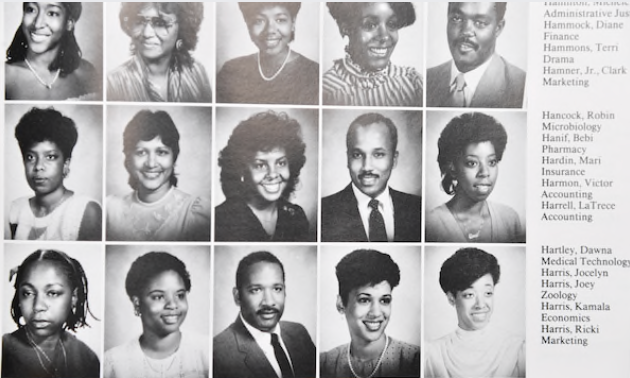 A Howard University yearbook contains Kamala Harris’s photo. MUST CREDIT: Washington Post photo by Marvin Joseph
 การรับมือกับปัญหาเชิงองค์รวม : ด้วยงบประมาณที่จำกัด ยุทธศาสตร์การลงทุนเพื่อพัฒนาคนจึงต้องมีความเฉพาะเจาะจงและหวังผล


 ท่องจำไว้ช่วยให้ไฟมาเร็ว 3 ข้อมูลหลักที่ต้องใช้เมื่อกระแสไฟมีปัญหา พร้อมเปิดใจ “ช่างไฟฟ้า PEA” กับ 4 ขั้นตอนที่ไม่ปล่อยให้เวลาผ่านไปเมื่อไฟดับ


 Charbel Hitti’s mother, second from left, sits next to Charbel Karam’s father as they cry for the young men feared lost in the blast. Hitti, 22, and cousin Najib Hitti, 20, were firefighters along with Karam, 32, their uncle. The three grew up as best friends in the village of Qartaba. CREDIT: Photo by Lorenzo Tugnoli for The Washington Post
 SootinClaimon.Com