The Big Aui Chuan Chom Garden in Phichit province attracts flower lovers nationwide with over 1,000 decorative plants, including the signature “Phet Aiyada” desert rose that gets offers for half a million baht.
Surachet Sanguansub, owner of the botanical garden located in Pak Thang subdistrict, said that he had started this business in 2011 by growing decorative plants, such as heart of Jesus and devil’s ivy.
“My friend gave me a few pots of desert roses and said they were hard to grow, so I tried growing them for a decade and selling them to those who were interested in this plant.”
Desert rose (Adenium obesum) is called “Chuan Chom” in Thai, which roughly translates into “worthy of admiration”. They are small tropical plants that can withstand heat and require change of soil only twice a year. Desert roses are highly popular among garden enthusiasts in Thailand due to their vibrant colour and their shape resembling miniature trees.
“Desert roses from Big Aui Garden have won several awards throughout the country, especially the Phet Aiyada breed, which costs from a hundred thousand to several hundred thousand baht,” said Surachet.
Surachet decided not to sell an eight-year-old Phet Aiyada desert rose despite being offered THB500,000 for the plant. Instead, he keeps it as a breeder plant for customers looking for baby desert roses for their gardens, as well as to provide seedlings to farmers who are interested in growing desert roses.
Surachet said the income from selling seedlings alone generates about THB100,000 a month.
For more information, visit Facebook @AdeniumBIGAUI
In the final series of the ‘Power of Human Energy’ project, farmers learn how to apply the sufficiency economy principle to benefit their land and our climate
Sunita “Nual” Haewnok, a lawyer by profession, combines her legal learning with indigenous farming practices with so much flair that her Sa-ngiamkam Agriculture Farmin Nakhon Ratchasima’s Chakkarat District has been selected as the first destination of 2022 for training sessions and collaborative farming activities known as “Aou Mue” under the “Power of Human Energy: A Journey Inspired by the King” project. Initiated and implemented by Chevron Thailand Exploration and Production, the project promotes His Majesty the late King Bhumibol Adulyadej’s sufficiency economy philosophy in the management of soil, water, forest and human resources.
People from everywhere come together on the “Sa-ngiamkam Agriculture Farm” in Nakhon Ratchasima for the “Aou Mue” activity under the “Power of Human Energy: A Journey Inspired by the King” project.
“This year, we will be running ‘Aou Mue’ activities in three provinces in the Pa Sak River Basin. We are starting at Sa-ngiamkam then moving to Ayutthaya in February and Saraburi in March to network, exchange ideas and encourage each other in addition to promoting the project. I believe that this activity will motivate a new generation of farmers just like Nual who was inspired by HM the late King’s philosophy,” says Artit Krichphiphat, Chevron’s business support general manager.
“The aim of this project, which has been running for nine years, is to serve as a driving force in giving knowledge and setting the standard for collaboration on our online platform, which has been very successful with almost 700,000 iews. Many more people are interested in ‘khok nong na’ (indigenous farming practice) to make the best use of their land and these activities help clear up any misconceptions as well as instill new ideas,” he adds.
This year will be the last in the “Power of Human Energy: A Journey Inspired by the King” project, which is designed to motivate people to acknowledge the importance of recovery, development and local wisdom to sustainably solve the problems of floods and drought.
“Natural agriculture is now the best solution for climate-related problems, but it hasn’t been easy to instill the knowledge to achieve this. We need knowledge to transform this world and make it livable but we must practice virtue at the same time. In Buddhism, we learn that ‘dharma that depends on us and other people’ and that we must be virtuous in how we proceed, have a willingness to give a helping hand as well as diligence and skill in managing all affairs of our fellow men,” says Dr Wiwat Salyakamthorn, aka Ajarn Yak, the president of World Soil Association and the founder of Agri-Nature Foundation.
Nual, who is regarded as a driving force in the Pa Sak River Basin, applied the King’s philosophy of “3 forests 4 benefits” on her 6-rai of land but was not supported by her mother and siblings, who prefer to generate their income from sugarcane production.
Sunita “Nual” Haewnok, owner of Sa-ngiamkam Agriculture Farm, explains the process for producing wood vinegar at “Khon Aou Than”.
“They have all watched me and seen the results but they still don’t agree with what I have done. I have transformed my share of the sugarcane plantation to ‘khok nong na’ with six ‘nong’ (swamps) and ‘khlong sai kai’ (winding ditches around those swamps). Of course, I don’t earn as much money as they do from their sugarcane plantation but I am happy that they can eat chemical-free vegetables and fruits. Yet even today they pity me for my lack of income,” says Nual.
Nual is the second child of four in a farming family. After completing her compulsory primary education, she helped on the farm, worked in a factory on the orders of her mother while studying at the Department of Non-Formal Education on her day off. Her hard work and keen intelligence paid off and she was picked to work in the legal department of a sugar factory in Phimai District then promoted to the secretariat.
She earned her bachelor’s degree at the Faculty of Law, Nakhon Ratchasima Rajabhat University, and her master’s degree at the Faculty of Law, Ramkhamhaeng University. Today she works as a lawyer at Nakhon Ratchasima Primary Educational Service Area Office 2.
“I enjoyed working with lawyers in the legal department of the sugar factory in Phimai,” recalls the 47 year old. “I also saw the sadness of the farmers at being exploited by a middleman.”
Nual’s interest in HM the King’s philosophy was sparked when she watched “Saeng Chak Phor Soo Khwam Yangyuen”, a special programme on Thai PBS paying tribute to HM the late King. She was later invited by Traiphop Khotwongsa, the president of the Agri-Nature Foundation, to work as a volunteer. That led her to sign on for training in natural agriculture at the Bhumirak Dharmachart Project in Nakhon Nayok, in space design at Wat Nong Song Hong in Chachoengsao and participate in the Pa Sak Watershed Restoration led by Chevron.
A woman uses dry fertilizer on houseplants that are covered with straw.
This year’s “Aou Mue” activity drew many volunteers from the natural agriculture network in Khorat, Chaiyaphum, Lop Buri and Suan Lom Sri Rin in Saraburi as well as students from Lahan Sai Wittaya School in Buriram and Ban Pong Ket School in Saraburi. They worked together in preparing the plots and fences for growing organic vegetables, mending the winding ditch running around the field and the swamps, building weirs, covering the soil with straw, and applying dry and liquid natural fertilizer. They also learnt how to make a natural water purifier, a solar energy water pump, how to produce wood vinegar as well as how to make soap from squash, shampoo from butterfly pea and fermented bananas, lemon grass tea and salted egg.
Nual demonstrates how to prepare salted egg.
Ajarn Yak (centre), Artit Krichphiphat (3rd from right) and others admire the processed products from Nual
Villagers help building a weir.
Nual was proud to show off her “Khon Aou Than”, a learning base for producing wood vinegar and charcoal, which is protected from the elements by a vetiver roof. Vetiver grass is also used to protecting the banks of the swamps and the ditches.
“When we plant crops using the ‘3 forests 4 benefits’ principle, we will receive benefits from the forest. We cut and clear the small branches and burn them to form charcoal. That reduces the cost of fuel. In addition to charcoal, we make wood vinegar as a natural pesticide. We prepare it in a dehumidification oven made out of a 200-litre steel drum. Natural wood charcoal burns at very high temperatures reaching between 800-1000 degrees but contains a special substance that prevents it from being carcinogenic. At the beginning of the process, the smoke is dark but after three or four hours, it turns white. We then seal all the holes so that the air can’t go inside. The whole process takes two days and produces one to two litres of wood vinegar.”
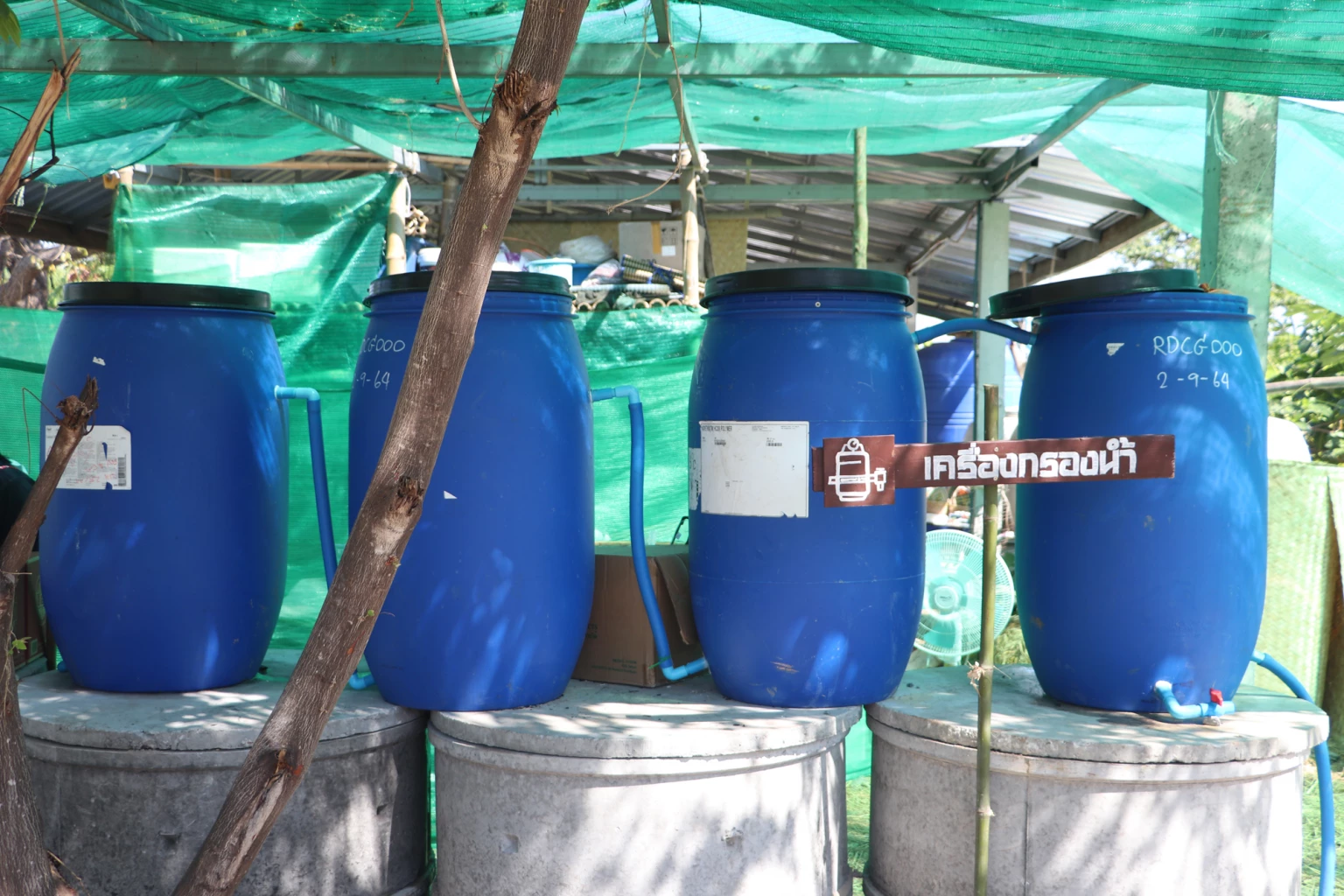
Nual has also perfected the technique for making a natural water purifier. “Clean water is very important to our life. Today, we pay for bottled water. Formerly, our grandparents could use water from the rain but nowadays that’s full of chemicals. My traditional water purifier consist of four plastic water tanks with four elements – big and small stones, sand and coal, which must be washed for a full month.”
The natural water purifier is filtered through big and small stones, sand and coal.
Of her handmade solar energy water pump priced at Bt30,000, Nual points out that it saves a lot of money, though it must also be used judiciously and that means planning. “First of all, we will have to calculate the water management for one rai, how much water we can store in the swamp, winding ditch, and ‘khok’ (mound). Here, the amount of rainfall is 1,200 millilitres per year. I use the water pump just a few days at a time.”
The handmade solar energy pump drains water from the biggest swamp into others through a winding ditch.
More U.S. adults who do not already have children are saying they are unlikely to ever have them, a new Pew Research Center survey finds – findings that could draw renewed attention to the risks of declining birthrates for industrialized nations.
Experts are concerned that the U.S. birthrate, which has declined for the sixth straight year, may not fuel enough population growth on its own to keep the future economy afloat and fund social programs.
Women between the ages of 18 to 49 and men between 18 and 59 who said they are not parents were asked the question, “Thinking about the future, how likely is it that you will have children someday?”
In October, 26 percent of them said it is “very likely,” a six-point drop from 2018, when 32 percent answered “very likely.” Meanwhile, the share of Americans who answered “not too likely” in 2021 grew to 21 percent, compared to 16 percent in 2018.
When asked for a reason, 56 percent of childless adults who said it is not at all or not too likely they will ever have children said it’s because they just don’t want them. That’s a change from in 2018, when 63 percent of childless adults in these categories said it was because they had no desire for children.
This time around, 43 percent cited other reasons including medical issues, economic or financial reasons, and lack of partner.
Coupled with the recent release of federal demographic data, this poll points to a long-term evolution in parenthood trends in the United States. The spiraling costs of child care, health care and education – along with global instability, including the coronavirus pandemic and climate change – could all be contributing to a broader change in attitudes to marriage and priorities in life.
In April, the Census Bureau reported that in the last decade the U.S. population grew at the second-slowest rate for any 10-year period since the nation’s founding.
Pew surveyed 3,866 parents and non-parents online in late October as part of a broader study of nearly 10,000 U.S. adults known as the American Trends Panel survey. Those who said they have no children were asked to rate their desire to have them in the future, while adults who said they already have children were asked to rate their likelihood of having more. The same questions were asked in a similar poll Pew conducted in late July to early August 2018, enabling a comparison of trends over time.
There was no difference based on gender in the responses among parents and non-parents; according to Pew, “men and women are equally likely to say they will probably not have kids (or more kids) in the future.” There was a difference based on age, however, with adults in their 40′s far more likely than younger adults to say they are unlikely to have any or any more children in the future.
The Biden administration has attempted to tackle some of the roadblocks to higher fertility through its roughly $2 trillion Build Back Better bill, which recently passed the House and is now moving to the Senate. The bill includes funding for universal pre-K as well as the first national paid family and medical leave program.
Put away devices to spend more quality time with your children
Chutikorn Nopparat, PhD. Research Center for Neuroscience, Institute of Molecular Biosciences
In compliance with government regulations, many mothers are having to work from home every day or go to the office on certain days of the week. As for children, they attend classes online. With both at home, it is understood that mothers and children will spend more time together, and quality time spent with parents is known to improve the mental and physical development of children.
However, that is not the case in many families. The fact is that parents are either busy with work while at home, or do not know how to play with their children.
Recent surveys show that children spend most of their time in front of a computer screen, mobile phone or another digital device.
Studies have also found that in the Covid-19 era, children are getting low-quality sleepy and spend fewer hours in bed. They also spend less time on physical activity (Kaditis, Ohler, et al 2021).
On the other hand, they spend more time facing a screen (Lee 2020). All this time spent in front of a screen has several negative consequences, both direct and indirect, including:
• Eye strain, aching, burning, irritated and watery eyes, blurred vision and chance of macular degeneration due to the long-term effect of blue-light waves from mobile phone screens.
• Waste of quality time that should be spent with parents or caregivers, affecting mother-child attachment and bonding.
• Children lose the opportunity to develop in different fields due to time spent on the screen.
Put away devices to spend more quality time with your children
Here are some of the things they may be missing out on:
1. Language and social development: Digital media or screen time is a one-way communication, so children miss out on interacting with adults or playing with their peers.
2. Gross and fine motor development: Children often sit still and stare at mobile screens without moving or using their hands or arms.
3. Cognitive development: Children lose the opportunity to practice problem-solving and taking the initiative. These skills are better learned when they are allowed to act and participate in activities. This also affects their executive function.
Light waves emitted from mobile phone screens, especially blue light with short wavelengths of about 400-440nm, can hurt the quality of sleep in children. The biological clock (circadian rhythm) helps coordinate the functions of various systems in the body to work efficiently. The sleep mechanisms have relatively specific circadian rhythms as per the levels of melatonin, a hormone secreted by the pineal gland, regulating the sleep cycle.
Normally, during the day, blue light waves from the sun inhibit the secretion of melatonin which is a normal mechanism of body function. But at night,, melatonin is supposed to be released according to the circadian clock. If the brain is disturbed by blue-light waves from mobile phone screens or digital devices, the levels of melatonin will be lower than normal. This causes insomnia, light sleep and inadequate quality sleep (Wahl, Engelhardt, et al 2019).
Put away devices to spend more quality time with your children
For children, sufficient quality sleep will boost the secretion of the growth hormone, which is necessary for physical growth and development appropriate to their age, apart from enhancing brain development (Scheepens, Moderscheim, et al 2005).
Growth hormone is abundantly secreted during deep sleep (stage3-4 of NREM sleep). Blue light from phone screens directly disturbs sleep and is related to the childhood development of both the brain and the rest of the body.
In addition, adequate sleep helps repair the wear and tear of the body and boosts immunity, which is very important especially during disease outbreaks.
Therefore, parents should be aware of the silent danger of prolonged mobile phone usage and split the time spent in front of a screen into intervals. Children should also be made to avoid screens at least two to four hours before getting into bed.
Here are some suggestions for good sleep:
• Train your child to go to bed and wake up at the same time every day. Bedtime should not be too late.
• Avoid screen usage two to four hours before bedtime. If necessary, then look for blue-light blocking glasses.
• Turn off or dim the bedroom light when turning in. During the day, children should be exposed to natural sunlight.
Tips and tricks
Here are some activities for mothers and children that will help enhance the child’s development in the Covid-19 era:
• Encourage physical activity such as cycling, jumping rope or running. Physical movement can promote the growth of large muscles.
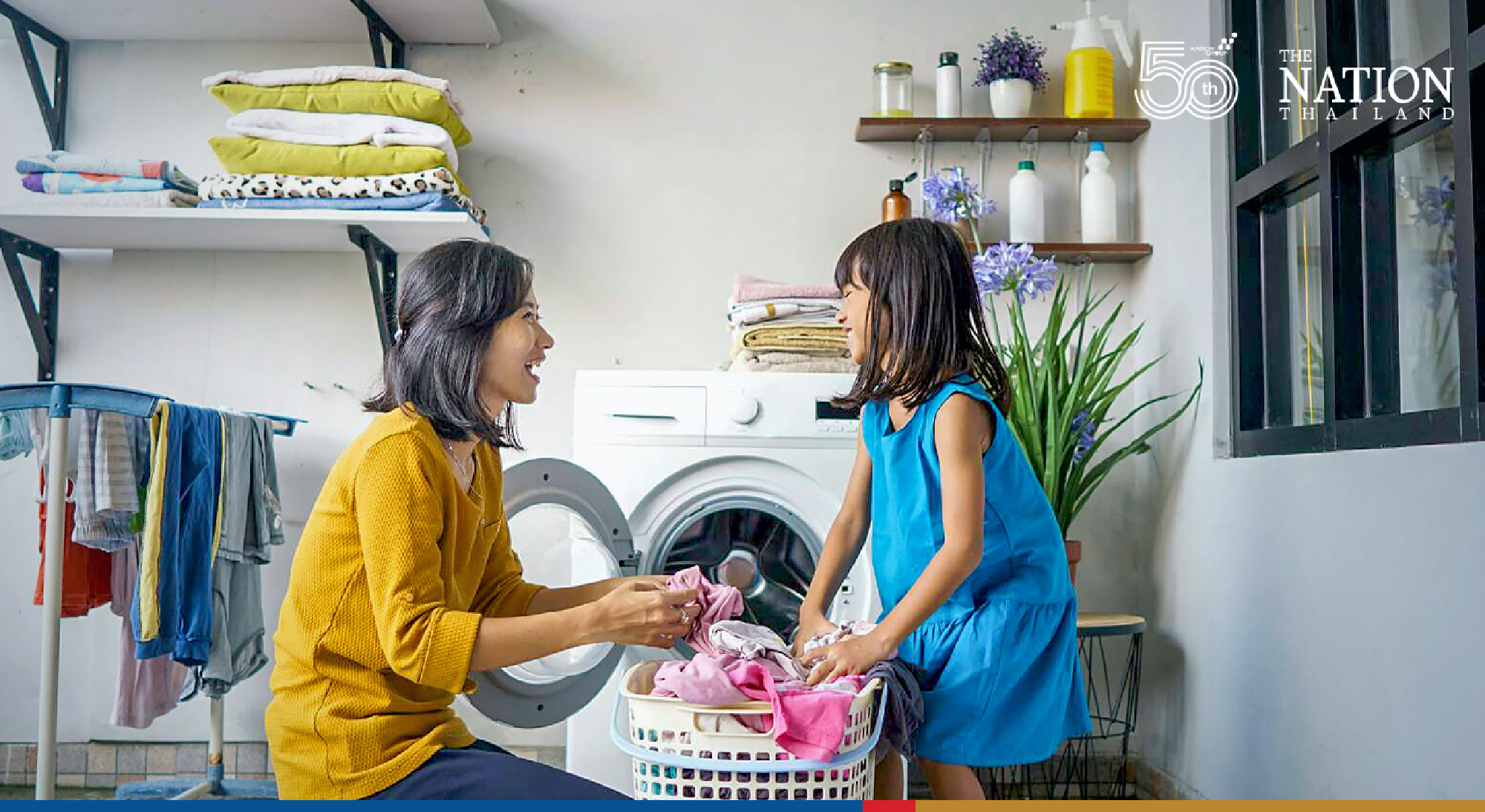
• Teach children to help themselves, such as serving rice, putting on clothes without help or buttoning up as well as helping with household chores, which will help develop their fine motor skills.
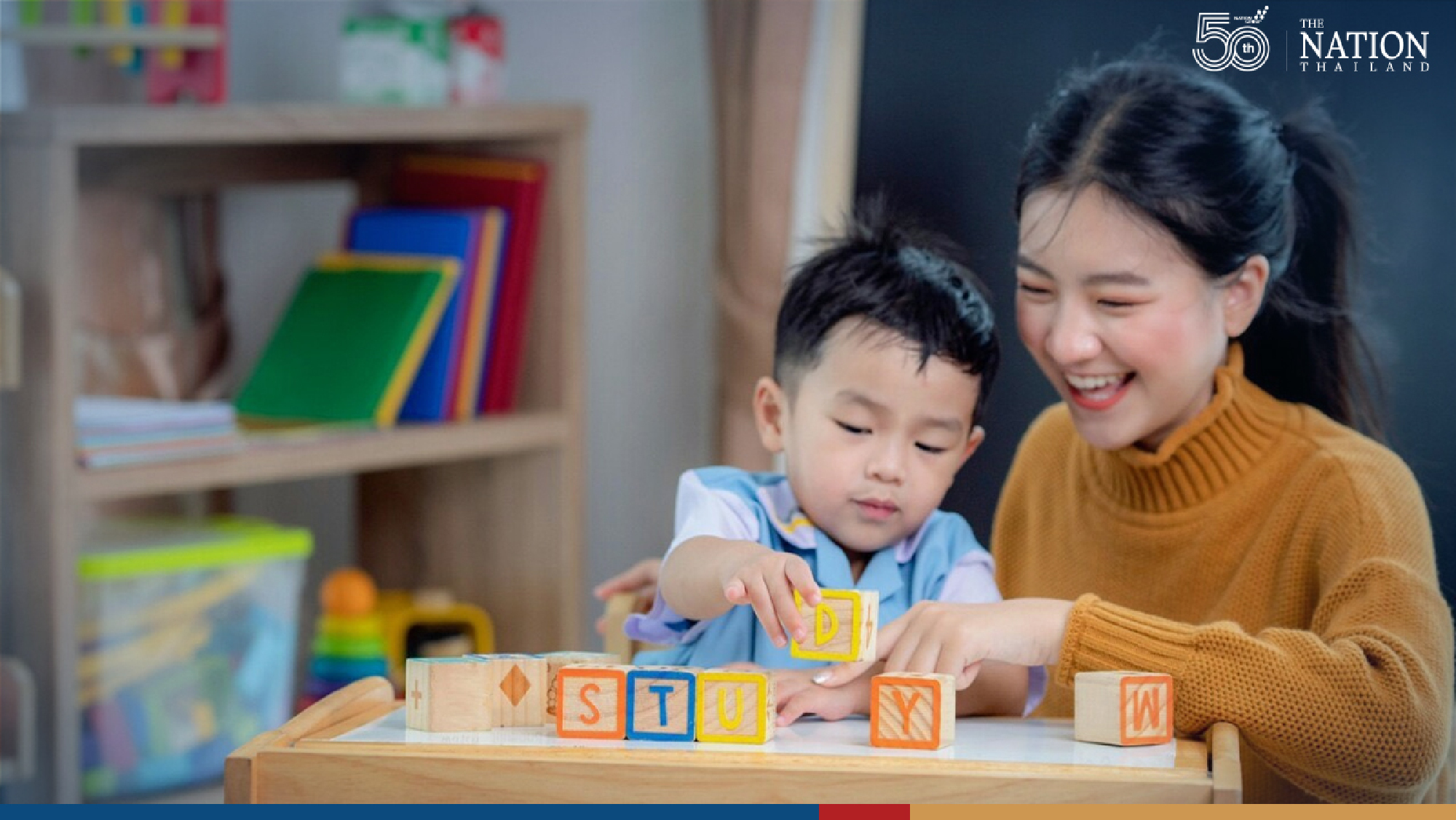
• Quality time spent together will boost the opportunity for inter-communication, such as reading stories or playing together, which will help with language and social development. Even when the child is on the screen, caregivers can engage the child in discussions about what is on the screen or help them choose the right media.
Put away devices to spend more quality time with your children
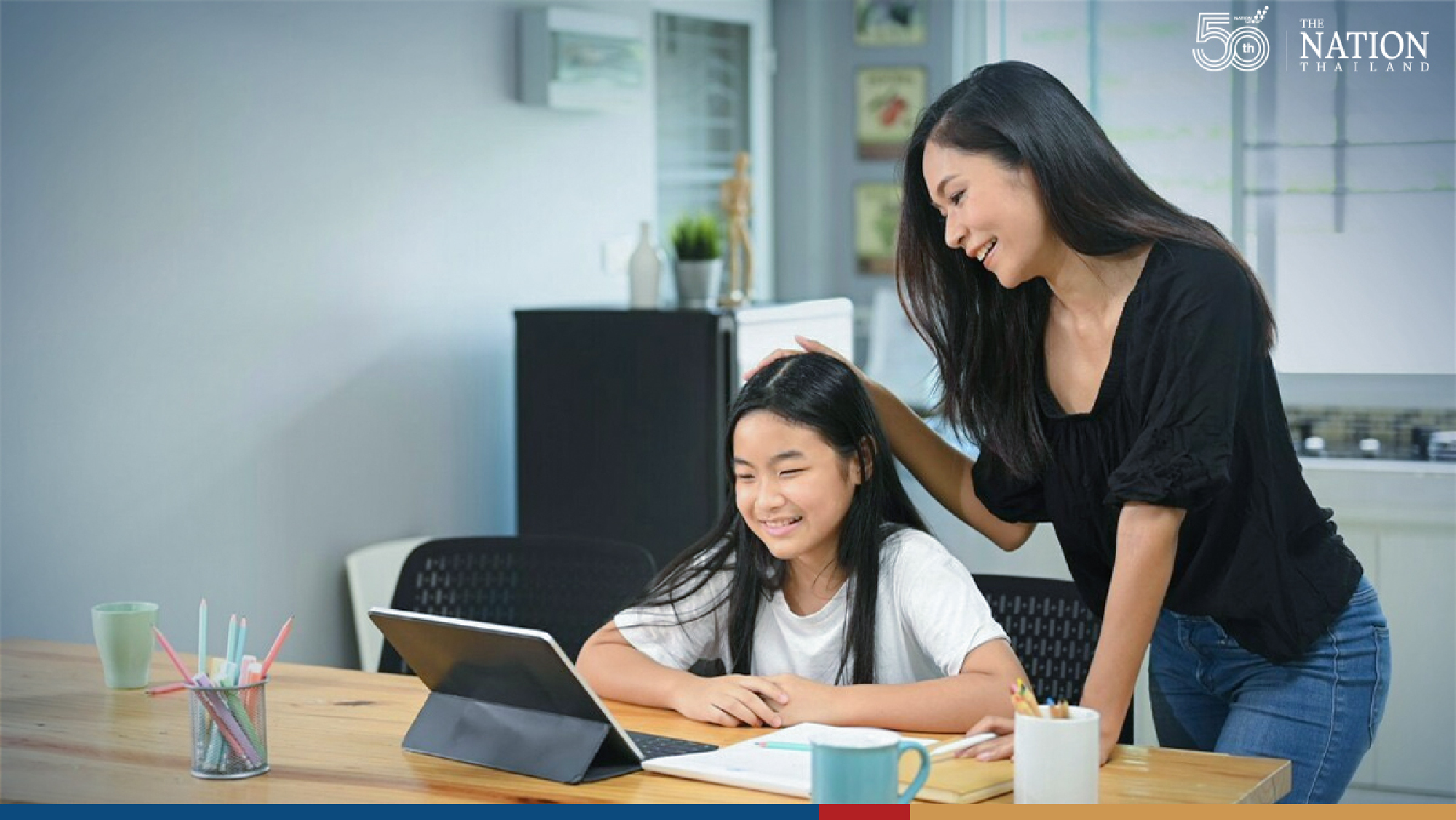
The role parents play with children attending classes at home
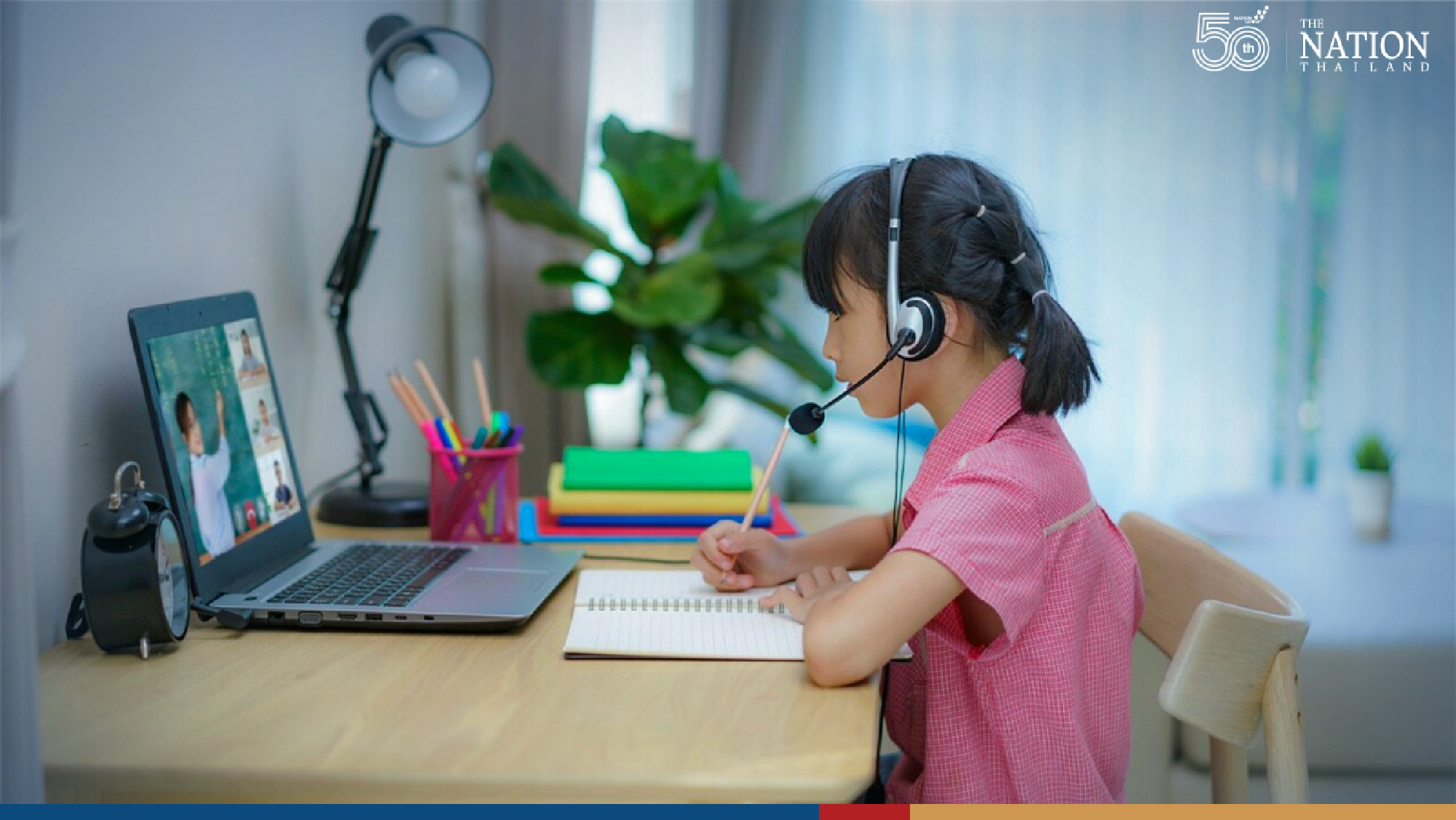
Owing to the Covid-19 pandemic, Thailand’s educational sector has had to transition from classrooms to online learning. As per the Office of the Basic Education Commission (Obec), schools must continue using online learning/teaching methods through the first semester of the 2021 academic year given the surge in infections.
For this new system to be successful, cooperation is required between the Education Ministry, school principals, teachers, students and most importantly, parents, who need to spend more time understanding the change in their children’s needs.
When a child, especially the very young, has to study online, it inevitably becomes the parents’ duty to provide the resources and manage the setup. This in many cases becomes challenging because remote study is still a new concept.
The role parents play with children attending classes at homeThe role parents play with children attending classes at home
Children also must adapt to the new set up and change in their learning environment. Also, the lack of physical activity may cause additional stress for children. Online learning may not be suitable for young children, but most of us have no chance but to adapt to the “new normal”.
To make online learning effective for young children, parents must develop methods and techniques to get their kids happily involved in learning by doing the following:
The role parents play with children attending classes at home
Start with an open mind
Parents must open their minds to online learning, so they can make adjustments to ensure positive outcomes.
They should encourage their children to practice social skills, albeit virtually, by interacting with their teachers and friends.
Online learning also helps develop children’s IT skills and parents should set up a variety of online activities daily.
With the absence of school, children may start losing the discipline of waking up early, getting to school and sitting in their classroom focusing on what the teacher is saying. Parents, however, must be open-minded and accept that learning online can be more difficult, especially when children do not have other classmates sitting with them.
The role parents play with children attending classes at home
Setting up a schedule
Firstly, parents must know and understand their children’s concentration and attention level, as well as ability to learn certain subjects.
Without the need to go to school, a child’s daily life changes completely. They have more free time, and they may become fussy or refuse to pay attention when their class begins. To avoid this, parents should set up a daily “activity schedule” for their children.
Getting children involved in setting up a schedule that covers activities like waking up, studying, playing, eating, bathing, resting and going to bed will also give them a sense of purpose.
The role parents play with children attending classes at home
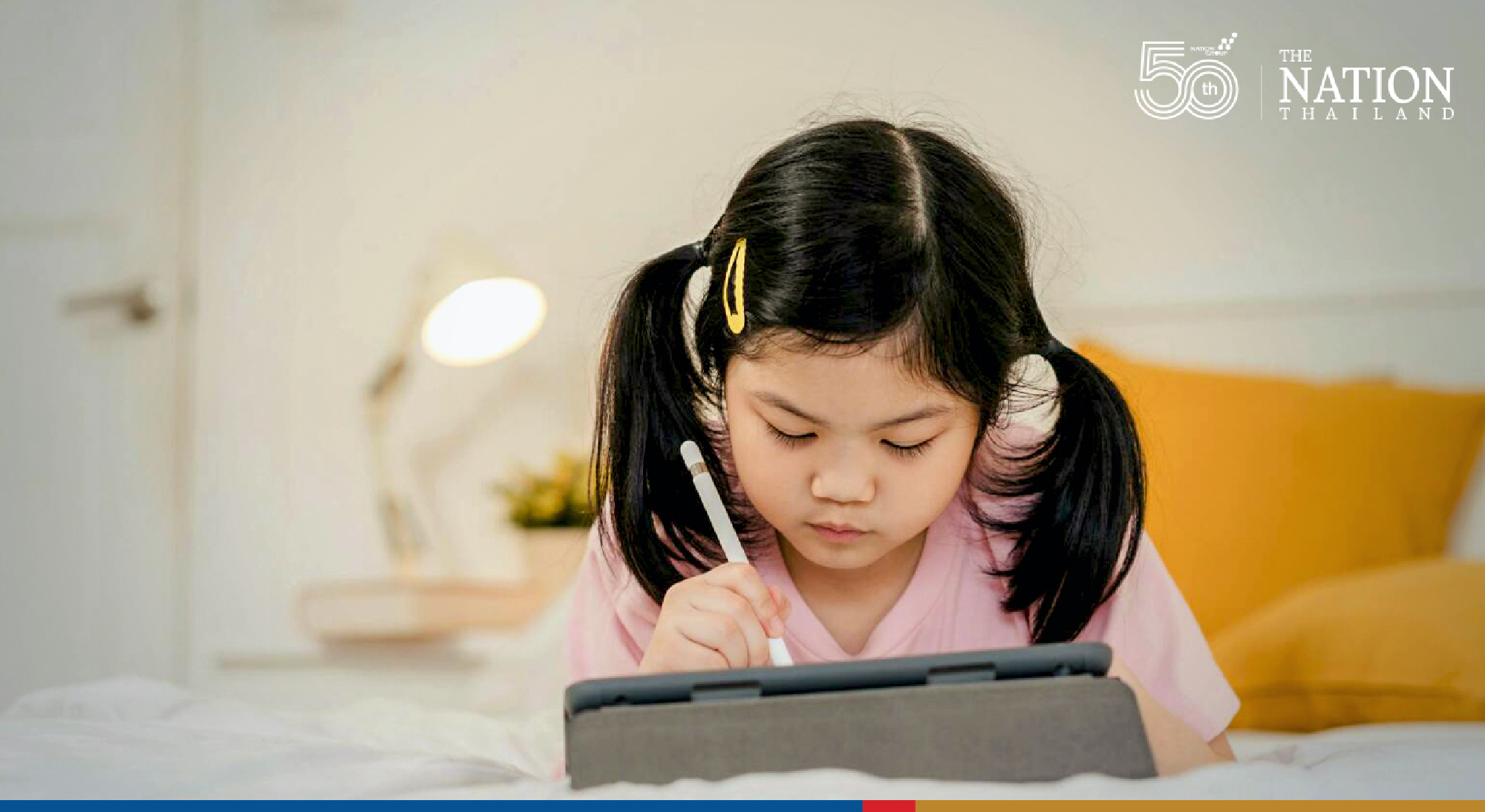
The second factor is setting up the right environment. Parents need to provide a suitable spot for their children to sit and study. The desk and chair should be of the right size to ensure the child has the correct sitting posture. The study area should also be quiet, not crowded or have any stimuli that may distract the child. School supplies should also be available and ready to use.
Parents must also understand teaching styles and coordinate with teachers to learn about their children’s potential, so appropriate arrangements can be made.
Parents also need to understand technology because online learning can be conducted via different devices, including computers, notebooks and tablets.
These devices and learning methods may be new to both parents and children, and it may take time for them to learn about the applications required for distance learning. Parents must also have to learn how to set up parental controls on the internet, but most importantly, they must set up rules for their children to follow.
The role parents play with children attending classes at homePay attention
Parents must also explore their own physical and emotional readiness, including their stress levels. Keep in mind that being irritated, stressed or losing your temper can affect your children’s studies. If parents are able to control their emotions, stay calm and cope with situations, children will also learn to do the same.
Pay special attention to preparing your child for online classes. Normally, children have activities before starting classes such as breakfast with friends, playing and doing morning exercise routines.
Parents should also set up similar activities for children to do before they start their online classes, such as doing some cardio exercise.
Spending at least 20 minutes on physical activity, such as running, cycling or kicking a football will help prepare the body and stimulate the brain to release dopamine and norepinephrine, key neurotransmitters associated with attention, concentration and self-control. However, do not do too much heavy exercise or it may make the child tired and sleepy.
Parents must also understand that children cannot be expected to always focus on the screen. In classrooms, children have a lot of distractions, and it is normal sometimes for them to lose interest in what is being taught.
Hence, parents should focus on what will keep their kids engaged as well as whether their children are understanding the lesson and if they can answer questions.
Parents should also do away with negative words like “no, don’t, not or stop” to prevent children from developing a bad attitude towards learning. For instance, sentences like “why don’t you listen to your teacher” or “don’t be silly, baby” will make them anxious and stop them from wanting to learn.
Instead, parents should show appreciation to their children for focusing on their studies and completing their assignments.
The role parents play with children attending classes at homeMany parents think their children get to interact with their teachers and classmates during classes, so no other activities need to be planned.
However, activities are necessary, not just for helping children relax after school but to also help them develop and strengthen familial bonds.
However, the most important thing is caring and realizing that online classes alone cannot help with children’s cognitive development.
For this, parents can invite their children to read, describe the environment around them or practice daily routines. Children should also be given simple household chores.
But the most important job for parents is to be by their children’s side when they are in trouble because for children, their parents are always their “important teachers, friends and toys”.
The role parents play with children attending classes at home
Dream of starting a business from home? Talk to the cactus guy
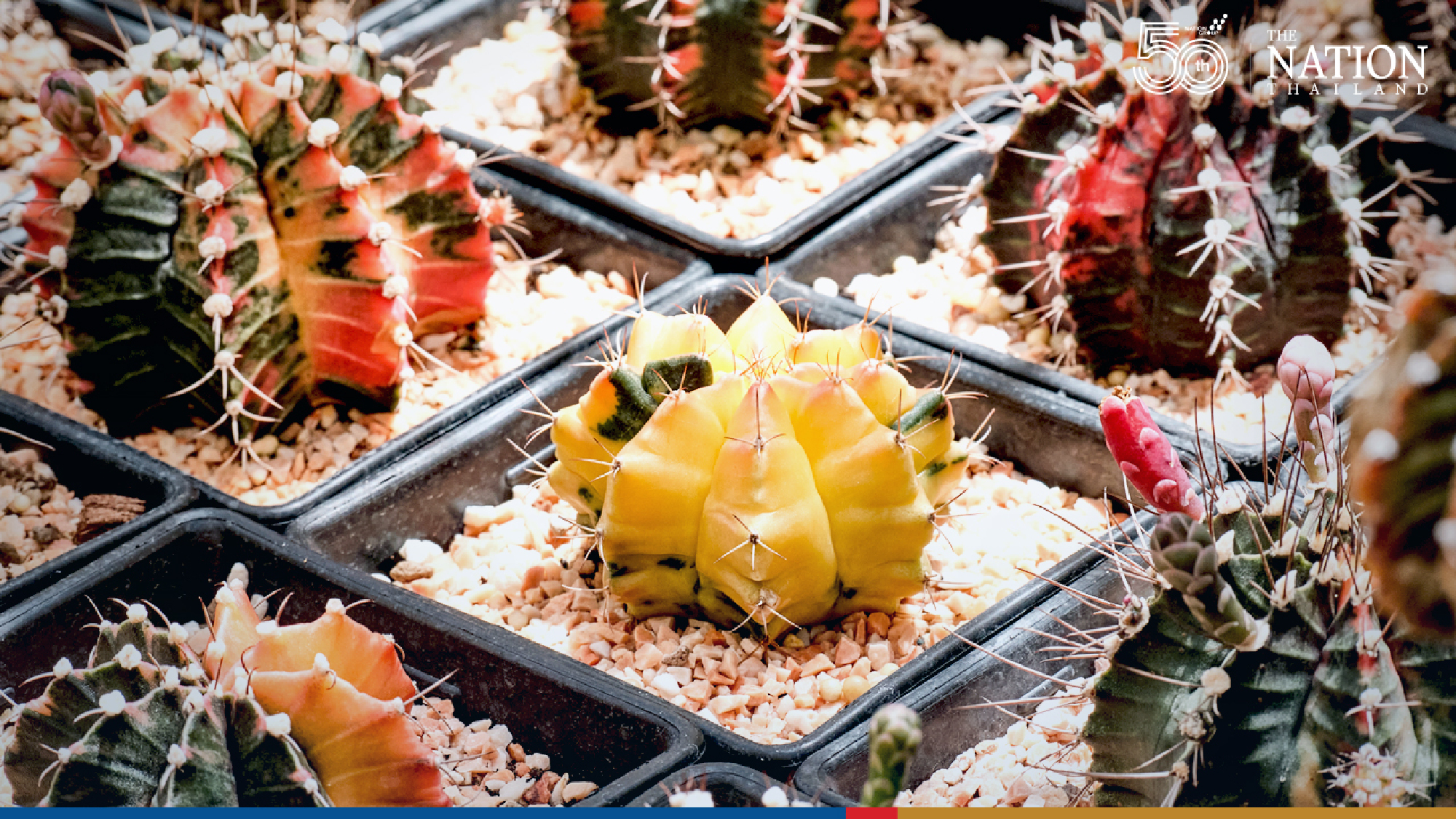
Although many people dream of starting their own business, most don’t know where to begin. The best place to find inspiration is often close to home – in the hobby that you love.
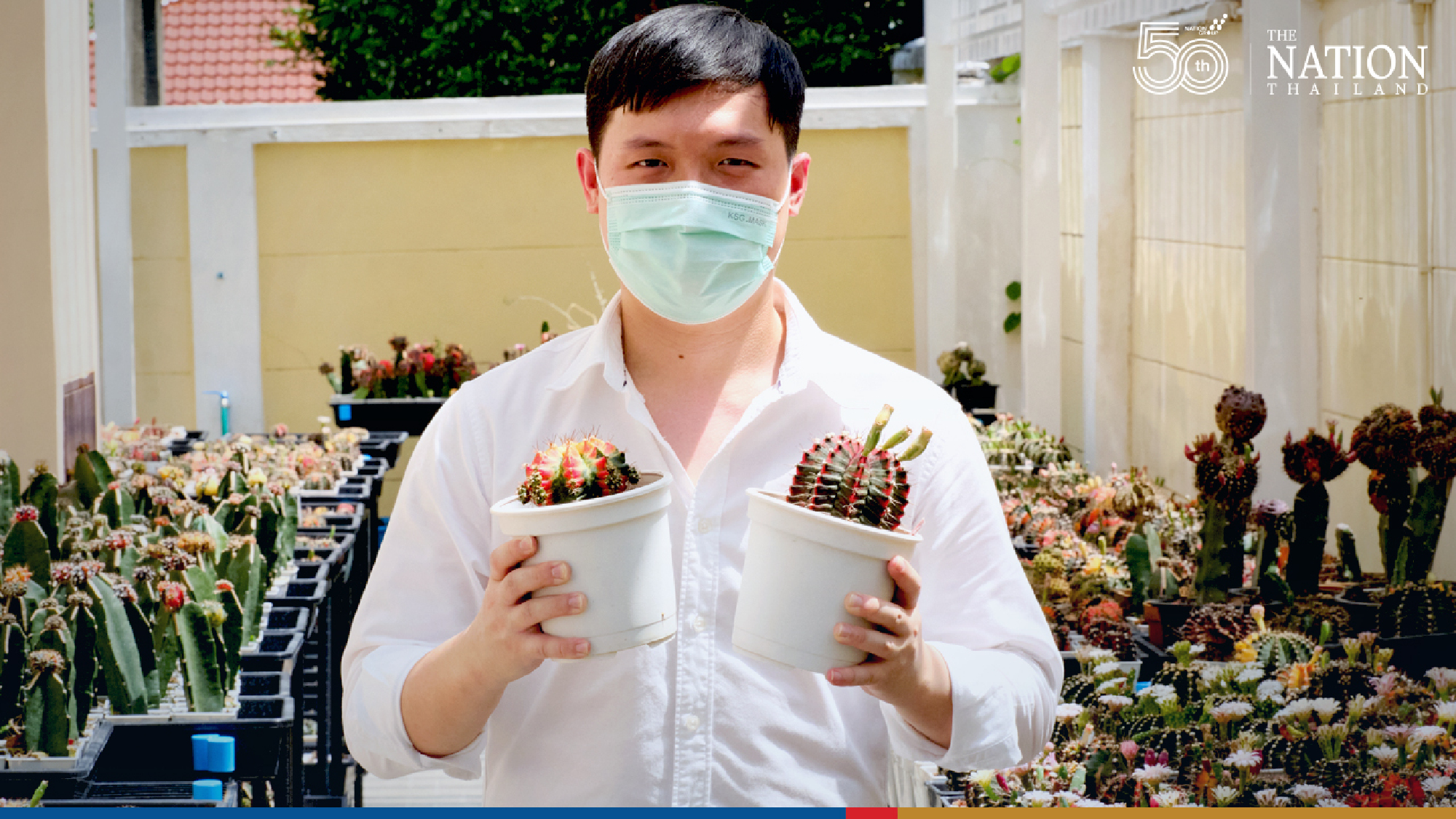
No one knows this better than Teerawat Ananpiriyakul, a 25-year-old who has grown his passion for cacti into a thriving enterprise.
Last week, The Nation Thailand interviewed Teerawat at his home on a Chom Thong housing estate in Thonburi, Bangkok. His house doubles as a cactus farm and shop, demonstrating that you don’t need big fields to become a commercial grower.
We chose him because he launched his cactus business at the young age of 21 when many of his peers were still students. Four years later, it’s still going strong even as other businesses wilt under the pressure of Covid-19.
Teerawat began by explaining that he runs his farm as a part-time job alongside his main duties in the family business.
Although growing cacti is not his main career, returns from the business are impressive and depend on the amount of work and time he puts in.
Dream of starting a business from home? Talk to the cactus guy
“There is no set value for cacti, so the plants are normally traded at prices agreed between sellers and buyers,” he said. “Cactuses are more like collectables than plants. People will generally agree to pay as much as necessary for the plant they want to collect.”
Teerawat said he became interested in cacti around 5 or 6 years ago, when growing the spiky desert plants began trending in Thailand.
He was living in a townhouse at the time, and when his collection of plants grew too large for the limited space, he decided to start selling them. He soon realised that his hobby could also make money.
He faced a steep learning curve, however. Cultivating cactuses was a new world for Teerawat. The plant was popular in Thailand since it needs less space and attention than other garden plants. But there are more than 1,700 species of cactus, and each requires different amounts of water and sunlight.
And as well as the challenges of growing and propagating cactuses, he had to learn how to cultivate his customer base. It took around 3 to 4 years until he was professional enough to build a following of loyal customers.
Dream of starting a business from home? Talk to the cactus guy
Teerawat said joining the world of cactus sellers was easier than people might think. “If you are skilful enough to produce beautiful plants, customers eventually get to know you alongside established names in the market,” he explained.
Turning to the subject of Covid-19, Teerawat said physical trade in cacti has suffered badly during the pandemic. But the absence of cactus fairs and exhibitions has been compensated by a surge in online trade. “Basically, I can say that my business was not hit hard by Covid-19, thanks to online channels.”
Though based at home, Teerawat also has customers from overseas, namely China and Singapore. Foreign clients place their orders via his “Cactus in Wonderland” channels on Facebook and Instagram. The purchased specimens are then hand-delivered to their homes abroad.
However, overseas trade has gone quiet during the pandemic. “I expect the situation to improve once the Covid-19 crisis is over,” he said.
Teerawat’s story demonstrates that success in business is not some faraway dream, but the result of hard work, strategy, skill and time.
Asked what he would say to anyone planning to start their own business, he said one easy way was to think about how you can make money from your favourite activity or hobby. “When you realise that you can make cash, you need the courage to turn your hobby into your own business,” he added.
Dream of starting a business from home? Talk to the cactus guy
Published : June 23, 2021
By : Thanachart Chuengyaempin, The Nation Thailand
Malaysian Foodpanda delivery boy on the fast track, thanks to benefactor
A Foodpanda delivery boy in Kota Bahru, Malaysia, who had to borrow a bicycle from his friend to deliver food during the Covid-19 crisis, can now do so riding a motorbike, thanks to a philanthropists generosity, according to a video posted by TikTok user ‘amrandoloh77’ on Friday.
The teen delivery boy’s story had been shared earlier this month via social media in both Thailand and Malaysia. The 19-year-old hails from Kelantan and was struggling to earn money for his family after the city went on full lockdown to curb the spread of Covid-19.
Malaysian Foodpanda delivery boy on the fast track, thanks to benefactor
A man who saw a shared post recently contacted the delivery boy, treated him to a pizza meal, and bought him a motorcycle to use for food delivery. Their photos were later shared on social media. Netizens praised the philanthropist for helping another human being in times of need, while encouraging the young man to keep fighting amid the crisis.
Malaysian Foodpanda delivery boy on the fast track, thanks to benefactor
On Saturday, Malaysia reported 6,241 new cases and 87 deaths, bringing cumulative cases in the country to 616,815 patients with 3,378 deaths.
The sustainable food packaging to help reduce global warming
Global food packaging leader Tetra Pak joined a media roundtable with the World Wildlife Fund (WWF) and the Forest Stewardship Council (FSC) recently to discuss how food packaging can help address the problem of humans and reduce the global warming.
Food packaging plays a key role in feeding the world but also impacts the earth’s climate and its limited resources.
According to WWF’s Living Planet Report 2020, growth in the global population
and increased use of land in the past half-century has been destroying the planet at an alarming rate.
As the world population grows, more food sources – especially animal protein – is consumed, thus exacerbating climate change. Another key factor leading to global warming is urbanisation.
People tend to live in crowded cities for easy access to job opportunities and transportation.
Then there is the problem with consumerism, which has people consuming far more than they actually need, thus causing oversupply and a linear economy, where waste from consumption cannot be recycled.
Yingyong Vityananan, head of WWF Thailand’s said “This is why conservation needs to be addressed urgently if we want to protect the planet for our future generations,”
“If we cut down on the impact our actions have on the environment, global temperatures should not rise by more than 1.5 degrees Celsius before the end of this decade, but if we continue living and consuming at the current rate, global temperatures will rise by at least 4 degrees,”
Employees say working from home has increased their expenses: poll
Work-from-home arrangements have led to an increase in their expenses, according to the majority of respondents to a poll.
Since the third wave of Covid-19 emerged in Thailand in April this year, many organisations have decided to allow their employees to work from home to comply with the government’s policy to contain the spread of the virus.
A Suan Dusit Poll on “Thai behaviour while working from home” was conducted from May 10 to 13 on 1,553 samples nationwide.
Asked about their work experience during the Covid-19 crisis:
42.72 per cent said they were working from home;
34.45 per cent said they were working both from home and office;
22.83 per cent said they were working at the office.
Regarding their experience of working from home (multiple choice):
74.82 per cent said they were safe from Covid-19;
48.60 per cent said they were following the government’s policy;
44.05 per cent said they had more time with their family;
40.53 per cent said they did not have devices and tools for working from home;
39.04 per cent said the atmosphere was different from working at the office.
Asked about the strong points of working from home (multiple choice):
88.33 per cent said it could contain the spread of Covid-19;
70.19 per cent said they could save travel expenses;
60.73 per cent said they could comply with the government’s policy.
Askef about the weak points of working from home (multiple choice):
65.80 per cent said their expenses had increased;
62.08 per cent said devices and tools were not as convenient as in the office ;
45.97 per cent said they faced communication difficulties.
70.33 per cent of respondents said they were able to work well from home.
Asked whether they preferred working from home or office:
37.17 per cent said they liked to work both from home and office;
36.13 per cent said they preferred working at the office;
18.10 per cent said they preferred working from home;
8.60 per cent said they did not care;
Asked if the work from home practice could contain the spread of Covid-19:
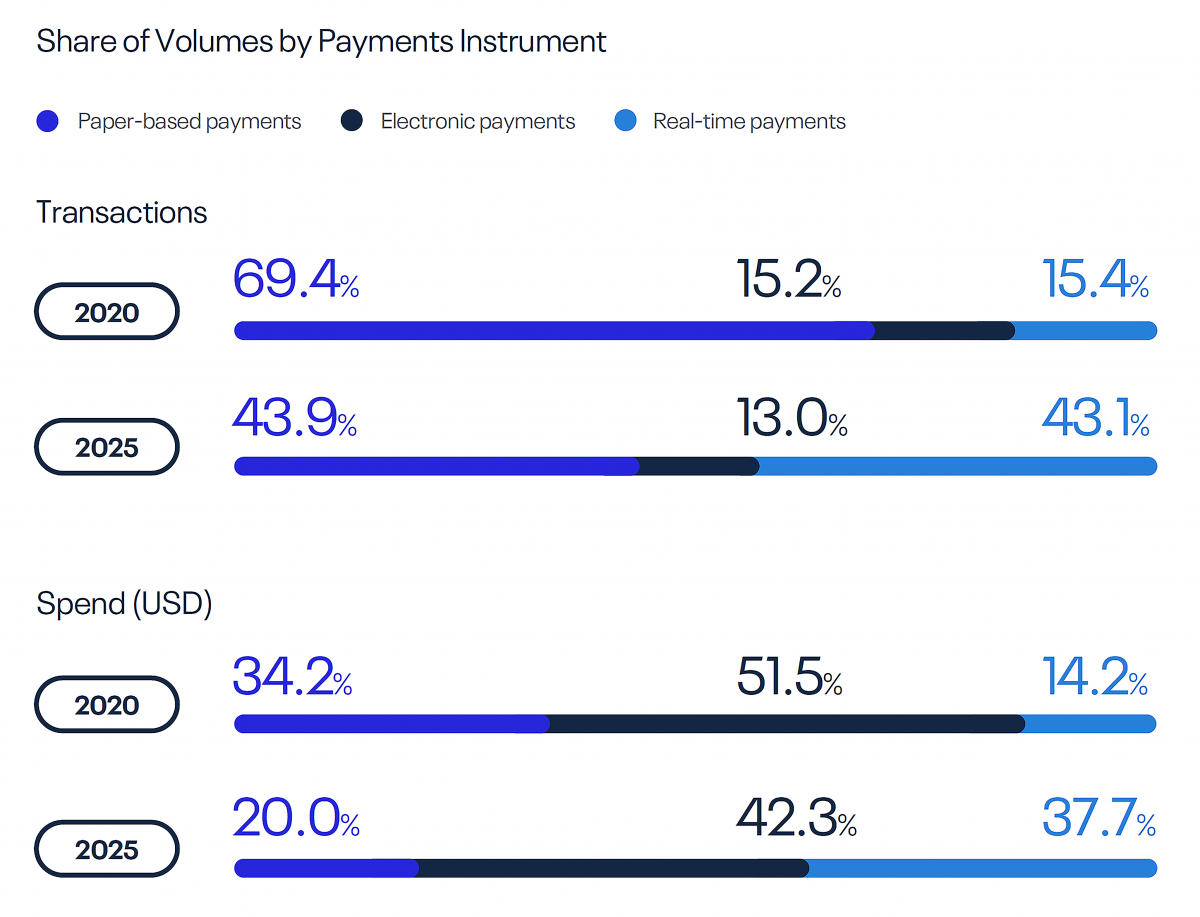
Real-time payments surged 104 per cent to more than 5.24 billion in 2020 as cash use in Thailand plummeted during the Covid-19 crisis last year, new research shows.
The “Prime-Time for Real-Time” study placed Thailand fourth in the global rankings. It projects digital payments of 32.01 per cent in Kingdom from 2020 to 2025, far higher than the 23.6 per cent projected globally.
The phenomenal growth of real-time payments in Thailand is being driven by the Bank of Thailand’s national e-payment system, PromptPay, said the study’s authors, ACI Worldwide (NASDAQ: ACIW) and GlobalData.
Meanwhile mobile wallet adoption rose to an historic high in Thailand of 83.9 per cent in 2020, up from 72.6 per cent in 2019.
ACI Worldwide said Covid-19 had condensed a decade of development on digital payments into one year, creating a new normal that would not reverse after the crisis.
“Countries with a robust digital payments infrastructure already in place have coped better than those without when it comes to containing the economic impact of the pandemic,” said Jeremy Wilmot, chief product officer of ACI Worldwide.
It projects Thailand real-time payments to grow to 21 billion by 2025.
India topped the 2020 rankings for real-time payments with 25.5 billion, followed by China with 15.7 billion transactions, South Korea (6 billion), Thailand (5.2 billion and UK (2.8 billion).



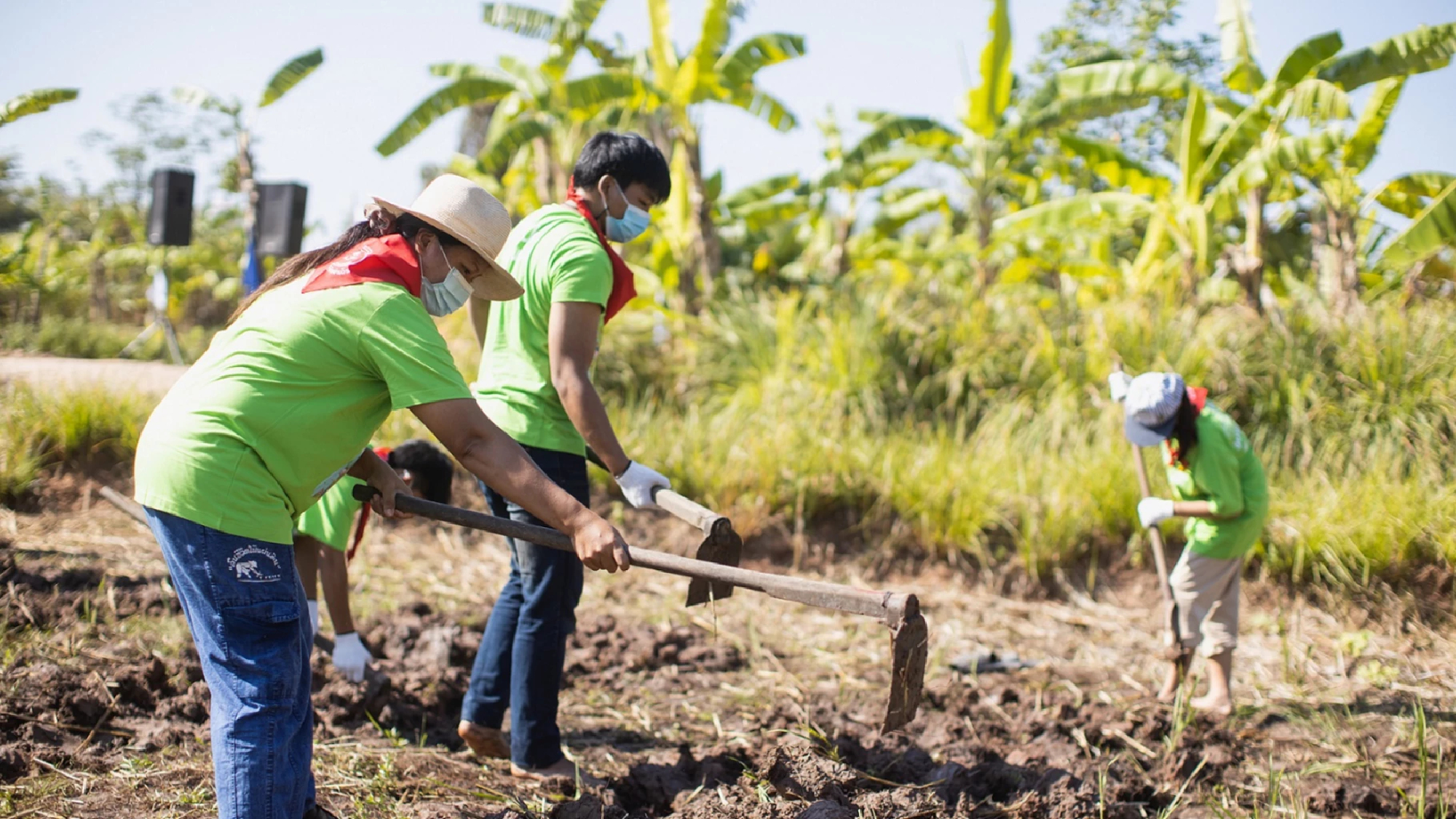
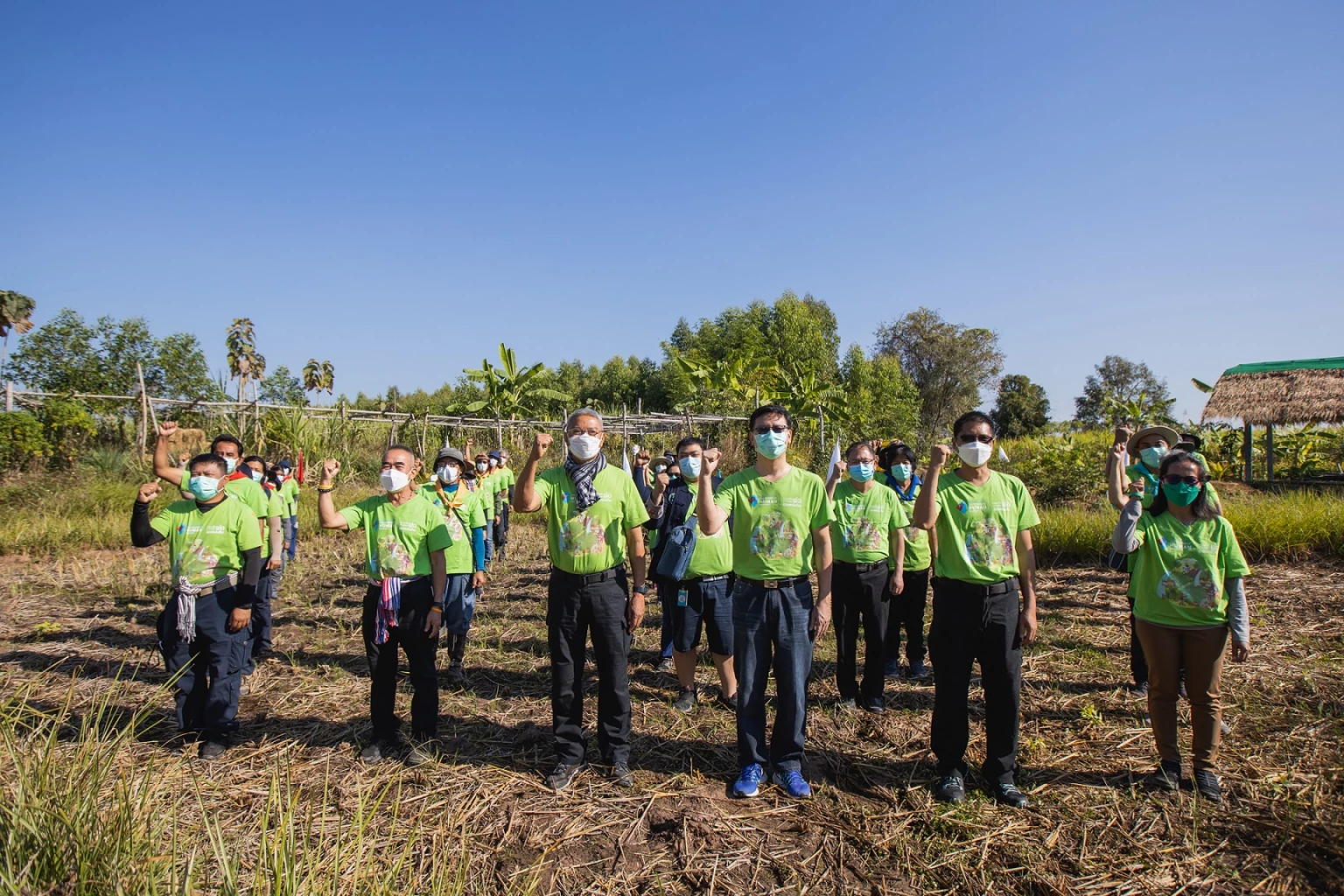 People from everywhere come together on the “Sa-ngiamkam Agriculture Farm” in Nakhon Ratchasima for the “Aou Mue” activity under the “Power of Human Energy: A Journey Inspired by the King” project.
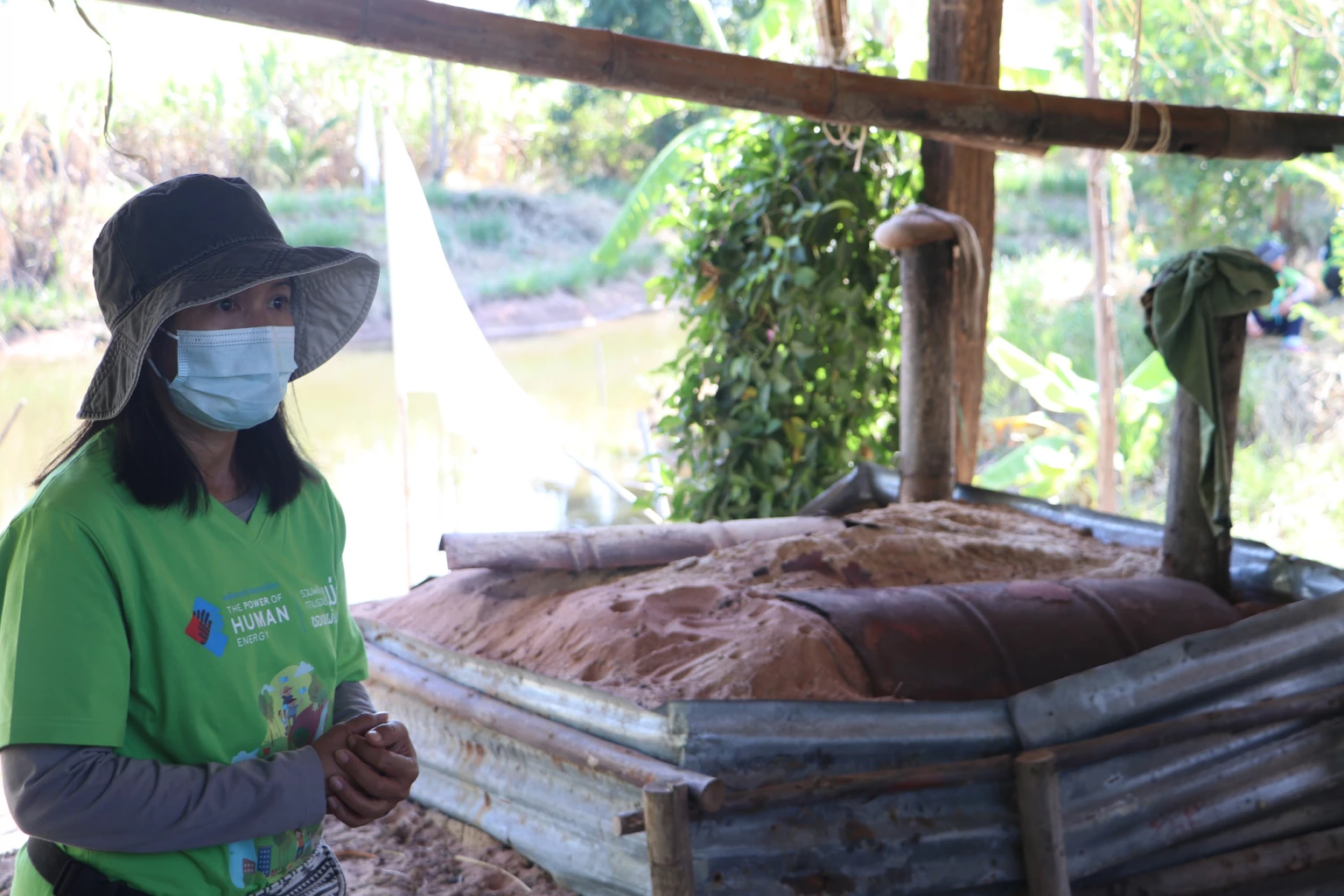 Sunita “Nual” Haewnok, owner of Sa-ngiamkam Agriculture Farm, explains the process for producing wood vinegar at “Khon Aou Than”.
 A woman uses dry fertilizer on houseplants that are covered with straw.
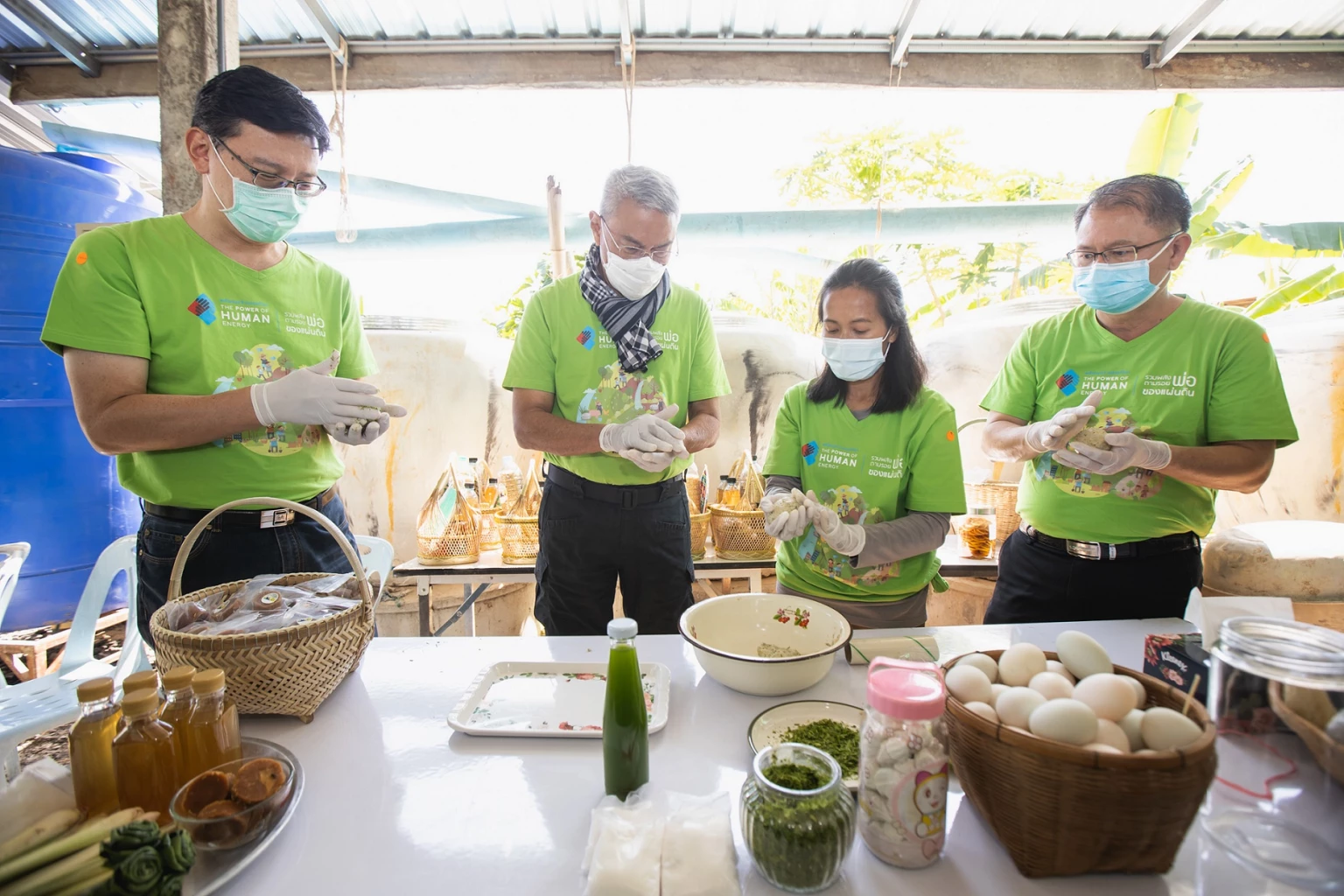 Nual demonstrates how to prepare salted egg.
 Villagers help building a weir.
 The natural water purifier is filtered through big and small stones, sand and coal.
 The handmade solar energy pump drains water from the biggest swamp into others through a winding ditch.
 Put away devices to spend more quality time with your children
 Put away devices to spend more quality time with your children
 Put away devices to spend more quality time with your children
 The role parents play with children attending classes at home
 The role parents play with children attending classes at home
 The role parents play with children attending classes at home
 The role parents play with children attending classes at home
 The role parents play with children attending classes at home
 The role parents play with children attending classes at homePay attention
 The role parents play with children attending classes at homeMany parents think their children get to interact with their teachers and classmates during classes, so no other activities need to be planned.
 The role parents play with children attending classes at home
 Dream of starting a business from home? Talk to the cactus guy
 Dream of starting a business from home? Talk to the cactus guy
 Dream of starting a business from home? Talk to the cactus guy
 Malaysian Foodpanda delivery boy on the fast track, thanks to benefactor
 Malaysian Foodpanda delivery boy on the fast track, thanks to benefactor



 SootinClaimon.Com