Twist, spin and share

ศาสตร์เกษตรดินปุ๋ย : ขอบคุณแหล่งข้อมูล : หนังสือพิมพ์ The Nation

http://www.nationmultimedia.com/detail/lifestyle/30349955

Twist, spin and share

lifestyle July 14, 2018 01:00

By Paisal Chuenprasaeng
The Nation

Huawei releases a tiny camera that lets you have fun with 360-degree VR

A COMPACT 360-degree camera that lets you have fun taking and sharing 360-degree photos and videos, the Huawei EnVizion 360 VR Camera is easy to use. Even better, it doesn’t need a battery as it is designed to be plugged into the USB-C port of your Android smartphone and functions as its dual-lens 360-degree camera.

The camera has a symmetrical design with no edges or corners and extends the 360-degree shooting experience from inside to outside, offering a harmonious user experience. It’s tiny too, even smaller than a car key, allowing you to take it anywhere.

You need to install Huawei 360 Camera app to use this camera. Once the app is installed, the app will start up and become ready to shoot 360-degree photos and videos the moment you plug it in.

The camera uses its dual 13-megapixel cameras to capture 5K (5376×2688 pixel) photos and 2K (1920×960 pixels) video clips at 30 frames per second.

Each camera will take a 180-degree shot in front of it and join the two shots into one 360-degree photo.

The photos and videos can be viewed in several fun modes, including panorama, fisheye, planet, 360 panorama, snapshot and animated gift.

You take a shot by pressing the shutter button and the camera saves a file for you to open and view in the app. There are four modes for viewing the photo, namely Fisheye, Perspective, Little Planet and Crystal Ball. Each mode lets you rotate to see the photo in different fisheye perspectives.

There is also a VR mode for viewing the photo with a special VR headset that attaches to your smartphone’s display.

The Gyroscope viewing mode centres the picture around your phone and lets you spin it.

You can also use the Screenshot function to capture a part of the photo being displayed and save it as a snapshot.

Each photo or video clip captured with the Huawei 360 Camera can be easily shared to your social networks, such as Facebook, Twitter, Line and Google Photos.

When you share a 360-degree photo or 360-degree video to a network, it can be rotated to see the scene around the camera without distortion.

For example, when a photo captured with the camera is shared on your Facebook wall, it will carry a 360-degree mark and can be rotated to show the scene around the camera, including your face and the hand holding the camera. Google Photos also supports this function.

The dual cameras capture bright and clear photos thanks to bright lenses with a f/1.8 large aperture and a 185-degree wide angle.

The camera also has a 10-second timer. You can use it with a tripod and shoot more creative photos and videos.

Huawei EnVizion 360 VR Camera has a suggested retail price of Bt4,490 and is available at Huawei shops, selected dealers and through Huawei’s official online stores on Lazada and Shopee.

Key Specs

Megapixel: 13MP

Panoramic Coverage: |360 x 360

Sill Image Resolution (Max): 5376 x 2688 pixels

Panoramic Video Spec: 1920 x 960 / 30 FPS, 1280 x 640 / 30 FPS

Weight: 30g

USB: Type C

Power: Mobile OTG Power Supply

Operating System: Android 6.0 or later

Image Format: JPEG / GIF

Video Format: MP4 (MPEG-4 AVC / H.264, audio: AAC)

FOV: 185 degrees

Technology for the home and hair

ศาสตร์เกษตรดินปุ๋ย : ขอบคุณแหล่งข้อมูล : หนังสือพิมพ์ The Nation

http://www.nationmultimedia.com/detail/lifestyle/30349951

The gallery-like Dyson Demo store at Siam Paragon offers an interactive, hands-on experience.

Technology for the home and hair

lifestyle July 14, 2018 01:00

By Kupluthai Pungkanon
The Nation

Dyson brings its super-efficient devices to Thailand

BRITISH TECHNOLOGY firm Dyson has long believed that the best way to understand its ingenious technology is to actually see it at work, which is why its first shop in Bangkok is in fact a concept store called Dyson Demo.

Just as in other major cities around the world, Dyson Demo encourages people to test and experience its products. The vacuum cleaners, which look rather like sculptures, are displayed in a gallery-like space designed by Chris Wilkinson, the founder of architectural design firm WilkinsonEyre. In 1999, the original concept space masterminded by Wilkinson opened in Paris, based on the principle that people need to understand how a machine works to realise how it is better.

The gallery-like Dyson Demo store at Siam Paragon offers an interactive, hands-on experience.

Since then, Dyson has opened flagship demo spaces in Tokyo, London, Milan, San Francisco and New York and all of them are staffed by technicians happy to explain the complex engineering systems and innovations as well as enlarge on the technical information communicated via video walls.

“It is critical for people to be able to test and experience our technology, so they can understand how it works,” Jim Roovers, head of electronics in Southeast Asia tells The Nation.

“This space is designed with that in mind. For instance, customers can pick up our famous V8TM cord-free vacuums, pull them apart, and thoroughly test them on our test tracks with various dust samples. Thanks to the Dyson digital motor V8, which spins at up to 110,000rpm, these cord-free vacuums provide powerful fade-free suction and weigh just 2.6kg. Visitors to the Dyson Demo at Siam Paragon are able to try the machine on three different floor surfaces, with different varieties of dust and debris. They can see the digital motor up-close and speak to Dyson experts about which technologies are most suitable for their home.”

Dyson’s latest Pure Cool Purifying Fans

Other key technologies on display include Dyson’s latest Pure Cool Purifying Fans, which serve as a reminder that indoor pollution might not be seen but it certainly exists. The new LCD displays report pollutants in the home in real time, and then reacts automatically using a unique Dyson algorithm. The purifying fans feature a 360 degree fully-sealed filter system combining an activated carbon filter to remove gases, and a glass high efficiency particulate air (Hepa) filter that captures 99.95 percent of microscopic allergens and pollutants as small as 0.1 microns.

Also available is powerful lighting courtesy of an overhead lamp with a chic contemporary design. The heat pipe technology cools the LED to sustain brightness and ensure the long-lasting illumination is suitable for all tasks of the day.

 Dyson Supersonic hair dryer

My favourite though is the Dyson Supersonic Hairdryer. A small salon is set aside to introduce hair science to customers courtesy of Dyson’s small and powerful digital motor and two styling stations to allow people to test and experience the Dyson Supersonic first-hand.

The expert explains how the product works, the technology inside, which is fast, focused and intelligent, and the result of a 50 million Pounds (Bt2.2 billion) investment in the science of hair. Dyson engineers studied hair from root to tip, understanding how it reacts to stresses. Complimentary in-store styling appointments can even be booked through the Dyson Thailand website.

“We are in the business of making technology that works in fundamentally differently ways. It is best understood when experienced and explained in the brand’s environment by its experts. With the new space in Siam Paragon, we are bringing engineering to life for the people in Thailand,” says chief operating officer Jim Rowan.

A night at the cinema

ศาสตร์เกษตรดินปุ๋ย : ขอบคุณแหล่งข้อมูล : หนังสือพิมพ์ The Nation

http://www.nationmultimedia.com/detail/lifestyle/30350027

  • The Cinema Social Scenes offers daily screenings of classic blockbusters, starting at 6.30pm.
  • The brand-new, cinema-themed Prince Theatre Heritage Stay hotel evokes memories of the good old days.

A night at the cinema

lifestyle July 14, 2018 01:00

By Pattarawadee Saengmanee
The Nation

The old Prince Rama theatre in Bang Rak gets a new lease of life as a trendy boutique hostel

TEARS WERE shed when the iconic Prince Rama cinema in Bangkok’s Bang Rak district closed down in 2010 and today they are being shed again – this time with joy – as the Prince bounces back to life, this time as a brand-new contemporary hostel called Prince Theatre Heritage Stay.

Tucked away in an alley off Charoen Krung Road, the original structure remains the same, though it has been reinforced to ensure safety, while a new layout provides modern facilities and common spaces for urban living.

The brand-new, cinema-themed Prince Theatre Heritage Stay hotel evokes memories of the good old days. 

Part of Thailand’s Treasury Department’s conservation and development project to promote age-old communities as heritage tourist attractions, the makeover of the old cinema is down to Montara Hospitality Group and its subsidiary Heritage Stay, which spent Bt60 million transforming the historic building into a chic cinema-themed hotel that really works.

“My family started in the hospitality business by opening the luxury Trisara Phuket Villa & Residences. We have now broadened our portfolio to include a luxury boutique hotel and hostel. In 2016, we refurbished and restored an old Lanna wooden house in Lampang to serve as an art centre operated by the Niyom Pattamasaevi Foundation. It was a success and we want to continue our architectural conservation project in Bangkok,” says Kittisak Pattamasaevi, chief commercial officer of Montara Hospitality Group, which also owns the Phraya Palazzo boutique hotel next to the Chao Phraya river.

The Cinema Social Scenes offers daily screenings of classic blockbusters, starting at 6.30pm. 

“The Treasury Department set up a conservation and development programme to help residents in many communities renovate their houses and landscapes. The department is also very open to having the private sector take part in developing local properties, so we proposed turning the Prince Theatre Heritage Stay into a sustainable business model.”

This historic building was built in 1912 and first served as a royal casino – one of Bangkok’s last five gambling houses in the reign of King Chulalongkorn. It became a major entertainment venue surrounded by Thai-style taverns, pawnbrokers, opium dens, fresh markets and brothels but became a little too raucous and was eventually shut down.

The Montara Hospitality Group invested Bt60 million to refurbish and restore its newest property.

In 1917, with the film industry expanding its reach to Thailand, Payon Pattanakorn Company converted the building into the Prince Theatre and screened classic silent and black-and-white movies.

In 1957, it fell into the hands of entrepreneur Sa-ngob Hetrakul and was renamed Prince Rama in reference to the widescreen process known as Cinerama. It quickly became popular, screening Hollywood, Hong Kong and Thai blockbusters that drew movie-goers of all ages.

The Prince Rama encountered a new set of challenges when shopping complexes started popping up around town incorporating the multiplex cinema and causing stand-alone cinemas to go bust. The owners responded by turning into a cinema showing nude and porn movies but even that wasn’t enough to help it survive.

Old movie tickets

“King Chulalongkorn wanted to abolish slavery in Thailand, so he gradually closed hundreds of betting houses in an attempt to stop the practice of selling wives and children to pay a debt. The Bang Rak royal casino moved here and operated until films arrived and the casinos were turned into cinemas,” says Chittipan Srikasikorn, managing director of Heritage Stay.

“The Prince Rama could seat about 700 and the tickets were priced at Bt7. The original building had one and a half floors made of wood and was covered with an old zinc roof, once abandoned became a residence for the homeless. We spent a full year on the renovations, doing everything we could to conserve its charming architecture and the vintage atmosphere.”

The Box Office Bar and Cafe spoils movie lovers with an exclusive creation of classic film-inspired cocktails and mocktails. 

The two-floor hostel, which opened in February, spans 1,400 square metres and its entrance transports guests back to the good old days with colourful Art Deco style windows and high ceilings.

Smart and functional, the ground floor is home to a lobby and the Cinema Social Scenes equipped with a large screen and a collectible laser projector, which can be turned into a stage or auditorium for talk shows and art workshops.

Alongside, a vintage office-like gallery displays black-and-white photographs and collectibles from the 1910s to the 1990s and guests can learn about the history of the former landlords, the community and then latest refurbishment while the staff check them in.

The lobby shares space with an exhibition of collectible antiques and photographs depicting the Prince Rama, the Bang Rak community and the hotel construction. 

Also on view is a collection of old cinema tickets, movie rental contracts from Warner Brothers and other film studios, vintage flatirons, old-fashioned stereos and construction images depicting how the theatre has changed.

Focusing on convenience and comfort, the hotel offers 28 guestrooms in the categories of private suites and shared rooms. The four luxury suites are decorated in different designs to reflect the building’s history.

The cinema manager’s chamber has morphed into an elegant Prince Theatre Master Suite. 

The Prince Theatre Master Suite took over the manager’s chamber and its interior design draws on the days of black-and-white film, while the Prince Rama Master Suite is adorned with vintage handbills and uses a palette of red and black to create a sexy look in the style of a nude movie.

The posh duplex-level suite Casino Loft brings to mind a scene in a James Bond movie, where 007 and a sexy girl huddle in a casino’s private room while the Chinese Opera Loft suite takes guests back to the glory days of a Bang Rak gambling house.

Luxurious and airy, all suites offer a living space with 40” LED TV, working table, a king-size bed, coffee and tea making facilities, wardrobe, safety box and a private bathroom with hot shower complete with all amenities. They’re priced at a very reasonable Bt4,200.

. Guests can choose between a variety of shared rooms, adorned with old-fashioned handbills.

The hostel style accommodation, meanwhile, ranges from a shared duplex with six beds, a shared room with single beds, a shared room with double beds and shared rooms of four and six beds for ladies only. Entrance is with a key card and each attractively decorated room comes with hangers and lockers and an en-suite bathroom with separate shower and toilet and kitted out with a hair dryer, towels, shampoo and shower gel.

And while each corner of the shared facilities is on the small side, they are also comfortable, coming with a privacy curtain, reading light, electric sockets and a private locker at the head of the bed. Prices range from Bt1,000 to Bt1,200.

The Sky Fall mocktail pays tribute to James Bond.

All-day dining room the Box Office Bar and Cafe serves a choice of continental-style breakfast or guests are free to order dishes from popular stalls and restaurants around the neighbourhood and eat in.

In the evening, the bar offers a selection of creative cocktails and mocktails inspired by several of the classic movies that were screened here. For example, Borsalino (1970) is blended with rum, amaretto, jasmine syrup and lemon, Romeo & Juliet (1964) mingles rose-infused vodka, infused Bianco Vermouth and chocolate butter and the Sky Fall mocktail is a healthy mix of tomato juice, Thai spice syrup and lime.

“The hotel is a short walk from Taksin BTS station, Sathorn pier and the Creative District. Bang Rak is famous for its delectable street food, some of which appears in the Bangkok Michelin Guide. Staying with us, guests can indulge in the charming theatre atmosphere and during the day we offer a walking tour programme to explore the bakeries, restaurants and important places in the community,” Kittisak says.

And, of course, there’s movie night with a bill of fare that changes every day. Among the golden oldies showing this month daily except Sunday at 6.30pm are “Doll Face” (1945), “The Stranger” (1946), Charlie Chaplin’s “The Immigrant” (1917), “The Women in Green” (1945), “Suddenly” (1954), “D.O.A” (1949) and “The Little Princess” (1939).

SCREENING TONIGHT

Prince Theatre Heritage Stay is located at 441/1 Charoen Krung Road of Bangkok.

For more information or reservations, call (02) 090 2858 or visit http://www.PrinceHeritage.com.
Ten of Asia’s very best

ศาสตร์เกษตรดินปุ๋ย : ขอบคุณแหล่งข้อมูล : หนังสือพิมพ์ The Nation

http://www.nationmultimedia.com/detail/lifestyle/30349923

Ten of Asia’s very best

lifestyle July 13, 2018 01:00

By THE NATION

For this third annual Best in Asia list, Lonely Planet’s inhouse Asia experts have named “eclectic” and “vibrant” Busan, South Korea, as the number one destination while the jewelled architecture and ancient cities of Uzbekistan are in second place; and in third comes Ho Chi Minh City, Vietnam, “a supercity that somehow keeps getting cooler”. Thailand’s Chiang Mai comes in at the sixth place.

“Asia is such a vast and diverse continent for anyone dreaming of an escape,” Lonely Planet’s Chris Zeiher says. “Our experts have combed through thousands of recommendations to pick the best destinations to visit over the next 12 months.”

“From Nagasaki in Japan, to Arugam Bay in Sri Lanka,” Zeiher continues, “this is a lineup to inspire a multitude of travellers – whether they’re based in Asia, or maybe have already visited some of the region’s heavy-hitting destinations.”

Here are the 10 best places to visit in Asia.

1. Busan, South Korea

A stunning confluence of scenery, culture and cuisine, Busan packs an eclectic offering of activities to suit all travellers from hike hills, Buddhist temples, sizzling hot springs to seafood feasts at the country’s largest fish market. Poised to steal the spotlight, Busan is East Asia’s culture city for 2018 and will be at its most vibrant with colourful events showcasing the country’s cultural heritage, from street art festivals to traditional dance shows.


2. Uzbekistan

Change is afoot in a country that has remained largely closed off to the wider world due to tight control following the end of the Soviet era. Uzbekistan has long held sway over travellers’ imaginations, with its dreamy mosaic-clad mosques and Silk Road lore and in 2017 took huge strides in opening up to tourism by announcing visafree and evisa schemes. The new air routes and extensions to its shiny high-speed rail line make access to its arsenal of jewelled architecture and ancient cities easier than ever.

3. Ho Chi Minh City, Vietnam

The southern supercity of Ho Chi Minh City somehow keeps getting cooler. Ageing apartment blocks are being colonised by vintage clothes stores and independent coffee shops, innovative breweries are fuelling one of the best craft beer scenes in Southeast Asia. The eclectic venues are also strengthening the local music scene. The long-standing attractions are the War Remnants Museum and a pioneering street food scene. This buzzing Asian megalopolis is in no danger of going out of style.


4. Western Ghats, India

The Western Ghats offer an atmospheric mirror to Shimla and Darjeeling, with added jungle appeal coffee, tea and spice plantations, charmingly dated colonial outposts, thundering waterfalls, and a steampowered mountain railway. These rugged hills are Unesco listed as one of the top spots for biodiversity in the world, protecting the neelakurinji flower, which blooms only once every 12 years and will be painting the hills in purple livery from August to October 2018.


5. Nagasaki, Japan

For most, Nagasaki is synonymous with the tragic atomic bombing of August 1945 but remarkably, the city has converted the catastrophe into a call for peace, exemplified by the tranquil Nagasaki Peace Park and the Atomic Bomb Museum. However, Nagasaki’s identity transcends one violent act visit a new foreigntrade museum housed in Japan’s oldest church, or pass the verdant harbour towards the hiking routes that snake through the surrounding volcanic hills.

6. Chiang Mai, Thailand

Chiang Mai, the former capital of the Lanna Kingdom, feels plucked from the pages of history, where visitors browse stalls of antique jewellery among archaic alleyway yet despite this, a young, creative population has taken up residency in Chiang Mai bringing an exciting buzz alongside majestic chedis (stupas) are cafes known for their latte art, muralwalled fusion cuisine restaurants and the newlyopened, awardwinning Maiiam Contemporary Art Museum.

7. Lumbini, Nepal

For decades, Lumbini was somewhere travellers flashed through en route from India to Nepal, unaware they had passed within yards of the birthplace of the historical Buddha. Today, Lumbini is on the ascendancy with a new international airport under construction offering a safer route into Nepal, and evermore  temples are springing up”. Despite these developments, the town’s cardinal draw will remain its tranquillity.

8. Arugam Bay, Sri Lanka

This surf town on Sri Lanka’s east coast has managed to retain its cool as holidaymakers swarm the rest of the country’s ancient citadels and hikerstrewn hill stations. Barefooted boarders sprawl outside vegan cafes but if the turquoise swells can’t tug you in, Arugam has grown its onland offering with beachside bars and makeshift music festivals; plus a handy proximity to Kumana National Park, home to leopards, elephants and crocodiles.

9. Sichuan Province, China

Farflung villages, towering skylines, giant pandas and fiery cuisine make Sichuan Province a microcosm of modern China. It provide diverse experiences from surveying the Le Shan Grand Buddha, climbing Emei Shan, riding the first section of the Sichuan-Tibet Railway to visiting timefrozen Tibetan villages and spotting the mushrooming of luring brewpubs and boutique hotels in cosmopolitan Chengdu.

10. Komodo National Park, Indonesia

New flight connections have made Komodo National Park more accessible than ever. Aside from laying eyes on the illustrious Komodo dragon, visitors to this ceruleansilhouetted archipelago can hike to hallowed viewpoints on Padar, sample laidback beachside living on Kanawa and dive with a mindboggling array of marine life in the reefs. A nature enthusiast’s nirvana”.

Lonely Planet’s Best in Asia 2018 is available online, with accompanying articles to each destination, at lonelyplanet.com/bestinasia. Visitors to the website also have the opportunity to enter a competition for a chance to win either a trip for two to Busan, South Korea, or a camera drone package from DJI.

Tokyo district alight for Edo festival

ศาสตร์เกษตรดินปุ๋ย : ขอบคุณแหล่งข้อมูล : หนังสือพิมพ์ The Nation

http://www.nationmultimedia.com/detail/lifestyle/30349801

Tokyo district alight for Edo festival

lifestyle July 13, 2018 01:00

By THE NATION

Visitors to Eco Edo Nihonbashi being held in Tokyo’s Nihonbashi district until September can get a sense of what it was like living in the Edo period (1603-1868) by donning the traditional casual wear known as a yukata and watching a hanabi fireworks display.

The annual summer event also celebrates the beloved goldfish, with more than 100 food outlets serving photogenic dishes bearings its likeness.


The district boasts 170 stores offering discounts on purchases to anyone wearing the yukata. Then it’s off to see the digital fireworks illuminating the buildings along festive street Nakadori and covering the pavement in shimmering blue virtual water.

Nakadori is lined with giant chochin – paper lanterns – bearing goldfish motifs. The sounds of bubbling streams and fireworks are designed to evoke a cool riverbank as revellers admire the real fireworks in the sky.


The Art Aquarium is meanwhile hosting another of its terrific exhibitions of aquatic art, this time by Hidetomo Kimura.

Find out more at https://mitsuishoppingpark.com.

All things bright and beautiful

ศาสตร์เกษตรดินปุ๋ย : ขอบคุณแหล่งข้อมูล : หนังสือพิมพ์ The Nation

http://www.nationmultimedia.com/detail/lifestyle/30350010

All things bright and beautiful

lifestyle July 13, 2018 01:00

By THE NATION

Jubilee Diamond, Thailand’s leading retailer of diamond jewellery, recently showcase the latest innovations in jewellery design through more than 20,000 diamonds and diamond sets during the “Jubilee Diamond Midyear Expo 2018, the 89th Sparkling Phenomenon”.

“Our policy and philosophy is to create diamond jewellery suited to everyone, using the highest quality diamonds from the best diamond cutting areas in the world. We integrate innovative designs that are modern, multifunctional and suited to all occasions. The event is organised to show our infinite gratitude and appreciation to our customers,” said Unyarat Pornprakit, the firm’s chief executive.


“The Expo area is divided in eight spectacular zones and the highlight, the queen of the exhibition, is the gigantic “Fancy Intense Yellow”. This diamond has a size of 70.79 carats and is the biggest Fancy Yellow diamond in the world, found in a famous diamond mine in South Africa and cut in Belgium in ‘Excellent Excellent’ Grade,” she said.


Guests also learned about the newest and innovative stone setting process – the Micro Set Microscope Setting Technique – which enables professional stone setters to create stunning and uniform glittering diamond surfaces.

The highlight of the event was a dazzling fashion show, with big name models presenting a range of diamond sets to the sound of Nantida Kaewbuasai powerful vocals.

There are more than 125 branches of Jubilee Diamond in Thailand. Find out where they are at http://www.JubileeDiamond.co.th.

Stepping into grace

ศาสตร์เกษตรดินปุ๋ย : ขอบคุณแหล่งข้อมูล : หนังสือพิมพ์ The Nation

http://www.nationmultimedia.com/detail/lifestyle/30349872

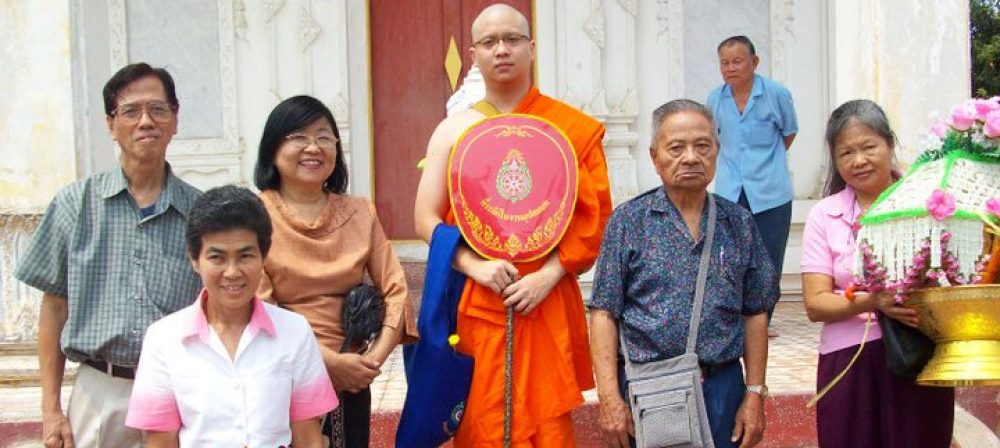
  • “Being a novice monk enables me to learn new things,” says Trevor Thara Rowley.
  • The 12 novices from different countries participating in the “True Little Monk: A Wisdom Training Programme for Novices” pose with monks of Wat Pah Sai Ngam, their parents and Suphachai Chearavanont, seated centre.
  • The youngsters have their hair and eyebrows shaved.
  • The ordination ceremony of one of the youngsters.
  • The kids say goodbye to their parents.
  • “I hope that being a novice will make me a better person,” says Shane Wafula.

Stepping into grace

lifestyle July 13, 2018 01:00

By THE NATION

Twelve youngsters from different countries are ordained as novices in TrueVision’s dharma reality show

“True Little Monk: A Wisdom Training Programme for Novices” – the world’s first international dharma reality documentary programme – has proved something of success, with ten of thousands of viewers around the world tuning in to their televisions and computers to watch as the youngsters study under the watchful eye of Abbot Master Phrakhru Nikrotthammaphon (Luang Ta Anek Yasadinno) at Wat Pah Sai Ngam in Ubon Ratchathani province.


“Our purpose is to expand Buddhism to an international level to bring the Lord Buddha’s dharma to the hearts of people across the world, as well as to set good examples and inspire the public to practice dharma principles,” says Suphachai Chearavanont, chief executive officer of Charoen Pokphand Group and chairman of True Corporation’s executive committee.


“This is the first time a dharma reality documentary programme has been conducted in English so that viewers worldwide can learn dharma along with the 12 novices from Nepal, Kenya, New Zealand, Australia, the UK, France and China. Although the novices come from different cultures, they have quickly learnt to adapt to their new environment and, most importantly, are determined to be ordained. They know how to ask questions and find answers by themselves, which is a very important learning curve nowadays.”


“Youths have unlimited potential. If they embrace Buddhism’s ethics and virtues, they will gain the highest level of knowledge and that is regarded as a most valuable treasure. All through the four weeks, the novice monks will study and practise the Lord Buddha’s teachings under the concept ‘Compassion & Kindness’. They will ‘learn’ dharma by setting questions, practising and understanding dharma, ‘live’ by focusing on the present and practicsng dharma principles with endurance, ‘love’ by realising the truth of living together in harmony and supporting each other, and finally ‘let go’ of ego and selfishness to reach the goal of being a ‘giver’ with compassion,” he continues.


“The programme aims to cultivate ethics and virtues in these 12 novices so that they benefit from this knowledge in their daily lives as well as spread the Lord Buddha’s teachings to viewers across the world.”

Eight-year-old Kenyan Shane “DJ” Wafula and Thai-New Zealander Trevor Thara Rowley, also eight, are thrilled to be at the temple.


“I am glad to be ordained as a novice monk. I hope that being a novice will make me a better person. I have practised and prepared myself for this mission in many ways such as waking up early, mediating and eating less. Joining this dharma programme, I have made new friends from various countries. This is a good experience. I have learned and practised dharma by meditating and chanting. All the reverend monks have provided me with fruitful knowledge that I will share with my friends when I go home,” says novice DJ.


“This is my first time to be ordained as a novice monk. I want to be a novice because my brother was also ordained. I want to know what it’s like being a monk. I don’t really understand Buddhism, so I want to learn more about this religion. I was quite worried about eating, sleeping and shaving my hair so I practised eating less, sleeping on the floor and prepared my mind for having no hair. I miss my family but at the same time I am glad and excited to learn new things such as how to wear a monk’s robe. Being a novice monk enables me to learn new things,” adds novice Trevor.

“True Little Monk: A Wisdom Training Programme for Novices” screens around the clock on TrueVisions Reality TV channels 60 and 99 as well as TrueVisions Reality TV HD channels 119 and 333. It can also be watched via the TrueID app, and at Facebook and YouTube. The series ends on July 25.

In celebration of the sarong

ศาสตร์เกษตรดินปุ๋ย : ขอบคุณแหล่งข้อมูล : หนังสือพิมพ์ The Nation

http://www.nationmultimedia.com/detail/lifestyle/30350009

In celebration of the sarong

lifestyle July 13, 2018 01:00

By THE NATION

To mark the auspicious occasion of Her Majesty Queen Sirikit’s 86th Birthday, the Sanjai Saiyai Phasin Club is organising the fourth Annual Sarong Festival to promote woven fabrics from all regions of Thailand. The event will be held from August 10 to 13 from 10am to 10pm at The Street Ratchadaphisek.

“We will bring woven fabrics from all over the country to salute Her Majesty Queen Sirikit and to also preserve and support Thai handicrafts in line with royal aspirations,” said the club’s president Nayada Amatavanich.

“The event will also feature talks by many famous Thai Fabric designers, among them Thanit Phoomsawai, a well-known designer from the drama “Buppesanniwas”, Wasin Oonjanam costume designer of the drama “Nakaraj”, artists who have created and rewoven fabric patterns such as Terdsak Insaeng, Pairat Sararat, Jongjarun Manakam and Suriya Wongchai, as well as additional Thai fabric experts from different regions. And we will demonstrate how to wear a sarong in various forms.”

In partnership with Feature Co Ltd, the club will also unveil a precious publication on woven textiles in Thailand.

Sanjai Saiyai Phasin Club was established on December 5, 2017 with the objective of preserving and promoting Thai sarong and woven textiles in all regions. It currently has more than 17,000 members.

For more information, call (088) 693 0360

Feasts of the past and present

ศาสตร์เกษตรดินปุ๋ย : ขอบคุณแหล่งข้อมูล : หนังสือพิมพ์ The Nation

http://www.nationmultimedia.com/detail/lifestyle/30349938

  • Grilled eel bibimbap
  • Bukchon Hanok Village is a cluster of homes of classic Korean design.
  • The Artee Riders Club takes visitors on rickshaw tours.
  • The changing of the royal guard is a highlight of any visit to Gyeongbokgung Palace.
  • Residents are encouraged to wear hanbok, a show of pride.
  • A class for making Korean sheet masks at Yeonyojae.
  • A class for making traditional desserts at the OME Cooking Lab.
  • Gujeolpan, a Joseon royal court dish

Feasts of the past and present

lifestyle July 13, 2018 01:00

By Kitchana Lersakvanitchakul
THE NATION
South Korea

South Korea has a lot more to offer the tourist than a tour of shooting locations for its popular dramas

Since the first Korean wave washed over our shores more than a decade ago, Thai tourists have flocked to South Korea, exploring the filming locations of their favourite series and attending concerts by much-loved K-pop artists.

But the country has much more to offer than venues for hallyu worship including unique cuisine, handson culinary classes, and aesthetic culture.


That became obvious on a recent MICE familiarisation trip funded by the Korea Tourism Organisation, whose generosity offered me a wealth of interesting experiences.

Making a good first impression is incredibly important so my first visit is to one of the many hanbok rental shops at Bukchon Hanok Village near Gyeongbokgung Palace where I intend to kit myself out in traditional Korean dress.


I choose a blue traditional overcoat, a durumagi with wide sleeves and slip it on over a jeogori, a white traditional jacket, and loose-fitting trousers known as baji before completing the ensemble with a gat, a traditional black hat originally made of horsehair with a wide brim on a bamboo frame.

Clad in hanbok and my sunglasses, I walk the short distance to Gyeongbokgung, the largest of the five grand palaces in Seoul. Its name means “palace greatly blessed by Heaven” and refers to its location in the heart of Seoul surrounded by Mount Bugaksan and Mount Namsan.


Standing at the Gwanghwamun Gate, the first gate of the palace, I’m surprised to see other people, both Korean and foreigners, attired in hanbok. I later learn that it’s “Hanbok Day”, which the Ministry of Culture, Sports and Tourism established to encourage Korean citizens to wear these traditional outfits. I join them to watch the sumunjang, the royal guard changing ceremony, which is held every day at 10am and again at 2pm.


Unfortunately I don’t have time to visit the entire palace so limit my excursion to Gangnyeongjeon Hall, the living quarters and resting area for King Taejo, the Geoncheonggung Residence, which was built by King Gojong so he could be politically independent of his father, Heungseon Daewongun, the Geunjeongjeon Hall, the main throne hall, and Gyeonghoeru Pavilion, which was used for entertaining foreign visitors.


The hot and humid weather convinces me to divest myself of my hanbok for a tour of the villages of Seochon and Bukchon, whose narrow alleys are lined with traditional hanok houses and it is with relief that I climb into a pedicab run by the Artee Riders Club, the first company to offer rickshaw tours.


My pedicab takes me along the road that runs parallel to Gyeongbokgung Palace then turns right into Seochon, an old historic area whose bane means the “village to the west”, which is home to traditional hanok homes as well as many shops, boutiques, cafes and restaurants. Reaching the end of the alley, we retreat to another cluster of traditional hanok homes in Bukchon Hanok Village or “northern village”, an area that is instantly recognisable for its appearance in many dramas including “Monster” and “Heirs”. My driver convinces me to walk uphill along the steep alley from where I can take photos of Seoul from in between the hanoks, most of which have been converted into cultural centres, guesthouses, restaurants and teahouses.


Moving from Seoul to Busan for the second part of my journey, I take the opportunity to sample hansik, traditional Korean cuisine centred on rice that has caught on around the world. It includes such familiar dishes as kimchi and bibimbap as well as Korean BBQ and the pop-culture inspired chimaek, which gets its name from chicken and maekju, the Korean word for beer. It is popular all around the country but I try it at Fingers and Chats in trendy Bay 101 of Marine City.

I also take part in Soollo Road, a themed tour that visits the taste and flavour of the city with Korean spirit, or sool, and food. I sample a mini jangeo kkotbap, a type of bibimbap featuring a bowl of rice mixed with grilled eel and assorted vegetables, and makgeolli, the popular Korean rice wine and even learn how to make a Korean beauty mask at Yeonyojae, a school of cultural fermentation.


Bibimbap is one of the all-time favourite meals of the Korean people and well known to most Thais. Its popularity has also grown internationally and it is usually served with a hot-stone bowl. Before eating, I slowly cook the ingredients and crisp the rice before adding gochujang, a popular Korean condiment made with red chillies.

Back in Seoul, I taste the true flavour of my host country at Korea House, a traditional building that introduces the culture and lifestyle of the country’s residents and allows the visitor to experience traditional architecture and a classical atmosphere. It is divided into a space for people to get acquainted with each other, a traditional theatre, and three annex buildings. Normally it’s the setting for historical TV dramas or weddings, but it’s also a hideaway for Korean boy band BTS to expand K-pop’s traditional sphere of influence.


Here, I try gujeolpan, one of the pre-eminent dishes of Joseon court cuisine, for the first time. Its name means “a plate with nine sections” – gu is the number nine, representing everything, fullness or perfection. Gujeolpan is characterised by the harmony between the five colours – yellow, white, black, blue and red – created by the natural colours of the ingredients. All the ingredients are designed to be wrapped with a thinly fried pancake made from flour and served with a dipping sauce made from either mustard or soy sauce with vinegar. It’s a popular dish to serve to important guests or at banquets, as it’s colourful and light in taste.

A Korean official of the OME Cooking Lab tells me there’s no better way to learn more about Korean traditional food and desserts than to have a go at making them myself. I opt to make gangjeong, a deep-fried rice puff coated with honey, nuts or seeds, and tteok, Korean rice cakes made of various grains, and bingsu, the shaved ice treat so popular with Thais.


Part of the one-day cooking class involves shopping for the ingredients at Yangnyeong and Gyeong dong, two local and traditional markets in Seoul. Fortunately, an OME official is waiting for me at Exit 2 of Jegidong station.

Yangnyeong is the nation’s largest oriental medicine market and I’m immediately struck by the unique fragrances of the Korean medicinal herbs especially several types of ginseng. Red ginseng is particularly popular, due to proven effectiveness in restoring energy, while Youngji mushrooms are known to prevent a range of adult diseases.

I round off my trip with a spa experience with Korean red ginseng treatment at Spa G. Red ginseng is known to help revitalise the mind and body, nourishing the skin and relaxing stressed muscles. I choose a red ginseng essential oil body treatment – an oil massage therapy that combines red ginseng essential oil and Swedish massage techniques – and leave the spa 60 minutes feeling completely refreshed.

Hidden borderlines and possession

ศาสตร์เกษตรดินปุ๋ย : ขอบคุณแหล่งข้อมูล : หนังสือพิมพ์ The Nation

http://www.nationmultimedia.com/detail/lifestyle/30350012

Hidden borderlines and possession

lifestyle July 13, 2018 01:00

By THE NATION

“Pratthana A Portrait of Possession” – a collaboration between Thai novelist Uthis Haemamool and Toshiki Okada, writer/director of Japanese theatre troupe chelfitsch – is coming to the stage of the Sodsai Pantoomkomol Centre for Dramatic Arts at Chulalongkorn University next month with the assistance of the Japan Foundation.

Okada was deeply moved by the concept of “Silhouette of Desire” (”Rang Khong Pratthana”) Uthis’ latest novel and contacted the author to propose a stage adaptation.

Within Uthis’s novel lie hidden borderlines between the self and others, life and death, man and woman, past and present, one class and another class, the individual and the nation, the controller and the controlled, and desire and its object. In adapting the novel for the stage, Okada decided to put these borderlines on the stage by employing a theatrical methodology for superimposing them on the narrative and the actors’ bodies.


Eleven Thai actors, from novices to veterans, have been selected through auditions held in Bangkok. They are Jarunun Phantachat, Kemmachat Sersukchareonchai, Kwankaew Kongnisai, Pavinee Samakkabutr, Sasapin Siriwanij, Tapanan Tandulyawat, Teerawat Mulvilai and Witwisit Hiranyawongkul.


Yuya Tsukahara of contact Gonzo is the scenographer, Wichaya Artamat is assistant director, Kyoko Fujitani of FAIFAI is the costume designer while Pornpan Arayaveerasid takes charge of lighting and Masamitsu Araki of sound designer, and Takuya Matsumi handles videography and projections.

The artists taking part in this production are all emerging artists from both Thailand and Japan, living and working in the same age. Through their vision, this work definitely promises to expand the frontiers of theatre itself as a form of artistic expression.

“Pratthana – A Portrait of Possession” will be staged from August 22 – 26 at 7.30pm. An additional show takes place at 1.30pm on August 25 and will be followed by a talk.


Early bird tickets are priced at Bt500 (reservation and payment by July 31). Ticket prices are Bt700 and Bt400 for student. The price will rise to Bt750 and Bt450 for tickets bought at the door.

For reservation, please call (064) 679 6768 or email pratthanabkk@gmail.com.

For more information, visit http://pratthana.net and Facebook.com/pratthanabkk.