Don’t sell my data! We finally have a law for that #ศาสตร์เกษตรดินปุ๋ย

#ศาสตร์เกษตรดินปุ๋ย : ขอบคุณแหล่งข้อมูล : หนังสือพิมพ์ The Nation

https://www.nationthailand.com/edandtech/30381898?utm_source=category&utm_medium=internal_referral

Don’t sell my data! We finally have a law for that

Feb 11. 2020
By The Washington Post · Geoffrey A. Fowler

With apologies to the Beastie Boys: You gotta fight for your right to privacy. America’s first broad data privacy law, the California Consumer Privacy Act, went into effect Jan. 1. These days, a wild range of companies gather and sell your data, from Ford and Chipotle to Uber and Walmart. Now the CCPA gives you the power to say cut it out.

And while the law technically covers only California residents, Americans living anywhere can use the CCPA to reset their relationships with more than a dozen major businesses (and counting).

Just know that some companies are going to make you jump through hoops. To help, I’m breaking the CCPA down into bites – and collecting below a growing list of links you can use to take action.

I’ve been learning how to use the law by filing requests to more than 100 companies. To be covered by the CCPA, companies have to make more than $25 million per year or collect data on more than 50,000 people. They’re not incentivized to make it easy: Amazon hid critical links in legal gobbledygook. Marketing data company LiveRamp asked me to submit a selfie holding my own ID, kidnap-victim style. Walmart asked for my astrological sign to confirm my identity. (Really.) And one business left me a voice mail, but the message included no return number . . . or even the name of the company. (Please call back!)

Yet I’ve also been pleasantly surprised: Some of the biggest businesses, including Netflix, Microsoft, Starbucks and UPS, are extending CCPA rights to all Americans rather than just Californians. That makes some sense: It’s additional work for companies to try to confirm where people live. And frankly, it’s not a good look for them to claim they care about customer privacy and then discriminate against Americans who don’t live in California. Many of these companies tell me they’ll participate when Congress passes a federal data privacy law, which they know isn’t likely anytime soon.

Privacy advocates have mixed feelings about the CCPA. It’s true that it creates too much work for many people – and everyone deserves privacy, even if they’re not willing to jump through hoops.

But I’m in the camp that thinks the CCPA is an important step forward. I spent the past year following the secret life of the data on my phone, car and credit cards, often confronting a stone wall from companies. Now we all have the legal authority to demand answers about what’s happening with our data. For example, the CCPA has already revealed that Amazon keeps a record of everything you do on a Kindle, from when you start and stop reading to when you highlight a word. (Amazon CEO Jeff Bezos owns The Washington Post, but I review all tech with the same critical eye.)

The CCPA is far from a perfect privacy law, but it’s the one America has in 2020. I want to hear what you discover using it. I’m hopeful it will fuel an overdue public conversation about what kind of surveillance is OK – and what crosses the line.

Q: What does the CCPA do?

A: On its own, the CCPA won’t do much for your privacy. But if you take some action, it gives you three useful rights:

1) You can ask companies to show you exactly what data they’ve collected about you.

2) You can instruct companies not to “sell” your data. The word “sell” is in quotes because the law defines that pretty broadly as an exchange of value. (There’s a lot of debate about that, though – see below.)

3) You can ask companies to delete your data, unless doing so would create a security threat or interfere with someone else’s free speech.

Even better, the law says companies are not allowed to treat you differently or charge you money just for exercising your data rights.

There’s also a special restriction for children: If you’re under 16, a company needs you to explicitly opt in before they can sell your information.

Q: Is it like the European law?

A: The CCPA is a bit like a European law you may have heard about, called the General Data Protection Regulation. What’s different is that the CCPA doesn’t require companies to minimize the data they collect in the first place.

Privacy advocates also think the CCPA is sorely missing the ability for consumers to file lawsuits against companies that violate their rights. Only the California attorney general can do that now.

Q: How much work is this?

A: You have to go to each and every company to exercise your CCPA rights. Yes, that could become a never-ending project. But the good news is that many companies have web forms you can fill out like busywork. I submitted about a hundred in less time than it took me to binge the most recent season of “The Crown.”

So far there’s no tool to help you do this all at once or service that will manage your data for you, though I’ve heard from several start-ups working on that.

Keep in mind that some online services, including Facebook, say a “delete” request involves totally shutting your account, rather than just pressing a reset button on all the unwelcome surveillance of your life.

Q: What hoops might companies make me jump through?

A: Before you dive into making requests, get organized. You’ll need to have access to your usernames, passwords and loyalty card numbers. (If you don’t already have a password manager to keep all your important information organized, this is an excellent time to get one.)

Companies can ask you to prove your identity, and if there are errors or missing information they can reject your request. Scan or photograph your driver’s license; many sites required me to upload it, or a version that was redacted. Data firm Wiland even asked me for a notarized letter. (I reminded it that CCPA requests aren’t supposed to cost consumers anything, and the company suggested I seek out a free notary at a government office or credit union.)

Some companies will try to shift work onto you. Airbnb and PayPal, among others, make you email them requests, rather than using web forms. Instead of a simple “do not sell” switch, companies including Mastercard make you manage a series of privacy “preferences” (as if anyone’s preference would be to have their data sold). To opt out, Best Buy says you have to change your web browser to block all cookies (breaking some sites) and dig into your phone settings to turn off some advertising tracking.

Don’t let any of this stop you from demanding your rights. The most common annoyance is firms hiding their CCPA instructions behind many links and impenetrable privacy policies.

Q: Is there any information that isn’t covered?

A: Companies don’t have to share information that’s already public, that they’ve collected in a job interview or that they’ve aggregated in ways that don’t identify you.

Some companies have come up short in what they actually disclose. For example, in CCPA requests it returned to me, Amazon has yet to share what data it collects in its camera-equipped Amazon Go convenience stores.

And businesses already covered by a few existing privacy laws are exempt – even if those laws don’t require transparency like the CCPA. That means banks and doctor’s offices generally don’t have to abide.

Q: What counts as data ‘sale’?

A: This is one of the most-debated questions in tech right now.

The CCPA says selling data is a transfer of information for commercial purposes. That’s obvious where one company pays another for, say, your burrito purchase history. But many businesses, particularly ones involved in online advertising, pass along information in other ways, such as tracker cookies and pixels hidden on websites and apps.

Some of the biggest firms, including Facebook, Amazon and Google, contend the “do not sell” request part of the CCPA doesn’t apply to them because they don’t sell our data. They just make billions off our data by using it to target ads and train artificial intelligence software.

Others are claiming an out because the law is too vague. For example, Spotify’s privacy policy says it shares your personal information with advertisers – but the music service doesn’t think that should count as a sale. “It is currently unclear whether the use of certain types of advertising partners would be considered a sale under CCPA,” the company says.

The authors of the CCPA say they intended the term “sale” to reflect the wider data economy. California Attorney General Xavier Becerra hasn’t yet published guidelines for how his office will interpret the law, and we might not get firm answers until his office begins enforcing it. That’s set to begin July 1.

Q: Once I have my data, what do I do with it?

A: First, keep it secure by storing it only on a computer you control with a password.

Most of the data requests I’ve received so far have come in formats I can easily read, such as text files or PDFs. But not all: Twitter sent me files in a .js format that requires a data science degree to understand. (The company says it is working to improve that.)

I’m still waiting to hear back on most of my requests; the law gives companies up to 90 days to deliver. But already I learned that WiFi router maker Eero, owned by Amazon, keeps a detailed log of every device that’s ever connected to my network. (It’s like a creepy visitor guest book.) Fandango not only tallied all the movies I’ve watched but also concluded I have an affinity for the Muppets. (True.)

When you examine your data, keep an eye out for information you didn’t know the company had – or don’t think it should. If you don’t like what you see, submit a CCPA delete request. Or stop doing business with the company, and be sure to tell it why.

If you think a company is violating your privacy – or violating the CCPA – you can complain to the California attorney general (click here for a direct link).

Also, tell me about what you discover, using this form or sending me an email. Your experience could help inform my future columns and investigations by The Post. But please don’t just send me your data download from a company. I don’t want to invade your privacy!

Q: OK, let’s do it! Where do I click?

A: The list below includes many of the companies where I’ve submitted CCPA requests. I’ve separated out the companies that have indicated they’ll offer CCPA rights to all Americans.

There are more resources available: A crowdsourced list stored on GitHub, an online resource for coders, has an even longer list of links to company-specific CCPA information pages. Common Sense Media is also building out the website Donotsell.org as a resource for CCPA requests, as is CAPrivacy.org, run by one of the authors of the law. The Electronic Frontier Foundation offers a simple guide on its website, and the Electronic Privacy Information Center has a handy draft form letter to use in cases where companies don’t offer web forms.

If you’re looking for a company not included in any of these resources, I recommend finding the privacy policy on its website and searching for the word California – that’s typically the best place to start.

These companies accept CCPA requests from all Americans:

Amazon

Apple

DoorDash

Facebook

Google

Lutron

Microsoft

Netflix

PayPal

Ring

Roku

Starbucks

Strava

Toyota

Twitter

Uber

UPS

Wiland

Zillow

– – –

These companies accept CCPA requests from California residents:

Acxiom

Airbnb

Alaska Airlines

Albertsons/Safeway

Altria

AT&T

Best Buy

BevMo

Chipotle

Comcast Xfinity

CVS

Disney

Dominos

eBay

Eero

Epsilon

Equifax

Equinox

Experian

Face App

Ford

General Motors

Honda

Hulu

i360

JetBlue

Kayak

Live Nation

LiveRamp

Lyft

Macy’s

Marriott

Mastercard

Nissan

OpenTable

Orangetheory Fitness

Pinterest

Quora

Redfin

Resy

Samsung

SiriusXM

Southwest Airlines

Spotify

Staples

Target

Ticketmaster

TransUnion

Truedata

Uber

Unilever

Verizon

Verizon Media

Visa

Volkswagen

Walmart

Washington Post

Whitepages

Whole Foods

Yelp

Oracle’s 2020 Top 10 cloud predictions #ศาสตร์เกษตรดินปุ๋ย

#ศาสตร์เกษตรดินปุ๋ย : ขอบคุณแหล่งข้อมูล : หนังสือพิมพ์ The Nation

https://www.nationthailand.com/edandtech/30381890?utm_source=category&utm_medium=internal_referral

Oracle’s 2020 Top 10 cloud predictions

Feb 10. 2020
By THE NATION

The impact automation, artificial intelligence, machine learning, blockchain, and more will have on information and technology by 2025.

* Prediction Number 1

> 90 per cent of all manual IT operations and data-management tasks will be completely automated, opening the door to a new era of IT innovation.

> By 2025, 90 per cent of all manual IT operations and data-management tasks will be completely automated.

* Prediction Number 2

> There will be 600 times more sensitive data shared on the cloud.

> Hackers/attackers are becoming more sophisticated, so it’s critical for companies to ensure the resilience of their data and systems.

* Prediction Number 3

> 100 per cent of enterprise applications will include some form of AI.

> By 2025, 100 per cent of enterprise applications will include some form of embedded AI.

* Prediction Number 4

> 100 per cent of supply-chain apps will depend on augmented reality, virtual reality, blockchain, machine learning (ML) and the internet of things (IoT).

> In some cases, AI algorithms eliminate the need for human decision-making altogether.

* Prediction Number 5

> Automated business processes will enable more personalised interactions in HR, sales, and other business domains.

> By 2025, 80 per cent of sales will be automated, enabling sales reps to focus on relationship-building and customer engagement.

* Prediction Number 6

> 80 per cent of major cities will use IoT for Smart City initiatives. By 2025, 80 per cent of major cities will use IoT data for Smart City initiatives.

* Prediction Number 7

> Data science will be increasingly automated and embedded into analytics and data-management systems.

> By 2025, based on current trajectories, there will not be enough data scientists to meet rising demand.

* Prediction Number 8

> The rise of AI-based machines will create new jobs that haven’t been invented yet.

> Machines are acting as employees in some companies, requiring business leaders to consider how these mechanical workers can best collaborate with one another.

* Prediction Number 9

> Cybersecurity attacks will become more sophisticated with the use of IoT and AI.

> By 2025, 80 per cent of security attacks will come from an inside source.

* Prediction Number 10

> 80 per cent of data will be linked to things instead of individuals.

> The scale of identity data is larger than ever before, with much of that data scattered across users, applications, and ecosystems.

Borrowing costs depend on college status, study finds #ศาสตร์เกษตรดินปุ๋ย

#ศาสตร์เกษตรดินปุ๋ย : ขอบคุณแหล่งข้อมูล : หนังสือพิมพ์ The Nation

https://www.nationthailand.com/edandtech/30381847?utm_source=category&utm_medium=internal_referral

Borrowing costs depend on college status, study finds

Feb 08. 2020
By Syndication Washington Post, Bloomberg · Shahien Nasiripour, Hannah Levitt 

Borrowers expect their income or credit history to send their loan costs up or down. Few, however, expect lenders to judge them based on what college they went to.

But that’s exactly what some of the nation’s largest banks are doing, a group of former federal regulators said. Companies including Wells Fargo are charging consumers more to borrow money if they attended less prestigious colleges, a form of educational discrimination that may violate credit laws and deepen inequality, according to a new study.

That means Harvard University students, already flush with opportunity, stand to gain an additional edge over their peers at nearby Bunker Hill Community College when taking out loans.

The Student Borrower Protection Center, a Washington-based nonprofit, found that Wells Fargo, one of the largest U.S. lenders, offers significantly cheaper loans to borrowers attending four-year colleges than to those at community colleges, while Upstart Network Inc., an online lending platform, charges a graduate from historically black Howard University almost $3,500 more to borrow $30,000 over five years compared with a similar New York University graduate.

“Despite assurances by these lenders that their practices lift up consumers from marginalized communities, our analysis shows that educational redlining can further drive disparities and inequality,” Seth Frotman, a former student-loan official at the Consumer Financial Protection Bureau who’s now executive director of the nonprofit, said in a statement. Redlining refers to the now-illegal practice of refusing loans based on where borrowers live.

The group chose Wells Fargo and Upstart as case studies to demonstrate broader issues across the industry. Both lenders disputed the Student Borrower Protection Center’s analysis.

“We follow responsible lending practices that take into account expected performance outcomes and are confident that our loan programs conform with fair lending expectations and principles,” Wells Fargo representative Vickee Adams said.

Upstart co-founder Paul Gu said his company works closely with the federal consumer bureau, and that Upstart’s statistics show that those who attended Howard University and borrow through his firm are more likely to get credit and at cheaper terms.

The findings come as lenders and their regulators in Washington embrace so-called alternative data as a way to cut borrowing costs and increase access to credit for historically under-served households. By using data such as a borrower’s alma mater, the argument goes, lenders can better price household loans than if they relied on traditional factors such as credit scores and personal income.

Consumer groups, meanwhile, warn that lenders could abuse the data to overcharge some households. Those fears have been heightened by lenders’ use of algorithms to wade through reams of data to make instant credit decisions, particularly after users of Goldman Sachs’s credit card for Apple Inc. complained late last year that women were given smaller credit lines than their husbands. The New York State Department of Financial Services subsequently opened an investigation.

Disparities in credit scores and incomes across races have led to a “really awful system” in which minority borrowers often pay more than they should, Gu said. His firm regularly reports loan application data to the federal consumer bureau under an agreement that allows Upstart to use borrowers’ educational backgrounds in underwriting decisions without fear of a regulatory crackdown, as long as the company continues to meet fair-lending standards.

“If you want to make it better, you need more data, and you need different kinds of data to help different kinds of people,” Gu said.

Using educational data could help level the playing field, he said. Howard students, for example, are 46% more likely to get a loan under Upstart’s underwriting model than they would from a traditional lender, and they enjoy interest rates that are 18% lower, Gu said.

But disparities remain. White Americans are more likely to have college degrees than blacks and Hispanics, Census Bureau data show, while college dropouts are more likely to fall behind on their student loans than borrowers with degrees, according to U.S. Department of Education figures.

Wells Fargo, for instance, quotes loan interest rates for a hypothetical freshman studying engineering at the Borough of Manhattan Community College that are nearly double those offered to a similar student studying the same subject at the City College of New York nearby, a tool on the lender’s website shows. Both are part of the City University of New York system. Community-college students often complete their four-year degrees at other institutions.

In 2007, Andrew Cuomo, then New York’s attorney general, warned lenders against using borrowers’ educational backgrounds when making loan decisions. And in 2014, the Federal Deposit Insurance Corp. told Sallie Mae that it couldn’t price loans to students using their college’s loan-default rates without violating the Equal Credit Opportunity Act.

IPhone maker Foxconn warns staff to keep away from Shenzhen base #ศาสตร์เกษตรดินปุ๋ย

#ศาสตร์เกษตรดินปุ๋ย : ขอบคุณแหล่งข้อมูล : หนังสือพิมพ์ The Nation

https://www.nationthailand.com/edandtech/30381803?utm_source=category&utm_medium=internal_referral

IPhone maker Foxconn warns staff to keep away from Shenzhen base

Feb 08. 2020
By Syndication Washington Post, Bloomberg · No Author 
Hon Hai Precision Industry Co. told employees at its Shenzhen facility not to return to work when the extended Lunar New Year break ends Feb. 10, according to a memo obtained by Bloomberg News.

The moratorium represents an extreme effort by Apple Inc.’s most important partner to curb the spread of the novel coronavirus that’s paralyzed much of China’s manufacturing. Foxconn’s main iPhone-making base is farther north in Zhengzhou but coastal Shenzhen serves as its Chinese headquarters and the majority of the tens of thousands employed there are out-of-towners. The company also assembles a small portion of iPhones there.

“To safeguard everyone’s health and safety and comply with government virus prevention measures, we urge you not to return to Shenzhen,” Foxconn wrote in a text message sent to employees. “We’ll update you on the situation in the city. The company will protect everyone’s work-related rights and interests in the duration. As for the happy reunion date in Shenzhen, please wait for further notice.”

Apple and Foxconn were among the first corporations to try and quantify the epidemic’s impact. Hon Hai slashed its 2020 outlook this week, anticipating disruptions to Apple’s carefully calibrated production chain as well as weaker consumer demand and overall economic growth. As China’s largest private employer and a key partner to many of the world’s most recognizable consumer brands, Foxconn has become a high-profile symbol of how the outbreak could disrupt Chinese manufacturing and hence the world’s supply of made-in-China electronics.

It’s unclear whether the Shenzhen policy extends to all employees or to Foxconn’s other facilities. Hon Hai, which makes the vast majority of the world’s iPhones from the central Chinese city of Zhengzhou in Henan province, officially resumes production on Feb. 10. But the company has said in a statement that workers returning to Zhengzhou from outside the province will be sequestered for 14 days, Bloomberg News has reported.

“As a matter of policy and for reasons of commercial sensitivity, we do not comment on our specific production facilities,” Foxconn said in a statement in response to Bloomberg’s queries. “We have been closely monitoring the current public health challenge linked to the coronavirus and we are applying all recommended health and hygiene practices to all aspects of our operations in the affected markets.”

Antarctica just hit 65 degrees, its warmest temperature ever recorded #ศาสตร์เกษตรดินปุ๋ย

#ศาสตร์เกษตรดินปุ๋ย : ขอบคุณแหล่งข้อมูล : หนังสือพิมพ์ The Nation

https://www.nationthailand.com/edandtech/30381799?utm_source=category&utm_medium=internal_referral

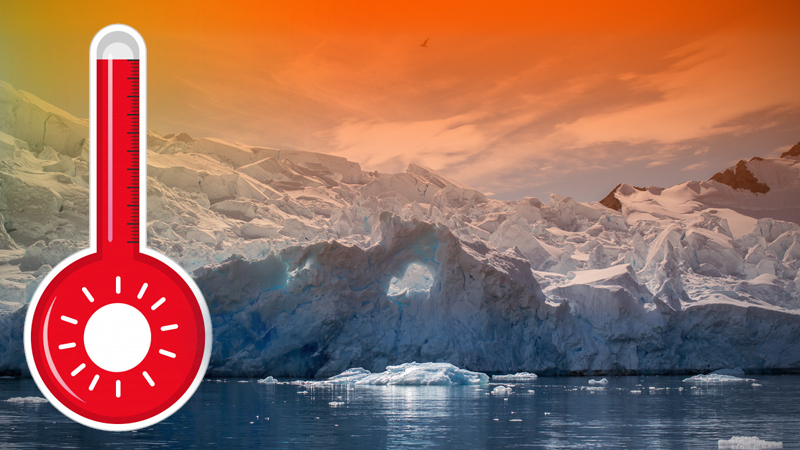
Antarctica just hit 65 degrees, its warmest temperature ever recorded

Feb 08. 2020
By The Washington Post · Matthew Cappucci 
Just days after the earth saw its warmest January on record, Antarctica has broken its warmest temperature ever recorded. A reading of 65 degrees was taken at Esperanza Base along Antarctica’s Trinity Peninsula on Thursday, making it the ordinarily frigid contingent’s highest measured temperature in history.

The Argentine research base is on the northern tip of the Antarctic peninsula. Randy Cerveny, who tracks extremes for the World Meteorological Organization, calls Thursday’s reading a “likely record,” although the mark will still have to be officially reviewed and certified.

The balmy reading beats out the previous record of 63.5 degrees, which occurred on March 24, 2015.

The Antarctic peninsula, on which Thursday’s anomaly was recorded, is one of the fastest-warming regions in the world. In just the past 50 years, temperatures have surged a staggering 5 degrees in response to earth’s swiftly warming climate. Around 87% of glaciers along the peninsula’s west coast have retreated in that time, the majority doing so at an accelerated pace since 2008.

The WMO notes that cracks in the Pine Island Glacier “have been growing rapidly” in the past several days according to satellite imagery.

The recent spate of warmth owes to a ridge of high pressure that has lingered over the region for several days. High-pressure systems feature sinking air, which favors milder temperatures.

This effect was amplified on a local level due to a “foehn” wind, characterized by air sweeping down a mountain that begins compressing as air pressures rise near the Earth’s surface. That causes additional warming.

Moreover, a look at simulated atmospheric profiles around the time it hit the record indicated warmer air aloft than at the surface – meaning any air that mixed down to ground level could have had an additional leg up in warming.

It’s been a monumental year for climate extremes, and we’re only on day 38 of 2020. January was the warmest on record globally according to atmospheric monitoring group Copernicus, with records shattered in Europe and Asia. A number of locales in Eastern Europe and particularly Russia wound up more than 12-13 degrees above average.

“[This record] doesn’t come as any surprise,” wrote Eric Steig, a glaciologist studying climate change at the University of Washington. “Although there is decade-to-decade variability, the underlying trend across most of the continent is warming.”

He says this record will likely broken again in the not-so-distant future.

“That warming has been particularly fast on the Antarctic Peninsula – where Esperanza is – in summer (the season [they’re] now in). So we can expect these sorts of records to be set again and again, even if they aren’t set every single year.”

Additional extreme warmth is likely in the Antarctic Peninsula in the coming days. Temperatures some 50 to 60 degrees above normal are expected.

Twitter beats revenue, user growth estimates; shares rally #ศาสตร์เกษตรดินปุ๋ย

#ศาสตร์เกษตรดินปุ๋ย : ขอบคุณแหล่งข้อมูล : หนังสือพิมพ์ The Nation

https://www.nationthailand.com/edandtech/30381719?utm_source=category&utm_medium=internal_referral

Twitter beats revenue, user growth estimates; shares rally

Feb 07. 2020
The Twitter app on April 20, 2019. MUST CREDIT: Bloomberg photo by Gabby Jones.

The Twitter app on April 20, 2019. MUST CREDIT: Bloomberg photo by Gabby Jones.
By Syndication Washington Post, Bloomberg · Kurt Wagner 

Twitter topped analysts’ projections for fourth-quarter revenue and added more new daily users than expected, citing product improvements and more personalized content on its social network. The shares rose the most in almost a year.

Revenue rose 11% to $1.01 billion, slightly higher than the $994.5 million predicted in a Bloomberg analyst survey. Twitter’s user growth was a bigger surprise. The company added 7 million daily active users in the period, and now has 152 million people logging in daily on average, up 21% from the same period a year earlier. Bloomberg Consensus estimates were for the company to finish 2019 with just 148.1 million total users.

In a statement Thursday, Twitter said that more than half of the 26 million daily users it added in 2019 were “directly driven by product improvements,” and its daily user base grew by “double-digit increases in all of our top 10 markets” in the fourth quarter. The company has made a public effort to improve user interactions on its service, and make it easier for users to find posts about topics they care about.

On a call with analysts, Chief Executive Officer Jack Dorsey said that he sees Twitter “more as an interest network than a social network,” and plans to push deeper into products that highlight that distinction. That includes products like curated lists of followers, which Dorsey likened to a music playlist, and the ability to follow interests, not just other people.

The stock rose as much as 15%, the most intraday since April 23. That brings gains in the last 12 months to 11%.

Despite the positive numbers, Dorsey told analysts that Twitter needs to work faster. The company is notoriously slow when it comes to shipping new products and features. “The time it takes to go from an idea to shipping something wonderful to customers still takes too long,” he said.

The fourth quarter numbers provide a stark contrast to Twitter’s third-quarter earnings report, in which the company missed its revenue projections, and the stock fell by more than 20%. At the time, Twitter also lowered its fourth-quarter outlook, and Thursday’s revenue total was at the high end of that revised guidance, but still lower than what analysts had initially projected heading into the quarter.

Last quarter, Twitter blamed some of its business challenges on a “bug” that enabled the company to mistakenly target people with ads using personal data uploaded for security purposes. Removing that data from its targeting arsenal hurt the company in the third quarter, and was still a problem for Twitter in the fourth quarter, according to the company’s shareholder letter, which said that revenue growth was down “four or more points” as a result of the bug.

Still, Twitter beat estimates and said it plans to post $825 million to $885 million in revenue in the first quarter. Analysts on average are predicting sales of $868.9 million.

Things are going well enough that Twitter said it plans to increase spending by 20% in 2020, including a plan to increase headcount by 20% and build a new data center. Dorsey said Twitter plans to grow its workforce globally, and emphasized the need to add employees outside of San Francisco, where the company has its headquarters. It was just three years ago that Twitter was headed in the opposite direction, cutting staff and selling off assets to other tech giants like Google in an effort to reach profitability.

The company posted net income of $1.47 billion for 2019, its second straight year of profitability after nearly 12 years of losses. Profit excluding certain items in the fourth quarter was $135 million, or 17 cents a share.

Questions remain as Twitter heads into a year featuring the Olympics and a U.S. presidential election. Twitter often cites major worldwide events as an advertising and user-growth opportunity, though the company has also said that it will not sell political ads ahead of the 2020 U.S. election. Dorsey has also announced plans to work for at least three months in Africa this year, a decision that promises to test Twitter’s corporate structure. Dorsey already has two jobs — he’s also CEO of Square Inc.

Boeing fixing new software bug on 737 Max; key test flight nears #ศาสตร์เกษตรดินปุ๋ย

#ศาสตร์เกษตรดินปุ๋ย : ขอบคุณแหล่งข้อมูล : หนังสือพิมพ์ The Nation

https://www.nationthailand.com/edandtech/30381739?utm_source=category&utm_medium=internal_referral

Boeing fixing new software bug on 737 Max; key test flight nears

Feb 07. 2020
The Boeing logo hangs from an entrance to its factory in Sheffield, England, on Oct. 25, 2018. MUST CREDIT: Bloomberg photo by Matthew Lloyd.

The Boeing logo hangs from an entrance to its factory in Sheffield, England, on Oct. 25, 2018. MUST CREDIT: Bloomberg photo by Matthew Lloyd.
By Syndication Washington Post, Bloomberg · Alan Levin, Siddharth Philip, Christopher Jasper 

Boeing has discovered a new software problem on the grounded 737 Max, but the company said the flaw won’t set back the goal of returning the plane to service in mid-2020.

The planemaker identified the issue during flight testing and notified the Federal Aviation Administration last month, according to an email Thursday from Boeing. The problem was that an indicator light, designed to warn of a malfunction by a system that helps raise and lower the plane’s nose, was turning on when it wasn’t supposed to, the company said.

“We are incorporating a change to the 737 Max software prior to the fleet returning to service to ensure that this indicator light only illuminates as intended,” the company said.

The new software problem complicates Boeing’s efforts to return the Max to service by mid-2020, even if it doesn’t derail the recently extended timetable. FAA chief Steve Dickson, told reporters in London that a certification flight for the grounded jet could occur in the next few weeks — a key regulatory step in allowing the aircraft to start flying passengers again.

Dickson said the FAA is evaluating the latest software issue.

The stabilizer trim warning light “had been staying on for longer than a desired period,” he said without providing more detail.

Boeing shares seesawed during Dickson’s remarks. They rose after Dickson’s comments on the timing of the certification flight, then pared gains following the disclosure by Bloomberg News of the new software problem. The stock then recovered, climbing 3.6% to $341.41 at 1:55 p.m. in New York — the most on the Dow Jones Industrial Average.

Aviation regulators are closely aligned on design requirements for the Max, but may differ country-by-country on when the jet returns, Dickson said.

The divergence is likely even though authorities agree more than they disagree on the measures needed for Boeing’s best-selling plane to resume flying after two fatal crashes, Dickson said.

The FAA has retained a strong working relationship with the European Union Aviation Safety Agency and other regulators during the Max crisis, Dickson said. The debacle has spurred questions about whether the FAA’s oversight was too lax when it approved the plane’s software design, which has been linked to both crashes.

The U.S agency will consult with other regulators on how to handle future approvals for enhancements to existing aircraft under the so-called changed-product rule, Dickson said. Updating an existing model, such as the 737, currently can be done without extensive scrutiny of aspects that don’t change. But following the crashes, critics have said regulators should conduct more thorough reviews.

Any shift could affect certification of 777X, a re-engined, re-winged update of Boeing’s twin-aisle plane. The 777X, which has folding wing tips, took its first flight last month and is expected to debut commercially next year.

Asked about a likely date for a return to service for the Max, Dickson said it isn’t helpful to talk about timelines. Boeing needs to concentrate on making complete, quality submissions on its fixes for the plane, he said.

The former Delta Air Lines pilot reiterated that he plans to fly the Max himself before it returns to the skies.

The FAA may need to expand its budget to improve its capabilities to assess aircraft designs in the wake of missing safety issues on the Max, Dickson said. But he said the agency doesn’t need much to enhance its existing resources.

The new software issue on the Max resulted from Boeing’s redesign of the two flight computers that control the 737 Max to make them more resilient to failure, according to people familiar with the matter.

The problem involves an alert designed to warn when the so-called trim system, which helps raise and lower the plane’s nose, isn’t working properly, said the people, who asked not be named because they weren’t authorized to comment on it.

One of the people confirmed Boeing’s assessment that the new flaw isn’t likely to change the plane’s projected return to service because the company had built padding into its schedule.

Boeing last month announced it doesn’t expect the plane to fly again until the middle of the year. After months of missed deadlines and growing tension with the FAA, the Chicago-based company said it was estimating a timeline that included extra room in case new issues arose.

Separately, the manufacturer was already at work on a software system called the Maneuvering Characteristics Augmentation System. The MCAS system was involved in the two fatal crashes, which killed 346 people and led to the grounding on March 13.

Musk’s SpaceX plans a spinoff, IPO for Starlink business #ศาสตร์เกษตรดินปุ๋ย

#ศาสตร์เกษตรดินปุ๋ย : ขอบคุณแหล่งข้อมูล : หนังสือพิมพ์ The Nation

https://www.nationthailand.com/edandtech/30381732?utm_source=category&utm_medium=internal_referral

Musk’s SpaceX plans a spinoff, IPO for Starlink business

Feb 07. 2020
Elon Musk, chief executive officer of Space Exploration Technologies Corp. (SpaceX) and Tesla Inc., speaks at the SpaceX headquarters in Hawthorne, Calif., on Oct. 10, 2019. MUST CREDIT: Bloomberg photo by Patrick T. Fallon.

Elon Musk, chief executive officer of Space Exploration Technologies Corp. (SpaceX) and Tesla Inc., speaks at the SpaceX headquarters in Hawthorne, Calif., on Oct. 10, 2019. MUST CREDIT: Bloomberg photo by Patrick T. Fallon.
By Syndication Washington Post, Bloomberg · Ashlee Vance, Dana Hull 

Elon Musk’s Space Exploration Technologies Corp. plans to spin out its budding space internet system Starlink and pursue an initial public offering.

SpaceX has already launched more than 240 satellites to build out Starlink, which will start delivering internet services to customers from space this summer, President Gwynne Shotwell said Thursday at a private investor event hosted by JPMorgan Chase in Miami.

“Right now, we are a private company, but Starlink is the right kind of business that we can go ahead and take public,” said Shotwell, SpaceX’s chief operating officer. “That particular piece is an element of the business that we are likely to spin out and go public.”

Founded in 2002, SpaceX has grown to dominate the commercial rocket industry through its work flying satellites into orbit for customers including the U.S. military, as well carrying cargo to the International Space Station. It is aiming to start flying humans, as well, both for NASA and high-paying tourists.

But the rocket launch business remains competitive and tough. Starlink and its ability to provide high-speed internet across the globe has helped private investors justify a roughly $33 billion valuation of the closely held company. Musk has long maintained that SpaceX itself is unlikely to go public until it is regularly ferrying people to Mars.

SpaceX is one of a handful of players that wants to build out a space internet system that can serve people who struggle to access the web today via fiber optic and cellular connections. Starlink would beam down relatively high-speed data from its network of satellites orbiting the Earth.

Right now, SpaceX can only cover higher latitudes, but by the end of the year, it expects to have global coverage, Shotwell said at the conference. Such a service would, in effect, turn SpaceX into a telecommunications company that also has a rocket business.

“This is going to turn SpaceX into a company that is providing service to consumers, which we are excited about,” Shotwell said. The company has been launching roughly 60 satellites at a time into orbit, and with another four launches expects to have global coverage. Shotwell said that service will be “less than what you are paying now for about five to 10 times the speed you are getting.”

An IPO likely would be welcomed by some SpaceX employees and investors. Musk has been reluctant to force SpaceX to endure the scrutiny that comes with being a public company and to reveal the details of SpaceX’s financials. This has left employees sitting on valuable stock, which they’re typically only able to sell during a limited number of private transactions. An IPO for Starlink might also allow its longtime backers to register gains on their high-risk investment.

There have been attempts to build similar space internet services in the past, and no company has figured out how to turn such a system into a huge, global business. Starlink dwarfs all these previous attempts in terms of the size and scope of its ambition.

Over the coming years, SpaceX intends to place thousands of satellites into orbit and will increase the bandwidth of its service with each launch. Exactly how many people will be willing to pay for this service remains an open question.

Google’s Cash Cow Search Business Is Being ‘Hollowed Out’ #ศาสตร์เกษตรดินปุ๋ย

#ศาสตร์เกษตรดินปุ๋ย : ขอบคุณแหล่งข้อมูล : หนังสือพิมพ์ The Nation

https://www.nationthailand.com/edandtech/30381721?utm_source=category&utm_medium=internal_referral

Google’s Cash Cow Search Business Is Being ‘Hollowed Out’

Feb 06. 2020
The Google logo displayed at the Google Playspace at CES 2020 in Las Vegas on Jan. 7, 2020. MUST CREDIT: Bloomberg photo by David Paul Morris.

The Google logo displayed at the Google Playspace at CES 2020 in Las Vegas on Jan. 7, 2020. MUST CREDIT: Bloomberg photo by David Paul Morris.
By Syndication Washington Post,  Bloomberg · Gerrit De Vynck 

New numbers from Alphabet Inc. this week confirmed a major fear that has lingered around the internet giant for years: the Google online search business is slowing.

In its 2019 financial report, Alphabet split its advertising revenue into three buckets for the first time: Search, YouTube and a network business that runs marketing spots on other websites. Search sales rose 15% in 2019, a slower pace than the 22% in 2018.

“This hollowing out of search is real,” Mark Shmulik, an analyst at Sanford C. Bernstein, wrote in a note to investors after the results. To maintain growth at even this lower level, Google will have to generate more revenue from its Maps service, image search and shopping search ads, he said.

Google search is one of the most profitable businesses ever created, helping the company amass a cash hoard of more than $100 billion. It took Google from a garage in Silicon Valley to a trillion-dollar giant that dominates digital advertising, online video, maps and email.

Search grew rapidly as more people got online looking for information. Smartphones also boosted usage and revenue climbed after Google loaded more ads into the top of mobile search results. But there are limits to the growth of such a large business.

Google can only stuff so many ads onto its website without lowering the quality of search results. On mobile phones, ads often fill the entire screen, forcing users to scroll down if they want to see free listings. Over the years, Google has used various tweaks to wring more clicks out of search ads. But there may be limits to that, too. Recently, it changed the way ads are labeled, causing some people to say it was trying to blur the line between ads and free results. The company quickly backtracked.

And fewer people are joining the internet in the most lucrative search ad markets. From 2017 to 2019, the number of internet users in Europe grew 10%, while in North America growth was only 2%. In Asia, the online population jumped 19%, according to data aggregation company Statista. Google worked on a censored search service for China, the world’s largest internet market, but scrapped the project after some employees and U.S. politicians criticized the effort.

Some of the most valuable search ads — those for specific products that people can buy — face competition, especially from Amazon.com Inc. About half of product searches start on Amazon now, Bernstein’s Shmulik wrote in a research note earlier this year. That’s spurred Google to build new kinds of shopping ads, but it hasn’t reversed the growth slowdown. Searches for decorating ideas and clothing are also increasingly happening on social networks such as Pinterest and Instagram. And millions of people look for music on Spotify’s mobile app, not Google.

“This hollowing out of search has been underway for many years and is not well understood,” Shmulik wrote.

Google is working hard to scoop up many of these more-specialized searches. However, the Bernstein analyst still expects revenue growth to slowly subside. After increasing 19% a year from 2015 through 2019, Shmulik estimates Google search revenue will climb 13% to 15% annually in coming years.

A man walked down a street with 99 phones in a wagon. Google Maps thought it was a traffic jam. #ศาสตร์เกษตรดินปุ๋ย

#ศาสตร์เกษตรดินปุ๋ย : ขอบคุณแหล่งข้อมูล : หนังสือพิมพ์ The Nation

https://www.nationthailand.com/edandtech/30381661?utm_source=category&utm_medium=internal_referral

A man walked down a street with 99 phones in a wagon. Google Maps thought it was a traffic jam.

Feb 05. 2020
By The Washington Post · Brittany Shammas · BUSINESS, TECHNOLOGY

The streets were shaded the dreaded dark red on Google Maps, warning drivers of a traffic nightmare. In reality, though, almost no one was on the road – except for a lone man pulling a little red wagon packed with 99 smartphones.

Apps such as Google Maps provide real-time traffic data through crowdsourcing, monitoring the location and speed of phones traveling along on a roadway. The assumption, as noted by Ars Technica, is that the phones are there because they’re being carried by drivers inside cars. Usually, a bunch of slow-moving phones could be safely interpreted to mean gridlock.

But in this case, the traffic jam was apparently the work of Simon Weckert, a Berlin-based artist. He calls it “Google Maps Hacks” – performance art meant to demonstrate the pervasive, real-life influence of modern technology.

“People are trying to think about, and start to talk about, what does it mean to use those services in everyday life?” Weckert, 30, told The Washington Post. “And how they shape our everyday life and how, more generally, they shape our everyday society.”

Google Maps, Apple Maps and Waze have done their share of shaping society since coming to smartphones in the early 2000s. In trying to help drivers get around faster, they’ve transformed once-quiet residential streets into bustling cut-through routes. They also may have made overall traffic worse, burdening some routes with congestion they weren’t built to support, some researchers say.

Many people have tried to game the system. The Post reported on one of them in 2016: A Takoma Park, Maryland, man named Timothy Connor who grew frustrated by app-armed commuters cutting through his neighborhood. In a “guerrilla counterattack,” he hopped onto Waze every day at rush hour, making false reports of wrecks and speed traps to try to steer drivers away.

His war on Waze was short-lived: The app eventually kicked him off.

“It didn’t do much and within two weeks they stopped showing up on the map all together,” Connor said at the time. “They were on to me.”

If such stunts are not exactly uncommon, Weckert is unique in pulling his for the sake of art. He got the idea after going to a May Day demonstration in Berlin and noticing that Google Maps portrayed the gathering of people as a traffic jam.

He decided to replicate the anomaly himself, he said, borrowing 99 phones from friends and suppliers online. Ninety-nine, of course, because of the Jay-Z song.

“It’s basically 99 problems for Uber,” Weckert said. “Or, let’s say, 99 problems for technology services.”

An assistant wandered the streets of Berlin with the wagon in tow, smartphones piled inside. As he made his way down a given street, according to a video Weckert shared on his website, it would go from green to orange to red on Google Maps. All the while, the streets were mostly empty.

It’s a striking contrast, Weckert said. “The guy with the handcart with 99 smartphones in it trying to fight against, trying to interrupt, a system run by a huge tech giant.”

In a statement responding to questions about the stunt, Google spokeswoman Ivy Hunt noted that traffic data is “refreshed continuously” from multiple sources – including phones that have location services turned on.

“We’ve launched the ability to distinguish between cars and motorcycles in several countries including India, Indonesia and Egypt, though we haven’t quite cracked traveling by wagon,” she wrote. “We appreciate seeing creative uses of Google Maps like this as it helps us make maps work better over time.”

On his website, Weckert noted that the app has “fundamentally changed our understanding of what a map is, how we interact with maps, their technological limitations and how they look aesthetically.” In this way, he wrote, they “make virtual changes to the real city.”

He said “Google Maps Hacks” is meant to raise questions about the level of trust people have put in technology, as well as the ways society has adapted to it. The project has indeed drawn attention: Weckert’s tweet sharing his work garnered more than 15,000 retweets and almost 35,000 likes, a mix of skepticism, irritation and praise. It’s resonating with people for a reason, he said.

“I would say it’s related to like the time we are living in right now,” he said, “talking about the technological revolution and the influence of each of these tools.”