TikTok owner’s value surpasses $100 billion in private markets #ศาสตร์เกษตรดินปุ๋ย

#ศาสตร์เกษตรดินปุ๋ย : ขอบคุณแหล่งข้อมูล : หนังสือพิมพ์ The Nation.

https://www.nationthailand.com/edandtech/30388214?utm_source=category&utm_medium=internal_referral

TikTok owner’s value surpasses $100 billion in private markets

May 20. 2020
By Syndication Washington Post, Bloomberg · Lulu Yilun Chen, Vinicy Chan, Zheping Huang · BUSINESS, WORLD, TECHNOLOGY, US-GLOBAL-MARKETS, ASIA-PACIFIC

ByteDance Ltd.’s valuation has risen at least a third to more than $100 billion in recent private share transactions, people familiar with the matter said, reflecting expectations the owner of video phenom TikTok will keep pulling in advertisers despite the covid-19 pandemic.

Stock in the world’s most valuable startup has changed hands recently at a price that suggests its value has risen more than 33% from about $75 billion during a major round of funding two years ago, the people said, requesting not to be named because the issue isn’t public. Some of those transactions valued the Chinese company at as much as $140 billion, one person said. The trades are private transactions and may not fully reflect broader investor expectations.

ByteDance has grown into a potent online force in recent years, propelled in part by a TikTok short video platform that’s taken U.S. teenagers by storm. Investors are keen to grab a slice of a company that draws some 1.5 billion monthly active users to a family of apps that includes Douyin, TikTok’s Chinese twin, as well as news service Toutiao. That’s despite American lawmakers raising privacy and censorship concerns about its operation. This week, it poached Walt Disney Co. streaming czar Kevin Mayer to become chief operating officer of TikTok.

The company was in the very early stages of exploring a share sale abroad last year, people familiar have said. But any float remains a longer-term objective given ByteDance remains well-funded, the people added. ByteDance declined to comment on Wednesday.

Its most recent market valuation puts the Chinese startup in the ballpark of industry stalwarts such as HSBC Holdings Plc or International Business Machines Corp. ByteDance — whose TikTok remains the venue of choice for half a billion lip-syncing, dancing music video aficionados — is now going head-to-head with Chinese internet leaders from Tencent Holdings Ltd. to Alibaba Group Holding Ltd. for user traffic and marketing dollars.

It’s also strengthening its operations in newer arenas such as e-commerce and gaming. ByteDance this year kicked off a wave of hiring it envisions hitting 40,000 new jobs in 2020, hoping to match Alibaba’s headcount at a time technology corporations across the globe are furloughing or reducing staff.

Longer term, the company will have to grapple with rising scrutiny from Washington. Two prominent senators have urged investigations into TikTok, labeling it a national security threat.

In the world’s fifth most populous country, distance learning is a single television channel #ศาสตร์เกษตรดินปุ๋ย

#ศาสตร์เกษตรดินปุ๋ย : ขอบคุณแหล่งข้อมูล : หนังสือพิมพ์ The Nation

https://www.nationthailand.com/edandtech/30388154?utm_source=category&utm_medium=internal_referral

In the world’s fifth most populous country, distance learning is a single television channel

May 19. 2020
Ahmed (right), 10, with his sister Zari, 8, and cousin Sana, 5, watch English classes on the Pakistan Television network program called teleschool on May 11, 2020. Schools in Pakistan have been closed since March 17 and won't reopen until at least July 15, 2020. MUST CREDIT: Photo by Sarah Caron for The Washington Post.

Ahmed (right), 10, with his sister Zari, 8, and cousin Sana, 5, watch English classes on the Pakistan Television network program called teleschool on May 11, 2020. Schools in Pakistan have been closed since March 17 and won’t reopen until at least July 15, 2020. MUST CREDIT: Photo by Sarah Caron for The Washington Post.
By  The Washington Post · Susannah George · WORLD, ASIA-PACIFIC

ISLAMABAD – In the world’s fifth most populous country, where only a small fraction have access to the internet, officials are using a fairly rudimentary tool for distance learning – the television.

When schools were forced to close to avert the spread of the coronavirus, Pakistan stood up an educational channel. Programmed with content for kindergarten through high school, each grade gets one hour of curriculum per day, so the students have to watch in shifts.

Now, for millions of Pakistani schoolchildren, that single channel is their only access to education. And even that channel isn’t available to everyone.

Pakistan already struggles to keep millions of children in school, and as partial lockdowns continue, educators warn enrollments could drop further. Some private school students were given study plans and extra coursework, but most Pakistani children – those who attend public government schools – were sent home with no further guidance.

“They said ‘Keep them busy,’ but they didn’t provide us an outline to study, anything,” said Kainat Nisar, a 24-year-old university student who suddenly found herself in charge of the education of her five nieces and nephews between the ages of 4 and 14.

The children watch the government channel for their allotted hour, but Nisar, as one of the most educated people in her family, is left to keep everyone engaged for the rest of the day. A typical day has the younger children outside on the roof hunched over workbooks while the older children share use of the family’s only laptop in a backroom.

“You are teaching your children on your own; you’re on your own,” she said.

Pakistan has some of the world’s worst education indicators. More than 40% of Pakistan’s school-age students don’t attend school, the second-highest rate in the world. And even for those who do attend school, literacy rates suggest many are not learning. Less than 20% of Pakistani third graders can read and comprehend a short passage.

Now, educators, experts and officials fear the months-long closure of schools in Pakistan with minimal distance learning is set to exacerbate the problem.

The national Pakistani curriculum is taught in Urdu and English – the country’s official languages. But most Pakistani children grow up speaking a regional language at home and struggle to absorb information in the classroom. Lessons largely consist of rote memorization with teachers reciting the content of textbooks to classes of 30 to 40 children. The students chant back what the teachers just said.

“It’s almost like we think kids are USB sticks, and we are just downloading this information onto them and that will make them educated,” said Nadia Naviwala, a global fellow at the Wilson Center and an expert on the Pakistani education system. She warns Pakistan’s education crisis is preventing the country from advancing economically and undercuts efforts to battle extremism.

These larger problems in Pakistan’s education system, Naviwala says, are reflected in the government television channel created during the coronavirus pandemic.

The channel “Teleschool” is uneven in its quality. Some programming is incomprehensible and fast-paced, while other broadcasts are better than the content children get in the government school system, according to education experts.

In one recently broadcast English lesson for kindergartners about the letter “u,” a young female voice narrates an animated story about a village of huts destroyed by a mudslide after a greedy man cut down all the trees. As the story is told, the words “hut,” “mud” and “cut” flashed on the screen.

But during another broadcast, a second-grade science lesson on the eyesight of owls delved into how unique proteins in the birds’ eyes sense different light wavelengths, subject matter far beyond the comprehension level of a second-grader.

Pakistan’s education minister, Shafqat Mahmood, acknowledges problems with the content. “We know it’s not perfect,” he said, but explained his ministry was left scrambling after the lockdown was announced. The country had never had an educational television channel before, and because of the low rates of internet access in the country, setting up online lessons with video conferencing and interactive lectures would have been impossible. Only about 36% of Pakistani households have broadband internet access, according to government figures, and according to the World Bank only 15.5% of the population used the internet in 2017.

“We believe it has been very successful,” Mahmood said of the Teleschool channel. He said the feedback he has seen from parents and teachers has been overwhelmingly positive. But, he said, “it doesn’t replace the classroom.”

Mahmood also acknowledged that the channel wasn’t reaching Pakistan’s poorest families and said his ministry is trying to develop educational radio programing.

Pakistan’s schools will be closed through the rest of the school year, officials announced this week, despite the easing of other lockdown restrictions. Coronavirus infections, meanwhile, are steadily increasing. As of Monday, the heath ministry recorded nearly 42,000 infections. More than 900 have died.

Imtiaz Ahmed, a headmaster at a school in Pakistan’s northern Khyber Pakhtunkhwa province, said hardly any of her students have been able to see the program. Like most government school students in Pakistan, the children at Ahmed’s school are mostly from poor families of farmers or day laborers, and they cannot afford a television set.

Once schools reopen, Ahmed said, it will take months to bring students back to the level they were at when the lockdown began. And she said she expects fewer students to return as more families will put their children to work for additional income.

Partial coronavirus lockdowns in Pakistan have put millions out of work and are estimated to have pushed up to 10 million Pakistanis into poverty, according to government estimates.

Saima Ali, a middle-class housewife, said her family’s finances have taken a hit from the lockdown. Ali went to government schools as a child but insists on sending her children to private schools, where she believes they receive a better education.

“It’s expensive, it’s a lot for us, but we must by hook or by crook,” she said of scraping together the fee payments.

“We have a saying in Urdu: The most important wealth you are giving to your children is education.”

Apple reboots its retail experience, now with temperature checks and long lines #ศาสตร์เกษตรดินปุ๋ย

#ศาสตร์เกษตรดินปุ๋ย : ขอบคุณแหล่งข้อมูล : หนังสือพิมพ์ The Nation.

https://www.nationthailand.com/edandtech/30388087?utm_source=category&utm_medium=internal_referral

Apple reboots its retail experience, now with temperature checks and long lines

May 19. 2020
By The Washington Post · Rachel Lerman · BUSINESS, TECHNOLOGY

SAN FRANCISCO – Apple’s retail stores are known for crowded areas of display devices ready for experimenting and the ability to make a purchase without needing to line up at a cash register.

But as the Cupertino, California-based tech giant reopens about 100 of its retail stores globally, the customer experience is bound to feel different. Apple will be enforcing strict social distancing guidelines in its stores, Apple retail and HR chief Deirdre O’Brien wrote in a public letter this weekend. The company will cap the number of people allowed in to keep at least 6 feet between everyone, will require masks and will check customers’ temperatures before they enter. Some stores will only do curbside pickup.

Apple said it would also be doing “enhanced deep cleanings” on all display products, as well as tables and other parts of the store.

“While we know many customers are eager for their local store to reopen, our commitment is to reopen our stores when we are confident the environment is safe,” Apple spokesperson Nick Leahy said in an email.

Apple has been one of the tech giants most affected by the coronavirus pandemic, which hit Apple hard when it began spreading across China early this year. Apple will open at least 25 stores in seven states across the U.S. this week, adding to five it unshuttered last week.

Apple stores reopening represent a slow, but accelerating, recovery for the iPhone maker.

Apple was among the first of major American companies to feel the business pain of the coronavirus pandemic as many of its manufacturing plants closed across Asia early this year. Shortly after, Apple shut nearly all of its 510 retail stores across the world.

The company’s iPhone sales fell slightly during the first quarter of the year, an indication of how much coronavirus had shaken the company’s roots. CEO Tim Cook said production levels had returned to normal, but it is unclear whether Apple is on track to launch a new version of the phone this fall, as it usually does.

Big tech companies are expected to pull through the pandemic in decent economic shape overall, but Apple and Amazon have been dealing with physical effects more than others. Both companies have thousands of workers in warehouses and, in Apple’s case, in retail stores. Getting those people back to work in person has meant an exercise in implementing safety measures and navigating government regulations.

Apple’s reopenings are a boost for the company symbolically, said Wedbush Securities analyst Dan Ives, and also will help financially.

“The stores opening back up is a much needed shot in the arm for Cook and Cupertino,” he said.

It’s unclear exactly how the Apple shopping experience will change with the new measures in place, which eliminate some of the custom experience of shopping at the retailer. But Apple did say people might have to wait in line if the store reaches a limited capacity, and said it will limit the number of staff each customer deals with.

In Berlin, tech worker Rouzbeh Abadi said he waited in line for about 20 minutes to get into an Apple store and check out the new iPad keyboard. Apple staff members asked him why he was there, then made sure he had a mask and used hand sanitizer before he started shopping, he said. An Apple staffer stayed with him the whole time he shopped to help out, and perhaps make sure he stayed at least six feet from others, Abadi said. The experience had a different feel from what he was used to.

“Before, I always went to Apple store to [browse], just because I enjoy it,” he said in a message. “But now, I think I won’t go there if I have no particular reason.”

Apple began reopening stores with similar social distancing measures in China and surrounding areas in mid-March, but waited nearly two months to start swinging open the doors of U.S. stores, as most of country remains under stay-at-home orders.

By the end of the week, Apple plans to have about 30 stores open in the country, making up about 9% of its 271 U.S. locations. Stores will reopen at 25 locations in California, Washington, Florida, Colorado, Hawaii and Oklahoma this week.

The company said it is following local regulations in each city and state. In California and Washington state, where the company is reopening a total of 13 stores, only curbside pickup will be allowed.

“These are not decisions we rush into – and a store opening in no way means that we won’t take the preventive step of closing it again should local conditions warrant,” O’Brien wrote.

Apple’s precautions and limits on its retail stores echo what many other physical locations have already put in place – something anyone who has waited an hour to get into a grocery store this year will recognize. The future of retail for the foreseeable future will almost certainly involve masks for all, long lines and wide berths between customers.

Samsung’s chip production up 57% in Q1: report #ศาสตร์เกษตรดินปุ๋ย

#ศาสตร์เกษตรดินปุ๋ย : ขอบคุณแหล่งข้อมูล : หนังสือพิมพ์ The Nation.

https://www.nationthailand.com/edandtech/30388033?utm_source=category&utm_medium=internal_referral

Samsung’s chip production up 57% in Q1: report

May 18. 2020
(Samsung Electronics Co.)

(Samsung Electronics Co.)
By The Korea Herald/ANN

Samsung Electronics Co.’s chip production in the first quarter of the year increased 57.4 percent from a year earlier despite the spread of the novel coronavirus, the company’s quarterly business report showed Monday.

Samsung, the world’s largest memory chip maker, produced 277.4 billion units of semiconductors in the January-March period, up from 176.2 billion units a year earlier, according to the report.

Its chip factory operation rate was 100 percent.

Industry insiders said Samsung’s increased production was aimed at meeting rising demand for server chips as the coronavirus pandemic boosted non-face-to-face activities.

In contrast, Samsung’s mobile phone and display production plunged in the first quarter, the report showed, due to factory shutdowns from the virus outbreak.

Samsung produced 58.7 million handsets and 1.45 million units of display products in the first three months of 2020, down 34.4 percent and 35.5 percent from a year earlier, respectively.

The operation rate for Samsung’s mobile manufacturing business was only 73.3 percent in the first quarter, according to the report, down 16.2 percentage points from a year earlier.

Industry observers expected that Samsung’s operation rate for its mobile and TV plants in the second quarter is likely to be worse than the first quarter, as more manufacturing bases have suffered shutdowns.

In the current quarter, Samsung had to temporarily close its plants in countries including India, Brazil and Mexico due to the pandemic. (Yonhap)

As it prepares to fly humans, Elon Musk’s SpaceX faces the biggest challenge in its history #ศาสตร์เกษตรดินปุ๋ย

#ศาสตร์เกษตรดินปุ๋ย : ขอบคุณแหล่งข้อมูล : หนังสือพิมพ์ The Nation.

https://www.nationthailand.com/edandtech/30387990?utm_source=category&utm_medium=internal_referral

As it prepares to fly humans, Elon Musk’s SpaceX faces the biggest challenge in its history

May 17. 2020
The first four astronauts assigned to SpaceX speak to the media in Hawthorne, California, in 2018. MUST CREDIT: Washington Post photo by Jonathan Newton

The first four astronauts assigned to SpaceX speak to the media in Hawthorne, California, in 2018. MUST CREDIT: Washington Post photo by Jonathan Newton
By The Washington Post · Christian Davenport · NATIONAL 

The company was never supposed to succeed. Even its founder gave it odds few gamblers would take – 1 in 10. But Elon Musk decided to go all in anyway, investing some $100 million of his own money, over the protests of his friends, family and the basic logic that said a private entrepreneur with no experience in spaceflight shouldn’t start a rocket company.

The result – Space Exploration Technologies – has become one of the most improbable stories in the history of American enterprise, a combination of disruption, failure and triumph that has transformed it from a spunky start-up to an industry powerhouse with some 7,000 employees.
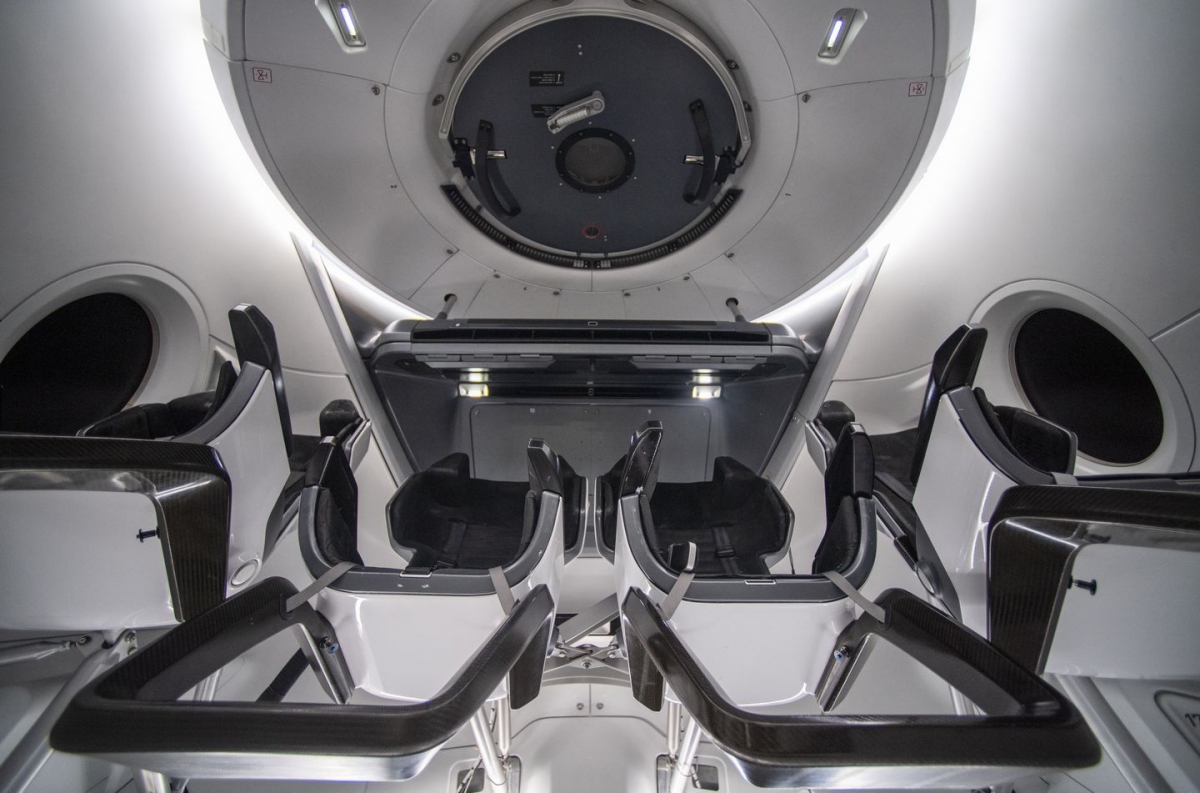
The interior of the SpaceX Dragon training capsule. MUST CREDIT: Washington Post photo by Jonathan Newton

The interior of the SpaceX Dragon training capsule. MUST CREDIT: Washington Post photo by Jonathan Newton

Now, SpaceX, as it’s commonly known, faces the most significant test since it was founded in 2002. On May 27, the California-based company is scheduled to launch two veteran NASA astronauts, Bob Behnken and Doug Hurley, to the International Space Station from the same launchpad at the Kennedy Space Center that hoisted the crew of Apollo 11 to the moon.
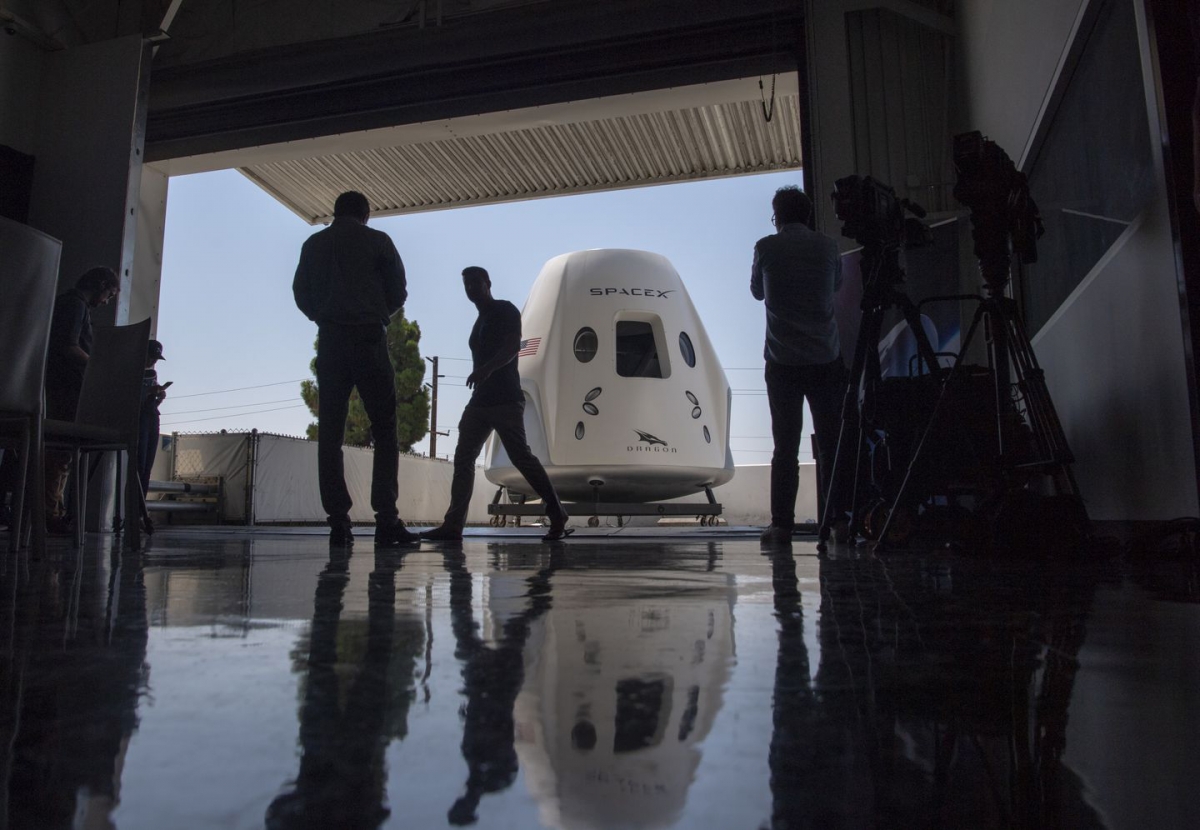
A mock-up of the SpaceX Dragon capsule for crew members is seen in 2018. Four years earlier, NASA awarded contracts to SpaceX and Boeing to ferry astronauts to the International Space Station. The first such SpaceX flight is set for later this month. MUST CREDIT: Washington Post photo by Jonathan Newton

A mock-up of the SpaceX Dragon capsule for crew members is seen in 2018. Four years earlier, NASA awarded contracts to SpaceX and Boeing to ferry astronauts to the International Space Station. The first such SpaceX flight is set for later this month. MUST CREDIT: Washington Post photo by Jonathan Newton

If all goes according to plan, the mission would herald a monumental moment in human space exploration: the first launch by a private company of people into orbit. The two astronauts will be lifted to the space station by a booster and spacecraft owned and operated by SpaceX, marking the end of the era where only government-owned spacecraft achieved such heights and adding another major step in the privatization of space. It also would become a victory for SpaceX over rival Boeing, the other company working to fly NASA’s astronauts to the space station, which has stumbled badly along the way.

If, however, SpaceX’s mission fails, it would be a tragic setback that would derail NASA’s plan to restore human spaceflight from American soil and fuel criticism that the space agency never should have outsourced such a sacred mission to the private sector.

The flight – the first of NASA astronauts from the United States since the space shuttle was retired nearly a decade ago – is the culmination of years of work by SpaceX and NASA to end America’s reliance on Russia to fly astronauts to the space station. Without a way to get astronauts to orbit, NASA has had to rely on the Russians to get to space – a fact that has embarrassed the agency but could soon come to an end if SpaceX is successful.
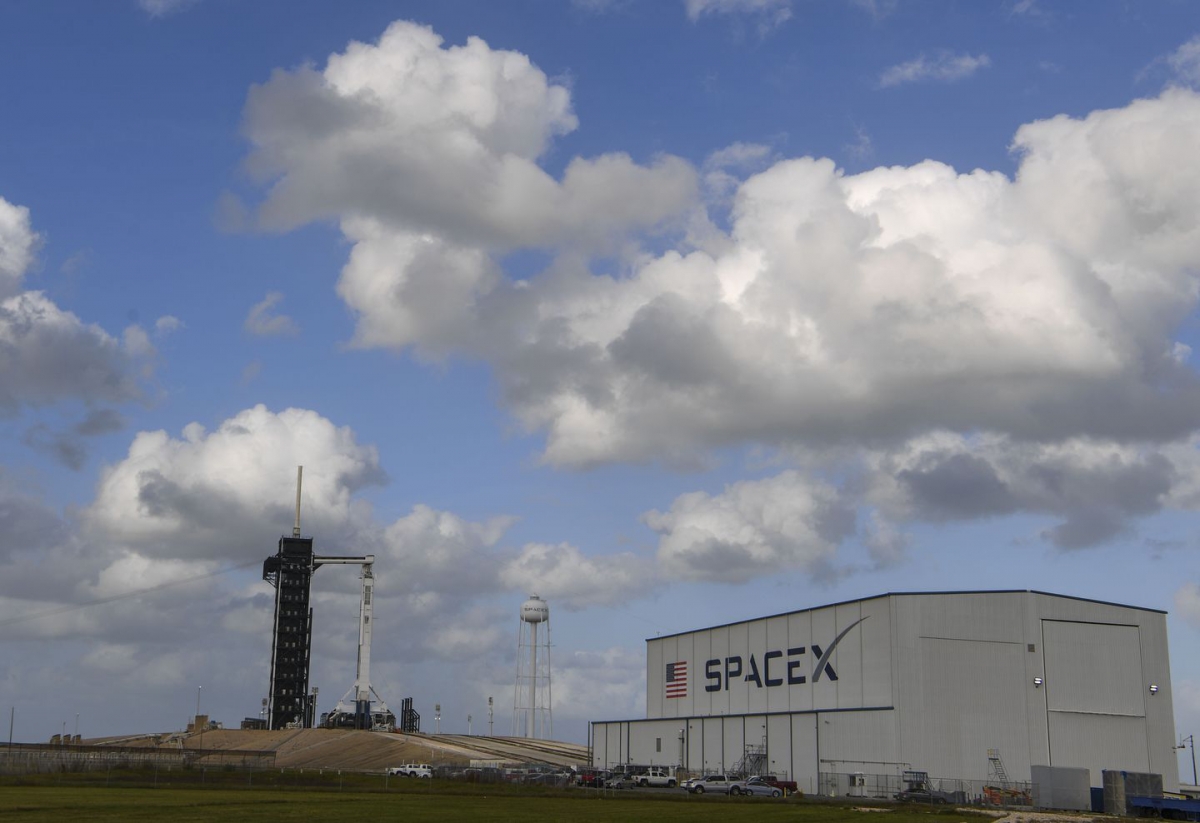
SpaceX's Falcon 9 rocket is seen in January at the Kennedy Space Center in Florida before a successful test of an emergency abort system. MUST CREDIT: Washington Post photo by Jonathan Newton

SpaceX’s Falcon 9 rocket is seen in January at the Kennedy Space Center in Florida before a successful test of an emergency abort system. MUST CREDIT: Washington Post photo by Jonathan Newton

To get to this point, SpaceX and NASA have formed an odd-couple pairing of a 62-year-old government bureaucracy and a scrappy company still in its teens that has embraced failure as a learning tool. It has, at times, been a strained relationship – especially since SpaceX has had two of its Falcon 9 rockets blow up, one during a mission in 2015 to take cargo to the space station, another a year later while it was fueling on the launchpad ahead of an engine test to launch a commercial satellite.

Then, last year, the same Dragon spacecraft that would fly astronauts to the station exploded during a test of its abort engines.

But now, as they prepare to launch astronauts together for the first time, both NASA and SpaceX say the past failures have been investigated and remedied. Last year, SpaceX successfully completed a test mission of its Dragon spacecraft without crews to the space station. Earlier this year, it performed what NASA said was a flawless test of the abort system in flight that would carry astronauts to safety in the event of an emergency – a feature the space shuttle did not have.

Both SpaceX and NASA say that after years of hard work and testing, they are nearly ready to fly. The teams are proceeding with a “launch readiness review” on Thursday, an indication they feel confident with the date, though any number of problems – bad weather, last-minute mechanical glitches – could delay the launch.

SpaceX and NASA “are diligently working on getting the vehicles ready,” Kathy Lueders, the manager for NASA’s commercial crew program, said during a recent news conference. She said the teams were “going through all the reviews and making sure that we are ready for this important mission to safely fly. . . . This is a humbling job. I think we’re up to it.”

Even under ideal circumstances, launching astronauts is a dangerous and risky endeavor, but SpaceX and NASA now are doing it during the coronavirus pandemic, adding another degree of difficulty to a mission with no room for error. At least half of SpaceX’s engineers are working from home, said Gwynne Shotwell, SpaceX’s president and chief operating officer. Those that do come to the factory are keeping their distance, she said. And NASA officials have urged all but essential personnel to stay home for the mission.

For a rocket launch to go off successfully, “a million things have to go right,” Shotwell likes to say. “And only one thing has to go wrong to have a particularly bad day.”

Everyone at SpaceX knows the stakes, she said during the recent news conference.

“As far as my team goes, they don’t need to be reminded about the criticality of the work that every person is doing for this mission,” she said.

As for herself, she held her hand up just under her chin and said: “My heart is sitting right here. And I think it’s going to stay there until we get Bob and Doug back safely.”

A decade ago, it would have been unthinkable that NASA, chastened by the Challenger and Columbia space shuttle disasters that led to the deaths of 14 crew members, would entrust the lives of its astronauts to a private space company, especially one as green as SpaceX.

The company nearly died in infancy, after three consecutive launches that failed to reach orbit drained Musk’s bank account and put the company on a path to bankruptcy. It emerged triumphant after its fourth launch successfully delivered a dummy satellite to orbit in 2008 and was rescued by NASA, which awarded it a $1.6 billion contract to fly cargo and supplies to the space station a few months later. Musk, overcome, changed a log-in password to “ilovenasa.”

Then Musk took on Boeing and Lockheed Martin’s decade-long monopoly on Pentagon launch contracts. It sued the Air Force – the very customer it was trying to court – and eventually reached a settlement that allowed it to compete for launches worth hundreds of millions of dollars.

It eventually succeeded in its quest to build reusable rockets, long considered the holy grail of spaceflight that in many ways illustrates the company’s struggle – a near-impossible goal, a string of failures and then an improbable success.

SpaceX also benefited from good timing.

In 2010, President Barack Obama canceled the Constellation program, NASA’s plan to build a new fleet of rockets and spacecraft to fly astronauts to the space station and beyond. The program was way over budget and years behind schedule. The space shuttle program was near its end. And so NASA looked to the private sector to fly its astronauts – a decision that many found premature at best, reckless at worst.

“One day it will be like commercial airline travel, just not yet,” former NASA administrator Mike Griffin said at the time. “It’s like 1920. Lindbergh hasn’t flown the Atlantic, and they’re trying to sell 747s to Pan Am.”

Former NASA astronaut Garrett Reisman went to work at SpaceX in the midst of that turmoil and found the perceptions of the company to be way off.

“There was a popular perception that these were a bunch of people who didn’t really know what they were doing,” he recalled in a recent interview. “It wasn’t just a bunch of surfer dudes in a garage living in their parents’ basement and building rockets. It was a real impressive, large-scale operation.”

Since its founding, SpaceX has helped spark a renewed interest in space, and has led a growing commercial space industry that includes Jeff Bezos’s Blue Origin and Richard Branson’s Virgin Galactic. (Bezos owns The Washington Post.)

In late 2018, Virgin Galactic sent a pair of test pilots to an altitude of just over 50 miles, past where the Federal Aviation Administration says space begins. It was a straight up-and-down trip that didn’t reach orbit, but it was the first human space launch from U.S. soil since the end of the shuttle era.

Having developed a company that hopes to routinely fly tourists to space and back, Branson knows how difficult such a venture is. To get to this point, Virgin Galactic had to overcome a failure during a test flight of its SpaceShipTwo spacecraft in 2014 that killed one of the pilots.

“I have a huge amount of respect for what Elon and the SpaceX team have achieved in such a short period of time,” he said in a recent statement to The Post. “My respect is magnified because I know something of the enormous challenges involved in reinventing human spaceflight for the 21st century, but also the unparalleled satisfaction that comes with each successful milestone. While the setbacks are plentiful and painful, the breakthroughs are already transforming our relationship with the cosmos.”

Mark Cuban, one of the hosts of “Shark Tank,” the reality television show where start-up companies pitch a panel of investors, said in an email to The Post that he gives Musk “a ton of credit. It’s easy to dream. It’s hard to do. He did both.”

The relationship with NASA has, at times, been strained. In 2018, senior leaders at NASA were incensed when Musk took a hit of marijuana on a show streamed on the Internet, and ordered a safety review of the company. Boeing was also supposed to be subject to a similar review, but initially got a pass. (After the company’s first flight of its Starliner spacecraft without crews went awry late last year, NASA said it would, in fact, conduct a full probe of the company’s safety culture.)

Last October, NASA administrator Jim Bridenstine, a former Republican congressman from Oklahoma who was appointed to his job by President Trump in 2017, also was upset at Musk for focusing too much on his next-generation Starship spacecraft as it was preparing to fly NASA astronauts. Bridenstine chastised him on Twitter, writing that NASA “expects to see the same level of enthusiasm focused on the investments of the American taxpayer. It’s time to deliver.”

Afterward, Musk gave Bridenstine a tour of SpaceX’s headquarters and allayed his concerns. “I think probably a couple of weeks ago we were not on the same page,” Bridenstine said at the time. “But now we are, 100 percent.”

SpaceX has always ruffled feathers, especially among traditionalists in the industry, who derided its public failures as signs that it was reckless. SpaceX, however, sees them as growing pains to be overcome.

“If there’s a test program and nothing happens in that test program, I would say it’s insufficiently rigorous,” Musk said last year. “If there hasn’t been hardware that’s blown up on a test stand, I don’t think you’ve tested it hard enough. You’ve got to push the envelope.”

One of Musk’s goals was to alter the economics of spaceflight by changing the way rockets operated. Traditionally, the first stages, or boosters, were ditched into the ocean after liftoff, never to be used again. That, Musk thought, was a waste that made spaceflight prohibitively expensive. How could an industry be sustainable if it kept throwing away the most expensive part of the rocket after a single use?

So he started trying to fly his boosters back to Earth. The effort prompted SpaceX to invent entirely new rocket components and hardware – expanding not just technical capabilities but adding to the vocabulary of space as well.

SpaceX’s Falcon 9 rockets were outfitted with “grid fins,” heat-resistant wings that helped steer the 230-foot-tall booster through the atmosphere. It had a quartet of landing legs that would unfurl just before touching down on an autonomous platform, 300 feet long by 170 feet wide, that the company called a “droneship.”

And when the rockets crashed, Musk dubbed the fireballs not explosions but “rapid unscheduled disassemblies.”

At first, there were a fair number of them, a parade of fireballs, one after the other.

In 2014, a rocket hovered over the ocean, then tipped over and scattered debris across the water’s surface. In early 2015, one slammed into the droneship – “close but no cigar” Musk tweeted at the time. A few months later, another crashed and burned.

The company eventually released a blooper reel of its rockets blowing up, with a caption for one crash that read, “Well, technically, it did land … just not in one piece.”

To some in the space industry, the embrace of failure was refreshing. When NASA veterans visited Reisman at SpaceX, he said they’d tell him “this place reminds me a lot of what NASA was like during Apollo. So it was kind of like it was almost like taking NASA back to its roots.”

Then, in December 2015, another Falcon 9 landed just as an ominous thunder cascaded over Cape Canaveral.

Another explosion, Musk thought.

But this time, when the smoke cleared, there was no fire. Just a rocket standing triumphantly on a landing pad on the Cape. The sound Musk heard was a sonic boom, not a detonation.

“You have to learn those hard lessons,” Shotwell said. “I think sometimes the aerospace industry shies away from failure in the development phase. It looks bad politically. It’s tough. And the media certainly makes a lot of failures. But, candidly, that’s the best way to learn – to push your systems to their limit, which includes your people systems and your processes, and learn where you’re weak and make things better.”

Airbnb creates a new listing: its laid-off workers #ศาสตร์เกษตรดินปุ๋ย

#ศาสตร์เกษตรดินปุ๋ย : ขอบคุณแหล่งข้อมูล : หนังสือพิมพ์ The Nation.

https://www.nationthailand.com/edandtech/30387937?utm_source=category&utm_medium=internal_referral

Airbnb creates a new listing: its laid-off workers

May 15. 2020
By The Washington Post · Nitasha Tiku · BUSINESS, TECHNOLOGY, CAREER-WORKPLACE 

SAN FRANCISCO – When Airbnb chief executive Brian Chesky announced in early May that he had to lay off a quarter of his workforce, he offered an unusual severance benefit.

In a 1,694-word note to employees, posted shortly thereafter on the company’s blog, Chesky said he wanted to help departing employees find new jobs by launching an opt-in “alumni talent directory,” with profiles, résumés and work samples. As part of the placement effort, he also promised that Airbnb would redeploy a “significant portion” of its recruiters to spend the rest of the year helping 1,900 laid-off employees find a new place to work.

In a statement, Airbnb’s vice president of employee experience, Beth Axelrod, said the directory has already been viewed 350,000 times and Airbnb has seen significant interest from tech giants, smaller start-ups, and companies outside tech. Axelrod said hiring CEOs have reached out directly to Chesky and other Airbnb executives, and workers are being approached.

The layoffs at Airbnb are part of a wave of job cuts in Silicon Valley, following weeks of mass layoffs in lower-wage jobs at restaurants and in stores around the nation. Smaller tech start-ups have laid off 47,500 people since mid-March, according to Layoffs.fyi, a website tracking job loss in tech. In recent weeks, Uber laid off 3,700 workers and Lyft laid off 982. On Tuesday, the Information reported that Uber is planning on laying off several thousand more. Uber declined to comment.

Chesky and other tech executives have also taken a novel approach amid historic layoffs: investing internal resources to help laid-off workers join other companies, including competitors.

That’s a twist, because for decades, Silicon Valley’s competition for technical talent has left few holds barred – from stringent noncompete agreements to six-figure signing bonuses that are clawed back if the employee leaves too soon. In the early aughts, attempts to poach top engineers got so costly that Apple, Google, Intuit, and Adobe agreed not to hire one another’s prized employees, eventually paying a $400 million settlement after the Justice Department sued the companies for conspiring to drive down wages.

When Google’s former head of communication, Jessica Powell, satirized the industry in her 2019 novel “The Big Disruption,” she focused on a massive search company launching world-changing projects not to surveil consumers or consolidate power, but to keep its engineers from being lured away by a sexier social networking start-up.

The thinly veiled tech giants in Powell’s book are still in growth mode. Facebook said it would hire 10,000 workers by the end of the year. Google said it’s slowing hiring in some areas – although it will continue to grow. Industry observers expect Big Tech to grow more powerful as those companies scoop up the best talent.

But now, as the pandemic rages on, tech companies hardest hit by stay-at-home orders are deploying resources to formalize the kind of help usually offered by colleagues and friends. Airbnb’s Axelrod said that the company’s directory mirrors grass-roots efforts at other companies, where a group creates a spreadsheet of people looking for work.

Uber, which once threatened drivers who wanted to work for Lyft, developed a website for independent contractors to find new gigs, including directing drivers to Amazon, its rival in both logistics and food delivery. Lyft has referred drivers to Amazon.

Following Chesky’s announcement, Uber decided to launch its own online directory for white-collar workers “to give our former colleagues the attention from recruiters they deserve,” said Uber spokesperson Lois Van Der Laan.

Invitations and ticketing company Eventbrite’s chief executive told The Washington Post that she referred employees to Facebook. Eventbrite is also connecting affected employees with opportunities at Amazon, PayPal, Netflix and DoorDash, as well as small start-ups, and says some have already been hired.

Meanwhile, e-scooter start-up Bird, which was publicly skewered in March for laying off 30% of its employees via a one-way Zoom, now says it is having its human resources department help with résumé reviews, interview role-playing, and other job-seeking efforts, according to its vice president of global human resources, Kerry Fischer. The company has also hired back a few of the laid-off workers.

The chief executive of Carta, a high-profile Palo Alto start-up that helps investors, founders, and employees manage equity shares in a company, wrote a note very similar to Chesky’s a month earlier, which won plaudits around the Bay Area. Carta’s top executive, Henry Ward, told workers who were laid off that he would create an alumni Slack group where both Carta and former employees could post job listings.

“I hope that, as our business recovers, we will get to hire many of you back,” Ward wrote in the note, which was later posted on Medium. He asked former employees to post jobs where they work, too. “I will be active in this channel as will our People team to help all of you go on to do great things.”

Carta declined a request for an interview.

Three former Airbnb employees impacted by the cuts, who spoke on the condition of anonymity because they were not authorized to speak about the company’s practices, told The Post they were grateful to be able to appear in the directory and have already received messages about potential openings.

One former product manager in the Bay Area said she wants to be fast-tracked for reentry when Airbnb starts staffing up again, which is partly why she agreed to post her profile in the talent directory.

The spotlight on Airbnb has also prompted debate about how layoffs in the tech sector can reinforce Silicon Valley’s hierarchies.

Airbnb, like nearly all tech companies, uses white-collar contractors who perform similar office work as full-time employees, but for lower pay, no equity and fewer privileges. In late April, Chesky laid off all of Airbnb’s contingent workers, who received a week’s severance and their laptop, according to two former Airbnb contractors affected by the layoffs.

In contrast, full-time workers received 12 months of insurance through COBRA, at least 14 weeks of base pay, fewer restrictions on equity and the option to keep their laptop.

In a public post on LinkedIn, Amy Silverman, one of the affected Airbnb contractors, estimated that roughly 500 to 600 contractors were also let go and were not invited to join the directory. “Many of us worked at Airbnb for several years,” Silverman wrote. “Right now we are invisible.” Silverman declined to comment.

On Thursday, Chesky announced during his weekly Q&A with employees that Airbnb was working on adding contractors to the directory.

Silicon Valley leaders are not always known for following through on their stated good intentions. (The display name for a popular Twitter parody account about venture capitalists is, “let me know how i can be helpful” – the joke being that the kind of help elite investors can offer is already obvious.)

At least in Airbnb’s case, the company’s offered help seemed sincere to the laid-off employees. Airbnb provided them a week to gather their things, set up email addresses and get their things in order.

That’s different from what typically happens, the former Airbnb product manager said.

“You join a company and you feel like you believe in the mission, believe in their cause, and then you realize it’s a load of crap,” the product manager said. “You were an employee, you were there for however many years, sometimes you worked weekends, you had crazy deadlines, and within an hour it’s done.”

IPhone maker Foxconn’s profit gutted by smartphone slump #ศาสตร์เกษตรดินปุ๋ย

#ศาสตร์เกษตรดินปุ๋ย : ขอบคุณแหล่งข้อมูล : หนังสือพิมพ์ The Nation.

https://www.nationthailand.com/edandtech/30387935?utm_source=category&utm_medium=internal_referral

IPhone maker Foxconn’s profit gutted by smartphone slump

May 15. 2020
By Syndication Washington Post, Bloomberg · Debby Wu · BUSINESS

Hon Hai Precision Industry Co. forecast another revenue decline after profit plunged by the most on record in the March quarter, when the novel coronavirus froze much of its China production and walloped global smartphone demand.

Apple Inc.’s most important manufacturing partner recorded an 89% decline in net income to $70 million (NT$2.1 billion) in the first three months of 2020. Chairman Young Liu told analysts Friday the company anticipates a single-digit percentage decline in revenue in the June quarter from a year earlier. That would be its third consecutive quarterly sales drop.

The earnings decline drove home to extent to which covid-19 and the resultant global lockdown has chilled electronics demand and driven up costs for upstream producers like Hon Hai that had to adapt to supply chain disruption. Global shipments of smartphones fell at their fastest rate on record in the first quarter, hitting the assembler’s sales even though its main production facilities managed to return to full seasonal staffing levels around mid-March.

On Friday, Hon Hai, known also as Foxconn, said it incurred costs related to the pandemic of NT$10 billion, though some of that will be compensated by the Chinese government. It added it had put the worst of the slump behind it but the company, which gets half its sales making iPhones and devices for Apple, warned smartphone demand remained uncertain.

Revenue slid almost 12% to NT$929.7 billion, according to Bloomberg News’ calculations based on previously reported monthly sales numbers.

Liu warned that uncertainty will continue to dog electronics demand into the second half, after a singularly poor first quarter.

Production at many of Apple’s Asian partners ground to a halt in early 2020 after efforts to curb the spread of covid-19 kicked in. That resulted in severe shipping delays for devices and led to component supply bottlenecks. Consumers also sheltered at home, hammering retail sales. At one point, Apple shuttered all 42 retail outlets in China, a critical market for the company, followed by store closures in other countries. While shops in China have reopened, most of its international ones have not.

Covid-19 has also delayed product development and launches. Apple’s four upcoming redesigned iPhones with 5G will come out several weeks later than usual — but still within the fall window — Bloomberg News has reported. In May, Apple failed to provide a forecast for the first time in more than a decade.

Foxconn has already slashed its 2020 revenue projections in the wake of the pandemic. It told investors in April that it still had time to help Apple launch new iPhones in time for the holidays, but cautioned the schedule could be disrupted if the pandemic persists.

Facebook acquires GIPHY, a popular search engine for viral, animated images #ศาสตร์เกษตรดินปุ๋ย

#ศาสตร์เกษตรดินปุ๋ย : ขอบคุณแหล่งข้อมูล : หนังสือพิมพ์ The Nation.

https://www.nationthailand.com/edandtech/30387934?utm_source=category&utm_medium=internal_referral

Facebook acquires GIPHY, a popular search engine for viral, animated images

May 15. 2020
By The Washington Post · Tony Romm · BUSINESS

Facebook is acquiring GIPHY, a search engine and database for short, animated images known as GIFs, adding to its growing stable of apps and services at a time when regulators are questioning the company’s reach.

GIPHY will become part of Instagram, according to Facebook, which announced the deal for an undisclosed sum in a blog post on Friday. The tech giant said that 50 percent of GIPHY’s traffic already comes from Facebook’s apps, which include its popular social-networking service as well as WhatsApp.

“Both our services are big supporters of the creator and artist community, and that will continue,” Facebook said in a blog post. “Together, we can make it easier for anyone to create and share their work with the world.”

It is unclear if the deal will require the approval of federal regulators, who are already scrutinizing Facebook’s past purchases for potential antitrust concerns. Only transactions exceeding a certain size require government approval. In February, though, the Federal Trade Commission, announced a wide-ranging inquiry to probe past mergers by Facebook and other tech giants that may have been too small to warrant closer inspection by government watchdogs at the time they were announced.

The tech giant did not immediately respond to a request for comment.

Tencent’s game sales surge most in years during China’s lockdown #ศาสตร์เกษตรดินปุ๋ย

#ศาสตร์เกษตรดินปุ๋ย : ขอบคุณแหล่งข้อมูล : หนังสือพิมพ์ The Nation.

https://www.nationthailand.com/edandtech/30387812?utm_source=category&utm_medium=internal_referral

Tencent’s game sales surge most in years during China’s lockdown

May 13. 2020
Attendees walk past a Tencent Holding Ltd. booth at the World Artificial Intelligence Conference (WAIC) in Shanghai, China, on Thursday, Aug. 29, 2019. The conference runs through Aug. 31. Photographer: Qilai Shen/Bloomberg

Attendees walk past a Tencent Holding Ltd. booth at the World Artificial Intelligence Conference (WAIC) in Shanghai, China, on Thursday, Aug. 29, 2019. The conference runs through Aug. 31. Photographer: Qilai Shen/Bloomberg
By Syndication Washington Post, Bloomberg · Zheping Huang · BUSINESS, WORLD, TECHNOLOGY, US-GLOBAL-MARKETS, ASIA-PACIFIC

Tencent Holdings’s revenue beat expectations after covid-19 lockdowns propelled gaming sales to their fastest pace of growth since 2017, helping offset shrinking ad budgets and a record Chinese economic contraction.

The WeChat operator’s revenue rose 26% to 108.1 billion yuan ($15.2 billion) after online gaming sales leapt 31% during the coronavirus-stricken March quarter. Shares in major shareholder Naspers and the entity that holds its internet assets, Prosus, rose to a record.

The numbers underscore how Tencent’s among the more resilient of China’s internet giants thanks to its bread-and-butter gaming division, which rode an upswell of spending from homebound players in the world’s largest gaming arena. But the company warned those gains could peter out as China returned to normality and went back to work, while global macro uncertainty may continue to depress spending by corporations on online advertising.

“We expect in-game consumption activities to largely normalise as people return to work, and we see some headwinds for the online advertising industry,” the company said in its filing.

Tencent has gained more than $42 billion in market value since covid-19 first broke out, defying a global market rout to outperform peers like Baidu and Alibaba.

A surge in social media and gaming traffic drew new ad revenue to help offset shrinking traditional online marketing budgets. Tencent’s total smartphone games revenue surged 64% during the first quarter, helped by the consolidation of Clash of Clans maker Supercell. Revenue at Tencent’s burgeoning fintech division slid from the previous quarter after merchants shut their doors, but began recovering from April as activities in China resumed.

“It may be challenging for Tencent to sustain 1Q’s strong growth into the next quarter as the pandemic retreats in China and online game players return to work,” Bloomberg Intelligence analyst Vey-Sern Ling said. “Lingering industry and macro headwinds may also dampen ad sales ahead.”

But longer term, the world’s largest game publisher is contending with renewed challenges from the likes of ByteDance and Alibaba.

While Tencent’s core online entertainment business must convince consumers to keep splurging on aging cash cows like Honor of Kings, rival ByteDance is luring users and advertisers away and into its viral social networks. It’s also preparing to enter hardcore gaming.

It’s in cloud and fintech where Tencent faces possibly its fiercest battle with Alibaba. Parts of those units, which made up more than a quarter of the company’s revenue in 2019, but are expected to bounce back over 2020 and resume driving its longer-term expansion. Alibaba-backed Ant Financial’s Alipay is also seeking to attract more merchants and transactions in part by replicating the lite-app model WeChat pioneered.

Alibaba and ByteDance will also fight fiercely for online advertising, which remain vulnerable to economic shocks if covid-19 persists.

“WeChat’s Moments ads are really designed for big brands, and we see risk that they are cutting budgets under intense pressures on cash flows,” said Richard Kramer, an analyst at Arete.

Sony warns profit may fall 30% or more in fiscal year #ศาสตร์เกษตรดินปุ๋ย

#ศาสตร์เกษตรดินปุ๋ย : ขอบคุณแหล่งข้อมูล : หนังสือพิมพ์ The Nation.

https://www.nationthailand.com/edandtech/30387807?utm_source=category&utm_medium=internal_referral

Sony warns profit may fall 30% or more in fiscal year

May 13. 2020
A Sony mirrorless digital camera on display at the Sony Shop Tec Staff store in Tokyo on Feb. 8, 2019. MUST CREDIT: Bloomberg photo by Kiyoshi Ota.
Photo by: Kiyoshi Ota — Bloomberg

A Sony mirrorless digital camera on display at the Sony Shop Tec Staff store in Tokyo on Feb. 8, 2019. MUST CREDIT: Bloomberg photo by Kiyoshi Ota. Photo by: Kiyoshi Ota — Bloomberg
By Syndication Washington Post, Bloomberg · Takashi Mochizuki · BUSINESS, TECHNOLOGY, US-GLOBAL-MARKETS 

Sony warned operating profit could fall 30% or more in the current fiscal year as the coronavirus hampers production of devices like smartphones and saps consumer demand for digital cameras and other electronics.

The company sounded the note of caution as it reported operating profit of 35.45 billion yen ($331 million) for the quarter ended in March, down 57% from the same period a year earlier. Revenue also fell, to 1.75 trillion yen. Sony declined to provide a specific forecast for the current fiscal year for the first time since 2016 when the Kumamoto earthquake disrupted its operations.

Chief Executive Officer Kenichiro Yoshida has overhauled the technology icon in recent years to focus on franchises such as sensors for smartphone cameras and the PlayStation games business, yet many of its operations remain vulnerable to people getting stuck at home. Consumers can’t go out to buy phones or electronics or watch Sony movies in the cinema, while factories that make its products are struggling to return to full capacity.

“We will hold off on making additional capital investments on our sensor factories as long as we can so that we can gather more information and make the most-informed decisions,” said Hiroki Totoki, chief financial officer, on a conference call after the results.

In a presentation, the company warned of unusual uncertainty because of the pandemic’s effect on production and demand. Based on its best assumptions now, “operating income for the fiscal year ending March 31, 2021 is currently estimated to be at least 30% lower than the level achieved in the previous fiscal year,” it said.

The virus is impacting operations in unusual ways. Sony said its most affected unit is consumer electronics, with disruptions hitting factories that make televisions in Malaysia, Mexico and Slovakia, although they have resumed partial operations. Television sales have also slumped, especially in Europe, India and Vietnam, while demand for digital cameras has decreased.

The flagship gaming business saw PlayStation 4 console sales decline 42% to just 1.5 million units in the quarter, partially because of the widely anticipated launch of the successor PlayStation 5 at the end of the year. Subscribers to Sony’s PlayStation Plus service, however, surged to 41.5 million, showing one positive impact for the company from the millions of people stuck at home in search of entertainment.

Sony’s financial services business, one of its most lucrative, has seen a deterioration because its sales people can’t go out to pitch customers on insurance and other products. The difficulty in projecting future performance for that unit affected Sony’s ability to give a companywide forecast for the year.

Totoki also said Sony now finds it difficult to make movies and music, essential parts of its entertainment portfolio. The company is not certain whether consumer behavior will change over the long term, with for example a new reluctance to gather in large groups at movie theaters or concert halls.

“Covid-19 may have a lasting impact on markets like Brazil, India and Southeast Asia because it could decrease demand for consumer electronics, movie theaters and music concerts,” said Bloomberg Intelligence analyst Masahiro Wakasugi.

Sony said the virus hasn’t had a large impact on its manufacture of image sensors, which are incorporated into many of the world’s leading smartphones, including Apple Inc.’s iPhones. But the company is uncertain whether Apple and other phone makers can keep up their production — or whether consumers will keep buying. Smartphone shipments fell in the first three months of the year by the fastest rate on record because of constraints on supply and demand.

“While we expect demand for our image sensors would continue to grow in the mid- to long-term, we see a risk that revenue from the business this fiscal year would be flat from the year-earlier period,” Totoki said.

Sony said production of the PlayStation 4 game console has been hit by the Covid-19 pandemic to some extent, but the output is sufficient to cover the current demand for the console and sales are stable. Meanwhile, the PlayStation 5 remains on track for a release at the end of this year. Software for the new console is also on schedule, the company said, as it hasn’t seen any major impact on games development.

“We may beef up PlayStation’s network services because of a potential increase in demand from covid-19,” said the CFO, adding he couldn’t comment on the likely demand for the new game console.