We picked the 10 most-influential technologies of the decade. It isn’t all bad. #ศาสตร์เกษตรดินปุ๋ย

#ศาสตร์เกษตรดินปุ๋ย : ขอบคุณแหล่งข้อมูล : หนังสือพิมพ์ The Nation

https://www.nationthailand.com/edandtech/30379902?utm_source=category&utm_medium=internal_referral

We picked the 10 most-influential technologies of the decade. It isn’t all bad.

Dec 27. 2019
The driver app on the windshield of an UberX in 2014. MUST CREDIT: photo for The Washington Post by Evelyn Hockstein.

The driver app on the windshield of an UberX in 2014. MUST CREDIT: photo for The Washington Post by Evelyn Hockstein.
By The Washington Post · Geoffrey A. Fowler

A decade ago, we typed on computers. Now we talk with them. We used to take taxis. Now an app picks a stranger’s car to ride. We used to meet people in bars. Now we swipe on photos of their faces.

As we round the corner to 2020, I’ve been tallying the ways we use technology that would have made zero sense in 2010. Which had the biggest impact? There was no iconic new product of the 2010s – no iPod or Walkman. Yet so much changed, bringing us new powers, new peril and a dash of dystopia.

This decade made life something that happens on a screen. The smartphone is where we communicate with family, do work, record memories and find entertainment. It was invented in 2007 so disqualified from my list, but in the past decade the smartphone certainly reinvented us – it powers half of the technologies on this list.

This is also the decade that computers became the boss of you. In the case of Uber drivers and other gig-economy workers, software literally tells them what work to do. Algorithms now make decisions that shape the daily life of any person with a phone. Computers decide what we read and watch. Apps hijack our attention for the promise of more “likes.” Just by searching Google, using a map or talking to Alexa, we feed computers personal data that trains artificial intelligence – and fuels businesses that have made us into a product.

With such a central role in our lives, Silicon Valley and Seattle firms this decade became the world’s most valuable companies. Their leap to trillion-dollar valuations was staggering: In January 2010, Apple was worth about $194 billion. Now it’s worth more than six times that. Over that same period, Facebook’s value multiplied about 41 times.

How will we remember the 2010s? At the beginning, we were pretty optimistic about tech. “Sharing economy” companies such as Airbnb actually seemed to be about sharing. Lots of people really believed Facebook would bring the world together. Lately, though, the view has darkened: We’re more aware of the ways tech companies are spying on us and shirking their responsibilities.

Today, most of the technologies on this list can be seen both as a tool and tyrant. One thing we know better going into the 2020s: With great power comes great responsibility.


– – –

– Instragram’s likes. Facebook’s Instagram helped make photography everyone’s hobby not just by giving us filters, but by making photos easy to share. Since it launched in 2010, Instagram evolved new forms of self-expression – and new ways for tech to hijack our brains.

The app made us voyeurs. It turned living into a performance. It commodified our faces, bodies, travels and aesthetic into “brands” that some influencers have even developed into businesses. The hunt for Gram-worthy vacation shots has damaged once-tranquil destinations and led to deaths by selfie.

How did it hook a billion-plus people? Instagram’s most powerful tool is the heart-shaped like, an expression of somebody’s admiration for a post. The app doles them out like a slot machine, keeping us coming back and creating new posts. (Psychologists call these dopamine hits intermittent variable rewards.) “Do it for the Gram!” is really, “Do it for the likes.”

It’s no wonder that some people report using the app contributes to depression and unhealthy body image. Instagram recently began testing not displaying Like tallies in the hopes of creating a “less pressurized” experience.

– Alexa’s ears. Apple’s talking Siri AI on the iPhone beat Amazon’s Alexa to market by three years. But it is Alexa – built into an Echo smart speaker that plays music, answers questions and cracks jokes on demand – that has come closer to the robot butler of our dreams. That idea came naturally to young people, a generation of whom now think you can access the power of the Internet just by talking to the lady in the box. (Why it’s usually a lady is a question we’ll be unpacking for years.)

Alexa also shifted our relationship with tech in other ways. Every time we speak to it, Amazon keeps a recording of our voices to improve its AI systems. We’re working for it, even as it works for us.

The voice assistants Alexa, Siri and rival Google Assistant also helped make us comfortable with the idea there is just one answer to a question. Remember when searching for information required sorting through Google links? Now a tech giant gets to decide.

(Amazon founder and CEO Jeff Bezos owns The Washington Post, but I review all tech with the same critical eye.)

– Uber’s X workers. The most-popular ride-hailing app has, of course, changed how we get to the airport and come home after a night out. It has all but wiped out the traditional taxi industry in many places.

But when Uber’s now-ubiquitous “UberX” service started allowing nonprofessional drivers to provide rides in 2013, it symbolized a whole new way of thinking about work. A smartphone app became a kind of supervisor, with software deciding what job you get and where you go. It gamified employment, incentivizing drivers to take rides they don’t want and punishing them for saying no. It took advantage of people not having better options for work.

Uber defined these workers not as employees because they were just doing a “gig,” and the company was just running a “software platform.” Under these rules, workers didn’t get benefits or protections. This model became a mainstay of Silicon Valley in the 2010s, from DoorDash to Instacart.

Even without the overhead of “employees,” Uber struggles to turn a profit. It enters the next decade with the open question of whether a software platform can ultimately make for a more-efficient company. Its success may hinge on its ability to make good on a so-far unfilled tech promise: self-driving vehicles.

– Netflix and binge. Remember a time when we owned music and movies stored in hard drives and DVDs? I bet you don’t even know where those are any more. Now we rent entertainment, through subscriptions from Netflix, Spotify, Apple TV Plus and an ever-growing list of services.

The good of this is we can watch whatever we want, whenever we want, giving us a feeling of incredible abundance. Starting around the time Netflix began streaming its first original show “House of Cards” in 2013, we stopped watching shows and started binging them. Who needs to leave the house any more? Creators changed the way they developed projects and the kinds of stories they tried to tell. There’s space for more risks: This year, for example, Netflix added a comedy called “Special” about a gay man with cerebral palsy.

The downside to the streaming revolution is we’ve handed even more power over to technology companies, to whom we have to continue paying rent for content . . . forever.

– The sexy Model S. Tesla CEO Elon Musk is one of the most divisive personalities in tech, but at the end of the decade, his influence on automobiles in undeniable.

The Model S sedan, which debuted in 2012, is expensive and has long been in short supply. Still, it established that an all-electric car is a viable and even sexy mode of transportation. It shifted perceptions of electric vehicles from awkward contraptions with golf-cart like acceleration to the halo car of this generation. When you think of a hybrid, you might think Prius. In the same way, electric is synonymous with Tesla.

The Model S also established that a car is a kind of consumer electronics. It was one of the first vehicles that got better with regular over-the-air software upgrades, making the car more like a smartphone.

– Feeds and filter bubbles. The Facebook News Feed launched way back in 2006, but it wasn’t until this decade that we came to understand it shapes even our offline world. The idea of a “feed,” now used by many apps and websites, is an answer to the abundance of information online. Instead of presenting it all or asking us to sort, it lets an algorithm organize the information based on what we’ve looked at before. You might see news about vaccines while I see news about climate change.

But when social media feeds become a major source of information, we risk losing important common ground. In 2011, author Eli Pariser gave this phenomenon a name: the “filter bubble.” The danger is people inhabit different realities. Our bubbles entertain us, outrage us, distract us, upset us – and harden our politics.

During the 2016 U.S. presidential election, we learned bubbles – and ads that can be micro-targeted to them – can also be weaponized. Foreign agents spread disinformation on Facebook, Twitter and other sites through targeted posts and paid ads. It’s hard to measure exactly how much they shaped the election’s outcome, but battles are raging about what responsibility sites have to reject such content – and pop our bubbles – in the 2020 race and beyond.

– The Apple Watch prescription. Serious athletes have long used tech to track performance. Then in 2011, Nike produced one of the first wrist-wearable trackers for the rest of us, the $150 FuelBand. Nike eventually killed the product, but it helped create an idea today we take for granted: that a gadget could make you healthier by collecting even more data about your body. It was called the “quantified self.”

After the Apple Watch debuted in 2015, wearables went mainstream with fitness as their No. 1 selling point. Now tens of millions don’t think twice about sending heart rate, activity and other intimate data to a technology company and taking advice from it on how to improve wellness and even avoid life-threatening disease.

Earlier this year, Google purchased Apple Watch rival Fitbit, which also makes watches that collect body data. That sets up what’s likely to be one of the biggest tech titan battles of the next decade over health care.

– The Ring’s connected eye. When the Ring doorbell debuted from a start-up in 2013, connecting security cameras and household appliances to the Internet seemed to hold so much promise. Ring, which puts a webcam inside a doorbell, would let you know when someone was at your door, even if you weren’t at home.

Seven years later, Ring is owned by Amazon, and we’re waking up to the downsides of having our homes online. The device’s popularity has made it a target for hackers, who take advantage of weak defenses to spy on people’s homes. Through partnerships with police, Ring is also increasingly looking like a neighborhood surveillance system that we installed ourselves.

– The iPad digital babysitter. The last major product from Apple co-founder Steve Jobs before he died in 2011 changed the definition of a computer. Today, the iPad far outsells Apple’s Mac laptops.

The iPad’s biggest fans are perhaps all under the age of 10. For this generation, which seems to intuitively grasp its finger-first interface, the iPad and other tablets are digital babysitters. It’s the device parents hand over to keep the kids happy on a long flight, or as a reward for doing chores. iPads hooked millions of kids on YouTube – and made “Baby Shark” an icon.

So there’s great irony in reports that Jobs himself didn’t like exposing his kids to the iPad. Now many people are reckoning with what they fear is an addiction to “screen time,” both for their kids and themselves. Apple has responded with some parental controls and time limits, but getting the balance right remains a struggle.

– Finger and face tech. A decade ago, fingerprint-reading and facial-identification technology, also known as biometrics, was the stuff of “Mission Impossible” movies. Then, in 2013, Apple added Touch ID, a fingerprint reader built into the home button, as a way to unlock the $200 iPhone 5S. Four years later, it switched to Face ID, which reads faces. Now it feels impossible that we ever had to type in passcodes to unlock a phone.

Biometrics are generally a good way to secure devices. The problem is not all uses of our fingers and faces are created equal. Businesses increasingly pitch it as a convenience; Facebook runs facial recognition on our photos to power name-tagging. Now governments and airports want to use it to pick out suspected criminals and speed up processing.

But doing so brings surveillance to parts of life that used to be comfortably anonymous. These systems still have many problems accurately identifying people of color. And they put our faces at risk of being stolen by hackers. Figuring out the balance of usefulness and protection will be one of the biggest privacy battles of the 2020s.

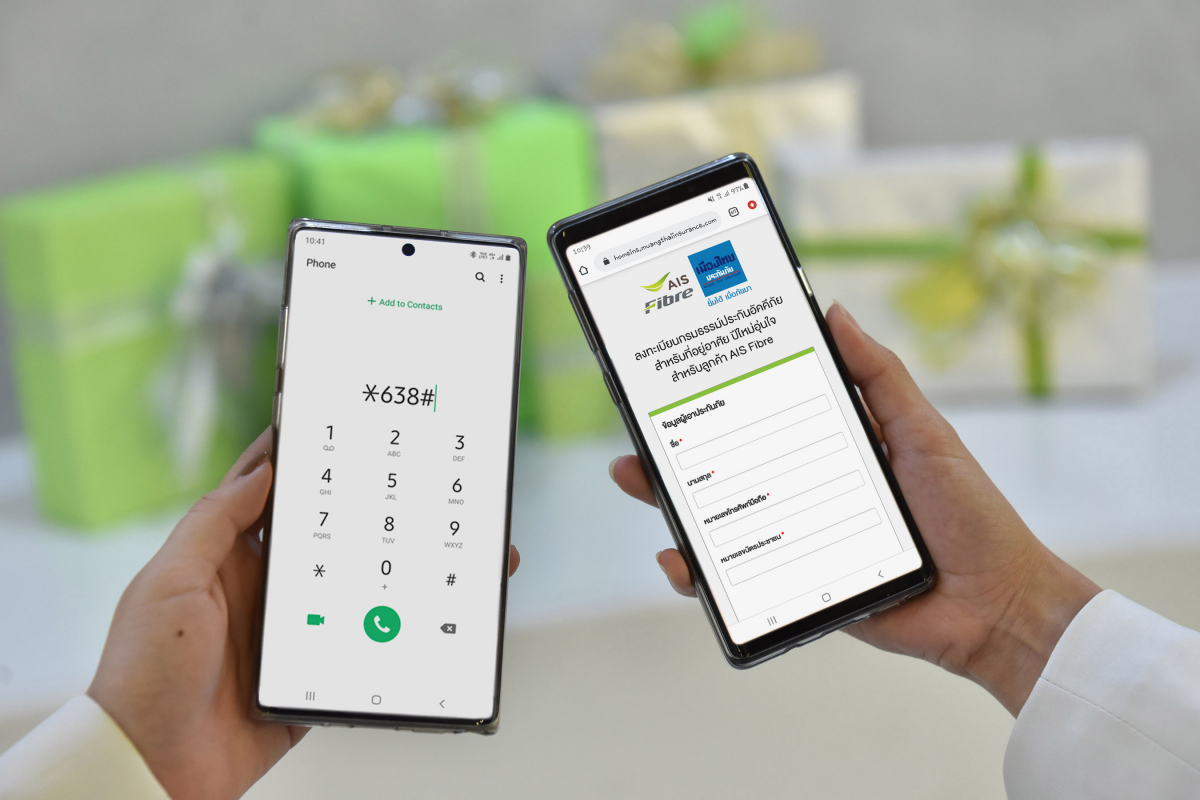
AIS takes care of customers throughout the New Year Festival 2020 #ศาสตร์เกษตรดินปุ๋ย

#ศาสตร์เกษตรดินปุ๋ย : ขอบคุณแหล่งข้อมูล : หนังสือพิมพ์ The Nation

https://www.nationthailand.com/recommended/810?utm_source=category&utm_medium=internal_referral

AIS takes care of customers throughout the New Year Festival 2020

Dec 17. 2019
1,371 Viewed

giving insurance coverage to both people and home for free!

AIS shares happiness with the upcoming New Year festival, to take care of customers with campaign “Aunjai Than Ever”, joining with leading insurance partners, Muang Thai Life Assurance Public Company Limited, and Muang Thai Insurance Public Company Limited, set up a new year insurance campaign by AIS, giving insurance coverage for free to AIS mobile and AIS Fibre Home Broadband Internet customers, campaign details;

  • AIS mobile customers get free personal accident insurance plan, Aunjai New Year Plus (Group Insurance) (Micro Insurance), provides personal accident insurance coverage of up to 100,000 baht for 30 days, covering death, loss of hands, feet, eyesight, or total permanent disability from the accident, or if undergoing treatment and being an in-patient in a hospital due to an accident will still receive an income compensation of 150 baht per day for a maximum of 30 days. Customers can get the privilege by simply pressing *638 # and call, free and without Transmission costs. Customers will receive an SMS with a link to the registration page of Muang Thai Life Assurance, click to register and fill out the information, then press to receive the privilege, and wait for the confirmation SMS. Customers can redeem from 16-30 December 2019 with a limit of 300,000 privileges throughout the project, for customers who have already received privileges, the insurance plan will start to cover after midnight onwards.
  • AIS Fibre Home Broadband Internet customers get free fire insurance for their home, give customers feel peach of mind (Aunjai) when leaving home giving coverage up to 300,000 baht, limited to 10,000 privileges during the campaign period. Customers receive SMS or scan QR Code on http://m.ais .co.th/freefire, and register to receive SMS confirmation for the privileges, starting from 16-25 December 2019. The insurance will start to cover their home from 26 December 2019 – 14 January 2020, The coverage period is 20 days. For more details http://www.ais.co.th/fibre/insurance/.

“New Year Festival is a time of happiness and celebration, and also the time for Thais to have the opportunity to take an extended vacation to go back to visit their hometown, or to travel with their family and loved ones. AIS cares about the life and property of customers, so, we provide comprehensive customers care for both people and home, in collaboration with Muang Thai Life Assurance and Muang Thai Insurance, which are our great allies to join and deliver our customers’ care with personal accident insurance plan for free to AIS mobile customers and fire insurance plan for a home toward AIS Fibre Home Broadband Internet customers for free. All of this is the intention of AIS to be with customers at every moment of life so that every customer can be confident that with us, you will feel more at ease (Aunjai) throughout your trip during the New Year festival and in every important moment of life.” Mr. Somchai Lertsutiwong, Chief Executive Officer of AIS, said.

Architects and local governments alter designs of glass-covered buildings to protect birds #ศาสตร์เกษตรดินปุ๋ย

#ศาสตร์เกษตรดินปุ๋ย : ขอบคุณแหล่งข้อมูล : หนังสือพิมพ์ The Nation

https://www.nationthailand.com/edandtech/30379714?utm_source=category&utm_medium=internal_referral

Architects and local governments alter designs of glass-covered buildings to protect birds

Dec 22. 2019
Photo Credit: collisions.abcbirds.org

Photo Credit: collisions.abcbirds.org
By Special To The Washington Post · Erin Blakemore

Birds vs. glass

collisions.abcbirds.org

604 Viewed

Birds are winging their way somewhere unexpected: building codes.

Turns out that glass-covered buildings in modern cities can become graveyards for migrating birds, leading to hundreds of millions of bird deaths each year. Under pressure from conservation groups, architects and local governments are increasingly tweaking building codes to protect birds from hitting buildings.

This month, the New York City Council passed legislation that puts birds into its building code. It requires new construction and newly altered buildings to incorporate specially treated glass on the lowest 75 feet in an attempt to reduce the number of bird strikes.

As more and more buildings incorporate glass, the number of bird crashes has grown. According to a 2014 study, up to 599 million birds die every year when they hit buildings.

Most of the species at risk are migratory – and they crash because they cannot see glass. As they cruise toward reflections of trees, resting places or even themselves, birds court disaster. (Steady lights attract and confuse them at night, too.)

One notoriously bird-unfriendly building, New York’s Jacob K. Javits Convention Center, reduced bird deaths 90% when it incorporated glass with patterns during a 2015 renovation, according to the Audubon Society. A statewide bill to establish a building council to promote similar guidelines was recently vetoed by Democratic Gov. Andrew Cuomo.

New York isn’t the first city to adopt bird-friendly building rules: San Francisco has had similar standards since 2011, and the American Bird Conservancy says bird-friendly design is becoming recognized as part of sustainable design.

Even if you don’t live in a skyscraper, you can help protect birds from your windows. According to the American Bird Conservancy, 46% of bird crashes per year happen at homes, even ones with small amounts of glass.

To help, you can apply tempera paint to your windows, apply patterns of opaque tape or special translucent bird-smart tape, hang external screens or opt for vertical blinds indoors. Decals can help, too, with a caveat: You need a lot to deter birds. They should be spaced no more than two to four inches apart.

Want information on bird-friendly building? Visit Collisions.abcbirds.org.

Boeing capsule won’t reach space station in NASA setback #ศาสตร์เกษตรดินปุ๋ย

#ศาสตร์เกษตรดินปุ๋ย : ขอบคุณแหล่งข้อมูล : หนังสือพิมพ์ The Nation

https://www.nationthailand.com/edandtech/30379689?utm_source=category&utm_medium=internal_referral

Boeing capsule won’t reach space station in NASA setback

Dec 21. 2019
By Syndication Washington Post, Bloomberg · Justin Bachman 446 Viewed

Boeing Co.’s unmanned CST-100 Starliner spacecraft failed to reach the International Space Station on its debut flight, dealing a new blow to the crisis-ridden aerospace giant and adding uncertainty to NASA’s plan to ferry U.S. astronauts on American spacecraft.

About 50 minutes after liftoff Friday, the Starliner was out of position to begin its orbital insertion burn, the last boost into an orbit so it could dock at the space station.

Because of that anomaly, “the spacecraft burned more fuel than anticipated to maintain precise control. This precluded @Space_Station rendezvous,” Jim Bridenstine, head of the National Aeronautics and Space Administration, said in a tweet.

The mishap jeopardizes U.S. plans for human flights as soon as next year by Boeing, which was hired to ferry astronauts to the ISS as part of NASA’s commercial crew program along with Elon Musk’s Space Exploration Technologies Corp. Boeing’s failure also deepened a sense of crisis around the company, which is already reeling from a nine-month grounding of the 737 Max after two deadly crashes.

Boeing’s stock fell less than 1% to $331.43 at 9:57 a.m. in New York. The stock rose 3.4% this year through Thursday while the S&P 500 advanced 28%.

The Starliner is expected to return to Earth for a landing at White Sands, New Mexico, on Sunday morning, NASA and Boeing officials said at a news conference. The anomaly was the result of an incorrect timer prompting the capsule to make adjustments as though it was on the correct course, burning too much fuel. Had astronauts been on board, they would have been able to correct the problem, authorities said.

The capsule took off aboard a United Launch Alliance Atlas V rocket at 6:36 a.m. Friday near Cape Canaveral, Florida, Boeing said. The capsule, with no crew on board, separated and began flight on its own about 15 minutes later.

Starliner had been scheduled to rendezvous with the ISS early Saturday.

The Starliner test flight is the second mission to the space station for NASA’s commercial crew program, which is designed to end U.S. reliance on purchasing seats aboard Russia’s Soyuz spacecraft, which have been the sole crew transport since the Space Shuttle was retired in 2011.

SpaceX conducted a demonstration flight of its Crew Dragon capsule to the ISS in March, also with no one aboard. Musk’s company and Boeing expect to fly astronauts for the first time next year.

NASA in 2014 awarded SpaceX and Boeing combined contracts valued at as much as $6.8 billion to fly U.S. astronauts to the ISS. The agency chose two companies to assure safe, reliable and cost-effective access to space while avoiding the risks giving one provider a monopoly.

The space agency has declined to set dates on manned missions, pending the outcome of the Boeing test flight. The agency and SpaceX plan to perform an in-flight abort test of SpaceX’s Crew Dragon on Jan. 11 from Florida.

Two celestial objects named Chao Phraya and Maeping #ศาสตร์เกษตรดินปุ๋ย

#ศาสตร์เกษตรดินปุ๋ย : ขอบคุณแหล่งข้อมูล : หนังสือพิมพ์ The Nation

https://www.nationthailand.com/edandtech/30379640?utm_source=category&utm_medium=internal_referral

Two celestial objects named Chao Phraya and Maeping

Dec 19. 2019
Photo credit: IAU Project

Photo credit: IAU Project
By The Nation

1,033 Viewed

Chao Phraya and Maeping were among more than 100 names given to exoplanets and host stars by the International Astronomical Union on Tuesday (December 17).

Members of the public, more than 780,000 people in all, proposed and selected the names as part of the IAU’s NameExoWorlds project. This is only the second time that the public has helped pick proper names for exoplanets, a process governed by the IAU. To celebrate the IAU’s 100th anniversary, every country was given the chance to name one planetary system, comprising an exoplanet and its host star. Each nation’s designated star for naming is visible from that country and is sufficiently bright to be observed through a small telescope.

WASP-50 b comparing to Earth

WASP-50 b comparing to Earth

In recognition of the UN 2019 International Year of Indigenous Languages, speakers of indigenous languages were encouraged to propose names from those languages, and a few dozen of the selected names are of indigenous etymology.

The names from Thailand come from major rivers. A star was given the name Chao Phraya while Maeping, a tributary of Chao Phraya, was the name chosen for an exoplanet. The discovery of the star and planet were announced in 2011.

Apple, Google, Amazon want one language for smart home devices

#ศาสตร์เกษตรดินปุ๋ย : ขอบคุณแหล่งข้อมูล : หนังสือพิมพ์ The Nation

https://www.nationthailand.com/edandtech/30379607?utm_source=category&utm_medium=internal_referral

Apple, Google, Amazon want one language for smart home devices

Dec 19. 2019
By Syndication Washington Post, Bloomberg · Mark Gurman, Gerrit De Vynck

347 Viewed

Apple, Alphabet’s Google and Amazon.com — three of the biggest smart-home and voice-assistant providers — are joining forces to make internet-connected homes easier to set up and safer to use.

The rivals announced Wednesday that they’re working with the Zigbee Alliance, a foundation that promotes standards for the Internet of Things, and its members including Samsung Electronics Co., Somfy SA, and IKEA, on a new standard that will ensure their products work with each other.

While an increasing portion of the home can now be controlled by a voice-activated speaker or remote app, from thermostats to lights and even refrigerators, “the lack of an industry-wide connectivity standard leaves people confused and frustrated when trying to understand what devices work with each smart home ecosystem,” Nik Sathe and Grant Erickson, engineers at Google’s Nest unit, wrote in a statement. “It also places a heavy burden on manufacturers to make sure all devices are compatible with each other.”

Amazon and Google have relatively open systems already, which have allowed tens of thousands of third-party devices to link up with their smart speakers. Apple only supports a few hundred via its HomeKit standard. The global smart home market is projected to grow to $174.2 billion by 2025, according to MarketWatch, up from $55.7 billion in 2016.

Apple said the project is built around “a shared belief that smart home devices should be secure, reliable, and seamless to use.”

But the move could also raise privacy and security questions. For years, Amazon and Google collected data every time someone used a smart speaker to turn on a light or lock a door and asked gadget makers like Logitech Co. to send a stream of information whenever someone turned on a light or locked a door. Bringing more devices together in a home raises the prospect of personal data being shared with a higher number of companies, some of which may have more lax security or privacy standards. Google pared back the number of companies its Nest devices connect to earlier this year due to privacy concerns.

After lagging behind Amazon and Google, Apple is rebooting its smart home efforts, developing new software and devices from a new team, Bloomberg reported earlier this year.

The alliance is aiming to have its new joint protocol ready by the end of 2020.

New device could help us all breathe easier

#ศาสตร์เกษตรดินปุ๋ย : ขอบคุณแหล่งข้อมูล : หนังสือพิมพ์ The Nation

https://www.nationthailand.com/edandtech/30379394?utm_source=category&utm_medium=internal_referral

New device could help us all breathe easier

Dec 13. 2019
By The Nation

81 Viewed

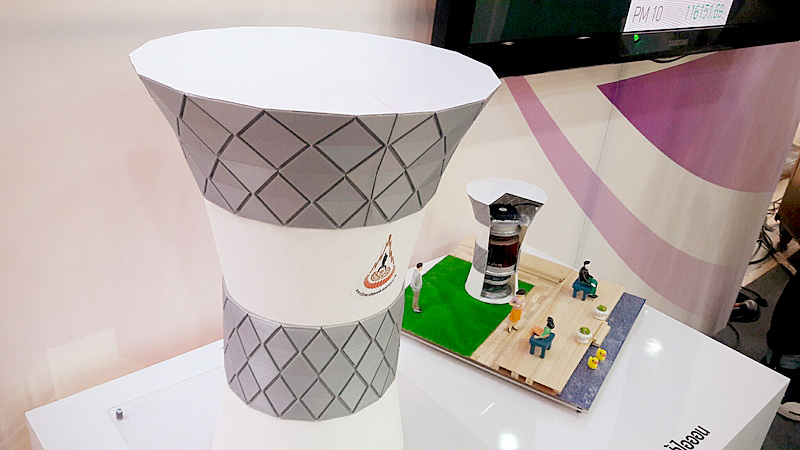
A researcher at Suranaree University of Technology (SUT) this week successfully demonstrated the prototype of a pm2.5 dust eliminator using ions and a negative electric change, which could soon be installed in communities.

Assoc Prof Anan Thongraya, vice-chairman of the university’s technology research and development department, said that the prototype works like the closed-area air purifier but has been redesigned for use in the open air with reduced power consumption,

Chief of the research centre, Prof Dr Chanchai Thongsopa, revealed that this PM 2.5 dust eliminator uses the principle of releasing negative charges generated from tens of thousands of volts in a 220-voltage circuit with direct current voltage of approximately 35,000 volts, 18 mA high voltage, low current, and a high voltage of 35,000 volts to send electric ions into the air through the pointed end of the copper plate to capture PM2.5 dust particles. This will neutralise dust particles leaving only clean air without dust and smoke behind.

The prototype measures 120 cm x120 cm x120 cm and costs Bt200,000 per device. It can eliminate dust up to 100,000 micrograms an hour equal to the efficiency of a medium-sized tree in a total area of about 9 square metres with an average electricity cost of Bt1.50 per hour.

The innovation will help prevent dust and reduce the risk of respiratory failure and allergies, saving health costs. The team is hoping to install the device in urban communities and is now discussing possible locations with the relevant authorities.

10 gifts for tech fans

ศาสตร์เกษตรดินปุ๋ย : ขอบคุณแหล่งข้อมูล : หนังสือพิมพ์ The Nation

https://www.nationthailand.com/edandtech/30378804?utm_source=category&utm_medium=internal_referral

10 gifts for tech fans

Nov 27. 2019
By The Washington Post · Heather Kelly ·

749 Viewed

Everyone loves getting a bit of technology for the holidays, whether it’s something futuristic for early adopters or a simple but useful gadget for novices.

– – –

For the minimalist music lover

Ikea: Symfonisk Table Lamp with WiFi Speaker

This may look like your typical Ikea lamp, but it’s actually a Sonos WiFi speaker. You can stream music from services such as Spotify or Pandora, and two lamps can be used together to create stereo sound.

– – –

For the nostalgic gamer

Sega: Genesis Mini

People love nostalgia and cute portable things. This miniature version of the classic gaming system connects to a monitor or TV and has two wired controllers to play old-school games such as Sonic the Hedgehog and Ecco the Dolphin.

– – –

For the chatty chef

Google: Nest Hub Max

If your loved one is comfortable with an always-on microphone and face detection, this is the best smart display on the market. It shines in the kitchen, where it can show step-by-step recipes or let a baker make a call with messy hands.

– – –

For the fitness buff

Beats: Powerbeats Pro

There is no shortage of wireless in-ear headphones, but anyone who likes to jump or dance or head-bang will need something that holds on for dear life. These headphones combine decent audio quality with a smart over-the-ear design.

– – –

For the binge-watcher

Disney: Disney Plus Streaming Service

There’s a wave of streaming services launching this year, but Disney Plus is the best subscription to give any Star Wars, Marvel or Simpsons fan. It costs less than Netflix and includes features such as unlimited downloading for those extra-long flights.

– – –

For the chic charger

Courant: Catch:3

At first glance the Catch:3 is an attractive catchall tray. But it can do something far fancier than hold your change: The Italian leather tray also charges any device that’s compatible with Qi wireless charging.

– – –

For the photographer who loves prints

HP: Sprocket Portable Photo Printer

This gadget takes the images on your phone and prints them out. It may seem old-school in the era of Instagram, but there’s something deeply satisfying about holding pictures of family members, pets or perfect sunrises in your hand.

– – –

For the audiophile on the go

Bose: Portable Home Speaker

This high-end Bluetooth speaker runs on batteries and can connect to Amazon’s Alexa or Google Assistant. It’s also water-resistant and lightweight (2.34 pounds), so it is ready to take any pool party to the next level.

– – –

For the non-tech-savvy relative

Quarto: Password book

It’s not secure enough for everyone and should be stored in a safe place, but this notebook is a sound option for people who struggle with using password managers or reuse the same password for everything because they can’t remember new ones .

– – –

For the phone addict

Light: Light Phone II

To curb technology overuse, you could activate screen-time settings or move to the woods. Or you could try this petite device, designed to do the basics and little else. You can make calls or send texts, but you can’t check Instagram or email.

Greenlight for Microsoft’s software exports to Huawei

ศาสตร์เกษตรดินปุ๋ย : ขอบคุณแหล่งข้อมูล : หนังสือพิมพ์ The Nation

https://www.nationthailand.com/edandtech/30378699?utm_source=category&utm_medium=internal_referral

Greenlight for Microsoft’s software exports to Huawei

Nov 24. 2019
By The Nation1,237 Viewed

Microsoft has been allowed to export its software to China’s Huawei, after being granted an licence for mass-market sales by the US government.

“On November 20, the US Department of Commerce granted Microsoft’s request for a licence to export mass-market software to Huawei. We appreciate the Department’s action in response to our request,” a Microsoft spokesman told Reuters via email.

The US Commerce Department said in a statement that it had begun issuing licences for some companies to sell their products to Huawei. However, There was no confirmation on which products have been approved for sales to Huawei.

According to a US official, about half of roughly 300 licence requests have been processed.

However, Huawei is still waiting for a licence allowing Alphabet Google to provide its mobile services to new Huawei models, already on sales in the global market.

Another source said some licences were granted for sales of cell phone components and non-electronic components.

Facebook enters the streamer bidding wars, signs Disguised Toast

ศาสตร์เกษตรดินปุ๋ย : ขอบคุณแหล่งข้อมูล : หนังสือพิมพ์ The Nation

https://www.nationthailand.com/edandtech/30378655?utm_source=category&utm_medium=internal_referral

Facebook enters the streamer bidding wars, signs Disguised Toast

Nov 23. 2019
By The Washington Post · Gene Park410 Viewed

Famed Hearthstone player Jeremy “DisguisedToast” Wang will be streaming exclusively on Facebook. The social media behemoth has had livestreaming infrastructure since introducing Facebook Live in 2015. While this is Facebook’s first big U.S. contract, it’s already signed on two Spanish-speaking streamers, NexxusHD and Lolito FDEZ.

Wang’s move is the latest in a trend of famous streamers departing the Amazon-owned Twitch site, lured by lucrative contracts in smaller but competing platforms. (Amazon CEO Jeff Bezos also owns The Washington Post.) Tyler “Ninja” Blevins signed to Mixer, and has encouraged others to make similar jumps. Michael “shroud” Grzesiek also moved to Mixer, while Jack “CouRage” Dunlop streams exclusively to YouTube.

Wang teased the move in a tweet Wednesday evening.

Hints came earlier this month when Wang suddenly turned off the ability to donate to him on Twitch, instead asking Twitch users to “use that $5 and sub to a smaller streamer instead.”

Wang isn’t the only large streamer to hint at a new deal. Twitch star Imane “Pokimane” Anys teased she’s also in the process of signing a contract, although no announcements have been made.

For its part, Twitch has been trying to expand its customer and user base beyond gamers.

According to a press release from Facebook, Wang wants to expand his global reach and expand philanthropic efforts. In the same release, Facebook Gaming says its aim is “global in scope,” boasting that it’s home to tens of thousands of gaming creators.

As of October, Twitch owns 75.6% of the streaming market, with Facebook Gaming coming in third with 3.7%, according to a quarterly analytics report from StreamElements.

StreamElements CEO Doron Nir called Facebook’s signing “significant” and yet another sign that video streaming services are going all in to maintain relevance.

“While Mixer and YouTube have both made headlines recently with their own acquisitions, the large untapped market for live streamed content can potentially open the door for all of these platforms to succeed,” Nir said. “Just like how subscription streaming services such as Netflix, Hulu, and Prime Video have carved out their own audiences with original content, there is the same opportunity for gaming video platforms to create a similar landscape around distinct content creators.”

Nir notes that it will likely take years for any emerging streaming platforms to build loyalty and community. In the short-term, Blevins’s deal meant more content on Mixer, but it has yet to bring in new viewers. Signing on big personalities is just one factor in expanding such services.

“This includes pushing hard on product iteration and developing a strong third-party developer ecosystem that brings in creativity, innovation, and new types of audience engagement,” Nir added. “It was attention to these details that enabled Twitch to garner attention from streamers, their fans, and the brands trying to reach them.”