S Korea lost track of missile fired in response to N Korean IRBM launch: officials
THURSDAY, OCTOBER 13, 2022
South Korea lost track of a missile fired during last week’s drills held in response to a North Korean intermediate-range ballistic missile (IRBM) launch, Seoul officials said on Thursday, in a failure that raised questions over the missile’s performance.
It was one of the two Army Tactical Missile System (ATACMS) rockets the South Korean military fired into the East Sea following the North’s IRBM launch on October 4. US Forces Korea also fired two ATACMS missiles in the combined drills.
The missile went “out of contact”, meaning it remained unknown whether it hit the intended target. The three other missiles accurately hit mock targets, according to informed sources.
After the drills, South Korea’s Joint Chiefs of Staff said the missiles were fired for precision strikes at the targets, and that the allies demonstrated their combined force to deter additional North Korean provocations.
Also in response to the North’s IRBM launch, the South Korean military sent aloft a Hyunmoo-2C ballistic missile.
But it fell inside a military base after an abnormal flight. Its warhead was found around 1km from the launch point and just 700 metres away from the nearest civilian home, a JCS official said, requesting anonymity.
Charting new pathways inspired by the Bio-Circular-Green Economy
WEDNESDAY, OCTOBER 12, 2022
Thailand, Apec’s host in 2022, has put forward the bio-circular-green economy as a cross-cutting, interconnected, and collaborative way of approaching environmental challenges.
Climate change is worsening. We can feel this in the recent onslaught of Typhoons Hinnamnor and Noru when they devastated communities and disrupted industries in Asia, or of Hurricane Ian when it flooded cities across America. We can sense this in the rising seawater, slowly encroaching on our coastal communities. In fact, about 167 million people in the Apec region are at risk of being displaced.
Indeed, climate change is a common concern, and rightly so, because many of our other challenges are connected to climate change—the rising cost of living, creeping hunger, or deepening inequalities, among others. This tells us at least one thing: our solutions cannot be siloed. We need them to be cross-cutting, interconnected, and collaborative.
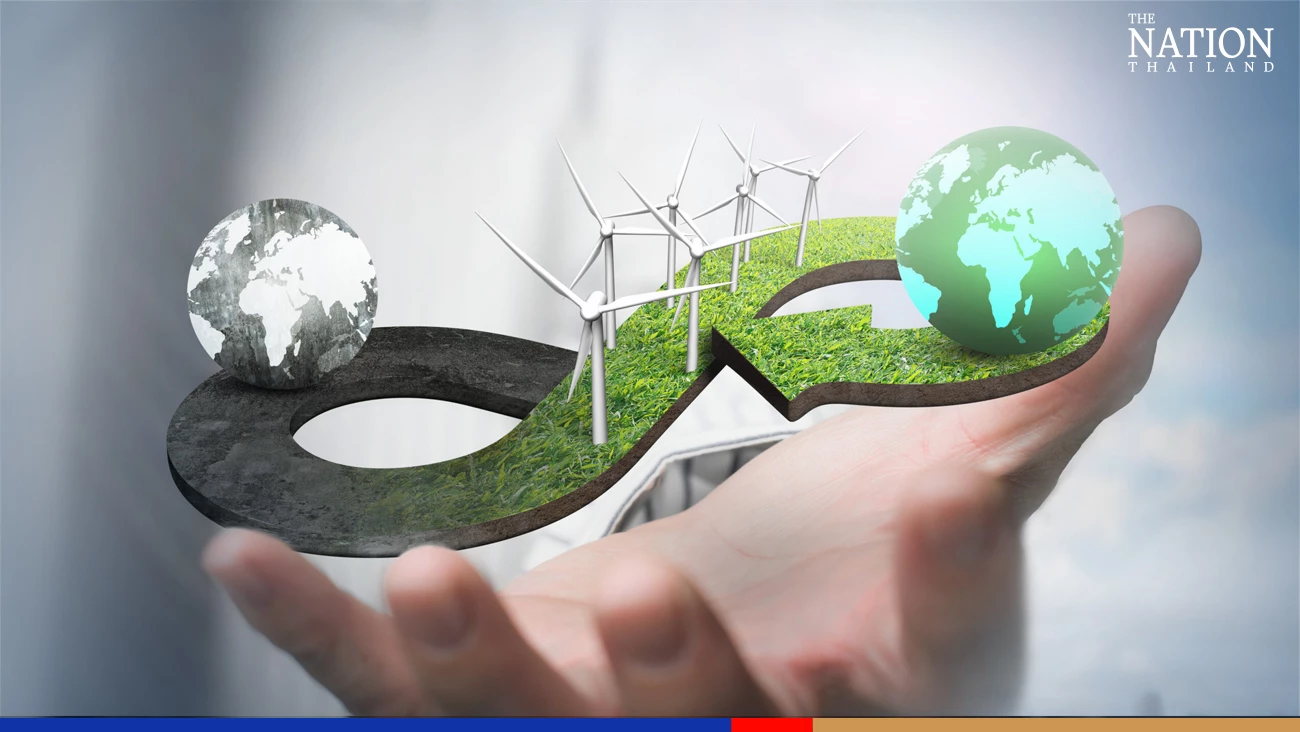
One way of developing such solutions is through the bio-circular-green (BCG) economy. It integrates policies across the bioeconomy, the circular economy, and the green economy and, by doing so, BCG economy solutions synergize the individual strengths of all three. To illustrate, economies produce waste as a consequence of economic activity, but the impact of these residuals on the environment can be mitigated or eliminated by using cleaner inputs (bioeconomy), reusing or recycling (circular economy), or incorporating ecosystem services into the production system itself (green economy).
BCG economy solutions put an emphasis on improving the quality of policy design and implementation, which allows interventions to close existing policy loopholes. For example, gains from cleaner production can be offset when the circular economy is overwhelmed by increased consumption and production patterns, thereby causing a rebound effect. What the BCG economy can do here is to then incorporate behavioural interventions through education programs. Ultimately, the BCG economy becomes empowered to guide us in three important ways.
First, it helps us reframe how we approach development. We traditionally confine development mostly within continuous economic growth (GDP), but climate change necessitates us to reframe this idea. In this context, the BCG economy invites us to look at development as improving socioeconomic welfare that goes together with environmental sustainability.
Second, it encourages us to rethink how we use our resources. For instance, Apec generates about 364 million tons of food waste each year, and more than half of this comes from households. Clearly, transforming this food waste into something productive is important because waste is socially unacceptable when millions of people are hungry, and because it contributes to climate change. One way to transform waste is by converting it into renewable electricity using biogas or by upcycling it into innovative solar panels, examples that point out two important ideas for being more resourceful: circularity and innovation.
Third, it continuously reminds us that inclusive and active participation is important. The BCG economy naturally involves the active participation of stakeholders, even across borders. Within this context, the growing role of the private sector must be emphasized. In fact, the International Energy Agency highlighted that around 70 per cent of the USD 3.9 trillion global clean energy investment required to achieve net zero emissions by 2050 needs to come from private investment, underscoring the need for low-cost financing. But participation also includes the broader community (e.g., sectoral coalitions, civil society, and government). In other words, BCG economy solutions require a whole-of-society approach.
However, the success of BCG economy solutions depends on our support for its key drivers: the regulatory environment; technology and innovation; and stakeholder participation.
We can support these key drivers by addressing their challenges. For example, a common issue in the regulatory environment is policy silos, which are formed when communication and coordination among policymakers are weak. Applying BCG economy principles of inclusive and active participation would strengthen institutions by connecting policymaking and policy-enforcing entities, thereby promoting good governance. This could take the form of regular channels for coordination and idea-sharing across agencies, or sound regulatory instruments such as carbon budgeting and ex-ante environmental impact assessments, or even an economy-wide coordinating strategy, among others.
Another way to support the BCG economy’s key drivers is by leveraging international cooperation and collaboration. There is reasonable value in creating networks that connect multiple stakeholders across economies. Apec itself, as a regional forum, can incubate new ideas and advance discussions on BCG economy solutions. Much of this work will be done in 2022 under the host year of Thailand, which has made promoting the BCG economy its flagship priority.
At the end of the day, everyone plays a key role in resolving climate change. Policymakers, academia, businesses, civil society organizations, the youth, and other stakeholders can jointly contribute to ensuring that Apec can chart new pathways inspired by the BCG economy and secure a future where succeeding generations can live better.
Sylwyn Calizo Jr.
Sylwyn Calizo Jr. is a researcher for the Apec Policy Support Unit and author of the policy brief, “Charting New Pathways for Apec: A Sustainable Future Inspired by the Bio-Circular-Green (BCG) Economy.”
No decision yet on Putin attending Apec Summit, Russian ambassador clarifies
WEDNESDAY, OCTOBER 12, 2022
Russia’s Ambassador to Thailand Evgeny Tomikhin on Wednesday denied news that Russian President Vladimir Putin would attend the Asia-Pacific Economic Cooperation (Apec) Summit, saying that Moscow will make the best decision on this issue later.
His clarification came after a source from a security agency said that Putin would attend the Apec Economic Leaders’ Meeting in Bangkok on November 18-19.
“We will make the best decision on whether Russia will send a representative to attend the summit or not,” he said, adding that the decision would be made when the summit is near.
He expected the upcoming summit to help relieve tensions among the global community.
Tomikhin added that Russia is eager to cooperate with Apec on digitalisation as digital technologies are necessary for promoting connection in the Asia-Pacific region, such as infrastructure, transportation and logistics.
“It is necessary for Apec members to work on internet and digital economy roadmaps,” he said, adding that the business sector should be allowed to participate in this issue as well.
He said Russia is interested to cooperate with Apec members in many fields, such as digitalisation, climate change, Bio-Circular-Green (BCG) economy model and free-trade agreements.
He added that Russia is ready to support Thailand on BCG and travel facilitation in the post-Covid-19 era.
“As an Apec member, we will continue promoting long-term cooperation with Thailand in various fields, such as agriculture, nuclear power, industry and medical supplies,” he said, adding that Russia is ready to cooperate with other Apec members as well.
He also hoped other Apec members would work in a creative way to get the best results.
Tomikhin advised Apec members not to rely solely on information from western media outlets, saying that geopolitical issues are complicated and cannot be solved with easy solutions.
“I hope Thais pay more attention to information from media outlets in Russia, Asia and the Middle East, which is the only way to create unbiased ideas,” he said.
He also wished good luck to Thailand for hosting the Apec Summit, adding that it is an opportunity and challenge at the same time.
Thailand determined to push BCG economic model at Apec Summit
THURSDAY, OCTOBER 13, 2022
Nongluck Ajanapanya
Thailand aims to inspire the 21 Asia Pacific Economic Cooperation (Apec) members with a new business code of conduct, embracing the Bio-Circular-Green (BCG) economy model that is environmentally friendly and responsible, a senior Foreign Ministry official said during an exclusive interview with media representatives from The Nation Group.
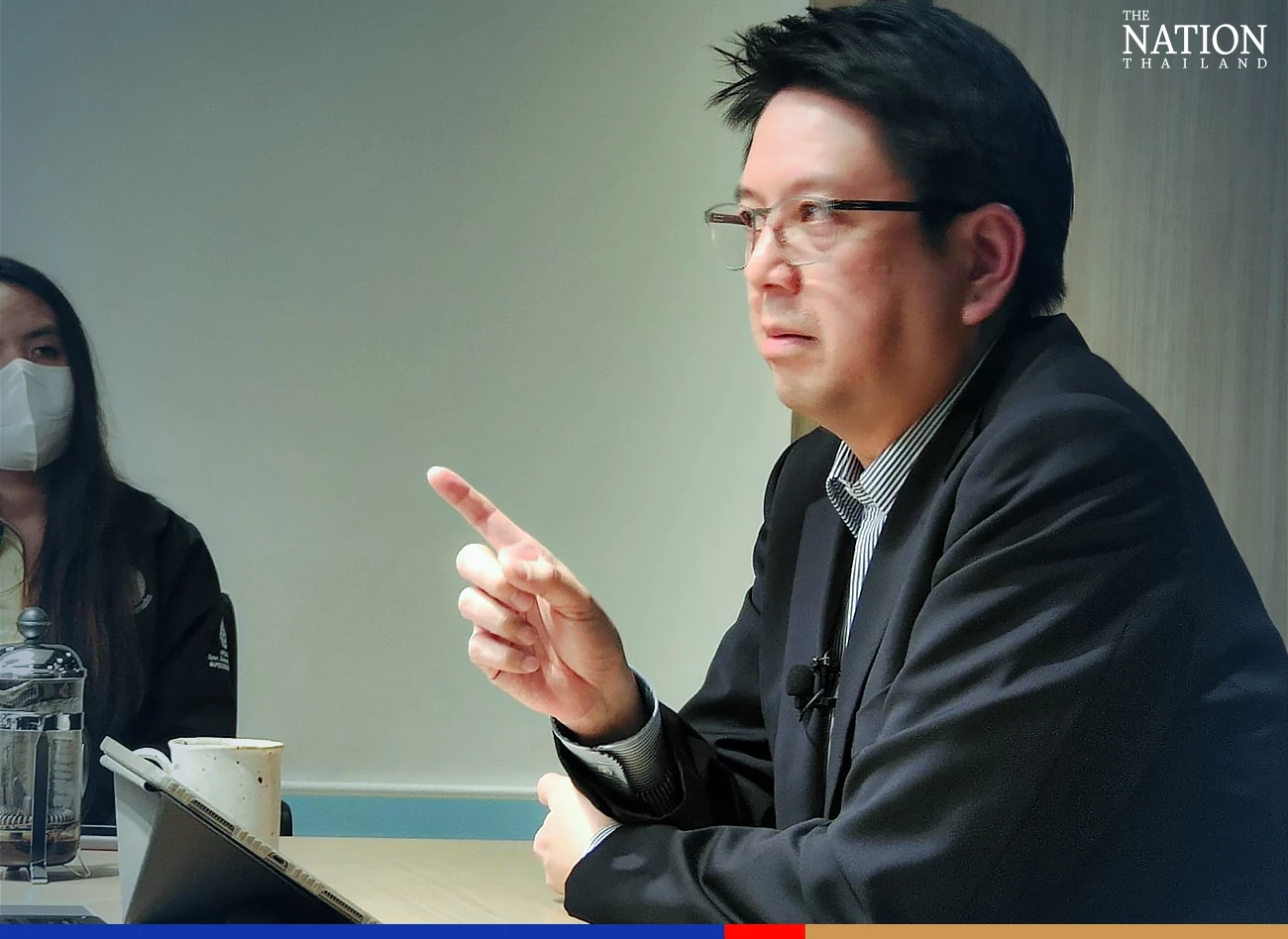
Cherdchai Chaivaivid, director-general of the Department of International Economic Affairs and Thailand’s Apec senior official, Foreign Affairs Ministy, noted that the upcoming Apec Summit in 2022 would take place in the midst of a global economic recession and serious geopolitical tensions.
Thailand, as a host country, wants everything to go smoothly. However, politics always determines the direction of international relationships that affect trade and economics, so anything can happen at the Apec Summit in 2022, he cautioned.
Despite these unfavourable possibilities, Cherdchai stated that Thailand is committed to achieving the Bangkok Goal Declaration on the BCG economy.
He stated that the focus of this declaration would be the BCG economy model. It will serve as the business code of conduct for the 21 Apec members in terms of trade and investment.
He explained that the Bangkok Goal Declation on the BCG economy would be highlighted in four agenda items: One deals with the consequences of climate change, the second step is to be environmentally responsible in order to ensure long-term sustainability, the third is serious conservation of natural resources and their efficient use, and the fourth is business management with little or zero waste.
“From now on, our collaboration would be focused on the Bangkok Goal Declaration on BCG. It would be Apec’s signal to the world that if your business is not environmentally and socially responsible, it would be rejected,” Cherdchai elaborated.
The declaration will be officially launched on November 19, 2022.
He is confident that Apec leaders will accept the idea because environmental and climate change are currently the most pressing global issues. He hoped that the summit would inspire the way the world trades and invests in the same way that it had inspired the World Trade Organization (WTO) on tax tariff exemption to encourage free trade zones.
Although the declaration will not be legally binding, Thailand is confident that the BCG economy concept will be carried forward to the next Apec Summit.
“It is the end of doing business in order to maximise profits. It is time to consider how to run a sustainable business while also living in harmony with the community and the environment. We must find a way to balance business growth with environmental sensitivity,” Cherdchai noted.
He also spoke on the list of leaders and delegates expected to attend the summit, stating that the list would not be finalised until at least two weeks before the event.
The remark came in response to a new report that Russia’s president would attend the Apec Summit while the US president would not. He emphasised that a country leader not attending the summit and delegating someone to replace them is not unusual. Hence, whether or not they attend has no bearing on Thailand’s image.
Tourism and sustainable growth high on agenda of Thailand Privilege Card, says chief
THURSDAY, OCTOBER 13, 2022
Thailand Privilege Card (TPC), a state enterprise under the Tourism Authority of Thailand (TAT), is working with partners on developing the country’s economy and tourism to attract more high-quality visitors.
TPC acting president Apichai Chatchalermkit said the company has implemented a strategy to boost tourism growth along with enhancing the potential of communities and maintaining the environment.
He added that this strategy is in line with Environmental, Social and Governance (ESG) principles and Bio-Circular-Green (BCG) economy model, which focus on sustainable development.
He said the TPC has cooperated with partners on tourism development and sustainable growth promotion, such as Huk Muang Nan Foundation in the “Kla Dee” project to create awareness on importance of natural resources among locals.
He added that the TPC has also launched many corporate social responsibility activities, such as TPC Community Care 2022 in Phetchaburi province’s Tham Rong community, and TPC Impact Day 2022 in Ayutthaya province’s Sai Noi community.
“These cooperation activities will help strengthen communities along with developing Thailand’s economy and tourism to attract more high quality visitors,” he said.
More than 5.6 million tourists visited Thailand over the past nine months this year (January-September), generating more than 200 billion baht for the country.
Thailand proves a hot competitor with AC exports worth a cool THB203 bn
THURSDAY, OCTOBER 13, 2022
Thailand was the second largest exporter of air conditioners in 2021 after only China, shipping more than 203 billion baht worth of air conditioners and parts last year during the heat of the Covid crisis.
The figure increased by 25 per cent from 2020.
This year, Thailand exported more than 164 billion baht worth of air conditioners in the first eight months, an increase of 21 per cent from the same period last year.
The growth in exports reflects how the industry can cope as manufacturers face several problems.
In an interview with business news agency Thansettakij, Supanee Chantasasawat, president of the FTI’s Air-Conditioning and Refrigeration Club, said the export market is likely to grow now that the Covid-19 situation has eased and demand is recovering, especially from countries such as Vietnam and Indonesia.
At the height of the Covid crisis, domestic sales decreased but orders from foreign countries were continuous, so the industry was affected only slightly, Supanee said.
She expects more air conditioners will be manufactured in 2022 compared to the previous year as domestic demand rises, but high fuel and natural gas prices as well as chip shortages are affecting manufacturing costs.
Supanee believes hotter, longer summers around the world, especially in cold climate countries, will provide Thailand with increasing opportunities to export air conditioners and parts.
Furthermore, trade barriers between the US and China and the expansion of middle classes in hot nations including neighbouring countries and Asean might be a supporting factor for Thai exports, she felt.
According to Supanee, the industry is developing better products and parts that utilise smart technology, save energy and are environmentally friendly, so this would be an advantage when competing with other exporters in quality and price.
The top five countries Thailand exported air conditioners and parts to in the first eight months of 2022 were the United States, Australia, Vietnam, Taiwan and Japan, respectively.
China is still Thailand’s main competitor, but Vietnam is an up-and-coming rival with cheaper wages and more available workers, so foreign manufacturers such as Japan have invested in Vietnam since 2018, she pointed out.
In 2023, the Ukraine-Russia war, volatile currencies, high manufacturing costs, chip shortages and trade barriers will pose challenges, Supanee warned.
Thailand still needs to import parts and materials from foreign countries so it might lose its competitive edge, she explained.
She wanted the government to support material and parts manufacturers in technology to compete in global markets amid the current Covid-19 situation and currency problems, expecting political tension and currency woes to take “around 1-2 years to ease”.
The industry must prepare for changes in the future as it relies mainly on exports, she added.
Egat, Egco join hands to build 5MW hydrogen fuel power plant, targeting reduction of CO2 emissions
THURSDAY, OCTOBER 13, 2022
The Electricity Generating Authority of Thailand (Egat) will join two partners to develop a hydrogen-fuelled power plant late this year in line with the government’s policy to reduce carbon emissions, one of the partners said.
Thepparat Theppitak, president of Electricity Generating Co Plc (Egco), said that Egco is developing a hydrogen-fuelled power plant with Egat and Bloom Energy Co Ltd.
Thepparat said the first hydrogen power plant of the three partners would be built as a pilot project in the compound of the Klong Luang power plant in Pathum Thani province late this year or early next year at the latest.
In the first stage, the hydrogen power plant would generate 5 megawatts of electricity and its capacity would later increase to 25MW.
Meanwhile, Kulit Sombatsiri, permanent secretary at the Energy Ministry, said that Egat has been developing technologies to produce electricity from clean energy to help the government reach its carbon emissions target.
Kulit said solar and wind would become renewable energy with high-use ratio for producing electricity, and hydrogen would play a key role in the near future.
He said Egat is now experimenting on a wind-hydrogen hybrid power plant that can make 300 kilowatts of power. The hybrid system can use the excess electrical energy to decompose water in an electrolyser to produce and store the energy as hydrogen for use when wind energy dies down.
Kulit said Egat is also experimenting with a project to use ammonia, which has nitrogen and hydrogen, as fuel together with coal to generate electricity.
Kulit said the energy sector in Thailand is releasing about 333 million tonnes of carbon dioxide a year and the new national energy plan to be used next year is aimed at reducing 160 million tonnes of carbon emissions within 2030.
Thailand is among nations that has pledged to achieve carbon neutrality by 2050 and net zero emissions by 2065.
PTT Plc has also pledged its support to help the government achieve the goals.
PTT president and CEO Auttapol Rerkpiboon said PTT Global Chemical is now studying how to use hydrogen obtained during the refining process for operating turbines of electricity generators.
He said the Global Power Synergy Plc is now studying with Avaada Energy Pte Ltd in India on the use of hydrogen and ammonia for generating electricity.
To support the use of clean energy, Auttapol said PTT has signed a memorandum of understanding with AET of Singapore to develop and build two zero-emission Aframax oil tankers with 120,000 metric tonnes capacity.
Auttapol said the oil tankers would be able to use both bunker oil and hydrogen as fuel. The first oil tanker will be delivered to PTT for leasing in the fourth quarter of 2025 and the second in the first quarter of 2026.
Thailand’s Bio-Circular-Green plan: feed grassroots to create sustainable economy
THURSDAY, OCTOBER 13, 2022
The Bio-Circular-Green (BCG) economy model is the key driver on Thailand’s path to sustainability and environmental preservation, the National Science and Technology Development Agency (NSTDA) said on Monday.
“The BCG economy model will have a significant impact on the economy, especially the grassroots economy,” NSTDA president Sukit Limpijumnong said.
Thailand will promote BCG for post-Covid economic recovery when it hosts next month’s Asia-Pacific Economic Cooperation (Apec) summit.
BCG focuses on using technology to boost product value, reducing production losses and conserving the environment.
Sukit explained that BCG model consists of three elements:
– Bio Economy: producing renewable biological resources and converting them into value-added products.
– Circular Economy: reusing and recycling resources.
– Green Economy: keeping the economy, society and environment in balance for sustainable development.
He said these elements would enhance Thailand’s food and agriculture, medical and wellness, energy material and biochemical, and tourism and creative economy sectors.
“All elements must go together to drive Thailand towards sustainability and environmental preservation.”
He said BCG planning was part of the 20-Year National Strategy aimed at forging a developed country with security, prosperity and sustainability. BCG would also drive Thailand’s pledge to meet the United Nations’ Sustainable Development Goals. Sukit added that Thailand is working with domestic and international agencies on various projects related to the model, including the Eastern Economic Corridor of Innovation in Rayong’s Wangchan Valley.
Thailand leads APEC 2022 to “Open. Connect. Balance.”
THURSDAY, OCTOBER 13, 2022
This year Thailand has been given the honor of hosting APEC, the Asia-Pacific region’s premier economic forum. The role has presented Thailand with a diverse array of opportunities, from showcasing its own economic achievements and presenting its aspirations for the region to mobilizing important mechanisms for economic progress.
The Asia-Pacific Economic Cooperation, or APEC, is comprised of 21 economies with the primary goal of supporting “sustainable economic growth and prosperity in the Asia-Pacific region”.
Established in 1989 with Thailand as one of the founding members, the cooperation has, for over three decades, been actively working to “ensure that goods, services, investment, and people move easily across borders”, acknowledging the interdependence of the region’s economies.
Members facilitate trade through expedited customs procedures, conducive business environments, and alignment of regulations and standards.
Guiding Thailand’s hosting of APEC in 2022 is the theme “Open. Connect. Balance.”, which is conceptualized with the express purpose of advancing APEC towards economic recovery in a post-COVID-19 world and bringing about resilient, inclusive, balanced and sustainable long-term economic growth.
Steering APEC to be “Open to all Opportunities”, Thailand seeks this year to restart the conversation on the Free Trade Area of the Asia-Pacific, or FTAAP, with inclusion of matters brought into focus by the spread of COVID-19. Openness has been highlighted as crucial this year as the pandemic hindered the flow of essential goods and services across borders and aggravated trade restrictions, making it important for APEC to remove barriers to trade and deepen economic integration.
For APEC to “Connect in all Dimensions”, Thailand supports the safe resumption of seamless cross-border travel, helming a Safe Passage Taskforce that has worked to facilitate the flow of commerce and travel and fostering “regenerative tourism” designed to revive small businesses and other sectors impacted during border closures.
Particularly emphasized this year is Thailand’s call for “Balance in All Aspects”. Looking to match APEC economic progress with social and environmental sustainability, Thailand has supported intergenerational exchanges and women’s economic empowerment. Most notably, Thailand has promoted its Bio-Circular-Green (BGC) Economy Model, a framework for business and commerce that combines three sustainable practices to ensure sustainability into the future.
Actualizing the APEC theme of “Open. Connect. Balance.” through 2022, Thailand has utilized its hosting of the cooperation to usher APEC into the post-COVID-19 era and help ensure the long-term viability of its objectives.
Thailand and Singapore will work together to enhance their economic relationship in line with the Bio-Circular-Green (BCG) economy, Commerce Minister Jurin Laksanawisit said on Wednesday.
He was presiding over the sixth ministerial meeting of the Singapore-Thailand Enhanced Economic Relationship (STEER) in Bangkok, along with Tan See Leng, Singapore’s Manpower Minister and Second Minister for Trade and Industry.
Jurin said the Commerce Ministry will hold online business matching discussions between Thai exporters and Singaporean importers, focusing on businesses related to BCG, such as plant-based proteins, alternative meat and processed foods from natural ingredients.
A signing ceremony for five memorandums of understanding was held during the meeting, covering intellectual property, agriculture and sustainable businesses.
“This is the first economic cooperation between Thailand and Singapore in five years after their last meeting in 2017,” he said.
The STEER meeting has enabled the two countries to cooperate in various fields such as agriculture, telecommunications, trade, investment, tourism and intellectual property, Jurin said.
Singapore is Thailand’s fourth partner in Asean, following Malaysia, Vietnam and Indonesia, and Thailand’s eighth partner in the world, the minister said.
“Thailand and Singapore have overcome many global challenges, such as the trade war, the Covid-19 crisis, the ongoing Russia-Ukraine conflict and inflation,” he said.
“This was a good opportunity for the two countries to hold the STEER meeting today to promote cooperation in trade and investment,” Jurin added.



 Despite these unfavourable possibilities, Cherdchai stated that Thailand is committed to achieving the Bangkok Goal Declaration on the BCG economy.
 He explained that the Bangkok Goal Declation on the BCG economy would be highlighted in four agenda items: One deals with the consequences of climate change, the second step is to be environmentally responsible in order to ensure long-term sustainability, the third is serious conservation of natural resources and their efficient use, and the fourth is business management with little or zero waste.
 He is confident that Apec leaders will accept the idea because environmental and climate change are currently the most pressing global issues. He hoped that the summit would inspire the way the world trades and invests in the same way that it had inspired the World Trade Organization (WTO) on tax tariff exemption to encourage free trade zones.


