“Omakase”, A Type Of Japanese Dining Where The Customer Leaves It Up To The Chef To Select And Serve Seasonal Specialities, Is Becoming Popular Among Bangkokians. New Omakase Restaurants Are Opening Around The City, Offering More Choices For Thai, International And Japanese Expats Living In Thailand.
“Omakase”, a type of Japanese dining where the customer leaves it up to the chef to select and serve seasonal specialities, is becoming popular among Bangkokians. New Omakase restaurants are opening around the city, offering more choices for Thai, international and Japanese expats living in Thailand.
The Nation invites you to explore various Omakase dishes and find out how much they will set you back.
By Ron Beck, Senior Director, Industry Marketing And Lawrence Ng, Vice President, APJ, Aspen Technology, Inc.
The U.S. Energy Information Administration projects a nearly 50% increase in world energy use by 2050, led by growth in renewables. Similarly, the demand for electricity will increase 75 – 100% within the same time-period, driven by the shift in mobility to electric vehicles, and industrial electrification. Most of the projected increase in demand will be met by renewable energy. As most renewable power options, such as solar and wind, will be generated away from population centers, larger capacity, and more resilient transmission systems will be key. While distribution systems need to grow and be more dynamic, cybersecurity remains a concern.
The game changer lies with digital technology, which is mission-critical for electrification, as the shift from fossil-based systems to electric will drive change within the existing power infrastructure and beyond, with new microgrids, and self-generation at industrial sites. Digital solutions used in power management will manage the complex power requirements, facilitate cybersecurity, integrate advanced analytics and AI to automate reliability, and flexibly enable distributed, loosely coupled microgrids.
Mitigating growing energy demand and emissions
According to McKinsey, the top three generators of greenhouse gas (CO2 and methane) emissions in 2019 were from power generation (30%); industry (20%); mobility (19%) – mostly from the burning of fossil fuels for energy. This January 2022 report titled “The net-zero transition: what it would cost, what it could bring” focuses on opportunity for power generators and industry to invest preferentially in renewable, low-carbon energy sources, and electrify industrial processes. As such, the electrification of heavy industry to meet the decarbonization imperative is driving 50% more growth in electricity, than from mobility alone.
To mitigate growing global energy demand, energy efficiency is key. Digital technologies will be instrumental in achieving 10 – 20% increase in energy efficiency. In support of net-zero targets, capital-intensive industries are focused on electrifying energy production and process heat, while ensuring that electrical generation aligns with their own sustainability initiatives.
At the same time, carbon trading, and carbon tax emissions-cutting policies are increasingly crucial in providing access to the right levels of capital for decarbonization investment in the most challenged economic zones and industry sectors. Investments in renewables and intelligent grids, go together with carbon trading. Digital solutions supporting distributed generation sources and grids are crucial for tracing carbon emissions from renewable source to industrial end use – and onward, complementary mass-balance solutions enable calculation and tracking the carbon intensity of finished products produced via renewable energy.
Fossil fuels will continue to be a significant source of global energy through 2050. However, carbon capture, utilization and storage (CCUS) will play an increasingly important role. To move beyond what CCUS can achieve, electrification has a key role in reducing carbon emissions. This is especially so, with new investments, almost exclusively in low-carbon electricity sources, and the retrofitting and replacement of older CO2 emitting utilities and processes in energy-intensive plants, which includes refining units, bulk chemicals, metals, such as aluminium. This shift in investment will drive a new generation of digital solutions to support the growing appetite for electrification.
Turning challenges into opportunities
With distributed power resources, grids will need to accommodate rapidly expanding and evolving distributed power production, storage and consumption models. New digital software will need to rapidly keep pace with the innovation of the power generation system.
Power grids will need to expand steadily beyond their current capacity and change their structure to eliminate single points of failure and to accommodate the dynamic nature of distributed renewables. Traditional grids are expensive to upgrade and digital solutions commonly used for transmission and distribution management are insufficient. The underlying solutions must be structured to accommodate increasing adoption of AI-driven solutions to further optimize and protect electrical networks.
With the increasing complexity of distribution systems, reliability and outage prevention becomes more challenging to manage with traditional approaches. Digital technology based on advanced data analytics and AI will become essential to assist operators in responding quickly and effectively to situations across a diverse system. To succeed, digital management systems will need to provide granular and easily visualizable views of the customer distribution network.
It is necessary to monetize distributed power, as advances in digital software provide this visibility, enabling distribution companies to monetize operations, optimization, maintenance and pricing of distributed power and storage. As vehicle batteries increase their capacity and capabilities, the mobility network can be monetized as a storage element of the connected grid.
Cybersecurity needs need to be met. Software providers like OSI have proven track records in meeting standards, reacting rapidly and updating systems for electric utility providers.
Microgrids have emerged as a key investment area to fill the regional void, while meeting demand and increasing reliability and security required by large power consumers, communities and localities. The right digital solution enables efficient, optimized development of microgrids, integrated with regional grids and developed in a more cohesive, intelligent way. This approach proactive innovation and adoption in new power generation connected storage, while ensuring reliable supply. In addition to battery storage, innovations, such as commercialization of hydrogen fuel cell storage, can be integrated easily.
Distributed power generation in industrial facilities is another important electrification opportunity. Cogeneration optimizes the usage of waste heat during power generation for supplemental process heat. Using the same adaptive process control and digital twin technologies applied to process equipment, an optimized amount of electricity is produced and predictively available. Digital software technologies are key in this area to make cogeneration practically available to a wider spectrum of industrial entities. These include energy management, electric utilities optimization, and self-maintaining advanced process control.
Between distributed generation, batteries, storge and integration, digital technology is a critical enabler of innovation and proactive planning for navigating the risks posed by increasingly interconnected grids. AI, advanced analytics, and system risk analysis are essential to understanding and planning for complex systems. Modeling and optioneering of new battery chemistry and industrial scale fuel cells with rigorous digital models are playing a crucial role in enabling the ecosystem of startups and innovators.
Energy management and beyond
As the process industry transforms to operate in a low-carbon future, electrification is a critical part of this journey. Product mixes are shifting from the use of transportation fuels to new sustainable materials. To support this trend, microgrids will become increasingly valuable for energy management at industrial sites. Industrial power producers need to align the renewables component of electric power consumed and generated onsite, with the associated carbon footprint benefit. Producers need to optimize power generation and satisfy process energy requirements from electricity.
Huawei Pledges Close Collaboration With Partners In Giant Leap Into The Cloud
TUESDAY, SEPTEMBER 20, 2022
Nongluck Ajanapanya
Huawei, China’s Leading Technology Firm, Announced Its Intention To Be A Partner To All Interested Parties In Accessing And Unleashing The Potential Of Cloud Technology, From Infrastructure To Industrial Applications.
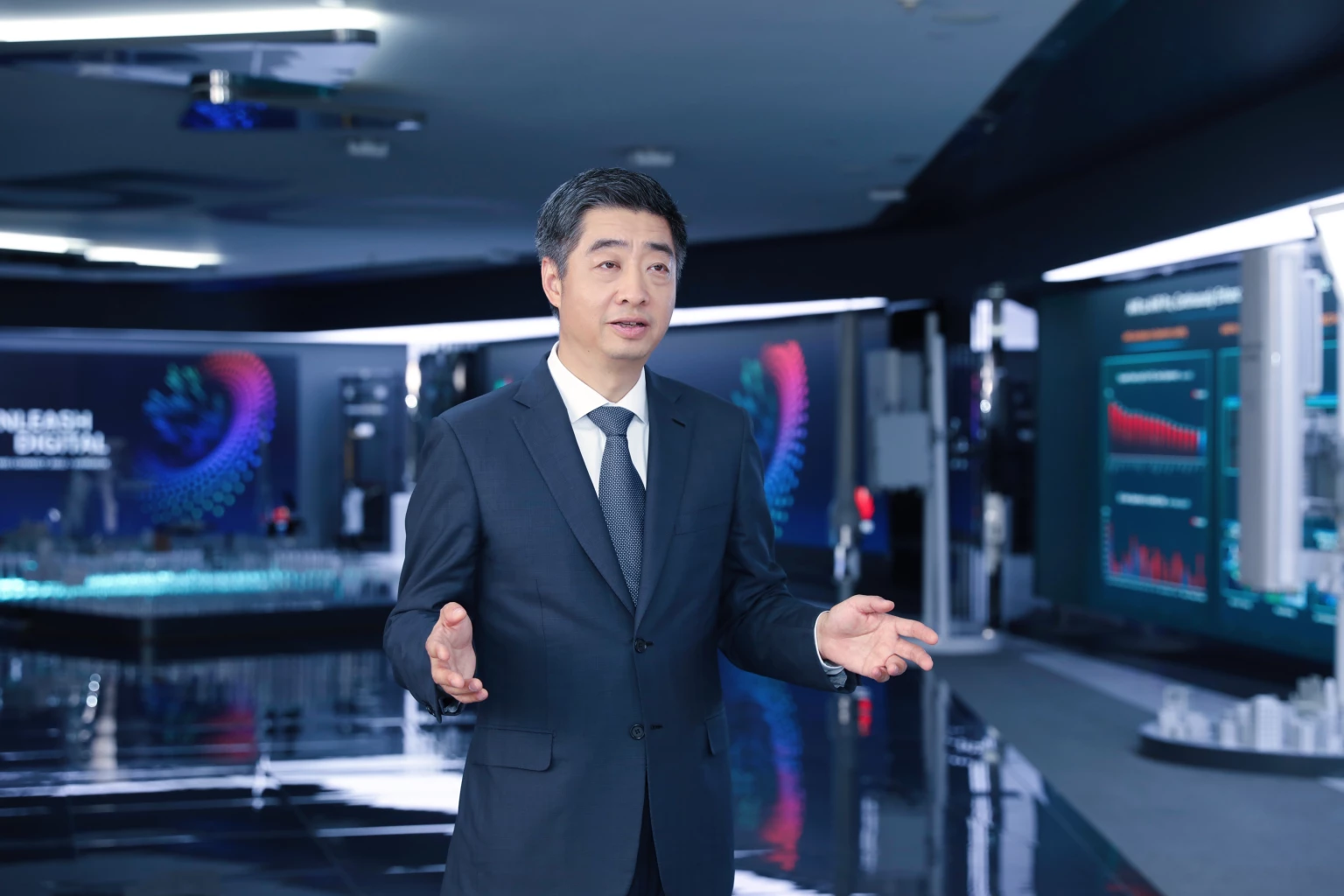
Ken Hu, Huawei’s Rotating Chairman, delivered a keynote speech at the opening ceremony of Huawei Connect 2022 on Monday (September 19) in Bangkok, emphasising the critical role of the cloud in leapfrogging development in this digital economy.
He outlined three ways in which the ICT ecosystem can assist in breaking down common barriers to digital transformation. The first step is to improve digital infrastructure, which includes more reliable connectivity and more powerful, diverse computing resources.
The second step is to assist organisations in going beyond simple cloud adoption and truly capitalising on the cloud, with a focus on advanced technology services that drive leapfrog development.
The third step is to create a digital ecosystem by collaborating with partner development, strengthening the digital talent pool, and providing more assistance to small and medium-sized enterprises (SMEs).
Over the last two years, GDP growth has been volatile. However, the global digital economy has seen consistent growth at more than 15 per cent in 2021. This has prompted many organisations to use next-generation digital technology to transform their operations and service offerings, Hu noted.
He also pointed out that there is no doubt cloud computing is the way of the future. Unfortunately, most organisations, particularly SMEs, limit the value of cloud computing to traditional benefits such as flexible infrastructure and resources.
Hu stated that Huawei, as a leading cloud technology company, recognised that it could not grow alone in this digital ecosystem. As a result, assisting its partners in realising the full potential of cloud technology will be critical to the long-term viability of the global economy.
He then gave an example of a successful case of Huawei’s cloud, the Pangu Drug Molecule Model, which uses Artificial Intelligence (AI) to aid in the adoption of pre-train foundation models for faster drug discovery, reducing the R&D cycle of lead drugs from years to one month. Hence, the hospital at Xi’an Jiaotong University can make super antibiotics at a lower cost and in less time.
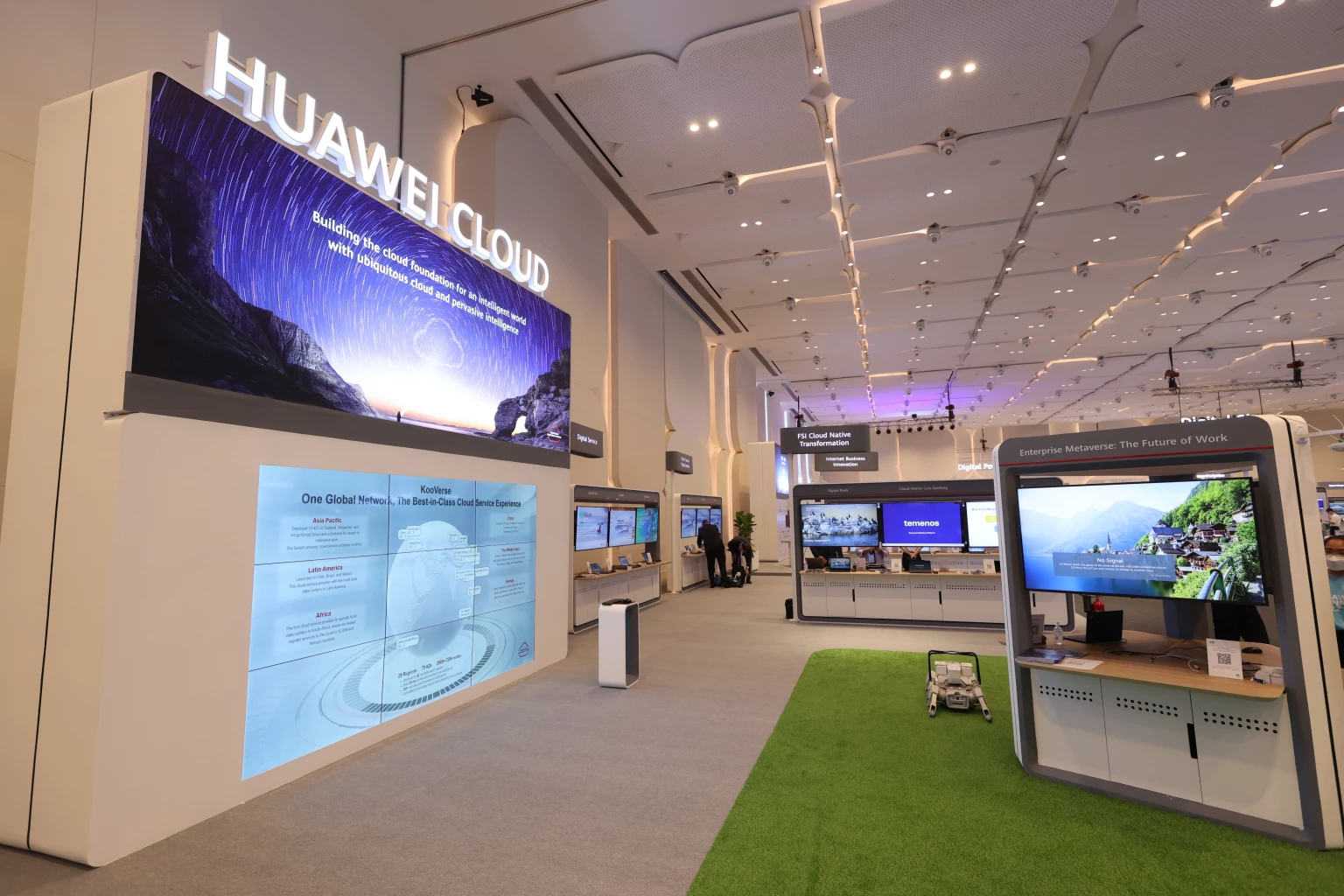
Meanwhile, Huawei Cloud CEO Zhang Ping’an revealed the launch of new Huawei Cloud Regions in Indonesia and Ireland at the event. By the end of 2022, Huawei Cloud will operate 75 availability zones in 29 regions around the world, expanding services to over 170 countries and regions.
“We connect data centres to data centres, and data centres to users, with high-speed backbone networks boosted by 1,700 carrier networks. This means you can seamlessly enjoy the best-in-class experience even for services such as real-time multimedia, gaming, and online classes,” said Zhang.
He emphasised that the cloud is the future that everyone is looking forward to. Huawei provides cloud services that include infrastructure, technology, and expertise.
“We build and maintain everything so you don’t have to build your own data centres. It only takes one click to obtain cloud-as-a-service at a lower cost and with a lower carbon footprint,” insisted Zhang.
In addition to its strong commitment to being a partner to all parties, Huawei used this special occasion to launch the “Go Cloud, Go Global” ecosystem plan. The plan is intended to accelerate the development of a global digital industry ecosystem for joint innovation and shared success, with a focus on “Everything as a Service”.
Huawei Cloud is committed to building the industry-leading platform for cloud innovations by focusing on “Everything as a Service”, Zhang said.
As part of these efforts Jacqueline Shi, President of Huawei Cloud’s Global Marketing and Sales Service, announced the global launch of more than 15 new advanced services, including Huawei Cloud CCE Turbo, Ubiquitous Cloud Native Service (UCS), Pangu wave model, DataArts LakeFormation, Virtual Live, CodeCheck and CloudTest, KooMessage, KooSearch, and KooGallery.
The event also highlighted two additional measures: the Huawei Cloud Startup Program and the Cloud Native Elite Club (CNEC) Asia-Pacific region.
Huawei Cloud Startup Program is the company’s global startup ecosystem strategy that aims to help startups migrate to the cloud in an agile manner by providing assistance in technology, marketing, and other areas.
Meanwhile, the Cloud Native Elite Club Asia-Pacific is a cloud community that aims to advance cloud native technologies and align the industry around their evolution in the region, as well as to provide a platform for global cloud native professionals to share and connect with one another.
The President of Huawei Asia-Pacific Region, Simon Lin, reaffirmed the company’s commitment to open collaboration and shared success. The company urged governments and businesses to collaborate more closely to cultivate local digital ecosystems that foster innovation partners, strengthen the talent pool, and support startups.
Lin also released the “Digital First Economy” white paper during his keynote speech at the opening ceremony, which delves into targeted policy suggestions for digital infrastructure construction and digital economy development in the Asia-Pacific region.
“The Asia-Pacific region is standing at the forefront of the global digital landscape,” said Lin. “Huawei is committed to becoming a key contributor to the digital economy in the region. We will keep supporting its digitalisation and sustainable development efforts, and building out the industry ecosystem.”
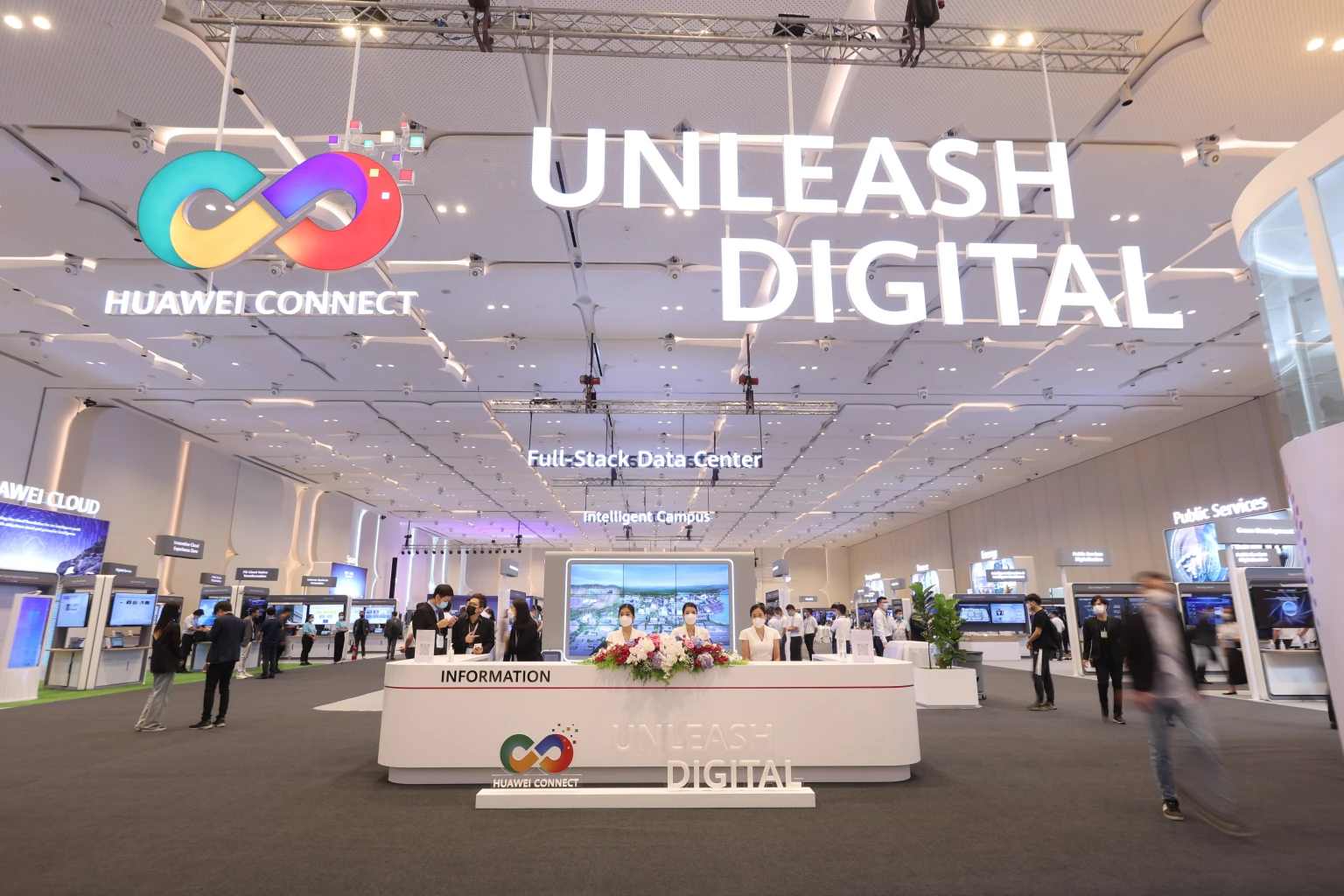
Huawei Connect 2022 is Huawei’s seventh annual global ICT industry flagship event. This year marks the first time the event has been held outside of China. The event’s theme this year is “Unleash Digital”, and it will bring together over 10,000 ICT industry leaders, experts, and partners from around the world to discuss how to more effectively unleash digital productivity, promote the digital economy, and strengthen digital ecosystems.
This three-day conference (September 19-21) in Bangkok is the first stop on the global tour of Huawei Connect in 2022. This year’s event, which includes two keynote sessions, six summits, and numerous breakout sessions and demos, delves into the challenges that governments and enterprises face at various stages of their digital transformation journey, Huawei’s advancements in digital infrastructure, and the company’s latest cloud services and ecosystem partner solutions.
HUAWEI CONNECT 2022 Begins Global Tour In Bangkok – “Unleash Digital”
MONDAY, SEPTEMBER 19, 2022
THE NATION
[Bangkok, Thailand, September 19, 2022] HUAWEI CONNECT 2022, Huawei’s 7th Annual Flagship Event For The Global ICT Industry, Began Today In Bangkok.
The theme of this year’s event is “Unleash Digital,” gathering over 10,000 ICT industry leaders, experts, and partners from around the world to explore how to more effectively unleash digital productivity, promote the digital economy, and build up stronger digital ecosystems.
At the event, Huawei shared the steps it’s taking to advance digital development across a wide range of industries, and released 15+ innovative cloud services for the global market.
Three initiatives to help all industries go digital
To kick off the event, Ken Hu, Huawei’s Rotating Chairman, delivered a keynote outlining three ways the ICT ecosystem can help break through common barriers in digital transformation:
Boost digital infrastructure, including more robust connectivity and stronger, more diverse computing resources.
Help organizations go beyond simple cloud adoption and truly make the most of cloud, focusing on advanced technology services that drive leapfrog development.
Build out local digital ecosystems, including partner development, strengthening the digital talent pool, and providing more support for SMEs.
GDP growth has been unstable over the past two years. However, the digital economy has seen consistent growth on a global scale – more than 15% in 2021. This has prompted many organizations to transform their operations and service offerings with next-generation digital technology.
“Going digital is clearly the right choice,” said Hu. “The demand is there, and so are the technologies. The world is unleashing digital productivity, and it’s happening right now.”
New Huawei Cloud Region in Indonesia, and 15+ new services
At the event, Zhang Ping’an, the CEO of Huawei Cloud, announced the launch of new Huawei Cloud Regions in Indonesia and Ireland. By the end of 2022, Huawei Cloud will operate 75 availability zones in 29 regions around the world, boosting services for more than 170 countries and regions.
Huawei Cloud and its partners also took this opportunity to launch the “Go Cloud, Go Global” ecosystem plan. With a focus on Everything as a Service, the plan is designed to accelerate the development of a global digital industry ecosystem for joint innovation and shared success.
Focusing on Everything as a Service, Huawei Cloud is committed to building the industry-leading platform for innovations on the cloud. As part of these efforts, Jacqueline Shi, President of Huawei Cloud’s Global Marketing and Sales Service, announced the global launch of 15+ new advanced services, including Huawei Cloud CCE Turbo, Ubiquitous Cloud Native Service (UCS), Pangu wave model, DataArts LakeFormation, Virtual Live, CodeCheck and CloudTest, KooMessage, KooSearch, and KooGallery.
Building out local ecosystems for shared success
At the event, Huawei reinforced its commitment to open collaboration and shared success. The company called for governments and enterprises to work more closely together to cultivate local digital ecosystems that build up innovation partners, strengthen the talent pool, and support startups.
In his keynote, Simon Lin, the President of Huawei Asia-Pacific Region, released the Digital First Economy whitepaper that delves into targeted policy suggestions for digital infrastructure construction and digital economy development in the Asia-Pacific region.
“The Asia-Pacific region is standing at the forefront of the global digital landscape,” said Lin. “Huawei is committed to becoming a key contributor to the digital economy in the region. We will keep supporting its digitalization and sustainable development efforts, and building out the industry ecosystem.”
At the event, a distinguished group of government representatives from the Asia-Pacific region also took the stage to share the progress they have made with advancing digital economy development in their respective countries. These include H.E. Supattanapong Punmeechaow, Thailand’s Deputy Prime Minister and Minister of Energy; H.E. Chaiwut Thanakamanusorn, Minister of Digital Economy and Society of the Kingdom of Thailand; H.E. Airlangga Hartarto, Coordinating Minister for Economic Affairs of the Republic of Indonesia; H.E. Muhammad Abdul Mannan, Planning Minister of Bangladesh; H.E. David Almirol, Undersecretary of E-Government, Department of Information and Communications Technology, Philippines; and Dr. Yang Mee Eng, Executive Director of the ASEAN Foundation.
The three-day conference in Bangkok is the first stop on HUAWEI CONNECT’s global tour in 2022. Featuring two keynote sessions, six summits, as well as multiple breakout sessions and demos, this year’s event dives into the challenges that governments and enterprises face at all stages of their digital transformation journey, Huawei’s advancements in digital infrastructure, as well as the company’s latest cloud services and ecosystem partner solutions.
BTS Joins Hands With Malaysia For Light Rail Transport Project
MONDAY, SEPTEMBER 19, 2022
THE NATION
On September 15, Keeree Kanjanapas, Chairman Of BTS Group Holdings Plc And Kavin Kanjanapas, BTS Group Holdings CEO And Chief Officer Of MATCH Business, Together With Company Executives Met With Dato’ Avinderjit Singh A/L Harjit Singh And Dato’ Siew Ka Wei In Malaysia.
During the meeting, both parties exchanged views and progress in the feasibility study of the light rail transport system project that will connect Singapore’s RTS (Rapid Transit System) Link to Johor Bahru town in Malaysia. The project also aims to promote transit-oriented development in the communities around the transit system in Johor Bahru.
Since March 2022, BTS Group Holdings Plc has entered the Heads of Agreement with Sinar Bina Infra Sdn. Bhd., Ancom Berhad, Nylex (Malaysia) Berhad and LBS Bina Group Berhad to jointly operate the light rail transport system linking Singapore RTS Link to Johor Bahru, Malaysia. The project is part of the company’s Move business plan that BTS has expertise in and has been operating continuously in the past 20 years through the BTS train system, which has now expanded to cover a distance of 135 kilometres, including routes under construction namely Pink Line (Kae Rai-Min Buri) and Yellow Line (Lat Phrao – Samrong).
BTS Group Holdings aims to provide door-to-door services to passengers via a variety of transport modes covering rail, road, marine and air channels to create a perfect journey from the first to last steps in both Thailand and other countries. The company believes that the light rail transport system will help complete the transport need of passengers in Singapore and Malaysia, in compliance with the objectives of Move business which focus on providing convenient and safe transport that improve people’s quality of life.
Hurricane Fiona Brings Flooding To Eastern Dominican Republic
TUESDAY, SEPTEMBER 20, 2022
After Triggering A Total Power Outage In Puerto Rico, Damage From Hurricane Fiona Was Evidenced By Boats And Debris Washed Ashore In The Town Of Ponce On Monday.
Resident, Tito Alman, told Reuters no one expected this much devastation on an island used to hurricanes.
The Category 1 hurricane will likely become a Category 3 as it moves across warm Caribbean waters toward the Turks and Caicos.
After strafing Puerto Rico, Fiona made landfall in the Dominican Republic near Boca Yuma at 3:30 a.m. local time, according to the NHC. The centre of the storm had reached the northern coast of Hispanola before noon.
In Puerto Rico, a territory of the United States, residents were still facing strong winds, frequent lightning and heavy rain.
Fiona made landfall there on Sunday afternoon, dumping up to 30 inches (76.2 cm) of rain in some areas.
The storm comes five years after the U.S. Caribbean territory was ravaged by Hurricane Maria, which triggered the worst U.S. power blackout.
Nearly 90% of Puerto Rico remained without power on Monday, according to Poweroutage.us. Officials said it would take days to reconnect the whole island of 3.3 million people.
Major Quake Strikes Mexico On ‘Cursed’ Anniversary Date
TUESDAY, SEPTEMBER 20, 2022
A Powerful Earthquake Struck Western Mexico On Monday Killing At Least One Person, Damaging Buildings, Knocking Out Power, And Sending Residents Of Mexico City Scrambling Outside For Safety.
One person was killed in the Pacific port of Manzanillo when a department store roof collapsed on them, the government said. Authorities also reported damage to several hospitals in the western state of Michoacan near the epicentre, which was in a sparsely populated part of Mexico. A person was injured by the falling glass at one of the hospitals, the government said.
The magnitude 7.6 quakes hit shortly after 1 p.m. (1800 GMT) near the western coast and close to the Michoacan border with the state of Colima – where Manzanillo is located, the U.S. Geological Survey (USGS) said.
The quake was relatively shallow, at only 15 km (9 miles) deep, which would have amplified its impact.
Mexico City Mayor Claudia Sheinbaum said there were no immediate reports of major damage in the capital after the tremors, which rumbled through Mexico on the same day as destructive quakes battered the country in 1985 and 2017.
“These things are inexplicable,” Martha Coronado, an office worker in the Cuauhtemoc borough of the city, said of the quake’s timing as helicopters flew overhead, surveying the city.
The National Autonomous University of Mexico (UNAM), one of the country’s most prestigious seats of higher learning, said there was no scientific explanation for three major quakes on the same day and attributed it to pure coincidence.
Thousands of people were killed in a Sept. 19, 1985 earthquake, and more than 350 died in another Sept. 19 quake in 2017.
Before first announcing the death in Manzanillo, President Andres Manuel Lopez Obrador had said there was material damage near the epicentre. Images posted on social media showed buildings badly damaged.
Mexican authorities said the seismic alert had sounded nearly two minutes before the quake struck, giving residents time to evacuate their homes.
Still, some people in the capital struggled to grasp it was a real quake as the government had already sounded the alarm earlier in the day as a practice exercise commemorating the past earthquakes on the same day.
With Pomp And Sorrow, World Bids Final Farewell To Queen Elizabeth
TUESDAY, SEPTEMBER 20, 2022
Britain And The World Paid A Final Farewell To The Nation’s Longest-Reigning Monarch, In A Dazzling Show Of Pomp And Ceremony On Monday.
Queen Elizabeth’s coffin was taken from Westminster Abbey to Wellington Arch in London after the state funeral, where it was transferred to a hearse to begin its journey to Windsor.
There, the procession travelled along the Long Walk past thousands of people.
Queen Elizabeth’s black pony Emma watched the monarch’s funeral procession pass by on the grounds of Windsor Castle and the queen’s two corgis, Sandy and Muick, were also brought out for the arrival of the coffin at the castle.
At St George’s Chapel in Windsor Castle, some 800 guests attended a more intimate committal service which concluded with the crown, orb and sceptre – symbols of the monarch’s power and governance – being removed from the coffin and placed on the altar.
Then Queen Elizabeth’s coffin was lowered into a vault at Windsor Castle, her final resting place.
As the congregation sang “God Save the King”, King Charles, who faces a huge challenge to maintain the appeal of the monarchy as economic hardship looms in Britain, appeared to be fighting back tears.
It was in the same vast building that the queen was photographed alone, mourning her husband of 73 years, Prince Philip, during the pandemic lockdown, reinforcing the sense of a monarch in synch with her people during testing times.
Later on Monday evening, in private family service, the coffins of Elizabeth and Philip, who died last year aged 99, were moved from the vault to be buried together in the same chapel where her father, King George VI, mother, and sister, Princess Margaret, also rest.
Windsor Castle is the resting place of more than a dozen English and British kings and queens.
Elizabeth died on Sept. 8 at Balmoral Castle, her summer home in the Scottish highlands.
Carnival Magic’s Record-Breaking Theme Park Lights Up Phuket
Step into the bright lights of ‘Carnival Magic’. The world’s first Thai carnival theme park opens its doors in Phuket on the 20th of September, sparking your imagination and celebrating the vibrant cultural heritage of Thailand.
World Leaders And Royalty Pay Their Last Respects To Queen Elizabeth II Amid Scenes Of Pageantry As Britain’s Longest-Serving Monarch Is Laid To Rest.
London’s major streets and underground stations away from central areas where the state funeral is being held were eerily quiet on Monday as the usually bustling city came to a standstill for the funeral of Queen Elizabeth II.
In the business district of Canary Wharf, dozens of people gathered around screens dotted around to watch the funeral and the procession together.
On London’s Regent street near the city’s iconic Piccadilly Circus, shops were shuttered as the country observes a public holiday that was declared for the occasion.
Leaders and royalty from all over the world have gathered in London to mourn Queen Elizabeth while millions will watch on television at home, the first funeral of a British monarch to ever be televised.



 He outlined three ways in which the ICT ecosystem can assist in breaking down common barriers to digital transformation. The first step is to improve digital infrastructure, which includes more reliable connectivity and more powerful, diverse computing resources.

 Huawei Cloud is committed to building the industry-leading platform for cloud innovations by focusing on “Everything as a Service”, Zhang said.
 Huawei Connect 2022 is Huawei’s seventh annual global ICT industry flagship event. This year marks the first time the event has been held outside of China. The event’s theme this year is “Unleash Digital”, and it will bring together over 10,000 ICT industry leaders, experts, and partners from around the world to discuss how to more effectively unleash digital productivity, promote the digital economy, and strengthen digital ecosystems.