Boonsithi Takes Over As SPI Chairman After Somkid’s Resignation
THU, SEPTEMBER 15, 2022
Saha Group Chairman Boonsithi Chokwatana Has Taken Over As Chairman Of Saha Pathana Inter-Holding Plc (SPI) Following The Resignation Of Somkid Jatusripitak.
Boonsithi, 85, resigned as chairman of Thai President Foods Plc, the producer of Mama instant noodles, to assume the position at SPI. The changes have been in effect since September 7.
Saha Group, Thailand’s largest consumer product conglomerate, was founded by Boonsithi’s late father Thiam eight decades ago.
The group has more than 200 companies under its umbrella, and reported annual revenue of 289 billion baht before the Covid-19 crisis struck in 2020.
Somkid, a former finance minister, had served as SPI chairman and director before his resignation on August 31.
He is expected to be the prime ministerial candidate of the new Sarng Anakot Thai Party at the next general election.D
Let’s Not Mistake Corporate Social Responsibility For Corporate Decency
BY LINE : THE NATION
THU, SEPTEMBER 15, 2022
When We Talk About Companies “Doing The Right Thing”, We Often Think Of Big Initiatives Or Sweeping Gestures—An Ambitious Environmental Program Here, A Charity Donation There. While Businesses Should Be Doing Their Best To Give Back To Society, The Mere Existence Of These Highly Visible, External Actions Doesn’t Always Tell Us About Who The Company Is At Its Core. Sure, Maybe They Are Making Bold Moves To Combat Climate Change, But They Could Also Suffer From An Exceedingly Toxic Internal Culture, Which May In Turn Affect The Lives Of Employees And Their Families.
Decency is something more fundamental. Decency reveals itself both in outwardly visible actions as well as in ways that are much more subtle; it’s about always trying to do the right thing by one another, even when no one’s looking. As we emerge from the turmoil of the pandemic, decency will be a key differentiator for businesses. A lot has been said about the “Great Resignation”, but from what I’ve seen in Asia Pacific, I think of it more as a “Great Re-evaluation”—a moment in time where people are questioning just how they want to spend their working lives. More people are trying their hands at becoming entrepreneurs, or they’re looking for more fluid working arrangements, or a role that will be more fulfilling. In this kind of labor market, a corporate culture of decency can be the tipping point that brings in a new hire or retains an existing employee.
However, given the somewhat intangible nature of decency, fostering it in a corporate setting requires a nuanced approach, and an appreciation of the fact that there’s no “one size fits all” way to do it.
Encourage decency at the top, but don’t make it “top-down”
It’s all well and good to say that we should value decency, but it’s not something that can be mandated by edict. It needs to start with a company’s leaders setting the tone, and then ensuring that this outlook is reflected at all levels of the company, whether it’s in hiring practices, people management, or conflict resolution. When employees feel that they’re being treated with respect and decency, they’re also more likely to act accordingly. Ultimately, decency begets decency.
While these values may need an instigator, they shouldn’t be forced. Genuine cultural change can be slow and requires dialogue, leading by example, and acknowledging complexities. But once it permeates an organization, it’s much more likely to self-perpetuate and stay in place.
Reward cooperation, not competition
Perhaps one of the biggest impediments to a culture of decency is internal competition between employees. It’s a natural human trait that can be compounded by promotion processes that rely heavily on KPIs. The behaviors that foster good relations between employees, such as cooperativeness, compassion, and supportiveness, are more difficult to quantify, but if you care about a workplace where decency is valued, these qualities need to be recognized and rewarded.
This is not to say that these are the only qualities that we should focus on when we’re looking to promote someone, but we also need to recognize that personal ambition and the ability to cooperate aren’t mutually exclusive. Speaking from my own experience at Mastercard, we find that employees at all levels of the company do best when helping each other be great. In fact, they can recognize others for it through an in-house platform where employees are able to write notes of appreciation for their colleagues’ acts of support and kindness—a demonstration of our Decency Quotation, as we call it, in action.
This culture of collaboration and collective growth allows us to be externally—rather than internally—competitive. An employee culture of “sharp elbows” tends to result in a battered and bruised workforce, rather than one that feels supported and unified in its goals.
Make decency a foundation—not just an add-on
In a time of upheaval, growing internal and external expectations, and changing cultural norms, many corporate entities are rushing to demonstrate their awareness and elevate how they practice inclusion and care. While commendable, doing right by employees (and communities at large) should be a consistent guiding principle, rather than a sudden response to the changing tides of culture and other social forces. An enduring ethos of decency, regardless of what’s happening in the world more broadly, promotes a sense of trust and safety internally and lends greater credence to companies’ efforts to tackle big societal issues. At its most fundamental level, a foundation of decency also means that complex issues can be discussed openly, with empathy, in an environment where everyone can have their voices heard.
Decency shouldn’t require inducements
As a company focused on building a sustainable economy where everyone can prosper, at Mastercard we’ve found that a greater sense of empathy among our employees allows us to have a more open-minded, human-centric approach when designing our solutions. In a safe workplace where employees’ contributions are respected, they’re also more likely to embrace new ideas and innovate in ways that drive true business impact.
We all want to be treated decently. To say that this very central trait doesn’t need to be encouraged in our offices and in our boardrooms is to say that decency isn’t important in the places where we spend a great deal of our time and effort. Quiet, modest decency has been overlooked for too long in the business world, but if we want to create enduring, happy teams, that has to change. Don’t be decent because it’s good for the company—be decent because it’s good for us all as humans.
By Amanda Gervey, Senior Vice President, Human Resources, Asia Pacific · Mastercard
Thailand Post Branches In Bangkok, Suburbs To Stay Open Until 8pm Or Midnight
BY LINE : THE NATION
THU, SEPTEMBER 15, 2022
Facing Stiff Competition From Private Logistics Operators, Thailand Post Will Extend The Working Hours Of Its Post Offices In Bangkok And The Suburbs To 8pm, While Some Will Stay Open Even Until Midnight, Its President Said On Thursday.
Danan Suphatthaphan said the extended office hours of major branches in Bangkok and suburban areas are designed to cope with the changing lifestyles of city residents.
He said most residents go out after office hours, so Thailand Post decided to extend its working hours to keep pace.
The demand for logistics services has been increasing in Bangkok and the suburbs because of the growth in e-commerce business, Danna noted.
As a result, all Thailand Post offices in Bangkok and surrounding provinces will be open every day with no off-days, he said.
According to him, Thailand Post cares about customers in remote areas too, so it has opened more than 3,300 branches in all provinces. These branches operate from Monday to Saturday.
“Thailand Post will not stop developing its services so that all branches will conveniently meet new lifestyle demands of our customers,” Danan added.
Norway Is Unfazed By Soaring Electricity Prices Amid The Russia-Ukraine War As The Country Can Produce Clean Electricity On Its Own, The CEO Of Norwegian Oil Company OKEA ASA Said.
That’s good news for Thai energy giant Bangchak Corporation, which is poised to become the largest shareholder in OKEA after a US$535 million deal to buy Shell’s stakes in Norway’s Draugen and Gjoa fields.
OKEA CEO Svein J Liknes said the hike in electricity prices due to the Russia-Ukraine conflict had caused less impact on Norway than in other European countries that were reliant on importing gas.
He added that Norway is the biggest oil and gas supplier in Europe as most of its domestic production is exported.
According to the Norwegian Carbon Dioxide Capture, Transport and Storage Research Centre, 88 per cent of Norway’s power supply comes from hydropower, followed by wind power (10 per cent), and others including solar and thermal energy (2 per cent).
“Norway was only forced to increase gas production capacity to meet rising consumers’ demand amid the conflict,” he said.
He also expected Norway’s gas price to remain high until summer next year, depending on global demand and supply.
However, world energy trends were changing, Liknes said.
“Demand for gas and nuclear will soon replace coal,” he said, adding that trend would shift to renewable energy around 2030 to 2035.
Norway is targeting carbon neutrality by 2030 and net-zero emissions by 2050.
OKEA has plans to extend the lifetime of its assets, exploring for recoverable resources and maintaining efficient operations to minimise the carbon footprint from production.
The company is cooperating with Thai conglomerate Bangchak on oil and gas exploration and production, focusing on reducing carbon dioxide emissions in overall operations.
Poundbury Suburb Showcases King Charles’s Vision Of British Life
THU, SEPTEMBER 15, 2022
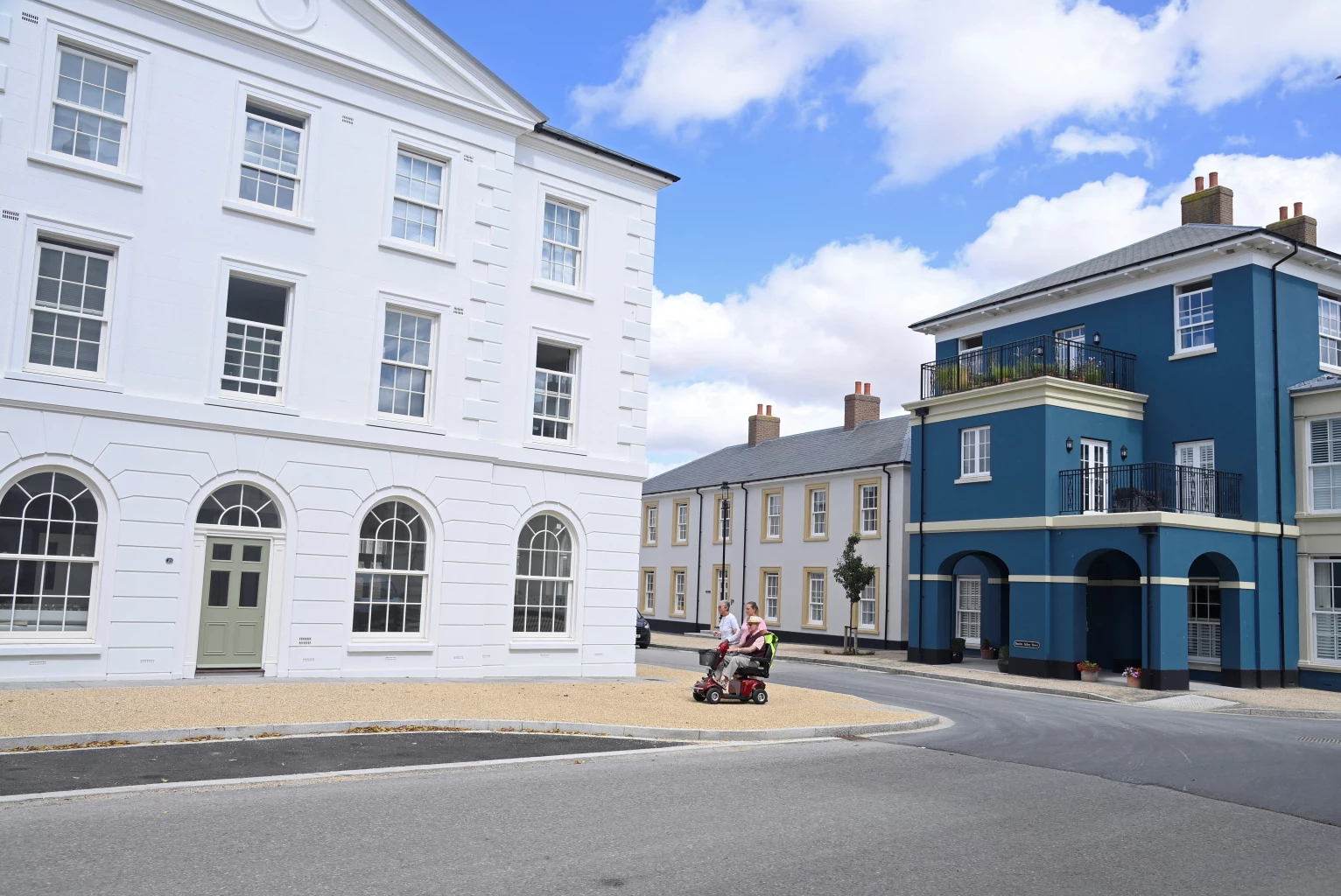
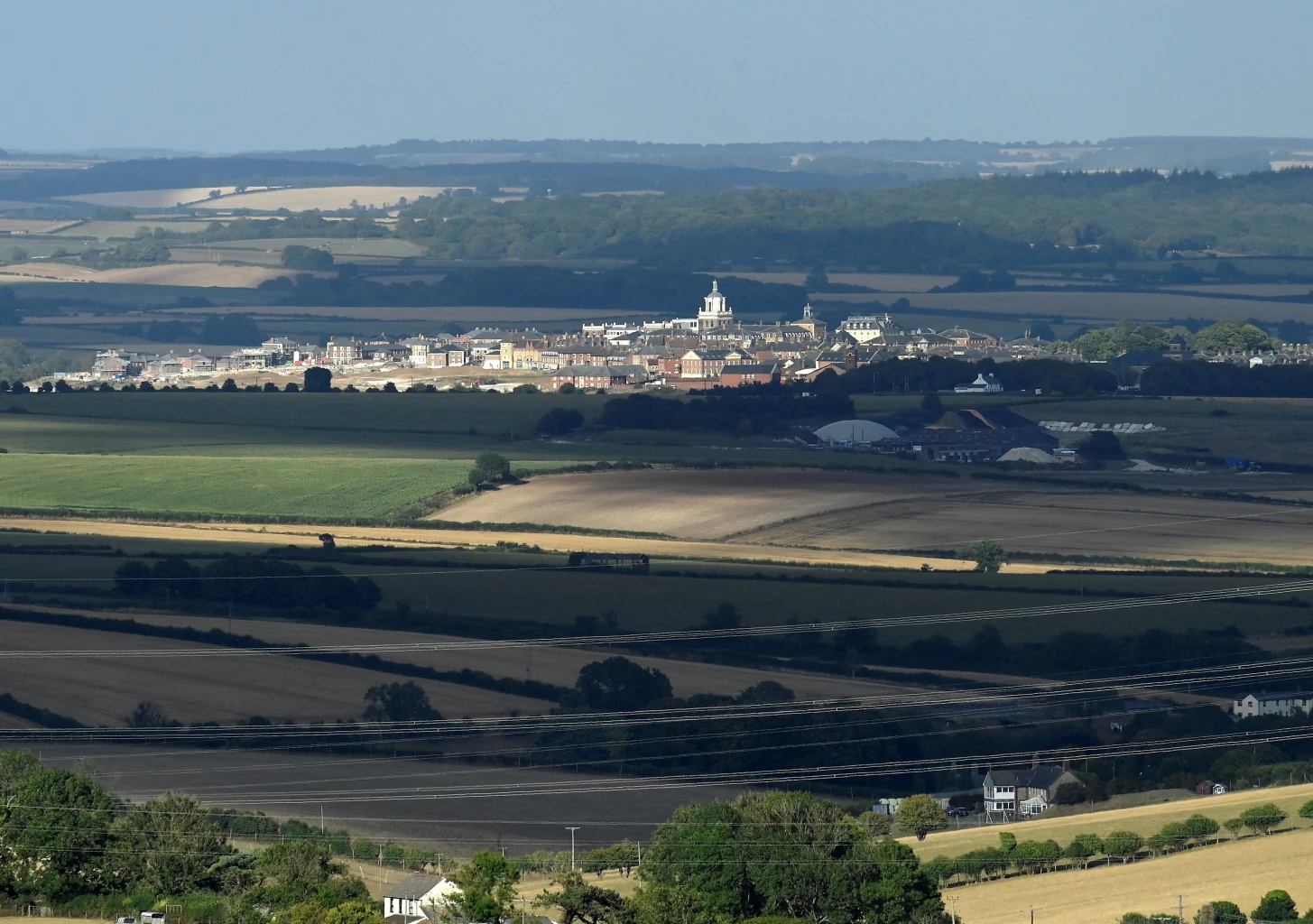
Anyone Seeking Insights Into The Values Of King Charles, Who As Prince Caused Controversy By Expressing Strong Opinions And Sometimes Seeking To Act On Them, Can Head To The Quaint Urban Development Of Poundbury, His Pet Project.
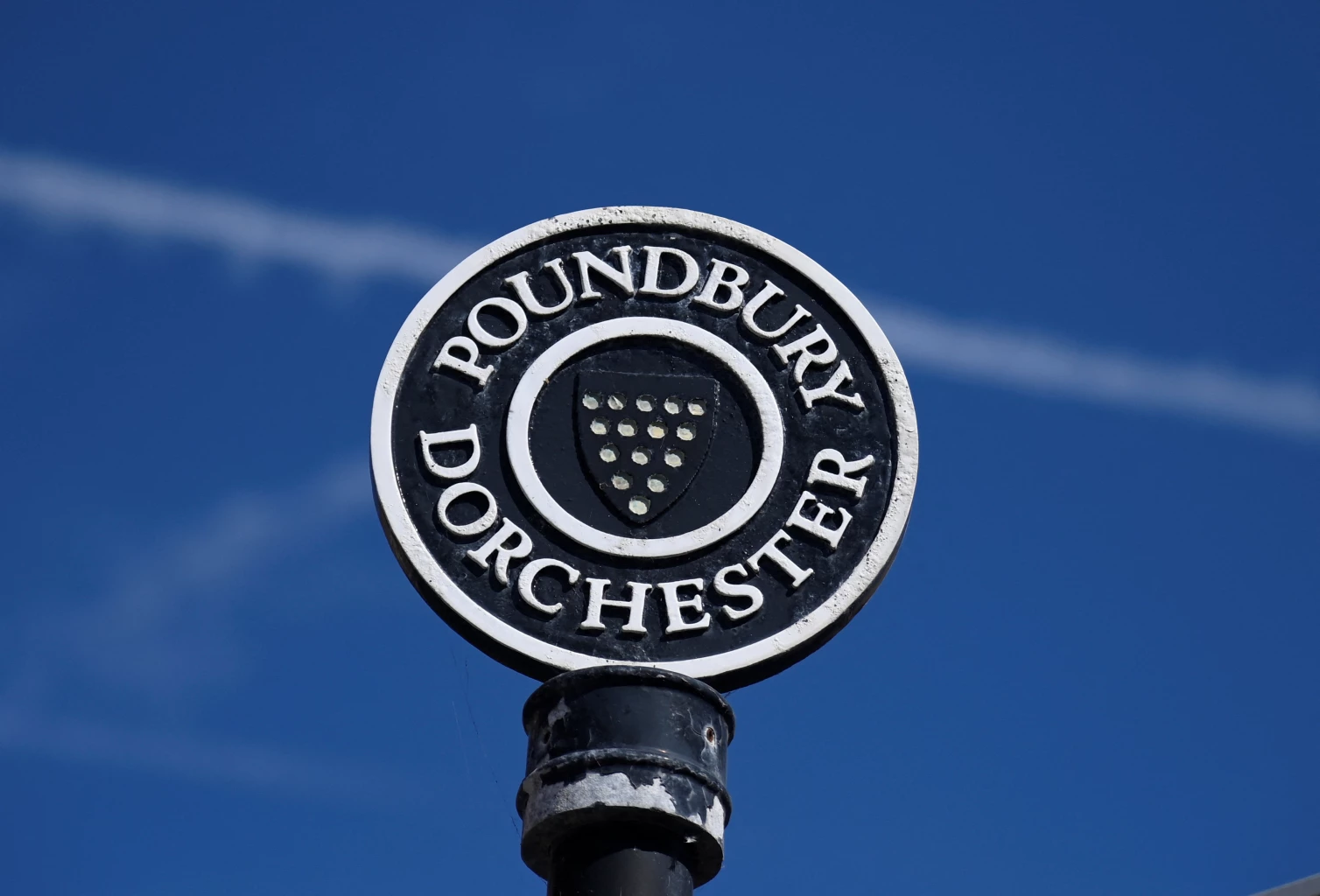
An extension to the town of Dorchester in southwest England, the community was designed according to his architectural principles and demonstrates how different his approach to public life has been from that of his mother, Queen Elizabeth, who died on September 8, aged 96.
The late queen gave little away about her opinions and preferences and was careful to avoid controversy.
As Prince of Wales and Duke of Cornwall, Charles shared his views on subjects that interest him such as architecture, environmental protection and alternative medicine.
He signalled in his first address as king last week that he would be more reserved from now on, but Poundbury stands as a physical, populated testimonial to his lifelong passions.
The land on which Poundbury is built is part of the Duchy of Cornwall.
As Duke of Cornwall before ascending to the throne, Charles owned the land, so when it was designated for the expansion of Dorchester, Charles saw an opportunity to put his ideas about architecture into practice, commissioning architects and developers to realise his vision.
“I was told it was completely uneconomic. So everybody was against it, from the Treasury to everybody else,” Charles told an ITV documentary in 2019.
“In the end, I was determined to stick to my guns. I got on regardless of the endless criticism and carping and shouting and screaming. Because I’ve always believed in the long term.”
Critics say that with its lack of road signs and oddly curved streets, Poundbury is more like a toy town than a real place, betraying an amateurish approach.
But others admire Charles for sticking to his convictions and facing down naysayers for over 30 years, to create a community that is popular with its roughly 4,500 residents and attractive to newcomers.
Construction of Poundbury began in 1993 after Prince Charles had set out his ideas in the 1989 picture book “A Vision of Britain: A Personal View of Architecture”.
He expressed his preference for “buildings that have grown out of our architectural tradition and that are in harmony with nature,” deriding post-war architecture and modern urban planning for its “sheer unadulterated ugliness and mediocrity.”
A single road sign, indicating that roundabout rules apply to the area around a statue of Charles’s maternal grandmother, Queen Elizabeth the Queen Mother, is the one concession made to traffic signage.
Along with the wonky roads, the absence of signs is supposed to force drivers to slow down and give way to pedestrians.
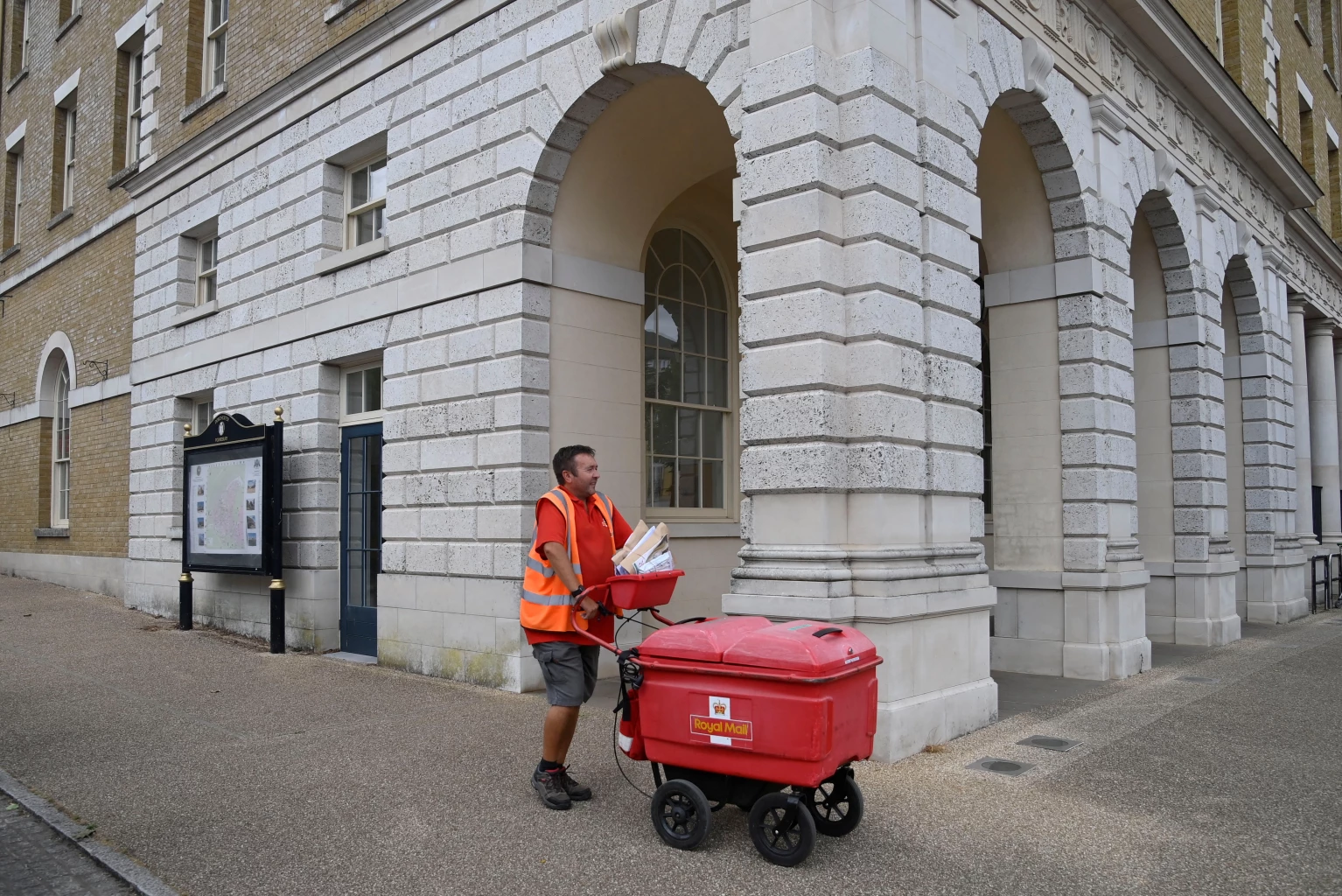
The unusual approach to traffic management, along with the variety of building styles that draw on different aspects of Britain’s architectural heritage, contribute to Poundbury’s distinctive look.
Businesses are integrated into the design, with about 2,500 jobs in shops, cafes, offices and factories.
A local chocolate maker is among the development’s success stories.
For a time, a cereal manufacturer clogged up the genteel streets with lorries, but it has since moved.
Despite initial scepticism, locals are warming to Poundbury, said 64-year-old Chris Moyle, from nearby Weymouth, whose mother is considering moving to the development.
Rising house prices show Poundbury’s appeal, though critics say it is unaffordable for many people.
The average property price in Poundbury over the last year was over 400,000 pounds ($463,000), according to property website Rightmove.
The Duchy of Cornwall office which manages the development says it meets official targets for social housing.
Local councillor Richard Biggs said the Poundbury has a “Marmite effect” on most people, referring to a famously divisive yeast spread that people tend to either love or hate.
Biggs told Reuters that while some things have “worked brilliantly” others have been less effective as the vision of the king and the architect’s clashes with planning rules and restrictions.
With Charles becoming king, his son William now succeeded him as Duke of Cornwall and comes into possession of the land.
William has not shown the same interest in architecture previously, and planners expect no interference from him as the building continues.
Poundbury’s former estate director, Simon Conibear, said that despite small modifications to the original plan, the development was on course to being completed while upholding the king’s original principles.
President Ferdinand Marcos Jr Has Approved The Import Of Up To 150,000 Metric Tonnes (MT) Of Sugar To Address A Shortage Of Supply And Curb Rising Prices In The Philippines.
Half of the total import, or 75,000 MT, would be allocated to industrial users or companies using sugar in their manufacturing process, while the other half would be given to consumers or the market, according to the Sugar Regulatory Administration (SRA) website.
“After due consultation, stakeholders in the sugar industry have submitted their respective positions and letters of endorsement recognising the need for an importation programme for crop year 2022 to 2023,” an order signed by Marcos and other Department of Agriculture and SRA officials dated September 13 said.
Before the order, there were controversies involving sugar imports after the president stopped the SRA’s Sugar Order No 4, which was signed on his behalf and mandated the import of 300,000 MT of sugar amid an impending shortage.
Marcos contradicted the order, saying that while there may be a need to import sugar, it would definitely be lower than 300,000 MT. The current administration has vowed to investigate the issue, saying Department of Agriculture undersecretary for Operations Leocadio Sebastian and other DA and SRA officials who signed Sugar Order No 4 are under investigation.
Panels in both the House of Representatives and the Senate are currently investigating the issue. After the revelation of an attempt to import sugar, there have been assessments that the shortage may be artificial, considering that some inspections have shown sugar being stocked in warehouses.
Also, a cargo vessel carrying imported sugar was stopped by the Bureau of Customs at a Subic port due to allegations that the import documents presented were merely recycled.
The Malacañang Palace said “heads may roll” at the bureau after a possible “attempt to smuggle over 7,000 metric tonnes of sugar into the country”.
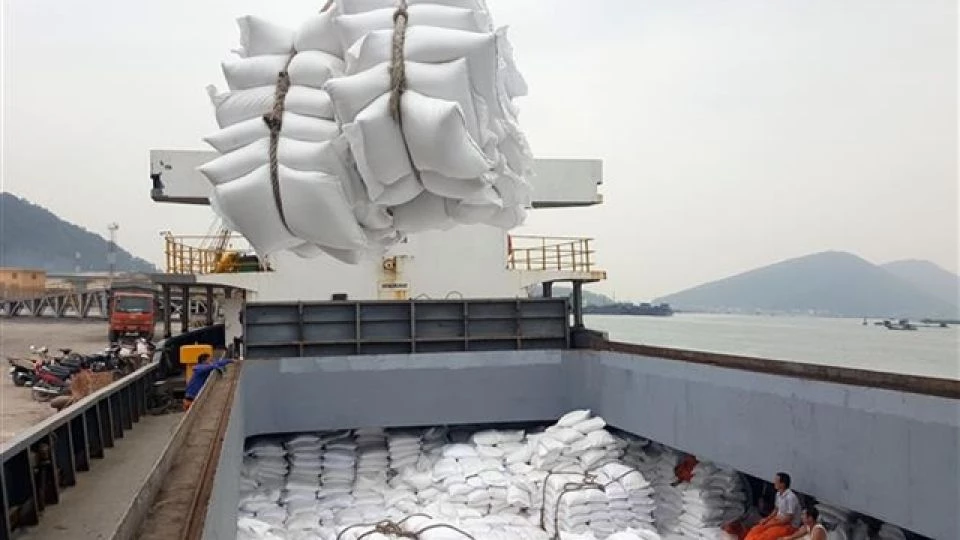
With India’s Recent Rice Export Restrictions, Vietnamese Exporters Expect To Increase Shipments And Hike Prices, Industry Insiders Have Said.
Nguyen Quang Hoa, director of Duong Vu Co Ltd (Long An Province), said India has imposed a 20 per cent export tax on the grain and banned shipments of broken rice to soften domestic prices following a significant decline in production due to a poor monsoon.
The move would affect the global market for one of the most commonly eaten staple foods amid a surge in commodity prices following the prolonged Russia-Ukraine conflict.
It would also encourage buyers to shift to rivals such as Vietnam and Thailand, which have been struggling to increase exports and prices, he said.
“Vietnamese rice exporters are holding off on deals, expecting the price to rise.”
Nguyen Van Don, director of Viet Hung Co Ltd (Tien Giang Province), said the prices of rice of all kinds have already gone up by an average of VNĐ300 per kilo compared to before the Indian restrictions.
Nguyen Van Hieu, export director of Loc Troi Group, said shipments of the grain are also expected to increase in the remaining months’ thanks largely to high demand from countries such as the Philippines, China and the EU.
The prolonged Russia-Ukraine conflict has led to a shortage of wheat and escalating food prices in the EU. European and South American countries are also in the midst of production difficulties.
To make up for this shortfall, European countries are likely to buy rice from Vietnam and other rice producers, according to Hiếu.
Nguyen Dang Nghia, director of the Southern Centre for Soil Fertiliser and Environmental Research, said global demand for rice is set to keep rising this year.
Deputy Minister of Agriculture and Rural Development Phung Duc Tien said Vietnam is expected to export 6.5- 6.7 million tonnes in 2022 for $3.3 billion.
Buyers shift to Viet Nam
B.V. Krishna Rao, president of the All India Rice Exporters Association, has been quoted by Reuters as saying: “The [export] duty will affect white and brown rice, which account for more than 60 per cent of India’s exports.
“With this duty, Indian rice shipments will become uncompetitive. Buyers will shift to Vietnam and Thailand.”
India accounts for more than 40 per cent of global rice exports and competes with Vietnam, Thailand, Pakistan, and Myanmar in the global market.
Its exports hit a record 21.5 million tonnes last year, more than the combined volumes of the next four largest exporters, Thailand, Vietnam, Pakistan, and the US.
Vijay Setia, former president of the All India Rice Exporters Association, told the Indian Express newspaper, “A 20 per cent duty is not going to render Indian rice uncompetitive.”
He said India currently exports 5 per cent broken white rice for $340 a tonne (as compared to $380 for Pakistan, $395 for Vietnam and $430 for Thailand).
India exports rice to more than 150 countries, and so any reduction in shipments by it would increase food prices, which are already too high due to drought, heat waves and the Russia- Ukraine conflict.
Ukraine and Russia are also two major suppliers of wheat, whose global prices have risen substantially recently.
In its August report, the US Department of Agriculture (USDA) lowered its global rice production forecast for the 2022-23 crop to 512.4 million tonnes, down 2.3 million tonnes from its original forecast and 1.2 million tonnes compared to the previous crop.
But it increased projections for global consumption following the crop by up more than two million tonnes.
Hero Dog’s Death Reignites Debates On Animal Cruelty
THU, SEPTEMBER 15, 2022
With Rising Awareness Of Animal Rights In South Korea, There Has Been A Series Of Efforts To Cover The Legal And Systematic Blind Spots Concerning Cruelty Against Animals.
Boksun was once hailed as a hero for helping save her owner while he was experiencing a stroke three years ago.
Last month, she was found bleeding heavily at her home in Jeongeup, North Jeolla Province, having been brutally injured by an abuser. Her owner took her to a vet, but after learning about the hefty medical costs, gave up on saving her. She was later found dead inside a refrigerator of a dog meat restaurant.
The tragic story of Boksun, made public by a local animal rights group, raised some hard questions about how South Korea treats animals. Between animal cruelty and the dog meat trade to a money-spinning pet industry and an ever-growing number of households living with pets, where does the country really stand?
Animal abuse rising but rarely punished
Last week, the Beagle Rescue Network, which reported Boksun’s case to the public, asked police to investigate the initial attacker as well as the dog’s owner for animal abuse. It said that the unidentified owner, too, should be held responsible for the dog’s death, claiming that the person handed over Boksun, who was still alive, to a dog meat trader. The dog owner refuted the claim, saying Boksun was already dead by that time.
The debate over the owner’s liability aside, animal abusers in South Korea often get away with fines, if ever convicted, although the Animal Protection Act prescribes maximum three-year imprisonment for animal cruelty.
According to data obtained by the office of Rep. Song Ki-hun of the opposition Democratic Party of Korea, only 2.9 per cent of a total of 4,221 persons accused of abusing animals between 2017 and March this year were indicted for a full trial.
About 47 per cent did not face any criminal charges at all, while 32 per cent of the accused were subjected to a summary judgement – a procedure in which the court, without a full trial, rules on a case of simple or minor subject matter typically resulting in a fine or penalty.
Of the 346 who have received any form of punishment, nearly 60 per cent received fines. Only 5.5 per cent, or 19 persons, were given a jail sentence.
Under the current law, a person who kills an animal via abuse can be punished with up three years in prison or 30 million won ($21,581) in fines.
“There has been a significant improvement in public awareness of animal rights and protection but the court hasn’t caught up with the change,” Rep. Song said.
National Police Agency data released by the office of Rep. Lee Myeong-soo of the ruling People Power Party shows animal abuse cases have grown sharply in recent years.
In 2011, there were 98 violations of the animal protection law, but the number rose to 398 in 2017 and 992 in 2020.
In July, police nabbed two men suspected of operating an open chat room sharing photos and videos of violence against animals, wrapping up a four-month investigation. The case was dubbed the “animal Nth Room case,” in reference to the infamous digital sexual exploitation crime that took place on open mobile and online chat rooms.
“An increase in animal cruelty is becoming a severe social issue. Such acts (against animals) must be stopped, particularly since there is a real risk that such violent acts could target not only animals but also humans,” Rep. Lee said.
Why do people abuse animals?
With an increase of harrowing cases of animal cruelty popping up in the news, there have been efforts to understand the psychology of animal abusers. Some experts in criminal psychology point to similarities between animal abusers and violent criminals, as both groups of people, lack empathy toward their victims.
Song Byung-ho, the head of the Korean Association of Criminal Psychology, pointed out that varying levels of antisocial personality disorder can be observed in animal abusers, such as a lack of empathy toward other beings and being unable to restrain one’s urge for violence.
“If (animal abusers) are unable to satiate the stimulus they desire through abusing animals, there is a substantial possibility that they might target humans, particularly those who are relatively weak like women or children,” Song said.
Lee Soo-jung, a forensic psychology professor at Kyonggi University, also pointed out the relatively high correlation between violent crimes and animal abuse.
Some of Korea’s worst criminals were found to have abused animals in the past. Infamous serial killer Yoo Young-chul, sentenced to death for killing 20 people from 2003 to 2004, stabbed or struck dogs to death prior to going on his killing spree.
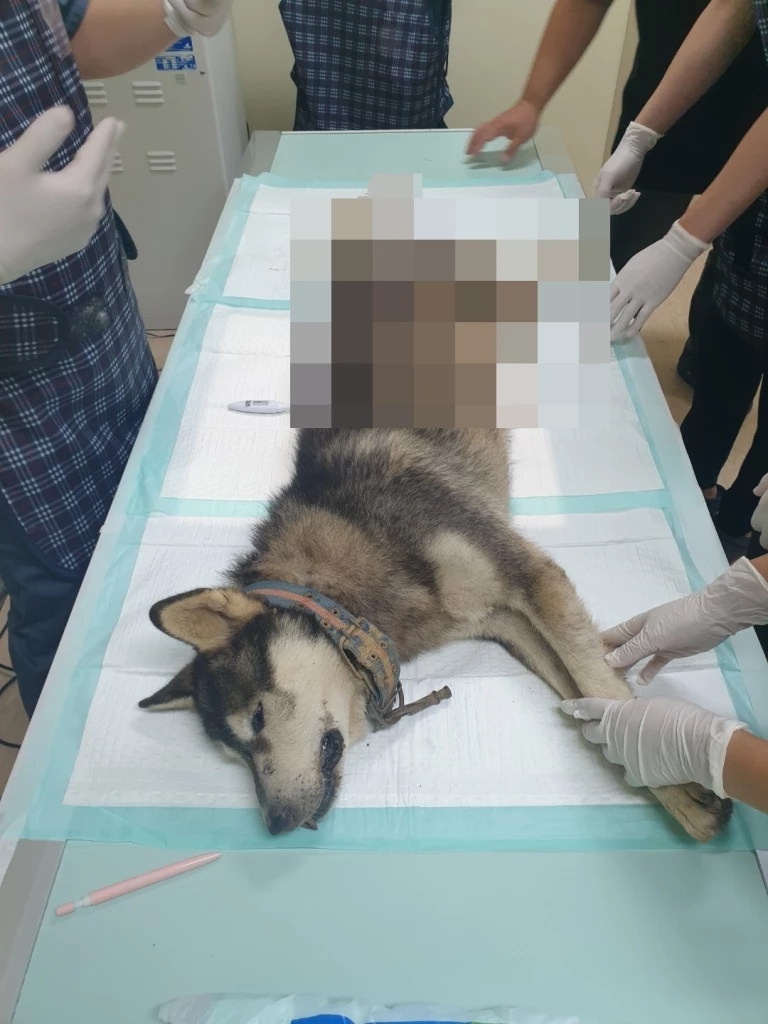
This Aug.26 photo provided by the Jeju City shows an operation on a dog who was found with an arrow piercing out of his body. (Yonhap)
Serial killer Kang Ho-sun, who is on death row for taking the lives of 10 people, reportedly killed dogs that he raised between 2003 and 2006, mostly via cruel means. “Killing dogs made me less sensitive toward killing, and I couldn’t resist the urge to kill,” he was quoted as saying during his trial.
There have been studies across the world about the connection between violence against animals and against humans. A 2008 report from the Michigan State University College of Law pointed out a correlation between animal abuse, family violence, and other forms of community violence.
“Cruelty to animals can be a warning sign of future violent behaviour. A child’s aggressive, abusive behaviour towards animals may predict later violence towards people,” the paper said, adding that a child abusing an animal can be considered a red flag in identifying other violent behaviours. Researchers noted how the Federal Bureau of Investigation considers past animal abuse when profiling serial killers.
John Douglas, a retired criminal profiler for the FBI, was quoted as saying that sadistic behaviour toward animals is among the major similarities shared by many serial killers and that the biggest indicator of future crimes was animal cruelty and torturing. He wrote in his book “Mindhunter: Inside the FBI’s Elite Serial Crime Unit” that many serial killers’ earliest acts of violence are often torture and/or killing of animals.
Animals are not property
With rising awareness of animal rights in Korea, there has been a series of efforts to cover the legal and systematic blind spots concerning cruelty against animals. While there are various issues on multiple fronts being discussed, animal rights groups have zeroed in on the nation’s Civil Act, which recognizes animals merely as the property of the owner, as the most fundamental problem.
For instance, because animals are just objects, a person who kills someone else’s pet is mandated to compensate for the purchasing price of said animal, just like a neighbour compensating for a broken window.
To address this problem, there is an ongoing legislative procedure to give animals a legal status, by adding the clause “animals are not property” in the Civil Act. If enacted, this will mark a symbolic breakthrough in the promotion of animal rights, although legal experts stress that revisions of other related clauses need to take place for it to be effective.
For example, being compensated for the psychological wounds suffered after losing a pet due to another person’s abuse is expected to be much easier, compared to when pets are legally defined as property.
A flurry of talks is currently underway on related issues.
The Justice Ministry said it was mulling a revision of the clause that will exclude animals from forcible seizures of properties. Rep. Shin Jung-hoon of the main opposition Democratic Party proposed a revision bill on the same matter in July. Other possible revisions include expanding the legal definition of pets, which now only refers to dogs, cats, rabbits, ferrets, guinea pigs and hamsters.
“Civic Act is a basic law that can be the foundation to revise other laws. For example, efforts to exclude pets from items that can be forcibly seizure of properties by the court had been thwarted in the past, because it conflicted with the current Civic Act (that recognizes animals as property),” lawyer Jo Hae-in of the Korean Animal Welfare Association was quoted as saying. “Procuring animal rights doesn’t end with revising the Civic Act, but begins with it.”
A revision of the Animal Protection Act will take effect on April 27, 2023, which will introduce heavier punishments to animal cruelty offenders.
Neglecting a pet which results in its death would be punishable by the same penalty as killing an animal via abuse — maximum three-year imprisonment.
The new law will also ban convicted animal abusers from having pets and mandate the regional governments to confiscate and care for pets whose owners have been forfeited by the owners.
Biden Announces Funds For EV Charging Stations In 35 States
THU, SEPTEMBER 15, 2022
President Joe Biden Took A Victory Lap On Wednesday At The Detroit Auto Show, Highlighting Automakers’ Increasing Shift To Electric Vehicles And Billions Of Dollars In New Investments In Battery Plants.
During a speech, Biden announced the approval of the first $900 million in U.S. funding to build EV charging stations in 35 states as part of a $1 trillion infrastructure law approved last November.
Detroit’s Big Three automakers are showing off a number of new EVs at the car show. The U.S. Congress and Biden, a self-described “car guy,” have pledged tens of billions of dollars in loans, manufacturing and consumer tax credits and grants to speed the transition away from internal combustion vehicles to cleaner EVs.
Still, gasoline-powered vehicles, like the V-8 Chevrolet Corvette Z06 Biden got on, are well-represented at the exhibition.
A significant majority of new vehicles sold by the Detroit Three are still gas-powered models and Tesla dominates the U.S. electric vehicle market and outsells the Detroit Three automakers combined on EVs.
White House National Climate Adviser Ali Zaidi told Reuters automakers and battery firms in 2022 have announced “$13 billion into EV manufacturing” as they accelerate “the pace of their investment into capital projects here in the United States.”
In August 2021, Biden set a goal that EVs or plug-in hybrid vehicles represent 50% of all U.S. new vehicle sales by 2030.
The Detroit Three back the nonbinding goal of 50%.
The trip to the Detroit auto show, the largest such event in North America, is part of stepped-up travel in advance of the midterm elections to highlight his party’s agenda. Democrat Biden sought to refocus voter attention on the strides the nation is making in the transition to electric vehicles under his leadership and the role unions will play in the industry’s future.
Chinese President Xi Jinping Said On Wednesday That His Choice Of Kazakhstan For His First Overseas Trip Since The Onset Of The Covid-19 Pandemic Shows The High-Level Nature And Distinctiveness Of The China-Kazakhstan Ties.
Xi made the remarks while holding talks with Kazakh President Kassym-Jomart Tokayev in Nur-Sultan.
He arrived in the Kazakh capital on Wednesday on a state visit to the Central Asian country.
“I’m glad to meet Mr President again after the Beijing Winter Olympics. Visiting the beautiful country of Kazakhstan again after five years makes me feel warm. I chose to visit Kazakhstan on my first overseas trip since the onset of the COVID-19 pandemic. This shows the high-level nature and distinctiveness of the China-Kazakhstan ties, and also displays our profound friendship. Kazakhstan is a major country in Central Asia and has an important influence on Eurasia. I want to reiterate that the Chinese government attaches great importance to the relationship with Kazakhstan. No matter how the international situation changes, China will always firmly support Kazakhstan in safeguarding national independence, sovereignty and territorial integrity, resolutely support Mr President in implementing reform measures for maintaining national stability and development, and steadfastly oppose interference in Kazakhstan’s internal affairs by any force. China will always be a trustworthy and reliable friend and partner of Kazakhstan,” said Xi.
“During my state visit to China in September 2019, we announced lifting bilateral ties to a permanent comprehensive strategic partnership, which charted a new course for the development of bilateral ties. That has also been proved by the joint statement we reached today. The statement sets the direction for bilateral dialogue in the future and ushers in a golden era for bilateral ties in the next 30 years, which is an urgent mission amid the escalation of international tension years after the Cold War. In this regard, your visit is urgently needed and is significant for developing ties between Kazakhstan and China. We will enrich bilateral cooperation together,” said Tokayev
Tokayev said that President Xi’s visit, albeit a short one, is highly productive and fruitful. The two leaders reached a much more important consensus, which will steer Kazakhstan-China relations to an even higher level, he said.
Xi pointed out that his visit is a new starting point for bilateral relations and believed that with the joint efforts of the two sides, China-Kazakhstan relations will enjoy greater development in the future.
The two heads of state agreed to keep in close contact through various means.
Xi concluded his state visit to Kazakhstan on Wednesday and left Nur-Sultan for Samarkand, Uzbekistan on a special plane.
Xi was seen off at the airport by President Kassym-Jomart Tokayev of Kazakhstan and other senior Kazakh officials.
Xi arrived in Samarkand on Wednesday evening and began his state visit to Uzbekistan where he will also attend the 22nd Meeting of the Council of Heads of State of the Shanghai Cooperation Organization (SCO).
At the airport, he was warmly greeted by Uzbek President Shavkat Mirziyoyev, Prime Minister Abdulla Aripov, Foreign Minister Vladimir Norov, Governor of Samarkand region Erkinjon Turdimov and other high-level officials.
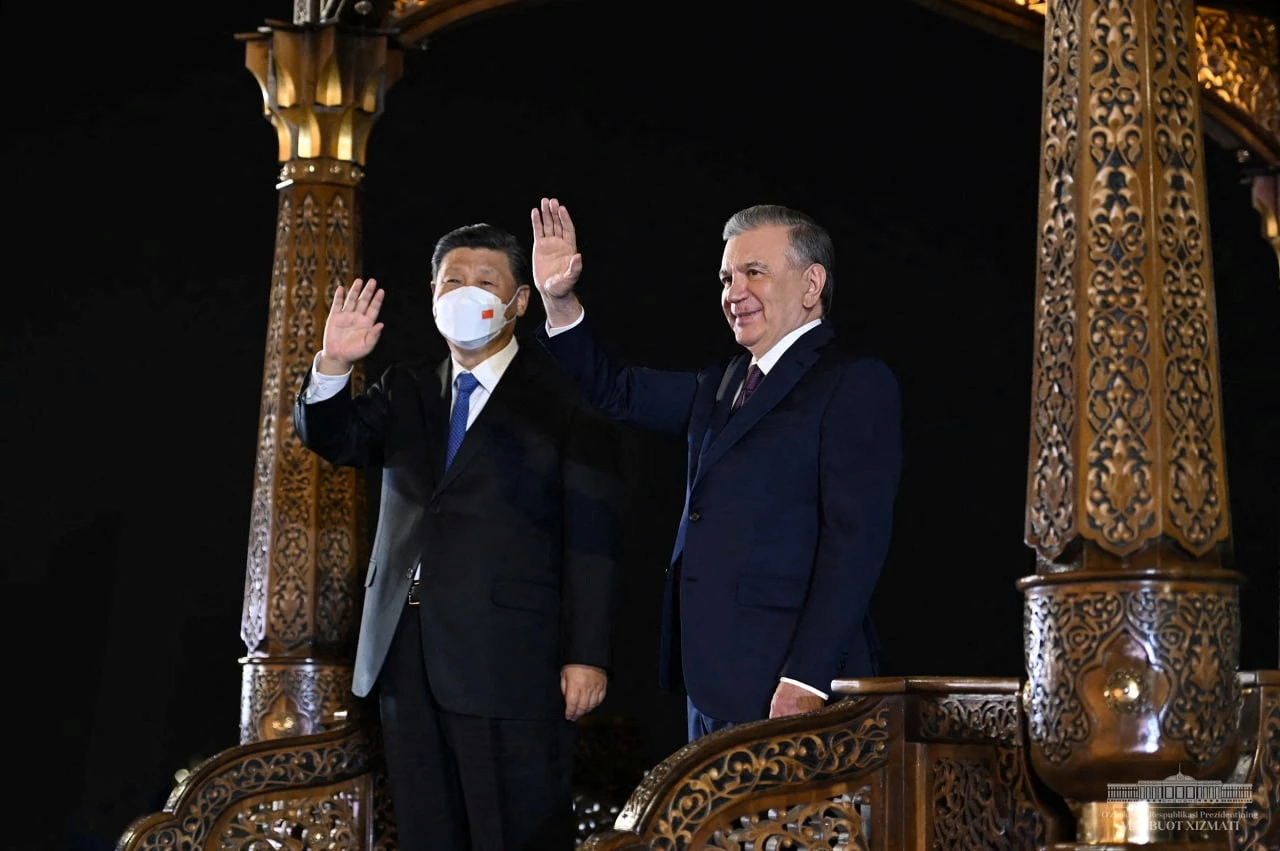
President Mirziyoyev held a grand welcoming ceremony for President Xi at the airport.
The two presidents stepped onto the reviewing stand adorned to reflect distinctive Uzbek features. A fanfare was played on Karnay, a traditional Uzbek long wind instrument, as a signal of welcome. Local young people, dressed in festive national costumes, were singing and dancing to the most invigorating beat to welcome the most honourable guest.
In a written speech, Xi extended warm greetings and best wishes to the government and people of Uzbekistan on behalf of the government and the people of China. Xi underscored that spanning over two thousand years, the friendship between China and Uzbekistan and their people are still brimming with vigour and vitality.
Xi said the China-Uzbekistan comprehensive strategic partnership has steered onto the fast track of development, and this has not only benefited the two peoples but also given a strong boost to peace, stability, prosperity and development of the region.
Xi noted that he will hold talks with President Mirziyoyev for an in-depth exchange of views on deepening bilateral cooperation, and on regional and international issues of shared interest, and jointly draw the blueprint for the development of China-Uzbekistan relations.
The Chinese president said he looks forward to attending the SCO Samarkand Summit and working with all parties to carry forward the Shanghai Spirit, deepen mutually beneficial cooperation, and promote the sound and steady development of the SCO.
Xi said goodbye to Mirziyoyev before leaving the convoy. The two presidents reaffirmed the scheduled official talks on Thursday and agreed to have an in-depth exchange of views on deepening China-Uzbekistan friendship.



 According to him, Thailand Post cares about customers in remote areas too, so it has opened more than 3,300 branches in all provinces. These branches operate from Monday to Saturday.