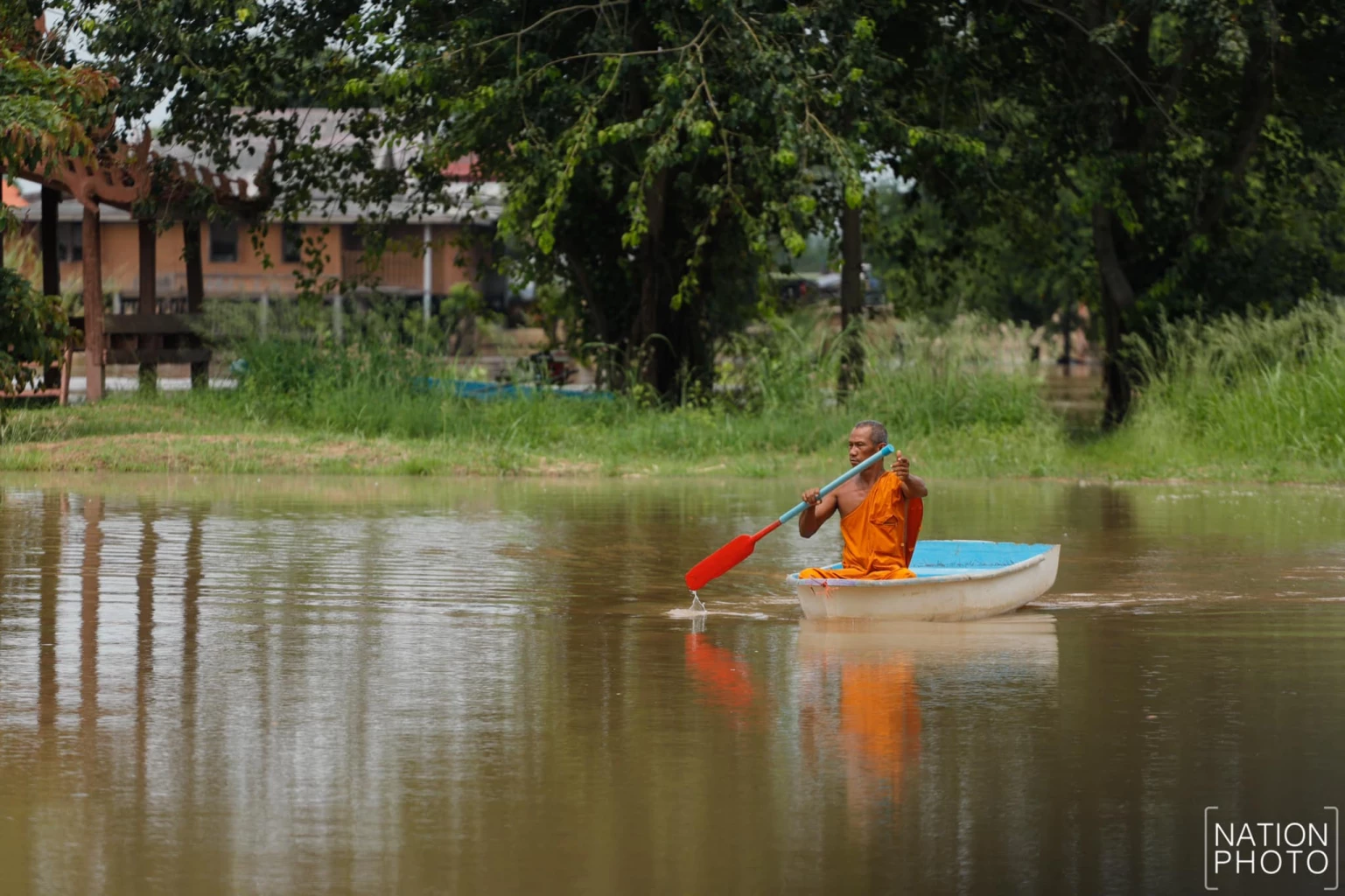
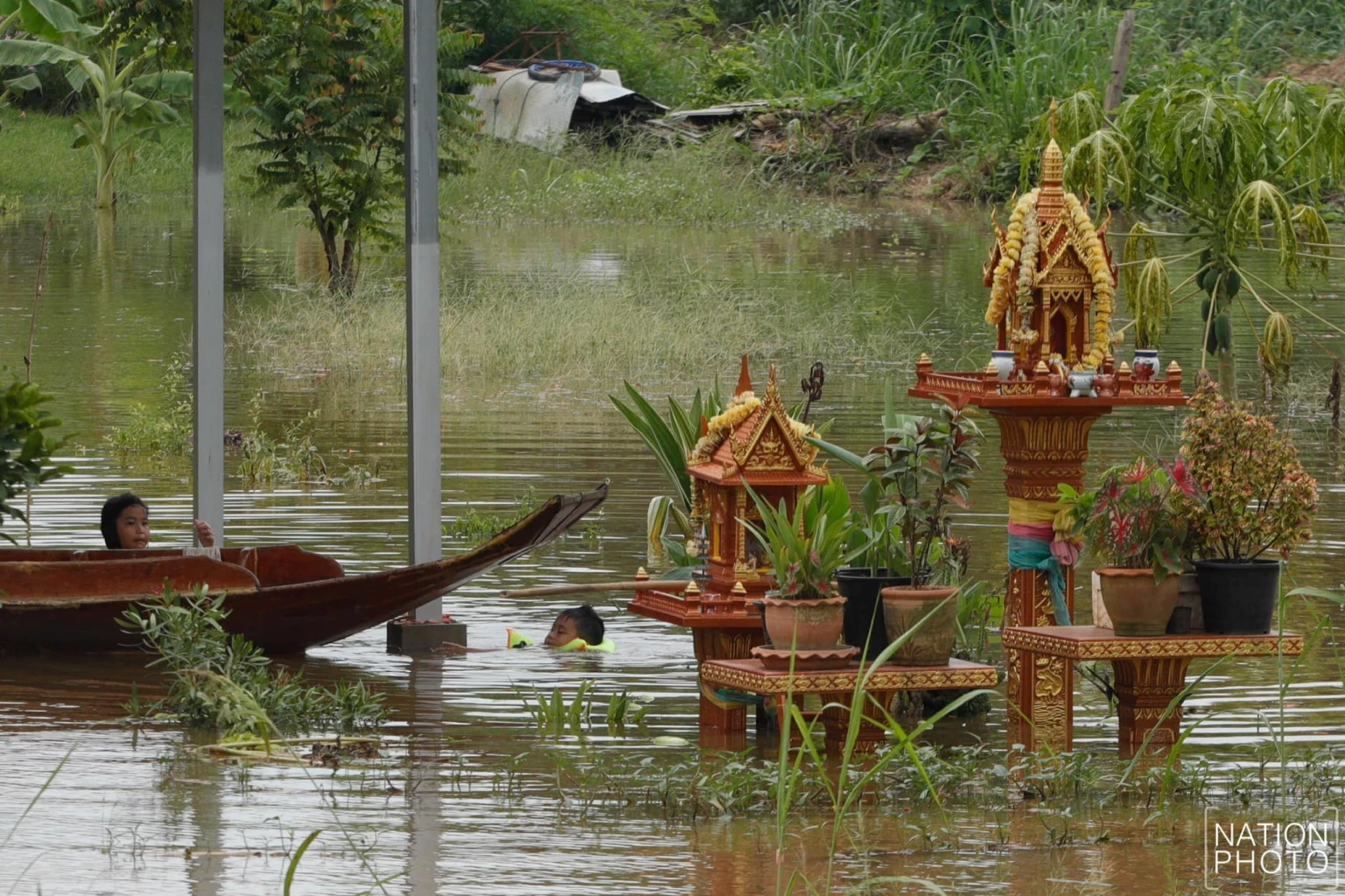
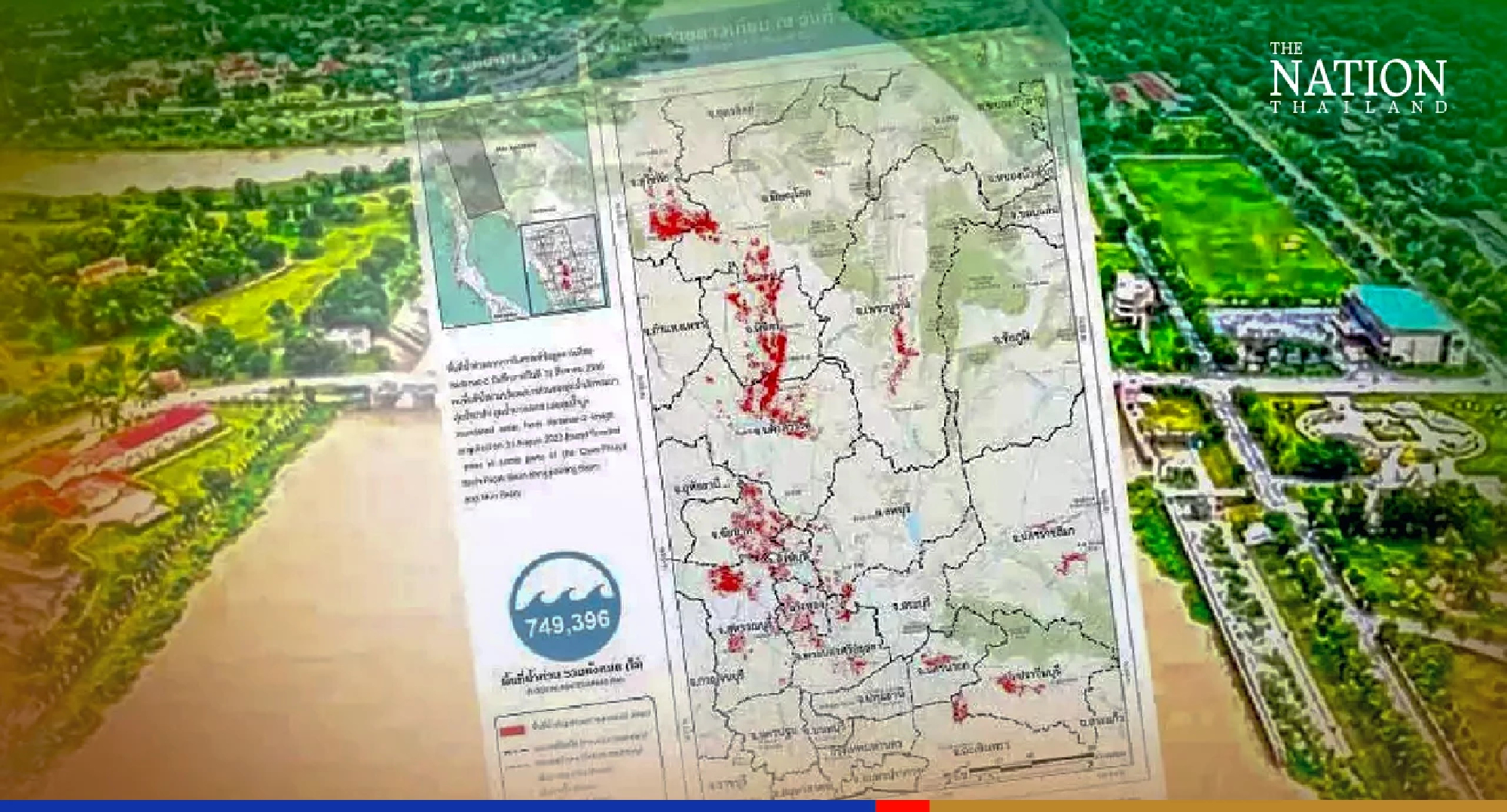
More than 740,000 rai in four river basins have been affected by floods, the Geo-Informatics and Space Technology Development Agency (GISTDA) said on Thursday.
The GISTDA reported the flood situation after studying information from the Radarsat-2 satellite on Wednesday.
The agency said 749,396 rai along the Chao Phraya, Pa Sak, Bang Pakong and Mun rivers were affected by floods, especially some areas in Sukhothai, Phitsanulok, Phichit, Phetchabun, Nakhon Sawan, Chai Nat, Sing Buri, Suphan Buri, Ang Thong, Ayutthaya, Nakhon Nayok, Prachinburi and Nakhon Ratchasima.
Precisely 260,558 rai of rice fields were among the areas overwhelmed by floods.
The GISTDA said it had sent satellite images to various organisations to support their missions in planning and monitoring the flood situation.
Meanwhile, the agency has also adjusted its satellite signal reception to monitor the situation in areas that are expected to be flooded.
The price-guarantee scheme for rice will continue for the fourth year in mid-October as the Commerce Ministry plans to propose the motion to the National Rice Policy and Administration Committee next Wednesday, Minister Jurin Laksanawisit said on Thursday.
Jurin, who doubles as deputy prime minister, was responding to a question from Pheu Thai Phitsanulok MP Nopphadol Luangthongnara, who asked about progress of the scheme during a House of Representatives ordinary meeting on Thursday.
Jurin said he expected the committee to pass the motion with no problem, after which it would be proposed to the Cabinet for approval.
The commerce minister expected the first batch of the subsidy to be disbursed to farmers, who sell rice at lower than guaranteed prices, on October 15.
Jurin said that besides the price-guarantee scheme, the government had implemented other measures to help rice farmers, including a 1,500 baht per tonne subsidy for farmers who keep rice in stock instead of selling to prevent oversupply, and reducing the interest on loans to farmers, millers and rice cooperatives by 3 per cent.
“I insist the rice price-guarantee scheme will be approved on time, as it is part of the price-guarantee scheme for five economic crops – rice, tapioca, rubber, oil palm and corn for animal feed – the government had declared to Parliament under a budget of 150 billion baht,” Jurin added.
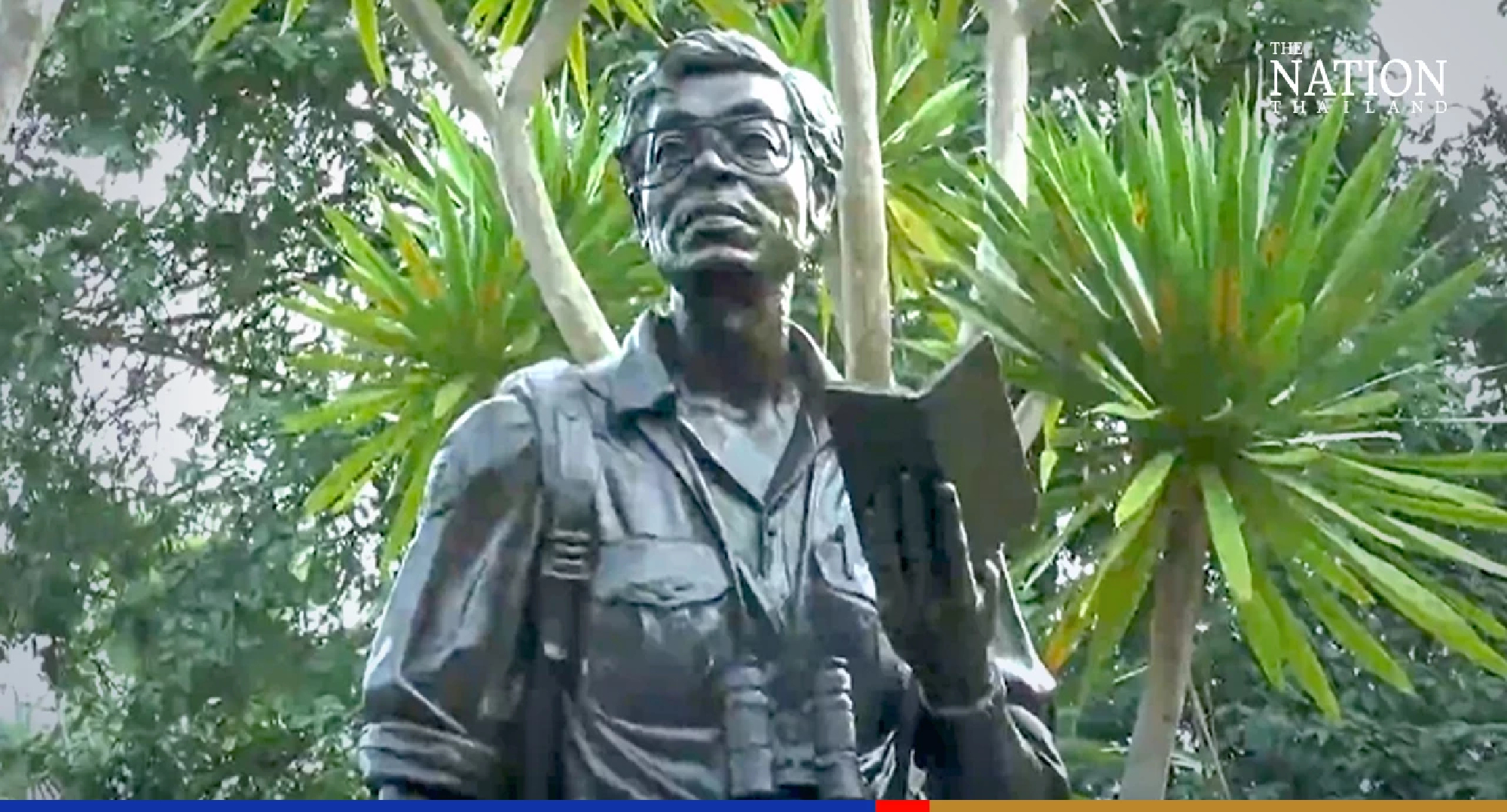
Sanctuary officials, students and conservationists took part in a ceremony to remember the late Thai environmental activist, Seub Nakhasathien, who ended his life 32 years ago to draw public attention to poachings and encroachments.
Seub is renowned for his efforts to protect Cheow Lan Lake, Thungyai Naresuan Wildlife Sanctuary, and Huai Kha Khaeng Wildlife Sanctuary.
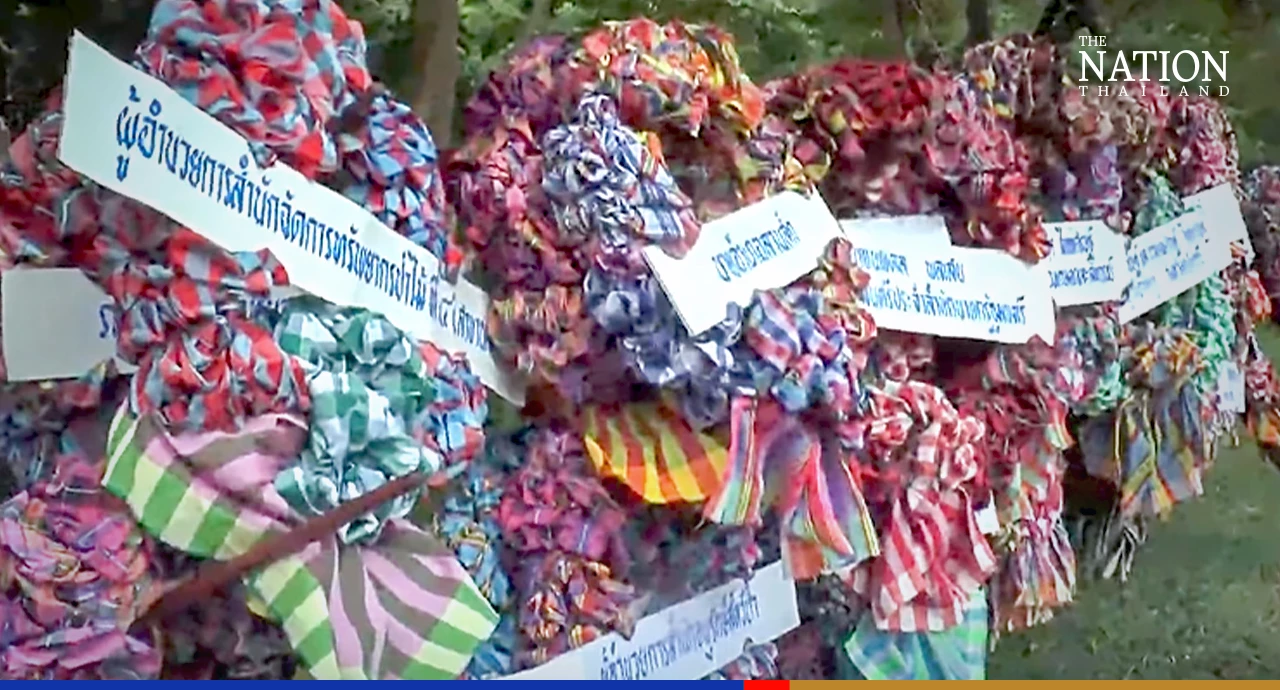
The ceremony involved giving alms to Buddhist monks and wreath-laying and was held at the management office of the Huay Kha Khaeng Wildlife Sanctuary in Lan Sak district of Uthai Thani province.
After Buddhist monks chanted a prayer for Seub, participants laid wreaths made of pa khao ma cloth in front of a statue of Seub.
The event was jointly presided over by Noppadon Polsen, an assistant to the PM’s Office minister, and Sasin Chalermlarp, president of the Seub Nakhasathien Foundation.
As part of the ceremony, 50 scholarships of 3,000 baht each were given to students, who are children of wildlife and park officials.
Wildlife and park officials also repeated their vow to do their best to protect wild animals and forests.
While being chief of the Huay Kha Khaeng Wildlife Sanctuary, Seub turned the gun on himself on September 1, 1990 to draw attention of all sections of society to the issues of poaching and encroachments at the sanctuary.
Later on, a foundation was created to continue his spirit of protecting the western forests.
His one-storey wooden house at the sanctuary office has been preserved with all his belongings, including a camera, so that students and the public can be inspired by his love for wildlife.
Twenty-eight Cambodian construction workers were lucky to escape with light injuries in a scaffolding collapse in Bangkok’s Yan Nawa district.
The Bang Phongphang police station received a report on Wednesday night that the workers were injured at a construction site on Sathu Pradit 31 Road.
An office and shrine of the Hindu BAPS Swaminarayan Sanstha (Thailand) denomination was under construction at the site. The 28 were working on the third floor of the planned six-storey building 10 metres above ground.
The male and female Cambodian workers were transporting cement to the third floor when the scaffolding collapsed. They were slightly injured with scratches and bruises.
Rescue staff gave the 28 first aid because they did not want to go to hospital.
The workers believed the scaffolding collapsed due to excessive weight. Rain all day was another factor. Fortunately, the scaffolding was not high so none of the 28 was severely injured or died.
The police contacted the Yannawa district office to shut the site for a thorough inspection before deciding to allow the construction to go ahead or order a temporary stop.
Caretaker Prime Minister General Prawit Wongsuwan on Thursday ruled out the possibility that Bangkok would be swamped by massive flooding of the kind experienced in 2011.
Prawit gave the assurance while on an inspection trip to a Chachoengsao tap water-making plant to monitor the progress of a water management project in the eastern province.
“There is concern that heavy rains this year will cause flooding as in 2011, but I affirm that won’t happen,” Prawit gave the assurance.
He explained that his confidence was based on cooperation between the Royal Irrigation Department and the Office of National Water Resources in constantly managing water from heavy rainfall upstream and tackling drought over the past few years.
Prawit was apparently referring to a grim forecast by Dr Seri Suprathit, director of Rangsit University’s Climate Change and Disaster Centre.
Seri predicted the country would be hit by 15 more storms this year, which was likely to trigger 1,200mm rainfall this month, in October and November. He warned the “belt of storms” would move down to the central provinces, and “100-year-level rains” would unavoidably cause massive flooding in Bangkok to the level experienced in 2011.
In 2011 too, Seri had warned that Bangkok would be hit by massive flooding, but the government of then prime minister Yingluck Shinawatra had dismissed the possibility, before his warning became true.
Prawit said on Thursday that his government attached importance to water resources management and had been implementing necessary measures to prevent floods and drought for the past three years.
“We have been doing this for three years and you can see that no drought has been reported,” Prawit said.
“The government is extremely worried about water-related disasters, so all government agencies were instructed to be on standby all the time to tackle any arising problems immediately.”
For Chachoengsao, Prawit said the government had been implementing short-term, middle-term and long-term plans to ensure adequate raw water for making tap water.
As part of the plans, the government had installed water gates to prevent sea water from flowing into the Bang Pakong River, Prawit added.
He was accompanied by Labour Minister Suchart Chomklin on the inspection trip, and received by Palang Pracharath Party MPs from Chachoengsao, Chonburi and Samut Prakan.
Pharmacies must dispense Covid-19 antiviral drugs only to patients with a prescription, the Public Health Ministry warned.
The Centre for Covid-19 Situation Administration had decided to allow pharmacies to sell Favipiravir, Molnupiravir and Paxlovid from Thursday.
Public Health Minister Anutin Charnvirakul said on Thursday that he ordered pharmacies to hand out the Covid-19 drugs only to patients with prescriptions because doctors can now decide which patients need what antiviral drugs.
He also ordered related organisations such as the Food and Drug Administration and provincial public health offices to monitor information on antiviral drug dispensation at pharmacies.
Meanwhile, the National Health Security Office (NHSO) reported that it had started dispensing Covid-19 antiviral drugs via telemedicine apps from July 11.
The NHSO said the following three applications have been used 9,043 times, or 177.3 per day, on average for the purpose:
Good Doctor (patients with mild or no symptoms in Greater Bangkok and Chonburi) – 4,942 times
MorDee (patients with mild or no symptoms in all areas) – 1,950 times
Clicknic (patients with mild or no symptoms and vulnerable patients in all areas) – 2,152 times.
The NHSO also launched its “Outpatient with Self-Isolation” programme on June 24 involving 532 pharmacies across the country.
According to information on Monday, 55,482 patients have been treated under the programme. Most – or 21,200 patients – are from Bangkok, followed by Nonthaburi with 4,564, Chonburi 4,367, Chiang Mai 2,806, Nakhon Pathom 2,651 and patients from other provinces.
The Fédération Cynologique Internationale (FCI) has approved official certification of Thailand’s Bangkaew Dog as a new breed, making it only the second Thai breed to be officially certified by the Belgium-based international canine federation.
The FCI, which comprises 98 member countries and has approved more than 355 dog breeds, granted the first official-breed certificate to Thailand’s Ridgeback in 2003. The Bangkaew was granted a temporary certificate by the FCI in 2011 and its status has only now been upgraded to official this year.
The FCI described the Bangkaew as “an old breed that originated from Bangkaew village in Bang-rakam district, Phitsanulok province. The breed traces its ancestry back to a cross between a Buddhist abbot’s local black & white female dog and a now extinct wild dog, producing today’s breed. In 1957, selective breeding from single litters produced the generations seen today.
“The Thai Bangkaew Dog is regarded as a precious heritage of Phitsanulok. The dogs are bred widely in the province and have become so famous nationwide that they now are bred in every part of Thailand,” the FCI said.
“The Thai Bangkaew is a square built, well-proportioned dog, never low on legs, with a fairly wide and deep chest. It has a double coat that should form a ruff around the neck and shoulders and a pluming tail, more pronounced in males than females. Its behaviour is described as ‘alert, intelligent, loyal, watchful and obedient’. The breed is easy to train. It could be slightly aloof towards strangers,” the federation added.
Former Phitsanulok veterinary chief Dr Nisit Tangkrakarnphong told BBC Thai that “I am glad the Bangkaew Dog has finally received recognition by the FCI and I am happy for all breeders. From now on, it is not just a Phitsanulok breed but an official one of Thailand”.
The 80-year-old veterinarian said he started scouting villages in Phitsanulok to find the best dog breeds in 1971. He bought around 25 males and 70-80 females at 300 baht each with a budget granted by the provincial veterinary office in a quest to breed a suitable guard dog that is “beautiful, strong, loyal to its owner and fierce toward intruders”.
Nisit said the Bangkaew breed was first officially recorded in Phitsanulok’s Red Cross Fair of 1980. Since then, it has become popular among dog lovers across Thailand.
A pure breed Bangkaew puppy can fetch up to 10,000-20,000 baht, while the modern breed has been adjusted to reduce fierceness towards strangers to make the Bangkaew a more family-friendly dog, he added.
The Digital Economy and Society (DES) Ministry is promoting the use of technology to tackle cases of students being left behind in school vans.
This move comes after many cases of students being found dead after being forgotten inside school vans.
The latest case happened in Phan Thong district of Chonburi province on Tuesday when a seven-year-old girl suffocated to death inside a school van.
DES Minister Chaiwut Thanakamanusorn said the ministry’s smart school-bus system features an internet of things (IoT) sensor which can notify teachers and guardians about students inside the van via smartphones.
The ministry also aims to add face recognition system to enable users to know whether all students had gotten off the van, he added.
“The smart school bus will enable users to help students inside the vehicles quickly,” he said.
He said the Digital Economy Promotion Agency has been appointed to set up the smart system in 3,500 vans, expecting to be completed within this year.
He added that the ministry would cooperate with the Education Ministry and related agencies to set up the system in all school vans nationwide.
“If the project is successful, it will save many students’ lives and no one will be forgotten inside school vans,” he added.
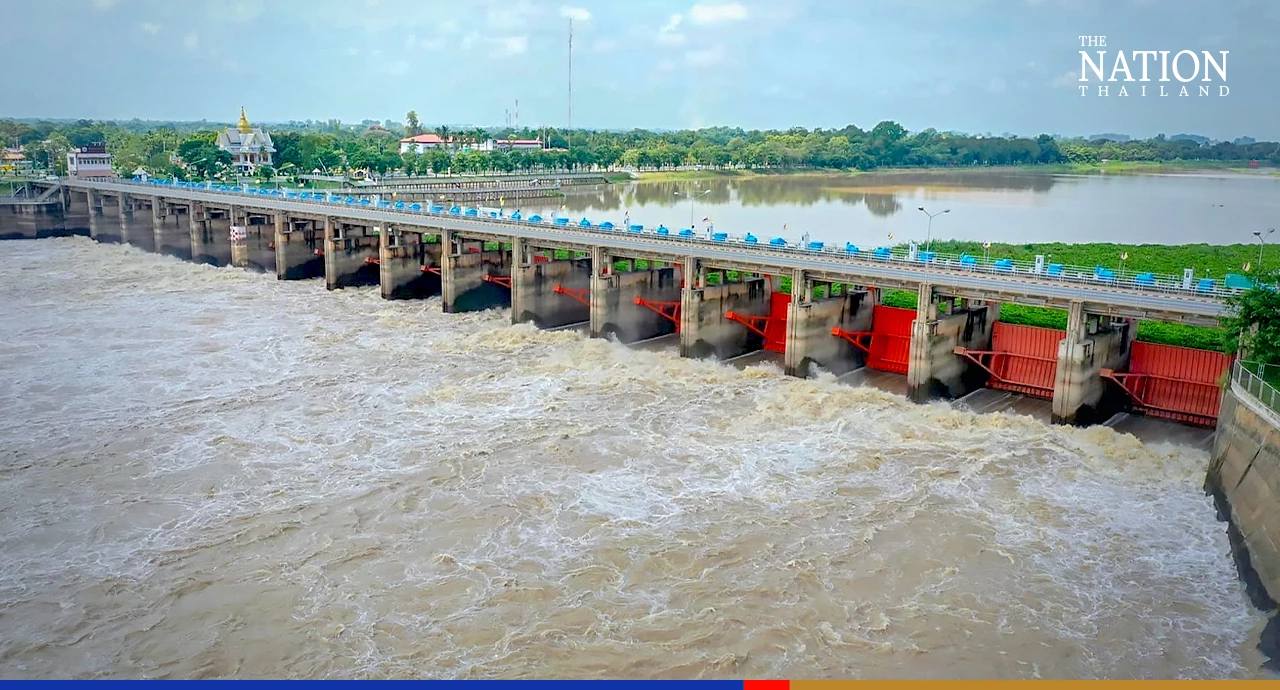
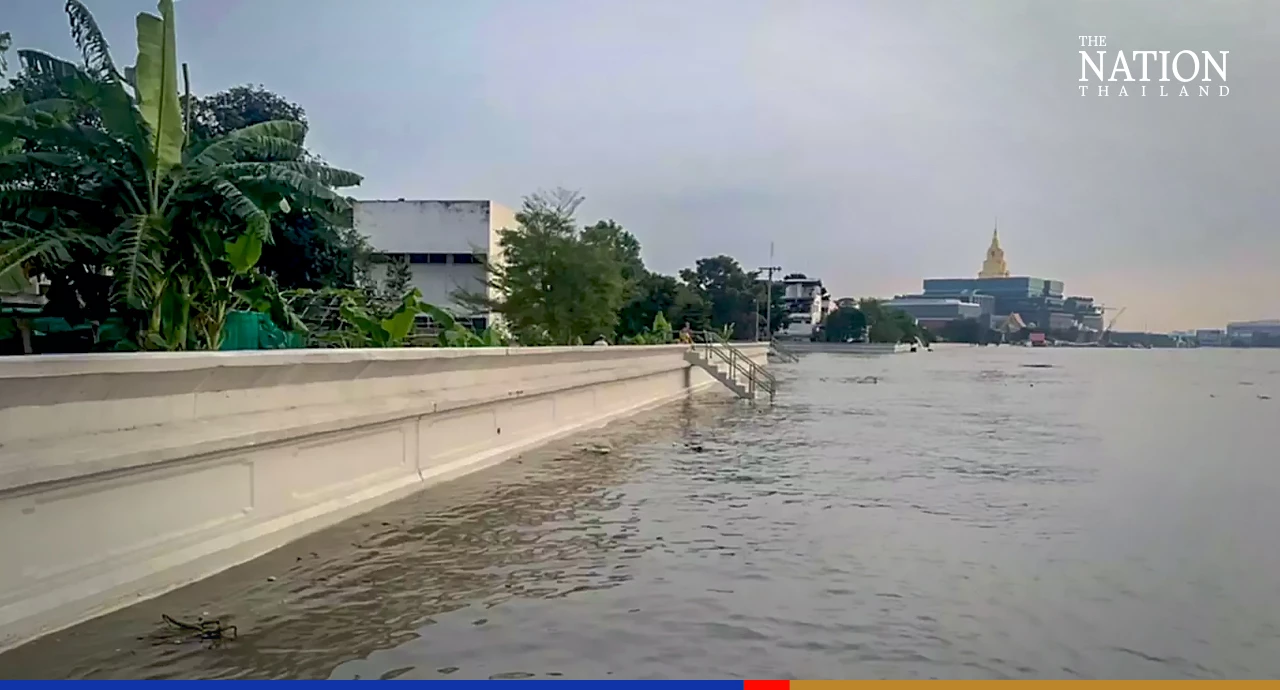
Cargo ships traversing Ang Thong province were forced to be extra careful while sailing under a bridge on Thursday amid a higher than usual Chao Phraya water level.
If the river level increases further, ships would be unable to sail under bridges.
The Ayutthaya Marine Office has already banned cargo ships from sailing at night to prevent any risk of accident.
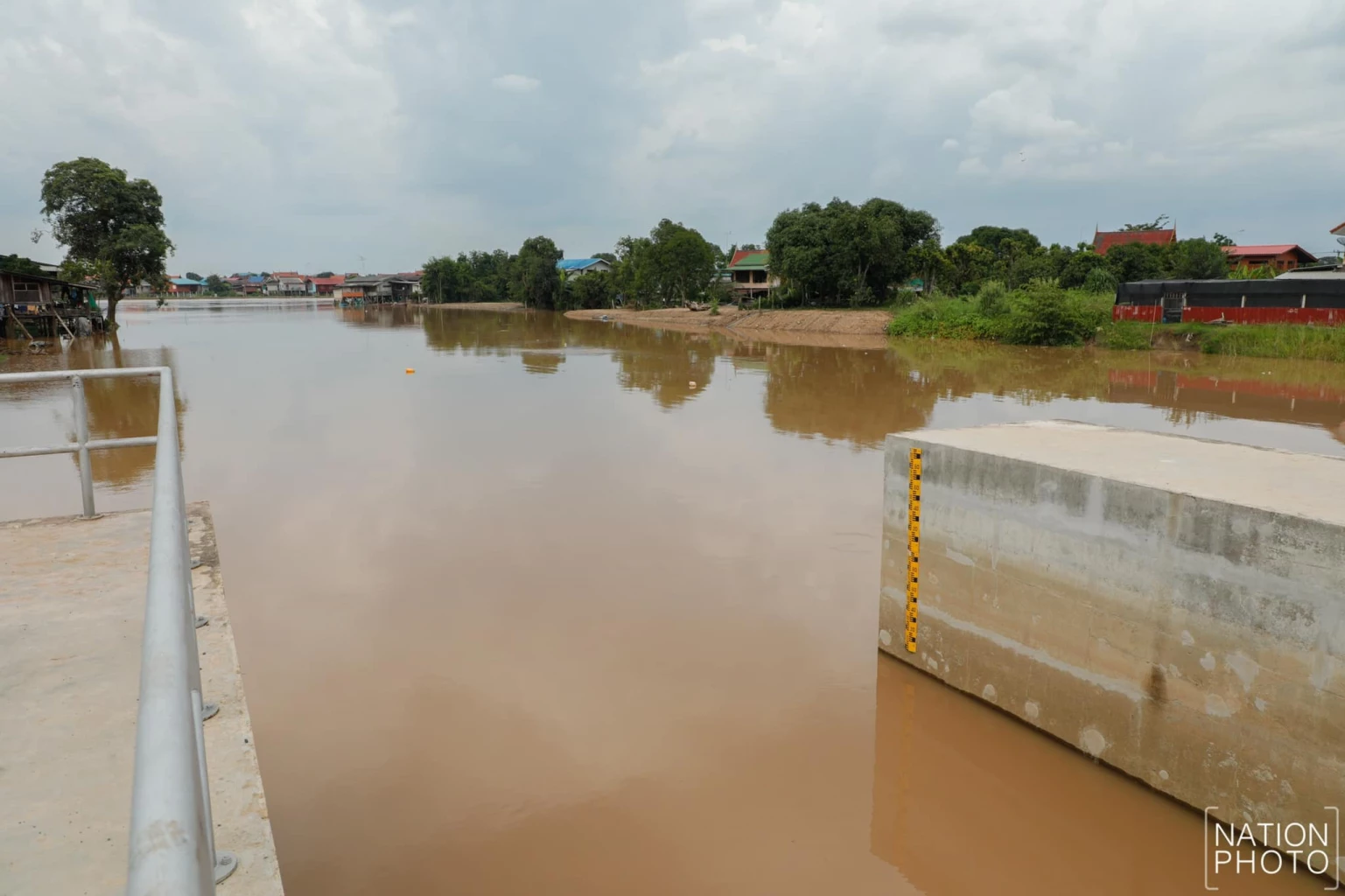
The water level at the C7A irrigation station near Ang Thong Provincial Hall was 7.24 metres to mean sea level, up 12cm as Chai Nat’s Chao Phraya Dam had increased its water drainage to 1,763 cubic metres per second.
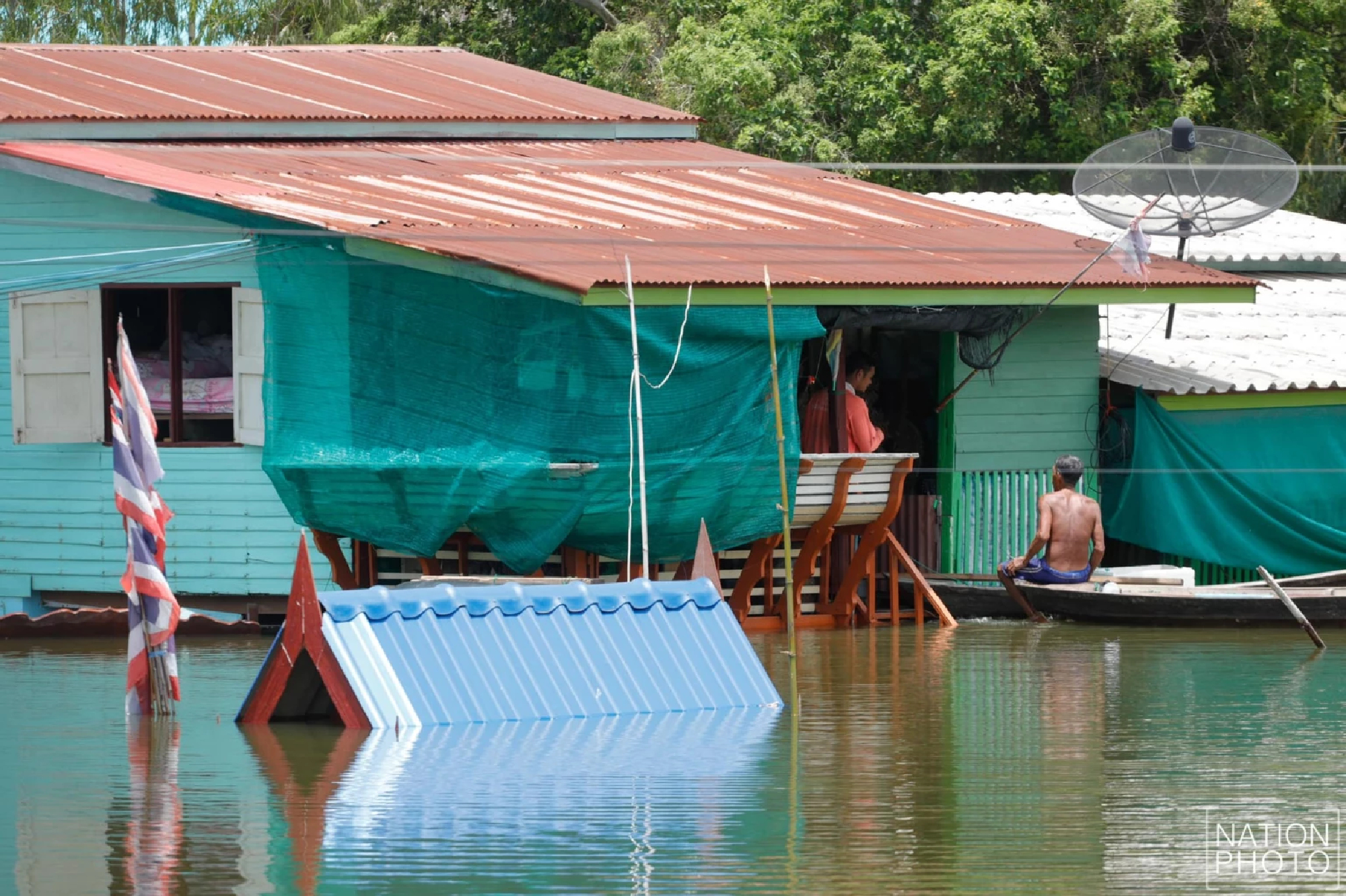
Separately, the Ang Thong Disaster Prevention and Mitigation Office said 297 residences in Pa Mok and Wiset Chai Chan districts have been inundated. Of these, 116 houses are located in Pa Mok district and 181 in Wiset Chai Chan.
Water levels in the Chao Phraya and Noi rivers in Ayutthaya province, which have been steadily increasing since earlier this week, have started to overflow into low plains.
Local authorities have advised people residing near the rivers to monitor the situation closely and move their belongings to higher ground.
Vehicles are now being parked on highway shoulders to escape the flood, while some villagers whose houses have already been inundated have had to live in temporary tents provided by the province.
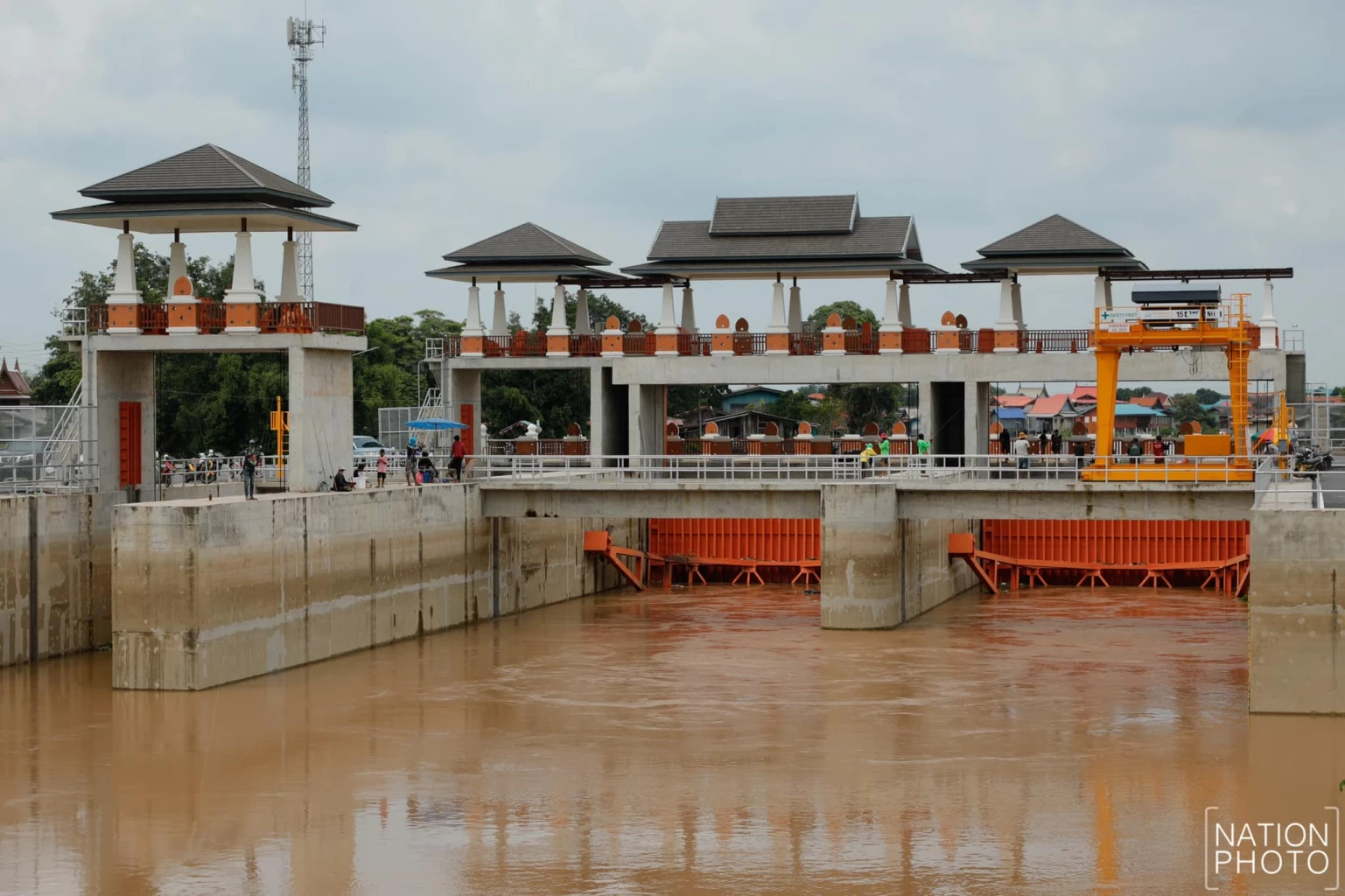
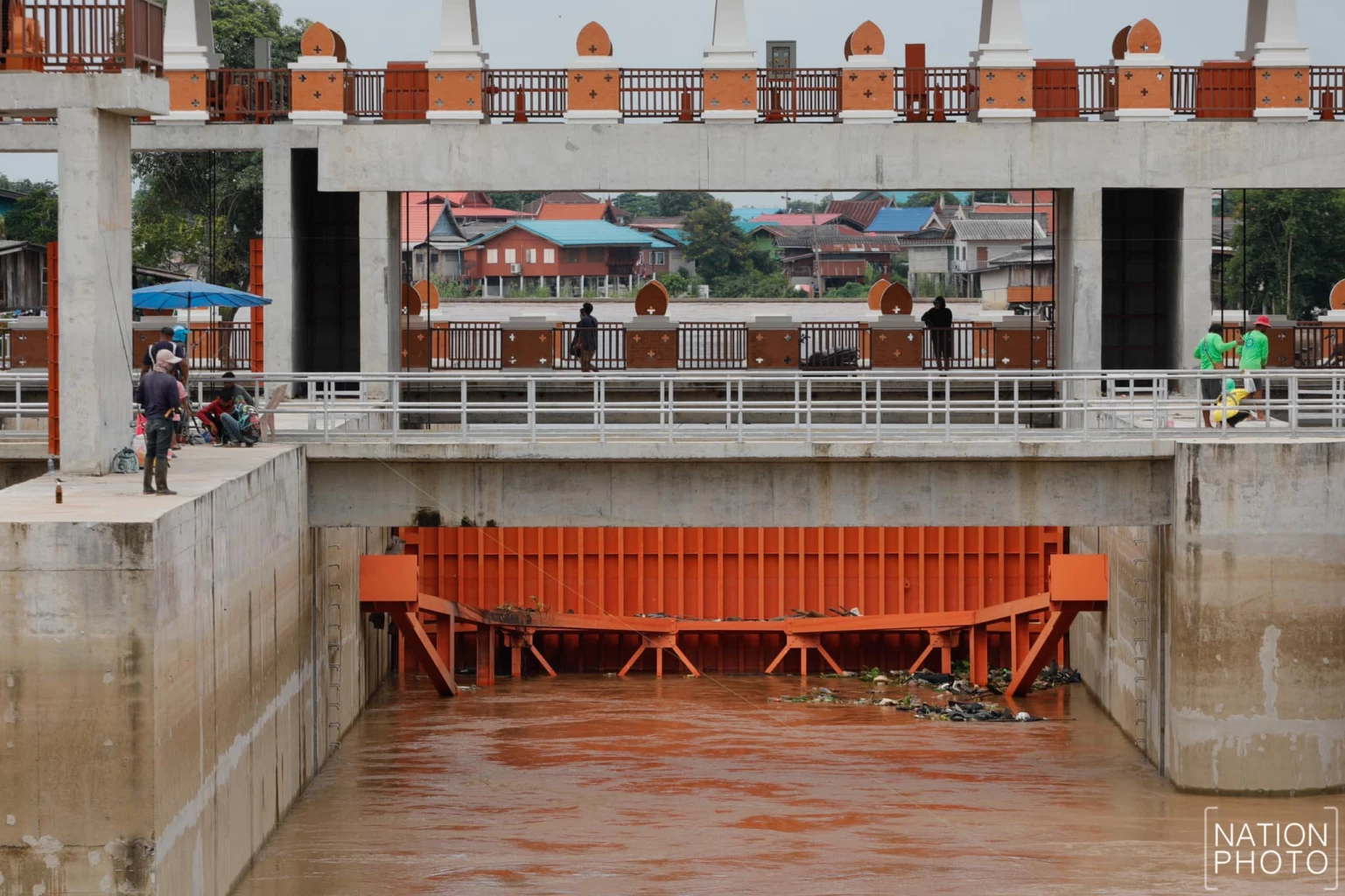
At Bang Ban canal in Bang Ban district, the newly built water gate has helped keep water flow at the optimum level instead of flooding canal-side communities as in the past.
Authorities however estimate that if the Chao Phraya River keeps rising, the water level might exceed the gate capacity and could flood some of the canal-side areas.
The 16-kilometre canal is connected to the Chao Phraya and runs through 10 Ayutthaya subdistricts.




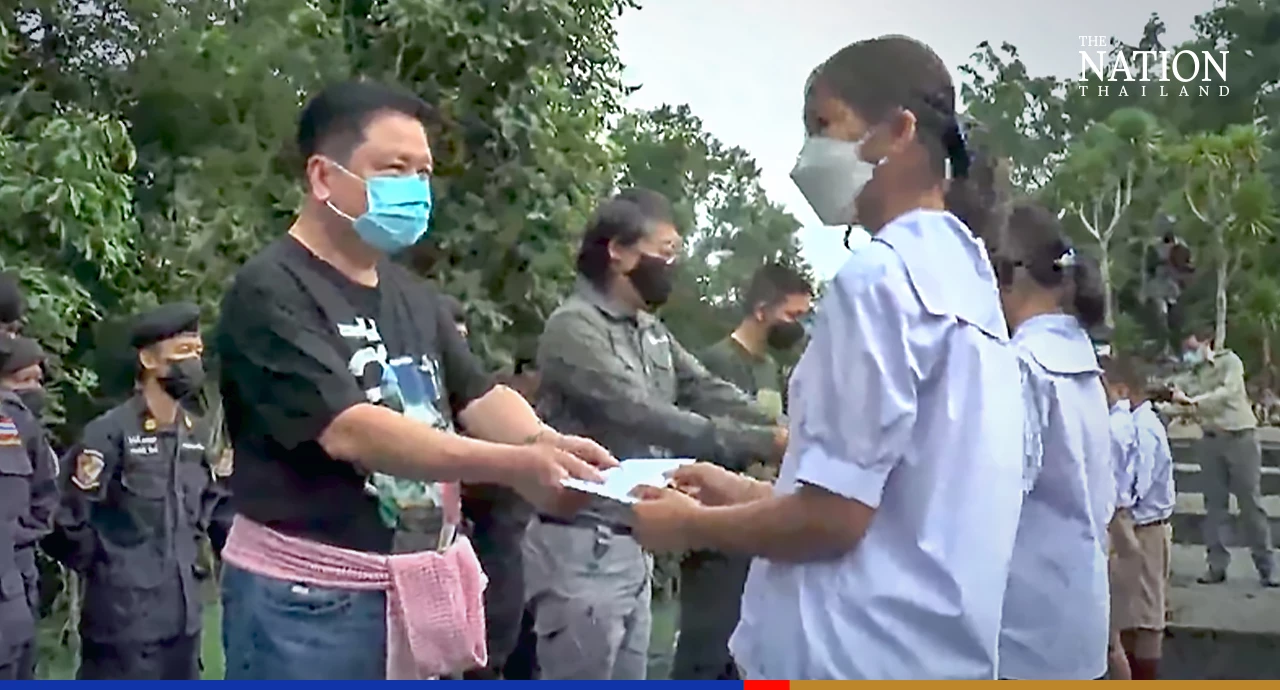 As part of the ceremony, 50 scholarships of 3,000 baht each were given to students, who are children of wildlife and park officials.
 While being chief of the Huay Kha Khaeng Wildlife Sanctuary, Seub turned the gun on himself on September 1, 1990 to draw attention of all sections of society to the issues of poaching and encroachments at the sanctuary.
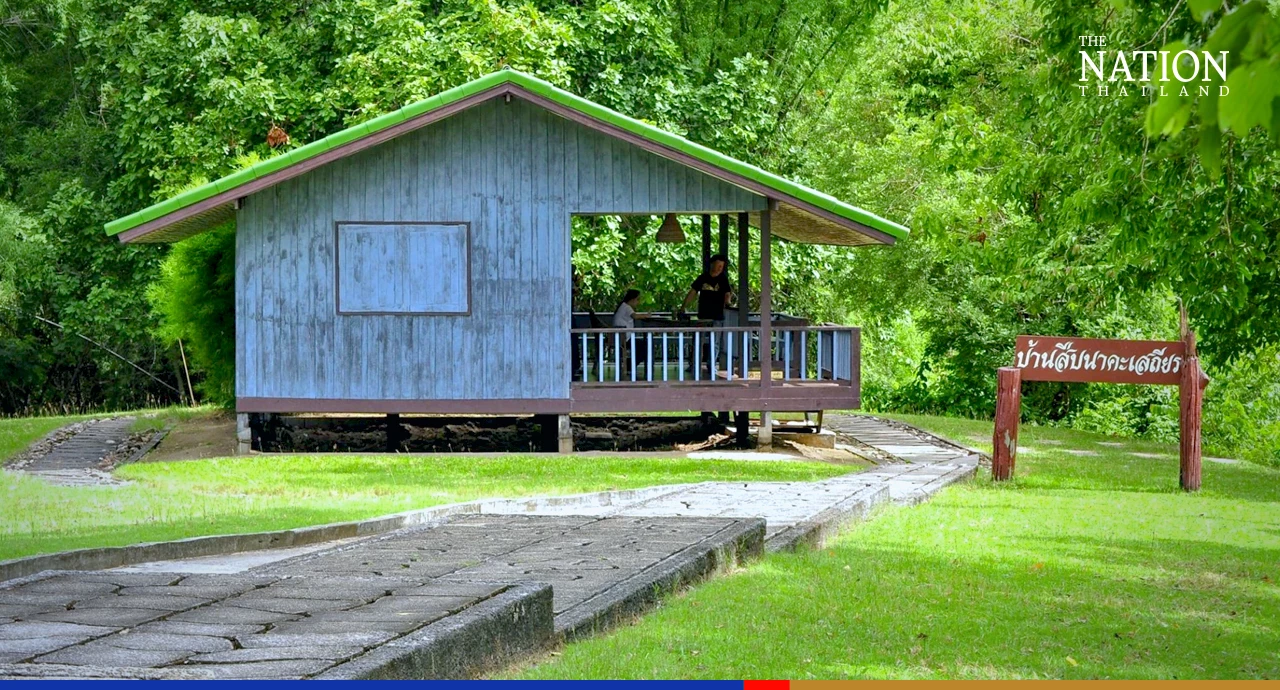 His one-storey wooden house at the sanctuary office has been preserved with all his belongings, including a camera, so that students and the public can be inspired by his love for wildlife.



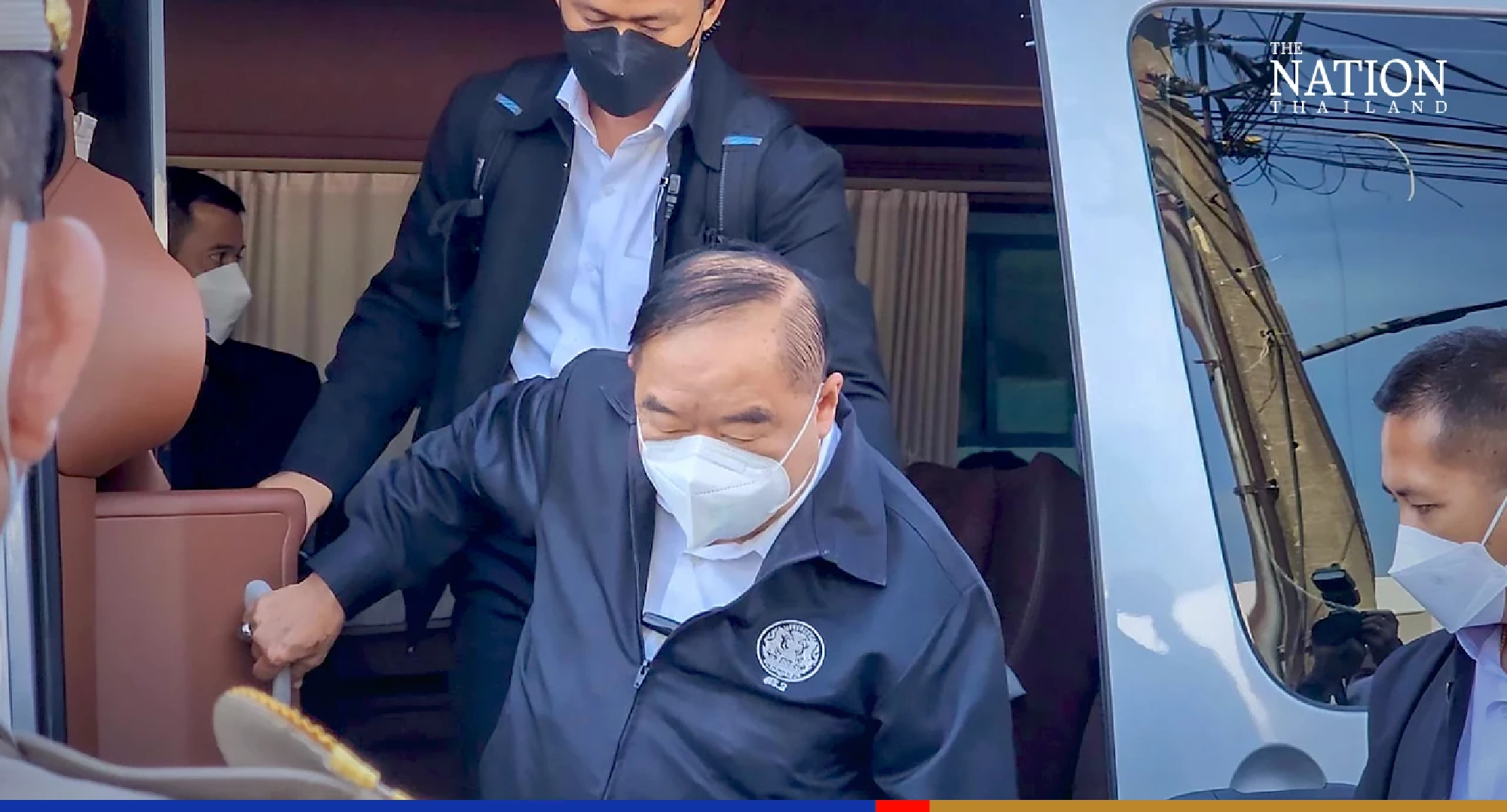
 Prawit said on Thursday that his government attached importance to water resources management and had been implementing necessary measures to prevent floods and drought for the past three years.
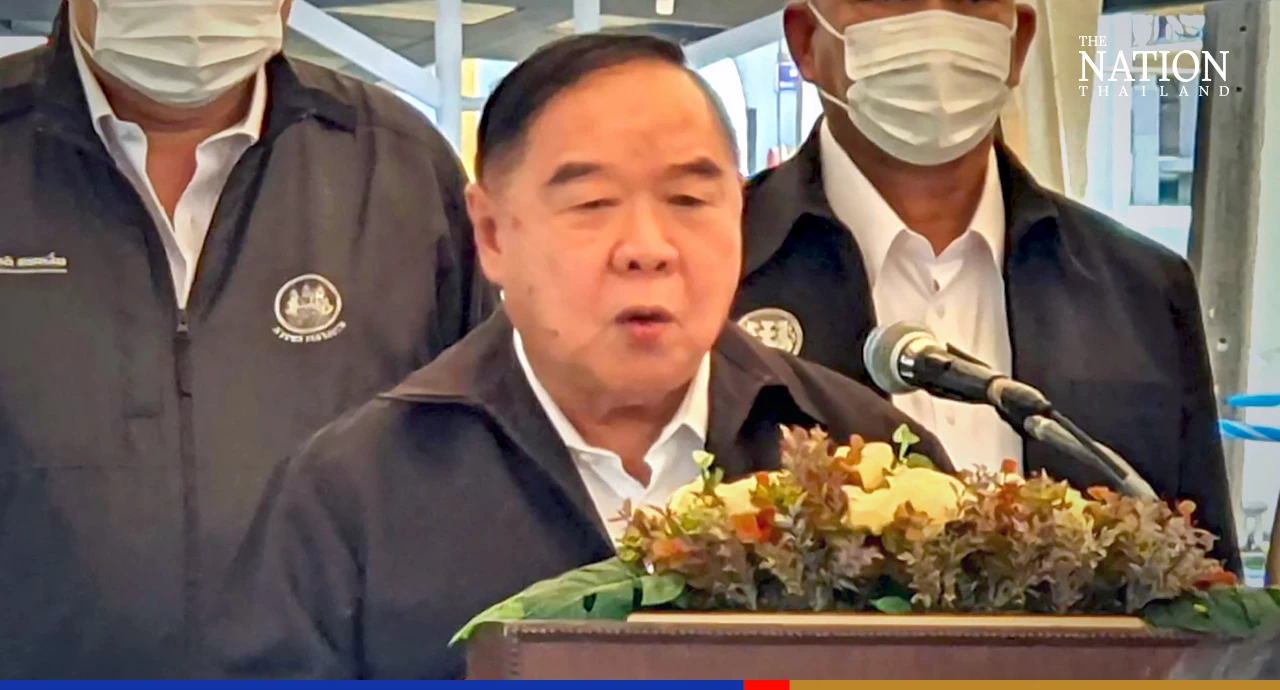 As part of the plans, the government had installed water gates to prevent sea water from flowing into the Bang Pakong River, Prawit added.