“Despite the ongoing military operation, we still hope that we will be able to reach agreements on the diplomatic track,” Putin said.
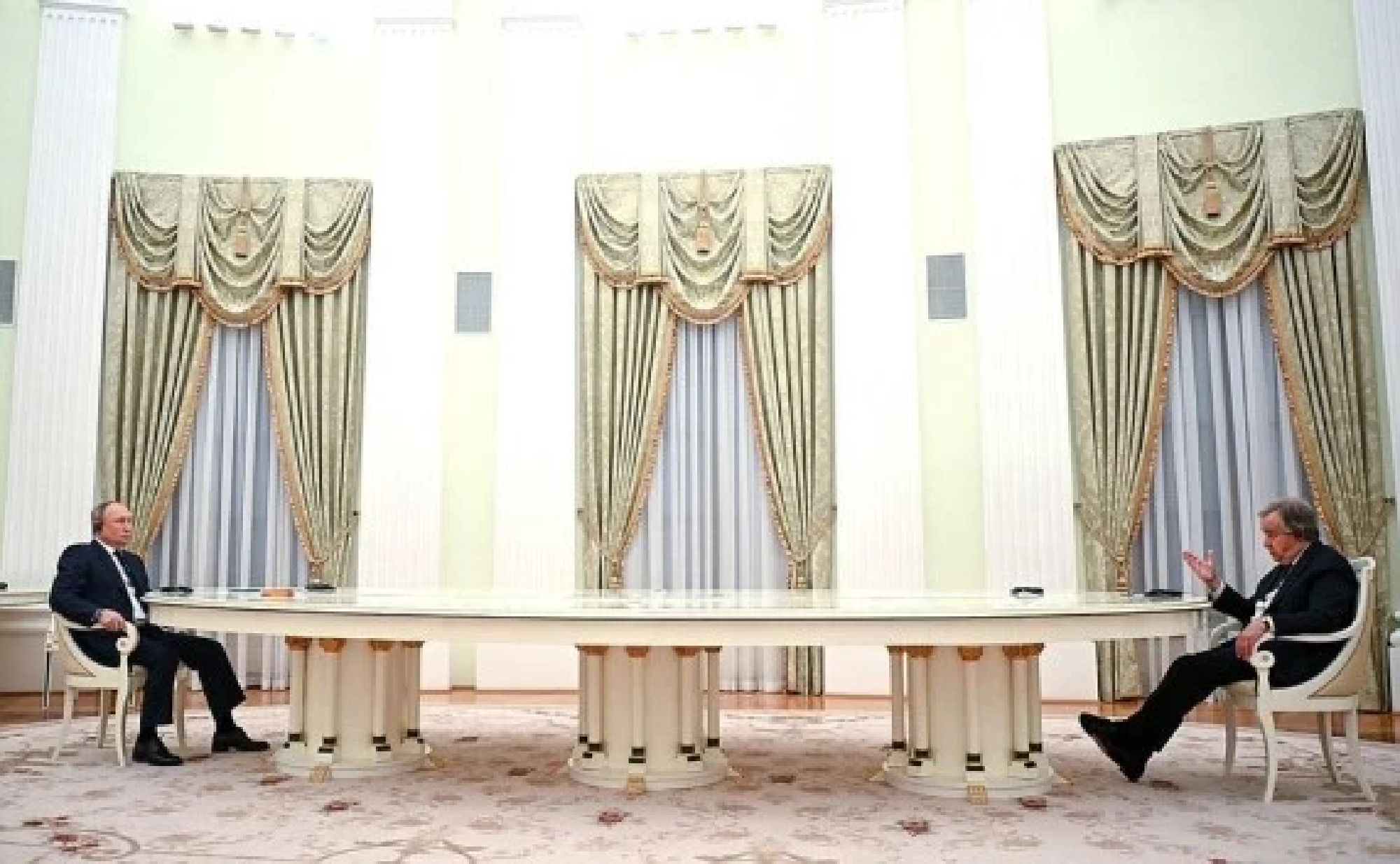
Russian President Vladimir Putin met with visiting United Nations (UN) Secretary-General Antonio Guterres in the Kremlin on Tuesday to discuss the situation in Ukraine.
Putin told Guterres that the Ukrainian issue arose after the 2014 “unconstitutional coup” in Kiev and people in Donbass remained under blockade and military pressure even after the Minsk agreements on a peaceful settlement were reached.
According to Putin, the Donbass “republics” have the right to declare their sovereignty and Russia has the right to recognize their independence and provide them with military assistance in full accordance with the UN Charter.
“Despite the ongoing military operation, we still hope that we will be able to reach agreements on the diplomatic track. We are negotiating and we do not refuse them,” he said.
Guterres proposed creating a contact group where the UN, Russia and Ukraine can discuss the situation together so that the humanitarian corridors are truly effective.
He said that to resolve the situation in Ukraine’s Mariupol, the UN is ready to fully mobilize its logistical capabilities and human resources, working together with the International Committee of the Red Cross (ICRC) as well as the Russian and Ukrainian armed forces.
Guterres also said that the UN is ready in two or three days, together with the ICRC, to assess the situation at the Azovstal plant in order to evacuate civilians from there.
In response, Putin denied reports that Russian humanitarian corridors are not working and stressed that 130,000 to 140,000 people have left Mariupol with the assistance of Russia and they are free to go anywhere.
Putin also offered an opportunity to UN and ICRC representatives to have a look at how Russia treats Ukrainian war prisoners.
Before his trip to Moscow, Guterres met with Turkish President Recep Tayyip Erdogan on Monday in the capital Ankara. The UN chief will travel to Ukraine following talks with Putin.
The geopolitical fallout of the war between Russia and Ukraine has shaken up the world, created anxiety and heightened security concerns, a group of experts told a recent webinar organised by Asia News Network, a grouping of 23 media members throughout Asia. Boom Buchanan Special to The Nation
Mahfuz Anam, editor-in-chief of The Daily Star published in Bangladesh and the current chairman of ANN, said in his introductory note at the webinar titled “Europe’s Geopolitical Seismic Shift: What does it mean for Asia?” that the situation in Ukraine has shaken up the whole world. “We all need to clarify our thoughts from the opinions of experts. There are great concerns and that’s why we have guest speakers from Asian and European countries to speak on the topic.”
DR Julian Boucher, head of policy at Munich Security Conference, told the webinar that the tensions had been going on for a number of years and that he would not call it a geopolitical seismic shift.
“It’s not that bad even though it is there. It’s not the West against Russia. Nato members in the European Union seem to be united even more and EU members need to work together to look at the way forward,” he said.
He said there was no sudden geopolitical shift in Europe, “as we have seen the possibility of this event taking place for the last decade. This situation is just the tip of the iceberg”. Regarding the role of Germany, he said, “We must step up and become the leader in the EU. Germany needs to rely on a secure and wealthy EU continent. A complete invasion is only the main driver of change.”
Regarding German reaction to the current war, Boucher said the invasion was seen as a possibility. “It is not only geopolitical in scope but there is concern over economic presence. The concern is about the wealth and security of Europe, as 75 per cent of the German population expected the crisis. However, the German government did make a unity call after the Russian invasion of Ukraine.”
“We need to look at the way forward as there are also many other topics where we need to work together, such as arms treaty, space debris, climate change etc. All members of Nato need to talk about cooperation and not competition.”
Ashok Sajjanhar, India’s former ambassador to Kazakhstan, Sweden and Latvia, who has also had diplomatic postings to Washington DC, Brussels, Moscow, Geneva, Tehran, Dhaka, and Bangkok, showed his understanding of Baltic politics. In the webinar, he stressed that his opinion did not represent the government’s viewpoint.
He said India is very much in touch with the world and New Delhi has become an important stopover for world leaders. He pointed to the number of visits made by international delegations and leaders in recent months.
Sajjanhar said he does not think many people in India or the rest of the world expected the war to break out. Although tensions were imminent, people did not expect it to happen at this scale.
He said the situation came as a surprise. In his opinion, Russia could have stayed neutral and to not expect Ukraine to join Nato was a negative approach.
“Other countries such as Hungary, which is very sympathetic to Russia, have also expressed surprise at the attack. Military attacks from all sides were a surprise to everyone,” said Sajjanhar.
He said India has taken an evenhanded approach. It maintains its key global partnerships — with the United States and Europe — where there is a sense of congruence and similarity in shared values, and continues its strategic partnership with Russia on defence equipment. In addition to importing the S-400 missile launcher, the two countries also have cooperation on space exploration.
“We, however, have been watching with anxiety when Russia leaned toward China since the annexation of Crimea, by supplying oil to China, which reduced trust in Russia.
As a member of the UN Security Council, India discussed many issues with both Russia and Ukraine. The major issue earlier was to evacuate some population and students back to India. Poland, Slovak, and Hungary helped with the repatriation mission.
He said that we all need to look at the explanation Russia has offered that the expansion of Nato affected Russia’s security interests. The sovereignty of all countries needs to be respected and the UN charter needs to be respected. India is not in the habit of coming out and openly condemning or criticising, but prefers a one on one conversation. The issue needs to be resolved through bilateral dialogue, he said.
However, the former diplomat agrees that the global architecture will undergo a drastic shake-up. He said India’s position regarding the conflict is well-recognised.
Thailand’s Panitan Wattanayagorn, a political scientist and Assoc Prof at the Faculty of Political Science, Chulalongkorn University, said at the introduction to the webinar that he was speaking in his private capacity and his views did not represent those of the Thai government. Panitan, who is chairman of the Prime Minister’s Security Advisory Committee, raised two points.
One, he said the consequences of the Russia-Ukraine conflict are real and no one seems to know the final outcome.
Two, in terms of Thailand’s geopolitical position, it is very controversial as “we do have bamboo diplomacy and as a small country far away from the battleground, we see uncertainty and uncertainty about the conflict is concerning”.
Panitan said that even though all countries are considered outsiders in this war, all countries are affected as outsiders. We see a sharper conflict in relations with China ; it could be the move towards a new war, he said
“We can see increases in defence budgets, concerns over regional borders, and concerns over national security.
Just overnight, we are seeing huge numbers of refugees leaving Ukraine on a big scale and they are many more than the 100,000 refugees that fled to Thailand from the neighbouring country” some years ago, Panitan said.
He said that if it were not a seismic shift as mentioned by some experts, then it was certainly a kind of tectonic shift. He said that Asia will respond to the emerging scenario. In particular, Japan and South Korea will react or review their national security.
Panitan said that the recovery of the global economy from Covid is one thing, but the war between Russia and Ukraine is another thing and that creates worries and concerns in Asia, and the region seems to have lost the ability to forecast the outcome of this war. He said the impact on the East Asian Security environment will certainly change. “This war will increase North Korea’s nuclear ambition. It will believe even more in its need for nuclear arms. There will be a potential shift in the US position on the Taiwan strait. He believes no country could defend its sovereignty by itself but will depend on a nuclear strategy.
A New York judge on Monday (April 25) held former President Donald Trump in contempt of court for not producing documents subpoenaed in the state attorney general’s civil probe of his business practices and ordered Trump to be fined $10,000 per day until he complies.
Trump lost a bid to quash a subpoena from state Attorney General Letitia James and then failed to produce all the documents by a court-ordered March 3 deadline, later extended to March 31 at his lawyers’ request.
Justice Arthur Engoron ruled that a contempt finding was appropriate because of what the judge called “repeated failures” to hand over materials and because it was not clear Trump had conducted a complete search for responsive documents.
“Mr Trump … I know you take your business seriously, and I take mine seriously. I hereby hold you in civil contempt,” the judge said, although Trump himself was not in the courtroom.
Trump intends to appeal the contempt ruling, said his attorney Alina Habba. “We respectfully disagree with the court’s decision,” Habba said in a statement.
Habba said at the hearing that James’ investigation was a “fishing expedition” and that the Trump Organization was “right on schedule” with its production of documents.
“This is a political crusade,” Habba said. “The attorney general’s investigation has seemingly become aimless.”
James is investigating whether the Trump Organization, the former president’s New York City-based family company, misstated the values of its real estate properties to obtain favourable loans and tax deductions.
She has said the more than three-year-old probe found “significant evidence” that the company included misleading asset valuations in its financial statements for more than a decade.
“Today’s ruling makes clear: No one is above the law,” James said in a statement on Monday.
Trump, a Republican, denies wrongdoing and has called the investigation politically motivated. James is a Democrat.
The attorney general has questioned how the Trump Organization valued the Trump brand, as well as properties including golf clubs in New York and Scotland and Trump’s penthouse apartment in Midtown Manhattan’s Trump Tower.
Also on Monday, Engoron granted a motion by James’ office to compel real estate firm, Cushman & Wakefield, to comply with certain subpoenas. Cushman conducted appraisals for several Trump Organization properties.
Trump and two of his adult children, Ivanka and Donald Jr., also were subpoenaed and ordered to provide testimony to the attorney general. An appeal is pending for the testimony.
Andrew Amer, special litigation counsel with the attorney general’s office, said during the hearing that the $10,000-a-day fine was meant to coerce Trump into complying with the subpoena, not punish him.
Habba told the judge that Trump did indeed comply with the subpoena, but that he did not have any documents responsive to James’ request. Engoron said she would have to submit a detailed affidavit about her search of Trump’s records to comply with the subpoena.
“Subpoenas are not optional,” said Daniel R. Alonso, a partner in the New York office of Buckley LLP. “Court orders are not optional. People comply with them every single day. It is very unusual for somebody to just sort of say, ‘Look, I’m just not going to comply with this,’ or to just keep arguing even after they’ve been ordered and the government, in this case, the attorney general, just got fed up. So he’s got to comply. Everyone else has to do it. There’s no loophole for former presidents.”
The Trump Organization’s property valuations are also the subject of a criminal probe in Manhattan, which last year led to the indictment of the company’s chief financial officer.
Manhattan District Attorney Alvin Bragg said this month that the probe is ongoing despite the departure of its two top lawyers.
The funding for military research and development of the United States, the world’s largest military spender, rose by 24 per cent over the past decade, the Stockholm International Peace Research Institute (SIPRI) said on Monday.
The U.S. funding for military R and D rose by 24 per cent between 2012 and 2021, while arms procurement funding fell by 6.4 per cent over the same period, the SIPRI said in a report.
“The increase in R and D spending over the decade 2012-2021 suggests that the United States is focusing more on next-generation technologies,” said Alexandra Marksteiner, a researcher with SIPRI’s military expenditure and arms production program.
The U.S. government has repeatedly stressed the need to preserve its military’s technological edge over strategic competitors, Marksteiner added.
According to the report, world military spending continued to grow for the seventh consecutive year in 2021, reaching an all-time high of 2.1 trillion U.S. dollars, of which the United States accounted for 38 per cent, the world’s largest.
The country’s “continued heavy investment in R and D (combined with the cut in procurement funding) seems to indicate that it is currently prioritizing the development of new technologies over large-scale spending on legacy systems,” the report said.
Nuclear-related spending was among the military budget items that saw the largest increase in 2021, reflecting the United States’ planned overhaul and modernization of its nuclear arsenal, it added.
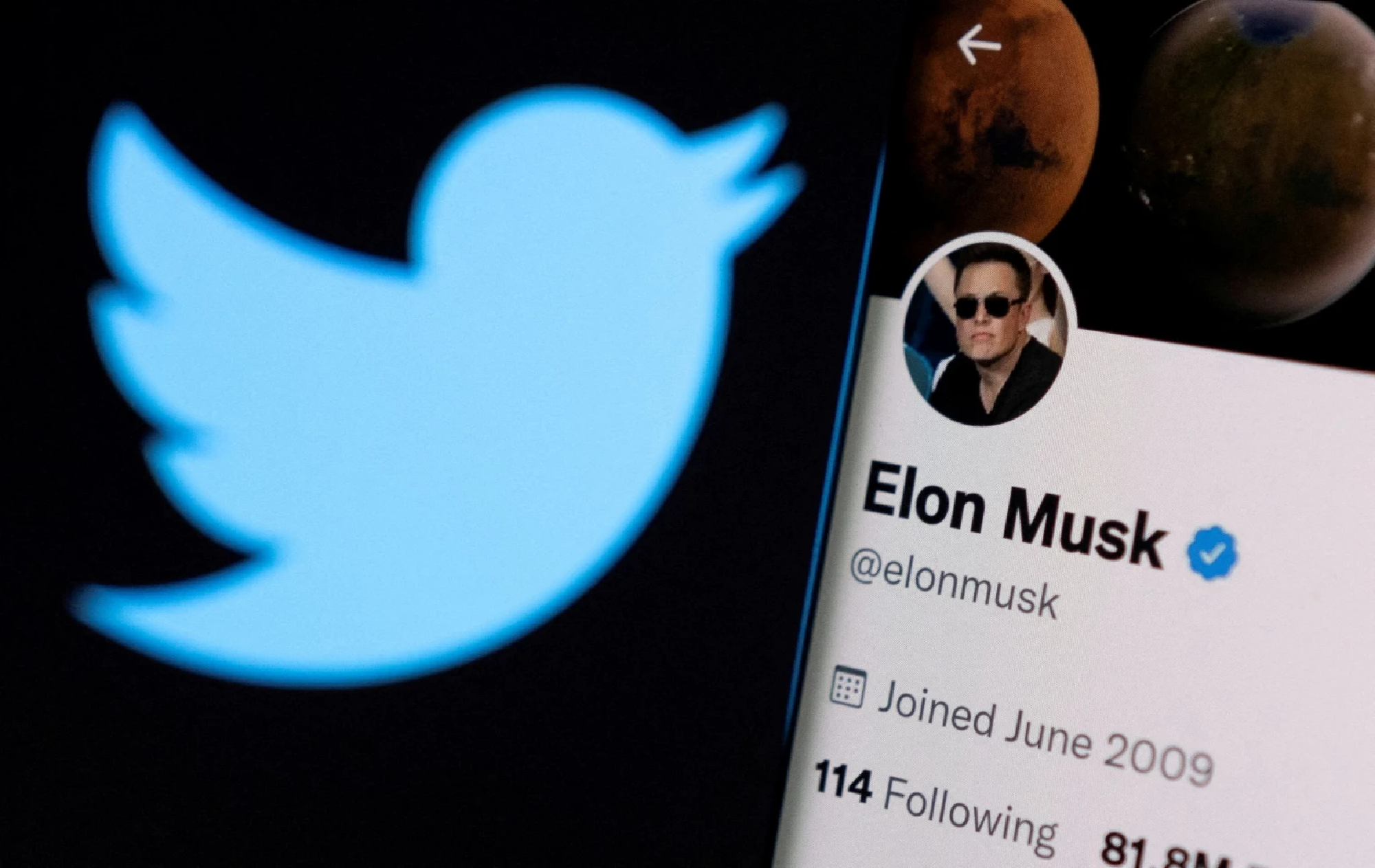
Twitter is poised to agree on a sale to Elon Musk for around $43 billion in cash, the price the chief executive of Tesla has called his “best and final” offer for the social media company, people familiar with the matter said.
Twitter may announce the $54.20-per-share deal later on Monday (April 25) once its board has met to recommend the transaction to Twitter shareholders, the sources said.
It is always possible that the deal collapses at the last minute, the sources added.
Musk, the world’s richest person according to a tally by Forbes, is negotiating to buy Twitter in a personal capacity and Tesla is not involved in the deal.
Twitter has not been able to secure so far a ‘go-shop’ provision under its agreement with Musk that would allow it to solicit other bids once the deal is signed, the sources said. Still, Twitter would be allowed to accept an offer from another party by paying Musk a break-up fee, the sources added.
The sources requested anonymity because the matter is confidential. Twitter and Musk did not immediately respond to requests for comment.
Twitter shares were up almost 4% in early market trading in New York on Monday at $50.62.
Musk has said Twitter needs to be taken private to grow and become a genuine platform for free speech.
The deal would come just four days after Musk unveiled a financing package to back the acquisition.
This led Twitter’s board to make the deal more seriously and many shareholders to ask the company not to let the opportunity for a deal to slip away, Reuters reported on Sunday (April 24).
The sale would represent an admission by Twitter that its new chief executive Parag Agrawal, who took the helm in November, is not making enough traction in making the company more profitable, despite being on track to meet ambitious financial goals the company set for 2023.
Twitter’s shares were trading higher than Musk’s offer price as recently as November.
Musk’s negotiating tactics – making one offer and sticking with it – resembles how another billionaire, Warren Buffett, negotiates acquisitions.
Musk did not provide any financing details when he first disclosed his offer for Twitter, making the market sceptical about its prospects.
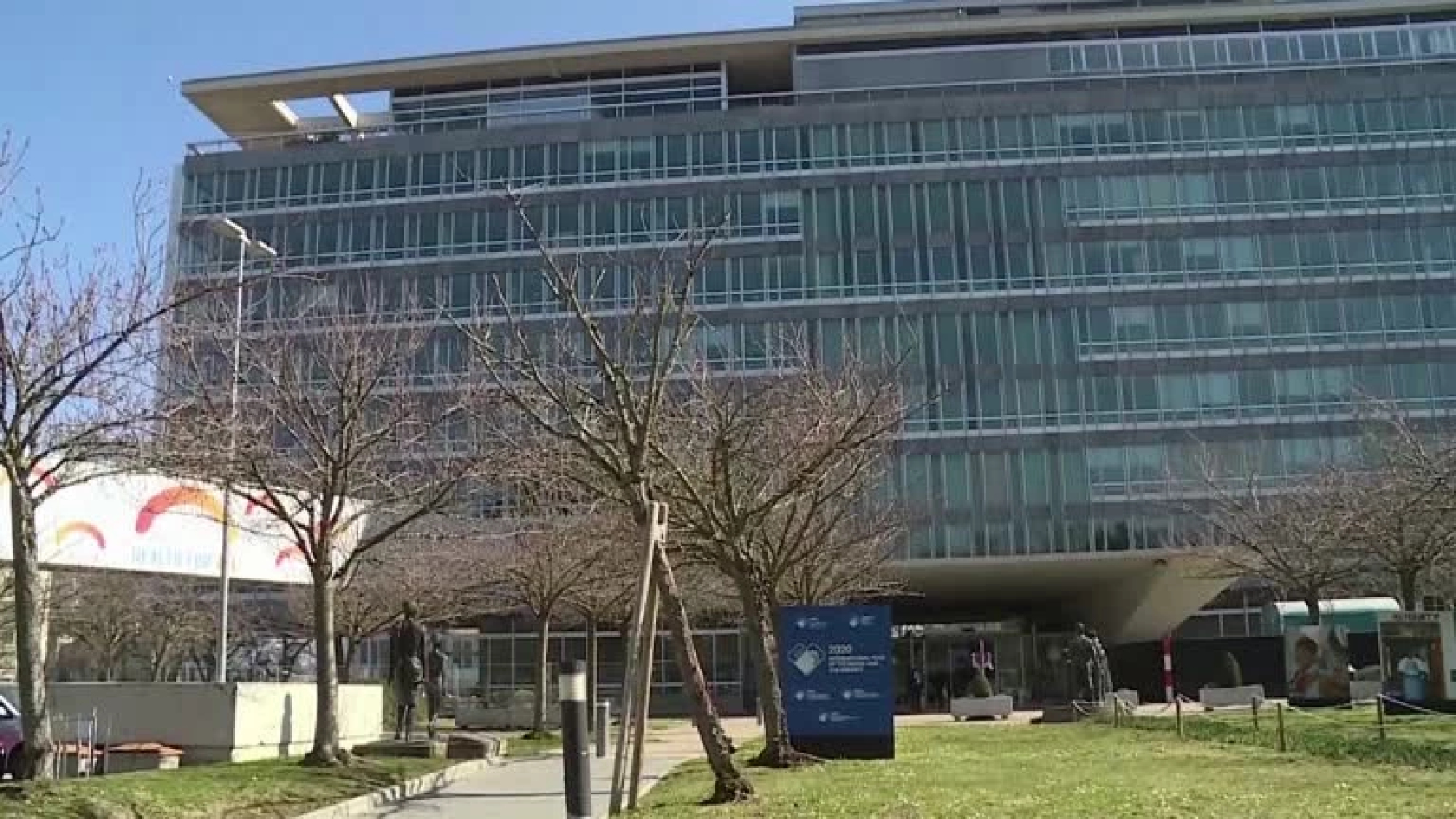
Twelve countries have reported acute hepatitis for unknown reasons among children, with at least one death, the World Health Organization (WHO) said Saturday.
At least 169 cases of acute hepatitis among children had been reported, 114 of whom in Britain, the WHO said in a statement. It said cases have also been reported in the United States, Spain, Israel, Denmark and other countries.
The patients ranged from one month to 16 years old, and 17 of them require a liver transplant.
The WHO did not provide details about the countries where the death occurred.
The symptoms of many reported cases include diarrhoea and vomiting, and most cases do not have a fever.
None of the reported cases has detected the five common hepatitis viruses.
The WHO also said adenoviruses had been detected in 74 cases, of which 20 were infected with novel coronavirus and 19 with both coronavirus and adenoviruses.
As the vast majority of the patients had not been vaccinated against COVID-19, it is now considered that their hepatitis is not a side effect of COVID-19 vaccination.
The WHO is monitoring the situation closely and working in cooperation with the UK Health department and other partners.
A child-sized doll screams and rolls its eyes while lying on a table, as engineer Hiroki Takimoto looks on calmly. But instead of being a child’s toy, the doll is a humanoid robot that can mimic critical medical symptoms designed to train dental workers.
Co-developed by Japanese robotics startup Tmsuk and a local dental school, the robot, named the Pedia_Roid, was designed to simulate a child’s response when receiving dental treatment, including changes to its medical condition.
Using a tablet programmed with different medical conditions, the user is able to send signals to air cylinders installed within the robot’s joints to move its entire body, mouth, and tongue to display physical reactions and facial expressions. More importantly, the robot is able to simulate signs of it undergoing medical emergencies such as convulsion and heart failure, allowing trainees to gain experience in knowing how to handle similar critical situations, a Tmsuk engineer said.
Director of Tmsuk’s engineering division Yusuke Ishii said the robot was developed due to the lack of clinical dental training to treat children.
“It is difficult to get experience in pediatric dentistry because there are no opportunities to practise. In addition, there is the risk that children will move wildly because with children when their medical condition suddenly worsens, it’s hard for them to express that situation. So it is necessary to have the experience and knowledge to monitor and treat the patients,” Ishii told Reuters.
Currently, at a hefty price tag of about 25 million Japanese yen ($195,000), Tmsuk hopes to develop the hyper-realistic robot further such that people from other childcare industries such as paediatricians and elementary school teachers would be able to use it for other emergency situation training.
The National Interest เผยแพร่บทวิเคราะห์เมื่อปลายปีที่แล้ว ก่อนที่สงครามระหว่างรัสเซียและยูเครนจะปะทุขึ้น โดยระบุว่าตุรกีกำลังก้าวเข้ามาเป็นมหาอำนาจด้านโดรนอย่างรวดเร็ว ขณะที่ยุทโธปกรณ์ของตุรกีกำลังเพิ่มขึ้นและทรงพลังมากขึ้น ตุรกียังเป็นผู้ใช้และผู้ส่งออกโดรนติดอาวุธรายใหญ่
Irak’?n kuzeyinde ba?ar?yla devam eden Pençe-Kilit Operasyonu kapsam?nda etkisiz hâle getirilen terörist say?s? 42’ye yükseldi. Teröristlerin inlerini yerle bir etmeye devam edece?iz! pic.twitter.com/d9Bk9HW40d— T.C. Millî Savunma Bakanl??? (@tcsavunma) April 22, 2022
เรื่องนี้ทำให้ผู้นำเข้าพุ่งพาการซื้อน้ำมันปาล์มเพื่ออุดช่องว่างอุปทานจนกว่าคำสั่งห้ามของอินโดนีเซียจะส่ง “ผลกระทบทวีคูณ” ต่อผู้ซื้อ Atul Chaturvedi ประธานกลุ่มการค้าของ Solvent Extractors Association of India (SEA) กล่าว