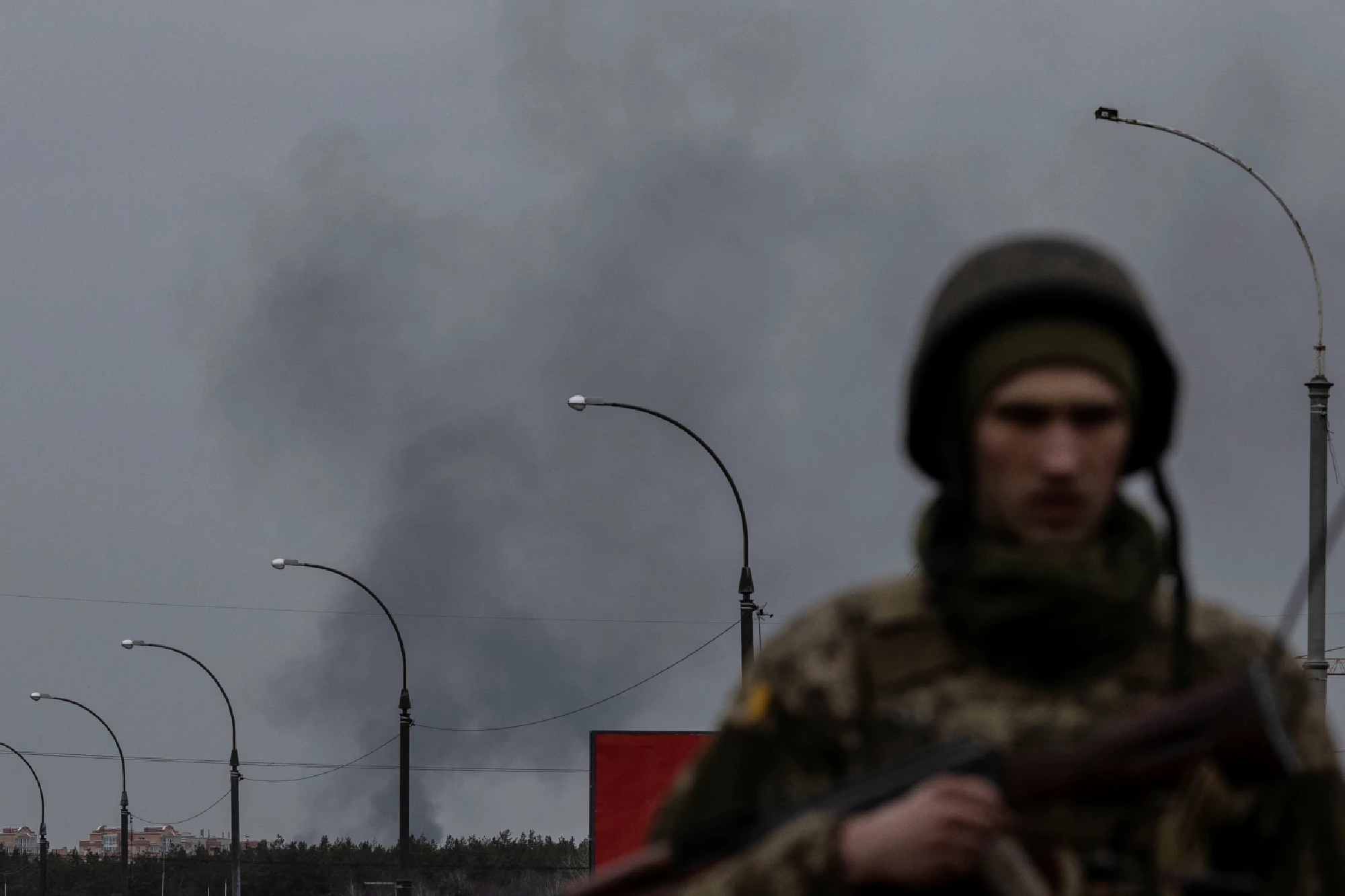
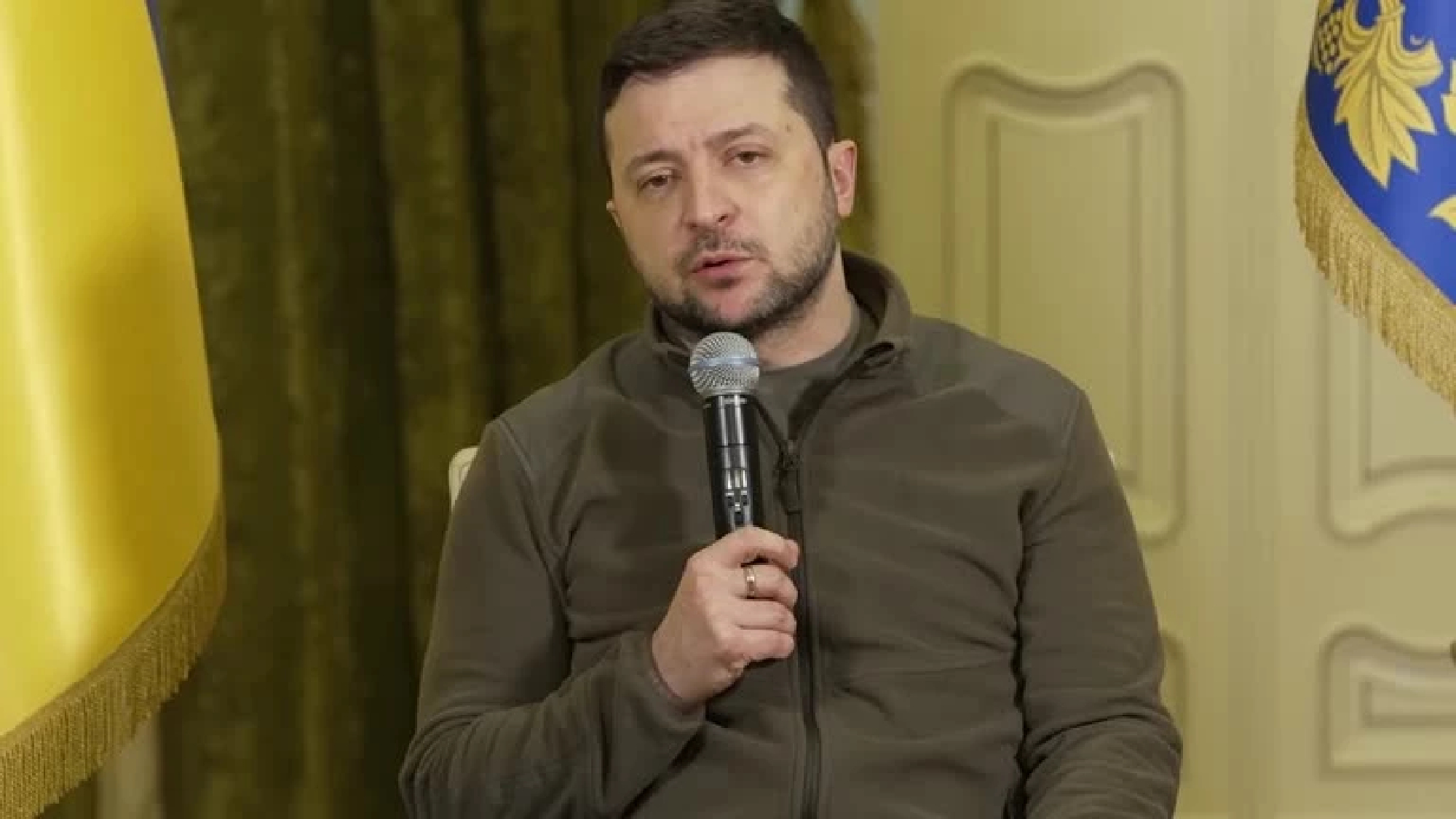
Around 1,300 Ukrainian troops have been killed since the start of the Russian invasion, President Volodymyr Zelenskiy said on March 11
Speaking at a news briefing, Zelenskiy said Ukrainian and Russian negotiating teams had started discussing concrete topics rather than exchanging ultimatums.
He said the West should be more involved in fighting Russia to prevent Russia from invading other countries.
“What is happening in Ukraine today will happen in Europe tomorrow. In order to prevent it everyone should fight, for themselves, fight here, in whatever way they can,” he said.
President Volodymyr Zelenskiy said on Saturday (March 12) the West should be more involved in negotiations to end the war but welcomed efforts by Israeli Prime Minister Naftali Bennett to mediate between Ukraine and Russia, and said he had suggested to Bennett holding talks in Jerusalem.
Ukrainian and Russian negotiating teams had started discussing concrete topics rather than exchanging ultimatums.
Speaking at a news conference in Kyiv Zelenskiy said Ukrainian and Russian negotiating teams had started discussing concrete topics rather than exchanging ultimatums.
He said he discussed the war with Chancellor Olaf Scholz and President Emmanuel Macron, and the German and French leaders then spoke to Putin by phone and urged the Russian leader to order an immediate ceasefire.
Russian mining giant Nornickel is facing significant logistics issues but has managed to secure alternative routes for its palladium deliveries, its biggest shareholder, Vladimir Potanin, told Russian RBC TV in a pre-recorded interview aired on March 12.
Potanin said airspace closures had made supplying palladium, particularly challenging and the task was to find new routes to bring down surging demand and price hikes as much as possible.
“Consumers do not like them,” he said in an interview with RBC. “Many of them are even looking at the possibility of canceling their contracts.”
Potanin said this week that Russia should try to preserve its economic position in markets that are now shunning Moscow over events in Ukraine, warning that confiscating the assets of companies that have fled
Russia would shatter investor confidence for decades and take Russia back to the calamitous days of the 1917 Bolshevik revolution.
“The recovery of the Russian economy will depend on the depth of the crisis we enter,” Potanin said. “The sooner this situation is resolved and the sooner normal dialog with partners resumes, the softer the consequences for our country will be.”
He said Nornickel, the world’s largest producer of palladium and refined nickel, was not yet considering moving to new markets from its traditional ones but does have plans in place.
As sanctions bite, another issue facing Russian companies is how to service their foreign debt amid foreign exchange limits imposed by the Russian government.
– U.S. President Joe Biden and the other G7 leaders “will announce new economic actions” to “further isolate Russia from the global financial system,” the White House said in a statement. – Leaders of the European Union agreed on imposing new sanctions against Russia in an informal summit in Versailles, France.
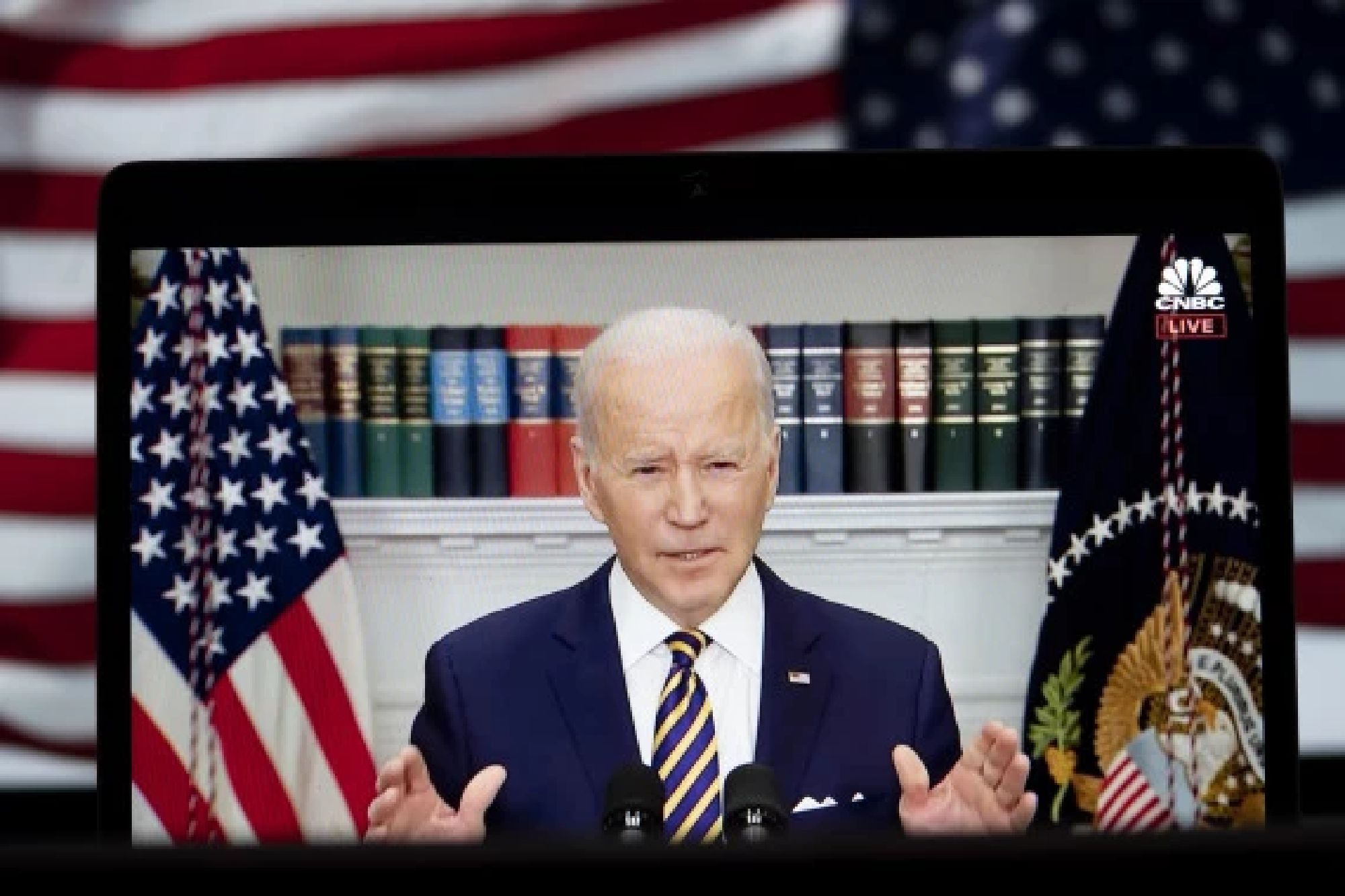
The U.S. government will revoke Russia’s most-favored nation trade status amid the Ukraine crisis, the White House said Friday, noting that it will work with Group of Seven (G7) countries and the European Union to roll out new sanctions.
U.S. President Joe Biden and the other G7 leaders “will announce new economic actions” to “further isolate Russia from the global financial system,” the White House said in a statement.
The sanction followed an energy embargo on Russia announced by Washington on Tuesday, among a series of moves against Russia over the Ukraine crisis, even though analysts have warned of huge potential consequences and spillovers.
EU leaders pose for a group photo ahead of the informal European Council meeting in the Palace of Versailles, near Paris, France, March 10, 2022. (Xinhua/Gao Jing)
On the same day, leaders of the European Union agreed on imposing new sanctions against Russia in an informal summit in Versailles, France.
President of the European Commission Ursula von der Leyen said the new sanctions aim to further isolate Russia from the global economic system. She also announced a plan to find alternatives to Russian fuels by 2027 in order to reduce EU’s dependence on Russia.
“There’s the law of unintended consequences,” U.S.-China Business Council President Craig Allen told Xinhua earlier this week, commenting on the potential economic impact of Western sanctions on Russia.
“What you intend to do, perhaps is punish Russia, but there are unintended consequences to every action. And it’s too early to be able to say, what are the unintended consequences of this,” Allen said.
Chinese scientists bred a live rodent offspring derived from a single unfertilized oocyte, and the mouse grew into a fertile adult.
Anew life usually starts with sexual reproduction or the fusion of an oocyte and a sperm cell in mammals. They cannot reproduce without fertilization because of “genomic imprinting,” a phenomenon that causes genes to be expressed or not, depending on whether they are inherited from the mother or the father.
A previous study found that imprinting is realized via the methylation of DNA sequence in the process of fertilization.
In 2015, Chinese zoologists managed to breed a mouse with two mothers by modifying the genomic imprinting, taking the first step towards asexual reproduction.
A group of scientists from Renji Hospital affiliated with Shanghai Jiao Tong University used the gene-editing tool to rewrite seven imprinting control regions of multiple unfertilized mouse oocytes.
They added two methylations in imprinting control regions from the paternal line, by dint of the DNA methylase, an enzyme that adds a methyl group to a molecule, while demethylating five imprinting control regions from the maternal line by dint of demethylase.
The researchers acquired 389 mouse embryos from single oocytes and 192 ones developed into blastosphere in vitro.
Afterward, they transplanted them into 14 female mice, with three of them being born, according to the study published earlier this week in the Proceedings of the National Academy of Sciences.
Among the three viable offspring, two underweight ones died within a day, and another one, weighing 1.101 grams that approximates the wild-type mice, survived into adulthood and can give birth to offspring.
According to the researchers, the success of asexual reproduction in mammals opens many opportunities in agriculture, research, and medicine.
The Russia-Ukraine conflict continues on Saturday as relevant parties are working to broker a peaceful solution. Following are the latest developments of the situation:
Kremlin spokesman Dmitry Peskov said on Friday that a possible meeting between Russian President Vladimir Putin and Ukrainian President Volodymyr Zelensky is not ruled out.
“Yes, it is indeed possible in theory,” Peskov told reporters. “But first, both delegations and ministers must do their part so that the presidents do not meet for the process and for the sake of conversation, but meet for the result.”
Meta Platforms Inc., the parent company of social networks Facebook and Instagram, said on Thursday that it has allowed posts with violent speeches towards Russians in response to Russia’s military operation in Ukraine.
Instagram has distributed materials which call for committing violent acts against Russian citizens, including military personnel, Russia’s telecom watchdog Roskomnadzor said Friday in a brief statement.
Peskov said Friday that Russia will investigate if the social media platforms allowed publications of calls for violence against Russians, and it will be necessary to ban the applications if they allow hate speech.
The U.S. government will revoke Russia’s most-favored nation trade status amid the Ukraine crisis, the White House said Friday, noting that it will work with Group of Seven (G7) countries and the European Union to roll out new sanctions.
U.S. President Joe Biden and the other G7 leaders “will announce new economic actions” to “further isolate Russia from the global financial system,” the White House said in a statement.
Local residents receive humanitarian aid in Donetsk on March 6, 2022. (Photo by Victor/Xinhua)
In a meeting on Friday with his Belarusian counterpart, Alexander Lukashenko, Putin said as the West imposed restrictions on Russia, “this is indeed a time of opportunity when we must strengthen our technological and economic sovereignty.”
“The Soviet Union indeed always lived in conditions of sanctions but developed and achieved enormous success,” Putin said, stressing that “we have of course become stronger in this respect.”
– – – –
Local residents receive humanitarian aid in Donetsk on March 6, 2022. (Photo by Victor/Xinhua)
Putin said Friday that he supported the idea of allowing volunteers from abroad to provide military assistance to Donbass.
Western countries and Ukraine do not disguise the fact that they are gathering mercenaries and sending them to Ukraine, Putin said at a meeting with permanent members of Russia’s Security Council.
– Since the end of 2011, No. 1 to No. 3 units have been in a stable state of low temperature cooling, but the internal radiation is still very high, making it difficult for personnel to work in close proximity. – Relevant work has to rely on remote tools, but not a single piece of nuclear residue has been removed so far. Eleven years after the quake-induced Fukushima disaster, the aftermath of the nuclear meltdown, not least a large amount of contaminated water, remains a grave challenge for Japan as well as for the rest of the world.
amagnitude-9.0 earthquake struck off the coast of Fukushima Prefecture in Japan. An earthquake-triggered tsunami engulfed the Fukushima Daiichi Nuclear Power Plant, causing core meltdowns in units one to three and leading to the worst nuclear crisis since Chernobyl.
Little progress has been made over the past year on the most pivotal and hardest work of decommissioning the Fukushima Daiichi power plant — how to remove the nuclear residue from the meltdown. Japan’s International Research Institute for Nuclear Decommissioning estimated that the total weight of nuclear waste mix from melted fuel rods and other materials in pressure vessels that melted during the accident could be 880 tons.
Since the end of 2011, No. 1 to No. 3 units have been in a stable state of low temperature cooling, but the internal radiation is still very high, making it difficult for personnel to work in close proximity. Relevant work has to rely on remote tools such as remotely controlled robots and mechanical arms, but not a single piece of nuclear residue has been removed so far. The Tokyo Electric Power Company (TEPCO) said it plans to first try to remove the nuclear residue from unit 2 this year.
Hiroaki Koide, a retired researcher at Kyoto University, said the Japanese government and TEPCO’s 30-40 year “roadmap” for decommissioning the reactors was an “illusion” that could not be achieved because it would be “impossible even in 100 years” to remove the large amount of scattered nuclear debris, which would have to be sealed in a “sarcophagus.”
File photo taken on Nov. 12, 2011 shows the exterior of Fukushima Daiichi nuclear plant in Fukushima Prefecture, Japan. (Xinhua)
In April last year, the Japanese government officially decided to discharge the nuclear contaminated water into the sea starting in the spring of 2023. The contaminated water at the Fukushima Daiichi Nuclear Power Plant contains radioactive cesium, strontium, tritium and other radioactive substances.
The Japanese government and TEPCO said the Advanced Liquid Processing System (ALPS), a multi-nuclide removal system, can remove 62 radioactive substances except tritium, which is difficult to remove from water.
Japanese fishing groups strongly oppose the plan to discharge contaminated water into the sea. Opposition parties, including the Constitutional Democratic Party of Japan, also criticized the Japanese government’s plan and demanded its withdrawal.
About 60 percent of the 42 mayors in the disaster-stricken Fukushima, Miyagi and Iwate prefectures opposed the decision. The Japan Federation of Bar Associations submitted a statement opposing the plan to Japanese Prime Minister Fumio Kishida and others, urging the government to consider other measures, such as mixing contaminated water with cement and sand.
At the invitation of Japan, an investigation team of the International Atomic Energy Agency (IAEA) visited Japan on Feb. 14-18 to complete its first field investigation.
Lydie Evrard, deputy director general of the IAEA, said Japan had studied several options for treating the contaminated water, but ultimately chose the option of discharging it into the sea, and the Japanese government invited the IAEA to conduct a safety review, hoping that the agency would give basic policy support to the treatment plan. What she pointed out was that it was up to the host country to decide how to deal with the contaminated water, and that the agency provides only technical assessments, not options.
China is seriously concerned about and firmly opposes Japan’s unilateral decision to discharge the nuclear-contaminated water into the sea and its proceeding with the preparatory work, Chinese Foreign Ministry Spokesperson Zhao Lijian has said.
People rally to protest against the Japanese government
He stressed that the handling of the nuclear-contaminated water from Fukushima is never Japan’s private matter. Instead, it bears on the marine environment and public health of the whole world.
Japan should heed and respond to the appeals of neighboring countries and the international community, and rescind the wrong decision of dumping the water into the sea. “It mustn’t wantonly start the ocean discharge before reaching consensus with stakeholders and relevant international institutions through full consultations,” Zhao said.

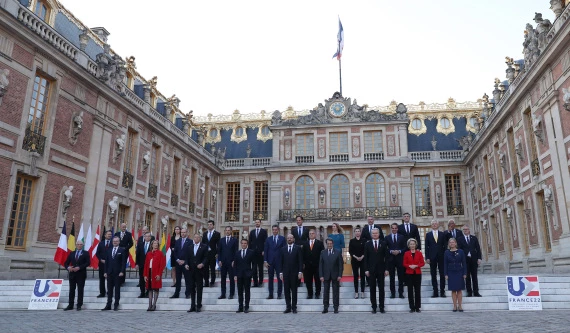 EU leaders pose for a group photo ahead of the informal European Council meeting in the Palace of Versailles, near Paris, France, March 10, 2022. (Xinhua/Gao Jing)
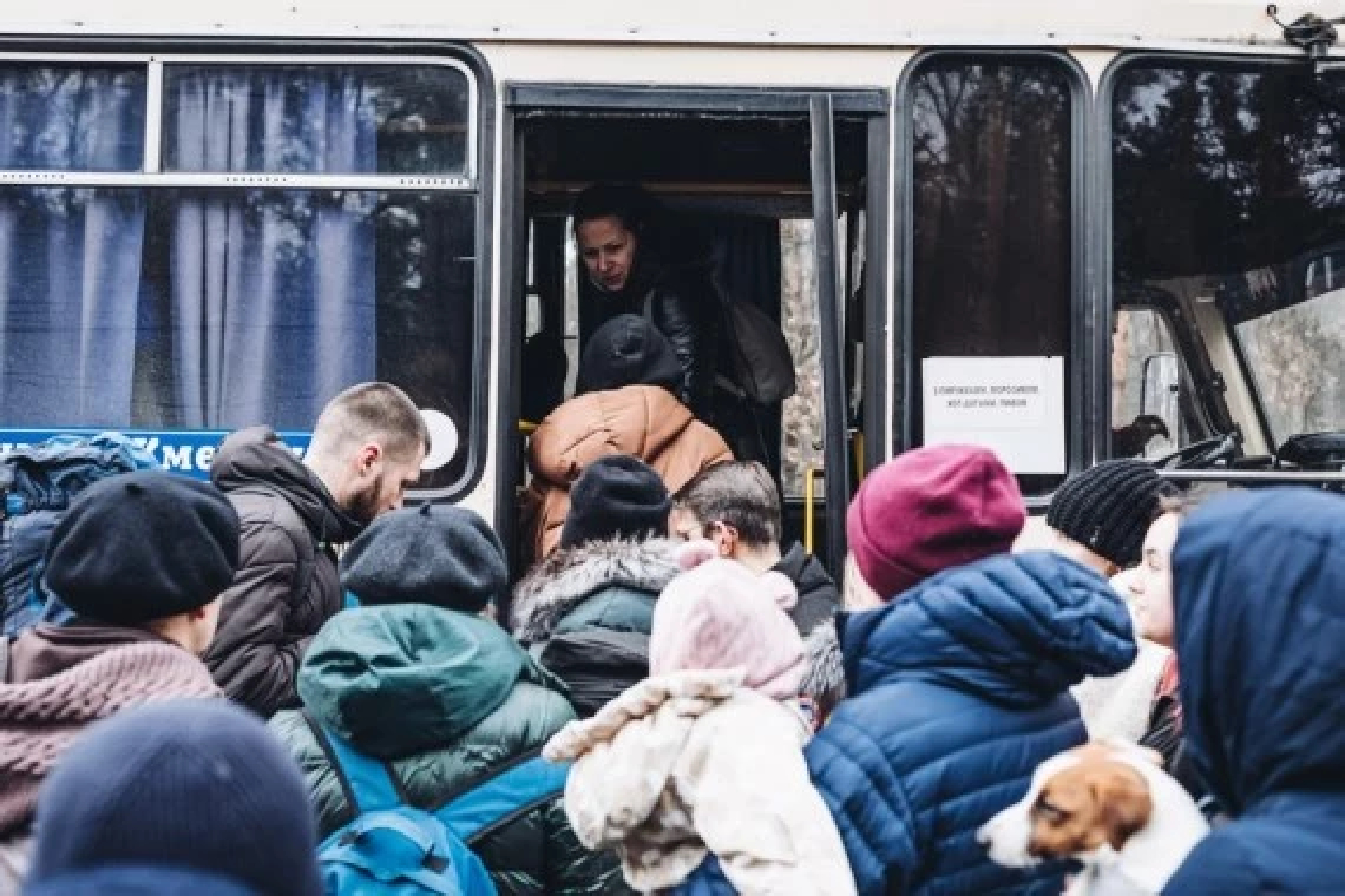
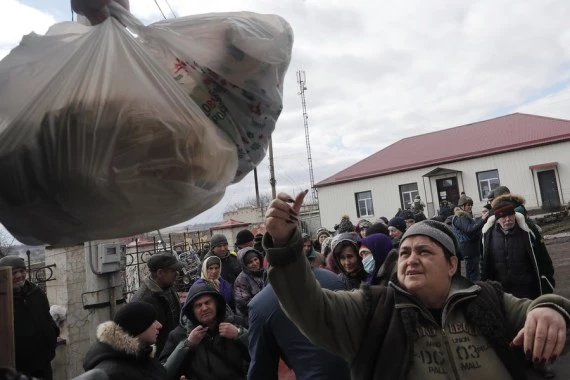 Local residents receive humanitarian aid in Donetsk on March 6, 2022. (Photo by Victor/Xinhua)
 Local residents receive humanitarian aid in Donetsk on March 6, 2022. (Photo by Victor/Xinhua)
 File photo taken on Nov. 12, 2011 shows the exterior of Fukushima Daiichi nuclear plant in Fukushima Prefecture, Japan. (Xinhua)


