Some 6,000 red lanterns are lit up at the iconic Thean Hou Temple in the Malaysian capital Kuala Lumpur in celebration of the Chinese Lunar New Year that falls on Feb. 1 this year.
Red lanterns set for the upcoming Chinese Lunar New Year are seen at Thean Hou Temple in Kuala Lumpur, Malaysia, Jan. 22, 2022. (Xinhua/Zhu Wei)
Red lanterns set for the upcoming Chinese Lunar New Year are seen at Thean Hou Temple in Kuala Lumpur, Malaysia, Jan. 22, 2022. (Xinhua/Zhu Wei)
Red lanterns set for the upcoming Chinese Lunar New Year are seen at Thean Hou Temple in Kuala Lumpur, Malaysia, Jan. 22, 2022. (Xinhua/Zhu Wei)
A man takes photos of the red lanterns at Thean Hou Temple in Kuala Lumpur, Malaysia, Jan. 22, 2022. (Xinhua/Zhu Wei)
People pose for photos next to the red lanterns at Thean Hou Temple in Kuala Lumpur, Malaysia, Jan. 22, 2022. (Xinhua/Zhu Wei)
People pose for photos under the red lanterns at Thean Hou Temple in Kuala Lumpur, Malaysia, Jan. 22, 2022. (Xinhua/Zhu Wei)
Red lanterns set for the upcoming Chinese Lunar New Year are seen at Thean Hou Temple in Kuala Lumpur, Malaysia, Jan. 22, 2022. (Xinhua/Zhu Wei)
Red lanterns set for the upcoming Chinese Lunar New Year are seen at Thean Hou Temple in Kuala Lumpur, Malaysia, Jan. 22, 2022. (Xinhua/Zhu Wei)
“I appreciate China’s help so much. The winter assistance has solved a lot of our problems in these cold and difficult days. The Chinese people has been a good neighbor and friend for long,” local resident Attiqullah said.
Afghanistan’s caretaker government began to deliver the China-aided humanitarian food supplies on Saturday to at least 10 provinces of the country’s 34 provinces, an official said Saturday.
The supplies including 440 tons of rice will be shipped by 20 trucks to 10 most vulnerable provinces, Abdul Mutalib Haqqani, spokesman for the Ministry of Refugees and Repatriation, told Xinhua here.He also said that other shipments of the China-aided humanitarian food supplies will be transported to other provinces in the coming days.
Haqqani said that Afghanistan had received several batches of humanitarian supplies donated by China, and that the ministry was sending the material aid to the vulnerable people in the country’s 34 provinces. He expressed gratitude to China for the humanitarian assistance.
People receive relief assistance donated by China in Maimana, capital of Faryab province, Afghanistan, Jan. 10, 2022. (Photo by Qamaruddin Poya/Xinhua)
Recently, thousands of needy people in several Afghan provinces received China-aided relief items. In Faryab province, 1,100 destitute people who were surveyed and registered by officials from the provincial directorate of refugees and repatriation received the assistance packages in Maimana, the capital of northern Faryab province, on Jan. 10, head of the directorate Saifuddin Jahadi told Xinhua.
People receive relief assistance donated by China in Maimana, capital of Faryab province, Afghanistan, Jan. 10, 2022. (Photo by Qamaruddin Poya/Xinhua)
The non-food packages included blankets, winter jackets and washing soaps, he said.
“I appreciate China’s help so much. The winter assistance has solved a lot of our problems in these cold and difficult days. The Chinese people has been a good neighbor and friend for long,” local resident Attiqullah told Xinhua after receiving a package.
In Kunduz province, about 300 people received similar assistance packages on Jan. 10, according to Matihullah Rohani, head of the provincial directorate of culture and information.
Since Taliban’s takeover of Afghanistan in mid-August 2021, the impoverished country has suffered economic woes.
China has recently sent batches of humanitarian assistance including foodstuff, COVID-19 vaccines and winter clothes to the Central Asian country.
Workers load China-aided humanitarian food supplies onto a truck in Kabul, Afghanistan, Jan. 22, 2022. (Photo by Saifurahman Safi/Xinhua)
People receive relief assistance donated by China in Maimana, capital of Faryab province, Afghanistan, Jan. 10, 2022. (Photo by Qamaruddin Poya/Xinhua)
In Myanmar’s Wingabaw Elephant Camp, a newborn baby elephant nestled close to his mother. The staff on the side is feeding them with water, as the two-day-old baby is playing happily under the protection of his mother.
A newborn male elephant is seen at the Wingabaw Elephant Camp in Bago region, Myanmar on Jan. 23, 2022. (Xinhua/U Aung)
A newborn male elephant is seen at the Wingabaw Elephant Camp in Bago region, Myanmar on Jan. 23, 2022. (Xinhua/U Aung)
Mother elephant breastfeeds a two-day-old baby male elephant at the Wingabaw Elephant Camp in Bago region, Myanmar on Jan. 23, 2022. (Xinhua/U Aung)
The two-day-old baby male elephant is seen at the Wingabaw Elephant Camp in Bago region, Myanmar on Jan. 23, 2022. (Xinhua/U Aung)
Children across China have got the much-needed breather to savor a fun-filled holiday, as they kickstarted their first winter vacation after the implementation of the “double reduction” policy, rolled out in July last year to alleviate the pressures of excessive schoolwork and off-campus tutoring.
Children are no longer drowned in homework and extra classes this winter vacation. “I’ve never had a more pleasant winter vacation since I entered primary school,” said Chang Xinyue, 12, in Taiyuan, north China’s Shanxi Province.
The sixth grader’s holiday plan, all made by herself, has no tutoring classes and piles of homework. Instead, she has plenty of time for her hobbies.
Her holiday schedule includes three hours of study every day, playing go chess, reading and exercising.
“She used to be exhausted after a full day of tutoring classes, but now she is certainly more self-motivated,” said Chang’s mother with a sense of pride.
For over a decade, the same scenes had played out in every Chinese household with a school-age child during vacation — kids overwhelmed with extra classes and parents or grandparents busy shuttling between these training centers, as holidays are believed to be “golden opportunities” to make up for missed classes and improve preparation for the forthcoming semester.
The “double reduction” policy was rolled out at a time when both students and parents were feeling the strain of an excessive academic load and overheated off-campus tutoring. The move, which relieved both sides, has brought the main education court back to campus and liberated children from having to jump the gun, which is detrimental to their overall development.
Education authorities in China reiterated their stance earlier this month ahead of the winter vacation to ensure that the policy is strictly followed.
“The ‘double reduction’ policy relieves children of their strenuous studies and is beneficial to their overall abilities,” said Ma Huiqin with the Taiyuan Education Bureau.
Instead of being stuck with course books, children are now more encouraged to go outdoors, have fun and devote more time to physical and mental wellbeing.
Xu Haoxin, a second grader from Taiyuan, is looking forward to the upcoming Beijing 2022 Winter Olympics. “I will learn about the Winter Olympics in advance and watch the games with my parents. I’ll also pay close attention to the medal tally,” Xu said.
Meanwhile, Li Siqi, a third-grader from the city of Lanzhou, northwest China’s Gansu Province, is spending most of his time during the vacation reading and working out.
“Swimming and soccer are his favorite sports. Since he is interested, we’ll try our best to give him a happy childhood,” said Li’s mother.
Bai Xiaojing, another parent in Lanzhou, said she used to stuff her kid with various training courses in holidays, which did not help much in the academic performance but “had made everyone weary and strained the parent-child relation.”
“The new policy has also made parents like us reflect and reevaluate what kind of education is appropriate and better suits our kids,” she said.
Psychologists believe that the “double reduction” policy is helpful to the mental and physical health of the young generation.
Early attachment relationship is critical in creating bonds between a child and the primary caregiver, developing a healthy personality and good adaptability, said Tian Feng with the Chinese Association for Mental Health.
“If the early attachment relationship is not well established, psychological problems such as impulsiveness, anxiety and depression will easily occur during adolescence. Winter vacation under the new policy provides opportunities for parents to observe, understand and communicate with their children,” Tian added.
After the implementation of the new policy, offline off-campus training institutions that offer curriculum subject programs have been reduced by 83.8 percent, and online training institutions have been reduced by 84.1 percent, with over 91 percent of students now participating in after-school services on campus, the Ministry of Education told a press conference in December last year.
The proportion of students who are able to complete written assignments within the specified time also increased from 46 percent before the new policy was implemented to more than 90 percent now, the ministry added.
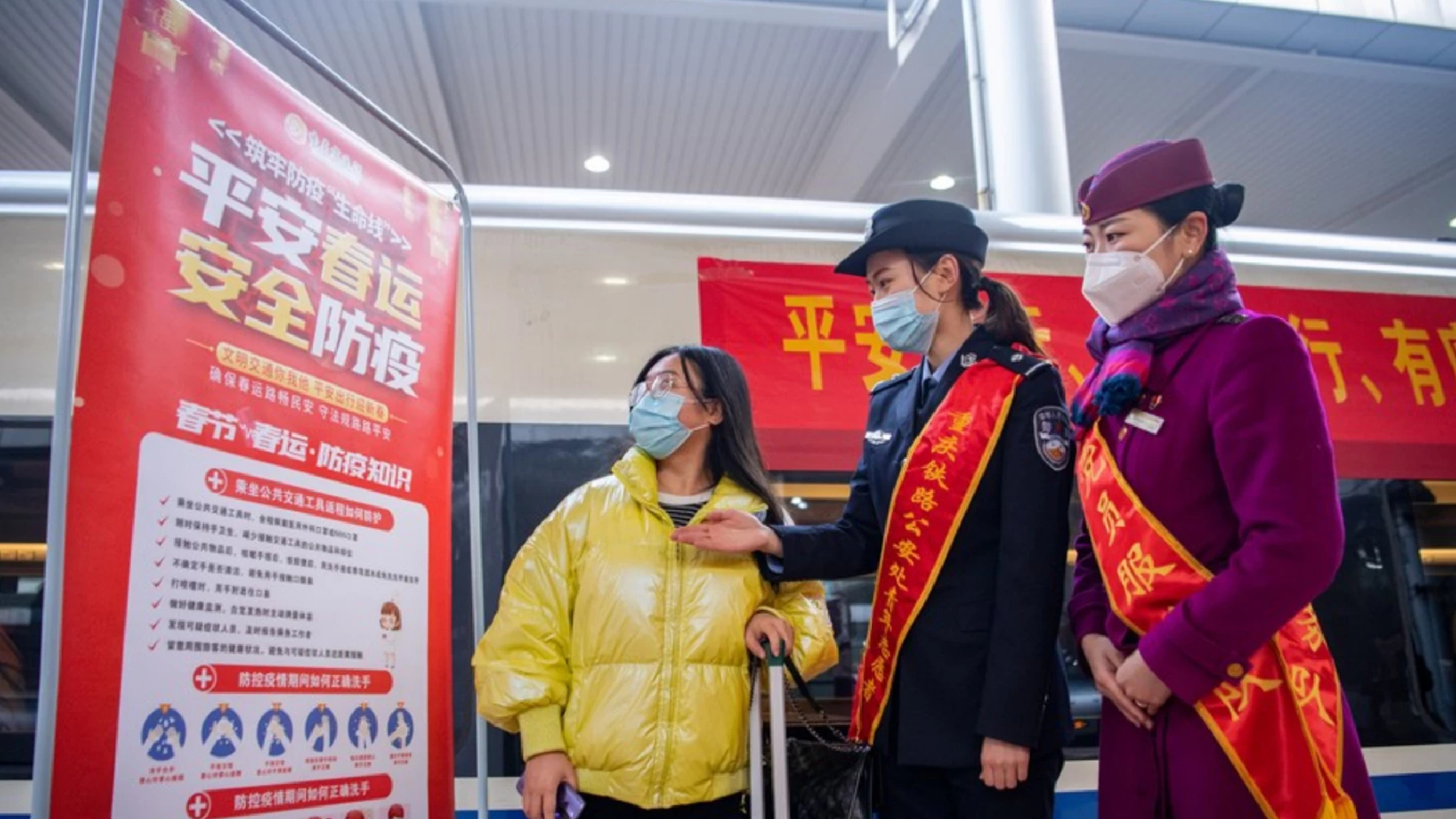
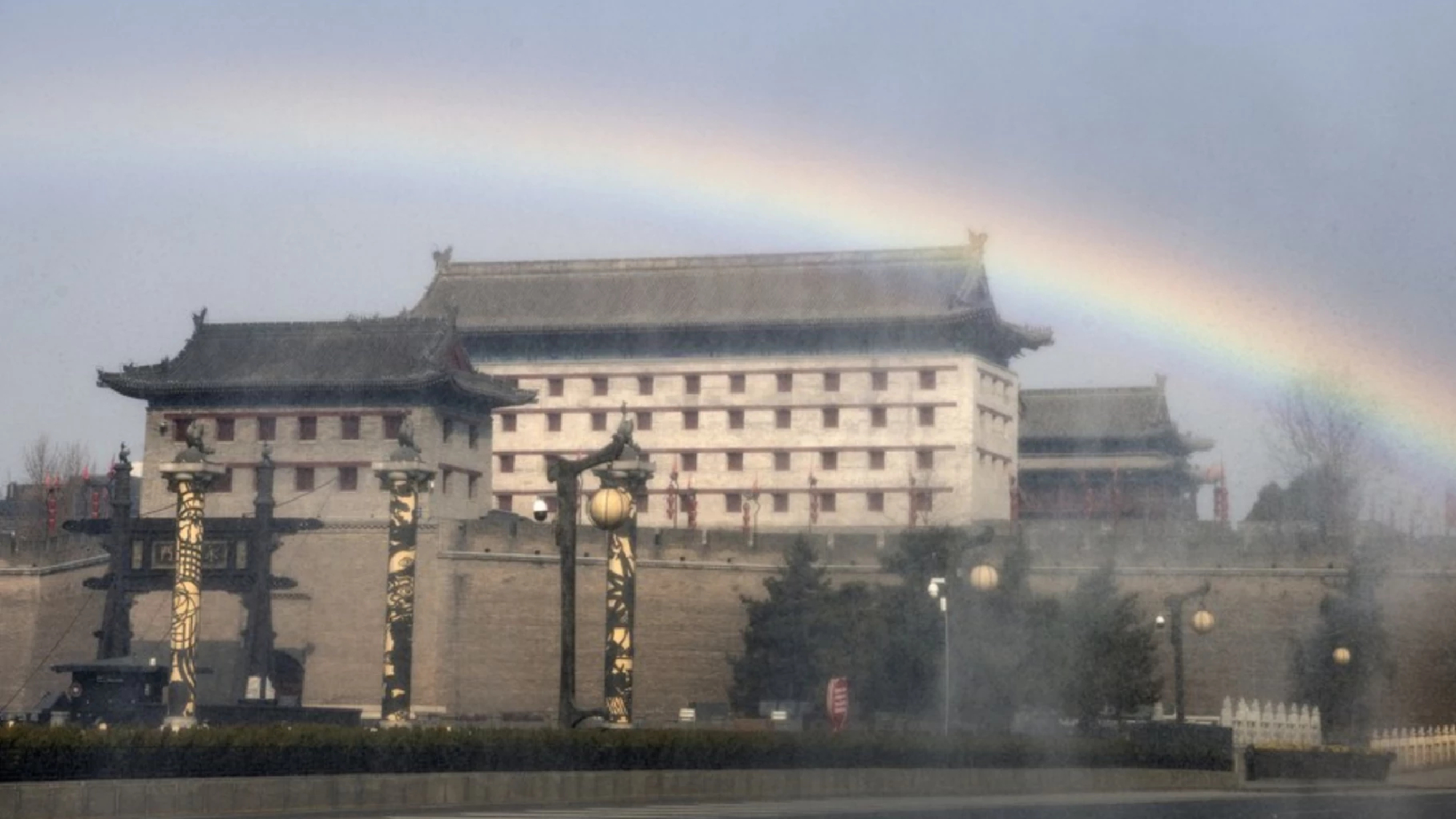
Xi’an, capital of northwest China’s Shaanxi Province, cleared all areas classified as high and medium-risk for COVID-19 after more than a month’s epidemic prevention and control efforts, local authorities said Monday.
The whole city has been downgraded to low risk, and all residents can travel freely with their health QR code from Monday, according to the municipal epidemic prevention and control headquarters.
The city’s traffic, as well as work and production, has fully resumed while government organs at all levels and enterprises have returned to normal since Monday, the headquarters added.
As of Sunday, the city had reported 2,053 confirmed local cases since the resurgence of the epidemic in December.
“Low risk doesn’t mean free of risk. The city will continue to strictly implement epidemic prevention and control measures,” said Liu Feng, director of the provincial center for disease prevention and control.
China’s National Health Commission on Saturday urged targeted COVID-19 response measures for people traveling home, as the country is seeing more cross-regional trips ahead of the Spring Festival.
BEIJING, Jan. 22 — Tailored measures should be applied to people traveling from areas with different risk levels, Mi Feng, a spokesperson for the commission, told a press conference.
Local authorities should not take a simplistic approach to COVID-19 containment by applying a one-size-fits-all policy, nor should they add excessive restrictions, Mi said.
This year’s Spring Festival travel rush began on Jan. 17 and will continue until Feb. 25, with the number of passenger trips expected to reach 1.18 billion, official data shows.
According to data from the commission, the Chinese mainland on Friday recorded 23 new locally transmitted cases of COVID-19. Though there has been a marked drop in the number of domestic infections, Mi said that recent cluster cases indicate the risk of the virus spreading still exists.
The northwestern Chinese city of Xi’an is expected to clear all areas classified as high and medium-risk for COVID-19 on Jan. 25, provided no special circumstances arise, a government official said on Saturday.
XI’AN, Jan. 22 — Zhang Fenghu, deputy secretary general of the Xi’an Municipal Government, told a press conference that the prediction was made after careful expert study and evaluation.
Should the prediction become a reality, the ancient city, home to the world-famous Terracotta Warriors, will resume regular prevention and control in most areas, Zhang said.
There are currently two medium-risk areas and one high-risk area in Xi’an.
As of 12 p.m. Saturday, the city had reported 2,053 confirmed local cases, with 1,667 recovered.
The Russian Foreign Ministry provided article-by-article refutation on the U.S. fact sheet “Fact vs. Fiction: Russian Disinformation on Ukraine.”
MOSCOW, Jan. 22 — The Russian Foreign Ministry on Saturday criticized the U.S. Department of State for publishing a fact sheet full of false information about Russia’s policy on Ukraine.
The Russian ministry in a commentary called the sheet “an overt provocation” by Washington to publish the “Fact vs. Fiction: Russian Disinformation on Ukraine” just a day before Russian Foreign Minister Sergei Lavrov and U.S. Secretary of State Antony Blinken met in Geneva on Friday.
The Russian Foreign Ministry provided article-by-article refutation on the U.S. fact sheet, saying that since Dec. 15, 2021, when Moscow officially sent Washington its draft treaty and agreement on security guarantees, the U.S. side has mostly made obvious attempts to drag out discussions at expert levels and in various formats.
Meanwhile, the United States and its Western allies have launched a “very toxic information and propaganda campaign” by depicting Russia as an “aggressor,” an “enemy of civilized Europe” and a “threat” to the international stability, the ministry said.
It also blasted the Western countries’ “endless threats of painful sanctions against Russia that are designed to bleed our economy dry.”
The Lavrov-Blinken negotiations in Geneva on Friday ended with no breakthroughs in the establishment of legally binding security guarantees between Russia and the West, with the Ukrainian crisis as a core issue.
The West’s withdrawal from Afghanistan and subsequent decisions of the U.S. government have plunged the Afghan population into a humanitarian crisis, according to historian and author Paul Nuttall.
Washington’s refusal to unfreeze Afghanistan’s assets and insufficient humanitarian aid could lead to catastrophic consequences and the death of countless innocent people in the country, according to historian and author Paul Nuttall.
In a recent article published on RT, Nuttall discussed how the West’s withdrawal from Afghanistan and subsequent decisions of the U.S. government have plunged the Afghan population into a humanitarian crisis.
Afghanistan is facing one of its worst catastrophes, while the United States continues to stand by its decision to freeze the country’s central bank assets, according to Nuttall
People wait for work in Kabul, Afghanistan, Jan. 5, 2022. (Photo by Saifurahman Safi/Xinhua)
“Since the farcical withdrawal, and the awful scenes of desperate people falling from aeroplanes at Kabul airport, Afghanistan has had its $9 billion cash reserves frozen by the World Bank,” Nuttall wrote, adding that the United States considers that if those reserves were freed the Taliban would get access to them.
Nuttall argued that as recent reports suggest that 24.4 million Afghans are currently facing extreme hunger and 98 percent are not getting enough food, the United States is faced with the decision to negotiate with the Taliban and unfreeze the reserves, or potentially cause innumerable deaths.
“We have individuals who don’t have access to care. We have a higher degree of hospitalisation and death in our minority populations as we do in the general population.”
The United States is among a handful of countries that have actually suffered the most from COVID-19 and one of the most important reasons is “a fractured and disparate accessibility to healthcare,” top U.S. infectious disease expert Anthony Fauci has said.
“We have individuals who don’t have access to care. We have a higher degree of hospitalisation and death in our minority populations as we do in the general population,” said Fauci at the 2022 World Economic Forum virtual session, when answering the question why the United States, a “first world”, developed, rich economy, is struggling to contain COVID-19.
“We are among a handful of countries that have actually suffered the most…that is really, truly unfortunate and something that we would have hoped would have been avoided,” said Fauci.
Moreover, he continued, “it’s very disturbing, I believe, to all of us as public health officials and scientists, such a degree of pushback against regular normal, easy to understand public health measures. Reluctance to wear masks. Reluctance to promote vaccination.”
A medical worker transfers the body of a victim who died of COVID-19 at a hospital in New York, the United States, April 6, 2020. (Photo by Michael Nagle/Xinhua)
“Even at its best, this is such a formidable virus in its ability to do the things it’s already done, with multiple waves and multiple surges and multiple variants, but you make the virus have an advantage when you don’t implement in a unified way all the very well recognised public health measures, particularly the vaccines,” he warned.
The United States has witnessed a new COVID-19 surge since mid-December due to the highly infectious Omicron variant. The country is now averaging more than 765,000 new COVID-19 cases and 1,700 new deaths each day, up significantly week by week, according to the latest data of the U.S. Centers for Disease Control and Prevention.
The expert also noted that the entire world “is facing, but we certainly are facing it in a very, very disconcerting way in the United States, is the amount of disinformation that is accompanying what should be a problem where everyone pulls together against the common enemy, which is the virus.”
White flags to honor the lives lost to COVID-19 are seen on the National Mall in Washington, D.C., the United States, on Sept. 16, 2021. (Xinhua/Liu Jie)


 Red lanterns set for the upcoming Chinese Lunar New Year are seen at Thean Hou Temple in Kuala Lumpur, Malaysia, Jan. 22, 2022. (Xinhua/Zhu Wei)
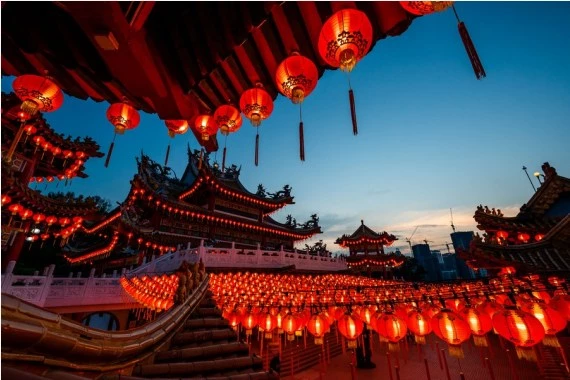 Red lanterns set for the upcoming Chinese Lunar New Year are seen at Thean Hou Temple in Kuala Lumpur, Malaysia, Jan. 22, 2022. (Xinhua/Zhu Wei)
 Red lanterns set for the upcoming Chinese Lunar New Year are seen at Thean Hou Temple in Kuala Lumpur, Malaysia, Jan. 22, 2022. (Xinhua/Zhu Wei)
 A man takes photos of the red lanterns at Thean Hou Temple in Kuala Lumpur, Malaysia, Jan. 22, 2022. (Xinhua/Zhu Wei)
 People pose for photos next to the red lanterns at Thean Hou Temple in Kuala Lumpur, Malaysia, Jan. 22, 2022. (Xinhua/Zhu Wei)
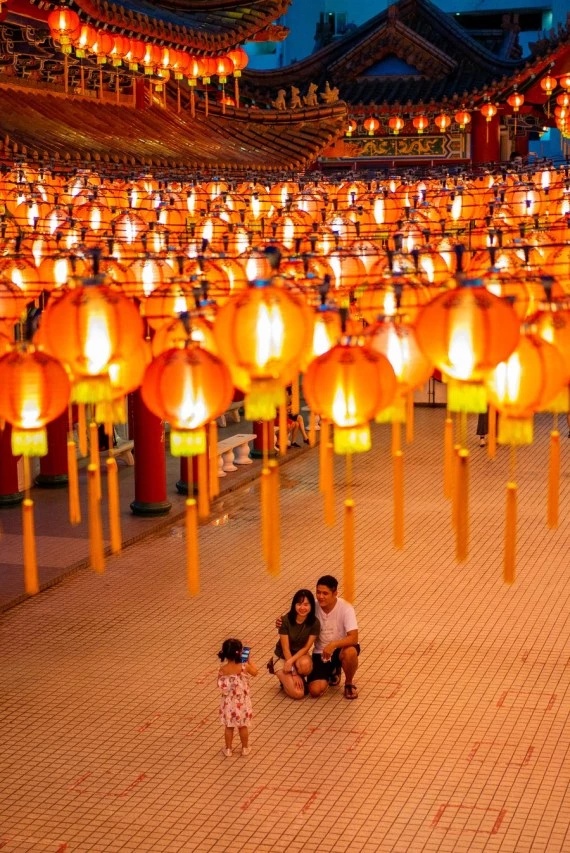 People pose for photos under the red lanterns at Thean Hou Temple in Kuala Lumpur, Malaysia, Jan. 22, 2022. (Xinhua/Zhu Wei)
 Red lanterns set for the upcoming Chinese Lunar New Year are seen at Thean Hou Temple in Kuala Lumpur, Malaysia, Jan. 22, 2022. (Xinhua/Zhu Wei)
 Red lanterns set for the upcoming Chinese Lunar New Year are seen at Thean Hou Temple in Kuala Lumpur, Malaysia, Jan. 22, 2022. (Xinhua/Zhu Wei)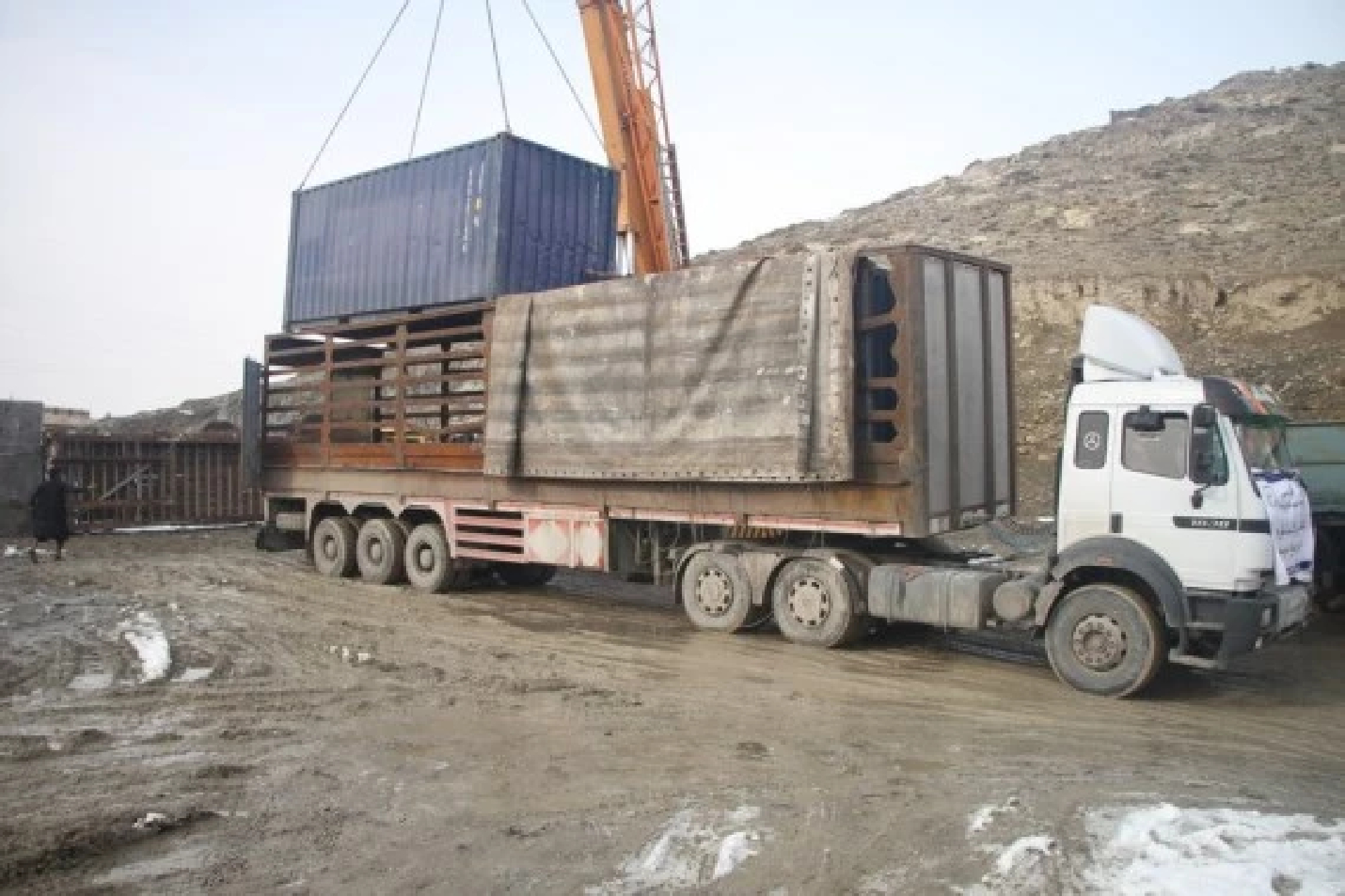
 People receive relief assistance donated by China in Maimana, capital of Faryab province, Afghanistan, Jan. 10, 2022. (Photo by Qamaruddin Poya/Xinhua)
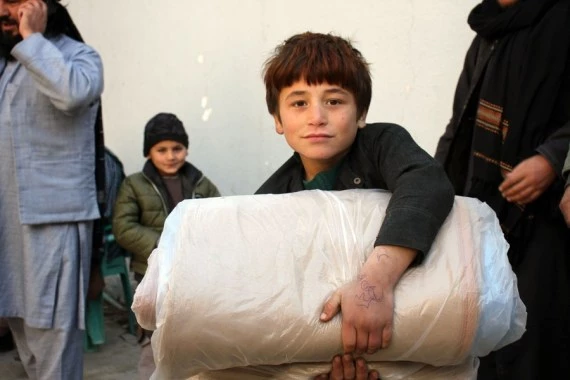 People receive relief assistance donated by China in Maimana, capital of Faryab province, Afghanistan, Jan. 10, 2022. (Photo by Qamaruddin Poya/Xinhua)
 Workers load China-aided humanitarian food supplies onto a truck in Kabul, Afghanistan, Jan. 22, 2022. (Photo by Saifurahman Safi/Xinhua)
 People receive relief assistance donated by China in Maimana, capital of Faryab province, Afghanistan, Jan. 10, 2022. (Photo by Qamaruddin Poya/Xinhua)
 A newborn male elephant is seen at the Wingabaw Elephant Camp in Bago region, Myanmar on Jan. 23, 2022. (Xinhua/U Aung)
 A newborn male elephant is seen at the Wingabaw Elephant Camp in Bago region, Myanmar on Jan. 23, 2022. (Xinhua/U Aung)
 Mother elephant breastfeeds a two-day-old baby male elephant at the Wingabaw Elephant Camp in Bago region, Myanmar on Jan. 23, 2022. (Xinhua/U Aung)
 The two-day-old baby male elephant is seen at the Wingabaw Elephant Camp in Bago region, Myanmar on Jan. 23, 2022. (Xinhua/U Aung)



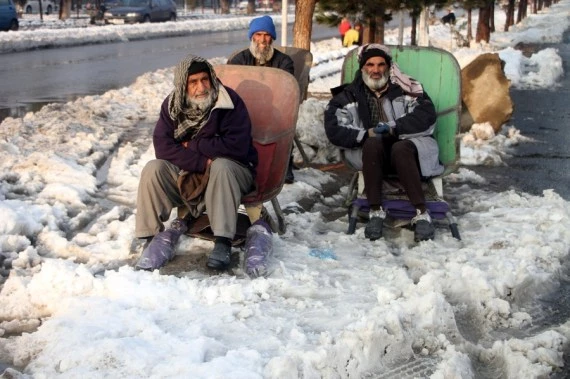 People wait for work in Kabul, Afghanistan, Jan. 5, 2022. (Photo by Saifurahman Safi/Xinhua)
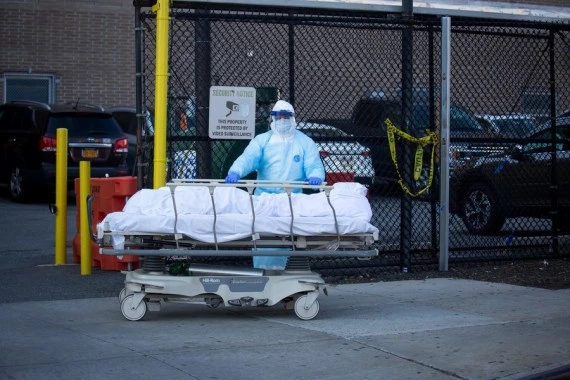 A medical worker transfers the body of a victim who died of COVID-19 at a hospital in New York, the United States, April 6, 2020. (Photo by Michael Nagle/Xinhua)
 White flags to honor the lives lost to COVID-19 are seen on the National Mall in Washington, D.C., the United States, on Sept. 16, 2021. (Xinhua/Liu Jie)
