Tesla ได้ประกาศเมื่อเดือนมกราคมปีที่แล้วว่าตั้งเป้าที่จะเพิ่มการส่งมอบ 50% ต่อปีในช่วงหลายปีที่ผ่านมา ดังนั้นผลงานที่ประกาศออกมาในวันอาทิตย์จึงเกินเป้าหมายนั้นมาก
Tesla เพิ่งย้ายสำนักงานใหญ่จากพาโลอัลโต แคลิฟอร์เนียไปยังออสติน รัฐเท็กซัส โดยขายรถยนต์รุ่น Model 3 และรุ่น Model Y จำนวน 911,208 รุ่น รวมถึงรถยนต์รุ่น S และ X สุดหรูจำนวน 24,964 คัน (ราคา 90,000 ดอลลาร์และ 100,000 ดอลลาร์ตามลำดับ)
เฉพาะในไตรมาสที่ 4 เท่านั้น Tesla ส่งมอบรถยนต์ได้ 308,600 คัน
ความสำเรจเหล่านี้แสดงให้เห็นว่า Tesla สามารถเอาชนะปัญหาด้านลอจิสติกส์ระดับโลกที่ก่อกวนอุตสาหกรรมยานยนต์ได้ โดยเฉพาะการหยุดชะงักของอุตสาหกรรมชิฟ และห่วงโซ่อุปทานการผลิตเกือบจะทั้งระบบ
ก่อนหน้านี้ อีลอน มัสก์ (Elon Musk) ผู้ก่อตั้งและประธานเจ้าหน้าที่ฝ่ายบริหารของ Tesla กล่าวว่าเขาสามารถหลีกเลี่ยงปัญหาการขาดแคลนเซมิคอนดักเตอร์ได้โดยใช้การออกแบบชิปใหม่และเขียนซอฟต์แวร์ใหม่
“ผลงานที่ยอดเยี่ยมโดยทีม Tesla ทั่วโลก!” มัสก์เขียนชมเชยบนทวิตเตอร์
Tesla ได้รับแรงหนุนอีกครั้งในเดือนตุลาคมเมื่อได้รับคำสั่งซื้อรถยนต์ไฟฟ้า 100,000 คันจากบริษัทเช่ารถ “เฮิรตซ์” (Hertz) ซึ่งจะแล้วเสร็จภายในปี 2565
The year 2021 saw the largest charitable donations in more than a decade, as billionaires opened their wallets to aid a world ravaged by pandemic.
Leading the Chronicle of Philanthropy’s ranking of contributions last year were Microsoft co-founder Bill Gates and Melinda Gates, who announced their divorce in May. Two months later in July, they donated $15 billion (about 502 billion baht) to their foundation. The money will support work in global health, development, policy and advocacy, and US education.
The gift increased the grant maker’s endowment to about $65 billion and is the Gates’ biggest donation to the foundation since 2000.
Bill and Melinda plan to continue running the foundation together for two years, after which Melinda has the option to resign as co-chair and trustee.
Regardless, they declared that they both intend to keep giving big in the years ahead. Melinda said she will continue to support efforts to fight poverty and “advance equality for women and girls and other marginalised groups”.
Gates wrote in his Giving Pledge that the work of the foundation will continue to be his “top philanthropic priority” and that he plans to increase his giving in other areas.
According to the Chronicle, the 10 biggest publicly announced gifts in 2021 were:
1. Microsoft’s co-founder Bill Gates and Pivotal Ventures’s founder Melinda Gates: $15 billion to the Bill & Melinda Gates Foundation
2. (tie) Nike’s co-founder Philip Knight and his wife Penny: $500 million to the University of Oregon
2. (tie) Soros Fund Management chairman George Soros: $500 million to Bard College (New York)
4. Ryan Specialty Group founder Patrick Ryan and his wife Shirley: $480 million to Northwestern University (Illinois)
5. United National Corporation Sanford Health’s chairman Denny Sanford: $350 million to establish a virtual-care hospital
6. United National Corporation Sanford Health’s chairman Denny Sanford: $300 million for graduate medical education and to expand a sports complex
7. Real-estate developer William Goodwin Jr, his wife Alice and their late son Hunter Goodwin: $250 million to establish Break Through Cancer
8. Alibaba Group co-founder Joe Tsa and co-owner of professional sports teams Clara Wu: $220 million to establish the Wu Tsai Human Performance Alliance
9. Amazon’s founder Jeff Bezos: $200 million to Smithsonian Institution’s National Air and Space Museum
10. Co-founder of Morningside Group Gerald Chan: $175 million to the University of Massachusetts Chan Medical School
China will complete the building of its space station in 2022, according to the China Aerospace Science and Technology Corporation.
The country will see 40-plus space launches in 2022, including multiple manned space flights, the company said at a recent conference on its plan for the new year.
It plans to launch two cargo craft, two Shenzhou spaceships and two laboratory modules of China’s planned space station within the year.
Other missions relating to the space station include in-orbital rendezvous and docking, extravehicular activities and spacecraft return.
The Long March-6A carrier rocket will also make its maiden flight in 2022.
In Indonesias Aceh Province, the heavy flood swept through the whole area, vehicles and houses were inundated by the huge floodwater, with people wading through the water by foot and boat.
People wade through floodwater in Lhoksukon of Aceh Province, Indonesia, Jan. 4, 2022. (Photo by Fachrul Reza/Xinhua)
A man wades through floodwater in Lhoksukon of Aceh Province, Indonesia, Jan. 4, 2022. (Photo by Fachrul Reza/Xinhua)
Vehicles are inundated by floodwater in Lhoksukon of Aceh Province, Indonesia, Jan. 4, 2022. (Photo by Fachrul Reza/Xinhua)
Vehicles and houses are inundated by floodwater in Lhoksukon of Aceh Province, Indonesia, Jan. 4, 2022. (Photo by Fachrul Reza/Xinhua)
“Discharged today. Thank you all,” Bolsonaro posted on Twitter, along with a photograph showing him sitting on a gurney and giving a thumbs up with doctors by his side at the Vila Nova Star Hospital in Sao Paulo.
Brazilian President Jair Bolsonaro was discharged from hospital on Wednesday, just over 48 hours after he was admitted due to an intestinal obstruction.
“Discharged today. Thank you all,” Bolsonaro posted on Twitter, along with a photograph showing him sitting on a gurney and giving a thumbs up with doctors by his side at the Vila Nova Star Hospital in Sao Paulo.
The 66-year-old president was hospitalized Monday in Sao Paulo, where he underwent a probe treatment that allowed him to avoid a new surgical procedure in the abdominal area due to a partial obstruction of the intestine.
Bolsonaro has undergone bowel surgery four times since he was stabbed in the abdomen with a knife while campaigning in September 2018.
The Brazilian president was vacationing at the beach in Sao Francisco do Sul, in the state of Santa Catarina, when he was rushed to hospital with abdominal pain.
Sudans ongoing political crisis casts a shadow on its already fragile economy, as shown by the slump in the exchange rates of the Sudanese pound against major foreign currencies following Prime Minister Abdalla Hamdoks resignation.
The impact of the resignation of Sudanese Prime Minister Abdalla Hamdok will spill over from politics to the country’s already fragile economic situation, Sudanese analysts said Tuesday.
In an obvious sign, after months of recovery and stability, the exchange rates of the Sudanese pound started to decline again against major foreign currencies, especially the U.S. dollar, two days after the resignation.
Dealers in the foreign exchange market said the exchange rate of one U.S. dollar registered 457 Sudanese pounds in the parallel market on Tuesday compared to 450 pounds during the past days. Also, the exchange rate of one Saudi Riyal registered 121 Sudanese pounds, while one UAE Dirham registered 122 pounds and one Euro 516 pounds, the dealers added.
On Tuesday, the Central Bank of Sudan set the exchange price of the U.S. dollar at 439,55 Sudanese pounds for the sale against 436,27 pounds for purchase.
A vendor sells bananas in Bahri town, north of Khartoum, Sudan, on Dec. 22, 2021. (Xinhua/Mohamed Khidir)
Abdul-Khaliq Mahjoub, a Sudanese economic analyst, told Xinhua that “with the continued political crisis, the local currency is expected to continue declining in the coming period of time.”
“For over two months, there has been no executive government running the country, and it is natural for the economy and the national currency to decline,” he said.
Sudanese citizens demonstrate on the street in Khartoum, Sudan, on Dec. 30, 2021. (Xinhua/Mohamed Khidir)
The Sudanese authorities have not yet been able to approve the 2022 budget, and as a result of the scarcity of resources, the authorities are moving towards lifting subsidies from vital sectors, including gases and bread, and also decided to implement a new increase in electricity prices by more than 600 percent.
Recently, Sudan’s finance minister Jibril Ibrahim reportedly said, “We have abandoned our 2022 growth plans and are building a worst-case scenario via depending on limited resources.”
Sudanese economic analyst Ashraf Zain Al-Abidin, speaking to Xinhua, urged the authorities to search for resources that would not burden the citizens.
“The authorities should search for other resources and diversify the sources of revenue. It cannot be at the expense of the average citizens,” said Al-Abidin.
“After Hamdok’s exit, we do not expect the major countries and international financial institutions to help Sudan,” he said, adding that the United States and international agencies suspended aid with hundreds of millions of dollars to Sudan, while Sudan’s debt relief process under the Heavily Indebted Poor Countries (HIPC) Initiative of the International Monetary Fund halted.
Sudanese citizens demonstrate on the street in Khartoum, Sudan, on Dec. 30, 2021. (Xinhua/Mohamed Khidir)
Sudan has been undergoing an economic crisis since the secession of South Sudan in 2011, due to which Sudan lost 75 percent of its oil revenues. In 2012, Sudan approved five packages to remove bread and fuel subsidies, which sparked a series of protests.
In December 2018, worsening economic conditions sparked popular protests across Sudan, leading to the ouster of former President Omar al-Bashir in April 2019.
The transitional government, which was formed in 2019 and headed by Hamdok, began implementing a structural reform, monitored by the International Monetary Fund, in a bid to get exemption from foreign debts.
On Jan. 2, Hamdok announced his resignation in the wake of a political crisis in the country.
Sudan has been suffering a political crisis after the general commander of the Sudanese Armed Forces Abdel Fattah Al-Burhan declared a state of emergency on Oct. 25, 2021 and dissolved the Sovereign Council and the government.
On Nov. 21, Al-Burhan and then removed Prime Minister Abdalla Hamdok signed a political declaration, which included reinstating the latter as prime minister, but the deal has failed to calm the streets.
Photo taken on Nov. 21, 2021 shows the signing ceremony of a political declaration between General Commander of the Sudanese Armed Forces Abdel Fattah Al-Burhan (C) and then Prime Minister Abdalla Hamdok (R) in Khartoum, Sudan. (Xinhua/Mohamed Khidir)
The Omicron variant was detected in approximately 95.4 percent of all new cases in the United States for the week of Dec. 26 to Jan. 1, the CDC estimated, while 4.6 percent were linked to the Delta variant.
Omicron was officially announced on Tuesday as the absolutely dominant variant of COVID-19 in the United States, as the country is entering the third year of the pandemic, with more curing pills ordered from Pfizer while the federal government’s policies criticized as murky.
OMICRON DOMINANCE
Nearly all new U.S. COVID-19 cases last week were linked to the Omicron variant, the Centers for Disease Control and Prevention (CDC) reported on Tuesday, as the highly transmissible new strain has quickly overtaken the Delta variant and sparked new surges nationwide.
The Omicron variant, also known as B.1.1.529, was detected in approximately 95.4 percent of all new cases for the week of Dec. 26 to Jan. 1, the CDC estimated, while 4.6 percent were linked to the Delta variant.
That was a rise from the Omicron variant making up 77 percent of the cases the previous week, 37.9 percent the week ending Dec. 18 and just 8 percent the week ending Dec. 11, according to the agency.
People wait for COVID-19 test in the Queens borough of New York, United States, Dec. 29, 2021. (Xinhua/Wang Ying)
The variant made up the majority of cases in every U.S. region, with the regions with the highest percentage of Omicron cases including New York and New Jersey, Texas and its surrounding states and the Southeast.
The new strain has proved to be more resistant to vaccines when it comes to preventing infections, and early studies have suggested the variant may produce milder disease than previous coronavirus strains, reported Forbes on Tuesday.
MORE PILLS
U.S. President Joe Biden on Tuesday announced that the federal government is doubling its order for Pfizer’s COVID-19 antiviral pill, Paxlovid, which has been shown to reduce hospitalizations and severe illness significantly.
“Production is in full swing. The United States has more pills than any other country in the world and our supply is going to ramp up over the coming months, as more of these pills are manufactured,” Biden said during remarks at the White House.
“Today I’m directing my team to work with Pfizer to double our order from 10 million to 20 million treatment courses to be delivered in the months ahead,” he added.
The president also cautioned during his remarks that “we may need even more. That’s the estimate we need right now.” Biden had announced a purchase of 10 million courses late last year.
“Despite the additional purchase, it will take months to ramp up supply of Pfizer’s antiviral treatment. And with forecasts indicating that the Omicron surge could peak this month, this could mean the vast majority of courses arrive at a time when the variant is on the decline,” reported CNN.
CDC CONFUSION
Monthly magazine Reason reported on Monday that “if the pandemic were high school, we’d be juniors by now.” The fact that the United States has entered its third calendar year of full-blown pandemic feels “surreal and almost unbelievable,” it said.
“Schools are still closing without much warning, plagued by both politics and logistics. COVID-19 tests are still hard to come by. We’re still arguing about how to keep people in jails and prisons safe. Shows and festivals are once again shutting down. Hospitals are being overwhelmed. Flights are getting canceled,” the magazine reported.
“And public health officials still can’t get it together. Their guidance is slow-moving, prone to flip-flopping, and weird, often out of line with scientific best practices, practical behavior, or both,” said the report.
Take the latest from the CDC, which since the start of the pandemic has been “providing a master class in how to confuse the American public,” it said. For a long time, the agency recommended that Americans who test positive for COVID-19 quarantine for 10 days, but recently shortened it to five.
“Since the start of the pandemic, messaging from the CDC and other government actors has been confused and confusing. At every step, it seems the agency has managed to undermine public confidence or put politics over clarity,” it added.

 ซานซีพบ ‘ห้องฝังศพโบราณ’ พร้อมภาพแกะสลัก ‘ผู้พิทักษ์ถือตรีศูล’


 หนังสือพิมพ์ปะซาซน (ประชาชน) ของ สปป. ลาวรายงานว่า ทางรถไฟลาว-จีน ทำให้การขนส่งสินค้าจากลาวไปจีน ใช้เวลาเพียง 1 วัน จากที่เมื่อก่อนต้องใช้เวลาถึง 30 วัน โดยผ่านทางท่าเรือของประเทศไทย
 เทสลา (Tesla) กล่าวเมื่อวันอาทิตย์ตามเวลาท้องถิ่นสหรัฐว่าบริษัทสามารถส่งมอบรถยนต์ได้เกือบ 1 ล้านคันในปี 2564 ซึ่งมากกว่าปีที่แล้วเกือบสองเท่า ซึ่งดีกว่าที่คาดการณ์ไว้ แม้ว่าจะมีความท้าทายด้านอุปทานทั่วโลก
 คำทำนายที่น่าสนใจ ก็เช่น Metaverse จะครองโลก รวมถึงการมาถึงของมนุษย์ต่างดาว



 People wade through floodwater in Lhoksukon of Aceh Province, Indonesia, Jan. 4, 2022. (Photo by Fachrul Reza/Xinhua)
 A man wades through floodwater in Lhoksukon of Aceh Province, Indonesia, Jan. 4, 2022. (Photo by Fachrul Reza/Xinhua)
 Vehicles are inundated by floodwater in Lhoksukon of Aceh Province, Indonesia, Jan. 4, 2022. (Photo by Fachrul Reza/Xinhua)
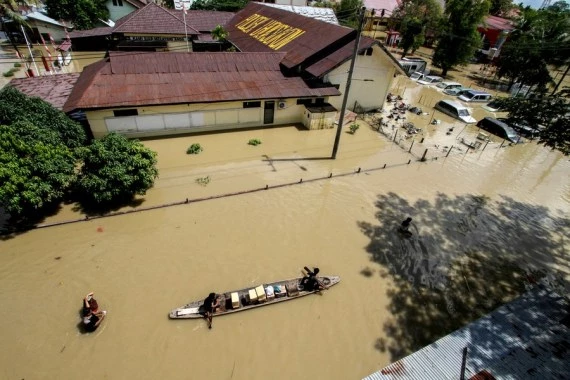 Vehicles and houses are inundated by floodwater in Lhoksukon of Aceh Province, Indonesia, Jan. 4, 2022. (Photo by Fachrul Reza/Xinhua)

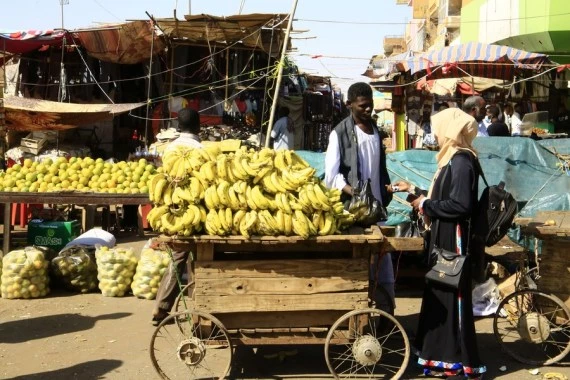 A vendor sells bananas in Bahri town, north of Khartoum, Sudan, on Dec. 22, 2021. (Xinhua/Mohamed Khidir)
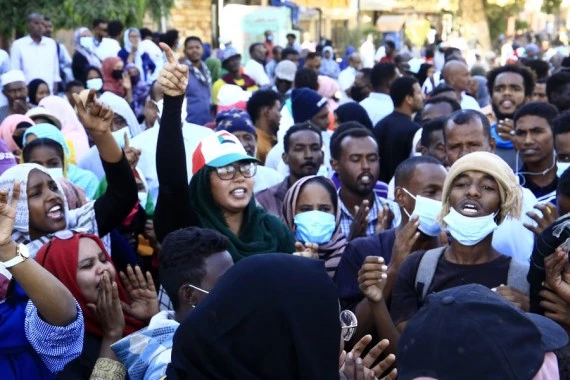 Sudanese citizens demonstrate on the street in Khartoum, Sudan, on Dec. 30, 2021. (Xinhua/Mohamed Khidir)
 Sudanese citizens demonstrate on the street in Khartoum, Sudan, on Dec. 30, 2021. (Xinhua/Mohamed Khidir)
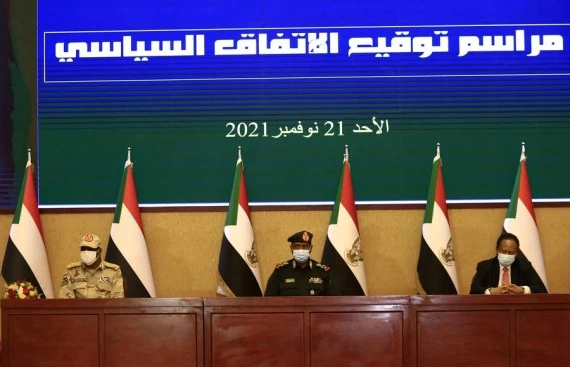 Photo taken on Nov. 21, 2021 shows the signing ceremony of a political declaration between General Commander of the Sudanese Armed Forces Abdel Fattah Al-Burhan (C) and then Prime Minister Abdalla Hamdok (R) in Khartoum, Sudan. (Xinhua/Mohamed Khidir)
 People wait for COVID-19 test in the Queens borough of New York, United States, Dec. 29, 2021. (Xinhua/Wang Ying)
