Protesters disrupted the flame-lighting ceremony for the 2022 Beijing Winter Olympics on Monday in Greece, approaching the just-lit torch with a Tibetan flag and a banner that read “No Genocide Games.”
Free Tibet, a London-based group that works to end China’s occupation of the region, identified the protesters as Chemi Lhamo, Jason Leith and Fern MacDougal. The protesters can be heard but not seen in video of the flame-lighting ceremony, which took place amid heavy security at the Temple of Hera in Ancient Olympia, where the torch traditionally is lit ahead of its journey across the globe.
“How can Beijing be allowed to host the Olympics given that they are committing a genocide against the Uyghurs?” one protester said, referring to reports of human rights violations committed by the Chinese government against the Uyghur and other Muslim minority populations of the Xinjiang region in northwest China.
According to the Associated Press, police threw the protesters to the ground and arrested them. Free Tibet added that Greek police arrested four other Tibetan activists while they were sitting in a car on a public road near the entrance to the ceremony.
The International Olympic Committee has generally steered clear of China’s human rights record, and in a speech Monday, IOC President Thomas Bach said the Games must be “respected as politically neutral ground.”
“Only this political neutrality ensures that the Olympic Games can stand above and beyond the political differences that exist in our times,” he said. “The Olympic Games cannot address all the challenges in our world. But they set an example for a world where everyone respects the same rules and one another.”
Beijing is hosting the Olympics for the second time. Its first Games, the 2008 Summer Olympics, also saw protesters disrupt the torch relay in numerous cities. The London leg was met by thousands of pro-Tibet protesters, and the torch was carried via bus at one point to avoid them. When the torch reached Paris, Chinese Olympic officials extinguished the torch numerous times to prevent protesters from doing the same with water or fire extinguishers. In San Francisco, thousands of people converged to protest the torch, forcing city officials to alter its route through the city.
On Sunday, police arrested two protesters at the Acropolis in Athens for attempting to raise a banner that referenced human rights abuses in China. According to Free Tibet, the protesters were released ahead of their trial in January.
Greek Olympic officials will hand over the torch to their counterparts from Beijing on Tuesday in Athens, and like Monday’s ceremony, Tuesday’s event will not be open to the public. Normally, the torch is paraded around Greece for a week before leaving for its worldwide relay, but Olympic officials canceled that this year, citing the coronavirus pandemic. Instead, the torch will arrive in Beijing on Wednesday.
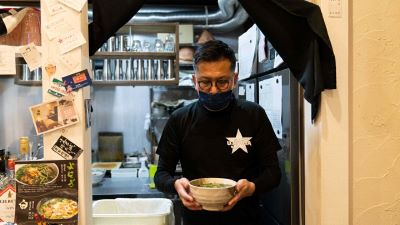
KITAKYUSHU, Japan – Noodle chef Takashi Nakamoto moves so deftly as he boils, strains and arranges his signature plates of udon that its easy to overlook the brutal reminder of his former life: his missing left pinkie.
Over three decades, Nakamoto rose through the ranks of the Kudo-kai, a violent syndicate of the once-powerful yakuza, a Japanese criminal network whose membership has been chipped away by more-aggressive law enforcement.
That effort has also led to a greater number of defectors like Nakamoto, who are trying to reinvent themselves after a life within the family-like hierarchies of the yakuza, ruled by a strict code of loyalty. Members are often conspicuous, with full-body tattoos and pinkies amputated by the mob as punishment for wrongdoing.
For years, the yakuza operated somewhat openly. It was monitored by police with the understanding that the yakuza would take care of petty crime on its turf and leave ordinary citizens alone. But now, Japanese authorities are applying more pressure as the yakuza’s power begins to erode.
In 2015, while serving his last prison sentence, Nakamoto reflected on where he was going. He had lost faith in the organization and its future. It was time to leave.
“Even though I left the yakuza world, there is a lot I learned. And some of what is at the core is still the same,” said Nakamoto, 55, sitting in his udon restaurant in Kitakyushu, a city in southern Japan that is home to the Kudo-kai.
“I was willing to do everything and die for my organization,” he said, “and now I am just switching gears with that same mentality and putting that determination into living and working in normal society.”
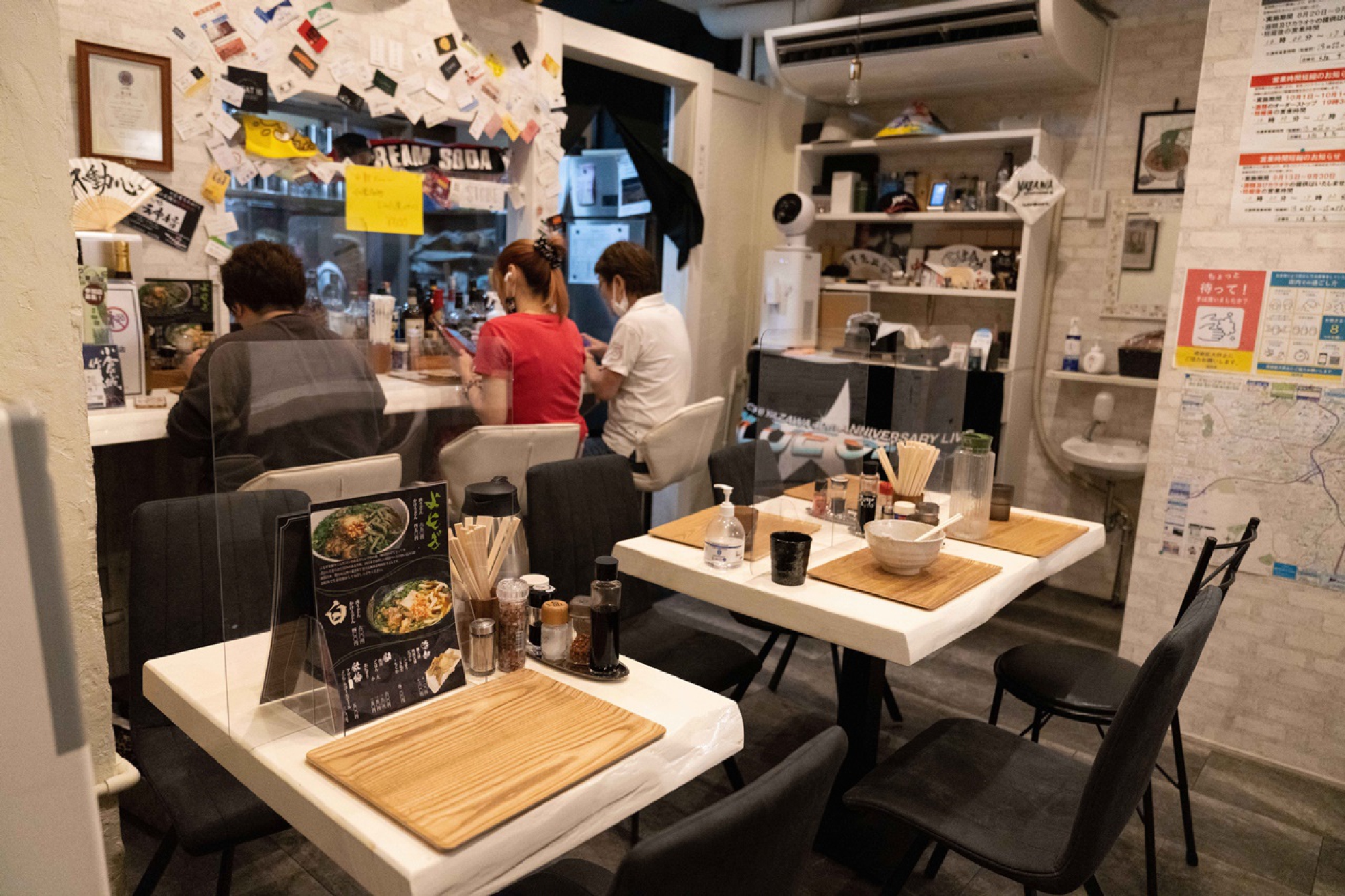
Nakamoto, a former yakuza member, was able to open up his udon restaurant in the Fukuoka prefecture thanks to the trust he built with fellow vendors and the head of the shopping district. MUST CREDIT: Photo by Taro Karibe for The Washington Post.
But finding normalcy does not come easy for former yakuza members, who face social stigma and significant legal barriers. Some government programs offer financial support as members transition from mob life, but many doors remain closed.
Yakuza membership is plummeting – the result of a decade of intensifying crackdowns targeting organized crime and the yakuza’s reach into illegal activities including drug trafficking, money laundering and gambling.
There were about 70,300 known yakuza members in 2011, but that number had dropped to 25,900 by 2020, according to the National Center for Removal of Criminal Organizations. The exodus has made it feasible for longtime members like Nakamoto to leave the organization without fear of retribution for breaking the code of loyalty.
On Aug. 24, a Japanese court handed down what is believed to be the first death sentence of a yakuza boss, Kudo-kai leader Satoru Nomura, who was convicted of having a role in attacks on four civilians, including one who was murdered.
The verdict sent a wider message that times were changing for the yakuza.
After his sentencing, Nomura yelled at the judge: “You will regret this for the rest of your life.” (The verdict is now under appeal. Nomura’s lawyers later said the statement was not intended as a threat.)
“I think that the sentence has an impact on the yakuza world in that restrictions and regulations for yakuza as a whole will continue to become stricter,” said Garyo Okita, a former yakuza member who now writes semiautobiographical books and oversees film projects about Japanese crime groups. “Now that there’s a precedent of a death sentence, Kudo-kai won’t be seen as some extreme case, but all yakuza will be seen as the same threat.”
– – –
About a decade ago, yakuza groups had become so brazen and financially powerful that authorities across Japan enacted ordinances prohibiting any business or person from being associated with a yakuza member or activity.
The laws were designed to isolate the yakuza from society, said Noboru Hirosue, a prominent expert on criminal sociology and the yakuza.
That meant yakuza members could no longer open bank accounts, rent homes, get insurance or obtain cellphones. Okita, who left the largest syndicate, Yamaguchi-gumi, in 2014, said the crackdowns also restricted families of yakuza members and others in their social circles.
These changes led to the early retirements of elder yakuza leaders, and many underlings also stepped aside.
“The law had a huge impact on the yakuza world,” Okita said.
But Hirosue, who works as a probation officer at the Justice Ministry, said the changes have led to a rise in other criminal networks outside the yakuza. These groups have now moved into new schemes, including elderly fraud, cybercrime and ways to profit off legal drugs such as sleeping pills and morphine, he said.
“Now, the Japanese underworld has entered a new phase,” Hirosue said.
– – –
Motohisa Nakamizo, who left the Kudo-kai in 2011 when his boss retired, was hired at his parents’ real estate company. It was his first legitimate employment after about 30 years handling Kudo-kai drug trafficking.
But such opportunities are rare.
Local regulations bar former members from activities such as opening a bank account or signing a lease for at least five years after they leave the network.
According to Hirosue’s analysis of Justice Ministry employment figures for former yakuza members who register their defections with police, as few as 3% who left between 2010 and 2018 found jobs. Some who can’t find jobs return to their yakuza organization, but others join new gangs, he said.
“Coming out of prison or a yakuza organization, you have to think that for the first five years you’re not the same as everyone else. People often talk about starting from zero, but we are starting from minus, working toward zero,” said Nakamizo, 56, sitting in his office in Hakata, a city near Kitakyushu.
Nakamizo now hires former members at his real estate company as a part of a Justice Ministry program. Yet only about 10% of them make it through the first five years. The rest usually end up returning to crime.
“I wish society as a whole wouldn’t make prejudgments and [would] give these people a chance,” he said. “Otherwise, it will leave them with nowhere to go, and will make them take the wrong path.”
Many face an education gap that is difficult to overcome. For example, Ryuichi Komura left the Yamaguchi-gumi at age 38. His formal education ended at middle school, and he had served four prison sentences.
“I wanted to turn my life around,” he said. But his chances of finding a stable job were poor. He was interested in law, but as a former yakuza member, it was next to impossible for him to become an attorney.
Instead, he decided to take the test to become a judicial scrivener, a job similar to being a paralegal that has a 3% acceptance rate. It took him eight years of study, and on his seventh try, he passed. He was 46.
– – –
Twenty years ago, Kudo-kai members rammed a car into a tea shop in Kitakyushu. It was an act of revenge against the shop owner, Toshiyuki Tsuji, who, to prevent the gang from settling in the neighborhood, had bought a building the Kudo-kai wanted.
So when Nakamoto, the udon chef, tried to open up his restaurant in Tsuji’s shopping district – while he was still under the five-year ban – the cards seemed stacked against him.
But Nakamoto built individual relationships with other vendors, was honest about his time with the Kudo-kai, picked up trash from the street and volunteered for the shopping district’s festivals and events.
“Nothing will change if you just wait for the five years to pass just because there are restrictions,” he said. “You can’t just wait for people to come to you and help you, but you need to be the one to reach out first.”
Tsuji was impressed, and took a chance. As the head of the shopping district, Tsuji accepted Nakamoto’s request to open his udon restaurant.
“Even if someone is ex-yakuza, if someone comes to me, I would first talk with them, looking into their eyes to see if they genuinely want to start over, and their seriousness,” Tsuji said. “Everyone deserves the basic freedom to work.”
On a recent weekday, a steady flow of customers ate lunch at Nakamoto’s 13-seat restaurant, tucked in an alley between a hair salon and a laundromat. He still volunteers for festivals and sweeps the street without being asked.
His black long-sleeve shirt covers up his tattoos while he works. But he doesn’t hide his past: A newspaper article featuring his story is framed on the wall, and in the restaurant bathroom are Japanese comic books about an ex-yakuza boss turned devoted house husband.
U.S. and senior Haitian officials on Monday worked to free 17 members of an Ohio-based Christian aid organization who were kidnapped over the weekend in Haiti, while local unions and other groups launched a general strike to protest the worsening security situation and gang violence racking the Caribbean nation.
Analysts believe that 400 Mowaza, a gang notorious for mass kidnappings and ransoming of religious groups, is behind Saturday’s brazen abduction. The 16 Americans and one Canadian from Christian Aid Ministries were seized while on a trip to visit an orphanage.
“The welfare and safety of U.S. citizens abroad is one of the highest priorities of the Department of State,” a State Department spokesperson said in a statement. “We have been in regular contact with senior Haitian authorities and will continue to work with them and interagency partners.”
White House spokeswoman Jen Psaki told reporters on Monday that President Joe Biden is receiving “regular updates” about the efforts of the State Department and the FBI to secure the release of the group. She said the U.S. Embassy in Port-au-Prince is also “coordinating with local authorities and providing assistance to the families to resolve the situation.”
Psaki did not provide details about the identities of those who were kidnapped, citing privacy concerns.
The kidnapping thrust Haiti once more into the center of an international crisis. For months, the poverty-stricken Caribbean nation has been battling a surge in gang violence and kidnappings. A power struggle after the July assassination of President Jovenel Moïse has further eroded any semblance of rule of law.
Even before this weekend’s abduction, local unions and other organizations had called for a general strike Monday to protest the deteriorating security situation. The demonstration closed businesses, including gas stations, and some schools, and it left the streets of the Haitian capital largely deserted.
“General strike, no commercial activities, no public transport, no fuel, no schools, no life,” Giuseppe Loprete, chief of the International Organization for Migration’s Haiti mission, wrote in a tweet, which included a photo of a mostly empty road. “The population is exhausted. Instability, violence and chaos are pushing [people] to leave more than poverty.”
The 400 Mowaza gang controls parts of Ganthier in Croix-des-Bouquets, the area outside Port-au-Prince where the Christian Aid Ministries car was hijacked as the group returned from visiting an orphanage.
Haiti holds the grim status of having the world’s highest number of kidnappings per capita, with 400 Mowaza behind some 80% of abductions in recent months, according to Gédéon Jean, director of the Center for Analysis and Research in Human Rights in Port-au-Prince. The group is notorious for its use of rape, mass kidnappings and assassinations to control Haitian streets, businesses and power players.
Haitian authorities said Sunday that they sought to negotiate with 400 Mowaza’s reported second-in-command, Joly “Yonyon” Germine, who is in jail. The gang’s alleged leader, Wilson Joseph, is wanted by police for a long list of charges, including murder and kidnapping.
No group has yet publicly claimed responsibility for kidnapping the Christian Aid Ministries’ team or set a ransom for release. The U.S. government has a long-standing policy of not paying ransoms for American citizens.
Christian Aid Ministries said Sunday that the group included five men, seven women and five children, among them a 2-year-old.
Haitians both rich and poor have fallen victim to the kidnapping surge rattling the Western Hemisphere’s poorest nation. Abductors typically set ransoms within 24 to 72 hours: Prices can vary from $100 to $1 million, depending on the hostage’s status.
Haitian politicians and police are too weak – or co-opted – to intervene. Many Haitians are consequently too afraid to leave their homes for work – if they have a job at all. A spike in hijackings of fuel trucks has led to a severe shortage of gas and electricity. Some victims of the gangs are specifically targeted; many more are chance bystanders.
The rise of gang violence and the demise of the rule of law has further traumatized – and desensitized – another generation of Haitians. Thousands have been displaced this year, forced to live in overcrowded and unhygienic temporary shelters. Others have undergone treacherous journeys to seek asylum in the United States, only to be returned to Haiti in a surge of deportations last month.
Christian Aid Ministries, based in Millersburg, Ohio, has worked in Haiti for years providing emergency services and running anti-poverty programs, as well as spreading its version of Christian teachings. Its American staff members returned last year after being pulled out for nine months because of the political unrest.
Haiti, formerly occupied by the United States and colonized by the French, is heavily dependent on international aid. Foreigners working in the humanitarian sector typically live in closed compounds and travel with security, among other safety precautions. Many countries and companies pulled out staff in recent months as the insecurity deepened.
In a statement issued Sunday, Christian Aid Ministries pleaded for its members’ release and said it was “praying for those who are being held hostage, the kidnappers and the families, friends and churches of those affected.”
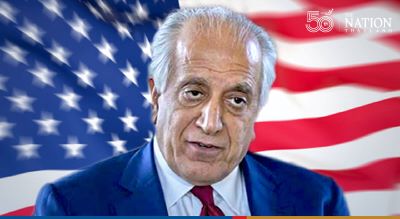
Zalmay Khalilzad, who negotiated the U.S. withdrawal agreement with the Taliban under Donald Trump, has resigned as special envoy to Afghanistan, effective Tuesday.
The Biden administration, which kept Khalilzad in his job for another nine months, was expected to announce the resignation later Monday.
“I decided that now is the right time,” Khalilzad said in a resignation letter to Secretary of State Antony Blinken, “at a juncture when we are entering a new phase in our Afghanistan policy.”
Its parting of ways with one of the most senior Trump appointees remaining in the government had been widely seen as only a matter of time, although it was unclear whether he was asked to leave.
In a brief statement, Blinken thanked Khalilzad for his service and said that Tom West, Khalilzad’s deputy, would take over as the administration’s special representative.
In the wake of the frenzied U.S. exit from Afghanistan, Khalilzad has been the target of extensive criticism – including from the current administration – for an agreement seen as giving too much and gaining little.
But to the Afghan-born envoy, it was not a faulty agreement that led to August’s Taliban takeover of Afghanistan, but Washington’s decision – under both Trump and President Joe Biden – to press ahead with the withdrawal despite the Taliban’s failure to comply with most of its terms, according to people familiar with Khalilzad’s views who spoke on the condition of anonymity to discuss private conversations.
“The Talibs committed to not allow terrorist groups, including Al Qaida, [to] plan or carry out attacks against the security of the United States and our allies,” Khalilzad wrote in his letter, a copy of which was obtained by The Washington Post. “They further agreed not to allow terrorists to recruit, train, or fundraise in the territories they controlled. They also agreed to negotiate directly with the existing Afghan government for a power sharing agreement and a comprehensive and permanent ceasefire.”
“As part of this package,” he wrote, “we agreed to withdraw our forces in phases over a 14-month period if the Taliban implemented their commitments.”
As part of the deal, signed on Feb. 29, 2020, by Khalilzad and senior Taliban official Abdul Ghani Baradar – now deputy prime minister in the interim Taliban government – the militants agreed not to attack U.S. troops if they kept to the timeline, which called for full withdrawal of “all foreign forces” by May 1, 2021.
Although Biden extended the deadline to Sept. 11, and completed the withdrawal on Aug. 31, that was the only aspect of the agreement that was fully realized.
U.S. intelligence has assessed that the Taliban and al-Qaeda in Afghanistan retain strong bonds. Negotiations with the Afghan government, which began in September 2020, never gained any traction, a situation that Khalilzad, and both administrations, attributed in large part to foot-dragging by Ashraf Ghani, the former U.S.-backed president.
“The political arrangement between the Afghan government and the Taliban did not go forward as envisaged,” Khalilzad wrote. “The reasons for this are too complex and I will share my thoughts in the coming days and weeks, after leaving government service.”
Asking “what should the U.S. objective and strategy be in this new phase,” Khalilzad said he planned “to contribute to the discussion and debate about not only what happened but what should be done next.”
Whether under Biden or Trump, no one appeared more qualified for the job of pushing Afghanistan toward peace and negotiating with both the Taliban and the Afghan government than Khalilzad.
Born and raised in Afghanistan, he had gone to school with Ghani and the two traveled together to the United States as young students. As a Columbia University professor, he worked with the Jimmy Carter administration in the early days of U.S. covert support for Afghan mujahideen fighting against the Soviet Union’s occupation of Afghanistan.
He joined the State Department under the Ronald Reagan administration, again advising on policy toward Afghanistan. After the Soviet withdrawal, Khalilzad served under President George H.W. Bush as deputy undersecretary of defense for policy planning.
After work in think tanks and the energy sector, he served as U.S. ambassador to Afghanistan, Iraq and the United Nations under the George W. Bush administration. He spent the Obama administration years out of government.
Trump came to office vowing to “fight to win” in Afghanistan, after which he said the United States would withdraw completely.
It wasn’t until 2018 – as the Taliban had grown stronger rather than weaker on the ground, and withdrawal seemed further away – that Trump decided to negotiate with the militants and Khalilzad was asked to return to government.
Talks between him and Baradar began in November 2018, with the deal finally announced 16 months later.
After Biden’s inauguration, the new administration decided to keep Khalilzad in place while it reviewed Afghanistan policy. The envoy continued to try to push the Afghan government and the Taliban toward an agreement, to no avail.
Once the new withdrawal date had been announced, Khalilzad continued to negotiate the U.S. departure with the militants, and worked with regional governments in an unsuccessful effort to secure basing agreements for the United States to continue counterterrorism operations in Afghanistan without troops on the ground there.
Khalilzad also kept up the most direct line of contact with senior Taliban officials during the fraught U.S. evacuation effort.
As Halloween is around the corner, pumpkins, one of which weighs more than half a ton and claims to be the largest in Amsterdam and even in the Netherlands, are beginning to appear on the streets in central Amsterdam.
Alocal resident has created a neighborhood garden with no fewer than 80 pumpkins on his own initiative. The garden contains a pumpkin with a weight of 530 kg. The pumpkin was grown in the east of the country by a boy who won the Dutch pumpkin breeding championship, and is believed to be the biggest in Amsterdam and also in the Netherlands.
A woman takes pictures of a neighborhood garden with 80 pumpkins in central Amsterdam, the Netherlands, Oct. 16, 2021. (Photo by Sylvia Lederer/Xinhua)
A man takes pictures of a neighborhood garden with 80 pumpkins in central Amsterdam, the Netherlands, Oct. 16, 2021. (Photo by Sylvia Lederer/Xinhua)
“For the first time in two decades, extreme poverty is on the rise. Last year, around 120 million people fell into poverty as the COVID-19 pandemic wreaked havoc on economies and societies,” Guterres said.
UN Secretary-General Antonio Guterres on Sunday called for transformative, inclusive, and sustainable recovery from COVID-19 to end poverty and create a world of justice, dignity and opportunity for all.
“Poverty is a moral indictment of our times. For the first time in two decades, extreme poverty is on the rise. Last year, around 120 million people fell into poverty as the COVID-19 pandemic wreaked havoc on economies and societies,” he said in a message for the International Day for the Eradication of Poverty, which falls on Oct. 17.
“A lopsided recovery is further deepening inequalities between the Global North and South. Solidarity is missing in action — just when we need it most,” he said.
Vaccine inequality is allowing variants to develop and run wild, condemning the world to millions more deaths, and prolonging an economic slowdown that could cost trillions of dollars. There is a need to end this outrage, tackle debt distress and ensure recovery investment in countries with the greatest need, he said.
The world needs a three-pronged approach to global recovery, said Guterres.
First, the recovery must be transformative instead of going back to the endemic structural disadvantages and inequalities that perpetuated poverty even before the pandemic.
“We need stronger political will and partnerships to achieve universal social protection by 2030 and invest in job re-skilling for the growing green economy. And we must invest in quality jobs in the care economy, which will promote greater equality and ensure everyone receives the dignified care they deserve,” he said.
Second, the recovery must be inclusive, because an uneven recovery is leaving much of humanity behind, increasing the vulnerability of already marginalized groups, and pushing the Sustainable Development Goals ever further out of reach, Guterres said.
Third, the recovery must be sustainable to build a resilient, decarbonized and net-zero world, he said.
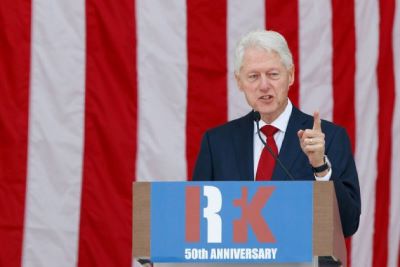
Clinton, 75, was admitted Tuesday evening to the University of California Irvine Medical Center in Orange County for a urological infection that spread to his bloodstream, according to his aide.
Former U.S. President Bill Clinton was released Sunday from a Southern California hospital where he had been treated multiple days for a non-coronavirus-related infection.
“President Clinton was discharged from UC Irvine Medical Center today. His fever and white blood cell count are normalized, and he will return home to New York to finish his course of antibiotics,” said Dr. Alpesh N. Amin, chairman of the Department of Medicine at the University of California, Irvine, who had been overseeing the team of doctors treating Clinton, in a statement shared by the former president’s spokesperson Angel Urena on Twitter.
“On behalf of everyone at UC Irvine Medical Center, we were honored to have treated him and will continue to monitor his progress,” Amin added.
Clinton, 75, was admitted Tuesday evening to the University of California Irvine Medical Center in Orange County for a urological infection that spread to his bloodstream, according to his aide.
The former U.S. president was in Southern California for a private reception and dinner for the nonprofit Clinton Foundation. After meeting with friends in Orange County on Tuesday, he reported feeling fatigued, an aide to the former U.S. president was quoted as saying by The Los Angeles Times.
Clinton is flying to New York with his wife, former U.S. Secretary of State Hillary Clinton, and his daughter, Chelsea, reported the newspaper.
Clinton, a member of the Democratic Party, served as the 42nd U.S. president from 1993 to 2001.
Former president Bill Clinton was discharged from the hospital Sunday, his medical team confirmed, nearly a week after he was admitted for an infection of the bloodstream, a condition known as sepsis.
Clinton, 75, was admitted to the University of California at Irvine Medical Center on Tuesday “to receive treatment for a non-Covid-related infection,” his spokesman, Angel Ureña, said in a statement Thursday.
On Sunday, Clinton’s fever and white blood cell count were normalized, Alpesh N. Amin, chair of the hospital’s department of medicine, said in a statement. Clinton will return home to New York to finish his course of antibiotics, added Amin, who had been overseeing the team of doctors treating the former president.
“On behalf of everyone at UC Irvine Medical Center, we were honored to have treated him and will continue to monitor his progress,” Amin said.
Clinton was diagnosed with a urological infection that morphed into an infection of the bloodstream, or sepsis, according to a Clinton aide who spoke on the condition of anonymity to discuss the former president’s medical status. However, Clinton was never in septic shock, a far more serious and life-threatening condition, the aide said.
On Friday, Ureña said all of Clinton’s health indicators were “trending in the right direction” and that his white blood count had decreased significantly. On Saturday, the spokesman noted that Clinton would remain hospitalized overnight again to continue to receive intravenous antibiotics.
“He is in great spirits and has been spending time with family, catching up with friends and watching college football,” Ureña said in a statement Saturday. “He is deeply grateful for the excellent care he continues to receive and thankful to the many well-wishers who have sent kind words to him and his family. He’s looking forward to getting home very soon.”
Clinton’s wife, former first lady and former secretary of state Hillary Clinton, was photographed visiting UC Irvine Medical Center several days this week.
Bill Clinton was in California earlier last week for an event related to his nonprofit Clinton Foundation and was taken to the hospital Tuesday after reporting that he was not feeling well, according to CNN chief medical correspondent Sanjay Gupta.
The issue was not related to the coronavirus or to his heart, Gupta reported after interviews with Clinton’s doctors. Clinton underwent heart bypass surgery in 2004 and had stents placed in 2010.
President Joe Biden, during a visit to a Connecticut child-care center Friday, said that he had been “exchanging calls” on the situation and that Clinton seemed “to be really doing well.”
Biden spoke with Clinton by phone Friday afternoon, according to deputy White House press secretary Karine Jean-Pierre.
“He’s doing fine. He really is,” Biden said Friday. “He’s not in any serious condition.”
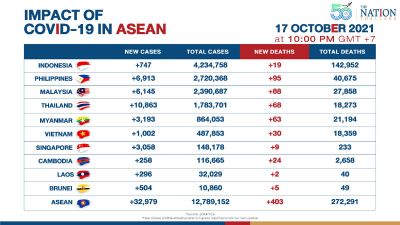
The number of Covid-19 cases crossed 12.78 million across Southeast Asia, with 32,979 new cases reported on Sunday (October 17), lower than Saturday’s tally at 35,620. New deaths are at 403, decreasing from Saturday’s number of 526. Total Covid-19 deaths in Asean are now at 272,291.
Fully vaccinated travellers entering Malaysia will begin serving a reduced quarantine period of seven days from Monday (October 18). Meanwhile, those who are not vaccinated or have yet to complete their Covid-19 vaccine doses should undergo a quarantine period of 10 days. Individuals returning from high-risk infection areas are also allowed to reduce their period of quarantine to 7 days, provided that they have been fully vaccinated.
Brunei Health Ministry announced that they are starting to administer the third dose of Covid-19 vaccine for frontliners, providing additional protection for those at higher risk of infection. Brunei previously announced that Covid-19 vaccines from Pfizer BioNTech, Moderna, AstraZeneca, China’s Sinopharm, and Johnson and Johnson would be administered in the country.
So far, over 339,000 individuals had received the first doses of the Covid-19 vaccine under the National Vaccination Program, which is 74.9 percent of the total population, while 224,028 individuals had completed the second doses of the vaccine, which is 49.4 percent of the total population.
President Joe Bidens chief medical adviser said he expects U.S. regulators to consider whether people who got the one-dose Johnson & Johnson vaccine should get an mRNA shot against covid-19 as a booster.
“If you boost people who have originally received J&J with either Moderna or Pfizer, the level of antibodies that you induce in them is much higher than if you boost them with the original J&J,” Anthony Fauci said on ABC’s “This Week” on Sunday.
“But the data of boosting the J&J first dose with a J&J second dose is based on clinical data,” he said. “So what’s going to happen is that the FDA is going to look at all those data, look at the comparison, and make a determination of what they will authorize.”
A so-called mix-and-match booster has been discussed among scientists and government experts, though no timeline has been released for when it might be officially considered. The issue is complicated by safety, supply and concern about confusing public messaging.
Food and Drug Administration experts recommended a second Johnson & Johnson shot for people 18 and older last week. They also backed a third dose of the Moderna Inc. shot – which unlike J&J uses mRNA technology – for people at high risk of contracting covid-19. The recommendations require backing by the FDA and the Centers for Disease Control and Prevention, which could come as soon as this week.
The Pfizer Inc.-BioNTech SE vaccine, also based on mRNA technology, was cleared for boosters in September. More than 10 million third shots have been given in the U.S.
Fauci said the individual choice of which booster to get would depend on several factors, including the risk of myocarditis, a heart inflammation that some evidence suggests is a risk for young men who get mRNA vaccines.
“I believe there’s going to be a degree of flexibility of what a person who got the J&J originally can do, either with J&J or with the mix-and-match from other products,” Fauci said on “Fox News Sunday.”
Fauci also said that people could safely enjoy gathering during the U.S. holiday season if vaccinated – a message to some 66 million eligible people in the country who haven’t been inoculated.
“When you do that, there’s no reason at all why you can’t enjoy the holidays in a family way, the way we’ve traditionally done it all along,” he said on “This Week.”

 Nakamoto, a former yakuza member, was able to open up his udon restaurant in the Fukuoka prefecture thanks to the trust he built with fellow vendors and the head of the shopping district. MUST CREDIT: Photo by Taro Karibe for The Washington Post.

 A woman takes pictures of a neighborhood garden with 80 pumpkins in central Amsterdam, the Netherlands, Oct. 16, 2021. (Photo by Sylvia Lederer/Xinhua)
 A man takes pictures of a neighborhood garden with 80 pumpkins in central Amsterdam, the Netherlands, Oct. 16, 2021. (Photo by Sylvia Lederer/Xinhua)