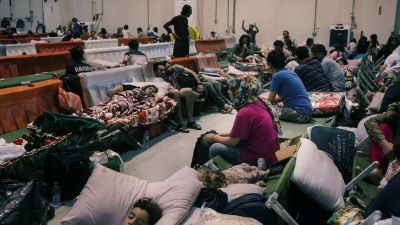
U.S. could work with Taliban against terrorists, Pentagon says #SootinClaimon.Com

#SootinClaimon.Com : ขอบคุณแหล่งข้อมูล : หนังสือพิมพ์ The Nation.

https://www.nationthailand.com/blogs/international/40005632

U.S. could work with Taliban against terrorists, Pentagon says


The top U.S. military official said it is “possible” the United States will coordinate with the Taliban in the fight against the Islamic State, although he declined to make predictions about potential collaboration with Afghanistans new rulers, who could announce a new government as early as Thursday.
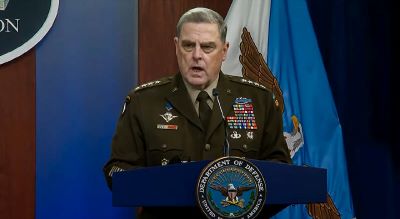
“We don’t know what the future of the Taliban is, but I can tell you from personal experience that this is a ruthless group from the past, and whether or not they change remains to be seen,” Gen. Mark A. Milley, chairman of the Joint Chiefs of Staff, told reporters Wednesday. “In war, you do what you must,” he added, even if it is “not what you necessarily want to do.”

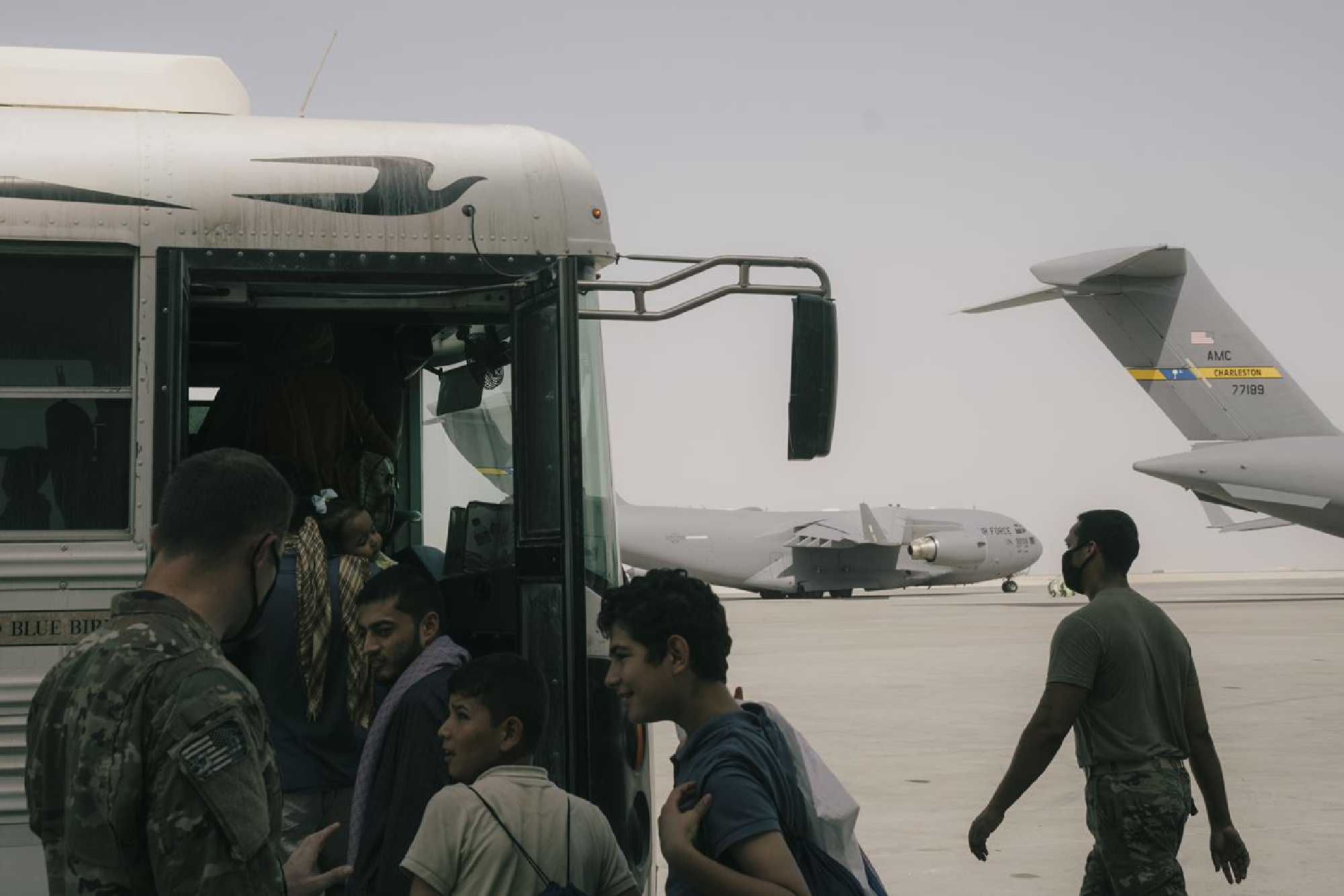
American commanders worked with the Taliban to facilitate the evacuation of more than 124,000 people from Afghanistan in recent weeks. Both the United States and the Taliban share a common threat in the Islamic State, which was responsible for an attack outside Kabul airport last week that killed 13 U.S. service members and more than 170 civilians.

Britain will have to engage with the Islamist militants who now control Afghanistan even if it does not intend to recognize the Taliban for now, its top diplomat said on Thursday.

“We need to adjust to the new reality,” British Foreign Secretary Dominic Raab told reporters in a news conference with his counterpart in Qatar. “We will not be recognizing the Taliban in the foreseeable future but there is an important scope for engagement and dialogue.”

“I think there are some early tests for the Taliban,” he added. One of those tests, he said, will be the Taliban’s assurance that it will allow foreigners and Afghans wishing to leave safe passage out of the country, now that the last U.S. troops who held Kabul airport have left.

More than 120,000 people boarded U.S., British and other evacuation flights out of the city after the Taliban’s swift advance. But many more awaiting rescue remain – including Afghans who guarded the U.K. embassy and a few hundred British nationals.

The Biden administration has faced criticism for the chaotic evacuation and withdrawal after nearly two decades of war in Afghanistan. So have British officials, chief among them Raab who was vacationing on a Greek island when the capital fell.

The British minister said on Thursday that governments needed to engage directly with the Taliban to make sure aid workers could still operate there to avoid “a humanitarian disaster,” as well as to pressure the militants to stick to their promise that their rule will be less repressive this time around.

After meeting with the British diplomat, Qatar’s foreign minister said the Gulf state was talking to the Taliban and Turkey about the reopening of Kabul airport, though it remained unclear when that would happen. “We will remain hopeful that we will be able to operate it as soon as possible.”

In other developments, a former U.S. official, international soccer players, U.S. allies and a military veteran have joined forces to try to evacuate young female Afghan soccer players, their coaching staff and their families from Afghanistan.

The group of 133 Afghans, which includes infants, has been seeking to escape the country out of fear of Taliban persecution, according to the Associated Press. The Taliban has banned women from playing sports in the past, although the militants now insist that women’s rights will be ensured within an Islamic framework. The players are between 14 and 16 years old.

The group has failed to escape Afghanistan at least five times, including when an Islamic State bombing attack outside Kabul’s airport last week prevented the Afghans from boarding a plane, the AP reported. Now, they are moving from location to location, to avoid the Taliban. Their lack of passports or other documentation has hampered their efforts to leave the country.

Robert McCreary, a former White House official during the George W. Bush administration who is working to extract group, said he hopes to create a “protective bubble” around the Afghans. He said he has urged the Taliban to help them leave. Australia, France and Qatar have offered to help as well.

Farkhunda Muhtaj, the Afghan women’s soccer team captain now residing in Canada; Kat Khosrowyar, an Iranian American who coached Tehran’s U-19 women’s team; and Julie Foudy, former captain of the U.S. women’s national soccer team, have signed up for the effort.

The Biden administration has pledged to persuade the Taliban to provide safe passage to stranded American citizens and vulnerable Afghans hoping to leave.

“The only thing that they had done wrong in the eyes of the Taliban . . . is the fact that they were born girls and . . . had the audacity to dream,” said Nic McKinley, a CIA and Air Force veteran who is also involved.

Facebook helped a group of Afghan journalists – along with its employees – flee to Mexico before the last U.S. troops pulled out of Afghanistan this week.

The Afghans – 175 Facebook employees, activists, journalists and their families, including 75 children – landed in Mexico City on Tuesday, according to Mexico’s Foreign Ministry.

“In the process of assisting Facebook employees and close partners leave Afghanistan, we joined an effort to help a group of journalists and their families who were in grave danger,” a Facebook spokesman said Thursday. “The journalists have been welcomed in Mexico.”

Facebook declined to give further details on the evacuation effort, citing security reasons.

Taliban militants driving American Humvees showcased a lineup of weapons they captured during their blitz across the country at a parade in Kandahar celebrating the withdrawal of U.S. troops.A helicopter with a black-and-white Taliban flag hanging from its side cruised over scores of supporters in the country’s second biggest city. A man waved to them from the sky.

Fighters with heavy machine guns stood atop military vehicles left behind after 20 years of war. Dozens of men watched on both sides of the road, some saluting the militants as they passed by.

A fleet of armored SUVs drove in a single file on a highway outside Kandahar, in Agence France-Presse photos on Wednesday from Afghanistan’s south, the Taliban’s traditional heartland.

The parade comes after Taliban fighters entered a hangar at Kabul airport on Monday night, posing with helicopters minutes after the last U.S. troops took off from the tarmac.

In the weeks since their conquests, Taliban fighters have flaunted the millions of dollars worth of U.S. weaponry they captured, though experts say it’s not clear if they can maintain and use equipment such as helicopters.

Celebratory gunfire erupted in the sky over the capital after the final aircraft left, ending a chaotic evacuation of more than 110,000 people.

In the days after the U.S. pullout, videos on social media showed Taliban fans carrying coffins wrapped in American, British and French flags at a mock funeral in the eastern city of Khost.

Large crowds were out in the streets for Wednesday’s show of force in Kandahar province, where the Taliban formed in 1994 before later ruling the country for five years until 2001.

Now that they are back in power, the militants must contend with governing a country of 39 million facing a wave of displacement and cut off from key sources of funding.

Taliban fighters on Humvee vehicles parade along a road to celebrate after the United States pulled its troops out of Afghanistan, in Kandahar on Sept. 1, 2021.

Published : September 03, 2021

[Singapore] Greater vaccine manufacturing capacity ahead of pandemics is key: Tharman Shanmugaratnam #SootinClaimon.Com

#SootinClaimon.Com : ขอบคุณแหล่งข้อมูล : หนังสือพิมพ์ The Nation.

https://www.nationthailand.com/international/40005594

[Singapore] Greater vaccine manufacturing capacity ahead of pandemics is key: Tharman Shanmugaratnam


SINGAPORE – To overcome the fragmented global health security system, a new global mechanism is needed to mobilise and govern health financing.

How to do this without adding to the complexity and fragmentation of the system is an important challenge that can be overcome, said Senior Minister and Coordinating Minister for Social Policies Tharman Shanmugaratnam on Wednesday (Sept 1).

Mr Tharman, who is also chairman of the Group of 30, a global council of economic and financial leaders, was speaking on the topic Resolving Today’s Global Health Crisis And Avoiding Future Pandemics at a virtual discussion organised by European economic think-tank Bruegel.

Other panellists included Indonesian Finance Minister Sri Mulyani Indrawati, Bruegel director Guntram Wolff, Wellcome Trust director Jeremy Farrar, and Centre for Global Development executive vice-president and senior fellow Amanda Glassman.

They discussed, among other issues, the recommendations of the Group of 20 (G-20) High Level Independent Panel (HLIP) on Financing the Global Commons for Pandemic Preparedness and Response, which Mr Tharman co-chairs with World Trade Organisation director-general Ngozi Okonjo-Iweala and former United States Treasury secretary Lawrence Summers.

The panel in July released its recommendations – including setting up a US$10 billion (S$13.5 billion) Global Health Threats Fund with contributions from the international community, as well as an inclusive G-20-plus board comprising health and finance ministers – which are now being actively considered ahead of the G-20 ministerial meetings and summit in October.

Noting the sharp deterioration in global trust and increase in protectionism since the pandemic started, Mr Tharman said the world does not have a system that can adequately supply – on a global scale and within a short time – the vaccines, therapeutics or protective equipment the world needs.

“That kind of supply chain had to be invented in the middle of a pandemic, and when you start in the middle of a pandemic, it takes a long time,” he said, adding that this is a new public policy challenge.

“You’re not going to be able to change nation-state democracies in either the rich world or the rest of the world… They will give extra attention to their own, everywhere in the world. But we do want to tackle the pandemic everywhere because it’s in everyone’s interests.

“How we reconcile these two objectives, and avoid the tension between the two leading to what we saw in the last year and a half… is by building up global supply capacity in advance of a pandemic, not in the middle of one.”

This means having an ever-ready manufacturing capacity of multiple vaccine candidates. But without knowing which vaccine will be successful, the private sector has no commercial incentive to make advance investments, he said.

“It requires public investment together with the private sector… so that we have an over-supply of capacity in advance of a pandemic.”

International R&D is also needed in new, lower-cost and modular manufacturing technologies that will allow for interchangeable manufacturing facilities – so that if one vaccine is not going to work out, repurposing can be quickly done to manufacture the successful vaccine at scale.

This requires global capacity and global financing that will be everyone’s interests, added Mr Tharman. “That’s the only way we’re going to bring trust back.”

Dr Sri Mulyani, whose country has just begun to ease restrictions following a surge in cases in July, said Covid-19 is a “perfect example” of a global problem without borders.

“The virus is changing, and its mutations are also overwhelming all countries, regardless of whether (their people) are vaccinated or not,” she said.

Indonesia will hold the presidency of the G-20 in 2022, taking over from Italy.

Dr Sri Mulyani added that global collaboration and coordination are essential, and so are good national health systems that provide access to large segments of the population.

There is also a need for countries to discuss how to set up early warning systems for future pandemics, she said, adding that this can be tricky, as it involves sensitivities over sovereign jurisdiction.

“There is always a tense relationship between sovereignty versus the global governance that needs to be established – whether it exists in the form of resources, the governance or decision-making process, or information sharing, but failure to do that will lead to catastrophic damage, as we can see from this pandemic.”

Wellcome Trust’s Mr Farrar said pandemics can no longer be considered a purely health-related issue, as they lead to economic disruption in the form of opportunity loss in education, trade, and travel.

“We are living in a new era of politics where your domestic agenda and international agenda are absolutely, intricately linked.

“Sometimes, as with Covid-19, that will pull you in different directions – where your domestic political agenda may be, for instance, to offer vaccines to your population before anybody else. But your international commitment, and actually your enlightened self-interest, would be to offer those vaccines around the world as well.

“This is also true of climate change, energy and clean water access, and many issues we face in the 21st century. And I don’t think international financial and other multilateral institutions have really grasped this challenge,” Mr Farrar said.

Published : September 02, 2021

Taliban calls for peaceful solution of Panjshir standoff #SootinClaimon.Com

#SootinClaimon.Com : ขอบคุณแหล่งข้อมูล : หนังสือพิมพ์ The Nation.

https://www.nationthailand.com/international/40005593

Taliban calls for peaceful solution of Panjshir standoff


A Taliban senior leader said that the Taliban in spite of deploying troops around Panjshir would continue dialogue, urging the people of Panjshir to help stabilize peace and security in the country.

 ATaliban senior leader Mullah Amir Khan Mutaqi has stressed for peaceful solution of the standoff in Afghanistan’s Panjshir province, urging the people of Panjshir to help stabilize peace and security in the country.

“Panjshir as a part of Afghanistan deserves to live in peace. The Islamic Emirate has declared general amnesty and there is no reason to fight. War is enough, let’s stop fighting and live in peace,” Mutaqi said in a message on Wednesday posted in Taliban’s Twitter account.

Panjshir is the only province among Afghanistan’s 34 provinces which has remained out of Taliban’s control since the fall of major cities including capital Kabul.

Related Stories

Since Monday, there are reports of skirmishes between Taliban forces and the anti-Taliban fighters in areas bordering Panjshir valley.

Ahmad Masoud, the son of late anti-Taliban resistance leader Ahmad Shah Masoud, who is leading an anti-Taliban resistance in Panjshir valley, has reportedly said that he is going to find negotiated solution for the standoff, though in the meantime, ready for defending the valley.

Mutaqi in his message said that the Taliban in spite of deploying troops around Panjshir would continue dialogue.

Military vehicles run in Mazar-i-Sharif, capital of northern Balkh province, Afghanistan, Aug. 31, 2021. Military vehicles run in Mazar-i-Sharif, capital of northern Balkh province, Afghanistan, Aug. 31, 2021.


Published : September 02, 2021

Asean sees almost 74,000 new Covid cases #SootinClaimon.Com

#SootinClaimon.Com : ขอบคุณแหล่งข้อมูล : หนังสือพิมพ์ The Nation.

https://www.nationthailand.com/international/40005588

Asean sees almost 74,000 new Covid cases


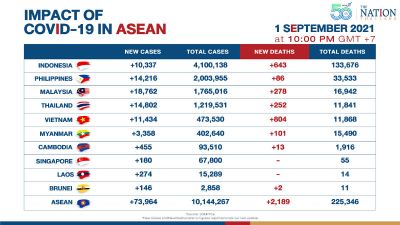
The number of Covid-19 cases in Southeast Asia crossed 10.14 million, with 73,964 new cases reported on Wednesday, higher than Tuesday’s tally of 76,800. Asean also saw an additional 2,189 deaths, increasing from Tuesday’s 1,236 and taking total coronavirus deaths to 225,346 so far.

Indonesian President Joko Widodo said on Tuesday that his country would receive an additional 331 million doses of Covid-19 vaccines through to the end of the year.

To date, at least 35.85 million people in the country have received two shots of vaccines, while 63 million have had their first dose, according to the Health Ministry.

The second wave of Covid-19 triggered by the Delta variant is easing in Indonesia, with declining infection and bed occupancy rates.

Meanwhile, Cambodian Prime Minister Hun Sen said on Tuesday that the kingdom has seen a dramatic drop in new cases and deaths, especially in the capital Phnom Penh and its adjacent Kandal province, where herd immunity has been achieved.

He asked his education minister to consider reopening schools in non-infectious locations, especially in rural areas, which have been closed since February after the third Covid-19 wave hit.

So far some 10.7 million people, or 66.8 per cent of the country’s population, have received at least one vaccine dose, while 8.45 million have received both required shots.

Published : September 02, 2021

Covid-zero wavers in Australia as Melbourne sets vaccine target #SootinClaimon.Com

#SootinClaimon.Com : ขอบคุณแหล่งข้อมูล : หนังสือพิมพ์ The Nation.

https://www.nationthailand.com/international/40005586

Covid-zero wavers in Australia as Melbourne sets vaccine target


Australias Covid-Zero policy is under renewed pressure after a second state indicated it was abandoning attempts to eliminate the highly-contagious delta variant.

Melbourne set a 70% first-dose vaccination rate target to begin easing its Covid-related restrictions — some of the toughest in the world — on Wednesday, as Victorian Premier Daniel Andrews, previously a strong proponent of Covid-Zero, laid out a roadmap to reopening the state.

Regional areas of Victoria could exit lockdown as early as next week, he added. Still, Andrews didn’t specify a date when stay-at-home orders would be removed for metropolitan Melbourne.

The Covid-Zero strategy has seen Australia rely on closed international borders, rigorous testing and lockdowns to eliminate community transmission, earning it the nickname “Fortress Australia” and raising questions about how long it could afford to remain isolated not just from the world but across state borders. Victoria joins neighboring New South Wales in shifting toward a reopening that will see more than half the nation’s population learn to live with the virus, rather than seek to eliminate it.

The 70% threshold will allow rules limiting residents to an area within five kilometers of their homes to extend to 10, and see three hours of daily outdoor exercise permitted instead of the current limit of two, Andrews said. Playgrounds will reopen late Thursday, he said.

He said the state — which recorded two deaths and 120 new virus infections overnight — could reach the inoculation target around September 23. Some 35% of Victorians over age 16 are fully vaccinated, and 56% have had their first dose.

“I much prefer to be here announce that we’re opening up,” Andrews said. Regarding a full lifting of the lockdown, he added that there would “be a time for that, but it simply can’t be before” at least 70% of people are fully vaccinated.

Australia has imposed restrictions ranging from stay-at-home orders to the closure of venues on its residents more frequently than any other country outside of China during the pandemic, according to Bloomberg analysis of Oxford University’s Stringency Index, which assesses how many times nations see significant upward changes in the severity of their lockdowns.

Victoria’s announcement was criticized by peak employer lobbyist Ai Group, which contrasted Andrews’ incremental easing with the bid outlined by New South Wales Premier Gladys Berejiklian earlier Wednesday seeking to reopen Sydney’s international border by November.

“Our two largest states need to get on the same page as soon as possible and this will be best achieved by Victoria raising its aspirations for Covid freedom,” Ai Group’s chief executive, Innes Willox, said in an emailed statement. “If the aim is to shutter many more businesses in the state, Victoria is moving in the right direction.”

Roughly half of Australia’s population remains under stay-at-home orders. Melbourne has seen six lockdowns numbering a total of 213 days since the pandemic began, while Sydney has been under similar restrictions for more than two months and residents of Canberra, the national capital, are following such measures through September 17.

The outbreak started in Sydney in mid-June, when an unvaccinated chauffeur became infected while transporting international flight crew.

Australia’s sluggish vaccine rollout, one of the slowest in the developed world, has picked up speed since the outbreak. But its slowness has forced health authorities to continue to resort to lockdowns until immunization rates catch up, even as nations like the U.S. and U.K. return to relative normality.

New South Wales recorded four deaths and 1,116 new infections on Wednesday as authorities focus on inoculations as a pathway to removing restrictions. More than 22,500 people have been infected in the state, mostly in Sydney, since the outbreak started.

“The escape of the delta variant before vaccinations reached herd-immunity levels is a major disaster for Australia,” said Bloomberg Economics’s James McIntyre. “The recalibration of restriction thresholds — and sharper focus on vaccination rollout — offers a glimmer of hope that the full reopening of the economy may eventuate sooner than anticipated, albeit with significant damage in the meantime.”

Published : September 02, 2021

EU mulls 300 million euros to accept refugees amid Afghan strife #SootinClaimon.Com

#SootinClaimon.Com : ขอบคุณแหล่งข้อมูล : หนังสือพิมพ์ The Nation.

https://www.nationthailand.com/international/40005585

EU mulls 300 million euros to accept refugees amid Afghan strife


The European Union has floated a plan to spend 300 million euros ($355 million) to resettle about 30,000 refugees inside the bloc in a bid to avert a migration crisis following the withdrawal of U.S. troops from Afghanistan.

The European Commission, the bloc’s executive arm, made the proposal to EU ambassadors at an Aug. 26 meeting on Afghanistan, according to a diplomatic note seen by Bloomberg. The commission added that additional funds could be made available.

An EU spokesperson said the funding isn’t limited to Afghan refugees, but EU home affairs commissioner Ylva Johansson said Tuesday that she plans to convene a high-level resettlement forum this month to address the Afghan situation. Specific resettlement pledges would have to made by individual EU governments.

The EU is eager to avoid a repeat of the 2015 refugee crisis caused by the Syrian war when more than a million migrants entered the bloc. The EU will focus on development aid, including support for refugees in Afghanistan’s neighbors like Pakistan and Tajikistan to prevent migration flows from reaching the EU, according to the note.

“The EU will engage and strengthen its support to third countries, in particular the neighboring and transit countries, hosting large numbers of migrants and refugees,” according to a statement after a Tuesday emergency meeting of EU home affairs ministers in Brussels. “The EU will also cooperate with those countries to prevent illegal migration from the region.”

An email seeking comment from the commission wasn’t immediately returned.

Support for refugees is a fraught topic in the bloc, with several member states firmly opposed to accepting any migrants. Janez Jansa, prime minister of Slovenia, which currently holds the rotating presidency of the EU, said on Twitter last month that Europe shouldn’t open any humanitarian migration corridors for Afghanistan to avoid the “strategic mistake” of 2015.

Even though about 500,000 people have been displaced in Afghanistan this year, flows of people into neighboring countries have been muted, according to the note, which added there had been no significant movements toward the EU.

The EU has currently suspended development aid to Afghanistan following the Taliban takeover of the country but has earmarked about 1 billion euros under its current budget, according to the note. These funds would be conditional on a number of factors, including allowing safe passages, the respect of human rights, fighting terrorism and the creation of an inclusive government, the note said.

The number of those fleeing Afghanistan is expected to rise, according to the note, with officials agreeing on the need for security checks and to address the risk of irregular migration and human smuggling. Officials also highlighted the risks posed by Afghanistan becoming a haven for terrorists, the dangers posed by the large amounts of weapons left behind by the U.S. and the Taliban becoming an inspiration for extremist movements and disinformation, including in the EU.

Published : September 02, 2021

Afghan evacuees to U.S. face tenuous path ahead #SootinClaimon.Com

#SootinClaimon.Com : ขอบคุณแหล่งข้อมูล : หนังสือพิมพ์ The Nation.

https://www.nationthailand.com/blogs/international/40005584

Afghan evacuees to U.S. face tenuous path ahead


WASHINGTON – The Biden administration is preparing to screen and resettle tens of thousands of Afghan evacuees in the United States over the coming weeks and months, but the majority will arrive without visas as “humanitarian parolees,” lacking a path to legal U.S. residency and the benefits and services offered to traditional refugees, according to U.S. officials and worried aid groups working closely with the government.

Afghan parolees who have arrived at U.S. military bases will be eligible for an ad hoc State Department program that provides limited assistance for up to 90 days, including a one-time $1,250 stipend. But they will not have the full range of medical, counseling and resettlement services available to immigrants who arrive through the U.S. refugee program.

The nonprofit organizations that work with the government to resettle refugees and that are assisting with Afghan evacuees say Congress will need to provide billions in emergency funding to help the Afghans start over and ensure they can be successfully and safely integrated into the United States.

“We’ve been heartened by the administration’s efforts to ensure some minimal support, but 90 days is meager compared to the massive need,” said Krish O’Mara Vignarajah, president and chief executive of the Lutheran Immigration and Refugee Service. “These Afghans feared for their lives and faced floggings on the way to the airport, and the last thing we want them to face here is a tangled web of backlogs and bureaucratic hurdles.”

Afghan evacuees to U.S. face tenuous path aheadAfghan evacuees to U.S. face tenuous path ahead

More than 31,000 evacuees from Afghanistan arrived to the United States between Aug. 17 and 31, according to the latest Department of Homeland Security data. That included about 7,000 U.S. citizens and legal residents, as well as nearly 24,000 labeled “Afghans at Risk.”

While some of those evacuees include Special Immigrant Visa (SIV) holders or applicants who worked for the U.S. government, officials acknowledge that there is a larger number of parolees who will enter as “vulnerable Afghans.”

Some may have few or no U.S. ties but successfully boarded U.S. military flights in the chaotic hours and days after the fall of Kabul, hoping to reach the United States.

Pentagon officials said Wednesday that the U.S.-led airlift evacuated nearly 125,000 Afghans overall, but the Biden administration has not said how many it expects to resettle in the United States.

Gen. Mark Milley, chairman of the Joint Chiefs of Staff, told reporters Wednesday that approximately 43,000 Afghan evacuees are waiting at transit sites in Europe and the Middle East. Some evacuees have gone to third countries such as Albania.

U.S. officials say their ability to more carefully select who was able to pass Taliban checkpoints and board evacuation flights improved through “pragmatic” communication with Taliban authorities.

“We got better at prioritizing and focusing on those populations that matter most of all to us,” said a senior State Department official involved in the evacuation effort who briefed reporters under rules of anonymity set by the department.

“In the best of all possible worlds, you have the time and space to very thoroughly vet people,” the official said. “But as we clearly saw, the length of time required for some of that vetting hampered our ability to move some of those populations as early in the process as we could have.”

When organizations that were involved in human rights advocacy provided the United States with lists of people seeking to evacuate, officials didn’t have time to determine whether they were qualified, the official said. “We essentially took the nature of the organization and their affirmation that these people were who they were and just assumed it was an at-risk organization.”

The Biden administration has directed DHS to coordinate Afghan resettlement, and on Monday, Homeland Security Secretary Alejandro Mayorkas named Robert Fenton Jr., a veteran Federal Emergency Management Agency official, to lead the effort.

DHS officials say about 300 staffers from U.S. Customs and Border Protection, U.S. Immigration and Customs Enforcement and the U.S. Coast Guard have been deployed to the transit sites – referred to as “lily pads” – that are designated as the primary screening locations.

“The federal government has established a robust and multi-layered screening and vetting process with dual goals of protecting the homeland and providing protections for vulnerable Afghans,” DHS spokesperson Sarah Peck said in a statement.

Afghan evacuees are required to provide biometric and biographic information, but many of the evacuees lack passports and other documents that typically facilitate the process, officials acknowledge.

The Biden administration has not said what it will do with evacuees who have derogatory information that raise security concerns during the vetting process, but officials say they will work with allies and partners to resettle at-risk Afghans in third countries.

Homeland security officials say only Afghans who can be safely vetted will be allowed to travel to the United States.

Tom Warrick, a former DHS and State Department official who worked on the Special Immigrant Visa program for Iraqis, said U.S. screeners can still conduct robust vetting on Afghans who lack documentation or a record of working for Western governments and organizations.

“There are still substantial numbers of ways to validate information given during interviews,” said Warrick. “This is what [U.S. Citizenship and Immigration Services] does when adjudicating people from countries without a substantial U.S. military presence – to check facts in their stories, and cross-check what is known historically if someone claims they were in fear of persecution as a member of a particular religious or ethnic minority.”

Another 80 staffers from USCIS are helping to process evacuees at Dulles International Airport in Virginia and Philadelphia International Airport, the two designated arrival points for the commercial and charter aircraft bringing Afghans to the United States. CBP personnel at those locations conduct a secondary “cross-check” on arriving Afghans to verify their information, DHS officials said.

From there, the evacuees are transferred to military sites, where they undergo medical screening, including coronavirus tests, and are offered vaccines. After processing, the evacuees are issued temporary work authorization and referred to refugee resettlement organizations.

Afghans who don’t speak English or have ties to the U.S. government or U.S. organizations are particularly vulnerable, say refugee organizations who are attempting to raise private funding to help with housing, medical bills and other support services.

Mark Hetfield, president of the Hebrew Immigrant Aid Society (HIAS), a group that resettles refugees, said his organization is preparing for the potential arrival of 50,000 Afghans who will enter as parolees, with a provisional residency status that expires after two years.

Hetfield said Congress needs to prepare a large appropriation to the Office of Refugee Resettlement (ORR), the State Department and USCIS. “The number we’ve been floating around, just on the back of the napkin, is $5 billion for ORR, $2 billion for State, and $1 billion for USCIS, at a minimum,” he said. “That would give parolees the same amount of assistance as refugees or SIVs would get.”

Hetfield said the short-term funding from the State Department won’t cover many expenses, let alone provide families with essential tools like Internet access and mobile connectivity. “They need things like smartphones,” he said. “Those are not luxuries, they are necessities. You can’t access the job market without access to the Internet.”

One administration official, who was not authorized to speak to reporters, said the Biden administration is looking at ways to boost funding and support for Afghan resettlement.

Another looming issue is their legal status as parolees. Congress could create a mechanism to allow them to “adjust” to legal permanent residency, aid groups say, along the lines of the Cuban Adjustment Act of 1966 or more recent programs to aid Iraqis.

The parolees could apply for asylum, stating a fear of persecution if returned to Afghanistan, but the U.S. asylum system is badly overloaded by applicants from the Mexico border.

The capacity of the U.S. refugee system is also depleted, aid groups say, following deep cuts to the program under the Trump administration.

“The refugee resettlement system has been decimated, so our local offices are unable to accept parolees right now without an assurance of our ability to cover costs like medical expenses immediately,” said Vignarajah.

“We are fundraising, but it’s a piecemeal, time-intensive process to secure private contributions,” she said. “And we don’t want to end up with our case managers doing check-ins with families under overpasses.”

Published : September 02, 2021

ส่องกระแสต่อต้าน “สูตรความสำเร็จ” ของ แจ็ก หม่า #SootinClaimon.Com

#SootinClaimon.Com : ขอบคุณแหล่งข้อมูล : หนังสือพิมพ์โพสต์ทูเดย์

https://www.posttoday.com/world/662092

วันที่ 01 ก.ย. 2564 เวลา 19:30 น.ส่องกระแสต่อต้าน “สูตรความสำเร็จ” ของ แจ็ก หม่า หลักการทำงานวันละ 12 ชั่วโมง หรือ 996 ที่บริษัทเทคหลายแห่งในจีนเคยใช้ก่อนหน้านี้เจอกระแสต่อต้านพร้อมๆ กับความตกต่ำของ แจ็ก หม่า เจ้าของสูตรนี้   

เมื่อปี 2019 แจ็ก หม่า พูดถึงวัฒนธรรมการทำงานแบบ 996 คือ ทำงานตั้งแต่ 09.00-21.00 น. เป็นเวลา 6 วันต่อสัปดาห์ ไว้ว่าตัวเขาไม่เคยเสียใจที่ต้องทำงานวันละ 12 ชั่วโมง และบอกอีกว่า “ส่วนตัวผมคิดว่า 996 เป็นพรที่ยิ่งใหญ่ คุณจะประสบความสำเร็จตามที่ต้องการได้อย่างไรถ้าไม่ทุ่มเทความพยายามและเวลา”

หม่ายังบอกอีกว่าคนที่อยากทำงานกับ Alibaba ต้องพร้อมที่จะทำงานวันละ 12 ชั่วโมงหากอยากประสบความสำเร็จ “ไม่งั้นจะมาสมัครงานที่นี่ให้เหนื่อยทำไมล่ะ เราไม่ได้ขาดแคลนคนที่ทำงาน 8 ชั่วโมงได้อย่างสบายใจ”

และยังบอกว่า “การทำงานแบบ 996 ไม่ใช่การทำงานล่วงเวลา ทุกคนมีสิทธิเลือกชีวิตของตัวเอง แต่คนที่ทำงานน้อยกว่าจะไม่มีโอกาสได้ลิ้มรสความสุขและผลตอบแทนจากการทำงานหนัก”

ขณะนั้นบริษัทเทคใหญ่ๆ อีกหลายแห่งก็ใช้วัฒนธรรมการทำงานหนักเช่นนี้ อาทิ ริชาร์ด หลิว ผู้ก่อตั้ง JD.com คู่แข่งของ Alibaba ที่ตำหนิพนักงานที่ไม่ทำงานหนักพอตามที่บริษัทต้องการว่า “คนขี้เกียจ”

วัฒนธรรมนี้คงอยู่ได้ด้วยความเชื่อที่ว่าการทำงานหนักจะทำให้บริษัทประสบความสำเร็จแซงหน้าคู่แข่ง ส่วนตัวพนักงานเองก็จะได้ค่าตอบแทนสูงๆ ช่วยขยับระดับชั้นทางสังคม ถือว่าวิน-วินกันทั้งสองฝ่าย และรัฐบาลจีนในขณะนั้นก็ทำเป็นหลับตาข้างหนึ่ง

จนกระทั่งช่วงต้นปีที่ผ่านมา ประเด็นการใช้งานพนักงานหนักเกินไปของบริษัทเทคในจีนถูกหยิบยกมาพูดถึงในวงกว้าง หลังจากพนักงานอย่างน้อย 2 ของแอพพลิเคชันพินตัวตัว (Pinduoduo) เสียชีวิตอันเนื่องมาจากการทำงาน โดยคนหนึ่งเป็นผู้หญิงวัย 23 ปีหมดสติระหว่างเดินกลับบ้านกับเพื่อนร่วมงานตอนตีหนึ่งครึ่งและไม่ฟื้นกลับมาอีกเลย ส่วนอีกคนหนึ่งฆ่าตัวตาย

กระแสยี้ 996 หนักๆ จึงเกิดขึ้นนับตั้งแต่นั้น แต่วัฒนธรรมนี้ก็ยังไม่หมดไปอยู่ดี

นิโคล หญิงสาวรายหนึ่งที่จบปริญญาโทจากมหาวิทยาลัยในอังกฤษแล้วกลับมาทำงานในบริษัทเทคในเซินเจิ้นเผยกับสำนักข่าว Vice ว่า เธอทำงานตั้งแต่ 09.00-21.00 น. และช่วงครึ่งหลังของปีนี้จะต้องทำไปจนถึงอย่างน้อย 23.30 น. หรือเที่ยงคืน และหลังจากเลิกงานกลับถึงบ้านแล้วก็ยังต้องทำงานต่อ ทั้งยังต้องพร้อมรับโทรศัพท์เกี่ยวกับเรื่องงานตลอด 24 ชั่วโมงไม่เว้นแม้แต่ในวันหยุด ซึ่งอันหลังนี้บริษัทไม่ได้บอกไว้ตอนสัมภาษณ์งาน

หวัง ศาสตราจารย์ด้านเศรษฐศาสตร์และการจัดการจากมหาวิทยาลัย South China Normalg เผยกับ Vice ว่า ค่าตอบแทนของพนักงานบริษัทในจีนต่ำกว่าในสหรัฐ และในวัฒนธรรมจีนหากคนที่มาจากครอบครัวชนชั้นกลางไม่ทำงานหนักมากพอก็อาจตกลงไปอยู่ในกลุ่มชนชั้นล่างได้ง่ายๆ ดังนั้นคนจีนจึงถูกสภาพสังคมบีบบังคับให้ทำงานหนัก และต้องก้มหน้ารับการทำงานแบบ 996 ไปโดยปริยาย

Vice รายงานว่า นอกจากแรงกดดันจากสังคมแล้ว การบังคับใช้กฎหมายที่ไม่เข้มงวดทำให้วัฒนธรรม 996 ไม่หมดไปจากสังคมจีน โดยแม้กฎหมายแรงงานของจีนจะระบุว่าให้ทำงานไม่เกินวันละ 8 ชั่วโมง หรือสัปดาห์ละ 44 ชั่วโมง รวมทั้งต้องจำกัดชั่วโมงการทำงานนอกเวลา แต่หลายบริษัทก็ยังใช้กฎ 996 กับพนักงานต่อไป

ทว่า มีคนรุ่นใหม่อีกไม่น้อยที่เลือกหันหลังให้กับบริษัทที่ใช้งานหนักเกินควรแม้จะได้ค่าตอบแทนสูงก็ตาม โดยให้เหตุผลว่าพวกเขาต้องการความสุขมากกว่าเงิน

ล่าสุดหลังจากไล่เช็กบิลบริษัทเทคโนโลยียักษ์ใหญ่ รวมทั้ง Alibaba ของ แจ็ก หม่า ที่ไม่ใช่ลูกรักของรัฐบาลจีนแล้ว สีจิ้นผิงก็ทำท่าว่าจะหันมาจัดการกับวัฒนธรรม 996 ที่ไม่เป็นธรรมกับพนักงาน ทั้งยังอาจเป็นอุปสรรคต่อการเพิ่มจำนวนประชากรของจีนอย่างที่สีจิ้นผิงต้องการด้วย เนื่องจากคนรุ่นใหม่ส่วนใหญ่เหน็ดเหนื่อยจากการทำงานจนไม่เหลือแรงผลิตทายาท

เมื่อเร็วๆ นี้ ศาลฎีการ่วมกับกระทรวงทรัพยากรมนุษย์และประกันสังคมออกแถลงการณ์ประณามวัฒนธรรม 996 ยาวเหยียดซึ่งพอสรุปได้ว่า พนักงานมีสิทธิ์ในการพักผ่อนและลางาน และย้ำว่าการยึดมั่นในระบบชั่วโมงการทำงานตามกฎหมายเป็นหน้าที่ของนายจ้าง ทั้งยังมีคำพิพากษาให้บริษัทจ่ายเงินชดเชยแก่ครอบครัวของพนักงานที่เสียชีวิตอันเนื่องจากการทำงาน 400,000 หยวน

นอกจากทางการจะขยับแล้ว คนรุ่นใหม่ของจีนยังลุกขึ้นมาประท้วงวัฒนธรรมการทำงานหนักซึ่งพวกเขามองว่าเป็นการเรียกร้องมากเกินไปไม่เหมาะสมกับค่าตอบแทนด้วยการชวนกัน “อู้งาน” หรือที่ภาษาจีนเรียกว่า โมหยี๋ (แปลตรงตัวว่าจับปลา) ซึ่งมาจากสำนวนจีนว่า “น้ำขุ่นทำให้จับปลาง่าย” หมายความว่าให้พลิกวิกฤตให้เป็นโอกาส

การอู้งาน (แบบไม่เป็นทางการ) ที่คนรุ่นใหม่ชักชวนกันทำ อาทิ ลุกไปยืดเส้นยืดสายในห้องครัวของออฟฟิศ ใช้กระดาษชำระของบริษัทให้มากที่สุด ส่งงานคุณภาพปานกลาง อยู่ในห้องน้ำนานๆ เล่นเกมในสมาร์ทโฟน หรือไม่ทำงานเกินเวลา เป็นต้น

ทว่าการประท้วงแบบเงียบๆ นี้ก็เสี่ยงทำให้พวกเขาถูกไล่ออกจากงาน อัลเลน เหอ ผู้จัดการอาวุโสของบริษัทด้านการเงินในเซี่ยงไฮ้เผยกับ Inkstone ว่า “เรามีพนักงานใหม่ทุกปี บางคนก็โดดเด่น แต่บางคนก็อู้งาน แต่ส่วนใหญ่ตั้งใจทำงาน พนักงานที่ขี้เกียจจะพบว่าตัวเองมีช่องว่างกว้างขึ้นๆ เมื่อเทียบกับพนักงานคนอื่นที่ขยัน สุดท้ายพวกเขาก็จะถูกไล่ออก”

แต่เจ้าของบัญชีเวยปั๋วที่ใช้ชื่อว่า Blogger Massage Bear บอกว่า ถึงถูกเจ้านายต่อว่าว่าอู้งานหรือบ่นว่าไม่รับผิดชอบก็จะยิ้มให้และไม่โกรธเจ้านาย และจะไม่ลาออกเองด้วย และถ้าเจ้านายไล่ออก พนักงานก็จะได้เงินชดเชย (กฎหมายแรงงานจีนกำหนดว่าหากบริษัทไล่พนักงานออกโดยไม่มีเหตุผลสมควร บริษัทต้องจ่ายเงินชดเชยเท่ากับจำนวนของเงินเดือนคูณด้วยจำนวนปีที่ทำงาน แล้วบวกเพิ่มอีก 1 เดือน)

ส่วน เจนนิเฟอร์ เฟิง หัวหน้าฝ่ายทรัพยากรมนุษย์จากเว็บไซต์หางาน 51job.com เผยกับ Inkstone ว่า พนักงานส่วนใหญ่ที่เกิดในช่วงทศวรรษ 1970 และ 1980 ยึดแนวทางการทำงานเดิมคือ ต้องอดทนกับความยากลำบาก ส่วนคนที่เกิดในทศวรรษ 1990 มีอีกแนวทางหนึ่งนั่นคือ ให้ความสำคัญกับผลประโยชน์ของตัวเองเป็นอันดับแรก

เราจึงได้เห็นคนจีนรุ่นใหม่ลุกขึ้นมาประท้วงด้วยการอู้งานมากขึ้น

AFP PHOTO / FABRICE COFFRINI

รัฐวิสาหกิจจีนเตรียมถือหุ้นร่วมกับ Ant Group #SootinClaimon.Com

#SootinClaimon.Com : ขอบคุณแหล่งข้อมูล : หนังสือพิมพ์โพสต์ทูเดย์

https://www.posttoday.com/world/662088

วันที่ 01 ก.ย. 2564 เวลา 18:00 น.รัฐวิสาหกิจจีนเตรียมถือหุ้นร่วมกับ Ant Groupแหล่งข่าวเผยบริษัทของรัฐบาลจีนเตรียมเข้าถือหุ้นใหญ่ในกิจการร่วมค้าของ Ant Group

สำนักข่าวรอยเตอร์สรายงานว่าบริษัทที่ได้รับการสนับสนุนจากรัฐบาลจีนเตรียมเข้าถือหุ้นใหญ่ในกิจการร่วมค้า (joint venture) ซึ่งเป็นสินทรัพย์หลักของ Ant Group เป็นครั้งแรก ท่ามกลางความพยายามของรัฐบาลจีนในการควบคุมบริษัทเทคโนโลยียักษ์ใหญ่

แหล่งข่าวเผยว่าภายใต้แผนดังกล่าวจะส่งผลให้ Ant Group และ Zhejiang Tourism Investment Group จะถือหุ้น 35% และบริษัท Transfar Group 7%

ขณะที่ส่วนอื่นๆ จะถูกถือครองโดย Hangzhou Finance and Investment Group และ Zhejiang Electronic Port ซึ่งได้รับการสนับสนุนจากรัฐบาลจีน

แหล่งข่าวยังกล่าวว่ากิจการร่วมค้าจะมีการรวบรวมข้อมูลทางธุรกิจที่สำคัญของ Ant Group ซึ่งจะส่งผลให้การกำกับดูแลด้านกฎระเบียบของรัฐบาลนั้นง่ายขึ้น

ด้าน Ant Group และผู้อถือหุ้นรายอื่นยังไม่ตอบสนองต่อคำร้องขอความคิดเห็นของรอยเตอร์ส

ระยะหลังมานี้บริษัทเทคโนโลยียักษ์ใหญ่ของจีน รวมถึง Ant Group ถูกควบคุมโดยรัฐบาลอย่างเข้มงวดมากขึ้น เพื่อป้องกันการผูกขาด และต้องปฏิบัติตามข้อกำหนดของรัฐบาลอย่างเคร่งครัด โดยเมื่อปลายปีที่แล้วการขายหุ้น IPO มูลค่ามหาศาลของ Ant Group ถูกทางการจีนสั่งระงับไป

Photo by STR / AFP

สหรัฐทิ้งอาวุธไว้ให้ตอลิบานเพียบ แต่ใช้งานไม่ได้แล้ว #SootinClaimon.Com

#SootinClaimon.Com : ขอบคุณแหล่งข้อมูล : หนังสือพิมพ์โพสต์ทูเดย์

https://www.posttoday.com/world/662075

วันที่ 01 ก.ย. 2564 เวลา 17:10 น.สหรัฐทิ้งอาวุธไว้ให้ตอลิบานเพียบ แต่ใช้งานไม่ได้แล้วกลุ่มตอลิบานยึดอาวุธจากกองทัพสหรัฐได้จำนวนมาก แต่ทั้งหมดถูกทำให้ใช้การไม่ได้แล้ว

หลังจากที่สหรัฐถอนกองกำลังออกจากอัฟกานิสถานไปเป็นที่เรียบร้อยแล้วเมื่อวันจันทร์ (30 ส.ค.) ที่ผ่านมา สำนักข่าวต่างประเทศรายงานว่ากองกำลังของตอลิบานเข้าตรวจสอบพบอาวุธยุทโธปกรณ์ของรัฐบาลสหรัฐและอัฟกานิสถานถูกทิ้งไว้ในกรุงคาบูลจำนวนมาก คิดเป็นมูลค่าหลายพันล้านเหรียญสหรัฐ แต่ทั้งหมดไม่สามารถใช้การได้แล้ว

เคนเนธ แมคเคนซี หัวหน้ากองบัญชาการกลางของกองทัพสหรัฐเผยต่อ Washington Post ว่าพวกเขาทิ้งอากาศยานจำนวน 73 ลำ ยานพาหนะเกือบ 100 คัน และอุปกรณ์อื่นๆ ไว้ในกรุงคาบูล แต่ทั้งหมดถูกทำให้ใช้การไม่ได้แล้ว ก่อนที่สหรัฐจะถอนกองกำลังออกไป

แหล่งข่าวรายหนึ่งซึ่งเป็นอดีตทหารหน่วยรบพิเศษของสหราชอาณาจักรกล่าวกับ VICE News ว่าทหารอเมริกันรู้ล่วงหน้าว่าพวกเขาจะต้องถอนกองกำลังออกจากคาบูล จึงมีเวลาในการจัดการกับอาวุธยุทโธปกรณ์ทั้งหมด เพื่อให้แน่ในว่าอุปกรณ์เหล่านั้นจะไม่สามารถใช้งานได้อีก

ซึ่งต่างจากก่อนหน้านี้ที่มีรายงานจากเมืองกันดาฮาร์ว่ากลุ่มตอลิบานนำเฮลิคอปเตอร์ ยูเอช-60 แบล็กฮอว์ก (UH-60 Black Hawk) ที่สหรัฐมอบให้รัฐบาลอัฟกานิสถานออกมาขับเล่น เนื่องจากขณะนั้นสหรัฐถอนกองกำลังออกไปโดยไม่ได้มีการเตรียมการล่วงหน้า

เมื่อปลายเดือนที่แล้วมีรายงานว่ากลุ่มตอลิบานยึดอากาศยานและเฮลิคอปเตอร์ได้ 40 ลำ ขณะที่ผู้สังเกตการณ์ระบุว่าตอลิบานยึดแบล็กฮอว์กได้อย่างน้อย 4 ลำ ซึ่งรวมถึงที่ยึดจากกันดาฮาร์ 2 ลำ

อย่างไรก็ตาม แหล่งข่าวระบุว่ากลุ่มตอลิบานสามารถใช้เฮลิคอปเตอร์แบล็กฮอว์กไปได้อีกไม่นานเนื่องจากจำเป็นต้องมีการบำรุงรักษาและการเปลี่ยนอะไหล่จากสหรัฐ แต่เครื่องบินขับไล่ Mi-17s จำนวน 32 ลำที่อยู่ในอัฟกานิสถานยังสามารถใช้การได้ต่อไป

นอกจากนี้ยังมีภาพนักรบตอลิบานสวมชุดเครื่องแบบและพกพาอุปกรณ์ อาทิ กล้องมองตอนกลางคืน ที่กองทัพสหรัฐมอบให้กับกองทัพอัฟกัน เผยแพร่ในโลกออนไลน์ด้วย

อดัม อันเชเยฟสกี ซีอีโอ Open the Books เผยว่าขณะนี้ตอลิบานมียานพาหนะทหารราว 75,000 คัน ในจำนวนนี้เป็นพาหนะทางยุทธวิธีราว 50,000 คัน รถฮัมวี 20,000 คัน ยานพาหนะต้านกับระเบิดราว 1,000 คัน และรถลำเลียงพลหุ้มเกราะราว 150 คันที่มาจากสหรัฐ

โดยนับตั้งแต่ปี 2001 สหรัฐทุ่มงบประมาณไปราว 83,000 ล้านเหรียญสหรัฐในการฝึกและติดอาวุธให้กองทัพอัฟกัน รวมถึงส่งมอบอาวุธทหารราบ 600,000 ชิ้น รวมทั้งปืนเอ็ม 16 และอุปกรณ์สื่อสาร 162,000 ชิ้น และกล้องที่ช่วยให้มองเห็นตอนกลางคืนอีก 16,000 ชิ้น เมื่อเดือนที่แล้วยังเพิ่งส่งเฮลิคอปเตอร์ใหม่อีก 7 ลำไปยังกรุงคาบูล

Photo by Wakil KOHSAR / AFP