เรื่องราวจากปากคำของหญิงสาวรายนี้ ซึ่งเผยแพร่ผ่านไฟล์ PDF จำนวน 11 หน้าที่เผยแพร่ทางออนไลน์ในวงกว้าง ทำให้เกิดกระแสสังคมออนไลน์บนเว็บไซต์ไมโครบล็อก Weibo ของจีน และเจ้าหน้าที่ได้เข้ามาสอบสวนแล้วโดยตำรวจในเมืองจี่หนานกล่าวเมื่อเช้าวันอาทิตย์ว่าพวกเขากำลังสอบสวนเหตุการณ์ดังกล่าว
“Alibaba Group มีนโยบายไม่อดทนต่อประพฤติมิชอบทางเพศ และรับรองว่าสถานที่ทำงานที่ปลอดภัยสำหรับพนักงานของเราทุกคนคือสิ่งสำคัญสูงสุดของอาลีบาบา” โฆษกกล่าวในแถลงการณ์
สำนักข่าว The New York Time รายงานตามเอกสารของศาลและอัยการว่า การสมคบคิดเริ่มขึ้นเมื่อเดือนที่แล้วเมื่อพ่อค้าอาวุธของไทย ซึ่งอัยการรัฐบาลกลางกล่าวว่าขายอาวุธให้กองทัพเมียนมาร์ ติดต่อเพียว เฮน ทุต (Phyo Hein Htut) หนึ่งในผู้ก่อเหตุ
The Times of Israel รายงานว่าเมื่อวันพฤหัสบดีกระทรวงได้อนุมัติการขยายข้อจำกัดการชุมนุมภายใต้ระบบ Green Pass โดยนับตั้งแต่วันอาทิตย์เป็นต้นไป การชุมนุมทุกขนาด ทั้งในบ้านและนอกบ้าน จะเปิดโอกาสให้เฉพาะผู้ที่ได้รับการฉีดวัคซีน หรือผู้ที่หายจากไวรัส หรือผู้ที่มีผลตรวจโควิดเป็นลบ ซึ่งจะครอบคลุมไปยังการบริการของโรงแรม ร้านอาหาร และโรงยิมด้วย
In a summer of smoke, a small town wonders: How are we going to do better than survive?
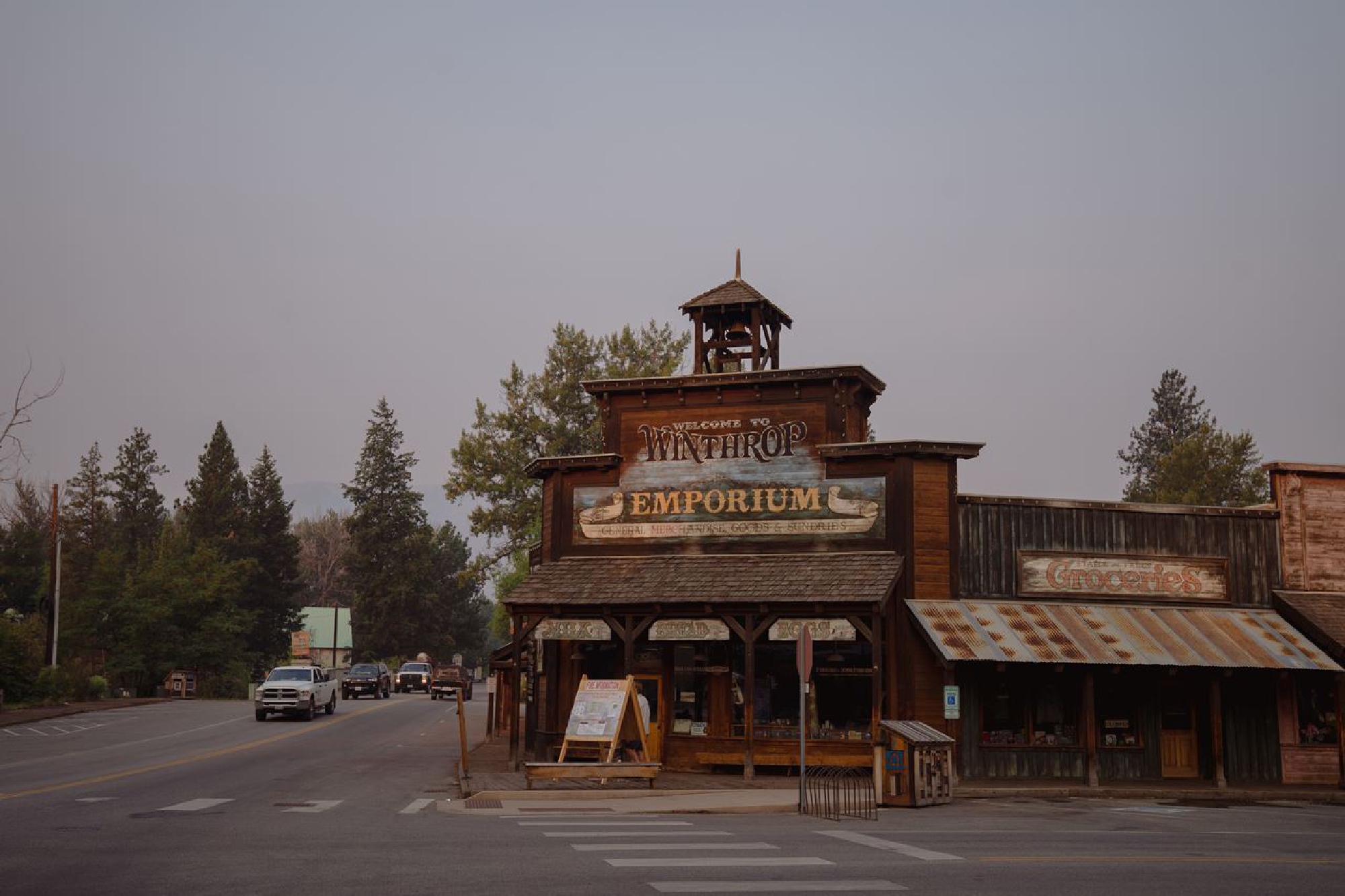
WINTHROP, Wash. – On the worst days, and there have been many, one can see nothing but white – a hot, suffocating fog bank that smells of burning wood and blots out the sun. Hours tick by in a disorienting haze to the whir of air purifiers and box fans. Doors stay sealed, stores are closed and the normal summer bustle in this bucolic mountain town is snuffed out.
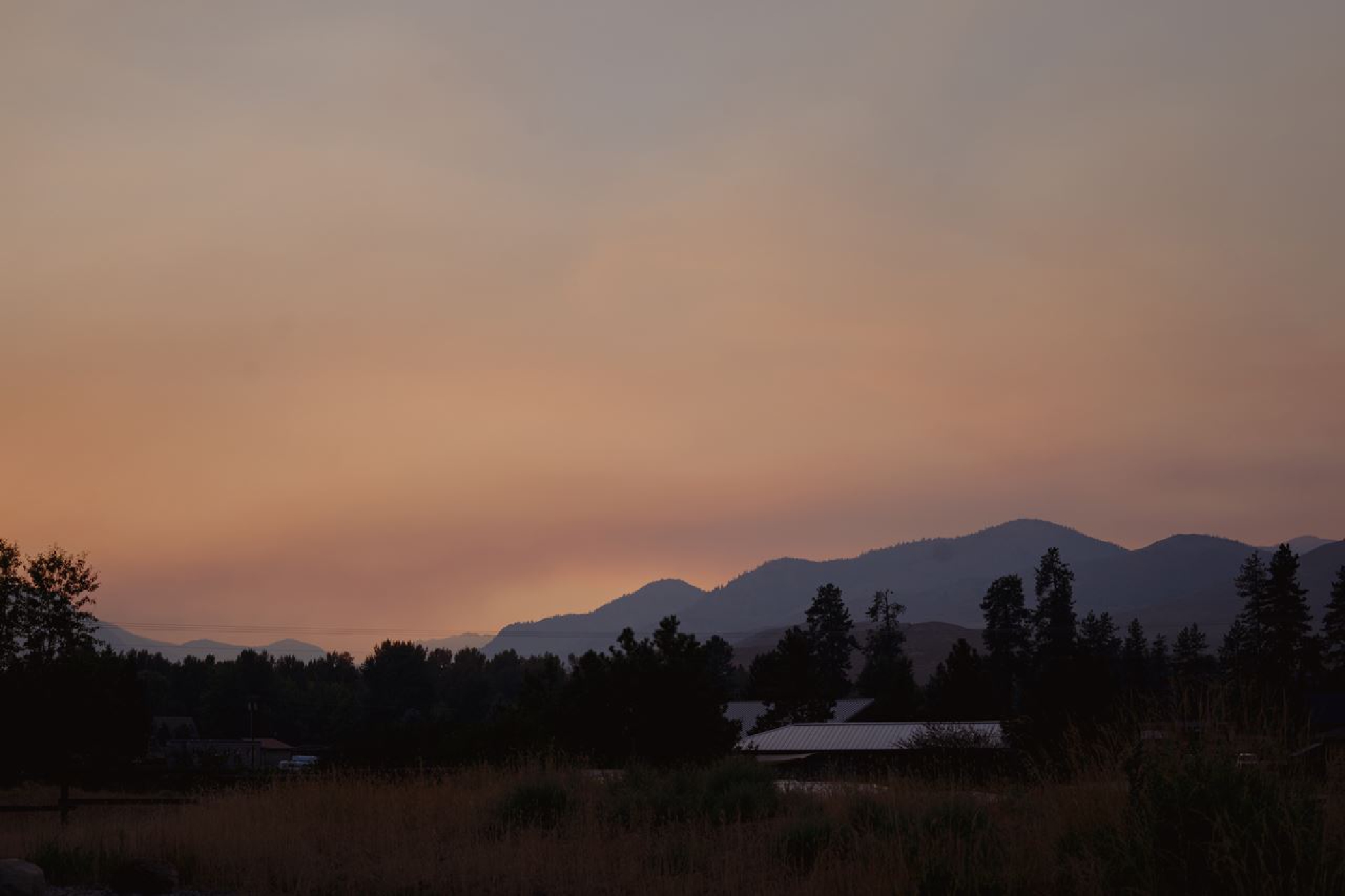
For much of the past month, Winthrop and its neighbors up and down the Methow Valley in Washington state have lived under an oppressive blanket of wildfire smoke. On certain days air quality has been the worst in the country – and possibly in the world – according to the National Weather Service, which described it as “almost off-the-charts hazardous.”
The mayor runs three air purifiers around-the-clock in her house and leaves a box of free N95 masks on a bench outside town hall. The town’s marketing director is considering enrolling her children in school in Oregon. A family doctor treats patients struggling to breathe and others knotted with anxiety, uncertain whether to stay or go.
“It’s all people are thinking or talking about,” said Jesse Charles, one of the few doctors in the Methow Valley. “This cloud that’s over everyone.”
It is another summer of smoke in America, as dozens of wildfires rage throughout the West and Canada. A historic drought and record heat waves worsened by climate change have crisped and yellowed the landscape, priming it for massive blazes. The wildfires burning in the West and in British Columbia have produced enough smoke to muddy the skies across much of the United States this summer.
As of Friday, more than 100 large fires were burning across 14 states. Smoke from Oregon’s Bootleg Fire, the nation’s largest at more than 413,000 acres burned, has already traveled to New York City and Washington, D.C. In recent days, the smoke over Minnesota and the Dakotas has pushed air quality into hazardous territory.
The hazy skies and campfire smell of smoke pollution may still be an alarming rarity for parts of the nation; but this corner of the Pacific Northwest is learning what it means to live with an extreme dose year after year.
In Winthrop, two massive wildfires – the Cedar Creek and Cub Creek 2 – have been burning for much of the past month on either side of town. They have consumed more than 113,000 acres of forest and produced billowing towers of smoke visible from Seattle on the far side of the Cascade Mountains. That smoke also settled in the valley and barely budged, amid scorching temperatures and not enough windy days to clear the air.
“It’s kind of the worst-case scenario with smoke,” Winthrop Mayor Sally Ranzau said. “It sandwiches us in there.”
Even though it’s only midsummer, Washington state has already had more than 1,200 wildfires. It’s a record for this time of year and nearly twice the average number over the past decade, said Hilary Franz, who oversees Washington state’s Department of Natural Resources.
In the typically drizzly Pacific Northwest people live for the blue skies of summer and wildfires are increasingly threatening those precious times. Over several days this week, an air quality advisory was in effect for the entire eastern half of the state.
“Unfortunately, year after year now, our summers are being completely lost to smoke,” Franz said. “We move from one gray to the next.”
There have been no deaths and five buildings have been lost in the two Winthrop fires, but that toll doesn’t capture the social and economic harm the community is enduring. The mountains and forests in the area are a major tourist draw – attracting as many as 1 million visitors a year, town officials say – and that economy has ground to a halt. The scenic North Cascades Highway that brings many visitors has been shut down while firefighters battle flaming patches of snags. Many of the trails for hiking, biking and cross-country skiing that made this area a national destination for outdoor recreation run through lands that are burning.
One of the Pacific Northwest’s most famous resorts, the Sun Mountain Lodge, was evacuated last month as the Cedar Creek blaze bore down on the building. To save the resort, firefighters dug bulldozer trenches throughout the manicured grounds. The 3,000-acre resort, one of Okanogan County’s largest employers and a major source of tax revenue, is now shut down through at least August and faces a major restoration effort, said Eric Christenson, the lodge’s director of sales and marketing.
“The thick smoke coated the surfaces of the lodge both on the inside and outside,” he said. “The swimming pools are filthy. The hiking and horse trails – I imagine they’re devastated.”
On Thursday morning, as the air quality sensor at the Montessori school was reading about 260 – a level of fine particle pollution that the Environmental Protection Agency describes as “very unhealthy” – Abby Pattison stood on the deck of the nearby Observatory Inn, wearing an N95 mask and watering her plants. It was about half as smoky as it has regularly been over the past month; clear enough even to see across the street.
“This is actually not too bad,” she said.
Pattison, 43, and her two business partners recently bought the hotel along Winthrop’s main street, with its rough-hewed boardwalk and Old-West-style facades. The Seattle native had moved to this former gold mining town 11 years ago with her ex-husband and soon fell in love with the community and the opportunity to run on endless mountain trails. Both the town and its flow of tourists were growing, and she wanted to invest in helping shape its future. They named their hotel the Observatory Inn because of its high perch and – on a clear day – striking view of the mountains beyond. The sale closed on June 21.
Within a few days, the smoke rolled in.
Since then, the hotel’s been mostly empty. She’s had to warn away potential customers who call and aren’t aware of the air quality. The only guests have been some evacuees from an aborted Outward Bound trip and the occasional firefighter, both being charged at cost, she said. Pattison and her partners have been meeting to discuss expensive new air filtration systems and strategies for the fall since the fires are projected to burn until it snows. This weekend the hotel will be completely vacant, she said.
“We had our rainy day budget and we had to tap into it right away.”
Before the smoke blew into town, the hotel, as with much of Winthrop, had been having its best year on record as the pandemic eased and visitors flocked to outdoor destinations. Over Memorial Day weekend, Abilene Hagee could look out of Trail’s End Bookstore and see throngs of people window-shopping along the main street.
“The boardwalk was more packed than I’d ever seen it. It was just wall-to-wall people,” she said.
ADVERTISEMENTx
In a summer of smoke, a small town wonders: How are we going to do better than survive?
Not long after the fires broke out, her business plummeted by “90 percent, and it’s been kind of hanging out there,” said Hagee, who is also board president of the local chamber of commerce.
“The air quality’s awful,” she said. “We’re a tourist town, economically driven by that. And how do you invite somebody to come and play in your area when it’s so bad?”
Some restaurants, hotels, outfitters and guiding companies in the valley have closed, at least temporarily. Layoffs have set back housekeepers and food service staff members who were just recovering from pandemic disruptions. Many residents who could afford to leave decamped to the other side of the mountains in search of cleaner air.
“The economic impact is the hardest thing,” Ranzau said. “I think the smoke event was worse than covid was. … People were still here during covid. People didn’t go away. There were still visitors. We still had tourists. The highway wasn’t closed.”
ADVERTISEMENT
As his co-workers were laid off, took vacation or found other work over the mountains, Dave Dewbrey, 49, stayed behind, part of the skeleton staff still working at Methow Cycle and Sport. He works on repairs and other projects put off during last year’s rush. But it has not been easy. He is allergic to smoke, he said, which feels to him like an exaggerated form of hay fever. Dewbrey swallows allergy pills every day and is never far from a handkerchief. Particularly worrisome is that his 2-year-old son has developed a cough.
“[We] were walking up the road out at our place. He would run, and then he would stop … and he would do deep breaths. And I would think, ‘Is this smoke affecting him?’ “
Pattison, the hotel owner, decided to move her two daughters, ages 6 and 9, out of the valley when she could see in the distance the flames of the Cub Creek 2 Fire, which erupted July 16. The worst part, she said, was that her daughters were waking up in the middle of the night worrying about fires, unable to fall asleep. They’ve spent part of the time with their grandparents in the San Juan Islands, in western Washington, ever since.
“It just looked huge and very scary,” she said. “We didn’t really know what was going to happen at that point, with just how dry everything was, and it didn’t seem like fire lines were really helping because it was so dry.”
On Tuesday evening, a rainstorm helped clear some of the smoke and Pattison went to a movie at the Barnyard Cinema. The space had well-filtered air and she could see friends and try to relax. She was in the middle of “Roadrunner,” the documentary about chef Anthony Bourdain, when a neighbor texted her.
ADVERTISEMENT
“There’s a smoke check on Davis Lake and we are gone,” the neighbor wrote.
Lightning had just sparked a new fire within a couple miles from Pattison’s home – the closest one yet – and the neighbor needed someone to “get the cats out and turn the sprinklers on.”
Pattison stood up and rushed out of the theater. That night she considered packing up her home and moving out.
Situated in dry forests on the eastern slopes of the Cascades, the Methow Valley is familiar with forest fires. But the pace and intensity of those blazes – and the subsequent threats from smoke and bad air quality – have been increasing as the planet warms, driven by humans burning fossil fuels.
The average temperature in Okanogan County, which includes Winthrop, has risen 1.1 degree Celsius since 1895, slightly above the national average, according to an analysis of temperature data in the United States by The Washington Post.
The big fires and smoke years of the past decade are a part of daily conversation here; just as the charred tree trunks still visible on the mountainsides speak to the proximity of the risk. The Carlton Complex Fire of 2014 that burned more than 300 homes is still the state’s largest wildfire. The Okanogan Complex Fire the next year left three firefighters dead. In 2018, flames threatened the town of Twisp, just south of Winthrop, while smoke blanketed the valley for days.
Even in winter, the Methow Valley struggles with clean air because residents have traditionally heated their homes by burning wood. But the onslaught of wildfires has pushed air quality to distressing levels, regularly above 400 on the state’s air quality index scale.
Over the past decade, Okanogan County has spent more days with compromised air quality than any other county in the state, according to data from the state Department of Ecology’s air quality program. This year has been the worst of all by some measures, as residents have spent nearly half their days breathing air that’s other than “good” – including levels defined as “unhealthy,” “very unhealthy” and “hazardous.” There have already been more “hazardous” days recorded by the county’s three official air quality monitors than in any year since the state started collecting date in 2006.
“It got bad fast and then it stayed bad for a month now,” said Andrew Wineke, a spokesman for the state’s air quality program. “Winthrop had some of the worst air quality in the world several times in the past few weeks.”
In a summer of smoke, a small town wonders: How are we going to do better than survive?
The science is “really clear” that the state’s summers are hotter and dryer and that climate change will continue to worsen the threat of wildfires, said Amy Snover, director of the Climate Impacts Group at the University of Washington. She owns a house in the area and has been visiting since she was a child; after the Cedar Creek blaze erupted last month, her parents were forced to evacuate.
Projections based on climate change models predict a quintupling of the amount of wildfire acreage that will burn in the Columbia River Basin by the end of the century, compared to the average annual area burned from 1916 through 2006, according to Snover.
“We expect exceptionally hot and dry weather to increasingly not be the exception,” she said.
For those who don’t leave by choice or necessity, the solution to coexisting with smoke comes down to finding spaces to breathe.
Liz Walker runs four air purifiers in her home – three plug-in HEPA filters and a box fan strapped to an air filter. Her house is a relatively new construction and meticulously sealed. Even so, on smoky days the air inside regularly exceeds 50 on the EPA’s air quality index scale – considered “moderate,” one step below “good.” Others who have no purifiers or air conditioners and must open their windows on hot nights are forced to breathe extremely polluted air.
Walker, whose background is in toxicology and who has a doctorate from the University of Washington, has been fighting to improve the valley’s air for years. Her organization, Clean Air Methow, is renowned in the area for raising awareness about the problem and getting air filters into the community, particularly among those who can’t afford to fortify their homes against smoke. She calls what is happening this summer a “smoke disaster,” and she believes the federal government should treat such events as they do other natural calamities, with funds for relief and recovery.
The consequences of these disasters are both visible and harder to track. Residents with respiratory troubles face acute health problems and difficulty breathing while others report sore throats, coughing, tightness in the chest, headaches and raspy voices. Many suffer from anxiety and depression. Staff members at a local social services organization, Room One, said that domestic abuse cases and residents coming to them with “suicidal ideation” spiked last month during the most intense smoke.
“This is normal summer now. The last 10 years, seven of those had smoke episodes that extended beyond a week,” Walker said. “How are we going to do better than survive? How do we retain a love of place? A love of summer?”
The increasing number and size of wildfires could make Winthrop something of a cautionary tale as more smoke spreads across the country.
“The 2021 fire year is different from any before,” Randy Moore, the chief of the U.S. Forest Service, wrote his staff in an Aug. 2 letter. The number of large fires burning, and the 22,000 personnel responding, were both nearly three times more than the 10-year average for the month of July. “Severe drought is affecting over 70 percent of the West, and the potential for significant fire activity is predicted to be above normal into October.”
“In short, we are in a national crisis,” he added.
At the Methow Valley Clinic, Jesse Charles, the family doctor, has treated a stream of patients whose asthma and chronic obstructive pulmonary disease have been inflamed and aggravated by the wildfire smoke. Some have been coughing up phlegm and breathing in a way he described as a “death rattle.”
“They’re totally drowning in their own lungs,” he said.
He has been talking about air quality with every single patient since the smoke hit, he said, regardless of the ailment. Children are of particular concern.
“These wildfire events damage the development of children’s lungs, in a long-term, permanent way,” Charles said. “If you have the resources you should just leave the valley.”
Researchers at Stanford University estimated that smoke from wildfires contributed to some 1,200 deaths in California last summer.
After he finished up work on Wednesday evening, Charles sat on the back deck of the local cinema and looked over the valley. The air quality had greatly improved that day – enough that people seized the chance to get outside, not knowing when the haze would be back.
A patient of his walked out onto the deck.
“Enjoying the fresh air?” he asked.
It was somewhat in jest; but she truly was relieved.
There was still smoke in the air, but nothing like they’d been living through for weeks. The sun was setting, and now she could see it.
In a sudden bout of racial killings, a South African suburb sees a dark history repeating itself
PHOENIX, South Africa – Thirty-six years separated the infamous race riots of 1949 and 1985 in this area, when people of African and South Asian descent – pitted against one another at the bottom rungs of the apartheid system – killed each other in a bubbling over of resentment.
Last month, another 36 years after the last riots, Phoenix and surrounding towns ignited once again.
Amid a week-long bout of looting, arson and clashes that saw at least 342 killed across two South African provinces, 36 were killed in this patchwork of poor Black townships and more developed “Indian” suburbs that had been coexisting peacefully, though unequally. Most of the dead were Black this time, and most of the suspected killers were Indian, the country’s police chief said this week.
Interviews with nearly two dozen people – including victims, their family members, community leaders, politicians, business owners and others – were laced with disbelief. Decades of work had been put into building a peaceful coexistence. All wondered the same thing: How had it unraveled so suddenly?
The answer, most thought, was rooted in South Africa’s failure to truly heal the divides of apartheid. The country may have christened itself the Rainbow Nation, but high walls of income and opportunity still divide each of its stripes.
The wave of looting that swept across the metropolitan areas of Johannesburg and Durban, two of South Africa’s biggest cities, had already been raging for days when Thuto Shwuaka, 18, and friends decided to gather for a pickup soccer game on an empty field in Phoenix, whose population of around 200,000 is mostly descended from South Asians brought to South Africa more than 100 years ago by the British colonial government as farm and railroad laborers.
The television news had been broadcasting live shots of mostly Black crowds streaming out of department stores and warehouses with whatever they could grab. Interspersed with such footage were interviews with mostly White and Indian men in relatively affluent neighborhoods who said they had armed themselves in case the looters came for their homes. Shwuaka and his friends were stopped by one of these groups, he said.
“We came across a group of Indian men who told us that we could not pass there and turned us away,” he recalled on a recent day at home. “Then they accused us of being part of the group of people who had been looting and started beating us.”
ADVERTISEMENTx
In a sudden bout of racial killings, a South African suburb sees a dark history repeating itself
Nearly a month after the violence, South Africa’s police have come forward with a clearer picture of what transpired.
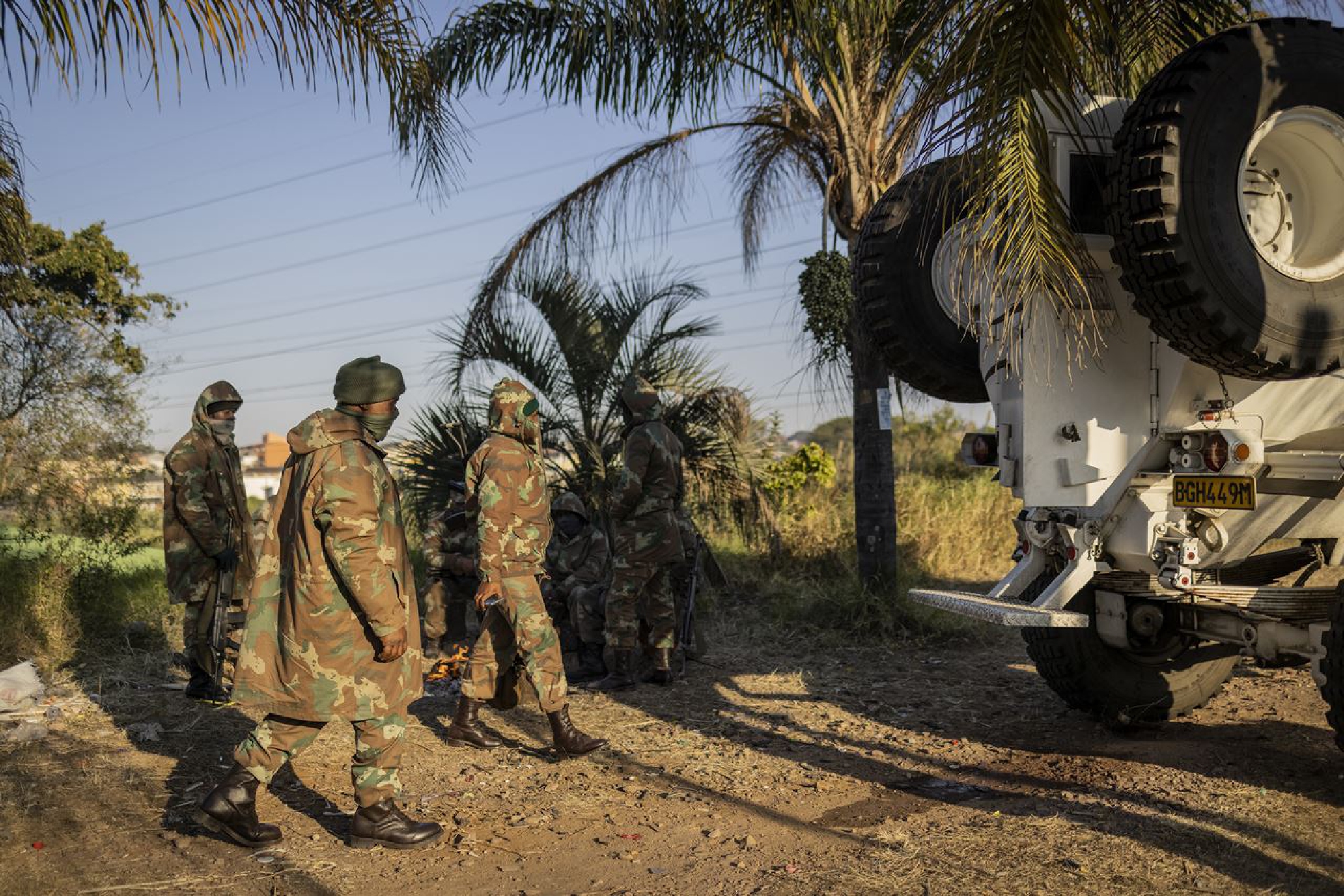
On July 12, days before President Cyril Ramaphosa ordered the deployment of thousands of reserve soldiers to the area, Phoenix residents began setting up checkpoints, according to Bheki Cele, the country’s top police official.
“Problems started when people at checkpoints turned to vigilantism and started racially profiling people, preventing them entry into the suburb,” Cele said at a news conference Tuesday, adding that the targets were “mainly African people.” Cele did not explain why so few police were available to intervene, leaving an opening for vigilantism.
Tensions quickly rose, and people on both sides brought weapons to the checkpoints. Shots were fired, people spread out and recriminations took place across Phoenix and adjacent settlements. People were “butchered with bush knives,” Cele said. “Vehicles were set alight.”
ADVERTISEMENT
“We are concerned about the potential outbreak of racial tension going forward,” Sihle Zikalala, the premier of KwaZulu-Natal, the province where Phoenix is located, said at the same news conference. He referred to the events of July 12 as a “massacre.”
All in all, 30 were shot dead. Two were burned to death. One was stabbed and one run over with a truck. Two more died of injuries from assaults. All but three of the dead were Black.
The police have deployed 31 special detectives to the area in the weeks since and have opened 52 cases of attempted murder, 25 cases of assault and other cases against a smattering of people accused of spreading inflammatory misinformation online. They have seized 152 firearms from “private security companies” and another 112 from private citizens.
The debate over private gun possession in South Africa roughly mirrors that in the United States.
“Discussions about guns are highly emotional, and pro-gun groups are mostly conservative and White and similar to the National Rifle Association in the U.S.,” said Guy Lamb, an expert on urban crime and policing at the University of Stellenbosch. “Whereas most of the gun violence that takes place in South Africa is in poor, Black townships.”
ADVERTISEMENT
South Africa’s police force has recently pushed for a ban on licensing firearms for private citizens but has faced enormous pushback from gun owners. South Africa already requires owners to be over 21, and to undergo background checks and competency tests.
“There was clearly a failure in policing,” Lamb said of what happened in Phoenix. “In those instances, people may feel justified to use vigilantism.”
In a sudden bout of racial killings, a South African suburb sees a dark history repeating itself
Court proceedings are underway against dozens of alleged perpetrators of the violence in Phoenix. Outside a courtroom last week, police and soldiers separated large crowds of protesters. “No bail, no bail” was the loudest chant.
“We want to make sure that people who are murderers do not get bail,” said Vukani Ndlovu, provincial treasurer for the opposition Economic Freedom Fighters party, which supports a radical vision of racial justice based on the redistribution of land from those who benefited from apartheid to the Black majority.
Supporters of the ruling African National Congress, which promotes a more conciliatory racial tone, emphasized that the killings should not drive a wedge between communities that had come to rely on each other for jobs and services.
“We must not allow the incidents of the past weeks to divide us,” said Kwazi Mshengu, a provincial ANC official, standing on the sidelines of the protest. “We are one people. We need to build a nonracial, united South Africa.”
The ANC has struggled to achieve that goal since apartheid ended in 1994. The party inherited a country that had been strictly divided by race in almost all walks of life by the apartheid government. All towns were racially segregated by the Group Areas Act, which imposed apartheid’s hierarchical system of privileges and services onto South Africa’s geography.
Phoenix’s Indian community is not wealthy by South African standards, but it is glaringly better off than the impoverished Black communities nearby that suffer from lack of water and electricity – public services that the ANC government has yet to reliably provide after nearly three decades in power.
While the two communities rely on each other, racism and resentment stretch back at least 120 years to when a young Mahatma Gandhi lived in Phoenix, where he published a newspaper and was a community leader. Despite his saintly reputation elsewhere, South African scholars have detailed his racist views toward Africans, and he is remembered by the Black community in South Africa as an apologist for the supremacist notions that undergirded what would eventually become the apartheid system. So-called Indian South Africans make up about 2.5 percent of the national population.
The White community, which makes up close to 10 percent of the population, was relatively untouched by July’s violence, an indicator of how much more separate they remain from the rest of South Africans than the Indian community.
“What has happened here again is a blight on humanity and it shows the failure of the democratic project,” said Amyna Fakhude, an activist working on interracial and interfaith dialogue in Phoenix. “Due to the negligence that has happened [since apartheid ended], we actually shot ourselves in the foot as a society by not working toward equality.”
That inequality is most keenly felt in Black townships like KwaMashu, just south of Phoenix.
When the looting began to spread through KwaZulu-Natal, some members of the community there saw an opportunity to take basic goods like refrigerators and couches that are too expensive to normally afford. But most stayed at home out of fear that Blacks would collectively be seen as looters and rounded up or worse.
“We don’t own anything. We are consumers and spectators in our own economy,” said Mlamuli Shangase, president of the local chapter of the Black Business Federation, a national organization. “What happened is not about ‘Indians and Africans,’ it is about criminals who took law into their hands.”
In a sudden bout of racial killings, a South African suburb sees a dark history repeating itself
As the violence surged on July 12, Fabian Moodley, the protective eldest son of a young single mother in a rough neighborhood, rushed to one of the checkpoints that had sprung up. He was shot dead there under disputed circumstances.
Looking back on that day, his mother, Tashleen, feels not just sadness but anger at the absence of the police. Faybian, 18, had always acted older than his age, but she wished he’d been more like a child that day.
“It wasn’t his place to assist in a roadblock, we have law enforcement, we have police. If our president could deploy the army for covid,” she said, before trailing off. “My child is not a soldier, he shouldn’t have been there.”
On the way to meeting committee members in the township of Bhambayi, a man pointed a gun at a driver of Indian descent hired by The Washington Post.
In a meeting arranged later, Blessing Nyuswa, one of the committee’s conveners, said that even though many in Bhambayi relied on Phoenix for jobs, schools and clinics, they were hesitant to go back, even though it might worsen their economic status.
“The people in Bhambayi say to me, ‘Before you tell us about peace, Blessing, tell us: Why did they kill us?” she said.
The answer she gives them is an indictment of South Africa’s quest for racial justice in the decades since apartheid was ended.
“We didn’t get freedom,” she said. “We only got democracy.”
Published : August 08, 2021
By : The Washington Post · Gulshan Khan, Hlengiwe Motaung, Max Bearak
Malaysia changes criteria for easing lockdown; Asean reports over 95,000 cases
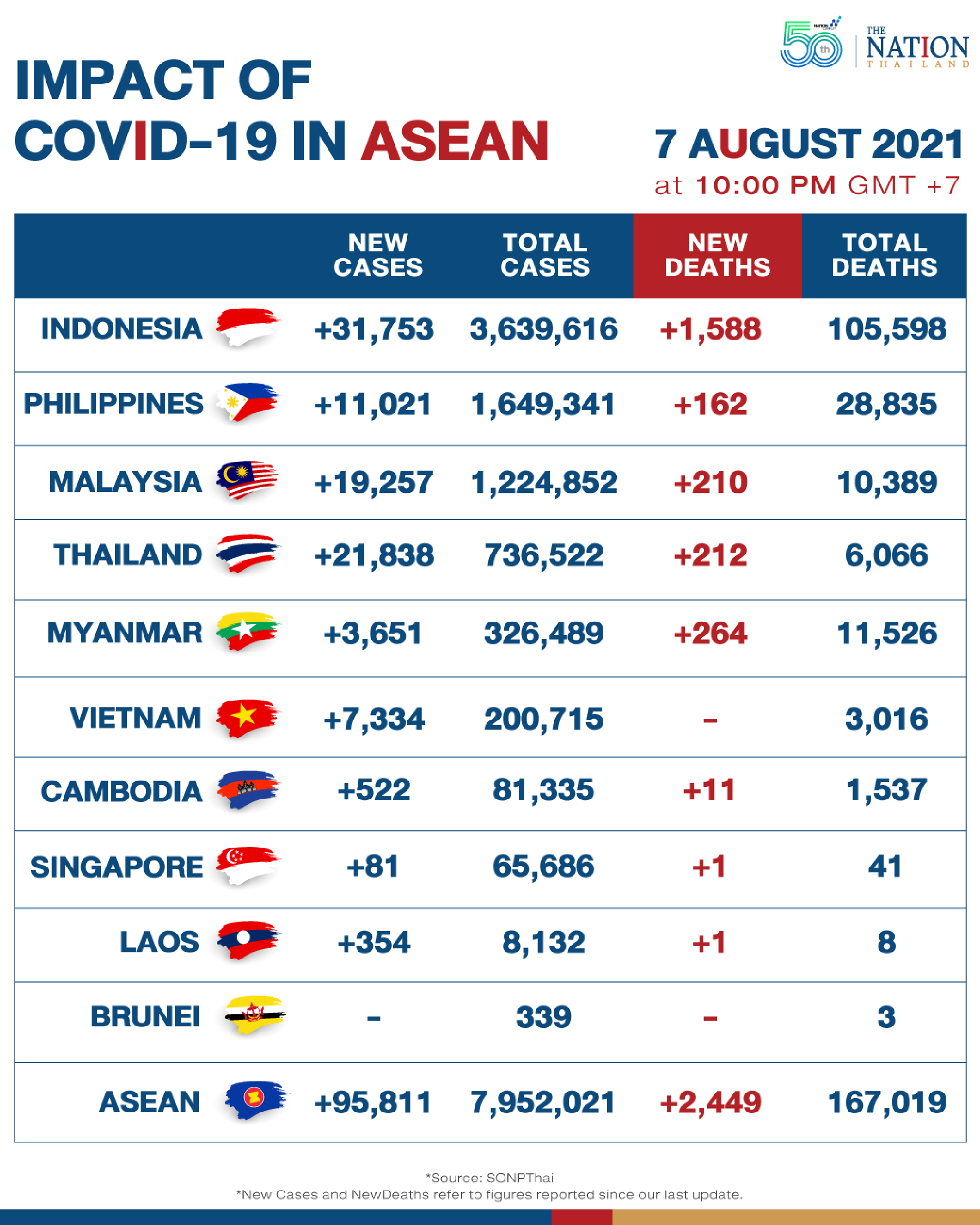
Southeast Asia saw a reduction in new Covid-19 cases and deaths on Saturday collated data showed.
Asean countries reported 95,811 cases and 2,449 deaths on Saturday, lower than the record 105,278 and 3,069 respectively on Friday.
The Malaysian government said it would consider easing lockdown measures based on the number of patients being admitted to hospitals, patients being treated in ICU rooms and total vaccinated people, instead of of daily Covid-19 cases.
The move is in line with the third phase of the country’s economic recovery plan.
Currently, Malaysia is one of the Southeast Asian countries with the highest vaccination rate — 46 per cent have received the first shot and 24.5 per cent the second shot.
However, Malaysia’s Disease Control Division has confirmed that Covid-19 prevention principles, such as wearing face mask and maintaining social distance are still necessary.
ADVERTISEMENTx
The first batch of 97,111 doses of Pfizer-BioNTech mRNA vaccine has been delivered to Vietnam.
The delivery came after the Vietnam government decided to purchase 31 million doses of Pfizer vaccine on June 7 after over 20 discussions spread over 10 months.
However, the government did not reveal how much it had paid for the procurement.
Meanwhile, Vietnam’s Health Ministry said that 3 million doses of the Pfizer vaccine would be delivered to the country by the third quarter, while 27-28 million doses would be delivered by the end of this year.
Malaysia changes criteria for easing lockdown; Asean reports over 95,000 cases

 เป็นครั้งแรกนับตั้งแต่เดือนพฤษภาคมที่ Bitcoin และ Ether ทำราคาได้ถึงขนาดนี้ มันเป็นสัญญาณที่ดีหรือไม่?
 ไม่ปล่อยให้ลอยนวล ทางการ ‘หนานจิง’ ลงดาบ 6 เจ้าหน้าที่รัฐ ทำโควิด-19 ระบาดรอบใหม่
 หลังถูกกล่าวหาว่าทีล่วงละเมิดทางเพศ อาลีบาบา (Alibaba) เปิดการสอบสวน สั่งพักงานพนักงานหลายคน
 ปัจจุบันมีสมาคมมวยไทยผุดขึ้นมากมายในหลายเมืองใหญ่ ยังไม่นับรวมยิมมวยที่เปิดสอนมวยไทยอีกหลายแห่งทั่วประเทศ
 สหรัฐระบุแผนเล่นงานทูตเมียนมาประจำ UN เข้าข่าย ‘รูปแบบการก่อกวน’ ของเผด็จการ
 อิสราเอลฉีดวัคซีนอย่างรวดเร็วและดูเหมือนเอาชนะโควิด-19 เริ่มเอาไม่อยู่ติดเชื้อเกือบ 4,000 ต่อวันงัดมาตรการมาใช้อีก
 เดลตากำลังรุกรานสหรัฐอย่างรวดเร็ว ใช้เวลาเพียง 6 สัปดาห์หลังเคสต่ำสุดกลับมาสูงสุดในรอบ 6 เดือน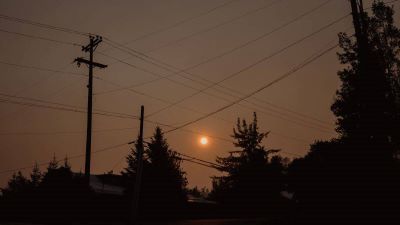
 In a summer of smoke, a small town wonders: How are we going to do better than survive?
 In a summer of smoke, a small town wonders: How are we going to do better than survive?
 In a sudden bout of racial killings, a South African suburb sees a dark history repeating itself
 In a sudden bout of racial killings, a South African suburb sees a dark history repeating itself
 In a sudden bout of racial killings, a South African suburb sees a dark history repeating itself
 Malaysia changes criteria for easing lockdown; Asean reports over 95,000 cases
