China Focus: China moves quickly to contain COVID-19 resurgence
In the face of new spikes in sporadic COVID-19 infections, governments at various levels across China have promptly taken measures to contain the spread of the coronavirus in an orderly fashion.
This round of infections started in Nanjing, in east China’s Jiangsu Province, when nine airport cleaners at the Nanjing Lukou International Airport tested positive during routine testing on July 20.
The mega-city with a population of more than 9.3 million had reported a total of 190 locally transmitted confirmed cases by Friday, according to local authorities.
ADVERTISEMENTx
By Saturday noon, Nanjing had designated 30 areas as medium-risk for COVID-19 and one as high-risk. All tourist sites in the city have been closed since Saturday.
Nanjing authorities also announced a 10-day overall disinfection plan for the Lukou International Airport on Saturday. The city is also drafting a disinfection plan for the residence of airport staff.
In order to enhance its nucleic acid testing capabilities, Nanjing has built six advanced air-inflated testing labs, which can screen up to 1.8 million people every day by using the mixed testing approach.
Three rounds of testing have been conducted citywide. Municipal authorities said Saturday that the city will organize vaccinations for those who are qualified to get the second shot in low-risk areas.
Viral genome sequencing has found all strains to be the highly infectious Delta variant, said Ding Jie, deputy director of the Nanjing municipal center for disease control and prevention, on Friday.
ADVERTISEMENT
Also in Jiangsu Province, the city of Yangzhou has reported a total of 16 locally-transmitted confirmed COVID-19 cases since Thursday, and the first case was a visitor from Nanjing.
On Saturday, the city suspended all inbound and outbound flights at its Taizhou International Airport, and closed major scenic spots, including the Slender West Lake and the Daming Temple.
Sporadic cases and cluster infections have also been found in other parts of the country, and many of the most recent patients diagnosed have recently traveled to Zhangjiajie, a world-famous tourist destination in central China’s Hunan Province.
Zhangjiajie has reported five confirmed locally-transmitted cases since Thursday. The city closed all tourist sites and upgraded 11 neighborhoods to medium-risk areas for COVID-19 on Friday.
All stranded tourists are required to receive nucleic acid testing three times before leaving the city, and all results must be negative.
ADVERTISEMENT
Emergency channels have been set up for them at all testing sites citywide, and local authorities have coordinated travel agencies and hotels to provide essential services to those tourists before their departure.
The central Chinese city of Zhengzhou, which was recently hit by heavy floods, classified one area as high-risk for COVID-19 and three areas as medium-risk on Saturday, all of them are in Erqi District, after one asymptomatic COVID-19 case and several suspicious cases were reported since Friday. The city is also planning to launch city-wide nucleic acid testing for COVID-19 in a timely manner.
Since Wednesday, the national capital of Beijing has reported two confirmed locally-transmitted cases. They are a couple who recently visited Zhangjiajie.
Nine residential compounds in Changping with about 41,000 residents in total have been put under closed-off management, Tong Lizhi, deputy head of the district government said Thursday.
Beijing has urged unremitting efforts to prevent and control the virus spread during the summer vacation and strengthen the management of inbound and outbound tourists.
A series of measures such as flow restriction, temperature measurement, health-code verification and mask-wearing in parks, scenic spots and traffic stations, will be strictly implemented, the municipal government said Friday.
Zhang Wenhong, a renowned medical expert in China, said that no community cases were found outside of the transmission chain of Nanjing airport, which indicates that the epidemic situation is still under control.
According to Shao Yiming, a researcher with the China Center for Disease Control and Prevention, the spikes in cases are limited to a relatively small scale, especially compared with the situation in other countries and regions of the world.
“Judging from our experience since the second half of last year, we are able to detect the epidemic early and take intensive measures to contain it within a few weeks,” said Shao.
Shao said the pressure of imported cases will continue in the future, but China’s prevention and control measures have also been strengthened.
“Last year, we only had routine public-health precautions, but vaccines have been available since the beginning of this year. We can now bring this outbreak under control more effectively and faster with a two-pronged approach,” he added.
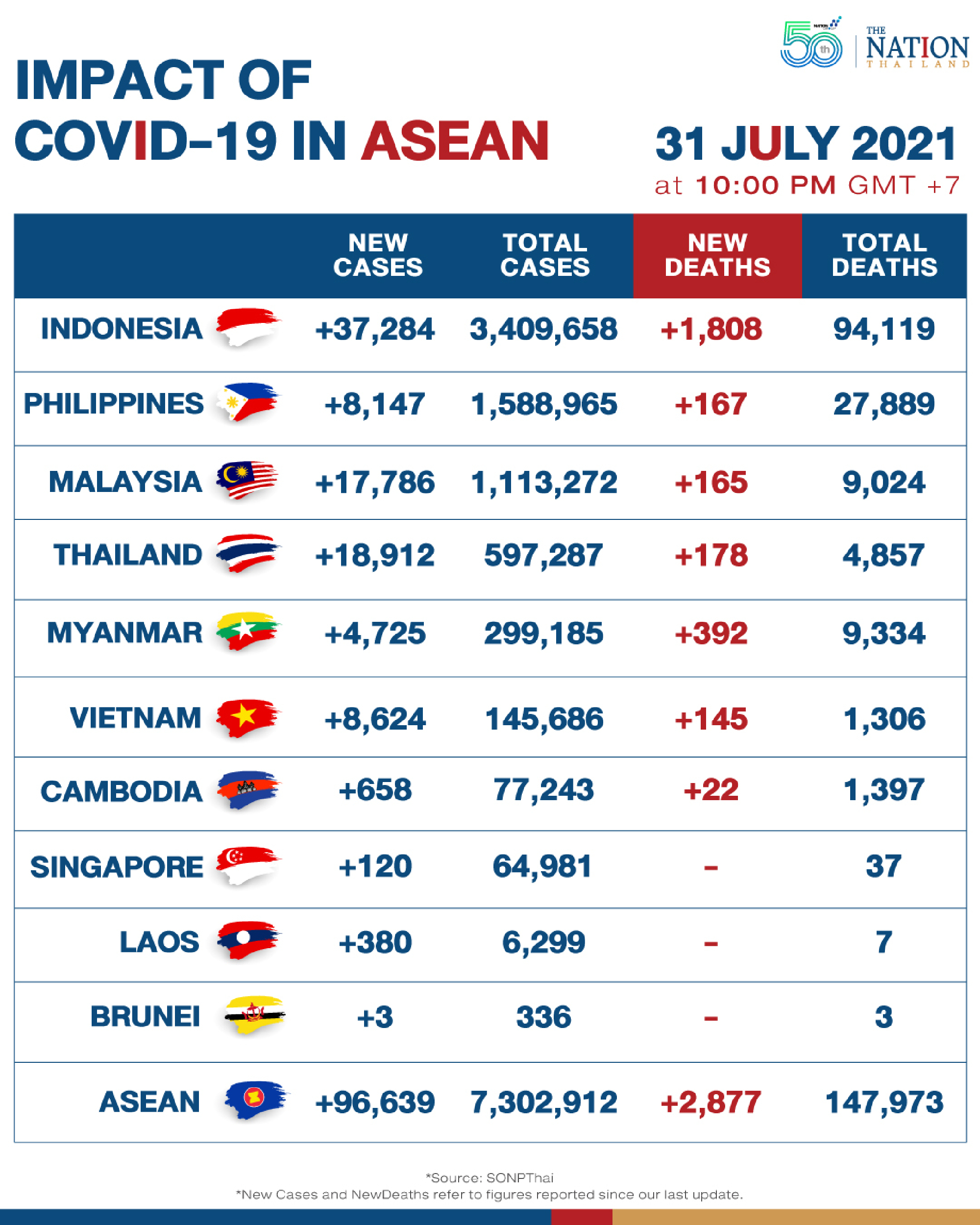
Asean countries reported a slight decline in new Covid-19 cases, but deaths hit a new high on Saturday, collated data showed.
Southeast Asia added 96,639 new cases on Saturday, lower than 98,742 on Friday, but deaths rose to 2,877, up from 2,869 the previous day.
Malaysia extended its state of emergency in Sarawak until February next year in order to contain the spread of Covid-19, according to a Bernama news agency report.
Meanwhile the government has extended the Sarawak legislative assembly’s term, as regional elections cannot be held under the state of emergency.
Vietnam’s Health Ministry has called for cooperation from all sectors as the Covid-19 Delta variant is defying efforts to contain its spread.
Private hospitals appointed by the government were asked to prepare beds, medicines and personnel to treat Covid-19 patients as government and army hospitals were unable to support more patients due to the fast-spreading Delta variant.
In Beiruts economic free fall, finding hope in new Lebanese food
Last summer, when a deadly explosion ripped through Beiruts port, chef and restaurateur Riad Aboulteifs barbecue joint was destroyed. No one was injured.
His restaurant Meats and Bread, in the trendy Gemmayzeh neighborhood less a kilometer from the blast site, suffered around $90,000 worth of damage. It was one of many businesses devastated by the Aug. 4 explosion, which killed over 200 people and wrought more than $4.6 billion worth of economic destruction in a country already reeling from the worst financial crisis in its history.
No one was injured at Meats and Bread because no one was there. Aboulteif had closed the restaurant’s doors three months earlier as the soaring cost of imports triggered by an unprecedented currency crisis rendered his American-inspired menu of burgers, steaks, and smoked meats unsustainable.
Quality rib-eye costs Aboulteif $32 per kilogram to import. Two years ago, before the financial crisis, that meant he paid around 48,000 Lebanese pounds. Today, with the currency collapsed, that same $32 kilo would cost him upward of 600,000 pounds. Dwindling foreign currency reserves have unofficially rendered the official pegged rate of 1,507 Lebanese pounds to the dollar defunct, with traders buying dollars at black market rates to finance imports amid plummeting purchasing power.
The blast, which shattered the restaurant’s windows, collapsed the ceiling, and destroyed its equipment, was just “salt on the wound,” Aboulteif says. The majority of the repairs were covered by local initiative Khaddit Beirut, which targets affected small and medium businesses, particularly those in the dining and hospitality sector. (Aboulteif paid the rest himself, with “zero funds from the government.”)
With the venue rebuilt but its old menu financially untenable, Aboulteif decided on a 180-degree turn. In June, he reopened as Ammoula, offering a menu of experimental Lebanese cuisine prepared with local ingredients.
There’s the classic lentils-and-rice dish of mujaddara, but it’s served with slow-cooked and then grilled octopus. Armenian manti dumplings are deconstructed, while traditional mahalabia milk pudding becomes a panna cotta-like dessert, sprayed with arak, the Levantine anise liquor. The drinks menu features local wine and gin.
Aboulteif describes Ammoula’s fare as his own interpretation of Lebanese food: “We don’t want to be in competition with anyone’s grandmother.”
ADVERTISEMENTx
Soaring food prices have become an issue in many parts of the world. Lebanon, which relies heavily on imports, is one of the region’s most vulnerable countries. Food prices shot up 400% in December, according to government data, and more than half of the nation’s population has plunged into poverty since the economic crisis commenced in August 2019 and was compounded by the Covid-19 pandemic and the port explosion.
When it opened, Ammoula offered a dish featuring imported guanciale (cured pork jowl). Within a week, Aboulteif decided to replace it with local pork that’s matured in a dry ager. Since then, he’s been sourcing everything from local producers and has rented his own “very small farm” in the Mount Lebanon region southeast of Beirut to produce chicken, goats, quail, and some herbs and cucumbers. Such key materials as fertilizer for the plants and medicine for the animals are still imported, subject to ever-increasing price hikes and shortages. He’s had to adjust prices at least twice since opening because the Lebanese pound has depreciated.
Even as all-local ingredients and wines have helped cushion Ammoula’s prices in the face of skyrocketing inflation, there’s no way around the ever-worsening electricity crisis triggered by a shortage of imported fuel. Lebanon is suffering its most severe power shortfall in decades, and most places receive only two hours of state electricity a day.
Though the Lebanese have weathered patchy electricity for years-supplemented by subscriptions to private generators-the fuel scarcity has led many of the generators to shut down for hours each day. Restaurateurs that aim to keep their lights on and fridges running around the clock must pay for a backup generator. Aboulteif is now saddled with three electricity bills: one from the government and two from private generator companies. The June bill from the two generator providers totaled 14 million Lebanese pounds.
So far, Ammoula, which Aboulteif describes as a “work in progress,” isn’t consistently busy or profitable. He just aims to break even, relying on his more profitable Ferdinand gastropub on the other side of town to make ends meet. He says he felt he had “no option” but to change course after the blast.
“When your back is up against the wall, you will fight,” he says, although he worries that business will slow after the summer’s high season in August. “That’s the only way we know how to fight, through our food. We’re fighting the circumstances we’re living in, through our food.”
The old sign for Meats and Bread still hangs outside, by the newer one for Ammoula, and Aboulteif says he doesn’t intend to take it down. Although the switch to the Lebanese concept was driven more by necessity than national pride, he’s glad to showcase the country’s bounty, with its Mediterranean climate, mountains, and varying terroir: “You can probably find the best goat cheese in the entire galaxy in Lebanon.”
Published : August 01, 2021
By : Syndication Washington Post, Bloomberg · Yasna Haghdoost
Russia global vaccine ambitions stumble during supply shortage
The Kremlin ambitions to win soft-power dividends around the world from Russia Covid-19 vaccine are being hampered by delays in delivering Sputnik V to foreign buyers clamoring for supplies.
This week, Guatemalan President Alejandro Giammattei said his country will seek to replace 8 million planned doses with supplies from other producers by the end of year after delays receiving its initial order.
Countries that embraced Sputnik amid a global rush to secure vaccines are increasingly reporting supply problems with the second component in the two-shot inoculation. In Argentina, a presidential adviser said the shortages put the government at risk as people were unable to receive the second dose within the recommended period of three months after the first.
President Vladimir Putin has touted Sputnik to leaders around the world as part of an ambitious Kremlin drive to put Russia on the map as a major player in the international vaccine business. But difficulties producing the promised shots could relegate it to a secondary-role as rivals from the U.S., Europe and China fill the gap.
“The developers designed their export plans around local production that vastly overestimated local capacity,” said Samuel Ramani, a tutor of politics and international relations at Oxford University. “Russia has lost its head start as supplies from other countries became more available and now it’s looking like an also-ran.”
A spokesperson for the Russian Direct Investment Fund, the sovereign wealth fund that is responsible for Sputnik V’s international marketing, said the existing contract with Guatemala was adjusted to a new delivery schedule and not canceled.
“Given the unprecedented worldwide demand all vaccine producers are experiencing some short-term supply issues,” the RDIF representative said.
The fund said it still aims to produce enough to inoculate 700 million people outside Russia this year, a pledge its chief made in March. Airfinity, a London-based science analytics company, estimates 99 million doses have been delivered to date, with more than half of them for domestic use.
Kremlin spokesman Dmitry Peskov last week said delays in international Sputnik supplies were a result of the need to ramp up domestic vaccination as cases surged.
ADVERTISEMENTx
Putin hailed Sputnik as the first Covid-19 vaccine approved for use, a move criticized at the time as premature. However, it overcame initial questions about its effectiveness that emerged due to a lack of data, proving itself to be broadly on par with vaccines developed by western giants.
Unlike other Covid-19 vaccines, Sputnik’s two shots are different. Production of the second has proved hard to scale up, according to buyers.
Supply delays for the second dose have slowed Sputnik V’s roll-out in India, according to Erez Israeli, the chief executive of Dr Reddy’s Laboratories Ltd., which is licensed to distribute the inoculation in that country. Indian producers have agreements to make as many as 850 million doses a year, although it’s not clear when production will reach that level.
RDIF said its partners, including in India, are expected to scale up production in September to help reach the goal for this year.
In Argentina, a letter leaked last week exposed the government’s frustration with slow Sputnik V supplies. On Wednesday, it announced an agreement with Pfizer for 20 million doses by year-end. Mexico has also reported delays.
ADVERTISEMENT
In Brazil, governors from northeastern states who are trying to bring the vaccine said that 1.1 million doses that were expected for Wednesday were delayed by Russia, according to O Globo newspaper. Both parties are discussing a new schedule for the delivery, the paper said.
A shipment of 50,000 doses of the second component arrived in the Philippines this month several weeks after reports that people scheduled to receive the follow-up shot were facing delays.
Amid the hold-ups, RDIF said earlier this month the gap between shots can be safely extended to 180 days.
As Russia struggles to fulfill its commitments, Secretary of State Antony Blinken said Tuesday the U.S. delivered 1.5 million doses of the Moderna vaccine to Tajikistan, a former Soviet republic that Russia considers its strategic backyard. The announcement came as Russian Defense Minister Sergei Shoigu arrived in the capital of Dushanbe for talks.
Still, in Russia Sputnik V is presented as a success, helping extend its soft power and provide a quality, cost-effective alternative to vaccines produced in the West. Sputnik V has been approved for use in 69 countries and RDIF said last month it has deals to produce 1.6 billion doses this year.
ADVERTISEMENT
“Sputnik V is a domestic propaganda victory,” said Vasily Vlassov, an epidemiologist at Moscow’s Higher School of Economics. “In the government and media, they dwell on its success getting approved in so many countries rather than the inconvenient details.”
Published : August 01, 2021
By : Syndication Washington Post, Bloomberg · Jake Rudnitsky
As wildfires burn in Canada, an unprecedented blanket of smoke hangs over Minnesota
EDINA, Minn. – Perched atop the living room sofa, 4-year-old Ryan Reuvers peered out the window to his neighborhood in Edina, Minn.
The street – usually filled with people jogging or walking their dogs – was quiet. The typically blue skies were hazy, with a yellow-tinted gray hue. A campfire smell lingered.
As the state’s frigid winter melted into warm summer days, Ryan’s mother Colleen had filled her children’s schedules with activities. There was nature camp, book buddies, tennis lessons and soccer practice – anything to occupy the time of two energetic toddlers who had just spent a year mostly cooped up indoors because of the pandemic.
Then came the smoke.
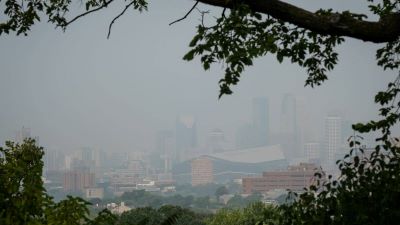
The Reuvers’s neighborhood, about 10 miles from the Twin Cities, has been blanketed by a thick layer of it. Outside, the parks where children flocked stood quiet, the sun burned orange and a milky haze limited visibility.
Officials say the smoke, making its way from wildfires burning across the Canadian border, is unprecedented. They’ve warned that the “hazardous” levels of pollution across Minnesota will last until at least through Tuesday afternoon.
Ryan Stauffer, a researcher specializing in air pollution at NASA, said the impacts of the smoke have been exacerbated by the fact that the fumes are so low to the ground.
“The unique aspect of this event is that so much of the smoke is at the surface, creating highly polluted conditions and poor air quality,” he said. “It is much more typical for smoke to remain well above the surface in the Midwest to Eastern United States.”
ADVERTISEMENTx
The smoke engulfing Minnesota is remarkable in other aspects, Stauffer said. The dangerous air pollution – known as PM2.5 because the particles have a diameter smaller than 2.5 microns – was recorded in the Twin Cities area as 182 in the air quality index on Thursday. According to the NASA researcher, that is the highest value recorded there since data collection began in 1999.
“It is extremely unusual and the amount of smoke at the surface may be unprecedented in recent decades,” Stauffer said.
The haze contains hundreds of pollutants, said Daniel Dix, a supervisor of the Minnesota Pollution and Control Agency’s air quality team. These can have severe health impacts, particularly among older adults, teenagers and children, and especially to those with conditions such as asthma.
“These levels of particulates can be very irritating to the respiratory system, and they can also have impacts for people with heart disease as well,” said Jessie Schmool, an epidemiologist at the Minnesota Department of Health.
And as the majority of the state enters into the air quality index’s red and purple categories, which denote unhealthy and very unhealthy levels respectively, between Saturday and Monday, state officials urge everyone – regardless of their age and health – to limit their air exposure.
“You wouldn’t want to spend hours outdoors if you can help it,” said Nicholas Witcraft, research scientist and meteorologist at the Minnesota Pollution and Control Agency. “When the concentrations of particles reach these levels, even healthy individuals start feeling effects.”
In the Reuvers household, this means more days of peering through the window and getting crafty with art supplies indoors – “almost a throwback to quarantine.” The toddlers’ daily visit to the park has been suspended for now.
The family has had some experience staying in close quarters. In their short lives, Ryan and his 2-year-old sister Reagan have been through the coronavirus, harsh winters and now unprecedented pollution. Though this has inspired creativity and generated cherished moments of sharing, Reuvers said it had also invoked instances of restlessness.
“It can be hard to have days in a row where you’re just kind of hunkered down in the house with little kids who don’t understand why in the summer there’s an issue with going outside,” she said.
For now, a quick trip to McDonald’s for milkshakes has replaced tumbling down the slide. A Lego set of the Daily Bugle, the fictional newspaper where Peter Parker worked before morphing into Spider-Man, brings son and father together, supplanting refreshing dips in the pool with “Gigi,” the children’s beloved grandmother.
Reuvers said she hopes the smoke will fade soon. But experts worry it might be a recurring trend with the planet’s changing climate – of which the effects have taken different forms: from the ocean’s oxygen levels plummeting in the Pacific Northwest to drought conditions quenching over 60% of the western United States.
As droughts and heat waves fuel a dire wildfire season throughout North America, dangerous smoke has become more common. With 87 infernos currently torching across 13 states, the effects of a changing climate can be felt thousands of miles away from the flames, from Minnesota to New York.
And wildfire season will last for several more months.
“It is hard to predict exactly what to expect in the next few weeks, but unfortunately, it is still very early in the Western U.S. and Canadian fire season,” Stauffer, the NASA researcher, said.
Once the worlds busiest port, London aims to revive its river trade roots
Cathryn Spain spends most of her workdays motoring up and down the River Thames, a senior harbor master making sure goods flow through the Port of London without incident.
“Atypical day for me is responding to things that go wrong, so hopefully that doesn’t happen too often,” she said one morning on patrol in early July. “We’re here responding to any situations that arrive, difficulties that people have. Yeah, it’s basically getting things sorted.”
That’s Spain’s modest way of saying she ensures traffic – bringing goods from the other side of the world, or from just across the Channel – moves efficiently and safely. So ships find their way in the fog. Or paddle boarders don’t wind up on the wrong end of the tide. Or jet skiers respect the massive container vessels that helped make London’s port the biggest in the U.K. last year for the first time in two decades.
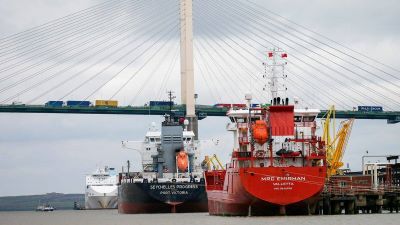
Tourists and locals alike would have a hard time spotting London’s port from Tower Bridge or Big Ben. Try looking from atop the rotating Eye and you’ll need binoculars. The biggest hub of global commerce a century ago resides some 25 miles downstream from the heart of the city, near deeper water so ever-bigger ships can come and go more easily.
“There is a sort of perception that the port is something of the past. We’ve done some studies on this and people think the biggest ports in the U.K. are Portsmouth or Southampton or Felixstowe,” said Robin Mortimer, chief executive of the Port of London Authority. “It’s a little bit out-of-sight-out-of-mind for people.”
The authority, set up in 1909 to nationalize the city’s hodgepodge of private docks and be the caretaker for the waterway, hopes the pandemic marks a turning point to change both perceptions and reality. As three national lockdowns boosted online shopping over the past 18 months in the U.K. like most other places, the demand for port services like warehousing and distribution closer to population centers took off, too.
ADVERTISEMENTx
London’s major trade terminals, DP World’s Gateway and the Tilbury docks operated by Forth Ports, are trying to capitalize on this shift. Gateway, opened in 2013, is a modern container facility with three berths and three more planned. Tilbury, which opened in 1886 and has welcomed generations of immigrants to England’s shores, handles containerized, bulk and general cargo, hosts cruise ships and opened a new freight ferry terminal last year as part of a 250 million-pound ($345 million) investment.
Meanwhile, Amazon facilities are springing up along the riverbank east of the city. The port authority is buying up land and old wharves, and planning to help develop London’s first shipyard in a century. Cruise ship bookings from Tilbury this year and next are rolling in again. The delivery giant DHL is running packages daily from a point upriver near Heathrow airport to Bankside wharf in the center of town. CEVA Logistics started in June delivering medical supplies up and down the river.
The freight moving on the river is small-scale for now, but Mortimer says more companies are looking to have their logistics services closer to cities, reversing the decades-long march toward cheaper real estate and transport costs connected to cities by trains and trucks. Warehousing, distribution centers and light manufacturing are moving closer to the city as a way to reduce truck traffic and air pollution – so the river may see more local cargo traffic because of it.
But it’s not merely commerce that’s seeing a revival on the Thames. Londoners suffering through stay-home orders became kayak owners or paddleboarders at the click of a mouse. So the port authority is trying to reduce pollution and enforce safety rules so outdoor enthusiasts can coexist with the commercial traffic.
On her daily harbor patrol, Spain sees traffic picking up, including “a lot more individuals using the river for recreation” and record volumes through the ports, she said.
“The river will be a very different place hopefully environmentally and socially,” said port authority spokesman Nick Tennant. “As in other great cities around the world, rivers are and should be central to the way of life.”
Published : August 01, 2021
By : Syndication Washington Post, Bloomberg · Brendan Murray
Britain urges vaccinations during pregnancy amid delta variant worries
Britains chief midwife association is renewing calls for pregnant people to get the coronavirus vaccine amid worries over rising risks from the delta variant.
The appeal followed recent data by Britain’s Obstetric Surveillance System that the proportion of pregnant patients hospitalized with moderate to severe illnesses has increased with the highly contagious delta variant.
The World Health Organization has previously warned that pregnant people are at a higher risk of severe cases of covid-19, the disease caused by the virus, compared to others in their age group. But the U.K.’s latest data provides some of the first figures into the affect of the delta variant on pregnancies.
Numbers from the U.K. Obstetric Surveillance System released last week showed that 171 women had been hospitalized with covid-19 symptoms, none of whom were fully vaccinated. Three of the patients had just one dose of a two-shot coronavirus vaccine, while the rest were not inoculated.
Other studies have shown the virus can be contracted by the fully vaccinated, but hospitalizations in those cases are rare.
ADVERTISEMENTx
Pregnancy increases the risk of developing severe symptoms of covid-19, which can lead to complications with pregnancy. There is no evidence that the vaccine affects a woman’s fertility.
“It’s so important for pregnant women to get their jab, particularly with the virus being so prevalent and the delta variant proving itself to be so much more transmissible,” said Gil Walton, chief executive of the Royal College of Midwives, in a statement Friday shared by the NHS. “Hundreds of thousands of pregnant women worldwide have been vaccinated, safely and effectively protecting themselves against covid and dramatically reducing their risk of serious illness or harm to their baby.”
Britain began administering the vaccine to pregnant people in April. On Friday, Jacqueline Dunkley-Bent, the chief midwifery officer for England, issued a letter to midwives and general practice doctors and asked them to encourage vaccinations due to the delta variant.
When vaccines first rolled out, doctors in Britain, the United States and other countries recommended that pregnant people not receive the vaccine as this demographic had been excluded from the initial studies. However, after further review, health-care providers began to add pregnant people to the list of those approved to be vaccinated, particularly after more-contagious variants began to circulate.
Some women, transmen and post-menstrual women have anecdotally reported short-term changes in their menstruation cycles following vaccination, such as heavier bleeding or a period restarting after having stopped. Scientists have said there is no known evidence directly linking the two.
Anyone above the age of 18 is eligible for a vaccine in the United Kingdom, where about 65 percent of the population has been vaccinated.
According to the U.K. Obstetric Surveillance System data, since May, 1 in 3 hospitalized pregnant women with covid-19 in England needed respiratory support, more than a third developed pneumonia, and 1 in 7 required intensive care.
“Every day our members are seeing very sick pregnant women with covid-19 in hospital and the majority are unvaccinated,” said Edward Morris, president of the Royal College of Obstetricians and Gynaecologists, in a statement. “We want to reassure pregnant women that covid-19 vaccines are the safest and best way to protect you and your baby from severe illness and premature birth.”

 ความสำเร็จในการคุมโควิดของจีนพังเพราะเดลตาหลังคลัสเตอร์ที่เมืองนานจิงกระจายไปถึงปักกิ่ง
 รวมโมเมนต์ที่น่าประทับใจของนักกีฬาจากทั่วโลกในการแข่งขัน Tokyo 2020 Olympic Games


 วิจัยพบความเสี่ยงที่จะเกิด Covid-19 สายพันธุ์ดื้อวัคซีนยิ่งสูงขึ้นเมื่อคนส่วนใหญ่ฉีดวัคซีนแล้วแต่ยังฉีดไม่มากพอ
 Asean reports record deaths on a single day