Firms from Sony to noodle maker Urge Japan to pursue moon business #SootinClaimon.Com

#SootinClaimon.Com : ขอบคุณแหล่งข้อมูล : หนังสือพิมพ์ The Nation.

https://www.nationthailand.com/international/40003203

Firms from Sony to noodle maker Urge Japan to pursue moon business


Japan needs to take commercial development of the moon more seriously if the country is to remain competitive in the budding space economy. Thats the message to the government from a group of Japanese companies ranging from Sony Corp. and top trading houses to an instant noodle maker.

The Lunar Industry Vision Council on Tuesday submitted a white paper to Shinji Inoue, Japan’s minister in charge of space policy, urging closer cooperation between the state and the private sector. The document calls for incentives to boost investment in space ventures, detailed regulations for exploitation of off-planet resources and greater access for companies to lunar missions.

Japan is among a handful of countries along with the U.S., United Arab Emirates and Luxembourg that have established a legal framework for commercial activity in space. The Japanese parliament last month passed legislation allowing the nation’s companies to extract and use space resources, given government’s permission. It is also part of the Artemis Accords, an international agreement among the U.S. and its allies allowing countries and companies to establish exclusive zones on the moon.

“There will be a paradigm shift in which the moon will be integrated into the Earth’s sphere of economic activity, forming into one ecosystem for space activities,” the council said in the report. “Japan has been lagging behind other countries in the development of such frontier areas, but now is the time for Japan to take the lead as a front-runner in the ‘Lunar Industrial Revolution’ that will create a new industry led by the private sector on the moon.”

The 33-page document titled “Lunar Industry Vision” is the first public statement by the advocacy group since it was formed in April. The organization comprises representatives from two of Japan’s top universities, several ruling party legislators and about 30 companies, including Sony’s research lab whose software powered the Aibo robot dog. Advertising giant Dentsu Group Inc., general contractor Obayashi Corp., industrial equipment maker Yokogawa Electric Corp. and the popular cup ramen brand Nissin are also members.

Even more than financial support from the government, Japan’s competitiveness in space depends on there being a self-sustaining lunar industry, the group said. The state can help by offering ride-sharing to the moon on public missions and making greater use of private transport providers, it said. Capital gains exemptions, tax deductions for research and development and special economic zones could increase private investment in space startups. The government can also encourage creation of new space ventures by using lunar data to build a simulated environment, the moon’s digital twin.

“I’m very excited to see this initiative from Japan where many non-space players have started activities in the lunar industry,” said Takeshi Hakamada, the founder of Ispace Inc., a Tokyo-based startup planning a mission to the moon. “I hope this activity, which started in Japan, will inspire similar initiatives around the world.”

More than 50 years after the Apollo 11 mission, the moon is once again a subject of geopolitical ambitions. NASA is targeting a return this decade with the Artemis program. Russia and China, whose Chang’e-5 probe brought back a moon sample late last year, announced plans for a joint lunar base. India plans another uncrewed moon landing after an attempt failed in 2019.

What’s different this time is that government-backed space agencies are joined by companies like Elon Musk’s Space Exploration Technologies Corp., Richard Branson’s Virgin Galactic Holdings Inc. and Blue Origin, owned by Amazon.com Inc. founder Jeff Bezos. Thanks to these private launch services, escaping Earth’s gravity is now much cheaper and launching a satellite into orbit costs about a 10th what it would have a decade ago.

Most business activities on the moon in the near future will be limited to assisting state-run missions with data gathering and transportation. Discovery of significant ice deposits, and the hydrogen energy locked inside, could turn Earth’s only natural satellite into a filling station on the way to Mars or beyond. Longer term, helium-3 in the moon’s regolith could be used as fuel for the next generations of spacecraft to explore deeper into space.

“The moon, as well as the area between the Earth and the moon known as cislunar space, will become the frontline of a new space ecosystem,” the Lunar Industry Vision Council said in the report. “It is necessary to start lunar exploration activities with a focus on lunar industrialization from this point forward.”

Published : July 14, 2021

By : Syndication Washington Post, Bloomberg · Pavel Alpeyev
Japan for first time mentions Taiwan stability in defense paper #SootinClaimon.Com

#SootinClaimon.Com : ขอบคุณแหล่งข้อมูล : หนังสือพิมพ์ The Nation.

https://www.nationthailand.com/international/40003202

Japan for first time mentions Taiwan stability in defense paper


Japan for the first time referred to the importance of stability around Taiwan in its annual defense report, ratcheting up its concerns over the island that has been a flashpoint in tensions between China and the U.S.

The wording in the “Defense of Japan” white paper released Tuesday increased friction between the two biggest economies in Asia. A spokesman for China’s Foreign Ministry told Tokyo not to interfere in Taiwan issues and said Beijing expressed “firm opposition” to the wording in the report.

“The stability of the situation around Taiwan is important, not only for the security of our country, but for the stability of the international community,” Japan’s Defense Ministry said in its white paper. “Our country must pay close attention to this, with an even greater sense of vigilance.”

The Japanese government has taken its concerns over Taiwan public in recent months, and the white paper comes after Deputy Prime Minister Taro Aso drew Chinese anger by saying in July that Japan and the U.S. would have to defend Taiwan in the event of a serious contingency.

“The Japanese side grossly interfered in China’s internal affairs, groundlessly blamed China’s normal defense construction and military activity, pointed fingers at China’s maritime activity, and hyped up the so-called China threat, which is wrong and irresponsible,” Chinese Foreign Ministry spokesman Zhao Lijian said at a regular briefing Tuesday.

Taiwan’s Foreign Ministry welcomed the wording in Japan’s white paper, saying in a statement Taipei would “continue to urge like-minded nations to pay attention to the importance of security and peace in the Taiwan Strait to regional prosperity and stability.”

While Japan has generally sought to avoid offending China, its biggest trading partner, U.S. President Joe Biden and Prime Minister Yoshihide Suga referred to the need for stability in the Taiwan Strait in a statement following their April summit in Washington. Defense Minister Nobuo Kishi also said in an interview last month the security of Taiwan was “directly connected” to that of Japan.

Taiwan is a key producer of the semiconductors needed to advance Japan’s economy, and the Luzon Strait to the south is an important shipping lane for the energy tankers resource-poor Japan relies on to power its factories and homes.

China sees Taiwan as part of its territory and hasn’t ruled out the use of force over the matter. Earlier this month, President Xi Jinping called his country’s quest to gain control of Taiwan a “historic mission” in a speech marking the 100th anniversary of the Chinese Communist Party.

“As the Biden administration makes clear it will support Taiwan in a military sense, it is unlikely China will compromise with the U.S. stance, and there is a possibility that a confrontation between the U.S. and China will emerge,” the Japanese ministry said in the report.

While reiterating it stands by the “One China” policy, Suga’s government has stepped up its support for Taiwan. Japan has donated more than two million doses of Covid-19 vaccine to its neighbor, even as Taipei blamed Beijing for its difficulty in sourcing its own supplies.

Tensions have grown around Taiwan in recent months, with China sending 28 military planes close to the island in June, the largest exercise this year, while the U.S. has continued to send warships through the Taiwan Strait. Japan is only 110 kilometers (70 miles) from Taiwan at its closest point.

Separately, Japan’s white paper also included a column on the sharp increase in South Korea’s defense spending. On current trends, South Korea’s defense budget will be 1.5 times that of Japan by 2025, the ministry said. The policy comes against the background of President Moon Jae-in’s desire to take back wartime operational control of the military from the U.S., according to the report.

While South Korea has spent heavily for decades to defend its side of the heavily militarized border with North Korea, Moon has embarked on one of the country’s biggest weapons build-ups in years, seeking to add an aircraft carrier and nuclear-powered submarine to project its power at a greater distance from its shores.

The publication of the column came as ties between the two U.S. allies remain chilly over disputes relating to Japan’s 1910-1945 colonization of the Korean Peninsula.

Published : July 14, 2021

By : Syndication Washington Post, Bloomberg · Isabel Reynolds

COVID-19 Delta variant spreading worldwide “at scorching pace”: WHO chief #SootinClaimon.Com

#SootinClaimon.Com : ขอบคุณแหล่งข้อมูล : หนังสือพิมพ์ The Nation.

https://www.nationthailand.com/international/40003172

COVID-19 Delta variant spreading worldwide “at scorching pace”: WHO chief


At Mondays press conference, the WHO chief warned of the danger of easing measures while many countries in the world still lack vaccines for their population.

The virus variant first identified in India in October 2020 is continuing the spread around the world and has now been detected in 104 countries, he said.

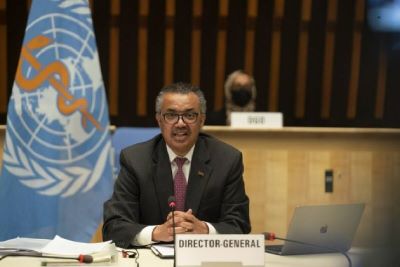
Tedros Adhanom Ghebreyesus, director-general of the World Health Organization (WHO), on Monday warned of the “devastating outbreaks” caused by the Delta variant of COVID-19, saying that the new strain of the virus was infecting people “at a scorching pace.”

“Last week marked the fourth consecutive week of increasing cases of COVID-19 globally,” Tedros said at a virtual press conference from Geneva, adding that “after ten weeks of declines, deaths are increasing again.”

The virus variant first identified in India in October 2020 is continuing the spread around the world and has now been detected in 104 countries, he said.

“The Delta variant is ripping around the world at a scorching pace, driving a new spike in cases and deaths.”

Leaders around the world have responded to the new rise in infections in markedly different ways, with countries such as France adopting new restrictions while others easing them. The United Kingdom (UK), for one, still intends to lift all restrictions on July 19.

Fans of England are seen during the final between England and Italy at the UEFA EURO 2020 in London, BritainFans of England are seen during the final between England and Italy at the UEFA EURO 2020 in London, Britain
At Monday’s press conference, the WHO chief warned of the danger of easing measures while many countries in the world still lack vaccines for their population.

“The current collective strategy reminds me of a firefighting team taking on a forest blaze,” he said. “Hosing down part of it might reduce the flames in one area, but while it’s smoldering anywhere, sparks will eventually travel and grow again into a rolling furnace.”

Tedros reiterated his call on governments to share vaccines, adding that “the world should battle together to put out this pandemic inferno everywhere.” 

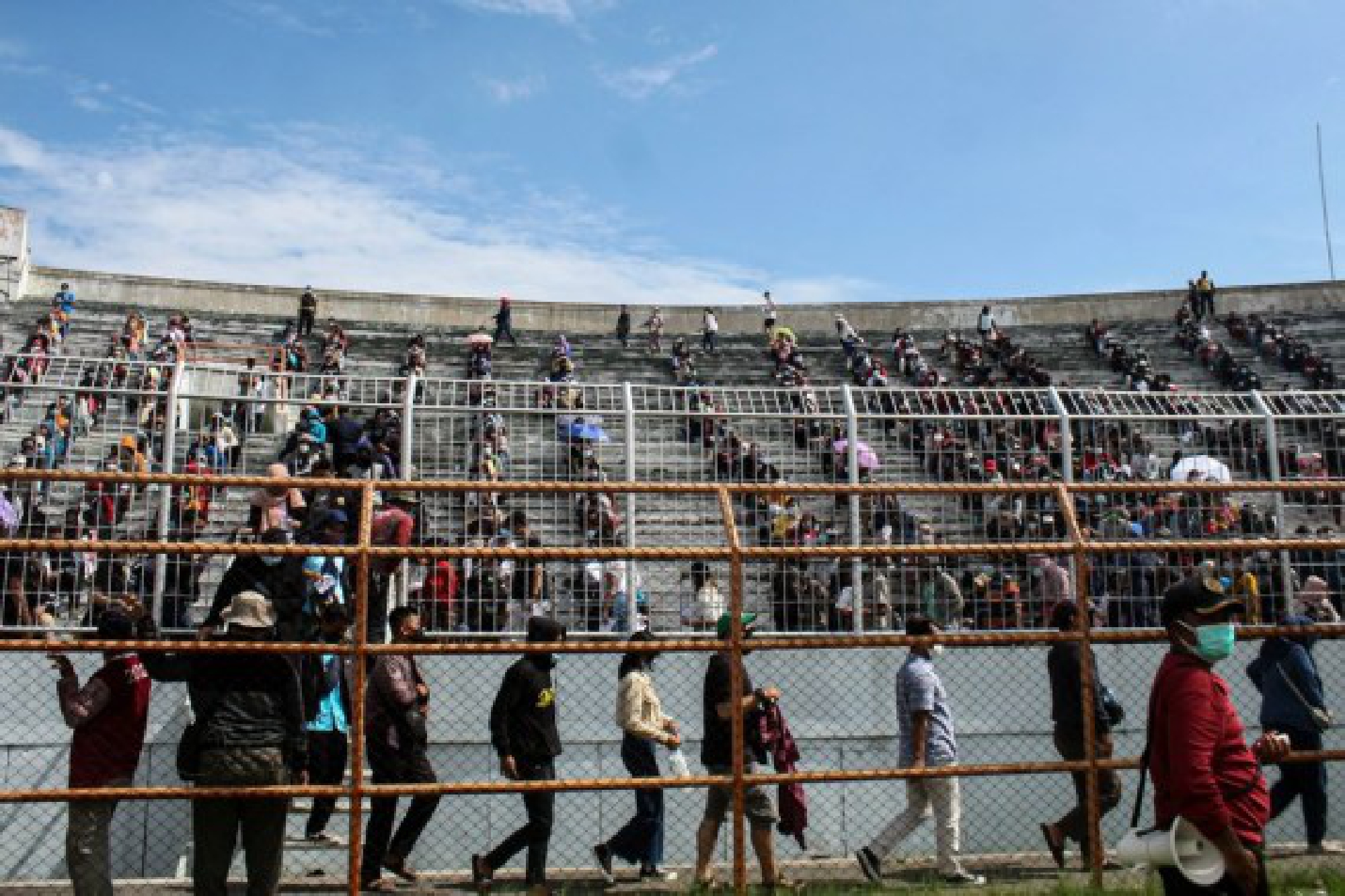
People wait in line to receive COVID-19 vaccines during mass vaccination at Gelora Sepuluh November Stadium in Surabaya, East Java, Indonesia, People wait in line to receive COVID-19 vaccines during mass vaccination at Gelora Sepuluh November Stadium in Surabaya, East Java, Indonesia,

Published : July 13, 2021

By : xinhua

Chinese companies to supply 110 mln COVID-19 vaccines immediately to COVAX project #SootinClaimon.Com

#SootinClaimon.Com : ขอบคุณแหล่งข้อมูล : หนังสือพิมพ์ The Nation.

https://www.nationthailand.com/international/40003171

Chinese companies to supply 110 mln COVID-19 vaccines immediately to COVAX project


Gavi announced in a press release that it had signed advance purchase agreements with Sinopharm for its “BBIBP-CorV” inactivated virus vaccine and with Sinovac for its inactivated virus vaccine “CoronaVac”.

Two Chinese pharmaceutical companies will provide 110 million doses of COVID-19 vaccines immediately to participants of the COVAX project, announced the global Vaccine Alliance Gavi on Monday.

The Chinese Sinopharm and Sinovac vaccines have been approved earlier this year by the World Health Organization (WHO) for emergency use.

Gavi announced in a press release that it had signed advance purchase agreements with Sinopharm for its “BBIBP-CorV” inactivated virus vaccine and with Sinovac for its inactivated virus vaccine “CoronaVac”.

The agreements, which come at a time when the Delta variant of the virus is posing a rising risk, will begin to make 110 million doses immediately available to participants of the COVAX Facility, the international vaccine supply and distribution facility co-led by WHO, Gavi and other partners, read the press release.

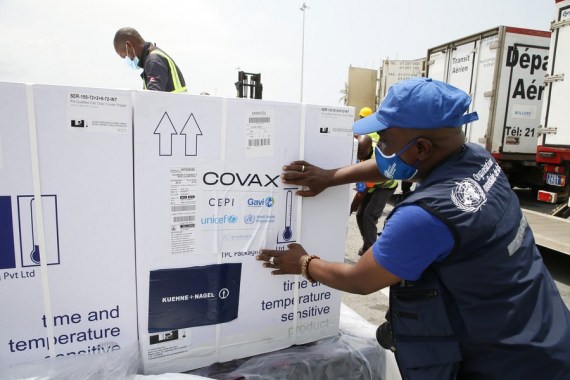
Workers transfer boxes of COVID-19 vaccines arrived at Abidjan International Airport in Abidjan, Cote d'Ivoire, Feb. 26, 2021.

According to the press release, 60 million doses of Sinopharm vaccine will be made available from July through this October, and 50 million doses of Sinovac vaccine will be made available from July through September this year.

In addition, Gavi said that it has the option to purchase a potential total of 170 million doses of the Sinopharm vaccine and up to 380 million doses of the Sinovac vaccine in Q4 of 2021 and in the first half of 2022. 

“Thanks to this deal, and because these vaccines have already received WHO Emergency Use Listing, we can move to start supplying doses to countries immediately,” said Gavi CEO Seth Berkley.   

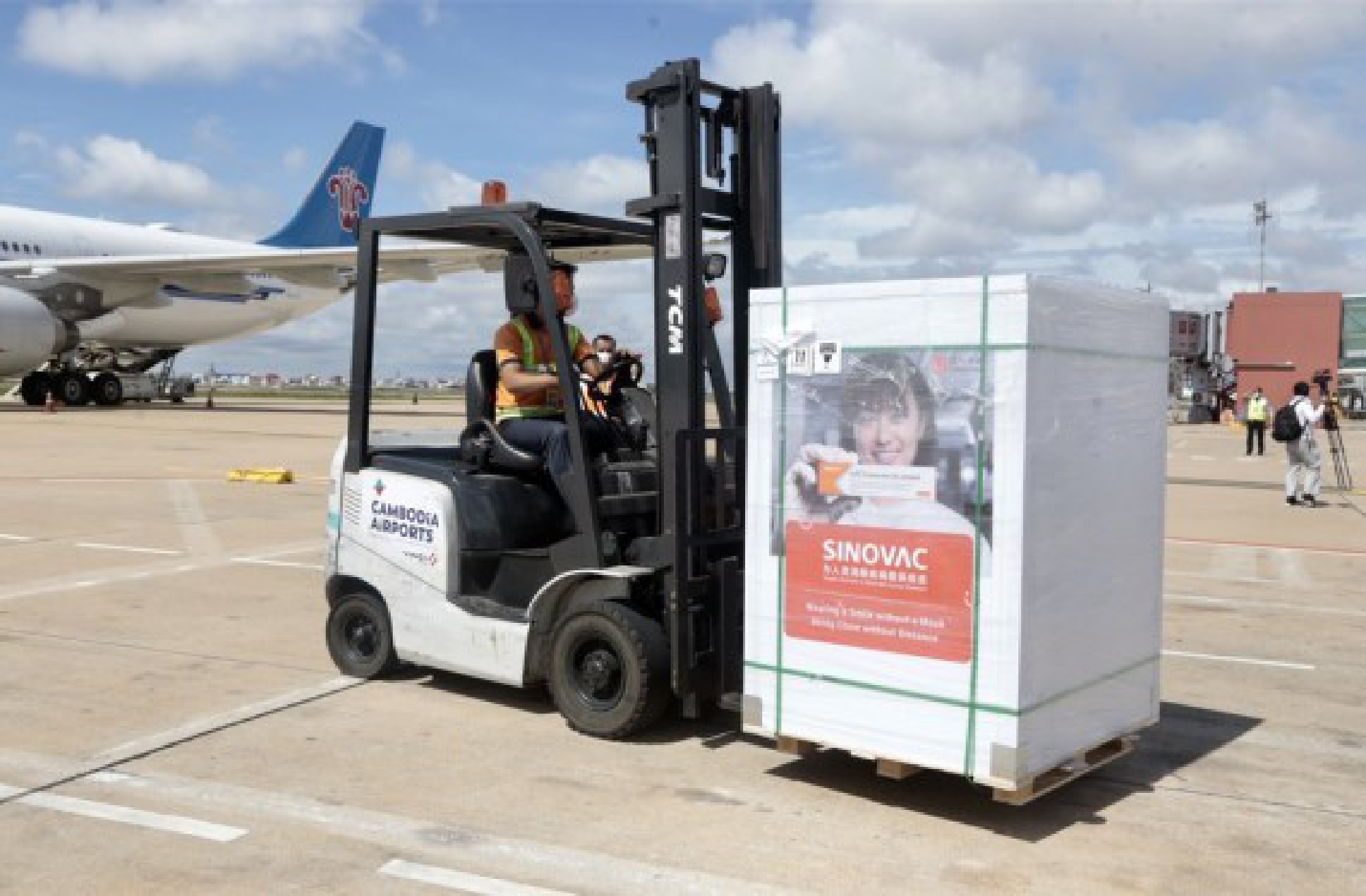
An airport worker transports packages of Chinese COVID-19 vaccine at the Phnom Penh International Airport in Phnom Penh, Cambodia on July 10, 2021.An airport worker transports packages of Chinese COVID-19 vaccine at the Phnom Penh International Airport in Phnom Penh, Cambodia on July 10, 2021.
A source with the Permanent Mission of China to the United Nations in Geneva commented Monday that the signing of the agreement between Gavi and the two Chinese vaccine makers is an important move showing China’s commitment to treat vaccines as a “global public product.”

“The Chinese government has been actively encouraging and supporting Chinese vaccine research and development companies to participate in the COVAX to provide vaccines to developing countries,” the diplomat said, adding that China is willing to continue to work together with all parties to promote the fair distribution of vaccines and make positive contributions to global solidarity in the fight against the epidemic. 

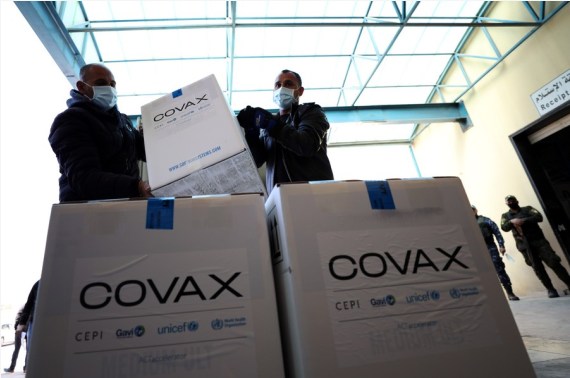
Workers arrange boxes of COVID-19 vaccines to be kept at the Palestinian Authority's storage facility in Salem village, east of the West Bank city of Nablus, March 17, 2021.

Published : July 13, 2021

By : xinhua

New Covid cases in Asean at record high as numbers soar in Indonesia #SootinClaimon.Com

#SootinClaimon.Com : ขอบคุณแหล่งข้อมูล : หนังสือพิมพ์ The Nation.

https://www.nationthailand.com/international/40003163

New Covid cases in Asean at record high as numbers soar in Indonesia


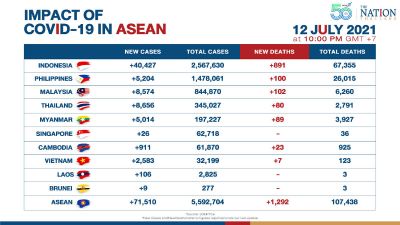
Southeast Asia reported a record 71,510 new Covid-19 cases on Monday. The tally was higher than Sunday’s 67,221, although the death toll of 1,292 on Monday was lower than the previous days 1,396.

Total Covid-19 cases in Asean crossed 5.59 million while the death toll in the region has climbed to 107,438.

The situation in Indonesia worsened on Monday with the country reporting a record 40,427 cases, and 891 deaths, bringing cumulative cases to 2,567,630 patients and deaths to 67,355. The government imposed a new lockdown on Java and Bali islands, and announced the highest social distancing measures in several cities on Sumatra, Kalimantan and Papua.

Vietnam reported 2,383 new cases and seven deaths on Monday, bringing cumulative cases in the country to 32,199 and 123 deaths. Of the total patients, 9,331 people have been cured and discharged. The government has shut down barber shops and beauty salons in Hanoi and prohibited eating in at restaurants as the infection rate in the city is climbing.

Published : July 13, 2021

By : THE NATION

Europe banks on vaccines as countries push ahead with reopening #SootinClaimon.Com

#SootinClaimon.Com : ขอบคุณแหล่งข้อมูล : หนังสือพิมพ์ The Nation.

https://www.nationthailand.com/international/40003160

Europe banks on vaccines as countries push ahead with reopening


European governments are pushing ahead with reopening their economies, banking on a mix of vaccinations, hygiene guidelines and common sense to let life return toward normal amid a surge in covid-19 cases.

Despite concerns about the rapid spread of the delta variant, officials are bowing to public frustration and pleas from businesses, and moving further away from the strict lockdowns of 2020. The view, summed up by a French minister, is that it’s time to “live with the virus.”

In the U.K., Prime Minister Boris Johnson is set to confirm that mandatory curbs will end as planned on July 19, including the legal requirement to wear masks in indoor settings.

But Johnson’s announcement will include a cautionary note, warning of a surge in virus cases and advising people to act sensibly. He’s counting on that, along with the country’s vaccination rollout, to limit the spread of the disease. More than half of the U.K. population is fully vaccinated, compared with an average of 40% among EU countries.

“Vaccines are fantastic but you have to give them time to work,” Peter Openshaw, professor of experimental medicine at Imperial College, said on BBC radio. “In the meantime keeping up all those measures which we’ve learned do reduce transmission is, to me, really vital.”

One trend in the latest figures is that the increase in cases is being linked to large social gatherings of mainly younger non-vaccinated adults.

That means while governments are ruling out another round of lockdowns, a number of countries are being forced to reintroduce, or at least consider, other curbs.

Portugal has broadened its nighttime curfew to more municipalities. The limits already apply in Lisbon and some locations in the southern Algarve region that are popular with tourists. France could reintroduce limits on the number of people allowed in bars, restaurants and other venues, junior minister for European Affairs Clement Beaune said on Europe 1 radio Sunday.

“We must live with the virus, and this means we don’t close everything again and positions aren’t as hard as they used to be, because we have the vaccine,” Beaune said.

President Emmanuel Macron will make a televised address later on Monday, when he’s expected to announce measures including mandatory vaccination for health care workers, as well as the new measures flagged by Beaune.

Greece’s government is expected to issue an update on its virus measures early this week, which may include new restrictions after a jump in cases.

In Cyprus, which is now one of Europe’s virus hotspots, authorities have set a limit of 50% capacity at indoor venues such as theaters and cinemas. From July 21, the capacity can increase to 75% as long as patrons are fully vaccinated or were infected with covid-19 in last six months.

Italy is also considering its options, and could raise its risk level to “yellow” from “white” if current trends continue, according to local media, which could lead to tougher restrictions in bars and restaurants.

One consistent amid the array of rules is the plea from governments to get vaccinated amid signs that the inoculation drive is slowing.

Chancellor Angela Merkel’s chief spokesman, Steffen Seibert, warned Monday that the experience of some of Germany’s neighbors shows that infections can “quickly explode again.”

“Of course vaccination has changed the overall picture and facilitated significant progress but we’re not yet adequately equipped if the number of cases really rises strongly again,” Seibert said at a regular news conference in Berlin.

Health Minister Jens Spahn pointed out that vaccine rates have fallen back to the lowest since February and renewed his call for citizens to get themselves inoculated.

Johnson will make a similar plea when he addresses the U.K.

“Cases will rise as we unlock, so as we confirm our plans today, our message will be clear,” Johnson will say, according to a statement from his office. “Caution is absolutely vital, and we must all take responsibility so we don’t undo our progress.”

Published : July 13, 2021

By : Syndication Washington Post, Bloomberg · Fergal O’Brien

Sydney daily delta cases spike to 112 as outbreak worsens #SootinClaimon.Com

#SootinClaimon.Com : ขอบคุณแหล่งข้อมูล : หนังสือพิมพ์ The Nation.

https://www.nationthailand.com/international/40003159

Sydney daily delta cases spike to 112 as outbreak worsens


Sydney recorded 112 new coronavirus cases on Monday — a 45% spike from the previous day — as the locked-down Australian city battles its largest outbreak since beating back the first wave of the pandemic more than a year ago.

“We just want people to stay at home,” New South Wales state Premier Gladys Berejiklian told reporters in Sydney on Monday. “The virus won’t spread if people don’t leave home. That is the bottom line.” At the weekend, Australia’s most-populous city recorded its first death since April after the delta-strain leaked into the local community in mid-June.

The city of 6 million people has been in lockdown since June 26, and faces being increasingly isolated from the rest of the nation after Berejiklian indicated that the current stay-at-home orders may need to be extended beyond Friday. On Sunday, Victoria state implemented a hard border with its neighbor, and plans for an Australia-Singapore travel bubble have been delayed until at least the end of the year.

The outbreak is highlighting the problems nation’s tardy vaccine roll-out, which has been hit by supply-chain hold-ups from contracted drug-makers amid accusations from political rivals that Prime Minister Scott Morrison failed to secure enough doses from a wide-enough range of suppliers.

Alongside other so-called “Covid-zero” nations such as China and Singapore, the persistent outbreaks show the limits of Australia’s strategy to beat the pandemic with closed international borders and rigorous testing. The Labor opposition says the delta variant is responsible for more than 20 virus leaks out of the nation’s quarantine hotels.

The Bloomberg Vaccine Tracker shows Australia has administered enough doses for just 17.8% of its population, compared with the U.K. with 60.4% and the U.S. with 52.2%

In a bid to encourage more Australians to get the jab, Morrison’s government has launched an televised advertising campaign featuring a young female actor struggling to breath. Bill Bowtell, an adjunct professor in infectious diseases at the University of New South Wales, described the ad — which has received a barrage of criticism on social media — as “not honest or truthful or authentic.”

“We are facing a terribly serious problem in Sydney — the worst health crisis in 120 years,” Bowtell told an Australian Broadcasting Corp. interview Monday. He’s calling for tougher stay-at-home restrictions to be imposed in Sydney so the city can exit lockdown sooner, similar to what Melbourne endured last year in one of the world’s longest and most stringent lockdowns. “Businesses are being smashed. People are being laid off.”

Shane Oliver, chief economist at AMP Capital Investors in Sydney, agreed that the repercussions of the lockdown to businesses were going to be serious, with New South Wales the nation’s economic engine room.

“It’s going to be the longest lockdown we’ve had since Victoria back in the middle of last year,” he said in an interview Friday. “The longer they go on, the more permanent economic damage they do — businesses having to close and people changing their behavior and it then takes longer to recover from that.”

The testing, tracing and quarantining system in New South Wales, which accounts for 32% of national gross domestic product, is being heavily tested by the delta variant, HSBC Global Research said in a note on Monday.

“The lockdown in Greater Sydney will weigh significantly on economic activity for as long as it is in place, at least initially mostly impacting” the third quarter, it said, adding that New South Wales Treasury estimates that each week of lockdown wipes A$850 million ($637 million) from the growth.

Berejiklian said her state was in negotiations with Morrison’s government to announce more financial support for businesses “in the next few days.”

Published : July 13, 2021

By : Syndication Washington Post, Bloomberg · Jason Scott

Top U.S. commander in Afghanistan steps down, marking a symbolic end to 20 years of war #SootinClaimon.Com

#SootinClaimon.Com : ขอบคุณแหล่งข้อมูล : หนังสือพิมพ์ The Nation.

https://www.nationthailand.com/international/40003158

Top U.S. commander in Afghanistan steps down, marking a symbolic end to 20 years of war


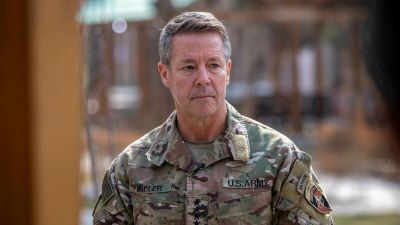
KABUL – The top U.S. general in Afghanistan stepped down on Monday, marking a symbolic end to 20 years of American military involvement here as an ascendant Taliban threatens to topple the central government.

Army Gen. Austin “Scott” Miller, who has overseen the war effort for nearly three years, relinquished his responsibilities in a small ceremony at the U.S. military’s headquarters inside Kabul’s heavily fortified Green Zone.

“Our job now is just not to forget,” Miller said in brief remarks, citing sacrifices by Americans, Afghans and other allies. “With the families that have lost people across this conflict, it will be important to know that someone remembers, that someone cares, and that we’re able to talk about it in the future.”

Hours later, Miller departed in a Black Hawk helicopter. It thumped away over a constellation of diplomatic compounds and security checkpoints, his first step on a journey home that is expected to include a stop in Washington where he will meet with President Joe Biden and senior Pentagon leaders, said two U.S. officials familiar with the matter. Like others, they spoke on the condition of anonymity because of the issue’s sensitivity.

Monday’s ceremony came three months after Biden announced he was ending the U.S. military’s mission begun in the aftermath of 9/11, leaving behind a force of about 600 troops to protect the U.S. Embassy and international airport a few miles away. Biden said last week that the American withdrawal will end formally on Aug. 31, but effectively it is complete now, with Miller’s departure one of only a few pieces that had been remaining, defense officials said.

Miller departs Afghanistan as the war’s longest-serving senior U.S. officer. A former commander of the elite Delta Force, he oversaw a tumultuous period that included the Trump administration’s 2020 deal with the Taliban that set the stage for withdrawal and the final call by Biden to remove all troops.

Marine Gen. Kenneth “Frank” McKenzie, who leads U.S. Central Command, has assumed Miller’s responsibilities. He attended Monday’s ceremony after flying overnight from his headquarters in Tampa and is expected to oversee the remaining security mission from there, with a two-star Navy SEAL, Rear Adm. Peter Vasely, leading the troops at the embassy and airport.

McKenzie acknowledged the ongoing bloodshed and promised that the United States would continue to provide financial and technical assistance from afar.

“You can count on our support in the dangerous and difficult days ahead,” McKenzie said. “We will be with you.”

Pentagon spokesman John Kirby on Monday refused to discuss any recent airstrikes carried out by the United States in support of Afghan forces under Taliban threat, citing operational security during the drawdown.

McKenzie told reporters traveling with him over the weekend that the U.S. military had launched one strike at the Taliban in recent days while the Afghan air force had conducted 14. He added that, while for now the U.S. military retains the ability to attack the Taliban, doing so is limited by a lack of intelligence and U.S. personnel on the ground who would help identify whether an airstrike may cause “collateral damage,” a military term for civilian casualties.

ADVERTISEMENT

“It’s a very high standard for us,” the general said.

Before the ceremony, McKenzie told reporters that he believes the Taliban is pursuing a “military victory” over the Afghan government, citing its recent battlefield victories. But he predicted the militants will encounter significant resistance in Kabul, noting how much larger and more complex the city of 6 million people and its defenses are now than when the Taliban ruled it in the 1990s.

“I think, certainly, the provincial capitals are at risk, and we’ll see how that shakes out over the next few weeks,” McKenzie told reporters aboard a military aircraft over the Atlantic Ocean. “I think the Afghans are determined to fight very hard for those provincial capitals.”

In a separate interview after Monday’s ceremony, McKenzie said that while he believes the Taliban has presented its battlefield gains on social media in an attempt to persuade people its rise is inevitable, he doubts it is true.

“It is not prescribed in stone that the Taliban are going to win,” McKenzie said.

ADVERTISEMENT

The rapid disintegration of security amid the withdrawal has put both Biden and the Afghan government on the defensive.

Last week, Biden said in remarks at the White House that he and his advisers anticipated problems but that focusing on them has been used for years as a rationale to extend the military mission while U.S. troops remained in harm’s way.

“Let me ask: How many more – how many thousands more Americans, daughters and sons – are you willing to risk?” Biden said. “I will not send another generation of Americans to war in Afghanistan with no reasonable expectation of achieving a different outcome.”

On Monday, Hamdullah Mohib, Afghanistan’s national security adviser, sought to reassure fellow Afghans. In remarks to reporters after the U.S. military ceremony, Mohib said that recent incidents in which the Afghan government could not resupply its soldiers fighting the Taliban were “unfortunate.”

“The problem was being able to reach them,” Mohib said. “Our air assets were not enough to reach every place throughout the country. So we’ve been working on strategizing where we need to defend the most, and reaching them.”

Mohib said the U.S. withdrawal has left some vacuums, and that Afghan forces are trying to fill them.

McKenzie said the United States is “no longer in the business” of carrying out military logistics for the Afghans. “We’re not going to be there at the lower levels to do it for them,” he added. “It’s just not going to happen.”

The war’s costs have been staggering. About 2,400 U.S. troops have been killed in Afghanistan, with an additional 20,000 wounded, according to Pentagon statistics. Nearly 800,000 service members have rotated through Afghanistan on assignment at least once, with nearly 30,000 of them deploying at least five times each, according to Pentagon data provided to The Washington Post.

Some 47,245 civilians, 66,000 Afghan soldiers and police, and 51,000 opposition fighters also have been killed, according to a study released by Brown University this year.

Numerous unresolved questions about the American withdrawal have not been fully addressed yet. They include a promise to evacuate thousands of interpreters who worked alongside U.S. troops and now are fearful of being targeted by the Taliban.

The Biden administration also plans to continue carrying out airstrikes against the Islamic State and al-Qaeda in Afghanistan as needed. However, without access to bases there, the military is expected to fly from installations several hours away in the Persian Gulf, putting strains on what U.S. troops can do. Administration officials are seeking new agreements with neighboring countries from which to carry out the strikes, but to date no deals have been announced.

The military’s departure from Afghanistan, along with the deterioration of security throughout the country, also is expected to degrade the United States’ ability to monitor events on the ground.

McKenzie said that most of the information the U.S. military gets about the Taliban comes from Afghan forces, and that in areas where the Taliban has seized control, it will be more difficult to understand changes as they occur.

“That’s just a fact we’re going to have to recognize,” McKenzie said. “My knowledge of what’s going on in Afghanistan is not nearly what it was 180 days ago.”

Published : July 13, 2021

By : The Washington Post · Dan Lamothe

Wildfire pushing California toward the brink of blackouts #SootinClaimon.Com

#SootinClaimon.Com : ขอบคุณแหล่งข้อมูล : หนังสือพิมพ์ The Nation.

https://www.nationthailand.com/international/40003157

Wildfire pushing California toward the brink of blackouts


A wildfire raging uncontrollably across southern Oregon has knocked out three electrical lines so critical to the stability of grids in the western U.S. that California has warned of rotating blackouts and Nevada faced a power emergency.

The fast-moving Bootleg fire crippled a key transmission system known as the California Oregon Intertie that the Golden State has depended on for years for electricity imports.

Making matters worse: The takedown of the intertie has had a knock-on effect on another key import hub known as the Pacific DC Intertie that brings in electricity from the Pacific Northwest, California’s grid operator said in a media briefing Saturday. Power supplies to the area covered by the grid have been reduced by as much as 3,500 megawatts because of the fire.

After days of pushing state residents to limit energy use with the risk of rolling blackouts, Californians got a break Sunday as the grid operator said conditions were expected to be stable. With transmission lines knocked out by the fire still out of service, and high temperatures expected to persist as demand picks up in the new week, another statewide conservation push through a so-called flex alert has been issued for Monday.

“If demand still outstrips supply after a Flex Alert is in effect, the ISO could take the infrequent step of ordering California utilities to spread power outages of relatively short duration to effectively extend available electricity as much as possible,” it said in a statement Sunday.

The fact that a single wildfire has brought America’s most populous and affluent state to the brink of blackouts is among the most powerful demonstrations yet of how vulnerable the world’s power grids have become to the effects of climate change.

Extreme heat, drought and dry conditions globally have shrunk hydropower reserves, driven up electricity demand to record levels and touched off some of the worst wildfire seasons in modern history.

Climate change is “forcing us to do things we never imagined” at this time of the year, said Elliot Mainzer, who took over as chief executive officer of grid manager California Independent System Operator nine months ago. The agency is “anticipating what could be a very long and hot summer,” he said.

California has emerged as the epicenter of climate disasters in the U.S. Wildfires burned an unprecedented 4.3 million acres across the state last year, killing 33 people and scorching nearly 10,500 structures.

Last August California suffered its first rolling blackouts since the U.S. West energy crisis two decades ago because of extremely hot weather. And in a foreshadowing of what was to come: Days before this year’s summer officially began, high temperatures forced the California ISO to make an unusually early call for conservation, allowing the region to duck another round of rotating outages.

“Bottom line is we took everything we learned from last summer, and we still came into this summer thinking our issues were going to primarily be associated with August and September,” Mainzer said, but “we had the first major heat wave four days before the official beginning of summer.”

On Friday evening, the grid operator took the rare step of ordering a Stage 2 emergency — one step away from rotating blackouts — to cope with the loss of import capacity. Energy conservation helped the state avert a crisis. But as temperatures rose yet again and supplies fell off the grid Saturday, Mainzer said, “We’re going to need more. Honestly, I think we are going to need more response than we saw last night.”

The grid operator issued an all-clear late Saturday after issuing a flex alert. Earlier in the day, Gov. Gavin Newsom also signed an order to free up more energy capacity to help alleviate the supply crunch.

California wasn’t the only state facing power woes. Nevada’s power system was among those in the region that also faced emergency levels on Friday evening, said Mark Rothleder, California’s ISO’s chief operating officer. On top of managing California’s grid, the agency serves as a reliability coordinator and is responsible for monitoring conditions across the western region.

Nevada utility NV Energy said it wasn’t forced to resort to blackouts, but the company was calling for customers to conserve over the weekend.

Exactly when the Bootleg fire would subside enough to re-energize the California Oregon Intertie remains to be seen.

The Bootleg fire had burned through 143,607 acres of southern Oregon and still zero percent of it was contained as of Sunday, forcing evacuations in Klamath County and shutting sections of a national forest, according to an update from the U.S. Fire Service.

Temperatures across California were forecast to remain high into Monday. After hitting 102 degrees Fahrenheit (39 degrees Celsius) Sunday, Sacramento is expected to slip to a high of 94 degrees on Monday.

Published : July 13, 2021

By : Syndication Washington Post, Bloomberg · Lynn Doan, Naureen S. Malik

Israel starts administering third dose of Pfizer vaccine to at-risk adults #SootinClaimon.Com

#SootinClaimon.Com : ขอบคุณแหล่งข้อมูล : หนังสือพิมพ์ The Nation.

https://www.nationthailand.com/international/40003151

Israel starts administering third dose of Pfizer vaccine to at-risk adults


TEL AVIV – Israels Ministry of Health on Monday began offering a third dose of the Pfizer vaccine to severely immunocompromised adults in what health experts say could be the first phase of an experiment to provide coronavirus booster shots for older people and the most vulnerable.

The recommendation, published Sunday by the ministry, said that the goal of the new program was to raise antibody levels among immunocompromised citizens, including cancer patients, recipients of liver transplants, and others who have recently exhibited weakened vaccine protection, according to data. It said that it had still not made a decision on administering third shots for the general adult population.

The decision comes as Israel, which was among the fastest to vaccinate in the winter and then among the first to begin reopening in the spring, is experiencing a surge in new cases, spurred by the prevalence of the highly transmissible delta variant first identified in India. Over the past month, infection rates in Israel have spiked from single digits to more than 400 a day.

Just weeks after lifting most covid restrictions, the government has reinstated the mask mandate for indoor spaces and public transportation. It is expected to introduce stricter quarantines for travelers returning from abroad, rapid testing stations for students, and the recently retired “green pass” system granting vaccinated people broader access to mass public events like concerts and movie theaters.

Pfizer and its partner BioNTech sold millions of doses to Israel last year, which were delivered on cargo planes that were greeted with fanfare by then-Israeli Prime Minister Benjamin Netanyahu at Ben Gurion international airport. Pfizer views Israel – with its small size, heterogenous population and meticulously digitized national health-care system, which serves as the basis for a data-sharing agreement signed by the Israeli government and the pharmaceutical giant – as a test case for vaccine rollouts in the rest of the world.

Recent studies show that the Pfizer vaccine remains effective against the delta variant in preventing hospitalizations and serious illness, though it also has shown declining effectiveness at preventing milder cases. The company expects to publish data from the current study on booster shots provided to at-risk adults in Israel. It said Thursday that it will ask U.S. and European regulators within weeks to authorize booster shots.

Israeli Prime Minister Naftali Bennett announced that he has coordinated a fast-tracked delivery of the next batch of Pfizer doses to arrive Aug. 1, to allow the country to replenish its dwindling supplies and continue its campaign to inoculate 12-to-15-year-olds.

Eyal Leshem, an infectious-disease specialist at Sheba Medical Center, said that even though Israel would probably not make a third shot available to the general public any time soon, the move may open the path toward targeting specific vulnerable populations who are known to have reduced protection when compared with the healthy population.

He said that vaccine hesitancy and lack of access to the vaccine around the globe, including in the nearby Palestinian territories, remain persistent challenges that would prevent general booster shots from becoming widespread health policy, but that approaches could continue to change as the virus mutates and countries open up.

“A possible scenario is that as the virus mutates and changes, the vaccines will be modified accordingly, and boosters will enhance immunity against circulating viruses,” he said.

The director general of the World Health Organization, Tedros Adhanom Ghebreyesus, in a statement Monday admonished vaccine manufacturers for seeking to push boosters to wealthy countries when many places do not have access to doses.

Published : July 13, 2021

By : The Washington Post · Shira Rubin