Biden administration could bring Afghan interpreters to military bases in U.S. #SootinClaimon.Com

#SootinClaimon.Com : ขอบคุณแหล่งข้อมูล : หนังสือพิมพ์ The Nation.

https://www.nationthailand.com/international/40003253

Biden administration could bring Afghan interpreters to military bases in U.S.


The Biden administration will begin flights later this month to evacuate interpreters and others who assisted the American war effort in Afghanistan, and it may house some Afghan nationals on military bases in the United States while their visa applications are processed, officials said Wednesday.

Pentagon spokesman John Kirby said the Defense Department was looking at “all options” to help the thousands of Afghan nationals seeking to emigrate, including the suitability of domestic and overseas facilities, as the United States ends its 20-year mission there and the Taliban continues its violent, alarming push to retake lost territory and undermine the central government.

President Joe Biden has defended his decision to end the campaign by Aug. 31, despite Taliban gains and bleak assessments of Afghanistan’s security forces, saying the country must now defend itself but promising not to abandon those who were crucial to U.S. operations there. “There is a home for you in the United States if you so choose,” Biden said last week.

The president was expected to meet Wednesday with Gen. Austin “Scott” Miller, who earlier this week stepped down as the top U.S. commander in Afghanistan and flew home, marking a symbolic end to U.S. military involvement there.

A senior administration official said the evacuation flights would begin this month as part of a program officials are calling Operation Allies Refuge. The initiative will support “interested and eligible Afghan nationals and their families who have supported the United States and our partners in Afghanistan and are in the [special immigrant visa] application pipeline,” said the official, who was not authorized to publicly discuss the matter and spoke on the condition of anonymity.

The flights are expected to start the last week of July and are being coordinated by officials from the departments of State, Defense and Homeland Security.

Tracey Jacobson, a former U.S. ambassador to Kosovo, Tajikistan and Turkmenistan, will lead a State Department unit overseeing the effort. Deputy homeland security adviser Russell E. Travers, a longtime intelligence professional and former acting director of the National Counterterrorism Center, will coordinate the interagency policy process.

The Biden administration, facing mounting pressure from lawmakers and veterans, has been scrambling in recent weeks to respond to mounting concerns about the safety of the former U.S. employees. Many of those individuals, some whose visa applications have taken years to move through a complex and meandering process, say their lives in jeopardy as the Taliban gains ground.

The militant group has swept across northern Afghanistan as U.S. and NATO forces have withdrawn in recent months, cutting off key transport routes and encroaching on provincial capitals. The Taliban advance, often the product of negotiated withdrawals by Afghan forces, underscores the shortcomings of the security forces that the United States and other NATO nations worked to build over 20 years.

Still unanswered as the White House promises to accelerate the evacuation process is how many will be airlifted initially. The State Department has said that about half of the approximately 18,000 applicants to the special Afghanistan visa program are at the very beginning of the process, suggesting those individuals may not be among those evacuated initially.

A decision to bring the Afghans to bases within the continental United States would represent a shift for the Biden administration, which has previously said it was considering transporting them to third countries or U.S. territories.

Experts have previously said that bringing the visa applicants to the mainland United States could be complicated from a legal perspective, in part because it would make it easier for them to access U.S. courts and attorneys if their applications are rejected.

If they are not moved to the continental United States, possible destinations could include bases on U.S. territories such as Guam, or Persian Gulf nations or countries in Central Asia.

White House press secretary Jen Psaki on Wednesday said the administration was not sharing information about where the Afghans will go due to “operational and security” reasons.

Kirby said the Pentagon had activated a working group to help identify applicants who may not necessarily be in the program but would qualify.

It is unclear to what degree the Pentagon has asked current and former service members to help keep communication lines open or reach applicants in hiding. Troops and veterans have strong bonds with their interpreters, often keeping in close contact over WhatsApp and social media whereas diplomatic officials may not have recent contact information for those who’ve fled their homes or changed their numbers.

Published : July 15, 2021

By : The Washington Post · Missy Ryan, Felicia Sonmez, Alex Horton

Brazilian President Jair Bolsonaro hospitalized after 10 days of hiccups #SootinClaimon.Com

#SootinClaimon.Com : ขอบคุณแหล่งข้อมูล : หนังสือพิมพ์ The Nation.

https://www.nationthailand.com/international/40003246

Brazilian President Jair Bolsonaro hospitalized after 10 days of hiccups


Theres holding your breath, getting spooked or sipping ice cold water – but Brazilian President Jair Bolsonaro cant seem to shake his case of hiccups.

The hiccups have persisted for so long – more than 10 days – that the country’s far-right leader has been hospitalized so doctors can try to figure out the cause.

In the many recent presidential live streams, Bolsonaro’s hiccuping is evident – and he has prefaced some appearances by with acknowledging his hiccupping and disrupted speech. In one July 8 clip, Bolsonaro hiccuped approximately 14 times within the first minute.

Bolsonaro has had a run of health scares. He nearly died on the 2018 campaign trail after being stabbed in the abdomen. He lost a lot of blood and suffered a serious wound to his intestine. He contacted covid-19 last July after playing down the coronavirus for months. While in quarantine, he was bitten by an emu-like giant bird. He’s had a stubborn cough, too.

“Hiccups” were trending on Google in relation to Bolsonaro this past week, Brazilian newspaper O Globo reported.

The president said that he had dental implant surgery Saturday, and he suggested a possible link between the post-implant medication and his ongoing hiccups.

He’s expected to be under observation at the Armed Forces Hospital in Brasilia for a day or two – although he will not necessarily remain in the hospital building. “He is feeling good and doing well,” the president’s press office said in a statement.

The hiccups and examinations caused Bolsonaro to cancel his entire agenda Wednesday, including meetings with the heads of the three branches of government.

Mark Larson, a Mayo Clinic gastroenterologist and internist, told The Washington Post that while transient hiccups are very common, persistence for more than a day is already quite rare. Bolsonaro’s 10-day spell is very rare.

He said that medications taken after the surgery, or even the surgery itself, could plausibly have triggered the symptoms.

Hiccups are involuntary contractions of your diaphragm – a dome-shaped muscle between your chest and abdomen. Normally, it contracts and relaxes to let air flow in and out of your body. But irritation can cause spasms, bringing a rush of air through your throat, Larson said. Your vocal cords rapidly close up and cause the distinct hiccup sound.

Hiccups can be caused by physical and emotional changes and disruptions – stress, sore throats, cold drinks or eating too fast, for example – so pinpointing any cause for the Brazilian president’s hiccup bout isn’t possible without an examination.

Prolonged hiccups can be a serious problem, or indicate one. Doctors recommend seeking medical attention if they persist longer than 48 hours, especially if they disrupt sleep.

Causes can range from something as small as swallowing too much air while chewing gum to something as serious as a tumor – and longer cases can be connected to damage or irritation to the nerves near the diaphragm.

In rare cases, hiccups persists for lengthy stretches. One man, the late Charles Osborne of Iowa, reportedly hiccuped for 68 years straight.

A specialist in Brasília told O Globo that Bolsonaro’s hiccups could be caused by the dental implant because of oral and phrenic nerve relationships. The specialist said it was unlikely that the stabbing had anything to do with the hiccups.

In a tweet Wednesday, however, Bolsonaro blamed health complications in the aftermath of the assassination attempt.

Published : July 15, 2021

By : The Washington Post · Sammy Westfall

European Commission proposes ambitious climate change policies, urging U.S. and other nations to follow #SootinClaimon.Com

#SootinClaimon.Com : ขอบคุณแหล่งข้อมูล : หนังสือพิมพ์ The Nation.

https://www.nationthailand.com/international/40003245

European Commission proposes ambitious climate change policies, urging U.S. and other nations to follow


PARIS – The European Commission on Wednesday presented some of the worlds most ambitious plans to confront climate change, aiming to reduce net greenhouse gas emissions by at least 55% below 1990 levels within less than a decade.

The European Union’s executive branch said it would make Europe “the world’s first climate-neutral continent by 2050.” EU representatives urged the United States and other nations to follow.

The package of proposals – which consists of more than a dozen directives or regulations – was applauded by some environmental groups as a landmark effort. But it is unclear how many of the planned changes will remain in place after the bloc’s 27 member states and the European Parliament have examined and modified them in what is expected to be a years-long process.

Ottmar Edenhofer, a director at Germany’s Potsdam Institute for Climate Impact Research, said the plans are “by far the most comprehensive package we have seen in Europe.”

In a presentation of the proposals, Commission Executive Vice President Frans Timmermans evoked a future in which wars are fought over access to water and food unless urgent action is taken.

“There is no time to waste. People are dying in Northwest Canada because it’s 50 degrees Celsius [121 degrees Fahrenheit] there,” said Timmermans. “Northwest Canada!”

But European Commission President Ursula von der Leyen said maintaining social balance would also be a key objective, emphasizing that the package would seek to preserve jobs while curbing emissions.

Her comments reflected a weariness among some European member states, after ambitious climate plans in France and other countries sparked anti-government protests in recent years.

If passed, one of the most significant changes of the “Fit for 55” package would be the creation of a “carbon border adjustment mechanism,” which would impose tariffs on some goods imported from non-EU countries with weaker climate laws. In practice, environmental groups hope, this could become a powerful incentive for other nations to follow the bloc’s policies.

The proposal could also target U.S. imports, European lawmakers said.

“To the United States, I would say if you are so worried, then maybe it is time you come forward with very credible plans on decarbonization of your economy,” said Bas Eickhout, a European lawmaker from a Dutch green party. “We have heard a lot of announcements, but we have not seen many concrete policies.”

Experts said the United States will not be among the exporting nations that would be hardest hit by the proposed changes.

The European Commission also plans an expansion of the bloc’s carbon market to include cars, maritime transport and housing. Over the next decades, restrictions on vehicle emissions are expected to be gradually tightened. Emissions from new cars would have to be cut by 100% compared with current levels by 2035, according to the commission’s plans. In practice, this would mean the phasing out of all new cars running on gasoline. However, member states have so far been divided on the exact timeline. France, for instance, would prefer the deadline to be extended until 2040.

The target to phase out carbon dioxide emissions from vehicles by 2035 “is not only possible but would ensure Europe maintains its role as a leader in the climate transition,” said Helen Clarkson, chief executive of the Climate Group, a nonprofit that works with business and government to combat climate change, in a statement.

Climate activists did not universally embrace the EU’s proposals, with some saying the bloc must become even more ambitious over time to help limit Earth’s warming to 1.5 degrees Celsius, or 2.7 degrees Fahrenheit, over preindustrial levels – a key goal of the Paris climate accord.

In a statement, Wendel Trio, director of Climate Action Network Europe, praised the more aggressive goals set out this week but added that “only with further ambition will the package be turned into a policy framework that will bring us all to the 1.5C target.”

Others cautioned that the proposed changes would put a heavy financial burden on European citizens but allow industries to continue to pollute, threatening to derail the changes through popular protests before they can have an impact.

“What the Commission says is ‘Fit for 55’ is unfit for our planet and unfair to society,” said Barbara Mariani, policy manager for climate at the European Environmental Bureau, a nongovernmental organization, in a news release. “Europeans will be asked to pay to save the fossil fuels industry,” she said.

Von der Leyen pointed to plans for a social fund, which is expected to help compensate low-income families negatively affected by the changes.

But climate change researcher Edenhofer said it is inevitable that consumers will have to pay a price for the proposals. Politicians need to clearly communicate that we have to bear the costs because change is needed, he said.

“Without changing prices, this will never happen,” he said.

Published : July 15, 2021

By : The Washington Post · Rick Noack, Quentin Ariès

China slams sinister U.S. Over Hong Kong, digital trade deal #SootinClaimon.Com

#SootinClaimon.Com : ขอบคุณแหล่งข้อมูล : หนังสือพิมพ์ The Nation.

https://www.nationthailand.com/international/40003244

China slams sinister U.S. Over Hong Kong, digital trade deal


China accused the U.S. of waging a “sinister” campaign to halt its rise, as the Biden administration moved to counter Beijings growing global trade influence and domestic political crackdowns.

China slams sinister U.S. Over Hong Kong, digital trade deal

Chinese state media including the China Daily newspaper dismissed a possible U.S.-led digital trade agreement as a bid to defend American power in the Asia-Pacific region. Separately, the Chinese Foreign Ministry denounced a planned White House warning to American businesses in Hong Kong as an effort to mislead companies and malign the national security law that Beijing imposed on the Asian financial center last year.

“The U.S. confuses black and white and right and wrong, wantonly discredits the national security law and Hong Kong’s business environment, and attempts to mislead American and international businesses in Hong Kong,” the ministry’s Hong Kong branch said Wednesday. “Its sinister intention of playing the ‘Hong Kong card’ to curb China’s development is clear.”

The responses illustrate Beijing’s continued frustration with the U.S., as President Joe Biden implements a China strategy that extends and deepens his predecessor’s confrontational approach. The two sides are still trading barbs over data, security and human rights, even as their senior officials carry out talks on issues such as trade, climate change and Iran’s nuclear program.

U.S. Deputy Secretary of State Wendy Sherman is expected to visit China as part of a trip to the region next month, a person familiar with the matter said Tuesday. The South China Morning Post newspaper separately reported Wednesday that Sherman would meet with Vice Foreign Minister Xie Feng in Tianjin and discuss a possible meeting between Secretary of State Antony Blinken and Chinese Foreign Minister Wang Yi.

Still, China has continued to lash out at the U.S. in recent months, especially over what it views as foreign interference in its domestic affairs. The U.S. has led a loose coalition of mainly Western countries criticizing China’s efforts to crack down on political minorities in the predominately Muslim region of Xinjiang and the former British colony of Hong Kong.

The White House is preparing to warn American companies this week of the increasing risks of operating in Hong Kong, three people familiar with the matter said Tuesday. Those risks include the Chinese government’s ability to gain access to data that foreign companies store in Hong Kong, according to two of those people.

Beijing imposed the sweeping national security law — which bars subversion, terrorism, secession and foreign collusion — on Hong Kong last year following unprecedented and sometimes-violent democracy protests in the city. The law, which officials have used to jail democracy activists and much of the formal political opposition, has frayed ties between the finance hub and many western nations, including the U.S.

“Relevant laws in Hong Kong clearly protect the rights and interests of foreign investors,” Chinese Foreign Ministry spokesman Zhao Lijian told a regular news briefing Wednesday in Beijing. “Since the implementation of the national security law, Hong Kong society has returned to normal and the ‘Pearl of the Orient’ has become even shinier. The so-called alert is typical political manipulation and double standards.”

Meanwhile, the China Daily rejected a potential U.S. digital trade deal involving Pacific nations as “shackles restricting trade and their freedom of cooperation.” The English-language newspaper said the world’s two largest economies cannot decouple and it was “therefore absurd for it to try to force other countries to do that without finding them new sources of goods, services and capital to fill the vacuum caused by it forcing them to sever ties with China.”

Published : July 15, 2021

By : Syndication Washington Post, Bloomberg · Iain Marlow, Kari Lindberg

Some countries defend mixing vaccines after WHO suggests booster strategy is chaotic #SootinClaimon.Com

#SootinClaimon.Com : ขอบคุณแหล่งข้อมูล : หนังสือพิมพ์ The Nation.

https://www.nationthailand.com/international/40003243

Some countries defend mixing vaccines after WHO suggests booster strategy is chaotic


Canadian and Thai health officials are defending the decision to mix different coronavirus vaccines after the World Health Organizations chief scientist suggested this week that combining doses was potentially unsafe.

The WHO’s Soumya Swaminathan said in a briefing Monday that plans by some countries to administer booster shots signaled a “dangerous trend” that could lead to “a chaotic situation . . . if citizens start deciding when and who will be taking a second, a third and a fourth dose.”

“We are in a bit of a data-free, evidence-free zone as far as ‘mix-and-match,'” she said. She later clarified on Twitter that she was concerned about individuals, rather than public health agencies that she said would have better data, deciding to get a mixed cocktail of shots.

A top Thai virologist fired back Tuesday, however, saying that authorities would forge ahead with plans to mix a first dose of the Sinovac vaccine with a second dose of the Oxford-AstraZeneca shot.

Canadian public health officials also defended their plan to offer messenger RNA vaccines as a second shot to people who received a first AstraZeneca dose. “We have taken some strong decisions that quite frankly, are bearing out,” Canadian Prime Minister Justin Trudeau told reporters Tuesday.

A statement issued by Ontario’s health minister noted that the province’s booster-shot program was “based on studies from the [United Kingdom], Spain and Germany that have found mixing vaccines is safe and produces a strong immune response.”

Canada’s mixed inoculation program came after the AstraZeneca shot was found to cause potentially fatal blood clots in a very small number of recipients, most of them young people.

A number of countries, including in Europe, have followed similar tracks, recommending that people who received a first AstraZeneca dose then follow up with an mRNA vaccine.

Vietnam, which is battling a wave of infections caused by the more contagious delta variant, said Tuesday that it would allow those who were administered a first AstraZeneca shot to get the Pfizer-BioNTech vaccine as a second dose.

Thailand, however, is seeking to bolster immune response amid questions over the Sinovac vaccine’s effectiveness against the delta variant and as it attempts to quash its worst outbreak of the pandemic. (Over 600 Thai health workers who were fully inoculated with the Sinovac shot later caught the virus.)

The goal of mixing the AstraZeneca and Chinese-made shots, chief virologist Yong Poovorawan said, is to reach a “booster” effect in a shorter period of time.

“We can’t wait 12 weeks [for a booster effect] in this outbreak where the disease is spreading fast,” he said, according to Agence France-Presse.

Researchers in Britain, Russia and the United States are all currently conducting clinical trials testing mixed-shot vaccine regimens.

In June, the U.S. National Institutes of Health said it was starting a trial in which fully vaccinated adults would be given a booster dose of different coronavirus vaccines.

“We need to prepare for the possibility of needing booster shots to counter waning immunity and to keep pace with an evolving virus,” the country’s top infectious-disease expert, Anthony S. Fauci, said in a statement announcing the study.

“The results of this trial are intended to inform public health policy decisions on the potential use of mixed vaccine schedules should booster doses be indicated,” said Fauci, who also serves as the director of NIH’s National Institute of Allergy and Infectious Diseases.

Published : July 15, 2021

By : The Washington Post · Erin Cunningham

Asean sees over 78,000 new cases #SootinClaimon.Com

#SootinClaimon.Com : ขอบคุณแหล่งข้อมูล : หนังสือพิมพ์ The Nation.

https://www.nationthailand.com/international/40003209

Asean sees over 78,000 new cases


The number of Covid-19 cases in Southeast Asia crossed 5.67 million, with 78,547 new cases reported on Tuesday – higher than Monday’s tally of 71,510 – while there were 1,266 more deaths, a decrease from Monday’s 1,292, taking total coronavirus deaths in Asean to 108,704.

Indonesia on Tuesday reported 47,899 more cases – a new high for the country since the outbreak started in March 2020 – with 864 additional deaths, bringing cumulative cases there to 2,615,529 patients and a total of 68,219 deaths.

Malaysia meanwhile reported 11,079 new cases, which broke the neighbouring country’s record for the third time in less than a week. It is also the first time the country reported more than 10,000 infections in one day since the outbreak started in March 2020.

The government ordered temporary shutdown of a vaccination unit in Selangor after at least 204 staffers tested positive from a total of 453. It also urged people who visited the centre from July 9-12 to go into quarantine for at least 10 days.

Published : July 14, 2021

By : THE NATION

Italy to ban cruise ships from docking in Venice, starting Aug. 1 #SootinClaimon.Com

#SootinClaimon.Com : ขอบคุณแหล่งข้อมูล : หนังสือพิมพ์ The Nation.

https://www.nationthailand.com/international/40003208

Italy to ban cruise ships from docking in Venice, starting Aug. 1


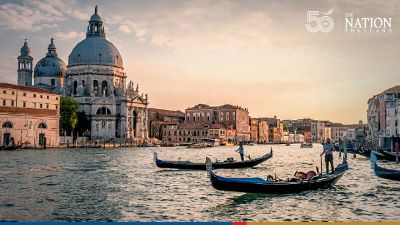
Aiming to protect a “national monument,” Italys government Tuesday moved to ban massive cruise ships from sailing directly into Venice and limit access to its fragile lagoon, definitively altering mass-scale tourism to the City of Canals.

The government’s decision, which will take effect Aug. 1, will put a stop to the contentious image that has come to symbolize many of overtouristed Venice’s problems: Fuel-guzzling ships, taller than the city’s bell towers, passing through the historic waterways and depositing thousands of passengers in the heart of the old city.

Prime Minister Mario Draghi called it a “step for the protection of the Venetian Lagoon.”

The move was made under pressure, just days before the United Nations’ cultural protection agency, UNESCO, was set to discuss listing Venice as an endangered World Heritage site. A UNESCO document from June specifically called on Italy to ban big cruise ships from the lagoon and move with the “utmost urgency.”

The cruise ships have long posed a conundrum in Venice, pitting economic needs – the cruise industry in Venice employs several thousand people – against a fragile ecosystem. Opponents of the cruise ships in Venice have protested for years, saying that the wakes caused by the ships contribute to erosion, and that day-tripping, mass-scale tourism is incompatible with a relatively small, compact city.

The ban applies to ships of more than 25,000 tons. The massive cruise ships that have sailed into Venice’s harbor can be nearly four times that weight.

Italy had taken a less comprehensive step to stop cruise liners from sailing to Venice this spring, when the cabinet passed a decree calling for provisions to detour the vessels outside the lagoon. That decree, however, made little immediate difference, as it would require the construction of a new port farther away, which would take several years. In the meantime, ships continued to be able to dock at an industrial port known as Marghera, which is still inside the lagoon, and at a port on Venice’s main island.

Under this new measure, large ships will not be allowed to dock at Venice’s main island, nor will they be able to travel through the city’s Giudecca Canal. A limited number of ships – one per week, at the current capacity, a government spokesman said – will have access to Marghera, but with a route that keeps the vessels farther away from the historic center of Venice. The spokesman said Marghera’s capacity will gradually be expanded and should reach two ships by next spring.

The pandemic had temporarily paused cruises worldwide, but in June, the MSC Orchestra – a 16-deck cruise ship – sailed through the Giudecca Canal, rolling past the iconic sights of Venice, including St. Mark’s Basilica and the Doge’s Palace.

“Here it is, the first big ship to come back to destroy our lagoon and pollute our city,” the No Big Ships Committee said on its Facebook page.

When the vessel departed Venice through the same canal, some Venice residents took their own small boats onto the water and protested.

The Italian government said Tuesday that it would establish a compensation fund for the cruise companies and those connected to the cruise terminal.

Even as the city contends with the issue of cruise liners, it also faces other threats. Delicately built on a shallow lagoon, Venice has been subject to the rising seas, battered by flooding in recent years. A costly, years-in-the-works construction project – called the MOSE – is supposed to provide a new barrier against the high tides.

“The continued deteriorating effects of human intervention, combined with climate change on the vulnerable lagoon ecosystem, threaten to result in irreversible change,” UNESCO had said last month.

Published : July 14, 2021

By : The Washington Post · Chico Harlan

Iran pushes state-sanctioned dating app to promote marriage #SootinClaimon.Com

#SootinClaimon.Com : ขอบคุณแหล่งข้อมูล : หนังสือพิมพ์ The Nation.

https://www.nationthailand.com/international/40003207

Iran pushes state-sanctioned dating app to promote marriage


Irans Tebyan cultural center, affiliated with the countrys Islamic Propaganda Organization, offers marriage consulting on its website, answering questions such as, “One is introverted and the other is extroverted. What do we do?” and “Why cant we talk?” This week, Iran took its official push to promote marriage amid rising divorce rates a step further, with the introduction of a state-approved Islamic dating app.

Hamdam – which in Farsi means companion – is a dating app meant to address concerns in Iran over fertility, divorce and marriage. Fertility has been declining in Iran for the past eight years, reaching a low in 2019 and contributing to a shrinking population growth rates. Marriage rates are dropping, and divorce rates are rising, too.

Tebyan Media Institute Director Kamil Khojasteh at the app’s unveiling said that family values are the “devil’s target,” and Iran’s enemies impose their own ideas onto it. The app, with its pink, purple and heart-filled interface, works against that.

Mohammad Baqer Qalibaf, speaker of the Islamic Consultative Assembly, inaugurated the platform at a news conference. He said that choosing a spouse should come with rationality and awareness, adding that the platform is based on traditional family values and Islamic principles.

There are about 13 million single people aged 18 to 35 in Iran, the Associated Press reported. In 2019, the country reported over 170,000 divorces and 520,000 marriages.

The Iranian parliament has tried to stimulate population growth with the passage of a plan in March that includes health insurance for infertile couples, educational opportunities for student mothers, and medical services to pregnant women, the Tehran Times reported. The law also stipulates that higher education must raise awareness on the positive sides to childbearing. The government is financially supporting nongovernmental organizations that reduce marriage ages, facilitate youth marriage and encourage childbearing, the Times reported.

Rather than an open market, the app screens applicants with psychological tests, uploaded documents, and counseling to identify personality traits and characteristics. Then, applicants are offered the best choices from the platform’s point of view, the website stated.

A video of the app’s interface, posted to the Tebyan Cultural Center’s website, depicts an elaborate matchmaking process complete with questions with sliding scales, text boxes, and buttons.

In a Twitter thread, Aref Che, a content producer at Tebyan, said that the first appointment is only made in the presence of families and counselors, and dozens of consultants guide people through the process.

Not simply a matchmaking or dating system, the app supports families throughout their marriage through consulting, the platform’s Twitter page says.

In Iran, consensual sexual relationships outside of traditional marriage are criminalized.

The app is open to all people, including those who have a history of previous marriage, an app FAQ read. But it is only open to those desiring permanent marriage in the form of monogamy, it said.

According to the FAQ, the app does not use photos – which are “manipulative” and sometimes do not portray reality. “We have experienced many times in matching that the photo was not a good reason to reject or accept anyone,” the FAQ wrote. “What is achieved in a face-to-face meeting is much more complete than a soulless photograph.

A consultant for Hamdam, according to the app’s website, that the number of single people have increased – with one reason being that traditional methods of marriage – where parents were the actors – no longer work, compared to young people being the initiators of marriage today.

Published : July 14, 2021

By : The Washington Post · Sammy Westfall

France and Greece mandate vaccinations for health workers amid delta variant surge #SootinClaimon.Com

#SootinClaimon.Com : ขอบคุณแหล่งข้อมูล : หนังสือพิมพ์ The Nation.

https://www.nationthailand.com/international/40003206

France and Greece mandate vaccinations for health workers amid delta variant surge


France and Greece have both announced plans to mandate coronavirus vaccinations for health-care workers as the more virulent delta variant gains ground across Europe, threatening even those nations with high or climbing inoculation rates.

French President Emmanuel Macron said in a televised address Monday that France was “facing a strong resumption of the epidemic” and that a slowing vaccination campaign could lead to rising hospitalizations later this summer.

“The equation is simple. The more we vaccinate, the less space we leave this virus to circulate,” he said.

In Greece, Prime Minister Kyriakos Mitsotakis also said Monday that health-care workers must be immunized starting Sept. 1, and that nursing staff will be required to begin receiving vaccinations immediately.

Both Macron and Mitsotakis announced Monday new measures that would provide vaccinated people with privileged access to activities such as indoor dining, entering shopping malls and cinemas and traveling on planes and trains. In France, those plans drew criticism from the hospitality sector on Tuesday, with some business representatives demanding the steps be delayed.

People in France will also be able to access restricted venues by providing proof of immunity through infection or a recent negative coronavirus test result, although the country will soon start charging for some tests that had been free.

The announcement prompted hundreds of thousands of French residents to book appointments for their first shot within the following hours. Online booking platform Doctolib called the surge an “absolute record.”

Meanwhile, Greek authorities said Tuesday that only fully vaccinated individuals would be allowed to use public indoor spaces in the country until Aug. 31, when the policy would be reassessed.

“The country will not shut down again because of some,” Mitsotakis said in his televised address Monday. “It is not Greece that is in danger, but unvaccinated Greeks.”

The moves to mandate coronavirus vaccinations for certain sectors of the population come as some nations are seeing immunization rates slow – even as the delta variant spreads – and are struggling to balance public health restrictions with individual liberties.

Italy announced in March that all health-care workers must be vaccinated or face a year-long suspension without pay, making it the first country in Europe to impose such a requirement. England is set to make vaccines required for home health workers, after a grace period beginning in October.

French Health Minister Olivier Véran said Monday that health workers in France would also be suspended without pay if they are not fully vaccinated by Sept. 15. The delta variant accounts for more than half of new infections in the country, Véran said.

ADVERTISEMENT

In remarks Monday, Tedros, the World Health Organization director general, said the delta variant is “ripping around the world at a scorching pace.”

But the agency has so far declined to support mandates for coronavirus vaccinations, instead saying in a recent policy brief that such policies “can be ethically justified, as they may be crucial to protect the health and well-being of the public.”

The aim of the new policies in France, Macron said in his address, is to “put restrictions on the unvaccinated rather than on everyone.”

While Macron stressed that – for now – vaccination would remain voluntary for most French, France’s conservative Le Figaro newspaper described the planned changes as paving “the way for mandatory vaccination for all.”

In France, 51% of people age 18 and over have received two doses of the coronavirus vaccine, according to the Health Ministry. But widespread vaccine hesitancy and declining case numbers have hobbled efforts to get more people to take the shots.

ADVERTISEMENT

More than 45% of adults in Greece are also fully immunized, according to the European Center for Disease Prevention and Control. Athens will begin vaccinating people between the ages of 15 and 17 later this week, the head of Greece’s vaccination committee, Maria Theodoridou, said Monday.

European Commission President Ursula von der Leyen said Tuesday on Twitter that more than 50% of adults in the European Union are fully vaccinated.

Published : July 14, 2021

By : The Washington Post · Erin Cunningham, Rick Noack

Merkel makes urgent appeal for Germans to get Covid-19 shots #SootinClaimon.Com

#SootinClaimon.Com : ขอบคุณแหล่งข้อมูล : หนังสือพิมพ์ The Nation.

https://www.nationthailand.com/international/40003204

Merkel makes urgent appeal for Germans to get Covid-19 shots


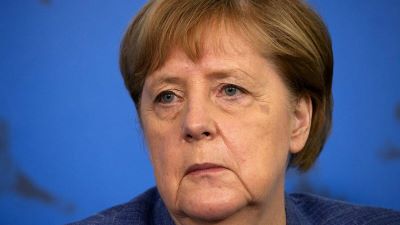
German Chancellor Angela Merkel reinforced the governments urgent appeal for people to get vaccinated against Covid-19, saying the inoculation campaign will be the deciding factor for the future course of the pandemic.

“The more are vaccinated, the more free we can be again,” Merkel said Tuesday during a visit to the RKI public-health institute. Still, Germany won’t follow France in requiring compulsory vaccination for health workers, she said.

Merkel and officials in her government have long said the vaccine campaign is the only way Europe’s biggest economy can return to — and maintain — something resembling normality. However, there is increasing evidence that the vaccination drive, which had accelerated rapidly after a sluggish start, is beginning to slow.

Health Minister Jens Spahn said it’s not a supply issue and there is plenty of vaccine available, adding that “there are no more excuses” for not getting a shot. Speaking alongside Merkel, he urged adults to get vaccinated in order to protect children under 12, who don’t have access to Covid inoculations.

The RKI has suggested that around 85% of the population between the ages of 12 and 59 and 90% of those over the age of 60 need to get immunized for Germany to reach so-called “herd immunity.”

Almost 59% of the population have received at least one dose, and 43% are fully vaccinated, according to the latest health ministry data. Germany will keep a pledge to offer a shot to all those who are eligible by the end of the summer, Spahn said.

Authorities have urged continued vigilance due to the spread of the more contagious delta variant of Covid-19. Germany’s seven-day incidence rate has edged up over the past week, but was still at only 6.5 per 100,000 people as of Tuesday, after rising as high as nearly 170 during the “third wave” in the spring.

Germany is doing everything possible to prevent another lockdown, Merkel said, warning that the pandemic is not over despite the progress made in vaccination.

Infection rates have shot up in some European countries. In Cyprus, the 14-day case notification rate per 100,000 inhabitants is at almost 500, according to the European Centre for Disease Prevention and Control. It’s more than 200 in Spain and Portugal, both popular destinations for German tourists.

Published : July 14, 2021

By : Syndication Washington Post, Bloomberg · Naomi Kresge, Patrick Donahue