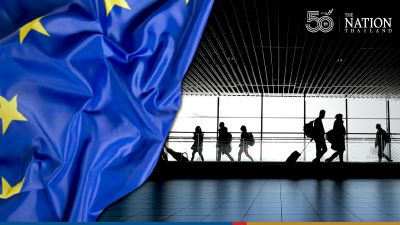
The European Union has removed Thailand from its safe travel list as the Kingdom’s Covid-19 caseload continues to soar.
Travellers from Thailand will now face restrictions on entering EU countries, including possible quarantine.
The EU countries are Austria, Belgium, Bulgaria, Croatia, Cyprus, Czech Republic, Denmark, Estonia, Finland, France, Germany, Greece, Hungary, Ireland, Italy, Latvia, Lithuania, Luxembourg, Malta, Netherlands, Poland, Portugal, Romania, Slovakia, Slovenia, Spain and Sweden.
Thailand was removed from the EU safe travel list along with Rwanda on Thursday.
Ukraine was added to the list, which also features 23 other countries – Albania, Armenia, Australia, Azerbaijan, Bosnia, Brunei, Canada, Israel, Japan, Jordan, Kosovo, Lebanon, Montenegro, New Zealand, Qatar, Moldova, North Macedonia, Saudi Arabia, Serbia, Singapore, South Korea, Taiwan, Ukraine and the United States.
China’s Hong Kong and Macau special administrative regions are also on the safe list.
However, individual EU countries can still demand a negative Covid-19 test or quarantine for people arriving from countries on the safe list.
As of press time on Friday, Thailand was still on the safe list posted at the EU’s www.schengenvisainfo.com website. However, the list is regularly updated to reflect the changing Covid-19 situation around the world.
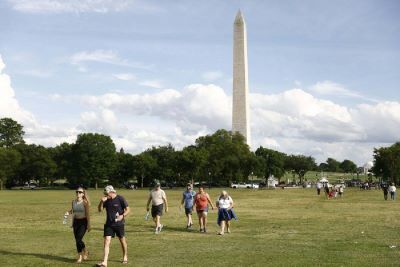
COVID-19 cases surge in over half of U.S. states, territories.
A total of 31,815 new cases were reported across the United States on Tuesday, highest single-day increase since mid May, latest CDC data show. The 7-day average of daily new cases is 24,141, up 65.9 percent from the week before.
The numbers of COVID-19 cases are surging in more than half of U.S. states and territories, with 7-day average of daily new cases up over 65 percent from the week before, according to the U.S. Centers for Disease Control and Prevention (CDC). A total of 31,815 new cases were reported across the United States on Tuesday, highest single-day increase since mid May, latest CDC data show. The 7-day average of daily new cases is 24,141, up 65.9 percent from the week before. Cases related to the highly transmissible Delta and other variants are rising in the United States. The CDC said it is working with its partners to analyze COVID-19 testing specimens to better understand different variants. Delta, which was first found in India and is now in over 100 countries, represented over 50 percent of new infections in the United States over the two weeks ending on July 3, according to the CDC. Delta is now the dominant strain in the United States, drawing concerns from experts that the variant will cause a surge in new cases this fall. The pace of vaccinations has dropped in the country sharply in the past few months. About 48.2 percent of the U.S. population is fully vaccinated against COVID-19, and 55.7 percent of the population has received at least one shot as of Wednesday, CDC data show.
Inequality in access to the vaccine and a racial gap have impacted the success of the nation’s vaccination campaign. Federal figures show that counties with higher percentages of black residents have lower vaccination rates in the country. Non-Hispanic Black and Hispanic persons experience higher COVID-19-associated morbidity and mortality, yet COVID-19 vaccination coverage is lower in these groups, according to a CDC study released on Thursday. Coverage and efforts to improve equity in vaccination coverage are critical, especially among populations disproportionately affected by COVID-19, said the CDC. Experts have said COVID-19 vaccines are key to managing spread and prevent variants from mutating into even more dangerous forms. COVID-19 cases surge in over half of U.S. states, territories.
Covid-19 surge in Asean adds record over-93,000 new patients
Southeast Asia reported a record 93,143 new cases on Thursday, as the situation continued to worsen in Indonesia and Myanmar.
The number of new cases were higher than Wednesday’s 90,330, while deaths hit a single-day high of 1,549, up from the previous day’s 1,519.
The number of Covid-19 cases in the region crossed 5.85 million, while total Covid-19-related deaths are at 111,772.
Indonesia reported 56,757 cases, the highest on a single day in the country since the pandemic began, with 982 deaths. Cumulative cases in the country rose to 2,726,803 patients and total deaths to 70,192. The country’s infection rate is now 10 times higher than that at the beginning of June despite many disease-control measures having been imposed. Public health experts estimated that daily infections could reach 100,000, as new cases in Java and Bali islands continued to increase. However the government is not expecting the number to exceed 60,000 patients per day.
Myanmar reported 4,188 new cases on Wednesday, bringing cumulative cases in the country to 212,545, and total deaths to 4,346.
Yangon is facing a severe shortage of oxygen with hundreds of people lining up at oxygen plants at dawn as soon as the night curfew ends to buy or refill oxygen canisters for family members who have contracted Covid-19 and have to stay at home. Despite the government ordering an increase in manufacturing capacity and lifting tax and other regulations for manufacturers, the oxygen situation in the country has not improved.
How vaccine chaos left covid-zero haven Australia locked down and exposed
Just a few months ago, Australias virtually Covid-free status made it the envy of the world. Then the delta variant flipped the script.
After about half a year of relatively normal daily life, Australia’s biggest city is now in the third week of a strict lockdown that on Wednesday was extended until at least July 30. Sydney’s normally bustling central business district is all but deserted, schools are closed and households are forbidden from mixing for fear of further spread among the 6 million population.
Even as the U.S. and U.K. reopen, Australia seems to be stuck in place. And it’s all for a daily caseload a third the size of New York’s and less than 3% of what London is currently encountering. About 900 cases have been recorded in Sydney since an un-vaccinated chauffeur was infected while transporting airline crew last month. New South Wales state recorded 65 new infections on Thursday, with a higher number expected on Friday.
Arguably the most devoted adherent of the “Covid Zero” strategy followed by a few Asia-Pacific economies, Australia has limited the pandemic’s health impacts with strict quarantines, snap lockdowns and a closed-border policy that even bans citizens from leaving.
But a slow vaccine rollout has left the country exposed to outbreaks as newer, more virulent strains slip through border curbs.
A Covid-19 public health order sign for social distancing on Bondi Beach in Sydney on July 4, 2021. MUST CREDIT: Bloomberg photo by Brendon Thorne.
Like other Covid Zero economies from Singapore to Taiwan, Australia is finding its elimination strategy increasingly difficult to maintain. And the government’s early successes against Covid meant it was slower than other nations in securing and rolling out what looks to be the only real, long-term solution to the pandemic: vaccinations.
Back in March, Prime Minister Scott Morrison said of the vaccine rollout: “It’s not a race.” Now he’s increasingly being criticized by health experts and political rivals for failing to quickly secure enough vaccines from a wide range of drug-makers as the country’s rollout lags behind those of other major economies.
“The government drank their own Kool-Aid and thought that they had the answers, when other comparable countries spread the risks by backing many options,” said Bill Bowtell, an adjunct professor in infection and immunity at the University of New South Wales.
“Morrison boasted about Australia’s Covid-zero status, but did nothing effective or in time about vaccination or quarantine before delta hit,” he added. “Nature creates viruses; bad politics prolong pandemics.”
Australia has administered enough doses for 18% of its population, according to the Bloomberg Vaccine Tracker, compared with 52% in the U.S. and 61% in the U.K. The AstraZeneca inoculation has comprised the bulk of the nation’s rollout so far — it is one of two options available to Australians — but mixed messaging over giving the jab to under-40s has caused some vaccine hesitancy, a problem faced by other Covid Zero economies too.
Morrison’s critics also point to failures in the quarantine system, which requires returning residents to isolate in a hotel room for two weeks after re-entering the country. About 20 community cases this year can be traced back to hotel quarantine breaches, according to one measure — a significant rise in the number of “leaks” compared to last year.
Sydney’s lockdown is likely to drag on for weeks and could trigger an economic contraction for the country in the short term, the Commonwealth Bank of Australia said Wednesday. Australians outside of Sydney are nervous they will be next: Last year the city of Melbourne spent three months in one of the world’s longest and harshest lockdowns, which successfully stamped out infections but at significant economic cost.
The state of Victoria, which includes Melbourne, confirmed 10 new locally acquired cases on Thursday. The escalation of the outbreak has led to additional restrictions including stricter mask rules, while Western Australia state has reintroduced a hard border to keep out residents of the city.
“Australians are constantly on tenterhooks worrying that an outbreak is going to force their lives into these huge disruptions,” said Marion Maddox, an honorary professor of politics at Macquarie University.
“We had this aura of everything being under control,” she said. “But now we’ve earned a reputation of being ill-prepared to vaccinate our people, who are becoming more frustrated.”
The contrast with the U.S. and Europe is stark. Those places are reopening their economies despite thousands of new infections every week. While the risk of fresh outbreaks is inevitably heightened, with about 40% of the EU population fully vaccinated many nations are deciding it is time to “live with the virus,” as one French minister put it.
Australia remains among the top 10 places to be during the pandemic according to Bloomberg’s latest Covid Resilience Ranking, but has fallen four places due to its inability to loosen border restrictions.
The prime minister has defended his government’s vaccine strategy, saying an accelerated rollout puts it on track to provide enough jabs for all Australians who want them by the end of the year.
Still, he’s yet to offer a time-line for reopening, or to indicate how many Australians will need to be vaccinated before that can happen. With elections due by May, the conservative government now narrowly trails the main Labor opposition in one major poll, and Morrison’s personal popularity has slumped.
Governments such as Australia’s need to start better explaining how to live with Covid once a vaccine threshold is reached, said Ben Cowling, head of the University of Hong Kong’s department of epidemiology and biostatistics.
“It’s the kind of infection that will continue to circulate around the world,” Cowling said.
While opening up will “scare some people,” Morrison’s government will need to outline the advantages of “not having to worry about having lockdowns of cities, all of the social-distancing measures and, of course, quarantine.”
Published : July 16, 2021
By : Syndication Washington Post, Bloomberg · Jason Scott
Tokyo virus cases hit six-month high just days before Olympics
New coronavirus virus cases hit a six-month high in Tokyo, a worrying sign just a little more than a week before the city hosts the Olympics.
Cases in the capital tallied 1,308 on Thursday, the most since January, when the capital was experiencing its worst wave of infections, hitting a daily record of 2,520 new cases.
The surge comes as International Olympic Committee President Thomas Bach is visiting Japan ahead of the July 23 opening ceremony, trying to reassure residents the IOC and local government are doing all they can to reduce public health risks. The Olympics will be held without spectators for events in the Tokyo area, a first for the modern Olympic movement that dates back to the late 19th century.
The IOC chief said about 85% of the residents in the Olympic Village will arrive in Japan vaccinated and almost 100% of the IOC members and staff will be as well. He also said the medal presentation ceremony will break from tradition for safety. Instead of placing medals around the neck, the awards will be presented on a tray for the athlete to take.
Tokyo Governor Wants Olympics to Light Way for Pandemic Recovery
While the pace of vaccinations has picked up speed in Japan, the country has the lowest inoculation rate among its peers in the Group of Seven countries. About 19% of the Japanese population is fully vaccinated, well behind other G-7 members such as the U.S. at about 49%, according to data compiled by Johns Hopkins University.
Published : July 16, 2021
By : Syndication Washington Post, Bloomberg · Jon Herskovitz
Covid vaccine makers take aim at bottlenecks to speed production
A new initiative aims to overcome bottlenecks that have hampered the production and global rollout of Covid-19 shots, linking manufacturers with suppliers of vital materials.
The platform, led by the Coalition for Epidemic Preparedness Innovations, will serve as a marketplace that matches up buyers and sellers of filters, lipids, vials, bioreactor bags and other key supplies used to make vaccines. The goal is to accelerate production of tens of millions of doses that can flow to Covax, the global distribution program that has fallen short of its initial targets.
Manufacturers see tackling component shortages as a way to address the inequitable access to vaccines that has left lower-income countries behind in the race to immunize. They have focused on eliminating bottlenecks and trade barriers, arguing against proposals to waive patent protection for shots. With an estimated 11 billion doses needed to escape the pandemic, some producers are struggling to hit full capacity.
“What we’re actually seeing is manufacturers unable to deliver the vaccines that they were promising just because of one small thing like a filter,” Melanie Saville, CEPI’s director of vaccine research and development, said in an interview. “This is a very practical solution for the short term.”
The head of Serum Institute of India, which is licensed to make vaccines from AstraZeneca and Novavax Inc., warned earlier this year that a U.S. law blocking the export of key items including bags and filters would probably cause serious bottlenecks. Novavax’s own production, meanwhile, has been held up by shortages.
“We always knew that scaling up manufacturing would be as big a challenge as actually finding and developing effective vaccines,” said Thomas Cueni, director general of the International Federation of Pharmaceutical Manufacturers & Associations in Geneva. “This is the biggest vaccination program in the history of mankind.”
Facing criticism, the U.S. earlier this year decided to help India by sending items needed for shots as part of an aid package. The Biden administration also started sharing vaccines abroad after the country took the initial hundreds of millions of doses made on its soil. Wealthy nations have obtained most of the limited supplies of vaccines produced so far.
Vaccine supply chains can involve more than 100 components. The new platform will focus on several areas, including lipids. Messenger RNA, the genetic material at the heart of the Pfizer and Moderna shots, needs a protective shell composed of four different types of the fatty material — collectively called a lipid nanoparticle — so that it can enter human cells.
The new marketplace will allow manufacturers and suppliers to confidentially lodge requests or offers to Oslo-based CEPI. The program gives suppliers a way to allocate unused materials and mobilize idle stock from vaccine programs that have failed or plan to scale down. It also could tap surplus supplies from manufacturers not involved with vaccines.
“It’s not the only thing that needs to happen,” CEPI’s Saville said. “Our objective is to get those doses of vaccines out in a timely manner, and that’s why we’re looking at multiple approaches.”
Published : July 16, 2021
By : Syndication Washington Post, Bloomberg · James Paton
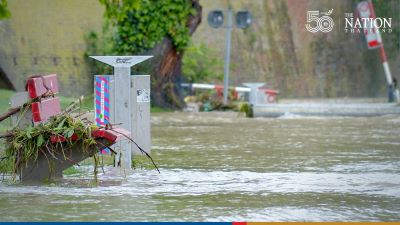
Flooding rages across Germany and Belgium, killing at least 63 amid torrential rains
BERLIN – Devastating floods swept across a swath of western Europe on Thursday, engulfing whole villages in raging muddy brown waters, overturning cars and killing at least 63 people after a summer deluge at levels not seen in some areas for a century.
At least 58 people died in Germany, by far the worst-hit country, where whole villages were cut off from rescuers and helicopters ferried were deployed to pluck the stranded off rooftops. Some houses were simply washed away as a tributary of the Rhine burst its banks.
As night fell, there were fears the death toll could still climb, with dozens still unaccounted for.
Thousands bedding down for the night in makeshift shelters at gyms or with relatives after being evacuated from their homes over concern that, with more rainfall threatening, flooding could spread and dams could collapse.
At least five people were killed in Belgium, prompting the prime minister to appeal for international aid. Severe flooding also impacted the Netherlands, Luxembourg and Switzerland, and warnings were issued in more than a dozen regions of France.
Speaking from Washington, where she is on an official visit to meet with President Biden, German Chancellor Angela Merkel said that words such as “heavy rain” and “flood” were insufficient to describe the level of tragedy.
“In these hours, peaceful places are experiencing a catastrophe,” she said, describing her shock at seeing reports of people stranded on rooftops in extreme need.
“I mourn those who lost their lives in this disaster,” she said. “We don’t know the number yet. But there’ll be many.”
Some people drowned in the cellars of their houses, she said, and firefighters died while trying to rescue those stranded.
The extraordinary deluge of rain – at levels not seen in the area in the summer for at least 100 years – triggered calls to speed up action against climate change and boost flood protection amid erratic weather events. It came just a day after the European Union announced ambitious plans to reduce net greenhouse gas emissions by at least 55% below 1990 levels within less than a decade.
In the worst-hit parts of Germany, the rainfall in just 24 hours was double the normal long-term average for the entire month of July, according to the Deutscher Wetterdienst, Germany’s meteorological agency.
At least 28 people died in the state of Rhineland-Palatinate, authorities said. A region known for its wine growing, villages along the Ahr valley were swallowed by flood waters. As many as 18 people died in the district of Ahrweiler, police said. Earlier in the day, local police said that as many as 50 residents were trapped on the roofs of their homes awaiting rescue.
Videos showed city streets turned into swirling rivers and others engulfed by landslides. Cars were scooped up and tossed aside in crumpled wrecks. From the air, some villages appeared to have almost completely disappeared, only the tops of houses poking out from the floodwaters.
“Entire villages are flooded,” Malu Dreyer, the premier of Rhineland-Palatinate, one of the German states most devastated by flooding, said in a speech to the local parliament. “Houses float away just like that.”
Helicopters have been deployed for rescues, she added.
Police created a hotline for residents to report missing people, as rescue boats struggled to reach the area due to strong currents. “The consequences are devastating, and our first priority is still to save lives,” Jürgen Pföhler, the county commissioner of the Ahrweiler district said at a news conference. “All our efforts are concentrated on that.”
The area was declared a disaster zone.
In neighboring North Rhine-Westfalia state, the death toll had climbed to 30, according to the state’s interior ministry. The army deployed tanks and trucks to the city of Hagen, where three of its bridges were destroyed, to clear roads of rubble and debris.
In the western state’s district of Euskirchen, authorities said at least 15 people were killed. More than 4,500 people were evacuated from a string of villages after experts deemed a nearby dam unstable.
Emergency responders in the city of Solingen rescued about 130 people. “We got people out with aerial ladders, boats, buoys. It was all improvised,” a spokesman for the fire department told German news channel WDR.
Two firefighters sent to assist those trapped by rising waters in the Sauerland region died, according to the German news agency DPA.
The country’s biggest power distribution company, Westnetz, estimated Thursday that around 200,000 homes were without electricity as a result of the widespread flooding.
On Wednesday, the German weather service issued an extreme weather alert – a warning that environmental expert Bernd Mehlig said was “completely unusual in summer.”
The deluge unfolded as a plume of deep moisture, sourced from the Mediterranean, surged into central Europe.
A high-pressure zone over the eastern Atlantic, offshore France and the United Kingdom acted as a pump, steering the moisture plume through France into Belgium, the Netherlands and Germany.
ADVERTISEMENT
That was flanked by an unusually intense zone of low pressure to the east over central Europe, which helped generate the downpours.
The low was sandwiched between another area of high pressure over Eastern Europe, creating a weather system traffic jam that has allowed heavy rain to persist.
Computer models showed moisture levels in the atmosphere were comparable to those seen along the U.S. Gulf Coast during hurricane landfalls.
The exceptional intensity of the rainfall is consistent with what scientists anticipate with rising temperatures caused by human-induced climate change. Fred Hattermann, a hydrologist at the Potsdam Institute for Climate Impact Research, said such flooding incidents are happening “more often and more intensely” due to climate change.
The duration and frequency of such floods is likely to increase, he said. “What I fear most is that we will see things we never imagined.”
ADVERTISEMENT
A warmer atmosphere can hold more moisture, which then comes down as heavy rain, said Hattermann.
Higher temperatures also speed up evaporation, placing more water in the atmosphere for the kind of downpours that have occurred. A recent study in the Journal of Climate anticipates “large magnitude increases” in extreme precipitation in much of Europe in the coming decades.
While some commentators said it was a taste of the “new normal,” climate activist Greta Thunberg said there would be worse to come.
“This is not ‘the new normal,'” she wrote on Twitter. “We’re at the very beginning of a climate and ecological emergency, and extreme weather events will only become more and more frequent.”
Hannah Cloke, a professor of hydrology at the University of Reading in Britain, said warning signs abounded. “Forecasters could see this heavy rain coming and issued alerts early in the week, and yet the warnings were not taken seriously enough and preparations were inadequate,” she said.
“For so many people to die in floods in Europe in 2021 represents a monumental failure of the system,” she added. “These kind of high-energy, sudden summer torrents of rain are exactly what we expect in our rapidly heating climate. The fact that other parts of the Northern Hemisphere are currently suffering record-breaking heat waves and fires should serve as a reminder of just how much more dangerous our weather could become in an ever-warmer world.”
Steffen Seibert, a spokesman for the German government, said the severe flooding was “terrible.”
“Even though not every event, not every flooding or local incident, is related to climate change, many scientists tell us that the frequency, the intensity and the regularity with which this happens is a consequence of climate change,” he said.
Armin Laschet, the leader of the state of North Rhine-Westfalia who is vying to take over from Merkel in September elections, said more preparations for such extreme weather events are needed.
“We will be faced with such events over and over, and that means we need to speed up climate protection measures, on European, federal and global levels, because climate change isn’t confined to one state,” he said.
Parts of the Netherlands were also flooded, with a red code warning issued for Limburg province. Local media reported that many people were forced to evacuate and as many as 400 homes were without power.
Switzerland also issued travel and weather warnings this week as heavy rainfall and thunderstorms brought flooding to the city of Zurich.
The mayor of Liege in Belgium said those among its 200,000 residents who could leave the city should do so and that those who could not should move to the upper floors in their homes. One person died in the city and four others were killed in the Belgian district of Verviers.
Earlier this week in Britain, flash floods sparked widespread travel chaos, with parts of London experiencing a month’s worth of rain in just one day. Locals were evacuated and cars became trapped as floodwaters continued to rise. Late last month, a tornado swept through the Czech Republic, killing at least five people – an extremely unusual weather event for Central Europe.
Floodwaters in some areas began to recede later Thursday, but it was too early to assess the full toll of the flooding, with some areas still cut off from rescuers.
Yvonne Glasner from Dernau, in the Ahr valley, told Germany’s Die Welt newspaper that her family was forced to abandon their newly constructed home.
“We could never have imagined that the water would rise so quickly and so extremely,” she said. “Now we are worried that we won’t be able to live in our new house at all.”
She said that she had not been able to contact her in-laws for hours but had seen their car float past. She said she hoped they were awaiting rescue on a rooftop.
Published : July 16, 2021
By : The Washington Post · Loveday Morris, Jennifer Hassan, Luisa Beck
Asia Album: Cruise ship returns to Singapore after COVID-19 case found on board
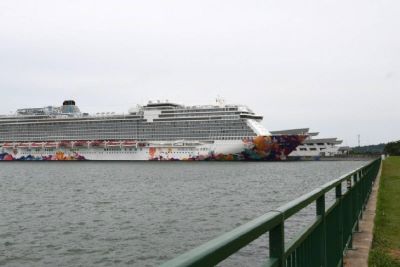
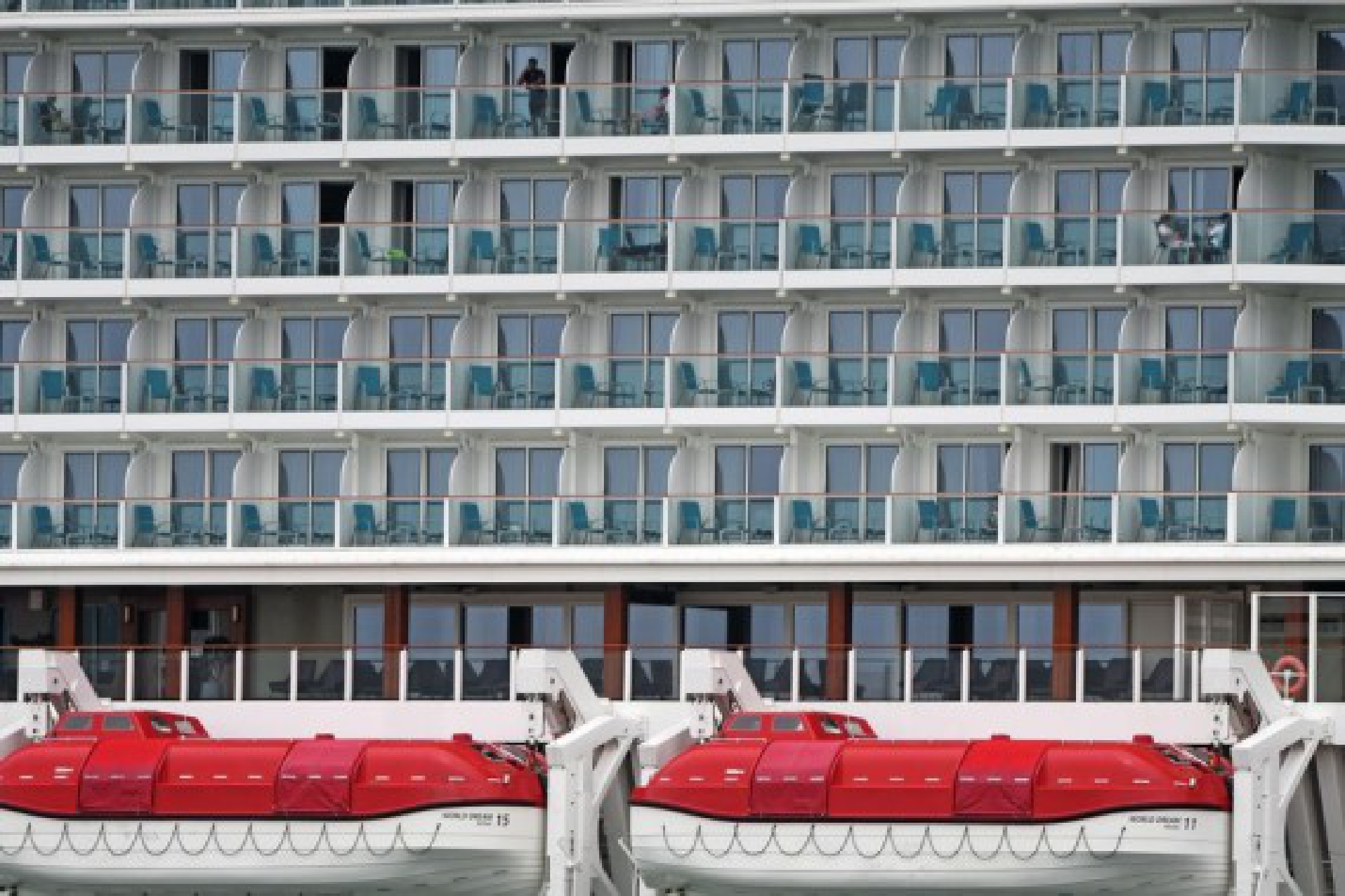
A cruise ship returned to Singapore after a COVID-19 case was found on board, the Straits Times reported on Wednesday.
The newspaper quoted Annie Chang, Singapore Tourism Board’s director of the cruise, as saying that a 40-year-old passenger was identified as the close contact of a previously confirmed case, and was immediately isolated as part of onboard health protocols.
The passenger underwent polymerase chain reaction tests onboard and the result was positive, and has been taken to a hospital for further confirmatory testing.
Three traveling companions of the passenger were identified and isolated. They have tested negative for COVID-19 and further contact tracing is ongoing.
The ship, called World Dream, joined Genting Hong Kong’s Dream Cruises fleet in November 2017. It departed on Sunday for a four-day “cruise to nowhere.”
The ship returned to Singapore and arrived at the Marina Bay Cruise Centre at around 6:30 a.m. local time on Wednesday, a few hours ahead of schedule.
Passengers are seen aboard the cruise ship World Dream docked at the Marina Bay Cruise Centre in Singapore, July 14, 2021.
The passenger was tested negative during the mandatory pre-departure antigen rapid test on the day of departure, and was reported to have received two doses of the COVID-19 vaccine.
Passengers are seen aboard the cruise ship World Dream docked at the Marina Bay Cruise Centre in Singapore, July 14, 2021.
Passengers are seen aboard the cruise ship World Dream docked at the Marina Bay Cruise Centre in Singapore, July 14, 2021.
France holds Bastille Day celebration under coronavirus shadow
Because of the deterioration of the health situation, only 10,000 people were allowed to follow the celebration in the stands instead of 25,000. Wearing masks is the rule for all.
In the shadow of the pandemic, Macron maintained the Bastille Day rituals, including the traditional fly-over by the French air force and traditional troops parade.
France on Wednesday held its annual Bastille Day celebrations with a traditional military parade down the famous avenue of the Champs Elysees in Paris amid restrictions on public gathering due to COVID-19.
Because of the deterioration of the health situation, only 10,000 people were allowed to follow the celebration in the stands instead of 25,000. Wearing masks is the rule for all, Paris police prefecture said.
Any spectator who wants to attend the ceremony should present the health pass. The certificate provides proof that a person has been vaccinated against the coronavirus, holds a recent negative PCR test, or has recently recovered from the respiratory disease, it added.
French air force aircrafts are seen during the annual Bastille Day military parade in Paris, France, July 14, 2021.
Similar restrictions are in place for those gathering to attend fireworks shows at the Eiffel tower and in many French cities later in the evening.
This year’s celebration coincides with a surge in the number of COVID-19 infections, fuelled by the highly transmissible Delta variant which may trigger a new wave of the pandemic.
Annual Bastille Day military parade is seen at the Place de la Concorde in Paris, France, July 14, 2021.
On Tuesday, 6,950 people tested positive for the coronavirus, compared to 4,081 registered the same day last week. The cumulative number of cases now stands at 5.82 million, according to the Health Ministry’s latest count.
“Faced with COVID-19, our vigilance must remain high,” President Emmanuel Macron’s office said.
In the shadow of the pandemic, Macron maintained the Bastille Day rituals, including the traditional fly-over by the French air force and traditional troops parade.
About 5,000 men and women from France’s army, navy and air force took part in the military parade, along with 221 armored vehicles, 200 horses and 97 jets and helicopters.
Bastille Day is celebrated as France’s national day on July 14. On this day of the year 1789, French citizens stormed the Bastille prison in Paris, sparking the French Revolution.
French Air Force Patrouille de France is seen during the annual Bastille Day military parade in Paris, France, July 14, 2021.
Fresh record as Asean sees over 90,000 new Covid-19 cases
The number of Covid-19 cases in Southeast Asia crossed 5.76 million, with 90,330 new cases reported on Wednesday – higher than Tuesday’s tally of 78,547 – while there were 1,519 more deaths, increasing from Tuesday’s 1,266 and taking total Covid-19 deaths in Asean to 110,223.
Indonesia reported 54,517 more cases, another new high, with 991 deaths, bringing cumulative cases in that country to 2,670,046 patients and a total of 69,210 deaths so far.
The government is concerned that the Delta variant of the virus is spreading to other regions beside Java Island and will result in a worsening shortage of medical professionals, oxygen and drugs.
Vietnam meanwhile reported 2,934 new cases on Wednesday, the country’s highest daily infections since the outbreak started, bringing cumulative cases to 37,434 patients and a total of 135 deaths so far.
The country’s Public Health Ministry has allowed the use of different vaccines for two doses: those who have received AstraZeneca as their first shot can have Pfizer for their second jab at an interval of 8-12 weeks. The country plans to distribute a fresh lot of 745,000 doses of Pfizer to areas with high infections.

 COVID-19 cases surge in over half of U.S. states, territories.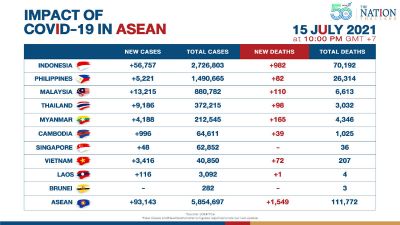

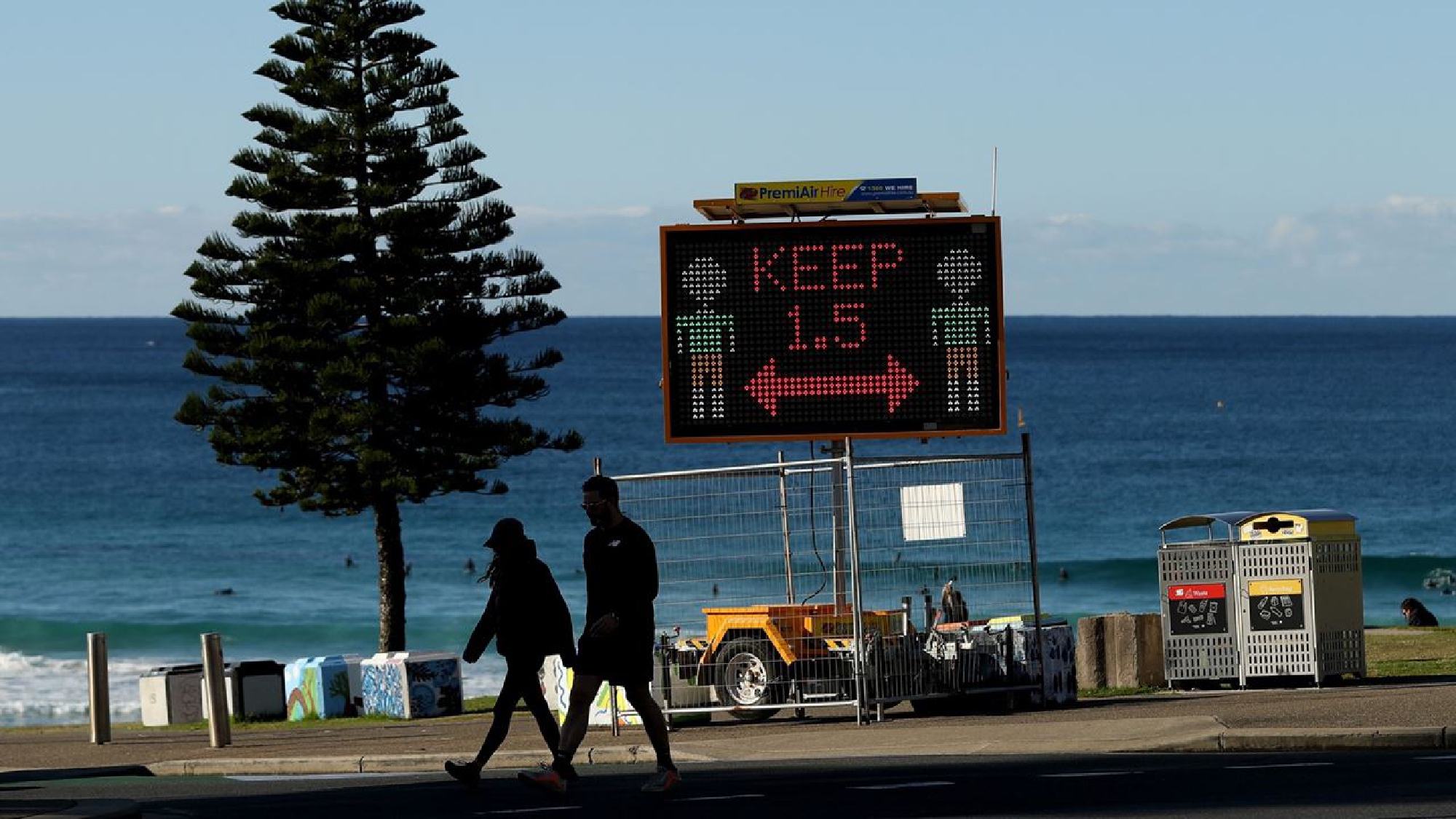 A Covid-19 public health order sign for social distancing on Bondi Beach in Sydney on July 4, 2021. MUST CREDIT: Bloomberg photo by Brendon Thorne.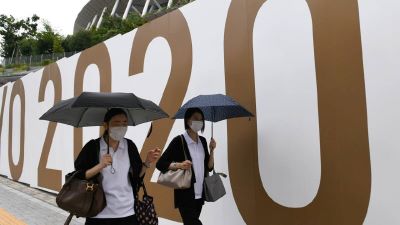

 Passengers are seen aboard the cruise ship World Dream docked at the Marina Bay Cruise Centre in Singapore, July 14, 2021.
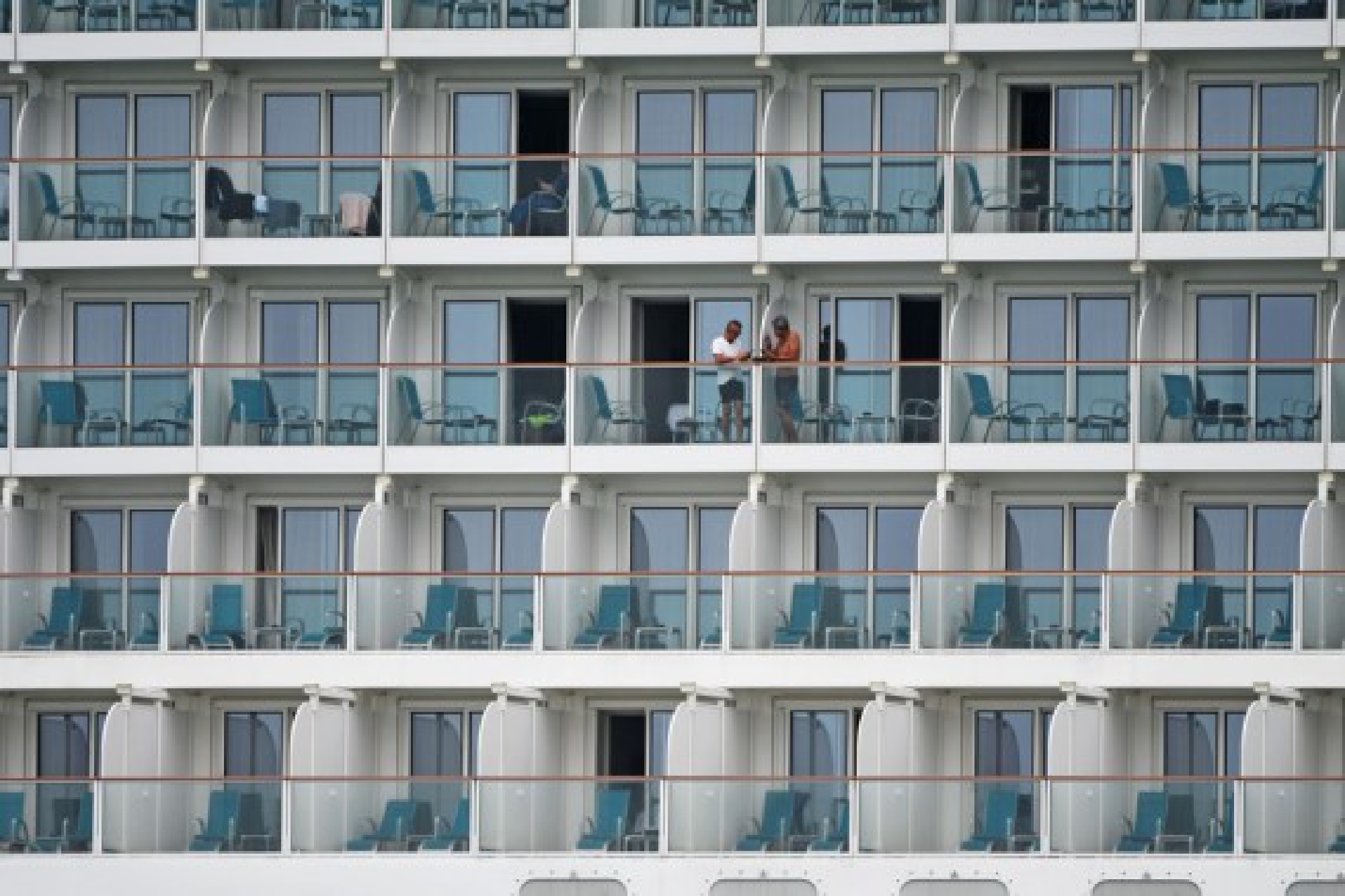 Passengers are seen aboard the cruise ship World Dream docked at the Marina Bay Cruise Centre in Singapore, July 14, 2021.
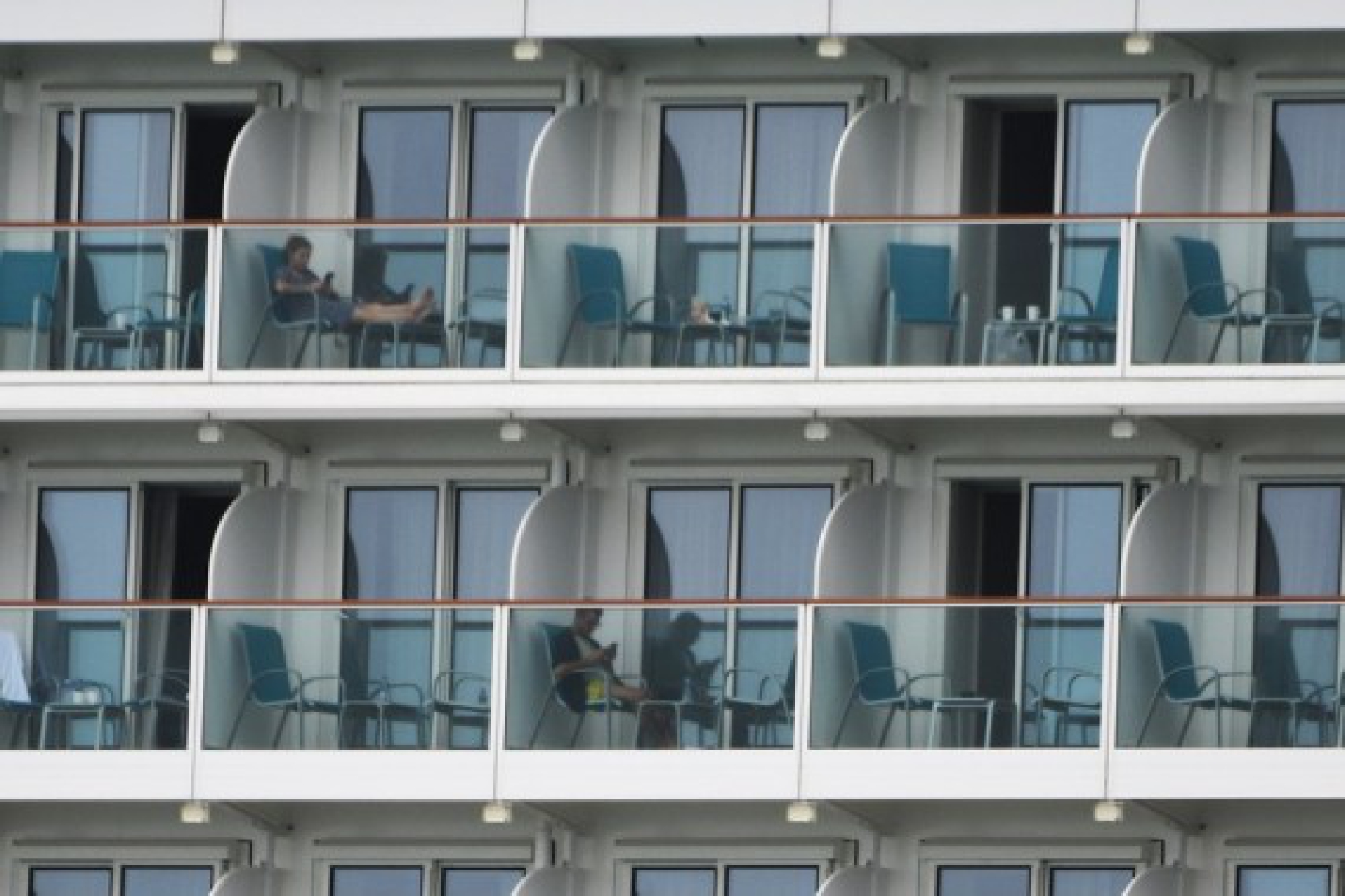 Passengers are seen aboard the cruise ship World Dream docked at the Marina Bay Cruise Centre in Singapore, July 14, 2021.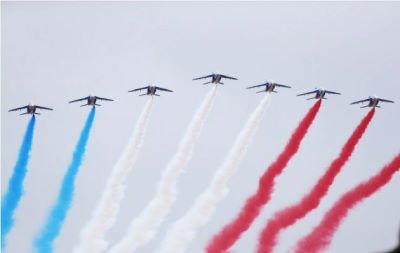
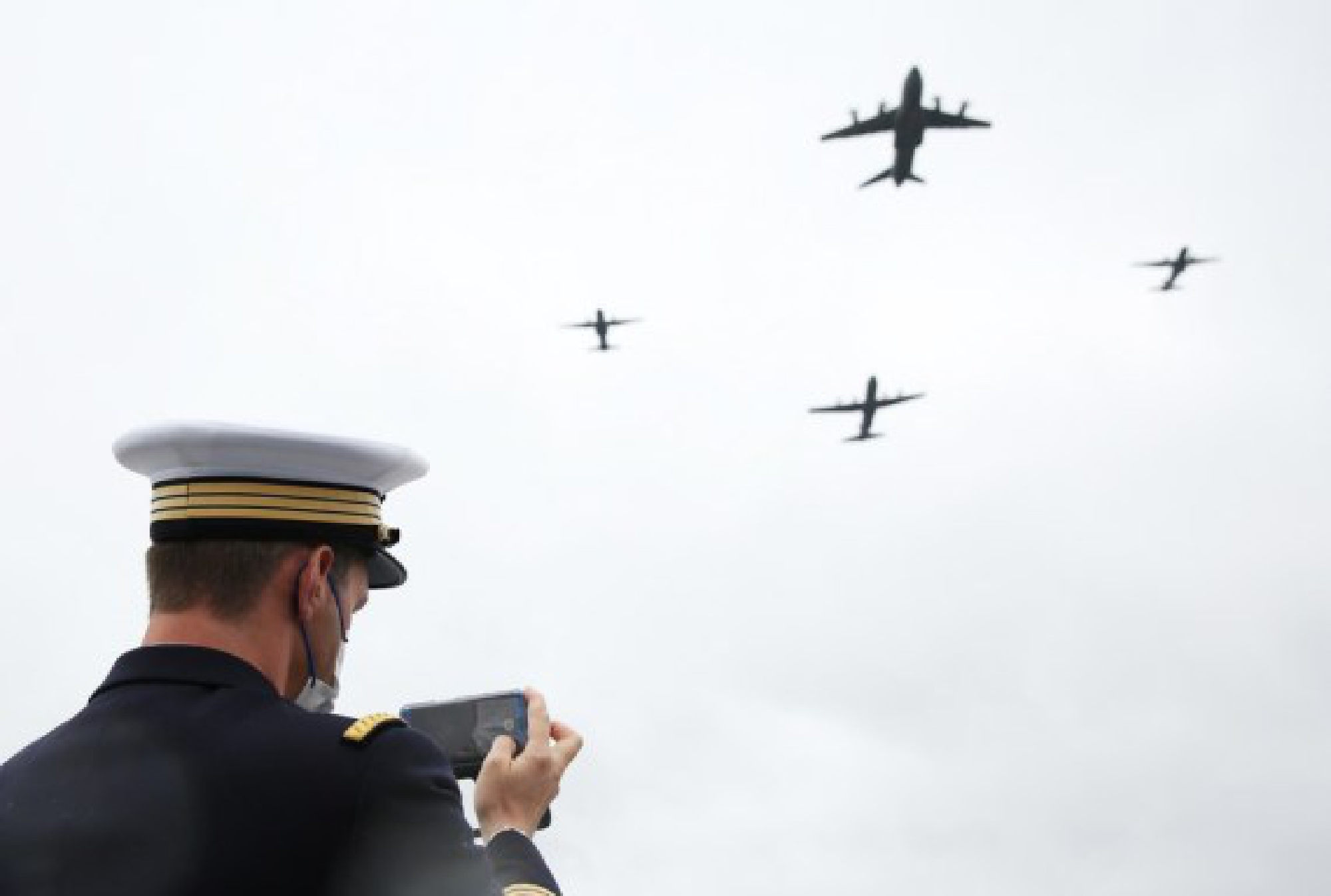 French air force aircrafts are seen during the annual Bastille Day military parade in Paris, France, July 14, 2021.
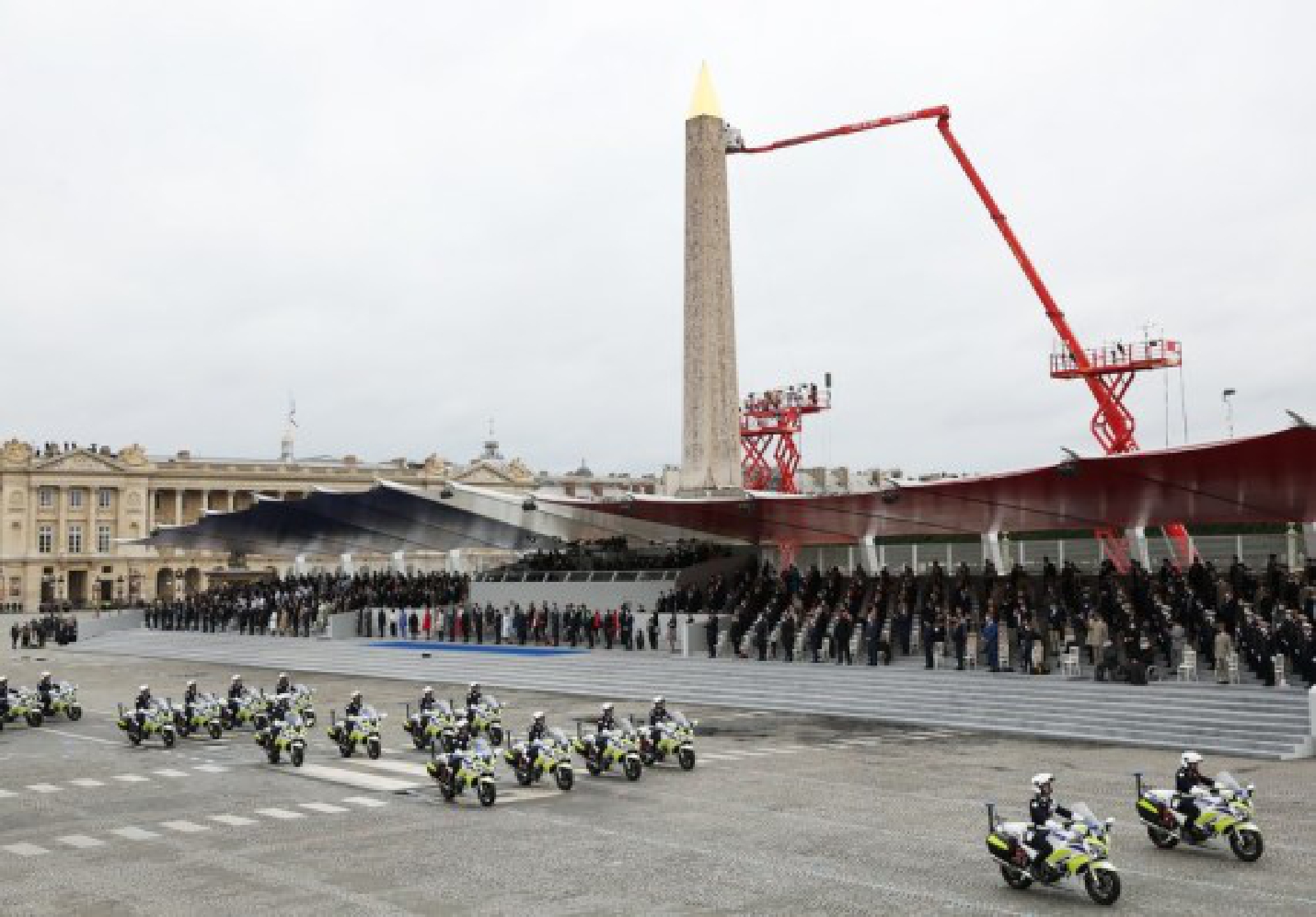 Annual Bastille Day military parade is seen at the Place de la Concorde in Paris, France, July 14, 2021.
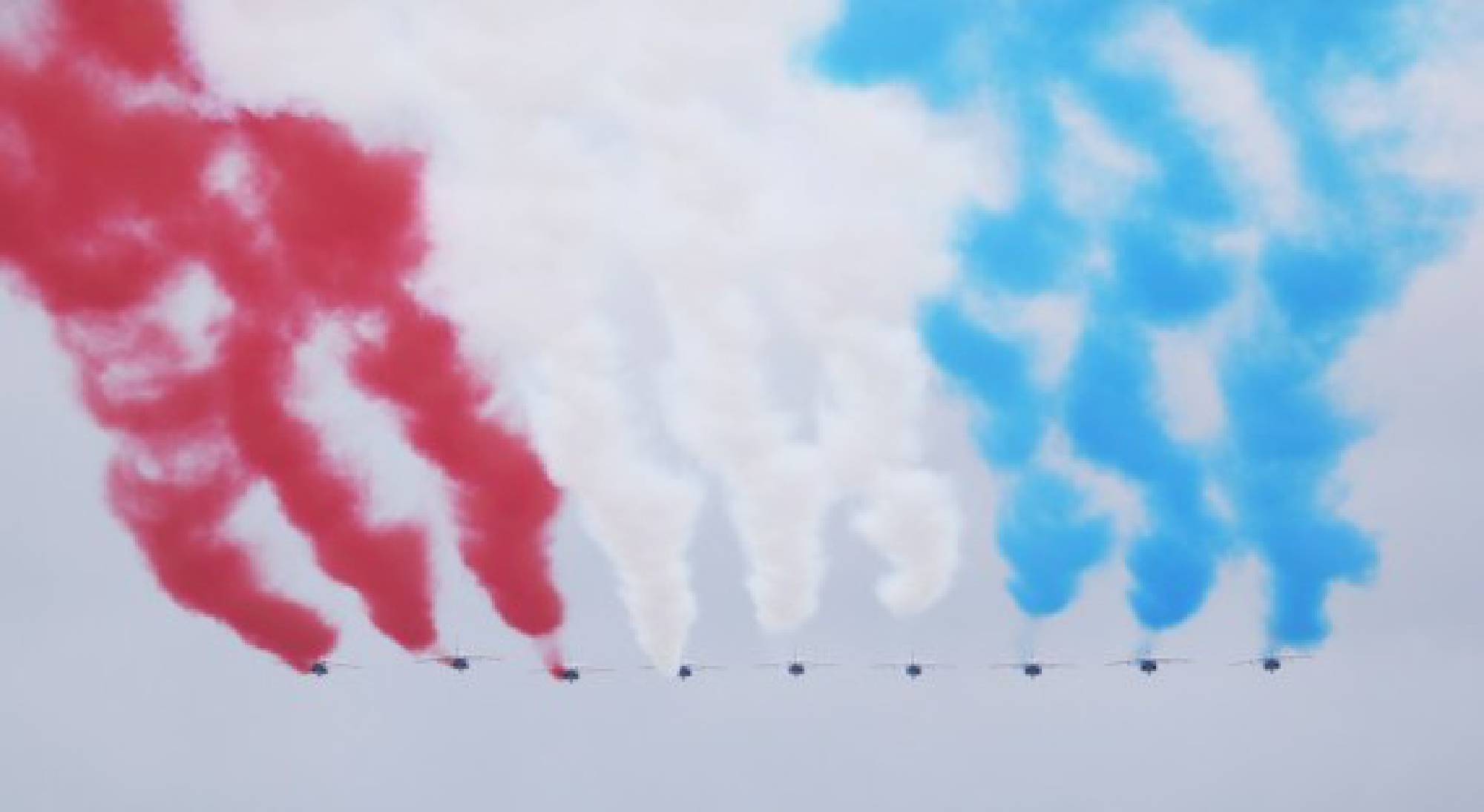 French Air Force Patrouille de France is seen during the annual Bastille Day military parade in Paris, France, July 14, 2021.

