Steady drop in new Covid-19 cases and deaths in Asean
New Covid-19 cases and related deaths in Southeast Asia fell for the second successive day, collated data shows.
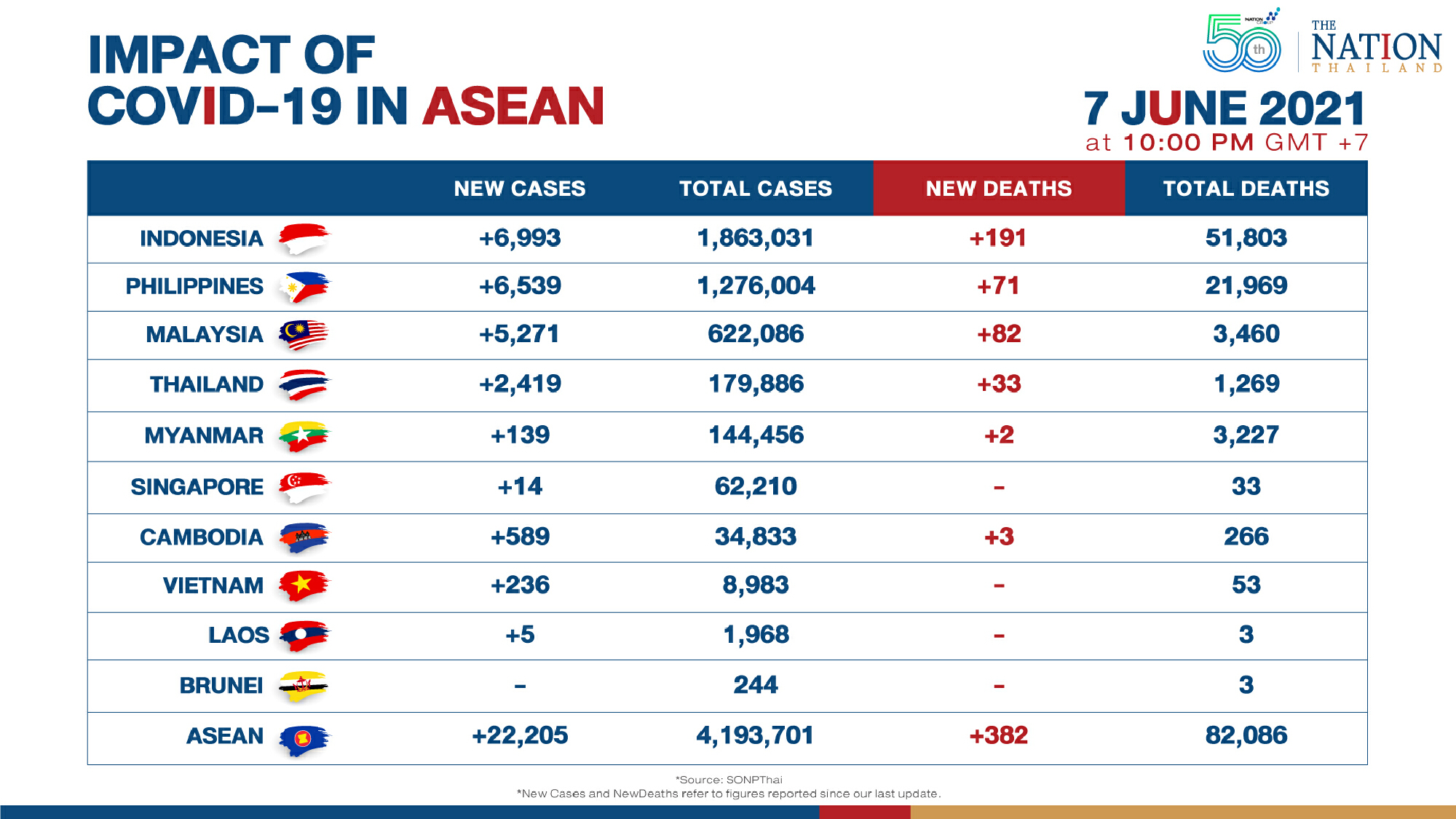
Asean reported 22,205 new cases on Monday, lower than Sunday’s 22,959, while 382 people died, down from Sunday’s 452.
The total number of Covid-19 cases crossed 4.19 million across the region and the death toll rose to 82,086.
Indonesia reported 6,993 new cases and 191 deaths on Monday, bringing cumulative cases in the country to 1,863,031 and the death toll to 51,803.
Indonesia’s Ministry of Public Health expressed concern that tardiness in testing people residing in remote areas could hamper the government’s efforts to contain the outbreak.
Cambodia reported 589 new cases and three deaths on Monday, bringing cumulative cases in the country to 34,833 and total deaths to 266.
The governor of Phnom Penh said that the city would not reinstate curfew measures because people are now more aware of the situation and are following disease control measures.
Bezos announces hell be on first crewed spaceflight of Blue Origin rocket
A couple of weeks after Jeff Bezos officially steps down as CEO of Amazon, hell leap into something more mythic: riding to the edge of space aboard one of his own rockets, alongside his brother, in a flight that would fulfill a lifelong dream.
The plan is that Bezos, his brother, Mark, and the winner of an online auction for Blue Origin’s nonprofit foundation will be on the New Shepard on July 20 when it lifts off for a suborbital flight, the first time the spacecraft will carry passengers. The date is the anniversary of Neil Armstrong and Buzz Aldrin’s Apollo 11 moon landing in 1969.
The flight will mark a significant milestone for Blue Origin, which lags behind Elon Musk’s SpaceX in the competition for billions of dollars in NASA and Pentagon contracts and which flies a more powerful rocket capable of taking people and supplies into orbit.
It will also mark a moment when the long promised arrival of space tourism seems to be drawing closer and a major transition for Bezos, inevitably raising questions about the risk to him and to Amazon. Space travel remains a dangerous undertaking, though the requirements for future private passengers are nowhere near what the public is accustomed to connecting with space travel.
“Ever since I was five years old, I’ve dreamed of traveling to space,” Bezos said in an Instagram post Monday. “On July 20, I will take that journey with my brother. The greatest adventure, with my best friend. #Gradatim Ferociter.”
Graditum ferociter is Blue Origin’s motto, a Latin phrase that Bezos translates to mean “step by step, ferociously.”
Unlike NASA astronauts, Bezos and his fellow passengers won’t undergo any of the rigorous training that for so long has characterized space travel. Blue Origin warns that passengers must climb seven flights of stairs to reach the capsule and that they must also be able to sit for 90 minutes without access to a bathroom. But with all functions of the flight commanded by computers, the passengers won’t be called on to take the controls.
The flight would make Bezos the first of the billionaire “space barons” to go to space. Neither Musk nor Virgin Galactic’s Richard Branson have ridden on their companies’ rockets. (Bezos owns The Washington Post.)
Bezos has long been fascinated with space. An avid science fiction reader and big “Star Trek” fan as a child, he has called watching the Apollo 11 moon landing a “seminal” moment for him, even though he was just five years old at the time. He even chose “Goddard” as the middle name for one of his sons after Robert Goddard, the founder of modern rocketry.
Blue Origin, based outside Seattle, has successfully flown its New Shepard rocket and spacecraft to space 15 times, without passengers. Last month, Branson’s Virgin Galactic completed its third human spaceflight, and Branson, who will turn 71 on July 18, has said he hopes to fly later this year. In an interview with The Washington Post after the flight, he said he was actively preparing for the mission.
“One good thing about covid is it enabled me to get as fit as I’ve felt since I was in my 20s,” he said. “It’s great to be able to really work on getting your body fit for spaceflight, and I’m going to enjoy every single minute of it.”
On Twitter Monday, Branson congratulated Bezos and said the two companies “are opening up access to Space – how extraordinary!”
Bezos founded Blue Origin in 2000 and in recent years has said it is “the most important work I’m doing.” The goal of the company is to build the infrastructure to give humanity access to space more routinely and reliably and to allow for “millions of people living and working in space.”
He has said that his “singular focus is people in space. I want people in space.”
The New Shepard is named for Alan Shepard, who became the first American to go to space in 1961. Like that first suborbital flight, New Shepard shoots straight up, flying past 60 miles to reach the edge of space before falling back to Earth. The flight takes about 10 minutes in all, with a few minutes of weightlessness in space.
As many as six people can fit inside the New Shepard crew cabin, each with their own seat and window – the largest window ever flown to space. The spacecraft, which launches from a site outside Van Horn, Texas, is outfitted with handrails to assist during the few minutes of weightless. Once in space, the spacecraft will use its thrusters to rotate, so passengers get 360-degree views that the company says “will change how you see the world.”
Blue Origin has not yet said how much it would charge for individual tickets. Virgin Galactic had charged as much as $250,000 before closing sales. When Virgin Galactic restarts sales later this year, some analysts have predicted the price will be closer to $500,000.
While some have derided space tourism flights for the rich, Bezos has defended them, saying they are a good way for the company to practice flying and that a lot of new technologies have grown out of entertainment – such as how video games helped boost computing power.
“Tourism often leads to new technologies,” he said during a forum at The Post in 2016. “And then those new technologies often circle back around and get used in very important, utilitarian ways.”
In rules for the online auction now underway to chose the third member of the crew, which is set to culminate Saturday, Blue Origin said passengers must be able to endure three times the force of gravity for two minutes during the ascent, and five-and-a-half times the force of gravity for a few seconds during descent.
Participants must also be between 5 feet and 6-feet-4-inches tall and weigh between 110 and 223 pounds.
To earn a license from the Federal Aviation Administration, Blue Origin must show how it protects people and property on the ground. But the safety of the passengers is governed by an “informed consent” standard, similar to skydiving and bungee jumping: Passengers simply need to acknowledge the considerable risks of the venture before blasting off.
Musk, who has often been critical of Blue Origin’s progress, did not comment immediately on Bezos’s plans. SpaceX recently beat out Blue Origin for a major NASA contract to develop a spacecraft capable of landing astronauts on the moon. Blue Origin, which had teamed up with Lockheed Martin, Northrop Grumman and Draper, is protesting the award through the Government Accountability Office.
In a statement to The Post about that contract, Musk said Blue Origin’s bid, which was twice that of SpaceX, was “way too high.”
He added that Bezos “needs to run BO full-time for it to be successful,” Musk wrote. “Frankly, I hope he does.”
The auction for the third seat on the Blue Origin flight is intended to raise money for Club for the Future, the company’s nonprofit, which is geared toward encouraging students to pursue careers in science, technology engineering and math.
On July 5, Bezos will step down as chief executive of Amazon (he will stay on as executive chairman). Amazon spokesman Drew Herdener did not respond to a question about whether Bezos had sought permission from Amazon’s board for the flight.
Bezos has used billions in Amazon shares to fund Blue Origin ventures.
“I wasn’t even expecting him to say that he was going to be on the first flight,” Bezos’s brother Mark said in the Instagram video. “What a remarkable opportunity, not only to have this adventure but to do it with my best friend.”
Bezos announces hell be on first crewed spaceflight of Blue Origin rocket
Published : June 08, 2021
By : The Washington Post · Christian Davenport, Taylor Telford
Trains crash in Pakistan, killing at least 32, as rescuers try to free survivors
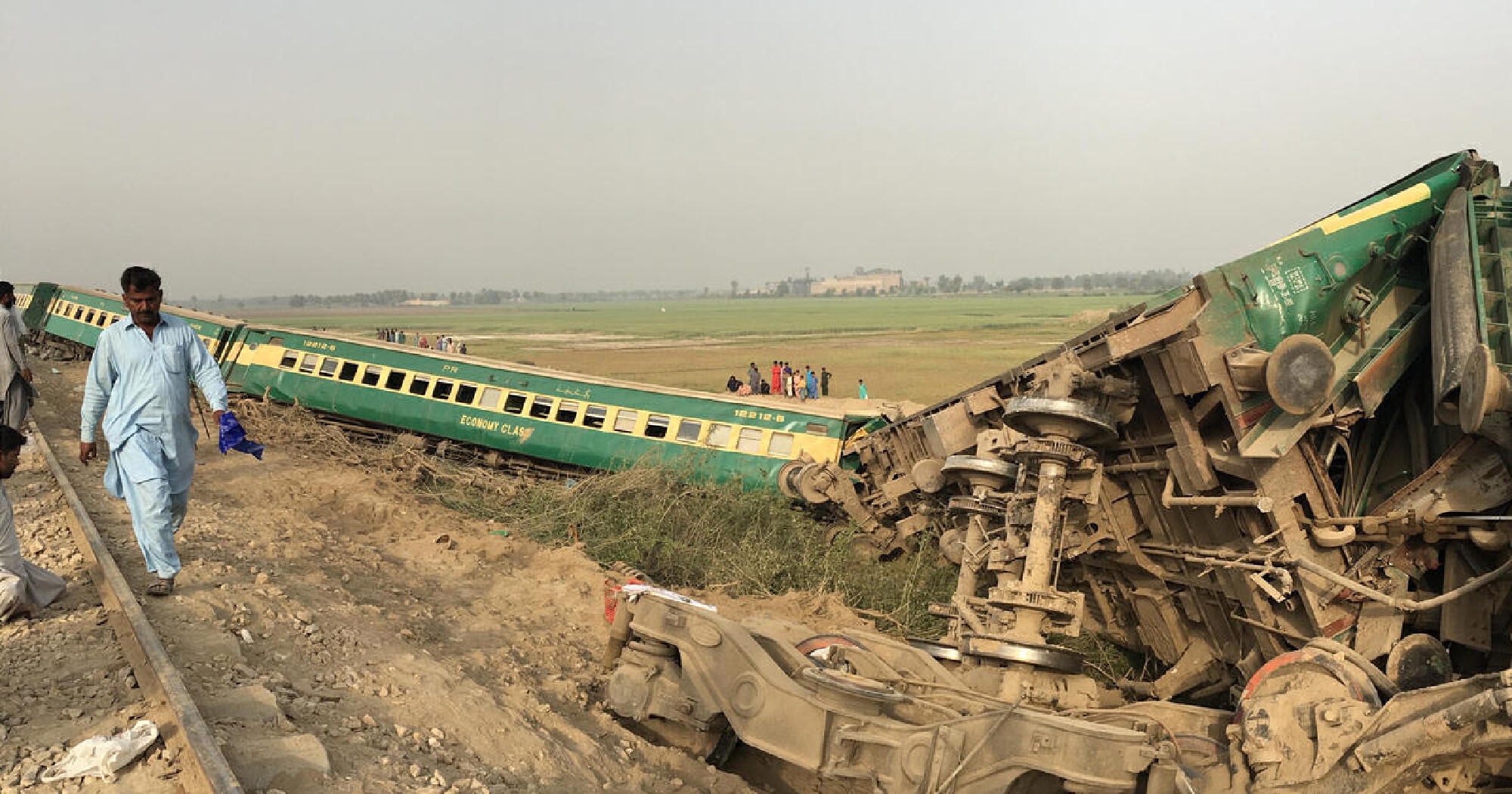
Two trains collided in southern Pakistan on Monday, killing at least 32 passengers and leaving rescuers scrambling to free survivors from the wreckage, authorities said.
The crash occurred before dawn when one express train derailed and was struck by another 65 to 69 seconds later, said a Pakistan railway spokesman, Tariq Asad. “There was no time for the [second] train to avoid the incident.”
Ashraf Ali, 38, and his brother survived the crash. “It was a shock when the train started derailing, we heard a loud bang,” he said. “I heard cries and screaming.”
Ali and his brother sustained minor injures and managed to escape the wreckage, but many passengers are still believed to be trapped. Local rescue teams are at the scene and the Pakistani military has sent troops to help recovery and relief efforts, the armed forces’ media wing said in a statement.
“This is the worst train collision since 2005,” said Asad, the railway spokesman. Deadly train accidents are common in Pakistan, where the country’s extensive railway system has suffered from government neglect for years.
Pakistan’s federal ministry for railways ordered inquiry into accident, demanding a report be completed within 24 hours, according to a tweet.
At least 32 people had died and about 80 were injured in Monday’s crash, the railways ministry said in a statement.
Between 15 and 20 people remained trapped in the wreckage of the derailed train, as authorities sought heavy machinery to aid in the rescue, Ghotki police chief Umar Tufail told the Associated Press.
Images posted to social media after the crash appeared to show one train – the Millat Express – on its side as people tended to wounded passengers lying in furrows of dirt. Officials identified the other train as the Sir Syed Express.
The Millat Express was headed from Karachi to the city of Sargodha when it derailed, fell across the track, and was struck by the Sir Syed Express, which was traveling in the opposite direction, a spokesperson for Pakistan Railways told the Dawn newspaper.
The incident had led to the derailment of more than a dozen train cars and left six to eight “completely destroyed,” Abdullah told Pakistani television station Geo News, according to Dawn.
In a tweet, Prime Minister Imran Khan said he was “shocked by the horrific train accident” and was ordering a “comprehensive investigation.”
Last year, 22 people died when a passenger train crashed into a bus carrying Sikh pilgrims in eastern Pakistan. In 2019, a massive train fire killed at least 73.
The country’s worst rail disaster occurred in 1990, when a packed passenger train plowed into a standing freight train, killing 210 people.
Published : June 08, 2021
By : The Washington Post · Haq Nawaz Khan, Michael E. Miller
India to give free vaccines to citizens over 18 in covid fight
India has fast-tracked vaccine procurement and will provide free shots to citizens above 18 years, Prime Minister Narendra Modi said in an address to the nation on Monday.
The South Asian nation faces the challenge of vaccinating its large adult population as it emerges from a devastating second virus wave, with a critical shortage of inoculations leading some centers to close down as the country struggled to ramp up domestic production and procure doses internationally.
Modi’s speech came against the backdrop of a near breakdown in health infrastructure over the last two months, with major Indian cities running out of oxygen and hospitals flooded with patients, while crematoriums struggled to keep pace with the number of those who died of covid-19. His administration has come under intense criticism over its handling of the second wave and the vaccination rollout and its popularity ratings have fallen from 75% in 2019 to 51% this year, according the Local Circle polling company.
While experts are worried about the slow rollout, state politicians have blamed the federal government for forcing them to compete against each other to procure vaccines, with the country’s top court criticizing Modi’s policy as “arbitrary and irrational.”
The South Asian nation has administrated 232 million doses since the beginning of the world’s biggest vaccination drive that began on Jan. 16, with 3.4% now fully immunized. At this pace, it will take another 22 months to cover 75% of the population, according to Bloomberg Vaccination Tracker.
While the federal government gives free vaccines to those over 45 and front-line workers, state governments and private hospitals have until now been left to inoculate people from 18 to 45 years for a fee.
The government has said over 2 billion doses will be available by December — enough to vaccinate the adult population — but there is no indication the main vaccine manufacturers in India will be able to ramp up production to meet that goal, nor whether India will be able to purchase doses from overseas to make up the shortfall.
Modi last addressed the nation on April 20, when he urged states to avoid lockdowns even as the country was heading toward record daily infections of more than 414,000. Soaring new cases and a spike in daily deaths forced both India’s financial and political capitals to impose restrictions on movement, as citizens took to social media in a desperate search for oxygen and lifesaving medicines.
The wave has been steadily declining since the peak on May 7, and New Delhi and Mumbai have began to ease their lockdowns on Monday as India reported 100,636 new infections and 2,427 deaths.
Published : June 08, 2021
By : Syndication Washington Post, Bloomberg · Bibhudatta Pradhan
Despite pandemic, level of carbon dioxide in the atmosphere hits historic levels
Economies worldwide nearly ground to a halt over the 15 months of the coronavirus pandemic, leading to a startling drop in global greenhouse gas emissions.
But that did little to slow the steady accumulation of carbon dioxide in the atmosphere, which reached the highest levels since accurate measurements began 63 years ago, scientists said Monday.
“Fossil fuel burning is really at the heart of this. If we don’t tackle fossil fuel burning, the problem is not going to go away,” Ralph Keeling, a geochemist at the Scripps Institution of Oceanography, said in an interview, adding that the world ultimately will have to make emissions cuts that are “much larger and sustained” than anything that happened during the pandemic.
Scientists from Scripps and the National Oceanic and Atmospheric Administration said on Monday that levels of atmospheric carbon dioxide peaked in May, reaching a monthly average of nearly 419 parts per million.
That represents an increase from the May 2020 mean of 417 parts per million, and it marks the highest level since measurements began 63 years ago at the NOAA observatory in Mauna Loa, Hawaii. Twice in 2021, daily levels recorded at the observatory have exceeded 420 parts per million, researchers said.
“It’s not significant in the sense that we are surprised. It was fully expected,” Pieter Tans, a senior scientist with NOAA’s Global Monitoring Laboratory, said in an interview. “It’s significant in that it shows we are still fully on the wrong track.”
Tans noted that humans continue to add about 40 billion metric tons of carbon dioxide pollution to the atmosphere each year, and that avoiding catastrophic changes to the climate will require reducing that number to zero as quickly as possible.
“The fact that CO2 concentrations at Mauna Loa data are already so high and are keep going up so fast is disturbing but not surprising because the emissions of CO2 continue to be incredibly high,” said Corinne Le Quéré, research professor of climate change science at the University of East Anglia. “The concentrations of CO2 in the atmosphere will stop rising when the emissions approach zero.”
Carbon dioxide, a key greenhouse gas, traps heat from the planet’s surface that would otherwise escape into space. Much of the carbon dioxide breaks down after about 100 years, but the current global rate of emissions is enough to offset that rate and further increase the atmospheric concentration of the gas, causing the planet to warm steadily.
The highest monthly mean levels of carbon dioxide typically occur each May, just before plants in the Northern Hemisphere start to remove large amounts of CO2 from the atmosphere during the growing season. In the northern fall, winter and early spring, plants and soil give off CO2, causing levels to rise.
Even as international borders closed and global economic activity took a massive hit throughout much of 2020, researchers have found that human-caused emissions rebounded fairly quickly after decreasing sharply early in the pandemic.
In 2020, primary energy demand decreased nearly 4 percent, and global energy-related carbon dioxide emissions fell by 5.8 percent, according to the International Energy Agency – the largest annual percentage decline since World War II.
In absolute terms, the decline in emissions of almost 2 billion tons of CO2 is “without precedent in human history,” the IEA said. “Broadly speaking, this is the equivalent of removing all of the European Union’s emissions from the global total.” The agency said that demand for fossil fuels was hardest hit in 2020 – especially oil, which plunged 8.6 percent, and coal, which dropped by 4 percent.
But in the broader sense, the pandemic could prove to be little more than a blip in the world’s efforts to combat climate change.
Energy-related carbon dioxide emissions during 2020 dropped to about the same level of global emissions that prevailed in 2012 – not nearly low enough to change the world’s current trajectory. That reality offers the latest evidence of the stubbornness of human-related emissions, and the difficulty the world faces in making the kind of far-reaching, long-lasting cuts necessary to slow Earth’s warming and avoid the most catastrophic effects of climate change.
Already, the IEA has said it expects global carbon emissions to surge this year as parts of the world rebound from the coronavirus pandemic. The group projected in April that emissions are on track to reach the second-largest annual rise on record.
Global energy demand is already set to surpass 2019 levels, alongside continued growth in alternative energies, the Paris-based organization found.
As levels of atmospheric carbon dioxide continue to surge, leaders around the world face mounting pressure to commit to more aggressive, more urgent plans to reduce greenhouse gas pollution. Some countries have begun to outline more ambitious targets ahead of a key U.N. climate conference in the fall. Among them is the United States, which under President Biden has vowed to cut its overall emissions in half by the end of the decade.
Still, analyses by the United Nations and other organizations have found that a grim gap remains between the world’s current path and the significant shifts needed keep Earth’s warming to “well below” 2 degrees Celsius (3.6 Fahrenheit) above preindustrial levels – a central goal of the Paris agreement. In short, the existing promises aren’t enough, and most countries have not lived up to the inadequate promises they have made.
Keeling said he is optimistic that major changes lie ahead as renewable energy and other technologies take root and multiply. But they won’t happen overnight. “I do expect we will see significant changes in the years ahead. The political will has shifted,” he said. “What we need to do is see a sustained move toward moving away from fossil fuels.”
Tans also holds out hope that the world will be able to put itself on a better path. The science of how to do that exists, he said, but what remains unclear is whether societies can muster the kind of action that has yet to materialize.
“The goals so far are themselves insufficient, even after having been beefed up,” he said. “We’re running out of time. The longer we wait, the harder it gets.”
Published : June 08, 2021
By : The Washington Post · Brady Dennis, Steven Mufson
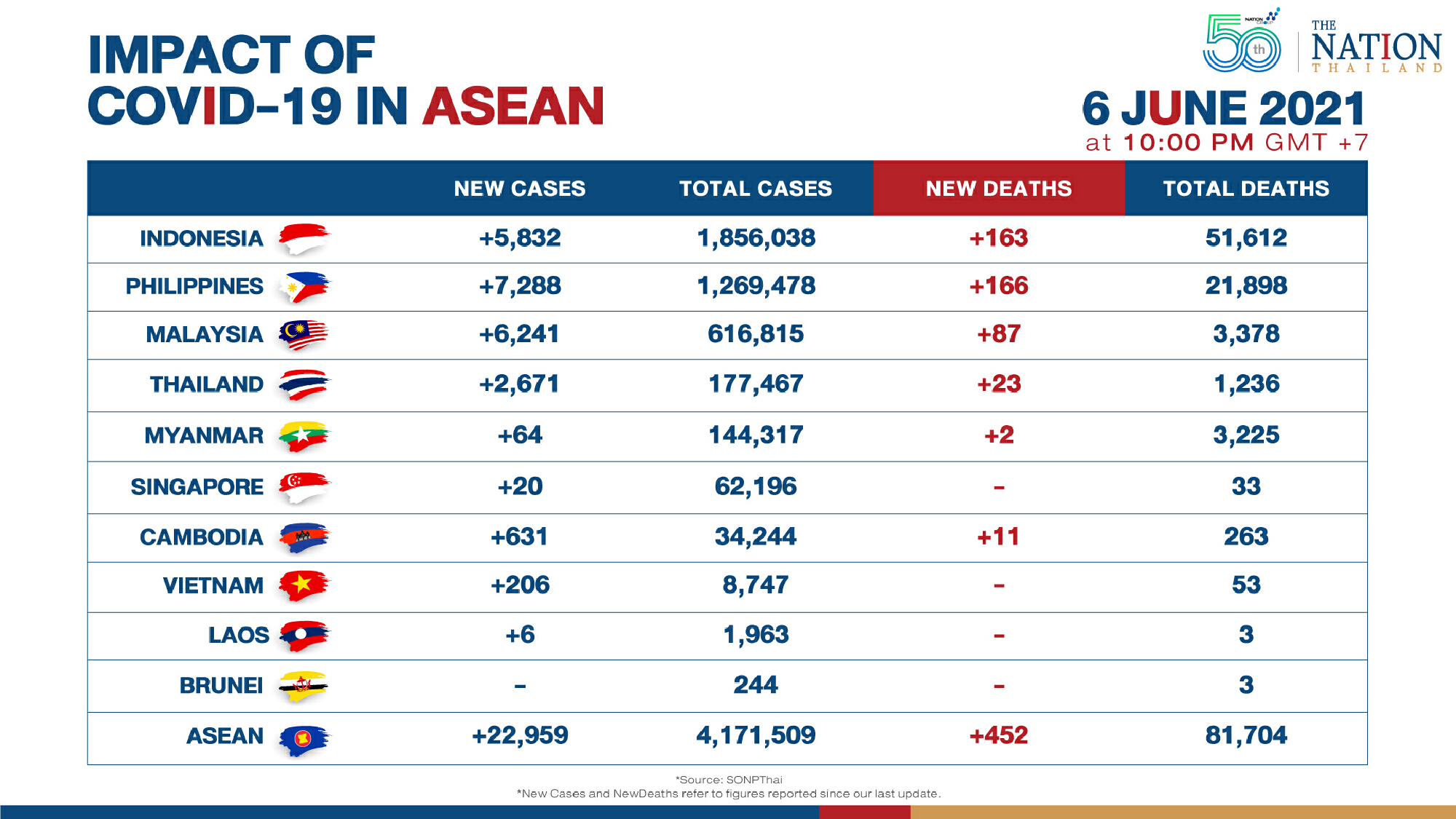
Southeast Asia reported the least number of new Covid-19 cases and deaths in five days on Sunday, collated data shows.
There were 22,959 new cases on Sunday, lower than Saturday’s 24,729, while 452 people died, compared to Saturday’s 508.
The number of Covid-19 cases in Asean crossed 4.17 million, while total deaths rose to 81,704.
Malaysia reported 6,241 new cases and 87 deaths on Sunday, bringing cumulative cases in the country to 616,815 and the death toll to 3,378.
The government has revoked the two-hour limit for people to buy consumer products to prevent crowding at stores, but still urged people to buy only essential items during the outbreak.
Singapore reported 20 new cases on Sunday, bringing cumulative cases in the country to 62,196. So far, 61,635 people have been cured and discharged. Sales of air-conditioners in Singapore have soared 2-3 times after the World Health Organization said that the Covid-19 virus could spread via airborne transmission.
After unending conflicts, Gazans wrestle with rebuilding – and whether its worth it
For the 2 million residents of Gaza, last months hostilities were just the latest in an endless cycle of war, the fourth to convulse the Palestinian enclave along the Mediterranean in just 13 years.
The latest fighting was impossible to escape as Israel struck more than 1,500 targets in the Gaza Strip. Hamas and other Gaza-based militants fired more than 4,300 rockets, wreaking terror on the other side of the border.
More than two weeks after the cease-fire, life has returned; even beach cafes have reopened. But existence remains shaped by destruction and reconstruction.
Families are being forced once more to rebuild and repair their homes, their businesses and what they can of their lives – their suffering compounded by losses on top of losses, trauma on top of trauma.
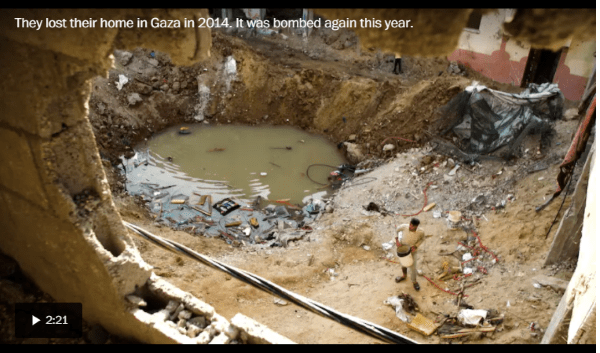
BEIT LAHIA, Gaza – After significant damage to family property in three of Gaza’s four conflicts since 2008, Kayan Abu Safiya is not sure it is worth rebuilding.
“Everything you build here will be destroyed,” he said as he surveyed the pile of rubble that had been an apartment building he erected to house his many offspring as they grew up and got married. “Working, investing, getting money to help my children, and it all goes in one second.”
Their homes were among nearly 2,100 rendered uninhabitable during the conflict, according to Hamas officials, who govern Gaza.
Abu Safiya, father of 17 children, made his money in agriculture and trading heavy machinery in Israel. But then came Hamas’s 2006 election win and the subsequent blockade by Israel and Egypt, crippling business.
Then came the wars. During the initial days of the 2008 conflict between Israel and Hamas, his family fled their home in Beit Hanoun, near the northern border. It was not until after the fighting ended that they were able to assess the damage. “It was a shock,” he said. “The money, the work, vanished.”
Losses amounted to nearly half a million dollars, he said, and he was never compensated. Only a handful of 1,300 citrus trees were left, he said, and dozens of farm animals had died during the Israeli ground invasion.
“We planted again, but in 2014 they were bulldozed,” he said, referring to clearing operations by Israeli ground forces.
The family farmland remains strewn with equipment destroyed in the wars, his barn pockmarked with bullet holes. His house was partly destroyed by tank shells in 2014, he said. He received $19,000 in compensation from international reconstruction funds, a fraction of what he says it cost to rebuild.
He had already begun moving his business to Jordan, and now his company is based there. He stays in Gaza only a few months a year. The family has given up planting fruit trees, opting instead for seasonal crops: wheat, cucumbers and watermelons.
As war approached last month for a fourth time, Abu Safiya did not want his family to all be in the same place. “If we died, all of us, who would remain?” he asked. They spread out among the family’s various properties. Two of his sons remained with him at the family home; a wife and her children left for her parents’.
His oldest son, Yazeed, had been at his uncle Riziq’s house, a few doors down from the high-rise that his father completed in 2019, when an Israeli intelligence officer called. It was the night before the Eid al-Fitr holiday, and the family had gathered to make traditional maamoul cookies. They said an officer told them they had two minutes to leave the area before it was destroyed.
“If it’s two minutes and one second, you will die,” Riziq recalled the officer saying.
They panicked. One of his daughters was rooted to the spot in fear and had to be pushed along. They screamed at a neighbor on a nearby balcony to leave.
Riziq said the officer stayed on the phone line with them until they reached a bank at the corner. The first airstrike knocked them down. It obliterated the family’s high-rise and Riziq’s three-story home, the place where the family had sought refuge in previous conflicts.
The Israeli military said the Abu Safiya building was not a direct target for a strike and an “initial review” had found that the damage was a result of an attack on nearby Hamas tunnels. It accused Hamas of using civilians as human shields by placing military infrastructure in residential areas.
– – –
– An irreplaceable loss
BEIT HANOUN, Gaza – For Zakaria Hamad, 65, the Gaza conflicts have brought escalating tragedies. First his farmland was destroyed, then in 2014 his home. But this time, there was no replacing the loss.
When war came again, his family had not finished rebuilding from the previous conflict. Fixtures and fittings on the lower floors were yet to be installed in the new three-story building, painted yellow and red and overlooking their land. Still, Hamad and his wife had moved in upstairs, and that is where the whole family, including his 33-year-old son Raed and five nieces and nephews, had gathered on May 19.
It had been a quiet afternoon, they said, before an explosion rocked the house. Raed had just stepped into the bedroom when he was killed by what the Al Mezan Center for Human Rights, a Gaza-based nongovernmental organization, said was one of 10 tank shells fired by Israeli troops that morning.
The Israeli military said it had no record of an attack on the area at the time. It says that hundreds of the rockets Hamas attempted to fire into Israel during the conflict missed their mark and instead landed inside Gaza.
The room was transformed into charred rubble strewn with burned mattresses, clothes and blankets. The rest of the family, in the living room, were saved by internal walls.
The sound was deafening, Hamad recalled, and he could see nothing through the smoke. “My heart was dying,” he said when he realized his son had been killed.
Raed, whose family described him as generous and well-liked, was engaged to be married in the summer. The clothing store he ran provided much of the family’s income after, they said, their farm was destroyed during the 2008 Israeli ground invasion. “They bulldozed the whole area,” Hamad said. “Citrus, guava, goats, sheep, our beehives all gone.”
Even before the latest round of violence, the United Nations estimated that the cumulative cost of Israeli military operations and the economic blockade imposed by Israel and Egypt had amounted to $16.7 billion.
Hamad had once worked in construction in Israel. “We used to be like this,” he said of Israelis, holding out two fingers side by side. “I built them their homes.”
He does not see a way out of the cycle of violence without international intervention, but does not remain hopeful that will happen.
“We are dying here in Gaza,” he said. “Who cares? Nobody cares.”
– – –
– A never-ending cycle of flight
GAZA CITY – Born not long before the 2008 conflict in Gaza, 14-year-old Ahmed Hassanian has been forced to flee his home during every round of violence since.
He was still being breastfed when the family fled their home in Shejaiya, east of Gaza City, for a relative’s home, his parents recalled. They lived off canned food for much of the 22-day war.
Kowkab Hassanian, 42, worries about the cumulative psychological effect on her children. Ahmed says he still remembers bodies in the street during the 2014 hostilities. He shook uncontrollably during the recent bombardment. “He’s always asking if we are going to die,” she said.
Another child has bed-wetting issues, and a third has problems with aggression that Hassanian links to the impact of the wars.
“It’s a bad thing to get used to this,” she said. “My fear is more on them than myself. I pretend that I’m strong, but we are all scared.”
In 2008, they had hoped the war would be the last. Their home had escaped relatively unscathed aside from damaged water tanks. Hafez Hassanian had built the house himself, and later, when he turned to selling vegetables, he put the money he earned into improving it for his growing family. “Every time I got some income I was spending money on it,” he said.
Then came the hostilities in 2012 and again in 2014, when their house was leveled along with much of the Shejaiya neighborhood, the site of particularly brutal battles between Israeli forces and Hamas militants. The family said they were displaced several times as fighting got too close. “Every time we moved there was a strike; we got to another place, there was a strike,” said Hafez.
After the war, he got a grant of $43,000 to rebuild his home. His family helped with the reconstruction, but the trauma remained.
When hostilities broke out last month, they fled to Gaza City, thinking it would be less affected than areas near the Israeli border, but it came under intensive Israeli airstrikes from the outset.
This time, their home did not survive unscathed. Hafez pulls out his phone to show pictures of a damaged kitchen and bathroom and said he cannot afford to repair them. “Our life was difficult even before this happened,” he said. “I was barely able to live and cover our expenses.”
They are displaced again, living in a classroom in a school run by the U.N. Relief and Works Agency that has become a temporary shelter.
Now, no one is talking about long-term peace, he said. “We live in fear that we’ll have a new war.”
He gestured toward his children. “The generation is destroyed,” he said.
Published : June 07, 2021
By : The Washington Post · Loveday Morris, Hazem Balousha
In countries where vaccines are available, offers of free airline tickets and apartments for the fully inoculated
Across the United States, businesses such as the Anheuser-Busch brewing company and the Krispy Kreme doughnut chain are jumping on the national effort to vaccinate the population against the coronavirus by offering freebies to fully vaccinated customers.
Since mass vaccination programs began rolling out worldwide nearly six months ago, governments and private businesses have been offering incentives – including tax breaks, free airline tickets and even millions of dollars in lotteries – to entice those hesitant to get vaccinated.
It’s a gambit that probably can’t hurt – but it’s unlikely on its own to help communities reach herd immunity, which is when a high-enough percentage of the population achieves immunity from a disease, said Emily Largent, a professor of medical ethics and health policy at the University of Pennsylvania.
“I’m generally optimistic that we will see some increase, but it’s not going to get us to the high levels of vaccination” needed, Largent said. “Incentives are not going to move everyone who is holding out over the finish line.”
Freebies and financial incentives will probably work best for certain groups, such as young people who are interested in getting vaccinated but have not yet considered it a priority, Largent said. For populations “philosophically opposed” to getting vaccinated, however, financial incentives “could make them suspicious and reinforce concerns they have or introduce new ones,” she cautioned.
These programs also do not address “persistent information gaps” that have proved a barrier for inoculation among populations, particularly marginalized groups, that have questions about the science or where to get the doses, Largent said.
“Targeted education,” she said, is needed alongside creative initiatives. “We can’t let the fun things … distract us from doing all the other public health work that’s been going on.”
Efforts to increase vaccination rates in primarily high-income countries where shots are readily available are in sharp contrast to the lack of vaccine access faced by a majority of the world’s population.
In countries with better vaccine access, some sectors – including publicly funded ones – are employing creative means to lure the vaccine-hesitant while also gaining publicity for their products.
Property developers and philanthropic foundations in Hong Kong have teamed up to offer a one-bedroom apartment worth $1.4 million, as well as 20 cash prizes equal to $12,890, in a lottery open only to vaccinated residents. Registration opens June 15, the South China Morning Post reported, and the winner will be announced Sept. 8.
The Airport Authority said it will give away 60,000 airline tickets to city residents and airport employees who have been fully inoculated by the end of September. Hong Kong civil servants, as well as employees at private businesses such as HSBC bank, are being offered a day off work per vaccine dose taken.
Vaccine uptake in Hong Kong has been sluggish, with only about 15 percent fully vaccinated, according to the New York Times. Organizers of the real estate raffle said bookings were filling up in the hours after the lottery was announced, the South China Morning Post reported. Still, mistrust of the government is high, complicating official efforts, while reports of adverse reactions to the vaccines have circulated widely in Hong Kong, where both the Pfizer-BioNTech and the Chinese-made Sinovac shots are available.
In Serbia, citizens who had received one or two doses by May 31 could get a one-time payment of about $30 – about 5 percent of the average monthly salary.
“We have considered how to reward people who have shown responsibility and decided to grant additional financial support to those who have been vaccinated,” President Aleksandar Vucic said in early May, Euronews reported.
Vucic said he would not make the vaccine mandatory but called it “irresponsible and selfish” not to get vaccinated, Euronews reported. Last month, he said public sector workers who were unvaccinated and caught the virus would no longer be eligible for sick days.
About a quarter of the Balkan country’s citizens are fully vaccinated, a number higher than the European Union’s average. Still, the government has struggled to keep up interest amid continued vaccine skepticism.
Last month, some top gyms in Dubai, the United Arab Emirates’ commercial hub, offered two weeks of free access to those who are fully vaccinated. The UAE has some of the highest vaccination rates in the world, but, despite a plethora of doses, has faced waning interest among the still unvaccinated.
Israel initially offered vaccinated residents a “green pass” – state-issued documentation indicating they had been fully vaccinated. The pass holders could easily access restaurants, clubs, gyms, weddings and other venues, while those without had to take frequent coronavirus tests to gain entry. Public adherence to the system, however, waned over time, and Israel scrapped the green pass this month, with few people in the highly vaccinated country wearing masks or taking other precautions against the virus.
In the Philippines, where vaccine skepticism was high even before the coronavirus outbreak, some communities are trying to get ahead of hesitancy by offering enticements to people before shots are available. The mayor of a small town in the Ilocos Sur province is planning to raffle off a plot of land with a house in December, when he expects vaccines to be available for his community, the Straits Times reported. Elsewhere in the country, malls serving as vaccination sites are offering free parking and banana fritters, according to the Straits Times.
American expats push for access to coronavirus vaccines, raising questions about international equity
The United States is one of the small number of countries where coronavirus vaccinations are widely available.
“All over the world people are desperate to get a shot that every American can get at their neighborhood drugstore,” President Joe Biden said on Wednesday.
But one group of Americans feels left behind: expatriates.
“We pay taxes, we vote, why shouldn’t we have a vaccine?” asked Loran Davidson, an American living in Thailand.
So far, the request has been denied. “We have not historically provided private health care for Americans living overseas, so that remains our policy,” White House press secretary Jen Psaki told reporters last month.
Davidson, 76, and her husband moved from New York to Thailand in 2006 after they retired. They live in Pattaya, about 60 miles southeast of Bangkok.
Davidson’s 86-year-old husband is overweight and has high blood pressure, she said, which puts him at increased risk for covid-19 complications, and he is partially disabled after an accident in October. Returning to the United States for a jab would be out of the question.
An estimated 9 million Americans live outside the United States, according to State Department figures. Unlike expatriates from most other countries, they are required to pay U.S. taxes. In recent weeks, a growing chorus has argued that they should therefore be entitled to receive U.S.-approved coronavirus vaccines.
After a rocky start, the State Department finished inoculating embassy staff worldwide in April, a department spokesperson said. So far, the administration has presented those unaffiliated with U.S. embassies with two options: Come home to get the shot, or wait your turn where you are.
But Americans living overseas say it’s not that simple. Vaccines are scarce in many countries. A pregnant woman in Taiwan said she doesn’t feel safe traveling internationally. A disabled veteran in Tunisia can’t afford the trip. Expats in Thailand say that with local quarantine requirements, the round-trip ordeal could take up to six weeks.
“Although some of us have access to vaccines in our host countries, we all agree that the U.S. government should take appropriate steps to ensure that vaccines are available to all of its citizens worldwide,” read an open letter to Biden from leaders of Democrats Abroad, the Democratic Party’s official arm for American expatriates, on Tuesday. Other expat groups have demanded the same.
Two former U.S. ambassadors appointed by President Donald Trump argued in a Wall Street Journal op-ed that the recent spike in cases in the Indo-Pacific region heightened the urgency of the issue.
The campaign has gathered momentum in recent weeks due in large part to expatriates in Thailand, where cases are spiking and less than 4% of some 69 million people are vaccinated.
The Thai government recently announced that foreigners living in the country, beginning with the elderly and those with underlying conditions, will be eligible to book shots when the country begins its mass vaccination program on Monday. Davidson registered with two hospitals – but staff there told her they had no idea when she and her husband would receive the shots.
And so far, what’s on offer is the Chinese Sinovac vaccine, which the World Health Organization recently approved for emergency use. The shot is less effective than its FDA-authorized counterparts at preventing disease. AstraZeneca, whose vaccine is being manufactured by a local partner in Thailand, is set to make 6 million doses available to the country this month.
A bipartisan coalition of organizations representing Americans in Thailand have implored Secretary of State Antony Blinken and Deputy Secretary of State Wendy Sherman not to “abandon” them.
China, which has engaged in extensive vaccine diplomacy, began vaccinating its citizens living in Thailand last month as part of Beijing’s “Spring Sprout” program to inoculate Chinese citizens living abroad, the Associated Press reported. More than half a million Chinese citizens in at least 120 countries have benefited from the initiative since its launch in March, according to China’s official People’s Daily newspaper.
When Thailand accepted a recent donation of 500,000 doses from China, it agreed to set aside some to vaccinate Chinese nationals.
“The Chinese Embassy is making sure that their citizens here can get the vaccine,” Davidson said. “So why can’t America?”
The lobbying campaign by U.S. expats has raised larger questions about what the U.S. government owes to its citizens in a global health emergency – and in a phase of the pandemic increasingly defined by vaccine equity, what it owes to the world.
While those back home enjoy the fruits of America’s vaccine rollout, unequal global access to the shots, due in part to the policies of their own government, has affected the availability of vaccinations in other countries, particularly in the developing world.
J. Stephen Morrison, director of the Global Health Policy Center at the Center for Strategic and International Studies and a former diplomat, said U.S. embassies are not equipped to carry out mass inoculation drives.
“I would be skeptical that the government would want to take this on,” he said.
But the pandemic demands unusual measures, said Michael March, a Bangkok-based former lawyer who is part of Democrats Abroad Thailand’s covid-19 task force. “We don’t see this as a medical care issue; it’s a health and safety issue and it’s a national security issue,” he said.
Jo-Anne Prud’homme, who works for a nonprofit in Tunisia, made the trip back to Maryland with her husband and two young kids in early May. Tunisia, which has the highest recorded per capita covid-19 death rate in Africa, was reeling from a third coronavirus wave. Prud’homme, 38, knew it would be months before she and her husband would become eligible for vaccinations there.
They were able to get Pfizer shots after they arrived in Kensington, Md. But the trip – including plane tickets, lodging and a rental car – cost the family more than $7,000.
“If I could have had access to a vaccine instead of flying back to the United States for five weeks, I would have done that in a heartbeat,” Prud’homme said.
But Sophia Winkler, 23, said that she had made a choice to live abroad in Tunisia and that the U.S. Embassy was not responsible for the consequences.
“When you choose to go abroad you kind of decide to put yourself at the mercy of that country’s medical system,” she said.
Skeptics of the expatriates’ proposal warn that giving priority access to Americans would create a two-tiered system and heighten tensions over vaccine disparities.
“In the countries that are suffering major problems in terms of affordable access to vaccines and which are angry and resentful of the Western countries that have vast stockpiles,” Morrison said, “I would think that a program that was specifically targeted at American citizens could prove to be pretty problematic diplomatically.”
In the face of widespread criticism, the United States and other wealthy countries accused of hoarding doses have taken steps to close the gap. Biden announced in April that he would send up to 60 million AstraZeneca doses abroad. Last month, he pledged to add 20 million U.S.-authorized vaccine doses to the mix.
The White House announced Thursday that it would distribute an initial 25 million across a “wide range of countries” in Latin America and the Caribbean, South and Southeast Asia and Africa, and the Palestinian territories.
That could leave some American expats disappointed.
“I would hope that when the U.S. government is providing vaccines to a country, that they do make a provision, as the Chinese government has done, for Americans in that country,” March said.
Morrison said that increased vaccine donations could make the request more palatable.
“If the United States steps forward at the G-7 and elsewhere and starts doing more to try to crack the code on this vaccine access, that might shift the environment a little bit and make this less awkward,” he said.
Meghan and Harry announce birth of baby girl, Lilibet Diana
LONDON – Britains Prince Harry and his wife, Meghan, the Duke and Duchess of Sussex, have announced the birth of their second child, daughter Lilibet “Lili” Diana.
The baby’s full name is Lilibet “Lili” Diana Mountbatten-Windsor, the couple said in a statement Sunday. She was born at 11:40 a.m. Friday at Santa Barbara Cottage Hospital in California. She is eighth in line to the British throne.
The baby is named after Queen Elizabeth II, Harry’s grandmother, who was called Lilibet during her childhood, and the late Diana, Princess of Wales, Harry’s mother, who died in a car crash in Paris in 1997, while being pursued by paparazzi.
Harry and Meghan said they were “blessed” by the arrival of their second child. “She is more than we could have ever imagined,” they wrote, “and we remain grateful for the love and prayers we’ve felt from across the globe.”
Mother and baby are “healthy and well” and adjusting to life at home, they said.
The decision to name the baby after Elizabeth might be viewed as a peace offering after what has been months of scandal and upheaval for Britain’s royals. Lilibet is the queen’s 11th great-grandchild.
Harry and Meghan have a son, Archie Harrison, who was born in May 2019. Meghan revealed in November that she had a miscarriage in July. She wrote in an opinion piece for the New York Times that the grief that came with losing a child was “almost unbearable.”
Within seconds of the birth announcement, well-wishers flocked to social media to congratulate the couple, who have had a tumultuous year. A stunning interview the couple gave to Oprah Winfrey on life in the spotlight has divided the royal family.
British Prime Minister Boris Johnson offered his congratulations to the couple on Sunday evening local time, as did Harry’s older brother, Prince William, and his wife, Catherine, the Duke and Duchess of Cambridge.
“We are delighted by the happy news of the arrival of baby Lili,” the pair wrote on their official Twitter account.
Harry and his brother were last seen in public together in April, during the funeral of their grandfather, Britain’s Prince Philip, who was married to the queen for more than 70 years. Photographs of the brothers together reignited hopes that they were repairing their relationship following rumors of a growing rift between the family.
During a two-hour sit-down with Winfrey in March, Harry and Meghan offered a string of staggering claims concerning the royal family. Among them, that Meghan had suffered from depression and had considered suicide. They said that they were denied support from the family, and that one member had expressed concern, when Meghan was pregnant with Archie, over how dark the child’s skin would be.
Meghan has a Black mother and a White father.
Meghan and Harry were married at a lavish ceremony at Britain’s Windsor Castle in May 2018 but chose to step back from their royal duties in January 2020, a decision that stunned the family and people around the world.
The couple has long struggled with attention from the notorious British tabloids and expressed anger and despair over the constant scrutiny that comes with being a part of one of the most famous families in the world. Before the pair were married, Harry criticized the British media in a rare statement over its ill treatment of Meghan, blasting journalists for racist and sexist reporting. He said he was worried for her safety and wanted to protect her.
In a recent podcast interview, Harry spoke openly about the detrimental effect that losing his mother had on his mental health and said Meghan encouraged him to seek support.
“She could tell that I was hurting and that some of the stuff that was out of my control was making me really angry,” he said. “It would make my blood boil.”
Harry also described his life as the son of heir to the throne Prince Charles as akin to being on “The Truman Show” and living “in a zoo.”


 Bezos announces hell be on first crewed spaceflight of Blue Origin rocket