Many Israelis who live near Gaza oppose cease-fire
ASHDOD, Israel – In the nearly two-week battle between Israel and Hamas, Linoi Hazam says, she ran for shelter from rocket fire more times than she can count.
Hazam, a 22-year-old security guard in this city 20 miles from Gaza, was driving on the highway one day during the conflict when shrapnel from an intercepted rocket fell onto the road a few miles ahead. She leaped out of her car and lay facedown on the asphalt, hands over her head.
The Egyptian-brokered cease-fire that took effect 2 a.m. Friday halted the exchanges of fire between Israel and Hamas, the Islamist militant group that rules Gaza. The beaches, bars and cafes are filled again, schools and offices have reopened, and life has snapped back to routine. But Hazam worries that Israel’s readiness to agree to a cease-fire last week communicated weakness to Hamas, whose leaders have already threatened to open the next round of fighting.
“There shouldn’t be a cease-fire,” Hazam said. “Hamas did get hit hard, but not hard enough.”
For many Israelis in the south, the halt to hostilities has left a nagging feeling that the 11-day operation – which left at least 248 Gazans dead, including 66 children, and 12 Israelis dead, including a teenage girl and a 5-year-old boy – was ultimately pointless.
Seventy-two percent of Israelis said they did not agree with the cease-fire reached between Israel and Hamas, according to a poll published last week by Channel 12.
The “unconditional” cease-fire did not address Israel’s initial demands, which included the return of the remains of two civilians and two soldiers that are believed to be held by Hamas, or the broader goal of stopping Hamas from raining rockets down on Israeli citizens. It did not address the border blockade enforced by Israel and Egypt that limits the movement of the 2 million people who live in Gaza.
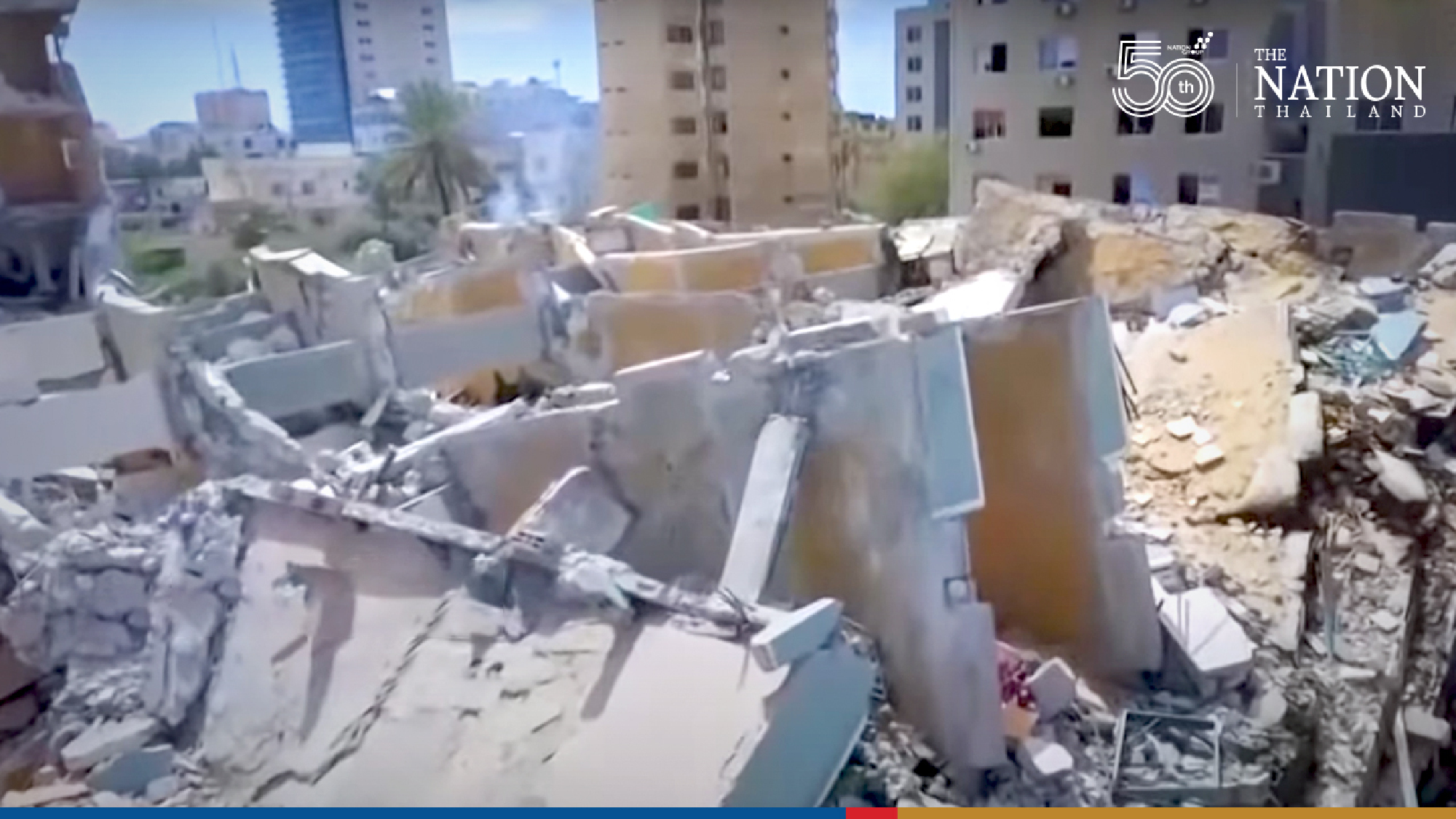
Over the weekend, as Gazans sifted through the rubble of obliterated buildings and began counting their dead, Israelis voiced their disillusionment with the way the operation was ended.
“The country has abandoned us, unequivocally,” said Yulie Lavie, 34, who lives in Ashdod and serves in the Israeli army. “We got the cease-fire, but what about after that? It’s clear to all of us that it’s only a matter of time until the next round.”
Israeli Prime Minister Benjamin Netanyahu said Friday that Israel had struck “a severe blow to terrorist organizations . . . while establishing deterrence.”
“Not everything is known to the public yet, and, by the way, not everything is known to Hamas, but our set of achievements will be revealed over time,” he said in a televised statement.
Israeli military spokesman Hidai Zilberman has said that at least 100 high-ranking military leaders from Hamas and Islamic Jihad, a smaller militant group in the Gaza Strip, were assassinated during the conflict. He said Israeli airstrikes inflicted “significant” damage on the underground tunnel network known as the metro, where Hamas is believed to produce and store its stockpiles of weapons.
“The military phase is over,” Defense Minister Benny Gantz said. “Now is the time for political resolution.” He said he was talking with leaders from “moderate Arab countries” to pursue that goal.
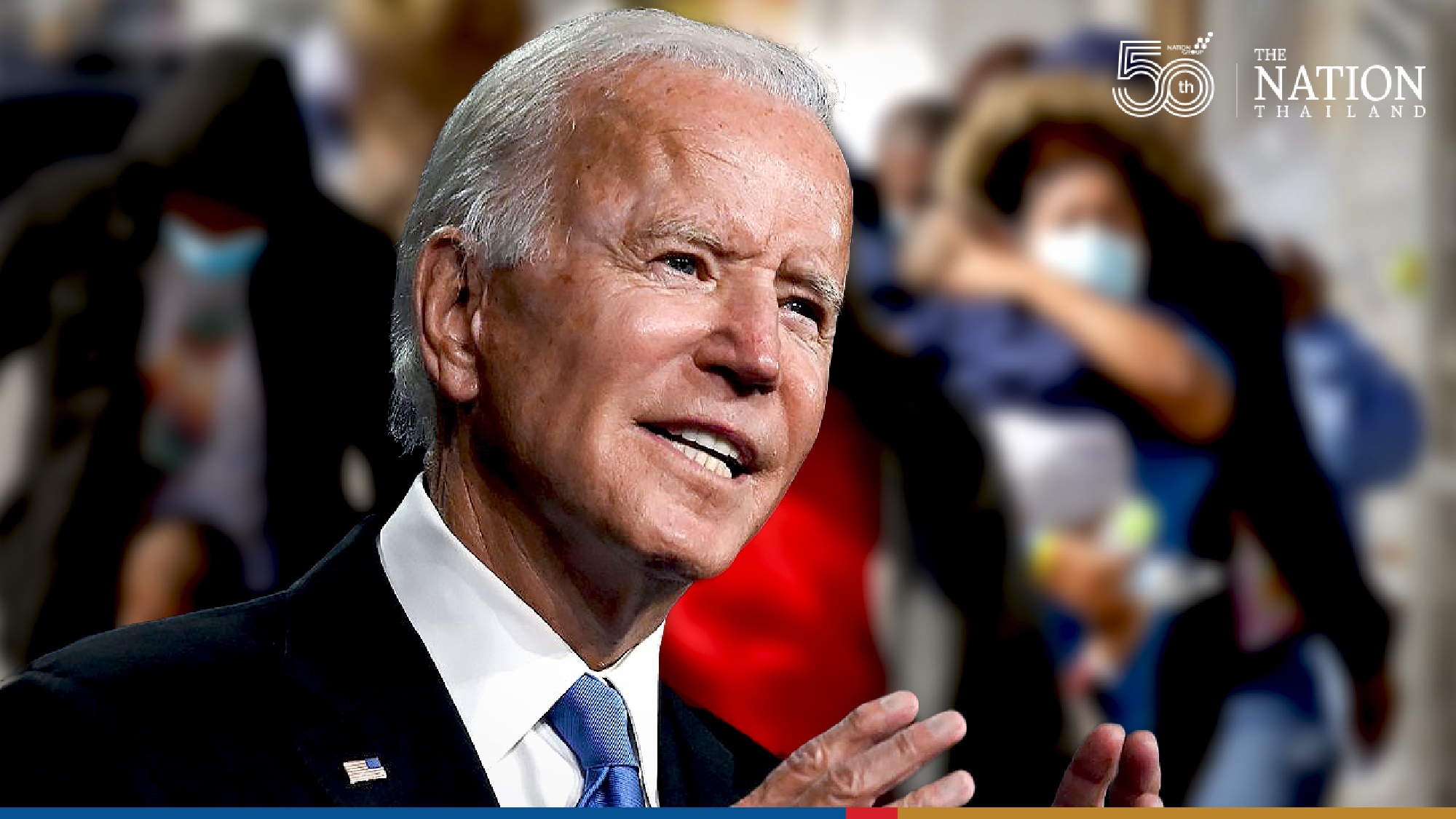
President Joe Biden said last week that the conflict showed “we still need a two-state solution,” in which an independent Palestinian state would be established alongside Israel.
Lior Damari, a 25-year-old computer and electrical engineering student in Ashdod, said a two-state solution was impossible.
“The truth is that no diplomatic solution would be enough for them,” he said. “It’s not that we’re against the idea of two states for two people – no, we’d prefer it. But there’s no one to talk to, there’s no one to take responsibility when, in the midst of negotiations, some young Palestinian tries to blow it all up.”
Amoyel Mair, 75, drinking coffee with friends on a bustling main street two blocks from the beach, said Israel’s problem with the Palestinians in Gaza was rooted in its conflict with Iran. He said Iranian funding and support enabled Hamas’s new tactic: heavy rocket barrages launched toward multiple locations almost simultaneously in an attempt to overwhelm Israel’s Iron Dome antimissile defense system.
“Once the Iran problem is fixed, the Hamas problem, the Hezbollah problem, all of these local problems will be much easier to control,” he said. Hezbollah, the Iranian-backed group in Lebanon, sat out this month’s conflict. It’s believed to have a far larger stockpile of missiles compared with Hamas, and has, since the Israel-Lebanon war in 2006, regularly exchanged war threats with Israel.
As Israel tends conflict on multiple fronts with no end in sight, many here expect the country will continue to “mow the grass” – in this case, striking Hamas’s rocket production and storage facilities – periodically and indefinitely. As a result, they say, wars will continue to break out every few years.
“In a few years, maybe less, this whole scene will be back again,” said Hazam, the 22-year-old Ashdod resident. “For us, now, we’re going back to life, but we’re also waiting for the next war.”
Congos Nyiragongo volcano erupts, causing thousands to flee; at least 15 dead
NAIROBI – Fifteen people have died after a volcano eruption in Congo late Saturday that turned the sky above a fearsome red and sent thousands fleeing from a city that was devastated by lava flows in 2002 and 1977.
Government spokesman Patrick Muyaya said on Sunday night that two people had burned to death in the eruption of Mount Nyiragongo, that nine had died in a crash while attempting to flee and that four prisoners who had tried to escape their cells had been killed. He said property damage was reported in 17 villages surrounding the volcano, including Goma’s suburbs.
Journalists reported that the still-smoking molten rock had stopped just short of the outskirts of Goma, a picturesque lakeside city that is eastern Congo’s hub for trade and transport, averting greater disaster.
Goma residents remember well the eruption in January 2002, when swift lava and its accompanying carbon dioxide fumes left by some counts hundreds dead and more than 100,000 homeless. More than 1 million people live near the active crater.
A din of people and honking horns could be heard in videos taken early Sunday of the red-glowing eruption shared on social media. Rwandan officials said more than 3,500 Congolese people had sought refuge across the border in Rwanda.
“Panic spread as we were in contact with the residents of the north of the city who from their roofs could see the path of the lava as it made its way to the airport,” said Patient Iraguha, a resident of Rwanda who works in Goma.
“Information was circulating in all directions,” he told The Washington Post on Sunday from Rwanda. “During this time no official statement dictated any instructions, and nothing came out on the radio like on national television to give the right information on the direction of the lava and the escape route to take.”
The coronavirus pandemic has created unusual uncertainty at the Congo-Rwanda border crossing at Goma, which is one of the world’s busiest, seeing tens of thousands of people cross on foot each day. While the border remains open, confusion over temperature checks and other monitoring measures put in place added to the chaos, Iraguha said.
Goma’s volcano observatory, which is meant to provide quick warnings of increased activity in Nyiragongo and its companion volcano Nyamulagira, has been hobbled by the World Bank’s recent decision to not renew funding. A Reuters report in March linked that decision to allegations of embezzlement at the observatory. The observatory’s director told a local radio station on Sunday that it had not conducted its work between November 2020 and April, when provisional funding from a different source was obtained.
The U.N. mission MONUSCO tweeted that it was running reconnaissance flights and posted footage of a fiery landscape.
Congo’s President Félix Tshisekedi cut short a trip to Europe to return home Sunday and coordinate aid.
Muyaya, the government spokesman, said that the prime minister had called an emergency meeting and that authorities would set more plans in motion Sunday.
Muyaya urged people to avoid engaging with “everything that is being said in social media” in the face of an “extremely serious situation.” He vowed that officials would do their best to keep people updated and manage a crisis that “touches us all.”
In one especially deadly eruption of Mount Nyiragongo in 1977, about 2,000 people were reported killed.
“This is the most dangerous volcano in the world!” volcanologist Dario Tedesco told Science magazine last year.
Published : May 24, 2021
By : The Washington Post · Max Bearak, Hannah Knowles, Paulina Villegas
ROME – An Alpine cable car plunged into forested mountains in northern Italy on Sunday, killing 14 passengers, according to rescue authorities. At least one of the victims was a child, among the two minors initially taken by helicopter to a hospital in Turin.
Photos shared on social media by rescuers showed a mangled cable car, along with at least two downed cables, next to rows of pine trees high above Lake Maggiore. The collapse occurred at a relatively high point on the cable car’s 20-minute ride, which starts lakeside and leads to a popular vista about 5,000 feet above sea level, an area that includes a ski resort and an amusement park.
“The fall was obviously significant,” Walter Milan of the Alpine rescue service told Rai News 24. He said the cables were particularly high off the ground at that point on the course.
Infrastructure Minister Enrico Giovannini said there would be a government inquiry into the incident.
According to the newspaper Corriere della Sera, the cable car system had reopened April 24 after a closure during Italy’s coronavirus-related lockdown. The system had been renovated in 2016, the newspaper said, undergoing a high-tech examination of the cable tightness. The cabins were also upgraded.
The cable car system’s website says the service was inaugurated in 1970, with two cars and one stop at a midway point between the lakeside and mountaintop. The site says the cable car is an “integral part” of tourism in the area, which is 75 minutes by car from Milan.
Politicians and other Italian figures expressed sadness about the collapse.
“With shock, I am following the news of the tragedy of the cable car #Verbania #Mottorone on a Sunday that should have been one of sunshine and hope and which for many families will be one of mourning and despair,” tweeted Enrico Letta, head of Italy’s Democratic Party.
“A prayer for the children admitted in serious condition,” said Attilio Fontana, governor of the Lombardy region, the site of the collapse.
Prime Minister Mario Draghi said in a statement that he was in touch with local authorities and civil protection.
“I express the condolences of the entire government to the families of the victims, with a special thought for the children who were seriously injured and their families,” Draghi said.
Italy has been no stranger to deadly infrastructure-related accidents, most recently in 2018, when a highway bridge in Genoa collapsed during a torrential rainstorm, killing more than 40. Italy also suffered a ski gondola disaster in 1998, though it was not an infrastructure failure but a freak incident: A U.S. Marine Corps aircraft, flying too low, severed a cable, causing 20 people to plunge to their deaths.
Malaysia announces rules to reduce movements in virus fight
Malaysia on Saturday detailed further restrictions on movements to contain a record surge in covid cases.
Businesses will only be allowed to operate from 8 a.m until 8 p.m. daily from May 25, Defense Minister Ismail Sabri Yaakob told a briefing. About 80% of government officers and 40% of private sector employees will work from home, with the move affecting 7 million to 8 million workers.
High-risk places will be shut immediately and usage of public transportation will be limited to 50% capacity, Ismail said. The Trade Ministry will announce further guidelines for the economy, he added.
The moves are an attempt by Prime Minister Muhyiddin Yassin to tamp down new infections without derailing the nascent economic recovery by imposing a nationwide lockdown. Malaysia’s economy lost about 700 million ringgit ($169 million) a day when only essential sectors were allowed to operate in January.
“Life is important; I also don’t want the economy to collapse,” Muhyiddin said in an interview with state-owned RTM television on Sunday. “If the economy collapses, I may have to spend half a trillion now. That’s what we have learnt over time. We have to balance. The government’s decision is based on the situation.”
Finance Minister Tengku Zafrul Abdul Aziz estimated that the curbs could result in a 1% hit on the nation’s gross domestic product, according to a report from Bernama.
The Southeast Asian economy contracted for the fourth straight quarter in the first three months of the year, albeit at a slower pace. The government and the central bank expect the economy to grow 6% to 7.5% this year after a 5.6% contraction in 2020.
“Downside risks to the overall 2021 outlook are building despite stronger-than-expected 1Q GDP and oil prices holding up,” Tamara Mast Henderson, Asean economist for Bloomberg Economics, wrote in a report Friday. “Herd immunity from vaccines appears unlikely until next year. Meanwhile, more infectious variants of covid-19 have emerged, threatening to prolong outbreaks and lockdowns.”
New cases in Malaysia neared 7,000 on Sunday, a fifth straight day that infections have remained above 6,000.
Zafrul on Saturday announced an additional allocation of 200 million ringgit ($48 million) for the Health Ministry to procure screening kits and personal protective equipment, The Star newspaper reported.
“We will see how long this crisis continues,” Zafrul was quoted as saying. “If there is a need, then we will have to look at supporting (the economy) from a very targeted approach to the industries that are most affected by the pandemic.”
Less than 3% of Malaysia’s population have been fully vaccinated. That tally trails neighbors such as Indonesia and Singapore, and puts Malaysia at risk of falling well short of its inoculation goals for the year, according to data compiled by Bloomberg.
The government has said the pace would accelerate from June with more supplies coming in from Pfizer, Sinovac and AstraZeneca.
“Our procurement deal is to cover more than 100% of Malaysians; the question is when the supplies arrive,” Muhyiddin said in the interview. “We have more than 600 centers and we should be able to vaccinate 150,000 a day, but we haven’t reached there yet.”
Muhyiddin said supplies of all booked vaccines will arrive by the year-end, helping the country achieve herd immunity or 80% vaccine coverage sooner than the 2022 target.
Meanwhile, intensive care unit beds for covid-linked admissions are at 84%, Health Director-General Noor Hisham Abdullah said in a Facebook post Friday. The nation’s healthcare system is under huge stress and people should adhere to virus protocols, he said.
“We have to stay safe and it’s safest to stay home and follow the SOPs,” Muhyiddin said. “We should all practice self-lockdown.”
Published : May 24, 2021
By : Syndication Washington Post, Bloomberg · Anisah Shukry
Iran likely to extend UN nuclear monitoring deal by a month
Iran is likely to extend a U.N. nuclear inspections agreement by one more month, buying diplomats time to revive a landmark deal that would usher a return of the Persian Gulf nation to world oil markets in exchange for curbs on its atomic work.
An extension of the interim arrangement with the International Atomic Energy Agency, which expired on Saturday, would avert a potential crisis in talks involving world powers and set the stage for them to finalize the return of the U.S. to the 2015 nuclear accord that former President Donald Trump abandoned three years ago.
Diplomats warned last week, after the fourth round of negotiations in Vienna, that failing to extend the IAEA monitoring agreement could scuttle a fragile process that seeks to end a standoff between Tehran and Washington that has roiled oil markets and almost sparked a war between the two sides. The IAEA pact requires Iran to preserve video recorded by the agency’s cameras installed at nuclear facilities.
Iranian state TV, citing a person close to the country’s Supreme National Security Council, reported that the extension will be on condition that the multilateral talks lead to Washington’s return to the accord and the removal of Trump-era sanctions within the next month.
“We are fully prepared to go back to the original deal as it was,” U.S. Secretary of State Anthony Blinken told CNN, adding that he had yet to see whether the Iranians are on the same page.
“The U.S. has clearly expressed readiness to lift sanctions under the nuclear deal,” President Hassan Rouhani said in an earlier statement published on his official website. “We will continue talks until a final agreement.”
The IAEA is expected to provide a briefing on the latest developments on Iran later on Sunday in Vienna.
Tehran has threatened to erase recorded video material after 90 days unless sanctions were lifted. IAEA Director General Rafael Mariano Grossi repeatedly warned that such a move would have jeopardized the continuity of inspectors’ knowledge of the program.
According to Sunday’s report on Iranian state TV, the recorded footage will be handed over to the IAEA only if the next round of talks, due to start in Vienna in the coming days, lead to a final agreement between Iran and the U.S. Otherwise, the material will be “deleted once and for all,” the person close to Iran’s Supreme National Security Council was quoted as saying.
Rouhani is eager to restore the accord and secure the removal of Trump’s tough sanctions regime before he leaves office later this year. Reviving the nuclear deal will loosen restrictions on Iranian oil exports, the nation’s main source of foreign currency revenue.
Published : May 24, 2021
By : Syndication Washington Post, Bloomberg · Jonathan Tirone, Arsalan Shahla
A year after George Floyds death, Minneapolis remains scarred, divided
MINNEAPOLIS – A year after George Floyds death sent millions across the country into the streets in some of the largest sustained protests in American history, the city at the center of that movement continues to struggle with its own reckoning over policing, equality and racial justice.
Colorful signs featuring Floyd’s name and face still decorate front yards across this Upper Midwestern city in a collective demand for justice. Visible scars also remain from the unrest that erupted after his death, leaving scores of buildings damaged or destroyed.
While the city breathed a collective sigh of relief last month when a jury convicted former Minneapolis police officer Derek Chauvin of murder and manslaughter in Floyd’s death, the sensation was fleeting.
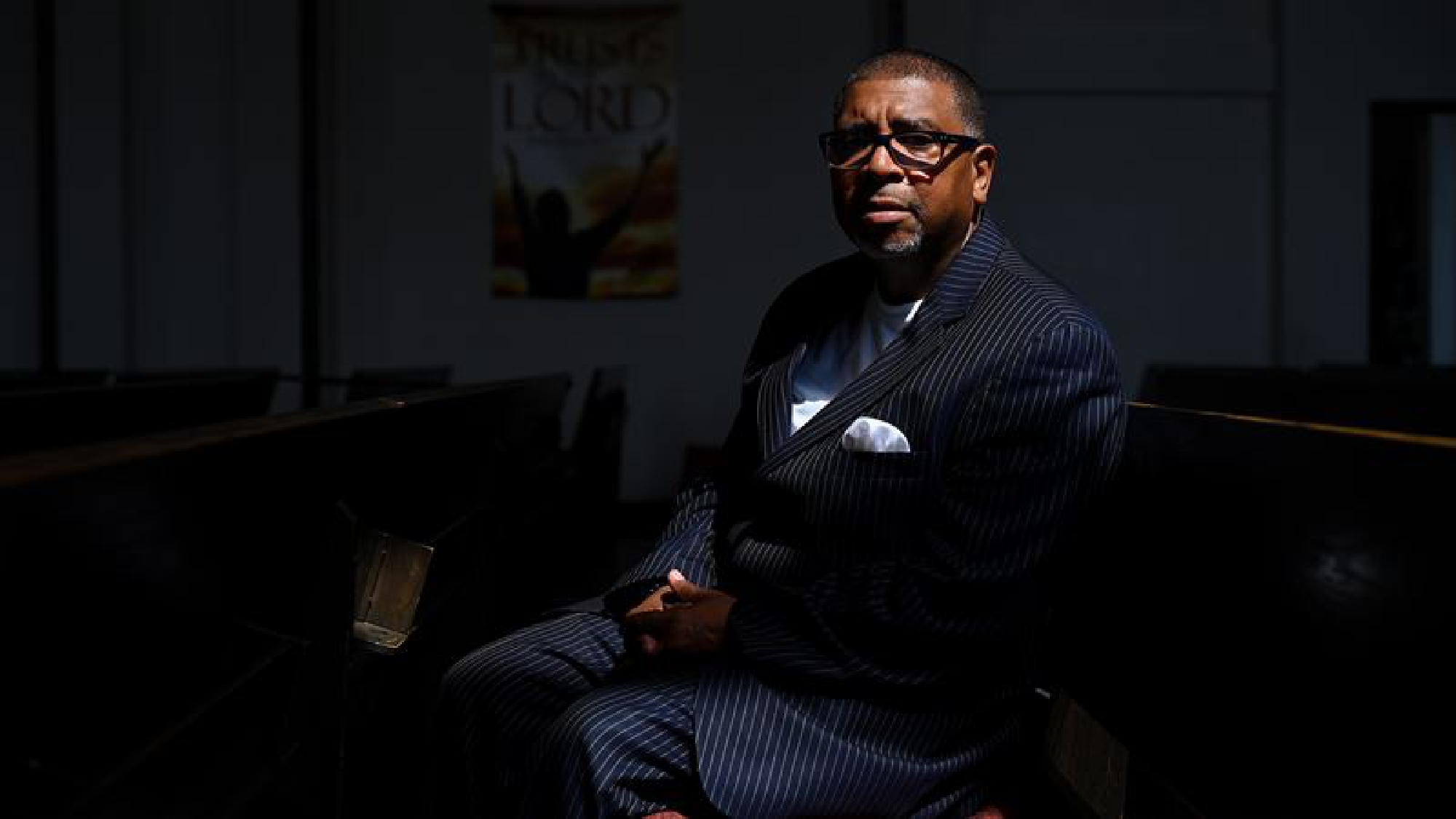
“I think we felt like we could breathe a little bit after Chauvin’s conviction,” said Brian Herron, pastor of Zion Baptist Church in North Minneapolis, the heart of the city’s Black community.
Like many here, Herron, a former Minneapolis City Council member, had been skeptical that a jury would convict a police officer in the death of a Black man. “I don’t know if there’s a real sense of justice, but there’s a sense of accountability,” he said.
As Minneapolis prepares to mark the first anniversary of Floyd’s death Tuesday, it remains a city in turmoil, with many of the racial inequities highlighted during last year’s protests unresolved. The police department is in crisis – woefully understaffed, its officers demoralized and its practices and culture under investigation by the Justice Department. At the same time, there has been a pronounced increase in crime while the relationship between the police and residents remains fractured.
“All that tension is still here,” Herron said.
Adding to the anxiety is escalating violence in the city, including a dramatic spike in shootings in its Black community. A 6-year-old girl was killed and two other children gravely wounded in shootings in recent days, shocking residents and prompting a war of words among elected officials and community leaders, including some who have sought to link the violence to calls to defund the police in the aftermath of Floyd’s death.
Three more people were fatally shot in two incidents late Friday and early Saturday, including a shootout outside a downtown nightclub that left two dead and eight injured. No arrests have been made in any of the recent incidents, according to police.
The city remains deeply divided over the future of its police department, which some city council members want to replace with a public safety agency, a proposal that is likely to be on the ballot in November.
“The rhetoric around defund has gotten us to where we are today,” said Sondra Samuels, a longtime north-side activist who is among a group of residents that has sued the city over police staffing shortages. “Not everybody is an Officer Chauvin. … We need police in this city,” said Samuels, who is Black.
More than 200 Minneapolis police officers – a third of the force – have resigned or sought to leave the department since Floyd’s killing cast a harsh spotlight on policing here. The result has been a staffing shortage the mayor and police chief say has complicated efforts to respond to the rise in violence.
“When you make big, overarching statements that we’re going to defund or abolish and dismantle the police department and get rid of all the officers, there’s an impact to that,” Mayor Jacob Frey told a local television station recently.
Frey – who, along with the entire city council, is up for re-election this year – has called for more funding for police overtime and additional cadet classes to increase the number of officers on the streets, proposals that require the council’s approval.
Some fault the mayor and other officials for not investing more in social services and other efforts they argue would be more effective at preventing the violence. They question the reasoning in sending a surge of officers into a community still traumatized by Floyd’s death and where there is mutual distrust between the police and many of the residents they are sworn to protect.
“We deserve a more comprehensive plan than simply adding more police or focusing on police reforms,” said Phillippe Cunningham, a council member who represents an area of North Minneapolis hit hard by shootings and has led efforts to create a new public safety agency that would include a law enforcement division with a smaller number of officers.
A spokeswoman for Frey said the mayor “has partnered with the community to tackle the root causes of crime,” including “economic policies designed to break cycles of violence and poverty and ultimately build a more equitable and safer city.”
Although the city has enacted several police reforms, including a ban on chokeholds and neck restraints like the one Chauvin fatally used on Floyd, many residents say they have seen no evidence of real change in a force that has long been accused of racism as well as aggressive behavior, especially toward people of color.
They say the limited number officers seen on patrol often cruise the streets with their windows up, refusing to engage with residents, and behave aggressively toward those they do encounter. Business owners say officers have cut back on outreach efforts, which some blame on the staffing crisis.
“I tell the officers I know to just try to show a little humanity, show people you’re a human being,” said Sammy McDowell, the Black chef behind Sammy’s Avenue Eatery.
McDowell operates two cafes – one on the predominantly Black north side and the other in northeast Minneapolis, which is mostly White. “You have to try and have a relationship with the community you serve, but there hasn’t really been much of a change. … I know they are short-staffed, but something has got to give.”
Many White residents who live on the city’s south side near where Floyd was killed say they still feel uncomfortable calling the police despite the increase in crime in their neighborhoods, including burglaries and carjackings, because of concerns they might put their minority neighbors at risk from officers.
“I don’t want to feel responsible for what could happen,” said one White woman as she walked near 38th and Chicago, the intersection where Floyd was killed. She asked that her name not be used, citing the increasingly hostile debate among her neighbors about crime and safety around the intersection, which has been turned into a makeshift memorial to Floyd and a site of continued grieving and protest over racial injustice.
Frey has said the city plans to reopen the intersection after the anniversary of Floyd’s death, setting up a potential conflict between the city and a group of caretakers who say they won’t give up control of what has become known as George Floyd Square until demands for further justice – including additional changes in policing and investment in Black-owned businesses – have been met.
Police Chief Medaria Arradondo, the first Black man to lead the department and who made headlines when he testified against Chauvin at the former officer’s trial, has pushed back against what he has described as political attacks on his department and cuts to funding. In December, the city council voted to shift nearly $8 million from the department’s budget to fund alternatives to policing, including the creation of mental health crisis teams and anti-violence efforts.
“I am down about a third of our department. We cannot do this work alone,” Arradondo said during a news conference last week in which he insisted his officers are doing everything they can to stem the violence. “It’s going to take the collective leadership of all of us to do that.”
Arradondo, through a spokesman, declined an interview request.
The debate over policing has divided many in the Black community – pitting younger activists who have called for the police department to be abolished against those who have criticized how the effort to defund or reimagine public safety has been handled.
Nekima Levy Armstrong, a civil rights lawyer and longtime racial justice activist, has been one of the police department’s fiercest critics, but she said the effort to dismantle the department had moved forward without the input of many Black residents.
“They conducted no research, consulted no experts. … They should have specifically come to the Black community because we are the most likely to experience police violence as well as community violence, but they didn’t,” Armstrong said. “We shouldn’t have to choose between no police or corrupt police.”
She recalled warning council members involved in the defund movement that proposing drastic changes to policing without considering “economic justice” efforts to build up the community and reduce crime would sow chaos. “And look what has happened,” she said.
The surge in violent crime isn’t unique to Minneapolis. Cities across the country, including Atlanta and Chicago, have reported spikes in shootings and homicides, which many blame on the economic despair and sense of alienation brought on by the pandemic. But those problems have been magnified in Minneapolis, which has publicly grappled with how to reimagine its approach to public safety since Floyd’s death and where hostilities between residents and police have been on display in front of the country.
Last year, the homicide rate in Minneapolis hit highs not seen since the mid-1990s, when killings led the city to be derisively called “Murderapolis.” The bleak trend has continued into this year. According to police data, nearly 200 people have been shot this year – more than double the same period last year and the most recorded in more than a decade. There have been 31 homicides, compared with 15 at this point in 2020.
Most of the shootings have taken place in North Minneapolis, where Black residents have questioned why city officials have not reacted with more urgency to control what some have described as a pandemic of violence and where a growing number of children have been caught in crossfire.
On April 30, 10-year-old Ladavionne Garrett Jr. was riding in the back seat of his parents’ car when gunfire broke out. He was hit in the head by a bullet that pierced the car’s trunk. He was taken to North Memorial Health Hospital, where he was in a medically induced coma after surgery. On May 15, Trinity Ottoson-Smith, 9, was bouncing on a trampoline at a friend’s house when someone fired several shots from the alley, striking her in the head. She was also taken to North Memorial, where she was placed in an intensive care room down the hall from Ladavionne’s.
The community was holding a vigil for those children when gunfire erupted again Monday night, striking 6-year-old Aniya Allen as she sat in the back seat of a car eating food from McDonald’s after a day of shopping with her mother. Aniya, who died Wednesday, was the granddaughter of K.G. Wilson, a longtime peace activist who has spent years rushing to scenes of other shootings to comfort families and to try to prevent further bloodshed.
“I have done nothing but try to help families for years,” Wilson said last week as he choked back tears near the spot where his granddaughter was fatally shot. “Now it’s my child. What makes you think yours won’t be next? When is enough going to be enough?”
Some Black residents, including families of those injured or killed in gunfire, have asked why those who took to the streets to protest Floyd’s death – including White people – haven’t flooded the streets in anger over the wounding and killing of Black people in the ongoing violence.
“My grandson is fighting for his life. This ain’t doing nothing,” said Sheree Jennings, Ladavionne’s grandmother, who left his hospital bedside to interrupt a news conference last week where Frey and other leaders were speaking about public safety.
“Why is this community not angry? Is it because he is a Black kid? Is that why? Is it because a cop didn’t shoot him? … We’ve got to do better than this,” she said.
A year after his restaurant on the north side was threatened by the civil unrest that erupted across the city, McDowell has found himself in the unusual position of being a racial ambassador to the mostly White customers at his location in northeast Minneapolis.
A large man standing around six feet tall, McDowell knows some White people might view him as threatening if they were to see him on the street. But behind the counter, serving coffee and sandwiches, they’re comfortable as he talks them through issues of race as they grapple with their own feelings in the aftermath of Floyd’s death.
McDowell has found himself having long talks with White customers who have struggled to understand the systemic racism that has blocked Black people from buying homes in certain neighborhoods or obtaining bank loans. “From their perspective, it just doesn’t make sense,” he said. “But they are trying to understand. They are trying to make an effort.”
But the most challenging discussions have been about the future of policing. Sometimes McDowell, who tells his customers he is not against law enforcement, reverts to the only way he knows to explain the complicated debate over public safety.
“If you have one rotten tomato, it’s going to spoil the whole box. So you’ve got to remove it,” he tells them.
Covid-19 cases and deaths in Asean see slight decline
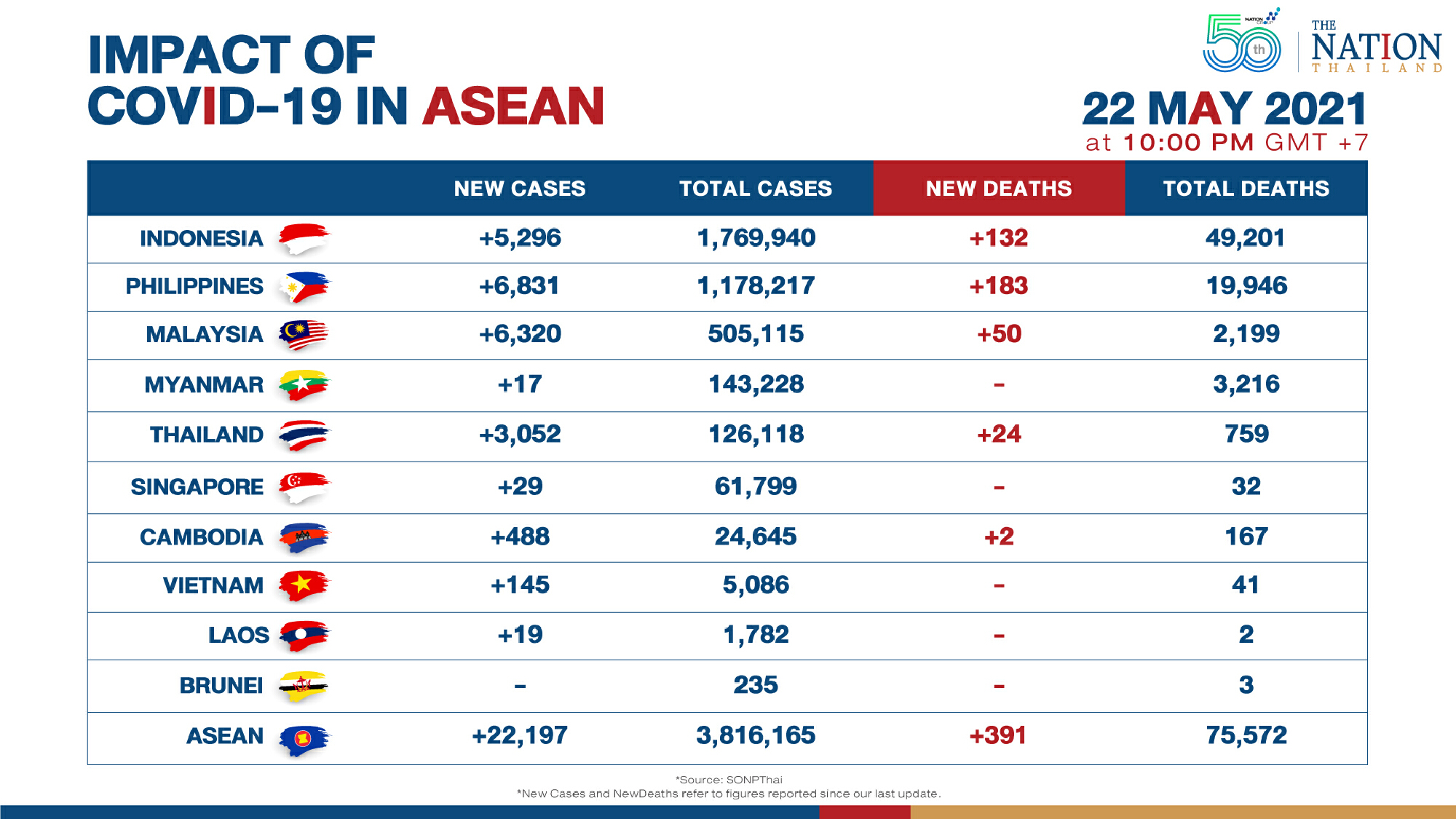
The number of Covid-19 patients and fatalities in Asean countries on Saturday saw a slight decrease in comparison with Friday.
The region reported 22,197 new cases compared to 22,650 on Friday, and 391 deaths against 412 the previous day.
Singapore reported 29 new cases, taking cumulative cases in the country to 61,799. Meanwhile, 61,242 patients had recovered and been discharged so far.
Singapore’s Ministry of Trade and Industry has requested all private companies to send a list of employees working at offices to ensure that it is in line with the ministry’s policy to limit the number of employees working from offices.
Cambodia reported 488 new cases and two deaths, taking cumulative cases in the country to 24,645 and 167 deaths. Meanwhile, 17,164 patients had recovered and been discharged.
Entertainment venues, theatres, fitness centres, etc still have to shut their doors even though the Cambodian government had lifted the curfew order in Phnom Penh.
Covid-19 cases and deaths in Asean see slight decline
Biden administration grants protected status to thousands of Haitian migrants
The Biden administration will grant a form of provisional residency known as temporary protected status to tens of thousands of Haitian migrants living in the United States without legal status, the Department of Homeland Security announced Saturday, citing worsening conditions in the Caribbean nation.
Haitians granted protected status will be exempted from deportation for 18 months. At that point, the Biden administration could choose to renew the designation.
“Haiti is currently experiencing serious security concerns, social unrest, an increase in human rights abuses, crippling poverty, and lack of basic resources, which are exacerbated by the COVID-19 pandemic,” Homeland Security Secretary Alejandro Mayorkas said in a statement.
“After careful consideration, we determined that we must do what we can to support Haitian nationals in the United States until conditions in Haiti improve so they may safely return home,” he said.
Only Haitians already present in the United States are eligible, so migrants who arrive after May 21 would still face potential deportation, according to DHS.
The decision was a win for the immigrant activists and advocacy groups that have campaigned for the protections and criticized the Biden administration for deporting Haitians to their home country during a period of heightened violence and instability.
Haiti is in the middle of a constitutional crisis, with rival street gangs controlling parts of its capital city, Port-au-Prince.
Critics of the designation argue that a humanitarian program meant to shield migrants during extraordinary circumstances has morphed into an immigration pathway for hundreds of thousands of migrants with “temporary” protections that have been extended more than a decade.
The Obama administration designated Haitians for protected status after the devastating 2010 earthquake. That designation was repeatedly renewed, but the Trump administration announced in 2017 that it would not extend the protections, giving Haitians 18 months to leave the United States.
Immigrant advocates sued the government to force a reversal, and the Trump administration’s efforts to end TPS for Haiti and other nations stalled in multiple court battles.
Biden’s move could benefit 150,000 Haitians living in the United States, according to an estimate by Senate Foreign Relations Committee Chairman Robert Menendez, D-N.J.
“The last thing our country should be doing is forcing an entire community in the U.S. to decide between packing up their lives and tearing their families apart by self-deporting, or becoming undocumented and forced into the shadows of our society,” Menendez said in a statement.
“All one needs to do is take a look at the conditions on the ground in Haiti to understand why today’s announcement to issue a new TPS designation will avoid destabilizing the island’s fragile recovery efforts and keep approximately 150,000 individuals from harm’s way,” he said.
Congress created the TPS designation in 1990 to temporarily exempt foreign nationals from deportation if the executive branch determined natural disasters or armed conflict in their countries had created extraordinary hardship and instability.
The DHS announcement directs Haitians eligible for the protections to file an application with U.S. Citizenship and Immigration Services, including current beneficiaries of the original 2010 designation. Haitians granted the protections receive work and travel authorization, and must satisfy background checks to remain eligible for the benefits.
Gaza struggles with twin health crises of war injuries and feared coronavirus surge
GAZA CITY, Gaza Strip – Gazans and international aid agencies raced to head off overlapping medical crises Saturday as hospitals already overrun with injuries from the 11-day bombardment by Israel struggled to treat a surge in coronavirus cases from packed shelters.
Tens of thousands of people crowded into underground chambers, community centers and other places across Gaza seeking to avoid the Israeli airstrikes, creating opportunities for the virus to spread.
At the same time, the attacks left more than 1,900 people injured across Gaza before a cease-fire took effect Friday, according to health officials here. At least 248 people in Gaza and 12 in Israel were killed in the waves of Israeli strikes and the rocket attacks from Gaza.
“It has become a double burden during these 12 days,” said Abdel-Latif al-Hajj, a physician and director of international cooperation for Gaza’s Health Ministry. “We are facing many more covid-19 cases and mass casualties at the same time.”
Hajj stood in the debris-filled courtyard in front of what used to be a primary health-care facility and home to Gaza’s only lab using the PCR test for the coronavirus. Its windows were gone, and the floors were covered with concrete rubble from an office building across the street that had been targeted by Israeli warplanes.
One of his colleagues, a physician who had been conducting a telemedicine session when the attack came, received a critical head injury in the blast, Hajj said.
“It’s like they took the roof of that building and put it into our clinic,” he said.
Aid groups said they were moving medical supplies to Gaza as fast as possible. But any shipments into Gaza need approval from Israel, which maintains tight control over border crossing points.
The International Committee of the Red Cross (ICRC) said it was sending a mechanical ventilator, patient monitors, defibrillators, suction devices and other equipment.
Lynn Hastings, the U.N. humanitarian coordinator for the Palestinian territories, said groups were prioritizing medical equipment and supplies, as well as hygiene kits, to help residents contend with collapsed civic infrastructure.
Damage inflicted during the conflict cut water supplies in Gaza by 40 percent, the ICRC said, and some 700,000 Gazans are affected by power cuts.
Hastings, who spoke to reporters after viewing the damaged coronavirus testing lab, said the international Covax vaccine program – overseen by the World Health Organization and other institutions – planned to deliver a shipment of coronavirus vaccine doses to Gaza within days.
To date, fewer than 40,000 Gazans have been vaccinated, just under 2 percent of the population.
“With people sheltering together, it’s obviously going to be a very significant need,” Hastings said. “They were overwhelmed because of the covid situation even before.”
Gaza’s health system had been pushed to the point of collapse before the fighting because of a dwindling corps of doctors, years of underfunding by the governing militant group Hamas and an Israeli blockade that made it more difficult to acquire medical supplies and equipment.
The pandemic nearly swamped hospitals, which had just 60 intensive care unit beds in the enclave of 2 million people before the health crisis.
Aid groups including the WHO and the ICRC helped Gaza expand its capacity with new ventilators and testing materials.
By one estimate, 70,000 Gazans sought shelter in schools and other sites during the bombardments, some of which are still housing people whose homes were damaged or destroyed. Thousands more crowded in with relatives.
“People stopped [social] distancing,” said Shadi Awad, the head of respiratory care at al-Shifa hospital, Gaza’s primary health center. “They had no choice.”
Awad has been watching with alarm as a backlog of Gazans with coronavirus symptoms are able to come in for help now that they can safely leave their homes. On Friday, his staff recorded 40 positive cases of 50 people tested, nearly filling his isolation unit and the critical care beds.
The physician spoke in the courtyard of the sprawling hospital compound. Scattered everywhere was the detritus of the recent mayhem: uncollected garbage, empty IV bags, tubes and spent syringes. The ever-present buzz of an Israeli surveillance drone overhead was evidence that although the fighting was over for now, the tensions endured.
Early in the bombardment, the hospital evacuated its critical covid-19 patients to other treatment centers to make space. Now, the coronavirus wards are filling again, and the hospital is having to move equipment from one department to another to meet the need.
“Yesterday, I had to borrow a ventilator from the [non-covid] ICU for one man who was critical,” Awad said.
The strikes not only drove a surge in medical demand, they also destroyed critical medical capacity. The loss of the testing lab means that asymptomatic cases will go undetected, even as doctors fear the virus is spreading at an accelerated pace.
And two blocks from where the lab was damaged, another blast killed Ayman Abu al-Ouf, the head of internal medicine at al-Shifa hospital. He had been one of the leaders of Gaza’s pandemic response.
He was killed, along with 12 members of his extended family, when their four-story apartment building collapsed during a strike on Wehda Street. The Israeli military said it was targeting Hamas tunnels in the area and said it would investigate what led to 42 “unintended” civilian casualties.
Awad described “Dr. Ayman” as an invaluable specialist who drove programs and still saw as many as 90 patients a day.
“I had called him just an hour before [the blast] to talk about a case,” Awad said. “He was lucky not to be killed by corona, and then he was killed by an airstrike.”
Published : May 23, 2021
By : The Washington Post · Steve Hendrix, Hazem Balousha
How Black Lives Matter changed the U.S. debate on the Mideast
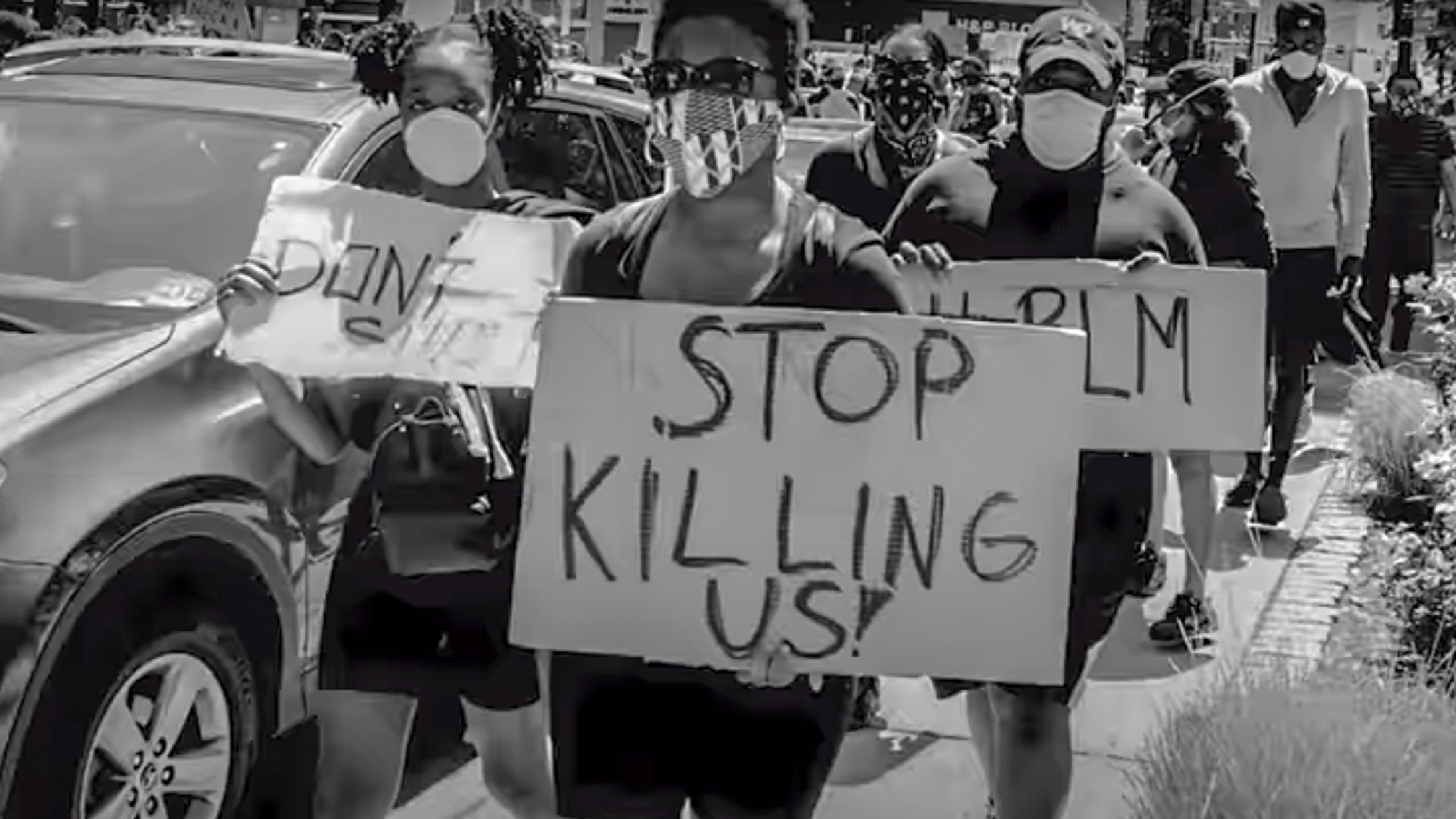
WASHINGTON – Black Lives Matter activists recently took to the streets of Indianapolis to protest for Palestinians. In Congress, a lawmaker who cut her teeth as a Black Lives Matter organizer and who has compared her clashes with police to those faced by Palestinians tweeted Friday, “A cease-fire ends the bombardment – not the violence.”
And during the height of the recent Gaza hostilities, the official Black Lives Matter organization called for “Palestinian liberation,” six years after the group’s early leaders took a trip to the Middle East that planted the seeds for the current alliance.
Black Lives Matter, which has grown into a potent political force amid a national reckoning on race, has responded forcefully to the violence in the Mideast to extend its reach into foreign policy, pressing the Democratic Party to adopt a dramatically different approach to the long-standing Israeli-Palestinian conflict.
Whatever the aftermath of the violence in the region, it has starkly changed the Israeli-Palestinian debate in the United States, shifting it for many liberals from a tangled dispute over ancient, often-confusing claims to the far more familiar turf of police brutality and racial conflict.
“We understand that the liberation of Black people in the United States is tied to the liberation of Black people all over the world, and tied to the liberation of oppressed people all over the world,” said Melina Abdullah, co-founder of the Los Angeles chapter of Black Lives Matter. “Being in solidarity with the Palestinian people is something that’s been part of our work as Black Lives Matter for almost as long as we’ve been an organization.”
That message has reverberated through the Democratic Party in a new way over the past two weeks. That, in turn, is being met by frustration from Israel’s supporters who say the military conflict between Israel and Hamas, a Palestinian organization that the United States has designated a terrorist group, is nothing like the tensions on America’s streets.
“Most people recognize that there’s a totally different dynamic at work between a terrorist organization shooting 3,500 missiles into your country on the one hand, and the racial dynamics that take place in American cities,” said Mark Mellman, president of Democratic Majority for Israel. “The failure to recognize that difference becomes fundamentally misleading.”
Some supporters of Israel also say that framing the Middle East conflict as a racial issue badly misrepresents what is at its heart a territorial struggle between two peoples with claims to the same land.
Some Republicans are going further, accusing Black Lives Matter activists of extremism and antisemitism. The activists counter that they are standing up not for Hamas, but for the numerous Palestinians who they say have long been evicted, terrorized and treated like second-class citizens.
The tensions reflect the striking success of Black activists in shifting the Democratic Party’s frame of reference over the past year on a range of issues, so that racial justice undergirds the debate on everything from climate change to health care to tax cuts. The eruption in Gaza marks the extension of that shift into the international arena.
One measure of this is that President Joe Biden, after initially taking a more traditional posture of stressing Israel’s right to defend itself, shifted to a tougher stance of calling for a cease-fire and ultimately demanded that Israel de-escalate.
Biden in many ways has aligned himself with Black Lives Matter over the past year. He knelt in solidarity with protesters in his first non-virtual campaign event during the pandemic. He has talked repeatedly with the family of George Floyd, whose murder at the hands of Minneapolis police became a fulcrum for a national conversation about police brutality against Black people.
But the limits of the activists’ influence on Biden also came into focus Friday, when he told reporters that “there is no shift in my commitment to the security of Israel.”
Biden added: “I think that, you know, my party still supports Israel. Let’s get something straight here: Until the region says unequivocally they acknowledge the right of Israel to exist as an independent Jewish state, there will be no peace.”
Other White House officials also played down the differences in the party.
“The president doesn’t see this through the prism of domestic politics,” White House press secretary Jen Psaki said on Thursday. She added later, “There’s a disagreement on tactics, there’s a disagreement on some aspects of how we engage, but we all agree that we want to end the suffering.”
Pressure from activists is only part of the shifting Democratic landscape. Biden, 78, and others of his generation came of age when Israel was more liberal politically, more vulnerable militarily and fewer years removed from the Holocaust. As Israel has become more powerful, its politics have become more hawkish and right-leaning, dismaying many former Democratic supporters.
Prime Minister Benjamin Netanyahu’s open embrace of former president Donald Trump and the GOP over the past four years further alienated many liberals.
Black Lives Matter activists say an alliance with Palestinians is natural, since, as they see it, Israeli police are brutalizing Palestinians much like American officers mistreat unarmed Black people and protesters.
A new generation of liberal Black House members is making that case on Capitol Hill. Rep. Cori Bush, D-Mo., a former Black Lives Matter organizer who gained prominence in the protests of the deadly police shooting of an unarmed Black young man in Ferguson, Mo., delivered a speech on the House floor tying that experience to the plight of the Palestinians.
“As we march in defense of Black lives, we are not just saying that Black people in this country should be able to live full and joyous lives,” Bush said in a statement to The Post. “We’re saying that our own government is funding a brutal and militarized disposition towards our very existence – from Ferguson to Palestine.”
Bush, who declined to be interviewed, said Palestinians have endured “military occupation, policing, and apartheid,” terms that are rejected by many other Democrats.
Rep. Jamaal Bowman, a freshman Democrat from New York who unseated longtime Democratic Rep. Eliot Engel, a staunch Israel defender, also argued that the experience of Palestinians is related to that of Black Americans.
“As a Black man in America, I understand on a personal level what it means to live in a society designed to perpetuate violence against people who look like me,” he said in a statement. “My experience of systemic injustice, including being beaten by police at 11 years old, informs my view of what’s happening right now in Israel and Palestine.”
During the recent hostilities, even some centrist Democrats altered their previously unwavering support for Israel, calling for a cease-fire rather than unequivocally supporting Israel’s assertion that the assault on Gaza was necessary for self-defense.
Some Democrats point to Senate Majority Leader Chuck Schumer, D-N.Y., as an example of the current trends in the party. A longtime Israel hawk, Schumer said little during the recent conflict and voiced support for a statement from his colleagues urging a cease-fire even before Biden did so publicly.
Schumer faces reelection in a state where many residents support Israel, but younger liberals such as Bowman and Rep. Alexandria Ocasio-Cortez, D-N.Y., are gaining influence, and some Republicans suggested he had caved to Israel’s opponents to dodge a primary challenge. A Schumer spokesman declined to comment on the GOP criticism.
Now that a cease-fire has been declared, however, it’s less clear that Black Lives Matter activists and their allies can coalesce around a set of demands that will drive the Mideast debate in the coming months.
Some critics of Israel support the Boycott, Divestment and Sanctions (BDS) movement, for example, while others are sharply opposed. And while some favor imposing conditions on Israel in exchange for U.S. aid, agreement is elusive on what those conditions should be.
And questions remain about whether prominent Democrats will distance themselves from Black Lives Matter activists if those activists continue to make outspoken statements on the Mideast.
After BLM tweeted support for Palestinians, the BDS National Committee responded: “Thank you for your solidarity. From Ferguson to Palestine, our struggles against racism, white supremacy and for a just world are united!”
Even some of the more forceful advocates of a tougher line against Israel, such as Sen. Bernie Sanders, I-Vt., do not support boycotting the U.S. ally.
While the alliance is currently gaining more notice, Black activists have been forming links with Palestinian leaders for decades, often describing them as fellow representatives of an oppressed group.
In 2015, half a dozen members of the Black Lives Matter organization joined other activists on a 10-day trip to the Palestinian territories and Israel, hoping to make a connection with activists on the other side of the globe.
They met with members of the Palestine Liberation Organization, met a young poet whose family had been forced to give half their house to Jewish settlers and visited the site of the Ibrahimi Mosque massacre. When they returned, the organization issued a statement of solidarity with Palestinians.
“We have to connect all of the struggles for liberation,” Abdullah said. “You can’t be on the front lines for the struggle for freedom for one group of people, and then be silent on everyone else’s.”
Published : May 23, 2021
By : The Washington Post · Sean Sullivan, Cleve R. Wootson Jr.



 Covid-19 cases and deaths in Asean see slight decline