New Era ADR บริษัทเทคโนโลยีแห่งใหม่ในชิคาโกจึงได้เปิดตัวแพลตฟอร์มการดำเนินคดีความแบบเสมือนจริงเป็นครั้งแรกที่ช่วยแก้ไขข้อพิพาททางธุรกิจภายในเวลาไม่เกิน 100 วัน และสามารถใช้ได้กับธุรกิจทุกขนาด ซึ่งจะช่วยประหยัดเวลาและค่าใช้จ่ายไปได้ถึง 90%
New Era ADR มองว่าการฟ้องร้องทำให้ธุรกิจตกอยู่ในความเสี่ยงและยังต้องเสียค่าใช้จ่ายนับล้าน ยิ่งไปกว่านั้นกองเอกสารเป็นตั้งๆ และการพิจารณาคดีที่ยืดเยื้อนานหลายปีจะขัดขวางการดำเนินการของบรรดาธุรกิจต่างๆ
ทั้งนี้ New Era ADR เพิ่งก่อตั้งเมื่อปี 2020 โดยทีมงานซึ่งมีประสบการณ์ในอุตสาหกรรมเทคโนโลยี พร้อมทีมทนายความที่มีประสบการณ์ด้านกฎหมายนานนับ 10 ปี ซึ่งสามารถระดมทุนในระดับ Pre-Seed ไปได้ 1.5 ล้านเหรียญสหรัฐ
Collin Williams ประธานและผู้ก่อตั้งบริษัท New Era ADR มองว่าในศตวรรษที่ 21 กระบวนการระงับข้อพิพาทไม่ควรต้องใช้เวลาหลายปีเหมือนที่ผ่านมา เขาต้องการเทคโนโลยีที่ช่วยเหลือโจทก์และทนายความของตนในการหาข้อยุติจริงๆ โดยไม่ต้องเสียเวลานาน
Rich Lee ซีอีโอและผู้ร่วมก่อตั้ง New Era ADR เผยว่าพวกเขากำลังพยายามแก้ไขปัญหาที่ส่งผลกระทบต่อธุรกิจนับไม่ถ้วนที่ติดอยู่ในขั้นตอนการดำเนินคดีในสหรัฐซึ่งมีมากกว่า 19 ล้านคดีต่อปี และยังไม่มีใครเคยสร้างแพลตฟอร์มที่มุ่งเน้นการแก้ไขข้อพิพาททางธุรกิจที่มีประสิทธิภาพและเป็นธรรมเช่นนี้มาก่อน
D.C. officials ignore growing pressure to end 23-hour covid lockdown at jail
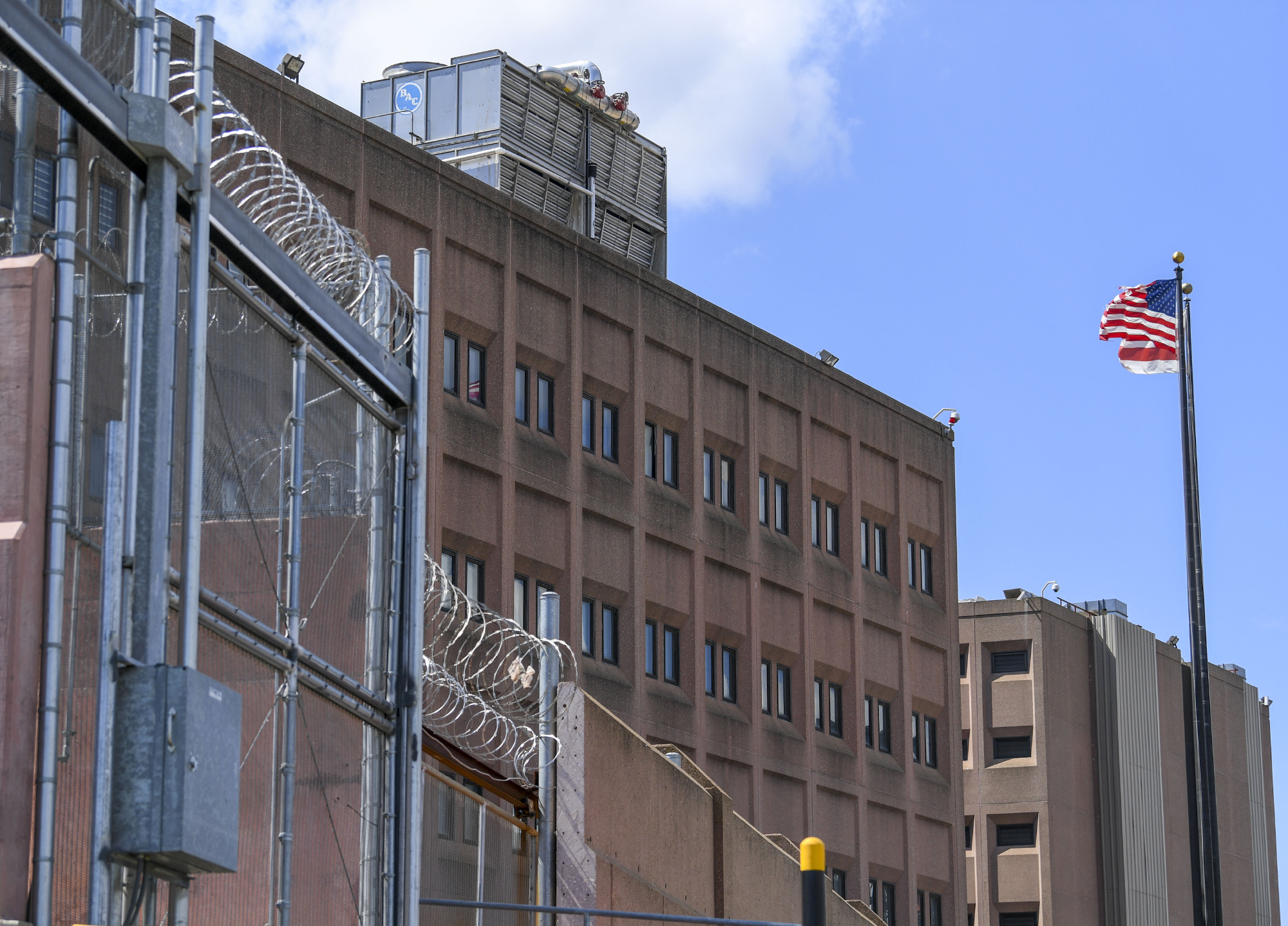
WASHINGTON – D.C. officials said this week they have no plans to relax the virtually around-the-clock confinement of 1,500 jail inmates to their cells, despite growing pressure from lawmakers to end a coronavirus lockdown that has now lasted for 385 straight days.
The 23-hour-a-day lockdown has been denounced by experts as a human rights abuse and a form of mass solitary confinement.
On a call with D.C. Council members Friday and in a letter Wednesday to Charles Allen, D-Ward 6, chairman of the Council’s judiciary and public safety committee, city officials said that lifting what they term a “medical stay-in-place” policy could needlessly expose jail inmates and staff to the risk of covid-19. They also pointed to federal court oversight, instituted after inmates sued the city last spring for inadequate virus containment policies, that they said tied their hands.
“We had a crisis, and covid is still with us,” City Administrator Kevin Donahue told Council members Friday. “We can’t have and don’t want an outbreak of covid in the jail.”
Donahue said the court has been “very prescriptive as to social distancing” and noted that only 58 inmates have tested positive for coronavirus in the last 10 months – evidence that the restrictive policy is working after hundreds of cases in the early months of the pandemic, before the lockdown began.
“We want to lift and ease up the medical stay in place, and we will do so as soon as we can,” he said.
But those rationales were challenged by council members, including Allen and Christina Henderson, I-At Large. Allen noted that the federal injunction governing the jail’s virus controls makes no reference to the 23-hour-per-day cell confinement that has been in place at the jail since last April. At the very least, he said, the city needs to begin planning for how it will end the lockdown safely.
“It doesn’t appear there’s an exit strategy,” Allen said.
This week The Washington Post reported on the details of the ongoing lockdown and the lack of plans for ending it.
For more than a year, inmates have been locked in their cells – alone or sometimes with a cell mate – and released for only one hour each day on a rolling schedule, sometimes at 3 or 4 a.m. Until this month, for reasons that jail officials have not been unable to explain, inmates were not allowed outside, despite the decreased risk of infection in an outdoor setting.
Barber services and library access were halted, as were all in-person visits.
One inmate who spoke to The Post by phone from the jail, and has been there for 11 months, said he had begun to talk to himself and that many of the men around him had grown long hair, beards and fingernails. Jail officials said grooming services for inmates have resumed on a limited basis and will be available to all again in July.
The District’s approach contrasts with those of other jails and prisons with more measured containment policies, according to corrections officials outside the city. The “23-and-1” lockdown has sometimes been used as a last resort, but usually as a short-term measure to extinguish an outbreak.
Craig Haney, a psychology professor at the University of California, Santa Cruz who has studied the effects of solitary confinement, said the city’s extended lockdown was “very dangerous” and could do lasting harm.
The lockdown even became ammunition this week for Republican members of Congress – rarely among the advocates for incarcerated people in the nation’s capital – amid a historic House vote to approve D.C. statehood. One congressman compared the city to “authoritarian governments such as Russia.” Another said the District was “essentially torturing its inmates,” WAMU reported.
The overwhelming majority of the jail’s inmates are Black men. Many have not been found guilty of the charges they face.
Last spring the jail came under heavy criticism for a lack of protective equipment and basic social-distancing regulations, problems that afflicted many other correctional systems across the country. A judge ultimately ordered the city to better protect inmates, correctional officers and other jail workers.
In a letter to Allen this week, D.C. Department of Corrections Director Quincy Booth said that until “there is a dismissal of the injunction foisted upon the agency” the jail could not change its policies.
But Steven Marcus, a staff attorney at the D.C. Public Defender Service who is representing inmates in the litigation, said the court had not required the lockdown, which he said would be unnecessary if the jail adopted other protection measures.
“There is absolutely nothing in the court’s currently effective order requiring the jail to impose the harmful, continuous lockdown,” Marcus said. “Indeed, if the Department of Corrections did comply with the court’s order and implement surveillance testing, there would be no need for the department’s across-the-board lockdown.”
Donahue said Friday that as more of those who work or are incarcerated at the jail receive vaccines – about a third of inmates have received their first shot, according to jail officials – city officials hope to revisit the court’s current social-distancing guidance.
Photo: The D.C. jail, where 1,500 inmates have been confined to their cells for 23 hours a day for more than a year to prevent covid-19 outbreaks.
Manslaughter case in Park Police killing of Bijan Ghaisar moves to federal court
The family of Bijan Ghaisar, who was shot to death by two U.S. Park Police officers in 2017, watched in amazement as the prosecution of a former police officer, Minneapoliss Derek Chauvin, moved from charging to trial to conviction in 11 months for the murder of George Floyd.
“Ihope that would be an example of how these cases should be handled,” Ghaisar’s mother, Kelly Ghaisar, said Friday.
Kelly Ghaisar spoke outside federal court in Alexandria, where a judge had just ordered the manslaughter case against the officers accused of killing her son be heard, rather than in Fairfax County, where the officers were indicted last year. No date was set for a trial or pretrial motions, in which the officers’ lawyers said they will invoke the immunity of federal officers from state prosecution and move to dismiss the case.
“Here we are, 3 ½ years later,” Kelly Ghaisar said, “and all we have is a hearing to see if they have immunity. The judicial system, everything, has failed Bijan.”
The hearing Friday in front of Senior U.S. District Judge Claude M. Hilton was the first time the Ghaisars had come face-to-face with Park Police officers Lucas Vinyard, 39, and Alejandro Amaya, 41, who were indicted by a Fairfax grand jury last October. The officers sat quietly with their lawyers and declined to comment after the hearing. Both are on paid leave from the Park Police, whose commanders have never publicly discussed the case.
The Ghaisars sat directly behind the officers. “My chest was so heavy, it was about to burst,” Kelly Ghaisar said. James Ghaisar, Bijan Ghaisar’s father, said, “I believe if the officers were local, with all the support we’ve received from Congress and local officials, we would have had much, much faster results. But because they’re federal officers, it’s been 1,253 days since they killed my son. This is so sad, how unbelievable this bureaucracy is.”
After Ghaisar’s Jeep Grand Cherokee was rear-ended by a Toyota Corolla on the George Washington Memorial Parkway on the evening of Nov. 17, 2017, Vinyard and Amaya pursued him with lights and siren on down the parkway in Fairfax County. Twice Ghaisar stopped, then drove off as the officers ran at his Jeep with guns drawn, a video recorded by a Fairfax County police in-car camera shows. A Fairfax lieutenant had joined the pursuit. The Park Police do not have in-car or body-worn cameras.
At a third stop, after Ghaisar had pulled off the parkway and into the Fort Hunt neighborhood of Fairfax, the officers again emerged with guns drawn and Ghaisar again started to slowly drive off. Both officers fired five times, an FBI investigation found, and Ghaisar, 25, was killed. He was unarmed.
Two years after the shooting, in 2019, the Justice Department decided not to pursue federal criminal civil rights charges against Amaya and Vinyard, saying it could not prove they acted with willful use of unreasonable force. In 2020, Fairfax Commonwealth’s Attorney Steve Descano presented the case to a special grand jury, which indicted the officers on charges of involuntary manslaughter and reckless use of a firearm.
Federal law allows federal officers, being prosecuted by state officials, to remove the case to federal court. The lawyers for Vinyard and Amaya made such a motion in November. Descano enlisted the Virginia Attorney General’s Office to litigate the case in federal court, and they opposed the removal to federal court, but Hilton granted it.
“I do find that this case has been properly removed to district court,” Hilton said. “The defendants have a right to present a defense of immunity.”
The lawyers for the officers, Jonathan Fahey and Daniel Crowley, said they would file motions seeking to have the case dismissed. Federal case law has held that if federal officers wereacting in their official capacities, and their actions were “necessary and proper,” they may not be prosecuted in state court, under the supremacy clause of the U.S. Constitution. The Constitution also states that state authorities must defer to federal law.
Hilton did not set a date to hear those motions, or for a trial if he were to deny the officers immunity. Instead, he set May 14 as a date for an initial appearance and to set conditions of bond. Hilton is also presiding over the Ghaisars’ lawsuit against the Park Police and has postponed it indefinitely pending the outcome of the criminal case.
When a hearing is held on the issue of immunity, it is likely to be a mini-trial of the officers’ thoughts and actions, lawyers in the case have said. And after Hilton rules, the losing side is likely to appeal, which will further delay the case.
Descano and Virginia Attorney General Mark R. Herring, D, issued a statement after the hearing that said they were disappointed in the judge’s ruling. “We believe that the Commonwealth must be able to hold people accountable for crimes that they commit in Virginia,” they said in the statement. “That being said, today’s decision will keep this case moving forward toward finally getting justice for Bijan Ghaisar and his family.”
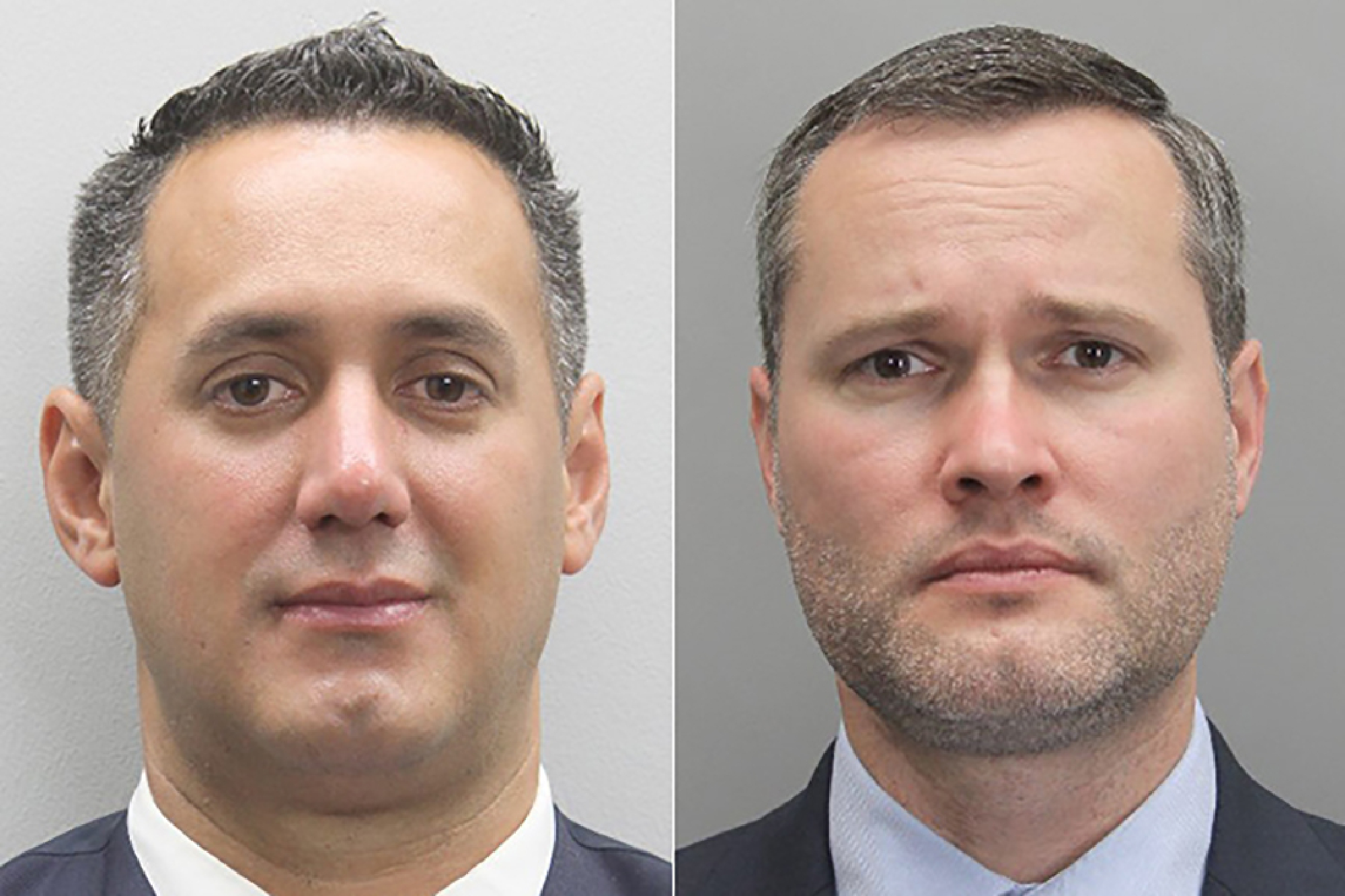
Photo: U.S. Park Police officers Alejandro Amaya, left, and Lucas Vinyard, are charged in the 2017 shooting death of Bijan Ghaisar. MUST CREDIT: Fairfax County Sheriff’s Office
Photo: U.S. Park Police officers Alejandro Amaya, left, and Lucas Vinyard, are charged in the 2017 shooting death of Bijan Ghaisar.
นักวิเคราะห์จากบริษัท Great Hill ในแมสซาชูเซตส์กล่าวว่าอาจเป็นเรื่องยากที่ข้อเสนอจะผ่านความเห็นชอบจากสภาคองเกรส เนื่องจากสมาชิกจากฝั่งพรรครีพับลิกันมีจุดยืนที่ต้องการให้ลดภาษีเพื่อกระตุ้นเศรษฐกิจที่กำลังอยู่ในช่วงฟื้นฟู แต่หากผ่านอาจส่งผลให้ดัชนีดาวโจนส์ดิ่งลงรุนแรงถึง 2,000 จุด

 เมื่อการฟ้องร้องต่อศาลต้องใช้เวลายืดเยื้อยาวนานทั้งยังใช้เงินมหาศาล สตาร์ทอัพอเมริกันรายนี้จึงเปิดแพลตฟอร์มดำเนินคดีออนไลน์ที่เคลมว่าช่วยประหยัดเวลาและค่าใช้จ่ายไปได้ถึง 90%
 สำนักงานอัยการเขตแมนฮัตตันประกาศส่งมอบโบราณวัตถุ 13 ชิ้นกลับคืนสู่ประเทศไทย
 โจ ไบเดนเล็งขึ้นภาษีกำไรนักลงทุนส่งผลให้นักลงทุนพากันเทขายหุ้นและสกุลเงินดิจิทัล
 ภาวะขาดแคลนออกซิเจนสำหรับผู้ป่วยโควิดในอินเดียวิกฤตจนรัฐบาลต้องเร่งนำเข้าพร้อมสั่งห้ามไม่ให้ใช้ออกซิเจนในภาคอุตสาหกรรม
 ภาพถ่ายดังกล่าวเป็นฝีมือการลั่นชัดเตอร์ของเจ้าหญิงแคเธอรีนพระมารดา

 วิกฤตเศรษฐกิจที่เกิดขึ้นในเมียนมาจากการรัฐประหารจะส่งผลให้มีประชาชนอดอยากราว 3.4 ล้านคนภายใน 6 เดือนข้างหน้า
 ทางการชิลีปรับ 2 สัตวแพทย์ฉีดวัคซีนสำหรับสุนัขให้มนุษย์อ้างช่วยป้องกัน Covid-19
 เรือดำน้ำ KRI Nanggala-402 ของอินโดนีเซียหายไปเป็นวันที่ 3 แล้วขณะที่ออกซิเจนภายในเรือกำลังจะหมดลง

