Toyota unveils new EV, joins Volkswagens bet on electric future
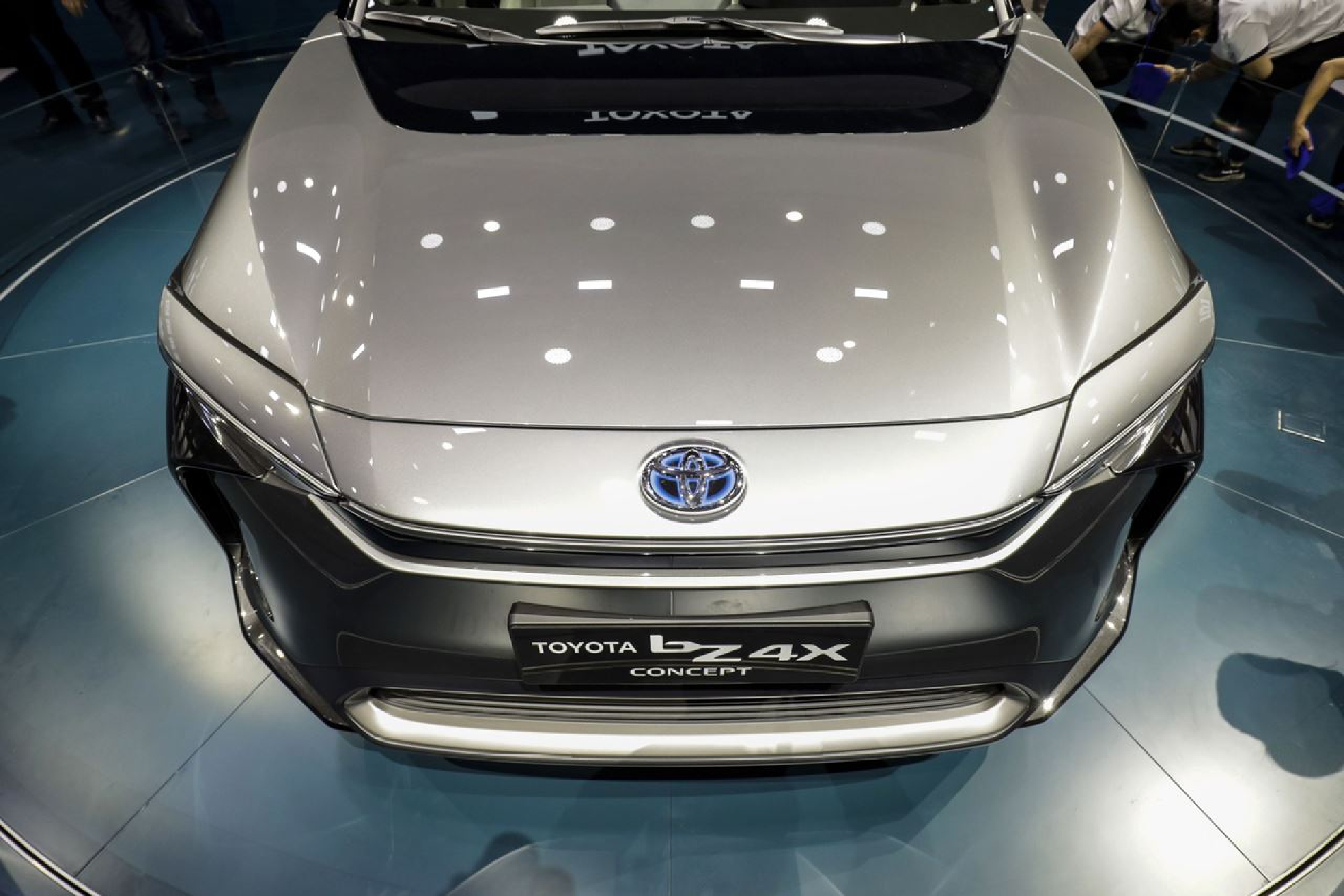
Toyota is accelerating up its push into electric vehicles with the release of its first SUV built on a new EV platform, joining Volkswagens splashy bet on the future of electric cars.
The world’s largest carmaker previewed its “bZ4X,” an electric SUV sitting on its new “e-TNGA” platform at the 2021 Shanghai Auto Show on Monday. The vehicle is a compact SUV that resembles Toyota’s popular Rav-4, but is built on a entirely new platform and features a distinctive yoke instead of a traditional steering wheel, as well as a system that can recharge the car’s battery using solar power.
By 2025 Toyota plans to introduce 15 EVs, including seven “bZ” series models globally, said Toyota Chief Technology Officer Masahiko Maeda, speaking at a briefing Monday. The bZ4X is the first of the “bZ” series, which stands for “beyond zero,” or cars that exceed being “just zero-emission,” according to Toyota.
Toyota plans to produce the bZ4X in Japan and China and sell it worldwide by mid-2022.
The move from Toyota comes as major automakers pivot toward electrification, with countries from Japan to the U.K. pledging to phase out gasoline-only vehicles over the coming decades. Until now, hybrid heavyweight Toyota had taken a more cautious approach to EVs, but that’s starting to change with the latest debut. By comparison, Volkswagen, Toyota’s main global rival, announced last month a $29 billion bet on new battery technology to accelerate its shift to EVs.
“Toyota isn’t behind Volkswagen and others when it comes to EV development, it just hasn’t been as vocal as others,” said Bloomberg Intelligence analyst Tatsuo Yoshida. “The ambitious announcement for new models was a surprise, but it was just Toyota finally revealing what it’s been working on for some time.”
The Japanese automaker says the e-TNGA platform will speed up deployment of new EVs, reducing development time and allowing different models to be designed in parallel. The platform can be fitted to a broad range of vehicle sizes, and while certain key elements remain fixed, the battery and electric motor – the most expensive parts of an EV – can be adjusted based on the model.
The ability to produce cars of different prices and sizes based on its modular platform will give Toyota the ability to reach a wider swathe of consumers – younger consumers in China demanding smaller and cheaper models such as the $4,230 SAIC Motor Corp.-General Motors Hongguang Mini EV. The e-TNGA platform is a similar approach to that Volkswagen is taking with the MEB car platform, used by the German automaker and its subsidiaries for electric car development.
“In the years since we first introduced the Prius, we’ve not pushed forward with any single technology, instead preparing numerous options including fuel cell, hybrid, plug-in hybrid and electric vehicles,” Toyota’s Maeda said. The company will expand its number of electrified models, which includes hybrids, to around 70 by 2025.
Published : April 20, 2021
By : Syndication Washington Post, Bloomberg · Emma O’Brien, River Davis
Rift between GOP, corporate America creates opening for Bidens tax plan
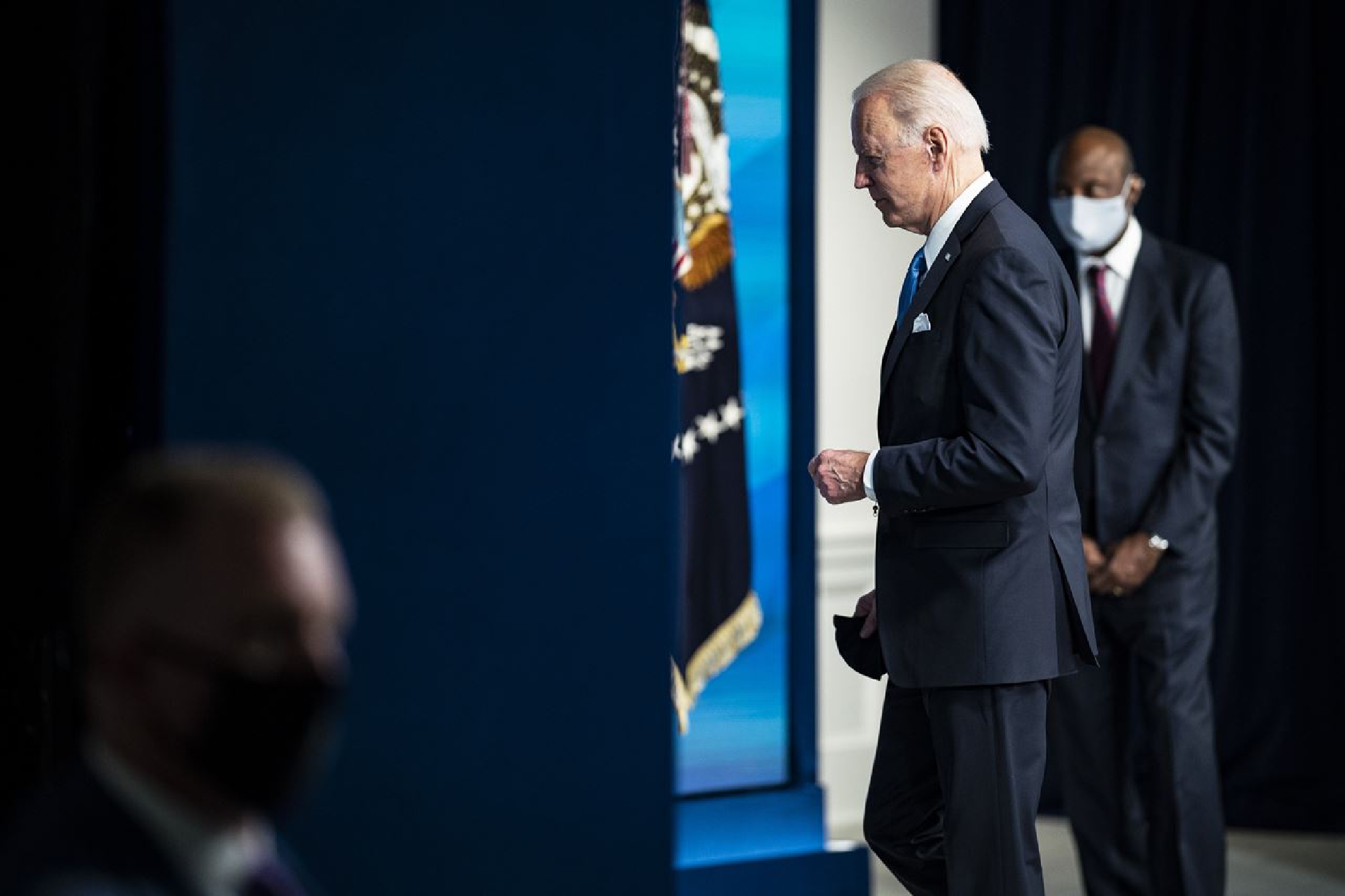
WASHINGTON – The morning that President Joe Biden introduced his jobs and infrastructure plan, senior White House officials briefed Goldman Sachs CEO David Solomon, Bank of America CEO Brian Moynihan, and four other chief executives of the countrys biggest banks about the measure.
WASHINGTON – The morning that President Joe Biden introduced his jobs and infrastructure plan, senior White House officials briefed Goldman Sachs CEO David Solomon, Bank of America CEO Brian Moynihan, and four other chief executives of the country’s biggest banks about the measure.
White House officials in a 24-hour period also briefed powerful business groups such as the National Association of Manufacturers, the Chamber of Commerce, and Business Roundtable about the proposal, while also planning outreach to thousands of small businesses. White House senior adviser Cedric Richmond and White House National Economic Council Director Brian Deese were among the administration’s emissaries for the legislation.
The meetings were in part the result of an effort from the Biden administration to take advantage of the growing rift between corporate America and the Republican Party as they seek to sell the nation on more than $2 trillion in tax hikes.
“We have prioritized business outreach; we think they have an important role to play and that their voice is important,” said Zach Butterworth, the White House’s director of private sector engagement. “They know we’re operating in good faith and that we’re proposing policies that are good for workers and good for business.”
The strategy is aimed at blunting the ferocity of business opposition to the tax hikes, likely the most controversial part of Biden’s jobs and infrastructure package. White House officials have argued to corporate executives that the tax hikes are necessary to fund large investments in public infrastructure that the business sector has long sought. But Democratic officials also recognize that their efforts risk bringing about a quick reconciliation between the GOP and business community, driving them together in opposition against a common foe.
Commerce Secretary Gina Raimondo has spoken to more than 50 leading executives in recent days about the plan, according to her spokeswoman.
“Some [executives] have said they’re fine with the tax increases as proposed; others have said they’re expecting a corporate tax increase” and were relieved Biden is not pushing for it to be increased to 35 percent, Raimondo said in an interview. The corporate tax rate was at 35 percent before Trump’s 2017 tax law. “Others have said maybe there’s some room for compromise on the rate or that the base doesn’t have to be broadened as much. To which I say: ‘The president has been very clear; there is room for compromise.”
Corporate America’s relatively muted reaction thus far to significant tax hikes was until recently unthinkable and reflects major changes in U.S. politics – the most important of which may be the recent falling out between the GOP and business elites.
When congressional Republicans worked to approve a $2 trillion tax cut in 2017, the GOP and corporate America worked together seamlessly to build support for the measure and push it into law.
Now, that relationship is under unprecedented strain. Congressional Republicans are incensed by corporate criticisms over GOP-backed voting restrictions and stances on culture war issues. Business groups, meanwhile, have increasingly eyed the GOP as a dangerous partner, toxic to their brand and harmful to their ability to recruit young worker talent.
“Capitol Hill Republicans and big business groups like the Chamber [of Commerce] are not as close as they once were. And that weakens their ability to affect the tax bill; it just does,” said Matt Mackowiak, who runs Potomac Strategy Group, a Republican political and corporate consulting firm.
The rift began under former President Donald Trump but was dramatically accelerated after the Jan. 6 Capitol riot and disagreements over a new Georgia voting rights law. Those disputes come on top of months of fights over other issues, such as climate change and transgender rights, in which parts of corporate America has tried to find separation from the conservative base. GOP lawmakers such as Sen. Ted Cruz, R-Texas, have pushed for revoking antitrust immunity for Major League Baseball – which moved the All-Star Game out of Georgia due to the voting law – and said “cancel culture” has infected elite business circles.
“It’s a thankless job defending corporate America, and it’s even more thankless when corporate America is simultaneously poking you in the eye,” said Brian Riedl, a former aide to Sen. Rob Portman, R-Ohio, now at the Manhattan Institute think tank. “When I talk to Republicans, they are really, really frustrated about this. They are exhausted from defending the 2017 tax cuts from attacks that it was too tilted to the rich and don’t see political upside in defending low taxes for corporations.”
An increasing number of Republicans are taking a more aggressive stance against big businesses. Andrew Surabian, a Republican strategist, said: “If these corporations want to act like mini-governments and they’re going to throw in with the other side nonstop, we should stop pretending they’re our allies. If they’re not our allies, why would we ever waste any political capital on them for some of the very unpopular things they want to get done in government?”
To be sure, both business groups and Republican lawmakers have criticized the Biden tax plan as likely to hurt American workers and U.S. competitiveness internationally.
Senate Majority Leader Mitch McConnell, R-Ky., has joined other GOP leaders in repeatedly slamming the “massive tax increases on all the productive parts of our economy.” Republicans have ruled out supporting an infrastructure package that includes corporate tax hikes, pushing instead for the funding to be raised from user fees.
A senior Senate Republican aide, who spoke on the condition of anonymity to describe internal thinking, said: “Regardless of what the business community does, Republicans will never not be energized to run against Democrats who raise your taxes.”
And many people in both the GOP and business community believe the rift will mend as the corporate tax hikes become closer to a reality. Congressional Republicans stewed last fall when the Chamber of Commerce, a traditionally safely GOP ally, endorsed an unprecedented 23 House Democratic lawmakers in the 2020 elections. But last week, the Chamber came out with a blistering attack on Democrats’ voting rights bill, in a potential sign of reconciliation. The National Association of Manufacturers has warned Biden’s tax hikes would “cost a million jobs,” while the influential Business Roundtable has launched an advertising campaign opposing the measure.
Still, the White House’s tax plans have divided the business world in ways few predicted. Many small businesses, for instance, are largely spared from Biden’s proposed tax hikes and their advocates have been relatively quiet in opposing the measure. Other business groups stand to benefit substantially from other parts of the bill, such as its research and development funding and infrastructure investments.
Amazon, for instance, baffled some GOP lawmakers by saying it supported an increase in the corporate tax rate and cited the need to improve U.S. infrastructure. (Amazon chief executive Jeff Bezos owns The Washington Post.) Executives at Intel, Lyft, Ford, Toyota, and other leading firms have expressed positive sentiments about Biden’s push. Hospital and other health industry groups have backed the plan’s $400 billion investment in home care.
And further diminishing the extent of business opposition is that Biden’s tax hikes could be substantially weakened before final legislation is passed into law. Sen. Joe Manchin (D-W.Va.), whose vote Democrats need to pass the measure without Republican support, has been adamant that the corporate tax rate only be raised from 21 percent to 25 percent, rather than the 28 percent proposed by the White House. Corporate America would oppose such a measure but likely “could live with it,” as one lobbyist put it.
“A raise from 21 to 25 — which is where Manchin has put the marker at — is not going to create mass hysteria, particularly when many corporations had an economic boom during the pandemic,” said Jefrey Pollock, founding partner and president of Global Strategy Group, a public relations and polling firm.
Republicans are hopeful the tax hikes will remind business groups that Republicans are their natural allies. Lisa Spies, a GOP fundraiser, said that she is advising companies to not make knee-jerk decisions because they might come to regret it. Spies said they needed to remember that Republicans would likely support more of the policies that help their bottom line — and they would need them to defend their favored business stances.
“After the riots on January 6, I told people, why don’t you wait and see what the new president’s policies are and that should direct your giving?,” she said. “You should just focus on the policies.”
For now, though, business groups are keeping their distance from Republicans even as leading politicians like Florida Gov. Ron DeSantis hammer their priorities. Former Rep. Barney Frank, D-Mass., who faced intense industry opposition for banking reform proposals he advanced under President Barack Obama, said corporate America increasingly fears the impact of a populist right more than they do of the center-left Democratic establishment.
“The business community, responsible elements of the business community, have figured out it’s in their interest to help defuse angry populism,” Frank said. “They’re not afraid of Joe Biden. Biden does not say they’re bad people, and that’s a large part of it. But they’re also not as afraid as what Democrats will do. They’re much more afraid of the Republicans.”
Published : April 20, 2021
By : The Washington Post · Jeff Stein, Josh Dawsey
NASA flies helicopter on Mars, the first time aircraft has flown on another planet
NASA successfully flew its four-pound helicopter from the surface of Mars early Monday in the first powered flight of an aircraft on another planet, a feat that NASA officials compared to the Wright brothers first flight in 1903.
At about 3:30 a.m. Eastern time, the twin, carbon-fiber rotor blades began spinning furiously, and the chopper, called Ingenuity, lifted off the surface of the Red Planet. It reached an altitude of about 10 feet, where it hovered, buffeted ever so slightly by the wind, turned 96 degrees and then came softly back to the Martian surface in an autonomous flight that lasted just about 30 seconds, the space agency said.
Inside the flight operations center at NASA’s Jet Propulsion Laboratory in California, engineers broke into applause when confirmation of the flight arrived, more than three hours after the flight, in a data burst that traveled 178 million miles to Earth through a complex communications network – from the helicopter, to the rover, to a spacecraft in orbit around Mars, to NASA’s massive international Deep Space Network of antennae and, finally, to JPL.
The atmosphere in the room turned almost giddy when a still photo shot from the helicopter captured its shadow on the ground, followed by video of the aircraft’s flight, taken from the nearby Mars rover Perseverance.
“We can now say we’ve flown a rotorcraft on another planet,” MiMi Aung, NASA’s Ingenuity program manager, told the occupants of the flight control room, all masked to protect against the coronavirus. “We together flew on Mars. We together have our Wright brothers moment.”
She added: “We don’t know from history what Orville and Wilbur [Wright] did after their first successful flight. But I imagine the two brothers hugged each other. Well, you know, I’m hugging you virtually.”
Scientists say the successful test, which they called “a flawless flight,”could eventually help the space agency more quickly roam across Mars as it looks for signs of ancient life. Engineers are already thinking about future aircraft, as heavy as 50 pounds or more, that could carry science experiments years in the future, NASA officials said.
“It opens up new doors,” said Thomas Zurbuchen, NASA’s associate administrator for the science mission directorate. A helicopter can fly over craters and other areas not accessible by rovers, he said. And being able to “scout ahead is just absolutely critical.”
Michael Watkins, the director of NASA’s JPL, said that having eyes in the sky gives “us the third dimension. It freed us from the surface now forever in planetary exploration.”
To make the brief flight, Ingenuity’s technology had to overcome Mars’s super-thin atmosphere – just 1 percent the density of Earth’s – which makes it more difficult for the helicopters’ blades, spinning at about 2,500 revolutions per minute, to generate lift.
It was a triumphant add-on to the main part of NASA’s latest Mars mission – the Perseverance rover, a car-sized vehicle that is set to explore a crater that once held water and could yield clues to the history of the planet and whether life ever existed there. Deciding to build a helicopter that could fly on Mars was a project years in the making and one that was the result of “finding that right line between crazy and innovative,” Zurbuchen said.
Ingenuity, with four spindly legs and a solar panel and costing about $80 million, made the long journey to Mars tucked in the rover’s undercarriage.
As a tribute to the Wright brothers, Ingenuity has a postage-sized bit of fabric from the brothers’ aircraft, known as the Flyer, attached to a cable under the solar panel.
If all goes according to plan, the helicopter could make as many as four more flights in coming weeks, each one more ambitious than the last. The second, for example, would fly slightly higher, to 16 feet, and then horizontally for a little bit before coming back to the landing site. “We want to push it to the limit,” Aung said.
Aung told her team to celebrate, to enjoy the moment, but added: “This is just a first flight. Let’s get back to work and have more flights.” The next flight, she said later, would come “in the next few days.”
The flight was originally scheduled to occur last week. But a problem halted a test of the helicopter’s rotors, and the flight was delayed as engineers diagnosed and then fixed the issue. While expressing confidence, engineers acknowledged before the flight that anything so difficult and audacious could easily run into problems.
“We’re doing everything we can to make it a success, but we also know that we may have to scrub and try again,” Aung wrote in a blog on NASA’s website before the flight. “In engineering, there is always uncertainty, but this is what makes working on advanced technology so exciting and rewarding.”
สำนักข่าว Bloomberg รายงานว่าเอลอน มัสก์ (Elon Musk) ประธานเจ้าหน้าที่ฝ่ายบริหารของ Tesla เบี่ยงเบนความผิดจากกรณีอุบัติเหตุการชนอย่างร้ายแรงที่เกิดขึ้นกับรถ Tesla Model S ที่ชานเมืองฮูสตันจนมีผู้เสียชีวิต 2 ราย โดยเขาทวีตว่าข้อมูลเบื้องต้นที่บริษัทเข้าถึงได้ระบุว่ายานพาหนะไม่ได้เปิดใช้งานเทคโนโลยีช่วยเหลือผู้ขับขี่อัตโนมัติ
การเสียชีวิตเกิดขึ้นในช่วงเวลาที่สำคัญสำหรับ Tesla ผู้นำตลาด EV โดยได้เปิดตัวฟีเจอร์การขับขี่ในชื่อ “Full Self-Driving” ให้กับลูกค้าจำนวนมากที่ทดสอบเทคโนโลยีเบต้าล่วงหน้าก่อนการเปิดตัวในวงกว้างเมื่อเร็วๆ นี้
มัสก์ทวีตว่ามีการปรับปรุงเทคโนโลยีในแต่ละสัปดาห์และบริษัทมีแผนที่จะเปิดตัวบริการสมัครสมาชิก ทั้งนี้ Tesla จะรายงานผลประกอบการไตรมาสแรกในสัปดาห์หน้า
“เรามีส่วนร่วมอย่างแข็งขันกับหน่วยงานบังคับใช้กฎหมายในพื้นที่และ Tesla เพื่อเรียนรู้เพิ่มเติมเกี่ยวกับรายละเอียดของความผิดพลาดและจะดำเนินการตามขั้นตอนที่เหมาะสมเมื่อเรามีข้อมูลเพิ่มเติม” หน่วยงานกล่าวในข้อความถึง AFP
จับตาสโมสรฟุตบอลชั้นนำของยุโรปสิบสองแห่งประกาศจัดตั้ง Super League เหตุการณ์ดังกล่าวได้รับการวิพากษ์วิจารณ์อย่างหนักจากหน่วยงานฟุตบอลองค์กรแฟนบอลและนักการเมืองทั่วยุโรป นี่คือข้อมูลเบื้องต้นเกี่ยวกับลีกหน้าใหม่นี้
JP Morgan ธนาคารเพื่อการลงทุนของสหรัฐยืนยันเมื่อวันจันทร์กับสำนักข่าวรอยเตอร์ว่ากำลังจัดหาเงินทุนให้กับลีกใหม่ และในการประกาศของบรรดาสโมสรที่แยกตัวออกมากล่าวว่าสมาชิกผู้ก่อตั้งจะแบ่งเงิน 3,500 ล้านยูโร “เพื่อสนับสนุนแผนการลงทุนโครงสร้างพื้นฐานของพวกเขา และเพื่อชดเชยผลกระทบจากการระบาดของโควิด”
JP Morgan โดนถล่มเละ
สำนักข่าว Bloomberg รายงานว่า แฟนบอลยุโรปแสดงความเดือดดาลกับการที่ JPMorgan สนับสนุน Super League ทำให้ JPMorgan เป็นหัวข้อที่กำลังมาแรงใน Twitter แฟนรายหนึ่งบอกว่า “JP Morgan จะต้องเสียใจกับการสร้าง #SuperLeague กับเงินฝากทั้งชีวิตของฉัน” แฟนบอลผู้เกรี้ยวกราดคนหนึ่งเขียนบนทวิตเตอร์ “บัญชีถูกปิดแล้วและเงิน 32.25 ปอนด์จะไปที่อื่น!” อีกรายบอกว่า “ถ้าธนาคารของคุณคือ JPMorgan คุณแค่ย้ายเงินไปที่อื่น เราไม่เอา #SuperLeague”
เส้นของเปรซกับยักษ์การเงิน
เจ้าของไอเดียที่อยู่เบื้องหลังข้อเสนอ Super League คือฟลอเรนติโน เปเรซประธานมหาเศรษฐีของเรอัลมาดริดที่เคยเสนอแนวคิดคล้าย Super League มาก่อนจากการเปิดเผยข้อมูลของบุคคลที่มีความรู้เกี่ยวกับเรื่องนี้แต่ไม่ขอเปิดเผยตัวตนกับ สำนักข่าว Bloomberg ก่อนหน้านี้เปเรซยังพึ่งพา JPMorgan เพื่อช่วยในการปรับปรุงสนามกีฬาของสโมสรมาแล้ว
“เมื่อคุณไม่มีรายได้นอกเหนือจากโทรทัศน์ ต้องบอกว่าทางออกคือการสร้างการแข่งขันที่น่าดึงดูดมากขึ้นซึ่งแฟนๆ จากทั่วโลกสามารถชมสโมสรใหญ่ๆ ทั้งหมด และเราก็ได้ข้อสรุปว่าถ้าแทนที่จะมี Champions League แล้วเรามี Super League เราก็จะสามารถบรรเทาสิ่งที่เราสูญเสียไปได้”
สีจิ้นผิงกล่าวในปาฐกถาพิเศษของเขาในงาน Boao Forum for Asia ประจำปีซึ่งจัดขึ้นที่เมืองปั๋วอ๋าว มณฑลไห่หนาน เทียบเท่ากับการประชุม WEF ที่ดาวอสในเวอร์ชั่นของจีน โดยเขายังชี้ว่าการสร้างอุปสรรคและการผลักดันให้มีการสลัดความสัมพันธ์ระหว่างประเทศจะเป็นอันตรายต่อผู้อื่นและไม่มีประโยชน์ต่อผู้ใด
“ชาวกัมมุซึ่งเป็นกุลีของเราสวมเสื้อผ้าให้น้อยชิ้นที่สุดเท่าที่จะเป็นไปได้ บางครั้งก็เป็นเพียงผ้าผืนใหญ่พอที่จะใช้งานได้และไม่มีสถานการณ์เพียงพอที่จะป้องกันความหนาวเย็นได้” (Surveying and exploring in Siam หน้า 184)
แต่ยังอีกนานกว่าคนภายนอกประเทศลาวจะได้มีโอกาสเข้าไปเยือน เพราะต่อให้เจ้าหน้าที่ระดับสูงของลาวยกขบวนกันขึ้นไปปักธงแล้ว แต่พื้นที่โดยรอบก็ยังมีกองกำลังม้งอยู่ ในเดือนเมษายน 2021 นี่เอง Radio Free Asia ยังรายงานว่า กองกำลังของรัฐบาลลาวได้เปิดการโจมตีใหม่ต่อกลุ่มชาติพันธุ์ม้งที่อาศัยอยู่ในป่าใกล้ภูเขาภูเบี้ย ซึ่ง Radio Free Asia อ้างแหล่งข่าวชาวม้งและกลุ่มสิทธิว่าเป็นความพยายามของทางการที่จะนำคนพวกนี้เขาออกจากพื้นที่เป้าหมายสำหรับการพัฒนาและแผนการลงทุนจากต่างประเทศ (โดยจะมีการให้สัมปะทาน 99 ปี)


 ในขณะที่ Bitcoin ถอยลงมา แต่ Dogecoin ยังแรงไม่หยุดรับวัน Dogeday
 จีนก้าวไปอีกขึ้นกับการสร้างเครือข่าย 5G แม้ว่าจะถูกสกัดจากชาติตะวันตกในกรณี Huawei
 ขณะที่ทางการสหรัฐอาจะดำเนินการสอบสวนกรษณีที่เกิดขึ้น ซึ่งบั่นทอนความเชื่อมั่นต่อยานยนต์ขับขี่อัตโนมัติอย่างมาก
 เรื่องที่เราคุ้นเคยแต่อาจยังทำแบบผิดๆ อย่างการแปรงฟัน เป็นจุดกำเนิดของ Quip แปรงสีฟันที่จะช่วยให้ทุกคนแปรงฟันถูกสุขลักษณะแบบเป๊ะๆ


 ธุรกิจลูกหนังต้องสั่นสะเทือนเมื่อทีมดังในยุโรปบางทีมรวมหัวกันตั้งลีกขึ้นมาใหม่ ท้าทายลีกเดิม มันมีนัยด้านธุรกิจที่สำคัญแค่ไหน เราจะมาติดตามกัน
 ประธานาธิบดีสีจิ้นผิงของจีนเรียกร้องให้มีการกำกับดูแลทั่วโลกที่เท่าเทียมกันมากขึ้น ส่งสัญญาณไปถึงสหรัฐที่กำลังฟอร์มพันธมิตรเพื่อเล่นงานจีนและฝ่ายตรงข้าม
 จากยุคพระวิภาคภูวดลถึงกองกำลังม้ง ภูเขาที่สูงที่สุดในลาวมีความน่ามหัศจรรย์หลายๆ เรื่อง แต่มันยังเป็นที่ที่อันตรายที่สุดเช่นกัน


