Biden restores foreign policymaking process with Afghanistan decision #SootinClaimon.Com

#SootinClaimon.Com : ขอบคุณแหล่งข้อมูล : หนังสือพิมพ์ The Nation.

https://www.nationthailand.com/news/30405031

Biden restores foreign policymaking process with Afghanistan decision

InternationalApr 19. 2021
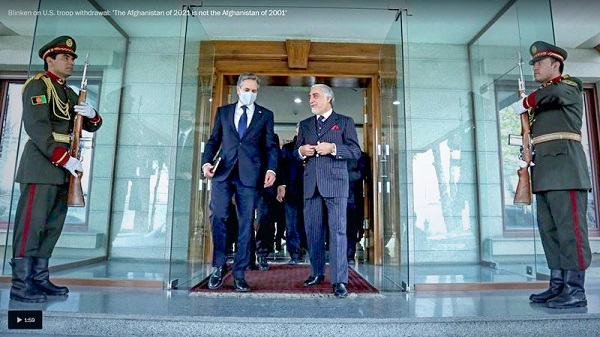
By The Washington Post · Karen DeYoung, Missy Ryan

WASHINGTON – Three months after taking office, President Joe Biden has reestablished the formal decision process, which his direct predecessor seemed determined to destroy, that has guided U.S. administrations through foreign policymaking since the Second World War.
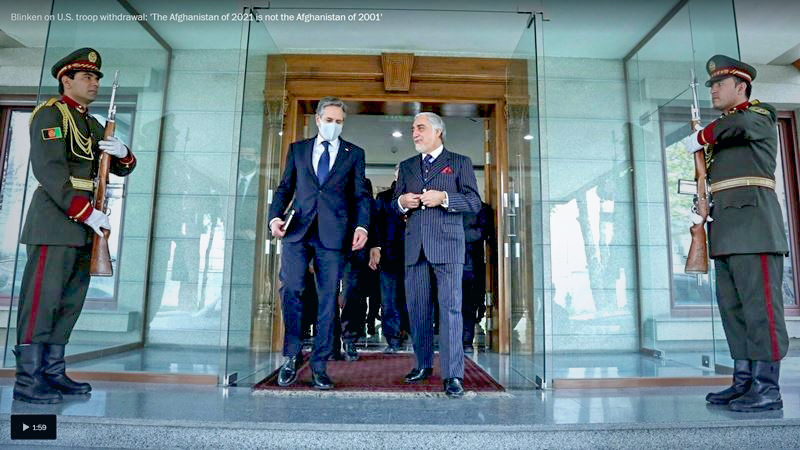
Afghanistan was among the first major issues on which the process, organized and directed by the National Security Council, became fully operational. Dozens of high-level meetings were held, including four sessions with the president in the Situation Room. Military, intelligence and diplomatic assessments were compiled, and consultations were held with allies and lawmakers.

Yet at the end of the day, Biden did not budge from where he began nearly 13 years ago, when a visit to Afghanistan as vice president-elect persuaded him, he said last week, that “more and endless American military force could not create or sustain a durable Afghan government.”

His decision to withdraw all of the few thousand American troops remaining in Afghanistan by Sept. 11 – the 20th anniversary of the 2001 al-Qaida terrorist attacks that began the war there – defied the advice of senior military leaders and raised significant national security questions.

U.S. officials said Gen. Mark Milley, chairman of the Joint Chiefs of Staff; Gen. Frank McKenzie, head of U.S. Central Command; and Gen. Scottie Miller, commander of U.S. and NATO troops, advocated a conditions-based approach, additional time for negotiation, or, at a minimum, keeping some sort of residual counterterrorism force on the ground in Afghanistan. The generals said the fall of Kabul to the Taliban, waves of Afghan refugees rushing to neighboring countries and Europe, and the reemergence of al-Qaida as a potent terrorist threat were possibilities.

Defense Secretary Lloyd Austin, asked by reporters last week in Brussels whether the top brass had agreed with the “down to zero” decision, rebuffed the question, saying “their voices were heard, and their concerns taken into consideration.”

Officials said Austin, like his counterparts in uniform, supported a continued military presence, though he shared his personal views with a small group of people. A Defense Department official said Austin’s approach was informed by his own experiences in uniform, including in Iraq, where he oversaw the Obama administration’s rapid withdrawal of forces in 2011. Less than three years later, the Islamic State took over a third of the country.

CIA Director William Burns, in testimony the day before Biden’s Wednesday announcement, told Congress that “when the time comes for the U.S. military to withdraw, the U.S. government’s ability to collect and act on threats will diminish,” he said of possible resurgence by al-Qaida and other terrorist groups with global ambitions. “That is simply a fact.”

At NATO, where Secretary of State Antony Blinken and Austin officially informed the alliance of the decision last week, Secretary General Jens Stoltenberg indicated that NATO members with troops in Afghanistan had little choice but to follow suit. “In light of the U.S. decision,” he said, “all Allies agreed to the statement” of joint withdrawal.

To many in the White House, widely reported accounts of the disagreements miss the point, especially in light of President Donald Trump’s habit of not even consulting the military before tweeting abrupt diktats on troop withdrawals.

Even Trump, however, often succumbed to after-the-fact military pressure to reverse his decisions.

A senior administration official acknowledged that “there were people among [Biden’s] senior team on both sides of this question. It’s certainly not that everybody was in favor of one option or the other.”

But the decision process worked “exactly how the system was designed to work,” the official said, speaking on the condition of anonymity under White House ground rules. “These decisions do not rest in our democracy with the Pentagon. They rest with the president.” The military’s views “are extremely consequential, given its role in the policy that is made. But the policy decisions rest with the president.”

Although Biden supported the initial deployment of U.S. troops to Afghanistan two decades ago, his views had changed sharply by 2009, when he argued against the force surge the military advocated and President Barack Obama ultimately approved.

In 2011, he was an outlier in publicly saying that the Taliban “per se is not our enemy” and had never expressed a desire to attack the U.S. homeland. During his presidential campaign last year, he vowed to end America’s “forever wars.”

Administration officials have cited Trump’s 2020 agreement with the Taliban to withdraw by May 1 this year as limiting Biden’s options. “We started from the perspective of having inherited a policy that candidly was not in a very good place,” the senior official said. “We had the lowest troop numbers since the early years of the war. We had the Taliban feeling ascendant on the battleground and kind of fighting the Afghan government to virtually a stalemate.”

“And we had this May 1 deadline,” he said, after which the Taliban had threatened to resume attacking any remaining U.S. and other allied forces on grounds that the Trump agreement had been broken.

Neither the United States nor the Taliban have complied with other elements of the agreement, including full prisoner releases, the lifting of sanctions against the militants and a reduction in overall violence. The militants have not severed their ties with al-Qaida, according to the Pentagon and the United Nations. Inter-Afghan talks began last fall but have gotten nowhere.

But the deadline gave Biden a template for the withdrawal. “It is perhaps not what I would have negotiated myself, but it was an agreement made by the United States government, and that means something,” he said in his Wednesday announcement. “So, in keeping with that agreement and with our national interest, the United States will begin our final withdrawal . . . on May 1 of this year.”

Administration officials disputed any suggestion that the three-month National Security Council review was a mere formality. “We ran a real process,” the senior official said. In addition to the Situation Room meetings Biden led, “the principals” – the top national security officials – met without the president three times in sessions chaired by national security adviser Jake Sullivan. Their deputies met at least 10 times, the official said, as risks and options were honed for delivery to increasingly higher levels. Afghanistan was a frequent topic of discussion during the president’s daily intelligence briefing, often attended by Austin and Milley, officials said.

“It’s noteworthy that, unlike previous policy reviews, particularly on this subject . . . there was remarkably little backstabbing and leaking in the press, people saying they weren’t being heard, the process was being circumvented, or the president had already made up his mind when he went into this,” the official said.

During the course of those meetings, if not before, the president came to several key conclusions. He rejected the notion that U.S. troops could or should be used as leverage to stem inter-Afghan violence or promote negotiations.

He believed that anything other than a fixed departure timeline meant going back to war with the Taliban. And he concluded that there was no viable middle option between setting a date certain for complete withdrawal or staying indefinitely.

By the time of NATO’s winter meeting of defense ministers on Feb. 17, though the decision process was incomplete, Austin began informing allies of the direction it was heading. In March, alarmed by news reports suggesting that the lack of a decision meant an indefinite stay was becoming more probable, Blinken told NATO foreign ministers that getting out was a very real possibility.

In a news conference at the end of March, Biden gave the clearest public indication of his thinking, saying that full withdrawal was “unlikely” by May 1, but that “I can’t picture” U.S. forces still being in Afghanistan when 2022 begins.

Some experts have questioned whether a refusal to leave meant return to war with the Taliban was inevitable. Others have noted that the United States has often used its military forces as leverage in other countries such as South Korea and Japan, where tens of thousands of troops are deployed to dissuade North Korea from attacking and to fight back if it does.

The militants have insisted that the May 1 deadline is real, no matter what timetable Biden has set for departure, and any foreign troops remaining after that will be subject to attack. The United States and NATO have promised aggressive retaliation if they are attacked while heading for the exit.

But the bottom line, according to several senior administration officials, is that Afghanistan is no longer a high U.S. priority, as it was in 2001, compared with the threats of 2021, including Chinese and Russian aggression, terrorist surges elsewhere in the world, climate change, global health and nonproliferation. Public opinion has strongly supported withdrawal.

The administration has pledged that it will continue paying for Afghanistan’s own security forces, pressing for inter-Afghan negotiations, providing humanitarian assistance, and using diplomatic and economic tools to keep the Taliban from returning to the draconian policies and repression of women and minorities that characterized the last time it controlled Afghanistan from the mid-1990s until the 2001 U.S. incursion in pursuit of Osama bin Laden that quickly became war with the Taliban.

In an interview on Sunday with ABC’s “This Week,” Blinken seemed to accept an inevitable militant takeover. If the Taliban has “any expectation of getting any international acceptance, of not being treated as a pariah,” he said, “it’s going to have to respect the rights of women and girls” or risk the withdrawal of “international recognition” and “international status.”

อิสราเอลเลิกบังคับสวมหน้ากากในพื้นที่กลางแจ้งแล้ว #SootinClaimon.Com

#SootinClaimon.Com : ขอบคุณแหล่งข้อมูล : หนังสือพิมพ์โพสต์ทูเดย์

https://www.posttoday.com/world/650685

วันที่ 18 เม.ย. 2564 เวลา 16:45 น.อิสราเอลเลิกบังคับสวมหน้ากากในพื้นที่กลางแจ้งแล้วทำไมอิสราเอลจึงทำได้สำเร็จ? ยกเลิกข้อกำหนดหน้ากากป้องกันไวรัสโคโรนากลางแจ้ง

รอยเตอร์รายงานว่า อิสราเอลยกเลิกการบังคับสวมหน้ากากอนามัยกลางแจ้งและเปิดโรงเรียนอย่างเต็มที่ในวันอาทิตย์ หลังจากค่อนข้างที่จะกลับสู่ภาวะปกติในระดับหนึ่งโดยได้รับแรงหนุนจากการรณรงค์ฉีดวัคซีนจำนวนมากเพื่อต่อต้านการระบาดของโควิด-19

ด้วยจำนวนเกือบ 54% ของประชากร 9.3 ล้านคนที่ได้รับวัคซีน Pfizer / BioNTech COVID-19 ทั้งสองครั้ง อิสราเอลจึงมีรายงสนการติดเชื้อและผู้ป่วยที่ลดลงอย่างรวดเร็ว

ระเบียบการสวมหน้ากากอนามัยที่บังคับที่ใช้ตำรวจเมื่อปีที่แล้ว ได้ถูกยกเลิกนับตั้งแต่วันอาทิตย์นี้ แต่กระทรวงสาธารณสุขกล่าวว่าข้อกำหนดดังกล่าวยังคงบังคับใช้สำหรับพื้นที่สาธารณะในร่มและเรียกร้องให้ประชาชนเก็บหน้ากากไว้ใกล้มือตลอด

เมื่อนักเรียนชั้นอนุบาลชาวอิสราเอล นักเรียนระดับประถมศึกษา มัธยมต้น และมัธยมศึกษาตอนปลายกลับเข้าเรียนแล้ว หลังจากที่ต้องเรียนที่บ้านหรือเข้าเรียนที๋โรงเรียนสลับกันไปเป็นระยะ

กระทรวงการศึกษากล่าวว่าโรงเรียนควรส่งเสริมสุขอนามัยส่วนบุคคล, การระบายอากาศในห้องเรียน และรักษาระยะห่างทางสังคมให้มากที่สุดในช่วงพักและระหว่างเรียน

ทั้งนี้ อิสราเอลนับชาวปาเลสไตน์เยรูซาเล็มตะวันออกเป็นหนึ่งในประชากรของประเทศและทำการการฉีดวัคซีนให้ แต่ชาวปาเลสไตน์ 5.2 ล้านคนในเขตเวสต์แบงก์ที่ถูกยึดครองโดยฮามาสและฉนวนกาซาที่ควบคุมโดยกลุ่มฮามาสได้รับวัคซีนที่ จำกัดโดยได้รับความช่วยเหลือจากอิสราเอล รัสเซียสหรัฐ อาหรับเอมิเรตส์ และผ่านโครงการแบ่งปันวัคซีน COVAX และจากจีน

สำนักข่าว AFP รายงานว่าเบนจามิน เนทันยาฮู นายกรัฐมนตรีอิสราเอลได้รับวัคซีน Pfizer / BioNTech หลายล้านโดสโดยตกลงที่จะแบ่งปันกับข้อมูลทางการแพทย์ของบริษัท Pfizer เกี่ยวกับผลกระทบของผลิตภัณฑ์ต่อการใช้กับประชาชนอิสราเอล

วัคซีนได้เปลี่ยนชีวิตในอิสราเอล ในช่วงกลางเดือนมกราคมประเทศมีผู้ติดเชื้อรายใหม่สูงสุด 10,000 รายต่อวัน แต่ขณะนี้มีผู้ติดเชื้อประมาณ 200 รายต่อวัน

อัตราการติดเชื้อรายใหม่ยังคงอยู่ในระดับต่ำแม้ว่าจะเริ่มให้นักเรียนกลับไปเรียนแบบตัวต่อตัวและมีการคลายข้อจำกัดในบาร์ร้านอาหารและการพบปะสังสรรค์ในร่ม

Photo by menahem kahana / AFP

พวกเขาไม่ใช่แค่ขายผัก แต่ Market Kurly ยังสร้างสตอรี่ให้กับเกษตรกร #SootinClaimon.Com

#SootinClaimon.Com : ขอบคุณแหล่งข้อมูล : หนังสือพิมพ์โพสต์ทูเดย์

https://www.posttoday.com/world/650233

วันที่ 18 เม.ย. 2564 เวลา 16:00 น.พวกเขาไม่ใช่แค่ขายผัก แต่ Market Kurly ยังสร้างสตอรี่ให้กับเกษตรกร คนเกาหลีใต้ขึ้นชื่อเรื่องความพิถีพิถันในการเลือกวัตถุดิบ และ Market Kurly ของ โซฟี คิม ก็เกิดขึ้นมาเพื่อการนี้

เกาหลีใต้เป็นประเทศหนึ่งที่พิถีพิถันใส่ใจการเลือกวัตถุดิบในการปรุงอาหาร เนื่องจากคนเกาหลีส่วนใหญ่เชื่อว่าอาหารคือยาในชีวิตประจำวัน บรรดาแม่บ้านหรือเชฟมือทองจึงมักสรรหาวัตถุดิบชั้นเลิศ หรืออาหารออร์แกนิคมาปรุงอาหาร แต่วัตถุดิบดีๆ เหล่านี้ก็ต้องแลกมาด้วยราคาที่แพงหูฉี่

ในขณะที่ซูเปอร์มาร์เก็ตบ้านเกิดขายสินค้าออร์แกนิคในราคาสูง แต่ โซฟี คิม ผู้ก่อตั้ง Market Kurly อีคอมเมิร์ซขายผักผลไม้และวัตถุดิบในการปรุงอาหารกลับขายสินค้าเหล่านี้ในราคาถูกกว่าโดยที่คุณภาพไม่ลดลง จนเป็นที่ฝากท้องของบรรดาคนรักสุขภาพทั่วประเทศ

ก่อนเริ่มต้น Market Kurly นั้น คิม ซึ่งจบการศึกษาจากสหรัฐ ผ่านการเป็นที่ปรึกษาด้านการลงทุนให้กับบริษัทหลายแห่งทั้งในฮ่องกงและสิงคโปร์ ซึ่งทั้งสองประเทศนี้ คิม ถึงกับยกให้เป็นสวรรค์สำหรับนักชิมอย่างเธอ ระหว่างทำงาน สาวเกาหลีตระเวนชิมอาหารท้องถิ่นมานับไม่ถ้วน ก่อนตัดสินใจกลับบ้านเกิดเมื่อปี 2014

เมื่อไปถึงที่นั่น นักชิมตัวยงก็พบว่า อาหารอร่อยและดีในเกาหลีทั้งแพงและหายาก เธอจึงเริ่มวิเคราะห์อย่างเป็นการเป็นงานถึงปัญหานี้ และพบว่าเกาหลีมีระบบการขนส่งอาหารสดที่ค่อนข้างแปลก คือคนปลูกได้เงินไม่คุ้มค่าเหนื่อย คนกินควักเงินจ่ายในราคาสูง โดยที่กำไรทั้งหมดตกไปอยู่ที่พ่อค้าคนกลาง

เมื่อเห็นจุดต่างนี้ คิมจึงตัดสินใจก่อตั้ง Market Kurly ขึ้นมาในปี 2015 เพื่อสรรหาอาหารดีราคาไม่แพงจำหน่ายผ่านระบบออนไลน์ เป็นทางเลือกให้ผู้บริโภคสมัยใหม่ที่ไม่มีเวลาไปเลือกซื้อสินค้าตามห้างสรรพสินค้า โดยชูจุดขายแรก ส่งไวถึงหน้าบ้าน ลูกค้าที่สั่งสินค้าก่อน 11 โมง จะได้รับสินค้าสดๆ ราว 7 โมงเช้าของวันรุ่งขึ้นในพื้นที่กรุงโซล

วิธีการซื้อสินค้าของคิมก็น่าสนใจไม่แพ้กัน เธอจะติดต่อและซื้อสินค้ากับผู้ผลิตโดยตรง โดยการออร์เดอร์ล่วงหน้าเพื่อล็อกสินค้าให้เพียงพอกับความต้องการของลูกค้า

คิมเคลมว่าเธอใช้หลักการทำนายความต้องการของลูกค้าและจัดการกับสินค้าคงเหลือจากฐานข้อมูลที่บริษัทวิเคราะห์ออกมา

วิธีนี้ทำให้เกษตรกรไม่ต้องกังวลกับการรับความเสี่ยงกรณีที่สินค้าขายไม่หมด เมื่อไม่มีความเสี่ยงก็ไม่ต้องตั้งราคาสินค้าสูง เมื่อสินค้าไม่แพงลูกค้าก็บริโภคมากขึ้น ซึ่งก็ย้อนกลับมาเป็นผลดีกับตัวเกษตรกรเอง

แต่จุดที่ทำให้ Market Kurly ชนะใจเกษตรกรคือ การสร้างเรื่องราวและแบรนด์สินค้าให้กับเกษตรกรแต่ละแปลง

Market Kurly จะเพิ่มป้ายแนะนำเกษตรกรที่ปลูกผักผลไม้สั้นๆ รวมถึงสภาพแวดล้อมและกรรมวิธีในการปลูก เป็นการขายทั้งสินค้าและเรื่องเล่าไปพร้อมๆ กัน

ความใส่ใจทั้งหมดนี้ทำให้ Market Kurly ชนะใจคนรักสุขภาพภายในเวลาเพียง 18 เดือนนับตั้งแต่ก่อตั้ง โดยที่ขณะนั้นแต่ละคนช็อปครั้งละไม่ต่ำกว่า 50 เหรียญสหรัฐ ส่วนปัจจุบันนี้ก็กลายเป็นสตาร์ทอัพยูนิคอร์นของเกาหลีใต้ไปอีก 1 แห่ง

ภาพ: Market Kurly

จีนเตือน ‘สหรัฐฯ-ญี่ปุ่น’ หยุดแทรกแซงกิจการภายในประเทศ #SootinClaimon.Com

#SootinClaimon.Com : ขอบคุณแหล่งข้อมูล : หนังสือพิมพ์โพสต์ทูเดย์

https://www.posttoday.com/world/650676

วันที่ 18 เม.ย. 2564 เวลา 14:26 น.จีนเตือน ‘สหรัฐฯ-ญี่ปุ่น’ หยุดแทรกแซงกิจการภายในประเทศก่อนหน้านี้สหรัฐและญี่ปุ่นประกาศที่จะยืนหยัดร่วมกันเพื่อต่อต้านการรุกคืบของจีน และเทคโนโลยีแห่งอนาคตฏโดยเฉพาะ 5G ซึ่งคาดว่าเพื่อแข่งขันกับจีนโดยเฉพาะ

ปักกิ่ง, 18 เม.ย. (ซินหัว) — เมื่อวันเสาร์ (17 เม.ย.) จีนกระตุ้นเตือนสหรัฐฯ และญี่ปุ่น ยุติการแทรกแซงกิจการภายในประเทศและการทำลายผลประโยชน์ของจีนโดยทันที

“เรากระตุ้นเตือนสหรัฐฯ และญี่ปุ่นคำนึงความกังวลของจีนอย่างจริงจัง ปฏิบัติตามหลักการจีนเดียว และยุติการแทรกแซงกิจการภายในประเทศและการทำลายผลประโยชน์ของจีนโดยทันที” โฆษกกระทรวงการต่างประเทศของจีนระบุในแถลงการณ์ “จีนจะดำเนินมาตรการที่จำเป็นทั้งหมดเพื่อปกป้องอธิปไตย ความมั่นคง และผลประโยชน์จากการพัฒนาอย่างเด็ดขาด”

ถ้อยแถลงของโฆษกกระทรวงฯ มีขึ้นเมื่อถูกถามถึงแถลงการณ์ร่วมของสหรัฐฯ และญี่ปุ่น ซึ่งถูกเผยแพร่หลังการประชุมระหว่างผู้นำทั้งสองประเทศ โดยเนื้อหาแสดงความกังวลในประเด็นที่เกี่ยวกับไต้หวัน หมู่เกาะเตี้ยวหยู (Diaoyu Islands) ฮ่องกง ซินเจียง และทะเลจีนใต้

ทั้งไต้หวันและหมู่เกาะเตี้ยวหยูต่างเป็นดินแดนส่วนหนึ่งของจีน ขณะประเด็นเกี่ยวกับฮ่องกงและซินเจียงเป็นกิจการภายในของจีน และจีนมีอำนาจอธิปไตยเหนือหมู่เกาะในทะเลจีนใต้และน่านน้ำโดยรอบอย่างมิอาจโต้แย้งได้

แถลงการณ์ร่วมของผู้นำสหรัฐฯ และญี่ปุ่นเป็นการแทรกแซงกิจการภายในประเทศของจีนและละเมิดบรรทัดฐานการกำกับดูแลความสัมพันธ์ระหว่างประเทศอย่างร้ายแรง ซึ่งจีนไม่เห็นด้วยและคัดค้านแถลงการณ์ดังกล่าว พร้อมระบุจุดยืนของประเทศผ่านช่องทางทางการทูตแล้ว

สหรัฐฯ และญี่ปุ่นนั้นกำลังร่วมสร้างพวกพ้องและโหมกระพือการปะทะคะคานด้วยคำกล่าวอ้างถึง “อิสรภาพและการเปิดกว้าง” ซึ่งเป็นการดำเนินการอันผิดยุคผิดสมัยที่สวนทางกับปณิธานสร้างสันติภาพ การพัฒนา และความร่วมมือของประเทศส่วนใหญ่ในภูมิภาคและพื้นที่อื่นๆ

โฆษกกระทรวงฯ ทิ้งท้ายว่าการดำเนินการเช่นนี้จะทำให้โลกได้เห็นถึงคุณลักษณะอันเป็นอันตรายของสหรัฐฯ และญี่ปุ่นชัดเจนยิ่งขึ้น ซึ่งพยายามบ่อนทำลายสันติภาพและเสถียรภาพภายในภูมิภาค

อนุเคราะห์เนื้อหาข่าวโดยสำนักข่าวซินหัว

Photo by GREG BAKER / AFP

Dogecoin แรงจนติดท็อป 5 คริปโต แต่นักลงทุนชี้กระแสไม่ยืด #SootinClaimon.Com

#SootinClaimon.Com : ขอบคุณแหล่งข้อมูล : หนังสือพิมพ์โพสต์ทูเดย์

https://www.posttoday.com/world/650674

วันที่ 18 เม.ย. 2564 เวลา 13:50 น.Dogecoin แรงจนติดท็อป 5 คริปโต แต่นักลงทุนชี้กระแสไม่ยืดความสนใจจนเหมือนเป็นกระแสที่บ้าคลั่งต่อ Dogecoin ทำให้ระบบซื้อขายคริปโตของบริษัท Robinhood ถึงกับเจอภาวะโอเวอร์โหลด

หลังจากที่โพสต์ทูเดย์ติดตามความเคลื่อนไหวของ Dogecoin ในช่วงซื้อขายระหว่างสัปดาห์และชี้ว่ามูลค่าของมันพุ่งพรวดขึ้นมาอย่างรวดเร็ว ตอนนี้มันทำให้นักลงทุนทั้งตื่นเต้นและกังวลไปตามๆ กัน โดยมูลค่าของมันเพิ่มขึ้นมากกว่า 110% ในวันศุกร์ก่อนที่จะลดลง 26% ในวันเสาร์ตามข้อมูลของ CoinMarketCap.com ตอนนี้มีมูลค่าตลาดมากกว่า 36,000 ล้านดอลลาร์และยังคงเพิ่มขึ้น 13,400% จากปีที่แล้ว ซึ่งปีที่แล้วมันมีมูลค่าการซื้อขายแค่ 0.002 ดอลลาร์และมีมูลค่าประมาณ 250 ล้านดอลลาร์

ความต้องการ Dogecoin เพิ่มขึ้นรวดเร็วมากจนเมื่อนักลงทุนพยายามซื้อขายกับบริษัท Robinhood ทำให้ไซต์บริษัทถึงกับล่มเมื่อวันศุกร์ และ Dogecoin มูลค่า 68,000 ล้านดอลลาร์บางส่วนเปลี่ยนมือในเวลาแค่ 24 ชั่วโมงก่อนหน้า ณ เวลา 16:45 น. วันศุกร์ในนิวยอร์ก ซึ่งมากที่สุดนับตั้งแต่เดือนมิถุนายนปีที่แล้วตามข้อมูลของ CoinMarketCap.com

การทะยานขึ้นมาของ Dogecoin เป็นส่วนหนึ่งของกระแสนิยมง altcoins ซึ่งเป็นคำศัพท์สำหรับโทเค็นดิจิทัลทั้งหมดที่ผุดขึ้นมาโดยเลียนแบบ Bitcoin แต่ส่วนใหญ่กรณีการใช้งานมีข้อจำกัด ทำให้เป็นเครื่องมือสำหรับนักเก็งกำไรและสร้างความกังวลว่าฟองสบู่กำลังพองตัวในโลกคริปโตเคอร์เรนซี่ซึ่งตอนนี้มีมูลค่ามากกว่า $ 2.25 ล้านล้าน

สก็อต แนปป์ หัวหน้านักยุทธศาสตร์การตลาดของ CUNA Mutual Group กล่าวกับ Bloomberg ว่าสิ่งที่เกิดขึ้นทำให้เขานึกถึงสมัยฟองสบู่ดอทคอม นักลงทุนจำนวนมากกำลังไล่ตามมันอย่างหนัก ซึ่งจะนำไปสู่ฟองสบู่

จากข้อมูลของ Benzinga ปริมาณการซื้อขายของ Dogecoin เพิ่มขึ้น 222% เป็น 45,000 ล้านดอลลาร์ในช่วง 24 ชั่วโมงช่วงวันศุกร์มาทำให้มันเป็นสกุลเงินดิจิทัลที่มีการซื้อขายมากที่สุดรองจาก Bitcoin และทำให้มันติดท็อป 5 เงินดิจิทัลที่มีการซื้อขายมากที่สุด และถ้าราคาของ Dogecoin ยังแรงต่อไปจนแตะราคา 1 ดอลลาร์มันจะแซงเหรียญ BNB ขึ้นเป็นคริปโตอันดับ 3 ตามมูลค่าตลาดรองจาก Bitcoin และ Ethereum

ด้าน อดัม ซาดิคอฟฟ์ ซีโอโอของ BRD บอกกับ CNBC โดยเชื่อว่ากระแสจะไม่คงทนโดยเฉพาะอย่างยิ่งกับกรณีของ Dogecoin ซึ่งไม่ได้มีเป้าหมายทำขึ้นมาเป็นระบบการชำระเงินหรือการจัดเก็บมูลค่า

ไมเคิล โนโวกราทซ์ ประธานเจ้าหน้าที่บริหารของ Galaxy Digital Holdings กล่าวกับ Bloomberg TV ว่าเขาไม่สนใจกระแสเนื่องจาก Dogecoin ไม่มีจุดประสงค์จริงๆ ในการชำระเงิน และชวนให้นึกถึง GameStop และเขาบอกวาจะเป็นกังวลมากถ้าเพื่อนคนหนึ่งของเขาลงทุนใน Dogecoin ในระดับราคาตอนนี้

Poseidon 2M39 ขีปนาวุธที่จะทำให้สหรัฐเจอสึนามิรังสี #SootinClaimon.Com

#SootinClaimon.Com : ขอบคุณแหล่งข้อมูล : หนังสือพิมพ์โพสต์ทูเดย์

https://www.posttoday.com/world/650665

วันที่ 18 เม.ย. 2564 เวลา 11:44 น.Poseidon 2M39 ขีปนาวุธที่จะทำให้สหรัฐเจอสึนามิรังสีท่ามกลางความตึงเครียดระหว่างรัสเซียกับชาติตะวันตก เมื่อต้นเดือนนี้มีรายงานข่าวการทดสอบอาวุธที่ดินแดนใกล้ขั้วโลกของรัสเซีย

เมื่อวันที่ 5 เมษายน CNN รายงานว่า รัสเซียกำลังเพิ่มแสนยานุภาพทางทหารอย่างไม่เคยมีมาก่อนในดินแดนอาร์กติก (แถบขั้วโลกเหนือ) และทำการทดสอบอาวุธใหม่ล่าสุด CNN คาดว่ารัสเซียกำลังต้องการปกป้องชายฝั่งทางตอนเหนือของตนและเปิดเส้นทางเดินเรือจากเอเชียไปยังยุโรป ในช่วงเวลาที่น้ำแข็งแถบขั้วโลกเหนือกำลังละลายเพราะภาวะโลกร้อน จากเดิมที่เส้นทางนี้เดินทางได้ยากเพราะมีน้ำแข็งปกคลุม

จากภาพถ่ายดาวเทียมที่ส่งให้ CNN โดยบริษัทดาวเทียม Maxar เมื่อต้นเดือนนี้ทำให้ทราบถึงความเคลื่อนไหวดังกล่าว รายงานระบุว่ารัสเซียจะติดตั้งขีปนาวุธ Poseidon 2M39 ในภูมิภาคอาร์กติกในฤดูร้อนหน้า ขีปนาวุธถูกอ้างถึงในรายงานของ CNN ว่าเป็นอาวุธระดับ “โลกาวินาศ” เนื่องจากมีอานุภาพทำลายล้างสูง

Poseidon 2M39 เป็นตอร์ปิโดนิวเคลียร์ใต้น้ำที่ออกแบบมาเพื่อกระทบพื้นมหาสมุทรก่อให้เกิดคลื่นสึนามิปนเปื้อนกัมมันตภาพรังสีที่สามารถแผ่รังสีร้ายแรงไปทั่วพื้นที่หลายพันกิโลเมตรทำให้ไม่สามารถอยู่อาศัยได้ และ Times of London รายงานว่าประธานาธิบดีวลาดิเมียร์ ปูตินของรัสเซียร้องขอการอัปเดต “ขั้นตอนสำคัญ” ของการทดสอบในเดือนกุมภาพันธ์จากรัฐมนตรีว่าการกระทรวงกลาโหม และคาดว่าจะมีการทดสอบเพิ่มเติมในปลายปีนี้

Poseidon 2M39 มีจุดมุ่งหมายเพื่อตอบโต้ระบบป้องกันขีปนาวุธของสหรัฐแบบไม่สมมาตร เช่น ขีปนาวุธต่อต้านขีปนาวุธ, ปืนรางไฟฟ้า หรืออาวุธเลเซอร์เพื่อให้มั่นใจว่ารัสเซียสามารถเอาชนะระบบดังกล่าวได้

หัวรบ Poseidon 2M39 มีกัมมันตรังสีสามารถปนเปื้อนพื้นที่ขนาดใหญ่ และคาดว่า Poseidon 2M39 ติดตั้งระเบิดโคบอลต์ จากการจำลอง NukeMap ขนาดของพื้นที่กัมมันตภาพรังสีจะอยู่ที่ประมาณ 1,700 × 300 กิโลเมตร และสามารถโจมตีโดยอีกฝ่ายมีเวลาตั้งรับได้ยากในเวลาอันสั้นเพราะมีความเร็วสูงในการเคลื่อนที่ที 185 กิโลเมตรต่อชั่วโมง มีพิสัยการยิง 10,000 กิโลเมตร และรัสเซียยังพัฒนาระบบล่องหนด้วย

ตามคำแถลงของประธานาธิบดีวลาดิเมียร์ ปูติน เมื่อเดือนมีนาคม 2018 ซึ่งเขาอ้างถึง Poseidon 2M39 ว่าเป็นอาวุธที่สามารถโจมตีเมืองชายฝั่งของสหรัฐได้ แต่เจมส์ แมตทิส รัฐมนตรีว่าการกระทรวงกลาโหมสหรัฐในขณะนั้นระบุว่ารัสเซียมีความสามารถในการโจมตีเมืองชายฝั่งของสหรัฐด้วยขีปนาวุธอยู่แล้วและกล่าวว่าการครอบครอง Poseidon 2M39 “ไม่เปลี่ยนสมดุลทางยุทธศาสตร์”

อย่างไรก็ตาม ในเดือนพฤศจิกายน 2020 คริสโตเฟอร์ เอ ฟอร์ด ผู้ช่วยรัฐมนตรีว่าการกระทรวงความมั่นคงระหว่างประเทศและการไม่แพร่กระจายอาวุธนิวเคลียร์ในขณะนั้น กล่าวว่า Poseidon 2M39 ได้รับการออกแบบมาเพื่อ “ทำให้เมืองชายฝั่งของสหรัฐถูกถาโถมโดยมีคลื่นสึนามิปนเปื้อนกัมมันตภาพรังสี”

แต่ในระยะสั้น แสนยานุภาพนี้จะทำให้รัสเซียสามารถควบคุมเส้นทางการเดินเรือผ่านชายฝั่งขั้วโลกเหนือ หรือ Northern Sea Route ได้อย่างมั่นคงขึ้น ในเวลานี้รัสเวียเริ่มแสดงอำนาจด้วยการสั่งให้เรือต่างชาติทุกลำที่ผ่านเส้นทางนี้ต้องใช้กัปตันของรัสเซียในการนำเรือผ่านไปและยังพยายามให้เรือต่างชาติที่ใช้เส้นทางนี้ต้องมีใบอนุญาตจากรัสเซีย การละลายของน้ำแข็งอาร์กติกที่มีแนวโน้มที่จะเพิ่มปริมาณการใช้เส้นทางการค้าของเส้นทางชายฝั่งขั้วโลกเหนือมากขึ้น

ทั้งนี้ การปรากฏตัวต่อสาธารณะครั้งแรกของ Poseidon 2M39 เกิดขึ้นในเดือนกันยายนปี 2015 โดยอ้างแหล่งข้อมูลของกระทรวงกลาโหมสหรัฐหรือเพนตากอน ต่อมาเมื่อวันที่ 10 พฤศจิกายน 2015 หน้าเอกสารที่มีข้อมูลเกี่ยวกับ “ระบบเอนกประสงค์ในมหาสมุทร” ที่เรียกว่า “Status-6” ที่เป็นความลับถูกเปิดเผยโดยช่องโทรทัศน์ NTV ของรัสเซียโดยบังเอิญ

แต่การรั่วไหลของข้อมูลเกิดขึ้นระหว่างที่ประธานาธิบดีวลาดิเมียร์ ปูตินกล่าวประณามแผนการของสหรัฐเกี่ยวกับเทคโนโลยีขีปนาวุธป้องกันกรรโจมตี ทำให้เกิดการคาดเดาว่าอาจเป็นการตั้งใจปล่อยข่าวเรื่องขีปนาวุธใหม่เพื่อทำให้เครือข่ายข่าวกรองสับสน และต่อมาหน่วยข่าวกรองกลางของสหรัฐ (CIA) ได้สรุปว่าเป็นการตั้งใจปล่อยข่าว

จากข้อมูลของเพนตากอนรัสเซียได้ทำการทดสอบปล่อย Poseidon 2M39 ครั้งแรกเมื่อวันที่ 27 พฤศจิกายน 2015 โดยใช้เรือดำน้ำวัตถุประสงค์พิเศษ B-90 Sarov มีรายงานการทดสอบในมหาสมุทรอาร์คติก ในเดือนมกราคม 2019 กองทัพเรือรัสเซียประกาศแผนการจัดหายานยนต์ใต้น้ำไร้คนขับติดตั้ง Poseidon 2M39 อย่างน้อย 30 ลำ ติดตั้งบนเรือดำน้ำ 4 ลำโดย 2 ลำจะประจำการในกองเรือเหนือของรัสเซียและอีก 2 ลำในกองเรือแปซิฟิก

เมื่อวันที่ 2 กุมภาพันธ์ พ.ศ. 2562 ประธานาธิบดีวลาดิเมียร์ ปูตินประกาศเสร็จสิ้นขั้นตอนสำคัญของการทดลองใช้ Poseidon 2M39 และเมื่อวันที่ 20 กุมภาพันธ์ 2019 กระทรวงกลาโหมรัสเซียเผยแพร่วิดีโอซึ่งแสดงการทดสอบ Poseidon 2M39 โดยเรือดำน้ำวัตถุประสงค์พิเศษ B-90 Sarov

Photo by – / Satellite image ©2021 Maxar Technologies / AFP

โจมตีอาเซียน เชิญทหารเมียนมาร่วมประชุมสุดยอด #SootinClaimon.Com

#SootinClaimon.Com : ขอบคุณแหล่งข้อมูล : หนังสือพิมพ์โพสต์ทูเดย์

https://www.posttoday.com/world/650660

วันที่ 18 เม.ย. 2564 เวลา 11:06 น.โจมตีอาเซียน เชิญทหารเมียนมาร่วมประชุมสุดยอดประชาชนเมียนมาเรียกร้องให้อาเซียนยอมรับรัฐบาลพลเรือน แต่อาเซียนกลับไปเชิญรัฐบาลทหารไปคุยด้วย

หลังจากที่ กระทรวงการต่างประเทศของไทยยืนยันว่าการประชุมสุดยอดผู้นำเอเชียตะวันออกเฉียงใต้ในกรุงจาการ์ตาเกี่ยวกับสถานการณ์ของเมียนมาร์จะมีการเชิญนายพลอาวุโส มิน อ่อง หล่าย มาร่วมประชุมด้วยในวันที่ 24 เมษายน การประกาศดังกล่าวทำให้เกิดความไม่พอใจในหมู่ประชาชนเมียนมาที่นักเคลื่อนไหว ซึ่งไม่พอใจประชาคมอาเซียนเป็นทุนเดิมอยู่แล้วที่ไม่ยอมประกาศไม่ยอมรับรัฐบาลเผด็จการทหารจากการยึดอำนาจ

ปรากฎว่าในช่วงเย็นวันเสาร์หลังการแถลงของกระทรวงการต่างประเทศของไทย แฮชแท็ก #ASEANrejectSAC ติดอันดับหนึ่งในทวิตเตอร์ของเมียนมา

“อาเซียนจงอย่าสร้างความชอบธรรมให้รัฐบาลทหารเมียนมาในฐานะรัฐบาลโดยเชิญ MAH (มิน อ่อง หล่าย) เข้าร่วมการประชุมสุดยอด” ไว ไว นู (Wai Wai Nu) นักเคลื่อนไหวคนสำคัญของเมียนมากล่าวในทวิตเตอร์ “รัฐบาลทหารไม่ชอบธรรมและผิดกฎหมาย”

กลุ่ม Civil Disobedience Movement ในเมียนมาทวีตว่า “เราขอเชิญชวนเพื่อนอาเซียนและเพื่อน #MilkTeaAlliance (พันธมิตรชานม) มาร่วมมือกับเราในการรณรงค์เพื่อ #ASEANrejectSAC (ให้อาเซียนปฏิเสธรัฐบาลทหาร) มาร่วมสร้างเทรนด์นี้ในทุกประเทศอาเซียนและประเทศพันธมิตรชานม” ทั้งนี้ พันธมิตรชานม (Milk Tea Alliance) เป็นขบวนการในโลกออนไลน์เพื่อเรียกร้องประชาธิปไตย ประกอบด้วย ชาวเน็ตฮ่องกง ไต้หวัน และไทย ในภายหบังรวมถึงเมียนมาด้วย

Civil Disobedience Movement ยังระบุด้วยว่า “ถ้าอาเซียนไม่สามารถจัดการกับวิกฤตในเมียนมาได้อย่างมีประสิทธิภาพ อาเซียนอย่างที่เรารู้จักก็จะจบสิ้นลง จะไม่มีประเทศภายนอกกลุ่มที่จะให้ความสำคัญกับกลุ่มนี้อีกแล้ว นี่คือช่วงเวลาแห่งการสร้างหรือทำลายล้างสำหรับอาเซียน” และพวกเขาย้ำว่า “ผู้คนกำลังจัดการชุมนุม #WeSupportNUG (รัฐบาลแห่งชาติ) ในหลายเมือง อาเซียนจงพูดคุยกับรัฐบาลที่แท้จริงของเรา รัฐบาลแห่งชาติและคณะกรรมการผู้แทนสมัชชาแห่งสหภาพ”

Tun Khin นักเคลื่อนไหวผู้ลี้ภัยชาวโรฮิงญาทวีตว่า “อาเซียนกล้านั่งร่วมโต๊ะกับฆาตกรคนนี้ได้อย่างไร? ชายคนนี้ต้องรับผิดชอบต่อการฆ่าล้างเผ่าพันธุ์โรฮิงญาและตัวเขายังต้องรับผิดชอบอีกมากกว่า 700 คดีฆาตกรรมและจับกุมและทรมานพลเรือนนับไม่ถ้วนนับตั้งแต่รัฐประหารเมื่อเดือนกุมภาพันธ์”

ชาวเมียนมาที่ชื่อ Htet Mg ทวีตว่า “ชาวเมียนมารู้สึกว่าถูกทรยศต่อการกระทำของอาเซียนในการเชิญสัตว์ประหลาด มิน อ่อง หล่ายไปยังงานประชุมอาเซียน อาเซียนได้กลายเป็นองค์กรที่ฉ้อฉลอย่างสิ้นเชิง”

Photo by Thet AUNG / AFP

สหราชอาณาจักรสงบนิ่งไว้อาลัย ส่งเสด็จครั้งสุดท้ายเจ้าชายฟิลิป #SootinClaimon.Com

#SootinClaimon.Com : ขอบคุณแหล่งข้อมูล : หนังสือพิมพ์โพสต์ทูเดย์

https://www.posttoday.com/world/650651

วันที่ 17 เม.ย. 2564 เวลา 21:36 น.สหราชอาณาจักรสงบนิ่งไว้อาลัย ส่งเสด็จครั้งสุดท้ายเจ้าชายฟิลิปภาพชุดงานพระศพเจ้าชายฟิลิปดยุคแห่งเอดินบะระจัดขึ้นเป็นการภายในโดยมีพระบรมวงศานุวงศ์เข้าร่วมส่งเสด็จเป็นครั้งสุดท้าย

สมเด็จพระราชินีนาถเอลิซาเบธ ที่ 2 ทรงนำพสกนิกรทั่วประเทศสงบนิ่งไว้อาลัยเป็นหนึ่งนาทีเพื่อระลึกถึงเจ้าชายฟิลิปพระสามีผู้ล่วงลับของพระองค์ ในการร่ำลาครั้งสุดท้ายของทั้งสองพระองค์ระหว่างงานพระศพที่จัดขึ้นเป็นการเฉพาะพระบรมวงศ์แต่จัดขึ้นอย่างสมพระเกียรติ

สมเด็จพระราชินีนาถเอลิซาเบธ ที่ 2 พระชนมายุ 94 ปีฉลองพระองค์สีดำไว้ทุกข์และทรงสวมหน้ากากสีดำประทับอยู่ในโบสถ์น้อยเซนต์จอร์จที่ปราสาทวินด์เซอร์ ขณะที่โลงพระศพของดยุคแห่งเอดินบะระเดินทางมาถึงโดยอัญเชิญมาโดยรถแลนด์โรเวอร์ที่ทรงออกแบบด้วยพระองค์เอง โดยมีขบวนทหารกองเกียรติยศกองต่างๆ นำขบวน และมีพระบรมวงศ์ชาย เช่น เจ้าฟ้าชายชารลส์ พระโอรสและเจ้าชายวิลเลียมและเจ้าชายแฮร์รี่พระราชนัดดา ตามเสด็จ

พระราชพิธีนี้กินเวลาเพียง 50 นาที โดยโลงพระศพถูกหย่อนลงในห้องเก็บศพของโบสถ์น้อย และมีผู้มาร่วมไว้อาลัยเพียง 30 คน ประชาชนทั่วไปต้องละเว้นการเข้าร่วมเนื่องจากโรคระบาด แต่ฝูงชนกลุ่มเล็กๆ ยังคงรวมตัวกันในใจกลางเมืองวินด์เซอร์เพื่อส่งเสด็จเจ้าชายฟิลิปเป็นครั้งสุดท้าย 

ทั้งนี้ เจ้าชายแฮร์รี่เสด็จพระดำเนินไปกับเจ้าชายวิลเลียม พระเชษฐาหลังงานเส็จสิ้นงานพระศพของเจ้าชายฟิลิปโดยมีพระดำรัสกับพระเชษฐาและดัชเชสแห่งเคมบริดจ์ที่ปราสาทวินด์เซอร์

ภาหลัก Photo by JUSTIN TALLIS / various sources / AFP

Photo by ADRIAN DENNIS / POOL / AFP
Photo by HANNAH MCKAY / POOL / AFP
Photo by ADRIAN DENNIS / POOL / AFP
Photo by Kirsty Wigglesworth / POOL / AFP
Photo by Dominic Lipinski / POOL / AFP
Photo by Jonathan Brady / POOL / AFP
Photo by CHRIS JACKSON / POOL / AFP
Photo by Alastair Grant / various sources / AFP
Photo by Tolga Akmen / AFP
Photo by LEON NEAL / various sources / AFP
Photo by JUSTIN TALLIS / POOL / AFP
Photo by Kirsty Wigglesworth / POOL / AFP

Japanese passport the most powerful in a post-pandemic world #SootinClaimon.Com

#SootinClaimon.Com : ขอบคุณแหล่งข้อมูล : หนังสือพิมพ์ The Nation.

https://www.nationthailand.com/travel/30405021

Japanese passport the most powerful in a post-pandemic world

WorldApr 18. 2021

By The Nation

Japanese travellers are the most welcome worldwide, according to the latest results of the Henley Passport Index .

The index ranks all the world’s passports according to the number of destinations their holders can access without a prior visa.

They provide an insight into what the post-pandemic travel freedom might look like as countries around the world selectively begin to open their borders to international visitors.

Without taking temporary and constantly evolving Covid-19 travel restrictions into account, Japan firmly holds onto the number one spot on the index — which is based on data from the International Air Transport Association.

Japanese passport holders theoretically are able to access a record 193 destinations around the world visa-free. Singapore remains in second place, with a visa-free/visa-on-arrival score of 192, while Germany and South Korea again share joint-third place, each with access to 191 destinations.

As has been the case for most of the index’s 16-year history, the majority of the remaining top 10 spots are held by EU countries. The UK and the US, both of which continue to face steadily eroding passport strength since they held the top spot in 2014, currently share joint-seventh place, with a visa-free/visa-on-arrival score of 187.

The latest results indicate that the gap in travel freedom is now at its largest since the index began in 2006, with Japanese passport holders able to access 167 more destinations than citizens of Afghanistan, who can visit only 26 destinations worldwide without acquiring a visa in advance.

Although there has been very little movement in the Henley Passport Index for the past five quarters since the outbreak of Covid-19, taking a step back reveals some interesting dynamics over the past decade. The year 2021 saw China entering the biggest climbers in the past decade for the first time. China has risen by 22 places in the ranking since 2011, from 90th position with a visa-free/visa-on-arrival score of just 40 to 68th position with a score of 77. The most remarkable turnaround story on the index by far, however, is the United Arab Emirates (UAE), which continues its stellar ascendance. In 2011, the UAE was ranked 65th with a visa-free/visa-on-arrival score of 67, while today, thanks to the UAE’s ongoing efforts to strengthen diplomatic ties with countries across the globe, it is ranked 15th with a score of 174.

Christian H Kaelin, chairman of Henley & Partners and the inventor of the passport index concept, says the past year has demonstrated that no government is infallible — even the world’s superpowers and wealthiest nations floundered — and many failed their citizens.

“While nobody expects a return to pre-pandemic mobility levels anytime soon, the outlook now is certainly more hopeful than it was even a few months ago. The latest ranking is a reminder that economic recovery and development are dependent on global mobility, including personal travel freedom, and that passport power should never be taken for granted.”

Looking ahead to what the rest of 2021 holds, experts commenting in the Global Mobility Report 2021 Q2 released by Henley & Partners on Sunday, suggest that adaptability and responsiveness will be critical to future survival and success.

Parag Khanna, founder and managing partner of FutureMap, says the second half of the year may well see millions of people scattering again.

“The shifting patterns of migration in the post-Covid world will be non-linear and perhaps unpredictable. They will mimic the reality of a world in which there are many unfolding crises, from pandemics to climate change to political polarisation. “Countries facing fiscal pressures as well as skilled labour and investment shortages will seek to attract and recruit everyone from start-up entrepreneurs who can stimulate innovation to doctors and nurses who can boost public health services. The global war for talent is now well underway,” Khanna said.

Many veterans don’t trust coronavirus vaccines. For a VA crew in the rural West, that means changing minds, one by one. #SootinClaimon.Com

#SootinClaimon.Com : ขอบคุณแหล่งข้อมูล : หนังสือพิมพ์ The Nation.

https://www.nationthailand.com/news/30405018

Many veterans don’t trust coronavirus vaccines. For a VA crew in the rural West, that means changing minds, one by one.

InternationalApr 18. 2021

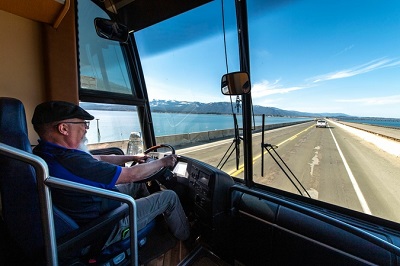
Bob Sonderman drives a Veterans Affairs mobile medical unit from Libby, Mont., to Sandpoint, Idaho, as part of a campaign to get rural veterans vaccinated against the coronavirus. Photo by Tony Bynum for The Washington Post

By Lisa Rein
The Washington Post

LIBBY, Mont. – On the morning he was scheduled to get his first shot of coronavirus vaccine, Mike Jellesed woke in a fury and wheeled his pickup out of his trailer park, headed for the Veterans of Foreign Wars post in town.

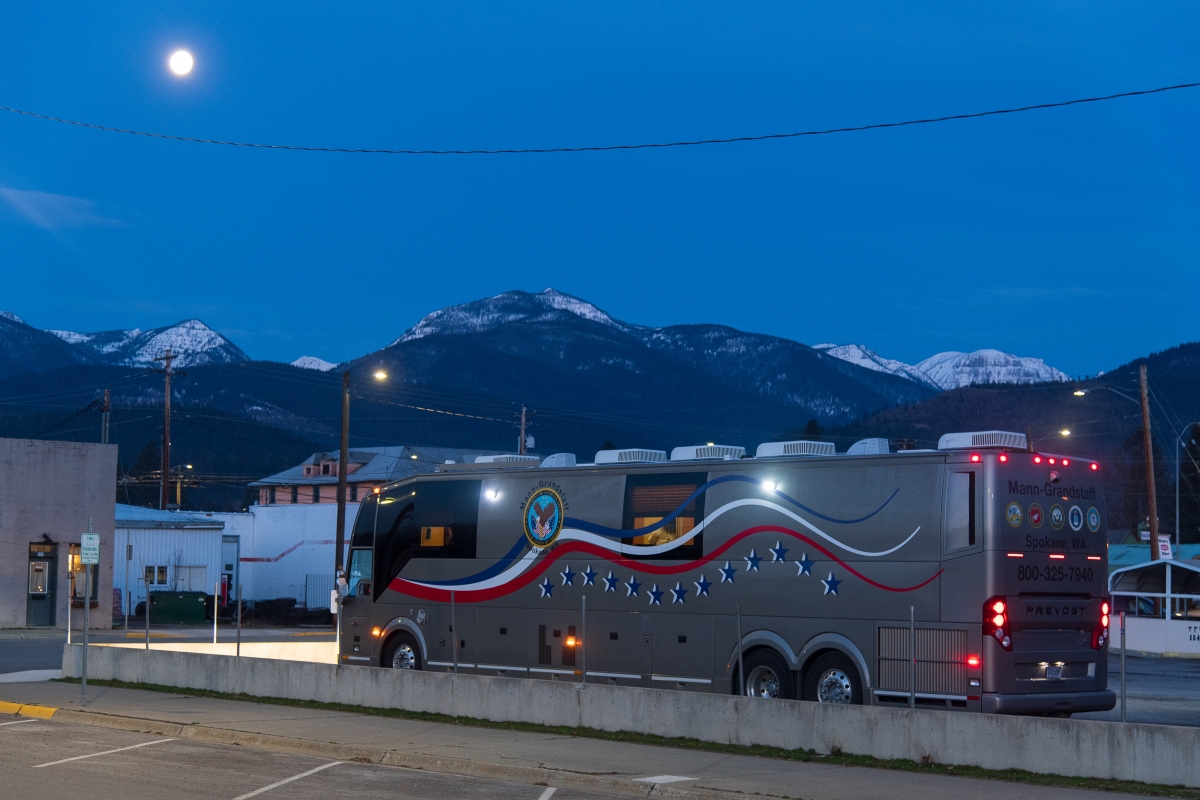
A giant star-spangled bus that had crossed 160 miles of the Rocky Mountains from Spokane, Wash., was waiting for him in the parking lot. Inside were three Department of Veterans Affairs workers and 26 Moderna syringes ready to go. Jellesed, a 61-year-old Air Force veteran with scarred lungs that left him vulnerable to covid-19, had driven there with his 11-year-old son to tell the VA crew all the reasons – despite his scheduled appointment – he didn’t believe in the vaccine.

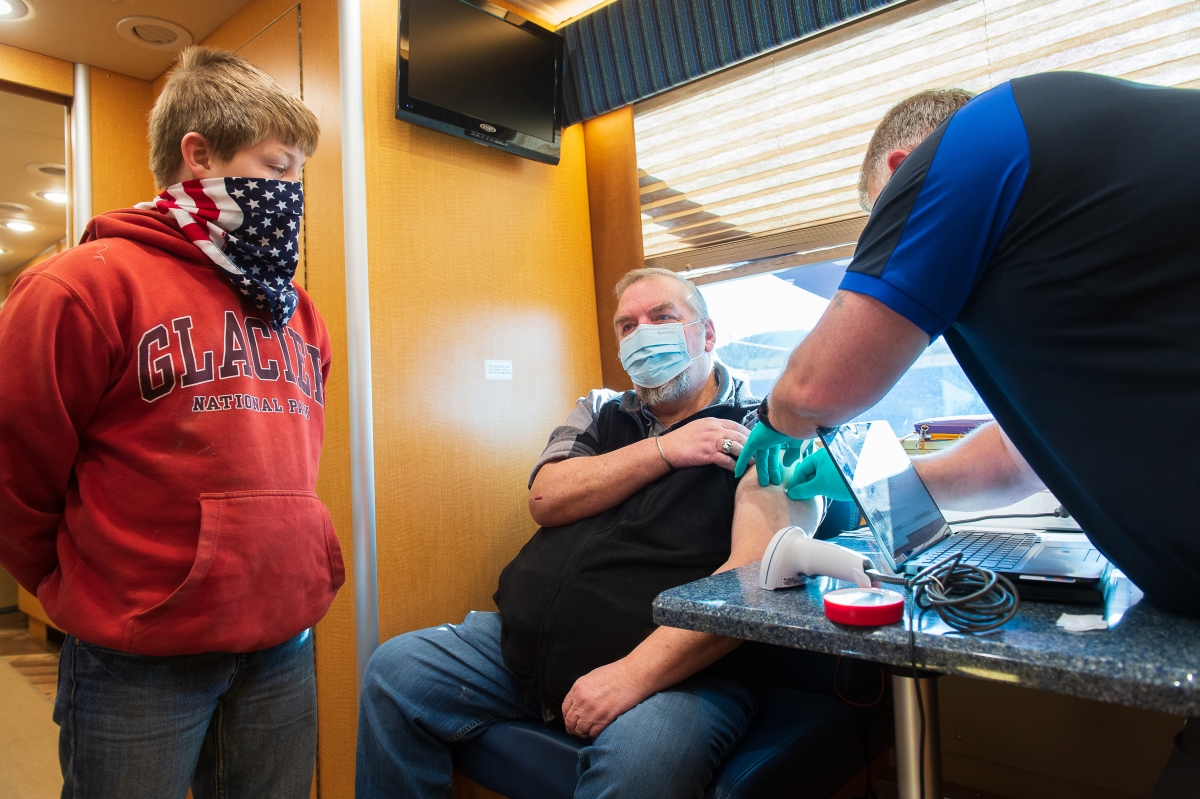
Logan, 11, and his father, U.S. Air Force veteran Mike Jellesed, 61 of Libby, Mont., after a long discussion, receives the Moderna Vaccine from RN Mark Sheldon on March 30, 2021. Photo by Tony Bynum for The Washington Post

Logan, 11, and his father, U.S. Air Force veteran Mike Jellesed, 61 of Libby, Mont., after a long discussion, receives the Moderna Vaccine from RN Mark Sheldon on March 30, 2021. Photo by Tony Bynum for The Washington Post

He felt like a lab rat: “That’s what I am,” he said. “I don’t like being told what to do.”

The VA mobile medical unit’s third visit since January to Libby, an old mining and lumber town 70 miles from the Canadian border in a deep-red band of America, had been unexpectedly rough.

Even as the Biden administration’s campaign to inoculate the country accelerates each day, the agency has struggled to persuade a vulnerable population to protect itself and help the country get to herd immunity. The rugged communities that stretch from eastern Washington through the Idaho Panhandle into northwestern Montana include some of the country’s highest concentrations of former service members. Mostly conservative and White, they are also highly suspicious of coronavirus vaccines.

In many cities and suburbs, millions are lining up for shots they have waited more than a year to get. Here, the political and cultural currents are pulling in the other direction, against the federal government, public health experts and a new president many of these veterans distrust. VA’s halting and labor-intensive effort may be a warning for the country as vaccine advocates seek to persuade unwilling Americans to sign up.

To counter the wariness, the agency’s Spokane hospital embarked in January on a mission to convince the roughly 46,000 veterans under its care that whatever was holding them back was the real danger. The 45-foot bus previously used as a primary-care clinic – 10 feet longer than a Greyhound and the height of a tractor-trailer, with two exam rooms, a triage room with a hospital bed, and a centrifuge to spin blood – has since logged 2,500 miles in a carefully waged campaign against skepticism.

Nationally, about 3 in 4 Americans have indicated a willingness to accept a vaccine. Yet just 1 in 4 veterans contacted by the Spokane VA for an appointment on the bus have said yes. And on a trip early this month, roughly 1 in 6 with appointments canceled or didn’t show.

When Jellesed arrived, he complained that the scheduler had unfairly pressured him by warning that his VA benefits, now the only source of income for his family of six, would be cut off if he turned down the shot.

He feared the vaccine was meant to harm people, to eventually cause cancer in those who got it.

“My wife’s totally against it,” he said. He explained that his reluctance came from “all the things I’ve read on Facebook.”

Yet he also knew people who had died in the pandemic and how lonely those deaths could be. A close childhood friend had flown in from California to see his mother when she was hospitalized with covid last year, but the hospital in Libby wouldn’t even let him inside before she died.

Jellesed’s elderly mother was home recovering from a stroke. If something else happened to her, he wanted to make sure the hospital would let him in to see her.

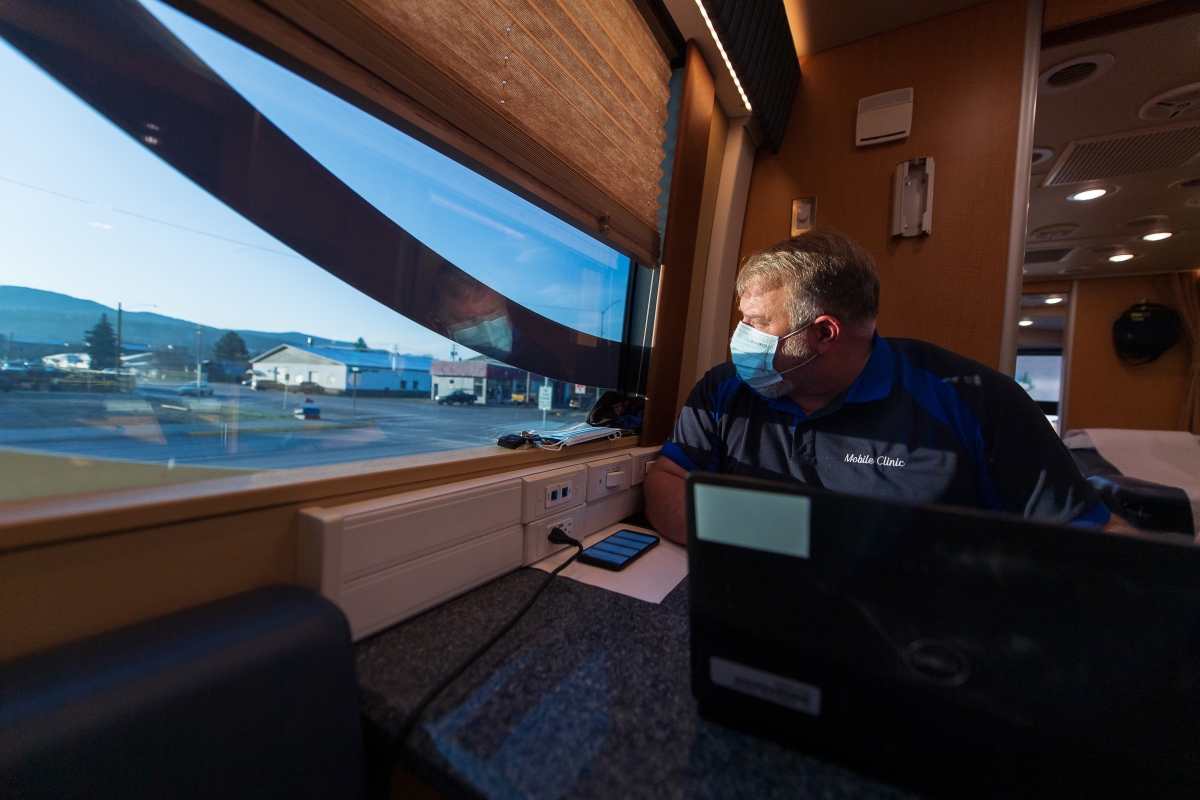
VA emergency room nurse Mark Sheldon, a Gulf War combat Marine, looks out the window of the mobile clinic in Libby, Mont., on March 30, 2021. Photo by Tony Bynum for The Washington Post

VA emergency room nurse Mark Sheldon, a Gulf War combat Marine, looks out the window of the mobile clinic in Libby, Mont., on March 30, 2021. Photo by Tony Bynum for The Washington Post

A little after 10 a.m., Mark Sheldon came to hear him out. The Gulf War combat Marine, now an emergency room nurse, is the Spokane hospital’s chief weapon on the ground. In almost three months on the road running the mobile clinic, along with a nurse practitioner and a driver, he had learned that pressure tactics do not work on cynical veterans.

He gently made the pitch for the vaccine, sharing that he also had wavered, after taking experimental drugs to protect against nerve agents during the war. He sensed that, for all Jellesed’s fury, the veteran could be swayed.

“I don’t want you to get this shot if it’s not what you want,” Sheldon told him. He promised Jellesed wouldn’t lose his benefits, regardless.

The outreach to veterans in the 64,000 square miles served by the Spokane VA begins with a phone call from a 20-year-old medical support assistant working in a cubicle at the hospital. She is paid $25,000 a year.

Kylee Flower, known by the staff for her oatmeal cookies and grace under pressure, is the agency’s first point of contact with hesitant veterans, a role requiring deft navigation around the minefields of politics, culture and misinformation.

The VA mobile medical unit has made three trips to Libby, Mont., since January. Photo by Tony Bynum for The Washington Post

The VA mobile medical unit has made three trips to Libby, Mont., since January. Photo by Tony Bynum for The Washington Post

As the bus rolled toward Libby, Flower was working ahead, trying to set up appointments for its next trip. She scrolled down an Excel file on her computer that listed veterans by age and illness, put on her headphones and wrapped her white Vans sneakers around the base of her chair.

“Hello, this is Kylee calling from the Spokane VA,” she began. “I’m calling for John. Hi, John! How are you? I was just calling to see if you wanted to get the coronavirus vaccine in Colville.”

John had signed up to get his shot at the local fire station. The next veteran, Donald, had already gotten vaccinated. The next call went to voice mail and Flower wrote herself a note to try again – twice. Then Ronald picked up.

“Hi, Ronald. How are you?” Flower asked. Did he want the vaccine? “No? OK. Sounds good. Thank you for letting me know.”

The “no” answers tend to be nonnegotiable.

“That’s the hard part,” Flower said after hanging up. “What I’ve been told is if they say no, no is OK. I don’t want to argue with them.” She said she would never threaten to pull benefits.

The veterans’ “no” reactions rest on several theories, she explained. The vaccine injects a microchip that will let the government track their movements. It can’t be safe, because it was developed too fast. They’ve quarantined for this long, so they don’t need it. Former president Donald Trump says they don’t need to get it, so they’re not getting it. None of these claims are true, but that doesn’t matter.

To settle on the right messaging, a hospital administrator wrote the objections on Post-it Notes and stuck them on the wall at a staff meeting. Everyone concluded that the workers should stay away from the word “government” in their conversations with the veterans.

That was only one issue to untangle in months of planning and improvisation at the 70-bed facility, which, as a test-pilot site, is still troubleshooting a rocky rollout of VA’s new electronic health-records system. For the vaccine push, fifteen schedulers were pulled from other duties to call veterans in five-year age increments, starting with a 102-year-old World War II veteran, who said yes.

Since late January, the schedulers had been making 580 calls a day, but the effort needed to get more shots in arms. The staff tried to speed up the system with a mass vaccination site at the city’s armory (but vaccine supplies were too unreliable) and email blasts (low response). After giving shots in the hospital’s dental clinic, the staff also took over the offices for treating substance abuse as they searched for more space last month.

For those beyond driving distance from the city, however, the one constant is the bus.

The crew had been 10 weeks on the road in cold and snow, 620 shots in with six weeks to go, and now, finally, the sun was shining on the VFW parking lot in Libby. Because of the town’s painful history – residents were exposed to toxic dust as mining company W.R. Grace dug millions of tons of asbestos-laced vermiculite from a nearby mountain – Libby was a priority. But this visit was quickly becoming muddled.

Even before Jellesed showed up, an Air Force veteran named Connie Giles arrived, angry that the new computer system was spitting out old prescriptions and medical records.

Bob Sonderman, the mobile clinic’s bus driver, who served in the Marines after the Vietnam War, was scrambling on the phone with colleagues in Spokane to find replacements for the no-shows. Those who actually canceled told him they had decided not to get the shot.

“I tell them, ‘That’s your choice, but you realize we’re gonna have to throw a covid shot away?’ ” he said in frustration. The crew hadn’t had to waste a syringe yet, but now the possibility was there. (The agency has not been allowed to give the vaccine to nonveterans, although a recently approved law expands eligibility.)

William Bishop, a 57-year-old Army veteran sitting nearby for 15 minutes of observation after his shot, said he had lost his father to covid last year. “It’s a duty to myself and a duty to my community,” he said, explaining why he was getting vaccinated. “I’m a veteran. Duty is what it’s about.”

His was not the prevailing view. For most veterans, the pressure not to get the shot was enormous.

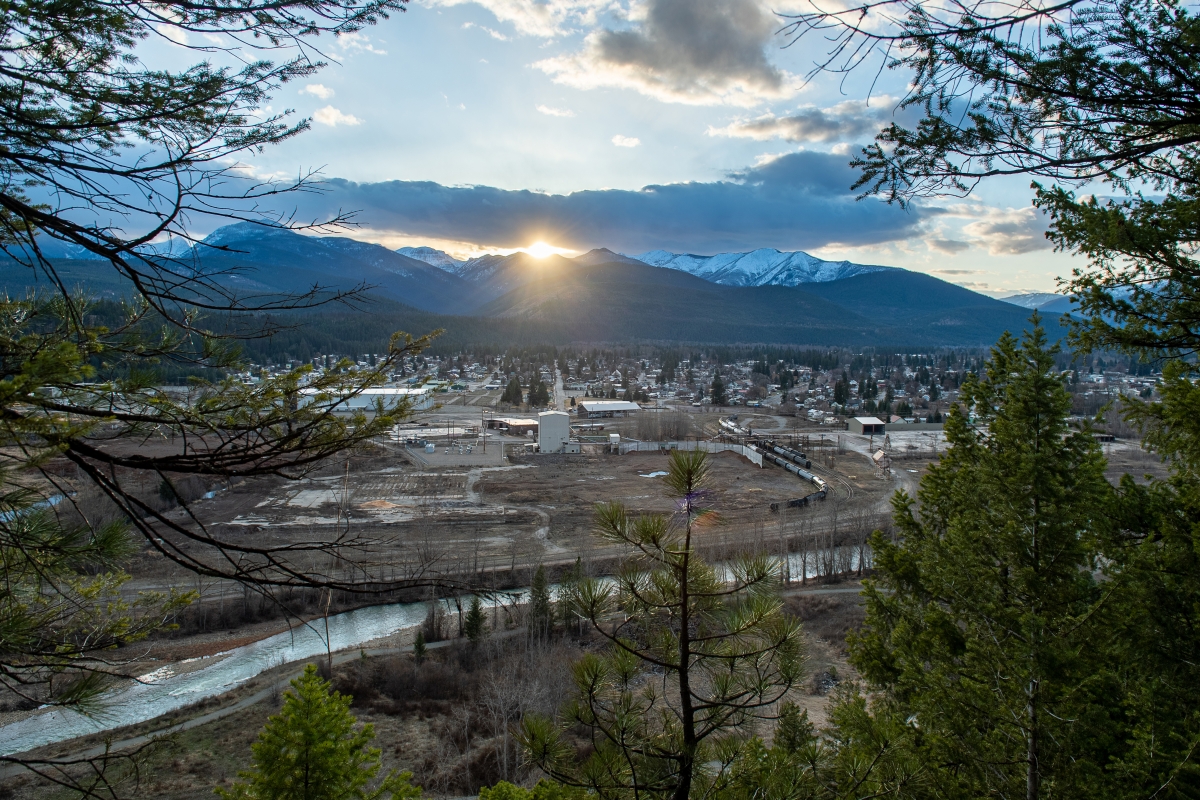
Libby is an old mining and lumber town in northwest Montana. Almost 12% of its population of 2,700 is veterans. Photo by Tony Bynum for The Washington Post

Libby is an old mining and lumber town in northwest Montana. Almost 12% of its population of 2,700 is veterans. Photo by Tony Bynum for The Washington Post

“We have a lot of anti-vaxxers here,” said Dorian Bolling, a 39-year-old disabled Army veteran. “It’s growing. I mean, I’m hearing about microchips. VA here doesn’t have the best image with the vets.” But a bout with pneumonia a few years back had convinced her that she never wanted to feel that awful again.

“A lot of people think this is just the flu,” said Valerie Downing, next up for the shot with her husband, Clifford, whom she met in the Navy. Valerie got the coronavirus last year from the couple’s 6-month-old granddaughter, and four other members of the family got sick, too.

“A lot of people think they haven’t gotten sick yet, so why do I need a shot?” Clifford said. “Well, we know that life matters to God,” his wife said.

Mark Sheldon had managed to coax Jellesed and his son onto the bus. The nurse, now 50, with piercing blue eyes and a linebacker’s build, had returned from shooting shoulder-launched rockets in the Persian Gulf with herniations in his back, still-unexplained rashes and mental health issues, he said – along with a facility for de-escalating tense situations.

The two men sat around a small counter, and Jellesed rolled up his flannel sleeve. The nurse explained that the vaccine had definitely not been rushed into being. “They didn’t cut any corners. It’s a quality product,” Sheldon said.

“I’m not liking it, but I’m doing it because I have family I need to see,” Jellesed responded.

“We all have our whys,” Sheldon said. “My grandson is my why.”

The shot went in, and they shook hands. Sheldon told Jellesed that if he had truly felt he would lose VA care if he didn’t get the shot, “I need to fix that, because we’re better than that.”

On the dirt parking lot that afternoon, a veteran wheeled a battered bike toward the bus to get a closer view. He was homeless, 61 and at risk for the virus. He didn’t see the point of the vaccine, he said, mostly because “they could track you by this injection.”

An Air Force veteran in a camouflage jacket named Mike Aja walked up with his 4-year-old son, Shane. He was a “no,” too. He said he had heard that the average death rate had dropped last year, proof that the government was making too big a deal out of the virus. (Deaths actually are up markedly.) He said there was no way President Joe Biden was serious about the pandemic because he was letting thousands of undocumented immigrants flow across the border.

“You’re convincing us not to trust you,” Aja said, directing his skepticism at the president.

A small crowd had gathered at the VFW post, where the slot machines were in full use. The charismatic manager, Julie Mason, is a self-described conspiracy theorist with a QAnon sticker on her car’s rear windshield.

The post no longer carries broadcasts of NFL or Major League Baseball games “due to the disrespect shown towards our American Flag and the men and women that have sacrificed so much to defend it,” a sign on the back wall says.

Kenny Rayome Jr., an operator at the local water plant, and his wife, Megan, a lawyer in town, were relaxing over beers at the bar. They got mild cases of covid-19 last year, and Kenny’s uncle died of it. Megan suffers from lupus, an autoimmune illness. Still, they have no plans to get vaccinated.

“I’m just not afraid of it, I guess,” said Kenny, 40, whose family goes back six generations in Libby. During six years as a Navy submariner, he explained, “they told me what to do. Don’t tell me what to do now.”

It was the same sentiment around the bar. “I got plenty of little bugs overseas,” said Rob Hughes, 51, a retired Marine who owns a gun shop in town. “I’ve been shot at for a living. It’s not gonna hurt my feelings if a bug kills me.”

On the bus, the VA crew had found veterans for the unclaimed shots. But four had already canceled in Sandpoint, Idaho, their next stop, where a planned two-day visit had been condensed into one because not enough people were signing up.

Before sunrise, the bus rolled out of the Venture Inn and onto two-lane roads flanked by firs, bull pines and tamarack trees, with snow-covered mountains in the distance. It drove west past long-shuttered silver mines and sawmills, bald eagles, elk and deer, and small white markers where car crashes had taken lives on the winding roads.

Just across the Idaho border loomed a giant billboard that read: “Welcome to Trump Country.” Sandpoint’s spectacular lakefront setting is attracting wealthy outsiders; the picturesque ski town, population 8,400, now boasts art boutiques and a Sotheby’s storefront, while the long dirt roads around Lake Pend Oreille wind through the mountains to cabins where veterans and retired law enforcement officers settled years ago.

As the bus stopped on a side street near a clinic serving low-income residents, Jayne Shoda, the mobile clinic’s nurse practitioner, began pulling boxes of gloves, alcohol swabs and hand sanitizer from the cabinets. Sonderman fired up Paul McCartney’s “Wings” on the bus speakers, printed out Moderna information sheets and started calling to confirm appointments.

“Bob’s got the last flip phone in the VA!” Sheldon ribbed his colleague, as he pulled vaccine vials from the medical-grade refrigerator and loaded syringes.

After weeks on the road, they were a tight crew, despite political differences they had learned to live with. They all worried what the day would bring. “These are the first shots where we’re having such attrition,” Shoda said.

A young Marine veteran who had served in Iraq, with brown hair down to his shoulders, showed up without an appointment and explained that his doctor at the private clinic next door had just told him the vaccine was safe. It was hard to know whom to listen to, he said. “I’ve got anti-vaxxers in my life, and they’re full of fear and skepticism.” The veteran, who got the shot, spoke on the condition of anonymity, saying he was fearful of the pressure not to be vaccinated.

A Vietnam veteran named Knut Lyssand, 69, arrived in cowboy boots and a T-shirt that read: “The answer is beer.” He had been ready to cancel after talking to fellow veterans, but when he couldn’t sleep at 4 a.m., he turned on the television to Newsmax and heard a doctor say it was OK to get vaccinated.

By noon, there were still three no-shows. Sonderman reached one by phone who claimed he had never agreed to be vaccinated, “and I will never take a covid shot.” The crew had to throw out its first syringe in 10 weeks.

On the way back to Spokane the next morning, Sheldon concluded they needed to regroup. They were running out of willing veterans, and after second doses in Libby and Sandpoint, the bus would return to primary- care work. The hospital had canceled the upcoming clinic in Colville, Wash., after Flower, the medical support assistant, had trouble filling appointments.

“I feel by now if you wanted this shot, you’d be hustling to get it done,” Sheldon said.

The bus will head back to Libby for second doses April 27. Jellesed’s already on the list. After his first dose, he told family and friends the shot didn’t hurt – and had no side effects. But he is adamant that even after the second one, his vaccination will be just .01 percent more protection against the virus than if he hadn’t gotten it. “I’m just not seeing any benefit,” he said, explaining that he had read the statistic somewhere.

His wife and kids won’t get inoculated. But Jellesed is comforted in knowing that if his mother ends up in the hospital, he will be able to see her.

“These are the things you do for family,” he told his children. “It’s not for me. It’s for her.”