Mexico’s new migrant policy adds to U.S. border woes
InternationalApr 12. 2021Migrants, mostly from Central America, stay in dorms at the Good Samaritan shelter in Ciudad Juarez, Mexico. MUST CREDIT: Washington Post photo by Michael Robinson Chavez
By The Washington Post · Mary Beth Sheridan
CIUDAD JUÁREZ, Mexico – The message popped up on Pastor Juan Fierro’s phone one recent afternoon. U.S. border agents had expelled another group of Central American families to this Mexican city. Could someone take them in?
Fierro, an evangelical minister, was startled by the request. During most of the pandemic, officials in Juarez had sent newly arrived migrants to a quarantine center for 14 days. Suddenly it was full. “There was no place to take care of these people,” Fierro said. So his staff at the Good Samaritan shelter hauled bunk beds into an empty room and penned it in with battered wooden benches. Within days, the rudimentary “quarantine” center held 23 women and children.
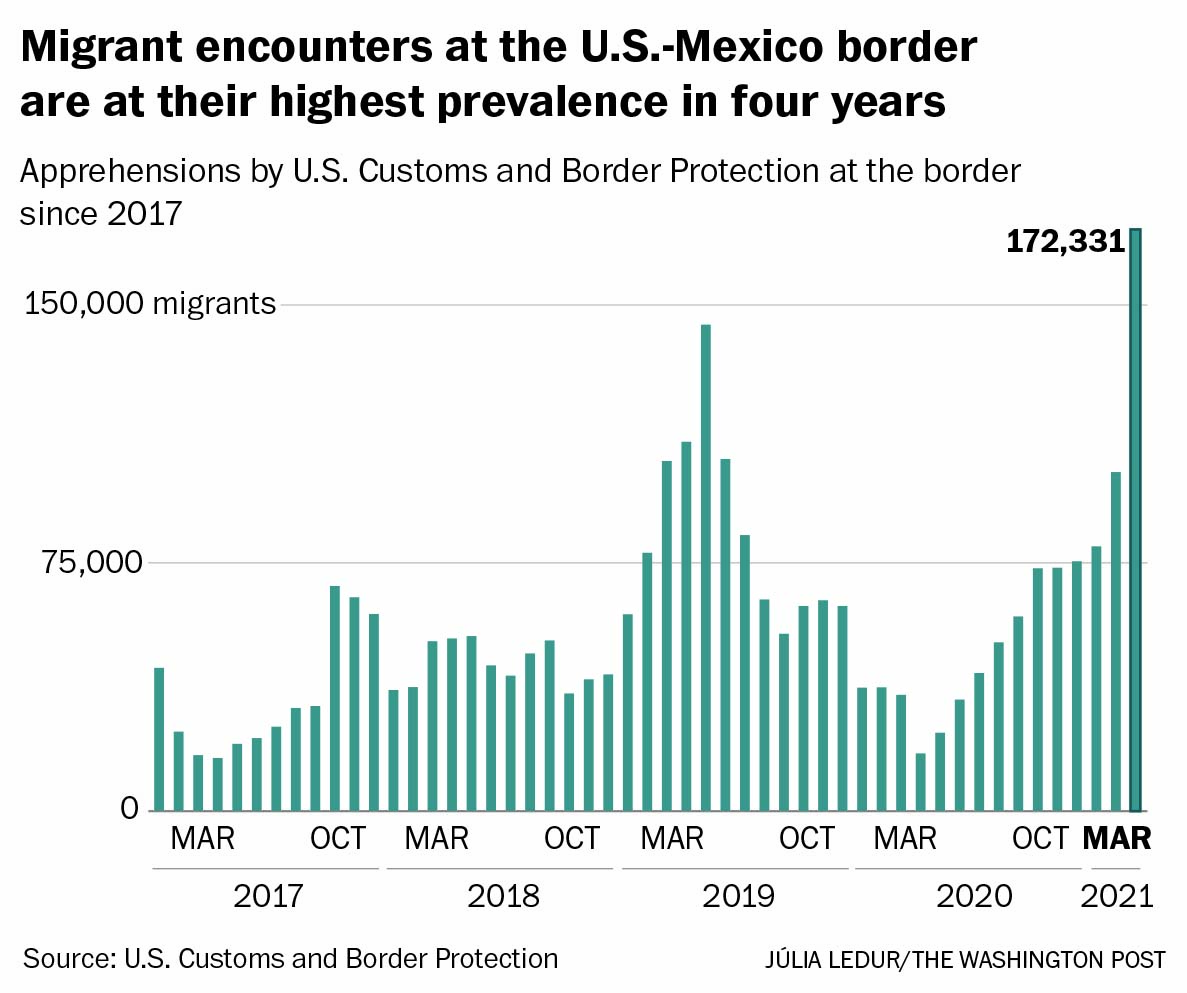
President Joe Biden hoped to put the brakes on a surge of U.S.-bound Central American families by relying on a Trump-era policy to return them to Mexico. But increasingly, this country is straining to cope with the influx. Mexico is now limiting the number of families it will allow back. That’s forced the U.S. government to accept most of them as their numbers soar: About 53,000 members of family units were taken into custody in March, compared with 7,300 in January.
Mexico’s pushback has created a new obstacle as the Biden administration struggles to deal with what could be the biggest wave of migrants at the U.S. southern border in 20 years. Pressured by President Donald Trump, Mexico became a crucial buffer zone between Central America and the United States. Its authorities deported tens of thousands of U.S.-bound migrants and took back asylum seekers to await their U.S. court dates. As the coronavirus pandemic descended on both countries last year, the Trump administration adopted one of the most restrictive border policies ever, using a health measure called Title 42 to expel nearly all Central American migrants and asylum seekers to Mexico.
The Biden administration continued to use that rule for families and solo adults, while exempting unaccompanied children. Now U.S. officials fear that Mexico’s refusal to go along with the family expulsions will have a cascade effect. As more Central Americans succeed in entering the U.S. immigration system, their relatives and neighbors back home are deciding to make the journey.
They include Ingrid Posas, 33, who left Honduras in mid-February after seeing Facebook posts of friends who had made it into the United States.
“We heard they were letting families in. That’s why I came,” she said, sitting with her 4-year-old daughter on a bench at the Good Samaritan center’s quarantine site, under a curtain of laundry hanging from clotheslines.
Mexican authorities say their abrupt refusal to accept most families follows a new law that bars children from being detained in adult migration facilities. It sailed through Mexico’s Congress at the end of last year, receiving little press attention.
U.N. agencies and human rights activists had long pressed for such legislation. But the government has few shelters for children in northern Mexico. So just weeks after the law took effect in January, Mexican authorities said they had no more room for Central American families expelled from the Rio Grande Valley of South Texas, the busiest crossing point.
“It certainly snuck up on us,” said a senior Biden administration official, who spoke on the condition of anonymity to discuss diplomatic issues.
Administration officials then asked whether those families could be flown to other parts of the border and expelled. Mexican authorities “agreed to a limited number,” the senior official said.
In Juárez, that’s been set at 100 family members each day, according to local officials and activists. Even that number is taxing resources in this industrial city across the Rio Grande from El Paso, Texas. More than 1,700 migrants and asylum seekers have filled Juárez’s 20 shelters, sleeping in bunk beds in dorm-style rooms or on mattresses on the floor. That’s more than during the last migration peak in summer 2019. But now there’s a pandemic. And the religious and civic organizations that run most of the shelters have little access to coronavirus tests.
“When they ask me, Father, can you care for these 80 or 120 people – who will guarantee they don’t have covid?” asked the Rev. Javier Calvillo, the Catholic priest who runs Casa del Migrante, one of the largest shelters. The pink-brick complex already weathered one outbreak last fall. Fifteen of his staffers and three dozen migrants were infected. He’s now refusing to receive some of the families.
Across town, the Rev. Hector Trejo, an Episcopalian priest, worries about how many people he can accommodate during the pandemic. He has set a 60-person limit at his shelter at Espiritu Santo church, half the usual capacity. In February, though, local authorities called to say 100 Haitians had just been expelled to Juarez. Could he take half of them?
“At that moment I had 53 people,” he said. “We broke our rules, by necessity.” Three more times last month, the number of migrants at the shelter swelled to more than 100.
Critics say the lack of shelter space is only part of the problem. The Mexican government, they suggest, is using the new law as an excuse to avoid doing the Biden administration’s bidding – or to obtain something in return, such as coronavirus vaccines.
“Everyone knows that Mexican laws are meaningless if the federal government doesn’t want to respect them,” said former foreign minister Jorge Castañeda, a frequent critic of President Andrés Manuel López Obrador. Mexican authorities could easily comply with the new law by transforming unused schools into makeshift centers for migrant families, he said. But the federal government has shown no desire to do so, or to increase the budget for new shelters.
That’s left local officials scrambling. In Juárez, they’ve worked with international organizations and the federal government to set up a shelter in a gym where as many as 500 arriving migrants can be quarantined and tested for the coronavirus. It significantly expanded a quarantine system that until recently had centered on a hotel with capacity for 108 people managed by the International Organization for Migration. But within days of opening last week, the municipal shelter held more than 150 people, raising concerns that it could fill up, too.
Biden said last month that he was negotiating with López Obrador about the Central American families reaching the U.S. border. “They should all be going back,” he declared. U.S. officials say they’ve asked the Mexican government to delay implementation of the new law. So far, though, that has not happened. In February, the United States returned about 40% of the families who crossed the border, but as traffic has surged, the portion has dropped to 10%-20%.
Mexico’s Foreign Ministry said the country “receives certain immigrants depending on institutional capacities” and in compliance with domestic laws. López Obrador has criticized the Biden administration for not investing more in development projects in southern Mexico and Central America to prevent citizens from leaving. “We are ready to do our part and work together in fighting human trafficking and protecting human rights, especially those of children,” he tweeted Wednesday after a phone call with Vice President Kamala Harris.
U.S. officials are also scrambling to house migrant families and unaccompanied children on the American side of the border. Many families are being released with orders to appear in immigration court, but their cases could drag on for months or years. That’s motivating more people in Central America to make the journey.
Xeni, a 25-year-old Honduran, left her home in the province of Comayagua in mid-March. She was hoping to reunite with her husband, who had migrated to Florida in 2019. “Many people from my town had crossed” the U.S. border in recent weeks, she said. She traveled by raft across the Rio Grande from the Mexican city of Reynosa to McAllen, Texas, with her small son and daughter. They waded ashore in what she remembers as a brief moment of jubilation.
“Call Daddy,” her 6-year-old son, Wilson, told her. “Tell him to come get us.”
But Xeni was one of the unlucky ones. U.S. border agents took her and the children into custody and put them on a plane. She said the agents told her that the family was being taken to a different city for processing. When they landed in El Paso, they were bused to a bridge leading into Juarez. On a recent evening, she sat at the cafeteria at a migrant shelter, cradling her 3-year-old daughter, who repeatedly coughed.
“We were all tricked,” Xeni said, speaking on the condition that her last name not be used, for fear of problems with the U.S. immigration system.
U.S. Customs and Border Protection said in a statement that migrants from the Rio Grande Valley were being sent to three other border crossings – Laredo, Texas; San Diego; and El Paso – so they could be processed “as safely and expeditiously as possible.” It added that because of coronavirus restrictions, “The border is not open.”
Activists worry that migrants such as Xeni have no legal status – neither immigration court appointments in the United States, nor work permits in Mexico. “This is provoking chaos on the border,” Fierro said.
The situation could become more complicated if the Title 42 expulsions end. Biden administration officials have said the policy is under review; but as the pandemic wanes, it will eventually become moot. The administration has terminated the Migrant Protection Protocols, a Trump-era program that required asylum seekers to wait in Mexico for their court dates. It has not announced a new system to process those arriving at the border.
Many migrants say they cannot return home, because they fled violence or spent all their money on the journey. Some are traveling to other border points to cross, or instructing their children to walk into the United States alone, knowing the Biden administration is not expelling unaccompanied minors.
Xeni said she cannot go back to Honduras because her home was damaged by two hurricanes in November. And she’s desperate to give her children a better life. So desperate that she’s considering a drastic step.
“The only option I have is to send the kids over the bridge,” she said.
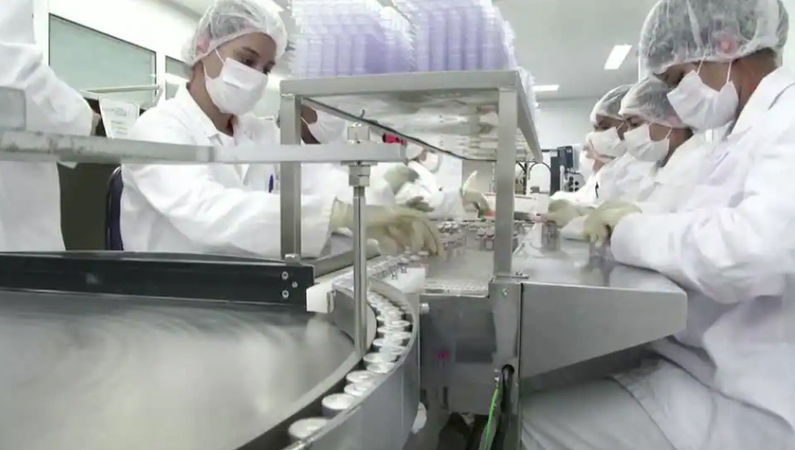
TAIPEI, Taiwan – The head of the Chinese Center for Disease Control and Prevention conceded that the efficacy of Chinese coronavirus vaccines is “not high” and that they may require improvements, marking a rare admission from a government that has staked its international credibility on its doses.
The comments on Saturday from George Gao come after the government has already distributed hundreds of millions of doses to other countries, even though the rollout has been dogged by questions over why Chinese pharmaceutical firms have not released detailed clinical trial data about the vaccines’ efficacy.
China has struck deals to supply many of its allies and economic partners in the developing world and boasted that world leaders – including in Indonesia, Pakistan and the United Arab Emirates – have taken the shots.
There have been signs that some countries remain skeptical: The UAE recently experimented with administering three shots of the Chinese Sinopharm vaccine, instead of two, over reports of low numbers of antibodies produced in some people, while Singapore has stockpiled but not usedSinovac shots.
China is “formally considering” options to change its vaccines to “solve the problem that the efficacy of the existing vaccines is not high,” Gao said at a conference in Chengdu.
Gao added that one possibility was to adjust the dosage or increase the number of doses. He said another option was to mix vaccines that are made with different technologies, in an apparent admission that China needs to develop messenger RNA vaccines using the revolutionary genetic technology that Western countries have harnessed.
Gao’s remarks, which appeared inadvertent and quickly spread through Chinese social media on Saturday before being mostly censored, marked a departure from the rosy assessments of Chinese-made vaccines by the government. By Sunday, Internet users were intentionally misspelling words in their posts while discussing Gao’s comments to keep them from being removed.
Sinopharm and Sinovac use a conventional method of producing vaccines that contains inactivated germs, while other countries’ offerings, including those by Pfizer-BioNTech and Moderna, rely on a newfangled technique that uses messenger RNA (mRNA) to stimulate an immune response.
The mRNA vaccines are widely accepted as having higher efficacy rates, and Chinese pharmaceutical executives have said they are racing to catch up and master mRNA technology themselves.
The admission by the head of the Chinese CDC undercut other arms of the government, including its propaganda organs and diplomats, who have spent months touting Chinese vaccines as part of a soft power push while aggressively sowing doubt about Western alternatives by questioning the efficacy and safety of mRNA technology.
On Sunday, the Global Times, a state-run newspaper that has led the way in pushing theories about the coronavirus originating from outside China, hit back at the “hyped up” reports of Gao’s comments.
It quoted Gao as saying that his comments had been misunderstood and that he was speaking in general terms about how scientists, internationally, should improve their vaccine development.
“I was struck by what Gao said, not because it is significantly different from what we have already known but because it deviates from the official narrative on the effectiveness of Chinese and Western vaccines,” said Yanzhong Huang, a senior fellow at the Council on Foreign Relations. “I think he was trying to push for the approval of the use of Pfizer-BioNTech vaccines in China and/or the acceleration of the development of China’s own mRNA vaccines.”
Even before Gao’s comments, there have been discussion about whether the Chinese companies should tweak their formulations or vaccination regimen. Executives at Sinopharm, the state pharmaceutical giant, said in March that they were assessing whether to include a third booster shot as part of their vaccine’s standard administering procedure. The company said last week that it would begin clinical tests on a third vaccine.
More than 60 countries have approved at least one of China’s vaccines for use. They have been in high demand, especially among lower-income countries, which have not been able to acquire the other vaccines.
Sinopharm has reported a 79 percent efficacy rate for its vaccine – without releasing any data – while trials for Sinovac in Brazil and Turkey have shown an efficacy rate of just 50 percent and more than 80 percent, respectively.
Yet even though both drugmakers carried out mass clinical trials earlier than most other pharmaceutical companies last year, the data has not been still not been published in a peer-reviewed journal.
Foreigners traveling to China, however, have been encouraged to use these Chinese-made vaccines to enjoy streamlined access into the country.
In Turkey, where the Sinovac is in wide use, there has been little concern about the effectiveness of the vaccine. Rather, the worry has been that China won’t be able to deliver the promised 100 million doses amid delays in shipments.
Brazil, Egypt and other nations also have been clamoring for more doses as China has throttled back exports in the face of domestic demand even as cases have been surging worldwide.
Two South Korean industrial giants have reached a last-minute, $1.8 billion global settlement of a trade secrets case that will allow a pair of new plants in Commerce, Ga., to move ahead with plans to supply batteries for Ford and Volkswagen electric vehicles.
The deal is a victory for President Joe Biden, who has been eager to create jobs, build a U.S.-based supply chain for electric vehicles and move toward slowing climate change – all without taking sides in a dispute between the firms over intellectual property.
“This settlement agreement is a win for American workers and the American auto industry,” Biden said in a statement on Sunday. He said the United States needs “a strong, diversified and resilient U.S-based electric vehicle battery supply chain, so we can supply the growing global demand for these vehicles and components.”
SK Innovationcan now complete construction of its $2.6 billion manufacturing facilities, which will employ 1,000 workers by the end of this year. By 2024, the plants will have 2,600 workers and annually churn out lithium ion batteries for more than 300,000 electric vehicles annually, mostly for Ford and VW brands.
Under the terms of the settlement, which was announced Sunday, SK Innovation will pay its rival LG Energy Solutions $1.8 billion, part in cash and part in future royalties. LG Energy will drop litigation before the U.S. International Trade Commission, a U.S. federal court and South Korean courts.
Jong Hyun Kim, chief executive of LG Energy Solution, and Jun Kim, chief executive of SK Innovation, said in a joint statement that they would “compete in an amicable way.” They said they were “dedicated to work together to support the Biden Administration’s climate agenda and to develop a robust U.S. supply chain.”
The two companies agreed not to sue each other for 10 years.
LG Energy Solution had accused SK of stealing trade secrets and destroying documents. In April 2019, it sought to limit SK’s battery output in the United States and said the country had no battery shortage.
The trade commission sided with LG and restricted SK’s ability to operate its plants in the United States. SK would have been barred from importing crucial battery components for 10 years. Butthe company still could have imported enough to supply batteries to certain VW brands for two years and for certain Ford brands for four years, including Ford’s best-selling F-150 pickup truck. During that period, VW and Ford were supposed to line up new suppliers.
The Biden administration, which had until Sunday to overturn the ITC ruling, feared that finding new suppliers could prove difficult if the automobile industry rushes to expand its offerings of electric vehicles. The administration has cited the need to overhaul American car and truck fleets and make them all electric. The settlement gives the president a boost on the jobs front and among climate activists and those worried about climate change.
The likelihood of Biden reversing the ITC ruling pressured LG to reduce its settlement demands, according to a person familiar with the talks, who spoke Saturday on the condition of anonymity to protect business relations. U.S. Trade Representative Katherine Tai and top South Korean government officials also got involved in the negotiations.
Tai, who has been in office for only two weeks, noted in a statement Sunday that the deal left the United States in “a stronger position to drive innovation and growth of clean energy technology envisioned in the American Jobs Plan while also respecting the rights of technology innovators at the heart of trade and manufacturing policy.”
Scott Keogh, chief executive of the Volkswagen Group of America, also applauded the outcome. “With the intellectual property issues between the two companies now settled, our complete focus now shifts to where it should be: the start of U.S. production of the all-electric ID.4 SUV in 2022, assembled by proud, skilled workers in Tennessee,” Keogh said in a statement.
The SK battery plants, located 70 miles northeast of Atlanta, have drawn support from Georgia Republicans and Democrats, including Republican Gov. Brian Kemp, Democratic Sens. Raphael Warnock and Jon Ossoff, and former Atlanta mayor Andrew Young, a Democrat. Kemp said in a statement in February that Biden and his administration “have the opportunity to support thousands of hardworking Georgians – and their communities – who would benefit from SK Innovation’s continued success in our state.”
The state of Georgia has provided $300 million in grants, land and other incentives to the South Korean company.
The settlement allows Biden to sidestep a conflict with the ITC. The president has the authority to overturn commission rulings within 60 days, a power generally delegated to the U.S. trade representative. But a president has done so only once. In August 2013, President Barack Obama reversed an ITC ruling that would have imposed a ban on the sale of some older Apple iPhones and iPads, dealing a blow to Samsung Electronics Co. in a long-running patent battle between those two companies.
SK, South Korea’s third largest conglomerate, had lined up prominent advocates to press its case, including former Obama administration officials. Former deputy attorney general Sally Yates, a Georgia native, said its factory should stay open to avoid disrupting the U.S. economy and efforts to fight climate change. She said the two South Korean firms should argue their positions in U.S. District Court, where LG was suing SK.
“We have a severe shortage of EV batteries in the U.S. with insufficient domestic production, and the SK plant in Georgia is necessary to address this supply chain threat,” she wrote.
LG, however, had contended that the Biden administration should let the ITC process work. David K. Callahan, a partner at Latham & Watkins, last week disputed the idea that the United States is heading toward a shortage of EV batteries. He said LG Chem has a plant in Holland, Mich., that has been making batteries for about eight years and a joint venture with General Motors in Lordstown, Ohio. Last month, he said, LG announced $4.5 billion in commitments for two additional battery plants.
Americans desperate to get out set stage for gasoline comeback
InternationalApr 12. 2021Fuel pumps at a Kum & Go gas station in Colorado Springs, Colo., on March 17, 2021. MUST CREDIT: Bloomberg photo by Chet Strange.
By Syndication Washington Post, Bloomberg · Jeffrey Bair, Andres Guerra Luz, Bre Bradham
Americans are getting ready to rekindle their love affair with the open road, unleashing a full-fledged recovery for gasoline that could send demand to a record.
Traffic is already roaring back in cities like Houston as offices reopen. Things will really start taking off this summer as pent-up travel demand finally busts out thanks to the increase in vaccinations. After almost half of Americans ended up canceling trips in 2020, many are planning to take an extra week of vacation this year to make up for lost time. Theme parks are gearing up for an influx of visitors, and attendance at national parks is expected to swell.
Demand is predicted to be so hot that Phillips 66 is set to reverse the flow of one of its pipelines starting May 1 so it can carry gasoline from Texas into Denver as more tourists head west.
Charles Ocasek, a 24-year-old, is one of them. In late May, he’s hitting the road for the first time since the pandemic started, driving his 2004 Nissan Pathfinder from the Chicago suburbs out to the Rocky Mountain resort town of Telluride, Colorado, for a meet-up with friends. He’s been living with his parents who are in their 60s, so the specter of getting and spreading Covid kept him from traveling until now. But by next month, he’ll be fully vaccinated, and he’s planning more trips for the summer.
“I’m tentatively planning on taking a month or a month-and-a-half and doing a multi-state road trip all over the country,” Ocasek said.
The surge in consumption means gasoline is likely going to be even more expensive than the U.S. government is forecasting. The Energy Information Administration last week said average pump prices this summer will be more than 30% higher than last year at $2.78 a gallon. But many analysts are estimating prices will hit $3 a gallon for the first time since 2014.
Rising gasoline prices will be another marker of inflation that impacts Americans unevenly. Just like soaring food bills, more expensive fuel hits harder for lower-income families, with the costs making up a larger share of spending. That comes amid the unequal economic recovery, with the Black unemployment rate still trending high and lower labor-market participation among Americans without college educations.
Meanwhile, crude traders are widely anticipating a meaningful return of fuel demand in the world’s largest oil consuming country to help drive the next leg higher in prices.
A big part of oil’s rally so far this year has been on the supply side, with the OPEC+ alliance displaying strict output management and higher prices not yet drawing U.S. shale producers out in force. But crude has pulled back from multi-year highs in recent weeks, and will continue to face resistance until concerns over consumption start to fade.
“Prices are higher today than where they were pre-pandemic, despite demand not all the way back,” said Peter McNally, global head for industrials, materials and energy at Third Bridge. “Vaccines are now being mass-distributed to the biggest consumers of energy, as we’re getting to business travelers and family vacationers, which we haven’t seen to date.”
One of the most bullish predictions for fuel use comes from Mark Le Dain, vice president for strategy at refinery consultant and software company Validere, founded at Harvard. He says this summer will be the strongest one ever for gasoline demand, beating the previous all-time high set in 2019. He cited an increase in bookings for national and state parks and a shortage of rental-car availability along with the return to work from people who haven’t gone back yet.
For a record 2021 to happen, Americans will have to add about 1 million barrels of gasoline consumption a day to levels as of March 26. The extra portion alone would be enough to fill 1.5 million empty F-150 Ford pickups.
Even so, “there are a lot of things aligning right now to show demand being strong,” Le Dain said.
National retail prices for gasoline averaged $2.87 on Wednesday. As demand strengthens this summer, the price will hit at least $3, according to Patrick DeHaan, head of petroleum analysis at retail tracker GasBuddy, Robert Yawger, head of the futures division at Mizuho Securities and Trisha Curtis, chief executive officer at analysis firm PetroNerds in Denver.
“I’m not sure when it happens, but yes, it happens,” Curtis said.
A surge in gasoline burning will also bring a jump for greenhouse gas emissions after declines in traffic congestion helped to clear the air last year.
It’s not just road trips that will boost demand for fuels.
U.S. airlines are bringing back more pilots as they prepare for a travel rebound, and jet fuel consumption is on the rise. Still, that segment of the oil market has much further to climb before hitting pre-pandemic levels.
Outside of travel, another linchpin for the oil recovery will be how many people burn fuel to go back to work, and for how many days a week.
“There is a slow return back to offices for workers, but it takes time,” said Jeff Lenard, vice president for strategic industry initiatives at the National Association of Convenience Stores.
One thing that could scuttle the recovery would be a spike in Covid-19 cases. The U.S. Centers for Disease Control and Prevention this month said that fully vaccinated people can resume recreational travel in the U.S. at “low risk,” but CDC Director Rochelle Walensky has also warned of “impending doom” as cases begin to rise again.
Jennifer Fink, 54, and her husband, John, are looking forward to getting out of their home in the San Francisco Bay area for the first time since the pandemic started. They’re planning a mid-summer road trip up through Oregon and Washington state to Tofino, British Columbia. But they’re also keeping an eye on travel restrictions and canceled plans for trips last year when California was forced back into lockdown. Fink is more optimistic this time after getting her first dose of the vaccine. Her husband is already fully vaccinated.
“Maybe the fifth or sixth time is the charm, and we’ll be able to go somewhere,” she said.
Americans on average are planning to take 13 vacation days this year, up from just eight days in 2020, according to a study from travel giant Expedia Group. A study from AARP showed that just over half of Baby Boomers plan to travel in 2021, and nearly a quarter of those making plans didn’t travel at all last year.
“What we’re hearing more and more is that people are just desperate to go out and do the stuff that they were not able to do,” Seema Shah, chief strategist at Principal Global Investors, said last month in an interview on Bloomberg Television. “There could be certainly some upside surprises to come.”

 อิหร่านปักใจเชื่อเหตุการณ์ไฟดับในโรงงานนิวเคลียร์เป็นฝีมืออิสราเอล ขณะที่อีกฝ่ายยังคงสงวนท่าที
 หุ้นอาลีบาบาพุ่งขึ้นหลังบอร์ดบริษัทชี้แจงนักลงทุนกรณีถูกรัฐบาลจีนสั่งปรับ
 นับเป็นความว่างเปล่าครั้งใหญ่ในชีวิตของพระองค์หลังทรงสูญเสียพระสวามีที่เคียงข้างกันมาว่า 73 ปี
 นักวิเคราะห์คาดสถานการณ์เลวร้ายสุดสำหรับเศรษฐกิจเมียนมาคือ การเติบโตหดตัว 20%
 แม้ว่าเจ้าชายฟิลิปจะอภิเษกสมรสกับควีนอลิซาเบธแต่ก็ไม่ได้มีตำแหน่งเป็นกษัตริย์ของอังกฤษ
 Migrants, mostly from Central America, stay in dorms at the Good Samaritan shelter in Ciudad Juarez, Mexico. MUST CREDIT: Washington Post photo by Michael Robinson Chavez

 Fuel pumps at a Kum & Go gas station in Colorado Springs, Colo., on March 17, 2021. MUST CREDIT: Bloomberg photo by Chet Strange.
 แม้การบินจะถูกเลื่อนออกไปจากเดิมที่กำหนดไว้เป็นวันนี้ แต่การบินครั้งนี้จะเป็นในเบิกทางที่สำคัญต่ออากาศยานสำรวจอวกาศอื่นๆ ในอนาคต

