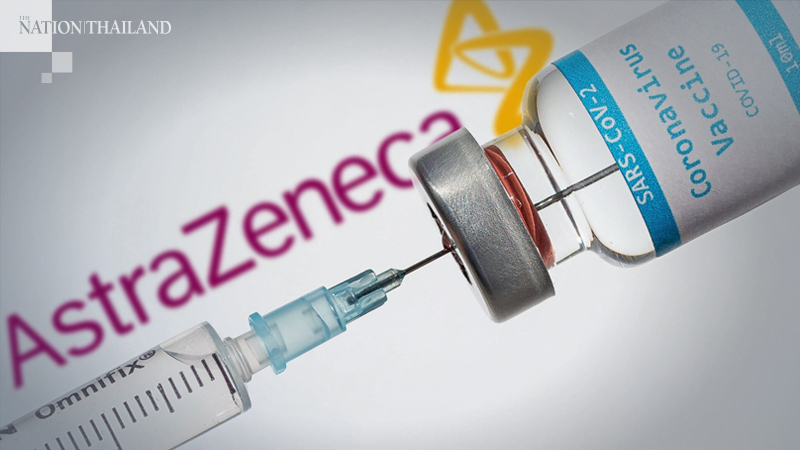
The European Medicines Agency (EMA) said on Thursday that it is aware that Denmark has paused the administering of AstraZeneca Covid-19 vaccines. This step was taken as a precaution while a full investigation is ongoing into reports of blood clots in people who received the vaccine, including one case in Denmark where the person died.
Some other European countries have also paused the use of this vaccine.
“There is currently no indication that vaccination has caused these conditions, which are not listed as side effects with this vaccine,” said the agency. “The position of EMA’s safety committee PRAC [Pharmacovigilance Risk Assessment Committee] is that the vaccine’s benefits continue to outweigh its risks and the vaccine can continue to be administered while an investigation of cases of thromboembolic events is ongoing. PRAC is already reviewing all cases of thromboembolic events, and other conditions related to blood clots reported post-vaccination with AstraZeneca vaccine.”
EMA also added that the number of thromboembolic events in vaccinated people is no higher than the number seen in the general population. As of Wednesday, 30 cases of thromboembolic events had been reported among close to 5 million people vaccinated with the AstraZeneca vaccine in Europe.
EMA said it will provide updates as the assessment progresses.
โดย EMA ระบุว่ายังไม่พบข้อบ่งชี้ว่าภาวะลิ่มเลือดอุดตันเป็นผลข้างเคียงมาจากการฉีดวัคซีน อย่างไรก็ตามประโยชน์ของวัคซีนยังคงมีมากกว่าความเสี่ยงและยืนยันว่าวัคซีนดังกล่าวยังสามารถใช้งานต่อไปได้ ขณะที่กำลังเร่งตรวจสอบกรณีของอาการลิ่มเลือดอุดตันที่เกิดขึ้น
By Syndication Washington Post, Bloomberg · Suzi Ring, Nikos Chrysoloras
Johnson & Johnson’s coronavirus vaccine won clearance from the European Union’s drugs regulator, paving the way for the first single-injection shot to help bolster the region’s sluggish vaccination campaign.
The European Medicines Agency recommended that the EU grant the vaccine conditional approval for all adults in a statement Thursday. The European Commission said it will move quickly to rubber-stamp the decision.
The newcomer could help the bloc ramp up its immunization effort because it can be stored in a refrigerator for long periods — unlike two of the other three vaccines available in the EU — and the logistics of injecting a single dose are far simpler. The shot protected all volunteers in clinical trials against hospitalization and death from covid-19.
The EU has purchased 200 million doses of the vaccine, with an option for 200 million more. The Commission had said previously deliveries were expected to begin in early April, but officials are now bracing for delays, two people with knowledge of the process said earlier this week. At a meeting of EU ambassadors Wednesday, diplomats were told J&J has yet to provide a delivery schedule for the shot.
The vaccine is the fourth to be cleared in the region after those made by AstraZeneca Plc and the University of Oxford, Pfizer Inc. and partner BioNTech SE, and Moderna Inc.
The EMA’s “recommendation is a landmark moment for Johnson & Johnson and for the world,” said Paul Stoffels, the drugmaker’s chief scientific officer, in a statement.
The EU’s vaccination program has faced criticism for its slow rollout, prompting Commission President Ursula von der Leyen to lash out earlier this week, saying the bloc’s executive arm is “tired of being the scapegoat.” Instead she refocused the blame on manufacturers like Astra, which has delivered fewer vaccines than promised.
The J&J vaccine was found to be 67% effective against symptomatic covid-19 in trials, a number that was affected by the prevalence of new variants of the virus at some study sites such as South Africa. In the U.S. arm of the studies, the vaccine prevented 72% of infections.
That’s less protection than what vaccines from Pfizer-BioNTech and Moderna offer, but its ease of use makes up for that, especially since it affords protection against severe disease. Side effects include headaches, tiredness and pain at the injection site.
“As a cheap, easily shipped and stored vaccine, it will play a key role,” Sam Fazeli, an analyst at Bloomberg Intelligence, wrote in a note after the shot won clearance from the U.S. Food and Drug Administration last month.
Like the Astra vaccine, the J&J shot uses an adenovirus, similar to the virus that causes the common cold, to deliver the genetic material into the body to provoke a defense against covid-19. The Oxford-Astra vaccine uses a chimpanzee adenovirus to do this, while J&J’s is derived from humans.
The U.S. began rolling out the shot last week, following the FDA’s emergency-use authorization. Through Operation Warp Speed the U.S. has provided about $1.5 billion in funding for the vaccine in exchange for 100 million doses, with the option to purchase more. The company is also conducting a two-dose trial of its shot.
The U.K., where some of J&J’s advanced trials were conducted, has purchased 30 million doses of the vaccine, but hasn’t yet cleared it for use.
BERLIN – Danish and Norwegian authorities said Thursday that they have temporarily suspended the Oxford-AstraZeneca vaccine, citing concerns over a possible association with blot clots, even as the European Union’s regulator found no evidence that the vaccine is unsafe.
“We are engaged in the largest and most important vaccination rollout in Danish history. And right now, we need all the vaccine doses we can get,” said Soren Brostrom, director of the Danish National Board of Health, in a statement on Thursday. “It is, therefore, not an easy decision to pause vaccination with one of the vaccines. However, because we vaccinate so many people, we also need to react with due diligence when we learn of possible and severe side effects.”
Danish authorities said that one death in Denmark is being investigated.
None of the coronavirus vaccines authorized in Europe or the United States have yet been linked to deaths, in clinical trials or real-world settings.
While the Danish suspension is expected to last two weeks, Norwegian authorities did not immediately provide a timeline for their review of the vaccine.
Concerns were first prompted by a case in Austria of a person who was diagnosed with blood clots and died 10 days after vaccination. At least three other people who received AstraZeneca vaccines from the same batch also developed serious conditions, the European Medicines Agency (EMA) said Wednesday.
But the EMA concluded there “is currently no indication that vaccination has caused these conditions, which are not listed as side effects with this vaccine.” It added that the prevalence of blood clots in vaccinated people “is no higher than that seen in the general population.”
In its release, the EMA said “although a quality defect is considered unlikely at this stage,” it would investigate the quality of the relevant batch of vaccines – a shipment of 1 million AstraZeneca doses distributed to 17 European countries.
Several affected nations had already said they would not use the batch’s doses until further notice. Thursday’s announcement by Denmark appeared to go further, as it applied to all AstraZeneca coronavirus vaccine doses in the country of 5.8 million people.
Norway did not receive doses from the batch that is under scrutiny, according to the EMA.
In Britain, where more than 11 million doses of the vaccine have already been administered, the country’s regulator reassured people on Thursday that they “should still go and get their COVID-19 vaccine when asked to do so.”
“It has not been confirmed that the report of a blood clot, in Denmark, was caused by the COVID-19 Vaccine AstraZeneca,” said Phil Bryan, a senior official with the British regulator, according to the statement. “Blood clots can occur naturally and are not uncommon.”
In a statement of its own, AstraZeneca said “the safety of the vaccine has been extensively studied in Phase III clinical trials and Peer-reviewed data confirms the vaccine has been generally well tolerated.”
Denmark’s response to the pandemic has at times been more cautious than that of other E.U. members. The country’s government ordered the culling of millions of minks last year amid concerns that animals infected with the coronavirus could prompt the emergence of vaccine-resistant variants.
Still, the Danish and Norwegian moves could put pressure on other European nations to impose similar temporary suspensions, which may throw into further disarray the bloc’s vaccination strategy that has already been mired by backlogs and mixed political messaging.
The chief epidemiologist of Iceland, which like Norway is not a member of the E.U., said Thursday that the country would also temporarily suspend use of the AstraZeneca vaccine, according to a spokesman for the Icelandic Foreign Ministry. But the spokesman could not immediately say whether that suspension would only apply to the batch under scrutiny or to all AstraZeneca coronavirus vaccines in the country.
WASHINGTON – President Joe Biden signed a $1.9 trillion coronavirus relief package into law on Thursday, setting in motion a vast effort on the part of his administration to implement one of the largest stimulus measures in U.S. history, and some stimulus payments could be delivered this weekend.
“This historic legislation is about rebuilding the backbone of this country,” the president said during the bill signing.
The first round of stimulus payments of up to $1,400 could go out this weekend to Americans whose direct deposit bank account information is already on hand at the IRS, said White House press secretary Jen Psaki on Thursday.
The bill, known as the American Rescue Package, authorizes a third round of one-time stimulus payments up to $1,400 for most Americans; extends additional unemployment support to millions still out of work; and makes major changes to the tax code to benefit families with children. It also sets aside new federal money to help schools reopen, aid cities and states facing budget shortfalls, and assist in the distribution of coronavirus vaccine doses.
Democrats have pledged to promote the bill heavily in the coming months, touting it as one of the most significant anti-poverty proposals that Congress has adopted in a generation. Biden, meanwhile, is expected to embark on a cross-country tour to sell the rescue plan to voters, including a trip to Pennsylvania scheduled for Tuesday. Vice President Harris and her husband are set to deliver the same message out west, although details of the trip are not yet clear.
For now, Biden’s signature on the law puts the U.S. government on track to start delivering some of the total $1.9 trillion in new coronavirus support, including stimulus checks. Administration officials have said a large number of Americans could receive their checks before the end of the month since the IRS, which is tasked with implementing the program, has delivered such aid in the past.
Other elements of the sweeping law may prove much tougher to implement, as the U.S. government must grapple with complex new mandates to deliver it in a tight time frame. That includes some of the changes to unemployment benefits and the new payments to be provided to Americans who have children, meaning it could be weeks or months before some families start to see the full scope of support authorized under the law. The White House said this week it would task an official to oversee stimulus spending across government.
Its passage offered an early economic jolt: Two airline giants, United Airlines and American Airlines, said this week they would cancel tens of thousands of layoffs as a result of aid they are set to receive under the stimulus law. The Metropolitan Transit Authority of New York, which oversees the city’s buses and trains, said the money would help stave off layoffs and other service cuts in the face of a rapidly dwindling budget situation.
Biden had initially intended to sign the bill on Friday, but White House aides said they received a copy of the legislation from Congress earlier than anticipated, allowing the president to put his signature on the proposal hours before he is set to deliver his first-ever prime time television address.

 ภาพ JPG ภาพนี้ทำเงินกว่า 2 พันล้านบาท สูงสุดในประวัติศาสตร์ศิลปะคริปโต
 ผู้เชี่ยวชาญด้านสิทธิมนุษยชนจากองค์การสหประชาชาติเผยกองทัพเมียนมามีแนวโน้มก่ออาชญากรรมต่อมนุษยชาติ
 คลับเฮาส์สั่นสะเทือนเมื่อทวิตเตอร์เล็งเปิดให้บริการห้องสนทนาด้วยเสียงภายในเดือนเมษายนนี้
 เช่นเดียวกับอีกหลายประเทศ อาทิ ฝรั่งเศส เม็กซิโก ฟิลิปปินส์ และเยอรมนีซึ่งยืนยันจะฉีดวัคซีนของแอสตราเซเนกาให้กับประชาชนต่อไป
 องค์การยาแห่งสหภาพยุโรปไม่พบข้อบ่งชี้วัคซีนต้านโควิด-19 ของแอสตราเซเนกาส่งผลให้เกิดภาวะลิ่มเลือดอุดตัน


 ท่ามกลางวิกฤตการแพร่ระบาดของโควิด-19 ส่งผลให้หลายภาคส่วนได้รับผลกระทบไปตามๆ กัน การหันมาพึ่งไสยศาสตร์อาจเป็นหนึ่งในทางออกของพวกเขา


