การเผยตัวครั้งนี้นับเป็นการปัดข่าวการหายตัวของเขาที่สร้างความกังขาให้ชาวโลกมาระยะหนึ่งแล้ว หลังจากที่บริษัท Ant Group ของเขาถูกรัฐบาลสกัดไม่ให้เปิดขายหุ้นครั้งแรกหลังจากที่เขากล่าวท้าทายระบบควบคุมการเงิน และต่อจากกรณี Ant Group ถูกสกัดแล้ว Alibaba Group ยังถูกสอบสวนการกระทำอันเป็นการผูกขาดตลาดด้วย
นีล ฮอลซีย์ ศาสตราจารย์ด้านโรคติดเชื้อในเด็กและสุขภาพระหว่างประเทศที่ Johns Hopkins Bloomberg School of Public Health บอกกับ The Atlantic ว่า “ตามประวัติศาสตร์แล้ววัคซีนถูกผลิตด้วยราคาที่ต่ำและขายเอากำไรที่ต่ำมาก”
By Syndication Washington Post, Bloomberg · Jonathan Stearns
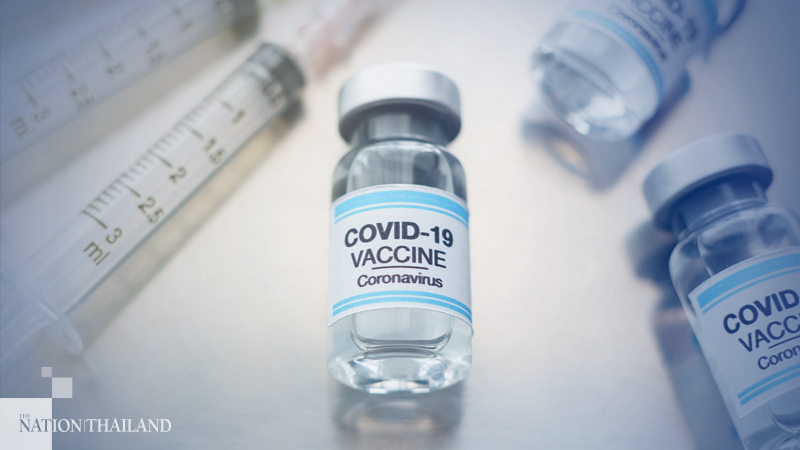
The European Union will aim to vaccinate at least 70% of its adult population against the coronavirus by summer as the bloc grapples with new variants that threaten to trigger more social curbs and economic damage.
The European Commission’s covid-19 plan, first reported by Bloomberg on Monday, also urged national governments to vaccinate at least 80% of health workers and people over the age of 80 by March.
“Meeting these two targets would, in a first instance, reduce death and hospitalization rates, relieve pressure on healthcare systems and then put Europe on track for herd immunity, helping to protect those who cannot be vaccinated and providing a bulwark against the spread of the virus,” the Brussels-based commission said on Tuesday.
With the virus killing more than 400,000 people in the EU since the spring of 2020 and hobbling the European economy, the bloc is setting its hopes on vaccines from various drugmakers while urging stepped-up testing and tracing. The EU has approved two vaccines since mid-December and has six more in the pipeline.
“We are still far from overcoming this pandemic,” EU Health Commissioner Stella Kyriakides told the European Parliament. “But we have also turned a page and we begin 2021 with a powerful tool at hand to progressively put an end to this pandemic.”
While health policy is largely a national responsibility in the EU, the commission is pushing member countries to act in coordinated ways to tackle the coronavirus — including when it comes to the procurement of vaccines. The commission has secured around 2.3 billion vaccine doses for the bloc as a whole through advance purchase agreements.
So far, more than 13 million doses have been delivered to EU countries, the commission said on Tuesday. These are the vaccines from Pfizer Inc.-BioNTech SE, which have delivered 12.3 million doses to date, and from Moderna Inc., which has delivered 850,000 doses so far, according to the commission, which said more than 5 million vaccinations have been administered across the EU.
EU leaders are due to discuss the pandemic during a video conference on Thursday. After Pfizer triggered concerns last week about the pace of vaccine deliveries in Europe by announcing the renovation of a factory in Belgium, the commission stressed the need to bolster output in general.
“We will need to ramp up the supply of vaccines,” the commission said. “The commission and member states should work together with companies to ensure that new production comes on stream as quickly as possible.”
The commission also urged EU governments to do more to track virus mutations through genome sequencing, saying only one of them is testing more than 1% of samples and all others are either not sequencing enough or at all.
“The recent emergence of new variants of the virus is a real cause for concern,” the commission said. “All EU member states should reach a capacity of sequencing at least 5% — and preferably 10% — of positive test results.”
12 members of the National Guard removed from inauguration duty
InternationalJan 20. 2021National Guard members patrol near the U.S. Capitol a day before the presidential inauguration. MUST CREDIT: Washington Post photo by Joshua Lott
By The Washington Post · Dan Lamothe, Paul Sonne, Alex Horton
A dozen members of the National Guard have been removed from inauguration duty as the federal government screens troops involved for security concerns, senior U.S. defense officials said Tuesday, one day before President-elect Joe Biden is set to take over as commander in chief.
The service members include at least two with possible sympathies for anti-government groups, said two U.S. officials, speaking on the condition of anonymity because of the sensitivity of the issue. Another 10 were removed for other reasons that defense officials declined to detail, but said it does have to do with extremism.
“These are vetting efforts that identify any questionable behavior in the past, or any potential link to questionable behavior not related to extremism,” said Jonathan Rath Hoffman, the chief Pentagon spokesman. He said that defense officials are not asking questions right now, and proactively removing people “out of an abundance of caution.”
Army Gen. Daniel Hokanson, the chief of the National Guard Bureau, declined to provide specifics about the two service members alleged to have expressed common cause with anti-government groups, but said they made “inappropriate comments.” One of those individuals was flagged for concern within his unit, while the other was reported to authorities, defense officials said.
The 12 service members removed represent a fraction of 1 percent of the 25,000 members of the National Guard deployed in Washington for the inauguration following the Jan. 6 assault on the U.S. Capitol by a mob that sought to stop the certification of Biden as the next president. The group, supporting President Donald Trump, smashed its way into Congress in an attack that led to the death of five people, including a police officer.
Democratic lawmakers sought vetting of National Guard members deployed for the inauguration afterward, citing the arrest of numerous veterans in the mob. The names of guardsmen supporting the inauguration were then sent to the FBI for vetting.
Army Gen. Daniel Hokanson, the chief of the National Guard Bureau, said that some of the guardsmen who have been flagged will be pulled “off the line” where guardsmen have formed a security perimeter around the Capitol, White House and other federal buildings. He said he is “not concerned” that a large part of the National Guard has security concerns, citing the small percentage who were removed after screening.
“Let me be clear: Extremism is not tolerated in any branch of the United States military,” Hokanson said. “If there are reported issues, our leaders will address them immediately and in accordance with established department policies and in coordination with law enforcement.”
The Pentagon on Tuesday referred questions about the guardsmen who have been removed to the Secret Service, which in turn said that any questions about National Guard personnel should be directed to the Defense Department.
“In order to maintain critical operational security surrounding the 59th Presidential Inauguration, the U.S. Secret Service and our law enforcement partners will not be commenting on the means and methods used to conduct the agency mission, inclusive of protective intelligence matters,” the Secret Service said in a statement. “Any questions specific to National Guard Bureau personnel should be directed to the Defense Department and the National Guard Bureau.”
The Associated Press first reported that some guardsmen would be removed from inauguration duty.
Not all of the Guardsmen being removed from inauguration duty necessarily have far-right militia ties; in some cases the military is removing individuals flagged by the FBI without knowing the reason they were flagged out of an abundance of caution, according to one official.
Guardsmen closer to the inner workings of the inauguration, like those overseeing access points, may receive higher levels of screening, said Michael Taheri, a retired Air Force major general and former director of staff for the National Guard Bureau.
Background checks for service members have broadened in recent years to include social media activity and more frequent monitoring, Taheri said, mirroring how private companies comb online behavior for prospective hires.
“My guess is there is a lot of open stuff out there,” he said.
About 25,000 guardsmen are expected to serve in the inauguration, following the deadly attack on the U.S. Capitol on Jan. 6 by a mob that sought to stop the certification of Biden as the victor in the election over Trump. Democratic lawmakers have sought the vetting as a precaution following the arrest of several veterans and at least two current service members in the group.
Among the service members arrested are a current Virginia National Guard member who previously served in the Marine Corps and an Army reservist, according to court documents and defense officials.
Biden’s nominee for national intelligence chief faces questions on China, domestic extremism
InternationalJan 20. 2021Avril Haines appears before the Senate Intelligence Committee during a hearing about her nomination to be director of national security on Tuesday, Jan. 19, 2021. MUST CREDIT: Washington Post photo by Melina Mara
By The Washington Post · Shane Harris, Ellen Nakashima
WASHINGTON – Avril Haines, President-elect Joe Biden’s nominee for director of national intelligence, took questions from senators Tuesday in a confirmation hearing that was notably free of the partisan rancor that has characterized so many oversight sessions during the Trump administration.
Discussion about China dominated much of the hearing, one of the rare issues that has attracted a bipartisan consensus for action on Capitol Hill in recent years. Senators pressed Haines on how she planed to counteract that country’s aggressive espionage operations targeting U.S. companies.
Sen. Mark Warner, D-Va., the committee’s incoming chairman and a former telecommunications executive, noted how his own views toward Beijing have hardened over the years, and he asked Haines to say whether China, under Communist Party rule, was an adversary of the United States.
She gave a measured answer.
“China is adversarial and an adversary on some issues,” Haines said, “and on other issues, we try to cooperate with them.” She noted that climate change is one area where the United States has sought Beijing’s cooperation.
But, she said, “that does not mitigate the fact that in espionage and other ways, they are an adversary,” and the intelligence community has to work to counter its “aggressive and unfair actions in these spaces.”
Sen. Ben Sasse, R-Neb., criticized the intelligence community for, in his eyes, being “way too slow to pivot to the primary focus we need to have on China,” including not having enough Mandarin-speaking analysts, and he solicited from Haines a commitment to address the issue. She said she recognized that “China is focused on a very long-term horizon, where the United States frequently is not.”
Haines took firmer positions on other policies. Revisiting one of the intelligence community’s darkest chapters, she unequivocally described waterboarding as “torture” and said that even if such interrogation techniques elicited useful and accurate information, she would never authorize their use.
“I believe that waterboarding is, in fact, torture – constitutes torture under the law,” said Haines, a lawyer who was deputy CIA director during the Obama administration. “And I believe all of those techniques that involve cruel, inhuman, degrading treatment are unlawful.”
Several senators also asked Haines what role the intelligence agencies should play in preventing political violence and the rise in domestic extremism that was laid bare in the Jan. 6 attack on the Capitol by supporters of President Donald Trump and has led to an unprecedented level of security to protect Wednesday’s inauguration ceremony.
Haines emphasized that by law, the intelligence agencies address foreign threats and that the FBI and the Homeland Security Department would take the lead on domestic ones. But she noted that to the extent that U.S. groups have connections with foreign extremists, the intelligence agencies would support the work of law enforcement and security agencies.
Sen. Jack Reed, D-R.I., incoming chairman of the Armed Services Committee, raised the issue of the recent Russian hacks of U.S. government agencies and private-sector computer networks, calling it “one of the most significant events that [has] transpired in recent months.” He expressed dismay that the breaches went undetected for many months and that it was a private cybersecurity firm – not U.S. intelligence agencies – that discovered them.
Haines agreed. “It was pretty alarming that we found out about it through a private company rather than finding out about it ourselves,” she said.
She told Reed that “this is a major concern,” but she deferred on offering an opinion on how significant the operation was, saying she had not “had a full classified briefing” on the matter.
U.S. officials have said that the hack probably was perpetrated by Russian intelligence operatives, and that they have debated whether to characterize it as an act of espionage or warfare. Haines offered no solid proposals on how to counter foreign intrusions. But she said she favored a strategy of deterring adversaries by imposing sanctions and using criminal indictments.
Haines said it was possible to promote norms of acceptable behavior among nations in cyberspace without a treaty, something the United States has long resisted because it also attacks foreign computer networks to steal information and disable infrastructure.
Warner said it was Haines’s job to help the intelligence agencies recover from a period of intense politicization. For years, Trump has derided the CIA and other agencies as dens of conspirators trying to undermine his presidency by fabricating a “hoax” that Russia tried to help him win the White House. His administration declassified intelligence about Russia’s interference in the 2016 election that some officials said could compromise U.S. intelligence sources.
“Our intelligence professionals have been unfairly maligned; their expertise, knowledge and analysis has often been ignored and ridiculed by a president uninterested in facts contradicting his political interests,” Warner said.
Haines committed to “safeguard the integrity” of the intelligence community and to ensure that its work was free from political influence.
“When it comes to intelligence, there is simply no place for politics – ever,” she said.
If confirmed, Haines would make history as the first woman to serve as the director of national intelligence.
Gina Haspel, the first woman to run the CIA, the most influential of all the spy agencies, is retiring after 36 years serving as an intelligence officer, the agency announced Tuesday on Twitter.
Biden has nominated William Burns, a career diplomat, to succeed her.

 นักวิทยาศาสตร์ในปักกิ่งได้พัฒนาการรักษาด้วยยีนบำบัดซึ่งช่วยยืดอายุของหนูทดลองได้
 สหรัฐสั่งถอดเจ้าหน้าที่กองกำลังพิทักษ์มาตุภูมิ 12 นายจากทีมคุ้มกันพิธีสาบานตนหลังพบมีพฤติกรรมไม่เหมาะสม
 หลังจากเก็บตัวเงียบมานานเกือบ 3 เดือนในที่สุดหม่าก็เผยตัวต่อสาธารณชนในที่สุด
 โดนัลด์ ทรัมป์ แถลงอำลาตำแหน่งประธานาธิบดี เตรียมส่งไม้ต่อให้โจ ไบเดน พร้อมทิ้งท้าย ‘นี่เพิ่งเริ่มต้น’
 บรรดานักลงทุนพากันทิ้งหุ้นอาลีบาบาหลังอาณาจักร แจ็ก หม่า ถูกทางการจีนไล่ตรวจสอบการผูกขาดการค้า
 ชายศรีลังกาอวดอ้างยาวิเศษช่วยป้องกันโควิดได้ สุดท้ายป่วยกันเป็นแถว
 ทำไมบางบริษัทถึงไม่รีบเร่งผลิตทั้งๆ ที่เป็นเจ้าธุรกิจ แล้วทำไมบางบริษัทถึงยอมไม่เอากำไรในช่วงวิกฤต? ที่นี่มีคำตอบ
 National Guard members patrol near the U.S. Capitol a day before the presidential inauguration. MUST CREDIT: Washington Post photo by Joshua Lott
 Avril Haines appears before the Senate Intelligence Committee during a hearing about her nomination to be director of national security on Tuesday, Jan. 19, 2021. MUST CREDIT: Washington Post photo by Melina Mara

