
Here’s what to expect when Congress meets to confirm Biden’s win #SootinClaimon.Com

#SootinClaimon.Com : ขอบคุณแหล่งข้อมูล : หนังสือพิมพ์ The Nation.

Here’s what to expect when Congress meets to confirm Biden’s win

InternationalJan 05. 2021This is what a joint session of Congress looked like before the pandemic. MUST CREDIT: Washington Post photo by Nikki KahnThis is what a joint session of Congress looked like before the pandemic. MUST CREDIT: Washington Post photo by Nikki Kahn

By The Washington Post · Amber Phillips

This week, as many as three dozen congressional Republicans will launch a final challenge to the electoral college results of the 2020 presidential election.
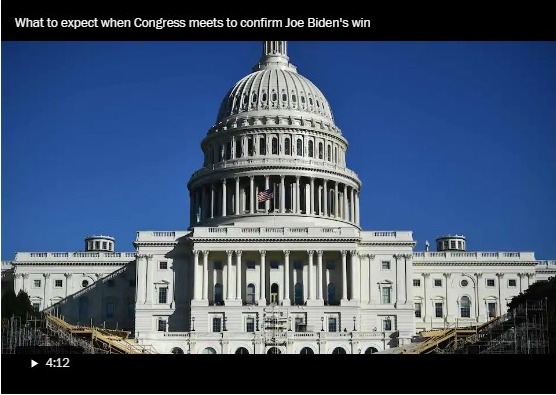
Congress will meet Wednesday to count and confirm each state’s electoral votes. It has become routine after recent elections for House lawmakers on the losing side to put up a symbolic fight over the results, which they can do under an 1880s law governing the process.

It has been less common for senators to join them, but this time a dozen will. Sens. Josh Hawley, R-Mo., and Ted Cruz, R-Texas, will lead the challenge of the votes and call for an emergency audit to investigate alleged fraud. It’s also unprecedented to see as many challenges to states’ results as are expected Wednesday. This will happen despite no evidence of widespread election fraud and as the outgoing president has refused to concede and tried to strong-arm the process at every step to stay in power.

The challenges are poised to delay the inevitable, which is Congress confirming Joe Biden’s win. But it will force Congress to vote on the challenges and put Vice President Mike Pence in the position of eventually having to officially announce Biden’s win.

Newly elected Republican House members gather on the steps of the Capitol for their formal photo on Monday, Jan. 4, 2021. MUST CREDIT: Washington Post photo by Michael Robinson Chavez

Newly elected Republican House members gather on the steps of the Capitol for their formal photo on Monday, Jan. 4, 2021. MUST CREDIT: Washington Post photo by Michael Robinson Chavez

Here’s how the day probably will go:

– – –

What Congress is doing Wednesday

Throughout November and December, states certified their results. Then the electoral college voted Dec. 14 based on those results and made Biden the winner. States sent their electoral college vote totals to the new Congress to be counted and confirmed. This counting will happen Wednesday. It’s largely a formality, since election law says Congress has to treat states’ results completed by the deadline of Dec. 8 as “conclusive.”

Wednesday is the penultimate step in the post-election process. All that’s left after that is to inaugurate Biden.

– – –

How Congress counts the votes

Congress will meet in a joint session, meaning the House and Senate are together (with precautions taken for the coronavirus). Pence will preside over the process. He could delegate the job to another senator, but that is unlikely.

They will go through the states alphabetically. For each state, clerks sitting below Pence will hand him the envelopes and tell him the votes; he is to read them out loud. Congress will vote on accepting states’ results.

– – –

How challenges to states’ electors will work

For a challenge to proceed, at least one lawmaker from each chamber must object to a state’s electors. More than two dozen House Republicans have said they will try to challenge results, and a dozen GOP senators will join them – even though Senate Majority Leader Mitch McConnell, R-Ky., has urged senators to stay away from this move.

Lawmakers do not have to give a detailed explanation of why they object; they just object in writing, which Pence will read out loud.

If there’s an objection to a state’s electors raised by a lawmaker in the House and one in the Senate, the chambers have to split up and vote on that objection. They have up to two hours to debate each one.

– – –

How voting on challenges is expected to occur

If a House member and a senator challenge the electoral count in a state, the Senate splits off and debates this challenge for up to two hours, then each senator gets a vote on which electors to approve. The House does the same.

The Democratic-controlled House has the votes to knock down all challenges.

Senate Republican leaders have not been able to keep their party unified through this process, but they expect to have the votes to confirm Biden’s win, despite as many as a dozen Republican defections. Sen. John Thune of South Dakota, the No. 2 Senate Republican, said last month that any challenges are “going down like a shot dog.” Republican senators such as Mitt Romney of Utah and Ben Sasse of Nebraska have characterized their colleagues’ challenges to certified election results as dangerous.

At least one Republican critic of the objections pointed to President Donald Trump’s hour-long phone call with Georgia’s secretary of state, in which the president tried to get his loss in Georgia overturned, as all the more reason for the Republican Party to stand up to Trump and vote to certify states’ legitimate results. “To every member of Congress considering objecting to the election results,” tweeted Rep. Adam Kinzinger, R-Ill., “you cannot – in light of this – do so with a clean conscience.”

Republican leaders’ resistance to challenging the election now is notable given that the majority of Republican lawmakers waited more than a month to acknowledge that Biden was the winner. Many still have not. But there does not seem to be an appetite among a majority of Republican lawmakers to use Congress to try to overturn the will of the voters.

There’s also no legal basis for senators to question the electoral college results, since all the states that are in Trump’s focus met every legal requirement for having their electoral votes recognized by Congress.

– – –

What happens if one chamber votes to accept a challenge to electors

If the Senate decided to vote in favor of a challenge to a state’s electors, there are still many hurdles to overturning Biden’s win.

The law requires both chambers of Congress to affirmatively vote to object to a state’s electors, which will not happen with a Democratic-controlled House.

Even if both chambers agreed to accept the challenge, the tiebreaker would go to the governor of the state. All governors in contested states have certified results that Biden won.

– – –

This process could stretch into the night

Trump lost about six swing states, and they’re spread throughout the alphabet – Arizona to Wisconsin. Republicans who question the election results have indicated that they will try to challenge all of them. Each time there’s a challenge supported by at least one member of each chamber, Congress has to split off and vote on it. Then they come back together and keep counting states. Voting will also take longer than normal because of coronavirus precautions to space lawmakers apart from one another.

What is a normally quick and easy process could get dragged into the wee hours.

– – –

Pence’s role

Pence’s part here is administrative. He has no real authority to refuse to accept electoral results. If he did, it would be in violation of the law. It might even face a court challenge (although legal experts have said they do not think he would face criminal charges). A majority of Congress probably would quickly vote down any challenges he brought up.

Rep. Louie Gohmert, R-Texas, recently filed a lawsuit in federal court trying to undermine the 1880s election law that governs Pence’s role in the process. He wanted Pence to have total control over counting the votes from states, then award the election to Trump. Election law experts say that has no basis in law or the Constitution, and Pence’s team said it did not agree with the lawsuit. The judge threw it out in a matter of days.

Pence has told Trump that he has no power to thwart Biden’s electoral college win, The Washington Post reports, and aides say Pence plans to stick to his perfunctory role.

But after being tight-lipped about the process, his office this weekend encouraged the challenges to states’ results, saying Pence “welcomes the efforts of members of the House and Senate to use the authority they have under the law to raise objections and bring forward evidence.”

– – –

What’s happened in past challenges

Members of the party that lost the presidential election have raised objections after nearly every election since 2000. All have failed, and only one succeeded in splitting the chambers to force them to debate one challenge.

When certifying the contentious 2000 election, House Democrats tried to challenge Vice President Al Gore’s loss using Florida’s electoral votes, but they could not find a Senate partner to get things started.

In 2005, House Democrats challenged President George W. Bush’s reelection the same way over the result in Ohio. Then-Sen. Barbara Boxer, D-Calif., joined them, but the effort was quashed quickly, including by her fellow Democrats in the Senate. House Democrats tried again in 2016 to challenge Trump’s win, but no senator was willing to stand with them.

For that challenge, it was then-Vice President Joe Biden who was presiding over everything. “It is over,” he told Democrats.

National Guard activated for D.C. protests, with more restraints than in June, officials say #SootinClaimon.Com

#SootinClaimon.Com : ขอบคุณแหล่งข้อมูล : หนังสือพิมพ์ The Nation.

National Guard activated for D.C. protests, with more restraints than in June, officials say

InternationalJan 05. 2021D.C. Mayor Muriel E. Bowser, center, with acting D.C. police Chief Robert Contee III behind and to her left on Dec. 22. MUST CREDIT: Photo by Robb Hill for The Washington Post.D.C. Mayor Muriel E. Bowser, center, with acting D.C. police Chief Robert Contee III behind and to her left on Dec. 22. MUST CREDIT: Photo by Robb Hill for The Washington Post.
By The Washington Post · Julie Zauzmer, Marissa J. Lang, Dan Lamothe

WASHINGTON – The District has mobilized the National Guard and will have every city police officer on duty Tuesday and Wednesday to handle protests of the November presidential election, which Mayor Muriel Bowser said may include people looking to instigate violence.

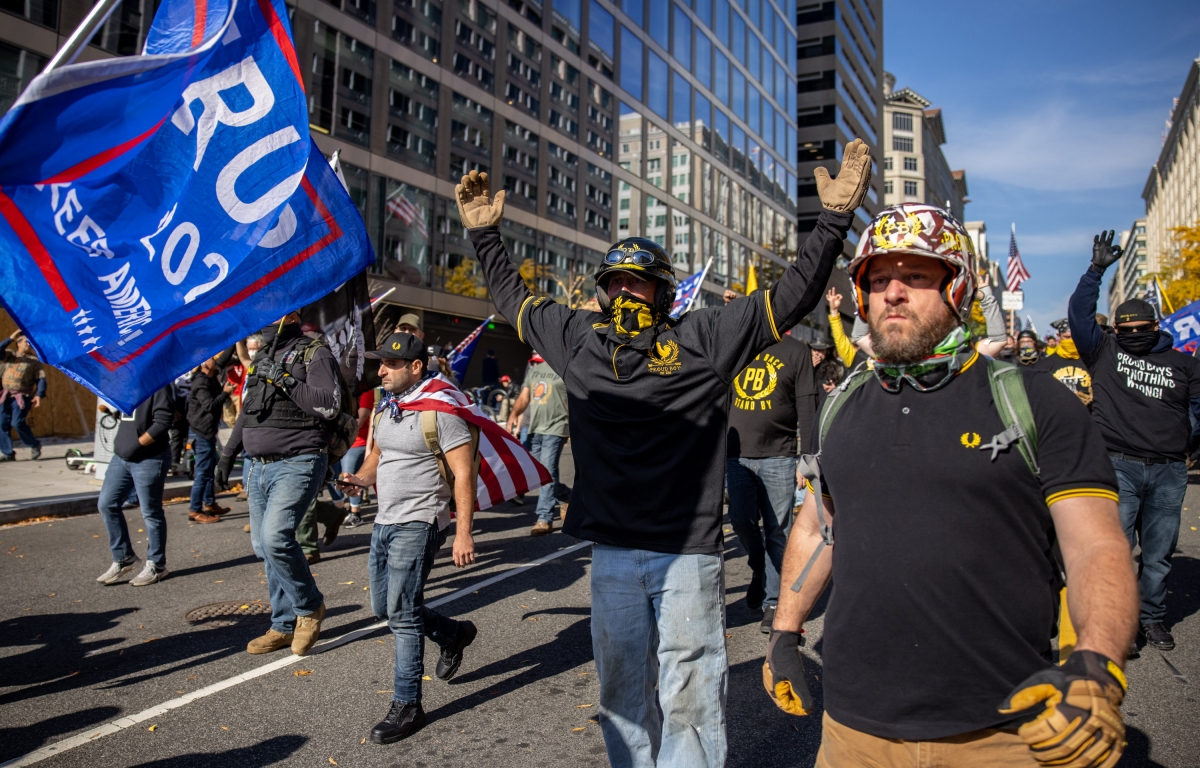
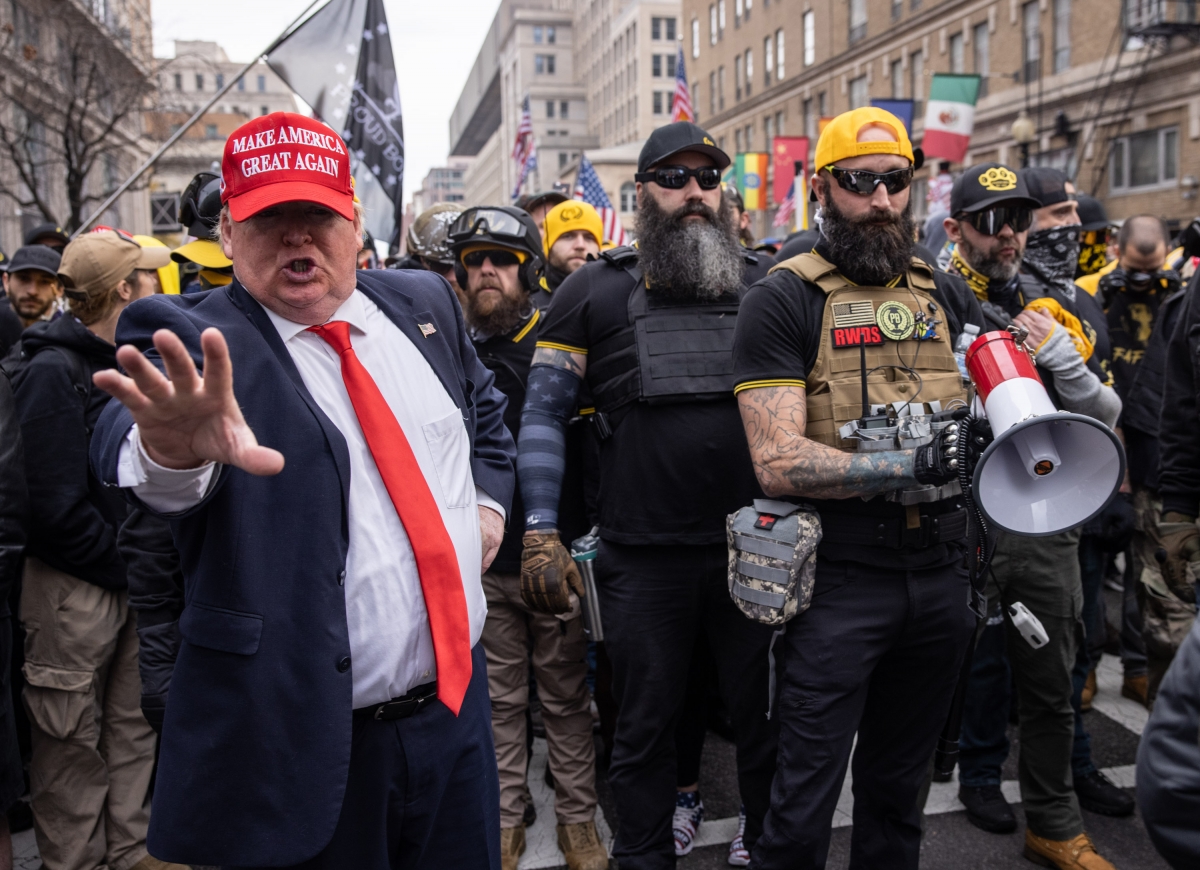
Bowser, a Democrat, has asked D.C. residents to stay away from downtown Washington on both days while members of far-right groups, including the Proud Boys, amass to falsely claim President Donald Trump was reelected.

Trump – who lost both the popular and electoral-college vote to President-elect Joe Biden – has continued to dispute the results, without evidence, and is encouraging his supporters to attend the rallies.

He has said he might appear at Wednesday’s demonstration at the Ellipse, just outside the White House, which is timed to coincide with Congress’s vote to certify the election results – a formality that this year will be a fraught and divisive process.

“People are allowed to come into our city to participate in First Amendment activities,” Bowser said Monday. “We will not allow people to incite violence, intimidate our residents, or cause destruction in our city.”

Pro-Trump protests in November and December, which included some of the same groups, ended violently, with multiple people stabbed and several Black churches vandalized. This time, members of right-wing groups have discussed how to bring guns into the District despite laws banning open carry throughout the city and prohibiting guns on such federal lands as the Mall and Freedom Plaza or anywhere within 1,000 feet of a protest.

Proud Boys march in Washington, D.C. on Nov. 14 to protest the election results. MUST CREDIT: Photo by Evelyn Hockstein for The Washington Post.

Proud Boys march in Washington, D.C. on Nov. 14 to protest the election results. MUST CREDIT: Photo by Evelyn Hockstein for The Washington Post.

Bowser said that the National Guard members, who will not carry guns, will help enforce street closures and otherwise assist with crowd management so that D.C.’s police department can focus on law enforcement, including arresting anyone who is unlawfully carrying a gun.

Defense officials said the Pentagon approved the activation of more than 300 members of the District of Columbia National Guard, but limited the size and scope of the mission after a deployment in June raised questions about whether the Trump administration was trying to use the military as a political club.

Two defense officials familiar with the plans, speaking on the condition of anonymity due to the sensitivity of the issue, said the guardsmen are not expected to use armored vehicles, including Humvees, relying instead on civilian vans owned by the government. The military also has not approved the use of its helicopters, which were deployed over racial justice protesters in June in an apparent show of force, prompting a military investigation whose results still have not been released.

No National Guard members from other states are expected to be called into D.C., the officials said – again, in contrast to June.

The smaller military presence comes as current and former defense officials warn against relying on the Armed Forces for election-related activities. The military, with its nonpartisan tradition, should not be dragged into politics, they have said.

On Sunday, all 10 living former defense secretaries combined to publish an op-ed in The Washington Post warning that the time has come to stop contesting presidential election results, and that the military should have no role in overturning them.

The National Park Service began issuing permits Monday for the so-called “Stop the Steal” rallies, which are expected to begin Tuesday afternoon and continue through Wednesday.

Women for America First – a group behind a pro-Trump march in November and another on Dec. 12 that ended in a night of chaos on D.C. streets – was granted a permit to host about 5,000 people on the southern half of the Ellipse on Wednesday morning. A list of potential speakers includes longtime Trump ally Roger Stone, whose sentence for seeking to impede a congressional probe into Russian election interference was commuted by Trump in July before being upgraded to a full pardon, and Rudy Giuliani, Trump’s campaign attorney, who has waged a roundly unsuccessful legal fight to overturn the election results.

Groups questioning the election outcome will also hold protests at Freedom Plaza, on Pennsylvania Avenue NW, on Tuesday afternoon and outside the Capitol at 1 p.m. on Wednesday.

Though no organized march between the Wednesday rallies has been planned, organizers said they expect a large number of attendees to make their way from the Ellipse to the Capitol at the conclusion of the morning event.

Proud Boys during a Dec. 12 rally in downtown Washington that questioned President Trump's election defeat. MUST CREDIT: Photo by Evelyn Hockstein for The Washington Post.

Proud Boys during a Dec. 12 rally in downtown Washington that questioned President Trump’s election defeat. MUST CREDIT: Photo by Evelyn Hockstein for The Washington Post.

Pro-Trump protesters have also frequently visited the stretch of 16th Street NW north of the White House that Bowser renamed Black Lives Matter Plaza during the summer demonstrations, where they have torn down signs honoring Black leaders and victims of violence and demanding racial justice.

Acting D.C. police chief Robert Contee III, who assumed the position just this week, said Monday that police might close off the plaza to all pedestrians if conditions warrant.

The organization Black Lives Matter DC put out a statement Monday asking Bowser to go further than she has so far in her denunciation of far-right demonstrators.

The statement included three specific demands: that businesses in the District refuse to do business with “white supremacists and hate groups who incite violence”; that D.C. officials do more to enforce mask and social distancing protocol among rallygoers; and that D.C. lawmakers do more to “protect our sacred Black spaces.”

“The authorities have no problem keeping the White House – and the white man inside – safe; Black people expect and demand no less for our sacred Black spaces, including Black churches and Black Lives Matter Plaza,” the group wrote.

Bowser said Monday that police would focus on enforcing gun laws and addressing any potential violence, and would not arrest or fine people for violating the city’s masking and social distancing requirements.

She said she would consider imposing a curfew if needed, as she did during racial justice protests in June.

Did Trump break the law in his call to Georgia’s secretary of state? Some lawyers say yes. #SootinClaimon.Com

#SootinClaimon.Com : ขอบคุณแหล่งข้อมูล : หนังสือพิมพ์ The Nation.

Did Trump break the law in his call to Georgia’s secretary of state? Some lawyers say yes.

InternationalJan 05. 2021President Donald Trump walks to the Oval Office on Thursday, Dec. 31, 2020. MUST CREDIT: Washington Post photo by Bill O'LearyPresident Donald Trump walks to the Oval Office on Thursday, Dec. 31, 2020. MUST CREDIT: Washington Post photo by Bill O’Leary
By The Washington Post · Teo Armus

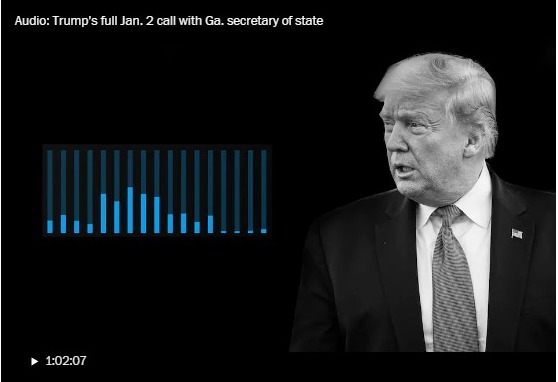
After The Washington Post on Sunday published an extraordinary phone call between President Donald Trump and Georgia Secretary of State Brad Raffensperger, R, many observers shared one question: Did Trump break the law?

https://www.washingtonpost.com/video/c/embed/3f9426f4-7937-4718-8a8e-9d6052001991?ptvads=block&playthrough=false

During that hour-long call on Saturday, Trump urged Raffensperger to “find” enough votes to overturn his defeat and threatened him with vague legal consequences, seemingly encouraging his fellow Republican to fix the election results.

As the sole Democrat on Georgia’s state election board on Sunday urged Raffensperger to investigate the president over the call, some lawyers and legal scholars say Trump’s actions indeed appeared to violate both state and federal criminal statutes.

On social media, much of the conversation among legal observers and Trump critics revolved around a federal statute, 52 U.S. Code 20511, that makes it a crime to “knowingly and willfully” deprive or defraud a state’s residents of a free or fair election – or to attempt to do so.

Eric Holder, the former attorney general under President Barack Obama, shared the text of that statute on Twitter on Sunday. “As you listen to the tape consider this federal criminal statute,” Holder wrote.

The question, according to Justin Levitt, a law professor at Loyola Marymount University, is whether Trump was “knowingly and willfully” pressuring Raffensperger to count nonexistent votes when he told the GOP official, “I just want to find 11,780 votes.”

In other words: Does Trump actually believe that 11,780 ballots in his favor were cast but not counted?

Considering that two recounts, an audit and several judges have upheld President-elect Joe Biden’s win in Georgia, Levitt said it is clear Trump was not actually pushing for an “honest tally” of the votes.

“Either the president was engaged in the commission of a felony,” he said, “or he has lost his hold on reality such that he can no longer distinguish fact from the fictions he has been fed.”

Michael R. Bromwich, a former Justice Department inspector general, put it more bluntly on Twitter: “His best defense would be insanity.”

Since 52 U.S. Code 20511 was adopted as part of the National Voter Registration Act of 1993, it has been used sparingly by federal prosecutors. It was used in 2005 to go after Milwaukee grandmother Kimberly Prude, who voted illegally in the city while still on probation. But Levitt said there is no precedent to use it against someone of Trump’s stature.

Other legal scholars said that Trump possibly violated 18 U.S. Code 241, which makes it illegal to participate in a conspiracy against people exercising their civil rights. That longstanding statute has been used frequently to prosecute acts of voter intimidation, especially those committed by the Ku Klux Klan against Black voters.

But charging Trump under that code would require prosecutors to show that someone else on the phone call was also aiding and abetting a scheme, Levitt said.

Additionally, Trump’s apparent threat of criminal consequences if Raffensperger failed to act could be seen as an attempt at extortion, The Post reported.

On the state level, Trump’s call could also have violated a Georgia statute.

Leigh Ann Webster, a criminal defense attorney in Atlanta, told The Post that in Georgia, Trump could run afoul of a state law that makes it illegal to cause someone else to partake in election fraud – by soliciting, requesting, or commanding it.

That’s the same statute cited on Sunday by David J. Worley, the Georgia election board member who asked Raffensperger to investigate Trump. In his email to the GOP official, Worley said that “probable cause” may exist to find violations of that law.

“It’s a crime to solicit election fraud, and asking the secretary to change the votes is a textbook definition of election fraud,” Worley said in an interview with The Post.

The argument may be more straightforward compared to a potential federal case. Under the Georgia statute, Webster said the crime would be merely asking someone else to partake in one of several forms of election fraud, including interfering with the secretary of state’s handling of an election.

But because such matters at the state level have rarely been interpreted in court, “none of this is bulletproof,” she said.

And whether Trump broke federal state law, it’s a different question of whether any prosecutor would try to charge him.

Until Biden is sworn in on Jan. 20, legal scholars say there is virtually no chance of federal charges being filed. Besides the short time frame, Levitt said, the Justice Department maintains a long-standing principle that a federal prosecutor may not prosecute a sitting president.

No such principle exists once a commander in chief is out of office. Yet under a Biden administration juggling a bevy of competing priorities, going after Trump in the courts could be a politically fraught choice.

Trevor Potter, a Republican and former Federal Election Commission chairman who was appointed by President George H.W. Bush, told the New York Times “there is a good argument” that Trump had been pushing for a fraudulent vote count during the call.

“But even if the Biden Justice Department thinks they have a good case, is that how they want to start off the Biden presidency?” he said. “That is a policy decision.”

Japan’s Suga mulls renewed state of emergency #SootinClaimon.Com

#SootinClaimon.Com : ขอบคุณแหล่งข้อมูล : หนังสือพิมพ์ The Nation.

Japan’s Suga mulls renewed state of emergency

InternationalJan 05. 2021Prime Minister Yoshihide Suga speaks during a New Year's press conference at the Prime Minister's Office in Tokyo on Jan. 4, 2021. MUST CREDIT: Japan News-YomiuriPrime Minister Yoshihide Suga speaks during a New Year’s press conference at the Prime Minister’s Office in Tokyo on Jan. 4, 2021. MUST CREDIT: Japan News-Yomiuri
By Syndication Washington Post, The Japan News-Yomiuri

Japan Prime Minister Yoshihide Suga said Monday the government will consider declaring a fresh state of emergency amid the spread of the novel coronavirus, covering Tokyo and the three neighboring prefectures of Saitama, Chiba and Kanagawa.

A meeting of experts will be held as early as Friday, and the state of emergency is expected to be declared this week. It is expected to last for about a month.

Speaking at a New Year’s press conference at the Prime Minister’s Office, Suga said: “The number of newly confirmed infections did not decline in the first three days of the New Year. Tokyo and the three prefectures accounted for half of the infections nationwide.

“I take this situation seriously and have come to think that a stronger message [by declaring a state of emergency] is needed,” he said.

The risk of infection is said to be high during eating and drinking, such as when eating dinner. Since the end of last year, the government has called on the public to refrain from dining out. However, the turnout in bustling areas in Tokyo has not decreased.

“Details to make [the declaration] effective will be worked out as soon as possible,” Suga said.

The stage of emergency would be declared under the special measures law to cope with new strains of influenza. It would be the first since then Prime Minister Shinzo Abe declared a state of emergency on April 7 last year for Tokyo and six prefectures.

A state of emergency can be issued for specific areas over a set period of time if a prime minister judges that the rapid expansion of infections nationwide would have a “huge impact on people’s livelihoods and their financial situation.”

Governors of prefectures that are subject to a state of emergency can ask residents to refrain from going out, as well as ask or order limits on, or the suspension of, the use of certain facilities.

Tokyo logged 1,337 newly confirmed infections on Dec. 31, topping the 1,000 mark for the first time for a single-day figure. As of Sunday, the number of seriously ill COVID-19 patients in Tokyo totaled 101, the highest since last year’s state of emergency was lifted. The current situation is weighing heavily on the medical system in the capital.

On Saturday, the governors of Tokyo and the three prefectures asked Yasutoshi Nishimura, the economic revitalization minister who is also tasked with handling the pandemic, to issue a fresh state of emergency, saying the increase in new infections showed no signs of abating.

The previous state of emergency was declared on April 7 for Tokyo and six prefectures, and was expanded to all 47 prefectures on April 16. The government initially planned to maintain the state of emergency through May 6, but it was ultimately lifted on May 25.

With regard to vaccinations against COVID-19, Suga said: “The entire government is preparing so that vaccinations can start by the end of February. I am willing to be vaccinated.”

Until vaccinations start, the prime minister said, “It’s important [for the people] to move in the same direction, to get the number of infections declining.”

Regarding the resumption of the Go To Travel program to support domestic tourism, Suga said, “It will probably be difficult if a state of emergency [is declared again].” Go To Travel has been suspended through Jan. 11 nationwide.

108 seriously ill in Tokyo

The Tokyo metropolitan government said Monday that there were 108 seriously ill patients infected with the novel coronavirus, up by seven from the previous day and the highest ever.

The previous high was 105, marked on April 28 and 29, when the country was under a state of emergency.

New cases of coronavirus infections in Tokyo numbered 884, the highest for a Monday.

China races to give coronavirus vaccine to 50 million workers before Lunar New Year #SootinClaimon.Com

#SootinClaimon.Com : ขอบคุณแหล่งข้อมูล : หนังสือพิมพ์ The Nation.

China races to give coronavirus vaccine to 50 million workers before Lunar New Year

InternationalJan 05. 2021

By The Washington Post · Eva Dou

China has begun a nationwide drive to vaccinate some 50 million front-line workers against the coronavirus before the Lunar New Year travel rush next month, in hopes of avoiding a repeat of last year’s grim holiday season.

Workers in a range of industries will receive their first of two vaccine shots by the middle of this month, with the next shot two to four weeks afterward, according to the national plan. The nine prioritized groups include health sector workers, delivery workers, people whose jobs require overseas travel, public servants and utilities employees.

China’s target of vaccinating 50 million people in a month is an ambitious goal, more than the populations of California and Michigan combined. In the United States, where the Trump administration has touted its “Operation Warp Speed” to fast-track delivery of vaccines, 4.2 million people have received a first dose since distribution began on Dec. 14, according to the Centers for Disease Control and Prevention’s Covid Data Tracker.

There’s urgency to complete these vaccinations before Lunar New Year – often called the world’s largest annual human migration – which takes place Feb. 11-17. Last year, some 1.5 billion trips were made over the holiday in China, half the normal number, as people sheltered in place against the growing coronavirus outbreak.

After scuttled reunion plans for many families last year, there is pressure on Chinese authorities to make the country safer for holiday travel this time around. For many in China who work far from home, Lunar New Year is the only time they can gather with their families for celebration and feasting.

“We can’t require people to stay at home and not go out during Lunar New Year,” prominent Shanghai infectious-disease expert Zhang Wenhong was quoted saying in the official People’s Daily on Saturday, even as he said controls may be necessary in higher-risk areas.

Millions in priority groups had already received shots as part of an earlier “urgent use” push, before regulators gave the green light to a vaccine from Sinopharm, a state-owned drugmaker, last week. Now, vaccines are being rolled out by municipal authorities to all prioritized workers willing to take them, and should begin to reach some other demographics by next month.

China’s approval of Sinopharm’s vaccine has given confidence to some other countries. Egypt said Saturday it had approved Sinopharm’s vaccine for emergency use, while a Pakistan minister said the country would purchase 1.2 million doses from Sinopharm.

However, Sinopharm has also come under criticism for lack of transparency, with scant detail released about its Phase 3 clinical trials. Wu Yonglin, the president of the Sinopharm unit that developed the vaccine, has said that the company will provide detailed data after more observation.

Within China, state media on Monday was awash with reports of the vaccination drive. In the capital city, Beijing, municipal officials reported that 73,537 people received their first dose of vaccine in the first two days of the new year.

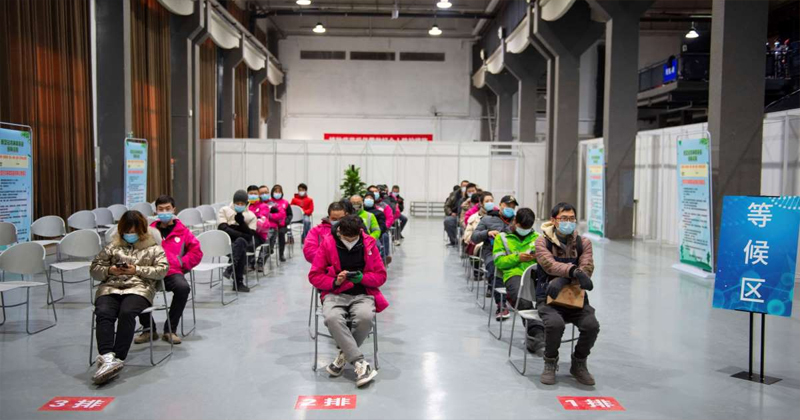
State broadcaster CCTV showed footage of people standing in line over the weekend at pop-up vaccination sites in Beijing, and sitting in socially distanced seats afterward for monitoring for any adverse symptoms. The broadcaster said there were more than 200 vaccination sites in the capital.

Other cities across the country have also announced drives to vaccinate front-line workers over the past two weeks.

Health Times, a state-run newspaper, quoted vaccine expert Tao Lina last month as saying the government planned to vaccinate 50 million people by Lunar New Year, with the first shot by Jan. 15 and second shot by Feb. 5.

Front-line workers eligible for this round of vaccination include those aged 18 to 59 employed in ports, delivery companies, the transportation industry, health and sanitation, public servants, police and firefighters, utilities, elder care, telecommunications, and people whose work or studies takes them overseas.

Besides the vaccine push, officials have issued some restrictions for the Lunar New Year holiday to try to prevent another surge in coronavirus cases. Several cities limited the size of gatherings to 10 people. Chinese Communist Party members in Beijing have been ordered not to leave the city without permission.

These restrictions are still mild compared with last year’s Lunar New Year season, when authorities put swaths of China under lockdown to try to control the rapidly spreading virus. Wuhan, where the virus emerged in late 2019, was sealed off from the rest of the country for more than two months. In many other cities, residents were prevented from leaving their homes without an approved reason.

Britain bolsters vaccination with Oxford shot amid covid surge #SootinClaimon.Com

#SootinClaimon.Com : ขอบคุณแหล่งข้อมูล : หนังสือพิมพ์ The Nation.

Britain bolsters vaccination with Oxford shot amid covid surge

InternationalJan 05. 2021

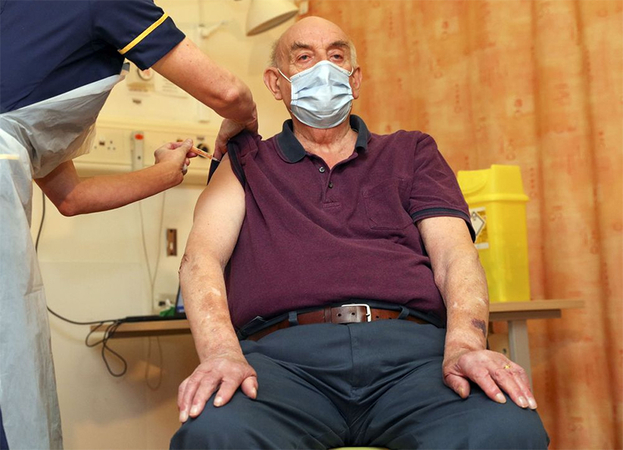
Brian Pinker receives the AstraZeneca Plc and the University of Oxford Covid-19 vaccine in Oxford, on Jan. 4.Photographer: Steve Parsons/PA Wire/Bloomberg

Brian Pinker receives the AstraZeneca Plc and the University of Oxford Covid-19 vaccine in Oxford, on Jan. 4.Photographer: Steve Parsons/PA Wire/Bloomberg

By Syndication Washington Post, Bloomberg · Eric Pfanner

Britain gave the first shots of a coronavirus vaccine from AstraZeneca Plc and the University of Oxford, in a race against a faster-spreading coronavirus variant that’s prompted new restrictions on movement across much of the country.

The first injection was administered Monday morning to an 82-year-old kidney dialysis patient at Oxford University Hospital.

Britain is stepping up its vaccine campaign as coronavirus infections surge across the country, putting the country on the brink of another national lockdown. It’s moved more rapidly on approvals and rollouts than the U.S. or the European Union, clearing the AstraZeneca-Oxford product despite clinical trials that involved a smaller number of participants and that were complicated by a dosing error. A regulatory decision to lengthen the interval between doses of the two-shot vaccines to as many as 12 weeks has prompted further questions.

A new strain that’s estimated to be as much as 70% more transmissible is fueling the pandemic’s resurgence in the U.K. Schools have been closed across much of the country, and Prime Minister Boris Johnson has warned that tougher restrictions may be on the way.

U.K. regulators cleared the AstraZeneca-Oxford shot last week, marking its first approval worldwide. It’s the second injection to be authorized for emergency use in Britain, after one from Pfizer Inc. and BioNTech SE received the go-ahead in early December.

More than a million people in Britain have received injections of the Pfizer-BioNTech vaccine, according to the Department of Health and Social Care.

The U.K. has raced ahead of France, where only about 500 people had got initial shots as of this weekend. President Emmanuel Macron has come under fire for the slow pace of that country’s rollout, which has been hampered by caution amid high levels of vaccine skepticism. France is behind not just European neighbors such as Britain and Germany, but also Israel, where more than 12% of the population has already received injections.

In the U.K., more than 500,000 AstraZeneca-Oxford doses will be available as of Monday, and they will be delivered at hospitals for the first few days. The U.K. aims to expand the number of vaccination sites to more than 1,000, with as many as 100 more hospitals and 180 general practitioner-led services coming online this week.

Although the newly approved vaccine has shown lower effectiveness than the Pfizer-BioNTech one in clinical trials, it has some key advantages: It’s cheaper and easier to transport and store, requiring only refrigerator temperatures rather than deep freezing. That makes it crucial for the broader global vaccination push.

David Nabarro, World Health Organization special envoy for covid-19, called for caution amid the global rush to vaccinate populations.

“I really would like to appeal to every leader just to really slow down a bit on the rush to get the vaccine into as many arms as possible and put more time into systematic planning on what has to be a really effective global operation,” he said in an interview with Bloomberg Television.

The NHS is administering the first injections under a two-shot regime approved by the Medicines and Healthcare Products Regulatory Agency. The second can be given as many as 12 weeks later, as the U.K. seeks to maximize the number of vulnerable people who receive the first portion, which provides some protection from infection.

The U.K. has also taken a more flexible approach to the two-dose regimen, saying that in certain circumstances — such as when it’s not known which vaccine a patient received the first time around — the second shot can be administered with a different company’s product.

The U.K. regulator has yet to publish full data backing its decision to allow a greater time interval between shots, which has drawn opposition from the British Medical Association.

“It is grossly and patently unfair to tens of thousands of our most at-risk patients to now try to reschedule their appointments,” said Richard Vautrey, chairman of the association’s General Practitioners Committee.

เศรษฐกิจมืดทำลายไทย #SootinClaimon.Com

#SootinClaimon.Com : ขอบคุณแหล่งข้อมูล : หนังสือพิมพ์โพสต์ทูเดย์

https://www.posttoday.com/world/641861

วันที่ 03 ม.ค. 2564 เวลา 18:05 น.

เศรษฐกิจมืดทำลายไทย

Posttoday Podcast : The Expert Ep.72 เศรษฐกิจมืดทำลายไทย

Posttoday Podcast : The Expert Ep.72 เศรษฐกิจมืดทำลายไทย

ติดตาม PostToday Podcast ได้ที่ https://soundcloud.com/posttoday 

https://w.soundcloud.com/player/?url=https%3A//api.soundcloud.com/tracks/958559470&color=%23ff5500&auto_play=false&hide_related=false&show_comments=true&show_user=true&show_reposts=false&show_teaser=true&visual=true

PostToday · เศรษฐกิจมืดทำลายไทย

ชี้จีนไม่ใช่ตัวการระบาดใหญ่ แต่ลุกลามเองหลายจุดทั่วโลก #SootinClaimon.Com

#SootinClaimon.Com : ขอบคุณแหล่งข้อมูล : หนังสือพิมพ์โพสต์ทูเดย์

https://www.posttoday.com/world/641923

วันที่ 04 ม.ค. 2564 เวลา 15:46 น.ชี้จีนไม่ใช่ตัวการระบาดใหญ่ แต่ลุกลามเองหลายจุดทั่วโลกรัฐมนตรีต่างประเทศของจีนกล่าวว่าการแพร่ระบาดนอกประเทศจีนอาจทำให้เกิดการระบาดของโรคโควิด -19

หวางอี้ รัฐมนตรีว่าการกระทรวงการต่างประเทศของจีนแสดงความเห็นระหว่างการให้สัมภาษณ์กับสำนักข่าวซินหัวและสำนักข่าว CCTV ว่า จากการวิจัยที่มีมากขึ้นเรื่อยๆ ชี้ให้เห็นว่าการระบาดของโรคโควิด-19 น่าจะเกิดจากการระบาดหลายจุดที่เกิดแยกจากกันในพื้นที่หลายแห่งในโลก”

หวางอี้กล่าวว่าจีนดำเนินการทันทีเพื่อดำเนินการสอบสวนทางระบาดวิทยา ระบุเชื้อโรค และเผยแพร่ข้อมูล สำคัญรวมถึงลำดับจีโนมของไวรัส ซึ่งการกระทำทั้งหมดนี้ของจีนช่วยส่งสัญญาณเตือนไปทั่วโลก

ในการให้สัมภาษณ์หวางอี้กล่าวว่าจีน “มีส่วนร่วมอย่างแข็งขัน” ในการตอบสนองทั่วโลกต่อการระบาดใหญ่

“เรายืนอยู่แถวหน้าในการต่อสู้กับข้อมูลที่ผิดๆ โดยไม่ยอมให้มีความพยายามทำให้ประเด็นนี้เป็นเรื่องการเมืองและเป็นการการตีตราบาป เราตั้งใจแน่วแน่ที่จะตรวจสอบให้แน่ใจว่าคำอธิบายที่เที่ยงตรงและเป็นความทรงจำร่วมกันในการต่อสู้กับการระบาดทั่วโลก จะไม่ถูกบิดเบือนโดยเรื่องโกหก” หวางอี้กล่าว

ทั้งนี้ จีนพยายามที่จะอธิบายเรื่องการระบาดของไวรัสตามมุมมองของจีนเอง ขณะที่สื่อตะวันตกมักจะอธิบายว่าจีนคือตัวการการระบาดแรกเริ่ม แม้ว่าการอธิบายของทั้ง 2 ฝ่ายยังไม่อาจยืนยันได้เพราะยังไม่มีผลการสืบสวน ต้นกำเนิดของโรคอย่างเป็นทางการจากองค์กรนานาชาติที่เชื่อถือได้

นอกจากนี้จีนยังพยายามที่อธิบายการระบาดช่วงแรกในเวอร์ชั่นของตัวเอง โดยเจ้าหน้าที่และสื่อของรัฐบาลจีนต่างผลักดันทฤษฎีที่เชื่อมโยงโควิด-19 กับกองทัพสหรัฐ และอ้างว่าไวรัสอาจเข้าสู่ประเทศจีนจากอาหารแช่แข็งที่นำเข้าจากประเทศอื่น และทางการจีนยังรีบอ้างงานการวิจัยที่ชี้ว่าพบการระบาดในสหรัฐและอิตาลีก่อนการระบาดที่อู่ฮั่น

อย่างไรก็ตาม ผู้เชี่ยวชาญขององค์การอนามัยโลก (WHO) ซึ่งเดินทางไปประเทศจีนในปีที่ผ่านมากลับไม่ได้รับอนุญาตให้เข้าไปในอู่ฮั่นซึ่งเป็นศูนย์กลางของการแพร่ระบาด โฆษกของ WHO กล่าวเมื่อเดือนที่แล้วว่า WHO หวังว่าคณะกรรมการผู้เชี่ยวชาญที่ตรวจสอบต้นกำเนิดจะสามารถเยือนอู่ฮั่นได้ในเดือนมกราคม

Photo by KIM Min-Hee / POOL / AFP

ชาวฮาวายเห็น UFO ปรากฎตัวบนท้องฟ้าแล้วดำลงทะเล #SootinClaimon.Com

#SootinClaimon.Com : ขอบคุณแหล่งข้อมูล : หนังสือพิมพ์โพสต์ทูเดย์

https://www.posttoday.com/world/641915

วันที่ 04 ม.ค. 2564 เวลา 14:49 น.ชาวฮาวายเห็น UFO ปรากฎตัวบนท้องฟ้าแล้วดำลงทะเลหน่วยงานของรัฐบาลกลางสหรัฐยืนยันว่าในวันนั้นไม่มีอะไรผิดปกติเกี่ยวกับอากาศยานเลย

สำนักข่าว Hawaii News Now รายงานว่ามีผู้คนพบเห็นวัตถุบินได้ลักษณะประหลาดที่น่าจะเป็นจานบิน UFO ปรากฏบนท้องฟ้ายามเย็นเหนือเกาะโออาฮู ซึ่งเป็นที่ตั้งของเมืองโฮโนลูลู และผู้พบเห็นพยายามแจ้งให้ให้ตำรวจได้รับทราบ

การพบยานปริศนาดังกล่าวเห็นเกิดขึ้นประมาณ 20.30 น. วันที่ 29 ธันวาคม 2020 และมีผู้ถ่ายคลิปวิดีโอหลายคลิปที่สามารถจับภาพวัตถุรูปสี่เหลี่ยมผืนผ้าที่เรืองแสงได้ทั้งลอยจากท้องฟ้าแล้วตกลงไปในทะเล

เจ้าหน้าที่จากสำนักบริหารการบินของรัฐบาลกลางสหรัฐ (FAA) กล่าวว่าไม่มีเหตุการณ์ใดๆ ที่เกี่ยวเครื่องบินหรือเกิดอุบัติเหตุทางอากาศในพื้นที่ดังกล่าวในเวลานั้น

หนึ่งในผู้ที่จับภาพวัตถุปริศนาได้คือ มิซิตินา ซาเป บอกกับสำนักข่าว Hawaii News ว่าเธอจับวัตถุปริศนาได้เมื่อเวลา 20:26 น. ใกล้ๆ ถนนฮาเลอากาลา

ในเวลาไล่เลี่ยกันมีผู้หญิงชื่อโมริยาห์เห็นวัตถุอย่างเดียวกันลอยผ่านมาแถวๆ ถนนพรินเซสคาฮานูซึ่งอยู่ไม่ไกลจากรายแรกที่พบเห็น โดยบรรยายว่ามันมีขนาดใหญ่กว่าเสาโทรศัพท์และไม่ได้ยินเสียงอะไรออกมา

โมริยาห์วัย 38 ปีกล่าวว่าเธอไม่เคยเชื่อเรื่องยูเอฟโอมาก่อน แต่วัตถุสีฟ้าสดใสทำให้เธอและสามีและคนที่อยู่ใกล้ๆ กันที่ได้พบเห็นรู้สึกทึ่งมากจนพวกเขากระโดดขึ้นรถและเริ่มติดตามมัน แต่พบว่ามันเคลื่อนที่เร็วมาก

กลุ่มของโมริยาห์ติดตามมันไปเป็นระยะทางถึงเกือบ 5 กิโลเมตรจากจุดเริ่มต้น หลังจากนั้นดูเหมือนว่าวัตถุลึกลับหายลงไปในมหาสมุทร ซึ่งในคลิปมีเสียงบรรยายว่ามันดำลงทะเลเช่นกัน แม้ว่าคลิปจะค่อนข้างมืดและเห็นแต่วัตถุเรืองแสงบสีฟ้าเป็นหลัก

ในเวลาต่อมาตำรวจได้แจ้งไปยัง FAA แต่ทางหน่วยงานได้มีคำตอบดังที่ระบุไว้ข้างต้นว่าไม่พบว่ามีเหตุการณ์ใดๆ เกี่ยวข้องกับอากาศยานในเวลานั้น

ภาพ – Misitina Sape

Hawaii – An unidentified flying object spotted in the evening sky over Leeward Oahu prompted witnesses to call 911. Multiple witnesses reported seeing a large blue object fall out of the sky and into the ocean.#Hawaii #UFO pic.twitter.com/hvdry0zyN0— Insider Paper (@TheInsiderPaper) January 2, 2021

Bitcoin ราคาทะลุ1ล้านบาท สัญญาณฟองสบู่ก่อตัว? #SootinClaimon.Com

#SootinClaimon.Com : ขอบคุณแหล่งข้อมูล : หนังสือพิมพ์โพสต์ทูเดย์

https://www.posttoday.com/world/641897

วันที่ 04 ม.ค. 2564 เวลา 12:48 น.Bitcoin ราคาทะลุ1ล้านบาท สัญญาณฟองสบู่ก่อตัว?เป็นอีกครั้งที่คริปโทเคอร์เรนซีรายนี้ทำให้เกิดความกังขาเกี่ยวกับราคาที่พุ่งขึ้นมาแรงจัด

เมื่อวันอาทิตย์ที่ 3 มกราคมที่ผ่านมามูลค่าของ Bitcoin ทำลายสถิติสูงสุดเป็นประวัติการณ์โดยขึ้นมาถึง 34,800 เหรียญสหรัฐหรือคิดเป็นเงินไทยประมาณ 1.01 ล้านบาท ก่อนที่ราคาจะถอยลงมาในวันจันทร์โดยอยู่ที่ 32,990 เหรียญสหรัฐ หรือประมาณ 9.87 แสนบาทในตลาดซื้อขายเอเชียช่วงเช้า

การทำมูลค่าสูงสุดเป็นประวัติการณ์ของสกุลเงินคริปโทเคอร์เรนซีรายนี้สร้างความตื่นเต้นให้กับนักลงทุนพอสมควร และหากย้อนกลับไปดูความเคลื่อนไหวที่ผ่านมาจะพบว่า Bitcoin มีมูลค่าเพิ่มขึ้นประมาณ 800% ตั้งแต่กลางเดือนมีนาคม 2020 เนื่องจากมีผู้ค้าและนักลงทุนจำนวนมากขึ้นพากันเดิมพันกับ Bitcoin ว่ากำลังจะกลายเป็นแนวทางการชำระเงินหลัก

ที่น่าสนใจก็คือการทำราคาถึง 34,800 ของ Bitcoin เหรียญสหรัฐเกิดขึ้นเพียง 3 สัปดาห์หลังจากที่เคยทำราคาทะลุ 20,000 เหรียญสหรัฐเป็นครั้งแรกในวันที่ 16 ธันวาคม ถือเป็นความเคลื่อนไหวที่รวดเร็วอย่างมาก

สำนักข่าว Bloomberg รายงานว่าฝ่ายโปร Bitcoin ให้เหตุผลว่าสกุลเงินดิจิทัลนี้มีส่วนสำคัญในการเป็นตัวเลือกนอกจากทองคำในฐานะการลงทุนทางเลือกในเวลาที่เงินเหรียญสหรัฐอ่อนค่าลงและความเสี่ยงจากอัตราเงินเฟ้อ และอ้างว่า Bitcoin ได้รับความสนใจที่เพิ่มขึ้นในหมู่นักลงทุนสถาบัน

ทั้งนี้ ความต้องการ Bitcoin เพิ่มขึ้นมาส่วนหนึ่งเพราะ PayPal ยักษ์ใหญ่ด้านการชำระเงินออนไลน์ประกาศในเดือนตุลาคมปีที่แล้วว่าจะให้เจ้าของบัญชีสามารถใช้งาน Bitcoin ได้

แอนโทนี เทรนเชฟ หุ้นส่วนผู้จัดการและผู้ร่วมก่อตั้งบริษัท Nexo ในลอนดอน (ซึ่งระบุว่าผู้ให้กู้คริปโทเคอร์เรนซีรายใหญ่ที่สุดของโลก) กล่าวกับสำนักข่าว Bloomberg ว่า Bitcoin จะอยู่ในระดับ 50,000 เหรียญสหรัฐในช่วงไตรมาสแรกของปีนี้

ส่วนสก็อต ไมเนิร์ด ประธานเจ้าหน้าที่การลงทุนของ Guggenheim Investments กล่าวกับ Bloomberg Television ในการสัมภาษณ์เมื่อวันที่ 16 ธันวาคมว่า ในที่สุดแล้วคาดว่ามูลค่าของ Bitcoin จะเพิ่มขึ้นเป็นประมาณ 400,000 เหรียญสหรัฐ

แต่ผู้คลางแคลงมองว่าการที่ราคาของ Bitcoin พุ่งขึ้นมากกว่า 300% ในปีที่ผ่านมาเป็นผลมาจากฟองสบู่ที่มีความเสี่ยง ซึ่งเกิดจากนักลงทุนที่ไล่ตามแรงเหวี่ยงของสกุลเงินนี้

นอกจากนี้ Bitcoin ยังมีประวัติที่น่ากังวล ในระยะใกล้ๆ Bitcoin เคยร่วงลงมากถึง 14% ในวันที่ 26 พฤศจิกายน ก่อนหน้านี้ และมีผู้เตือนว่าการลงทุนประเภทนี้จะพบกับภาวะตลาดปรับฐาน นอกจากนี้ราคาเคยขึ้นครั้งใหญ่ในปี 2017 แต่ตามมาด้วยการสูญเสียถึง 83% เป็นช่วงขาลงที่กินเวลานานถึงหนึ่งปี

แฮมิช แม็คแรแห่ง The Independent คาดการณ์ว่า ฟองสบู่ของ Bitcoin จะแตกในปีนี้เพราะนักลงทุนจะหันหลังให้กับการลงทุนที่เป็นฟองสบู่ง่ายมาเป็นการลงทุนที่เป็นเนื้อเป็นหนังมากขึ้น

Photo by Ozan KOSE / AFP