Colorful heroes serve their communities in anonymity
InternationalJan 03. 2021Clean Panther, right, picks up litter with other members of her group at the Osu shopping district in Naka Ward, Nagoya. MUST CREDIT: Japan News-Yomiuri.
By Syndication Washington Post, The Japan News-Yomiuri
Faced with a new nemesis in the novel coronavirus, “real-life heroes” dressed in superhero costumes and masks are confronting the battle head-on by performing community service such as picking up litter in towns nationwide.
In the Osu shopping district in Naka Ward, Nagoya, which is often crowded with visitors to eateries, a group of seven in animal masks and costumes was seen early one weekend afternoon picking up cigarette butts and empty plastic bottles. Face masks discarded on the street were picked up and placed in plastic bags, with the tops tied tightly to prevent spread of the virus.
While taking an occasional moment to respond to a request for a photo, the heroes filled up three 45-liter garbage bags in about 1½ hours.
The seven, men and women from their 20s to their 40s, started such activities around the spring of 2018.
“Wearing a costume mask lifts me up, and makes even picking up litter fun,” said a 27-year-old female company employee from Minokamo, Gifu Prefecture, who was wearing a yellow panther mask and calls herself “Clean Panther.”
“By making picking up litter look cool, I want to create something that will prompt others to want to do something themselves,” said “Skullrouser,” a 24-year-old male company employee who has been performing his deeds around JR Shibuya Station in Tokyo for the past three years. Photos of him have flooded social media, making him aware of the power of the costume.
The activities of these real-life heroes are not limited to street cleaning.
At Honancho Station on the Tokyo Metro Marunouchi Line in Suginami Ward, Tokyo, “Baby Buggy Orosun-ger,” who wears a Power Ranger costume, helps people carry bags or other items up and down the stairs. A rice shop operator by trade, the 35-year-old said he decided to wear the costume because “it was embarrassing to address people with my real face.” At first, some looked at him suspiciously, but now he is popular, even among children.
One hero switched his modus operandi because of the pandemic.
A 25-year-old man living in Nagano and calling himself “Last Cannon” switched from picking up litter to crime-prevention patrol. Twice a week he stands in front of JR Nagano station, and has become such a familiar sight that children now wave to him or greet him.
“The activities of these real-life heroes may have something in common with the ‘Tiger Mask campaign,’ in which a person acting under the name of a comic-book hero or a professional wrestler donates stationery and school backpacks,” said Takeshi Okamoto, a 37-year-old associate professor at Kindai University who specializes in subculture.
“It shows a Japanese-like modesty, how they want to do something useful for society, but are embarrassed to show their face while doing it.”
สำนักข่าว Global Times รายงานความเห็นของชาวเน็ตจีนที่ระบุว่า “เป็นเรื่องน่าขันที่ต้องใช้เงินอีก 155 ล้านหยวนเพื่อย้ายไปที่อื่น เราควรให้ผู้เกี่ยวข้องรับผิดชอบทางกฎหมายและเก็บรูปปั้นไว้ไม่ใช่หรือ?”
By Syndication Washington Post, Deirdre Hipwell, Craig Trudell and Dara Doyle
British businesses probably didn’t expect to start 2021 worrying about wooden pallets after a year of grappling with the coronavirus and a meltdown in the economy.
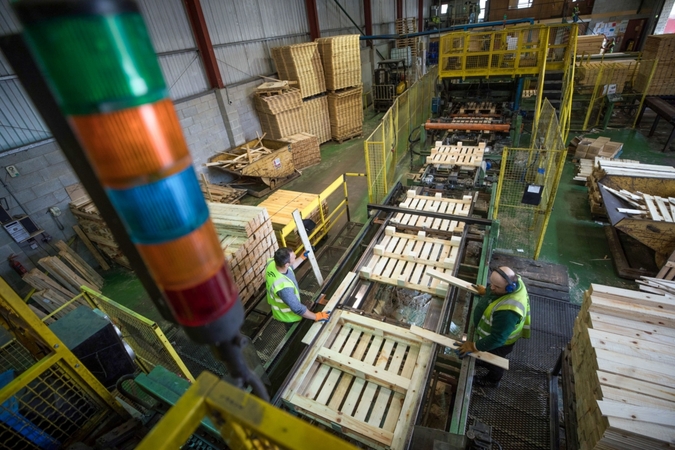
Yet as they start a new relationship with the European Union, securing a supply of heat-treated platforms – baked to 56 degrees Celsius (133 degrees Fahrenheit) for at least 30 minutes – is now one of the myriad issues they face.
The 1,200-page trade deal struck by Prime Minister Boris Johnson on Christmas Eve after a little over nine months of negotiations ended the uncertainty that the U.K. would crash out of the bloc in chaos. While the zero-tariff, zero-quota accord is a relief for British companies, it only marks the next stage in the evolution of the Brexit process – and potentially the most difficult one.
Be it wooden pallets for shipping goods, customs paperwork, new fish quotas or the recognition of professional qualifications, the next few months will be a case of figuring out the consequences of not just what’s in the historical agreement, but also what’s not.
“It’s going to be a marathon, a very long marathon,” said Mark Price, former deputy chairman of retailer John Lewis Partnership and a former U.K. trade minister. “This is why trade deals normally on average take about seven years to agree as they are hugely complex.”
Johnson hailed the agreement with the EU four and a half years after Britain voted to leave and said it will “drive jobs and prosperity across the whole continent.” But it will take time to divine whether that prediction ultimately will come true.
Bloomberg Economics estimates that U.K. growth will be half a percentage point lower per year for the next decade compared with if the country had stayed in the now 27-member single market. It forecast the economy will expand 6% this year, though that was before the latest tightening of England’s covid-19 restrictions.
In the meantime, businesses have to contend with paperwork before more complex issues can be resolved, such as the financial services industry’s future in the EU. There are also regulations around rules of origin determining what goods can be exported to the EU that need to be navigated. Mutual recognition of standards, which would allow firms to make products in the U.K. and market them in the EU without any extra certification, isn’t part of the deal.
“There are likely to be a thousand separate unintended consequences from a trade deal of such scale,” said Will Hayllar, a partner in the consumer goods practice at OC&C Strategy Consultants Ltd. While “many things will get flushed out in time,” there will be uncertainty for businesses “in the intervening period when they have to decide if they will comply with everything or not.”
Take wooden pallets. With Britain now having “third country” status with the EU, exporters and importers must comply with rules on preventing the spread of pests and diseases. It may take some disruption to trade for the EU to agree on a solution, said Dominic Goudie, head of international trade at the Food and Drink Federation.
“Heat-treated wooden pallets are not needed for safety reasons and just add extra costs and this is something that should and could have been resolved before now,” said Goudie. Britain’s food and drink industry alone could face an additional 3 billion pounds ($4 billion) of extra costs a year from increased bureaucracy, the group estimates.
Indeed, when disruption comes, it comes quickly. Dover, Britain’s busiest port, has only just cleared a backlog of thousands of trucks after France shut its border for two days in December because of the new strain of the coronavirus that’s forced much of Britain into another lockdown.
Companies have sought other routes. Deutsche Lufthansa AG flew another Boeing Co. 777F with fruit, vegetables, clothing, medical equipment and jet-engine parts from Frankfurt to Doncaster-Sheffield Airport in England on Thursday. A load bound for supermarkets is scheduled for Jan. 2.
Irish officials also warned of potential delays from early next week. Around 410,000 trucks or vans come through Dublin port each year from the U.K. and before Brexit virtually all would have passed unencumbered. More than a quarter of these vehicles will contain food or animals that now have to be checked.
For one, the auto industry has maintained a consistently dim view as to just how smoothly trade between the U.K. and EU will be, even though the Brexit accord spared manufacturers 10% tariffs on cars and 4% levies on components.
“Immediate costs and friction are inevitable,” said Mike Hawes, the chief executive officer of the Society of Motor Manufacturers and Traders. “Brexit has always been about damage limitation.”
Bracing for the end of the Brexit transition period was already a costly endeavor, with the trade group estimating in November that the industry had spent at least 735 million pounds on preparing for new customs declarations, stockpiling parts and other measures.
It remains to be seen whether investments in the U.K. delayed by Vauxhall maker PSA Group and BMW AG pending an outcome to trade talks will now materialize.
The same can be said for Nissan Motor Co., which hasn’t yet confirmed whether all models built at its plant in Sunderland, northeast England, contain enough local content to avoid tariffs. The Japanese carmaker opened the plant in the mid-1980s specifically to access the European single market.
The government has attempted to ease the transition by delaying the introduction of full border controls. Companies moving goods into Britain won’t have to file customs declarations for six months.
U.K. businesses exporting goods into the EU won’t have to produce rules-of-origin paperwork proving their goods were sourced domestically – and therefore exempt from tariffs – until the end of 2021, according to a Dec. 29 guidance note from Her Majesty’s Revenue and Customs. Firms could still be asked to provide the documents retroactively.
Then there’s the financial industry. Banks have now lost their “passporting rights” allowing them to trade freely in the EU. Future access to the market will rely on the bloc confirming Britain’s financial frameworks are broadly aligned or “equivalent” with its own rules. Both sides had previously vowed to deal with that by mid-2020.
“The deal is done but the reality that businesses have to face has not arrived yet,” said Ian Cheshire, the outgoing chairman of Barclays U.K. He predicted three to six months of “minor chaos from paperwork” though ultimately “people will work that out.”
Among those people will be workers in Britain’s services industry, which makes up 80% of the economy. They face the hurdle of having their professional qualifications recognized in the EU, something that’s no longer automatic.
And while the Brexit deal was heralded by Johnson as a new era for the fishing industry, that too has been cast into doubt. A last-minute compromise on how and when to reduce EU access to British waters finally got the deal over the line. A study published on Dec. 29 by the Scottish government, which opposes Brexit, said new quotas reduce the catch for key species of cod and haddock.
“It’s quite remarkable that for all the headlines about fishing, there was little on financial services when it is so blindingly obviously more important for our future,” said Cheshire. “I genuinely worry that people have not understood quite how difficult the path ahead could be.”
InternationalJan 02. 2021Attendees watch a short video about the importance of voting at a free “Turn Up and Turn Out the Vote” concert Dec. 30 in Atlanta. Photo for The Washington Post by Elijah Nouvelage
By The Washington Post, Cleve R. Wootson Jr. and Vanessa Williams
ATLANTA – In the final days before twin runoff elections Tuesday that will determine the trajectory of Congress for the next two years, more than a dozen civic engagement groups scattered across the state are making an aggressive push to mobilize Black voters, whose strong turnout in November helped Joe Biden win the state in the presidential race.
They are up against historical winds, as Georgia runoffs typically draw out a whiter pool of voters than regularly scheduled elections and have traditionally favored Republicans. Though most of the groups are officially nonpartisan, Black voters overwhelmingly support Democrats.
But the groups – ranging from well-known outfits such as Black Voters Matter to more informal clubs – are nevertheless trying to match or even improve upon Black voter turnout in a set of contests that will determine which party controls the Senate. Their sprint comes after years of grass-roots organizing on voting in Black communities, and is buoyed by an infusion of cash from Democratic donors inside and outside of Georgia.
Nsé Ufot, the chief executive of the New Georgia Project, one of the leading statewide groups focused on voter registration and engagement, estimates that by Saturday, her canvassers will have knocked on a million doors and sent 3 million text messages.
“There was so much hand-wringing in the immediate days after the November general election,” Ufot said. “People were saying, ‘Well, you know Republicans have a structural advantage. You know turnout is historically lower and only a fraction of what you see in the general. You know that turnout in runoff elections is whiter and older than the general election.’ Georgians have smashed through all of that.”
Democrats appear to be in a slightly better position than they were at this point before the November election, thanks to Black voters making up a larger portion of early runoff votes. But the early vote is just a snapshot, and the trends may not hold up after all votes are counted, especially in an unprecedented election with nationwide interest and investment.
Republicans have acknowledged that both contests are close and that they are working harder than in past runoffs to re-elect Sen. David Perdue and get Sen. Kelly Loeffler, who was appointed to replace a retiring senator, elected to a full term.
If Democrats Jon Ossoff and Raphael Warnock win, their party would control the upper chamber with Vice President-elect Kamala Harris holding the tie-breaking vote once she is inaugurated. A pair of wins in Georgia would allow President-elect Joe Biden to enact a more aggressive agenda in his first two years. But if even one of the Republicans wins, the GOP would have a bulwark to Democratic control.
To court Black voters, who make up a third of Georgia’s electorate and are one of the Democratic Party’s most loyal voting groups, more than a dozen groups are going beyond convention. They’re hosting pop-up concerts and asking DJs at hip-hop clubs to encourage clubgoers to talk to “voting ambassadors” in VIP booths. Organizers are popping into Zoom birthday and graduation parties to talk about the importance of the election. And they have targeted immigrant communities and public housing projects alike – people characterized as low-propensity voters who may have been overlooked in previous elections.
Some groups are combining political activity with charity, tucking vote-by-mail and early-voting instructions – even a number to call for rides to the polls – into bags of groceries being given away at Thanksgiving and Christmas. Former gubernatorial candidate Stacey Abrams crashed an online Verzuz battle between rappers Jeezy and Gucci Mane. “For right now, we can at least make sure that everyone shows up to vote so we have two senators to make sure we have covid response and we’ve got stimulus money coming back to Georgia,” she told the virtual audience.
On Wednesday afternoon, Kay Street sat on the roof of her red Audi, legs dangling through the sunroof, mouthing lyrics as one of her favorite artists, Mulatto, performed at a free drive-in concert in the shadow of Atlanta’s football stadium.
But between the rapper’s songs was a message aimed at Street and the more than 100 young Black people who bopped and swayed to the music: Vote.
The concert featuring a half dozen Atlanta artists was organized by the Black Male Voter Project. After the music ended, some attendees marched to the nearby stadium to cast ballots on the final day of early voting.
“I’m not somebody that wouldn’t vote, but really, I’m here for the music,” said Street, 20, who said she had cast an early ballot in the pair of Georgia runoffs before coming to the concert. “Most of the stuff I pay attention to, I see on social media. The rest just washes past me.”
Other groups have seen donations stream in and volunteers sign up for canvassing and phone banking shifts to help with the monumental persuasion effort.
That has meant a concerted – and often repeated – effort to inform and activate voters preoccupied with the coronavirus pandemic, an uneven economic recovery and even the bustle of the holidays. Even though millions have already cast ballots, organizers are going after people with little political inclination.
Their focus is on mobilizing Black voters in the Atlanta metro area, as well as pockets around the state with sizable Black populations, including Augusta, Savannah, Macon, Albany and Columbus.
“Where regular campaigns talk to voters two to five times a cycle, we try to talk to (Black men) at least 12 or 13 times,” said W. Mondale Robinson, the founder of the Black Male Voter Project. “When I talk to them, I’m not having a traditional political conversation. I’m having a conversation about giving them a tool to address some of the things plaguing them, and that tool is their vote. It’s not like I’m forcing politics on them in a political space. I’m talking to them in their space about politics, so it’s more comfortable, it’s more authentic to their life.”
Repeated contacts come at a cost – an investment of money and time that cash-strapped groups have to usually carefully ration. But some groups have found that, at least in the runoff, there is enough cash for deeper engagement with voters.
Abrams said that historically, Republicans have outspent Democrats in Georgia, but “investment has dramatically shifted in this race. We have seen support going to our candidates at unprecedented amounts.”
A group Abrams founded, Fair Fight Action, raised $22 million between Nov. 24 and Dec. 16, and gave most of the money away to grass-roots groups working to turn out voters of color, a spokesman said.
Helen Butler, the executive director of the nonpartisan Georgia Coalition for the People’s Agenda, which also has offices around the state, said her group has been getting “a tremendous amount of resources, both financial and people wanting to give their time.”
“Everybody understands the country is at stake, not just Georgia. We’re getting a lot of support we don’t ordinarily get … We’ve been doing this for 20 years. We’ve always had to do stuff with a lot of volunteers. This time we’re able to give people little stipends.”
The coalition’s beefed up activity is supplementing a larger effort that has already turned out more than 2.5 million early voters, according to the secretary of state’s office, with both sides pushing to get more voters to the polls Tuesday with social media ads, texts, phone calls, outdoor rallies and covid-safe car rallies.
Biden and President Donald Trump will appear within hours of each other Monday, the eve of the election. Vice President Mike Pence has stumped for Loeffler and Perdue half a dozen times during the runoff, and Harris will make her second Georgia runoff appearance in Savannah on Sunday. With the spending by candidates, interest groups and super PACs, a total of a half-billion dollars is anticipated to flow into the state.
Even conventional efforts to activate Black and other minority voters have seen an increase.
Bethelehem Kebede, who was laid off from her job as a waitress at a Washington, D.C., restaurant, has been camped out in Georgia since Nov. 28 as part of a canvassing operation by the labor union UNITE HERE. The union is focused on Georgia’s growing population of African immigrants, about 40,000 of whom are registered voters. Kebede, a naturalized citizen who is originally from Ethiopia, goes door to door every day from about 10 a.m. to 6 p.m. appealing to other African immigrants to vote for Ossoff and Warnock.
She misses her husband and three children back in Alexandria, Va., but she says it’s important for her to help the Democrats win the runoffs.
“Some people don’t know about this election; they think they’ve already voted,” she said of her encounters. “We tell them this a different kind of election, a U.S. Senate election. They’re surprised, like ‘Wow! This is the first time people have come knocking on our door to tell us to vote.’ “
Felicia Davis, convener of the Clayton County Black Women’s Roundtable, also a nonpartisan group, said the additional support has enabled her to hire more canvassers and give them a bigger stipend; she said she had 30 canvassers doing four hours a week at $15 per hour in the general; now she has 50 canvassers at 30 hours per week and $20 per hour. And although she has more people and money, she wishes she had more time.
Last week, she wondered: “What else can I do to get these people out to vote? I’ve been knocking on doors, I’ve been to the barbershops, what else can I do?”
Black voters made up 70 percent of the county’s 194,000 voters during the general election, when turnout was less than 60 percent. She has been trying to improve on those figures for the runoff.
“If I meet or exceed the general, even though Clayton came out under 60 percent, but still if I meet or exceed the general that’s a win.
“The challenge,” Davis added, “is we don’t have enough time. That’s my anxiety. If I had the same amount of time I’d feel great, but … I have two major holidays and less time.”
On a recent Saturday morning in Montezuma, a small city 130 miles south of Atlanta, Macon County Commissioner Bob Melvin met a dozen or so volunteers in the parking lot of a Piggly Wiggly grocery store. The group doesn’t have outside funding or a connection to other groups but felt motivated to canvass their neighbors on their own.
After a brief huddle, and a conversation about talking points and literature, they went out to several nearby public housing complexes.
“We’re going out and pushing the message that even though we’ve elected a Democratic president, he still needs the help of a Democratic Senate to get things done,” Melvin said. “And that’s the message I’m taking out there today.”
Like most Georgians, the people they encounter have been inundated with TV and radio commercials, as well as mailings and social media ads. But the dozen or so volunteers said they feel they are best positioned to persuade their neighbors.
“Once you sit them down and say, this is going to affect you in the long term, this will affect your child at school or it may affect your health care, because you know we don’t have a hospital here or a clinic or anything here, then it begins to hit home,” said Nicole Hall, a volunteer from Macon County who knocked on doors. “Until we educate everybody, and they understand the importance of the power of the vote, then all they’re seeing is a bunch of names on TV. But what does this person represent? What is this person going to do for me?”
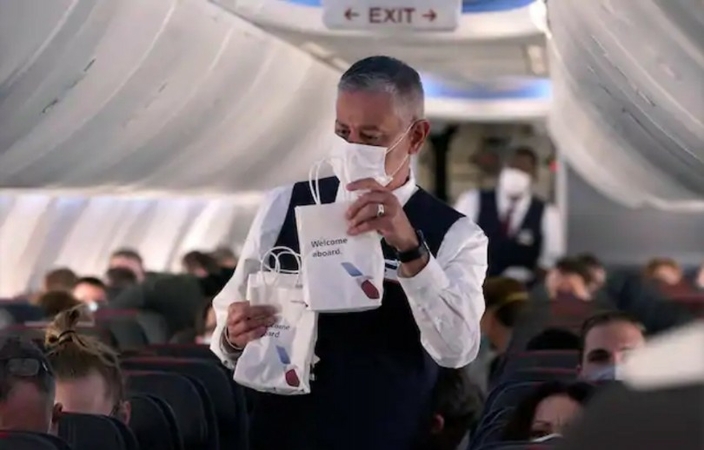
As the man returned from the lavatory with a mask dangling from one ear, a flight attendant asked him to put it on properly.
“Why? Is something going on that I should know about?” the passenger asked, before grabbing the mask and ripping the string. “Damn it, I guess I can’t wear it now.”
Other passengers have verbally abused and taunted flight attendants trying to enforce airline mask requirements, treating the potentially lifesaving act as a pandemic game of cat-and-mouse. A loophole allowing the removal of masks while consuming food and beverages is a favorite dodge.
Asked to mask up, one passenger pulled out a large bag of popcorn and nibbled her way through it, kernel by kernel, stymieing the cabin crew for the length of the flight. Others blew off requests by chomping leisurely on apple slices, between occasional coughs, or lifting an empty plastic cup and declaring: “I am drinking!”
The displays of rule-bucking intransigence are described in more than 150 aviation safety reports filed with the federal government since the start of the pandemic and reviewed by The Washington Post. The reports provide an unguarded accounting of bad behavior by airline customers, something executives hit by a steep drop in travel and billions in pandemic-related losses are loath to share themselves.
Some reports raise safety concerns beyond the risk of coronavirus infection. A flight attendant reported being so busy seeking mask compliance that the employee couldn’t safely reach a seat in time for landing.
One airline captain, distracted by mask concerns, descended to the wrong altitude. The repeated talk of problem passengers in Row 12 led the captain to mistakenly head toward 12,000 feet, not a higher altitude given by air traffic control to keep planes safely apart. The error was caught, and “there was no conflicting traffic,” the captain wrote.
Some passengers are portrayed as oblivious, obstinate, foul-mouthed and, at times, dangerous. One called a flight attendant a “Nazi.” Another “started to rant how the virus is a political hoax and that she doesn’t wear a mask,” a flight attendant reported.
With millions of passengers ignoring warnings from the Centers for Disease Control and Prevention to refrain from holiday travel, the reports offer an X-ray into the country’s deeper failures against the coronavirus – and insights into the pitfalls and possibilities facing a new presidential administration.
While the White House under President Donald Trump has, at times, been dismissive or hostile toward masks, President-elect Joe Biden is making a patriotic appeal to “mask up for 100 days,” whatever people’s politics. Biden has said he will sign an order on his first day requiring masks for “interstate travel on planes, trains and buses.” How well those efforts will work remains to be seen.
Experts in psychology and decision-making say hostility toward wearing masks, even within the shared confines of a passenger jet, has been fueled by politicization – but also by skewed incentives and inconsistent messaging.
“The reinforcement principles are backward,” said Paul Slovic, who studies the psychology of risk at the University of Oregon.
The usual signs of danger, and rewards for following potentially bothersome rules, are thrown off by a virus that is spread easily by people who don’t know they have it, Slovic said.
“You get an immediate benefit for not following the guidelines because you get to do what you want to do,” Slovic said. “And you don’t get punished for doing the wrong thing” because it’s not immediately clear who is being harmed.
The “squishiness of the requirement” to wear masks on planes also undermines the message that they are critical for public health, Slovic said. In contrast, he cites the rigid clarity of the ban on flying with a firearm. “It’s not, ‘You can carry it as long as you don’t use it,’ ” Slovic said.
But passengers are allowed to drop their masks to snack and sip beverages. “When you start opening it up to eating, the whole thing kind of weakens,” Slovic said.
Applying mask rules also worsens the already strained position of flight attendants, who are front-line enforcers even as they keep their usual safety responsibilities, experts said.
“Flight attendants are dealing with mask compliance issues on every single flight they work right now,” said Taylor Garland, spokeswoman for the Association of Flight Attendants-CWA, noting that those efforts range from friendly reminders to facing passengers “actively challenging the flight attendants’ authority.”
The Department of Transportation in October rejected a petition to require masks on airplanes, subways and other forms of transportation, with Secretary Elaine Chao’s general counsel saying the department “embraces the notion that there should be no more regulations than necessary.”
The nation’s aviation regulator has deferred to airlines on masks, with Federal Aviation Administration chief Stephen Dickson telling senators at a June hearing “we do not plan to provide an enforcement specifically on that issue.”
Such matters are more appropriately left to federal health authorities, Dickson argued. “As Secretary Chao has said, we believe that our space is in aviation safety, and their space is in public health,” Dickson said, referring to the CDC and other health officials.
Airline representatives say they take mask usage seriously and the overwhelming majority of customers comply. Some airlines have banned passengers for the length of the pandemic for refusing to mask up. Many have eliminated medical exemptions in their mask requirements.
“Of the hundreds of thousands of passengers who have flown with us, we have only needed to ban about 370 customers for not complying,” United Airlines spokeswoman Leslie Scott said. Delta said its mask-related no-fly list includes about 600 people, despite carrying about 1 million people each week.
Resistance by some passengers prompted Alaska Airlines to begin issuing yellow cards, akin to the warnings in soccer, to problem passengers.
The initial yellow card said employees would file a report that could result in a passenger being suspended. A later version was more aggressive, saying continued defiance would lead to a flight ban “immediately upon landing,” even if the customer had a connecting flight.
Alaska Airlines has barred 237 passengers since August, and “in more than half of these incidents we also canceled onward or returning travel,” spokeswoman Cailee Olson said.
American Airlines declined to release numbers of banned customers, as did Southwest, which said in a statement it appreciates “the ongoing spirit of cooperation among customers and employees as we collectively take care of each other while striving to prevent the spread of COVID-19.”
Yet a small, uncooperative minority can wreak outsize havoc, safety reports show.
The anonymous reports are collected in a National Aeronautics and Space Administration database, part of a program meant to increase aviation safety by encouraging employees to provide candid descriptions of emerging problems without fear of reprisal. Names of people filing the reports, and their airlines, are removed by NASA before they are made available to regulators at the FAA and the public.
NASA analysts screen the reports to weed out irrelevant filings and may call back filers to clarify safety points. But its analysts do not try to verify people’s identities or the accuracy of the reports.
The database shows some fliers treat airline mask requirements as a seemingly asinine rule to evade, akin to sneaking a late look at text messages after phones are supposed to be in airplane mode. Passengers berate fight attendants about their noncompliant cabin mates. Some reports read like cries for help.
“It all has to stop,” pleaded one flight attendant.
“In the future I would like to feel safe while doing my job,” said another.
Among the incidents:
– A woman refused to wear her mask as the plane rolled away from the terminal, saying it made her ill, and the pilot pulled over temporarily to try to avoid returning to the gate. She continued to resist but finally agreed.
“As soon as we took off, she took it off again and kept it off the entire flight,” the flight attendant reported.
– A man started down the aisle, pausing about 18 inches from a flight attendant.
“He sneezed directly in my face, making no attempt to cover his mouth, pull up his mask or turn towards the row 1 window,” the employee wrote. The flight attendant, who was wearing a face covering, judged the act unintentional and tried to blot away the remnants.
– A woman propped her foot up and painted her toenails with her mask below her chin, despite several requests to wear it properly. After another passenger appealed for more to be done, the woman acquiesced, then loudly instructed the flight attendant to “go away!”
After landing, she cut in line to rush off the plane. “Although we understand the importance of wanting to retain customer loyalty, this kind of behavior should not be tolerated for the sake of one over an entire cabin of guests and employees,” the flight attendant wrote.
– An immunocompromised passenger was furious at the lack of enforcement as another customer snacked incessantly on chocolate. The concerned passenger then removed his mask to complain to the flight attendant.
– A passenger claimed discrimination, arguing he was singled out for enforcement because of his tattoos. “He said ‘I am complying, #%$^!’ His nostrils were clearly visible,” the flight attendant wrote.
– A pilot flouted the mask requirement with what appeared to be a passive-aggressive display, donning a flimsy, see-through veil described as useless for containing airborne particles.
– Flight attendants made an exception and allowed a distraught mother, whose daughter may have had a disability and screamed about the mask requirement, to remain on the plane. They tried cookies, which didn’t help, then moved the family to seats three rows from other passengers, who were supportive.
– A customer, after earlier warnings, stuck his mask-free head in the aisle during the safety demonstration, “making a total mockery out of me,” a flight attendant wrote. He repeated his taunt when the plane was fourth in line for takeoff. The captain turned around, and the man was taken off the plane.
The obstinacy cuts against basic health precautions. Experts in cabin air say masks are critical tools for safety. Cabin air is run through powerful filters, mixed with outside air and recirculated. But it takes several minutes for all air to be vented out of the cabin, giving the coronavirus and other viruses the opportunity to spread.
A Harvard study funded by the aviation industry said flying can be done with a relatively low risk of coronavirus infection if precautions are followed. It said masks are “perhaps the most essential layer” among measures to reduce transmission.
The study said removing masks to eat should be kept to an “absolute minimum,” and straws should be used when feasible. “When one passenger briefly removes a mask to eat or drink, other passengers in close proximity should keep their masks on,” researchers said.
Trump and some of his advisers, meanwhile, have stoked divisions over masks.
The president mocked Biden’s frequent mask use, presided over White House events that flouted mask guidelines and relied on a former pandemic adviser who wrongly argued masks were ineffective. The White House also blocked a nationwide order, drafted by the CDC, that would have required masks on all forms of public transportation.
“Masks have been made a political issue from the start of the pandemic, and people don’t believe they need to wear them,” said Garland, whose union represents about 50,000 flight attendants.
“We do not have a president who tells people to wear a mask, and the federal government, not just in aviation but across the board, has declined to mandate it in any way, shape or form,” she added, saying her members are eager to see a Biden administration set a different tone.
An FAA spokesman declined to answer questions about the risks involved with passengers refusing to wear masks.
After inquiries from The Post about enforcement, the agency distributed a news release touting its role in pursuing civil penalties in two assault cases but reiterated that “the failure to wear a face covering is not itself a federal violation.”
The cases show how mask disputes can escalate.
On an Allegiant Air flight in August, a passenger hit a flight attendant, yelled obscenities at him and grabbed his phone as he described a mask-related dispute to the captain, according to the FAA. The agency said it is pursuing a $15,000 civil penalty for assault and interfering with a flight attendant.
Allegiant declined to say whether anyone was arrested or charged.
On a SkyWest Airlines flight to Chicago in August, a passenger took off a mask, “continually bothered” fellow customers and “at one point, grabbed a flight attendant’s buttock as she walked by the passenger’s row of seats,” according to the FAA, which is seeking a $7,500 penalty.
Beyond addressing such extreme cases, some outside experts say federal and corporate leaders have fallen short.
“Both industry and government have failed the people on the front line who need to administer these rules,” said Baruch Fischhoff, a psychologist and professor at Carnegie Mellon University who researches decision-making.
Politics often has driven responses to the pandemic, while critical public health communication on things like masks has not been tested to make sure it hits the right notes or is convincing, Fischhoff said. “Neither have fulfilled that responsibility for clear, consistent, tested communications,” he said.
Fischhoff said that with 330 million people in the United States, it’s not surprising the safety reports received by NASA reveal examples of poor behavior.
“Part of the reason they stand out is, I think, the vast majority of people are polite and civil to one another,” Fischhoff said. Still, the reports probably represent a dramatic undercount because it takes time and initiative for busy employees to file them.
“If you see 100, there are probably 1,000 or 10,000. This is a widespread enough phenomenon that it needs to be taken seriously,” he said. “You have to give credit to people who lodge just complaints and recognize they’re just a fraction of the people who are observing things that threaten our health and our economy.”
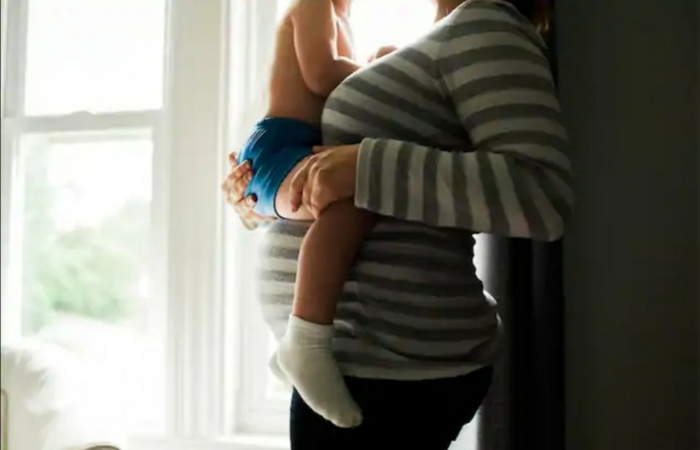
For the first eight months of her pregnancy, Yadira Rivas, a nurse coordinator at Neighborhood Health of Virginia, relied on masks and gloves to protect her from the coronavirus that is rampant among her patients.
Recently, she’s been considering another option – getting vaccinated. But after consulting with her obstetrician, Rivas decided to wait to get a shot until after her baby is born.
“One thing that the provider did mention is that it is worse to have the covid than to have the vaccine,” she said. But with no safety data available for pregnant women, Rivas thinks she would have chosen to wait even if she were far earlier in her pregnancy. “Just to stay safe,” she said.
The same conundrum faces millions of women across the country, among them many health-care workers like Rivas who are being offered vaccines not yet tested on pregnant or lactating women.
“There’s a lot of confusion,” said Jane Frederick, a fertility specialist in Newport Beach, Calif. “I have questions from people who are pregnant and questions from people anticipating getting pregnant: ‘Doctor, what do I do?’ “
With the exception of the smallpox vaccine, which can cause a rare but serious infection of the fetus, vaccines have been safe and enormously beneficial for pregnant women and their babies. Experts say the safety of the new mRNA vaccines, which do not contain live virus, would probably be similar in pregnant and nonpregnant people. What’s more, pregnant women face the potential of severe illness from covid-19, which may also increase the risk of preterm birth and other serious outcomes for both mother and infant. Experts also warn against lumping the two distinct biological phases of pregnancy and lactation together.
The Centers for Disease Control and Prevention has concluded that “people who are pregnant and part of a group recommended to receive the coronavirus vaccine, such as health-care personnel, may choose to be vaccinated.” The CDC also says that “mRNA vaccines are not thought to be a risk to the breastfeeding infant.”
The American College of Obstetricians and Gynecologists similarly says that “covid-19 vaccines should not be withheld from pregnant individuals who meet criteria for vaccination.” It also recommends the vaccines be offered to lactating women. But ACOG adds that because of the lack of data, “the potential risks to a pregnant individual and the fetus are unknown.”
All of which leaves the process of weighing the pros and cons up to the individual in consultation with her doctor.
“The medical community has done a good job of saying, ‘We don’t know,’ ” said Daryl Stoner, an obstetrician with Einstein Physicians Women’s Associates for HealthCare outside Philadelphia. “That drives people crazy. They want to be told it’s safe.”
Doubts erupted in online pregnancy forums such as What to Expect, with views ranging from women saying they “would not risk putting my baby in danger” and counseling others to wait for more data or wait out the pandemic, to health-care workers declaring they were “absolutely getting it.” In some Facebook groups, where anti-vaccine advocates have fanned false worries about many vaccines, the fears are heightened. Many linked to Britain’s policy, advising against immunizing pregnant women until more is known about mRNA vaccines.
The differing messages concern many American vaccine experts like Ruth Karron, director of the Center for Immunization Research at the Johns Hopkins Bloomberg School of Public Health, who praised the way U.S. regulatory agencies and professional groups have handled the situation, while emphasizing the need for more research.
From the outset, “we and many others were beating the drum for thinking about pregnant women,” said Karron, who is a leader of the PREVENT project, which pushes for including pregnant women’s interests in the development of vaccines against emerging pathogens such as Zika, Ebola and now covid-19.
Karron would have liked to see toxicology studies known as DART studies, which focus on developmental and reproductive risks, completed earlier. The resulting information along with initial safety data from nonpregnant individuals in clinical trials could then have been reviewed by experts to determine how and when the vaccines should be formally evaluated in pregnant women.
As it is, there is a little data from a handful of women who became pregnant during clinical trials. Observational data will also emerge as pregnant women who get vaccinated sign up for V-safe, a CDC app that uses texts and web surveys to check in with coronavirus vaccine recipients.
Clinical trials on pregnant women and young children could begin early this year. Stephanie Gaw, an assistant professor in maternal-fetal medicine at the University of California, San Francisco Medical Center who has been studying the impact of covid-19 on pregnancy, said her team is planning to launch a study on the vaccine in pregnant and lactating women in the coming weeks.
“There has been so much interest from health-care workers,” Gaw said. ” ‘Do you want my breast milk? Blood? To evaluate my immune response?’ “
Mary Prahl, an assistant professor of pediatric infectious diseases at UCSF who works with Gaw, said she would have liked to see a parallel clinical trial of the vaccines for pregnant women.
Prahl, who is 14 weeks pregnant and plans to get the vaccine soon, said that having studied covid-19 for most of this year, she was relieved to learn a vaccine would be available to her.
“I don’t have any hesitation for myself,” said Prahl, while acknowledging that if she were advising a patient, she would run through potential risks and benefits.
“Everyone brings something different to the table,” she said.
The biomedical establishment long excluded pregnant women from research. The National Institutes of Health didn’t open an Office of Research on Women’s Health until 1990, when manifestation of gynecological symptoms of AIDS helped confirm the need to focus on women.
In clinical trials, a combination of ethical concerns and legal liability continues to handicap progress, according to Ruth Faden, founder of the Johns Hopkins Berman Institute of Bioethics and a colleague of Karron’s on the PREVENT project.
“It’s a profound injustice that pregnant women and offspring are late to the table and late to receive benefits,” Faden said.
The upshot is that obstetricians have to rely on observational data with many medical treatments, according to David Jaspan, chair of the department of obstetrics and gynecology at Einstein Healthcare Network in Pennsylvania, where pregnant women are asked to get a note from their providers before getting the new shots.
“We can’t comment on the safety of vaccine; we can comment on the impact of covid on pregnancy,” Jaspan said, describing a conversation he had recently with a pregnant health-care worker who did not want to be among the first recipients.
Such shared decision-making is made more complicated by vast variability in the circumstances of pregnant women. A woman working from home is at less risk of exposure to the virus than, say, a food service worker in a hospital or someone whose partner travels on public transportation every day. Some pregnant women suffer from conditions such as obesity or hypertension that increase the chance of complications should they contract covid-19.
And pregnancy is a dynamic state, not only in terms of fetal development but because it has a beginning and an end: A woman with just a few weeks left before delivery may decide to delay vaccination and instead avoid exposure to the virus until her baby is born.
Add to that the fact that women’s childbearing years are limited and some may feel under pressure to get pregnant.
Frederick, the fertility specialist, said uncertainty about whether to get the vaccine has added to the anxiety many of her patients already feel.
“It’s a time-sensitive condition they have,” she said. “They need to be continuing treatment and not delaying it, hoping the pandemic will go away.”
Frederick closed her clinic during the early months of the pandemic, advising her patients to delay treatment until more was known about the coronavirus. Now, though, she sees the vaccine as a positive step and in general counsels them that the benefits outweigh any risk.
“I think it’s a good protection,” Frederick said.
Jaspan said providers and their patients should expect knowledge to evolve as well as their own circumstances.
“If they decide no today, they can decide yes tomorrow,” he said. “And that’s OK.”

 Clean Panther, right, picks up litter with other members of her group at the Osu shopping district in Naka Ward, Nagoya. MUST CREDIT: Japan News-Yomiuri.
 ไม่ใช่แค่ลาว แต่เพื่อนบ้านบางประเทศในอาเซียนได้วัคซีนกันแล้ว แต่เหตุผลคืออะไร?
 อนุสาวรีย์นี้ติดตาชาวโลกมานานหลายปีและเป็นแหล่งท่องเที่ยวสำคัญในจิงโจว แต่ตอนนี้ไม่มีที่ให้มันอยู่ในเมืองแล้ว
 หนึ่งในโหรที่มีชื่อเสียงที่สุดคนหนึ่งของโลก ทิ้งคำทำนายเอาไว้หลายพันชิ้น หนึ่งในนั้นคือคำทำนายของปี 2021
 อิสราเอลเริ่มการฉีดวัคซีนตั้งแต่เดือนที่แล้ว แต่ปรากฎว่ามีถึง 200 กว่าคนที่ยังติดเชื้อไวรัส
 โตเกียวขอประกาศสถานการณ์ฉุกเฉินครั้งใหม่เมื่อมีผู้ติดเชื้อโควิด -19 เพิ่มขึ้น
 Attendees watch a short video about the importance of voting at a free “Turn Up and Turn Out the Vote” concert Dec. 30 in Atlanta. Photo for The Washington Post by Elijah Nouvelage