Actually, it makes perfect sense that Biden would get more votes than Obama #SootinClaimon.Com

#SootinClaimon.Com : ขอบคุณแหล่งข้อมูล : หนังสือพิมพ์ The Nation.

Actually, it makes perfect sense that Biden would get more votes than Obama (nationthailand.com)

Actually, it makes perfect sense that Biden would get more votes than Obama

InternationalNov 22. 2020
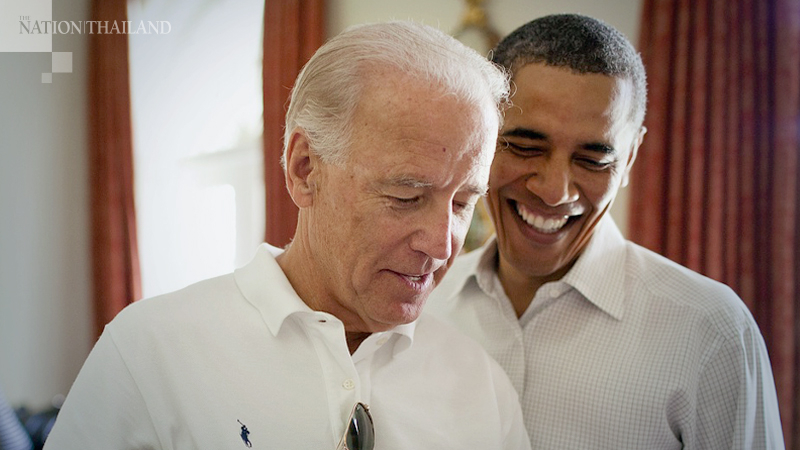
By The Washington Post · Philip Bump · NATIONAL, POLITICS 
VOTING-ANALYSIS: As part of a lengthy Twitter thread aimed at bolstering President Donald Trump’s wild and baseless allegations of electoral impropriety, cartoonist Scott Adams distilled a common argument about President-elect Joe Biden’s win.

“No one believes Biden got far more votes than Obama,” he wrote on Twitter on Friday.

This claim comes up a lot as Trump supporters like Adams seek to bolster the idea that somehow Trump was cheated out of a victory. How could Biden, a guy who barely drew any crowds, get more support than Barack Obama, whose 2008 campaign was historically popular? And if Biden didn’t get that many votes, why do national tallies say he did?

Simple. Biden outpaced Obama’s totals in 2008 and when he was re-elected in 2012 because: 

1. The country has gotten more populous

2. There was a lot of enthusiasm for voting this year, and 

3. Much of that enthusiasm from Democrats was targeted not at Biden, but at Trump.

In 2008, the population of the United States was about 299 million. Four years later, it was up to about 309 million. Now, it’s more than 330 million. The number of adult citizens – that is, those eligible to vote – has also increased, up an estimated 25 million since 2008.

Biden earned about 80 million votes. (This will increase given outstanding ballots in New York and California.) That’s 11 million more than Obama in 2008. Assume that two-thirds of the newly added adult citizens voted this year, and that’s an addition of 17 million more people to the voter pool, even ignoring issues of enthusiasm. Split that in half, and Biden would just need to find 2.5 million more votes somewhere.

We can look at the boost for Biden in another way. Biden’s total this year is about 15 percent higher than what Obama got in 2008 and 21 percent higher than his total in 2012. Trump’s total this year is 23 percent higher than what then-Sen. John McCain got in 2008 – and an equivalent 21 percent higher than what Mitt Romney got eight years ago.

Trump supporters will say that this is impossible, that Trump was clearly the focus of more enthusiasm. Given the president’s rallies, Biden should not have been able to keep pace.

But that’s wrong for two reasons. The first is that Trump’s rallies are being compared with Biden events that were specifically meant to be small. Why? Well, there’s a pandemic going on, as you’ve probably heard, and not everyone probably gained immunity to the novel coronavirus after an outbreak at their place of employment. Trump possibly did, and, given his indifference to the virus’s spread, he moved ahead with his large events.

The second is that rallies aren’t a great marker of enthusiasm anyway. That’s true generally because getting 20,000 people to turn out in a heavily partisan area is only a tiny fraction of the actual voting population (if those 20,000 people can all vote, which is unlikely). It’s also true because people can be enthusiastic about voting without going to a rally.

In 2020, the preliminary data suggests that turnout relative to the adult-citizen population was probably higher than at any point in the last century. Indicators that enthusiasm was high emerged soon after the 2018 midterms and carried into Gallup’s final polling on the question.

What’s important here is that Democrats were as likely to say they were more enthusiastic about voting than past elections as they were in 2008. Republicans were more likely to say that than they were in 2008, helping push the overall turnout rate even higher.

Democratic enthusiasm and Democratic votes were high in 2008, down in 2012, flat four years later and then back up. This wasn’t 2016. Polls showed that Democrats viewed the 2020 election much as they did Obama’s first – with a lot more voters in the mix.

Again, this was heavily because of Trump. The president’s focus on goading the left and delivering for his base over his time in office helped make him the most polarizing president on record. Republicans loved him and Democrats hated him, as polling repeatedly showed. When Fox News asked poll respondents why they were supporting Trump or Biden, 8 in 10 Trump voters said they were supporting him because they liked him. Four in 10 Biden voters said they were supporting Biden to oppose Trump.

In other words, even if Biden would not have matched Trump’s crowds had there not been a pandemic – which is probably generally true – it didn’t matter. A lot of the reason many Democrats saw the election as being so important was simply that they wanted Trump out of office, a motivation that was more important than the identity of the person who replaced him.

If any Trump supporter finds this dynamic hard to believe, that may be a function of the sort of isolation that Trump frequently suggests is a feature of his opponents. In 2016, it was red states in which people were the most likely to live in precincts with others who overwhelmingly voted the same way as them. In September, a Pew Research Center poll found that about 40 percent of both Trump and Biden supporters knew no one who was planning on supporting the other candidate. That was more true of Trump supporters who lived in more heavily Trump-supportive counties.

There are other likely factors, too. The expansion of mail-in and early voting made it easier to vote, probably meaning that some more infrequent voters cast ballots. After Trump’s narrow 2016 win, there were efforts introduced to encourage voting from Democrats who had stayed home. Georgia’s Stacey Abrams has been given a lot of credit for helping to overhaul the turnout operation in that state, which Biden won.

Given all of the above, the math becomes easy. Biden outperformed Obama because there were more voters from which to cull votes. At the same time, enthusiasm was similar among Democrats in 2008 and 2020, in part because Democrats were so eager to see Trump ousted – and in part to avoid what happened in 2016.

If no one Scott Adams knows believes that could be true, that’s a reflection of the bubble in which Adams apparently lives, not of the reality of politics this year.

Saudi minister highlights ‘huge’ strains on global education as G-20 tackles pandemic #SootinClaimon.Com

#SootinClaimon.Com : ขอบคุณแหล่งข้อมูล : หนังสือพิมพ์ The Nation.

Saudi minister highlights ‘huge’ strains on global education as G-20 tackles pandemic (nationthailand.com)

Saudi minister highlights ‘huge’ strains on global education as G-20 tackles pandemic

InternationalNov 22. 2020Saudi Education Minister Hamad al-SheikhSaudi Education Minister Hamad al-Sheikh 

By The Washington Post · Kareem Fahim · WORLD 
ISTANBUL – International efforts were needed to meet the “huge challenges” facing global educational systems as they strained to adapt to distance learning while accommodating children with special needs, Saudi Arabia’s education minister said Sunday at the Group of 20 summit in Riyadh.

His comments kicked off the second day of a summit that is being held virtually and has been dominated by discussions about the pandemic and its disastrous fallout.

“No one expected that 1.6 billion students will be outside of schools,” said Hamad al-Shaikh. “No education system in the world had expected that they will face a prolonged time where students are staying at home in lockdowns.” 

Leaders attending the summit represent nations that top the world in the rate of infections, including the United States, India, Brazil and France. 

On Saturday, the summit’s first day, most world leaders stressed the need for greater global cooperation to ensure that vaccines against the virus are affordable and widely distributed, including in developing nations. 

A notable exception was President Donald Trump, whose disdain for multilateralism has been a hallmark of his tenure. In perfunctory remarks to the group that he followed with a round of golf, Trump made no promise to expand the availability of U.S. vaccines and touted his administration’s record in combating the virus, saying it had “marshaled every resource.” 

On Sunday, Trump, who has weakened regulations designed to reduce pollution generated by the United States, addressed a summit session on the environment titled “Safeguarding the Planet.” He called his administration’s environmental protection record “historic” and attacked the Paris climate accord, from which the United States formally withdrew this month – becoming the first and only nation to do so. 

“The Paris accord was not designed to save the environment, it was designed to kill the American economy,” he said. 

Even before his comments, expectations were low for the summit, an annual gathering of leaders of the world’s largest economies. The meeting was expected to finalize a framework for granting poor nations debt relief and promoting international vaccine collaborations such as Covax, an effort linked to the World Health Organization that seeks to expand vaccine distribution to the developing world. 

The gathering also prompted protests from Saudi and international human rights groups,as well as some U.S. and European lawmakers, which called on world leaders to boycott or downgrade their representation over the kingdom’s abuses, including jailings of female activists and the killing of Washington Post contributor Jamal Khashoggi at the Saudi Consulate in Istanbul in 2018.

No world leaders boycotted, but neither did the remote gathering provide Saudi Arabia with the kind of platform it had sought to showcase its accomplishments. Crown Prince Mohammed bin Salman, the kingdom’s day-to-day ruler and a lightning rod for criticism over human rights, was expected to address the gathering later on Sunday. 

The World Bank has said the pandemic could drive as many as 150 million people into extreme poverty, reversing two decades of steady progress in alleviating the suffering of the world’s poorest people. UNICEF has warned that unequal access to technology among students in poorer countries threatens to “deepen the global learning crisis.” 

Saudi Arabia, with virtually unmatched financial resources, has been able to dedicate satellite channels to distance learning and partnered with Microsoft to boost server space for online instruction, said Sheikh, the education minister. Education that “blended” in-person and distance learning would become the norm, even after the worst ravages of the pandemic had passed. 

But “some countries don’t have the capability to launch satellite stations,” he noted. 

Panic buying returns on covid jump #SootinClaimon.Com

#SootinClaimon.Com : ขอบคุณแหล่งข้อมูล : หนังสือพิมพ์ The Nation.

Panic buying returns on covid jump (nationthailand.com)

Panic buying returns on covid jump

InternationalNov 22. 2020

By Syndication Washington Post, Bloomberg · Anne Riley Moffat, Carolina Gonzalez, Sarah McGregor · BUSINESS, RETAIL We’re out of toilet paper again.

Households across the U.S. are once again filling grocery carts brimful in a second round of panic buying as the virus surges and states clamp down on economic activity. Defensive purchasing is affecting everything from paper towels to bacon. Even the world’s biggest retailer is reporting shortages of high-demand items, including cleaning supplies, breakfast foods — and the most important commodity in any bathroom.

“It really does have everything to do with what’s happening with Covid cases in any particular community,” Walmart’s chief executive officer, Doug McMillon, said on an earnings call in the past week. “We’re going to be able to respond in this instance better than we did in the first half of the year, although we’re still — as a total supply chain — stressed in some places.”

The new wave of pantry stockpiling hits about eight months after the March boom, meaning makers of packaged food and household items have had some time to prepare. General Mills added 45 external production lines through contractors this year, while Campbell Soup spent $40 million to expand production of Goldfish crackers, a must for parents cooped up with toddlers. Still, at-home demand is surging, accelerated by a new wave of indoor-dining bans.

Cathy Smith had a pack of toilet-paper rolls in her cart at the checkout of a Ralph’s grocery in West Los Angeles at midday Friday with a few “last-minute” items to prepare her Thanksgiving meal, including a 16-pound turkey.”I’m not totally in panic mode yet,” she said. “I don’t watch the news, because it is too depressing, but my husband did and he warned me that things are getting worse. So I thought I’ll stock up.”

Over the last three weeks, demand for non-perishable items such as paper goods, canned goods, spices, broths and canned vegetables jumped 60-70%, according to Centricity Inc., a platform that tracks online activity like searches and e-commerce.

That’s on top of “meteoric” year-over-year increases for pantry staples, said Mike Brackett, Centricity’s chief executive officer.

Shoppers may start to see purchase limits again, said Jim Dudlicek, spokesman for the National Grocers Association. Consumers should shop earlier in the day to “have best pick from freshly stocked shelves, but to be mindful of their neighbors and take only what they need,” he said. Some grocers are using social media to provide updates on hot products, and at least one is providing bulletins on a radio program.

Kraft Heinz Co. CEO Miguel Patricio said in an interview last month that the company has been finding new partners and investing in the productivity and capacity of its factories to meet rising demand.

That means “new machinery, or even bringing back to life lines that we considered in the past as obsolete,” he said. The company is working on “all possible fronts to increase capacity and we’ve been able to increase it substantially. We increased capacity on average by 20% and that goes up to 56% on products where there’s a higher demand,” like Philadelphia Cream Cheese or macaroni and cheese, he said.

Mark Schiller, CEO of Hain Celestial Group Inc., said that the company, which makes Terra vegetable chips and plant-based Dream milks, was readier for this round of panic buying.

“We are far better prepared,” he said. “We have about 50 million more dollars of inventory on hand, of all the things that have the longest supply chain and the least amount of backups.”

Toilet paper is a tougher one to find, with consumers sharing on Twitter photos of bare shelves — and pleas to fellow shoppers to share the supply. “March 2.0,” observed one tweeter.

Kimberly-Clark Corp., maker of Scott and Cottonelle toilet paper, said it was cooperating with its clients and customers to keep tabs on supplies and fill inventory gaps. The company has accelerated production since the pandemic hit, including making fewer variants of products and finding capacity in its global paper supply network, said Arist Mastorides, president of the family care unit in North America.

Procter & Gamble Co. spokeswoman Jennifer Corso said the maker of Charmin continues “to work around the clock to produce product as quickly as possible.”

“Paper towel consumption is related to increased cleaning situations, as consumers are cleaning more frequently,” she said. “Toilet paper consumption is tied to the increased amount of time consumers are spending at home. For both, people are consuming more and stocking their pantries at a higher level than before the pandemic.”

Panic buying is also hitting another part of the consumables market.

Ben Kovler, CEO of Chicago cannabis company Green Thumb Industries Inc., said on an earnings call this month that while purchases aren’t yet back to March’s booming levels, it’s “marching back there slowly.”

Unlike at Walmart, where shoppers are coming less often but buying more, Green Thumb’s Rise stores are seeing more customers, he said. And unlike staples that get used at a steady rate, when people buy twice as much cannabis, they quickly use it. These are, after all, stressful times.

“They consume more,” Kovler said. “That’s not a bad thing for the business. We don’t think that’s a bad thing for the consumer.”

Legislators hope Intel committee can be less polarized #SootinClaimon.Com

#SootinClaimon.Com : ขอบคุณแหล่งข้อมูล : หนังสือพิมพ์ The Nation.

Legislators hope Intel committee can be less polarized (nationthailand.com)

Legislators hope Intel committee can be less polarized

InternationalNov 22. 2020(L-r) Reps. Adam Schiff, D-Calif., and Devin Nunes, R-Calif., the House Intelligence Committee's top Democrat and Republican, respectively, oversee witness testimony during an impeachment inquiry hearing on Nov. 21, 2019. MUST CREDIT: Washington Post photo by Matt McClain(L-r) Reps. Adam Schiff, D-Calif., and Devin Nunes, R-Calif., the House Intelligence Committee’s top Democrat and Republican, respectively, oversee witness testimony during an impeachment inquiry hearing on Nov. 21, 2019. MUST CREDIT: Washington Post photo by Matt McClain 

By The Washington Post · Karoun Demirjian · NATIONAL, POLITICS, CONGRESS, NATIONAL-SECURITY 
After four years of bitter partisan feuding over its investigations into President Donald Trump, the House Intelligence Committee is facing perhaps its steepest challenge yet: restoring bipartisan functionality to the panel that is supposed to be Congress’s first line of defense against the nation’s most existential threats.

Back-to-back Russia probes and an impeachment investigation soured the committee’s traditionally apolitical culture and catapulted its leaders into the sharply partisan limelight as they defended or excoriated Trump. As Democrats accused top Republican Rep. Devin Nunes of California of conspiring to protect the president, and Republicans accused top Democratic Rep. Adam Schiff of California of making up lies to smear him, each assumed the joint role of hero to his party and boogeyman to the other side – and the panel became the scorched earth in between.

Even after investigations cadenced, scars remain. For months, Republican members have boycotted all but one of the committee’s public events, as well as unclassified private briefings. The panel also has yet to produce a single piece of legislation or statement of policy that has not split along party lines.

“There’s a part of me that thinks it’s almost biblical, like Moses, and that generations are going to have to come and die out before everything is cleansed,” Rep. Mike Quigley, D-Ill., a member of the panel, said in an interview. “But there are still things that are bipartisan: threats to national security, homeland security. … Heaven forbid something dramatic happens, which tends to be a unifier. And then it’s really up to people to decide to move on or not.”

In a series of interviews, Democratic and Republicans panel members expressed a common hope that, in a post-Trump Washington, the committee could restore a less-divisive work ethic. But more often than not, that hope was coupled with feelings of futility and finger-pointing across the aisle.

“Not with Adam Schiff as chair,” Rep. Elise Stefanik, R-N.Y., answered when asked if the panel could set aside past differences. “He has politicized and broken that committee, he has overseen a committee that has leaked like a sieve, and it’s a toxic, toxic environment because of Adam Schiff’s failure of leadership.”

Rep. Denny Heck, D-Wash., who is retiring from Congress at the end of the year, offered a similar assessment of Nunes.

“There’s a rumor that Mr. Nunes is trying to become the ranking member of Ways and Means. … If he is successful, we’ll have a chance to hit the reset button, and I think that would be healthy for everybody,” Heck said. “I don’t think there’s any constructive purpose in this point about pointing the finger. … I just have my fingers crossed that there will be a change so we can return to some state of bipartisanship.”

Schiff is expected to remain the chairman next year, and nearly all of the Democrats on the committee now are expected to return in the new Congress. Republicans already have at least three slots to fill due to members who have or will be retiring, regardless of whether Nunes inherits the top GOP slot on another panel, and they could add a seat to their roster to reflect the party’s gains in the election.

A spokesman for Nunes did not respond to a request for an interview. But Schiff said in an interview that he would be a “willing partner” in moving the committee beyond its discordant past, provided Republicans were willing to meet him halfway.

“The minority over the last few years viewed themselves not as an oversight body, but essentially defense counsel for the president … so I think the minority only has itself to blame for the poisoning of the relationship,” Schiff said of the panel’s GOP members. “We are extending a hand, notwithstanding that history.”

Schiff acknowledged that “it’ll take time to restore trust,” both between the two parties and between the panel and the intelligence agencies, but expressed confidence that “it can be done.”

“A lot of the areas of friction will have departed along with the Trump administration,” Schiff added. 

Trump’s combative approach to the U.S. intelligence community, and his quest to replace or retaliate against those who have contradicted his worldview, has complicated the business of intelligence gathering and fueled the partisan warring in Congress. But while the Trump factor has made the current intelligence panel’s challenges unique, it has not rendered them entirely unprecedented.

It’s been about a decade since the last time the panel has had to right itself following a period of discord and breakdowns with the intelligence community, after a highly charged investigation into whether the CIA misled Congress about its use of interrogation techniques during the war on terrorism.

“When Dutch Ruppersberger (Democrat from Maryland) and Mike Rogers (Republican from Michigan) took the reins, we were in a wreck as well,” recalled Rep. K. Michael Conaway, R-Texas, who will retire at the end of this year. “They made a conscious effort to reset, not only on the committee, but with the agencies themselves – so it’s possible to make it happen.”

A new agenda could help, even absent new leadership. 

Members on both sides have expressed interest in focusing attention on cybersecurity and the rise of China. Schiff also has promised to pair a focus on traditional “hard targets” with attention to “softer” emerging threats, such as climate change, technological development and pandemics. 

“The priorities should be the original intent of the committee: provide oversight over intelligence, to go travel the world and find out what’s happening with our agencies in the Middle East, in China, in places in the world that we’re concerned about,” said Rep. Chris Stewart, R-Utah, who would be likely to ascend to the panel’s top GOP spot if Nunes departed.

Democrats also surmise that a change in occupancy at the White House could itself provide new opportunities for cooperation.

“Structurally I expect my Republican friends to rediscover their interest in oversight with a President Biden,” said Rep. Jim Himes, D-Conn., currently the panel’s second-highest ranking Democrat. “So I think there’s reasons to be optimistic, but it’s going to require people letting bygones be bygones.”

Trump’s post-presidency will be cluttered with potentially serious legal battles #SootinClaimon.Com

#SootinClaimon.Com : ขอบคุณแหล่งข้อมูล : หนังสือพิมพ์ The Nation.

Trump’s post-presidency will be cluttered with potentially serious legal battles (nationthailand.com)

Trump’s post-presidency will be cluttered with potentially serious legal battles

InternationalNov 22. 2020President Donald Trump discusses his administration's response to the coronavirus pandemic during a Nov. 13 briefing in the White House Rose Garden. MUST CREDIT: Washington Post photo by Jabin BotsfordPresident Donald Trump discusses his administration’s response to the coronavirus pandemic during a Nov. 13 briefing in the White House Rose Garden. MUST CREDIT: Washington Post photo by Jabin Botsford 

By The Washington Post · Shayna Jacobs · NATIONAL, COURTSLAW 

NEW YORK – President Donald Trump’s ongoing court battles are unlikely to pose significant legal jeopardy for him before he leaves office, but the swirl of criminal investigations and civil complaints stemming from his business activities and personal conduct could prove potentially more serious once he departs, experts say.

Among Democrats, there is a palpable desire to pursue the harsh accountability for Trump that many feel he has avoided by virtue of his office. But his successor, President-elect Joe Biden, reportedly has little appetite for doing so, having signaled to advisers that unleashing the federal government to settle scores would undermine his goal of unifying the country. 

A spokesman for Biden’s transition team declined to comment but pointed to statements Biden made previously affirming that he would not interfere with a Justice Department investigation into Trump nor pardon his predecessor. “It is not something the president is entitled to do, to direct a prosecution or decide to drop a case,” Biden told MSNBC in an interview in May. “It’s a dereliction of duty.”

Lawyers for Trump did not respond to requests for comment. Across the breadth of cases in which he’s been forced to defend himself or protect his interests, though, they have vigorously disputed allegations of wrongdoing while upending the proceedings by seeking delays and making other time-consuming requests.

As it stands, Trump faces several lawsuits and at least two active investigations by state or local authorities in New York alone. The city was the president’s longtime home before he redesignated Florida as his permanent residence, and it remains the Trump Organization’s base of operations. 

Trump’s lawyers are likely to be most focused on minimizing the risk of criminal prosecution, which he could attempt to achieve on his own at the federal level by pre-emptively pardoning himself, as he has mused in the past, and members of his inner circle. There is no consensus among constitutional law experts on whether a president can pardon himself – and importantly, any pardons would not be binding on state and local authorities, whom experts view as his biggest threat.

The Manhattan district attorney’s ongoing investigation into Trump and his family-run business appears to be the most significant problem he faces; were Trump to be charged and convicted, he could face the prospect of incarceration. 

That case is examining whether fraud was committed when alleged hush-money payments were made ahead of the 2016 election to two women who said they had affairs with Trump years before he became president – claims he denies. Prosecutors also are said to be looking at the possibility that false information was submitted on loan applications to obtain favorable rates and whether any information was manipulated in the pursuit of tax benefits.

The president’s lawyers have dismissed the district attorney’s effort as a politically driven fishing expedition.

To be sure, it remains to be seen whether this investigation will result in any charges, as prosecutors have yet to obtain Trump’s tax records and related documents deemed crucial to their case. Manhattan District Attorney Cyrus Vance Jr., a Democrat, is in litigation to obtain that material, having won a series of victories in lower courts but now awaiting a final say from the U.S. Supreme Court – which has been silent on the matter for several weeks after Trump asked that it get involved. 

A spokesman for Vance declined to comment on the status of the case.

Andrew Weissmann, a prosecutor involved in Robert Mueller III’s special counsel investigation of Russian interference in the 2016 election, said Vance’s team appears to be doing a “classic following-the-money case.” He likened it to the bank-fraud case Mueller’s team brought against Trump’s former 2016 campaign chairman Paul Manafort. 

“Accounting records are critical to that,” Weissmann said.

Separately, the New York State Attorney General’s Office is conducting a wide-reaching civil fraud investigation, including into whether Trump and the Trump Organization sought to minimize tax liability by misrepresenting to lenders the value of certain assets.

The New York Times, which ahead of this month’s election published an expansive investigative series based on several years of Trump’s tax records that the newspaper obtained, reported Thursday that Vance and New York Attorney General Letitia James also are looking at Trump’s use of consulting fees, some of which may have been directed to his daughter Ivanka, as a means to lower his taxable income between 2010 and 2018.

An attorney for the Trump Organization has said that the company followed the law and guidance of tax experts and that all applicable taxes were paid. Ivanka Trump has called the inquiries “harassment pure and simple” and “part of a continued political vendetta.”

The state attorney general’s probe amounts to a thorough auditing of the president and the Trump Organization, including whether either “improperly inflated the value of Mr. Trump’s assets on annual financial statements in order to secure loans and obtain economic and tax benefits,” according to a recent court filing. If substantiated, such charges could result in financial penalties or potential restrictions on Trump’s business operations. 

Then there’s the Internal Revenue Service. As the Times also has reported, Trump could owe the government as much as $100 million. 

“His dispute with the IRS, if it’s not resolved before he leaves office, is the same kind of huge potential exposure anyone would have in that kind of dispute with the IRS,” said Stephen Saltzburg, a former Justice Department official and director of the Litigation and Dispute Resolution program at George Washington University Law School. 

Trump also will have to face a pair of high-profile defamation lawsuits in New York, stemming from accusations of personal misconduct. In federal court in Manhattan, advice columnist and author E. Jean Carroll awaits the advancement of her case after a judge ruled that the Justice Department could not intervene on Trump’s behalf, as it had attempted to do. 

In her memoir, Carroll accused Trump of raping her in a department store dressing room in the 1990s – which Trump has adamantly denied, calling her a liar and suggesting he was not attracted to her. Carroll’s lawyers have proposed that Trump be deposed and provide a DNA sample in the coming months. His DNA is required for comparison to a stain that was on the dress Carroll said she wore the day of the encounter.

Roberta Kaplan, who represents Carroll, said she has sent Trump’s legal team a proposed schedule to proceed. His attorney in the case, Marc Kasowitz, had not responded as of Friday, Kaplan said. If a schedule isn’t agreed upon by the parties, they are set to meet in court Dec. 11. Kaplan said she anticipates that Trump will try to delay further.

“We haven’t heard back, but we assume Trump will take the position there should be no discovery pending appeal,” Kaplan said. 

A similar lawsuit brought by former “Apprentice” contestant Summer Zervos is pending in front of New York state’s highest court. A date for a hearing has not yet been scheduled.

More recently, the president’s niece, Mary L. Trump, has sued him, his sister Maryanne Trump Barry and the estate of his late brother Robert Trump, claiming they defrauded her of tens of millions of dollars when family patriarch Fred Trump’s estate was settled after his death in 1999. 

Mary Trump recently published an explosive book about the Trump family and her uncle’s rise to the presidency, and she was a vocal critic of him ahead of the election. Lawyers for the president have not formally responded to the lawsuit. When it was filed, White House press secretary Kayleigh McEnany said that it was Mary Trump who committed fraud by surreptitiously recording her aunt disparaging the president. McEnany said that Mary Trump had “really discredited herself.”

Former federal prosecutor Jessica Roth, who teaches at Cardozo School of Law in Manhattan, said this jumble of personal and business-related cases may amount to years-long legal dramas for Trump. “The sheer number of them makes the task of dealing with them really daunting,” Roth said. “And none of those actors are bound by the decisions made by the other one.”

Year-end fiscal cliffs are approaching for millions of Americans #SootinClaimon.Com

#SootinClaimon.Com : ขอบคุณแหล่งข้อมูล : หนังสือพิมพ์ The Nation.

Year-end fiscal cliffs are approaching for millions of Americans (nationthailand.com)

Year-end fiscal cliffs are approaching for millions of Americans

InternationalNov 22. 2020A boarded-up Hard Rock Cafe temporarily closed in Memphis on Nov. 15, 2020. MUST CREDIT: Bloomberg photo by Nina WesterveltA boarded-up Hard Rock Cafe temporarily closed in Memphis on Nov. 15, 2020. MUST CREDIT: Bloomberg photo by Nina Westervelt 

By Syndication Washington Post, Bloomberg · Reade Pickert, Olivia Rockeman · NATIONAL, BUSINESS, HEALTH, POLITICS 

A whole range of pandemic aid programs are set to expire in the new year, leaving millions of Americans without the government support that’s helped keep them afloat and threatening a rebounding economy.

The biggest blow will likely come from the end of two federal unemployment-insurance programs, with roughly 12 million people facing a late-December cutoff, according to a study released Wednesday by The Century Foundation. Also, measures that froze student-loan payments, offered mortgage forbearance and halted evictions have a year-end deadline — and so do Federal Reserve lending facilities for small businesses and local governments.

Some covid-19 assistance could be attached to a spending bill needed to avoid a federal government shutdown, but with Congress deadlocked and a White House transition looming, the outlook for another stimulus package this year is bleak.

President Donald Trump hasn’t outlined a plan to extend the aid programs via executive order, and his successor, Joe Biden, won’t take office until the second half of January.

All this poses risks to a U.S. economy that’s recovered faster than expected yet still has a long way to go, particularly with the resurgence of covid-19 cases bringing a new wave of restrictions on business. While in aggregate household finances are in great shape, the strength is uneven, with jobs still 10 million below February levels.

Following is a roundup of the support that’s poised to be withdrawn — and the people who benefited from it.

Pandemic Unemployment Assistance has been a safety net for those who aren’t typically eligible for jobless benefits, like self-employed and gig workers. As many as 9.4 million people were claiming PUA in late October. The final payable week is currently the second-to-last week of December.

Larry Long of Willow Grove, Pennsylvania, got his first check under the program in July — and expects the last one to arrive in the coming weeks.

Before the pandemic, the 63-year-old helped plan charity fundraisers and corporate parties, until covid-19 brought cancellations and work dried up. An additional supplemental benefit of $600 a week expired months ago, and he hasn’t been able to pay his bills in full since then.

“Basically all I can do is try to have food in here and to make arrangements with utilities and the landlord,” Long said.

Now, with both PUA and eviction moratoriums expiring, he’s also worried about losing his home.

“I am extremely worried about the virus. As an older Black male with a touch of diabetes, I am scared to death,” Long said. “I’m scared to death to go outside. I’m scared to death to stay home.”

The second expiring jobless program, Pandemic Emergency Unemployment Compensation, extends benefits for up to 13 extra weeks. As of the week ending Oct. 24, 4.1 million people were claiming it.

Most states offer 26 weeks of unemployment payments before applicants need to roll onto PEUC. In others like Florida and North Carolina, the period is much shorter — meaning that many Americans have already exhausted such benefits.

Jennifer Marshall, of Hendersonville, N.C., is one of them. She was working at a barbecue joint when the state imposed curbs on restaurants, and she filed for unemployment on March 18.

Since then Marshall, 51, has exhausted regular state benefits, PEUC and another program called Extended Benefits. “All of a sudden, I’m looking at nothing,” she says.

A diabetic and a cancer survivor, both high-risk categories for covid-19, Marshall has borrowed money from friends and relatives. She’s listed her microwave for sale online and is preparing to unload her car.

“I don’t know what else to do,” she says. “I’m literally sitting here with $4 in my wallet.”

The Cares Act, the main pandemic relief measure passed in March, prohibited landlords with federally guaranteed mortgages from evicting tenants. When that moratorium expired in July, the Centers for Disease Control and Prevention halted evictions of eligible tenants through Dec. 31. Several states have enacted their own suspensions; just a handful extend beyond year-end.

When protections end, many landlords may have no choice but to evict. An Urban Institute survey of 1,381 landlords found that more than one-third weren’t paid full rent for September.

“Landlords are also in a predicament here,” said Kate Reynolds, a researcher at the Urban Institute. “Especially landlords that have mortgages. They need to be able to pay their bill as well.”

Lori Fulton, 57, of Philadelphia, used to work part-time in a real-estate attorney’s office, while also earning through gigs as a singer, voice actor and fitness instructor. Then the gym closed, entertainment bookings dried up and the attorney contracted covid-19.

Her unemployment benefit payments are ending soon, and she’s worried about finding a new home because her landlord is lining up a family member to move into the house where she currently lives.

“Who’s going to rent a place to you when you have no income?” she says. “If 2021 doesn’t look better, I’ll be homeless.”

Some homeowners are also facing a steep cliff. Under the Cares Act, homeowners with federally guaranteed mortgages could demand loan forbearance for up to 360 days — but they won’t be entitled to do so after Dec. 31.

A total of 2.7 million eligible homeowners were in forbearance as of Nov. 8. The number has declined in recent months, while remaining well above pre-pandemic levels.Homeowners who went into forbearance after the Cares Act face another deadline in March: They need to work out how they will catch up on the skipped mortgage payments.

Americans have $1.7 trillion in student debt. Most of it is owed to the federal government, and qualified for relief under the Cares Act — which suspended payments, waived the accumulation of interest and halted collection of defaulted debt. Trump authorized the secretary of education to extend those protections until year-end.

The New York Fed has estimated that the freeze would save student borrowers about $7 billion a month. As things stand, they’ll have to resume payments in January.

Some of the Fed’s coronavirus lending programs are set to expire at the end of this year, including the Main Street Lending Program for small- to midsize businesses, and the Municipal Liquidity Facility, which backstops the debt market for state and local governments.

Even though participation in both has been low, some lawmakers and businesses have called for the programs to continue into 2021 — to keep the credit lifelines in place in case they’re needed.

Some legal experts say the facilities could continue to function using money already transferred to them by the Treasury Department, but the Treasury said last month it opposes an outright extension of some facilities.

‘จีน’ ครองอันดับหนึ่ง ‘เลื่อนเก็บหนี้’ จากประเทศยากจนสุด #SootinClaimon.Com

#SootinClaimon.Com : ขอบคุณแหล่งข้อมูล : หนังสือพิมพ์โพสต์ทูเดย์

‘จีน’ ครองอันดับหนึ่ง ‘เลื่อนเก็บหนี้’ จากประเทศยากจนสุด – โพสต์ทูเดย์ รอบโลก (posttoday.com)

วันที่ 22 พ.ย. 2563 เวลา 18:02 น.‘จีน’ ครองอันดับหนึ่ง ‘เลื่อนเก็บหนี้’ จากประเทศยากจนสุดผู้ให้กู้ของจีนระงับการชำระหนี้ 2.1 พันล้านดอลลาร์สำหรับประเทศยากจน

สำนักข่าวซินหัวเปิดเผยบทสัมภาษณ์หลิวคุน รัฐมนตรีกระทรวงการคลังของจีน ที่เผยแพร่ผ่านเว็บไซต์กระทรวงฯ เมื่อวันศุกร์ (20 พ.ย.) ระบุว่าจีนครองอันดับหนึ่งในกลุ่มประเทศ จี20 (G20) ด้านปริมาณการเลื่อนหนี้ภายใต้แผนริเริ่มผัดผ่อนการชำระหนี้สิน (DSSI) สำหรับกลุ่มประเทศยากจนที่สุด

หลิวกล่าวว่าเหล่าเจ้าหนี้ทวิภาคีระดับทางการของจีน ซึ่งรวมถึงหน่วยงานความร่วมมือเพื่อการพัฒนาระหว่างประเทศของจีน (CIDCA) และธนาคารเพื่อการส่งออก-นำเข้าแห่งประเทศจีน (Chexim) ได้ระงับภาระหนี้รวม 1,353 ล้านดอลลาร์สหรัฐ (ราว 4.09 หมื่นล้านบาท) ซึ่งเป็นประโยชน์แก่ 23 ประเทศ

ด้านธนาคารเพื่อการพัฒนาแห่งประเทศจีน (CDB) ที่เป็นเจ้าหนี้เชิงพาณิชย์ ได้ลงนามข้อตกลงหลายฉบับกับกลุ่มผู้รับผลประโยชน์ของแผนริเริ่มฯ อันเกี่ยวพันกับหนี้สิน 748 ล้านดอลลาร์สหรัฐ (ราว 2.26 หมื่นล้านบาท) เมื่อนับถึงสิ้นเดือนกันยายนที่ผ่านมา

อนึ่ง กลุ่ม G20 ออกแผนริเริ่มฯ เมื่อเดือนเมษายน เพื่อช่วยเหลือกลุ่มประเทศรายได้ต่ำรักษาสภาพคล่องทางการเงินในระยะสั้น หลังจากการระบาดของโรคติดเชื้อไวรัสโคโรนาสายพันธุ์ใหม่ (โควิด-19) ส่งผลกระทบต่อเศรษฐกิจโลกและเพิ่มความเสี่ยงด้านหนี้สิน

ที่ประชุมคณะรัฐมนตรีกระทรวงการคลังและผู้ว่าการธนาคารกลางของกลุ่มประเทศ G20 เมื่อเดือนเมษายน กำหนดให้กลุ่มประเทศยากจนที่สุดพักชำระหนี้ระหว่างวันที่ 1 พ.ค. จนถึงสิ้นปี 2020 ทว่ามีการขยายระยะเวลาจนถึงวันที่ 30 มิ.ย. 2021

CHINA OUT AFP PHOTO

ยูโรแซงดอลลาร์สกุลเงินธุรกรรมอันดับหนึ่ง #SootinClaimon.Com

#SootinClaimon.Com : ขอบคุณแหล่งข้อมูล : หนังสือพิมพ์โพสต์ทูเดย์

ยูโรแซงดอลลาร์สกุลเงินธุรกรรมอันดับหนึ่ง – โพสต์ทูเดย์ รอบโลก (posttoday.com)

วันที่ 22 พ.ย. 2563 เวลา 16:03 น.ยูโรแซงดอลลาร์สกุลเงินธุรกรรมอันดับหนึ่ง ขณะที่เงินหยวนของจีนกำลังมาแรงก้าวขึ้นมาอยู่ในอันดับที่ 6 ของโลก

สมาคมนานาชาติแห่งโทรคมนาคมการเงินระหว่างธนาคาร (SWIFT) ซึ่งเป็นองค์กรระดับโลกในการบริการธุรกรรมทางการเงินระหว่างประเทศกล่าวว่าเงินดอลลาร์สหรัฐได้สูญเสียสถานะสกุลเงินอันดับหนึ่งสำหรับการทำธุรกรรมทั่วโลกเป็นครั้งแรกในรอบเกือบแปดปีให้กับเงินยูโรแล้ว โดยครั้งสุดท้ายที่เงินยูโรขึ้นมาอยู่ในอันดับหนึ่งคือเดือนกุมภาพันธ์ 2013

สำนักข่าว Bloomberg ได้รายงานจากข้อมูลจาก SWIFT พบว่าสกุลเงินยูโรเป็นสกุลเงินที่ใช้มากที่สุดในเดือนตุลาคม 2020 ตามด้วยดอลลาร์เป็นอันดับที่ 2 ตามด้วยเงินปอนด์อังกฤษอันดับที่ 3 และเงินเยนของญี่ปุ่นอันดับที่ 4 อันดับที่ 5 คือดอลลาร์แคนาดา ส่วนเงินหยวนของจีนขยับขึ้นเป็นอันดับที่ 6

สถิติพบว่าการโอนเงินสด SWIFT โดยใช้สกุลเงินยูโรมีสัดว่วน 37.8% ในเดือนตุลาคมเพิ่มขึ้น 6% จากปีที่แล้วและแตะระดับสูงสุดนับตั้งแต่เดือนกุมภาพันธ์ 2013 การใช้เงินดอลลาร์สหรัฐลดลงมาอยู่ที่ 37.64% ลดลง 4.6%

สกุลเงินสหรัฐอ่อนค่าลงมากกว่า 11% จากจุดสูงสุดในเดือนมีนาคมโดยอิงจากดัชนี Bloomberg ที่วัดเทียบกับตะกร้าสกุลเงินของคู่ค้ารายใหญ่ นักวิเคราะห์คาดการณ์ว่ามูลค่าจะลดลงอีก

ถึงกระนั้นธนาคารเพื่อการชำระหนี้ระหว่างประเทศ (BIS) กล่าวในรายงานเดือนมิถุนายนว่าเงินดอลลาร์สหรัฐยังคงเป็นปัจจัยสำคัญในการเงินระหว่างประเทศ ตามที่ BIS ระบุก็คือ “ประมาณ 85% ของธุรกรรมแลกเปลี่ยนเงินตราต่างประเทศทั้งหมดเกิดขึ้นโดยใช้เงินดอลลาร์สหรัฐซึ่งเป็นสกุลเงินสำรองหลักของโลกคิดเป็น 61% ของทุนสำรองเงินตราต่างประเทศอย่างเป็นทางการ”

AFP PHOTO / Philippe HUGUEN

เผยร่างมนุษย์ถูกเถ้าถ่านภูเขาไฟทับถมเกือบ 2,000 ปีก่อน #SootinClaimon.Com

#SootinClaimon.Com : ขอบคุณแหล่งข้อมูล : หนังสือพิมพ์โพสต์ทูเดย์

เผยร่างมนุษย์ถูกเถ้าถ่านภูเขาไฟทับถมเกือบ2,000ปีก่อน – โพสต์ทูเดย์ รอบโลก (posttoday.com)

วันที่ 22 พ.ย. 2563 เวลา 14:04 น.เผยร่างมนุษย์ถูกเถ้าถ่านภูเขาไฟทับถมเกือบ2,000ปีก่อนเป็นร่างล่าสุดที่พบในเมืองโบราณปอมเปอี เมืองยุคโรมันที่ถูกภูเขาไฟวิซุเวียสถล่มเมื่อ 2,000 ปีก่อน

อุทยานโบราณคดีปอมเปอีเปิดเผยร่างของชายสองคน เป็นเจ้านายวัย 40 ปีและทาสหนุ่มของเขาซึ่งถูกพบเมื่อไม่นานมานี้ในระหว่างการขุดค้นคฤหาสน์โรมัน หรือ “วิลล่า” ในเขตชิวิต้า จูเลียนาบริเวณรอบนอกของเมืองปอมเปอี

เจ้าหน้าที่ของอุทยานกล่าวว่าสภาพศพโบราณที่พบนั้นมีเงื่อนไขนั้นเหมาะสมที่สุดในการรักษาสภาพเดิมด้วยการเทปูนพลาสเตอร์ลงไปในช่องว่างที่เกิดขึ้นจากการสลายตัวของศพหลังจากถูกเถ้าถ่านทับถม เมื่อเทปูนลงแล้วปูนก็จะถมจนเต็มโพรงช่องว่างทำให้เกิดรูปร่างของคนตายก่อนที่เขาจะเสียชีวิตอีกครั้ง

วิธีการนี้ทำตามเทคนิคที่ได้รับการปรับปรุงในปี 1863 โดยจูเซปเป ฟิโอเรลลี นักโบราณคดีชาวอิตาเลียนที่พบวิธีในการรักษาโครงร่างผู้เสียชีวิตจากภูเขาไฟระเบิดในยุคโบราณเอาไว้ ทำให้เราเห็นสภาพของคนเหล่านี้ก่อนที่จะหมดลมหายใจหลังถูกทับถมด้วยเถ้าถ่าน 

เมืองปอมเปอีเป็นในสมัยโรมันโบราณถูกกลืนหายไปภายใต้กองเถ้าภูเขาไฟหลังจากภูเขาไฟวิสุเวียสที่อยู่ใกล้เคียง ซึ่งระเบิดในปีค.ซ. 79 การปะทุของวิสุเวียสพ่นเถ้าถ่านลาวามีความหนาหลายเมตรซึ่งต่อมาได้กลายเป็นหินห่อหุ้มเมืองทั้งเมืองเอาไว้ ทำให้สามารถรักษาสภาพของเมืองโบราณเอาไว้รวมถึงร่างของคนตายในเมือง

ภาพจากเอกสารแจก – POMPEI ARCHAEOLOGICAL PARK / AFP

สหรัฐส่งเครื่องบินทิ้งระเบิดล่วงล้ำน่านฟ้าความมั่นคงจีน #SootinClaimon.Com

#SootinClaimon.Com : ขอบคุณแหล่งข้อมูล : หนังสือพิมพ์โพสต์ทูเดย์

สหรัฐส่งเครื่องบินทิ้งระเบิดล่วงล้ำน่านฟ้าความมั่นคงจีน – โพสต์ทูเดย์ รอบโลก (posttoday.com)

วันที่ 22 พ.ย. 2563 เวลา 12:02 น.สหรัฐส่งเครื่องบินทิ้งระเบิดล่วงล้ำน่านฟ้าความมั่นคงจีนคาดว่าสหรัฐต้องการเตือนไม่ให้จีนเคลื่อนไหวอะไรในช่วงที่สหรัฐยังไม่ลงตัวเรื่องผู้นำ

จากการตรวจสอบของกลุ่มจับตาการบิน Aircraft Spots พบว่ากองทัพสหรัฐส่งเครื่องบินทิ้งระเบิดระยะไกล 2 ลำเข้าไปในเขตแสดงตนเพื่อป้องกันภัยทางอากาศ หรือเขต ADIZ

ทั้งนี้ ADIZ คือน่านฟ้าเหนือบกหรือเหนือน่านน้ำซึ่งจะต้องมีการระบุตำแหน่งและการควบคุมเครื่องบินพลเรือนเพื่อประโยชน์ของความมั่นคงของชาติที่อ้างเขตนั้นๆ โดยเขตนี้จะขยายออกไปนอกอาณาเขตของประเทศเพื่อให้ประเทศนั้นๆ มีเวลามากขึ้นในการตอบโต้เครื่องบินที่อาจเป็นศัตรูได้ ซึ่งการกำหนดเขต ADIZ ไม่ได้มีอยู่ในสนธิสัญญาระหว่างประเทศใด ๆ และไม่ได้ถูกควบคุมโดยองค์กรระหว่างประเทศใดๆ

จีนได้จัดตั้งเขต ADIZ ในทะเลจีนตะวันออก เมื่อวันที่ 23 พฤศจิกายน 2013 ซึ่งการประกาศเขตดังกล่าวก่อให้เกิดเสียงวิพากษ์วิจารณ์จากนานาประเทศรวมถึงเพื่อนบ้านในเอเชียตะวันออกและเอเชียตะวันออกเฉียงใต้ส่วนใหญ่ เช่น ญี่ปุ่น เกาหลีใต้ และฟิลิปปินส์ รวมทั้งจากสหภาพยุโรปและสหรัฐอเมริกา

ในเวลานี้ความขัดแย้งระหว่างจีน ญี่ปุ่น ไต้หวัน และสหรัฐรุนแรงขึ้น และสหรัฐได้ส่งเครื่องบินเข้าไปในเขต ADIZ ทำให้จีนจะมองได้ว่าการกระทำดังกล่าวของสหรัฐเป็นการยั่วยุ เพราะเกิดขึ้นในขณะที่จีนกำลังซ้อมรบทางเรือครั้งใหญ่ในภูมิภาค

ในระหวางสหรัฐยังอยู่ในช่วงคาบเกี่ยวระหว่างการผลัดผู้นำ แต่กองทัพอากาศสหรัฐก็ยังคงปฏิบัติภารกิจในเอเชียตะวันออก และการส่งเครื่องบินเข้าไปในเขตที่จีนอ้างนี้ถูกพบโดยทวีตของ Aircraft Spots ที่พบว่าเครื่องบินในเช้าวันอังคารว่าเครื่องบินทิ้งระเบิด USAF B-1B สองลำบินไปยังเขต ADIZ ของจีน

เส้นทางการบินที่แสดงโดยทวีตของ Aircraft Spots แสดงตำแหน่งสุดท้ายที่บันทึกไว้ของเครื่องบินทิ้งระเบิดที่อยู่ใน ADIZ ของจีนในทะเลจีนตะวันออก นอกจากนี้ยังตรวจพบว่ามีการตรวจพบเครื่องบิน USAF Boeing KC-135R จำนวน 2 ลำเพื่อคอยเติมเชื้อเพลิงทางอากาศสำหรับเครื่องบินทิ้งระเบิด

เครื่องบิน B1-B มีน้ำหนักบรรทุกมากที่สุด และเครื่องบินหนักประเภทนี้ไม่เคยถูกนำไปใช้ในภารกิจสอดแนมซึ่งบ่งบอกว่าสหรัฐส่งคำเตือนแบบตรงไปตรงมาไปยังจีน ในช่วงที่สหรัฐอยู่ในช่วงเปลี่ยนผ่านอำนาจ

AFP PHOTO / South Korean Defence Ministry