โลกหยุดชะงักอีกครั้ง ฟองสบู่ท่องเที่ยวแห่งแรกส่อล่ม #SootinClaimon.Com

#SootinClaimon.Com : ขอบคุณแหล่งข้อมูล : หนังสือพิมพ์โพสต์ทูเดย์

โลกหยุดชะงักอีกครั้ง ฟองสบู่ท่องเที่ยวแห่งแรกส่อล่ม – โพสต์ทูเดย์ รอบโลก (posttoday.com)

วันที่ 22 พ.ย. 2563 เวลา 10:01 น.โลกหยุดชะงักอีกครั้ง ฟองสบู่ท่องเที่ยวแห่งแรกส่อล่มโควิดยังอยู่กับเรา หลายประเทศเอาไม่อยู่เริ่มกลับมาคุมเมือง ประชาชนโกลาหลอีกครั้ง

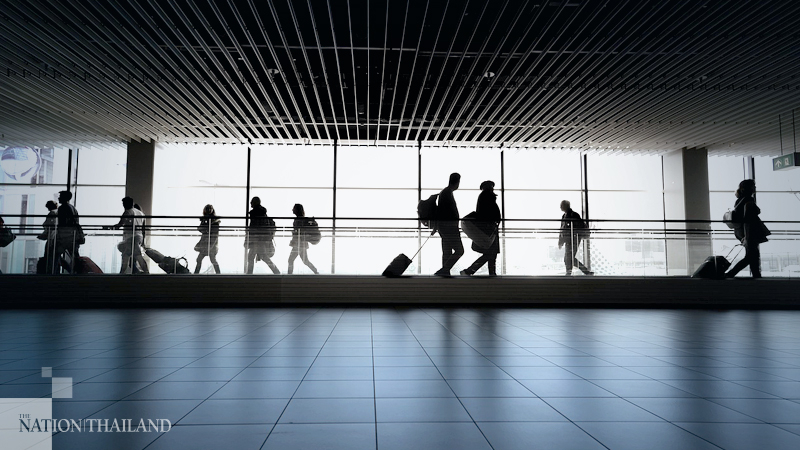
การเปิดตัวฟองสบู่ท่องเที่ยว หรือ travel bubble ผ่านการเดินทางทางอากาศโดยไม่ต้องกักกันระหว่างสิงคโปร์และฮ่องกง ซึ่งเป็น travel bubble เจ้าแรกของโลกและมีกำหนดเริ่มวันอาทิตย์นี้ ล่าสุด ได้ถูกเลื่อนออกไป 2 สัปดาห์หลังจากที่มีผู้ติดเชื้อโคโรนาเพิ่มขึ้นในฮ่องกง

ด้าน หวางอี่คัง รัฐมนตรีว่าการกระทรวงคมนาคมของสิงคโปร์กล่าวเมื่อวันเสาร์ว่า “นี่เป็นการเตือนให้ตระหนักว่าไวรัสโควิด-19 ยังอยู่กับเรา”

ตามแผนการเดิม ตั้งแต่วันอาทิตย์นี้เป็นต้นไปจะมีเที่ยวบินหนึ่งเที่ยวต่อวันต่อเที่ยวระหว่างฮ่องกงกับสิงคโปร์โดยมีโควต้า 200 คนต่อเที่ยวบิน ผู้เดินทางไม่จำเป็นต้องกักตัว แต่ต้องทำการทดสอบ PCR มาตรฐานเพื่อแสดงว่าพวกเขาปลอดไวรัสก่อนขึ้นเที่ยวบินที่กำหนดไว้เป็นพิเศษ แต่รัฐบาลของทั้งสองได้ตั้งเงื่อไขด้วยว่าว่าจะระงับโครงการหากมีผู้ติดเชื้อไวรัสเพิ่มขึ้นในที่ใดที่หนึ่ง

ครอบครัวต่างๆ ทั่วสหรัฐกลับมาตุนสินค้าจำเป็นอีกครั้งและเร่งซื้อข้าวของอย่างตื่นตระหนกรอบที่สองเนื่องจากการระบาดของไวรัสเพิ่มขึ้นและรัฐจำกัดกิจกรรมทางเศรษฐกิจส่งผลกระทบให้สินค้าหลายอย่างขาดแคลนตั้งแต่กระดาษเช็ดมือไปจนถึงเบคอน แม้แต่ร้านค้าปลีกรายใหญ่ที่สุดของโลกก็รายงานว่าสินค้าขาดความต้องการสูงเช่น อุปกรณ์ทำความสะอาด อาหารเช้า และกระดาษชำระ ซึ่งก่อนหน้านี้ช่วงที่เกิดการระบาดใหม่ๆ ก็เคยมีการตุนกระดาษาชำระมาแล้วครั้งหนึ่ง

การชุมนุมสาธารณะในร่มที่มีผู้คนมากกว่า 20 คนจะถูกห้ามในเขตกรุงเฮลซิงกิ เมืองหลวงของฟินแลนด์เพื่อพยายามชะลอการแพร่กระจายของการติดเชื้อโควิด -19 หลังจากการแพร่ระบาดมีสถานการณ์ที่แย่ลง โดยกฎที่เข้มงวดขึ้นเกี่ยวกับการชุมนุม มีผลบังคับใช้ในวันจันทร์และใช้เวลาสามสัปดาห์

รัฐบาลกรุงมาดริด ประเทศสเปนประกาศเมื่อวันที่ 21 พฤศจิกายนว่าจะป้องกันไม่ให้การจราจรเข้าหรือออกจากภูมิภาคมาดริดตั้งแต่วันที่ 4 ธันวาคมถึง 14 ธันวาคม ซึ่งเป็นมาตรการล่าสุดเพื่อควบคุมอัตราการติดเชื้อโควิด-19 ที่กลับมาระบาดหนักอีกครั้ง

Photo by STR / AFP

Trump’s defiance of voters’ will hits GOP resistance #SootinClaimon.Com

#SootinClaimon.Com : ขอบคุณแหล่งข้อมูล : หนังสือพิมพ์ The Nation.

Trump’s defiance of voters’ will hits GOP resistance (nationthailand.com)

Trump’s defiance of voters’ will hits GOP resistance

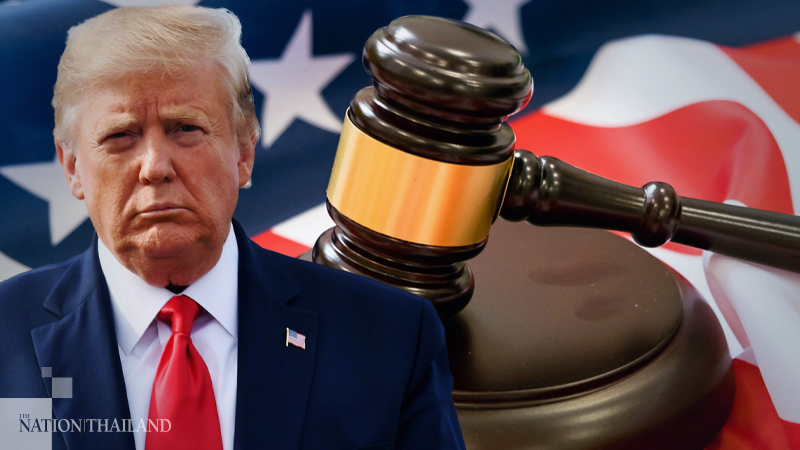
InternationalNov 22. 2020President Trump, seen Friday at the White House, continues to assert without providing evidence, including in multiple lawsuits that have been dismissed around the country, that Joe Biden's election win was gained by widespread fraud and that he, Trump, is in fact the victor. MUST CREDIT: Washington Post photo by Jabin BotsfordPresident Trump, seen Friday at the White House, continues to assert without providing evidence, including in multiple lawsuits that have been dismissed around the country, that Joe Biden’s election win was gained by widespread fraud and that he, Trump, is in fact the victor. MUST CREDIT: Washington Post photo by Jabin Botsford 

By The Washington Post · Toluse Olorunnipa, Amy B Wang, Chelsea Janes · NATIONAL, POLITICS 
WASHINGTON – President Donald Trump’s effort to persuade state and local Republicans to help him in overturning the election has so far run into a quiet resistance that could mark a coming end to his attempt at an unprecedented power grab.

The Republican-led Board of Supervisors in Maricopa County, Ariz., voted unanimously Friday to certify the county’s election results, with the board chairman declaring there was no evidence of fraud or misconduct “and that is with a big zero.”

The top GOP lawmakers in Pennsylvania, where counties must submit their official results by Monday, have said they have no role in deciding the winner of the state’s electoral college votes, writing in an op-ed last month that the law “plainly says that the state’s electors are chosen only by the popular vote of the commonwealth’s voters.” 

And Georgia Gov. Brian Kemp, a Republican, moved to certify his state’s results Friday, confirming Biden’s win there and refusing to endorse Trump’s claim that the vote was tainted by fraud. 

On Saturday, a federal judge threw out the Trump campaign’s lawsuit that sought to block certification of Pennsylvania’s election results. “In the United States of America, this cannot justify the disenfranchisement of a single voter, let alone all the voters of its sixth most populated state,” U.S. District Judge Matthew Brann wrote.

While some Republican officials in presidential battleground states have given credence to Trump’s baseless fraud claims by launching websites and tip lines aimed at uncovering election irregularities, only a few have appeared willing to endorse an extraordinary move to appoint pro-Trump electors in states Biden won.

A reminder of continued GOP support for Trump’s efforts was apparent Saturday in Michigan, where the state’s Republican chairwoman, Laura Cox, issued a joint statement with Republican National Committee Chairwoman Ronna McDaniel calling on the state to delay final certification of the vote and conduct a “full audit and investigation.” This came a day after the state’s top GOP lawmakers met with Trump at the White House but declared afterward that they had “not yet been made aware of any information that would change the outcome of the election in Michigan.” 

For the most part, local and state officials have either remained silent or moved forward with the process of certifying election results, potentially closing the door to Trump’s post-election gambit to change the results – first through the courts and then by way of GOP-led statehouses.

Republican officials have been reluctant to openly defy Trump, and many have either humored him or echoed less incendiary versions of his evidence-free claims about rigged voting machines and mail-in ballots. Others have offered only milquetoast and vague statements aiming to defend the integrity of their states’ voting processes while not offending a prickly and vindictive president. 

Their delicate posturing underscores the challenge Republicans face as the president solicits their complicity in undermining the democratic process while maintaining an ironclad grip on the party’s voting base.

And it mirrors the approach of some federal officials, including in the Justice Department, where Attorney General William Barr touted false claims about mail-in ballots but prosecutors have made no moves to investigate the recent baseless allegations by Trump lawyer Rudy Giuliani of a global conspiracy by Democrats to steal the election. 

“Republicans knew they’ve been damned if they do and worse if they don’t when it comes to crossing Trump,” said Doug Heye, a former top official at the Republican National Committee and a Trump critic. “But they thought that would end post-Election Day. Instead, they’re stuck in the same time warp: Meet the new boss, same as the old boss.”

In recent days, Trump and his legal team have put their attention more squarely on GOP state lawmakers in a last-ditch attempt to get them to fix the electoral college in his favor.

Under a highly disputed legal theory, Republican lawmakers in key swing states could potentially vote to appoint Trump-supporting electors even if their constituents voted for Biden.

Trump’s most aggressive attempt yet to use the weight of the presidency to lean on state lawmakers – summoning the Michigan legislators to the White House – coincided with Trump’s legal team’s effort to force a delay in the certification of that state’s election results. President-elect Joe Biden won the state by more than 150,000 votes.

The details of the meeting are not known. But if Trump’s goal was to get Michigan’s GOP-led legislature to commit publicly to backing his push to toss out Biden’s win, he did not appear to make much headway.

After the meeting, Michigan Senate Majority Leader Mike Shirkey and House Speaker Lee Chatfield said that while they supported investigating fraud allegations, they would honor the outcome of the state’s election. A joint statement issued after the meeting said that “the candidates who win the most votes win elections and Michigan’s electoral votes. These are simple truths that should provide confidence in our elections.”

But although Shirkey and Chatfield, who later Friday were seen having drinks at Trump’s hotel near the White House, did not endorse the president’s baseless claims or embrace the prospect of disenfranchising hundreds of thousands of Black voters in cities like Detroit, they did not directly denounce the claims, either. And on the same day, Cox, the state GOP chairwoman, said that Republicans would continue pressuring the state to audit the vote in Wayne County, home to a large percentage of Michigan’s Black residents.

The state canvassing board is to meet Monday to certify the vote. One of the two Republican members, Norman Shinkle, told The Washington Post on Thursday that he was leaning toward seeking a delay and requesting an audit of the vote, citing debunked conspiracy theories touted by Trump and his attorneys about voting machines. But the statement by Shirkey and Chatfield suggested that any delay would not ultimately result in Trump’s reversing Biden’s win through legislative edict. 

While a growing number of state officials have begun to speak out against the president’s entreaties, more have remained silent or taken steps to indulge him.

As Trump and his allies have floated the idea of delaying certification of election results and having GOP-led legislatures fix the electoral college in his favor, the unwillingness of many state-level Republicans to forcefully denounce such a move has been interpreted in the White House as a green light to press ahead.

Out of more than three dozen top Republican officials in Arizona, Pennsylvania, Wisconsin, Michigan, Nevada and Georgia contacted by The Washington Post on Friday, only a handful have commented on the record about Trump’s push to overturn the election results. This reticence has left breathing room for Trump’s claims about widespread voter fraud to flourish, despite a lack of evidence that there was any such fraud or that irregularities had shaped the results of the election.

Though some Republican officials have increasingly dismissed or ignored the incendiary fraud claims by Trump and Giuliani, the slew of carefully worded statements, declinations to comment and vague attempts to defend the president reflect the enduring power of the president’s grip on his party. 

Some historians say legislators’ willingness even to entertain the idea of overturning voters’ choice sets a dangerous precedent.

Sen. Mitt Romney, R-Utah, is one of a small number of Republican officials who have not minced words as Trump has attacked and undermined a bedrock component of the democratic process.

“It is difficult to imagine a worse, more undemocratic action by a sitting American President,” Romney said in a statement Thursday that blasted Trump for attempting to put “overt pressure on state and local officials to subvert the will of the people.”

But the sentiment from Romney was far from a mainstream position within the party that selected him as its presidential nominee in 2012.

Most of his fellow Republican U.S. senators have remained silent about Trump’s actions, leaving the work of defending the integrity of the election to the local and state officials tasked with overseeing voting issues in their respective states.

After largely staying on the sidelines in the debate over Georgia’s election, Kemp said on Friday that he would follow state law requiring him to accept the secretary of state’s certified results.

“State law now requires the governor’s office to formalize the certification, which paves the way for the Trump campaign to pursue other legal options and a separate legal option if they choose,” he said in a statement. “As governor, I have a solemn responsibility to follow the law, and that is what I will continue to do.”

There was little pushback among state lawmakers.

While one Georgia state legislator, Rep. Colton Moore, wrote a letter to Kemp earlier Friday calling on him to allow the legislature to assume “the burden” of deciding the election, few joined him.

Some in the party wanted to quickly move on from the election and the claims of vote-rigging to turn their attention – and Trump’s – to a pair of critical runoff races that could determine control of the U.S. Senate. Undermining faith in the electoral system could make it harder for incumbent Republican Sens. Kelly Loeffler and David Perdue to corral enough support in the Jan. 5 races, said Brian Robinson, a GOP communications consultant in the state who was a longtime spokesman for Nathan Deal when the Republican was Georgia governor.

“We need to move our focus to the Senate races. Georgians single-handedly get to determine who operates Washington for the next two years,” he said. “Senators Loeffler and Perdue need their voters to have faith in the integrity of the election system, and they need President Trump to engage and rev up his turnout machine.”

Republicans who have remained silent in the face of Trump’s antics have done so in part out of fear of angering the president’s base – which turned out in force to back him in November, Heye said. 

Still, some of the most forceful pushbacks to Trump’s claims have come from local GOP officials. 

On Friday, the five-member Maricopa County Board of Supervisors – all but one of whom are Republicans – voted unanimously to certify the county’s election results, which showed Biden had won Arizona’s largest county.

Before doing so, they questioned county elections officials for nearly three hours in painstaking detail about how votes had been cast and tabulated, an effort to show that the process had been transparent and airtight.

Board Chairman Clint Hickman, a Republican, noted that his own office had received 180 letters, 4,000 emails and nearly 3,000 voice mails about the election.

“I continue to hear from government leaders and the public about the integrity of Maricopa County elections,” he said. “I have listened to and considered all theories about what might have happened. Let me be clear: There is no evidence of fraud or misconduct or malfunction in Maricopa County, and that is with a big zero.”

Maricopa County Supervisor Steve Chucri, a Republican, shot down conspiracy theories that Trump’s allies have circulated regarding Dominion voting machines. Election officials also testified that results of a hand audit of a portion of ballots had matched 100 percent with machine-tabulated figures, and that representatives of the state’s Republican, Democratic and Libertarian parties had all signed off on that audit earlier in the week.

Hickman closed out the meeting with a veiled but pointed message for those, including Arizona GOP Chairwoman Kelli Ward, who continued to allege widespread voter fraud when there was no evidence to support it.

“I have learned a lot about the character of people in this community regarding this matter. I’ve been disheartened by individuals using this time to find relevancy or fundraise off this issue,” he said. “It’s time to dial back the rhetoric, conspiracies and false claims.”

While the GOP caucus in Arizona’s state Senate announced it was setting up an email address to collect new claims of voter fraud, it did not appear prepared to take more aggressive steps to deliver the state to Trump. Senate President Karen Fann, a Republican, did not respond to The Post’s request for comment but told the Arizona Republic on Thursday that she did not intend to try to delay the certification of Arizona’s vote. 

“There’s no way we can say we’re going to change this now,” she said.

A similar dynamic was at play in Nevada, where the state party has been using its official social media accounts to solicit potential examples of voter fraud from whistleblowers but where officials have not taken steps to overturn Biden’s win.

Nevada Secretary of State Barbara Cegavske, a Republican, published a statement earlier this week in which she denied she had met with any Republicans in Congress about the election results and distanced herself from the certification process. 

“At no point do I, as Secretary of State, have the authority to certify or not certify election results. Ultimately, it is the Governor who declares the outcomes and issues certificates of election,” she said in that statement.

A spokeswoman for Cegavske said the secretary of state was unavailable for comment. 

Pennsylvania Senate Majority Leader Jake Corman declined a request for comment on Trump’s efforts to reverse the election results through statehouses.

The op-ed he wrote last month with House Majority Leader Kerry Benninghoff was blunt: “We have said it many times and we will happily say it again: The Pennsylvania General Assembly does not have and will not have a hand in choosing the state’s presidential electors or in deciding the outcome of the presidential election.”

But Corman told the Philadelphia Inquirer this week that “we need to be patient and allow the process – the constitutional process that has been laid out for us – to unfold” and that legal processes still in motion should be allowed to conclude before results are certified. He also said the only way the state legislature might be involved in that process would be “if there was no certification of the results.”

In Wisconsin, the GOP-led Committee on Campaigns and Elections said it was collecting “complaints, concerns or allegations” about the November election, but few lawmakers spent time discussing Trump’s allegations that Biden’s 20,000-vote victory in the state resulted from widespread fraud. Instead, Republican House Speaker Robin Vos spent Friday meeting with Democratic Gov. Tony Evers discussing a coronavirus relief package.

When three voters dropped their lawsuit seeking to disqualify all the votes in Democratic-leaning Dane, Milwaukee and Menominee counties last week, Republican House Majority Leader Jim Steineke responded with a two-word tweet: “Good news.”

As U.S. coronavirus cases soar toward 200,000 a day, holiday travel is surging #SootinClaimon.Com

#SootinClaimon.Com : ขอบคุณแหล่งข้อมูล : หนังสือพิมพ์ The Nation.

As U.S. coronavirus cases soar toward 200,000 a day, holiday travel is surging (nationthailand.com)

As U.S. coronavirus cases soar toward 200,000 a day, holiday travel is surging

InternationalNov 22. 2020

By The Washington Post · Derek Hawkins, Hannah Knowles · NATIONAL, HEALTH, SCIENCE-ENVIRONMENT, HEALTH-NEWS 

Total coronavirus infections in the United States have topped 12 million, and cases are approaching 200,000 in a day, as health experts warn of an alarming new stage in the pandemic’s spread while Americans embark on holiday travel that could seed more outbreaks.

 A fall wave of the virus ushered in by colder weather is only worsening, outpacing expansions in testing and making new nationwide records routine. The country passed 11 million cases just a week ago, and daily infections are on track to double since Nov. 4, when they exceeded 100,000 for the first time.

As Anthony Fauci, the country’s top infectious-disease expert, put it recently on MSNBC: “It’s almost exponential when you compare the curves in the spring and the curves in the summer with the inflection of the curve where we are right now.” 

The Centers for Disease Control and Prevention recommended Thursday against traveling and congregating for Thanksgiving, using its first news briefing in months to sound alarms over the massive case rise reported in the past week. The same day, the United States surpassed a quarter-million deaths related to covid-19.

But more than 1 million people still passed through the country’s airports Friday in the second-highest single-day rush of travelers since the start of the coronavirus pandemic, even as air travel has dropped dramatically over this time last year. On the same date in 2019, more than 2.5 million people traveled through U.S. airports.

The data on Transportation Security Administration screenings shows that many Americans are heeding calls for caution. But the fallout from this week is expected to amp up pressure on hospitals and health care workers at a critical time in the pandemic. Hospitalizations have soared to all-time highs, pushing state after state to enact new restrictions such as mask mandates, curfews and renewed business shutdowns.

“The scary news is that this week will probably have the highest amount of travel we have seen since the pandemic began,” said Christopher Worsham, a critical care physician and research fellow at Harvard Medical School.

He said he is more worried about what will happen when travelers get to their destinations – and as people from different households gather indoors, where the virus can spread more easily, often with more vulnerable older family members. Worsham said he has been hearing about people being treated as “the bad guy” for trying to keep their relatives and communities safe.

“We have to remember that the virus does not care that it is the holidays, that you are family, and that you have already gone a long time without seeing one another – if given opportunities to spread, the virus will spread,” he said.

Some passengers are facing crowded terminals as they wait to board flights. Video of busy seating areas at Phoenix Sky Harbor International Airport made the rounds on social media Friday, as travelers said that the CDC’s guidance a day earlier had either not registered or not made a difference in their decision-making.

“I have a life to live and things to do, so we take necessary precautions,” Curt Vurpillat, who was heading to Chicago, told news outlet AZFamily.

Brandi McRae, an IT asset and capacity manager from South Florida, told The Washington Post she was alarmed to see long security lines and tightly packed clusters of people in the corridors of Fort Lauderdale-Hollywood International Airport on Saturday morning.

“It was a bit overwhelming,” said McRae, 31. “It was less crowded as I walked to my gate, but all I could think was that there would be very little way for so many people to remain distanced.” 

McRae said she wasn’t originally planning to fly during the holiday week, but that the stress of the presidential election made her eager to spend time with family in Lumberton, N.C. She booked a last-minute flight – her first since March, she said.” 

McRae’s family plans to limit their Thanksgiving celebration to a small group, she said, and she intends to wear a mask when she’s around them.

“It seems extreme,” she said, “but it seems like the best measure against spreading anything I could possibly have picked up during travel.” 

Among the surge of people flying: college students, many of whom will finish out the fall semester from home. Very few schools are mandating coronavirus testing for students leaving campus pre-Thanksgiving, said Chris Marsicano, an education studies professor at Davidson College who leads an initiative examining how colleges are grappling with the pandemic.

Airports are all but certain to get more crowded in the coming days. The TSA usually offers estimates on how many passengers they expect to screen during Thanksgiving week – last year the agency reported record numbers – but declined to do so this year “due to the many complex factors that could affect those numbers during this pandemic,” an agency spokesperson told The Post.

Fauci, a member of the White House coronavirus task force, has been urging families to weigh the costs and benefits of their plans to gather together.

“When you think of the holiday season, and the congregating indoors at what are innocent, lovely functions like meals with family and friends, you’ve got to at least think in terms of evaluating,” he said on MSNBC.

“Do you have people in your family that are elderly that might have underlying conditions, like someone on chemotherapy or other things that weaken their immune system?” he said. “Do you really want to get a crowd of 10, 15, 20 people, many of whom are coming in from places where they’ve gone through crowded airports to planes, getting into the house?” 

Those set to travel anyway are taking precautions – and worrying.

Tiana Camacho, a 29-year-old voice actor in Burbank, Calif., is preparing to fly Sunday to Boise for a medical procedure. She’s donating urgently-needed stem cells to a leukemia patient, she said, and found that facilities in California were all booked up.

She will head out wearing both an N95 mask and a face shield, she said – “doubling up on protection because I really think that I need it because of how insane everything is,” she said. She was thinking Saturday about the videos she had seen on Twitter of airports packed with Thanksgiving week crowds.

She wishes people wouldn’t travel, “putting everyone at risk,” unless they absolutely have to. “If this wasn’t a life or death situation, I wouldn’t be flying out,” she said. “I’d be staying home.” 

Racial, ethnic minorities continue to die from covid-19 at much higher rates, Post analysis shows #SootinClaimon.Com

#SootinClaimon.Com : ขอบคุณแหล่งข้อมูล : หนังสือพิมพ์ The Nation.

Racial, ethnic minorities continue to die from covid-19 at much higher rates, Post analysis shows (nationthailand.com)

Racial, ethnic minorities continue to die from covid-19 at much higher rates, Post analysis shows

InternationalNov 22. 2020Raquel Chavez lost her father, Ángel Chavez, and a brother, Juan Francisco Chavez, to the coronavirus. Other relatives have fallen ill, too. MUST CREDIT: Photo by Brenda Bazán for The Washington PostRaquel Chavez lost her father, Ángel Chavez, and a brother, Juan Francisco Chavez, to the coronavirus. Other relatives have fallen ill, too. MUST CREDIT: Photo by Brenda Bazán for The Washington Post 

By The Washington Post · Dan Keating, Ariana Eunjung Cha, Gabriel Florit, Chris Alcantara · NATIONAL, HEALTH, SCIENCE-ENVIRONMENT, RACE, HEALTH-NEWS 
Dennis Bannister’s daughter, Demi, was the first to die.

She was only 28, a beloved third-grade teacher who likely caught the virus during a training at her Columbia, S.C., school district. Doctors diagnosed her with a bladder infection, and by the time they realized their mistake, it was too late. Not long after, the family’s matriarch, Shirley, 57, complained of difficulty breathing. She was twice sent home from the emergency room before returning by ambulance and being put on a ventilator. She died soon after.

Which left Dennis Bannister, childless and a widower, sitting on his porch last month, staring at the last of the green leaves and mourning. Why, he pondered, had the virus hit his family so hard, and not just them, but so many African Americans? Was there something that made them particularly vulnerable? Had they gotten the right care?

“Folks think maybe they saw an African American coming in, and they didn’t take them seriously,” reflected Bannister, who was also infected but asymptomatic. “I don’t know. I just pray God will help me find a way to deal with the situation.”

It’s not just grieving relatives who are demanding answers. Nearly nine months after the virus exploded in the United States, and amid big treatment strides, the disease continues to ravage African American and other minority communities with a particular vengeance. Black, Asian, Native American and Hispanic patients still die far more frequently than White patients, even as death rates have plummeted for all races and age groups, according to a Washington Post analysis of records from 5.8 million people who tested positive for the virus from early March through mid-October.

Death rates overall have fallen more than 80% from the pandemic’s peak in the spring, when refrigerator trucks were parked outside New York City hospitals and ice rinks were converted into morgues, according to an analysis of anonymized data collected by the Centers for Disease Control and Prevention.

But as another wave of infections sweeps across the country this fall, losses among racial and ethnic minorities remain disproportionately large. Black Americans were 37% more likely to die than Whites, after controlling for age, sex and mortality rates over time. Asians were 53% more likely to die; Native Americans and Alaskan Natives, 26% more likely to die; Hispanics, 16% more likely to die. Those higher case fatality rates for diagnosed people of color are on top of the increased infection rates for those unable to isolate at home because they are essential workers.

These patterns have devastated communities of color across the country: multigenerational Latino households in Texas, Pacific Islander families in Washington state, African American families in South Carolina.

Advocacy groups, researchers and other experts say many of these deaths are preventable, and they blame federal, state and local leaders for failing to take the disparities seriously and take steps to address them.

The shortage of testing in communities of color, which made headlines in the beginning, persists to this day. Despite their symptoms, for instance, neither Demi Bannister, nor her mother, Shirley, were tested for the virus until they were close to death in late August and September.

Critics also point to spotty race data, which has made disparities harder to identify and solve; weak enforcement of protocols like mask-wearing and social distancing at essential workplaces; delays in translating critical health alerts into other languages; conflicting guidance from health agencies that deepened distrust in some communities; economic and cultural factors that lead more families to live in multigenerational homes; and immigration policies that exacerbate crowded housing and discourage people from seeking medical care.

“It is a perfect storm that has been created that led to the deaths of groups of people,” said Elena Rios, head of the National Hispanic Medical Association.

– – – 

Juliet Choi, chief executive of the Asian & Pacific Islander American Health Forum, said many of the measures sought by minority groups to mitigate the effects of the virus on their communities are easy to implement and inexpensive, but they have been mostly ignored.

“It comes down to political will and commitment,” Choi said. “We’re not asking that decades of systemic barriers get eliminated overnight, but there are many simple things we should be doing that we are not doing.”

There is growing evidence that such changes do make a difference. Faced with extreme disparities in covid-19 deaths, Michigan officials undertook a series of steps, from boosting testing to connecting people of color with primary care doctors. The state’s rapid progress proves the issues are neither intractable, nor rooted somehow in biology.

Garlin Gilchrist II, a Detroit native as well as the state’s lieutenant governor, formed one of the nation’s first state racial disparities task forces on covid-19 back in April. Made up of 23 community organizers, doctors and other experts, the group focused not only on boosting testing and contact tracing, but also tailoring messages on mask-wearing and other public health precautions to African American communities. It also addressed broader systemic issues, such as access to primary care, and helping those in rural areas access telemedicine.

When state epidemiologists ran the numbers again in September, they found a huge change: Black residents who in April accounted for 29.4% of cases and 40.7% of deaths now made up only 8% of cases and 10% of deaths – very similar to theirpercentage in the population.

Gilchrist emphasized the state’s efforts have not been complicated. “I think the reason we have been able to make progress is we chose to focus on it,” he said.

When epidemiologist Peter J. Fos first saw the coronavirus case data from his own state of Louisiana in the spring, he recalls being baffled. Respiratory diseases, like the flu, tend to move randomly through a population. “Rich, poor, male, female,” he said. “Usually, everyone is at risk together.”

Coronavirus cases, however, he noticed, seemed to be clustered in mostly poor Black neighborhoods. He called up friends in Mississippi for that state’s data and found similar patterns. The same thing was true in Michigan.

“We don’t think of infectious diseases as being a health disparity,” he recalled, “but here it was in front of me.”

Comparable data for many other states simply did not exist. Then and now, testing and data collection came under the aegis of the White House – which congressional Democrats, public health experts and civil rights leaders have criticized as being slow to respond to the disparities.

Public health experts say that good data is the cornerstone of an effective pandemic response. Without it, health officials and others fly blind. But U.S. data on the pandemic, especially about race and ethnicity, has been incomplete, or lacking altogether, in part because of the different ways state and local jurisdictions report it, and the federal government’s delay in mandating it.

Native American advocacy groups, for instance, have expressed concern about the exclusion of some of their communities from analyses, and inconsistencies in data from tribes, as compared with what states and local jurisdictions are collecting. 

The CDC said in a statement that it is “working hard to address the threat of covid-19 among racial and ethnic minority groups” by expanding testing for at-risk groups, increasing engagement with “trusted racial and ethnic minority servicing organizations” including Black colleges and universities and churches, and working to get better data.

Yet some early efforts to address inequities were quashed: The CDC had internal discussions for example, about ways to increase testing in African American and other hard-hit communities. On May 3, a document posted on its website recommended that people from “racial and ethnic minority groups disproportionately affected by adverse covid-19 outcomes” get priority for testing. Three days later, the language was removed.

In response to questions from The Post, the CDC’s press office said the document was “a draft posted without proper vetting through all CDC channels.” An official speaking on the condition of anonymity because they were not authorized to discuss the issue said it was actually higher-ups at the Department of Health and Human Services and the White House who had asked for its removal. No follow-up guidance was ever issued.

Leon McDougle, a family medicine specialist at Ohio State University who heads the National Medical Association, the country’s oldest Black physicians group, said he had been optimistic the Trump administration would take steps to address the disparities. But after that document disappeared without any public explanation, he began to have doubts.

“I have real concerns about the . . . political influence that appears to play a factor in decisions,” he said.

In early June, CDC Director Robert Redfield apologized to lawmakers for “the inadequacy of our response” in documenting the nation’s high rates of infection and deaths among Black and Hispanic Americans. That same day, Adm. Brett Giroir, an HHS assistant secretary running the government’s coronavirus testing response, said that as of Aug. 1, the federal government would begin requiring laboratories to report racial and ethnic information for people who were tested for the virus.

The national coronavirus database available today is much more robust, but holes remain. Some records are missing race, gender or age, while others lack information on the patient’s other medical conditions, or even whether the person lived or died. Information is more likely to be blank for non-Whites. Among hospitalized patients, for instance, there was no information on whether the patient survived for 36% of Hispanics, 29% of Blacks, 26% of Asians and 24% of Whites.

– – – 

The Post analyzed the data in numerous ways: with and without the missing information, with all infected patients, and with only patients who had been hospitalized. No matter which model it used, the results showed significantly higher death rates for Blacks, Hispanics, Native Americans and Asians than for Whites.

While minorities tend to get infected at higher rates, some studies have suggested that delays in diagnosis and their experiences in hospitals appear to contribute to poorer outcomes. A Boston-based data firm said African Americans with symptoms such as coughing may be less likely to get access to scarce coronavirus tests. An academic analysis of testing in New York City found that more testing existed in White neighborhoods although the highest positivity rates were in communities with a higher share of Black and Hispanic residents.

In the spring, scholars puzzling over such disparities overlaid maps of covid-19 deaths with maps of communities where heart disease, diabetes, obesity and other conditions were highest in the United States. They found that the hot zones matched up.

Numerous studies have since borne out the relationship between these health conditions and high covid-19 death rates. When looking at the role of race, smaller studies – based on data from single hospital systems or regions – found that differences in mortality narrowed when controlling for ailments such as high blood pressure, diabetes, lung conditions and obesity.

In the CDC data, however, the difference in death rates grows even larger when controlled for those other health conditions – although information is missing for many patients.

Fos, a member of Louisiana’s task force on race and covid-19, argues the initial observation that high covid-19 death rates coincided with hot spots for other health problems led some public health officials to conclude the unequal burden was somehow inevitable. A few went so far as to suggest that those most affected were somehow to blame for their illnesses.

Rep. Maxine Waters, D-Calif., called out U.S. Surgeon General Jerome Adams in April, for instance, for singling out African Americans with advice to avoid alcohol, tobacco, and drugs to lower their risk for severe disease from the virus. Although Adams had noted his own health struggles as part of “that legacy of growing up poor and Black in America,” Waters described the comments as “a backhanded attack on African Americans and communities of color.” Adams subsequently apologized, saying he “used the language that is used in my family” and that the comments were not meant to be offensive.

Fos and other experts argue the clustering of covid-19 cases is more of a social and economic phenomenon.

He noted the high proportion of people in such communities who interact daily with the public as essential workers, who often live in more densely packed neighborhoods and multigenerational households, and who might not have regular doctors because they lack health insurance.

In addition, minorities face a long history of unequal access to medical care – which may have impacted treatment decisions and outcomes. A study using data from the Society for Critical Care Medicine, posted this month before peer review, found that African American patients were more likely than Whites to receive an older, less-expensive and riskier blood thinner linked to higher mortality from covid-19. Blood thinners have become a critical weapon in the arsenal used by doctors against the disease because many patients with severe disease develop clots.

It was not clear whether the administration of that medicine related to insurance coverage, physician preference, or something else. One of the study’s authors, Venky Soundararajan, chief science officer of data firm Nference, wondered whether some doctors chose the older, more established product for minority patients because the newer drugs were overwhelmingly tested on Whites.

“If you distill it down to the root causes,” Fos said, “they are ones we have known in our country for years and we’ve just done a very bad job of addressing it. It’s some of the same reasons people are protesting in the streets – police brutality, job discrimination, environmental justice. The coronavirus shows how much racism there is in health as well.”

– – – 

If New York City was the epicenter of the first wave of the pandemic, the stretch of Texas along the Rio Grande Valley near the U.S.-Mexico border is the epicenter of the second.

As of this week, four counties in this region had tallied a combined total of 70,000 cases and more than 3,300 deaths. Norma Ramirez, the Democratic chair for Hidalgo County, has said there is not one person in her region “who hasn’t been affected by this horrible virus.” 

Vanessa Alvarado, outreach coordinator for LUPE, a community group in Texas founded by labor activists César Chávez and Dolores Huerta, said immigration policy and economic challenges have exacerbated the Latino communities’ vulnerability. A Trump administration rule that took effect Feb. 24 makes it more difficult for people to get green cards if they seek government help such as food stamps and some types of health and housing assistance.

That has left many fearful to seek care even if they are very sick, she said. And as layoffs have accelerated and people have sought cheap living arrangements, it has left families and friends crammed into small homes with no space for a “sick room” to isolate patients. About 27% of Hispanic households span three or more generations, according to a Pew Research report. That compares with 16% of White households.

In addition, Alvarado said, so many are struggling to make enough money for basic needs like food and shelter that the coronavirus has sometimes seemed a secondary concern. Even the most vulnerable in her community – men and women over the age of 60 with known health issues – have to go to work to make ends meet. In addition to everyday expenses, some families are now being hit with huge bills for funerals.

“‘Whatever God wants. We leave it in God’s hands,'” Alvarado said. “That’s the general attitude because that’s all you have left.”

Alvarado and other community activists said it’s common to see the virus strike whole households in the Latino community.

Raquel Chavez, who is originally from Mexico, lost her father and a brother to the virus in September. It had started with her mother’s stomachache. After her mother arrived at the hospital and they took her vital signs, she was wheeled into intensive care and put on a ventilator. She tested positive for the coronavirus. Then her father came down with flu-like symptoms. His doctor sent him home with some cold medicine, and as a precaution, tested him for the coronavirus.

“They couldn’t give him extra attention because his test hadn’t come back,” she recalled. “But he didn’t last very long.”

Ángel Chavez, 69, died a few days later of a heart attack. At the funeral, his youngest son had such a bad coughing fit, he was unable to deliver the eulogy. Rushed to the hospital and put on oxygen, Juan Francisco Chavez died soon after at the age of 42.

Her father’s positive coronavirus test did not come back until after his body had been cremated, Raquel Chavez said. Numerous other relatives also were infected by then – her older brother, a nephew, two cousins – though everyone had worn masks at the funeral. She said she has been struck by how the virus can spread faster than test results can be processed.

“My mother cannot overcome what happened,” she said. “It was so quick.”

– – – 

In Spokane, Wash., Jeffrey Yoshikawa said much of the information he has about the coronavirus comes from a Facebook group where younger, bilingual people translate critical guidelines and alerts into his native language, Marshallese, for their families. One of roughly 3,000 Pacific Islanders in his county – most from the Marshall Islands in the vast expanse of ocean between Hawaii and Southeast Asia – Yoshikawa said this online group has been critical to his community’s struggle against the virus.

While the Marshallese, who are allowed to live and work in the U.S. but who are not citizens, make up less than 1% of the county’s population, they represent an eye-popping 30% of covid-19 cases. The community has been vulnerable, he said, not only because of language barriers, but because many work outside the home in essential jobs and are not eligible for most federal health programs. The Marshallese also have startlingly high rates of cancer, likely linked to the 67 nuclear tests the United States conducted on or over the volcanic island chain between 1946 and 1958.

Despite a Federal Emergency Management Agency playbook that emphasizes the importance of communications during a national emergency – it recommends alerts and other key guidance be translated into 17 languages to reach as much of the United States population as possible – the Marshallese and many immigrant communities still rely on their young to tell them what they need to know.

When the CDC began posting information on the coronavirus in January and February, it was in English only. It wasn’t until March 11 that sites in Spanish, Chinese, Korean and Vietnamese appeared. Translations of the covid-19 content into other languages, such as Marshallese, are still unavailable.

Frustrated members of minority groups said many communities created their own communication channels – through cultural organizations, church networks, and other forums – to share health information. Nationally, the Asian & Pacific Islander American Health Forum set up a website to collect translations but access to timely information is hit or miss.

In the Marshallese community, Yoshikawa explained, “we have a few who work in the hospital and schools.”

“They are not doctors, but they can talk to the doctors and they can translate and get the information to the households so they can understand,” he said.

While it has been impossible to get a comprehensive picture of Asian Americans and the coronavirus because of the lack of detailed data, reports from Hawaii, San Francisco and Washington state suggest Pacific Islanders, especially the Marshallese, are being impacted disproportionately among the different Asian subgroups.

Yoshikawa, who works in customer service at Walmart, and his mother-in-law had such serious covid cases they were hospitalized.

“It was the worst experience of my life,” he said, describing how he struggled to breathe as doctors pumped experimental medicines into him to try to save his life. “I had to fight it and get myself strong every day.”

At least three in his community have died, he said; more Marshallese have passed away in other states, including Arkansas and Hawaii.

– – – 

The struggle to combat the virus has focused on different issues in Black communities.

Reynold Verret, president of Xavier University of Louisiana, and Walter M. Kimbrough, president of Dillard University, set off waves of surprise and indignation in September when they announced they had volunteered as test subjects for an experimental vaccine for the coronavirus. They also appealed to students, faculty, staff and alumni of the historically Black schools to consider the same.

The blowback was immediate and loud.

“You are putting our children at risk with these fast-track vaccines. They are not lab rats!!!” one parent fired back on social media. Another commented, “How dare you suggest they use our community to experiment on.”

But Verret, a scientist with a background in immunology, said in an interview that it is important for him to participate precisely because he is a 66-year-old African American man. Diverse participation, he said, is critical to ensuring that vaccine testing is rigorous and fair so that all populations can benefit.

“The communities we serve look to us as examples,” Verret said.

The men’s decision to share their participation in the trials is part of an effort among African American leaders to address the mistrust they worry puts communities of color in greater danger. That mistrust is grounded in historical abuses such as the Tuskegee syphilis trials but has been exacerbated by missteps in the pandemic response.

As part of that endeavor, Gilchrist, Michigan’s lieutenant governor, tweeted about his recent flu shot. And the Rev. Jesse Jackson said at a public celebration of his 79th birthday last month in Chicago that his wish was that people of color protect themselves from the virus by following public health protocols.

On Sept. 21, the NMA, the Black physicians group, announced it would convene its own panel of experts outside of federal health agencies, to vet data on clinical trials related to vaccines — essentially a parallel effort to address what it says are gaps in the government’s response and to counter doubts in African American communities about whether the vaccines will be safe and effective.

“Trust remains a huge problem,” said Terri Laws, an assistant professor at the University of Michigan at Dearborn whose research focuses on health and African American studies. “But we’re not where we were 100 years ago. Black professionals are stepping up to fill the gap.”

– – – 

Dennis Bannister, his wife Shirley and their daughter Demetria – Demi – had been extremely cautious about the coronavirus. Shirley, chair of the nursing department at Midlands Technical College, had tried to work from home most days. Demi diligently sprayed the doorknobs with disinfectant whenever they came back from an outing and was constantly reminding everyone to be careful.

Halfway through a master’s program in education, Demi had been trying to save money for her own place while living with her parents. Dennis, who had retired from his job as an electrical engineer at a local factory, was delighted to have her.

She was their only child, and the three of them were close. Demi had been a math and science whiz with a penchant for the performing arts and had talked about becoming a doctor or actor. Her father was surprised when she told him she wanted to be a teacher. But when he volunteered to teach her third-grade students chess, he saw how much she loved it.

“When it was Black History Month, she put this choir together and it seemed like every child wanted to be in the choir,” he recalled. “It gave her joy, and she gave joy.”

Demi came down with a fever shortly after an in-person meeting before Labor Day with other teachers and staff. At her family medical practice, they guessed she had a bladder infection and gave her some medication. They did not test her for the coronavirus, Dennis said. A few days later, she was admitted to the hospital, and her infection with the coronavirus was confirmed. She died Sept. 7 without ever seeing her parents again.

Shirley, who had a history of diabetes and asthma, became ill shortly after her daughter’s death. Dennis said she had been despondent and told him, “All I worked for is nothing. My baby’s gone.”

“She was a fighter, a strong woman, my wife,” Dennis, who turned 65 this month, recalled. “I don’t know if she gave up hope or what.”

Shirley went to the emergency room twice because she was having trouble breathing. The first time, he said, doctors declined to admit her.

The second time, a few days later, Shirley insisted on an X-ray, which found pneumonia in her lungs. To his surprise, Dennis Bannister said, they sent her home again without performing a coronavirus test. “All that delay time. She was getting sicker,” he recalled. A few days later, he had to call 911 when her breathing deteriorated further. Bannister was able to see her in the hospital briefly before she was intubated.

She died Sept. 27.

– – – 

The Washington Post’s Lena H. Sun, Chris Alcantara and Magda Jean-Louis contributed to this report.

– – – 

The Post used a multivariate logistic regression model to test for survival or death of diagnosed covid-19 patients. Factors in the model were date, patient age group, gender, combined race and ethnicity, and presence of relevant preexisting conditions (co-morbidities). Each of those factors was found to contribute to the model beyond the 95% confidence limit. Odds ratios were also calculated comparing change over time, older age groups to the youngest age group, men to women, and other race-ethnicity groups to White non-Hispanics.

The limitation of the study was missing data on some of the 5.8 million covid-19 patients collected by local health departments and assembled by the Centers for Disease Control and Prevention. To address that, models were tested including and omitting co-morbidities, the factor that was most often missing. Because information tended to be more complete on the sickest patients, models were also tested that assumed missing information on patient survival meant that the patient had not died, that is, a missing value was treated as “alive” in the classification of “dead” or “alive.” Because limits on testing impacted the denominator of how many patients were confirmed to have covid-19, models were also used for hospitalized patients rather than all patients.

For combined race ethnicity, all White, Black and Asian patients are non-Hispanic. Hispanic patients can be of any race. Patients are placed exclusively in one group or the other. There is no double-counting.

Republican leaders ask Michigan election board to delay certification of results #SootinClaimon.Com

#SootinClaimon.Com : ขอบคุณแหล่งข้อมูล : หนังสือพิมพ์ The Nation.

Republican leaders ask Michigan election board to delay certification of results (nationthailand.com)

Republican leaders ask Michigan election board to delay certification of results

InternationalNov 22. 2020

Left : GOP Chair Laura Cox,  Right : RNC Chairwoman Ronna McDaniel

Left : GOP Chair Laura Cox, Right : RNC Chairwoman Ronna McDaniel

By The Washington Post · Kayla Ruble, Tom Hamburger, David A. Fahrenthold · NATIONAL, POLITICS 
The heads of the Republican National Committee and Michigan Republican Party issued a joint statement Saturday calling for Michigan’s state canvassing board to delay certification of President-elect Joe Biden’s victory in the state, marking the latest attempt by GOP leaders to intervene in the state’s electoral process. 

In the letter – signed by RNC Chairwoman Ronna McDaniel, who is from Michigan, and state GOP Chair Laura Cox – the officials ask the canvassing board to adjourn for 14 days and allow for a “full audit and investigation” before they convene to certify the state’s election results, a procedural step that is set to take place Monday afternoon. 

“This board faces a stark choice,” the letter reads, citing claims of “numerical anomalies” and “procedural irregularities” that they say would leave “the distrust and sense of procedural disenfranchisement felt by many Michigan voters to fester for years” if ignored by the board.

The letter has increased worries among state Democratic leaders that Republicans may block certification Monday. They have begun drafting legal documents and detailed contingency plans in the event the board fails to certify. Among the options being considered is for Gov. Gretchen Whitmer, a Democrat, to replace the GOP members using her executive authority, or to ask a judge to compel the board to certify the results, said a current and former Democratic official, speaking on the condition of anonymity because they were not authorized to speak publicly on this matter.

“There is absolutely no legal basis for the Republican canvassers to abandon their responsibility to certify the general election result – that was a fair, free and secure election – as required by statute,” Christine Greig, Michigan’s House Democratic leader, said in a statement Friday. She said the delays in declaring the results official – particularly those related to vote counting in Detroit – are rooted in racism and could be a “stunt” to influence selection of the state’s presidential electors.

McDaniel and Cox’s demand for scrutiny is entirely focused on the election results in Wayne County, Michigan’s largest and most Democratic county, which includes Detroit. 

Detroit election officials and Democratic lawyers dispute the accounts of widespread irregularities. 

Wayne County officials have noted discrepancies in the vote count in a number of precincts. But they said the size of the errors was small – a difference of one or two votes per precinct, affecting a total of about 450 votes. Biden leads the state by about 150,000 votes. 

In a tweet Friday, Michigan’s Democratic secretary of state suggested an audit such as the one requested by McDaniel and Cox would not be allowed under state law, which does not allow for the necessary records to be released until after the state certifies the results.

“Not sure who needs to hear this, but under state law (MCL 168.31a) audits can only be conducted after the State Canvassers certify the election,” Secretary of State Jocelyn Benson wrote. “This is [because] election officials do not have legal access to the documents needed to complete audits until the certification.”

Still, the demand by the two GOP leaders increases the pressure on the two Republican members of the four-member Board of Canvassers, whose actions Monday could slow down the process of finalizing election results in the battleground state and empower others to echo President Donald Trump’s unfounded allegation that he was robbed of victory because of widespread fraud.

In an interview Thursday, Norman Shinkle, one of the Republicans on the state canvassing board, said that although he expected Biden to win the election, he may suggest a delay to allow for an audit of the state’s ballots.

Republican members of the state legislature, including state Sen. Mike Shirkey and House Speaker Lee Chatfield, declared Friday after a White House meeting that they had learned nothing to warrant reversing the outcome in their state.

On Saturday morning, Detroit News reporter Melissa Nann Burke wrote on Twitter that she had seen four of the Republicans – state Sens. Shirkey, Dan Lauwers, Aric Nesbitt and Tom Barrett – leaving Trump’s downtown Washington hotel. Burke also posted a photo, which she said was provided by another individual, showing Chatfield having drinks in the hotel’s lobby.

The lawmakers used their own personal funds for the gathering, said Gideon D’Assandro, spokesman for Chatfield.

The Trump hotel – a popular Republican hangout – is expensive, even during the pandemic: On Saturday, the hotel’s website said the lowest available rate for that night was $476.

“Senator Shirkey supports a deliberate process free from intimidation and threats,” Amber McCann, Shirkey’s spokeswoman, said in a statement Saturday. “The Board of State Canvassers should feel comfortable taking the full time allowed by law if they feel it’s necessary to perform their duties, or certify on Monday if they’re satisfied it’s appropriate to do so.”

The GOP leaders said they “echo” the concerns voiced by failed Republican U.S. Senate candidate John James, citing a letter filed by his campaign that made claims of irregularities in Wayne County’s elections. Cox and McDaniel called the accusations made by the James campaign “deeply concerning.”

“In light of the already unprecedented nature of this election – conducted largely by mail in the midst of an ongoing pandemic,” they wrote, “it would be a grievous dereliction of this Board’s duty to the people of Michigan not to ensure that the irregularities identified by the James Campaign are thoroughly investigated by a full audit before certifying Wayne County’s results.”

Attempting to offer reassurance that this was not an attempt to indefinitely block the state’s process of selecting electors for Biden, they wrote that “neither that adjournment nor the audit of Wayne County’s results would impermissibly delay certification of the election results beyond the statutory deadline of December 7, 2020.”

Last week, Benson reminded Michigan that her office had already intended to conduct an audit of the election and has been preparing to do so for the past two years, noting that this would be a typical post-election procedure and was not being done in response to disproved or unfounded claims of election fraud.

“Throughout my tenure as Michigan Secretary of State, and indeed long before, I have spoken repeatedly on the importance of post-election audits to ensure Michiganders can trust the outcome of our elections as an accurate reflection of the will of the people,” she said in the statement. “Notably, audits are neither designed to address nor performed in response to false or mythical allegations of ‘irregularities’ that have no basis in fact.”

According to Michigan election law, the secretary of state “authorize the release of all ballots, ballot boxes, voting machines, and equipment after 30 days following certification of an election by the board of state canvassers” in the event that a recount petition has been filed or a court has issued an order “restraining interference” with these materials.

Judge dismisses Trump campaign lawsuit in Pennsylvania #SootinClaimon.Com

#SootinClaimon.Com : ขอบคุณแหล่งข้อมูล : หนังสือพิมพ์ The Nation.

Judge dismisses Trump campaign lawsuit in Pennsylvania (nationthailand.com)

Judge dismisses Trump campaign lawsuit in Pennsylvania

InternationalNov 22. 2020

By The Washington Post · Jon Swaine · NATIONAL, POLITICS, COURTSLAW 
A lawsuit brought by President Donald Trump’s campaign that sought to block the certification of Pennsylvania’s election results was dismissed by a federal judge on Saturday evening.

U.S. District Judge Matthew Brann granted a request from Pennsylvania Secretary of State Kathy Boockvar to dismiss the suit, which alleged that Republicans had been illegally disadvantaged because some counties allowed voters to fix errors on their mail ballots.

The judge’s decision, which he explained in a scathing 37-page opinion, was a thorough rebuke of the president’s sole attempt to challenge the statewide result in Pennsylvania.

Rudy Giuliani, Trump’s attorney, personally took charge of the case and appeared at a hearing in Williamsport, Pa., Tuesday in an attempt to justify it. Five other attorneys who represented the president withdrew from the case.

In his order, Brann wrote that Trump’s campaign had used “strained legal arguments without merit and speculative accusations” in its effort to throw out millions of votes. 

“In the United States of America, this cannot justify the disenfranchisement of a single voter, let alone all the voters of its sixth most populated state,” Brann wrote.

Trump was beaten in Pennsylvania by President-elect Joe Biden, who currently holds a lead over the president of more than 81,000 votes. Counties are due to file their official results on Monday to Boockvar, who will then certify the statewide tallies. 

Trump’s campaign sued Boockvar and a group of counties won by Biden, alleging that they had violated the campaign’s constitutional rights by allowing voters to “cure” administrative errors on their mail ballots. 

Brann wrote on Saturday that Trump’s attorneys had haphazardly stitched this allegation together “like Frankenstein’s Monster” in an attempt to avoid unfavorable legal precedent.

In trying to depict “ballot curing” as illegal, Trump’s attorneys misstated a decision by Pennsylvania’s Supreme Court. Brann noted in his order on Saturday that the court had in fact “declined to explicitly answer whether such a policy is necessarily forbidden.”

The president’s campaign sued together with two voters from counties that Trump won, both of whom had their mail ballots rejected because of administrative errors.

Brann wrote on Saturday that throwing out the election result would not reinstate the pair’s right to vote. “It would simply deny more than 6.8 million people their right to vote,” the judge wrote.

Trump’s lawsuit initially included formal allegations that the defendants had also violated the campaign’s rights by preventing Republican observers from watching votes being counted, which the defendants denied.

Those claims were scrapped in a revised version of the suit filed on Sunday. Giuliani and other Trump advisers initially denied that the claims had been dropped, then said they had “strategically decided to restructure” the suit, before finally saying in court filings that the claims were removed by mistake.

Giuliani asked the judge for permission to restore the deleted claims about count observers in a proposed third version of the lawsuit, but his request was dismissed by Brann along with the rest of the campaign’s legal effort. 

มาเลเซียแอร์ไลนส์สู้ไม่ไหวขอเงินช่วยเหลือเพิ่มจากผู้ถือหุ้น #SootinClaimon.Com

#SootinClaimon.Com : ขอบคุณแหล่งข้อมูล : หนังสือพิมพ์โพสต์ทูเดย์

มาเลเซียแอร์ไลนส์สู้ไม่ไหวขอเงินช่วยเหลือเพิ่มจากผู้ถือหุ้น  – โพสต์ทูเดย์ รอบโลก (posttoday.com)

วันที่ 21 พ.ย. 2563 เวลา 18:20 น.มาเลเซียแอร์ไลนส์สู้ไม่ไหวขอเงินช่วยเหลือเพิ่มจากผู้ถือหุ้น มาเลเซีย แอร์ไลนส์ขอความช่วยเหลือทางการเงินจากผู้ถือหุ้น ในขณะที่การเจรจากับเจ้าหนี้ยืดเยื้อ

หนังสือพิมพ์ The Edge Weekly ของมาเลเซียรายงานว่า สายการบินมาเลเซีย แอร์ไลนส์ ขอเงินช่วยเหลือเพิ่มเติมจากกองทุนความมั่งคั่งแห่งชาติ Khazanah Nasional ของรัฐบาลมาเลเซียซึ่งเป็นผู้ถือหุ้นของบริษัทแต่เพียงผู้เดียว ในขณะที่การเจรจาเพื่อปรับโครงสร้างกับเจ้าหนี้ยืดเยื้อ  

สายการบินแห่งชาติของมาเลเซียไม่ได้เปิดเผยกับ The Edge Weekly ถึงจำนวนเงินที่ขอ แต่ The Edge Weekly รายงานโดยอ้างแหล่งข่าวอื่นว่า จำนวนเงินอาจมากถึง 500 ล้านเหรียญสหรัฐ  

มาเลเซีย แอร์ไลนส์เดินหน้าแผนปรับโครงสร้างบริษัทหลังจากต้องหยุดให้บริการอันเนื่องมาจากการแพร่ระบาดของ Covid-19 

สำนักข่าวรอยเตอร์สรายงานเมื่อเดือนที่แล้วว่า บริษัทแม่ของสายการบินมาเลเซีย แอร์ไลนส์เตือนบริษัทให้เช่าทรัพย์สินว่า  กองทุน Khazanah Nasional อาจไม่ให้เงินช่วยเหลือสายการบินและปล่อยให้สายการบินปิดกิจการหากการเจรจาปรับโครงสร้างกับเจ้าหนี้ล้มเหลว

ก่อนหน้านี้ มาเลเซีย แอร์ไลนส์ต้องปรับโครงสร้างหลังเกิดโศกนาฏกรรมเครื่องบินตก 2 ครั้งเมื่อปี 2014   โดยครั้งนั้น Khazanah Nasional อัดฉีดเงินช่วยเหลือ 1,470 ล้านเหรียญสหรัฐ ทว่า ครั้งนี้รัฐบาลบอกว่าจะไม่อัดฉัดเงินช่วยเหลืออีกแล้ว

เมื่อเดือนที่แล้ว อิซฮาม อิสมาอิล ซีอีโอมาเลเซีย แอร์ไลนส์ระบุให้บันทึกถึงพนักงานว่า การเจรจาปรับโครงสร้างอาจกินเวลานานกว่าที่วางแผนไว้

แต่ทางสายการบินเผยกับ The Edge Weekly ว่าการเจรจาดำเนินมาถึงขั้นตอนสุดท้ายแล้ว และคาดว่าอาจบรรลุข้อตกลงภายในต้นเดือนหน้า

เอาไม่อยู่! สมาคมแพทย์เกาหลีใต้เรียกร้องคุมโควิดเข้มงวดขึ้น #SootinClaimon.Com

#SootinClaimon.Com : ขอบคุณแหล่งข้อมูล : หนังสือพิมพ์โพสต์ทูเดย์

เอาไม่อยู่! สมาคมแพทย์เกาหลีใต้เรียกร้องคุมโควิดเข้มงวดขึ้น – โพสต์ทูเดย์ รอบโลก (posttoday.com)

วันที่ 21 พ.ย. 2563 เวลา 16:20 น.เอาไม่อยู่! สมาคมแพทย์เกาหลีใต้เรียกร้องคุมโควิดเข้มงวดขึ้นเกาหลีใต้เจอ Covid-19 ระบาดระลอก 3 สมาคมแพทย์และรัฐบาลเตือนอาจต้องใช้มาตรการเข้มงวดถ้ายังคุมไม่อยู่

สมาคมโรคติดเชื้อเกาหลีและสมาคมทางการแพทย์ของเกาหลีใต้อีก 8 แห่งเตือนว่า หากไม่มีมาตรการที่ได้ผล อาทิ การเว้นระยะห่างทางสังคมที่เข้มงวดขึ้น จำนวนผู้ติดเชื้อโคโรนาไวรัสรายวันอาจพุ่งถึง 1,000 คนต่อวันในสองสัปดาห์ข้างหน้า 

แถลงการณ์ของกลุ่มระบุอีกว่า ฤดูหนาวที่กำลังจะมาถึงนี้เป็นความท้าทายครั้งใหญ่ในการรับมือ Covid-19 และยังเรียกร้องให้ประชาชนเว้นระยะห่างทางสังคมเพื่อควบคุมเชื้อด้วยความสมัครใจ  

“แม้จะมีข่าวดีเกี่ยวกับความสำเร็จในการพัฒนาวัคซีน Covid-19 แต่ในฤดูหนาวนี้เราต้องหยุดยั้งเชื้อไวรัสโดยที่ยังไม่มีวัคซีน” แถลงการณ์ระบุ 

ทางการเกาหลีใต้ประกาศยกระดับมาตรการควบคุมเชื้อไวรัสและขอให้งดการรวมตัวกัน แต่สถานบันเทิงยามค่ำคืน การประกอบกิจกรรมทางศาสนา และการแข่งขันกีฬายังสามารถจัดได้ แต่ต้องจำกัดจำนวนผู้เข้าร่วม  

หน่วยงานควบคุมและป้องกันโรคติดต่อเกาหลีใต้รายงานว่า ในรอบ 24 ชั่วโมงจนถึงเที่ยงคืนของวันศุกร์ มีผู้ติดเชื้อเพิ่ม 386 ราย รวมมีผู้ติดเชื้อทั้งหมด 30,403 ราย เสียชีวิตรวม 503 ราย โดยจำนวนผู้ติดเชื้อรายใหม่เกิน 300 รายติดต่อกันเป็นวันที่ 4 หลังจากเมื่อวันอังคารที่ผ่านมาตัวเลขผู้ติดเชื้อเพิ่มสูงสุดนับตั้งแต่เดือน ส.ค. 

ก่อนหน้านี้ เจ้าหน้าที่สาธารณสุขเตือนว่า ในพื้นที่กรุงโซล ซึ่งประชากรราวครึ่งหนึ่งของประเทศ หรือราว 26   ล้านคนอาศัยอยู่และทำงาน อาจต้องใช้มาตรการที่เข้มงวดขึ้นอีก หากตัวเลขผู้ติดเชื้อเฉลี่ยรายวันในรอบสัปดาห์เพิ่มเกินกว่า 200 ราย

ว่าที่ รมว.กลาโหมสหรัฐขู่จมเรือจีนใน 72 ชั่วโมง #SootinClaimon.Com

#SootinClaimon.Com : ขอบคุณแหล่งข้อมูล : หนังสือพิมพ์โพสต์ทูเดย์

ว่าที่ รมว.กลาโหมสหรัฐขู่จมเรือจีนใน 72 ชั่วโมง – โพสต์ทูเดย์ รอบโลก (posttoday.com)

วันที่ 21 พ.ย. 2563 เวลา 14:22 น.ว่าที่ รมว.กลาโหมสหรัฐขู่จมเรือจีนใน 72 ชั่วโมงปลัดกลาโหมสหรัฐสมัย บารัก โอบามา และอาจจะเป็นว่าที่ รมว.กลาโหมของ โจ ไบเดน ขู่จมเรือจีนในทะเลจีนใต้ภายใน 72 ชั่วโมง

สำนักข่าว South China Morning Post รายงานว่า มิเชล ฟลัวร์นอย ปลัดกระทรวงกลาโหมสหรัฐในสมัยอดีตประธานาธิบดี บารัก โอบามา และคาดว่าเธออาจได้นั่งตำแหน่งรัฐมนตรีกระทรวงกลาโหมในสมัยของ โจ ไบเดน ด้วย ระบุในบทความเรื่อง How to Prevent a War in Asia ว่า สหรัฐควรเสริมแสนยานุภาพกองทัพให้จมเรือจีนในทะเลจีนใต้ได้ภายใน 72 ชั่วโมง

“เนื่องจากความสามารถของสหรัฐในการตอบโต้การขยายอิทธิพลของจีนในภูมิภาคลดลง สหรัฐต้องการการป้องปรามที่แข็งแกร่งเพื่อลดความเสี่ยงที่ผู้นำจีนจะคำนวณสถานการณ์ผิดพลาด” บทความระบุ

ฟลัวร์นอยเขียนต่อว่า “ยกตัวอย่าง หากกองทัพสหรัฐข่มขู่ด้วยความน่าเชื่อถือว่าจะจมเรือรบ เรือดำน้ำ และเรือสินค้าของจีนทั้งหมดในทะเลจีนใต้ภายใน 72 ชั่วโมง ผู้นำจีนอาจคิดทบทวนอีกครั้งก่อนจะปิดล้อมหรือโจมตีไต้หวัน พวกเขาจะต้องคิดว่าจะคุ้มค่าหรือไม่ที่จะเอาทั้งกองเรือไปเสี่ยง”

ผู้สังเกตการณ์ด้านกลาโหมและการทูตเผยว่า การยอมรับไอเดียนี้ย่อมมีราคาที่ต้องจ่ายตามมาด้วย แต่การแต่งตั้งให้ฟลัวร์นอยดำรงตำแหน่งเป็นการส่งสัญญาณว่าสหรัฐจะใช้การทหารกดดันจีนต่อไป

ขณะที่ อู๋ซินโป๋ ผู้อำนวยการศูนย์อเมริกันศึกษา มหาวิทยาลัยฟู่ตั้นเผยว่า แม้สหรัฐจะเปลี่ยนแปลงกองทัพและเพิ่มการป้องปรามจีน แผนการทางทหารของจีนต่อไต้หวันก็ไม่เปลี่ยนแปลง “คำขู่เช่นนี้ไม่ค่อยได้ผล เพราะกองทัพจีนมักจะคำนวณการแทรกแซงของสหรัฐเอาไว้แล้วในการวางแผนปฏิบัติการทางทหารในไต้หวัน”

จีนเต้น! สหรัฐ-ไต้หวันเซ็นเอ็มโอยูร่วมมือด้านเศรษฐกิจ #SootinClaimon.Com

#SootinClaimon.Com : ขอบคุณแหล่งข้อมูล : หนังสือพิมพ์โพสต์ทูเดย์

จีนเต้น! สหรัฐ-ไต้หวันเซ็นเอ็มโอยูร่วมมือด้านเศรษฐกิจ – โพสต์ทูเดย์ รอบโลก (posttoday.com)

วันที่ 21 พ.ย. 2563 เวลา 12:20 น.จีนเต้น! สหรัฐ-ไต้หวันเซ็นเอ็มโอยูร่วมมือด้านเศรษฐกิจสหรัฐ-ไต้หวันไม่สนจีน เดินหน้ากระชับความสัมพันธ์ทางเศรษฐกิจให้เหนียวแน่น

เจ้าหน้าที่ระดับสูงของสหรัฐซึ่งนำโดย คีธ แครช ปลัดกระทรวงการต่างประเทศ และเจ้าหน้าที่ของไต้หวันซึ่งนำโดย เฉินเจิ้งฉี รัฐมนตรีช่วยว่าการการะทรวงเศรษฐกิจ ลงนามบันทึกความเข้าใจ (MOU) ภายใต้ข้อตกลงหุ้นส่วนเพื่อความเจริญทางเศรษฐกิจสหรัฐ-ไต้หวัน เพื่อกระชับความร่วมมือระหว่างกันให้แข็งแกร่งทั้งในด้านสาธารณสุข เซมิคอนดักเตอร์ โครงสร้างพื้นฐาน 5G ภาคพลังงาน รวมทั้งยกระดับความปลอดภัยห่วงโซ่อุปทาน ท่ามกลางความกดดันจากรัฐบาลจีน

เสี่ยวเหม่ยฉิน ผู้แทนไต้หวันในกรุงวอชิงตันดีซีเผยว่า “เราพบว่าตัวเองอยู่ในโลกที่มีการเปลี่ยนแปลงครั้งใหญ่จากความท้าทายด้านสิทธิมนุษยชน ความปลอดภัยทางไซเบอร์ ความมั่นคงทางเศรษฐกิจ และภูมิศาสตร์การเมือง ดังนั้นการเจรจาในวันนี้จึงเป็นช่วงเวลาเหมาะสมในการหารือว่าเราจะร่วมมือกันอย่างไรเพื่อจัดการกับความท้าทายเหล่านี้”

ด้าน บอนนี แกลเซอร์ จากศูนย์ศึกษายุทธศาสตร์ระหว่างประเทศ (CSIS) เผยว่า ไต้หวันหวังให้ข้อตกลงนี้เป็นจุดเริ่มต้นความสัมพันธ์ที่แข็งแกร่งกับสหรัฐ จุดมุ่งหมายของไต้หวันคือการสร้างแผนงานที่จะส่งต่อไปยังรัฐบาลต่อไป ความต้องการจริงๆ ของไต้หวันคือข้อตกลงการค้าเสรีกับสหรัฐ

นักวิเคราะห์ยังมองว่า ไต้หวันมองว่าข้อตกลงการค้าเสรีกับสหรัฐมีความสำคัญอย่างยิ่ง หลังจากประเทศเอเชียแปซิฟิกทั้ง 15 ประเทศรวมทั้งจีน ลงนามความตกลงหุ้นส่วนทางเศรษฐกิจระดับภูมิภาค (RCEP) ที่ไต้หวันไม่ได้เข้าร่วม และไต้หวันยังไม่ได้เข้าร่วมความตกลงหุ้นส่วนเศรษฐกิจภาคพื้นแปซิฟิก (CPTPP) ด้วย

ด้าน หวังเหวินปิน โฆษกกระทรวงการต่างประเทศจีนเตือนว่า ข้อตกลงของสหรัฐกับไต้หวันเสี่ยงทำลายความสัมพันธ์ระหว่างจีนกับสหรัฐ “จีนคัดค้านการแลกเปลี่ยนระหว่างสหรัฐกับไต้หวัน” และกล่าวเสริมอีกว่า สหรัฐไม่ควรส่งสัญญาณที่ทำให้เกิดการเข้าใจผิดไปยังกองกำลังแบ่งแยกดินแดนไต้หวัน