Dusit Foods unit takes majority stake in leading catering company in Vietnam #ศาสตร์เกษตรดินปุ๋ย

#ศาสตร์เกษตรดินปุ๋ย : ขอบคุณแหล่งข้อมูล : หนังสือพิมพ์ The Nation

https://www.nationthailand.com/business/30380921?utm_source=category&utm_medium=internal_referral

Dusit Foods unit takes majority stake in leading catering company in Vietnam

Jan 22. 2020
By THE NATION

Epicure Catering Company Limited has further expanded its presence in the region with the acquisition of a 51-per cent stake for Bt61.2 million in The Caterers Joint Stock Company (The Caterers), a leading catering company for schools and events in Vietnam. Epicure Catering is a subsidiary of Thailand’s Dusit Foods Co Ltd.

Established in 2006, The Caterers employs more than 700 full-time staff and provides over 15,000 fresh meals a day to over 36 leading international and bilingual schools in Vietnam. The company also caters for more than 640 private events per year.

There are approximately 120 international schools in Vietnam, of which 20 per cent outsource their catering, valued at Bt2 billion a year.

With rising demand for private lessons in the English language, driven by a burgeoning population, a substantial expat community in the country and government policies designed to encourage foreign investment in education, the number of international schools in Vietnam is expected to grow.

Operating as a subsidiary of Epicure Catering, The Caterers will now be under the umbrella of Dusit Foods Co Ltd, a wholly-owned subsidiary of Dusit International, one of Thailand’s leading hotel and property development companies.

The acquisition will serve to enhance Epicure’s standing as the leading provider of quality food services for the educational sector in Southeast Asia.

“We fully support the acquisition of The Caterers, which is perfectly aligned with Dusit Foods’ mission to invest in proven and profitable businesses, expand into high growth spaces, and positively serve our communities through the delivery of healthy, wholesome food products,” said Jate Sopitpongstorn, Managing Director of Dusit Foods.

“Synergising with Epicure Catering, The Caterers will be well-positioned to continue its domestic growth, cement its position as the leading catering company in Vietnam, and unlock value for all stakeholders.”

Trevor Allen, Managing Director of Epicure Catering, said: “The acquisition of The Caterers brings with it enormous potential for the growth and development of the company’s services in Vietnam. And by leveraging our own experience and expertise in catering for leading international schools in Thailand, Vietnam, and Cambodia, we aim to drive expansion of The Caterers and deliver consistent revenue streams for long-term shareholder value, and build on these strong foundations to establish market leadership for our company in Southeast Asia”.

ADB loan unlocks long-term financing for VN’s solar power #ศาสตร์เกษตรดินปุ๋ย

#ศาสตร์เกษตรดินปุ๋ย : ขอบคุณแหล่งข้อมูล : หนังสือพิมพ์ The Nation

https://www.nationthailand.com/business/30380920?utm_source=category&utm_medium=internal_referral

ADB loan unlocks long-term financing for VN’s solar power

Jan 22. 2020
By The Nation

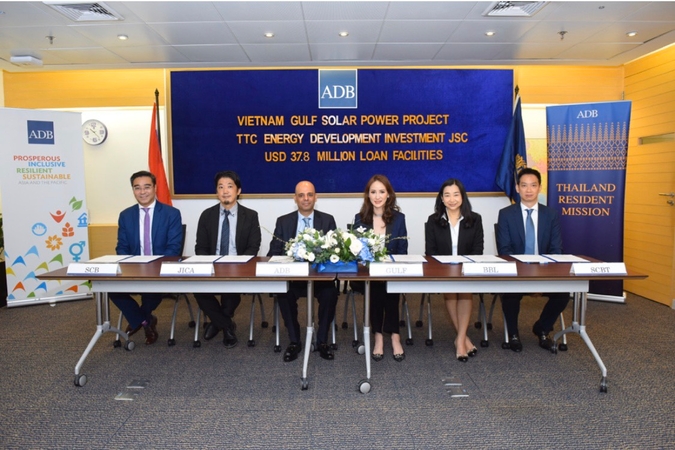
The Asian Development Bank (ADB) signed a US$37.8-million loan deal with TTC Energy Development Investment Joint Stock Company on Wednesday (January 22) to develop and operate a 50-megawatt photovoltaic solar power plant in Vietnam’s Tay Ninh province.

ADB’s assistance for the Gulf Solar Power Project was provided through an innovative financing structure that ensures its bankability. It will help catalyse commercial financing for one of the first such large-scale transactions in the country involving solar power.

The loan is divided into an $11.3-million A loan and a B loan of up to $18.9 million.

An additional $7.6 million was provided by the Leading Asia’s Private Infrastructure Fund, which is supported by the Japan International Cooperation Agency.

The B loan will be funded by Bangkok Bank PCL, Siam Commercial Bank PCL and Standard Chartered Bank (Thai) PCL.

“ADB is excited about this transaction because the project will have a significant impact on the sustainability and security of Vietnam’s energy sector for years to come,” said Jackie B Surtani, director of the Infrastructure Finance Division in ADB’s Private Sector Operations Department.

“Apart from providing much-needed financing to develop solar power in Vietnam, the project will help reduce perceived risks in the country’s renewable energy sector.”

Gulf Energy Development executive director Yupapin Wangviwat said the project fundamentals were “improved significantly as a result of its competitive financing structure and longer tenure led by ADB”.

The government plans to increase the share of renewable energy sources such as hydropower, solar, wind and biomass as a percentage of total installed capacity to 21 per cent by 2030 to meet rapidly growing energy needs and reduce greenhouse gas emissions by up to 25 per cent by 2030.

The project will develop and operate the 50MW solar plant and associated facilities in Tay Ninh northwest of Ho Chi Minh City.

The plant will directly serve the residents and businesses of Ho Chi Minh City and surrounding areas and reduce annual carbon dioxide emissions by 29,760 tonnes by 2020.

TTC, established in 2017, is 90 per cent-owned by GED. GED is a private power generation company and has the largest portfolio of gas-fired power projects in Thailand.

Established in 1966, ADB is owned by 68 members, 49 from the region.

KBank’s KGP makes online transactions a snap #ศาสตร์เกษตรดินปุ๋ย

#ศาสตร์เกษตรดินปุ๋ย : ขอบคุณแหล่งข้อมูล : หนังสือพิมพ์ The Nation

https://www.nationthailand.com/business/30380918?utm_source=category&utm_medium=internal_referral

KBank’s KGP makes online transactions a snap

Jan 22. 2020
KGP managing director Takerng Osirichaivet

KGP managing director Takerng Osirichaivet
By THE NATION

Kasikornbank (KBank) has launched Kasikorn Global Payment Company Limited (KGP) to provide both merchants and online shoppers with the PayDii digital payment system.

The system allows merchants to conduct transactions without having to switch from one application to another. The version for online merchants is now available on Facebook.

KGP chairman Poramate Minsiri said it is a company that KBank has invested in with registered capital of Bt200 million.

The has its own board of directors, with an independent working team and work structure, and plans to extend its reach to other Southeast Asian and partner countries in the future.

PayDii, which is KPG’s first project, can accommodate links with the greatest number of mobile banking applications under acceptable security standards.

According to the Electronic Transactions Development Agency (ETDA), the value of Thailand’s e-commerce market in 2018 reached Bt315 billion and the e-commerce market is expected to grow average of 22 per cent by 2022.

KGP managing director Takerng Osirichaivet said online merchants can directly collect the requested payment by sending buyers a screenshot of the payment amount.

Buyers then tap the “Payment” button on their mobile banking application, or they can make payment by credit or debit card without providing their bank account number to the merchant, since such accounts are already linked with the system.

LINE MAN launches Mart Service for door-to-door grocery delivery #ศาสตร์เกษตรดินปุ๋ย

#ศาสตร์เกษตรดินปุ๋ย : ขอบคุณแหล่งข้อมูล : หนังสือพิมพ์ The Nation

https://www.nationthailand.com/business/30380916?utm_source=category&utm_medium=internal_referral

LINE MAN launches Mart Service for door-to-door grocery delivery

Jan 22. 2020
  Waranan Chuangcham,left, and Jayden Kang.

Waranan Chuangcham,left, and Jayden Kang.
By The Nation

LINE MAN, the leading “daily life assistant” in Thailand, officially launched Mart Service on Wednesday (January 22) – a new service to promote its role as a shopping assistant that delivers your grocery orders to your doorsteps.

It has formed partnerships with Happy Fresh, a leading online grocery delivery service in the region and Naver/LINE Ventures to strengthen its service offerings.

The new service targets LINE MAN’s current users living in condominiums, apartments and small restaurant owners with three core benefits: Caring, Crafted and Controllable.

This is another big step of LINE MAN in 2020 which will solidify its position as the No 1 “daily life assistant” in response to the growth of online grocery service. Users are offered free delivery and special deals from Betagro, Diageo and Thonglor Pet Hospital.

Jayden Kang, Chief Strategy Officer of LINE Thailand and head of LINE MAN said: “In 2020, LINE MAN is further focusing on strengthening its position as the No 1 ‘daily life assistant’. This includes further enhancement of food delivery service and launches of new services in 2020, starting with Mart Service as the sixth of the application. In order to provide grocery-shopping service from leading supermarkets and specialty stores, we partner with Happy Fresh, a leading online grocery shopping service provider with strong network of supermarkets and operation capabilities. Happy Fresh is one of the startups that Naver, a parent company of LINE Corporation, and LINE Ventures, the corporate venture arm of LINE Corporation, invested in to build a strong ecosystem for business and develop stronger services for LINE MAN. We believe  this new service will help furthering the growth of omni-channel of retail supermarkets in Thailand, which is still in its initial stage.”

Waranan Chuangcham, head of Business Development and Marketing of LINE MAN said:”With Mart Service, we intend for it to be an assistant shopper that delivers the products right to your doorsteps. Based on a study of LINE MAN’s current users and online grocery shopping behaviour, we have found a new generation of people living in condominiums and  apartments who work and take care of their family, and small restaurants. So, we focus on providing Mart Service as an assistant for people purchasing grocery for both their home and food shops. The service provides three  core benefits that make it more convenient and worthwhile than ever, especially with free-delivery promotions.

• Caring – Users no need to carry the items themselves. The door-to-door delivery service will be operated by Happy Fresh.

• Crafted – Personal shoppers of Happy Fresh are skillful at selecting and recommending the best items for customers.

• Controllable – Purchasing and planning are made easy, allowing users to control their budget and make it more efficient than ever. Payment can be made with credit cards or cash on delivery. There are also special promotions throughout the year, starting with deals from Betagro, Diageo and Thonglor Pet Hospital. Users can also choose delivery time, allowing them to better plan and manage their daily schedule.

“The online channel of supermarkets makes up only about 2-3 per cent of overall sales. However, it is expected to grow continuously in the future. People are familiar with using delivery service application in daily life and food delivery service also gained a lot of popularity in past few years. Along with the growth of urbanisation rate, we believe that LINE MAN Mart Service can be a middleman to help propel the growth of online supermarket in the near future,” Waranan concluded.

Improvement in December, but 2019 exports dip 2.65% #ศาสตร์เกษตรดินปุ๋ย

#ศาสตร์เกษตรดินปุ๋ย : ขอบคุณแหล่งข้อมูล : หนังสือพิมพ์ The Nation

https://www.nationthailand.com/business/30380932?utm_source=category&utm_medium=internal_referral

Improvement in December, but 2019 exports dip 2.65%

Jan 22. 2020
By THE NATION

Thai exports last year contracted 2.65 per cent year-on-year to US$246.244 billion, Pimchanok Vonkorpon, director-general of Trade Policy and Strategy Office, said on Wednesday (January 22).

Imports last year totalled $236.639 billion, down 4.66 per cent.

Exports dropped 1.28 per cent in December year-on-year to $19.154 billion, representing an improvement from November, which saw a 7.4-per-cent decline.

Pimchanok credited the improvement to the US-China trade war’s lessening impact on Thailand.

While overall exports fell last year, those to the US in December expanded 15.6 per cent, the highest growth in 10 months. The expansion came in computers, rubber products and furniture.

Exports to China in December alone rose 7.3 per cent, the highest in 18 months, although for the whole year they shrank 3.8 per cent. Products performing well were fresh, frozen and dried fruit, vehicles and auto parts, computers and frozen chicken.

Exports to Cambodia, Laos, Myanmar and Vietnam returned to expansion for the first time in eight months, to 1.1 per cent, but contracted 6.3 per cent over the whole year.

Exports to Japan last year dropped 1.5 per cent, to the European Union (15 countries) 6.6 per cent and to other Southeast Asian countries 8.2 per cent.

Exports to India dipped 3.9 per cent, to Hong Kong 6.5 per cent and to South Korea 4.3 per cent.

Exports of farm and agricultural-industrial products dropped 2.4 per cent last year, while those of industrial products declined 1.8 per cent.

Pimchanok said the trend in exports this year is rising in line with the improving global trade sentiment after Washington and Beijing reached agreement on Phase 1 of their trade agreement.

She also noted that the Commerce Ministry would be more aggressive in tapping overseas markets.

If Thailand can export $21.278 billion of goods per month, the year’s total will expand 3 per cent, based on the assumption that crude oil is priced at $65 per barrel and the baht stays between Bt30 and Bt32 against the dollar.

Shanghai reports $553b worth of output #ศาสตร์เกษตรดินปุ๋ย

#ศาสตร์เกษตรดินปุ๋ย : ขอบคุณแหล่งข้อมูล : หนังสือพิมพ์ The Nation

https://www.nationthailand.com/business/30380907?utm_source=category&utm_medium=internal_referral

Shanghai reports $553b worth of output

Jan 22. 2020
A Tesla Model 3 vehicle is seen at a Tesla store in Shanghai. [Photo/Xinhua]

A Tesla Model 3 vehicle is seen at a Tesla store in Shanghai. [Photo/Xinhua]
By China Daily/ANN

The services sector’s contribution to Shanghai’s GDP continued to expand last year, with foreign investment, new economy activities and strategic emerging industries shoring up economic performance that local authorities defined as “progressive amid stabilization”.

The metropolis reported 3.82 trillion yuan ($553 billion) worth of economic output in 2019, up 6 percent year-on-year, the Shanghai Municipal Statistics Bureau said in a news conference on Tuesday.

Among them, the services sector jumped 8.2 percent to add about 2.78 trillion yuan, accounting for 72.7 percent of the city’s GDP. The finance sector surged 11.6 percent year-on-year to 660 billion yuan, which is among the fastest-growing sectors.

The city dispelled global uncertainties to secure a large number of foreign direct investment deals. The number of newly attracted FDI contracts reached 6,800, up 21.5 percent from a year earlier, while contract value jumped 7.1 percent to $50.2 billion.

Investment from the United States’ private sector exhibited strong momentum, with contract value climbing 1.3 times to reach $3.03 billion, whereas the actual use of foreign capital soared 29.6 percent from a year earlier to $603 million, said Tang Huihao, deputy chief of the bureau.

New economic activities such as internet-related services and technology startups were shaping up to be a major force driving economic growth. Online shopping hit 1.3 trillion yuan, up 27 percent year-on-year, whereas web-based transaction in the service sector jumped 26.2 percent, though detailed figures were not disclosed.

“From January to November last year, companies engaged in scientific research and technology services saw their revenue expand 12.4 percent from the same period in the previous year, and that of information software and services rose 10.3 percent,” Tang said.

Market vitality has been continuously strengthened, with the average number of new companies set up hitting 1,476, up 12 percent. Research and development investment is forecast to hit 150 billion yuan, and the average number of patents held by every 10,000 residents was 53.05.

Strategically emerging industries jumped 3.3 percent year-on-year to reach 1.1 trillion yuan, significantly outpacing that of overall industrial output, which recorded an ebb of 0.3 percent in 2019.

According to Tang, leading drivers in that sector include the new energy industry, which surged 17.7 percent, as well as biology-related industries, which expanded 7.3 percent, fueled by foreign pharmaceutical firms.

The per capita disposable income in Shanghai grew by 8.2 percent for urban residents and 9.3 percent for rural residents last year, with the latter recording faster growth than the former for eight consecutive years.

Shanghai’s economy will continue to benefit from new opportunities like an expanded free trade zone, a science and technology bourse, the integration of the Yangtze River Delta region, as well as hosting the China International Import Expo, said Mayor Ying Yong on Monday at the close of the city’s annual legislature meeting.

The city has just passed a regulation that bolsters its goal of constructing a world-class innovation hub through multiple means.

Visa exemptions seen driving rise in illegal stays by Thais, Indonesians #ศาสตร์เกษตรดินปุ๋ย

#ศาสตร์เกษตรดินปุ๋ย : ขอบคุณแหล่งข้อมูล : หนังสือพิมพ์ The Nation

https://www.nationthailand.com/news/30380943?utm_source=category&utm_medium=internal_referral

Visa exemptions seen driving rise in illegal stays by Thais, Indonesians

Jan 23. 2020
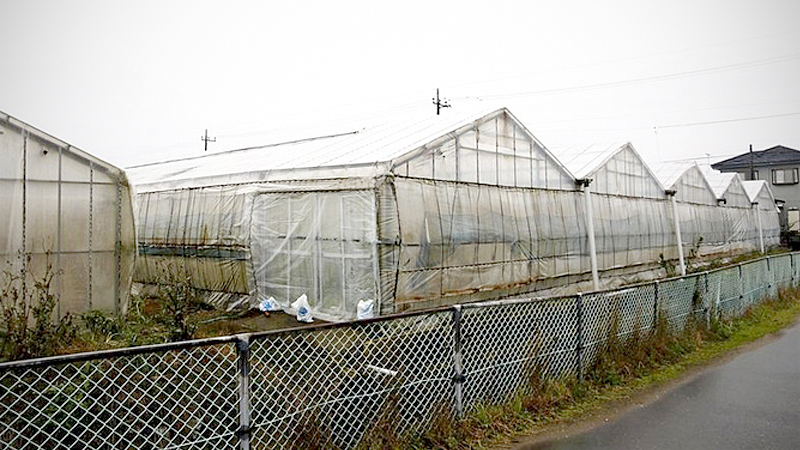
A greenhouse of a green onion farmer in Asahi, Chiba Prefecture, where Thais and others were working illegally, seen in December. (Photo: The Yomiuri Shimbun)

A greenhouse of a green onion farmer in Asahi, Chiba Prefecture, where Thais and others were working illegally, seen in December. (Photo: The Yomiuri Shimbun)
By The Japan News/ANN

The Yomiuri Shimbun – The number of Thais and Indonesians remaining in Japan illegally has doubled since the government exempted visitors from these countries from obtaining visas for short-term stays, The Yomiuri Shimbun has learned.

A total of 9,649 people had overstayed as of July last year. Among them are people who came to Japan under the guise of being tourists, but then began working illegally at a farm near Narita Airport in the Kanto region.

As it is difficult to determine on arrival who is entering the country to work, the number of such cases is expected to increase going forward.

In July 2013, the government exempted Thai citizens with IC passports from obtaining visas for stays of 15 days or less, and in December 2014 provided roughly the same conditions for Indonesians. The government has been expanding the number of countries subject to visa exemptions in the hope of attracting tourists from Asian countries that are experiencing economic growth.

According to the Immigration Services Agency, the number of new arrivals from Thailand on short-term stays grew from 633,471 in 2014 to 1,095,497 in 2018, a 1.72-fold increase.

For Indonesian arrivals, the growth has been 2.56-fold, from 137,725 to 353,455 people.

As the number of people entering the country from both nations has increased, so has the number of people staying in the country illegally. Overstays from Thailand rose from 3,821 as of January 2014 to 7,557 as of July last year, a 1.97-fold increase. Indonesian overstays have increased 3.58-fold, from 583 to 2,092 people.

‘Cheap, convenient’ labor

Farmers in Chiba and Ibaraki prefectures near Narita Airport prize these “fake tourists” who can be used to cheaply resolve labor shortages when necessary. Brokers apparently play a role in making the connections.

“They’re illegal so they’re cheap to use and there are no annoying checks. It’s kind of convenient,” said a 70-year-old farmer who grows green onions in Asahi, Chiba Prefecture.

In November last year, the man was arrested by the Chiba prefectural police for violating the provision against assisting illegal employment in the Immigration Control and Refugee Recognition Law. He was fined ¥500,000 for illegally employing people from Thailand who had entered the country “for tourism.”

The man had been using foreign technical interns for about 20 years until about three years ago. A total of nine Chinese and Filipinos had been working for him, but they became embroiled in a dispute about overtime during the busy season and some suddenly disappeared.

The man also said it was troublesome to prepare documents to submit to the organization that oversaw the trainees, and to deal with the monthly visits by the organization to check on what the trainees were doing.

It was around that time when he was approached by a Thai woman, 49, who was married to a local Japanese. “I can introduce you to people you can use freely,” he quoted her as saying.

She introduced him to three Thais who had entered the country as tourists. He knew it was illegal, but was willing to hire them because “the other farmers around me were doing the same,” he said.

They were cheaper than paying trainees the minimum wage. He paid them ¥850 per hour for 10 hours a day. During the busy season some worked 310 hours a month.

“They were happy to work as much as they could and didn’t complain about the low pay. It was much better than having the trainees,” he said.

In the case involving the prefectural police, a Thai woman who acted as an intermediary was also arrested and fined ¥500,000. According to the police, the woman received about ¥300,000 per person as a “referral fee,” and instructed people to come to Japan as couples to make them appear more like tourists.

The 10,086 illegal workers caught in 2018 included 1,868 Thais and 594 Indonesians. Of these, 75% of the Thais and 52% of the Indonesians were working in Chiba and Ibaraki prefectures.

The Immigration Services Agency believes that brokers with connections to both farmers and people in their home countries are recruiting many interested people from their home countries.

New Coronavirus: Wild animals could be contagion source #ศาสตร์เกษตรดินปุ๋ย

#ศาสตร์เกษตรดินปุ๋ย : ขอบคุณแหล่งข้อมูล : หนังสือพิมพ์ The Nation

https://www.nationthailand.com/news/30380942?utm_source=category&utm_medium=internal_referral

New Coronavirus: Wild animals could be contagion source

Jan 23. 2020
Medical workers at Renmin Hospital of Wuhan University in Wuhan, Central China's Hubei province. [Photo by Tao Jidong/chinadaily.com.cn]

Medical workers at Renmin Hospital of Wuhan University in Wuhan, Central China’s Hubei province. [Photo by Tao Jidong/chinadaily.com.cn]
By Zhang Zhihao
China Daily

The outbreak of viral pneumonia, centered in Wuhan, Hubei province, has a relatively low chance of infecting young children based on current understanding of the pathogen, Gao Fu, director of the Chinese Center for Disease Control and Prevention, said at a news briefing in Beijing on Wednesday.

Wild animals sold at a seafood market in Wuhan could be the source of the outbreak, Gao said, adding that Chinese scientists have cultured, isolated and analyzed the genetic makeup of the microorganism, which is a key step in understanding the new strain of coronavirus and producing a vaccine.

The exact animal carrier is still being investigated even as the virus undergoes adaptations and mutations, he said, adding that, “It is like a cat-and-mouse game. Our understanding of the virus will deepen with further research.”

Gao said that of the seven known coronaviruses that can infect humans, four are less harmful than seasonal influenza. However, SARS(severe acute respiratory syndrome) and MERS (Middle East respiratory syndrome) are exceptions, and researchers are still racing to learn more about the newest strain.

A study published in the journal Science China Life Science suggests the new coronavirus strain is likely to have originated in bats, but there may be intermediate hosts between bats and humans.

Bats are known to carry some of nature’s deadliest viruses, including Nipah, Hendra, Ebola, Marburg and SARS, according to the World Health Organization. These viruses do not harm bats due to the flying mammals’ incredibly strong immune systems. But they can wreak havoc on humans and other animals.

The new viral strain is also genetically more similar to SARS than MERS. Around 88 percent of its gene sequence is identical to a SARS sample collected in 2017 from a cave of Chinese bats that proved to be the source of SARS, the National Genomics Data Center in Beijing reported in a study on Wednesday.

Despite the genetic similarity, the new virus is neither SARS nor MERS, but a close relative that belongs to a different class called the betacoronavirus-a single-stranded RNA virus that can infect wild animals, livestock and humans, the center said.

New coronavirus cases rise to 571 in Chinese mainland #ศาสตร์เกษตรดินปุ๋ย

#ศาสตร์เกษตรดินปุ๋ย : ขอบคุณแหล่งข้อมูล : หนังสือพิมพ์ The Nation

https://www.nationthailand.com/news/30380939?utm_source=category&utm_medium=internal_referral

New coronavirus cases rise to 571 in Chinese mainland

Jan 23. 2020
An employee of Hankou Railway Station in Wuhan, Hubei province, identifies a passenger with fever, on a computer screen showing the person's body temperature as 38.4 C. Travelers with fever at the train station are asked to register and are provided with medical assistance. YUAN ZHENG/FOR CHINA DAILY

An employee of Hankou Railway Station in Wuhan, Hubei province, identifies a passenger with fever, on a computer screen showing the person’s body temperature as 38.4 C. Travelers with fever at the train station are asked to register and are provided with medical assistance. YUAN ZHENG/FOR CHINA DAILY
By WANG XIAODONG
China Daily/ANN

Cases of the new coronavirus pneumonia disease rose to 571 on the Chinese mainland as of Wednesday midnight, including 95 in critical condition, and fatalities rose to 17, China’s National Health Commission said on Thursday morning.

In addition, 393 suspected cases were reported as of Wednesday midnight. All the reported deaths were in Hubei province, the epicenter of the outbreak.

Outside the mainland, Hong Kong, Macao and Taiwan each confirmed one case.

Thailand confirmed three cases, while the United States, Japan and South Korea reported one confirmed case each, the commission said.

Health authorities have traced 5,897 people who had close contact with the patients, and 969 of them have been released from medical observation, with 4,928 still under medical observation.

Earlier on the same day, the government of Wuhan, the epicenter of the outbreaks, announced a suspension of the city’s public transport system, including buses, subway and ferry, and exits of airport and railway stations in the city, for disease control.

Upgraded measures are being taken to contain the outbreak of viral pneumonia within Wuhan, the epicenter of the disease, to prevent it further spreading to other regions.

“We must be steadfast and strong to keep the outbreak within Wuhan. We’ll urge Hubei province and the city of Wuhan to take the strictest measures for prevention and control,” Li Bin, vice-minister of the National Health Commission, said on Wednesday.

Such measures include intensifying supervision of open-air markets, minimizing public activities, taking the strictest measures regarding people with fever and preventing the outbreak from further spreading, he said at a news conference organized by the State Council Information Office.

The Wuhan government required all people in public places such as hotels, restaurants, cinemas, parks, shopping centers and public transportation to wear masks to prevent the spread of the virus, according to an announcement on Wednesday night. The rule took effect immediately.

On Wednesday night, the Hubei provincial government reported 444 confirmed cases of the new coronavirus in Hubei alone as of 8 pm. The death toll climbed from nine at Tuesday midnight to 17.

On Wednesday, the disease further spread across the country. Health authorities in Shanxi, Fujian, Gui­zhou and Hebei provinces, as well as the Ningxia Hui autonomous region, confirmed their first infection cases.

In Macao, the region’s government on Wednesday morning announced its first confirmed case. The patient is a 52-year-old female traveler from Wuhan.

In Hong Kong, health authorities confirmed its first case of coronavirus pneumonia, according to local media. The 39-year-old man lives in Wuhan and arrived in Hong Kong on Tuesday evening. He was detected with fever and a cough at the high-speed railway station in Hong Kong.

“Human-to-human transmission of the disease has appeared, and the virus is likely to mutate. There are risks of the further spread of the disease,” Li said, adding that the ongoing traffic peak with the upcoming Spring Festival has increased the risks of it spreading, which requires a high state of alert.

China’s National Health Commission had received reports of one confirmed case in Japan, one in South Korea and three in Thailand by Tuesday midnight, Li said.

In the United States, the Centers for Disease Control and Prevention confirmed on Tuesday local time the first case in the country — a Washington state resident, according to Politico, a news website.

Gao Fu, head of the Chinese Center for Disease Control and Prevention, said there is no evidence so far showing that a super-spreader, or a highly contagious virus, has emerged.

He added that, based on current evidence, the virus originated from wild animals sold at a seafood market in Wuhan.

Emergency response mechanism activated

In Hubei, the provincial government announced early on Wednesday that it had activated its emergency public health response mechanism to effectively prevent the spread of the virus.

Strict quarantine measures are being taken on all suspected and confirmed cases, people in close contact with the cases and those who have been suspected of viral exposure, it said.

Body temperature testing points will be set up at all airports, railway stations and ports, and all passengers will be subject to testing before boarding. Suspected passengers will be sent to designated medical institutions, according to the announcement.

Local authorities will strictly control the number of outbound activities such as conferences, tours and visits, and large gatherings are banned.

Measures will also be taken to prevent the spread of the virus through public transport, and prevent sources of it from entering schools, according to the announcement.

Wuhan authorities announced on Wednesday that all local tourism agencies, including their branches outside the city, will suspend business and will not organize tours until Feb 8. All tours scheduled to start after Jan 30 will be canceled.

The city government has also called for residents not to leave Wuhan and outsiders not to enter the city if there’s no particular need, to reduce the risk of the virus spreading further.

Zhou Lihua in Wuhan and Xinhua contributed to this story.

Govt in regular touch with WHO, countries and regions over virus #ศาสตร์เกษตรดินปุ๋ย

#ศาสตร์เกษตรดินปุ๋ย : ขอบคุณแหล่งข้อมูล : หนังสือพิมพ์ The Nation

https://www.nationthailand.com/news/30380934?utm_source=category&utm_medium=internal_referral

Govt in regular touch with WHO, countries and regions over virus

Jan 22. 2020
Li Bin, deputy director of the National Health Commission, at a news conference held by the State Council Information Office, Jan 22, 2020. [Photo by Wang Zhuangfei/chinadaily.com.cn]

Li Bin, deputy director of the National Health Commission, at a news conference held by the State Council Information Office, Jan 22, 2020. [Photo by Wang Zhuangfei/chinadaily.com.cn]
By Zou Shuo | chinadaily.com.cn

Chinese mainland has shared the epidemic information of the new pneumonia outbreak with the World Health Organization, relevant countries and Hong Kong, Macao and Taiwan 15 times, the National Health Commission said on Wednesday.

“We have close contact with WHO and shared the genetic sequence of the new coronavirus as soon as possible, Li Bin, deputy director of the commission, said at a news conference at the State Council Information Office.

Chinese health experts have held four meetings with experts from WHO and the country has invited WHO experts to visit Wuhan, Hubei province, to learn about the situation of the epidemic, he said.

The commission also has close communication with health authorities in Thailand, Japan, South Korea and the United States and their embassies in China, Li said.

“We have shared epidemic information with them and helped confirming suspected and diagnosed cases.”

Apart from sharing epidemic information, the commission has invited experts from Hong Kong, Macao and Taiwan to visit medical facilities in Wuhan and offered free diagnostic kits to Hong Kong and Macao, he added.