GH Bank follows lead on loans to clients amid virus outbreak #ศาสตร์เกษตรดินปุ๋ย

#ศาสตร์เกษตรดินปุ๋ย : ขอบคุณแหล่งข้อมูล : หนังสือพิมพ์ The Nation

https://www.nationthailand.com/business/30381313?utm_source=category&utm_medium=internal_referral

GH Bank follows lead on loans to clients amid virus outbreak

Jan 30. 2020
Chatchai Sirilai

Chatchai Sirilai
By THE NATION

Government Housing Bank (GH Bank) has allocated a budget of Bt1 billion for an emergency loan programme in support of existing clients affected by the novel coronavirus crisis.

Under the campaign, it will lower the interest rate on current borrowing to 0.01 per cent for six months. This will lead to lower installment payment as a result of the rate cut.

Eligible borrowers under the new programme must be existing customers of the bank before January 30. They must also prove that their incomes have been affected by the virus outbreak, such as tour guides, hotel staff, or businesses selling products to Chinese tourists.

Loan application period is set from January 30 to March 31 at GH Bank branches nationwide.

The bank wants to provide relief to customers, said president Chatchai Sirilai.

Other banks have also introduced relief measures amid the coronavirus crisis. On January 29 Siam Commercial Bank (SCB) announced its offering of a six-month grace period for repayment of the loan principal amount to existing customers in the hotel business, If the crisis prolongs, SCB said it would introduce further measures.

On the same day Kasikornbank (KBank) announced its offering a 12-month grace period on repayment of the loan principle amount to its existing small and medium-sized enterprises (SMEs) customers in the tourism sector as a measure to ease their financial burden amid impacts from the coronavirus crisis.

The Bank of Thailand (BOT) on Thursday (January 30) urged financial institutions to provide assistance to affected clients.

Israel rushes to capitalize on peace plan as Palestinians express anger #ศาสตร์เกษตรดินปุ๋ย

#ศาสตร์เกษตรดินปุ๋ย : ขอบคุณแหล่งข้อมูล : หนังสือพิมพ์ The Nation

https://www.nationthailand.com/news/30381268?utm_source=category&utm_medium=internal_referral

Israel rushes to capitalize on peace plan as Palestinians express anger

Jan 30. 2020
By The Washington Post · Steve Hendrix, Ruth Eglash

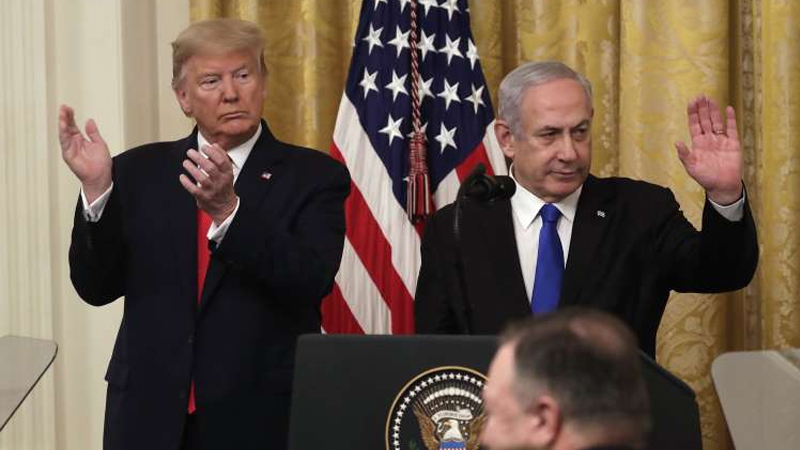
JERUSALEM – Israelis and Palestinians awoke Wednesday with the long-contested ground seeming to shift beneath their feet following the much-awaited reveal of the latest, and most unusual, proposal to resolve their five-decade standoff.

As one side of the dispute rejected a White House plan it condemned as hopelessly biased, the other raced to lock down the territorial prizes the plan offered. This ensured that the proffered deal could have permanent consequences even if, as many analysts predict, it will go nowhere during its self-imposed four-year window.

Even before the parties had finished poring over the map that described a possible Palestinian state on 70 percent of the West Bank, Israeli Prime Minister Benjamin Netanyahu made clear he would immediately take steps to annex the other 30 percent, the location of more than 150 Jewish settlements, along with the Jordan Valley.

But on Wednesday morning, Tourism Minister Yariv Levin, who accompanied Netanyahu to Washington, told an Israeli radio station that because of formal procedures, this process could be delayed.

The dizzying pace of events left all sides scrambling to assess what was changing and what remained of the dogged status quo.

The Palestinian leadership united in declaring the plan a nonstarter – “a thousand no’s,” shouted Palestinian Authority President Mahmoud Abbas – although some neighboring Arab states seemed to allow for a few “maybes.”

Groups of protesters turned out only in parts of the West Bank, the Gaza Strip and in nearby Amman, Jordan. There were scenes of isolated rock-throwing and flaming posters of President Trump and Netanyahu, but no reported injuries. More serious clashes occurred in the West Bank Wednesday, according to Israeli media reports, including three protesters wounded by Israeli security forces near Ramallah.

A general strike was called for Wednesday in Gaza, and at midday Wednesday several, but not all, shops were closed. A group of boys, free from school, burned a tire at a corner in Gaza City.

Muhammad al-Burai, an idled teacher, watched them, lamenting all that the proposal would take away from his beleaguered people.

“The plan tells us that there is no Jerusalem, no return of refugees, no control of borders, no airport or seaport, the settlements have become legitimate, the martyrs and the detainees have become criminals, and all this for $50 billion” in promised investment funding, he said. “Is there a sane person who accepts this?”

Israeli settlers were also sorting through the deal’s particulars, with mixed responses. They stood to achieve a long-cherished dream of having their hilltop towns and cities become normalized Israeli communities – patrolled by police instead of soldiers – but many balked at the price: a four-year freeze on building and the prospect of a Palestinian state.

“That’s a big no,” said David Haivri, a longtime resident of Kfar Tapuach, an Orthodox Jewish settlement of 1,500 people north of Jerusalem. “We are a thriving community, and we need to grow. To ask us to not be alive, even for a short period and certainly for four years, we cannot accept that.”

Some settlement movement leaders, many of whom traveled to Washington with Netanyahu, were similarly dismissive. In the hours after plan’s debut, some expressed surprise that the prime minister they considered a key supporter endorsed the concept of their communities existing as islands surrounded by a sovereign Palestine, even one allowed no army or airport.

But others were prepared to weigh the pros and cons of what they recognized as a high-water mark for their movement, which is condemned by much of the international community as illegal.

“If we would have been told 20 years ago that America would come to recognize the settlements, we would have been considered fools” to believe that, said Oded Revivi, an official on the Yesha Council, a settler umbrella group. “The plan poses challenges that are not simple and will require us to think carefully.”

He cited the plan’s recognition of a Palestinian state with sections of East Jerusalem as its capital as examples.

The path to statehood was the most surprising feature of the plan for many of Israel’s most conservative factions, which otherwise delighted in its favorable tilt their way.

Eugene Kontorovich, a legal expert at the Koholet Policy Forum, a leading right-wing think tank in Jerusalem, said many on the right would probably embrace the trade-off as they realized how many safeguards were built into it. The Palestinians could achieve statehood only after meeting a string of prerequisites, from disarming Hamas to recognizing Israel as a Jewish state.

“Unlike other plans, this one builds in criteria the [Palestinian Authority] would have to meet to show it really wants to be a peaceful neighbor,” Kontorovich said. “And if you fail, statehood is taken off the table.”

But others from the right were adamantly opposed to the idea. Defense Minister Naftali Bennett said the right-wing Yamina party he leads, which Netanyahu will need to form a government if he is successful in the March 2 election, will “under no circumstances recognize a Palestinian state in any format.”

Still, Bennet was enthusiastic at the prospect of a quick annexation of the settlements and the Jordan Valley, a move seemingly greenlighted by the American authors of the plan. U.S. Ambassador to Israel David Friedman told reporters Tuesday that annexation would still allow for a Palestinian state.

“If Israelis apply Israeli law to the settlements and territory allocated to Israel under the plan, a significant minority of the West Bank, then we will recognize Israeli sovereignty” over the annexed areas, Friedman said. “And from the Palestinian perspective, they are still in the game.”

Speaking at a conference Wednesday, Bennett said that Israel could not afford to miss “this historic opportunity” to apply Israeli sovereignty to all Israeli settlements and any other areas outlined in Trump’s plan. He said he had already called for the establishment of a team made up of the Israeli military, various government offices and the civil administration overseeing the West Bank to explore ways to implement the process of annexation.

Netanyahu had said he wants his security cabinet to vote on annexation Sunday, but a minister in his government said Wednesday that the process would require legal review first. And U.S. Ambassador to Israel David Friedman told reporters that the peace deal would require Israel to clear the annexation plan with Washington.

For liberal Israelis, any relief that the concept of a two-state solution might endure – with the unexpected endorsement of a future Palestine by both Trump and Netanyahu – was overshadowed by the restrictions the plan would impose.

“The usage of the word ‘state’ in the context of this plan is beyond cynical,” said Hagai El-Ad, executive director of the Israeli human rights group B’Tselem.”This is not a plan for Palestinian rights nor a state, except for the permanent state of apartheid.”

In the West Bank, anger at the plan only grew among Palestinian leaders after the details became clear. Not only were the terms unfavorable, as officials had predicted for the years they boycotted the White House discussion, but the actual details were nearly identical to demands they had heard from Israelis in the past.

“What I heard President Trump read was verbatim, word-for-word, what I have heard from Netanyahu’s negotiators,” said Saeb Erekat, the longtime chief Palestinian negotiator. “This plan was not written in Washington. It was written in the office of the prime minister of Israel.”

In the West Bank, the deal’s promised torrent of money via a $50 billion investment fund was dismissed as both an empty promise and a lowball offer for limited independence on less land than previous peace deals have offered.

“Fifty billion dollars is an insult to every Palestinian,” said Ibrahim Barham, a software developer from Ramallah who was invited to – and declined to attend – a conference organized in Bahrain by the White House last year to promote West Bank investment as part of the peace plan. “Our land is worth trillions. Jerusalem, to us, is worth all the money on the face of the Earth. This has never been about money.”

Some of the Palestinians’ Arab neighbors in the region, however, were not so quick to reject the Trump plan outright. Jordan and Turkey roundly condemned the proposal, and in Lebanon, the Iranian-allied Hezbollah movement vowed to “topple” what it called the “deal of shame.”

But others were more supportive, notably Egypt and the Arab states of the Persian Gulf that have drifted closer to normalized relations with Israel out of shifting strategic interests and years of peace-process stagnation.

Saudi Arabia’s Foriegn Ministry tweeted a thank you for Trump’s efforts “to develop a comprehensive peace plan between the Palestinian and Israeli sides,” and the United Arab Emirates described it as “a serious initiative that addresses many issues raised over the years.”

Oman, Bahrain and the UAE sent representatives to the White House for the plan’s release.

Infections up as travel rush approaches #ศาสตร์เกษตรดินปุ๋ย

#ศาสตร์เกษตรดินปุ๋ย : ขอบคุณแหล่งข้อมูล : หนังสือพิมพ์ The Nation

https://www.nationthailand.com/news/30381353?utm_source=category&utm_medium=internal_referral

Infections up as travel rush approaches

Jan 31. 2020
Passengers wearing face masks arrive at the Beijing Railway Station in Beijing on Jan 30, 2020. [Photo by Zou Hong/China Daily]

Passengers wearing face masks arrive at the Beijing Railway Station in Beijing on Jan 30, 2020. [Photo by Zou Hong/China Daily]
By China Daily/ANN

Transport authorities say they’re ready to control spread of novel coronavirus.

As the Lunar New Year holiday nears its end, the number of confirmed cases of people infected by a novel coronavirus has continued to rise rapidly on the Chinese mainland. But transportation authorities say they are prepared to cope with the large number of people who are expected to return to the cities.

As of Wednesday, confirmed mainland cases of the coronavirus had risen to 7,711, with 170 deaths, the National Health Commission said on Thursday morning.

On Wednesday, 1,737 new confirmed cases, 38 deaths and 4,148 suspected cases were reported, the commission said.

Of the total infections, 1,370 patients were in serious condition, while 124 had been cleared and released from hospitals.

The authorities have traced a total of 88,693 people who had close contact with infected people, and 2,364 of those were released from medical observation on Wednesday, the commission reported.

Confirmed infections rose to 10 in Hong Kong, seven in Macao and eight in Taiwan, it said.

Hubei province remains the hardest-hit by the outbreak. It had confirmed 4,586 cases of the novel coronavirus as of Wednesday, the provincial health commission said on Thursday morning.

The number of confirmed cases in Hubei increased by 1,032, and the death toll climbed to 162, up by 37, the commission said. By day’s end on Wednesday, 90 patients had been cleared and released from hospitals, while 4,334 were hospitalized, 711 showed serious symptoms and 277 were in critical condition, it said.

In Wuhan, Hubei’s capital, 356 new confirmed cases and 25 new deaths were reported on Wednesday, bringing the number of confirmed infections to 2,261 with 129 fatalities in the city.

The Tibet autonomous region reported one confirmed case of the novel coronavirus on Wednesday, the first in the region, according to local authorities. That means all provincial-level areas in China have now reported at least one case of the novel coronavirus.

Tibet activated its highest public health alert on Wednesday.

With hundreds of millions of migrant workers across the country expected to return to cities at the end of the Spring Festival holiday, road, railway and air transport authorities say they are ready to provide services to people and to prevent the spread of the coronavirus during travel.

Wu Chungeng, a spokesman for the Ministry of Transport, said at a news conference on Thursday that the ministry will take measures to limit the spread of the disease.

Transportation authorities across China will strictly carry out prevention and control measures, including proper ventilation, sterilization of vehicles, equipping body temperature facilities at long-distance bus and ferry stations and establishing quarantine areas in some highway service areas and passenger ships to accommodate passengers suspected of having the coronavirus, he said.

They will also work with health authorities to take quarantine measures as needed and trace patients’ close contacts, he said.

Huang Xin, chief of passenger services at State-owned China Railway, said the company will intensify disease control measures on all trains and in railway stations, including ventilation and sterilization. Passengers will also have to undergo body temperature tests before entering and exiting railway stations, and anyone with a fever will be quarantined.

Zhu Tao, a health official at the Civil Aviation Administration of China, said the authority has maximized air circulation on all the planes and intensified sterilization to reduce the chance of the coronavirus being spread aboard aircraft. In addition, emergency medical equipment including disease prevention and control kits have been provided for all planes.

“We are confident that with these measures we can minimize the spread of the disease through airplanes,” he said. “Meanwhile, we also advise passengers to wear masks whenever taking public transportation, including airplanes, to protect themselves and others.”

WHO declares ‘public health emergency’ over coronavirus #ศาสตร์เกษตรดินปุ๋ย

#ศาสตร์เกษตรดินปุ๋ย : ขอบคุณแหล่งข้อมูล : หนังสือพิมพ์ The Nation

https://www.nationthailand.com/news/30381352?utm_source=category&utm_medium=internal_referral

WHO declares ‘public health emergency’ over coronavirus

Jan 31. 2020
By The Washington Post · Simon Denyer, Paul Schemm, Adam Taylor

The WHO on Thursday declared the China coronavirus outbreak an international public health emergency, marking an escalation in the global response to an outbreak that has sickened more than 8,100 people and killed over 170 in that country, and led to growing spread of the virus through person-to-person transmission in the United States, Germany, Japan and Vietnam.

The designation gives the global health agency the ability to ramp up the responses of governments and organizations around the world as they try to control the outbreak.

In making the announcement in Geneva, WHO chief Tedros Adhanom Ghebreyesus said the decision was made to prevent the further spread of the virus to countries with weak health systems that are “ill-prepared to deal with it.”

“This decision is not a vote of no confidence in China,” he said, emphasizing that the WHO “continues to have confidence in China’s capacity to control the outbreak.”

He praised China for the speed with which it identified the virus, sequenced its genome and shared it with the world, actions he called “impressive and beyond words.” There have been no deaths outside China, he said.

Although the number of cases in other countries is relatively small, he said, the world must “act together to limit further spread.”

The WHO is urging countries to avoid measures that would limit trade and travel to China, he said.

The global health agency is also calling for the world community to support countries with weak health systems, accelerate the development of vaccines, combat the spread of rumors and misinformation, ramp up preparedness and health-care resources to prevent further spread, and share data, knowledge and expertise with the WHO and the rest of the world.

This is the sixth outbreak that the WHO has voted to assign the designation of public health emergency, defined by the group as “an extraordinary event which is determined to constitute a public health risk to other States through the international spread of disease and to potentially require a coordinated international response.”

The five other cases have been:

– The 2009 swine flu epidemic that spread throughout the United States and Mexico.

– The 2014 polio infection, spurred by an “international spread of wild poliovirus” that hit countries including conflict-ridden Pakistan, Cameroon and Syria.

– The 2014 Ebola epidemic in West Africa, which the WHO said “was the largest and most complex Ebola outbreak since the virus was first discovered in 1976.”

– The 2016 Zika virus, which was spread by mosquitoes throughout the Americas and Africa and was particularly dangerous for pregnant women.

– The 2018 Ebola epidemic in North Kivu and Ituri provinces, which was the world’s second-largest Ebola outbreak. The WHO controversially waited until 2019 to declare it a public health emergency.

Experts say a vaccine for the virus is still a long way off. Schools in Beijing have closed indefinitely, and foreigners who have been evacuated from Wuhan, China, the city at the epicenter of the outbreak, are starting to arrive in their home countries or at temporary screening sites.

Chinese officials added more than 1,500 new cases of the coronavirus as countries stepped up their efforts to evacuate their citizens trapped in Wuhan.

About 50 million people in Hubei province have been restricted to their region as authorities try to stem the spread of the virus. Japan has sent a second flight to Wuhan, and a third is planned.

With experts saying a vaccine is not imminent, more international cases of the illness appeared Thursday. Australia, Vietnam and South Korea all announced new coronavirus infections, while India and the Philippines had their first ones.

Earlier Thursday, the United States confirmed a sixth U.S. case of the coronavirus, marking the first time the virus has spread from person to person in the United States.

The sixth U.S. patient is a Chicago resident who was infected after being in close contact with his wife, who had traveled to Wuhan. The Chicago woman was the second confirmed case in the United States. She is doing well, and he is in stable condition; both will remain in a hospital to keep them isolated.

The number of countries with human to human transmission of coronavirus now numbers five: The United States, Germany, Japan, Vietnam and China, which includes the self-governing island of Taiwan.

Illinois has 21 people it is monitoring for possible infection.

The U.S. government is arranging more flights to evacuate Americans trapped in Wuhan.

The extra flights would be laid on beginning on or about Feb. 3 and would have capacity “on a reimbursable basis” for private citizens wishing to leave Wuhan, the State Department said in a message to U.S. citizens in China on Thursday.

Those traveling on the flights would be subject to screening, health observations and monitoring, the department said.

The Centers for Disease Control and Prevention previously planned to funnel all travelers coming to the U.S. from Wuhan to one of five airports to undergo enhanced screening, But officials said Wednesday that they had revised their plan and will now screen incoming passengers at the 20 entry points where they have quarantine stations.

Health officials in Riverside County, California, “issued a quarantine order” Thursday for an individual who was evacuated from Wuhan to the United States this week and attempted to leave March Air Reserve Base, where American evacuees are being temporarily held for observation.

Many countries are curtailing flights to China, with American Airlines suspending several routes scheduled for February and March. American and Unite Airlines, British Airways German carrier Lufthansa, Israel’s El Al, Scandinavian Airlines, Egypt Air, Turkish Airlines also suspended flights, as did some in India and Kazakhstan.

Russia is closing its entire border with China, Prime Minister Mikhail Mishustin announced Thursday. Although no cases of the disease have surfaced in Russia, the country does share a 2,615-mile border with China, one of the world’s longest international borders.

The Czech Republic has suspended the issuance of visas until at least Feb. 16. “The visa centers in China are currently closed until further notice,” said Czech Foreign Minister Tomáš Petříček. “We took this step to prevent the coronavirus from spreading further.” Visas may still be issued “in exceptional and justified cases,” a statement on the Foreign Ministry’s website read.

Cruise passengers are waiting to be let off a Costa Cruises ship near Rome as local authorities test a man and woman who have been quarantined on board for potential coronavirus. About 6,000 people – 5,000 passengers and 1,000 crew members – are on the Costa Smeralda in the port of Civitavecchia, Italy.

Chinese official data now shows 8,149 confirmed coronavirus cases in the country with 171 deaths, according to state media outlets.

The figure includes nine cases in the self-governing island of Taiwan.

The number of confirmed cases Thursday afternoon was an increase of 400 from the morning. The earlier number had already surpassed the number of infections during the 2002-2003 SARS epidemic.

At least 96 cases have been recorded outside of mainland China, and three other countries have reported person-to-person transmission of the virus.

About 200 Americans evacuated from Wuhan landed in California on Wednesday. After evacuating 206 people from the city Wednesday morning, Japan is readying a second charter flight to bring more of its citizens. Three Japanese evacuees were confirmed to be infected with the coronavirus, the Health Ministry said on Thursday.

India and the Philippines reported their first cases on Thursday. South Korea has also reported two new cases, bringing its total to six.

Authorities in Australia’s Victoria State have announced a new case Thursday of the coronavirus in a middle age woman visiting from China’s Hubei Province. The latest case brings the total for Australia to nine – three alone in Victoria State.

South Korea confirmed two new cases of coronavirus infection on Thursday, one of which is believed to be the first case of human-to-human transmission in the country. The latest cases announced by the Korea Centers for Disease Control and Prevention (KCDC) brought up the national tally of infections to six.

A 56-year old man contracted coronavirus after he had come in contact with an infected person in South Korea, according to the KCDC. Another man in his 30s who had returned from Wuhan on Friday has been confirmed to have been infected by the virus.

In Manila, Philippine officials confirmed its first case of the coronavirus. The female patient, 38, came from Wuhan on Jan. 21, and has since been admitted to an unidentified government hospital. She was asymptomatic, showing no fever or other signs of illness and was admitted after reporting a mild cough.

The Philippines has stopped issuing visas upon arrival to Chinese tourists, but President Rodrigo Duterte has expressed reluctance toward a total travel ban. China is one of the Philippines’ top sources of tourists, with over a million recorded visits in 2018.

India reported its first confirmed case of the novel coronavirus, marking the arrival of the illness in the world’s second-most populous country.

The case involves a student at Wuhan University who returned to the southern state of Kerala, according to a statement from India’s Ministry of Health. The student is stable and in isolation at a hospital, the ministry said.

Commerce Secretary Ross says China’s coronavirus ‘will help’ bring jobs back to U.S. #ศาสตร์เกษตรดินปุ๋ย

#ศาสตร์เกษตรดินปุ๋ย : ขอบคุณแหล่งข้อมูล : หนังสือพิมพ์ The Nation

https://www.nationthailand.com/news/30381340?utm_source=category&utm_medium=internal_referral

Commerce Secretary Ross says China’s coronavirus ‘will help’ bring jobs back to U.S.

Jan 31. 2020
By The Washington Post · Rachel Siegel
WASHINGTON – Commerce Secretary Wilbur Ross said the Chinese coronavirus – which has killed 170 in China and infected more than 7,700 people – could “help” to bring jobs to the United States because companies will be moving operations away from impacted areas.

During an appearance Thursday morning on Fox Business, Ross said that he didn’t “want to talk about a victory lap over a very unfortunate, very malignant disease,” and expressed sympathy for the victims. But he said the pneumonia-like virus would be a consideration for American businesses that are scrambling to determine how the outbreak will affect their supply chains. He pointed to the 2003 SARS epidemic, the “African swine virus” and now coronavirus as “another risk factor that people need to take into account.”

“I think it will help to accelerate the return of jobs to North America, some to [the] U.S., probably some to Mexico as well,” Ross said. He then said Apple was “talking about figuring out how to replace some of the Chinese production.” Apple had plans to assemble some phones and computers outside China before the coronavirus outbreak.

“I think there’s a confluence of factors that will make it very, very likely more reshoring to the U.S. and some reshoring to Mexico,” Ross said.

The White House has been pressuring companies in China to move operations to the United States. President Donald Trump recently signed a partial trade deal with China meant to create new incentives for U.S. companies.

But public health experts were quick to criticize Ross’ comments as inaccurate and dangerous, saying such messaging could suppress reports of new infections. Meanwhile, health officials are up against the spread of false information on social media, from conspiracy theories to deceitful claims of magical cures. And Facebook, Google and Twitter are scrambling to crack down on the spread of dangerous health disinformation.

Georges C. Benjamin, executive director of the American Public Health Association, said that American companies would have more reason to be concerned about gun violence or measles outbreaks stateside “in terms of actual risk to their health than coronavirus.”

“You have somebody of that stature who makes an irresponsible comment, speaking on matters in which he has no expertise, and there’s no scientific or historical evidence to what he’s saying,” Benjamin said of Ross.

“With this kind of new disease, you want as much openness as you can,” Benjamin added. “If you suppress that openness, which this will do, then you absolutely make it worse and more people will get sick, and more people will die.”

Sandro Galea, dean of the School of Public Health at Boston University, said infectious diseases “threaten all of us” and that there’s never a positive consequence from an outbreak. Ross’s comments “rest on a misunderstanding of how infectious diseases are transmitted,” Galea said.

There’s a “responsibility that public officials have to communicate in an informed manner that educates the public and moves us towards an understanding of what actually generates help,” Galea said. “A comment like this achieves the exact opposite purpose.”

White House officials so far have been careful in how they’ve talked about the economic implications of the health scare in China, and Trump has gone out of his way to praise Chinese leader Xi Jinping.

Still, Ross has a history of breaking with White House’s messaging. During the government shutdown last year, when some federal workers were resorting to food banks, Ross suggested they consider taking out loans from credit unions to pay their bills. Ross is a billionaire and longtime friend of Trump’s.

Total infections in mainland China have surpassed those of the SARS outbreak, and roughly 100 cases have been recorded in other parts of the world. Global businesses – from Starbucks to airlines to automakers – are increasingly scaling back or suspending their operations nationwide and, with an official lockdown affecting more than 50 million people, consumer spending has plunged.

Global markets fell sharply Thursday. China’s markets remain closed for the Lunar New Year holiday, but Hong Kong’s Hang Seng Index slumped more than 2.5%, and Japan’s Nikkei declined 1.7%. The Dow Jones industrial average fell nearly 150 points at the opening bell, but clawed back more than 100 points.

White House economic adviser Larry Kudlow told Fox Business on Thursday that the White House is not expecting coronavirus to deal a blow to the U.S. economy.

“We see no material impact on the economy,” Kudlow said. “The pandemic is, of course, in China, not the United States.”

Many factories have extended their customary closures beyond the end of the Lunar New Year celebration through at least the second week of February. Some of Apple’s Chinese suppliers are slated to stay closed until Feb. 10. And executives are waiting to see whether the virus sparks broader economic consequences, both within and beyond China, the longer the public health crisis persists.

Federal Reserve Board Chair Jerome Powell on Tuesday said he was “not going to speculate about it at this point.”

“The situation is really in its early stages. It’s very uncertain about how far it will spread and what the macroeconomic effects will be,” Powell told reporters.

U.S. confirms sixth coronavirus case; China has more than 8,100, marking the first time the virus has spread from person to person in the United States #ศาสตร์เกษตรดินปุ๋ย

#ศาสตร์เกษตรดินปุ๋ย : ขอบคุณแหล่งข้อมูล : หนังสือพิมพ์ The Nation

https://www.nationthailand.com/news/30381339?utm_source=category&utm_medium=internal_referral

U.S. confirms sixth coronavirus case; China has more than 8,100, marking the first time the virus has spread from person to person in the United States

Jan 31. 2020
By The Washington Post · Simon Denyer, Paul Schemm 
The United States confirmed a sixth U.S. case of the Wuhan coronavirus Thursday, marking the first time the virus has spread from person to person in the United States.

Chinese officials added more than 1,500 new cases of the coronavirus as countries stepped up their efforts to evacuate their citizens trapped in Wuhan, the epicenter of the growing outbreak.

About 50 million people in Hubei province have been restricted to their region as authorities try to stem the spread of the virus. Japan has sent a second flight to Wuhan, and a third is planned.

With experts saying a vaccine is not imminent, more international cases of the illness appeared Thursday. Australia, Vietnam and South Korea all announced new coronavirus infections, while India and the Philippines had their first ones.

The World Health Organization will reconvene its emergency committee Thursday to determine whether the coronavirus outbreak amounts to a public health emergency of international concern, as the total number of people infected in mainland China surpassed those infected with SARS during the 2002-2003 epidemic.

The sixth U.S. patient is a Chicago resident who was infected after being in close contact with his wife, who had traveled to Wuhan. The Chicago woman was the second confirmed case in the United States.

The number of countries with human to human transmission of coronavirus now numbers five: The United States, Germany, Japan, Vietnam and China, which includes the self-governing island of Taiwan.

Illinois has 21 people it is monitoring for possible infection.

The U.S. government is arranging more flights to evacuate Americans trapped in the Chinese city at the epicenter of the deadly coronavirus outbreak.

The extra flights would be laid on beginning on or about Feb. 3 and would have capacity “on a reimbursable basis” for private citizens wishing to leave Wuhan, the State Department said in a message to U.S. citizens in China on Thursday.

Those traveling on the flights would be subject to screening, health observations and monitoring, the department said.

The development comes after some Americans trapped in Wuhan have expressed frustration about inadequate communication from U.S. diplomatic officials amid the health crisis. President Donald Trump attended a meeting of a White House Coronavirus Task Force on Wednesday, according a statement by the press secretary and photographs shared by Health Secretary Alex Azar. The White House said that members of the task force had been meeting every day since Monday and that Trump had chaired the Wednesday meeting.

The World Health Organization will reconvene its emergency committee Thursday to determine whether the coronavirus outbreak amounts to a public health emergency of international concern, as the total number of people infected in mainland China surpassed those infected with SARS during the 2002-2003 epidemic.

Experts say a vaccine for the virus is still a long way off. Schools in Beijing have closed indefinitely, and foreigners who have been evacuated from Wuhan, the city at the epicenter of the outbreak, are starting to arrive in their home countries or at temporary screening sites, including via charter flights for Japanese and U.S. citizens.

Many countries are curtailing flights to China, with American Airlines suspending several routes scheduled for February and March. American and Unite Airlines, British Airways German carrier Lufthansa, Israel’s El Al, Scandinavian Airlines, Egypt Air, Turkish Airlines also suspended flights, as did some in India and Kazakhstan.

Russia is closing its entire border with China, Prime Minister Mikhail Mishustin announced Thursday. Although no cases of the disease have surfaced in Russia, the country does share a 2,615-mile border with China, one of the world’s longest international borders.

The Czech has suspended the issuance of visas until at least Feb. 16. “The visa centers in China are currently closed until further notice,” said Czech Foreign Minister Tomáš Petříček. “We took this step to prevent the coronavirus from spreading further.” Visas may still be issued “in exceptional and justified cases,” a statement on the Foreign Ministry’s website read.

Cruise passengers are waiting to be let off a Costa Cruises ship near Rome as local authorities test a man and woman who have been quarantined on board for potential coronavirus. About 6,000 people – 5,000 passengers and 1,000 crew members – are on the Costa Smeralda in the port of Civitavecchia, Italy.

Chinese official data now shows 8,149 confirmed coronavirus cases in the country with 171 deaths, according to state media outlets.

The figure includes nine cases in the self-governing island of Taiwan.

The number of confirmed cases Thursday afternoon was an increase of 400 from the morning. The earlier number had already surpassed the number of infections during the 2002-2003 SARS epidemic.

At least 96 cases have been recorded outside of mainland China, and three other countries have reported person-to-person transmission of the virus.

About 200 Americans evacuated from Wuhan landed in California on Wednesday. After evacuating 206 people from the virus epicenter Wednesday morning, Japan is readying a second charter flight to bring more of its citizens. Three Japanese evacuees were confirmed to be infected with the coronavirus, the Health Ministry said on Thursday.

India and the Philippines reported their first cases on Thursday. South Korea has also reported two new cases, bringing its total to six, while Australia announced a new one, bringing it up to eight.

As shops reopen in Hong Kong Thursday after the Lunar New Year break, thousands spent their mornings in line at pharmacies, hoping to get their hands on masks and other supplies in extremely short supply. Local news outlets showed snaking lines in neighborhoods all over the city. Most pharmacies only had small numbers of masks, others had none at all, and were forced to turn away people who had been waiting for hours.

Authorities in Australia’s Victoria State have announced a new case Thursday of the coronavirus in a middle age woman visiting from China’s Hubei Province. The latest case brings the total for Australia to nine – three alone in Victoria State.

South Korea confirmed two new cases of coronavirus infection on Thursday, one of which is believed to be the first case of human-to-human transmission in the country. The latest cases announced by the Korea Centers for Disease Control and Prevention (KCDC) brought up the national tally of infections to six.

A 56-year old man contracted coronavirus after he had come in contact with an infected person in South Korea, according to the KCDC. Another man in his 30s who had returned from Wuhan on Friday has been confirmed to have been infected by the virus.

In Manila, Philippine officials confirmed its first case of the coronavirus. The female patient, 38, came from Wuhan, China on Jan. 21, and has since been admitted to an unidentified government hospital. She was asymptomatic, showing no fever or other signs of illness and was admitted after reporting a mild cough.

The Philippines has stopped issuing visas upon arrival to Chinese tourists, but President Rodrigo Duterte has expressed reluctance toward a total travel ban. China is one of the Philippines’ top sources of tourists, with over a million recorded visits in 2018.

India reported its first confirmed case of the novel coronavirus, marking the arrival of the illness in the world’s second-most populous country.

The case involves a student at Wuhan University who returned to the southern state of Kerala, according to a statement from India’s Ministry of Health. The student is stable and in isolation at a hospital, the ministry said.
300 million chickens at ‘edge of death’ on Hubei lockdown #ศาสตร์เกษตรดินปุ๋ย

#ศาสตร์เกษตรดินปุ๋ย : ขอบคุณแหล่งข้อมูล : หนังสือพิมพ์ The Nation

https://www.nationthailand.com/news/30381336?utm_source=category&utm_medium=internal_referral

300 million chickens at ‘edge of death’ on Hubei lockdown

Jan 31. 2020
By Syndication Washington Post, Bloomberg · Alfred Cang 
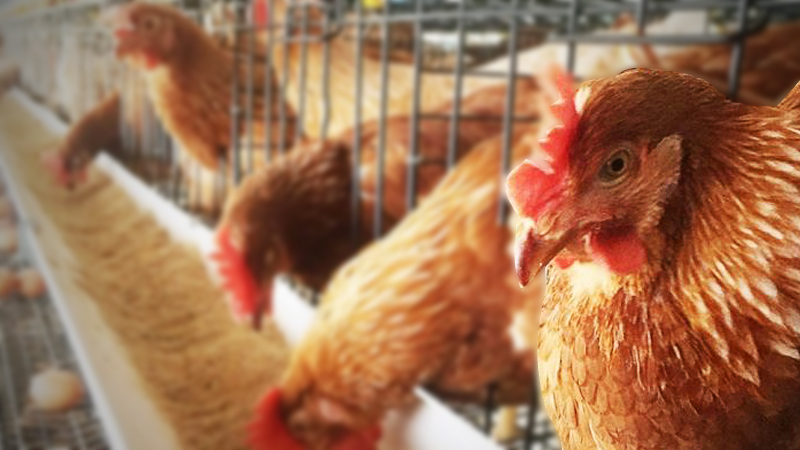
The lockdown in China’s Hubei province is pushing its flock of more than 300 million chickens to the “edge of death,” according to the region’s poultry association.

Halting transport in and out of Hubei has “basically paralyzed” shipments of animal feed supplies and the raw materials needed to make them, the local poultry association said in letters, seen by Bloomberg, asking state producers to deliver supplies urgently.

Most farms in the province will likely run out of feed by the end of the week, said a separate letter from the provincial agricultural department seen by Bloomberg. Hubei consumes about 1,800 tons of corn and 1,200 tons of soymeal a day as animal feed, and may see a 600,000-ton deficit of these products by the end of next month, the letters said.

Calls to the offices of Hubei’s agriculture department and poultry association went unanswered. The China Animal Agriculture Association called on the country’s feed makers to supply 18,000 tons of corn and 12,000 tons of soymeal to Hubei immediately, according to a website statement Thursday.

Industries from carmakers to retailers have been hit by the spread of the novel coronavirus in China as the death toll rises and authorities globally tighten travel restrictions and movement of people to contain the epidemic. Commodities markets have been especially hit hard on fears that demand from China, the world’s top producer and user, will weaken and hurt consumption of everything from crude to soybeans.

Egg futures on China’s Dalian Commodity Exchange are set to resume trading on Feb. 3 after Beijing extended the Lunar New Year break and delayed the opening of the financial markets. Hubei province is the country’s 6th-biggest poultry producer and accounts for 5% of China’s annual egg output.

Fed proposes weakening ‘Volcker rule,’ key regulation enacted after financial crisis #ศาสตร์เกษตรดินปุ๋ย

#ศาสตร์เกษตรดินปุ๋ย : ขอบคุณแหล่งข้อมูล : หนังสือพิมพ์ The Nation

https://www.nationthailand.com/news/30381328?utm_source=category&utm_medium=internal_referral

Fed proposes weakening ‘Volcker rule,’ key regulation enacted after financial crisis

Jan 31. 2020
By The Washington Post · Renae Merle 
WASHINGTON – Federal regulators on Thursday proposed weakening key post-financial crisis restrictions on risky trading, handing Wall Street another victory in rolling back tough industry regulations.

The proposed changes would lift restrictions on big banks, such as Goldman Sachs and JPMorgan Chase, investing in venture capital and other types of funds.

The effort comes a decade after risky trading was blamed for contributing to the near collapse of the U.S. financial sector and is part of a sweeping industry deregulation under the Trump administration that has helped boost banks to record profits.

The most recent proposal addresses a key part of the “Volcker Rule” – one of the complex regulations to come out of 2010′s financial reform law, the Dodd Frank Act. Regulators spent years crafting hundreds of pages of rules aimed at stopping taxpayer-insured banks from taking on the same type of risks as hedge funds.

Restricting risky trading under the rule, which was named for Paul Volcker, a former chairman of the Federal Reserve, has made the financial system safer, supporters of the rule say. But the industry has called it too cumbersome and time-consuming and spent years calling for changes.

Regulators weakened a section of the rule last year, simplifying the process for determining which types of trading are permitted and which aren’t. This year, they are proposing to go even further. The proposal would eliminate a 3 percent cap on ownership of a venture capital fund. It would also allow them to invest in debt-based funds among other changes.

The objective, said Randal Quarles, vice chair of the Federal Reserve, is to simplify “the Volcker rule in light of our experience with the rule over six years of implementation.”

Greg Baer, president of the Bank Policy Institute, an industry lobbying group, said the proposal is “all gain and no pain.” It will “allow banks to get back to some important traditional commercial banking and asset management activities that the current rule prohibits, helping businesses grow and consumers build savings,” he said in a statement.

Federal Reserve Gov. Lael Brainard said in a statement she agreed with some of the proposed changes. But, she said lifting the restrictions on investing in venture capital “will weaken core protections in the Volcker rule and enable banking firms again to engage in high-risk activities.”

Some critics said the proposed changes would allow Wall Street to return to the type of risky behavior that contributed to the global financial crisis. “The Volcker Rule ban is now being turned into Swiss cheese, full of expansive loopholes that Wall Street will exploit,” said Dennis M. Kelleher, chief executive of Better Markets.

The public has until April to comment on the proposal. In addition to the Federal Reserve, the changes are subject to approval by four other regulators: the Securities and Exchange Commission, the Office of the Comptroller of the Currency, the Federal Deposit Insurance Corp. and the Commodity Futures Trading Commission.

The proposal will help “sharpen the focus of the Volcker Rule on those activities that presented risk to the federal banking system,” Comptroller of the Currency Joseph Otting said. “We are helping banks serve their customers more effectively and act as the engines of economic opportunity they should.”

Fear in the age of coronavirus: Chinese no longer welcome #ศาสตร์เกษตรดินปุ๋ย

#ศาสตร์เกษตรดินปุ๋ย : ขอบคุณแหล่งข้อมูล : หนังสือพิมพ์ The Nation

https://www.nationthailand.com/news/30381325?utm_source=category&utm_medium=internal_referral

Fear in the age of coronavirus: Chinese no longer welcome

Jan 31. 2020
Tourists wearing face masks walk along a shopping street leading to the Sensoji temple in the Asakusa district of Tokyo on Jan. 28, 2020. MUST CREDIT: Bloomberg photo by Akio Kon.

Tourists wearing face masks walk along a shopping street leading to the Sensoji temple in the Asakusa district of Tokyo on Jan. 28, 2020. MUST CREDIT: Bloomberg photo by Akio Kon.
By Syndication Washington Post, Bloomberg · Eric Pfanner · WORLD, ASIA-PACIFIC 

Airlines halt flights from China. Schools in Europe uninvite exchange students. Restaurants in South Korea turn away Chinese customers.

As a deadly virus spreads beyond China, governments, businesses and educational institutions are struggling to find the right response. Safeguarding public health is a priority. How to do that without stigmatizing the entire population of the country where the outbreak began — and where nearly a fifth of all humans reside — is the challenge.

With the death toll reaching 170 and the roster of cases climbing above 7,700, worries are growing. Many global companies with operations in China have asked workers to stay home. Airlines are curtailing flights to the nation. Several countries have begun evacuating citizens from the most stricken zone around the city of Wuhan.

Though the vast majority of cases involve people from the central Chinese metropolis or nearby cities, or those who have been in contact with them, people of Asian appearance around the world say they’ve been subject to increased wariness since the disease began spreading. In some cases, baser emotions have come to the fore.

In South Korea, signs have begun popping up on restaurant windows saying, “no Chinese allowed.” A Korean casino catering to foreign visitors said it’s no longer accepting groups of tourists from China. More than half a million people signed a petition, submitted to the government, calling for a ban on visitors from the nearby country of 1.4 billion.

A Chinese woman visiting the Japanese city of Ito — on a peninsula south of Tokyo — said that a server at a restaurant shouted “Chinese! Out!” at her, according to a recording shared on a Weibo account.

The recording, which included a subsequent phone call to the unnamed eatery, was shared by a reporter from Hong Kong-based Phoenix TV.

A woman who answered the phone at the restaurant said it was refusing customers from China and Southeast Asia because the owner was worried about the coronavirus, according to the recording. “If our owner contracts the virus and dies, whose responsibility is it then?” she said.

Health concerns aside, the reaction in South Korea and Japan to the virus reflects longstanding friction with China, as well as resentment over its growing influence in the region. That’s even as an influx of visitors from China has boosted neighboring economies, including South Korea, where tourists surged by a quarter to more than 5.5 million through November from the previous year.

Signs of insensitivity aren’t limited to Asia. French regional newspaper Courrier Picard sparked outrage with its headline “Yellow Alert” on a front-page story about the coronavirus. The paper apologized to readers who took to Twitter to condemn the allusion to “Yellow Peril,” a xenophobic term referring to the peoples of East Asia that dates to the 19th century.

In Denmark, the Chinese Embassy called on the country’s Jyllands-Posten newspaper to apologize for an editorial cartoon that depicts China’s flag with virus symbols instead of stars on a red background.

“We feel angry and we feel sad because it’s a kind of insult to our people and to our flag,” John Liu, Secretary General at the Chinese Chamber of Commerce in Denmark, said in a television interview.

The paper declined to apologize, citing Denmark’s tradition of freedom of speech.

In Australia, the Chinese women’s soccer team and its support staff have been placed under quarantine in a Brisbane hotel after arriving in the country for an Olympic qualifying tournament, according to the Queensland health minister.

Those of Chinese descent, but not from China, have also been met with harsh reactions. In Sri Lanka, a group of tourists from Singapore — a Southeast Asian country where the majority of people are of Chinese descent — were barred from climbing local attraction Ella Rock because of their appearance, according to Tucker Chang, 66, one of the tourists. No one in the group had a history of recent travel to China.

In France, the ministry of foreign affairs advised schools and universities to postpone student exchanges with China. At least one high school in Paris withdrew invitations to a group of students set to arrive this week.

In Canada, parents in communities north of Toronto started a petition urging schools to force students who recently returned from China to stay home for at least 17 days to avoid any chance of spreading the disease. The petition has garnered almost 10,000 signatures in the area, which has large ethnic-Chinese and Asian populations.

In response, York school board chair Juanita Nathan and education director Louise Sirisko have written to parents advising them that such requests run the risk of “demonstrating bias and racism,” even when made in the name of safety.

“What we’re really trying to get at is to [make sure] this situation is not giving rise to any inadvertent racism,” Nathan told CBC Radio’s Metro Morning. “I think the parents may be overly cautious and very anxious.”

Asians have taken to social media to register their hurt and outrage. Over the past two days, the hashtag #jenesuispasunvirus — “I am not a virus” in French — trended on Twitter as thousands of ethnically Asian internet users spoke out against the surge in discrimination.

France says its poultry industry will stop shredding male chicks alive by 2022 #ศาสตร์เกษตรดินปุ๋ย

#ศาสตร์เกษตรดินปุ๋ย : ขอบคุณแหล่งข้อมูล : หนังสือพิมพ์ The Nation

https://www.nationthailand.com/news/30381300?utm_source=category&utm_medium=internal_referral

France says its poultry industry will stop shredding male chicks alive by 2022

Jan 30. 2020
By The Washington Post · Michael Brice-Saddler · WORLD, EUROPE, ANIMALS

France on Tuesday promised to outlaw the grisly practice of grinding up male chicks as soon as they’ve hatched, becoming the latest country to take a stand against an industry-wide procedure known as culling.

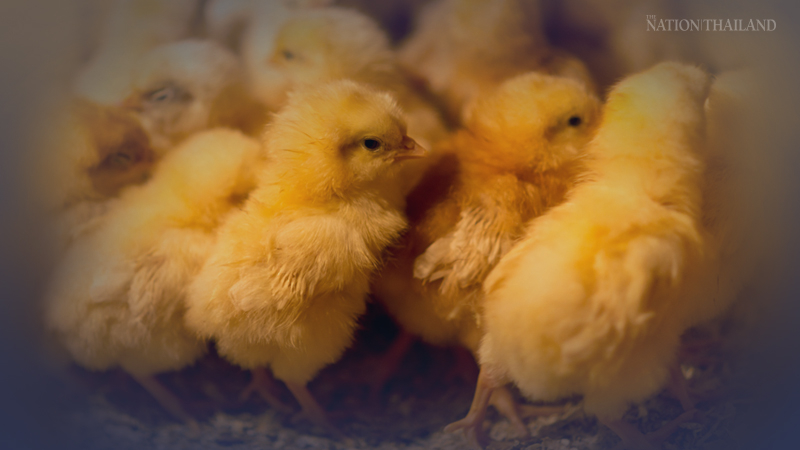
Male chicks, which can’t grow up to lay eggs and aren’t bred to be efficient meat producers, are considered useless for industrial farmers. With no practical reason to keep them alive, billions of male chicks born at hatcheries each year are tossed into massive blenders – or gassed, or suffocated, typically while they’re still conscious – distressing animal welfare groups that have pushed for more humane solutions.

For poultry farmers in France, those solutions will need to be in place by the end of next year. Agriculture Minister Didier Guillaume announced Tuesday in Paris that “from the end of 2021, nothing will be like it was before.” In the same announcement, Guillaume also said France would ban the practice of castrating piglets without an anesthetic.

“We want to move forward, there’s no going back. The government is committed to it,” Guillaume said at a news conference, according to CNN. “The aim is to oblige firms to do this by the end of 2021. We need to find a method that works on a large scale.”

In 2015, Germany became the first country to ban male chick culling, vowing to do so by the end of 2017, though that process has been stymied in the country’s court system. Egg manufacturers in the United States made a similar pledge in 2016 when United Egg Producers – the industry group that represents hatcheries that produce 95 percent of all eggs in the United States – announced that it would end chick culling by 2020, or as soon as it was “economically feasible” and an alternative was “commercially available.”

Technology and limitations of scale, however, have inhibited progress on that front.

One of the methods in consideration is called in-ovo sexing, which determines the gender of a future chick inside a fertilized egg before it hatches, allowing hatcheries to sort the eggs during incubation. With this method, the eggs containing males would never hatch, preventing the demise of about 3.2 billion male chicks across the globe each year. A number of other techniques that could determine the gender of an egg before it hatches, known as “egg sexing technologies,” are also in consideration, according to the Humane League, the animal advocacy group that negotiated the 2016 agreement.

United Egg Producers President Chad Gregory said in a statement Wednesday that his organization remains committed to adopting new technologies aimed to stymie culling, a goal that he called both “a priority and the right thing to do.”

But, he added, “a workable, scalable, solution is not yet available.”

“Identifying gender in-ovo is scientifically complex and a technologically challenging issue, with millions of dollars already spent by stakeholders to develop a solution,” Gregory said. “We are hopeful a breakthrough is on the horizon.”

David Coman-Hidy, president of the Humane League, said in a statement that while work remains to be done in eliminating culling, he remains hopeful.

“We’re optimistic about the progress that’s been made with the new, competing technologies being developed to end this cruel practice,” Coman-Hidy wrote. “We’re confident that these new methods will be implemented soon in order to spare the lives of the estimated 300 million male chicks that are killed every year in the U.S. alone.”

Finding an alternative to culling could be financially beneficial for egg producers and egg-using companies, given the labor and other costs involved in raising male chicks only to kill them. The desire for change has been a welcome development for animal rights groups, which in recent years have pressured hundreds of U.S. and international companies to use cage-free eggs. In a Wednesday statement, PETA, or People for the Ethical Treatment of Animals, lauded France’s commitment to ban to culling but urged people to stop eating eggs altogether.

“With this ban, male piglets will no longer be painfully castrated without anesthetic and millions of male chicks will be spared the horrors of being ground up alive in mechanical macerators because they can’t lay eggs and are therefore deemed ‘unprofitable’ – ending one of the egg industry’s many cruel practices,” said Sofia Chauvet, PETA’s director of international programs.