Food association optimistic for 2-5% export hike in 2020 #ศาสตร์เกษตรดินปุ๋ย

#ศาสตร์เกษตรดินปุ๋ย : ขอบคุณแหล่งข้อมูล : หนังสือพิมพ์ The Nation

https://www.nationthailand.com/business/30380655?utm_source=category&utm_medium=internal_referral

Food association optimistic for 2-5% export hike in 2020

Jan 16. 2020
By THE NATION

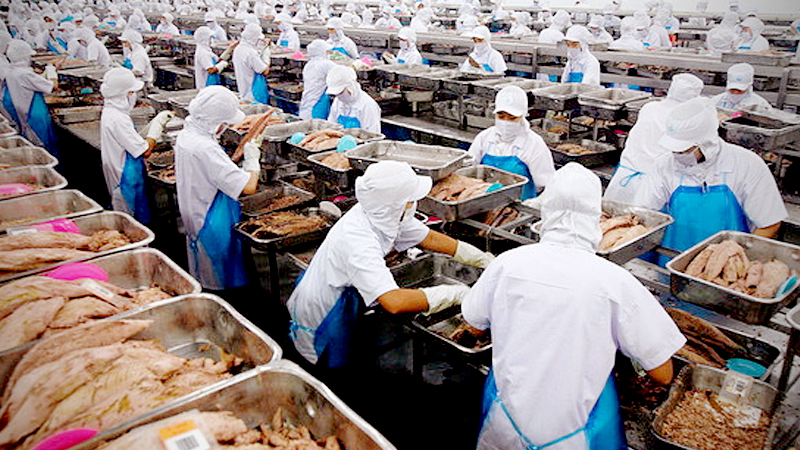
Exports of raw foods declined by 2 per cent in 2019 while those of processed foods increased by the same amount, resulting in a 1.3-per-cent drop for the overall food industry, according to Wisit Limleucha, president of the Instant Food Manufacturers Association.

“This decrease is the lowest in four years and the main factor was the baht’s appreciation, which raised production costs,” he said this week.

But this year could see food exports grow by 2-5 per cent, Wisit speculated, with processed foods in particular benefiting from more positivity in the global market as the United States and China negotiate the second phase of their trade agreement.

“The raw foods sector is less likely to grow due to the drought, which could limit domestic production,” he said.

“Chicken is the most promising product this year since Thailand is free of the bird flu epidemic affecting some of our competitors.

“Meanwhile the spread of African swine fever in China last year has driven up demand there for alternatives to pork.”

The Thai food industry is valued at Bt3 trillion per annum, with a third of that generated by exports, Wisit noted.

“There is still room for the food industry to grow, especially on the domestic front,” he said. “Thailand has 70 million consumers domestically and more than 40 million foreign tourists a year, so the total is over 100 million.”

Bangkok MP Attawit resigns from Democrat Party #ศาสตร์เกษตรดินปุ๋ย

#ศาสตร์เกษตรดินปุ๋ย : ขอบคุณแหล่งข้อมูล : หนังสือพิมพ์ The Nation

https://www.nationthailand.com/news/30380647?utm_source=category&utm_medium=internal_referral

Bangkok MP Attawit resigns from Democrat Party

Jan 16. 2020
By THE NATION

The Democrat Party’s Bangkok MP, Attawit Suwanpakdee, on Thursday (January 16) resigned from the party.

Attawit posted on his Facebok page that he had submitted his resignation from the party on Thursday.

Another Democrat stalwart, former finance minister Korn Chatikavanij, had ended his 15-year association with the party on Wednesday.

“I would like to thank the party and the public for supporting me all these years,” he said. “It is a hard decision to leave this longstanding party with a strong foundation of political ideology.”

Attawit further added that he wished to see Thai politics become more clear and concise, ready to adapt to changes in the modern world. “I want to see a political startup that dares to break through the old-fashioned administration style and comprises of people from all occupations working together to drive the nation forward.

“I have discussed with Korn and agreed that it is time for us to start the change in the political arena, and would like to invite everyone who believes in the same goal to join us,” he added.

Attawit worked closely with Korn in the party’s economic team.

He joined the Democrat Party in 2008 and won the national election from Bangkok’s Constituency 4 for member of Parliament in the same year.

Many have speculated that Korn and Attawit might form a new political party after leaving the Democrats.

HK Chief Executive: ‘One country, two systems’ can continue beyond 2047 #ศาสตร์เกษตรดินปุ๋ย

#ศาสตร์เกษตรดินปุ๋ย : ขอบคุณแหล่งข้อมูล : หนังสือพิมพ์ The Nation

https://www.nationthailand.com/news/30380693?utm_source=category&utm_medium=internal_referral

HK Chief Executive: ‘One country, two systems’ can continue beyond 2047

Jan 17. 2020
Hong Kong Chief Executive Carrie Lam Cheng Yuet-ngor speaks during a question and answer session at the Legislative Council, Hong Kong, Jan 16, 2020. (CALVIN NG/CHINA DAILY)

Hong Kong Chief Executive Carrie Lam Cheng Yuet-ngor speaks during a question and answer session at the Legislative Council, Hong Kong, Jan 16, 2020. (CALVIN NG/CHINA DAILY)
By China Daily/ANN

HONG KONG – Hong Kong Chief Executive Carrie Lam Cheng Yuet-ngor said she believed the “one country, two systems” principle will continue beyond 2047, as long as the special administrative region can uphold and fully implement the principle.

Lam, in her first appearance in the city’s Legislative Council this year, said as long as the SAR strives to comprehensively implement the “one country, two systems” principle for the benefit of Hong Kong people, there will be sufficient reasons to believe that the institutional arrangement will go far, without the need for change.

She called on people to cherish the principle, stressing that the SAR should safeguard the foundation of “one country” and respect the differences of “two systems”.

Lam made the remarks in response to comments of legislator Ann Chiang Lai-wan, who said that many young people who took to streets in the last seven months worried that the “one country, two systems” will be replaced by “one system” after 2047.

Article 5 of the Basic Law stipulates that the capitalist system and way of life in Hong Kong shall remain unchanged for 50 years from 1997.

Lam said that many young people in Hong Kong were born after the return of sovereignty to China in 1997. The “one country, two systems” principle has ensured that these young people could be educated and find employment in a stable and prosperous city, Lam said.

Lam urged the city’s youngsters, which have been at the forefront of the often-violent protests stemming from the extradition bill incident, to not violate the principle because of “temporary misunderstandings.”

“The scenario they worry about today may be triggered by their own hand,” Lam said.

Lam also rejected allegations of police brutality in handling protests.

“I do not accept allegations that police violence has occurred during the handling of seven months of social unrest,” she told legislators. “Unfortunately, in the past few months, we have seen continuous smearing and demonizing of the Hong Kong police force, with the intention to weaken the law enforcement ability of the police force.”

Independent review committee could be set up in Feb

Lam also said an independent review committee to look into the months-long social unrest is expected to be set up in February.

She said the preparation is almost complete, adding that she is open to recommendations on who could sit on the committee.

The government had earlier pledged to set up such a committee to investigate the cause of the prolonged social turmoil, identify the deep-rooted social problems and recommend measures to address the problems.

Lam said she and the government had tackled challenges with the greatest resolve over the past few months, adding that the government would not slack off in its efforts to curb violence and boost the local economy.

The CE also promised to make the greatest efforts to implement her Policy Address delivered in October last year so that Hong Kong can move on.

With contributions from He Shusi, Kathy Zhang

China confirms second death from coronavirus infection #ศาสตร์เกษตรดินปุ๋ย

#ศาสตร์เกษตรดินปุ๋ย : ขอบคุณแหล่งข้อมูล : หนังสือพิมพ์ The Nation

https://www.nationthailand.com/news/30380691?utm_source=category&utm_medium=internal_referral

China confirms second death from coronavirus infection

Jan 17. 2020
By The Nation

Officials in China’s Wuhan city revealed that another man had died after being infected by the coronavirus.

The Chinese man, aged 69, had been admitted to a hospital on December 31, 2019, with abnormal renal function. He died from pneumonia linked to the new strain of the coronavirus outbreak in central China

At least 41 people have been diagnosed as being infected by the latest virus, including five patients who are in a serious condition.

The Wuhan health official stated that no case of human-to-human transmission has been confirmed so far.

Parnas ties Pence’s snub of Ukraine to Giuliani’s efforts #ศาสตร์เกษตรดินปุ๋ย

#ศาสตร์เกษตรดินปุ๋ย : ขอบคุณแหล่งข้อมูล : หนังสือพิมพ์ The Nation

https://www.nationthailand.com/news/30380690?utm_source=category&utm_medium=internal_referral

Parnas ties Pence’s snub of Ukraine to Giuliani’s efforts

Jan 17. 2020
File Photo of Rudy Giuliani, President Donald Trump's personal lawyer.

File Photo of Rudy Giuliani, President Donald Trump’s personal lawyer.
By The Washington Post · Ashley Parker, Rosalind S. Helderman, Paul Sonne

WASHINGTON – Lev Parnas said he arrived for his May meeting in Kyiv with a top aide to Ukraine’s president-elect, Volodymyr Zelensky, with a clear directive from Rudy Giuliani, President Donald Trump’s personal lawyer: Unless Zelensky announced an investigation into former vice president Joe Biden, one of Trump’s possible 2020 rivals, his country’s relationship with the United States would sour.


Among the consequences he threatened, Parnas said in interviews this week: that Vice President Mike Pence’s expected attendance at Zelensky’s inauguration later that month – a high-level recognition that the Ukrainians urgently sought – would be canceled.

When Ukrainians were unresponsive, Parnas said he relayed the bad news to Giuliani. “OK, they’ll see,” the president’s lawyer responded, Parnas told MSNBC.

The very next day, Trump instructed Pence to cancel his trip to Ukraine for Zelensky’s inauguration, according to a whistleblower complaint and congressional testimony from one of Pence’s own aides.

The rapid sequence of events in mid-May marks one of the earliest known moments when Guiliani’s shadow campaign to pressure Ukraine to launch investigations that would benefit Trump inextricably merged with official U.S. foreign policy – and, if Parnas’ account is accurate, appeared to move the levers of the American government. In the process, the vice president was dangled as a bargaining chip – perhaps unwittingly – to exert leverage over a foreign government, according to Parnas, a Soviet-born businessman who functioned as Giuliani’s fixer in Ukraine.

Trump’s supporters have attacked Parnas’ credibility, noting that he is under indictment in New York for campaign finance violations. In a statement, White House press secretary Stephanie Grisham called Parnas “a man who is currently out on bail for federal crimes and is desperate to reduce his exposure to prison.”

Giuliani, who denied to the New York Times last year that he directed Parnas to deliver a warning to the Ukrainians, did not respond to requests for comment Thursday. The aide to Zelensky who met with Parnas, Serhiy Shefir, and an attorney for Igor Fruman, another Giuliani associate in attendance, have also disputed aspects of Parnas’ account.

However, text messages and other documents released by the House this week, as well as congressional testimony during the impeachment inquiry, corroborate the timeline that Parnas detailed in interviews with MSNBC and CNN about the episode – and show how a rogue operation engineered by Giuliani began subsuming official U.S. policy.


– – –

The takeover did not happen immediately. Beginning in 2018, Giuliani and two associates – Parnas and Fruman – spent months pursuing material in Ukraine to benefit Trump and agitating for the ouster of U.S. Ambassador to Ukraine Marie Yovanovitch, whose removal was sought by a top Ukrainian prosecutor who promised to help Trump in exchange.

By the spring of 2019, Giuliani’s campaign finally seemed to be paying dividends. Yovanovitch was abruptly recalled back to the United States in late April. And Ukrainian government officials appeared willing to cooperate with Trump’s lawyer – particularly Yuri Lutsenko, at the time Ukraine’s top prosecutor and a close political ally of then-Ukrainian President Petro Poroshenko.

But when Zelensky – a comedian and political neophyte – trounced Poroshenko in the final round of Ukraine’s presidential election in late April, Giuliani’s project was thrown into doubt.

In early May, as Zelensky prepared for his inauguration later that month, Giuliani tried to make inroads with the new Ukrainian leadership and planned a trip to Kyiv with the hope of meeting the president-elect. The former mayor told the Times on May 9 he was planning to ask Zelensky, among other things, to investigate the involvement of Biden’s son on the board of a Ukrainian gas company.

Giuliani asserted that his mission to Ukraine was a personal one, being undertaken to assist the president’s personal defense in the special counsel investigation – even though that probe had concluded.

“This isn’t foreign policy,” Giuliani told the Times.

In a letter dated May 10, sent through Interior Minister Arsen Avakov, Giuliani asked Zelensky for that meeting so he could make a “specific request” in his “capacity as personal counsel to President Trump and with his knowledge and consent.” He didn’t mention Biden by name.

After Giuliani’s travel plans became public and prompted an outcry, he scrapped the trip. Giuliani went on Fox News the night of May 10 and said he wasn’t going to Kyiv because Zelensky was surrounded by enemies of Trump and enemies of the United States. The comments irked Zelensky’s team in Kyiv, which wanted to secure Trump’s support but saw his personal lawyer calling them enemies on cable television.

At that point, Parnas told MSNBC’s Rachel Maddow in an interview that aired Wednesday, he was tapped by Giuliani to convey “a very harsh message” – that the U.S.-Ukrainian relationship “would be sour” unless the Zelensky administration announced the investigations Giuliani wanted.

“The most important was the announcement of the Biden investigation,” he said. Without that, “Pence would not show up” at Zelensky’s inauguration.

While Giuliani emphasized his Ukraine trip was intended for Trump’s personal benefit, Parnas said he went to Ukraine empowered to invoke core powers of the U.S. government – military aid, official travel, a White House visit – to force the Ukrainians’ hand.

Messages exchanged on WhatsApp between Parnas and Shefir, the top Zelensky aide, show that the Giuliani associate introduced himself to the Ukrainian hours later on May 11.

“I am mayor rudy Giuliani’s friend please call me,” he wrote in Russian.

As his calling card, Parnas sent a copy of the letter Giuliani had sent to Zelensky to prove his association.

Shefir responded and agreed to meet Parnas on May 12 at an upscale restaurant in Kyiv.

Parnas told Maddow that the meeting was tense. He said Shefir told him he would have to get back to Parnas with an answer to his demand. But when Parnas tried to message the Ukrainian aide that night for an update, he said he got no response.

The text messages show that evening, Parnas messaged Shefir saying, “Serhiy good evening is there any news!”

Shefir didn’t respond to any of Parnas’ text messages after that, according to the cache of messages released by House Democrats.

In a statement to the Times in November, Shefir did not directly address what was discussed at the meeting, but said that the Zelensky team did not view Parnas and Fruman, who accompanied him, as official representatives who “could speak on behalf of the U.S. government.”

On the night of May 12, Parnas said, he called Giuliani and told him things were a “no-go.”

Pence’s top Russia adviser, Jennifer Williams, said she was surprised the following morning to receive a call from an assistant to Pence’s chief of staff, informing her that preliminary plans for Pence to travel to Ukraine for the inauguration had been canceled, she later testified to Congress.

Williams said the news was curious, because preparations were already underway. She testified that when she asked about the sudden change, she was told that Trump had directed Pence to skip the event – but not the reason why.

“My understanding from my colleague – and, again, I wasn’t there for the conversation – was that the president asked the vice president not to attend,” Williams testified.

Officials at the U.S. Embassy in Kyiv were also taken aback by the change in plans, according to congressional witnesses.

David Holmes, an official in the U.S. Embassy, testified that he, too, had been told that Pence would be leading the delegation for Zelensky’s inauguration. Later, he said he was informed that the White House had “whittled down an initial proposed list for the official delegation to the inauguration from over a dozen individuals to just five,” led by then-Energy Secretary Rick Perry.

Zelensky’s team had expected Pence to come because Biden led the delegation at Poroshenko’s inauguration five years earlier. The Ukrainians were hoping Pence would attend to show continuity in U.S. support for Ukraine.

Marc Short, Pence’s chief of staff, said that Parnas’ account is not credible and should not be believed.

“This is very simple: Lev Parnas is under a multi-count indictment and will say anything to anybody who will listen in hopes of staying out of prison,” he said in a statement. “It’s no surprise that only the liberal media is listening to him.”

Asked about Parnas by reporters as he traveled through Florida on Thursday, Pence said, “I don’t know the guy.” The vice president also dismissed as “completely false” the speculation by Parnas that Pence was aware of the goal to get Zelensky to announce an investigation into Biden.

A senior administration official said that Pence and his team had no knowledge of the meeting between Parnas and Shefir, nor was the vice president’s office aware of any conversation between Giuliani and Trump immediately before Trump’s directive to Pence that he skip Zelensky’s inauguration.

The official would not share what reason Trump gave Pence for canceling his trip, citing the White House’s long-standing policy to not comment on private conversations between the president and the vice president.


– – –

The Ukrainians desperately needed Trump’s support as they faced a continuing war with Russian-backed proxies in the east, which since 2014 has left some 13,000 people dead. They were particularly eager to ensure a White House visit for Zelensky – as a potent symbol of the United States’ support for Ukraine and its untested new president in its ongoing struggle with powerful Russia.

Weeks earlier, Zelensky had appeared to be on good footing with the Americans. In an April 21 phone call, Trump congratulate him on winning Ukraine’s presidency in a warm conversation.

“I think you will do a great job,” Trump told Zelensky, according to a transcript of the call released by the White House. “I have many friends from Ukraine who know you and like you.”

After that call, Williams, the Pence aide, said she received an email from Pence’s chief of staff, informing her that Trump had asked Pence to attend the Ukrainian president’s inauguration. And on April 23, Pence congratulated Zelensky in a phone call of his own. According to Williams, who was listening to the call, Zelensky invited Pence to attend his inauguration and Pence accepted, provided the dates worked out.

The Ukrainians appeared startled by the sudden rebuff, Parnas said.

“Now they get word, because obviously, when Pence cancels, they get word that Pence is not coming,” he told MSNBC. “So, now, they realize that what I – what I was telling them was true.”

By the end of May, Trump’s attitude toward Ukraine and Zelensky was hostile.

During a meeting in the Oval Office, he told Perry, then-special envoy to Ukraine Kurt Volker and then-U. S. Ambassador to the European Union Gordon Sondland – three top government officials he had tasked with leading U.S. policy toward Ukraine – that he was skeptical that Ukraine was committed to anti-corruption efforts, according to congressional testimony.

Sondland testified that Trump also griped that Ukrainians had “tried to take him down” in the 2016 election.

As the group pushed Trump to invite Zelensky to the White House, Sondland said, the president made it clear who was driving the U.S. posture toward Ukraine: “He just kept saying: Talk to Rudy, talk to Rudy.”

Putin’s plans for post-presidency could see him wielding influence for life #ศาสตร์เกษตรดินปุ๋ย

#ศาสตร์เกษตรดินปุ๋ย : ขอบคุณแหล่งข้อมูล : หนังสือพิมพ์ The Nation

https://www.nationthailand.com/news/30380689?utm_source=category&utm_medium=internal_referral

Putin’s plans for post-presidency could see him wielding influence for life

Jan 17. 2020
By The Washington Post · Robyn Dixon, Isabelle Khurshudyan

In 1999, Russia’s president Boris Yeltsin appointed a competent, little-known security official named Vladimir Putin as acting prime minister, before steering him into the presidency. Here, Yeltsin thought, was a loyalist who would protect him and his family from prosecution but also safeguard Yeltsin’s legacy – a Russia that could never return to communism.

On Wednesday, Putin nominated a competent, little-known tax official named Mikhail Mishustin as prime minister. But unlike Yeltsin, Putin will not relinquish control when his term expires in 2024 or risk what he sees as his legacy – a strong authoritarian state carving out a growing role on the global stage.

Mishustin, rubber stamped as prime minister by Russian lawmakers on Thursday, is seen by analysts as an obedient technocrat who will do what Putin tells him – and, if not, he will be blamed and likely replaced.

Like all unchallenged rulers – most notably China’s Xi Jinping – Putin believes no one else can do the job as well as he.

To maintain his grip on power later, Putin has ironically tried to curb presidential powers before he steps down. The announcement Wednesday to shift some greater authority to parliament was no nod to democracy. Opposition candidates will remain shut out.

Putin saw the collapse of the Soviet Union as a colossal misstep, was dismayed by the messy chaos of the 1990s under Yeltsin and disdains the unpredictable inconvenience of democracy. Putin was dismayed whenhis one-time mentor and boss, then St. Petersburg mayor Anatoly Sobchak, was voted out of office in 1996, after being challenged in elections by a deputy. Criminal proceedings were launched against Sobchak in 1997, forcing him to flee to Paris.

After Yeltsin left office, frail and ill, he watched as Putin undermined the transition to democracy by scrapping the election of provincial governors in 2004. Yeltsin voiced a rare criticism of his successor, to no effect. Yeltsin was dead by the time Putin took a more substantial (technically legal) swipe at democracy by engineering a swap: First Deputy Prime Minister Dmitry Medvedev became president as Putin took the prime minister post while retaining his power behind the scenes. Medvedev then became prime minister when Putin returned to the presidency in 2012.

Putin speaks of Russia as a respected global power that has risen from its knees, conveying what he sees as his historic mission to rebuild Russian state power – and remain a force inglobalaffairs well into this decade, beyond the political lives of President Trump and other current Western leaders.

Part of the country’s political DNA is its self-view as a “great power,” an idea threatened during the years of post-Soviet collapse in the 1990s.

The Russian euphemism for Putin’s creeping authoritarianism is “managed democracy.”

– – –

Putin has been pondering his post-presidency influence for years.

He controls the siloviki, as the powerful political figures from Russia’s security apparatus are known, and he has somewhat curbed Russia’s oligarchs, whose interest is in stability and continuity. But a series of protests against Russian authoritarianism this past summer sharpened his dilemma and underscored the risk of popular discontent against his continuing in powerbeyond the end of his term.

One option was the creation of a new entity, a union of Russia and Belarus, with Putin becoming its president. But that idea crashed when the longtime Belarusian president, Alexander Lukashenko, resisted and protests erupted in Belarus.

Reprising Putin’s 2008 scheme – swapping places yet again with Dmitry Medvedev – was not going to work, because the latter was so unpopular. Medvedev resigned as prime minister on Wednesdayand was appointed Thursday as deputy head of Russia’s Security Council.

In retaining control, Putin wants a veneer of credible legality to preserve his sense of legitimacy. He also knows that leaving power could not only see his mission unravel, but could leave him and his family vulnerable.

He does not want to be another Pierre Nkurunziza, the Burundian president who plunged his country into protests and chaos by insisting on a third term, dubiously claiming his first term didn’t count because he was elected by the parliament, not voters. Nor does he see himself as another Xi, under an effective Communist Party dictatorship, ditching term limits in an intricately choreographed exercise in March 2018.

But the former Soviet republic of Kazakhstan offered a model.

Nursultan Nazarbayev, president from 1990, resigned last year, making way for a loyal successor with trimmed powers. Nazarbayev retains significant control as head of the nation’s powerful security council. Nazarbayev moved to reduce presidential powers two years before leaving the job.

According to analysts, Putin has left his options open on what role he will take when his presidential term expires. But he has signaled his determination to continue to wield power, especially on the significant matters of Russia’s global role, security and foreign policy.

It tells the world that Russia is unlikely to relinquish Crimea in future, which Putin annexed from Ukraine in 2014, nor will Russia stop interfering in what it sees as its privileged sphere of interests in neighboring countries. It reduces the hopes for any shift to a more democratic, liberal system.

Brian Taylor, political science professor at Syracuse University’s Maxwell School of Citizenship and Public Affairs and author of “The Code on Putinism,” said Putin’s motive was to secure himself a powerful role post-2024 and to constrain the powers of his successor.

“Since Putin cannot remain as president after 2024 under the current rules, he needs to change the rules. This will potentially allow him to remain the dominant political actor even if he leaves the presidency,” he said. “The way he is going about constitutional reform now seems, at least in part, designed to give everything the veneer of popular support and democratic legitimacy.”

One check on Putin was the worry of backlash on the streets, Taylor said.

“If he simply tried to remove all limits and declare himself president for life, I think he would have faced some determined popular mobilization, although it’s hard to know how large or widespread this might have been,” said Taylor.

– – –

Speaking on U.S.-funded Nastoyashee Vremya TV, associated with Voice of America and Radio Free Europe/Radio Liberty, economist and Kremlin critic Sergey Aleksashenko said Putin’s message to the political elite was: “I will stay, I will not go anywhere and I will rule for a long time.”

“All these constitutional and legislative amendments are aimed at the intellectual elite, the political elite, Putin’s inner circle, who received a clear signal that I’m not tired and I’m not leaving,” said Aleksashenko, a former deputy finance minister under Yeltsin.

After 2024, Putin could wield influence as prime minister, or as head of a powerful body, the State Council, or head of the State Duma, the lower house of parliament, according to analysts.

“President Putin wishes to retain control over decisions related to the Russian military, broader geostrategic issues and his economic assets but he does not want to govern Russia in perpetuity. His announcement allows some flexibility as to how he may do this, perhaps through chairing the State Council,” said Heather Conley, director of the Europe Program of the Center for Strategic and International Studies.

She noted that Putin’s other announcement Wednesday of plans to increase social spending was designed to soften any public resistance to his plan.

“He will chaperone the transition after 2024,” Dmitry Trenin, director of the Carnegie Moscow Center. “But he will not be there indefinitely, if for nothing else then for physiological reasons.”

Handwriting analyst fights crime, one dotted ‘i’ and crossed ‘t’ at a time #ศาสตร์เกษตรดินปุ๋ย

#ศาสตร์เกษตรดินปุ๋ย : ขอบคุณแหล่งข้อมูล : หนังสือพิมพ์ The Nation

https://www.nationthailand.com/news/30380674?utm_source=category&utm_medium=internal_referral

Handwriting analyst fights crime, one dotted ‘i’ and crossed ‘t’ at a time

Jan 17. 2020
Forensic handwriting expert Beverley East, shown Dec. 19, 2019, in Washington, D.C. MUST CREDIT: Washington Post photo by Bill O'Leary

Forensic handwriting expert Beverley East, shown Dec. 19, 2019, in Washington, D.C. MUST CREDIT: Washington Post photo by Bill O’Leary
By The Washington Post · Thomas Heath

WASHINGTON – I underwent analysis a few weeks ago, and a few things popped out.

“You spread yourself too thin trying to be all things to all people.” True.

“You get restless behind a desk all day.” True.

You’re stubborn, don’t give up easily and prefer your own company. All true.

You have unresolved issues with your parents. Who doesn’t?

This isn’t a psychiatrist or psychic talking. It’s handwriting analyst Beverley East, owner of Strokes & Slants, who profiles people through their penmanship – a field known as graphology.

East is also a forensic document examiner who specializes in tracking bank fraud, embezzlement and forgery. She has identified fake marriage licenses and traced a crew of embezzlers who made off with many millions of dollars.

“I love it because I get to unravel the crisis on paper,” said East, whom I met at a reception at the Jamaican Embassy. “Each case is different. I bring truth and clarity to contentious situations.”

She pulls in a low six-figure income that is augmented by royalty checks from “Finding Mr. Write: A New Slant on Selecting the Perfect Mate,” her guide to identifying a new love through handwriting. She is working on her fourth book, “Whose Signature is it Anyway? Complexities of Caribbean Fraud.”

East has had multiple careers: from retail to software, consulting to public speaking, forensic investigation to teaching. She’s appeared on “Good Morning America” with Diane Sawyer to talk about “Mr. Write.”

“I’ve done a ton of stuff during my working career,” East said. “Whatever you do, wherever you do it, you have to be creative.”

Forensic document examination accounts for 80 percent of her income. She has offices and residences in Washington, London and Kingston, Jamaica.

“Most of my work now is with large banks and government agencies,” she said. “As the economy changes, crime increases in such areas as money laundering, internal fraud and embezzlement. I also get cases with anonymous notes, suicide notes and lot of discrepancies on wills and land transfers in the Caribbean.”

Graphology and document examination are very different pursuits. The first focuses on profiling people through handwriting. For example, how someone crosses a ‘t’ can indicate, in theory, whether that person is a daydreamer or strong-willed, a procrastinator or stubborn. Document examination is about verifying authenticity.

Spotting forgeries, she said, “is about comparing strokes to determine whether the writing was random and habitual. You look for too much similarity.” Using a microscope, she can tell whether a signature is false because it looks as if it was drawn. When you have 50 documents and the signatures look exactly the same, then it’s simulation. The forgers traced it, or they cut and pasted it.

“In the line quality, you can detect pressure patterns and how many times the forger lifted the pen compared to the genuine signature,” East said. “A forger may not lift the pen in the same place that the writer lifted the pen because the forgers are concentrating on following the writer’s letter formation.”

East and her family migrated from Jamaica to London in the 1950s. Her father worked in accounting, and her mother was a seamstress.

East set out to be an interpreter but pivoted to public relations, advertising and marketing after graduating from college. She worked several jobs before landing a consulting gig at a London charity. It was there that she was hired, in part, based on her handwriting analysis.

“When I saw my handwriting report, everything about me was in it,” she said. “I was drawn into handwriting analysis and fascinated.”

East spent years learning document analysis, taking classes and apprenticing under experts such as Felix Klein.

She met her husband in London in the mid-1980s and followed him to Washington, where he practiced law. East continued her handwriting studies through the early 1990s, working with document examiners but staying out of the courtroom spotlight until she felt qualified to be an expert witness.

She’s now divorced but credits her ex with encouraging her to tutor, consult and take speaking jobs (“people love British accents”). “My husband said, ‘Try this. Try that.’ ”

When the economy tanked in 2007-2008 and business dried up, she started working her personal network. She spoke to friends, attended parties and receptions, visited people in their homes.

“I did everything,” East said. “A lot of small businesses crumble because I don’t think a lot of people realize how hard it is to be in a small business and be successful at it.”

East’s fees start at $900 for such jobs as verifying a will. The big bucks come from government agencies that hire East to follow internal and external money trails.

“That’s what I have been able to tap into to make my company successful,” she said.

East still receives jobs from companies that want her to evaluate potential hires through their handwriting. And from people who want to know whether they should start a relationship with a certain someone.

Her five-page take on this reporter’s handwriting was a fun read but contained a big miss. “Undaunted by the threat of an uncertain paycheck, you would rather do your own thing,” she wrote about me.

Not true. I love what I do, but I could not abide the occasionally pride-swallowing ordeal of daily journalism without the paycheck clunking into my bank account every two weeks.

Russia moves quickly to make Putin’s new vision a reality #ศาสตร์เกษตรดินปุ๋ย

#ศาสตร์เกษตรดินปุ๋ย : ขอบคุณแหล่งข้อมูล : หนังสือพิมพ์ The Nation

https://www.nationthailand.com/news/30380675?utm_source=category&utm_medium=internal_referral

Russia moves quickly to make Putin’s new vision a reality

Jan 16. 2020
A  2017 photo of Mikhail Mishustin, then head of Russia's tax service, in Moscow. MUST CREDIT: Bloomberg photo by Andrey Rudakov.

A 2017 photo of Mikhail Mishustin, then head of Russia’s tax service, in Moscow. MUST CREDIT: Bloomberg photo by Andrey Rudakov.
By Syndication Washington Post, Bloomberg · Andrey Biryukov, Stepan Kravchenko

Vladimir Putin’s new prime minister pledged to work with business and overhaul the Cabinet after a surprise shakeup that may enable the president to extend his 20-year rule.

Mikhail Mishustin won a confirmation vote in the lower house of parliament Thursday with 383 of the State Duma’s 450 lawmakers voting in favor. Putin had moved quickly to nominate the former tax chief after the departure of his long-serving prime minister on Wednesday.

“To ensure further growth of GDP, first of all we must stimulate investment, that’s very important,” Mishustin said in the Duma ahead of the vote. The government should “restore the trust lost between the authorities and business and talk seriously about reducing costs and excess pressure.”

Putin’s proposed constitutional amendments include granting more powers to the parliament and another body called the State Council, while the presidency would see its sweeping authority reduced somewhat. The changes could allow the Russian leader, who faces a constitutional ban on running again when his current term ends in 2024, to retain power in another role.

Dmitry Medvedev, one Putin’s longest-serving lieutenants, tendered the resignation of his government after the speech, saying that the president needed a new team to implement his vision. Removing Medvedev, widely blamed for lackluster economic performance and stagnant living standards in recent years, could help the Kremlin boost public support. An increase in government spending set for this year is expected to accelerate sputtering growth.

“Our hope and expectation of the new government is that it will more effectively implement the National Projects and work more actively on economic issues,” Vyacheslav Volodin, State Duma speaker, told reporters. “Without achieving growth rates above the global average we can’t resolve social issues.”

Mishustin, 53, told legislators he’d focus on implementing Putin’s National Projects infrastructure-spending program as a top priority. Implementation of those initiatives had stalled in the bureaucracy last year, slowing economic growth and drawing public criticism of the government from Putin. Mishustin also vowed to stick with the current tight-money policies that have helped bring down inflation.

“The replacement of the government has for many increased hopes that the new team will be able to do more” on reforms, Alexei Kudrin, former finance minister and now head of the Audit Chamber, a government watchdog, told a conference Thursday. Mishustin “has a better feel for the situation in business and knows how to balance the interests of business and the state,” he said.

It’s the first time since 1996 that a nominee for prime minister received no votes against his candidacy from lawmakers, Volodin said. Mishustin told reporters after the vote that he’ll present his proposed new government to Putin soon.

Investors are watching closely the fate of Anton Siluanov, who as first deputy prime minister and finance minister in the last government won a reputation as a steward of tight budget policies that made Russia a favorite for foreign bond-buyers. Russian bond yields recovered Thursday after jumping the most in two months on the news of the Cabinet shakeup Wednesday.

“Without knowing the names of the new ministers and their views, policy continuity is not certain,” Morgan Stanley economist Alina Slyusarchuk wrote in a note. “We could see more expansionary fiscal policy, or more structural reforms, or the changes could be purely political with economic policy unchanged.”

Mishustin said there would be changes in the Cabinet and the appointments would be announced soon, according to Alexander Khinshtein, a ruling-party legislator who attended the meeting. A Communist lawmaker said Mishustin had pledged to make major changes in the government but didn’t give specifics, RIA Novosti reported.

A PhD economist who ran an investment business, Mishustin has a reputation as an efficient technocrat with a low political profile. Named to head the tax service in 2010, he tamed legendary Russian evasion by installing a nationwide computerized reporting system that works in real time, making the agency one of the government’s most technologically sophisticated.

Shares in Yandex, Russia’s leading Internet company, jumped as much as 7% after a legislator said in an online post that Mishustin had promised to support the company.

“Without a doubt, the government should be a digital platform that’s created for people. That’s what we tried to do with the tax system,” Mishustin told legislators Thursday, according to a video posted by a parliamentary official. “The most important thing is to remove limits for business.”

Prior to the tax authority, Mishustin led reforms at several other state agencies, including the federal land registry. He also has a background in private business and served as president of UFG Asset Management, part of one of Russia’s biggest investment houses, from 2008 to 2010.

As Mishustin was addressing legislators, Putin led a meeting of the new panel of dignitaries — including legislators, officials, as well as prominent musicians and athletes — set up to draft the constitutional changes, Interfax reported. A national vote on the proposals could come before May 1, Tass quoted a senior legislator from the upper house as saying.

– – –

Bloomberg’s Jake Rudnitsky, Ilya Arkhipov and Anna Baraulina contributed to this report.

2019 second hottest year on record #ศาสตร์เกษตรดินปุ๋ย

#ศาสตร์เกษตรดินปุ๋ย : ขอบคุณแหล่งข้อมูล : หนังสือพิมพ์ The Nation

https://www.nationthailand.com/news/30380650?utm_source=category&utm_medium=internal_referral

2019 second hottest year on record

Jan 16. 2020
By The Nation

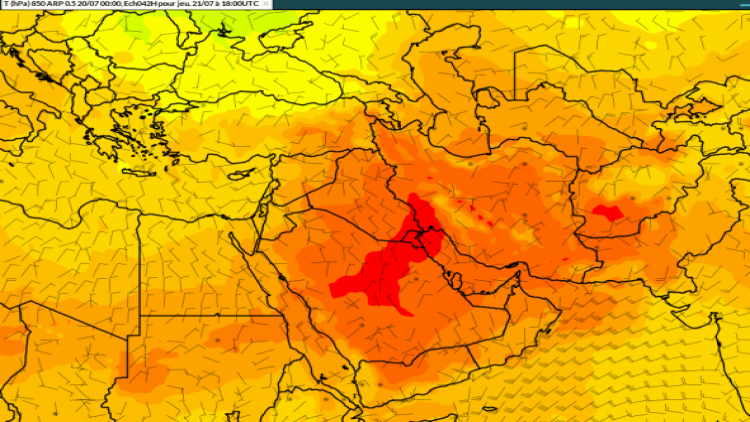
The World Meteorological Organisation (WMO) announced on Wednesday that the global average temperature last year was the second-highest since records began in 1850, behind 2016.

The temperature was 1.1 degrees Celsius higher than pre-industrial levels.

WMO warned that the global average temperatures would rise between three and five degrees Celsius before the end of the century according to the levels of greenhouse gases.

Scientists said that climate change triggered extreme weather in 2019, such as heatwaves in Europe and Hurricane Dorian that killed at least 50 people in September last year. In the future, the world may face the El Niño phenomenon that will heat the global climate even further.

WMO secretary-general Petteri Taalas warned that a lot of extreme weather is expected throughout 2020 and the coming decades, fuelled by record levels of heat trapping greenhouse gases in the atmosphere.

Megxit put Queen Elizabeth II in the role of crisis manager once again #ศาสตร์เกษตรดินปุ๋ย

#ศาสตร์เกษตรดินปุ๋ย : ขอบคุณแหล่งข้อมูล : หนังสือพิมพ์ The Nation

https://www.nationthailand.com/news/30380646?utm_source=category&utm_medium=internal_referral

Megxit put Queen Elizabeth II in the role of crisis manager once again

Jan 16. 2020
By The Washington Post · William Booth

LONDON – At the peak of the latest crisis facing the House of Windsor, which saw Prince Harry and Meghan announce, via Instagram, their decision to quit their roles as senior royals, it was Queen Elizabeth II who took hold of the spinning wheel, to steady the family – and protect the royal brand.

At 93, an age when many matriarchs would be among the dearly or nearly departed, or elbowed aside to allow an ambitious younger generation to run the show, the queen remains firmly in charge – of both a sprawling, often problematic family and the monarchy.

It was the queen who convened the meeting at her royal estate in Sandringham this week to deal with Harry and Meghan, Dutchess of Sussex. And although her son and heir, Prince Charles, reportedly assisted, afterward it was the queen who issued her very personal statement to sort out the matter.

Of all the thinly sourced tabloid narratives about feuding royal houses and their woes, the one with zero traction is that Elizabeth is losing it.

She is the epitome of cool under pressure, able to move from one challenge to the next, said Penny Junor, a royal historian.

“She remains the ultimate professional,” Junor said. “She’s very good at crises.”

Elevated to the throne at age 25 in 1953, after the death of her father, King George VI, Elizabeth vowed to serve her country for her whole life, be it short or long, and that is what she is doing.

Some like to dismiss her as a stodgy anachronism, in her sensible shoes and with her sensible handbags. Yet by all accounts, the queen remains a keen player, a sturdy negotiator who has worked with 14 prime ministers during her reign, from Winston Churchill to Boris Johnson.

In the past few months, she has ushered former prime minister Theresa May offstage, allowing her to retain her dignity, and welcomed Johnson into power, even if he misled her about his reasons for wanting to suspend Parliament. And she has presided over the opening sessions of not one but two Parliaments, giving two Queen’s Speeches, with nary a misplaced word.

Johnson on Tuesday said he was “absolutely confident” the royal family would find the right solution for Harry and Meghan.

“My view on this is very straightforward: I am a massive fan, like most of our viewers, of the queen and the royal family as a fantastic asset for our country,” Johnson told a BBC morning show.

During a period when Britain has pinned its hopes on an advantageous post-Brexit trade deal with the United States, the queen has hosted a gushing President Donald Trump three times – at Windsor Castle and Buckingham Palace – and deftly passed him off the last round, for tea with Charles and his wife, Camilla.

There were rumors recently that 71-year-old Charles might step up to assume the elevated role of prince regent, perhaps when the queen turns 95. Palace sources quickly nixed those reports.

Elizabeth has dealt with the dimming star of her husband, Prince Philip, 98, who used to serve as family enforcer but who has retreated from public duties due to ailing health. Philip was hospitalized twice last year, and he gave up driving after colliding with another vehicle.

As for the queen, her physical stamina remains remarkable. Although she has lost the last of her beloved corgis, she still walks her dorgis, a corgi-dachshund mix. She drives herself on the grounds of her estates. She also rides horses – well, a large pony called Carltonlima Emma – even in the rain.

She dons her gloves and kerchief, wrapped around her helmet of a coif, puts on the tinted shades and gets on with it.

The House of Windsor is a century old – renamed from Saxe-Coburg-Gotha by George V in July 1917. It is one of the longest-living still-working monarchies in the world. It has helped the nation carry on through two world wars and the blitz, followed by the loss of empire, the hollowing-out of Britain’s power.

It is worth noting that many of the challenges Elizabeth has faced have been generated by the family itself – through a long litany of affairs, divorces, sketchy financial dealings and drunken mischief.

The royal family saw itself especially wounded by the messy divorce of Charles and his former wife Diana, and Elizabeth II initially failed to appreciate her subjects’ sorrow and anger after Diana’s death in a car crash in 1997. The queen eventually got her tone right, and pivoted, to allow not for a state funeral but close: a royal ceremonial funeral, with all the pomp and ceremony the palace could bestow.

Just weeks before the Harry and Meghan crisis, the queen was required to deftly handle – by quiet expulsion – her 59-year-old ne’er-do-well son, Prince Andrew, who during a BBC interview explained his stay at pedophile Jeffrey Epstein’s New York mansion by saying “it was convenient.”

Andrew also claimed he had no recollection of a woman who claims she was sex-trafficked to him at age 17 – and who appears with him in a damning photograph.

The queen saw to it that Andrew withdrew from public duties. But she appeared riding beside him on horseback after his humiliation – suggesting that no one in the family is beyond redemption, royal watcher Junor said.

The queen, in a highly unusual and personal statement on Monday, announced that she and her royal family were “entirely supportive of Harry and Meghan’s desire to create a new life” – a signal that she “got it.”

But Elizabeth II also stressed there would be a “period of transition” during which her grandson and his wife would split their time between Canada and Britain.

Many royal observers saw a bit of genius in that – that by offering a “cooling off” period to the young royals, the queen was giving them a chance to decide in favor of a less dramatic break.

Robert Lacey, a royal biographer and author of “The Crown: The Inside History,” noted that she managed to sound caring and supportive, a loving grandmother to her Harry and his wife, but “also took the lot of them and shook them by the scruff of the neck, and said: Get this sorted in days, not weeks.”

“What can we say about her toughness? A lot,” Lacey said. “She’s firmly in charge.”

“She’s has had to take control of things – yet again,” said Ingrid Seward, editor of Majesty magazine. “She’s the steel hand in the velvet glove.”

“I suppose it’s what this queen has always done,” Seward said. “She’s never known anything else.” Duty and honor – and family first.

Seward said that it’s helped “that she’s looked after.” Meaning the queen doesn’t pay bills, stand in line, cook supper or make the beds.

And so after almost seven decades on the throne, this queen remains sovereign, the boss, the titular head of state – and a moral authority, as the supreme governor of the Church of England. She is not the pope of the Anglican tradition, but she is a Christian evangelical, devout, and in her remarks, often mentions Jesus by name.

Her weekly photo op? Attending church.

Documentary filmmaker Denys Blakeway, who produced the 2017 television series “House of Windsor,” was asked how the family has managed to remain in power for so long.

He told The Daily Mail, “By looking after its image, ensuring that those who don’t step up to the mark are expunged and by making sure the ideals of George V – duty, service and discretion – are observed, often ruthlessly so.”

In her Christmas address, aired on British television and watched by millions, the queen spoke both of the importance of reconciliation, saying “small steps taken in faith and in hope can overcome long-held differences and deep-seated divisions to bring harmony and understanding.”

She added, “The path, of course, is not always smooth, and may at times this year have felt quite bumpy, but small steps can make a world of difference.”