A guide to picking the co-working space that’s right for you #ศาสตร์เกษตรดินปุ๋ย

#ศาสตร์เกษตรดินปุ๋ย : ขอบคุณแหล่งข้อมูล : หนังสือพิมพ์ The Nation

https://www.nationthailand.com/property/30380576?utm_source=category&utm_medium=internal_referral

A guide to picking the co-working space that’s right for you

Jan 15. 2020
Denver-based writer Daily specializes in consumer advocacy and travel strategies. Find her at dailywriter.net.

Denver-based writer Daily specializes in consumer advocacy and travel strategies. Find her at dailywriter.net.
By Special to The Washington Post · Laura Daily · BUSINESS, FEATURES 

Although co-working industry darling WeWork imploded in October, the shared office space concept is anything but dead. Flexible workspaces make up a mere 5 percent of the office real estate market, but the segment is projected to grow to 30 percent by 2030, according to JLL, a Fortune 500 real estate management firm.

At its most basic, co-working is the use of a shared space to do business. Usually, such spaces offer “hot desks,” communal tables with chairs, power outlets and high-speed WiFi; spots can be rented by the day, the month or longer. Some provide the option of a dedicated desk/cubicle with locked storage, as well as shared or private offices. There are also usually communal kitchens, office equipment such as printers and copiers, free coffee, conference rooms and an on-site host-concierge.

Caroline Lofts, chief executive of WorkAbility, a collaborative workspace with locations in Denver, calls co-working an exciting version of office rental. “People in the early stages of needing brick-and-mortar space can have it without putting up an astronomical amount of capital. There’s no three- to five-year lease, you can surround yourself with other working professionals and completely untether if you have to, without penalty,” she says.

Co-working appeals to both solopreneurs and start-ups, says Jamie Shanker-Passero, associate director of the Temple University Small Business Development Center in Philadelphia. “With rising real estate prices, space sharing is crucial. You don’t pay for unused space, but do share expenses such as utilities, security and front desk personnel,” she says.

Meg Marrs, founder of K9 of Mine, a website that reviews dog toys and gear, splits her time between Boston and Austin. When she launched her business in 2015, Marrs worked out of neighborhood cafes. “There was always a moment of panic when I entered one. Are there any open tables? Where are the nearest outlets? What’s the cheapest coffee I can buy? Who should I ask to watch my laptop when I go to the restroom? And, if the WiFi was bad, it ruined my day,” she says.

Two years later, Marrs tried a hot desk at Austin’s Capital Factory and fell in love with the concept. “Having a workspace to which you can go and commit to has a huge impact. It’s so much more productive when everyone around me is working.”

Are you ready to move your “office” out of the local coffee shop? How do you find a co-working space that’s right for you? Here are factors to consider.

– Amenities

Will a desk and a chair among dozens of others do, or must you have a private office with a lockable door, file cabinet, guest seating and even a live plant? Co-working offices run the gamut from bare-bones to fully tricked out. There may be lockers to secure your stuff, loading docks for deliveries, full kitchens, beer on tap, gyms and game rooms. Some are geared to specific niches such as nonprofits, computer coders or only women. Cove, a Washington, D.C.-based co-working company, boasts an open-space concept. Sixty percent of the space is designated “quiet” with no talking. Private, soundproof phone booths may be reserved for calls. Members can use a smartphone app to see who is working at any given time, reserve a spot and even unlock the doors after business hours.

– Ambiance

Jason Anderson, president of Venture X, a flexible office space provider, says to shop for a co-working space the same as you would for a hotel. “Do you want a standard room with the basics to meet your needs, or do you prefer a four-star environment with high-end furniture, full-time concierge and upscale amenities such as an on-site cafe?” he asks. “Are you more comfortable with a lively bar vibe or more attuned to a Four Seasons-type crowd?”

Co-working spaces can be sedate or social, so consider whether you want to surround yourself with people playing table tennis or to be able to concentrate without such distractions. Also think about whether you want to get involved with your workplace neighbors, says Baron Christopher Hanson, a company turnaround consultant based in Charleston, South Carolina. “If you see words like ‘collaboration’ repeatedly used to describe the space, expect more interaction.” Sarah Cissna of Washington embraces the socializing: “I like getting to know people I wouldn’t have otherwise. It got lonely working at home.”

– Cost

Pricing depends on services, staffing, location and amenities. At Denver’s WorkAbility, a communal area day pass is $17.50. Those who opt to work from any open desk pay $135 per month; it’s $400 per month for a dedicated desk with lockable storage. Private offices start at $900 per month. Cove charges $229 per month for unlimited access to all of its shared spaces. A one-day pass with reciprocity at more than 23 Venture X locations will run you about $40, while a shared desk starts at around $195.

– Location

A co-working space needs to be close enough to home that you’ll use it. Search online for “co-working space + city name.” If you hold face-to-face meetings, factor in its convenience for your clients. Is there plenty of parking and/or nearby public transportation? Cissna, who produces fundraising events for organizations, chose hers because it’s three blocks from her home and has a Metro stop across the street.

– Security

Some co-working spaces are stand-alone, while others use specific floors of a larger office building. Are there security guards, or is there someone manning a reception desk? How do people access the doors and elevators? Is there a way to safely store any belongings you leave at the space? Security is especially important to consider if you like to work off-hours or on weekends.

Once you’ve considered these factors, take the following steps before signing up.

– Take a tour

There’s no substitute for eyeballing a space firsthand, says Hanson, who has leased co-working offices along the Eastern Seaboard for more than 20 years. Give it the once-over. Is the space flexible with ample chairs and tables? Check out the restrooms. Is the kitchen clean? Make sure the landlord and/or building is not in financial distress or foreclosure. Consider the noise level. Some rehabbed spaces act like an echo chamber. Shanker-Passero suggests striking up a conversation with someone using the space during your tour. “Get their business card and contact them later,” she says. “Ask about their experiences and what they like and dislike about the place.”

– Test it out

Ask for a free day pass or two. Then visit during your regular work hours and re-create your typical work day. Are the chairs adjustable and still comfortable after a few hours? Are desks the right height? Test the WiFi speed. Make calls. Print out documents. Take breaks and check out nearby food and drink options. If the space has a kitchen, bring your lunch. Planning on meeting clients? See if a friend can drop by for a quick chat. If have the option, visit on different days. There may be certain days or times that are more crowded or quiet.

– Dive into the details

Carefully review the paperwork and contract terms. What are normal operating hours, and do you have to pay extra for 24/7 access? Get a list of any additional fees. Ask to see the conference room schedule. Is it always jammed? Are you guaranteed a certain number of hours’ use each month? Is there always someone on-site if the WiFi goes offline?

At the end of the day, co-working is a great option, Hanson says. “Just ask yourself, ‘Can I be productive here?’ ”

Boris Johnson hints he won’t ban Huawei from U.K.’s 5G networks #ศาสตร์เกษตรดินปุ๋ย

#ศาสตร์เกษตรดินปุ๋ย : ขอบคุณแหล่งข้อมูล : หนังสือพิมพ์ The Nation

https://www.nationthailand.com/business/30380577?utm_source=category&utm_medium=internal_referral

Boris Johnson hints he won’t ban Huawei from U.K.’s 5G networks

Jan 15. 2020
By Syndication Washington Post, Bloomberg · Alex Morales, Nick Wadhams, Robert Hutton

Boris Johnson suggested his government may be ready to allow Huawei Technologies Co. to supply at least some equipment for the U.K.’s 5G broadband networks even in the face of strong pressure for a ban from the U.S.

The British public deserve to have access to the best possible technology,” Johnson said when asked about Huawei in a BBC TV interview on Tuesday. “We want to put in gigabit broadband for everybody. If people oppose one brand or another, then they have to tell us what’s the alternative.”

The U.K. for months has been debating how much, if any, access to grant Huawei to its broadband market in the future amid the suggestion the U.S. may be more wary of sharing intelligence if it uses Chinese equipment. Senior U.S. officials visited London on Monday with a last-ditch plea that the U.K. should bar Huawei from providing the kit, warning again that intelligence-sharing could be at risk.

Supporters argue that the company’s equipment can be used in non-core areas in a way that keeps the networks secure. But the U.S. warns that the effects of the leap to 5G technology are so poorly understood that the safest and best solution is to keep the Chinese company out altogether. Huawei denies it poses a spying risk.

“We are confident that the U.K. government will make a decision based upon evidence, as opposed to unsubstantiated allegations,” Huawei Vice President Victor Zhang said in an emailed statement on Tuesday. “Two U.K. parliamentary committees concluded there is no technical reason to ban us from supplying 5G equipment.”

The U.S. delegation, led by Deputy National Security Adviser Matthew Pottinger and including officials from the State Department, argued that there was no way the U.K. could mitigate the security risks from such a network, according to a person familiar with the meeting. Johnson showed he’s alive to the U.S. concerns.

Prejudicing Security

“Let’s be clear, I don’t want as U.K. prime minister, to put in any infrastructure that is going to prejudice our national security or our ability to cooperate with ‘Five Eyes’ intelligence partners,” he said, a reference to the U.S., Canada, Australia and New Zealand.

As some Huawei gear has already been installed, companies warn that a full ban would delay the roll-out of 5G and cost hundreds of millions of pounds. It would also potentially put into doubt Johnson’s pledge to deliver 5G to most of the country by 2027.

U.K. newspapers reported Monday that Pottinger’s team had handed Johnson’s government a “dossier” of evidence against Huawei.

But it may not impress. Speaking in September on condition of anonymity, British intelligence officers said there was nothing the U.S. knew about the company that Britain did not. Andrew Parker, the head of the domestic Security Service MI5, told the Financial Times this month that he had “no reason” to believe intelligence-sharing with the U.S. would be harmed by a decision to allow Huawei in.

Johnson’s spokesman on Monday told reporters that a decision would come “in due course.” The U.S. believes that with the general election out of the way, it is imminent.

The road to a U.K. decision has been long and controversial. Some officials have pushed for tough restrictions as a result of concerns over foreign involvement in critical national infrastructure, while others said this would saddle the telecommunications industry with extra costs and delay technological upgrades.

So-called 5G, which stands for fifth-generation wireless technology, promises speeds as much as 100-times faster than current 4G networks, potentially unlocking new technologies, including automated factories.

Huawei has become a lightning rod for tensions between the U.S. and Europe over trade and security policy as Washington threatens reprisals against any governments that allow Chinese equipment to form part of the crucial ultra-fast networks.

Of the so-called Five-Eyes intelligence-sharing nations, New Zealand, Australia and the U.S. have effectively banned the company, while Canada and U.K. have not so-far followed suit.

Boeing’s new CEO pledges ‘greater transparency’ in message to employees #ศาสตร์เกษตรดินปุ๋ย

#ศาสตร์เกษตรดินปุ๋ย : ขอบคุณแหล่งข้อมูล : หนังสือพิมพ์ The Nation

https://www.nationthailand.com/business/30380573?utm_source=category&utm_medium=internal_referral

Boeing’s new CEO pledges ‘greater transparency’ in message to employees

Jan 15. 2020
File Photo: Boeing 737 Max /Getty Images

File Photo: Boeing 737 Max /Getty Images
By The Washington Post · Lori Aratani

Boeing’s new CEO pledges ‘greater transparency’ in message to employees. In a message to employees, Boeing’s new CEO David Calhoun, who started work Monday, pledged greater transparency at a company still reeling from two crashes that killed 346 people and led to harsh scrutiny of the company’s corporate culture.


“This is a crucial time for Boeing,” he wrote. “We have work to do to uphold our values and to build on our strengths. I see greatness in this company, but I also see opportunities to do better. Much better.”

Calhoun’s top priority will be convincing federal regulators that the 737 Max is safe to fly. The plane has been grounded worldwide since March. Boeing also is counting on Calhoun to rebuild relationships with customers, regulators and the public.

That will be a formidable challenge in the wake of more than 100 pages of internal communication released late last week that painted a picture of a company disdainful of regulators, its customers and even of its own workforce.

In one exchange, an employee wrote that the 737 Max was a plane “designed by clowns supervised by monkeys.”

The communications also showed Boeing aggressively pushing back against simulator training for 737 Max pilots. The fact that pilots could be trained on iPads rather than in costly simulators was a major selling point for the newest version of the Max jet.

Last week, however, the company abruptly reversed itself, saying that all pilots should take part in simulator training.

The company apologized for the communications.

Calhoun’s tenure has already drawn fire from lawmakers, who criticized the company’s board of directors for offering the former GE executive a $7 million bonus for reaching a number of milestones, including returning the 737 Max to service.

In a letter sent Monday to Democratic Sens. Edward Markey of Massachusetts, Richard Blumenthal of Connecticut and Tammy Baldwin of Wisconsin urged Boeing’s board of directors to cancel the bonus.

“This payment represents a clear financial incentive for Mr. Calhoun to pressure regulators into ungrounding the 737 Max, as well as rush the investigations and reforms needed to guarantee public safety,” the senators wrote. “We believe that this bonus would be unconscionable in the face of two tragic plane crashes and proof that Boeing has not learned its lesson.”

The company said Friday that Calhoun will receive a compensation package valued at $28 million, which includes the $7 million bonus. Boeing’s previous CEO, Dennis Muilenburg, was fired in December. The company said Muilenburg forfeited a $14.6 million severance package, but will receive $62 million in stock and pension benefits.

The newest version of the company’s best-selling jet has been grounded for 10 months after two of the planes crashed within months of each other. The company had hoped to win the approval of the Federal Aviation Administration to return the plane to service in December. Some reports have indicated that the plane could be recertified in February, but the FAA has indicated that there is no set timeline for ungrounding the jet.

U.S. airlines have repeatedly adjusted flight schedules to accommodate the grounding.

On Tuesday, American Airlines, which had previously said it expected to resume 737 Max flights in April, said it was now removing the plane from its schedule until early June. That matches a timeline announced by United last month.

“American Airlines remains in continuous contact with the Federal Aviation Administration, Department of Transportation and Boeing,” the airline said. “Based on the latest guidance, the airline anticipates that the resumption of scheduled commercial service on American’s fleet of Boeing 737 Max aircraft will occur June 4, 2020. Once the aircraft is certified, American will run flights for American team members and invited guests.”

Southwest Airlines, which has 34 Max jets in its fleet, the most of any U.S. carrier, has not said whether it will change its previously announced plan to resume Max service in April.

“Many of our stakeholders are rightly disappointed in us, and it’s our job to repair these vital relationships,” Calhoun wrote. “We’ll do so through a recommitment to transparency and by meeting and exceeding their expectations. We will listen, seek feedback, and respond – appropriately, urgently and respectfully.”

Wells Fargo CEO: ‘I don’t have all the answers yet’ #ศาสตร์เกษตรดินปุ๋ย

#ศาสตร์เกษตรดินปุ๋ย : ขอบคุณแหล่งข้อมูล : หนังสือพิมพ์ The Nation

https://www.nationthailand.com/business/30380572?utm_source=category&utm_medium=internal_referral

Wells Fargo CEO: ‘I don’t have all the answers yet’

Jan 15. 2020
By The Washington Post · Renae Merle 

Wells Fargo’s new CEO, Charles Scharf, has one of the hardest jobs in banking. It’s gotten off to a rough start.

After three months in the position, Scharf made his debut before Wall Street analysts Tuesday to report another disappointing quarter for the bank. During the fourth quarter, its profit fell 50% to $2.9 billion compared with the same period a year ago. For all of 2019, profits fell to $20 billion compared with $22 billion in 2018. Revenue fell 5% during the quarter and 1.5% for the year.

“Our results are not as strong as we aspire to,” Scharf said told analysts during a more than hour-long call.

Scharf said he had spent “almost all of [his] time,” so far, addressing the regulatory headaches that have dogged Wells Fargo since it admitted opening millions of accounts that customers didn’t want. The bank had made “terrible mistakes,” he said, adding, “I don’t have all the answers yet.”

The company took a $1.5 billion charge during the quarter for legal costs associated with the scandals, helping drag down financial results, which were also hurt by low interest rates.

The company’s stock fell 4% as Scharf spoke to about $50 a share.

Once the country’s largest and most profitable bank, Wells Fargo is now falling behind some of its competitors. JPMorgan Chase on Tuesday reported that its net income jumped 21% to $8.5 billion for fourth quarter and 12% to $36 billion for the year — a record. Citigroup’s revenue and profits jumped 7% and 15% respectively during its most recent quarter.

Meanwhile, Wells Fargo is still struggling to overcome the backlash from a series of consumer abuses – from opening millions of fraudulent accounts on behalf of its customers without their consent to mistakenly foreclosing on hundreds of clients and repossessing the cars of thousands of others.

The bank has already paid billions in fines and settlements, and overhauled its board and management but still failed to win over its critics. Most recently, Rep. Katie Porter, D-Calif., a vocal industry critic, has accused Wells Fargo of attempting to pass on the costs associated with its scandals to third parties. And Rep. Maxine Waters, D-Calif., chair of the House Financial Services Committee, told Politico recently she would pay “special attention” to the bank this year and may have its board of directors come testify before Congress.

“Wells Fargo continues to claim that the bank is working to restore consumer confidence and do better, after years of major scandals. But I haven’t seen any evidence of a shift in the bank’s predatory tactics,” Porter said in a Twitter post last week.

Scharf came to the job with deep financial industry connections, including serving as chief executive of Bank of New York Mellon and Visa, but some analysts have questioned how long it would take him to master the complexities of a bank with nearly $2 trillion in assets, more than 200,000 employees and operations across the country, while facing growing competition from Silicon Valley and criticism from Capitol Hill.

“Wells Fargo has been in Washington’s policy crosshairs for longer than just about any other financial firm,” Jaret Seiberg, an analyst with Cowen’s Washington Research Group, said in a research note. “As soon as it appears to move beyond one controversy, another one seems to erupt.”

During the call Tuesday, Scharf acknowledged that turning around the bank would be a lengthy process. “I’m not sure that any of these public issues will be closed this year,” he said.

Analysts have said of Scharf’s biggest challenges will be convincing the Federal Reserve to lift a cap it put on the company’s growth in 2018. But Scharf said the company’s challenges are much bigger.

“Our regulators are clear, direct, tough, but fair,” he said. But “we have 12 public enforcement actions that require significant resource commitment.”

Scharf has already made some changes. He named former Obama administration chief of staff Bill Daley as vice chairman of public affairs. Scott Powell, the former chief executive of Santander Holdings USA, was named chief operating officer with a focus on addressing the bank’s regulatory issues.

The bank is also reviewing all of its business lines and looking to lower costs, Scharf said.

“While there is much to do and I know the path to success will be bumpy, I’m optimistic about our future,” he said.

Disney+ app outpaces streaming rivals with 41 million downloads #ศาสตร์เกษตรดินปุ๋ย

#ศาสตร์เกษตรดินปุ๋ย : ขอบคุณแหล่งข้อมูล : หนังสือพิมพ์ The Nation

https://www.nationthailand.com/business/30380571?utm_source=category&utm_medium=internal_referral

Disney+ app outpaces streaming rivals with 41 million downloads

Jan 15. 2020
By Bloomberg · Kelly Gilblom 

Disney+ app outpaces streaming rivals with 41 million downloads. Walt Disney Co.’s new streaming service is off to a record-setting start.

Since its release two months ago, the Disney+ mobile app has been downloaded 41 million times across the App Store and Google Play, generating almost $100 million in user spending, according to a study by SensorTower Inc. That’s four times as much as the HBO Now app earned in its first two months.

Disney investors cheered the SensorTower report on Tuesday, sending the shares up 2% to $146.72 in New York. Still, the data isn’t comprehensive. It excludes many of the devices that viewers use to watch Disney+ — such as Roku, gaming consoles or Amazon Fire TV — meaning it only captures a fraction of the revenue Disney is generating from streaming.

Priced at $7 a month, Disney+ is a bet that the company can attract as many as 90 million subscribers worldwide in five years. It’s relying heavily on original programming aimed at an existing fan base, such as “The Mandalorian, the first live-action “Star Wars” series. It also includes a library of past Disney hits.

Disney+ benefited from launching in several countries, unlike the initial launch of HBO Now. But even just measuring U.S., the app racked up 34.3 million downloads and $81.5 million. About 85% of downloads have been in the country, with the remainder spread across Canada, Australia, New Zealand and the Netherlands.

Netflix Inc. remains the dominant paid streaming platform, with 150 million subscribers globally. And it’s hard to compare Disney+’s success with the early days of Netflix and other longstanding service such as Hulu because they were trailblazing a new industry.

“Netflix and Hulu had to feel out the market in their early days, adjusting their strategies over time,” Sensor Tower said in a blog post. Disney+ “has been able to employ its predecessors’ learnings for success early on.”

BlackRock makes climate change central to its investment strategy #ศาสตร์เกษตรดินปุ๋ย

#ศาสตร์เกษตรดินปุ๋ย : ขอบคุณแหล่งข้อมูล : หนังสือพิมพ์ The Nation

https://www.nationthailand.com/business/30380564?utm_source=category&utm_medium=internal_referral

BlackRock makes climate change central to its investment strategy

Jan 15. 2020
By The Washington Post · Rachel Siegel

BlackRock, the world’s largest money manager, will make sustainability a key tenant of its investing strategy, a move that its chief executive said should push financial institutions to prioritize climate change issues.

“Climate change has become a defining factor in companies’ long-term prospects,” BlackRock chairman and chief executive Larry Fink said in his annual letter to CEOs. “But awareness is rapidly changing, and I believe we are on the edge of a fundamental reshaping of finance.” In a separate letter to investors, BlackRock announced it would exit investments with high environmental risks, including thermal coal, and launch new investment products that screen for fossil fuels.

The nation’s largest financial institutions are under increasing pressure from investors, activists and some political leaders for their tepid response to climate change, even as the Trump administration has systematically rolled back environmental regulations to promote economic growth.

BlackRock oversees an industry-leading $7 trillion in assets, and its pivot is sure to be closely watched by its competitors – Vanguard, T. Rowe Price and JPMorgan Chase among them – and the rest of corporate America. In interviews, Fink said the science behind climate change is pushing clients to reassess their long- and short-term investments.

“Will cities, for example, be able to afford their infrastructure needs as climate risk reshapes the market for municipal bonds?” Fink wrote in his CEO letter. “What will happen to the 30-year mortgage – a key building block of finance – if lenders can’t estimate the impact of climate risk over such a long timeline?”

He said the risks posed by climate change are the most significant he’s seen in four decades of finance. Fink, a Democrat, said he wasn’t acting as an environmentalist, but as a capitalist with a responsibility to clients and investors.

“We don’t have a Federal Reserve to stabilize the world like in the five or six financial crises that occurred during my 40 years in finance,” Fink told CNBC. “This is bigger, it requires more planning, it requires more public and private connections together to solve these problems.”

Earlier this month, BlackRock joined Climate Action 100+, an investor initiative to ensure the world’s largest corporate emitters of greenhouse gases act to lessen their carbon footprints. BlackRock joined more than 370 global investors, a group that collectively manages more than $41 trillion in assets.

Ceres, a sustainability nonprofit has ranked BlackRock 43rd among 48 asset managers based on its history of backing few climate-related proposals from shareholders. But the group appeared encouraged by Fink’s letter.

“BlackRock is now throwing their weight behind what already exists – a global movement to really addressing sustainability in portfolios,” said Kirsten Snow Spalding, senior department director of Ceres’ investor network. “They’re not the first to the party, but just adding their weight is critical.”

Fink said he has increasingly heard from clients worldwide who want to factor climate change into their investment portfolios. And he said that he expects a marked generational change as young people increasingly focus on sustainable investing.

Fink said financial investing with have to play a role in “a huge energy transition” over the coming decades. That includes weighing whether fossil fuels, for example, are a good investment both today and 10 years down the line.

“We need to have an organized plan,” Fink told CNBC. “We are not running away from hydrocarbons. We believe they play a role. We believe natural gas plays a very large role in the energy transition. We believe this is a process.”

RS in four-pronged approach for revenue growth #ศาสตร์เกษตรดินปุ๋ย

#ศาสตร์เกษตรดินปุ๋ย : ขอบคุณแหล่งข้อมูล : หนังสือพิมพ์ The Nation

https://www.nationthailand.com/business/30380552?utm_source=category&utm_medium=internal_referral

RS in four-pronged approach for revenue growth

Jan 14. 2020
By THE NATION

RS Plc wil strive for Bt5.25 billion in revenue this year by capitalising on four strategies: entertainmerce, Data-Driven, Strategic Partnership and M&A, chief executive officer Surachai Chetchotisak said on Tuesday (January 14).

Under the Entertainmerce, RS will continue to create synergy of all its strengths to drive the growth of its commerce business.

To be a data-driven company, data from entertainment customers, from its TV and radio audience to more than 100 million followers in its social media accounts will be linked to RS’s commerce business, creating immense big data.

The company identifies that this is a factor that can generate growth and future opportunities in offering new products and services to customers as well as other business areas.

The company has invested in modern technologies and experienced teams to drive business growth.

On strategic partnership, RS will join forces with partners to generate growth and sustainability.

In addition to growing sustainably in all businesses, merger and acquisition is another important strategy to expand the company’s ecosystem rapidly in order to generate business value, competitiveness and long-term sustainability.

AIS subsidiary picks up bid documents for spectrum auction #ศาสตร์เกษตรดินปุ๋ย

#ศาสตร์เกษตรดินปุ๋ย : ขอบคุณแหล่งข้อมูล : หนังสือพิมพ์ The Nation

https://www.nationthailand.com/business/30380537?utm_source=category&utm_medium=internal_referral

AIS subsidiary picks up bid documents for spectrum auction

Jan 14. 2020
By THE NATION

Advanced Wireless Network, the mobile phone service subsidiary of Advanced Info Service (AIS), on Tuesday (January 14) picked up the bid documents for the February 16 spectrum auction to be held by the National Broadcasting and Telecommunications Commission (NBTC).

This brings the number of companies picking up the documents to five.

TrueMove H Universal Communication, the mobile-phone unit of True Corp, was the first company to pick up the documents, on January 3, a day after the NBTC made the documents available.

Dtac TriNet Co Ltd, a subsidiary of Total Access Communication (DTAC), picked up the bid documents on Wednesday, followed by state firms TOT and CAT Telecom.

The documents will be available until February 3 and bids must be submitted on February 4.

The NBTC will auction the 700 megahertz, 1800MHz, 2600MHz and 26 gigahertz spectrum licences.

U.S. job market this good didn’t seem likely 3 years ago #ศาสตร์เกษตรดินปุ๋ย

#ศาสตร์เกษตรดินปุ๋ย : ขอบคุณแหล่งข้อมูล : หนังสือพิมพ์ The Nation

https://www.nationthailand.com/business/30380570?utm_source=category&utm_medium=internal_referral

U.S. job market this good didn’t seem likely 3 years ago

Jan 15. 2020
By JOBS-COMMENT: Syndication Washington Post, Bloomberg Opinion · Conor Sen · OPINION

With labor-market data for the 2010s behind us after Friday’s employment report, the big takeaway for the decade is that a much higher level of employment was possible without generating inflation.

President Donald Trump also has an argument to claim that not only is he presiding over the best labor market in decades but also that the continued improvement is historic. This isn’t to suggest his specific policy decisions deserve credit for the improvement – manufacturing weakness resulting from the trade war is clearly evident in 2019 jobs data. But during his administration, prime-age employment has increased faster over his three years in office than it has in decades – and it’s happened without an acceleration in inflation.

Because a hallmark of this expansion has been the consistency of labor market and overall economic growth, it’s easy to forget how improbable the current conditions seemed just three years ago. At the December 2016 meeting of the Federal Open Market Committee, the forecast for the end of 2019 included an unemployment rate of 4.5%, core inflation excluding food and energy of 2%, a federal funds rate of 2.9% and average real gross domestic product growth between 2017 and 2019 of 2%. As it turns out, policy makers underestimated both economic growth and the improvement in the labor market while overestimating inflation and the level of interest rates. Unemployment ended 2019 at 3.5%, a full percentage point lower than the estimate, while core inflation has yet to hit 2% on a sustained basis. Real GDP growth was 2.8% in 2017, 2.5% in 2018 and is likely to have grown more that 2% in 2019. And after the Fed’s three interest-rate cuts in 2019, the fed funds target rate sits at 1.75%.

These figure don’t fully capture the improvement in the labor market for prime-age workers, those between the ages of 25 and 54. The unemployment rate for these workers has fallen from 4% to 3% over the past three years, flirting with the lowest levels in 50 years. Conventional wisdom might suggest that eventually the improvement in the labor market would start to taper off. But what we’ve seen is that by using the employment-to-population ratio for prime-age workers rather than the unemployment rate for this group, the pace of improvement during this period has been the best since the late 1980s. Essentially, economists and people like myself were arguing that late 2016 marked something close to full employment, but what’s followed has shown that was far from the case.

It’s difficult to say how much credit Trump deserves for this performance. The Federal Reserve chair in 2016 was Janet Yellen, and at this point it’s indisputable that her estimate of how much labor-market slack remained and what level of economic growth was likely during the next few years was too conservative. Although her successor, Jerome Powell – chosen by Trump – continued with the rate hikes started under the Yellen Fed, he’s also shown the flexibility to reverse course and put more emphasis on fresh economic data rather than to fixate on forecasts for when inflation would arrive. Whether this outcome would have resulted if unqualified Trump Fed nominees such as Stephen Moore and Judy Shelton had won seats on the Fed is open to debate.

On fiscal policy, there’s no evidence that Trump’s tax cuts delivered when it comes to stimulating investment or the labor market. One could argue that this was entirely foreseeable given how the tax bill was structured; most of its benefits went to corporations and the wealthy rather than to the middle class or workers, groups that would have been more inclined to spend the gains. At the same time, the economy’s trajectory since the passage of the tax bill suggests that the U.S. had a lot more fiscal firepower available in 2017 than deficit hawks argued.

A fair reading of Trump’s record would say that advocating for both fiscal and monetary stimulus starting in early 2017 was correct, that the Powell Fed has been an improvement on the Yellen Fed and that there remains no short-term reason to be concerned about the inflationary impact of a wider budget deficit. At the same time, the trade war has been a disaster, the structure of the tax cuts left a lot to be desired and – aside from Powell – the people Trump has wanted to put on the Fed have been generally bad. But if presidents get credit or the blame for the state of the labor market, then Trump is in a good place.

Stronger yuan is sending waves through assets worldwide #ศาสตร์เกษตรดินปุ๋ย

#ศาสตร์เกษตรดินปุ๋ย : ขอบคุณแหล่งข้อมูล : หนังสือพิมพ์ The Nation

https://www.nationthailand.com/business/30380575?utm_source=category&utm_medium=internal_referral

Stronger yuan is sending waves through assets worldwide

Jan 15. 2020
By Syndication Washington Post, Bloomberg · Sam Potter, Srinivasan Sivabalan

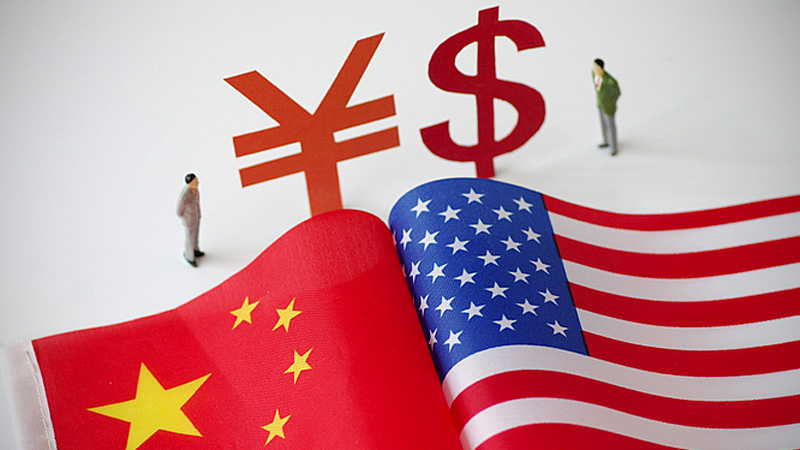
China’s currency is on the march, and it’s powering bets across every corner of global markets.

From the euro and copper to bunds and luxury stocks, traders are adjusting to the strongest yuan in more than five months after the U.S. lifted the label of currency manipulator from the Asian nation. The two countries are due to sign the first part of a trade accord on Wednesday, another step in the thawing of tensions.

The upshot is a brighter outlook for global growth that’s feeding first and foremost into the currencies of both nations, while firing up bets on looser international financial conditions.

As the yuan blasts through key levels, the dollar is now the most oversold against it in two years. The yuan — up about 4% against the greenback since August — has gained far less versus a basket of currencies, making this just as much a story of dollar weakness.

“The U.S.’s well-considered decision to refrain from accusing China of being a currency manipulator is an encouraging basis for further negotiations,” Marc-André Fongern, head of research at MAF Global Forex, wrote in a note. “The resulting appreciation of the Chinese yuan can be expected to breathe life back into the FX world.”

Here’s a look at how yuan strength may affect major assets.

– Stocks

Yuan appreciation is being felt most acutely across Hong Kong with markets with the city state tied to global risk-on sentiment and Chinese growth. Shares have gained 11% since a low on Dec. 4, adding $579 billion to market values through Monday and pushing the index back to the level it was trading at last year before political protests escalated.

Similarly, yuan strength is also potentially good news for European exporters like luxury goods manufacturers. While they’re able to cope with a weaker Chinese currency, they usually benefit from periods when the yuan is rising.

The MSCI Europe Apparel and Luxury Goods Index has gained 3% this year compared with an increase of about 0.9% for the MSCI Europe Index.

– Commodities

China is the world’s biggest buyer of copper and gold, so commodity traders could tell their European stock counterparts plenty of stories about market dynamics in the Asian nation. A stronger yuan typically makes both assets cheaper for local consumption.

For the industrial metal, the rising yuan may therefore provide an additional boost to an already tight market. Copper has climbed 14% above September lows, when the trade-war rhetoric still looked fierce.

Sino dynamics remain key to the direction of gold from here. Chinese New Year — the peak buying season for the yellow metal — combined with yuan strength may buttress gold as demand for havens ebb.

– Rates

Speaking of consumption, China absorbs around 7% of German exports — including some from the kind of luxury companies whose shares are mentioned above. That means Europe’s biggest economy stands to gain if the buying power of the Asian nation increases. Throw in an improving global trade outlook, and there could be upward pressure on German bund yields, according to market participants.

That would come as rates are already creeping back toward positive territory for the first time in eight months amid a deluge of supply and increasing hopes that European growth may have bottomed.

– Currencies

Implicit in the yuan strength is an improving outlook for the global economy, which can encourage capital flows out of the safety of U.S. dollars and spur greenback weakness.

Since a shock devaluation in August 2015, turning points for the Chinese currency have coincided with shifts in the dollar-euro pair as China influenced the global macro cycle. But during the trade war the yuan’s correlation to the euro has been falling, and it’s now the most negative in around five years. A stronger yuan could therefore signal further weakness in the single currency — hurting the Chinese economy’s competitiveness relative to Europe.

Still, while Chinese currency moves are focal point for Wall Street traders this week, there’s a key factor limiting the day-to-day impact of a stronger yuan for Western companies. The currency’s status as the preferred exchange rate for international transactions has been failing after devaluations in 2015 and 2019.

Those moves helped further erode the yuan’s already limited use as an international currency. By comparison, the euro has gained market share and accounted for a third of all transactions in November 2019.