Young Thai soccer players coached by Nagoya Grampus team #ศาสตร์เกษตรดินปุ๋ย

#ศาสตร์เกษตรดินปุ๋ย : ขอบคุณแหล่งข้อมูล : หนังสือพิมพ์ The Nation

https://www.nationthailand.com/sport/30381144?utm_source=category&utm_medium=internal_referral

Young Thai soccer players coached by Nagoya Grampus team

Jan 28. 2020
By THE NATION

Two dozens Thai youngsters underwent a football training programme under the guidance of Nagoya Grampus players and staff during the Nagoya Grampus Junior Football Clinic 2020 at the Pattana Golf Club & Resort in Chonburi last week.

The 24 young players from the 2019 Toyota Football Clinic participated in the six-day event which allowed them an opportunity to learn from Nagoya stars including midfielder and Japan U-23 national player Yuki Soma, manager Massimo Ficcadenti and Motohiro Yamaguchi, ex-Japanese National Football Player and Director of Nagoya Grampus FC Academy.

Under the theme “Start Your Impossible”, the training focused on advanced technical programme used for junior level in Japan, both practical and theoretical aspects.

Each participant was granted a certificate presented by the President of Nagoya Grampus FC Koki Konishi and Chayut Boonyawart, Deputy General Manager/Commercial Vehicle Marketing Department,Toyota Motor Thailand Co Ltd.

Taiwan records fifth case of new coronavirus infection #ศาสตร์เกษตรดินปุ๋ย

#ศาสตร์เกษตรดินปุ๋ย : ขอบคุณแหล่งข้อมูล : หนังสือพิมพ์ The Nation

https://www.nationthailand.com/ann/30381161?utm_source=category&utm_medium=internal_referral

Taiwan records fifth case of new coronavirus infection

Jan 28. 2020
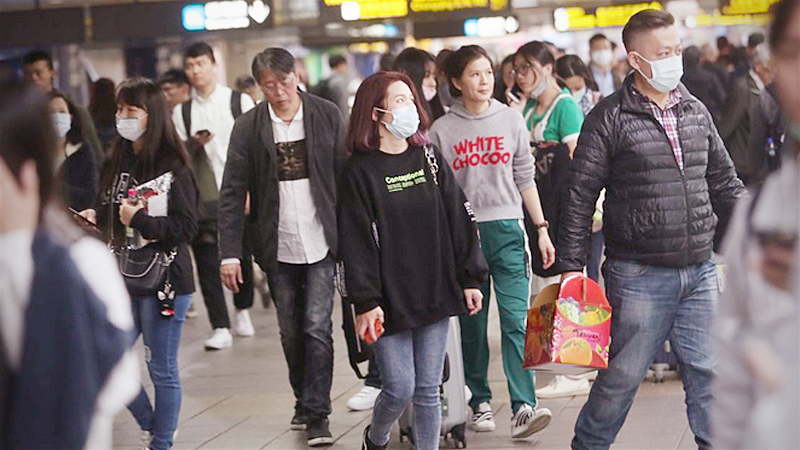
As of noon Monday, 402 suspected cases of the new type of coronavirus had been reported in Taiwan, according to the Central Epidemic Command Center. (CNA)

As of noon Monday, 402 suspected cases of the new type of coronavirus had been reported in Taiwan, according to the Central Epidemic Command Center. (CNA)

TAIPEI (CNA) — Another Taiwanese woman who returned from the Chinese city of Wuhan has been diagnosed with the 2019 novel coronavirus (2019-nCoV), the fifth such confirmed case in Taiwan, according to the Taiwan Centers of Disease Control (CDC) Monday.

The woman, in her 50s, had been working in Wuhan since October last year and returned to Taiwan on Jan. 20, before seeking medical attention Jan. 25 after developing a fever and muscle aches, the CDC said.

Health Minister Chen Shih-chung (陳時中) said the woman was on the same flight as another woman who returned from Wuhan and was later confirmed as the first case of the coronavirus in Taiwan.

The CDC reported that the woman did not visit the Huanan Seafood Wholesale Market, a wet market, in Wuhan where the coronavirus is believed to have been passed from animals to humans.

She is currently in a stable condition under hospital quarantine, the CDC added.

As of noon Monday, 402 suspected cases of the new type of coronavirus had been reported in Taiwan, according to the Central Epidemic Command Center.

While infection has been ruled out in 190 of those cases, five have been confirmed.

Due to concerns over the coronavirus epidemic that originated in Wuhan, Hubei Province, Taiwan’s CDC has extended its highest travel warning to Hubei, urging people to avoid unnecessary travel to the area.

Currently there are about 200-300 Taiwanese businesspeople in Wuhan, said Tsai Chih-ju (蔡志儒), an official at Taiwan’s Mainland Affairs Council.

First case of coronavirus reported in Cambodia #ศาสตร์เกษตรดินปุ๋ย

#ศาสตร์เกษตรดินปุ๋ย : ขอบคุณแหล่งข้อมูล : หนังสือพิมพ์ The Nation

https://www.nationthailand.com/ann/30381160?utm_source=category&utm_medium=internal_referral

First case of coronavirus reported in Cambodia

Jan 28. 2020
Cambodian aviation authorities on Monday announced that all flights between the Kingdom and Wuhan city have been cancelled. hun sen facebook page

Cambodian aviation authorities on Monday announced that all flights between the Kingdom and Wuhan city have been cancelled. hun sen facebook page
By The Phnom Penh Post/ANN

Cambodia reported its first case of the deadly 2019 Novel Coronavirus (2019-nCoV) on Monday, Minister of Health Mam Bun Heng announced. He said medical specialists detected the virus in a Chinese tourist in Sihanoukville.

The minister said Jia Jianhua, 60, travelled from Wuhan city, where the outbreak originated, to Sihanoukville with three family members – Wang Lingzhen, 57; Xiao Yan, 38; and Jia Ruixuan, 33. Their aeroplane landed at Sihanoukville International Airport on January 22.

On January 25, Jia developed a high fever, runny nose, and other flu-like symptoms, and on Monday, Cambodian experts confirmed he had contracted the virus. His other family members tested negative.

“They travelled from Wuhan city to Sihanoukville and then took a taxi to the Independence Hotel where they stayed for two nights. They later moved to Queenco Hotel.

“In the afternoon of January 25, Jia Jianhua said he had a fever after swimming in the pool for two hours. That same day, his wife called relatives in China to tell them Jia was feeling ill,” Bun Heng said.

He said the following day, provincial authorities – including the director of the provincial department of health as well as emergency response officials of the Ministry of Health –investigated the case after being informed by Preah Sihanouk provincial governor Kuoch Chamroeun.

Jia is in a stable condition and has only minor symptoms like sneezing, Bun Heng said. He and his family have been placed under quarantine.

The authorities are now on the lookout for individuals that may have come into contact with Jia to test them for the virus. They will also disinfect places where the family stayed to eliminate any trace of it.

Meanwhile, Cambodian aviation authorities on Monday announced that all flights between Cambodia and Wuhan city have been cancelled.

This comes after Chinese authorities banned all local and international flights to the central Chinese city, State Secretariat of Civil Aviation (SSCA) standby secretary of state and spokesman Chea Aun told The Post.

On Monday, the virus claimed its 81st victim in China, according to official numbers. There are now nearly 3,000 cases in that country alone. The virus has also spread to at least 14 other nations, including Malaysia, Singapore, Thailand, Taiwan, Nepal, Japan and South Korea.

SSCA deputy director and spokesman Sin Chansereyvutha

spokesman Sin Chansereyvutha told The Post on Monday that only two airlines operate regular flights between Wuhan city and Cambodia – Lanmei Airlines and JC Airlines.

“This is not our decision or the decision of the airlines. The Chinese government was the one that decided to cancel all flights in and out of the city,” he said.

According to Chansereyvutha, Cambodia operates more than 200 flights a week to China.

The Cambodian Ministry of Foreign Affairs and International Cooperation said 23 Khmer students are now in Wuhan city.

Ministry spokesman Koy Kuong told The Post on Monday that they are all in good health. He said the students are receiving support from Cambodian embassies and consulates in China.

“The consuls have regular contact with the department of foreign affairs in Hubei province and the schools. They are asking them to help care for and provide food to the students. The authorities in Hubei province said they will do all they can.

“Wuhan University is providing three meals a day for foreign students free of charge. Canteens in the other schools are open as are convenient stores and supermarkets near the schools,” he said.

The students are enrolled at Wuhan University, Huazhongkeji University, Hubei University, Wuhan Ligong University, Huazhong Normal University and the Naval University of Engineering.

On Monday, China announced that it will adopt a host of measures including delaying and reducing conferences and major events, extending the Spring Festival holiday and supporting work online to curb the spread of the virus, China Daily reported.

The impact of the virus could be more severe than that of Sars 17 years ago, Thailand’s The Nation reported.

Preliminary estimates of the impact on tourism and related businesses in Thailand and other Asian nations are at around 80 billion to 100 billion baht ($2.6 billion to $3.2 billion), if the spread of the virus is contained by early March.

Malaysian man staying put in Wuhan #ศาสตร์เกษตรดินปุ๋ย

#ศาสตร์เกษตรดินปุ๋ย : ขอบคุณแหล่งข้อมูล : หนังสือพิมพ์ The Nation

https://www.nationthailand.com/ann/30381159?utm_source=category&utm_medium=internal_referral

Malaysian man staying put in Wuhan

Jan 28. 2020
Soares Chen

Soares Chen
By The Star/ANN

PETALING JAYA: A Malaysian man who arrived in Wuhan on Jan 19 for the Chinese New Year reunion with his wife’s family spoke of being “trapped” at their home there.

Although the people in Wuhan are allowed to go outside, Soares Chen (pic) said, they are not allowed to drive and there is no public transport.

He said they were spending all day at home, watching TV and browsing the Internet.

Chen, who grew up in Penang, is based in Leipzig, Germany. He is a programming language enthusiast.

In a series of tweets, he said he is currently healthy but is under lockdown in Wuhan.

“I am sharing some of my own thoughts on the coronavirus from ground zero perspective, ” he posted.

Chen said he had boarded a flight to Wuhan based on reports then that there was no known human-to-human transmission.

He said he understood that it might cause more harm than good to flee the city at the time as there was a risk of carrying the virus to other places or getting infected during the journey out.

“The best course of action is to stay home and minimise risk of getting infected, ” he added.

He said the locals were not so much worried about the virus itself but rather at the “incompetency” of the government in handling the outbreak.

“Since the lockdown, everyone is trapped at home and have no idea what is really happening in the city, ” said Chen, who is now at his in-laws’ place.

He also mentioned about “no shortage of food, people are just panicking to stock food. But I don’t go to the market so I can’t personally verify”.

Chen said the rumours about overcrowded hospitals were making people nervous.

“What worries us the most right now is whether we can even get diagnosis and treatment in the hospital if we get infected, ” he added.

“We need more information on what is happening in Wuhan right now to make the right decisions. We have the right to know it for our own safety, ” he said.

Mobile game sales in S. Korea surpass W4.2tr($3.6 billon) in 2019 #ศาสตร์เกษตรดินปุ๋ย

#ศาสตร์เกษตรดินปุ๋ย : ขอบคุณแหล่งข้อมูล : หนังสือพิมพ์ The Nation

https://www.nationthailand.com/ann/30381157?utm_source=category&utm_medium=internal_referral

Mobile game sales in S. Korea surpass W4.2tr($3.6 billon) in 2019

Jan 28. 2020
By The Korea Herald/ANN

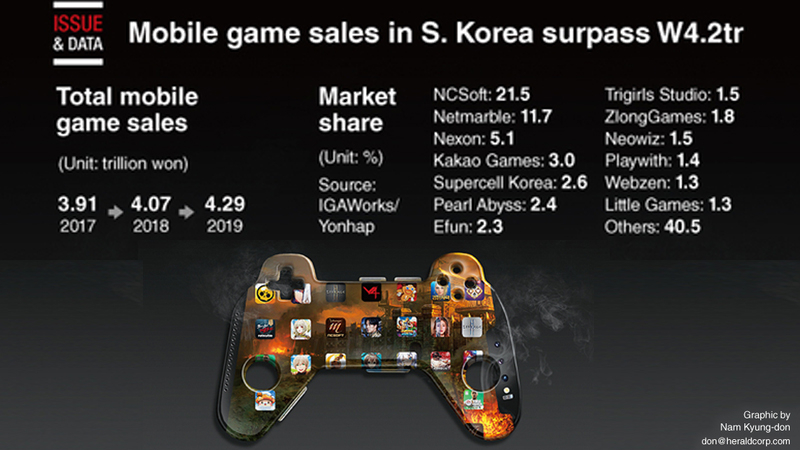
Sales of South Korean mobile games rose 5.2 percent on-year to surpass 4.2 trillion won ($3.6 billion) last year, industry data showed.

According to the data from mobile big data platform IGAWorks, combined sales at three app markets – Google’s Play Store for Android devices, Apple’s App Store for iPhones, and ONE store – came to 4.29 trillion won in 2019.

NCSoft had the biggest market share with 21.5 percent, followed by Netmarble with 11.7 percent and Nexon with 5.1 percent, the data showed. (Yonhap)

S. Korea ups coronavirus alert, 4th case confirmed #ศาสตร์เกษตรดินปุ๋ย

#ศาสตร์เกษตรดินปุ๋ย : ขอบคุณแหล่งข้อมูล : หนังสือพิมพ์ The Nation

https://www.nationthailand.com/ann/30381156?utm_source=category&utm_medium=internal_referral

S. Korea ups coronavirus alert, 4th case confirmed

Jan 28. 2020
(Yonhap)

(Yonhap)
By The Korea Herald/ANN

President Moon Jae-in on Monday ordered an all-out check on every individual who has recently traveled here from Wuhan, China, as Korea confirmed its fourth case of the Wuhan coronavirus amid growing public fears over the viral illness that has already caused 80 confirmed deaths in China.

The government raised the level of the four-tier infectious disease alert to the second most severe rung, after a 55-year-old Korean man, who had visited Wuhan, Hubei province, tested positive for the coronavirus earlier in the day.

The man, who showed no symptoms of infection when he was screened at an airport upon his return to Korea on Jan. 20, received treatment at a medical facility on Jan. 21 for cold symptoms. On Saturday, he developed symptoms of a high fever and aching muscles, and was put under close observation. He was diagnosed with pneumonia Sunday, according to the Korea Centers for Disease Control and Prevention.

Adding fuel to public health concerns, the man was confirmed to have carried out normal activities after he contracted the virus, according to the agency. An in-depth inspection following his activities is underway.

The latest case comes a day after a 54-year-old Korean resident of Wuhan, who returned to Korea on Jan. 20, tested positive, in the third confirmed case of the coronavirus here.

The man also showed no symptoms during screening for the virus at the airport and had led normal activities without being identified or monitored by health authorities.

According to his movements disclosed by the KCDC on Monday, he received treatment at a plastic surgery clinic, dined at restaurants, took a stroll along the Han River and stayed in a hotel in southern Seoul before visiting his mother in Ilsan, Gyeonggi Province.

Seventy-four people came into contact with the man, according to the public health agency. One of them had symptoms of infection and was placed in isolation, but tested negative. The others are under self-imposed isolation and being closely observed by health authorities.

The medical facilities and hotel he visited have all been disinfected, the KCDC said.

Two other cases — a 35-year-old Chinese woman and a Korean man — were confirmed on Jan. 20 and Friday, respectively.

Fifty-seven people had shown symptoms of the virus as of Monday afternoon. One person was awaiting test results, and the remaining 56 people have tested negative for the virus.

The Korean government has stepped up efforts to contain the spread of the virus by tightening checks on passengers entering Korea and expanding the range of people to be put under quarantine and on monitoring lists among those who visited China.

In a meeting with senior secretaries, President Moon Jae-in ordered all-out, preemptive measures — such as transparent disclosure of information to the public as well as mobilization of medical personnel from the military — to rein in the spread of the corona virus, according to Yoon Do-han, senior secretary for public communication.

He also urged close monitoring of the coronavirus’ impact on the economy. The finance minister is set to hold an emergency meeting Tuesday, according to Yoon.

The Foreign Ministry raised the travel advisory level for Wuhan and the Hubei province region to “red alert,” also second-highest in the country’s four-tier travel warning system.

The government is reportedly conducting a final review to send a chartered plane to Wuhan to evacuate an estimated 600 Koreans believed to be staying in and around Wuhan.

All of China is now classified as a “coronavirus risk area,” with travelers coming from the country required to fill out health forms upon arrival. If a person from Wuhan or nearby areas shows any signs of a fever or breathing problems, he or she will be placed under quarantine starting from Tuesday. Those who have visited other parts of China and who show symptoms of pneumonia will be put in isolation.

Public fears are mounting in Korea, with the presidential website flooded with petitions demanding a ban on the entry of all Chinese travelers. More than 480,000 people signed the petitions as of Monday afternoon.

There were 2,744 confirmed cases across China, 461 of whom are in critical condition, as of Sunday midnight, China’s National Health Commission announced, with a combined population of over 57 million people placed under full or partial lockdown.

The end of the Lunar New Year holiday in China was pushed back to Sunday from Thursday, and the reopening of schools was postponed until further notice to “reduce mass gatherings” as part of efforts to block the spread of the coronavirus.

The youngest patient is a 9-month-old girl in Beijing.

The virus is rapidly spreading outside mainland China, with Hong Kong, Macao, Thailand, Japan, Taiwan, Vietnam, Singapore, Malaysia, Nepal, France, Australia, the US and Canada having reported confirmed cases of the coronavirus.

The KCDC advised citizens to look after their personal hygiene — such as washing hands and wearing masks. Those showing pneumonia-like symptoms should immediately contact an emergency call center by dialing 1339, it said.

(laeticia.ock@heraldcorp.com)

JPMorgan keeps bonuses flat for bankers, traders #ศาสตร์เกษตรดินปุ๋ย

#ศาสตร์เกษตรดินปุ๋ย : ขอบคุณแหล่งข้อมูล : หนังสือพิมพ์ The Nation

https://www.nationthailand.com/business/30381153?utm_source=category&utm_medium=internal_referral

JPMorgan keeps bonuses flat for bankers, traders

Jan 28. 2020
Signage is displayed outside a Chase bank branch in Chicago in 2019. MUST CREDIT: Bloomberg photo by Daniel Acker

Signage is displayed outside a Chase bank branch in Chicago in 2019. MUST CREDIT: Bloomberg photo by Daniel Acker
By Syndication Washington Post, Bloomberg News · Michelle F. Davis

JPMorgan Chase & Co. is keeping annual bonuses at its corporate and investment bank roughly flat for 2019 as workers across Wall Street brace for a drop in payouts.

The biggest U.S. bank’s decision, described by people briefed on the matter, came after the unit notched its best year since at least 2011. Most of the workers were told about their payouts last week, said one of the people.

Compensation expense rose 4% to $10.6 billion for the corporate and investment bank in 2019 as headcount climbed 3%, the bank said earlier this month. The unit accounts for about a third of the firm’s revenue. Total compensation costs as reported by U.S. banks don’t always directly show changes to the bonus pool.

Consultant Johnson Associates predicted in November that year-end incentives would be down 5% across Wall Street, with investment bankers probably taking in more, and equities traders faring the worst. In Europe, recruiters had forecast that shrinking revenues would translate into double-digit percentage declines for many trading and investment banking teams.

Top executives on JPMorgan’s operating committee received small boosts to compensation – of 1.6% to 2.4% – for their work in 2019, Bloomberg reported last week. Chief Executive Officer Jamie Dimon’s compensation package increased 1.6% to $31.5 million – smaller than the bump he got in 2018.

JPMorgan notched the highest profit in U.S. banking history for the second year in a row with $36.4 billion, spurred in part by a 56% surge in stock and bond trading in the fourth quarter. Trading revenue for the full year rose 6.7%, while revenue from advising on M&A and bond and stock offerings rose 1.4%.

Still, JPMorgan has been tightening its belt more than in previous years amid a growing number of potential pitfalls for the economy. It’s been building up its employee presence in lower-cost locations and was considering relocating several thousand New York-based employees out of the area, Bloomberg reported in October.

Thailand among world’s top 10 for mobile payments by Chinese tourists #ศาสตร์เกษตรดินปุ๋ย

#ศาสตร์เกษตรดินปุ๋ย : ขอบคุณแหล่งข้อมูล : หนังสือพิมพ์ The Nation

https://www.nationthailand.com/business/30381149?utm_source=category&utm_medium=internal_referral

Thailand among world’s top 10 for mobile payments by Chinese tourists

Jan 28. 2020
By The Nation

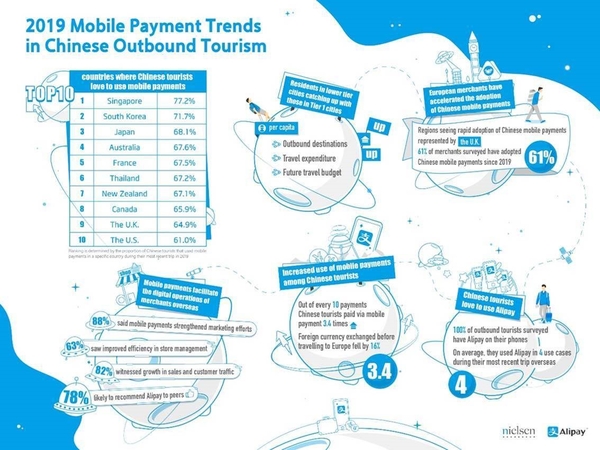
Thailand ranked among the global top 10 for mobile payments by Chinese tourists, fuelled by the country’s “maturity” in mobile payment solutions, a joint report by Nielsen and Alipay said.

The study reported the latest trends in Chinese outbound tourism and the consumption habits of these travellers for the third consecutive year.

Thailand and Singapore were among the top 10 overseas destinations visited by Chinese tourists in 2019 and are among the top 10 countries for overseas travel plans in 2020.

Surveying 4,837 Chinese travellers and 547 overseas merchants, the report found that the Southeast Asia region maintained its leadership in mobile payments by Chinese travellers, with Singapore and Thailand positioned at number 1 and 6 respectively in global ranking. Other nations on the list of “Top 10 countries where Chinese tourists love to use mobile payments” include South Korea, Japan, Australia, France, New Zealand, Canada, the UK and the US.

In Singapore, an early adopter of Chinese mobile payment solutions, almost all merchants (97 per cent) indicated steady improvement compared to the previous year in terms of mobile payment usage and the amount of mobile spending by Chinese tourists.

In Thailand, Singapore, Malaysia, Japan and South Korea, the usage rate of mobile payments among Chinese tourists was high, reaching 70 per cent in both 2018 and 2019, the report stated.

The total amount spent by Chinese tourists increased by 14 per cent in Singapore and Thailand and 23 per cent in Japan and South Korea between 2018 and 2019.

These results are encouraging more overseas merchants to deepen the use of Chinese mobile payment platforms as they go digital. Nearly 7 out of 10 (66 per cent) surveyed merchants in Singapore, South Korea and the UK hope to carry out more digital store operations through Chinese mobile payment platforms and hope to further their promotional and marketing activities leveraging Chinese mobile payment platforms.

In 2019, destinations located a four-hour flight away such as Thailand, Japan, South Korea and Singapore remained the most popular choices for Chinese tourists.

In addition, the US, Australia, UK and Canada were also among the top 10 countries, which indicated that Chinese tourists were fairly keen on travelling to English-speaking countries.

The top three factors affecting Chinese tourists’ overseas shopping habits are payment methods accepted by merchants (37 per cent), product variety and quality (36 per cent), and product price (36 per cent).

In 2019, compared to last year, Chinese tourists born in the 1990s spent nearly 12 per cent more on a single overseas trip, while those born in the 1980s spent 15 per cent more. An underlying reason for the increased travel expenditure may be the desire for more in-depth experience of local cultures. Around 70 per cent of millennials would proactively search for information on places to eat, stay and visit even after arriving at their travel destinations. More than 50 per cent of those born in the ’90s chose to stay at local homestays and B&Bs rather than hotels. Some 34 per cent of the post-1990 generation attended concerts or stage performances at their travel destinations, while 26 per cent experienced local outdoor sporting activities.

“The Chinese mobile payment engagement level [the proportion of mobile payment transactions by Chinese tourists overseas] and the depth of usage [total spending via mobile payments] continued to increase, indicating a more in-depth development of Chinese mobile payment solutions globally,” said Nielsen China president Justin Sargent.

“The trend of more overseas merchants going beyond payment to adopt more digitalised services is a promising one, as it helps brick-and-mortar businesses become better integrated with the digital economy while bringing more personalised experiences for consumers around the world,” commented Angel Zhao, Ant Financial’s International Business Group president. “Alipay, as part of the Alibaba ecosystem, aims to support the digital transformation of businesses and we will continue to innovate and help merchants around the world benefit from the rise in global tourism.”

Some of the key findings:

* Among the countries surveyed, the usage of Chinese mobile payments in Singapore, South Korea and Japan was highest, with Singapore in the leadership position.

* Some 77% of Chinese tourists in Singapore used mobile payments for their transactions.

* Total spending by Chinese tourists via mobile payments increased significantly in countries where Chinese mobile payment adoption is relatively mature.

* More overseas merchants intend to deepen the use of Chinese mobile payment platforms as they go digital.

Mobile payment insights

* The proportion of Chinese tourists using mobile payments when travelling abroad in 2019 remained stable compared to 2018.

* In 2019, 3.4 out of every 10 payments made by each Chinese tourist overseas were mobile payments, a slight increase from the previous year (3.2 payments).

* The per capita total amount of mobile payments made by outbound Chinese tourists increased by 18% compared to the previous year.

Increase in revenue, cost reduction critical for THAI: Thaworn #ศาสตร์เกษตรดินปุ๋ย

#ศาสตร์เกษตรดินปุ๋ย : ขอบคุณแหล่งข้อมูล : หนังสือพิมพ์ The Nation

https://www.nationthailand.com/business/30381166?utm_source=category&utm_medium=internal_referral

Increase in revenue, cost reduction critical for THAI: Thaworn

Jan 28. 2020
By The Nation

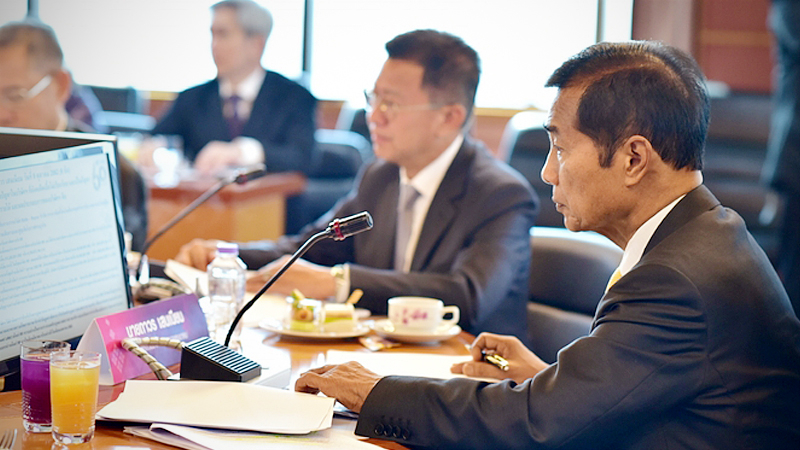
Deputy Transport Minister Thaworn Senneam discussed the open sky policy and emphasised the importance of increasing revenue and reduction of expenses for Thai Airways International Pcl (THAI) to turnaround its fortunes and become a sustainable operation in the future.

Thaworn, Jua Ratchasri, assistant secretary at the Ministry of Transport, along with other officials visited THAI’s headquarters to follow up on policy implementation and take stock of the situation.

Thaworn also looked at operational problems and obstacles faced by THAI in improving its financial results and becoming one of the world’s leading airlines. He followed up on the ministry’s policy, such as turnaround plan and business plan, acquisition plan for 38 aircraft, company management and structure, the U-Tapao aircraft maintenance centre, plans to boost revenue and operating results. Additional policies were also presented, such as human resource management, managing company property to extract maximum benefit, manage and improve sales and marketing between THAI and Thai Smile.

THAI president Sumeth Damrongchaitham said they were acting on the policies issued by the Transport Minister, which will be used in resolving accumulated financial losses and achieving longstanding profitability. He said progress was being made on some of the projects.

THAI is reconsidering its long-term plan for 2019-26 to acquire 38 aircraft. THAI’s board of directors approved the plan to acquire the aircraft to replace 17 aircraft that will be decommissioned, which must be suitable for the financial situation and altered conditions. The management will study aircraft types and present the results to the board in February 2020. The company will present information on the number of aircraft, acquisition methods and investment sources for consideration of the board at their meeting in March. This plan will help the company to grow continuously and not be a financial burden. It will be presented to the Ministry of Transport by March 31.

Regarding the Maintenance, Repair, and Overhaul Centre (MRO), THAI has sent information on bidding to investors. The deadline for submission of proposals is March 6, to enter into the negotiation process, conclude the selection results and draft the Public

Private Partnership Agreement (PPPA) that would be submitted to the Office of the Attorney-General and the Eastern Economic Corridor (EEC) Policy Committee. After that it will be proposed to the Cabinet in August. The company expects to sign the PPPA with the bid winner by the end of August. It is expected that the new MRO centre at U-Tapao will be operational by April 2023.

Meanwhile, negotiations are going on between the THAI and Rolls Royce over demand for damages. THAI is seeking compensation from Rolls Royce for the period THAI’s aircraft was not operational as they were awaiting spare parts, resulting in damages and lost business opportunities.

The company is working on increasing revenue according to the Middle Turnaround Plan (2020-24) through innovation and digital technology, implementing modern technology in various projects such as TG Digital Technology, sales development plan and boosting of ancillary revenue in order to improve online sales.

THAI is in the process of implementing cost reduction and cost control as well as organisational restructuring.

Today is more evidence for bitcoin’s claim to being a safe haven #ศาสตร์เกษตรดินปุ๋ย

#ศาสตร์เกษตรดินปุ๋ย : ขอบคุณแหล่งข้อมูล : หนังสือพิมพ์ The Nation

https://www.nationthailand.com/business/30381152?utm_source=category&utm_medium=internal_referral

Today is more evidence for bitcoin’s claim to being a safe haven

Jan 28. 2020
File Photo: Getty Images

File Photo: Getty Images
By Syndication Washington Post, Bloomberg · Brandon Kochkodin

Bitcoin’s claim for being digital gold appears to have another piece of evidence in its corner.

In a day where global stocks plunged on concerns over the impact of the deadly coronavirus, the largest cryptocurrency gained as much as 3.5% while gold rose as much as 1.1%.

Of course one day of trading does not a safe haven make. Critics of the assertion, or some would say mantra, that bitcoin is a digital analogue to the precious metal could rightly point to a falling short-term correlation between the two assets throughout the fourth quarter of 2019. As bitcoin’s price fell from more than $12,000 a coin last summer to less than $7,000 in the fall, gold rallied by about 20%.

But since the beginning of the new year, the two assets 60-day correlation has flipped from negative to positive. The correlation coeffecient now stands at 0.21, up from a low of negative 0.15 in December, and above the trailing one-year daily average.

Don’t care for statistical analysis? Well then take a look at how the cryptocurrency performed on another tumultuous day this year. Bitcoin and gold moved in tandem in the hours after Iran retaliated with a missile strike against the U.S. for the killing of General Qassem Soleimani.