Pavit clinches record seventh ADT victory #ศาสตร์เกษตรดินปุ๋ย

#ศาสตร์เกษตรดินปุ๋ย : ขอบคุณแหล่งข้อมูล : หนังสือพิมพ์ The Nation

https://www.nationthailand.com/sport/30381084?utm_source=category&utm_medium=internal_referral

Pavit clinches record seventh ADT victory

Jan 26. 2020
Pavit Tangkamolprasert

Pavit Tangkamolprasert
By THE NATION

Nakhon Ratchasima – The in-form Pavit Tangkamolprasert made history after he clinched the Boonchu Ruangkit Championship with a two-shot victory courtesy of a four-under-par 67 in the final round on Sunday.


Pavit, who held a two-shot advantage coming into Sunday’s action, kept his nerve after trading five birdies against one bogey for a winning total of 23-under-par 261 to stave off the challenge from American John Catlin.

The 30-year-old was ecstatic to win this title in the honour of his idol.

“I’m very happy, because this is the Boonchu (Ruangkit Championship) title. He is a Thai legend who has his own tournament to contribute to our golf. He is my idol since I was young, and it’s an honour to win in his name,” said Pavit, who becomes the first winner on the Asian Development Tour (ADT) this season.

More importantly, he etches his name into the history books by becoming the most successful golfer on the tour with seven wins, surpassing Chinese Taipei’s Chan Shih-chang who shared six titles with him previously.

Since claiming his first ADT title in Indonesia back in 2014, Pavit went on to become the Order of Merit champion that year and never looked back.

He has high regard for the ADT for shaping his career.

“I respect the ADT very much, it is a tour that is only getting stronger. I got into the Asian Tour through this tour and will always recognize that,” he said.

Pavit had to keep his composure on a day he described was the “toughest to attack the pins”.

He notched his first birdie on the fifth hole, along with Catlin.

He gained an advantage when the American fumbled with a bogey on the eighth, before both golfers bumped in another birdie on the ninth.

Pavit continued his consistency after the turn with another three birdies, and romped to victory despite a bogey in the final hole.

“Today was the toughest to attack the pins, so I had to play straight to the plan and play a safer game. From my position, there was no need to attack the pins so much because it was windy.”

Pavit also ensured the Boonchu Ruangkit Championship title is won yet again by another Thai golfer, following in the footsteps of Phiphatphong Naewsuk, Danthai Boonma, Namchok Tantipokhakul and Itthipat Buranatanyarat.

Victory also sees him pocketing US$22, 973.42.

Thailand’s Tirawat Kaewsiribandit finished in third (265), while Sweden’s Andreas Gronkvist and Thailand’s Sadom Kaewkanjana finished tied-fourth (268).

Final round scores

261 – Pavit Tangkamolprasert 69-62-63-67 (THA)

263 – John Catlin 63-62-71-67 (USA)

265 – Tirawat Kaewsiribandit 67-65-68-65 (THA)

268 – Andreas Gronkvist 68-64-67-69 (SWE), Sadom Kaewkanjana 65-61-70-72 (THA)

269 – Arnond Vongvanij 67-67-65-70 (THA)

270 – Kosuke Hamamoto 67-67-71-65 (THA), Prayad Marksaeng 64-67-70-69 (THA)

271 – Pawin Ingkhapradit 69-67-72-63 (THA), Kammalas Namuangruk (THA) 69-65-69-68, Suradit Yongcharoenchai 60-66-75-70 (THA), Thongchai Jaidee 68-61-68-74 (THA)

Remote-Controlled Forklift via 5G – Thailand’s First Industrial Use Case by AIS/SCG/PSU Offering Mor #ศาสตร์เกษตรดินปุ๋ย

#ศาสตร์เกษตรดินปุ๋ย : ขอบคุณแหล่งข้อมูล : หนังสือพิมพ์ The Nation

https://www.nationthailand.com/recommended/823?utm_source=category&utm_medium=internal_referral

Remote-Controlled Forklift via 5G – Thailand’s First Industrial Use Case by AIS/SCG/PSU Offering Mor

Jan 27. 2020
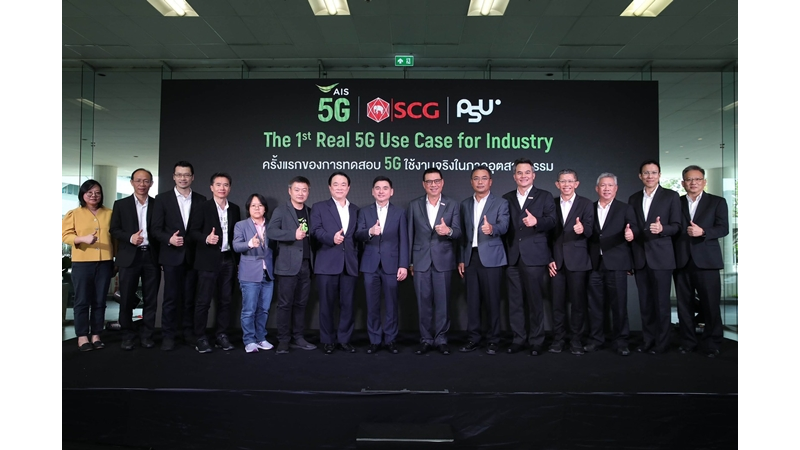
  • Thailand has gained another crucially technological advancement made possible by no. 1 digital technology, AIS and leading business conglomerate in the ASEAN, SCG in collaboration with Prince of Songkla University (PSU). For the first time in Thailand, the three organizations have successfully demonstrated the use of 5G technology for industry. The experiment was endorsed by the National Broadcasting and Telecommunications Commission (NBTC).

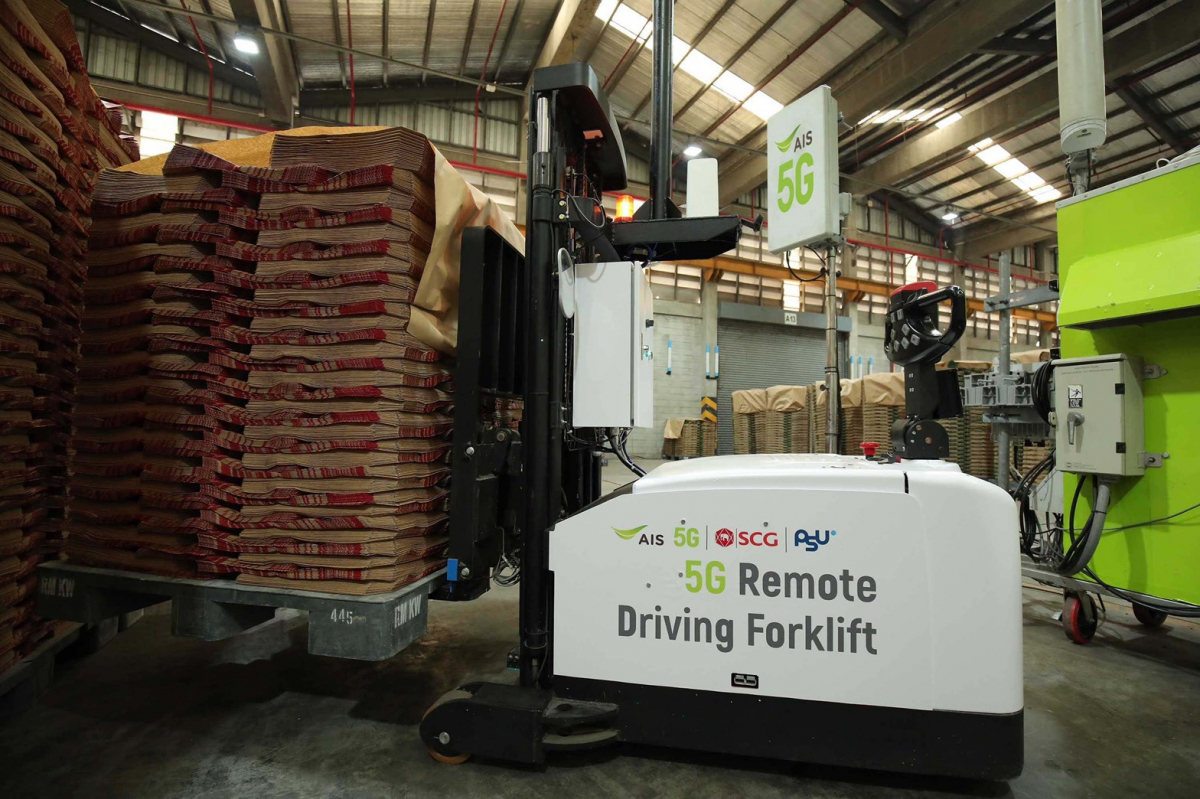
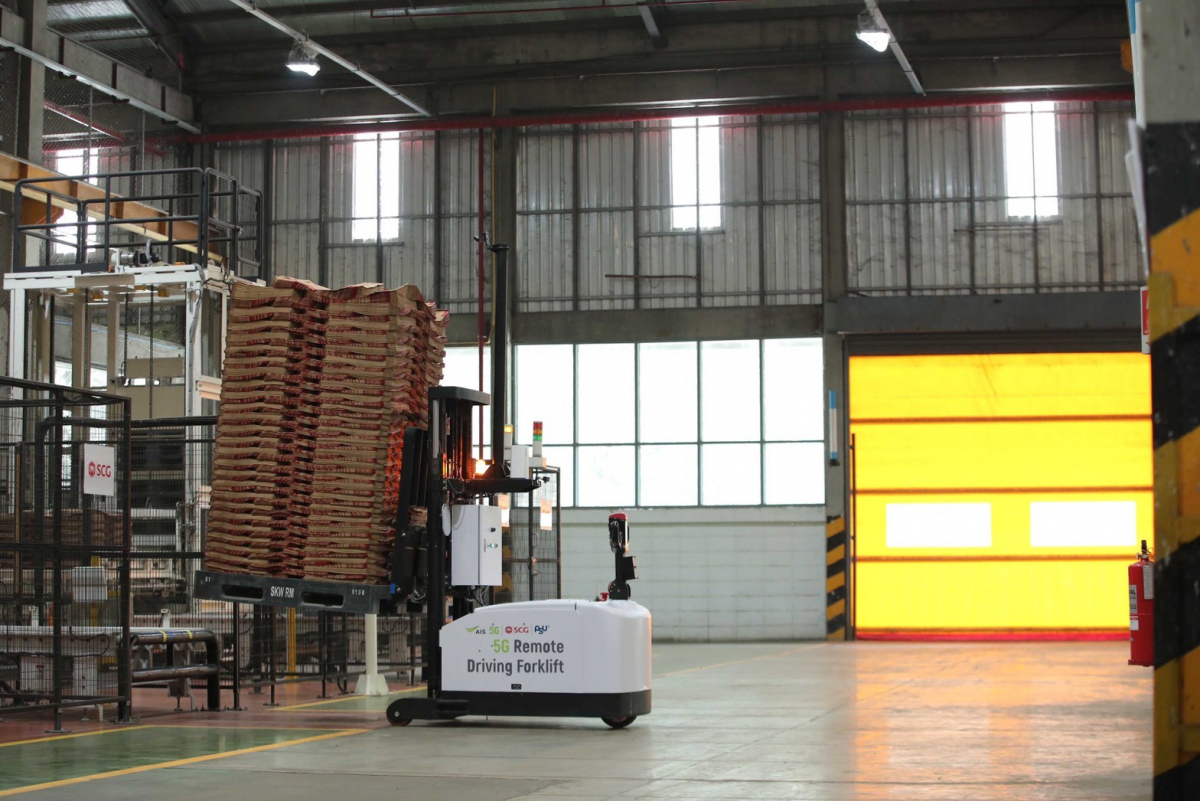
  • 5G technology was utilized to operate an unmanned forklift via AIS 5G network. The unmanned forklift was parked at SCG plant in Saraburi while the operator attempted to control it at SCG Headquarters in Bangsue, Bangkok. SCG operator was able to operate the forklift fluidly, maneuvering palettes from point A to point B accurately in real-time. This 5G industrial test paves way to increased productivity and safety, and opportunity for staff remote-training. It has become an important model for other industries to follow.
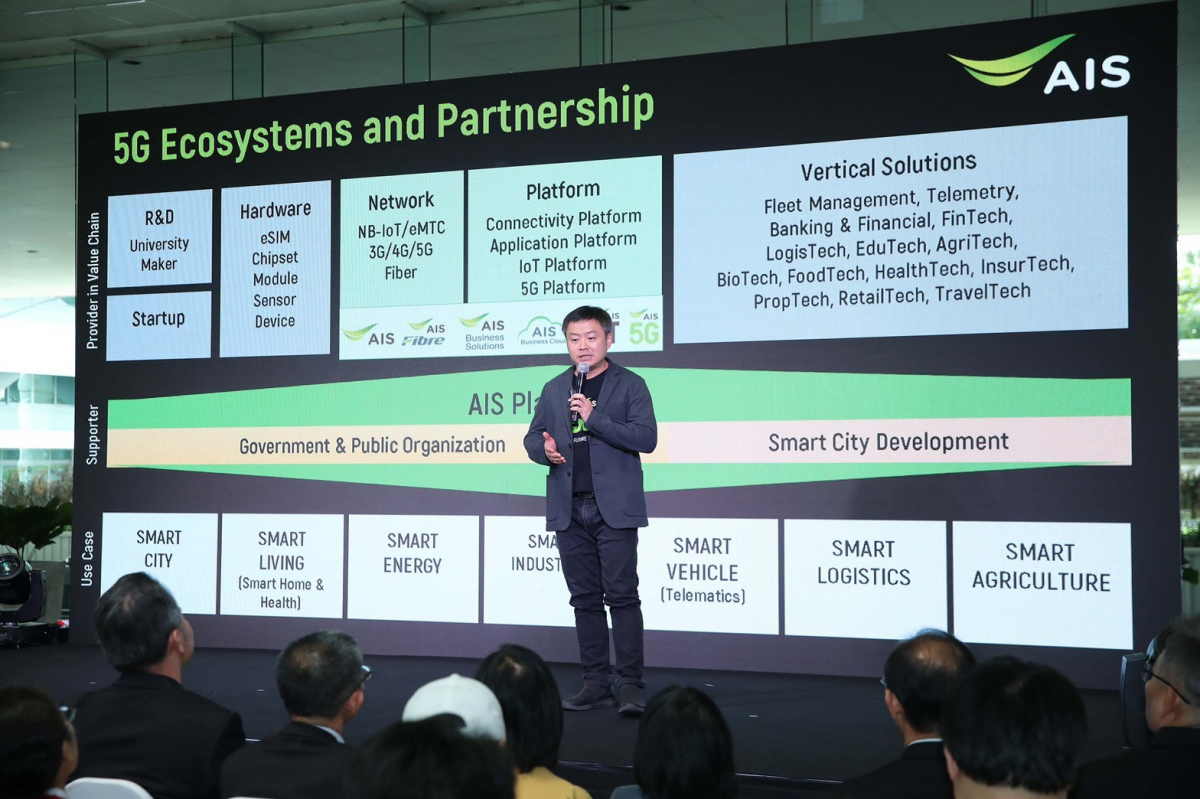
  • AIS and SCG have signed an MOU in research and innovation development using 5G network for multiple projects, plus staff competency to put Thai performance at the world’s frontline. The two giants intend to build 5G ecosystem together to enhance sustainable innovations and increase Thailand’s industrial competitiveness as well as the living quality of Thai people.

Mr. Wasit Wattanasap, Head of National Network Operation and Support at AIS said, “5G technology will dramatically change the way we do things in Thailand. It is capable of revolutionizing national industry and fulfilling Thailand 4.0 policy. Users will benefit in three ways: faster data speed, IoT connectivity, and stable and responsive network. As national leader in digital technology, AIS is committed to bring advanced technology to support driving of Thailand 4.0 policy for the benefits of Thai people.

AIS is the first to complete 5G testing nationwide. We welcome developers, researchers, students and individuals to work with us, testing 5G in multi-dimensions to understand how it works and how it can better digital economy and living quality of Thai people. AIS has proven ready to be the center for creating ecosystem specializing in innovation and delivering best customer experiences to users of all generations and all regions.

The collaboration among AIS, SCG and PSU marks a significant milestone in Thailand’s 5G test. Through NBTC consent, the 2.6 gigahertz bandwidth was utilized to demonstrate forklift’s remote operation in Saraburi province while the operator was controlling it in Bangkok, about 110 kilometers away. The result was a success, reiterating that 5G technology will definitely play an important role in Thailand’s future businesses. Needless to say, developing 5G ecosystem involves a few players including government, companies, and academic. Everyone has a part to play to promote and support 5G innovation, and to make Thailand capable to compete in the global market.”

Mr. Attapong Sathitmanothum, Director – Mechanization Automation & Robotics (MARs) and Industry 4.0, SCG said, “SCG aims to improve work operations in various fields and across business units including cement and building materials, packaging, and chemicals. We would like to enhance our company’s capabilities steadily and sustainably. A working group in Mechanization, Automation, and Robotics or MARs, along with Industry 4.0, has been established in 2016 to be a catalyst in leveling production process up to achieve Smart Factory by integrating MARs technology and Industry 4.0 together. With an investment over 860 million baht during the first three quarters of 2019, SCG has achieved several solutions including a predictive maintenance to notify us before the machine breakdown (Smart Maintenance), use of robot in laboratory (Smart Laboratory), automated dispatching system that provides cement to customers automatically (Smart Dispatching), and use of digital technology enabling data accessibility throughout supply chain so that everyone can utilize the same data as single source of truth, perform data analytics to improve our  competitiveness, and enhance our responsiveness to customers’ needs.

SCG stresses the importance of cooperative networking with intelligent and skilled organizations towards work success and speediness. Hence, it is a good initiative when SCG collaborates with AIS on this regard so SCG customers can receive products and services more efficiently and Thailand’s industry can leap further from our collaboration and optimization.

The project of remote-controlled forklift via 5G took place first at SCG plant in Saraburi where large numbers of raw materials and products are subject for moving. Forklift was chosen as a prototype due to its ease of operation in material mobility. If succeed, SCG could move on to applying 5G technology with other equipment and aspects. The forklift test confirms fast response in real-time and accuracy in data transfer necessary for advanced automated configuration. In addition, the proven capability in remote controlling can increase work productivity as drivers can operate forklifts from any location, and trainers can provide long-distance trainings to staff in various locations simultaneously and conveniently.

5G technology can strengthen SCG efficiency in many ways. Workers will be safer managing information in real-time and centralization. Customers will be more satisfied because logistics will become more effective. For example, SCG can incorporate IoT into Smart Home to provide convenience as well as safety to home living. Lastly, 5G will benefit SCG people development programs tremendously, truly aligning with our Industry 4.0 direction.”

Associate Professor Dr. Peerapong Teekasakul, Director of Innovation Hub at Council of University Presidents of Thailand said, “In the past, Prince of Songkla University through the Institute of Research and Digital Innovation has been actively conducting research and development with private- and industry sectors. We co-study and co-test 5G technology in many dimensions with our goals to building and preparing the new technology ready for actual industrial usages which, in turn, will increase competitiveness for Thailand’s industry. PSU receives funding for 5G study from Innovation Hub, Ministry of Higher Education, Science, Research and Innovation, to create an advanced intelligence platform for vehicles operable with low-latency controlling system via 5G AIS network. We hope the test results will lead to use cases in Thailand’s industry in the near future.”

The Kremlin has its hands in the internet around the world, and it’s also trying to control cyberspace at home #ศาสตร์เกษตรดินปุ๋ย

#ศาสตร์เกษตรดินปุ๋ย : ขอบคุณแหล่งข้อมูล : หนังสือพิมพ์ The Nation

https://www.nationthailand.com/edandtech/30381107?utm_source=category&utm_medium=internal_referral

The Kremlin has its hands in the internet around the world, and it’s also trying to control cyberspace at home

Jan 27. 2020
In Kirkenes is a Norwegian monument honoring the soldiers of the Soviet army who liberated the town from Nazi German occupation in 1944. MUST CREDIT: Photo for The Washington Post by Ksenia Ivanova

In Kirkenes is a Norwegian monument honoring the soldiers of the Soviet army who liberated the town from Nazi German occupation in 1944. MUST CREDIT: Photo for The Washington Post by Ksenia Ivanova
By The Washington Post · Isabelle Khurshudyan · WORLD, TECHNOLOGY, EUROPE

MOSCOW – On a stretch of Norway’s Arctic border known for its views of the Northern Lights is the small town of Kirkenes. Its population is under 4,000 and the local online newspaper has a staff of just two.

And it’s here that Russia is signaling what the future may hold: a wider hand in trying to censor the internet at home.

At issue is the Barents Observer, which publishes in English and Russian, and a story about an openly gay man who twice contemplated suicide but then changed his mind and is now speaking out to promote mental health. Russia’s state telecommunications regulator, Roskomnadzor, flagged the story for propagating suicide and blocked the entire Observer website in Russia last year.

Kirkenes, Norway, is home to the Barents Observer, an online newspaper that publishes in English and Russian. MUST CREDIT: Photo for The Washington Post by Ksenia Ivanova

Kirkenes, Norway, is home to the Barents Observer, an online newspaper that publishes in English and Russian. MUST CREDIT: Photo for The Washington Post by Ksenia Ivanova

But the editor of the Barents Observer wonders whether the website was targeted because of anti-Kremlin positions in the past.

From Japanese comics to political opposition web addresses to a small Norwegian publication that had roughly 20,000 Russian readers per month, Russia’s so-called “blacklist” has eclipsed 300,000. But although Moscow has become notorious for meddling in the global internet, doing so at home isn’t as easy – especially in a society that’s already used to online freedoms.

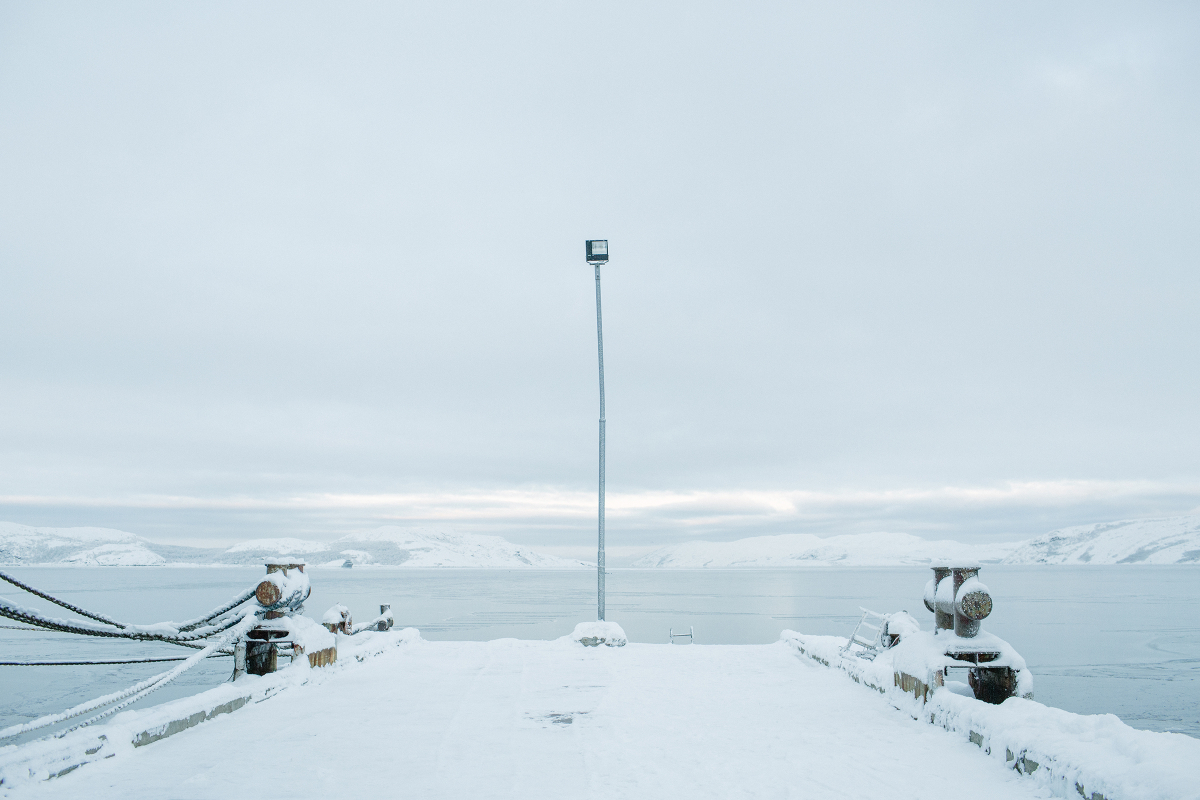
The view from a pier at Kirkenes. The Barents Observer has lost two-thirds of its Russian audience since being put on Russia's Internet blacklist. MUST CREDIT: Photo for The Washington Post by Ksenia Ivanova

The view from a pier at Kirkenes. The Barents Observer has lost two-thirds of its Russian audience since being put on Russia’s Internet blacklist. MUST CREDIT: Photo for The Washington Post by Ksenia Ivanova

Russia so far has tread relatively carefully in its censorship efforts. Still, internet freedom monitors in Russia fear its new “sovereign internet” law could one day rival Chinese and Iranian online oversight. The London-based rights monitor Freedom House ranked Russia 51st out of 65 countries on its internet-freedom rating last year.

The legislation came into force in November, but it could be a year before the technology is in place. It aims to route Russian web traffic and data through points controlled by state authorities and to build a national domain name system. This, supporters claim, would give Russia greater control of internet content and traffic.

Authorities backing the bill have described it as a cybersecurity measure needed to defend Russia by building a fenced-off network.

But critics see it as the government’s way of further cracking down on one of the few free sources of information remaining in the country.

Cable news channels are state-run, and the television audience is gradually declining, according to the Levada Center, an independent Russian pollster. Its study of the Russian media landscape in 2019 also revealed that social networks have replaced television as the main news source for young Russians, and although 80 percent of the population had confidence in television as a news source 10 years ago, that figure is now 55 percent.

“Cyber activity has been harnessed by the Russian government to target governments and activists externally but now those same tools are turned inward,” said Heather A. Conley, director of the Europe Program at the Center for Strategic and International Studies. “Russian officials have seen how the internet and social media can be used by civil society to share information, organize grass-roots protests across Russia and as an instrument of transparency against Russian corruption.”

An uprising more than eight years ago over election-rigging allegations sparked Russian authorities’ first efforts to wield more control over the internet. Russian President Vladimir Putin started to see the web as “a potential threat” and consider regulations, said former lawmaker Ilya Ponomarev.

Around the same time, the first measures were introduced to block undesirable content on the internet, specifically targeting child pornography, drug-related material and anything that could be considered as encouraging suicide.

The blacklist was supposed to be implemented by nongovernmental organizations, but the role instead went to watchdog Roskomnadzor. More than 10 state agencies can ask Roskomnadzor to block a website.

“That particular legislation did nothing wrong, but it was used as a model to introduce further initiatives,” Ponomarev said. “They were introducing laws but already for the political cases – what they called extremism, terrorism and this kind of stuff, which led to the establishment of real censorship.”

The result has been a loose definition of what can be blocked. Some Japanese manga has been added to the blacklist as child pornography. News websites run by Kremlin critics Mikhail Khodorkovsky and Garry Kasparov are inaccessible to Russians because they’ve been categorized as “extremism.”

And the Barents Observer was punished for allegedly promoting suicide even though the subject of its story was doing the opposite.

Thomas Nilsen, the editor, suspects the real trouble dates to 2014, when a Russian official publicly accused the website of anti-Russian reporting because it used terms such as “Putinism” and was critical of the country’s annexation of Crimea from Ukraine.

“We are located in probably the most remote corner of Europe,” Nilsen said. “But not because we chose to end up in this situation, we feel that, yeah, we are on the border to Russia but we are also on the border to the fight for freedom of the internet.”

Not all of Russia’s Internet blockades have been successful.

After the Telegram messaging app, especially popular in Russia, refused to give authorities access to its users’ encrypted messages in 2018, Roskomnadzor unsuccessfully attempted to block it but inadvertently denied Russians access to a slew of unrelated online services.

Telegram remains widely used by Russians, including many officials – even Roskomnadzor head Alexander Zharov is on the app. The country blocked LinkedIn in 2016 because it stores the user data of Russian citizens outside of Russia, but it’s been hesitant to take the same action with more popular social platforms Facebook and Twitter.

“They perfectly understand that 90 percent of (online) users are apolitical,” Khodorkovsky said. “But if you deprive them of a beloved product, they can politicize, which no one wants.”

Artem Kozlyuk of Roskomsvoboda, a group that fights censorship on the internet and promotes freedom of information, said that the new sovereign internet law “opens up a new chapter of regulation” because it involves infrastructure control through deep-packet inspection technology – an advanced way to filter traffic.

He doubts that Russia will actually have the capability to cut itself off from the global web, as the country’s authorities have claimed. But service could go dark in some regions for a short time.

That’s already happened during protests in Moscow and Ingushetia, a republic in the Caucasus region.

A block had devastating consequences for the Barents Observer. The publication has lost two-thirds of its Russian audience since being put on the internet blacklist.

Nilsen, the Observer’s editor, said he’d rather that happen than to succumb to self-censorship.

“We have decided never to compromise on what we are writing,” he said. “We are following what we believe is good ethics of journalism. And we don’t want to change anything because Roskomnadzor disagrees with us.”

A virus, fires and protests: The perils confronting college study-abroad programs #ศาสตร์เกษตรดินปุ๋ย

#ศาสตร์เกษตรดินปุ๋ย : ขอบคุณแหล่งข้อมูล : หนังสือพิมพ์ The Nation

https://www.nationthailand.com/edandtech/30381079?utm_source=category&utm_medium=internal_referral

A virus, fires and protests: The perils confronting college study-abroad programs

Jan 26. 2020
File Photo Credit China Daily: People wait for trains to return home on Jan 23, 2020. [Photo/sipaphoto.com]

File Photo Credit China Daily: People wait for trains to return home on Jan 23, 2020. [Photo/sipaphoto.com]
By  The Washington Post · Lauren Lumpkin · WORLD, EDUCATION 

A novel, potentially lethal virus in China. Bush fires in Australia. Political protests in Hong Kong.

Amid turmoil in different corners of the world, universities that send students to far-flung destinations have temporarily curtailed some programs while closely monitoring others.

Nine American University students studying in Beijing are hundreds of miles from the center of a coronavirus outbreak in Wuhan, China. But they have been encouraged to wear surgical masks, wash their hands frequently and avoid large crowds, said Mark Hayes, director of the school’s study-abroad programs.

“None of them are in the affected areas that have been quarantined,” Hayes said. “We have been working to give them information.”

Three students from Georgetown University are studying in Beijing, said Meghan Dubyak, a spokeswoman. The school issued a campuswide advisory in recent days urging students and faculty to get flu shots and to rely on International SOS, a platform that provides medical alerts and evacuation services for students and faculty abroad.

Authorities in Wuhan have halted regional travel, and hundreds of flights from the city’s international airport were canceled Thursday. In Beijing, officials have canceled mass Lunar New Year celebrations, hoping to limit the spread of the airborne illness.

China’s leader, Xi Jinping, warned Saturday of an “accelerating spread” of the virus that has claimed at least 56 lives. Infections have been confirmed in cities throughout China – including Beijing – and in Japan, Thailand, Malaysia, Singapore, South Korea, Taiwan, Vietnam, Nepal, Australia, France and the United States.

The response to the coronavirus has been rapidly evolving: On Saturday, Hong Kong announced schools would be closed until mid-February.

Leaders at George Washington University have shared safety information with students studying in China and other countries, Crystal Nosal, a spokeswoman, said in an email.

“Students were encouraged to stay aware and seek the most up-to-date information from their programs about the changing conditions while in the country or traveling through the region,” Nosal said. “The health and welfare of our community members is our utmost priority.”

But even before the emergence of a new coronavirus was widely recognized, several campuses in the District of Columbia – American, Catholic, George Washington and Georgetown universities – were suspending academic programs for another reason: explosive protests in Hong Kong that have gained international attention.

The demonstrations were triggered by legislation that would have allowed the extradition of criminal defendants to mainland China. Hong Kong’s government formally withdrew the proposal in October, but protesters want officials to meet other demands – including an independent investigation into police conduct and direct elections for government leaders.

Study-abroad program directors must tread a fine line between obstructing students’ ability to explore new places and keeping them safe.

In November, the peaceful protests in Hong Kong took a turn when a student at the Hong Kong University of Science and Technology died after demonstrators clashed with police.

“The protests moved onto college campuses,” said Grace Schneider, director of education abroad at Catholic University. “Hong Kong is one that, obviously, it was a long time ramping up. The protests started small, nonviolent, and went on for months.”

Leaders at Georgetown evacuated a group of students who were studying at the Chinese University of Hong Kong in November, said Livvy Gordon, a junior and global business major at Georgetown.

“We had been in Hong Kong for almost three months at that point, and I had seen one protest from afar,” Gordon said. “We were shocked once it began to escalate and once things moved to campus.”

Some students see political unrest as a learning opportunity. Rohit Seth, a 19-year-old sophomore at American University, said he wants a chance to understand, firsthand, the tension between pro-Brexit and pro-European Union voters in London. Hundreds of thousands of protesters filled the streets of London in October to decry the Brexit referendum authorizing the United Kingdom to withdraw from the EU.

“With everything happening with Brexit, I think it’s important to be abroad when all this big stuff is happening,” Seth said at an information session for students looking for study-abroad opportunities.

AU’s Hayes said his office has warned students about potential travel issues in the region. Brexit could affect students’ ability to travel across Europe and return to their host school in London.

AU in recent years discontinued a study-abroad program in Aleppo, Syria, and evacuated students from Beirut amid safety concerns. Catholic suspended its program in Chile this semester after protesters fought a subway fare increase in October.

Two popular study-abroad sites in Australia – Sydney and Melbourne – have not been directly affected by bush fires engulfing parts of the country, but program directors are still monitoring the flames.

Four Howard University students are studying in Sydney, about 50 miles away from the fire zone, said Maraina Montgomery, assistant director of study-abroad programs.

Officials do not expect programs to be upended by fires but are concerned about air quality. Reports from Melbourne said air quality in mid-January was six times worse than what’s considered healthy. In recent days, conditions have improved.

Bryony Whitelaw, a junior at AU, said her host school in Melbourne has sent information about where the fires are roaring and how far those sites are from campus.

“I’m not looking forward to it if it is as bad as it has been the last few days, but I should be fine,” Whitelaw said about the air quality in mid-January.

Scientists have cited climate change as the underlying cause of an outbreak of fires that have cost more than two dozen people their lives and destroyed upward of 2,000 homes. Whitelaw views it as a learning opportunity.

“Maybe it’s an opportunity for the world to get together and say we need to make some radical changes there,” Whitelaw said.

At the Institute for the International Education of Students, also called IES Abroad, faculty are encouraged to embrace the chaos, said William Hoye, executive vice president and chief operating officer. The nonprofit offers study-abroad programs in 34 locations around the world.

“We’re often focused on our faculty making sure what’s happening in the country has a teachable moment,” Hoye said. “We want the faculty and staff to not just understand where the protests are, but why the protests are.”

IES suspended summer programs in Hong Kong and is offering students in Sydney the option to move their studies to neighboring New Zealand, Hoye said.

Foreign universities that host American students regularly issue safety tips to prospective students. Study-abroad offices at Washington-area schools reported sharing a host of resources with students, including State Department travel advisories and travel insurance, in case programs are abruptly cut short.

“When countries are more unstable, we’ll be a little more cautious with students, letting them know upfront about the situation and that we don’t necessarily know yet what’s going to happen,” Catholic University’s Schneider said.

Plight continues in India’s luxury realty, stocks rise 10% in 2019 #ศาสตร์เกษตรดินปุ๋ย

#ศาสตร์เกษตรดินปุ๋ย : ขอบคุณแหล่งข้อมูล : หนังสือพิมพ์ The Nation

https://www.nationthailand.com/property/30381100?utm_source=category&utm_medium=internal_referral

Plight continues in India’s luxury realty, stocks rise 10% in 2019

Jan 26. 2020
Under-construction buildings. (File Photo: IANS)

Under-construction buildings. (File Photo: IANS)
By The Statesman/ANN

Amid a slowing economy, luxury real estate continues to witness weak demand as a report by Anarock Property Consultants shows that inventory level in the segment rose by 10 per cent last year.

Across seven major cities in the country, the total unsold stock of apartments priced more than Rs 1.5 crore by the end if last year was 89,000 units against 81,290 units in 2018.

“Snapped up like hot cakes by investors in previous years, luxury housing sales are still in the doldrums and hinging largely on end-user sales. Even after three years of demonetisation, despite having the lowest share of overall unsold stock in the top seven cities, it remains the worst-performing of all budget categories,” said Anuj Puri, Chairman, Anarock Property Consultants.

As per the report, Hyderabad and Pune saw unsold luxury stock increase by a whopping 58 per cent and 56 per cent, respectively during the period under review.

“Hyderabad’s pent-up luxury stock rose from 3,000 units in 2018 to nearly 4,740 units in 2019. In Pune, it increased from 2,750 units in 2018 to 4,290 units in 2019,” the report said.

The National Capital Region (NCR) saw its unsold luxury stock increase by 17 per cent in the period. The unsold luxury stock in NCR was the second-highest after MMR, with around 18,400 units by 2019-end.

In the Mumbai Metropolitan Region (MMR), inventory in the high-end realty increased by 2 per cent to 48,970 units by 2019-end. The region added 11,250 luxury units last year.

In Chennai, unsold luxury stock increased by 33 per cent to nearly 3,300 units and that in Bengaluru rose by 6 per cent to 7,470 units by the end of 2019.

Kolkata, however, bucked the subdued trend and the luxury stock in the city declined by 10 per cent to 2,050 units.

The total unsold stock across segments is nearly 6,48,400 units in the top seven cities.

Affordable housing (priced below Rs 40 lakh) comprised the maximum share at about 36 per cent in the overall stock, followed by 31 per cent in the mid-segment (Rs 40-80 lakh).

Premium housing (Rs 80 lakh-1.5 cr) comprised 19 per cent of the unsold stock while the rest 14 per cent was luxury housing.

Mid-segment homes priced between reduced the maximum unsold stock in 2019 by 15 per cent, from nearly 2.27 lakh units in 2018 to around 2.02 lakh units in 2019-end.

Coronavirus outbreak: Indonesians in locked-down Wuhan want to come home #ศาสตร์เกษตรดินปุ๋ย

#ศาสตร์เกษตรดินปุ๋ย : ขอบคุณแหล่งข้อมูล : หนังสือพิมพ์ The Nation

https://www.nationthailand.com/ann/30381101?utm_source=category&utm_medium=internal_referral

Coronavirus outbreak: Indonesians in locked-down Wuhan want to come home

Jan 26. 2020
Travelers are checked by health personnel at the entrance to an underground train station in Beijing on Jan. 24. Security and health officers are working to prevent the spread of a deadly SARS-like virus that originated in Wuhan. China has sealed off millions living near the epicenter of the outbreak. (AFP/Noel Celis)

Travelers are checked by health personnel at the entrance to an underground train station in Beijing on Jan. 24. Security and health officers are working to prevent the spread of a deadly SARS-like virus that originated in Wuhan. China has sealed off millions living near the epicenter of the outbreak. (AFP/Noel Celis)
By The Jakarta Post/ANN

Indonesian nationals trapped in the locked-down city of Wuhan, China, where the deadly coronavirus first emerged, have expressed hope that they will be allowed to leave the country amid the outbreak.

Fitriani, a 25-year-old master’s student at the China University of Geosciences in Wuhan, said she hoped she could be evacuated to a safer region or return to Indonesia before the outbreak worsens.

“I didn’t plan on returning to Indonesia during this winter break. However, I started to think of going home when the virus reportedly infected 198 people by Jan. 21, but the city has been locked down since Jan. 23,” Fitriani told The Jakarta Post via text message on Saturday.

Fitriani is among the 93 Indonesian citizens, a majority of them students, trapped in Wuhan since the Chinese government shut down travel out of the epicenter of the viral outbreak on Thursday, according to the chairman of the Wuhan branch of the Indonesian Student Association in China (PPIT Wuhan), Nur Musyafak.

The Chinese government has halted all travel from and toward Wuhan, shut down its public transportation and told residents to stay home, AFP reported, adding that 17 other smaller cities in Hubei province prepared various measures ranging from closing public venues and restricting large gatherings to halting public transportation and asking citizens not to leave their cities.

There were around 200 Indonesian nationals in Wuhan, Nur of PPIT Wuhan said, adding that many of them had returned to Indonesia for the Lunar New Year holiday, which usually lasted until mid-February.

Foreign Minister Retno LP Marsudi offered a different number, however, citing embassy records that say there were 428 Indonesian students in Wuhan, 1,280 in Beijing and 849 in Shanghai, while adding that, as of December, 90 percent of the Indonesian students in Wuhan and its surroundings had returned to Indonesia for Chinese New Year.

Fitriani, who lives at her university’s dormitory with five other Indonesian students, said she would not leave her dorm unless necessary. Her dorm set up thermal scanners to monitor students’ body temperatures on Jan. 22, she added.

The last time she went out was to buy groceries at a nearby traditional market that was now temporarily closed as some sellers feared the coronavirus. She said she had stocked up on food for the next week, as suggested by Chinese authorities.

“The prices of vegetables and fruits have gone up, from 5 Chinese renminbi per 500 grams to 30 renminbi per 500 grams. I had no other choice but to buy them as I need them,” Fitriani said.

Fitriani, who has been in Wuhan since September, talked about how unusually quiet the streets had been as she only spotted a few private vehicles and people wearing facial masks.

Another China University of Geosciences student in Wuhan, Rio Alfi, 35, said he initially had plans to return home to Pekanbaru, Riau, along with his wife and son before the lockdown was announced.

He said that although he had stored groceries for the coming week, he could not help but worry as prices of commodities had gone up while food stocks being sold had declined, leading people to scramble to get the commodities at a supermarket he had gone to.

“We’re waiting for what’s next because it’s been three days since the lockdown. Psychologically speaking, it’s pretty tough for us here in Wuhan. The student association and the Indonesian Embassy have coordinated and are monitoring the situation. However, there’s been no decision yet as to whether we’ll be evacuated out of Wuhan or receive assistance over supplies,” he told the Post via text message on Saturday.

Rio, who has been studying in Wuhan since 2016, said that this year’s Lunar New Year was different as fewer people were praying for their ancestors at cemeteries.

AFP reported that the Chinese army had deployed medical specialists to Wuhan on Saturday as hospitals bustled with patients, adding that authorities began building a new field hospital in Wuhan to deal with the outbreak.

The coronavirus, which bears similarities to the severe acute respiratory syndrome (SARS), killed 54 people as of Sunday morning in China and spread around the world, including Malaysia, Singapore and Thailand, as confirmed infections surged to 1,652 people, Channel News Asia reported.

The Indonesian Foreign Ministry’s director for citizen protection told the Post on Friday that as Wuhan was under quarantine, the ministry through the Indonesian Embassy in Beijing was coordinating with local authorities to provide assistance needed by Indonesian nationals in the city.

Indonesian Ambassador to China Djauhari Oratmangun said the embassy was in close contact with Indonesian citizens through Chinese messaging app WeChat.

“We’re constantly in contact with them. There is a coordinator appointed in each campus’ dormitory. So far, from the information that we’ve received, their food stock still suffices,” he told the Post on Saturday.

He said the embassy had bought plane tickets for Indonesian students in Wuhan who had been traveling outside of the city prior to the lockdown so that they could return to Indonesia.

Following the lockdown, Indonesia announced a temporary suspension of all flights operated by Indonesian airlines to and from Wuhan. Authorities had activated thermal scanners at entrance points in Indonesia to detect any symptoms of the virus, such as fever.

620 km long human chain comprising 70 lakh people formed in Kerala in protest against citizenship law #ศาสตร์เกษตรดินปุ๋ย

#ศาสตร์เกษตรดินปุ๋ย : ขอบคุณแหล่งข้อมูล : หนังสือพิมพ์ The Nation

https://www.nationthailand.com/ann/30381099?utm_source=category&utm_medium=internal_referral

620 km long human chain comprising 70 lakh people formed in Kerala in protest against citizenship law

Jan 26. 2020
The human chain stretched from Kasaragod in north to Kaliyikkavila in the south in Tamil Nadu. (Photo: Twitter/@cpimspeak)

The human chain stretched from Kasaragod in north to Kaliyikkavila in the south in Tamil Nadu. (Photo: Twitter/@cpimspeak)
By The Statesman /ANN

A 620 km long human chain comprising around 70 lakh people was formed in Kerala by the CPI (M)-led Left Democratic Front (LDF) on Sunday to mark protest against the contentious Citizenship Amendment Act.

The human chain stretched from Kasaragod in north to Kaliyikkavila in the south in Tamil Nadu.

As per the reports, a large number of people gathered for the human chain formation and after a trial at 3:30 pm, the chain formation began at 4 pm. At first, the Preamble of the Constitution was read out and then every participant took a pledge on the account of the CAA by the BJP-led Central government.

At the southernmost end, CPI-M Politburo member S Ramachandran Pillai was first in the chain while at the southernmost end, another Politburo member of the party MA Baby was standing.

“Kerala has always led numerous protests and also shown to the rest of the country, what very strong protests can lead to. This show has been near total and even though the leadership of the opposition is not taking part in this, numerous of their supporters have taken part and this shows that we are all one to a wrong decision of the Centre,” Baby told media.

Kerala Chief Minister Pinarayi Vijayan was also standing in the chain along with his family members at Palyam in Thiruvananthapuram.

“We can really be proud that how protests can be held peacefully when the entire population unites. Today also we have seen the same being repeated in the form of a human chain. The participation has been overwhelming and the message is very clear that we do not accept CAA as this divides people based on religion. Even various countries, as well as the UN, have said that this should not happen,” he said while speaking to media.

“In Kerala, we have already made it clear that neither NPR nor NRC will happen. We cannot rest until the CAA is withdrawn,” he added.

Christian bishops, priests, nuns, Muslim clerics, film personalities, poets, writers, and numerous people from the socio-cultural fields participated in the human chain formation.

Earlier, the Kerala government had also passed a resolution in the state Assembly demanding the withdrawal of CAA and later the government also filed a petition in the Supreme Court seeking to declare CAA as unconstitutional.

Top-level meeting announces slew of measures to fight virus #ศาสตร์เกษตรดินปุ๋ย

#ศาสตร์เกษตรดินปุ๋ย : ขอบคุณแหล่งข้อมูล : หนังสือพิมพ์ The Nation

https://www.nationthailand.com/ann/30381098?utm_source=category&utm_medium=internal_referral

Top-level meeting announces slew of measures to fight virus

Jan 26. 2020
People wear masks at Dalian International Airport in Dalian, Northeast China's Liaoning province on Jan 22, 2020. [Photo/sipaphoto.com]

People wear masks at Dalian International Airport in Dalian, Northeast China’s Liaoning province on Jan 22, 2020. [Photo/sipaphoto.com]
By China Daily/ANN

China will adopt a host of measures including delaying and reducing conferences and major events, extending the Spring Festival holiday and supporting work online to curb the spread of the novel coronavirus, according to a decision released at a high-level meeting on Sunday.

Premier Li Keqiang presided over the meeting of the leading group of the Communist Party of China Central Committee on coping with the novel coronavirus, a pneumonia-causing virus, in Beijing. Li is head of the group.

The group was established after a meeting of the Standing Committee of the Political Bureau of the CPC Central Committee chaired by Xi Jinping, general secretary of the CPC Central Committee, on Saturday.

The Sunday meeting called for epidemic control measures to be adopted in a manner that is decisive, forceful, orderly, scientific and well thought-out.

It is important to have a keen understanding of the grave situation of epidemic control and prevention, put the safety and health of the people at a paramount position and make epidemic control a top priority right now, a statement released after the meeting read.

The meeting underscored the need for greater effort to bolster epidemic prevention and control in Hubei province and Wuhan, epicenter of the outbreak.

The country will coordinate resources nationwide and prioritize efforts to support the province and its capital with medical workers and resources such as protection suits and surgical masks, the statement said.

The supply of necessities for residents in the area must be ensured with unimpeded passage to be offered for resources distributed to the region, it added.

Provincial and municipal authorities in the area must carry out their responsibilities, accelerate the construction of special hospitals for admitting infected patients and renovate hotels as segregation zones, it said.

The meeting also called for better treatment of patients with fever and preventing secondary problems from the epidemic, with stronger support to medical workers to ensure their rotation from the frontline, their protection and to alleviate their mental and physical pressure.

It also urged heightened measures to monitor the virus, with stringent measures to segregate confirmed and suspected cases as well as their close contacts.

Authorities in areas with a large number of patients must increase the number of designated treatment hospitals, hospital beds and quarantine areas, the statement said.

More monitoring and epidemic control measures will be carried out at public venues and transport vehicles, it said.

The meeting also pointed out weaknesses in health conditions in rural areas with a large number of migrant workers returning to their homes.

Authorities must attach great importance to epidemic control and prevention in rural areas and give full play to the role of primary-level organizations and village doctors, the statement said.

To reduce population flows, the meeting decided on measures such as extending the Spring Festival holiday, which is scheduled between Jan 24 and 30, and delaying the start of the spring semester at colleges and schools.

It called for maximum effort to reduce the mortality of patients and enhance the treatment of patients. More research will be conducted on cured patients and treatment measures will be further refined, with more training set to be offered to medical workers.

The meeting urged quicker breakthroughs in research of vaccines for the virus, saying experts and researchers must work together in the process and social organizations must be encouraged to participate.

It also vowed strong accountability for those who concealed, underreported or delayed the reporting of infection cases, adding information on epidemic control and prevention will be made public in a timely manner.

China will step up cooperation with the World Health Organization as well as communication and operation with relevant countries during the epidemic control process, the statement said.

The Chinese mainland has reported 1,975 confirmed cases of pneumonia caused by the novel coronavirus, including 56 dead and 324 in critical condition, in all provincial-level regions except the Tibet autonomous region as of Saturday.

Doctors’ group asks government to review restricting visits from China #ศาสตร์เกษตรดินปุ๋ย

#ศาสตร์เกษตรดินปุ๋ย : ขอบคุณแหล่งข้อมูล : หนังสือพิมพ์ The Nation

https://www.nationthailand.com/ann/30381091?utm_source=category&utm_medium=internal_referral

Doctors’ group asks government to review restricting visits from China

Jan 26. 2020
Korean Medical Association President Choi Dae-zip speaks during a briefing Sunday. (Kim Arin/The Korea Herald)

Korean Medical Association President Choi Dae-zip speaks during a briefing Sunday. (Kim Arin/The Korea Herald)
By The Koea Herald/ANN

A major doctors’ group on Sunday called on the South Korean government to make all necessary administrative preparations, including an entry restriction from China, to contain the spread of the new coronavirus discovered in Wuhan, China.

In a briefing at its office in Yongsan, central Seoul, the Korean Medical Association’s president Choi Dae-zip said that while the limit on entry “may not be imperative right now, at the time of speaking,” blocking the visitor flow may be “one of the most vital preventive measures against the epidemic.”

“Confirmed cases are increasing by the hundreds each day. Now is the time for a proactive, all-out action,” he said.

“Health authorities should be monitoring the outbreak situation in China by the hour and consider the possibility of an entry ban.”

This would run counter to government efforts to repatriate the 500-600 Korean citizens believed to remain in or around Wuhan.

Choi said the government should “brace for the worst case scenario,” calling for an emergency-level response akin to that applied during the outbreak of Middle East respiratory syndrome in Korea in 2015.

He said patients who are showing symptoms of infection should first call the Korea Centers for Disease Control and Prevention hotline, 1339, before visiting the hospital, in order to prevent its spread.

He also stressed strict observation of hygiene rules such as wearing of masks with filtration capabilities of KF 94 or higher at all times, and washing hands.

Earlier the same day, the KCDC said all regions of mainland China would be designated as an “area of contamination” from Tuesday.

The centers said all passengers from China would be required to identify their health conditions via a questionnaire when entering the country.

In addition, visitors from Hubei Province and the rest of China who are showing symptoms of pneumonia will be quarantined.

Choi said the government should draw up a list of everyone in Korea who had been in Wuhan or its surrounding Hubei Province and test them for infection.

Some 200 personnel from the Ministry of Defense, National Police Agency and regional governments will be deployed to help with screening at the airports, the centers said.

By Kim Arin (arin@heraldcorp.com)

Current estimate is 20% of Wuhan virus patients will become severely ill, says Singapore infectious diseases expert #ศาสตร์เกษตรดินปุ๋ย

#ศาสตร์เกษตรดินปุ๋ย : ขอบคุณแหล่งข้อมูล : หนังสือพิมพ์ The Nation

https://www.nationthailand.com/ann/30381089?utm_source=category&utm_medium=internal_referral

Current estimate is 20% of Wuhan virus patients will become severely ill, says Singapore infectious diseases expert

Jan 26. 2020
People are seen wearing masks as they walk down Orchard Road on Jan 26, 2020.ST PHOTO: KELLY HUI

People are seen wearing masks as they walk down Orchard Road on Jan 26, 2020.ST PHOTO: KELLY HUI
By The Straits Times/ANN

SINGAPORE – An estimated 20 per cent of the people infected with the Wuhan virus will become very ill, such as with more severe pneumonia, says a Singapore infectious diseases expert.

That is the current estimate and this may change when more is known about the Wuhan coronavirus, also known as the 2019-novel coronavirus (2019-nCoV), says Dr Shawn Vasoo, the acting clinical director at the National Centre for Infectious Diseases (NCID).

There are currently four confirmed cases of the 2019-novel coronavirus in Singapore. The patients had all travelled from China where the virus is spreading fast.

With concerns growing, The Straits Times asked Dr Vasoo to explain what else is known about the virus that has so far reportedly killed more than 50 people in China.

Q: WHY DOES THE VIRUS LEAD TO PNEUMONIA AND WILL EVERYONE GET IT?

A: In some people, the virus infects the lower respiratory tract (lungs) and this results in pneumonia. Not everyone will get pneumonia but in most diagnosed cases so far, pneumonia, of varying severities, has been commonly described.

Q: HOW DO I GET CURED OF PNEUMONIA? IS PNEUMONIA THE WORST THAT CAN HAPPEN TO ME IF I GET THE VIRUS?

A: As there are currently no proven specific anti-viral medications for the 2019-novel coronavirus, one overcomes the infection with our immune system, and recovers thereafter.

Not all cases of pneumonia are severe, but most patients who have fared poorly are those who have gone on to develop severe pneumonia.

Severe cases may have more concurrent chronic medical problems such as cardiovascular disease or lung disease.

Currently, an estimated 20 per cent of the people infected with the 2019-novel coronavirus will become very ill (more severe pneumonia). However, this estimate may change as we learn more about this disease.

Q: WHAT ARE THE SYMPTOMS OF THE WUHAN VIRUS?

A: The common symptoms include fever, cough, in more severe cases, shortness of breath, especially when there is pneumonia. Occasionally some symptoms may be absent, for example fever.

Q: HOW DO I KNOW IF THE COUGHING, FEVER AND OTHER RESPIRATORY SYMPTOMS THAT I HAVE IS THE COMMON COLD, FLU, DENGUE OR THE WUHAN VIRUS?

A: It is not possible to distinguish clearly between the common cold, influenza and the 2019-novel coronavirus.

Even influenza, which is more common, can lead to severe disease and pneumonia. It also causes death.

However, unlike in Wuhan, there is currently no widespread community transmission in Singapore.

Hence, we would be concerned about a possible 2019-novel coronavirus infection only if one has travelled to China or if one has been in contact with a known case of the infection.

As for dengue, respiratory symptoms are less common and fever, rash, muscle aches and headaches are more common.

Q: WHEN SHOULD I GO TO A GENERAL PRACTITIONER (GP)?

A: You should seek medical attention if you are not feeling well in general, particularly if symptoms have not improved in two to three days. You should seek immediate medical attention if you have risk factors for the 2019-novel coronavirus as described above, so your doctor can assess you.

Q: IF I HAVE SYMPTOMS, SHOULD I GO STRAIGHT TO THE NCID OR A HOSPITAL?

A: If you have symptoms you can see your family doctor or polyclinic who will make the initial assessment.

If more urgent medical attention is needed, or if it is a medical emergency, you should seek medical attention at the nearest emergency clinic or hospital.

Q: WHAT IS THE BEST WAY TO NOT CATCH THE WUHAN VIRUS?

A: Avoid travelling to affected areas, in particular the Hubei province. If you are travelling to China, you should exercise caution and observe good hand hygiene (hand washing or use of hand sanitisers) and avoid crowded places.

Q: WHAT DOES WEARING A MASK DO?

A: As infection by the 2019-novel coronavirus and other common respiratory viruses are spread by respiratory droplets carrying the virus, surgical masks can prevent inhalation of these droplets.

You should wear a surgical mask if you are ill to prevent spreading whatever respiratory virus you have to others (this is most commonly influenza and the common cold viruses). This is part of being civic conscious.

Surgical masks may help prevent infection from respiratory viruses in general, if one is around sick people.

Those who are more prone to infection, such as the elderly or those with poor immune systems, would want to consider wearing them.

I would discourage the routine use of N95 masks as mask fitting is typically required for its proper use.

It is also more stuffy and uncomfortable if used for prolonged periods, and may actually be less effective than a surgical mask if used improperly.

There is no known transmission of the 2019-novel coronavirus in the community in Singapore at this point, so the routine use of a mask to prevent this particular infection is probably unnecessary.

However, If you are going to an affected area, you should strongly consider the use of a surgical face mask.

Q: IF I WERE IN CONTACT WITH SOMEONE WHO HAS THE WUHAN VIRUS AND AM INFECTED, HOW LONG WOULD IT TAKE FOR THE SYMPTOMS IN ME TO SHOW?

A: This may vary, as patients have developed symptoms as early as in two days while others may develop symptoms later, for example in 10 to 14 days. The average is estimated to be about one week.

Q: AT WHICH STAGE AM I MOST LIKELY TO INFECT OTHER PEOPLE?

A: You are most likely infectious when you have symptoms, in particular fever and cough.