Novel coronavirus vaccine being developed #ศาสตร์เกษตรดินปุ๋ย

#ศาสตร์เกษตรดินปุ๋ย : ขอบคุณแหล่งข้อมูล : หนังสือพิมพ์ The Nation

https://www.nationthailand.com/ann/30381088?utm_source=category&utm_medium=internal_referral

Novel coronavirus vaccine being developed

Jan 26. 2020
By China Daily/ANN
Research and development of a vaccine for the novel coronavirus, which has caused a wider outbreak in China, is under way, a scientist from the Chinese Center for Disease Control and Prevention said on Sunday.

Scientists from the center have successfully isolated the virus, and are working to select the proper strain for vaccine production, Xu Wenbo, head of the center’s viral disease control and prevention institute, said.

Research and development of a vaccine is complex work, which usually requires between two and three years before availability for use, he said, adding it is possible that a new vaccine may be developed within a few years in emergency conditions.

China bans wild animal trade to control spread of virus #ศาสตร์เกษตรดินปุ๋ย

#ศาสตร์เกษตรดินปุ๋ย : ขอบคุณแหล่งข้อมูล : หนังสือพิมพ์ The Nation

https://www.nationthailand.com/ann/30381085?utm_source=category&utm_medium=internal_referral

China bans wild animal trade to control spread of virus

Jan 26. 2020
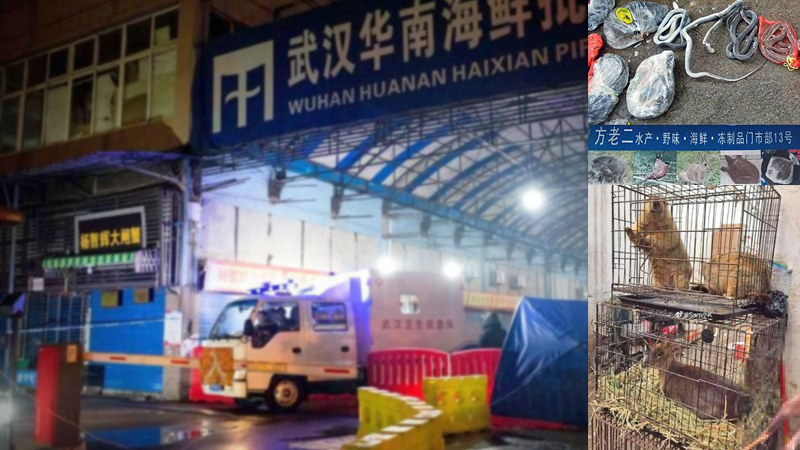
Wild animals sold at a seafood market in Wuhan could be the source of the outbreak, Gao Fu, director of the Chinese Center for Disease Control and Prevention, said at a news briefing in Beijing. [Photo/Xinhua]

Wild animals sold at a seafood market in Wuhan could be the source of the outbreak, Gao Fu, director of the Chinese Center for Disease Control and Prevention, said at a news briefing in Beijing. [Photo/Xinhua]
By China Daily/ANN

China bans all trading of wild animals at markets, restaurants and e-commerce platforms to control the spread of the novel coronavirus epidemic, a new notice said on Sunday.

The ban is implemented from Sunday until the risks of the epidemic have been resolved, the notice said, as experts have confirmed that wild animals were the origin of the virus.

Jointly released by the State Administration for Market Regulation, Ministry of Agriculture and Rural Affairs, and National Forestry and Grassland Administration, the notice requires wild animal breeding farms to implement quarantine policies and forbids any selling or transporting of wild animals.

The public can report any trading of wild animals to 12315 hotlines, the notice said.

Local authorities should hold violators accountable and those who have violated relevant laws will be dealt with by public security authorities, it added.

Wuhan coronavirus: Malaysia has no plans to stop Chinese tourists for now, says Dr Mahathir #ศาสตร์เกษตรดินปุ๋ย

#ศาสตร์เกษตรดินปุ๋ย : ขอบคุณแหล่งข้อมูล : หนังสือพิมพ์ The Nation

https://www.nationthailand.com/ann/30381075?utm_source=category&utm_medium=internal_referral

Wuhan coronavirus: Malaysia has no plans to stop Chinese tourists for now, says Dr Mahathir

Jan 26. 2020
Prime Minister Tun Dr Mahathir Mohamad speaking to the media at the Kuala Lumpur and Selangor Chinese Assembly Hall (KLSCAH) Chinese New Year celebration on Saturday (Jan 25). Looking on is Deputy Prime Minister Datuk Seri Dr Wan Azizah Wan Ismail.

Prime Minister Tun Dr Mahathir Mohamad speaking to the media at the Kuala Lumpur and Selangor Chinese Assembly Hall (KLSCAH) Chinese New Year celebration on Saturday (Jan 25). Looking on is Deputy Prime Minister Datuk Seri Dr Wan Azizah Wan Ismail.
By The Star/ANN

PETALING JAYA: Malaysia has no plans to block travellers from China for now, says the Prime Minister, although three individuals from Wuhan have tested positive for the deadly novel coronavirus (2019-nCoV).

Tun Dr Mahathir Mohamad said however that the screening of travellers especially those from China would be intensified.

“We have no plans to block travellers from there at this point in time, as China has already quarantined the entire 11-million population in Wuhan (where the new viral strain was first discovered), ” he told the media at the Kuala Lumpur and Selangor Chinese Town Hall’s Chinese New Year open house Saturday (Jan 25).

China has also locked down several other cities in a move to contain the outbreak.

Dr Mahathir said this in response to the Health Ministry’s announcement that three individuals from Wuhan tested positive for nCoV on Friday (Jan 24).

The three infected were relatives of a 66-year-old man from Wuhan who recently tested positive for the new viral strain in Singapore.

Asked whether Malaysia would review the free visa policy for tourists from China in view of the outbreak, Dr Mahathir only said China offered three-year multiple entry visas to Malaysians.

He also called on all parties to remain vigilant, as it was a dangerous virus.

“Wear a mask, ” he said.

Containing such an outbreak had become increasingly challenging as access to modern transportation made it possible for people to travel from one destination to another within hours, he said.

“And people at an early stage of infection do not show any symptoms, ” he said.

He said it would also be difficult to contain movement of animals in the wild, as the new virus strain was found to be of zoonotic (animal) origin.

“Containing infectious diseases has become comparatively more difficult, ” he said.

On the Chinese nationals who tested positive here, Dr Mahathir said they would remain under quarantine and observation.

He acknowledged that the outbreak would adversely affect the number of tourist arrivals during Visit Malaysia 2020, as Chinese tourists ranked highest in number.

“But the virus is quite dangerous, ” he said.

Wuhan virus: Chinese toddler, parents who dodged quarantine in Johor detained #ศาสตร์เกษตรดินปุ๋ย

#ศาสตร์เกษตรดินปุ๋ย : ขอบคุณแหล่งข้อมูล : หนังสือพิมพ์ The Nation

https://www.nationthailand.com/ann/30381073?utm_source=category&utm_medium=internal_referral

Wuhan virus: Chinese toddler, parents who dodged quarantine in Johor detained

Jan 26. 2020
FILE PHOTO: Workers in protective suits check the temperature of passengers arriving at the Xianning North Station on the eve of the Chinese Lunar New Year celebrations, in Xianning, a city bordering Wuhan to the north, in Hubei province, China January 24, 2020. REUTERS/Martin Pollard

FILE PHOTO: Workers in protective suits check the temperature of passengers arriving at the Xianning North Station on the eve of the Chinese Lunar New Year celebrations, in Xianning, a city bordering Wuhan to the north, in Hubei province, China January 24, 2020. REUTERS/Martin Pollard
By The star/ANN

JOHOR BARU: A toddler from China whose parents dodged quarantine after the child was suspected to have been infected with the Wuhan coronavirus (2019-nCoV) has been detained at the Senai International Airport here.

Johor police chief Comm Datuk Mohd Kamaruddin Md Din said that the trio was detained on Saturday night (Jan 25).

“They have been sent to the hospital for quarantine and further examination as well as treatment,” he said when contacted here.

It was earlier reported that the two-year-old’s parents had avoided being quarantined despite instructions from the hospital.

According to a police report filed by a doctor from Hospital Sultanah Aminah, the two-year-old patient who was referred to the hospital by a private hospital had influenza-like symptoms and was suspected to have the Wuhan coronavirus.

The doctor, along with another paediatrician had told the parents that the child had to be sent for quarantine at Hospital Permai and for further examination but the parents refused as they had to catch a flight the next day.

Johor Health director Dr Aman Rabu said that the department is investigating the case and would send a result of the report to the Health Ministry.

Beijing adds 10 novel coronavirus pneumonia cases to tally #ศาสตร์เกษตรดินปุ๋ย

#ศาสตร์เกษตรดินปุ๋ย : ขอบคุณแหล่งข้อมูล : หนังสือพิมพ์ The Nation

https://www.nationthailand.com/ann/30381070?utm_source=category&utm_medium=internal_referral

Beijing adds 10 novel coronavirus pneumonia cases to tally

Jan 26. 2020
People wear masks at Beijing South Railway Station in Beijing on Jan 22, 2020. [Photo/sipaphoto.com]

People wear masks at Beijing South Railway Station in Beijing on Jan 22, 2020. [Photo/sipaphoto.com]
By China Daily/ANN

Beijing added 10 cases of novel coronavirus pneumonia from 5 pm to 11 pm on Saturday. All the new infections are being treated in the hospital, raising the total number of patients being treated to 49, with one in critical condition.

As of 11 pm on Saturday, Beijing had confirmed 51 cases of novel coronavirus pneumonia, according to the Beijing Municipal Health Commission.

It confirmed three medical workers contracted novel coronavirus pneumonia, according to a statement on Sunday saying that the three medical workers have been put on medical quarantine in designated hospitals.

A medical worker surnamed Wang went to Wuhan, the epicenter of the outbreak, for a business trip on Jan 8 and returned Beijing on Jan 16. He was sent to a medical institution in the capital on Monday and was confirmed with the illness the next day.

A doctor surnamed Lu had a fever on Jan 14, three days after he went back to Beijing from a business trip in Wuhan, where he stayed for one day from Jan 10 to Jan 11.

Another medical worker surnamed Yan was confirmed as having novel coronavirus pneumonia on Saturday. He sat beside the doctor surnamed Lu at a conference on Jan 14. From Jan 3 to Jan 10, he traveled to Dalian, Northeast China’s Liaoning province, and Baishan and Changchun in Northeast China’s Jilin province.

All three doctors showed symptoms of fever before being confirmed with the virus. People who had close contact with the three are now under medical observation.

15 more novel coronavirus fatalities reported in Chinese mainland, 1,975 infected and 56 died #ศาสตร์เกษตรดินปุ๋ย

#ศาสตร์เกษตรดินปุ๋ย : ขอบคุณแหล่งข้อมูล : หนังสือพิมพ์ The Nation

https://www.nationthailand.com/ann/30381069?utm_source=category&utm_medium=internal_referral

15 more novel coronavirus fatalities reported in Chinese mainland, 1,975 infected and 56 died

Jan 26. 2020
Pictures uploaded to social media on Jan 25, 2020 by the Central Hospital of Wuhan show medical staff attending to patients, in Wuhan, China. [Photo/Sina Weibo]

Pictures uploaded to social media on Jan 25, 2020 by the Central Hospital of Wuhan show medical staff attending to patients, in Wuhan, China. [Photo/Sina Weibo]
By China Daily/ANN

Another 15 fatalities caused by a novel coronavirus were reported in the Chinese mainland on Saturday, bringing the total number of deaths to 56 as of Saturday midnight, China’s National Health Commission said on Sunday morning.


The number of confirmed cases increased by 688 on Saturday, resulting in a total number of 1,975 cases reported in the Chinese mainland as of Saturday midnight, the commission said. Another 2,684 suspected cases also had been reported.

Central China’s Hubei province reported 13 new fatalities caused by a novel coronavirus on Saturday, bringing the total number of deaths from the pneumonia-related disease to 52 as of Saturday night, the provincial health commission said on Sunday morning.

The number of confirmed cases increased by 323 on Saturday, resulting in a total number of 1,052 cases reported in the province.

US orders evacuation of diplomats from Wuhan #ศาสตร์เกษตรดินปุ๋ย

#ศาสตร์เกษตรดินปุ๋ย : ขอบคุณแหล่งข้อมูล : หนังสือพิมพ์ The Nation

https://www.nationthailand.com/ann/30381068?utm_source=category&utm_medium=internal_referral

US orders evacuation of diplomats from Wuhan

Jan 26. 2020
File Photo: Apart from strict measures taken in hospitals, other places including railway stations are using infection prevention and control workers to disinfect public facilities such as Wuhan's Hankou Railway Station (above) in Hubei province. YUAN ZHENG/FOR CHINA DAILY

File Photo: Apart from strict measures taken in hospitals, other places including railway stations are using infection prevention and control workers to disinfect public facilities such as Wuhan’s Hankou Railway Station (above) in Hubei province. YUAN ZHENG/FOR CHINA DAILY
By China Daily/ANN

The United States on Saturday ordered the evacuation of its diplomats and citizens from Wuhan, a city in Central China where the coronavirus outbreak originated.

The US government is arranging a charter flight for Sunday to bring back its employees and their families from the US Consulate General in Wuhan, The Wall Street Journal said, quoting a person familiar with the operation. The plane will carry around 230 people, and those evacuated will be responsible for the costs.

According to the Journal, the operation came after negotiations with China’s Foreign Ministry and other government agencies in recent days. Roughly 1,000 American citizens are thought to be in Wuhan.

The US will also temporarily shut down its consulate general in the city.

The plane will have US medical personnel abroad to ensure that anyone infected with the coronavirus is cared for and doesn’t spread it.

It’s not immediately clear where the plane is headed.

The US State Department on Thursday raised its travel advisory to Level 4, warning its citizens to not travel to Hubei province.

On the same day, the State Department ordered the departure of all non-emergency US personnel and their family members. The US government has limited ability to provide emergency services to US citizens in Hubei province.

Also on Thursday, the US Centers for Disease Control and Prevention raised its travel warning to level 3, instructing travelers to avoid all nonessential travel to Wuhan.

As of Saturday, the US has confirmed two cases of coronavirus, which includes a Chicago woman in her 60s and a Seattle man in his 30s.

The Chicago woman traveled from Wuhan to Chicago on Jan 13, but wasn’t showing symptoms then. She is being treated in a hospital in isolation and was reportedly in good condition Friday night.

The Seattle man arrived at the Seattle-Tacoma Airport from Wuhan on Jan 15, before any health screenings began at US airports. He went to an urgent care facility Jan 19 and was diagnosed with the coronavirus Monday. He is also reported to be in good condition.

Wuhan is home to the business operations of a number of US corporations, including auto maker General Motors Co.

As of Saturday, the coronavirus outbreak has been blamed for the deaths of at least 41 people and infected more than 1,000 people in China, the United States, South Korea, Japan, Vietnam, Singapore, Thailand, Malaysia, Nepal, Australia and France.

Department stores are betting on booze to boost retail #ศาสตร์เกษตรดินปุ๋ย

#ศาสตร์เกษตรดินปุ๋ย : ขอบคุณแหล่งข้อมูล : หนังสือพิมพ์ The Nation

https://www.nationthailand.com/business/30381095?utm_source=category&utm_medium=internal_referral

Department stores are betting on booze to boost retail

Jan 26. 2020
Martini at the Goodman's Bar in the Bergdorf Goodman department store in Manhattan.. MUST CREDIT: Bloomberg photo by Kate Krader.

Martini at the Goodman’s Bar in the Bergdorf Goodman department store in Manhattan.. MUST CREDIT: Bloomberg photo by Kate Krader.
By Syndication Washington Post, Bloomberg · Kate Krader, Kim Bhasin · BUSINESS, RETAIL 

On a recent mid-January afternoon, the eight seats at the Shoe Bar in Nordstrom’s new women’s store were empty. “It’s Dry January. People are broke,” a bartender observed.

And yet, within a half-hour, most of the stools had filled up. “There’s a bar here!” a woman said happily. She ordered the gin-based signature cocktail called Husband Daycare and showed off a pair of gloves she’d bought upstairs. She planned to do more shopping after she finished.

“A round of drinks is a second pair of shoes,” says David Bruno, a former buyer for Bergdorf Goodman and now a consultant on the elegant new Goodman’s Bar, tucked into the second floor of the men’s store a few blocks east of Nordstrom. “A bar means people are spending more time within your walls. The more time they spend and the more loose they are, the easier the sale on everyone’s side.”

Goodman’s Bar, which opened in early January, is the newest in a growing number of watering holes inside Manhattan’s higher-end department stores. Nordstrom introduced its Shoe Bar and Broadway Bar when its women’s store opened in late October. Across the street, the men’s store has a café with a similarly strong bar program. Saks Fifth Avenue, which underwent a $250 million renovation in 2019, is home to the Alpine-themed drinks lounge Le Chalet. Across town, inside Hudson Yards, Neiman Marcus has Bar Stanley, which features its own ambitious cocktails.

Destination dining inside luxury department stores is nothing new. Freds has been bringing ladies who lunch and shop into Barneys New York since it opened in 1996. More recently, Tiffany & Co. introduced the Blue Box Cafe, a made-for-social-media stop with robin’s-egg blue upholstered seats and a towering tea service that had hourslong waits. But as Barneys prepares to shutter, and the Blue Box Cafe is closed for two years during Tiffany’s renovation, there’s a previously untapped form of refreshment for sustenance-seeking shoppers in Midtown: cocktails.

An in-store bar has several benefits. Besides the potential for additional purchases and the opportunity to keep shoppers inside a store, alcohol has high margins. Plus, the locations naturally attract customers, said Sucharita Kodali, a retail analyst at Forrester Research. Unlike their suburban counterparts, urban department stores draw a combination of domestic and international tourists, as well as the after-work commuter crowd from Wall Street through Madison Avenue.

“The advantage that these bars can have is that they’re in flagship locations,” Kodali said. “There’s already a lot of traffic, and they’re in department stores that are thriving.” Likewise, stores are now more willing to devote in-house real estate that might have once been reserved for clothing and accessory displays to an area that can serve cocktails.

Nordstrom’s Shoe Bar is straight out of Sex and the City: a curved, stone-topped bar in the thick of the Ted Baker and Jeffrey Campbell display shoes. Thirsty shoppers can order an old-fashioned or signature drinks such as the bourbon-based Billionaire off the menu. Coffee drinks and snacks are available, too.

A lot of the drinking at Shoe Bar takes place among the velvet sofas, where customers try on, say, a pair of Freda Salvador combat boots. And the bartenders stay busy. Vincent Rossetti, vice president for restaurant operations at Nordstrom, said that one in every four transactions at Nordstrom is food or drinks. The Shoe Bar alone sold more than 400 drinks on the Saturday before Christmas.

Down a curved staircase from L’Avenue on the top floor of Saks is Le Chalet. The Philippe Starck-designed bar evokes an Austrian après-ski palace and has a cocktail program that includes unconventional choices such as Baby It’s Cold Outside-gin, Campari, sweet vermouth, and coffee. Hidden farther away from the clothing racks and handbag shelves than its kin at other department stores, it serves more as a hideaway from the bustling city than a shop-till-you-drop pit stop.

Goodman’s Bar sits in an alcove on Bergdorf’s second floor. The art deco space, from the store’s in-house design team, has Tom Dixon wingback chairs, custom backgammon tables, and a bar-to-ceiling mural of Central Park. The beverage program is the most ambitious in a Manhattan store, overseen by master sommelier Dustin Wilson. “It’s no longer enough to put out a shingle and open up a bar,” says Bergdorf’s men’s fashion director, Bruce Pask. “It has to be a destination.”

On Goodman’s menu, alongside the gougères and truffled tagliatelle from chef Austin Johnson, is a short, curated list of wines almost all available by the glass. The bestselling drinks are the grower’s Champagne Dhondt-Grellet and old-fashioneds, which aren’t even on the menu. (The $22 Goodman’s Manhattan also sells well.)

Bergdorf’s is also working on an app that allows customers to order drinks while they peruse Kiton on the second floor. “You’re getting fitted for an evening jacket and have a hankering for an old-fashioned-we trust that our customers can manage both,” Pask said. Nordstrom has even given customers the option to order chicken tacos and martinis while shopping, but Pask doesn’t anticipate delivering food to shoppers at Bergdorf’s. “We’ll keep the gougères and silk ties away from each other,” he says.

Across town, one of the most crowded spots at the three-floor Neiman Marcus is Bar Stanley. On a Friday night before Christmas, all the seats at the bar were filled; the store, not so much. “This feels like the busiest place here,” said a customer, glancing around.

The leather apron-clad bartender responded, “We get that a lot.”

The world’s most-profitable hedge fund is now a climate radical #ศาสตร์เกษตรดินปุ๋ย

#ศาสตร์เกษตรดินปุ๋ย : ขอบคุณแหล่งข้อมูล : หนังสือพิมพ์ The Nation

https://www.nationthailand.com/business/30381092?utm_source=category&utm_medium=internal_referral

The world’s most-profitable hedge fund is now a climate radical

Jan 26. 2020
By Syndication Washington Post, Bloomberg · Edward Robinson, Nishant Kumar 

The hedge fund industry has no shortage of aggressive, in-your-face players, but few are as tough as Chris Hohn. The British billionaire takes the typical playbook to new levels-scuttling deals, pushing to remove bosses, and battering companies with litigation and threats.

One opponent was so peeved after losing a boardroom battle with Hohn that he titled a book about the experience Invasion of the Locusts. That approach made Hohn’s TCI Fund Management the world’s best-performing, large hedge fund last year.

Now Hohn is bringing his hardball tactics to the fight against global warming. The money manager, with $30 billion in assets, is pushing portfolio companies to dramatically reduce greenhouse gas emissions and disclose their carbon footprint. If they don’t, he says he’ll oust their boards or dump their shares. Just in case anyone doubts his commitment, last fall Hohn and his charity donated £200,000 ($260,000) to Extinction Rebellion, the radical climate change movement whose members have blocked traffic in London and glued themselves to jetliners.

“In the war against fossil fuels, you can’t be super-picky about your allies,” says Jeremy Grantham, co-founder of Boston money manager GMO, a legendary investor who has long warned of climate catastrophe. Hohn “has shown you can make a big impact on companies with a lot of arm-twisting.”

For Hohn, 53, a cerebral and deeply private financier who’s worth $2 billion, his campaign is just a first step in shaking up an asset management industry he says has ignored a planetary crisis. He’s calling on investors to fire money managers who don’t press companies to reduce their carbon footprint, and he wants banks to stop lending to companies that ignore climate change.

Still, for all of Hohn’s zeal, his crusade is fraught with the inconsistencies of green investing. TCI once held a big stake in an Indian coal producer; even now, it owns shares in three railroads that burn tons of diesel and ship fossil fuels, including from oil sands, one of the worst sources of greenhouse gases. Another key holding: Ferrovial SA, the Madrid-based conglomerate that runs airports that include London’s Heathrow.

“On the one hand, he’s trying to be green-and on the other, he makes money out of polluters,” says Jacob Schmidt, chief executive officer of Schmidt Research Partners, a London investment firm. “The question is, how committed are you in actually following your principles?”

Hohn says it’s far more productive to engage with carbon-heavy companies than to ignore them. On Nov. 30, TCI sent letters to the CEOs of the 17 companies in his portfolio with specific instructions on shortcomings that must be fixed. TCI said it will vote against directors of companies that don’t hit its targets, as well as auditors who fail to report “material climate risks,” and it may even sell all its shares in a company.

In a letter to Ferrovial, Hohn acknowledged that “de-carbonizing” airports is a massive challenge and lauded the company’s A grade for disclosing its greenhouse gas emissions. Yet TCI said Ferrovial’s target of cutting emissions almost a third by 2030 could be increased, and he called on the company to support measures such as a carbon tax and a mandate that airlines shift to greener jet fuel.

He told Canadian Pacific Railway that its method of disclosing emissions got a C grade by the nonprofit Carbon Disclosure Project, and that its plan to boost that to a B would still be “unsatisfactory.” TCI, the railroad’s No. 1 stockholder, with an 8% stake, said it requires the company to have a “credible, publicly-disclosed plan” to reduce emissions that meets seven objectives, including offsetting emissions from corporate travel and making facilities more energy efficient. Canadian Pacific says it engages in dialogue with stockholders on topics including sustainability, and that it has long reported its emissions to improve its practices. Hohn declined to be interviewed for this story.

Hohn launched TCI and an affiliated charity, the Children’s Investment Fund Foundation, in 2004 after earning a reputation as a gifted stockpicker in the London office of Perry Capital, a New York-based hedge fund. His wife, Jamie Cooper, whom Hohn met at Harvard in the early ’90s, ran the foundation, and they became a London power couple as TCI pumped money into the charity.

Thanks to Hohn, the foundation has $5.1 billion that it uses to fund programs such as strengthening nutrition for youngsters in deprived communities, protecting adolescents from slavery and human trafficking, and expanding pediatric HIV treatment in Africa. Hohn and Cooper regularly traded notes with Bill and Melinda Gates, and in 2012, David Cameron, then Britain’s prime minister, invited Hohn to speak at a summit on malnutrition at No. 10 Downing Street.

At TCI, the vibe was decidedly more mercenary. Hohn developed an investment strategy predicated on his own “personal, intellectual, and emotional makeup,” as he put it to Justice Jennifer Roberts, who presided over his 2014 divorce, which resulted in a 337 million-pound settlement for Cooper. Hohn’s approach meant conducting meticulous analysis and searching for weak management teams that other investors avoid. “Think of it like the damaged goods department of a department store where you can get 80 to 90% off because most people won’t buy,” Hohn said in a video interview with Institutional Investor magazine in 2013.

When he settles on a target, Hohn takes highly concentrated stakes; a single stock can account for more than 15% of his portfolio. Then he goes to work agitating for changes in the company’s strategy. In 2005, he took a sizable stake in Deutsche Boerse in Frankfurt to stop what he called a “value-destructive acquisition” of the London Stock Exchange. Rebuffed, he called on shareholders to remove CEO Werner Seifert and kill the deal. The board acquiesced, and after Seifert left the company, he characterized Hohn and other shareholder activists as locusts.

Hohn was the catalyst for one of the most disastrous banking deals in memory. In 2007, TCI bought 1% of ABN Amro and started calling for a sale of the Dutch lender. After stockholders supported TCI, ABN Amro was sold to a consortium led by Royal Bank of Scotland Group in the biggest European banking merger ever. TCI pocketed $1 billion, but the global financial crash of 2008 poleaxed the newly combined institution and led to its nationalization by the British government.

TCI has also exploited scandals such as the 2011 crisis at Rupert Murdoch’s News Corp. The company’s U.K. newspapers had hacked mobile telephones and voice mail accounts of celebrities, royals, and a murdered 13-year-old girl. As the media giant’s stock plunged, Hohn purchased almost $1 billion in shares. After News Corp. settled lawsuits in the affair, Murdoch bought back shares and broke up the company. The stock rallied over the next two years, earning a 57% return for TCI-and, for Hohn, reinforcing his reputation as a gifted money manager.

Yet he has suffered defeats that show the limitations of his activism. In 2012, TCI sought to force Coal India, a state-controlled producer, to boost dividends and stop selling super-cheap coal to nearby power plants. But the government had little interest in seeing energy prices rise; in 2014, TCI gave up and bailed out of the stock, which had fallen 19% during the campaign. Four years later, the London Stock Exchange Group Plc spurned Hohn’s demands to oust its chairman and renew the CEO’s contract. After that effort was rebuffed, TCI sold most of its 5% stake in the company, only to see its shares almost double the following year.

Hohn is rolling out his green efforts as the asset management industry struggles to find a way to address climate change while delivering the kind of returns investors demand. Index fund giants have long used an investing style dubbed ESG-based on environmental, social, and governance criteria-but they maintain that investment stewardship is ultimately about maximizing value, not imposing social “values” on companies.

But amid mounting anxiety about record-breaking global temperatures, Larry Fink, chief executive officer of BlackRock Inc., acknowledged on Jan. 14 that climate change has become a “defining factor” in the long-term prospects of companies worldwide. BlackRock, the world’s biggest investment firm, with $7.4 trillion in assets, will start cashing out of firms with “high sustainability-related risk” and plans to make emissions a fundamental consideration in investments.

Tackling global warming will test Hohn’s approach as never before. First, he’s betting that companies will heed his demands, and then that he won’t dampen returns by destabilizing companies that reject them. In tying TCI’s fortunes to a climate change agenda, Hohn is wagering that the economic risks from the mounting crisis are so great that it would be foolish not to spur companies to get real on emissions.

“Green investing and hedge funds are not terms many investors would put in the same sentence,” says Marc de Kloe, a partner at Theta Capital Management in Amsterdam and an investor in TCI’s fund. “However, we have been proponents of the idea that hedge funds are in some way best suited to implement strong green policies, given their unconstrained nature and ability to deploy activist tactics.”

Climate change activists say it’s about time, given the confusion around ESG, which has become a megatrend in the investing world. More than $30 trillion was held in assets classified as sustainable or green in 2018, up more than a third from 2016, according to the Global Sustainable Investment Alliance, a group that tracks money flows.

But critics contend that ESG is often little more than a public relations gimmick to “greenwash” a firm’s credentials. There’s no standard definition of ESG, so it’s virtually impossible to compare companies against a universal benchmark. Moreover, subscribing to the approach doesn’t mean institutional investors will actually pressure portfolio companies to reduce emissions. In November, ShareAction, an advocacy group in London, released a study finding that Capital Group, T. Rowe Price, and BlackRock supported fewer than 7% of the shareholder resolutions on climate risks in 2017 and 2018, even though they all subscribe to ESG.

While it might be odd to look to hedge funds for support in the fight against climate change, that’s where the story is going, says Catherine Howarth, CEO of ShareAction. “Historically, large institutional investors have encouraged companies to do the right thing in vague, bland terms, and the whole asset management field is finally waking up,” Howarth says. “Now we need activist investors like Chris Hohn to push like crazy for what they want.”


Food production and the spread of pandemics #ศาสตร์เกษตรดินปุ๋ย

#ศาสตร์เกษตรดินปุ๋ย : ขอบคุณแหล่งข้อมูล : หนังสือพิมพ์ The Nation

https://www.nationthailand.com/business/30381096?utm_source=category&utm_medium=internal_referral

Food production and the spread of pandemics

Jan 26. 2020
By Syndication Washington Post, Bloomberg Opinion · David Fickling · OPINION, OP-ED 
With the world’s largest high-speed rail network, a payments system that’s largely conducted via phone apps, and half the world’s solar-power plants, China often looks like a country at the technological frontier. When you consider how it feeds itself, though, it’s still just catching up.

About 44% of the country’s livestock in 2010 were still raised in backyards and traditional mixed farms, where they mingle with crops and other animals. While that’s a dramatic fall from a generation ago, when about 97% of livestock were raised in traditional conditions, it trails countries like the U.S. and Europe, where 95% or more of pigs and poultry are raised in so-called “intensive systems” – in common parlance, factory farms.

That transition is likely to be a major factor in the spread of new diseases such as the coronavirus, which has killed 17 people since it was first detected last month in Wuhan. The central Chinese city was put on lockdown Thursday to contain the virus. How China handles the changes taking place in its food industry will determine the future of infections for everyone on the planet.

Epidemics are a product of urbanization. Only when humans started to pack themselves into densely populated cities around 5,000 years ago were infections able to attain the critical mass needed to kill us in large numbers. The worldwide disease outbreaks we call pandemics started to emerge only when our urban civilization went global.

Think about that in terms of the livestock industry and the implications are concerning. In the space of 50 years or so factory farming has “urbanized” an animal population that was previously scattered between small and midsize holdings. Epidemic conditions that once only affected humans can increasingly pose threats to our food animals, too.

Then consider each animal as a potential laboratory for the mutations that can cause new epidemics to emerge. Globally, the population of farm animals is about three times that of humans. Some of the most serious disease outbreaks in recent decades have resulted from infections crossing the species barrier from intensively farmed livestock to people.

H5N1 avian flu may have started to spread when migratory birds wound up in close proximity to the new intensive poultry farms that sprang up across eastern China in the 1990s. The origins of the H1N1 swine flu pandemic are harder to unpick, but several studies have suggested diverse origins relating to global movements of pigs and poultry between Europe, Asia and North America.

The Wuhan virus, similarly, was first found among people linked to the city’s wet market. As my colleague Adam Minter has written, the conditions in these open-air stalls – where many animals are slaughtered to order or taken home alive – are a major factor in the spread of disease in China in recent years.

It’s not all bad news. Precisely because they’re such potent sources of infection, biosecurity measures and surveillance on intensive farms are generally much tighter than they are on traditional holdings. China’s bureaucracy has often been characterized by secrecy and indecision in the face of epidemics and food safety problems. It seems to take strong direction from the top for this stasis to be reversed, so it’s good that President Xi Jinping has called for action around the latest outbreak. Even so, the devastating spread of African swine fever over the past year suggests that food safety is still weaker than it should be.

The changing nature of the retail grocery trade may improve matters. As amazing as the persistence of China’s wet markets may seem to outsiders, it’s easy to overlook how quickly they’re fading. Until the 1990s, supermarkets didn’t exist, rationing was common, and meat in many areas was a treat reserved for rare occasions like the coming Lunar New Year festival. Nowadays, the market share of modern grocery stores is about 65%, according to Euromonitor International. That puts far more of the meat supply chain into large-scale facilities with better biosecurity procedures.

The bigger problem is likely to be a political one. Food-safety measures work best where there’s a high degree of trust in society. Farmers are most likely to pay the personal costs of following hygiene rules when they think they can benefit more from the integrity of the system than from smuggling infected livestock. As even Beijing acknowledges, trust is one commodity that’s in short supply in China these days.

– – –

David Fickling is a Bloomberg Opinion columnist covering commodities, as well as industrial and consumer companies. He has been a reporter for Bloomberg News, Dow Jones, the Wall Street Journal, the Financial Times and the Guardian.