The Stock Exchange of Thailand (SET) Index closed at 1,482.09 on Wednesday, up 4.88 points or 0.33 per cent. The volume total transactions tipped Bt106.4 billion with an index high of 1,488.86 and a low of 1,475.09.
The 10 stocks with the highest trade value today were BANPU, CPALL, KBANK, BAM, PTTGC, IRPC, AOT, PTT, SCC and IVL.
As of 4.30pm, the price of oil dropped by US$0.10 or 0.21 per cent to $47.52 per barrel, while gold rose by $10.40 or 0.56 per cent, to $1,865.70 per ounce.
Other Asian indices were mixed:
Japan’s Nikkei Index closed at 26,757.40, up 69.56 points or 0.26 per cent.
China’s Shang Hai SE Composite Index closed at 3,366.98, down 0.25 points or 0.0074 per cent, while Shenzhen SE Component Index closed at 13,751.09, down 12.22 points or 0.089 per cent.
Hong Kong’s Hang Seng Index closed at 26,460.29, up 253.00 points or 0.97 per cent.
South Korea’s KOSPI Index closed at 2,771.79, up 14.97 points or 0.54 per cent.
Taiwan’s TAIEX Index closed at 14,304.46, up 235.94 points or 1.68 per cent.
When it comes to qualifying for a loan to buy a home or to refinance your mortgage, there are plenty of numbers to consider, such as your credit score and the appraised home value. Perhaps one of the most important numbers is your debt-to-income (DTI) ratio, which compares the minimum payments on all debt you must make each month with your gross monthly income.
“The DTI ratio is one of the most important considerations lenders take into account when evaluating the risk associated with a borrower taking on another payment,” says Paul Buege, president and chief operating officer of Inlanta Mortgage in Pewaukee, Wis. “The lower the DTI ratio a borrower has, the more confident the lender is about getting paid on time in the future based on the loan terms.”
It’s not just the lender who benefits from knowing your DTI, says Buege.
“Calculating your DTI ratio can help you determine how comfortable you are with your current debt and whether you have enough income to take on a mortgage payment,” he says.
Your DTI tells a lender what percentage of your income is being consumed by debts, says Joseph Mayhew, chief credit officer of Evolve Mortgage Services in Frisco, Texas.
“Lenders like to see low DTI ratios because it means a borrower has excess income to cover unforeseen emergencies and to save for a rainy day,” says Mayhew. “As DTI ratios go higher, lenders become less willing to lend. In the eyes of a mortgage lender, a high DTI can signify poor credit management, living beyond your means and difficulty saving money for the future.”
– How to calculate your DTI
A simple DTI calculation is to divide your total monthly obligations by your total monthly income to generate a percentage, says Mayhew. For example, if your total monthly debts are $1,000 and your total monthly income is $4,000, your DTI would be 25%.
However, not every monthly bill is included in your DTI.
“Lenders typically look at installment loan obligations, such as auto and student loans, as well as any revolving debt payments such as credit cards or a home equity line of credit,” says Buege. ”Alimony and child support payments are also included. When calculating DTI ratios, lenders don’t include utilities, cable and phone bills or health insurance premiums. Medical bills are generally not included. Everyday items like food and gas are also not included when calculating DTI ratios.
Your mortgage payments, including principal, interest, taxes and insurance, are contained in the DTI calculation, but auto insurance and life insurance payments, 401(k) contributions, income tax deductions and college or private school tuition payments are not, says Mayhew.
– What’s a good DTI?
While an ideal DTI would be 25% or less, says Buege, the lower the DTI the better. Various loan programs have different DTI ratio requirements.
“For consumers with a good credit history, stable income and a down payment of 5% or more, most lenders will easily lend up to 45% DTI,” says Mayhew. “Those with smaller down payments or problems in their credit history may find themselves limited to a DTI around 38%.”
If your DTI is between 45 and 50%, many lenders will still approve a loan, says Mayhew, but they will require a perfect credit history, a larger down payment of 20% or more and plenty of cash in the bank for an emergency. Applicants with a higher level of debt will usually need to reduce their debt and/or increase their income.
The Twitter hashtag #saveทรายเจริญปุระ (Save Sai Charoenpura) became a top trending topic on Thursday after actress Intira “Sai” Charoenpura reportedly received a summons over lese-majeste and sedition charges.
On Wednesday, the popular pro-democracy actress posted on her Facebook page that she had received a summons from Bang Khen Police Station in Bangkok.
According to the summons, Intira was charged with violating Sections 112 and 116 of the law along with protest leader Arnon Nampa and others. However, the summons did not clarify on which date or during which demonstration she had violated the laws.
Intira was scheduled to visit the station on December 21 to hear the charges.
As of 11.30am, the hashtag #saveทรายเจริญปุระ was retweeted 139,000 times.
Intira has also become well known for her political views and moves. During a series of demonstrations, she supported food for protestors free of charge.
Update: Justice Minister Somsak Thepsutin said today that Nattawut’s release was already processed but he has not signed the document yet, therefore Nattawut will not be released today, but he will be “soon”.
Red-shirt leader Nattawut Saikua is to be released from the Bangkok Remand Prison in Chatuchak district on Thursday (December 17), a news source from the Department of Corrections revealed.
He was among five red-shirt leaders who were handed jail sentences by the Supreme Court on June 26 for bringing together more than 10 people, allegedly creating chaos in the city and fighting the authorities.
In 2007, the leaders of the United Front for Democracy against Dictatorship, also known as red shirts, had led a march to late Privy Council president Prem Tinsulanonda’s Si Sao Thewes resident to pressure him to step down as chief royal adviser.
Nopparut Worachitwutthikul was given two years and eight months jail time, while Veerakarn Musikapong, Wiputhalaeng Pattanapoom, Weng Tochirakarn and Natthawut were each given four years and four months.
In 2010, Natthawut was detained in prison after the military crackdown on demonstrators on May 19, and remained incarcerated for nine months before being bailed out.
The source added that Natthawut’s release is due to him receiving a royal pardon under Royal Pardon Decree BE 2563. He will be monitored under parole and would therefore have to wear an electronic monitoring bracelet.
Pro-democracy protester Jatuporn Sae-Aueng visited Yannawa Police Station in Bangkok on Thursday to hear a lese-majeste charge against her.
Jatuporn is a member of the pro-democracy group Free for Buriram. Attired in a particular Thai traditional costume, she took part in a demonstration in Bangkok’s Silom area on October 28.
She was charged, along with some others, under Section 112 for violating the lese-majeste law.
Yannawa police reportedly set up barriers to deal with any unexpected situation.
On Thursday morning, the We Volunteer pro-democracy group urged people via social media to wear traditional Thai costumes when they visit the station in a show of support for Jatuporn and others.
The long and controversial history of Thailand’s law against royal insults PoliticsDec 16. 2020
Photo credit: Thai PBS Photo
By Thai PBS World Syndicate /ANN The draconian lèse majesté law is back in the spotlight after at least 41 people were slapped with royal defamation charges in relation to anti-establishment protests over the past few weeks.
The move to resume charging people with lese majeste after a two-year hiatus followed Prime Minister Prayut Chan-o-cha’s declaration in November that “all relevant laws and their sections” will be applied against protesters who break the law.
Leaders of the pro-democracy movement have stepped up the pressure in their push for Prayut’s resignation, a new, democratic Constitution and reform of the monarchy.
Protest leaders have broken the long-held taboo on debate of the monarchy with harsh criticism of the institution, especially the King. Meanwhile messages deemed by many as insulting to the royals were spray-painted at protest sites and posted on social media.
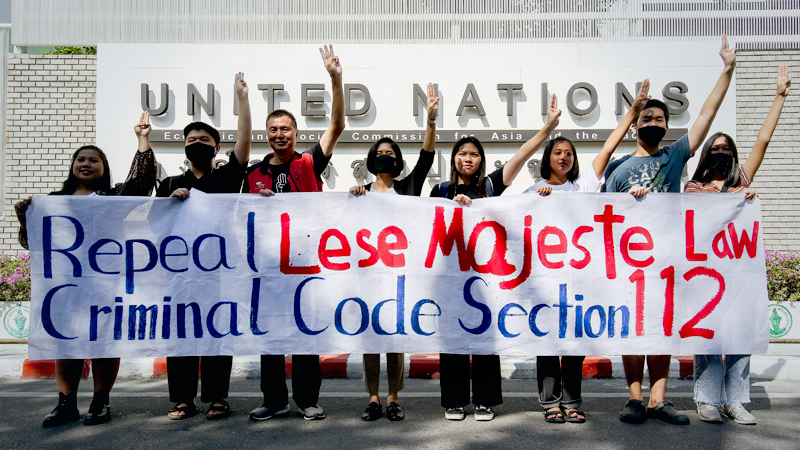
The protesters’ 10-point manifesto for monarchy reform includes a demand to repeal the lèse majesté offence in Article 112 of the Criminal Code, so that citizens can discuss the monarchy freely.
Lèse majesté has been an offence under Thailand’s Criminal Code since 1956. Article 112 of the law states: “Whoever defames, insults or threatens the King, the Queen, the Heir-apparent or the Regent shall be punished with imprisonment of three to 15 years.”
Debate has continued for decades as to whether the law should be repealed.
Advocates for abolition
Those who advocate the law should be abolished point to the fact that Article 112 has often been used for political purposes, to silence critics of those in power. Their argument is that the penalty is far too severe – with up to 15 years of imprisonment for each offence – and that it restricts citizens’ democratic right to free expression.
“Authorities base their decisions to enforce Article 112 on political reasons. It is used as a tool to retain political power and gag critics,” opposition Pheu Thai Party MP Somkid Chueakong said.
More than 1,000 people have been prosecuted under Article 112, according to political activist Somyot Prueksakasemsuk, who in 2013 was sentenced to 11 years in prison after being found guilty of lèse majesté.
Somyot, then editor of political journal “Voice of Taksin”, was held responsible for an article he published that was deemed to be insulting to the monarchy.
Other high-profile cases include award-winning activist Jatupat “Pai Daodin” Boonpattararaksa, who was slapped with lèse majesté charges in December 2016 for sharing a BBC biography of the King on Facebook. He was the first person to be arrested for lèse majesté in the new reign.
In November 2011, 61-year-old former truck driver Ampon Tangnoppakul was sentenced to 20 years in prison for four counts of lèse majesté and computer crime offences. A cancer patient, he died in jail while serving his sentence.
Called Akong (Grandpa) by the media, Ampon was accused of sending four short messages to a government official in 2010 containing insulting and threatening content directed at late King Bhumibol and Queen Sirikit. The defendant denied the charge, arguing that he did not know how to send a text message.
Records show lèse majesté cases soared after the 2006 military coup. The period from 1990 and 2005 brought just four to five cases per year, but the five years after the 2006 coup saw more than 400 cases.
The number of lèse majesté cases spiked again after the coup in May 2014 – to more than 350 between 2014 and 2017.
Thai Lawyers for Human Rights noted that under junta rule, courts tend to impose harsher punishments under Article 112 – up to 10 years’ imprisonment for each count. Meanwhile, defendants tried in military courts could face sentences of 50 to 70 years behind bars, the group said.
Supporters’ views
Royalists believe Article 112 is necessary to protect the King from being defamed since the monarch cannot file libel charges against his accusers, as ordinary citizens can. They argue that most countries have a similar law to protect their heads of state.
Anon Sakworawit, a lecturer at the National Institute of Development Administration, said that insults against the King “clearly increased” after Prayut revealed in June that Rama X had advised the government against enforcing Article 112.
There have also been calls for amendment of the lèse majesté law, with the most concrete and powerful coming from a group of law lecturers called Nitirat in March 2011.
Nitirat’s seven-point proposal includes removing the minimum punishment and fixing the maximum penalty to three years. It also says only the Royal Household Bureau should be allowed to file the charge – not any individual, as is the case now.
History of the law
The lèse majesté offence was first added to the Kingdom’s Penal Code in June 1908, during the reign of King Chulalongkorn (Rama V). The law prohibited insulting the king, the queen, the crown prince and the regent, as well as children of any Thai king – past or present.
For insults directed at the king, queen, crown prince and the regent, offenders faced up to seven years in prison and a hefty maximum fine of Bt5,000 – equivalent to more than Bt1 million in today’s currency.
Insulting the children of any Thai king carried a maximum penalty of three years in jail and a fine of up to Bt2,000.
In November 1956, the government of Field Marshal Plaek Phibunsongkhram promulgated a new Criminal Code which is still in force today.
The 1956 version removed the fine as well as the clause protecting the children of kings.
After the October 6, 1976 military coup, the junta issued an order to amend the Article 112 penalty from “no more than seven years” to “three to 15 years”.
This was the first time that a minimum penalty was set for lèse majesté, while the maximum term was more than doubled.
Amendment attempts
After the 2006 coup, more moves were made to amend the law through the National Legislative Assembly (NLA).
The proposed amendment called for a fine of Bt20,000 to Bt140,000, and additional protection for the King’s children, Privy Council members and the King’s representatives.
However, the NLA withdrew the amendment bill following strong opposition both at home and from the international community.
Two years later, Samak Sundaravej’s government – viewed as a proxy of former prime minister Thaksin Shinawatra – proposed a bill to amend Article 112.
The amendment called for anyone who makes lèse majesté accusations for political purposes without formally filing a police complaint, to be punished in the same way as those convicted of insulting the monarchy.
The proposal was withdrawn following criticism that it would make the lèse majesté law even more harsh.
FDA says Pfizer vaccine contains extra doses, expanding nation’s supply
InternationalDec 17. 2020Health and Human Services Secretary Alex Azar speaks at George Washington University Hospital after the administration of some of the nation’s first doses of a vaccine to frontline healthcare workers there on Dec. 14, 2020, in Washington, D.C. MUST CREDIT: Photo for The Washington Post by Jahi Chikwendiu
By The Washington Post · Fenit Nirappil
WASHINGTON – The Food and Drug Administration said Wednesday that pharmacists can draw additional doses from vials of the Pfizer coronavirus vaccine, potentially expanding the country’s supply by millions of doses as the Trump administration negotiates with Pfizer to speed up the next round of vaccine deliveries.
The government’s existing supply of the first authorized vaccine can be stretched further after pharmacists began to notice that vials contain more than the expected five doses.
The FDA is in touch with Pfizer about how to handle this issue, the agency said. In the meantime, regulators say those extra doses from a single vial can be used.
“At this time, given the public health emergency, FDA is advising that it is acceptable to use every full dose obtainable – the sixth, or possibly even a seventh – from each vial, pending resolution of the issue,” an agency spokesman said, confirming news first reported by Politico.
That means the supply of remaining vaccine could be up to 40 percent greater, though the drugmaker cautions that it’s uncertain how many extra doses are available. The FDA and Pfizer also caution that any leftover vaccine from different vials that is smaller than a full dose should not be mixed together , which experts say risks cross-contamination.
“The amount of vaccine remaining in the multidose vial after removal of 5 doses can vary, depending on the type of needles and syringes used,” Sharon Castillo, a spokeswoman for Pfizer, said in a statement.
The Pfizer-BioNTech vaccine is also getting a boost from the White House this week with Vice President Mike Pence expected to receive a vaccination Friday, live on camera. Second lady Karen Pence and Surgeon General Jerome Adams are expected to be vaccinated as well.
Meanwhile federal health officials said Wednesday they are in talks with Pfizer to purchase tens of millions of additional doses this spring after the drug company said the United States probably would have to wait until summer.
Health and Human Services Secretary Alex Azar said he is “very optimistic” about negotiations in which federal officials are trying to help Pfizer ramp up production to meet the government’s demand for the second quarter of 2021.
“We are working with them to provide them whatever assistance, now that they have identified some of the production challenges,” Azar said at a Wednesday briefing.
The negotiations come after Pfizer told the Trump administration that other countries have rushed to buy most of the supply that will be available in the second quarter of the year. The federal government turned down an opportunity as recently as October to double its purchase of 100 million doses of the Pfizer-BioNTech vaccine, the first authorized for use in the United States, over disagreements on delivery dates.
Jeanne Marrazzo, director of the division of infectious diseases at the University of Alabama at Birmingham, said the potential for millions of extra doses is “incredibly good news,” especially in light of the dispute over additional Pfizer-BioNTech vaccines.
“If vaccine is as good as its been in the trials, it’s a silver lining of the fact that we didn’t get as much of the Pfizer vaccine as we originally could have,” she said.
Federal officials have insisted they have enough doses with other vaccines likely to receive emergency authorization, including the Moderna vaccine, which is expected to be cleared by regulators in the coming days.
Azar noted that the federal government has been more heavily involved in the development and manufacture of the five other coronavirus vaccines, which accepted government research funding. Pfizer declined the funding.
That made it harder for the federal government to intervene when Pfizer ran into production problems, health officials said.
“Part of our ongoing discussions is to remediate that and to get better visibility into what they are doing, what challenges they are facing, because they made significant commitments to us and others, ” Azar said.
Pfizer disputed Azar’s comments, saying through the spokeswoman that it does not “currently have manufacturing” issues and it has been transparent with the federal government on its production and distribution capabilities.
“They have visited our facilities, walked the production lines, and been a part of key decisions that have been made,” said Castillo.
Pfizer CEO Albert Bourla said Monday that the company could provide an extra 100 million doses in the third quarter of the year and confirmed the negotiations to deliver the additional vaccine sooner.
“We are working very collaboratively with them to make sure that we can find ways to produce more or allocate the doses in their second quarter as well, but we haven’t signed this agreement yet,” Bourla said in an interview with CNN’s Sanjay Gupta.
Trump administration officials on Wednesday defended their previous decision to decline to purchase additional Pfizer-BioNTech vaccine doses.
“You wouldn’t buy something before you knew it works if you had six opportunities to have one provider provide you with what you needed,” said Moncef Slaoui, chief science adviser to Operation Warp Speed, the initiative overseeing vaccine distribution.
Officials said they are on track to meet initial vaccine delivery targets this week, with deliveries to 636 facilities so far and an additional 886 planned for Thursday.
An additional 2 million Pfizer-BioNTech doses are scheduled for delivery next week, and 5.9 million Moderna doses are allocated if the vaccine clears regulatory hurdles in the coming days.
America’s biggest companies are flourishing during the pandemic and putting thousands of people out of work
InternationalDec 17. 2020Gary Walker was laid off from Salesforce in August after 12 years with the company. MUST CREDIT: Washington Post photo by Jahi Chikwendiu
By The Washington Post · Douglas MacMillan, Jonathan O’Connell, Peter Whoriskey, Chris Alcantara
As the coronavirus pandemic devastated small businesses and plunged millions of Americans into poverty this summer and fall, executives at some of the country’s largest corporations sounded surprisingly upbeat.
Restaurant owner David Mainelli stands in front of the former location of his family’s restaurant, Julio’s, in Omaha, Neb., earlier this month. The restaurant group has been a staple in the community since 1977, and announced they were closing their doors in June 2020. MUST CREDIT: Washington Post photo by Carley Scott Fields
“I don’t think we’ve ever been more excited or energized about our prospects,” PayPal finance chief John Rainey said on a November conference call.
“These are times when the strong can get stronger,” Nike chief John Donahoe told analysts in September.
“With all that’s happening around the world, it’s really unfortunate,” said Jensen Huang, chief executive of graphics chip maker Nvidia, during an August earnings call. “But it’s made gaming the largest entertainment medium in the world.”
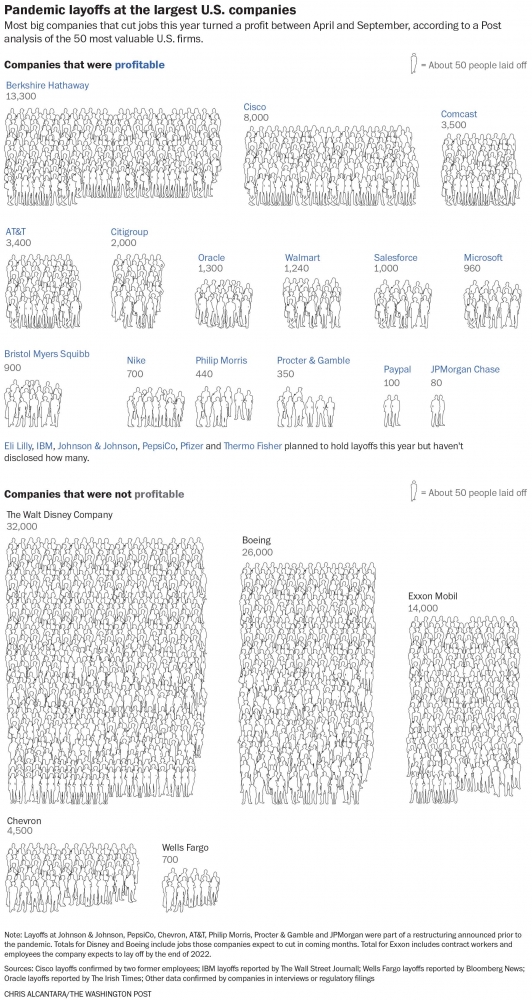
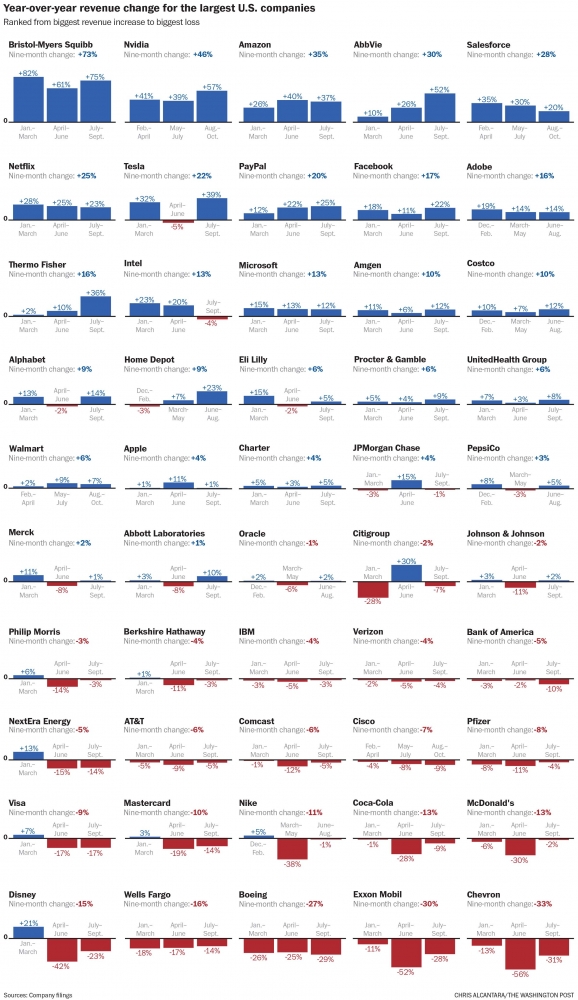
With few exceptions, big businesses are having a very different year from most of the country. Between April and September, one of the most tumultuous economic stretches in modern history, 45 of the 50 most valuable publicly traded U.S. companies turned a profit, a Washington Post analysis found.
Despite their success, at least 27 of the 50 largest firms held layoffs this year, collectively cutting more than 100,000 workers, The Post found.
The data reveals a split screen inside many big companies this year. On one side, corporate leaders are touting their success and casting themselves as leaders on the road to economic recovery. On the other, many of their firms have put Americans out of work and used their profits to increase the wealth of shareholders.
When the coronavirus struck, big companies promised to help battle the crisis. Dozens of prominent chief executives, who last year signed a public pledge to focus less on shareholders and more on the well-being of their employees and broader communities, appeared eager to make good on that promise. Many suspended payments to investors and vowed not to hold layoffs.
Then, 21 big firms that were profitable during the pandemic laid off workers anyway. Berkshire Hathaway raked in profits of $56 billion during the first six months of the pandemic while one of its subsidiary companies laid off more than 13,000 workers. Salesforce, Cisco Systems and PayPal cut staff even after their chief executives vowed not to do so.
Companies sent thousands of employees packing while sending billions of dollars to shareholders. Walmart, whose CEO spent the past year championing the idea that businesses “should not just serve shareholders,” nonetheless distributed more than $10 billion to its investors during the pandemic while laying off 1,200 corporate office employees.
Kirk Hanson, an author and longtime professor of business ethics, says it’s incumbent upon America’s top corporations to help pull the country through the worst recession in decades, particularly given the outsized profits they’re enjoying.
“There is an obligation on the part of the largest and most successful businesses to help buffer the human impact of the crisis,” said Hanson, now a senior fellow at Santa Clara University’s Markkula Center for Applied Ethics.
Instead, Hanson said, they have contributed to the country’s growing economic divide.
The Post contacted all 27 large firms that held layoffs this year. Many said the cuts were not related to the pandemic, but rather, a necessary part of broader “restructuring” plans, where companies shift spending from declining lines of business to growing ones. In some cases, these plans were decided before the pandemic.
Several emphasized that they hired more people this year than they let go. Anne Hatfield, a spokeswoman for Walmart, said everyone the retailer laid off during the pandemic was offered another job in the company, though she declined to say whether the new roles held the same level of pay and responsibilities as the jobs that were eliminated.
Others pointed to the work they have done to help ease the pain in their communities, such as expanding health and family benefits to employees and distributing personal protective equipment to front-line workers. Cisco gave $53 million in cash and PPE to vulnerable populations and PayPal pledged $530 million in investments in minority-owned small businesses.
In an email, Berkshire Hathaway chief executive Warren Buffett said he leaves all decisions at his subsidiary companies to the management of those companies. Airplane parts maker Precision Castparts, which Berkshire Hathaway acquired in 2015, was forced to cut staff due to a severe drop in demand for new planes, he said. Buffett added that he has given $2.9 billion of his personal wealth to charitable causes this year.
The majority of America’s largest corporations have prospered in the coronavirus economy.
Millions of consumers spent more time and money online during government-mandated lockdowns, watching Netflix, viewing ads on Google and Facebook pages, filling Amazon shopping carts and turning the video game business into a bonanza for Nvidia, Microsoft and others. (Amazon founder Jeff Bezos owns The Washington Post.)
Shoppers began splurging on cleaning supplies, hobbies, home cooking and home improvements, driving record growth at big-box stores including Home Depot and Walmart.
Even in the hardest-hit sectors, such as restaurants, travel and hospitality, the biggest companies were largely insulated from the worst of the virus’s reckoning. While independent restaurants struggled to survive, McDonald’s ramped up its takeout and drive-through operations, rolling out new apps and technology catering to on-the-go orders.
In many industries, the giants devoured market share ceded by small businesses, who lacked the resources to keep stores open during unpredictable swings in customer demand. While the 50 largest companies averaged 2% revenue growth over the first nine months of 2020, small business revenue shrank 12% over the same period, according to data collected by software provider Womply from thousands of small firms.
Economists estimate at least 100,000 small businesses permanently closed in the first two months of the pandemic alone.
“Once you kill competition, it’s always hard to restore it,” said Matt Stoller, director of research at the left-leaning American Economic Liberties Project. “This is an extinction-level event for small businesses.”
As the pandemic wore on, many companies kept their promises not to lay off staff. Others saw the recession as a good excuse for trimming labor costs.
In April, cigarette maker Philip Morris made a public commitment to forgo layoffs during the pandemic to help support the “job security and peace of mind” of its 73,000 workers.
“The company will not terminate the employment of any [Philip Morris] employee during this crisis period, unless for cause, and the company has also put on hold any restructuring plan,” Philip Morris said in a news release.
But in June, as infection rates continued to rise, Philip Morris said in a regulatory filing it would eliminate up to 440 workers in New York and Switzerland as part of a restructuring.
In a statement, Philip Morris spokesman Sam Dashiell said the company resumed the restructuring at its Swiss operations center because it determined “prolonging it further would be unfair to everyone.” He declined to explain why the New York layoffs resumed.
Current and former employees at some of these companies say they weren’t surprised to see their leaders renege on promises to retain staff through the pandemic. They didn’t put too much faith in those promises in the first place.
“The choices that they make are governed by, essentially, maximizing shareholder value,” said Gary Walker, a systems engineer who was one of 1,000 employees Salesforce cut in late August.
At the onset of the pandemic, Chuck Robbins described the need to keep workers employed as a moral imperative. The chief executive of Cisco, a $180 billion software and networking giant, said large companies like his shouldn’t lay off workers during a global crisis because, even in a bad year, they had the resources to maintain payrolls.
“Why would we contribute to the problem?” Robbins asked in an interview with Bloomberg News published in April. “To me, it’s just silly for those of us who have the financial wherewithal to absorb this, for us to add to the problem.”
Four months later, Cisco began implementing a plan to lay off at least 8,000 employees, according to two former employees briefed on the plan – the largest round of job cuts the San Jose, Calif.-based company has seen in years.
The majority of Americans who lost jobs this year were laid off from small businesses, many of which had no option but to cut workers to stave off financial collapse.
But larger companies actually laid off a greater portion of their workforces over that period – 9% for large firms versus 7% for smaller firms – despite having more resources to survive the downturn. Their layoffs were quietly acknowledged in regulatory filings and shrouded in corporate jargon, like an “involuntary reduction of associates” at Coca-Cola; and “operating model changes to streamline and speed up strategic execution” at Nike.
The Salesforce layoffs punctuated one of the software giant’s fastest periods of growth and followed frequent pledges by its chief executive to assist with coronavirus relief. Marc Benioff, a self-styled leader of the corporate philanthropy movement, said in a series of tweets in late March that Salesforce pledged “not to conduct any significant lay offs over the next 90 days.”
He suggested all CEOs should take a similar “90 day pledge” and encouraged all Salesforce employees to keep supporting hourly workers, such as housekeepers and dog walkers, who do work for them.
Making good on that pledge was not hard for Salesforce, a company sitting on more than $9 billion in cash and short-term investments. It generated $2.7 billion in profit during the first six months of the pandemic, as businesses flocked to Salesforce’s tools for helping them manage operations remotely.
The layoffs, about five months after Benioff’s tweet, were part of a plan to “reallocate resources” including “eliminating some positions that no longer map to our business priorities,” the company said in a statement. They were announced one day after the software giant announced its biggest quarter of profit and revenue in history, sending its stock soaring 30%.
“Of course I’m cheesed about it. How could you not be?” said Walker, who was laid off after 12 years at the company. “It’s not great timing.”
Walker, 48, who lives with his wife and two dogs in Herndon, Va., said he appreciates Salesforce giving him generous severance benefits and understands large companies sometimes have to cut labor costs to please investors.
Cheryl Sanclemente, a Salesforce spokeswoman, said in a statement the company offered to help all of the people who were affected find new jobs, including in some 12,000 openings it expects to fill over the next year. She added that the company has provided protective equipment to health-care workers throughout the pandemic and gave $30 million to organizations fighting the covid-19 crisis.
Salesforce declined to make Benioff available for an interview but pointed out that the company did make good on his promise not to hold layoffs within 90 days of his tweet.
Similarly, Wells Fargo explained that it never committed to a time frame when it pledged to pause layoffs – which the company referred to in a statement as “job displacements” – back in March.
“At that time, we said we would continue to evaluate and did not pledge to pause job displacements for a specific period of time,” spokeswoman Beth Richek said in an email. “Starting in early August, we resumed regular job displacement activity.”
She declined to comment on the number of workers who were affected, though sources told Bloomberg News the San Francisco-based bank was cutting the first 700 workers in what is expected to be a massive restructuring impacting tens of thousands of jobs over the coming years.
Then there’s Cisco, which started the year determined not to “add to the problem” of pandemic unemployment, in the words of its CEO. Despite benefiting from a quarantine-fueled boom in videoconferencing tools including its Webex software, the company lost ground to Zoom and reported slowing growth in its cloud computing business.
Robbins, who spent the first few months of the pandemic repeatedly reassuring staff that their jobs would be safe, by summer acknowledged a round of cost-cutting was needed, according to three former employees who were in meetings with Robbins this year and left the company within the past three months. The former employees – two who left voluntarily, one who was laid off – all spoke on the condition of anonymity while discussing their former employer.
Cisco began a restructuring plan to eliminate $1 billion in costs, including a campaign to ask employees to take voluntary retirement packages or a 20% pay cut in exchange for working four days a week, the people said. In addition to the voluntary departures, Cisco began conducting involuntary layoffs in the early fall with the goal of trimming at least 8,000 employees, or more than 10% of its workforce, said two of the former employees who heard this number directly from Cisco managers involved in the plan.
Jennifer Yamamoto, a Cisco spokeswoman, said the company is increasing its investments in certain business areas and reducing investments in others. She declined to specify the number of people Cisco laid off but said 8,000 was not accurate. Cisco was supporting employees who were transitioning out of the company, she said.
Asked about Robbins’s statements from earlier this year, Yamamoto said the CEO “did not commit to no layoffs, but rather said we would preserve what we could depending on how the pandemic played out, and he would then assess the needs of the business every 60 days before making any decisions. As the pandemic continued, things changed in the macro landscape and we had to make some tough choices.”
Nowhere has the disparity between big and small businesses ballooned during the pandemic the way it has for restaurants. Just ask Dave Mainelli.
For more than two decades Mainelli and his family have owned and run Julio’s Restaurant, a Tex-Mex joint in Omaha, Neb. His wife headed operations, his brother was a manager, and his son, a bartender. Customers held birthday parties and family reunions, plus wedding and funeral receptions there.
When the pandemic hit and business started to falter, Mainelli said he tried to keep Julio’s open because of the difficulty of telling many of his longtime employees that it was over. He cut back on hours and eventually on staff, dropping from 40 to a dozen as he tried to survive on delivery and pickup.
But with thin margins and debts beginning to mount, he closed Julio’s for good in June, after 25 years in business.
“There were a lot of tears. It was one of the hardest things I’ve ever been through and I’ve been through a lot of hard stuff,” he said.
While one in six restaurants permanently closed during the first months of the pandemic, according to the National Restaurant Association, big chains have ramped up their drive-through operations and rolled out new apps and menus catering to on-the-go orders.
Maybe no one has done this better than McDonald’s, which was battered by the pandemic in the spring but has since been gobbling up more business by the day, using its scale to outpace hundreds of thousands of competing restaurants.
Analysts say McDonald’s has leveraged its advantages by quickly simplifying its menu, allowing its locations to serve more customers in a shorter time without them having to enter its restaurants. Deliveries and mobile app use is growing. Drive-through orders grew to account for 90% of McDonald’s sales during the pandemic, up from two-thirds of sales before this year.
“The large companies have these asset bases that the smaller companies cannot compete with, particularly now,” said Lauren Silberman, an analyst at Credit Suisse.
Contrast that with the options available to Mainelli. To boost delivery sales he partnered with a local service in Nebraska, but it cut into profits dramatically. “When you rely on delivery, your margins get shrunk because you’re paying them a chunk,” he said.
McDonald’s and other chains have long focused on data analysis and app development, capabilities they are now employing during the pandemic. Its digital drive-through menus allow restaurants to customize menu items for factors such as time of day, the weather and current restaurant traffic.
It is also testing tools for tailoring menus more specifically to customers as they arrive. So, if you have been ordering a Big Mac meal with fries and a large Sprite since the beginning of the pandemic, McDonald’s could begin identifying you through the app running on your phone and start displaying that meal more prominently when you pull up to the drive-through.
Not every McDonald’s franchise has flourished. But for those facing a cash crunch, the company put up nearly $1 billion to allow franchise owners to defer rent and royalty payments until their business returned, a luxury few other restaurant owners enjoy. “Because of our scale and financial stability, we were able to quickly provide franchisees with financial support when they needed it most,” Kevin Ozan, McDonald’s chief financial officer, told investors in November. Company spokespeople declined to comment further.
The result for McDonald’s shareholders has been a gift better than the plastic toy at the bottom of any Happy Meal. In October, shares of its stock reached an all-time high – up 27% since the beginning of March – and the company increased its dividend 3%.
The gulf between McDonald’s and most independent restaurants is staggering. Restaurant employment is down 17% during the pandemic, according to the Independent Restaurant Coalition, with more than 2 million restaurant workers out of a job heading into winter. Many of the owners that are permitted to remain open are doing so by slashing staff and costs and focusing on takeout as much as possible.
At Kayla’s Kitchen and Closet, located in tiny Park Falls, Wis., the menu offers soups, salads and a spicy blackberry bacon panini. Owner Kayla Myers also operates a clothing store next door offering Levi’s jeans, Minnetonka moccasins, children’s clothing and tuxedo rentals.
She said she has been boosting sales with Facebook posts. But she closed off half of her six tables for social distancing measures and cut hours. “You don’t have any point in opening if people can’t even come in,” she said.
After closing Julio’s this year, Mainelli sold the brand and became a writing instructor at local colleges. He and his wife gawk at the long lines of cars at McDonald’s, and he predicts the same fate for independent restaurants that locally owned bookstores faced when Amazon first arrived.
“The same thing is going to happen to the restaurants,” he said. “It’s going to be Olive Garden, Applebee’s and Chili’s. There are not going to be any independents.”
– – –
When Apple announced its quarterly earnings in the spring, chief executive Tim Cook eagerly shared all the company was doing to combat the coronavirus, from manufacturing and distributing face shields to donating $15 million to relief efforts in the earliest days of the pandemic.
But those investments stood in stark contrast to the $50 billion Apple said it planned to spend on stock repurchases – an amount so closely watched by Wall Street that one analyst asked why it appeared slightly lower than previous years.
“The $50 billion share repurchase authorization is impressive enough in absolute terms, but it is a bit lower than the last couple of years,” Katy Huberty, a managing director at Morgan Stanley said during the April conference call. “Any context around the thought process of landing on $50 billion?”
The world’s largest companies have set extraordinary expectations for their annual cash payments to investors. After pausing dividends and share buybacks in the spring, many companies resumed investor payouts by the summer.
The top 50 firms collectively distributed more than $240 billion to shareholders through buybacks and dividends between April and September, representing about 79% of their total profits generated in that period. Except for the five companies that didn’t offer buybacks or dividends this year, no large firm came anywhere close to spending as much on coronavirus relief efforts as they did paying out investors.
Companies often buy their own stock during difficult economic periods to signal to the market that management still believes in their prospects. But those buybacks also mean companies are taking money that could have been invested into employees and innovation and giving it to shareholders, who tend to be high-income individuals and families.
“This is a global crisis but the big companies are not treating it as one – they haven’t skipped a beat,” said William Lazonick, an emeritus economics professor at the University of Massachusetts at Lowell. “Apple gave back tens of billions of dollars to shareholders,” he added. “It’s sick.”
Apple spent $41 billion buying shares and paying cash dividends between April and September, more than twice as much as the company with the next highest total, Microsoft. The tech giants top the list partly because they have come under pressure from shareholders to return some of their enormous stockpiles of cash.
Apple spokesman Josh Rosenstock said supporting worldwide covid-19 relief efforts has been the company’s top priority. Apple has donated “hundreds of millions of dollars” to supporting communities this year including distributing 30 million face masks and 10 million face shields, he said.
The computer maker also kept paying retail employees while its stores were closed, Rosenstock added, and is “working with our suppliers to ensure their staff, including janitors and shuttle drivers, are being paid as well.”
Giant companies across all sectors have raised their dividends and buybacks since 2017, when tax legislation championed by President Donald Trump and passed by Congress lowered the statutory corporate tax rate from 35% to 21%. As a result, many companies explicitly said they would spend some of their tax savings on higher payments to shareholders.
Pharmaceutical giant AbbVie achieved the lowest effective tax rate among all 50 largest firms, paying just 6.5% last year by structuring its business to take advantage of overseas tax havens, the company said in filings. According to Reuters, AbbVie holds dozens of patents for its best-selling rheumatoid arthritis drug Humira in Bermuda, which has no corporate income tax.
Shortly after the tax law was passed, AbbVie chief executive Richard Gonzalez said the company’s cash flow “far exceeds what we are able to use productively to support the business” and therefore would give larger sums to shareholders. This year, he delivered: AbbVie paid investors $4 billion during the first six months of the pandemic, more than twice the amount of profit the company generated in that period.
AbbVie did not appear to lay off any employees this year. The company did not respond to multiple requests for comment.
Fed to maintain bond buys until ‘substantial’ economy gains seen
InternationalDec 17. 2020The Marriner S. Eccles Federal Reserve building. Photographer: Stefani Reynolds/Bloomberg
By Syndication Washington Post, Bloomberg · Craig Torres
The Federal Reserve said it will continue to support the economy through massive monetary stimulus until it sees “substantial further progress” in employment and inflation.
At their final meeting of a tumultuous year, policymakers led by Chair Jerome Powell voted to maintain monthly bond purchases of at least $120 billion, according to a statement Wednesday, as many market analysts had expected. Policymakers made no changes to the composition of purchases, declining to shift them toward longer-term maturities.
“The Federal Reserve will continue to increase its holdings of Treasury securities by at least $80 billion per month and of agency mortgage-backed securities by at least $40 billion per month until substantial further progress has been made toward the Committee’s maximum employment and price stability goals,” the Federal Open Market Committee said.
The Fed meeting came as lawmakers on Capitol Hill tried to wrap up an agreement on new stimulus after months of deadlock, with both fiscal and monetary policy poised to help continue cushioning an increasingly shaky economy during the wait for widespread vaccine distribution.
Ten year Treasury yields rose after the statement was released to trade at about 0.94% – up from about 0.91% just before. Stocks were mixed.
The FOMC on Wednesday said “economic activity and employment have continued to recover but remain well below their levels at the beginning of the year.”
The committee unanimously kept the federal funds target rate in a range of zero to 0.25%, where it’s been since March, and a majority of Fed officials continued to forecast that their benchmark lending rate would be held near zero at least through 2023.
Powell is scheduled to hold a video press conference at 2:30 p.m. Washington time.
The FOMC “expects it will be appropriate to maintain this target range until labor market conditions have reached levels consistent with the committee’s assessments of maximum employment and inflation has risen to 2% and is on track to moderately exceed 2% for some time,” policy makers said, repeating language from their November statement.
The central bank’s meeting builds on their earlier response to the coronavirus pandemic, in which officials cut interest rates to near zero while unleashing massive bond purchases and a multitude of emergency lending programs.
U.S. central bankers are still far away from their goals, and Powell has repeatedly called on Congress to pass another round of fiscal stimulus to help the economy through the winter as the pandemic continues to rage. The unemployment rate stood at 6.7% in November, while inflation remains below 2%.
Even so, financial markets have been buoyed by investors counting on steady growth next year as more people are vaccinated, as well as pent-up consumer demand, low interest rates and maybe another round of fiscal stimulus. The S&P 500 index set a record high earlier this month, while yield spreads on corporate bonds are trading around pre-pandemic lows.
Despite the ebullience in markets, non-farm payroll growth slowed to 245,000 in November — less than half the gain in October — and employment is still down roughly 10 million compared with before the virus struck. U.S. retail sales dropped by more than forecast in November and the prior month was revised to a decline, the first drops since March and April, data showed earlier Wednesday.
Fed leaders more optimistic on jobs, GDP growth at final 2020 policy meeting
InternationalDec 17. 2020The Federal Reserve Board building on Constitution Avenue in D.C. (Brendan Mcdermid/ Reuters)
By The Washington Post · Rachel Siegel
WASHINGTON – Federal Reserve leaders are more optimistic about jobs and growth than at any point in the pandemic, yet critical holes in the recovery remain, and filling them may hinge on a stimulus deal and the rollout of a coronavirus vaccine.
At a news conference after the Fed’s final policy meeting of 2020, Fed Chair Jerome Powell said the central bank was not out of tools to support the recovery, and could expand its asset purchases. But for sectors that are far from healed – such as restaurants and hotels that rely on person-to-person contact – “those are not being held back by financial conditions, but rather by the spread of the virus,” Powell said.
Powell reiterated his calls for more help from Congress, saying “the case for fiscal policy right now is very, very strong.”
Powell declined to point to what specifically should go into another stimulus bill. On Wednesday, congressional leaders neared an agreement on a roughly $900 billion relief package after months of partisan gridlock. The bill probably will include direct payments but leave out aid to state and local governments.
“All of these government policies are trying to work together to create a bridge across this economic chasm that was created by the pandemic,” Powell said. “But there is a group where they don’t have a bridge yet.”
In their latest round of economic predictions since September, Fed leaders predict that unemployment will fall to 5% by the end of next year, and 4.2% by the end of 2022. Officials also showed a more hopeful outlook for gross domestic product. In September, Fed leaders projected that GDP would grow 4% by the end of 2021, but they revised those estimates to suggest growth of 4.2%.
Yet there are signs the economic recovery is slowing. November marked the slowest month of job growth since the spring, with the unemployment rate falling slightly from 6.9% to 6.7%. Retail sales fell last month. Millions of Americans are behind on rent and utility bills, and nearly 8 million Americans have fallen into poverty since the summer.
“The path of the economy will depend significantly on the course of the virus,” the Fed said in a statement after the meeting. “The ongoing public health crisis will continue to weigh on economic activity, employment, and inflation in the near term, and poses considerable risks to the economic outlook over the medium term.”
The Fed is capping one of its most consequential years, one that involved an unprecedented response to the economic damage wrought by a global pandemic. This week also marks the Fed’s final policy meeting before the Biden administration begins, bringing with it a slate of new economic advisers.
A key question is what will happen to the Fed’s emergency lending programs, jointly run by the Fed and the Treasury Department. The facilities have become a test for how policymakers rate the strength of the recovery.
Saying the programs did their jobs, Treasury Secretary Steven Mnuchin last month announced that he would not extend most of facilities beyond the end of the year. Mnuchin also requested that the Fed return hundreds of billions of dollars that had been allocated for the programs under the Cares Act but never spent, saying the money could be reallocated by Congress for more direct use.
Mnuchin’s decision spurred a rare public clash between the Treasury and the Fed, which wanted the programs to stay in place as a backstop to the markets in case the recovery faltered. Democrats and many economists criticized Mnuchin’s move, saying it was premature to cut off the support.
The future of those programs could depend on the views of Janet Yellen, President-elect Joe Biden’s nominee for treasury secretary. Democrats have called for a reboot to the programs, while Republicans have said they should end.
Asked whether the Fed consider roll out more facilities if economic conditions turned south, Powell said “we do not have any plans for the future about this. We’re very focused on getting through year end.” Powell said that he had not discussed policy issues with Yellen, but that he did congratulate her on her nomination.





 Health and Human Services Secretary Alex Azar speaks at George Washington University Hospital after the administration of some of the nation’s first doses of a vaccine to frontline healthcare workers there on Dec. 14, 2020, in Washington, D.C. MUST CREDIT: Photo for The Washington Post by Jahi Chikwendiu
  Gary Walker was laid off from Salesforce in August after 12 years with the company. MUST CREDIT: Washington Post photo by Jahi Chikwendiu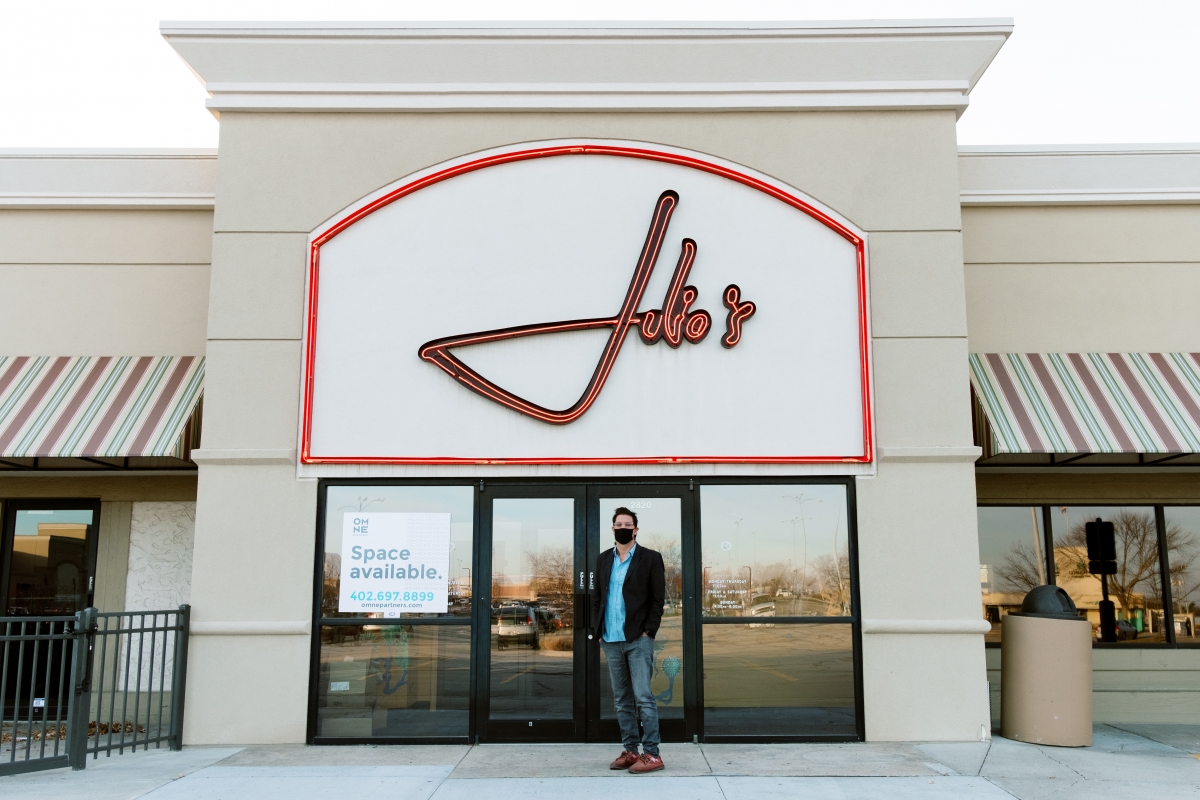
 The Marriner S. Eccles Federal Reserve building. Photographer: Stefani Reynolds/Bloomberg
  The Federal Reserve Board building on Constitution Avenue in D.C. (Brendan Mcdermid/ Reuters)
  SootinClaimon.Com