The ‘deep state’ scientists vilified by Trump helped him deliver an unprecedented achievement #SootinClaimon.Com

#SootinClaimon.Com : ขอบคุณแหล่งข้อมูล : หนังสือพิมพ์ The Nation.

The ‘deep state’ scientists vilified by Trump helped him deliver an unprecedented achievement (nationthailand.com)

The ‘deep state’ scientists vilified by Trump helped him deliver an unprecedented achievement

InternationalDec 15. 2020President Trump delivers remarks in the White House press briefing room on Nov. 20. MUST CREDIT: Washington Post photo by Jabin Botsford.President Trump delivers remarks in the White House press briefing room on Nov. 20. MUST CREDIT: Washington Post photo by Jabin Botsford. 

By The Washington Post · Yasmeen Abutaleb, Laurie McGinley, Carolyn Y. Johnson

The timing of the hastily arranged White House “vaccine summit” last Tuesday bewildered many invitees.

It was days before the authorization of the first coronavirus vaccine developed by Pfizer and German firm BioNTech – and nearly a week before millions of vaccine doses would be loaded onto trucks bound for every state in the nation. Wouldn’t those milestones and the mass vaccination effort that followed be what the White House would want to spotlight?

That was not what the president was interested in. As it became clear that vaccines would be a shining success in an otherwise calamitous pandemic response, he wanted to make sure his administration – and specifically Operation Warp Speed, its initiative to speed vaccines – got credit for an unprecedented scientific achievement.

The Dec. 8 event began with a video that featured scientists and pundits warning that the administration’s goal of delivering a vaccine in less than a year was unrealistic. As music swelled to a crescendo, a narrator boasted about how it had in fact delivered that record achievement.

Trump then took the stage to tout his administration’s success. “You saw that very few people thought that this was possible,” he told a small assembled audience. “Of course, they’ll be saying now, ‘We always told you it was so.'”

“People that aren’t necessarily big fans of Donald Trump are saying, ‘Whether you like him or not, this is one of the greatest miracles in the history of modern-day medicine’ or any other medicine – any other age of medicine,” Trump added.

In fact, the lightning-fast development of two leading coronavirus vaccines happened both because of and despite Trump – perhaps the most anti-science president in modern history, who has previously flirted with anti-vaccine views and savaged those who cited scientific evidence to press for basic public health measures in response to the pandemic.

The lifelong businessman who refused to wear a mask himself was able to understand vaccines as something else entirely: a deliverable that he could make happen with money. And unlike a mask, a vaccine represented a display of American technological prowess, an appealing solution that didn’t require painful steps like closing small businesses. For the president, it exerted an increasingly strong pull as the election approached.

“I do think the urgency for Operation Warp Speed was heightened by the fact that we were in the middle of an election year,” said Daniel Carpenter, a political scientist at Harvard University. “On the whole, it was a good thing – it led a potentially anti-science, anti-vaccine administration to push harder for a vaccine. What we will end up seeing in the long run is this is an unparalleled private and public sector mobilization that happened.”

That mobilization, which is pushing out the first 2.9 million doses of the Pfizer-BioNTech vaccine this week, is a testament to the power of science, and also of a global collaboration involving drug companies and government coordinated by political appointees and civil servants across the government – players and a process that Trump has at times disparaged.

To many attendees of the White House summit – and even more who stayed away – that event underscored the awkward, often uneasy relationship between Trump and pharmaceutical companies, government regulators and scientists, even as they jointly pursued the goal of ending a pandemic that has killed more than 298,000 Americans and infected another 16 million.

None of the companies that developed the most promising vaccines were present. Officials said they worried about participating in an event that might reinforce perceptions of political interference and suspicions of a rushed vaccine just as their shots were on the cusp of emergency clearance.

White House spokesman Brian Morgenstern said Trump hosted the summit to build confidence in the vaccine and to “congratulate those involved in this miraculous achievement.” He added that drug company executives had stayed away to avoid contact with FDA regulators.

The president’s bravado seemed to anticipate the FDA’s announcement three days later that it had cleared the nation’s first vaccine from Pfizer-BioNTech – the administration’s biggest triumph to date in a pandemic response otherwise marred by dysfunction and lack of leadership: A second vaccine from Moderna is expected to be authorized later this week. Others could follow if clinical trials are successful.

These accomplishments are remarkable, but they are not “miracles,” in the sense that they sprang fully formed from work that began last spring. They relied on basic research done over decades in government, academic and company research labs. Even the financial model used to insulate vaccine makers from financial risk traced back to an agency that Congress created in late 2006 to incentivize companies to develop urgently needed medicines.

And the true test of Operation Warp Speed is about to occur as the administration tries to meet ambitious timelines that it has revised repeatedly. A key plank involves distributing the vaccine to millions of Americans in a matter of months, which began on Sunday. But potential supply problems already threaten the government’s ambitious vaccination schedule.

Pfizer urged the government to purchase 200 million doses of its vaccine in the summer and this fall, an offer the government declined as recently as October over disagreements about delivery dates. The company has since told the government it may not be able to supply substantial additional doses until late June or July, raising questions about the vaccination timeline. Officials insist they will have enough doses.

This account of how government scientists, regulators, politicians and private industry managed to deliver a coronavirus vaccine in under a year, and the political turbulence that accompanied it, is based on interviews with more than 20 current and former senior administration officials and outside advisers and experts, many of whom spoke on the condition of anonymity to reveal private discussions and speak candidly.

– – –

The extraordinary vaccine initiative was propelled by a $14 billion investment from the federal government – which Trump supported and signed off on – that would become Operation Warp Speed, a public-private partnership to hasten vaccines and treatments, in part by footing the bill to manufacture millions of doses before anyone knew if they worked.

Pfizer made a point of not accepting government research funding, a decision its chief executive Albert Bourla said last month on ABC’s “Good Morning America” was “to liberate our scientists from any bureaucracy that could come by accepting money.” But the company did benefit from the government’s zeal for a vaccine in other ways: It agreed to sell nearly $2 billion worth of vaccines to Warp Speed and was bolstered separately by a strong working relationship with federal regulators.

By contrast, Moderna’s vaccine would have taken much longer without the government investment and its partnership with the National Institutes of Health. The federal government has invested $4.1 billion in Moderna’s vaccine, between research and development funding and the purchase of 200 million doses.

Warp Speed was designed to be largely free of political interference and had leaders with deep experience in vaccine development and logistics, said several officials who were involved in the effort. In many ways, it was an example of how much more successful the government’s pandemic response might have been with clear leadership and officials empowered to follow the science, they said.

“In twenty years, you’ll look back and it’s not going to be . . . a story about bleach or a whistleblower, or who wore a mask and who didn’t,” one senior administration official said. “It’s going to be about Warp Speed and the vaccine – a thing that comes along scientifically in less than one year that ends a global pandemic.”

But the race to develop a vaccine also became intensely politicized by the president, with trust in a prospective vaccine plummeting apparently as a result. Trump recognized early that the pandemic would only truly come to an end when a vaccine became widely available – and then became fixated on delivering one before the Nov. 3 presidential election to convince voters he had the virus under control.

That calculation led the president and top aides – especially Chief of Staff Mark Meadows – to apply unrelenting pressure on the FDA to clear a vaccine before the election. Even after Trump lost his bid, that campaign continued, culminating in an extraordinary threat on Friday, when Meadows ordered FDA Commissioner Stephen Hahn to submit his resignation if the agency did not clear Pfizer’s vaccine by day’s end. The agency pushed its timetable from Saturday morning to late Friday – a change that had no effect on the distribution plans that were set to begin Sunday.

Earlier that same day, Trump had tweeted that the FDA was “a big, old, slow turtle” and badgered Hahn. “Get the dam vaccines out NOW, Dr. Hahn @SteveFDA. Stop playing games and start saving lives!!!”

– – –

The public-private partnership created through Operation Warp Speed is not an idea the administration invented. For years, global public health leaders had talked about using government investment to reduce the financial risks that dissuade companies from developing needed products. That was also the model behind the creation of the Biomedical Advanced Research and Development Authority (BARDA) during the George W. Bush administration, with an eye toward working with private industry on bioterrorism countermeasures.

Warp Speed harnessed those ideas on a massive scale for a different kind of public emergency and then partnered with a half-dozen companies and other government agencies to pull it off.

“It’s a 15-year, overnight success story,” said Richard Hatchett, chief executive of the Coalition for Epidemic Preparedness Innovations, a four-year-old nonprofit that works to finance the development of vaccines against emerging infectious diseases.

The idea took hold in February and March after government scientists realized that covid-19, the disease caused by the coronavirus, was a “catastrophe in the making,” as one senior administration official recalled. But they quickly realized that some vaccine manufacturers did not share that sense of urgency.

Unsure of how long the outbreak would last, some executives were reluctant to spend the hundreds of millions of dollars or more to develop a vaccine without knowing whether they would have a market when they finished. Some companies talked about beginning clinical trials in the fall, with the aim of having a vaccine ready by summer 2021.

“The vaccine manufacturers were in a funk,” the senior administration official recalled. “We woke up to that and realized that is not going to fly.”

In early April, Peter Marks, an oncologist who has worked in both academia and the drug industry and who heads the FDA division that regulates vaccines, began laying the groundwork for what would become Operation Warp Speed.

He teamed up with Robert Kadlec, assistant secretary for preparedness and response at the Department of Health and Human Services, to write a proposal for HHS Secretary Alex Azar detailing a process that went from screening potential vaccine candidates to distributing the final product to an estimated 330 million Americans.

The thought was that if the government could eliminate most of the financial risk of vaccine development, more companies would be inclined to take on the herculean challenge. The government would also help speed development by footing the bill to manufacture millions of doses of vaccines without knowing whether they worked, so that normally sequential steps could be completed all at once.

Marks said the most important step in the vaccine effort was “getting started early with a clear direction in mind and having good partners” in various companies that were motivated “to get to the same place.”

Meanwhile, the virus was leaping from one continent to another, leaving a trail of carnage and spurring a torrent of research. Hundreds of academic teams, companies and government researchers were eager to apply different ideas to fight the virus, but there was also a clear need for a national strategy that could prioritize efforts.

“Uncharitably, people might have called it a bit of a scattershot scenario – that was true for therapeutics and vaccines,” said Francis Collins, director of the National Institutes of Health.

Collins called drug company executives, starting with Mikael Dolsten at Pfizer, with whom he had worked closely for years, to talk about creating a scientific public-private partnership to tackle the pandemic. Collins had crafted a similar partnership to speed up the development of new medicines, but that had taken months. This new one crystallized over two weeks in early April – and included a vaccine working group that began to hammer out some of the principles for how to rapidly test vaccines.

The group calculated that trials with 30,000 people would have the statistical power to answer the most important questions about safety and effectiveness, and to get those answers quickly. They debated, and ultimately settled, on a single unified data and safety board for all the trials. That approach had been taken with some HIV trials, and would mean the same group of independent experts would be reviewing the totality of the raw data from all the trials – and might be able to detect any concerning safety trends or important patterns.

Operation Warp Speed would ultimately bet on six efforts – Pfizer-BioNTech, Moderna, AstraZeneca-University of Oxford, Johnson & Johnson, Novavax, and Sanofi and GlaxoSmithKline. Those that accepted research funding – all but Pfizer – could take advantage of a large network of clinical trials developed over decades by the NIH.

Pfizer and Moderna gambled on a promising but unproved technology that relied on messenger RNA, spurring criticism for taking that approach at a time when a vaccine was desperately needed.

In one meeting in late April, Deborah Birx, the White House coronavirus task force coordinator, expressed frustration that the leading vaccine candidates were not relying on tried-and-true technologies, according to four current and former senior administration officials.

But Anthony S. Fauci, director of the National Institute of Allergy and Infectious Diseases, along with some other experts, was enthusiastic about including those vaccines in the government’s portfolio, since they were backed by years of research and might be developed much more quickly than conventional vaccines

Pfizer and Moderna’s strategy paid off in November, with both companies reporting trial results that showed their vaccines were more than 90 percent effective at preventing disease. By contrast, the vaccine being developed by Sanofi and GlaxoSmithKline, using a proven technology, hit a setback last week when results showed the shot didn’t trigger strong responses in older people. The companies now project their vaccine won’t be available until the end of 2021.

– – –

In April, after Marks and Kadlec gave Azar their proposal, the secretary presented it to the White House coronavirus task force. Some were skeptical about whether it would work and wary of the enormous price tag.

Trump, however, was enthusiastic. Unlike other aspects of the response, he agreed to spend billions on the effort – even as he was publicly predicting the virus would soon be gone.

The project was announced through a reporter at Bloomberg News, when officials were still casting about for a name.

Initially, they called it MP2, shorthand for Manhattan Project 2.0. The name seemed fitting, one senior official recalled, because “it was the historic implication that this was to do something never done before . . . with the same commitment at the national level as the Manhattan Project.”

But they soon realized that referring back to a nuclear bomb wouldn’t work for a vaccine. Marks, a Star Trek fan, and a small group of government officials had been privately calling the project Operation Warp Speed, based on the term “warp speed” popularized by the Star Trek series. In one internal email, Marks used the Star Trek logo with a needle in the middle of it.

Scrambling just before the interview, the officials seized on the name and it stuck.

Azar scouted for a drug industry veteran to run Warp Speed, calling Jim Greenwood to ask for recommendations. At the time, Greenwood, a former congressman, was president of the Biotechnology Innovation Organization, a trade group that represents biotech companies.

Jared Kushner, the president’s son-in-law and one of his most trusted advisers, joined Azar and other health officials to interview four or five candidates. They landed on Moncef Slaoui, who had spent much of his career as a GlaxoSmithKline vaccine researcher and executive.

Slaoui had led an effort to create a dedicated biopreparedness facility in 2016, a research organization that would systematically tick through every virus that had the potential to cause a pandemic and create vaccines for each one.

The proposal flopped, but Slaoui remained convinced that a model that joined government and industry to counter such risks was essential.

“I could have also sat on the sidelines and said why it would never work,” Slaoui said of his decision to join Warp Speed. ” . . . in the month of May when the operation was announced, I do not remember hearing a single expert say, ‘Yes, this is possible.’ I heard everybody explaining to us why it will never work.”

On May 1, Azar met at the Pentagon with then-Defense Secretary Mark T. Esper and a handful of aides to discuss how their agencies could work together, aware that HHS alone could not handle a logistics operation as complex as a nationwide vaccination effort.

They agreed on Gen. Gustave Perna as the logistics chief, a man whose expertise would become critical in managing and coordinating one of the largest ever vaccine distribution efforts in American history.

At one point, when 60 electricians were needed at one facility, Operation Warp Speed used the Defense Production Act to get them.

Slaoui and Perna were mostly walled off from the White House, as well as from Capitol Hill and the media, so they could avoid distractions. Still, Birx and Kushner sat on the board of Operation Warp Speed and attended meetings – a decision officials made intentionally to give the White House a seat at the table but not an outsize role.

“It was recognized that having larger participation from other offices in the White House could be disruptive,” one senior administration official said.

“Perna and Slaoui really wanted to be independent of the politics. They wanted to be able to chase the science and make bets,” a second official said. “In normal times, people will say you wasted a lot of money taking six or seven shots on goals with different types of vaccines. . . . but if we only get one of them, we got one at least.”

– – –

After helping to launch Warp Speed, Marks quickly retreated to the FDA. He and Slaoui had clashed, according to individuals familiar with the situation who spoke on the condition of anonymity because they were not authorized to discuss the issue. Marks also realized that he was most valuable to the vaccine effort as a regulator, not as a developer, he has said. And the FDA drew a bright line between its activities and those of Warp Speed to avoid conflicts of interest.

As Marks and his veteran vaccine experts began working with the pharmaceutical companies on the regulatory requirements, they remained in constant contact in hopes of avoiding unnecessary speed bumps.

“What helped at the outset was having clear guidance on what the expectations were,” Marks said.

In June, the FDA issued guidelines that said any coronavirus vaccine would have to be at least 50 percent more effective than a placebo, or a saltwater shot, in preventing covid-19. The agency proposed updating that guidance in the fall, spelling out additional safety requirements to bolster public confidence in an emergency authorization.

The idea enraged Trump and Meadows, who realized the criteria made it all but impossible for a vaccine to be authorized before the election. FDA ignored their objections and issued the guidelines, whose substance had already been conveyed to the manufacturers.

The FDA had already endured a bruising year, under the leadership of a new and untested commissioner, Stephen Hahn, who came under constant pressure from Trump and the White House to authorize or examine treatments that had no proven effectiveness against covid-19.

In a series of of high-profile missteps, the agency cleared the antimalarial drug hydroxychloroquine – then revoked that authorization – and initially took a hands-off approach to coronavirus antibody tests. On the eve of the Republican National Convention, Hahn overstated the benefits of convalescent plasma during a hastily arranged briefing with Trump, then apologized the next day.

Trump continued to accuse the FDA of moving too slowly, even as the agency staff worked almost around-the-clock. Marks’s pandemic schedule, for example, involves getting up at 3 a.m., taking his dog Eddie for a walk, and beginning work at 4:30 on a torrent of emails and meetings before knocking off at 9 p.m. Dozens of others working on coronavirus vaccines have been maintaining similar schedules.

As Trump pushed to get a vaccine before the election, public trust in the vaccine plummeted from more than 70 percent in May to just over 50 percent in September.

– – –

By November, Americans had become inured to one grim milestone after another, as the nation set countless records for daily infections, deaths and hospitalizations and endured a bitterly divisive presidential campaign.

Six days after a polarizing election called for Joe Biden, Pfizer reported astonishing news: Its coronavirus vaccine, the one that relied on a new genetic technology, was more than 90 percent effective. Those results also augured well for Moderna’s vaccine, which used the same technology and reported equally striking results only seven days later.

Exhausted company and government scientists and regulators were elated. For the first time all year, they could envision an end to the pandemic. The idea that the country could have one effective vaccine by year’s end had seemed like a long shot. Now, it looked like it could have two.

“I would say it’s a historical moment,” Kathrin Jansen, Pfizer’s head of vaccine research and development, said in an interview. “Hearing that at the interim analysis we are over 90 percent effective – it was almost stunning to hear.”

Trump, however, was furious. The additional safety steps the FDA had taken to shore up public trust in the vaccine strengthened his conviction that the agency had conspired against him. Now he said the “medical deep state” had deliberately sought to sabotage his electoral prospects, and he demanded that Azar “get to the bottom” of what happened.

His anger would grow to a fever pitch when Britain cleared Pfizer’s vaccine on Dec. 2. Meadows summoned Hahn to the Oval Office and asked why the United States had not been first. The pressure campaign culminated in the Friday threat to Hahn to clear the vaccine by day’s end or submit his resignation.

The irony is that the quest for a vaccine needed no meddling.

Back in May, when the vaccine trials were still in the planning stages and success was far from certain, Fauci had said he was tuning out politics.

“I worry about a lot of things,” he said in an interview. “But I’m going to do the best possible science, to develop what I consider convincing evidence that it works and is safe, or does not work and is not safe.”

Which is precisely what he and hundreds of other scientists did.

Inside the ‘nasty’ feud between Trump and the Republican governor he blames for losing Georgia #SootinClaimon.Com

#SootinClaimon.Com : ขอบคุณแหล่งข้อมูล : หนังสือพิมพ์ The Nation.

Inside the ‘nasty’ feud between Trump and the Republican governor he blames for losing Georgia (nationthailand.com)

Inside the ‘nasty’ feud between Trump and the Republican governor he blames for losing Georgia

InternationalDec 14. 2020Georgia Gov. Brian Kemp speaks during a rally in support of President Trump on Oct. 16, 2020 in Macon, Ga. MUST CREDIT: Photo by Nicole Craine for The Washington PostGeorgia Gov. Brian Kemp speaks during a rally in support of President Trump on Oct. 16, 2020 in Macon, Ga. MUST CREDIT: Photo by Nicole Craine for The Washington Post 
By The Washington Post · Ashley Parker, Amy Gardner, Josh Dawsey

The first major fissure in the relationship between President Donald Trump and Georgia Gov. Brian Kemp came a year ago, when Kemp paid Trump a clandestine visit in the White House residence.

On the Sunday before Thanksgiving, Kemp flew up to Washington to introduce Trump to Kelly Loeffler, an Atlanta business executive he wanted to appoint to fill his state’s open U.S. Senate seat.

But when Kemp and Loeffler finally got their audience with the president, Kemp presented Loeffler as a fait accompli – telling Trump that he wanted the president to meet the woman he was planning to name to the Senate.

Well, if you’ve already made your decision, Trump grumbled, then I’m not sure why you’re here, according to people familiar with the conversation.

Trump later complained to aides that Kemp was rude and impolite – never forgiving the Georgia governor for what he viewed as a major slight.

The strain between the two Republicans has now boiled over into a full-blown feud in the aftermath of Trump’s 2020 electoral defeat, as the president has fixated on his loss in Georgia as a humiliation that he blames in large part on Kemp. Trump lost the solidly Republican state by approximately 12,000 votes and is furious with Kemp for not heeding his calls to question the integrity of the state’s election results.

In phone calls and conversations with allies and advisers, Trump has griped that Kemp was not pushing Georgia Secretary of State Brad Raffensperger to do more to reverse President-elect Joe Biden’s victory; that Kemp was not defending the president on television; and, perhaps most indefensible in Trump’s mind, that Kemp moved forward with certifying the results of the election.

“Republicans fell into a trap by expecting Brad Raffensperger and Brian Kemp to cheat for them,” said Jordan Fuchs, a longtime Republican strategist in Georgia who is a deputy secretary of state under Raffensperger, and who says the ongoing civil war in her party will have long-term consequences at the polls, including in the state’s two Senate runoff races on Jan. 5.

“The Democrats only have one, singular turnout model, and that’s the argument of voter suppression,” Fuchs added. “They say it in their litigation – it’s the number one poll-tested message they have. This has fed into the hands of Democrats.”

This portrait of Trump’s combustible relationship with Kemp – which portends a potential intraparty civil war in the coming months and years – is the result of interviews with 15 allies and advisers to both men, as well as Republican political operatives, many of whom spoke on the condition of anonymity to share candid details.

Since the election, Trump has personally berated Kemp in private phone calls, people familiar with the conversations said. In one call, the president told Kemp he was losing all of his popularity by not strongly supporting him, and in another, the president pointedly reminded the governor that he had endorsed him in 2018.

Trump has also called Loeffler and Sen. David Perdue (R-Ga.) – both of whom face runoffs on Jan. 5 – to complain about Kemp, though he has not given them any specific edicts beyond generally pressuring Kemp to support the president’s efforts to overturn the election results, one person familiar with the calls said. Loeffler and Perdue did not immediately respond to requests for comment.

“Maybe I should recruit someone to run against him,” the president said in one of these calls, this person added. “Your governor is horrible. He would be nothing without me.”

‘Worse than a Democrat’

Trump emissaries have warned Kemp that the president plans to continue to relentlessly attack him and will publicly criticize him when he returns to the state on behalf of the Republican Senate candidates, possibly on Saturday. The president has attacked Kemp on Twitter, lambasted him at a rally in Valdosta, Ga., earlier this month and went after him again during an interview that aired Sunday on Fox News.

“We won Georgia by a lot,” Trump falsely claimed to “Fox & Friends” host Brian Kilmeade. “We have a governor, a Republican governor, that’s worse than a Democrat. He’s terrible. And he’s hurting Kelly and David very badly, the senators, that are terrific people.”

The White House declined to comment on Trump and Kemp’s relationship.

Kemp, meanwhile, has told allies that he can’t spend his time worrying about Trump’s vindictive tweets and rhetorical broadsides, and that while he wishes the president would stop attacking him, he believes it would be illegal to do most of what Trump is asking. Instead, he said, he is focused on keeping Georgia open as coronavirus cases continue to rise.

“That’s exactly their strategy – to not engage and let it blow over,” said Erick Erickson, a conservative radio host based in Georgia. “If the president comes to Georgia, you would see the governor willing to meet him at the airport and shake his hand, even if he doesn’t go to the event.”

Erickson added that the few times Kemp has appeared on his show, “his people have told me in advance that I’m not going to get anything if I ask about the president.”

Although Kemp’s refusal to buttress Trump’s baseless election claims plunged the duo into open warfare, the relationship between the two men who should have been natural allies has long been tense.

At the core of the president’s displeasure is his belief that Kemp has not kowtowed to him enough.

“Kemp stood out as a Republican governor who didn’t seem to think he needed Trump,” said a senior White House official. “He’s never shown a particular need to play ball with the president, which I think really irked Trump, so that’s kind of the origin of it.”

The roots of tension between the two extend to Trump’s 2018 endorsement of Kemp in his Republican primary against Casey Cagle, then the sitting lieutenant governor. Trump believed Kemp had not been sufficiently appreciative of his support, and Kemp had not realized how hard his allies had lobbied the president for his endorsement, according to people familiar with the episode.

But it was Kemp’s handling of his selection of Loeffler to fill Georgia’s empty Senate seat in late 2019 that particularly angered the president, culminating in the frosty White House meeting that November. Kemp never consulted Trump about the Senate seat when it first opened. And after Kemp created an online application process for the post, Trump complained privately that the Georgia governor was treating the process as if he was “hiring a truck driver,” according to an outside Republican in frequent contact with the White House.

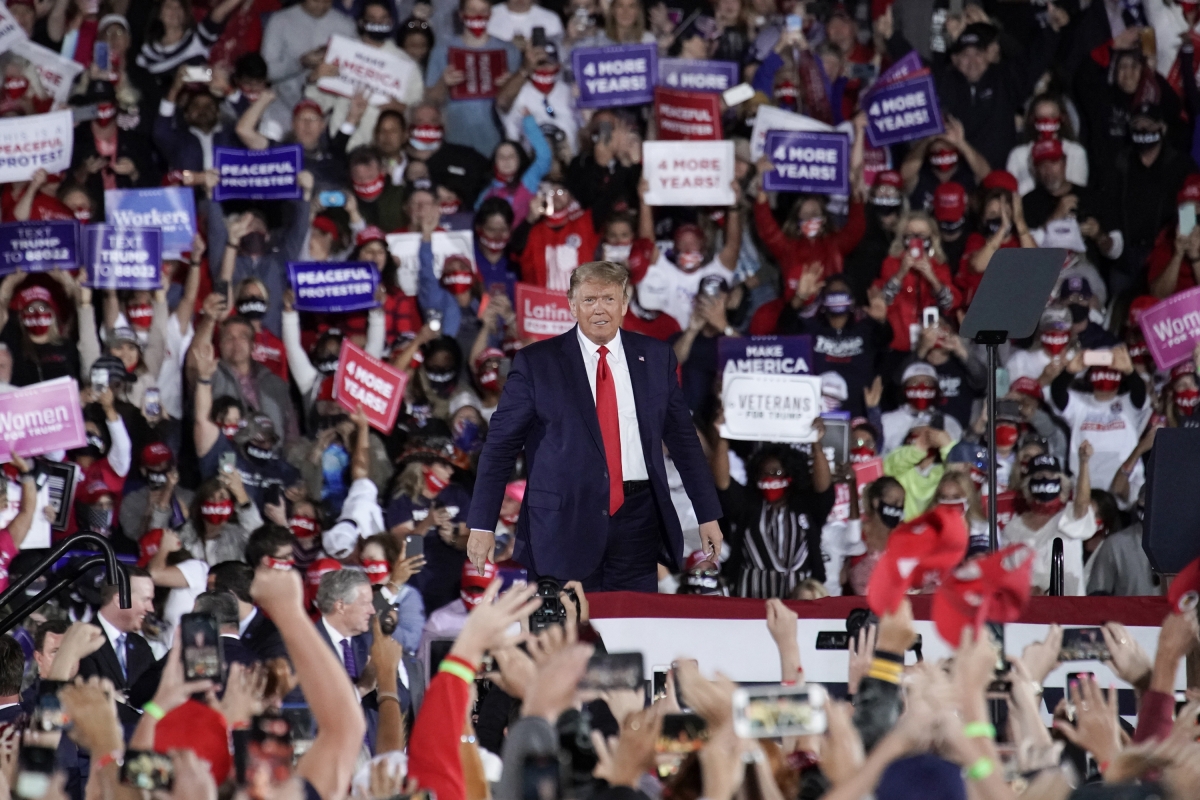
President Donald Trump appears at a rally Oct. 16, 2020 at Middle Georgia Regional Airport in Macon, Ga. MUST CREDIT: Photo by Nicole Craine for The Washington Post
President Donald Trump appears at a rally Oct. 16, 2020 at Middle Georgia Regional Airport in Macon, Ga. MUST CREDIT: Photo by Nicole Craine for The Washington Post

The two men clashed again during the early days of the coronavirus crisis.

Trump initially was supportive of an April 20 executive order from Kemp aimed at opening up businesses in the state, which jibed with Trump’s own push at the time to reopen many businesses against the advice of his public health advisers. Kemp spoke to both the president and the vice president the next day, and both told him they thought it was a good approach, according to a Kemp aide with knowledge of the calls.

Trump had a sudden change of heart, however, in the wake of fierce public criticism of the breadth of Kemp’s order. Trump called Kemp back and was particularly “agitated” about the decision to reopen salons and spas, according to White House officials and people involved in the governor’s race. At a White House briefing, Trump said, “I told the governor of Georgia, Brian Kemp, that I disagree strongly with his decision to open certain facilities.”

In addition, much to the irritation of Kemp’s aides, White House press secretary Kayleigh McEnany called Kemp directly to urge him to revoke the order.

“Just how absolutely ridiculous that is,” said one GOP official. “Who . . . does she think she is, telling the governor – essentially dressing him down on the phone.”

McEnany did not respond to requests for comment.

But Kemp’s biggest alleged sin, in Trump’s view, came in the aftermath of Trump’s disappointing Election Day showing. Several local Republican strategists speculate that the root of Trump’s recent anger with Kemp is simply the fact that he lost Georgia – a conservative state where those below him on the ticket fared better than he did, and where Stacey Abrams, the state’s top Democrat, is credited with building the organization that led to the president’s defeat.

The irony is that Kemp is among the Republican officials in the state who worked relentlessly on Trump’s behalf, said one Republican official in Georgia, noting that the governor held multiple rallies, other appearances and phone recordings with Trump family members.

“No one worked harder to reelect Donald Trump in Georgia than Governor Kemp,” Kemp spokesman Cody Hall said in a statement. “Since Election Day, the governor has called for a signature audit three times, demanded all allegations of fraud to be fully investigated, and supported the President pursuing legal options afforded him under Georgia state law.”

Still, Hall added, “There is no basis in state law for the governor to overturn the results, interfere in election administration or overrule the constitutional authority of our elected secretary of state.”

– – –

On Saturday, Dec. 5 – the morning of Trump’s trip to Valdosta, Ga. – Trump spoke by phone to Kemp. The call vividly revealed just how single-minded the president has become not just in pressuring fellow Republicans to help him overturn the election, but also in attacking those who refuse.

At the start of the contentious phone call, Trump asked Kemp how he was doing, according to someone briefed on the exchange. Kemp was in the midst of a family tragedy after Harrison Deal, a family friend and Loeffler aide, had died in a car crash the previous day. He replied, “It’s been a rough 24 hours.”

The president then incorrectly surmised that Kemp’s low mood must be because of recent poll numbers showing the governor’s approval rating slipping.

No, we lost a close family friend yesterday, Kemp replied, this person said. Trump then offered his condolences.

In the call, Trump demanded that the governor call a special session of the legislature and pressure lawmakers to change state law to allow them to assign Republican electors and reverse the outcome. He also demanded an audit of ballot signatures, which he has claimed without evidence, were not properly matched against signatures on file.

Kemp explained that, for numerous legal reasons, he could not do either of those things.

Kemp’s office declined to comment on the exchange, other than to confirm that the president offered his condolences. Trump campaign spokesman Tim Murtaugh declined to comment on the conversation.

But numerous people with knowledge of the call said the conversation was openly hostile, with Trump effectively threatening the governor and arguing that Kemp would lose reelection if he didn’t cede to the president’s demands.

“It was nasty enough for Kemp to say no to all of the asks,” said one Republican strategist. “I don’t know if you’ve ever talked to Kemp, but he’s politically kind of squishy. He never says yes or no to something. He’ll say something cute and funny, and he pushes it off, but it’s never like a flat ‘No.’ And he said, ‘No.’ He told the president, ‘No’ – twice.”

Later that day, at the rally in Valdosta for Loeffler and Perdue, Trump praised Rep. Douglas A. Collins (R-Ga.), for leading the effort to argue that there was fraud in the state. In private, one Republican said, Trump has floated the prospect of Collins challenging Kemp for the governorship in a 2022 GOP primary.

“Where’s Doug?” Trump said during the Valdosta rally. “Thank you, Doug. What a job he does. You want to run for governor in two years? Yeah. Good-looking governor.”

– – –

The tensions have surprised Republicans in Georgia, many of whom assumed for much of the year that at least some of the apparent chill between Trump and Kemp was staged, because the governor did not want to appear to be too close to Trump ahead of a potential rematch with Abrams.

Kemp clearly has had his eye on his reelection bid all year. Kemp’s narrow win over Abrams in 2018 was dominated by the debate over voting rights and voter suppression. Abrams characterized Kemp as an architect of the disenfranchisement of hundreds of thousands of Georgians, mostly people of color, through an extensive purge of the state’s voter registrations.

Raffensperger said in an email statement that Trump’s loss was simply the result of “changing demographics,” which have made the state more politically diverse and competitive. He also stressed that the Republicans’ full focus now should be on holding the two Senate seats.

“This is what it looks like when your party is losing: scapegoating, finger-pointing,” Raffensperger said. “All we see is a group of individuals who got too cocky and thought Georgia would be a layup shot. It’s time for the Georgia Republican Party to step up and deliver a win, which they failed to do in the general election for President Trump.”

As the feud has exploded into the public view, Kemp has defied the counsel of some in his circle, who have urged him to stay in regular contact with the president. One person familiar with their conversations estimates that they have only spoken several times in as many weeks.

But Nick Ayers, former chief of staff to Vice President Mike Pence and a Georgia native who is close to both Trump and Kemp, said he believes the differences between the two men are hardly insurmountable.

“A lot of this, probably all of it, can be resolved if every principle decision-maker – both national and local – gets in the same room, eye to eye, to discuss the facts and map out a path to achieve what everyone wants to achieve,” Ayers said. “But that hasn’t happened yet and not much will change until it does. It is unfortunate because the goals are so tightly aligned and the stakes are so high.”

Government ready to heed protesters’ demand to delay industrial estate in Songkhla #SootinClaimon.Com

#SootinClaimon.Com : ขอบคุณแหล่งข้อมูล : หนังสือพิมพ์ The Nation.

Government ready to heed protesters’ demand to delay industrial estate in Songkhla (nationthailand.com)

Government ready to heed protesters’ demand to delay industrial estate in Songkhla

NationalDec 15. 2020

Deputy Minister of Agriculture and Cooperatives Thammanat Prompao

Deputy Minister of Agriculture and Cooperatives Thammanat Prompao

By The Nation

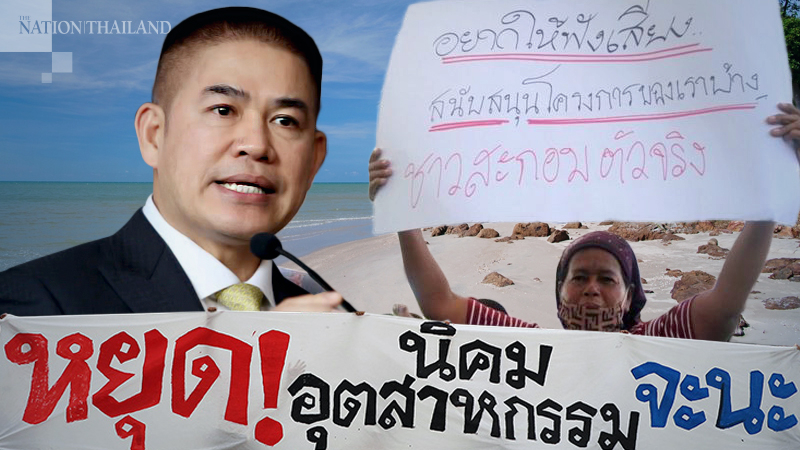
A people’s network from Songkhla province won several concessions from the government after negotiations on Monday, including delaying a proposed industrial estate. The Jana Rak Thin (Love Jana) network, which has been protesting outside Government House since December 10, on Monday held talks with Deputy Minister of Agriculture and Cooperatives Thammanat Prompao on  postponing the Jana Industrial Estate project in Songkhla province, along with several other issues.

Negotiations between the Jana Rak Thin Network and the government representatives led by Thammanat and Prasan Wangrattanapranee, assistant Minister of the Prime Minister’s Office, went well on Monday, with the protesters agreeing to move from Government House to a nearby commercial area, after they started the protest on December 10.

Thammanat said he had briefed Deputy Prime Minister Prawit Wongsuwan, who has acknowledged the problem and considered the appointment of a subcommittee for solving problems jointly by the government and network representatives and drawing up a memorandum of understanding. Prawit will sign the order and propose to the Cabinet the memorandum of understanding on Tuesday.

The agreement between Jana Rak Thin network and Thammanat includes postponing the Jana Industrial Estate project and complete environmental impact assessment first, cancelling the process of revising the consolidated city plan to industry area, and conducting a strategic environmental assessment.

Police are preparing to move containers placed in front of Government House after the protesters moved to a commercial area nearby.

PTT vows no oil price hike during New Year holidays #SootinClaimon.Com

#SootinClaimon.Com : ขอบคุณแหล่งข้อมูล : หนังสือพิมพ์ The Nation.

PTT vows no oil price hike during New Year holidays (nationthailand.com)

PTT vows no oil price hike during New Year holidays

NationalDec 15. 2020

By THE NATION

PTT will not adjust the price of all kinds of fuel during the New Year holidays from December 26 to January 3, despite the rising global oil price, to facilitate travel by people to their hometowns.

“On December 31-January 1, customers who refuel over Bt500 per receipt at PTT stations will receive a Thai product gift under our campaign to promote entrepreneurs in local communities,” Jiraporn Khaosawas, chief executive officer and managing director of PTT Oil and Retail Business Plc said. “Also, when you buy a drink at Café Amazon at 20 PTT stations in Bangkok located on major highways leading to other regions from December 30 to January 3, you will receive a free packet of Café Amazon original drip coffee.”

The list of participating PTT stations can be viewed on Café Amazon’s Facebook page.

Jiraporn Khaosawas

Jiraporn Khaosawas

Jiraporn added that these campaigns were part of the company’s efforts to deliver New Year gifts to customers and promote domestic travel to support the Thai tourism industry.

Showers and morning fog forecast for upper Thailand, heavy rains in South #SootinClaimon.Com

#SootinClaimon.Com : ขอบคุณแหล่งข้อมูล : หนังสือพิมพ์ The Nation.

Showers and morning fog forecast for upper Thailand, heavy rains in South (nationthailand.com)

Showers and morning fog forecast for upper Thailand, heavy rains in South

NationalDec 15. 2020

By THE NATION

The Thailand Meteorological Department said on Tuesday that a rather strong high-pressure system from China has extended to cover upper Vietnam. It is expected to cover the Northeast of Thailand and the South China Sea by Tuesday night.

Isolated rain is likely in the lower Northeast, the Central and the East, followed by a 1-3 degrees Celsius fall in temperature with strong winds in the Northeast. Morning fog and isolated thick patches are also likely in the North, the Central and the East, including Bangkok and its vicinity. All vehicles should be cautious in foggy areas, the department said.

The strong northeast monsoon also covers the Gulf and the South, bringing more rain and heavy downpour in some areas.

The weather forecast for the next 24 hours:

North: Cool to cold weather with fog in the morning and thick fog in some areas; minimum temperature 14-22 degrees Celsius, maximum 29-36°C; temperature on hilltops is likely to drop to 3-14°C.

Northeast: Cool weather with fog in the morning and dense fog as well as isolated rain in some areas; minimum temperature 17-22°C, maximum 31-33°C; temperature on hilltops is likely to drop to 10-15°C.

Central: Cool weather with fog in the morning and isolated rain in some areas; minimum temperature 23-24°C, maximum 33-36°C.

East: Fog in the morning and isolated rain in some areas; minimum temperature 23-25°C, maximum 31-35°C; waves a metre high and 1-2 metres off shore.

South (east coast): Mostly cloudy with thundershowers in 60 per cent of the areas and isolated heavy rain; minimum temperature 22-24°C, maximum 27-33°C; waves a metre high and 1-2 metres during thundershowers.

South (west coast): Mostly cloudy with thundershowers in 40 per cent of the areas and isolated heavy rain; minimum temperature 22-24°C, maximum 29-33°C; waves a metre high and 1-2 metres during thundershowers.

Bangkok and surrounding areas: Fog in the morning and isolated rain in some areas; minimum temperature 24-25°C, maximum 32-34°C.

Hundreds of suspected corruption cases in Khon La Khrueng stimulus scheme #SootinClaimon.Com

#SootinClaimon.Com : ขอบคุณแหล่งข้อมูล : หนังสือพิมพ์ The Nation.

Hundreds of suspected corruption cases in Khon La Khrueng stimulus scheme (nationthailand.com)

Hundreds of suspected corruption cases in Khon La Khrueng stimulus scheme

NationalDec 15. 2020

By THE NATION

Around 700 cases of suspected corruption in the Khon La Khrueng (Let’s Go Halves) stimulus scheme are being investigated, said the Finance Ministry on Monday.The suspects had been caught in the application process or after being reported by members of the public. They involve both shops and individuals, though the ministry did not reveal what form the alleged corruption took.Possible corruption in the “Rao Tiew Duay Kan” tourism stimulus package has also been reported to the Tourism and Sports Ministry.Separately, the Fiscal Policy Office said the second phase of Khon La Khrueng will be launched on Wednesday (December 16) to cover another 5 million people. To be eligible, applicants must be Thai nationals, aged at least 18, who are not state welfare card holders. People who did not pass the first-phase registration process can re-register this time. Those who registered for the first phase can continue their participation via the “Pao Tung” wallet mobile application from Wednesday.As of Sunday (December 13), Khon La Khrueng had around 970,000 registered shops and 9.53 million registered individuals. Total spending generated by the stimulus scheme is Bt43 billion – Bt22 billion from the public and another Bt21.1 billion by the government.

Toon Bodyslam in hospital with neck injury #SootinClaimon.Com

#SootinClaimon.Com : ขอบคุณแหล่งข้อมูล : หนังสือพิมพ์ The Nation.

Toon Bodyslam in hospital with neck injury (nationthailand.com)

Toon Bodyslam in hospital with neck injury

NationalDec 14. 2020Artiwara Artiwara “Toon” Kongmalai 

By The Nation

Fans of the rock band Bodyslam were shocked to hear its popular lead singer Artiwara “Toon” Kongmalai was receiving treatment in hospital for a neck problem on Sunday evening.

Toon was sent to Bangkok’s Phramongkutklao Hospital after suffering a bulging disc in his cervical vertebrae. 

The 41-year-old rock star created history last year when his epic, 55-day run across the country raised Bt1.2 billion for cash-strapped public hospitals. Cervical herniated disc is a recognised condition among athletes, though it is not known whether Toon sustained the injury through running.    

A nephew of Aed Carabao, Toon founded Bodyslam with Thanadol Changsawek and Nathaphol Phannachet in 2002. The band have released seven hit albums so far, mostly under GMM Grammy.

TOT staff turn firefighters to put out blaze #SootinClaimon.Com

#SootinClaimon.Com : ขอบคุณแหล่งข้อมูล : หนังสือพิมพ์ The Nation.

TOT staff turn firefighters to put out blaze (nationthailand.com)

TOT staff turn firefighters to put out blaze

NationalDec 14. 2020

By The Nation

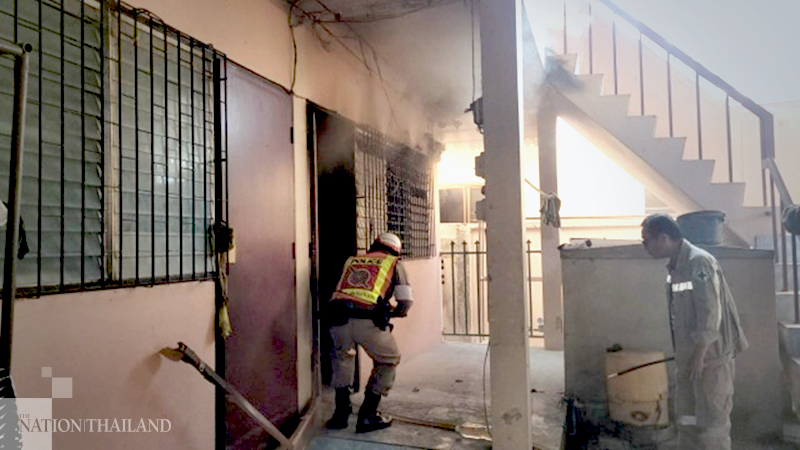
TOT employees in Phitsanulok were in the right place at the right time to help extinguish flames that were engulfing an apartment.

On Monday morning, firefighters rushed to a student apartment block in Muang Phitsanulok after receiving reports of a blaze.

However, they arrived to find the fire had already been put out, even though most of the student residents were still in class.

Staff at a TOT office across the road from the apartment block said they spotted the smoke and broke into the residence to put out the fire just in time.

The cause of the blaze was traced to a faulty refrigerator which was found at the epicentre of the fire.

Netizens say music festival shut down for pro-democracy content, not Covid #SootinClaimon.Com

#SootinClaimon.Com : ขอบคุณแหล่งข้อมูล : หนังสือพิมพ์ The Nation.

Netizens say music festival shut down for pro-democracy content, not Covid (nationthailand.com)

Netizens say music festival shut down for pro-democracy content, not Covid

NationalDec 14. 2020

By The Nation

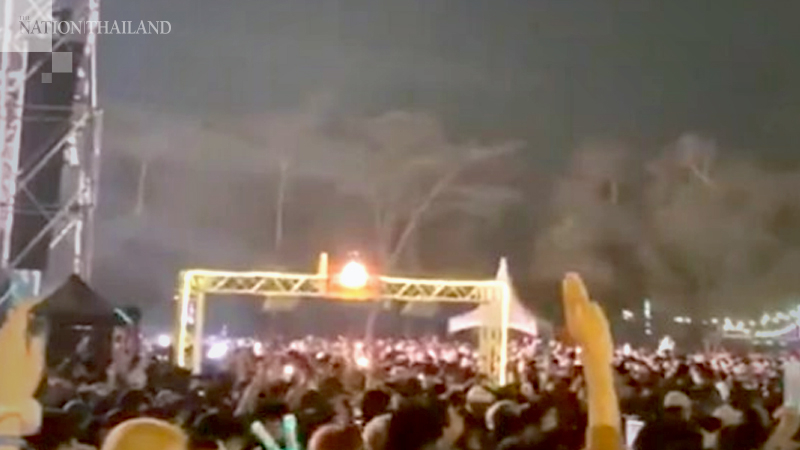
Netizens have questioned the order to shut down the weekend’s Big Mountain music festival, saying it may be linked to the government crackdown on pro-democracy activists.

On Sunday, Nakhon Ratchasima’s governor told the organisers to call off the festival, citing lax Covid-19 preventive measures. Wichian Chantaranothai said organisers had failed to limit the number of festival-goers or enforce mask-wearing, leading to shouting and singing among crowds which could transmit the virus.

However, less than an hour after organisers closed the show at 10pm, social media users began sharing footage of pro-democracy content at the festival. The content included protest songs, yellow rubber ducks, three-fingered salutes, and a fake corpse allegedly representing forcibly “disappeared” activists.

Pro-democracy netizens questioned whether government officials had pressured the Nakhon Ratchasima governor to shut down the event, using the Covid-19 plea as a cover.

Virus fears were sparked on Saturday when a 43-year-old Chiang Mai woman who travelled to the festival with seven friends was taken to Maharat Nakhon Ratchasima Hospital with a fever and chest infection. Meanwhile photos of long queues and crowding at the festival on Saturday prompted some netizens to call for it to be cancelled to prevent Covid-19 transmission.

Tests on the 43-year-old woman and her seven friends came back negative for Covid-19 on Sunday, according to Disease Control Department chief Opas Karnkawinpong. However, an inspection by health officials found crowding in front of stages at the festival and many people not wearing masks. Opas said officials asked the festival organisers to fix the problems, but there was no response.

Governor Wichian said on Sunday the decision to close the event came after organisers failed to respond with adequate virus prevention measures. Organisers announced on Facebook they would refund the tickets of any fans who were unhappy with this year’s event.

Held at the Ocean Khao Yai Golf Club, Big Mountain has become one of Thailand’s biggest music and arts festivals over the past few years

Ex-health minister succumbs to kidney problems #SootinClaimon.Com

#SootinClaimon.Com : ขอบคุณแหล่งข้อมูล : หนังสือพิมพ์ The Nation.

Ex-health minister succumbs to kidney problems (nationthailand.com)

Ex-health minister succumbs to kidney problems

NationalDec 14. 2020

By THE NATION

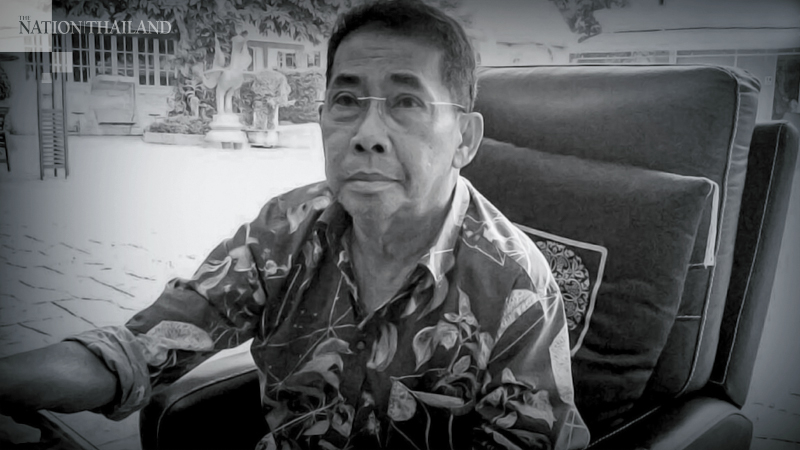
Former public health minister Chaiya Sasomsap succumbed to acute kidney injury on Monday. He was 68.

Chaiya began his political career in 1993 as a member of Solidarity Party and took over the Public Health Ministry in 2008 under the Samak Sundaravej government. He held the Transport portfolio from 1999 to 2001 under the government led by Chuan Leekpai, who is the current Parliament president.

Chaiya’s predecessor at the Public Health Ministry, Mongkol na Songkhla, 79, died of cancer on Friday.