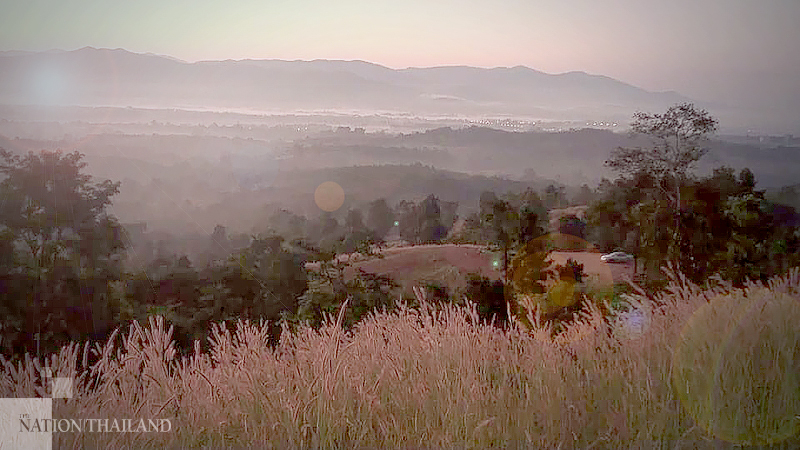
The weak high-pressure system covering upper Thailand and the South China Sea brings morning fog and cool to cold weather to the North, while mountaintops remain cold to very cold, the Thailand Meteorological Department forecast on Monday.
Isolated rain is expected in the lower Northeast, the Central and the East. All vehicles should move with caution in foggy areas, the department said. Meanwhile, the northeast monsoon across the Gulf of Thailand brings thundershowers to the South with heavy rain in some areas.
The weather forecast for the next 24 hours:
North: Cool to cold weather with fog in the morning and dense fog in some areas; minimum temperature 13-20 degrees Celsius, maximum 30-34°C; temperature on hilltops is likely to drop to 4-14°C.
Northeast: Cool weather with fog in the morning and dense fog as well as isolated rain in some areas; minimum temperature 17-22°C, maximum 32-34°C; temperature on hilltops is likely to drop to 10-15°C.
Central: Cool weather with fog in the morning and isolated rain in some areas; minimum temperature 21-23°C, maximum 33-35°C.
East: Fog in the morning and isolated rain in some areas; minimum temperature 22-24°C, maximum 32-34°C; waves a metre high and 1-2 metres off shore.
South (east coast): Mostly cloudy with thundershowers in 60 per cent of the areas and isolated heavy rain; minimum temperature 23-24°C, maximum 31-33°C; waves a metre high and 1-2 metres during thundershowers.
South (west coast): Mostly cloudy with thundershowers in 40 per cent of the areas and isolated heavy rain; minimum temperature 23-24°C, maximum 31-33°C; waves a metre high and 1-2 metres during thundershowers.
Bangkok and surrounding areas: Fog in the morning and isolated rain in some areas; minimum temperature 23-24°C, maximum 33-35°C.
MANILA, Philippines — The country faces a postpandemic skills and employment gap that may leave 2.4 million skilled jobs vacant and unfilled if there are no significant reforms in education and training of workers.
House ways and means chair and Albay Rep. Joey Salceda issued the warning as he pressed policymakers to implement reforms in training and education to meet the needs of new and emerging businesses.
In his report entitled, “The coming skills and employment gap and the case for education and training reform,” he estimated that some 2.4 million skilled and well-paid jobs, or 6 percent of the labor force, would be left unfilled in the next decade “if education and training systems are not improved meaningfully.”
Salceda added that least 20 million new and existing workers would have to be trained, retrained and retooled to keep the skilled worker supply-demand equilibrium.
In a statement, he warned that many jobs lost because of the COVID-19 pandemic “will not return simply because there will no longer be any need for them, even if businesses recover.”
“We’ve all moved online. Expect painful permanent shrinkages in the low-skill service sector, and a drag in real wages due to the oversupply of unskilled work, unless we are willing to make meaningful policy changes now,” Salceda said.
He added: “The bottom line of my report is we need to prepare the workforce for a new economy. Our current education and training system, where we place value on diplomas and not skills, will just not do.”
Adapt to change
Salceda said the new formula for new training and education systems should be a combination of access, quality and adaptability.
“We have to train as many Filipinos as possible to be very highly skilled workers who can also very quickly adapt to new changes in industries,” he said.
If significant reforms are not made now, the country faces a situation in which “unskilled workers cannot find jobs, while jobs requiring skills cannot be filled with workers.”
“This will be a silent crisis because it will only make itself seen gradually and in the households whose workers cannot find jobs and in the businesses where skilled jobs remain unfilled. In the aggregate, however, it will definitely bog us down,” Salceda said.
He cited growth in the business process outsourcing sector, which is projected to grow by 3.5 percent to 7.5 percent annually within the next three years.
“Without a reliable stream of well-trained talent for these growing industries, however, they will eventually move to our competitors in India, Pakistan, and even increasingly, Vietnam,” he said.
Facebook removes 400 per cent more posts that violate Vietnam laws
Dec 13. 2020Facebook has removed 2,311 posts that violated Vietnamese laws since the beginning of the year. — Photo anninhthudo.vn
By Vietnam News
HÀ NỘI — Facebook has removed 2,311 posts that violated Vietnamese laws from its platform since the beginning of the year, up by 400 per cent compared to the whole of last year.
The figure was reported in the response of the Ministry of Information and Communications to a Hải Phòng voter’s recommendations on measures to prevent wrong viewpoints and misrepresentations of hostile forces against Việt Nam online.
These forces were taking advantage of the online environment, especially social networks, to spread poisonous information, defame and smear cadres, and distort the policies of the Party and State on the threshold of the 13th National Party Congress, claimed the voter.
The Ministry of Information and Communications has implemented many strong measures in recent years, requiring businesses such as Facebook and Google to provide cross-border services to control and prevent the spread of poisonous information.
Specifically, Facebook has removed 290 fake personal accounts propagandising against the State following the request of the ministry from the beginning of this year.
This platform also removed 154 pages that posted false information, propagandising content against the Party and State, defaming and discrediting many organisations.
In addition, YouTube blocked and removed more than 29,000 violating videos and 24 reactionary channels with thousands of videos containing anti-Party content on YouTube.
The ministry blocked 1,714 poisonous websites and blogs in the online environment, violating the law with tens of thousands of negative posts.
Apart from requiring businesses to check, remove and block wrong content, the Ministry of Information and Communications also works with local authorities to handle administrative violations to deter lawbreakers.
Of these, there were 26 cases where reprimands were doled out and 45 in which a total of more than VNĐ323.5 million (US$14,000) was fined.
In addition, the ministry noted some limitations on technical solutions and policies, which need to be fixed.
It will continue to implement measures on mechanisms and policies, supplement strict sanctions, and co-ordinate with cross-border service providers to tighten the control of content in the cyberspace.
In addition, it will develop and disseminate rules, social standards and safety skills for internet users in Việt Nam.
Other ministries, departments and agencies must work with the Ministry of Information and Communications to handle network violations related to management when necessary. — VNS
Dec 13. 2020Farmers take out a bike rally to protest against the three new agricultural laws, in Amritsar on Dec 12, 2020. (Photo: IANS)
By The Statesman
They have also appealed all sections of society, including girls and women, to join them.
The protesting farmers, on Saturday, said that they will expand and intensify their protest to a ‘pan-India’ scale as the Centre has refused to heed to their demands to repeal the three contentious farm laws–The Farmers Produce Trade and Commerce (Promotion and Facilitation) Act, 2020; The Farmers (Empowerment and Protection) Agreement of Price Assurance, and Farm Services Act, 2020; and The Essential Commodities (Amendment) Act, 2020 enacted in September.
They have also appealed all sections of society, including girls and women, to join them. As of Saturday, the farmers are protesting at different borders of the National Capital.
“We request our sisters and mothers to become part of the protest. We are arranging for the seating, sleeping and hygiene facilities for women protesters. We appeal the girls and women across India to join the protest,” he said adding, “We want to keep this movement as peaceful as it can.”
“We have decided to expand this movement pan India,” said Kisan Sangharsh Samiti President Kawalpreet Singh Pannu while addressing a press conference at Singhu border.
Pannu said that farmers will move from Rajasthan’s Shajapur to Delhi borders blocking the Delhi-Jaipur route on Sunday and all District Collector offices would become the Centre of the protest on December 14.
Announcing that all the leaders of 32 unions would sit on a day-long hunger strike at the Singhu border protest site from 8 a.m. to 5 p.m. on December 14, Pannu sought support from other sections of society.
“The government had been saying since the beginning that these laws are for the benefit of farmers but we had told them that it is for the corporate houses,” Pannu said.
It was the 17th day of farmers’ protest on Delhi’s different borders. Thousands of farmers, who began their sit-in from Singhu border on Delhi-Chandigarh border on November 26, are braving the chilly winter under open skies. The protest has hampered the supply chain to the national capital.
Thousands of farmers will take out a tractor rally to block the Delhi-Jaipur highway on Sunday, demonstrators said on Saturday, vowing to intensify their agitation despite a fresh appeal by from Prime Minister Narendra Modi who had assured the farmers on Saturday that the reforms in the agrarian sector were aimed at helping them.
“Reforms will help draw investment in agriculture and benefit farmers. We’ve taken all these initiatives to increase the farmers’ income and make them more prosperous. Today, farmers of India can sell their produce both at the mandis as well as outside,” PM Modi said at the annual meeting of the Federation of Indian Chambers of Commerce and Industry (FICCI) in New Delhi.
Meanwhile, Dushyant Chautala, the Haryana Deputy Chief Minister and a BJP ally, on Friday said he would resign from his post if he is unable to secure the minimum support price (MSP) guarantee for farmers. “Our party’s national president already made it clear that MSP must be ensured to farmers. The written proposals given by the Central government to the protesting farmers include a provision for MSPs. I will work to secure MSP for farmers as long as I am in power,” he was quoted as saying by news agency ANI.
Delhi Police Commissioner SN Shrivastava visited the Tikri border and met the police and CAPF personnel deployed in the areas where the farmers’ agitation is continuing. During the late-night visit on Friday, the commissioner met the staff deployed at the borders along with senior police officers.
“Visited Delhi’s border with Bahadurgarh to interact with Delhi Police officers/men and CAPF personnel deployed in view of Kisan agitation. They are doing commendable duties during harsh winter with full appreciation of work expected out of them,” tweeted Shrivastava.
Visited Delhi’s Border with Bahadurgarh to interact with Delhi Police officers/men and CAPF personnel deployed in view of Kisan agitation. They are doing commendable duties during harsh winter with full appreciation of work expected out of them. @LtGovDelhi@HMOIndiapic.twitter.com/ukcYNb08Lh— CP Delhi #DilKiPolice (@CPDelhi) December 11, 2020
Singhu, Auchandi, Piau Maniyari and Mangesh borders are closed. The Delhi traffic police advised motorists to take alternate routes via Lampur, Safiabad, Saboli and Singhu school toll tax borders. Traffic has also been diverted from Mukarba and GTK road. The traffic police also requested commuters to avoid Outer Ring Rd, GTK Road, NH 44.
“The Chilla and Ghazipur borders are closed for traffic from Noida and Ghaziabad to Delhi due to farmers protests. People are advised to take alternate route for coming to Delhi via Anand Vihar, DND, Apsara & Bhopra borders,” the Delhi traffic police tweeted on Saturday.
British govt. announces travel bans and asset freezes for human rights violators
Dec 13. 2020Dominic Raab
By The Island
The British government sounded a stern warning to, what it termed “human rights violators in the world” by announcing travel bans and freezing of assets of 11 Russian, Venezuelan, Gambian and Pakistani politicians and officials, on December 10, which marked International Human Rights Day.
Announcing the sanctions, British Foreign Secretary Dominic Raab said, “Today’s sanctions send a clear message to human rights violators that the UK will hold them to account.
“The UK and our allies are shining a light on the severe and systematic human rights violations perpetrated by those sanctioned today. Globally Britain will stand up for democracy, human rights and the rule of law as a force for good in the world.”
The UK was acting alongside the US which also announced new designations under its human rights regime.
The British government was imposed sanctions, including travel bans and asset freezes, on three Russian individuals and the Terek Special Rapid Response Unit responsible for torture and other human rights violations against LGBT people in Chechnya.
Sanctions will be imposed on senior security figures in Venezuela responsible for human rights violations in Maduro’s illegitimate regime.
The former President of The Gambia, Yahya Jammeh and Ahmad Anwar Khan, the former Senior Superintendent of Police in Malir District in Pakistan are also facing sanctions for “historic human rights violations including extrajudicial killings of protestors and minority groups”.
The full list of designations is as follows:
Venezuela
* Rafael Bastardo, Commander of FAES (Special Action Forces) until 2019.
* Remigio Ceballos Ichaso, Head of the Strategic Command Operations of the Bolivarian National Armed Forces (CEOFANB)
* Fabio Zavarse Pabon, Commander of the National Guard (GNB).
Russian Federation
* Magomed Daudov, Spokesperson/Chairperson of the Parliament of the Chechen Republic.
* Aiub Kataev, Head of the Ministry of Internal Affairs of the Chechen Republic of the Russian Federation in Argun.
* Apti Alaudinov, Deputy Minister of Internal Affairs of the Chechen Republic and Major General of the Police.
* Terek Special Rapid Response Unit,
The Gambia
* Yahya Abdul Aziz Jemus Junkung Jammeh, former President of The Gambia.
* Yankuba Badjie, former Director-General of the Gambian National Intelligence Agency (NIA).
* Zineb Jammeh, former First Lady of The Gambia
and wife of Yahya Jammeh.
Pakistan
* Anwar Ahmad Khan, former Senior Superintendent of Police (SSP) in Malir District, Karachi.
Nepal Government failed its people during pandemic, rights organisations say https://tkpo.st/2JXnUNx
Dec 13. 2020Rights organisations say the government managed quarantine facilities did not meet WHO standards
By Kathmandu Post
International Commission of Jurists points out a series of missteps by the government, from making light of the disease, denying free tests and care to failing to provide social safety net to the vulnerable groups.
Nepal government failed its people when it comes to protecting them from Covid-19 pandemic, human rights organisations have said.
The response of Nepal government to the pandemic hasn’t been as per its constitutional obligations and international commitment to human rights, different human rights organisations said on Friday.
In its briefing paper based on analysis of Nepal government’s approach to dealing with the pandemic, the International Commission of Jurists (ICJ), an international human rights organisation, saidthe government has fallen short of ensuring that it meets the obligations to respect, protect, and fulfil the people’s right to health to the extent required by the Constitution of Nepal, national legislation and international human rights law.
The international human rights organisation has said that the government also failed to adhere to different rulings made by the Supreme Court on Covid-19 tests and care.
The apex court in April directed the government to manage the quarantine facilities based on the World Health Organisation’s standards. In August, the court issued a ruling against the government’s decision to provide free testing and treatment facilities only to senior citizens and economically deprived communities. The court ordered the government to ensure no one is deprived of their right to health.
Most of these rulings were disregarded by the government.
“The Supreme Court has issued a number of orders reinforcing government’s obligations in terms of the right to health. However, the authorities have failed to adequately and fully implement them,” the ICJ said.
“Little efforts were made by the government towards addressing the social, economic and cultural rights of the citizens,” Yagya Adhikari, joint secretary at Bagmati provincial office of the national human rights body, said at a virtual interaction on Friday.
In its paper the ICJ has said ignoring the gravity of the pandemic, Prime Minister KP Sharma Oli made repeated statements downplaying the seriousness of Covid-19. It said statements like “Covid-19 is like a common flu… one should sneeze, drink hot water and drive the virus away” and “Nepalis have better immunity” from Oli suggest that the government took the pandemic lightly.
The report also pointed out that slow response to implement preventative measures; the lack of rapid testing, low quality of testing kits and the lack of easy access to hospitals for pregnant women, among other government shortcomings, had disappointed the people.
The ICJ also expressed concern regarding the allegations of government corruption during the procurement of protective gear and medicines.
The Deputy Prime Minister, the Minister of Health and various other officials had come under intense criticism for their alleged involvement in misuse of funds meant for pandemic response.
The National Human Rights Commission pointed out the insensitivity on the part of the government as the citizens were finding it difficult to cope with the economic stress presented by the pandemic.
In his presentation, Adhikari said that it was unfortunate that the people who had returned home from their labour destination countries due the fear of the pandemic had to go back for overseas jobs as the government failed to provide them with social safety nets and income generating opportunities at home.
He said the commission also recorded at least two cases of death due to starvation since the pandemic, incidents that challenge the government’s announcement that no one will die of hunger.
“The government is supposed to be the guardian of its people,” he said. “However, the Nepal government has failed to be one.”
MANILA, Philippines — Developed countries should honor their obligations to limit global warming to 1.5 degrees Celsius and pave the way for low-carbon technology under the Paris Agreement on Climate Change.
House Deputy Speaker and Antique Rep. Loren Legarda made the call on the fifth anniversary of the adoption of the landmark deal on Saturday.
Formally adopted on Dec. 12, 2015, at the 21st Conference of the Parties of the United Nations Framework Convention on Climate Change, the Paris Agreement compels developed nations that contributed the most to global warming and climate change to take deep and significant cuts to their greenhouse gas emissions.
The treaty, which was ratified by 189 countries, seeks to limit global warming to 1.5 degrees Celsius. The Paris Agreement took effect in the Philippines on April 22, 2017, Earth Day.
60pc of Pakistan’s energy will be ‘clean’ by 2030: PM Imran
Dec 13. 2020Prime Minister Imran Khan speaks during the Climate Ambition Summit 2020. ( Photo courtesy Radio Pakistan)
By Dawn
Prime Minister Imran Khan on Saturday said that by 2030, 60 per cent of all energy produced in the country will be “clean” and through renewable resources.
“Thirty per cent of all the country’s vehicles will use electricity,” he added.
The premier made the remarks while speaking at the Climate Ambition Summit 2020. According to the Prime Minister’s Office, the summit was a high-level virtual event held on the occasion of the fifth anniversary of the Paris agreement on climate change.
PM Imran started his address by stating that Pakistan contributes less then one per cent to global emissions.
“Sadly, we are the fifth most vulnerable country to climate change. We have decided, firstly, that we will have nature-based solutions to mitigate the effects of climate change.”
This includes planting ten billion trees in the next three years, he said. He added that the number of national parks and protected areas has been increased from 30 to 45.
“At the same time we have decided we will not have power based on coal. We have already scrapped two coal power projects that were supposed to produce 2,600MW of energy, and replaced [them] with hydro-electricity.”
He added that as far as indigenous coal is concerned, the government has decided to produce energy either by “coal to liquid” or by “coal to gas” so that coal doesn’t have to be burned.
He concluded his address by assuring the summit that Pakistan will be doing its best to mitigate the effects of climate change.
President Xi voices confirmation in implementing Paris Agreement, improving global climate governance
Dec 13. 2020
BEIJING – President Xi Jinping on Saturday urged the international community to pursue a new approach to climate governance that highlights green recovery and pledged China’s further commitments for 2030 to tackling the global climate challenge at the virtual Climate Ambition Summit.
Hailing the extensive international support to and participation in the implementation of the Paris Agreement on climate change since its adoption five years ago, Xi said the international landscape is evolving more rapidly, and COVID-19 is triggering deep reflections on the relationship between man and nature.
Saying the future of global climate governance is drawing greater attention, Xi made the following three proposals.
First, Xi called on all parties to close ranks and make new advances in climate governance that features win-win cooperation.
In meeting the climate challenge, no one can be aloof and unilateralism will lead nowhere, Xi said. “Only by upholding multilateralism, unity and cooperation can we deliver shared benefits and win-win results for all nations.”
“China welcomes all countries’ support for the Paris Agreement and their greater contribution to tackling climate change,” Xi added.
Second, Xi called for raising ambition and fostering a new architecture of climate governance where every party does its part.
Following the principle of common but differentiated responsibilities, all countries need to maximize actions in light of their respective national circumstances and capabilities, Xi said.
He also stressed that developed countries need to scale up support for developing countries in financing, technology and capacity building.
Third, Xi urged all parties to boost confidence and pursue a new approach to climate governance that highlights green recovery.
“Mountains and rivers green are mountains of silver and gold,” Xi said, adding it is important to encourage green, low-carbon ways of life and production, and seek development opportunities and impetus from green development.
Noting China’s important contributions to adopting the Paris Agreement and active efforts in its implementation, Xi said he announced in September that China would scale up its nationally determined contributions and adopt more vigorous policies and measures.
Xi went on to announce China’s further commitments for 2030 to tackling the global climate challenge.
Xi said China will lower its carbon dioxide emissions per unit of GDP by over 65 percent from the 2005 level, increase the share of non-fossil fuels in primary energy consumption to around 25 percent, increase the forest stock volume by 6 billion cubic meters from the 2005 level, and bring its total installed capacity of wind and solar power to over 1.2 billion kilowatts.
Noting China always honors its commitments, Xi said China, guided by the new development philosophy, will promote greener economic and social development in all respects while pursuing high-quality development.
“We will take solid steps to implement the targets just announced, and contribute even more to tackling the global climate challenge,” Xi added.
In addition, he called on all parties to build on past achievements, work together to make steady progress in implementing the Paris Agreement, and launch a new journey for global climate actions.
The summit, which aims to make new commitments to tackling climate change and delivering on the Paris Agreement, was co-convened by the United Nations, the United Kingdom and France, and in partnership with Chile and Italy.
A Dutch adoption scandal triggers a search for roots in Indonesia
Dec 13. 2020Ms Widya Astuti Boerma ended up in an orphanage in Jakarta at the age of three.PHOTOS: COURTESY OF WIDYA ASTUTI BOERMA
By Straits Times
JAKARTA – Until a few months ago, Ms Widya Astuti Boerma knew her biological mother only from glimpses of memory.
Some were pleasant: a moment of them both at the sultan’s palace in Yogyakarta for example. But others were jarring, including one indelibly etched of the family’s house ablaze. And then the final one: her mother’s instructions at a Jakarta train station to “be a good girl” and go with a woman she barely knew.
Ms Widya ended up in an orphanage. She was three.
Now, 45, Ms Widya is one of a growing number of Dutch adoptees scrambling to find their biological parents in the wake of explosive local media reports, court cases and a government inquiry into illegal adoptions.
The findings of a two-year inquiry into the role of Dutch government officials, including some of its embassy staff, in facilitating suspected illegal adoptions are expected in February.
“It made me think I wasn’t alone,” Ms Widya, who speaks Dutch, English, German and Spanish, told The Straits Times over the phone from her home in The Hague in the Netherlands, referring to the controversy.
“It made me wonder if I had been a victim of child trafficking.”
Three weeks after separating from her mother, and enduring beatings at the orphanage in Indonesia for crying, Ms Widya was adopted by a Dutch couple who had flown in.
She recalls the orphanage telling her that her mother could not care for her and that if she protested, her new parents would send her back to the orphanage.
In June, an Indonesian-speaking colleague posted details of her case on Twitter. The post got 3,500 retweets and attracted a sudden flurry of attention from Indonesian media.
And on June 17, the day after an interview with an Indonesian television network in which Ms Widya recounted details of the house fire, her colleague received a direct message from the daughter of a woman named Suyatni.
The 58-year-old woman, who was married at 12 to a man in his early 30s, was born in Yogyakarta and had worked as a housekeeper in the sultan’s palace.
With the help of translators, Ms Widya, whose knowledge of Bahasa Indonesia is limited to a few nursery rhymes her mother sang to her, learnt that the woman’s family had joined a government transmigration scheme that took them to Lampung, 900km away on the southern tip of Sumatra.
Madam Suyatni said her husband, who has since died, was a violent man and ran into trouble with neighbours and police. A mob later set fire to their house.
That was when Madam Suyatni fled with her young daughter to Jakarta to find work.
Madam Suyatni and her daughters at her home outside Jakarta. ST PHOTO: JEFF HUTTON
“It was kinda scary (to find) someone who can actually continue the story which you have had in you for all those years,” said Ms Widya.
More than 3,000 Indonesian children were adopted by Dutch nationals during the decade until 1984 when Indonesia, which declared independence from the Netherlands in 1945, all but banned the practice.
Ms Ana Maria van Valen, who herself is an adoptee from Indonesia, said a big chunk of overseas adoptions during that period were likely involuntary.
Ms van Valen, who remains close to her adoptive parents, speaks from experience. Her biological mother was poor and had sought help from an orphanage to care for her temporarily.
But the orphanage turned around and gave her up for adoption by Dutch parents.
The couple, whose conditions could not be more different from Ms van Valen’s biological parents, were keen to round out their family. They flew to Indonesia, booking excursions to tourist hot spots including Borobudur, to await completion of the adoption process.
“My Dutch parents already had three boys and they wanted a girl but not a baby,” Ms van Valen, 44, recalls. “I was a girl and already 2½.”
Ms van Valen co-founded Mijn Roots – pronounced “mine roots” – in 2015 to help reunite Dutch adoptees with their Indonesian parents. Progress has been slow.
Adoption documents here were riddled with errors and falsehoods. Of the hundreds of inquiries her organisation has received, 40 have yielded reunifications. In roughly half of the cases, the non-governmental organisation (NGO) would go on to learn from the biological parents that the adoptions had been involuntary.
To be sure, Indonesia was not the only source of overseas adoptions by Dutch couples. Local media reckon 40,000 overseas adoptions by Dutch nationals from developing countries including Brazil and Sri Lanka over three decades to the late 1990s may be illegal.
At the end of a year that has brought suffering and separation, for Ms Widya there is reunion and renewal. Results of a DNA test confirming whether she is Madam Suyatni’s daughter are expected by the end of the month. She has already booked a flight to Jakarta to meet Madam Suyatni early next month.
On a recent afternoon, Madam Suyatni, who uses one name like many Indonesians, dabs her eyes with her burgundy hijab.
Living 90 minutes from Jakarta on a neat row of low-income housing, she runs a small kiosk from the front of her house. She is remarried and has had five more children, including one from Ms Widya’s biological father.
On this day, she’s joined by her two young daughters, aged 11 and 16.
“It was only meant to be temporary,” she said, recalling her separation from Ms Widya that day at the train platform in 1979.


 Facebook has removed 2,311 posts that violated Vietnamese laws since the beginning of the year. — Photo anninhthudo.vn
  Farmers take out a bike rally to protest against the three new agricultural laws, in Amritsar on Dec 12, 2020. (Photo: IANS)
  Dominic Raab
  Rights organisations say the government managed quarantine facilities did not meet WHO standards
 Prime Minister Imran Khan speaks during the Climate Ambition Summit 2020. ( Photo courtesy Radio Pakistan)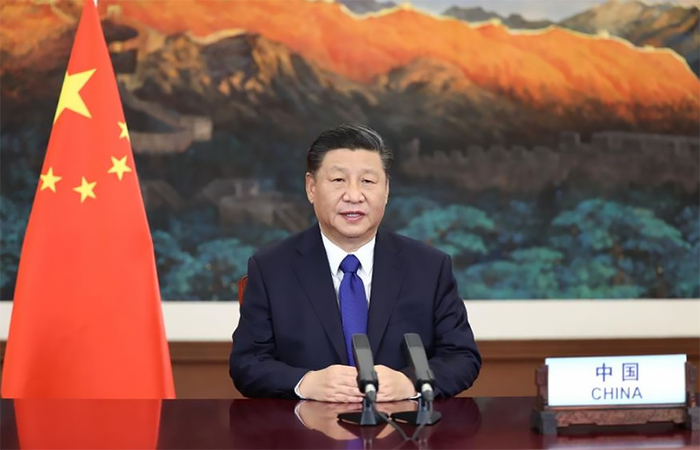
 Ms Widya Astuti Boerma ended up in an orphanage in Jakarta at the age of three.PHOTOS: COURTESY OF WIDYA ASTUTI BOERMA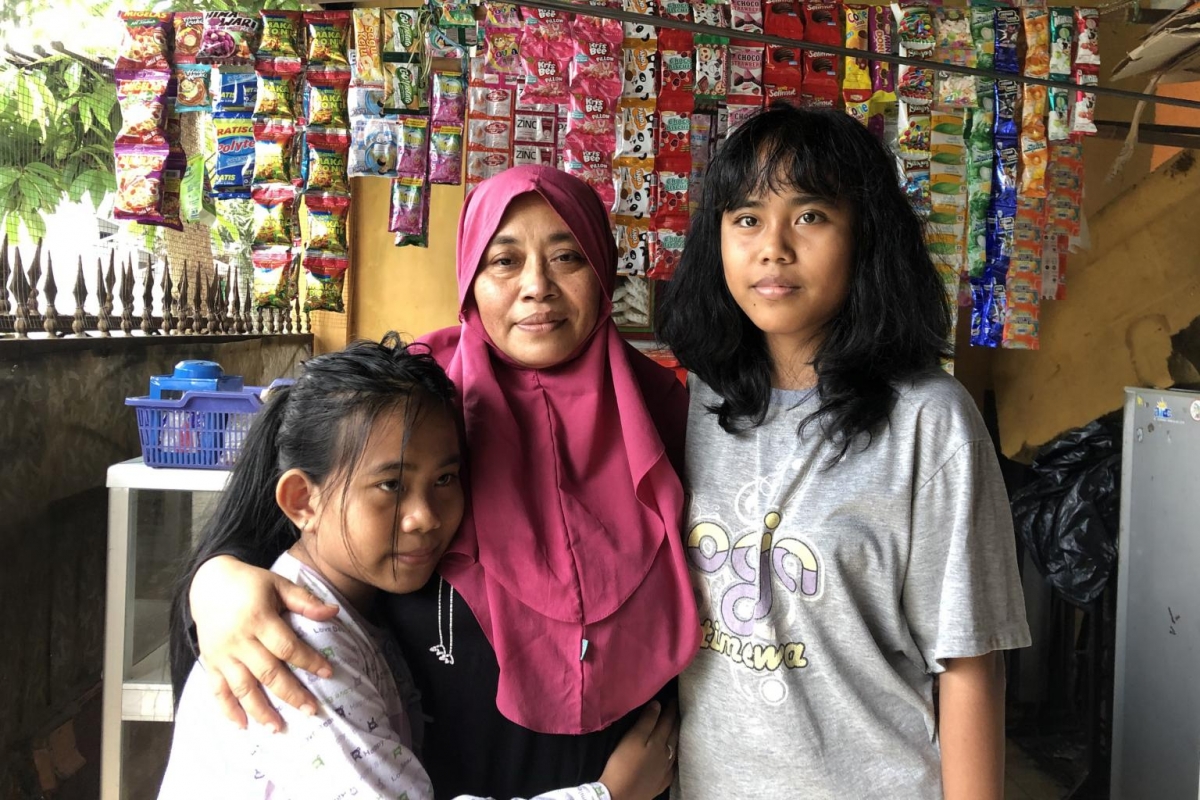
 SootinClaimon.Com