Vietnam condemns China, Taiwan’s illegal acts in the South China Sea: Foreign ministry #SootinClaimon.Com

#SootinClaimon.Com : ขอบคุณแหล่งข้อมูล : หนังสือพิมพ์ The Nation.

Vietnam condemns China, Taiwan’s illegal acts in the South China Sea: Foreign ministry (nationthailand.com)

Vietnam condemns China, Taiwan’s illegal acts in the South China Sea: Foreign ministry

Dec 04. 2020Spokesperson for the foreign ministry Lê Thị Thu Hằng answered reporters' questions during a press briefing in Hà Nội on Thursday. — VNA/VNS Photo Văn ĐiệpSpokesperson for the foreign ministry Lê Thị Thu Hằng answered reporters’ questions during a press briefing in Hà Nội on Thursday. — VNA/VNS Photo Văn Điệp 

By Viet Nam News/ANN

HÀ NỘI — Việt Nam on Thursday condemned China and Taiwan’s recent illegal excursion, including operating tourist cruises and organising live fire drills, into its rightful waters and sovereignty in the South China Sea.

Spokesperson for the foreign ministry Lê Thị Thu Hằng during a press briefing in Hà Nội said that Chinese Taipei’s holding of military live ammunition exercises around the Ba Bình (Taiping) island on November 24 as part of Việt Nam’s Trường Sa (Spratly) archipelago constituted a “grave violation of Vietnamese territory, sovereign rights.”

She added that the act jeopardised peace, security, stability, safety of navigation, and further complicates matters in the South China Sea (known in Việt Nam as the East Sea).

“Việt Nam strongly opposes such action and demands that Taiwan ceases the undertaking of the illegal exercise, and to refrain from similar acts in the future,” Hằng said.

The Vietnamese foreign ministry’s spokesperson also criticised the latest moves by China, including Hainan island’s recent announcement to in December resume cruise routes to the so-called Xisha island, the Chinese name for Việt Nam’s Hoàng Sa (Paracel) archipelago, the control of which was violently seized by China during the 70s, along with the Chinese navy’s receiving of the hospital ship Nanyi-13 on Chữ Thập (Fiery Cross) reef in Việt Nam’s Trường Sa archipelago.

“As we have stated on many occasions, all activities conducted in the two archipelagos Trường Sa and Hoàng Sa without Việt Nam’s permission are encroaching on Việt Nam’s sovereignty and infringing on international law, and are completely null and void,” spokeswoman Hằng said.

Việt Nam asks that China respect Việt Nam’s sovereignty over the two island chains, put an end to actions that threaten to escalate tensions in the region, go against the Declaration of Conduct in the South China Sea (DOC) and undermine efforts to maintain a peaceful, stable, and cooperative environment in the South China Sea.

These actions are not facilitating the ongoing talks on the Code of Conduct (COC) in the South China Sea and not conducive to Việt Nam-China’s relations, Hằng added.

The Vietnamese diplomat also asserted that Việt Nam has sufficient legal basis and historical evidence to affirm its sovereignty over Hoàng Sa and Trường Sa archipelagos pursuant with international law. — VNS

S. Korea’s current account surplus hits 3-year high in October on export recovery #SootinClaimon.Com

#SootinClaimon.Com : ขอบคุณแหล่งข้อมูล : หนังสือพิมพ์ The Nation.

S. Korea’s current account surplus hits 3-year high in October on export recovery (nationthailand.com)

S. Korea’s current account surplus hits 3-year high in October on export recovery

Dec 04. 2020This file photo, taken June 4, shows stacks of import-export cargo containers at South Korea's largest seaport in Busan, 450 kilometers southeast of Seoul. (Yonhap)This file photo, taken June 4, shows stacks of import-export cargo containers at South Korea’s largest seaport in Busan, 450 kilometers southeast of Seoul. (Yonhap) 

By The Korea Herald/ANN

South Korea’s current account surplus hit a three-year high in October as exports showed signs of a modest recovery amid the coronavirus pandemic, the central bank said Friday.

The current account surplus reached $11.66 billion in October, widening from a surplus of $10.13 billion the previous month, according to the Bank of Korea (BOK). The current account is the broadest measure of cross-border trade.

It marked the largest surplus since September 2017.

Since the country logged a deficit of $3.33 billion in April, the largest in almost a decade, on faltering exports amid the COVID-19 pandemic, the current account has stayed in the black for six straight months.

The goods balance logged a surplus of $10.15 billion in October, larger than a surplus of $8.03 billion the previous month.

Exports, which account for half of the South Korean economy, rose 8 percent on-year to $49.85 billion in September, while imports inched up 1 percent to $37.83 billion.

Exports fell 3.8 percent on-year in October mainly due to fewer working days. 

The country’s overseas shipments have been battered by the fallout of the COVID-19 pandemic this year. But the pace of the slump has eased since June as major economies slowly began resuming business activities and easing border lockdowns.

In October, the service account, which includes outlays by South Koreans on overseas trips, logged a deficit of $660 million after suffering a shortfall of $1.72 billion in September.

A combined deficit of the service account narrowed in the January-October period from a year earlier as the pandemic disrupted demand for foreign travel.

The primary income account, which tracks wages of foreign workers and dividend payments overseas, logged a surplus of $2.45 billion in October, compared with a surplus of $1.83 billion the previous month.

The capital and financial account, which covers cross-border investments, posted a net inflow of $15.94 billion in October, compared with a net inflow of $8.91 billion the previous month.

In the first 10 months of this year, South Korea posted a current account surplus of $54.97 billion, according to the BOK. (Yonhap)

Nestle plans to invest $3.6 billion in climate change fight #SootinClaimon.Com

#SootinClaimon.Com : ขอบคุณแหล่งข้อมูล : หนังสือพิมพ์ The Nation.

Nestle plans to invest $3.6 billion in climate change fight (nationthailand.com)

Nestle plans to invest $3.6 billion in climate change fight

CorporateDec 04. 2020A bird's nest logo sits on display at the Nestle headquarters in Vevey, Switzerland, on Wednesday, Feb. 12, 2019. MUST CREDIT: Bloomberg photo by Stefan WermuthA bird’s nest logo sits on display at the Nestle headquarters in Vevey, Switzerland, on Wednesday, Feb. 12, 2019. MUST CREDIT: Bloomberg photo by Stefan Wermuth 
By Syndication Washington Post, Bloomberg · Corinne Gretler, Todd Gillespie

Nestle SA, the world’s largest food company, said it will invest $3.6 billion (3.2 billion Swiss francs) over the next five years in an effort to fight climate change.

The company will plant 200 million trees during the next decade and help farmers and suppliers shift toward regenerative agriculture, the KitKat maker said Thursday. Nespresso, Perrier and San Pellegrino will become carbon-neutral by 2022, with the rest of its bottled water portfolio doing so by 2025.

The food industry is stepping up attempts to burnish its reputation amid criticism for environmental damage and packaging waste. Nestle is already spending as much as 2 billion francs in an attempt to promote more food-safe recycled plastics. PepsiCo Inc. pledged Wednesday to only use recycled plastic in its namesake brand’s bottles in nine European markets by 2022. And Danone, which bottles Evian, has announced a $2.4 billion (2 billion-euro) sustainability investment over the next three years.

“Business leaders can no longer afford to be skeptical and interminably patient,” Nestle Chief Executive Officer Mark Schneider said in an op-ed in Fortune magazine. “We should not expect comprehensive public policy and unanimity to do the job for us.”

Schneider compared the situation to what executives in the car industry faced in the 1970s and 1980s, choosing to invest billions of dollars to make smaller, more fuel-efficient cars that were less profitable.

Nestle aims for all of the electricity at its 800 factories to come from renewable sources within the next five years, and will expand its offering of plant-based food and beverages.

The company will start linking executive board members’ remuneration to climate targets from next year as well as the CEO bonus package, Schneider told journalists.

When Nestle set a target last year to reach zero net greenhouse-gas emissions by 2050, Schneider said climate change was one of the greatest risks to the business. The company also aims to reach net-zero in its supply chain, known as Scope 3.

Nestle will offset emissions it can’t reduce at source, using third-party certified and traceable carbon credits, said Magdi Batato, head of operations.

The company said the measures it’s taking will help reduce emissions by a fifth in the next five years, and cut them in half by 2030.

Nok Airlines expects brighter outlook next year #SootinClaimon.Com

#SootinClaimon.Com : ขอบคุณแหล่งข้อมูล : หนังสือพิมพ์ The Nation.

Nok Airlines expects brighter outlook next year (nationthailand.com)

Nok Airlines expects brighter outlook next year

CorporateDec 04. 2020

By The Nation

Nok Airlines expects to enter positive performance next year, as the government will likely ease the 14-day mandatory quarantine measure to curb Covid-19 infections, the airline’s chief executive officer Wutthiphum Jurangkool said.

The easing of quarantine will result in more travel, which will boost the airline’s load factor to between 85 and 90 per cent from its current 60 per cent.

He said he expects the Central Bankruptcy Court to publish an announcement in the Royal Gazette mid this month allowing the airline’s local and foreign creditors to register for debt repayment.

The CEO said he is confident the airline will succeed in its business rehabilitation and exit the rehab programme in the next three to five years.

The airline is working on cutting costs and boosting revenue to keep afloat. It is studying the possibility of flying from Don Mueang to Roi Et and Nakhon Phanom.

Five reasons to worry about faster U.S. inflation #SootinClaimon.Com

#SootinClaimon.Com : ขอบคุณแหล่งข้อมูล : หนังสือพิมพ์ The Nation.

Five reasons to worry about faster U.S. inflation (nationthailand.com)

Five reasons to worry about faster U.S. inflation

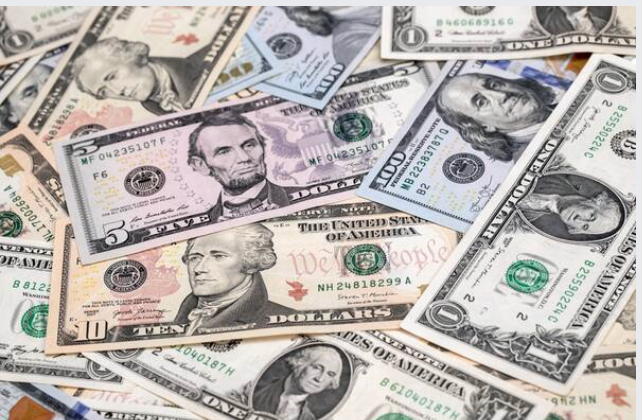
Biz insightsDec 03. 2020U.S. one-hundred dollar, ten-dollar, five-dollar and one-dollar bills. MUST CREDIT: Bloomberg photo by Paul Yeung.
Photo by: Paul Yeung — BloombergU.S. one-hundred dollar, ten-dollar, five-dollar and one-dollar bills. MUST CREDIT: Bloomberg photo by Paul Yeung. Photo by: Paul Yeung — Bloomberg 

By Syndication Washington Post, Bloomberg Opinion · Bill Dudley · OPINION, OP-ED 

A lot of people believe that inflation in the U.S. is dead or, if not dead, in a state of suspended animation for the foreseeable future. They could be setting themselves up for an unpleasant surprise.

In official projections and market prices, it’s hard to see any concern about the possibility of excessive inflation. According to the Federal Reserve’s September Summary of Economic Projections, inflation won’t get back to the Fed’s 2% objective until 2023. The yields on different types of Treasury securities suggest that investors expect annual inflation to average 1.9% over the next decade – or an even lower 1.6% by the Fed’s preferred measure.

No doubt, inflation has been very low for a long time, despite extreme monetary stimulus. But is it right to believe so strongly that the trend will persist? I see a number of reasons inflation might come back much more quickly than the consensus suggests.

First, the onset of the pandemic in March and April drove prices down sharply – by half a percent, according to the Fed’s preferred measure (the price index for personal consumption expenditures, excluding food and energy). This has depressed year-over-year readings of inflation. But after April 2021, the lower readings will become the new basis for comparison, and year-over-year measures of inflation will jump.

Second, the development of effective vaccines will allow people to return to their normal spending patterns by the second half of 2021. The leisure and hospitality industry – including restaurants, hotels and airlines – will probably regain pricing power as demand recovers. Sharp price increases might even be needed to balance demand with the available supply, which the pandemic has undoubtedly diminished. These are unlikely to be offset by price decreases in areas that probably will see less demand, such as online streaming (Netflix) and videoconferencing (Zoom).

Third, the lingering effects of the pandemic will make it difficult for companies to meet increased demand by simply producing more with the same people and capital. When the crisis period ends, capital will not be allocated to its most productive uses: Many expansion projects and investments have been suspended and new demand patterns will likely emerge post-pandemic. Also, many workers will have left the hardest-hit sectors, making it difficult for businesses to find the labor needed to expand. Some businesses, such as restaurants, will simply have disappeared, reducing the capacity available to meet resurgent demand. 

Fourth, the Fed has revised its long-term monetary policy in a way that allows for more inflation. Previously, the central bank aimed to hit its 2% target regardless of how far or how long inflation had strayed from that objective in the past. Now the Fed wants inflation to average 2%, which means it will have to exceed 2% for a significant time to offset the chronic downside misses that have accumulated over the past decade.

Specifically, Fed officials have said that they won’t raise short-term interest rates until employment is at its maximum sustainable level, and inflation has reached 2% and is expected to go moderately higher for some time. This means they’re unlikely to respond to any inflation uptick until they expect it to be both persistent and sizable.

Fifth, the government is much more likely than it used to be to support the economy with added spending. Fiscal orthodoxy has shifted: Instead of worrying about rising federal debt burdens, economists now see much greater scope for aggressive action to offset significant shortfalls in demand. As a result, the government probably won’t want to remove fiscal stimulus as quickly as it did after the 2008 financial crisis (a move that led to a disappointingly slow recovery). That said, the Joe Biden administration might not be able to do what it wants if Republicans retain control of the U.S. Senate.

All told, inflation might be a greater danger precisely because it’s no longer perceived as such. Policy makers want to push it higher. Most households and businesses are not concerned about the risks. Once the pandemic abates, those risks will no longer be entirely on the downside. And given how completely financial markets have come to expect low inflation and interest rates, and how much support those expectations are providing to bond and stock prices, an upside surprise could prove nasty.

– – – 

This column does not necessarily reflect the opinion of the editorial board or Bloomberg LP and its owners. Dudley is a senior research scholar at Princeton University’s Center for Economic Policy Studies. He served as president of the Federal Reserve Bank of New York from 2009 to 2018, and as vice chairman of the Federal Open Market Committee.

Covid-19 will trigger more downgrades, S&P global credit outlook for 2021 shows #SootinClaimon.Com

#SootinClaimon.Com : ขอบคุณแหล่งข้อมูล : หนังสือพิมพ์ The Nation.

Covid-19 will trigger more downgrades, S&P global credit outlook for 2021 shows (nationthailand.com)

Covid-19 will trigger more downgrades, S&P global credit outlook for 2021 shows

EconDec 04. 2020

By The Nation

The Covid-19 pandemic will continue putting a heavy strain on global credit conditions next year, despite positive news on a vaccine, S&P Global Ratings said in its “Global Credit Outlook 2021: Back on Track?” report.

“Even if a vaccine becomes widely available by mid-year, which we assume in our baseline, the containment of the pandemic will be very uneven worldwide,” said Alexandra Dimitrijevic, global head of research at S&P Global Ratings.

“Until then, the main risk for the first half of 2021 is that further waves of Covid-19, requiring renewed containment measures, may harm a fragile economic recovery and lead to further credit deterioration, particularly in sectors most exposed to social distancing and travel restrictions.”

S&P Global Ratings’ key forecasts for 2021 include:

• With economic momentum fading as Covid cases surge again, we are forecasting a weaker start to 2021, although our 2022-2023 GDP forecast is broadly unchanged. We expect full-year global GDP growth at 5 per cent, down 30 basis points from our previous forecasts.

• For China – first into the crisis and first out – we see GDP expanding by 7 per cent next year as acute downside risks ease and some upside emerges.

• The US and Europe are mired in a second wave of Covid-19, but extensive vaccine purchases lined up by their governments support prospects of a turnaround in the second quarter. We forecast 4.2 per cent GDP growth in the US and 4.8 per cent for the eurozone in 2021. For emerging markets, financial pressures may hamper the pace of recovery.

• After peaking at 265 per cent of global GDP at the end of 2020, global leverage is likely to ease only slightly in 2021, and mostly as a result of a rebound in global GDP.

• With vaccine availability and a rebound in the global economy, the focus in the second half of 2021 will likely turn to the gradual unwinding of extraordinary fiscal support, revealing the extent of credit losses for banks.

• Governments, meanwhile, face the difficult task of balancing the near-term risks of premature austerity with a medium-term need to put debt on a declining path.

• Our rated corporates and governments have a 36 per cent negative bias, pointing to more downgrade potential in 2021. However, our base-case economic and credit assumptions do not suggest a large second wave of changes akin to that necessary in the post-March adjustment to the Covid shock. Instead, changes will reflect the widening outlook gaps between and within sectors and regions. Those hit hard by Covid-19 – such as leisure, transportation and retail – will only recover by 2022 or later; those least affected should be back on track next year.

• Defaults will continue to rise. Even though we expect central banks to preserve very low funding costs through 2021, higher leverage and a large share of vulnerable corporates are likely to induce further defaults, resulting in the 12-month speculative-grade default rate rising to around 9 per cent in the US and 8 per cent in Europe by September 2021, versus 6.3 per cent and 4.3 per cent in September 2020.

IVL among major gainers as petrochem stocks rise #SootinClaimon.Com

#SootinClaimon.Com : ขอบคุณแหล่งข้อมูล : หนังสือพิมพ์ The Nation.

IVL among major gainers as petrochem stocks rise (nationthailand.com)

IVL among major gainers as petrochem stocks rise

EconDec 04. 2020

By The Nation

The price of petrochemical stocks surged amid hopes of a Covid-19 vaccine, experts said.

On Thursday, the share price of Indorama Ventures Pcl (IVL) rose by 7.03 per cent, or Bt2.25, to Bt34.25 per share, Global Green Chemical Pcl (GGC) rose by 3.30 per cent, or Bt0.30, to Bt9.40 and PTT Global Chemical Pcl (PTTGC) rose by 2.64 per cent, or Bt1.50, to Bt58.25.

Kasikorn Securities senior analyst Jakapong Chawengsri said the price of petrochemical stocks often rose at the beginning of a global economic recovery.

Meanwhile, he said the rise in China’s purchasing managers’ index also reflects high petrochemical demand as China is the world’s largest petrochemical user.

“Therefore, the rise in petrochemical shares amid positive news of a Covid-19 vaccine pointed to signs of an economic recovery,” he said.

He added that investors were still able to buy petrochemical shares because its price was still lower than book value (BV) of one time.

“Before the Covid-19 era, petrochemical stocks were traded at a price higher than BV,” he added.

CGS CIMB Securities senior vice president of research Kitichan Sirisukarcha said the price of IVL shares had risen sharply as one foreign brokerage firm had adjusted its fair price to Bt38 per share, while its price did not increase much compared to other stocks in the group.

Also, he said IVL is expected to perform even better next year as it has gained positive sentiment from the difference in polyester product price.

“However, we advise investors to speculate on profit from IVL shares because its price has risen higher than our target price of Bt28.50 per share,” he said.

Gold price remains unchanged during morning trade #SootinClaimon.Com

#SootinClaimon.Com : ขอบคุณแหล่งข้อมูล : หนังสือพิมพ์ The Nation.

Gold price remains unchanged during morning trade (nationthailand.com)

Gold price remains unchanged during morning trade

EconDec 04. 2020

By The Nation

The price of gold remained unchanged in the morning trade on Friday after rising by Bt100 per baht weight at close on Thursday, the Gold Traders Association reported.

As of 9.27am, the buying price of a gold bar was Bt26,150 per baht weight and selling price Bt26,250, while the buying and selling price of gold ornaments stood at Bt25,681.04 and Bt26,750, respectively.

Spot gold price moved to US$1,840 (Bt55,526) per ounce in the morning, while the Comex (Commodity Exchange) gold price to be delivered in February next year rose by $10.9 to $1,841.1 per ounce on Thursday over hopes for the US economic stimulus package and weakening dollar.

However, the Hong Kong gold price dropped by HK$10 to $17,010 (Bt66,210) per tael, the Chinese Gold and Silver Exchange Society reported.

Influx of foreign funds keeps SET on upward trajectory #SootinClaimon.Com

#SootinClaimon.Com : ขอบคุณแหล่งข้อมูล : หนังสือพิมพ์ The Nation.

Influx of foreign funds keeps SET on upward trajectory (nationthailand.com)

Influx of foreign funds keeps SET on upward trajectory

EconDec 04. 2020

By The Nation

The Stock Exchange of Thailand (SET) Index rose by 5.73 points, or 0.40 per cent, to 1,444.05 in the morning session on Friday.

An analyst at Krungsri Securities expected the day’s index to hit 1,445 points as foreign funds are still flowing into the Thai stock market amid hopes of a US economic stimulus package, positive news of a Covid-19 vaccine and rising oil price after Opec+ decided to extend the cap on oil production.

“However, we advise investors to speculate on profit in the short term as the index’s price-to-earnings ratio is 28 times,” he said.

He recommended that investors buy:

▪︎ PTTEP, PTTGC, TOP, IVL and SPRC that will benefit from rising oil price.

▪︎ ICHI, TKN, CBG and TNP that benefit from the givernment’s “Khon La Khrueng” (Let’s Go Halves) subsidy scheme.

▪︎ MINT, CENTEL and AOT that benefit from positive news of a Covid-19 vaccine.

The SET Index closed at 1,438 on Thursday, up 20.37 points or 1.44 per cent, with total transactions amounting to Bt83 billion due to mass buy-ups in large-cap stocks in response to the UK’s approval of Pfizer’s Covid-19 vaccine.

Stocks pare gains after Pfizer said to cut target #SootinClaimon.Com

#SootinClaimon.Com : ขอบคุณแหล่งข้อมูล : หนังสือพิมพ์ The Nation.

Stocks pare gains after Pfizer said to cut target (nationthailand.com)

Stocks pare gains after Pfizer said to cut target

EconDec 04. 2020

By Syndication Washington Post, Bloomberg · Vildana Hajric, Lu Wang

U.S. stocks pared gains after a report said Pfizer Inc. will deliver fewer doses of its vaccine this year than earlier expected.

The S&P 500 had reached a record high for third consecutive day before briefly turning negative. Investors had focused on a bipartisan stimulus proposal endorsed by Democratic leaders as a basis for negotiations is luring increased interest from Republicans, raising the chances for a deal by year-end.

“We continue to see the push-pull of short-term versus long-term,” said Chris Gaffney, president of world markets at TIAA Bank, said by phone.

Investor focus has turned to a Democratic proposal to break the stimulus deadlock that could provide a potential driver to the rally. Senate Majority Leader Mitch McConnell said Thursday that it was “heartening” that Democrats embraced a smaller price tag for a stimulus package but gave no indication he was willing to raise his own offer to get a deal.

“The market continues to keep its fingers crossed for a stimulus package, no matter what the size,” said CFRA Research’s Chief Investment Strategist Sam Stovall. “Investors just want to know if Biden can ‘reach across the aisle’ and sway the Republicans. That would offer optimism for additional actions from a working relationship between the parties once he is sworn in.”

While markets advanced up in Asia, European shares were mixed. Britain’s pound more than recouped Wednesday’s drop as traders took in stride France’s threat to veto a Brexit deal.

The dollar added to its slump this week that has sent the euro, Australian dollar and the Korean won to their highest levels versus the greenback in more than two years, and the Swiss franc to its strongest since 2015.

Oil edged higher as OPEC+ reached an agreement to ease its oil-output cuts next year more gradually than previously planned, giving a fragile market more time to absorb the extra supply.

These are some key events coming up:

– The U.S. employment report on Friday is expected to show more Americans headed back to work in November, though at a slower pace than October.

– German factory orders for October are due Friday.

These are some of the main moves in markets:

– – –

– The S&P 500 Index declined 0.1% to 3,666.72 as of 4:11 p.m. New York time.

– The Dow Jones Industrial Average climbed 0.3% to 29,969.52, the highest in more than a week.

– The Nasdaq Composite Index advanced 0.2% to 12,377.18, the highest on record.

– The Stoxx Europe 600 Index was little changed at 391.72.

– The MSCI All-Country World Index jumped 0.3% to 628.29, the highest on record.

– – –

– The Bloomberg Dollar Spot Index declined 0.5% to 1,130.40, the lowest in more than two years.

– The euro increased 0.3% to $1.2146, the strongest in more than two years.

– The British pound climbed 0.7% to $1.3454, the strongest in more than two years.

– The Japanese yen appreciated 0.5% to 103.87 per dollar, the strongest in almost two weeks on the largest rise in four weeks.

– – –

– The yield on 10-year Treasuries dipped three basis points to 0.91%.

– Germany’s 10-year yield dipped four basis points to -0.56%, the largest decrease in more than 10 weeks.

– Britain’s 10-year yield declined three basis points to 0.322%, the first retreat in a week.

– – –

– West Texas Intermediate crude advanced 0.9% to $45.67 a barrel, the highest in more than a week.

– Gold strengthened 0.6% to $1,841.53 an ounce, the highest in almost two weeks.