HK civil servants to work from home as city sees 76 new cases
Dec 01. 2020Chief Executive Carrie Lam Cheng Yuet-ngor announces during a press conference new measures that tightened Hong Kong’s social distancing rules to stop the spread of COVID-19 on Nov 30, 2020. (PHOTO PROVIDED TO CHINA DAILY)
By Wang Zhan China Daily/ANN
HONG KONG – Most of Hong Kong’s nearly 180,000 civil servants will again work from home starting Wednesday as the city saw 76 new COVID-19 cases on Monday.
In a press briefing on Monday afternoon, Chief Executive Carrie Lam Cheng Yuet-ngor also announced measures that tightened Hong Kong’s social distancing rules to stop the spread of the virus.
She also said that the government will “more than double” the current fixed penalty of HK$2,000 (US$258) for violations of anti-virus regulations such as the gathering ban, mandatory mask-wearing order, and mandatory testing order.
Lam said a hotline will be established to encourage residents to report relevant contraventions to the authorities. Details will be deliberated during the upcoming Executive Council meeting,she added.
Lam said that most of the city’s civil service will work from home for two weeks and only emergency and essential services will be maintained, noting that as many as nine civil servants were infected recently.
Over the past week, the city recorded a daily average of 87 new infections, 90 percent of which were local cases while more than 100 were untraceable, Lam said, quoting data from health authorities.
Of the 76 fresh infections on Monday, 68 were locally transmitted, including nine of unknown origin, Chuang Shuk Kwan, a Centre for Health Protection official, said in a separate press conference.
Chuang said 40 of the local cases were linked to the dance club cluster while 19 infections were detected at the community testing centers. Around 50 people tested preliminarily positive.
The city’s total of confirmed cases stood at 6,314, with 109 related fatalities.
Tightening anti-virus curbs, Lam said that only up to two people per group will be allowed to gather in public starting Wednesday while karaoke lounges, game centers, swimming pools, mahjong parlors and amusement parks will be shut.
The government had earlier closed down bars, bathhouses, nightclubs and party rooms. But this time around, fitness clubs, sports venues, and beauty and massage salons will be allowed to continue their operations with stringent anti-virus measures.
Lam said the government decided to do this for the mental and physical health of Hong Kong residents.
Also starting Wednesday, no more than two diners will be allowed per table at local restaurants, down from four previously. Dine-in services at restaurants will end at 10 pm.
The latest wave of COVID-19 outbreaks was centered around a cluster related to dance studios, which at least had 519 infections.
Lam said it was very difficult for health officials to conduct contact tracing because many of the patients were found to have participated in many social activities.
She said two hotels will be enlisted to serve as quarantine centers to provide a total of about 800 rooms for returnees. Lam also said the government will set up five more community testing centers in addition to the current nine across the city.
The new measures were announced after consultations during the weekend with the government’s four public health expert advisers, who agreed that the city’s fourth wave of infections could continue to worsen, Lam said.
Ciitng the four experts, Lam reiterated that mandatory universal testing was not an option for the city as it is not an “effective” and scientifically based” choice.
BCPG Pcl, a leader in the renewable energy business in Thailand and the Asia-Pacific region, is targeting 30-40 per cent expansion in earnings before interest, taxes, depreciation and amortisation (Ebitda) in 2021 after estimated growth of 20 per cent this year.
“This year’s expansion is due to income from the hydro-power plant in Laos and adjustment of electricity fee in the Philippines,” said Phatpuree Chinkulkitnivat, BCPG’s senior executive vice president of finance, accounting and corporate strategy.
“Next year, many of the company’s power plants will start supplying approximately 390 megawatts of power commercially, such as the solar power plant in Komagane, Japan 25MW, the Yabiki power plant 20MW and the Shiba 1 power plant 20MW.”
BCPG’s total portfolio is currently at 8,361MW, she added.
“Next year, the company has earmarked Bt18 billion for additional investment, merging and acquisition of power plants in both Thailand and Asia-Pacific region,” she said. “This comes from the Bt40-billion budget of our five-year plan [2021-2025] that focuses on expanding our power plants network in neighbouring countries.
“The company’s current balance sheet is stronger than ever. We have recently raised Bt10 billion of funds and can still borrow 2-3 times more to support our future investment projects,” she added.
“In the past nine months, our Ebitda has grown more than 30 per cent year on year, and is estimated to grow at 20 per cent by the year-end.”
By The Washington Post · Carolyn Y. Johnson · BUSINESS, HEALTH
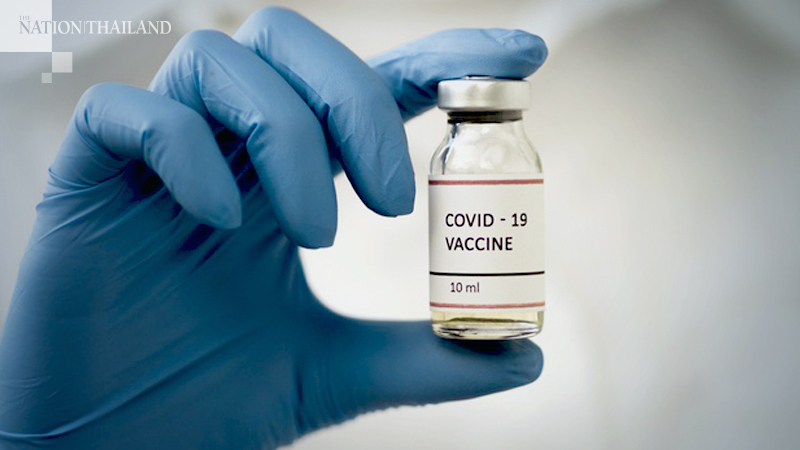
The federal government could begin distributing two coronavirus vaccines in the next few weeks – a record-shattering accomplishment that now hinges on the decisions of U.S. regulators.
Biotechnology company Moderna filed Monday for emergency authorization of its coronavirus vaccine, capping a scientific sprint that began in January. Moderna’s two-dose regimen is about a week behind a similar vaccine developed by Pfizer and German biotechnology company BioNTech.
No vaccine can arrive soon enough to blunt an anticipated blitz of coronavirus cases seeded by Thanksgiving travels and gatherings – a surge expected to materialize in the coming days and weeks. But less than a year after a novel virus began hopscotching around the world, U.S. government officials project an unprecedented scientific feat: About 40 million doses of two remarkably effective vaccines could be available by year’s end, enough for 20 million people to receive full protection. Manufacturing will continue to ramp up through early next year, and other vaccines are expected to follow to steadily increase the supply available each month.
“You don’t want to get ahead of yourself and claim any victories, but this has the makings of a very, very important positive impact on ending this outbreak,” said Anthony Fauci, director of the National Institute of Allergy and Infectious Diseases. “A vaccine that is highly efficacious, if taken by a very, very high percentage of people, could potentially crush this outbreak – similar to what was done with outbreaks of measles and polio and smallpox and other diseases.”
The news comes as health systems approach a potential crisis with surging daily infections and hospitalizations leading into the Christmas and the new year. The Association of American Medical Colleges on Monday called on the nation’s medical schools, teaching hospitals and health systems to prepare to implement crisis standards over the next few months in case triaging and rationing is necessary as a result of shortages of health-care workers, hospital beds or supplies. Those have been used in response to natural disasters and mass-casualty events such as the Sept. 11 terrorist attacks.
“The next few months of the pandemic, while we are awaiting the distribution of vaccines, are going to stretch the nation’s health-care capacity to its limits,” said the group’s president and CEO, David Skorton.
California Gov. Gavin Newsom, a Democrat, said Monday that he’s considering imposing stay-home orders on California counties to curb an explosion in coronavirus cases that threaten to overwhelm hospitals by Christmas.
Before Thanksgiving weekend, the United States had reached a daily coronavirus death toll not seen since May, as more than 2,000 people died Tuesday through Wednesday. Case counts over weekends and holidays tend to reflect lags in testing and reporting, but hospitalizations continued to climb, surpassing 95,000 covid-19 patients for the first time Monday.
Reflecting the urgency of the situation in the United States, an advisory committee to the Centers for Disease Control and Prevention that typically meets after vaccines are approved is holding an unusual emergency virtual meeting Tuesday to vote on which groups of people should get the first, limited shots. Health-care workers and residents of long-term care facilities are expected to be included in the first case, a strategy intended to ensure that the first doses have the greatest societal impact. But even if manufacturing timelines are on track, there will not be quite enough vaccine for everyone in those groups to be fully vaccinated by year’s end.
“Prioritizing health-care workers first is . . . to keep our health care system functioning and to protect them,” said Natalie Dean, a biostatistician at the University of Florida.
The regulatory approval process will move into high gear Thursday, when independent advisers to the Food and Drug Administration meet to make recommendations about the Pfizer and BioNTech vaccine. A week later, they will do the same for Moderna.
The FDA is undertaking an exhaustive review to vet the safety, effectiveness and manufacturing of the vaccines, and is expected to make a decision shortly after its advisers meet. The review period, from company filing to a decision, probably will take weeks – not the year that is more typical after a company submits a vaccine for approval.
Moderna’s vaccine was 94% effective at preventing illness in a 30,000-person clinical trial, the company said in a news release – a performance that exceeds expectations and is on par with the best pediatric vaccines. There were 196 cases of covid-19, the illness that can be caused by the novel coronavirus, in Moderna’s study, 11 of which occurred in the vaccine group – a decisive signal that the vaccine protected people from illness. The 30 severe cases of covid-19 in the trial, including one death, all occurred in the group that received a placebo.
“The data are very, very promising, but I would like to see more data than is currently in the press release,” said Walter Orenstein, associate director of the Emory Vaccine Center, who is also a member of Moderna’s scientific advisory board and a trial participant. The results are similar to those from Pfizer and BioNTech, which announced a 95% effective vaccine earlier this month.
Even with a vaccine that is very effective, Orenstein cautioned that the world would not snap back to normal. Those first in line to receive two doses of the vaccine probably will be encouraged to continue taking precautions, such as wearing masks, if there is virus circulating at high levels in their communities. Tens of millions more people who are not considered at high risk of severe illness probably will not have access to doses until late spring or summer, experts caution.
The vaccines from Moderna and Pfizer and BioNTech are a major proof of concept for a flexible and fast medical technology, years in the making, that utilizes a snippet of genetic material called messenger RNA that teaches cells to build the spiky protein found on the surface of the coronavirus. The immune system learns to recognize and block the real virus.
The vaccines are on track to make history because of years of basic science research and an all-out coordinated effort from pharmaceutical companies and government that removed the financial risks of failure to move fast.
The U.S. government, through Operation Warp Speed, has preordered 100 million doses from Moderna and Pfizer, and helped underwrite the research and development of Moderna’s vaccine to the tune of $955 million. Moderna also signed a contract to provide 100 million doses to the U.S. for $1.5 billion. Pfizer will provide 100 million doses at a cost of $1.95 billion. In addition, the government has an option to buy hundreds of millions more doses.
“Pfizer and Moderna’s incredibly promising and impressive efficacy data further demonstrate that President Trump’s Operation Warp Speed is rapidly advancing on a trajectory of success to save millions of American lives – five times faster than any other vaccine in history,” White House spokesman Michael Bars said in an email.
Both companies have said they would be ready to distribute a vaccine almost immediately after receiving a green light from the FDA. Results reported last week from a third coronavirus vaccine candidate, from AstraZeneca and the University of Oxford, were positive but confusing, and it is unclear whether that vaccine can move forward in the United States without more data.
The AstraZeneca trial is continuing in the United States, and a single-shot vaccine from Johnson & Johnson is being tested. Novavax, another leading vaccine candidate in the United States, announced Monday that its large U.S. trial, which had been expected to begin this month, would start in the coming weeks.
The full data from Moderna and Pfizer will likely leave some questions unanswered. No one knows yet how long immune protection will last, and it is unclear whether the vaccine will decrease transmission in addition to preventing illness. One worst-case scenario debated by scientists is a vaccine that prevents symptoms and disease but does not decrease the spread of the virus by asymptomatic people.
In its news release Monday, Moderna reported that the vaccine performance was consistent across all ages, races, ethnicities and genders. There were 33 cases of covid-19 in people over 65; 29 cases in people who identified as Hispanic; six cases in Black people; four cases among Asian Americans; and three in multiracial people.
Most reactions to the vaccine were mild or moderate, according to a previous news release from the company. The adverse events rated as “severe” in the trial were soreness at the injection site, tiredness, muscle aches, headache and pain.
“We believe that our vaccine will provide a new and powerful tool that may change the course of this pandemic and help prevent severe disease, hospitalizations and death,” Stéphane Bancel, Moderna’s chief executive, said in a statement.
Moderna will also file for approval from the European Medicines Agency and has an open application with regulators in the United Kingdom, Switzerland, Canada, Israel and Singapore.
Moderna’s vaccine can be stored frozen at minus-20 degrees Celsius and lasts at refrigerator temperatures for up to a month, which probably would make it easier to deploy than the candidate from Pfizer and BioNTech, which requires ultracold storage conditions not typically found at pharmacies and doctors’ offices.
Universal Studios to open $580 million Nintendo Park in February
CorporateDec 01. 2020A statue of Bowser, a character for Nintendo Co. video game Super Mario Kart, at Super Nintendo World inside the Universal Studios Japan theme park in Osaka, Japan, on Nov. 30, 2020. Bloomberg photo by Soichiro Koriyama
By Syndication Washington Post, Bloomberg · Takashi Mochizuki
Universal Studios Japan plans to open its $580 million Nintendo attraction on Feb. 4, finally debuting a long-delayed effort to introduce Mario and other beloved characters to real-world theme park visitors.
Super Nintendo World, built on the existing Universal Studios Japan site, is envisioned as a life-size replica of Nintendo Co.’s most popular games with rides, shops and walk-through activities. One of the first attractions will be a Mario Kart ride inside a recreation of Bowser’s Castle. Borrowing an idea from the Super Mario franchise, visitors can collect virtual coins by wearing a dedicated wristband as they explore the area and interact with park features via a Switch console.
The showcase is one of the largest projects ever conceived by the Osaka-based amusement park operator, which invested more than $578 million (60 billion yen). It was originally slated for a summer opening but got postponed during the pandemic. Its kickoff could still get pushed back, as Japan grapples with a fresh outbreak and Osaka, where the park is located, becomes one of the nation’s worst-affected cities.
A lot is riding on Super Nintendo World as the theme-park industry struggles with falling revenue and Japan debates whether to promote domestic tourism. Walt Disney Co. is cutting jobs while Comcast Corp.’s NBCUniversal, the owner of the Osaka park, is suspending plans to open another Nintendo area within its Orlando location. Universal Studios Japan is also operating at half its full capacity to help curb the spread of the virus.
The project, which licensed characters from Nintendo, is part of efforts by the Kyoto-based games company to broaden its franchises beyond console players. Movies, merchandise stores and smartphone apps are all designed as a hook to lure new users to buy game-dedicated machines and software.
Top courier service DHL Express believes e-commerce and deliveries will reach a historic high during the upcoming holiday season.
“DHL deliveries in the Asia-Pacific region is expected to rise by 40 per cent during that time, while Thailand’s international product delivery rate is likely to jump by 30 per cent,” said Herbert Vongpusanachai, DHL Express’s managing director for Thailand and chief of Indochina operations.
“The Covid-19 outbreak has changed people’s lifestyle and drastically increased the need for product delivery services,” he said. “Besides, towards yearend people will tend to buy gifts as well as travel to local destinations after being holed up in their homes during lockdown.”
DHL Express also reported a 21-per-cent increase in online orders globally from January to June this year, compared to the same period last year.
Statistics show that 85 per cent of consumers spent more time shopping online, while 45 per cent were millennials who continued shopping online even after the Covid-19 situation in their country improved.
“To cope with the changing trend, DHL Express has purchased six additional Boeing 777Fs to meet the increase in deliveries. Four of the aircraft are already in operation, while the other two will be deployed in December,” he said. “These six planes will allow us to increase intercontinental trips by 3,000 flights per year.
“Also, between 2020 and 2022, the company plans to invest Bt25 billion in building additional service hubs and gateways in key markets, including Australia, Japan, Hong Kong and South Korea, as well as investing Bt2.17 billion in boosting flights in the Asia-Pacific including opening new routes to Vientiane and Yangon,” he added.
DHL has also introduced “iExpressByDHL”, a courier service platform that connects business operators with customers in more than 220 countries. “The iExpressByDHL will help Thai e-commerce operators book delivery services and calculate delivery fees for overseas customers in real time, ensuring seamless and time-saving logistics management,” Herbert added.
Logistics giant WHA Corporation (WHA) is planning to acquire a solar farm and a tap water business in Vietnam next year once the Thai government eases travel restrictions.
WHA chief executive officer Jareeporn Jarukornsakul said the two planned Vietnam acquisitions along with WHA’s Thai digital platform business will help the company generate revenue next year.
The company will postpone investment in land for factories and warehouses this year because land use has not increased, said Jareeporn, adding that WHA will announce its operating plan at the beginning of next year. Company profit this year was lower than in 2019 since land deals in Thailand and Vietnam are expected to drop to 600-700 rai (960,000-1.12 million square metres) from the targeted 900 rai due to the Covid-19 lockdowns, she said.
“Meanwhile, we are waiting to find out whether the company can lease about 200,000 square metres land this year or not,” she said, adding that it had already leased 100,000 sqm this year.
However, she said this was not a concern as the company was able to diversify risks, while expecting to realise gains from sales of assets to WHA Premium Growth Real Estate Investment Trust (WHART) and Hemraj Leasehold Real Estate Investment Trust (HREIT) of Bt4.6 billion this year.
She added Goertek Precision Industry Vietnam (Goertek Vina) had bought 253 rai in WHA Industrial Zone 1-Nghe An, to be transferred by the end of this year.
“The company plans to develop this industrial zone to attract more investors,” she added.
Asset World Corporation (AWC) has launched the region’s largest wholesale hub in the Pratunam area of Bangkok.
The AEC Trade Center – Pantip Wholesale Destination will link Thai businesses with domestic and international partners, helping boost the economic recovery.
Housed in the old Pantip Plaza tech mall, the new trade hub is designed to meet all the needs of buyers and sellers under one roof.
AWC has established marketing strategies by collaborating with the Commerce Ministry’s Department of International Trade Promotion, the Board of Trade, 11 trade associations, the Federation of Thai Industries, and Yiwu, or the Zhejiang China Commodities City Group (CCC Group). CCC Group is a Chinese state-owned enterprise that develops and manages the world’s largest wholesale market for miscellaneous goods from Yiwu, China.
“Through this, we are encouraging Thai entrepreneurs to join hands with both public and private sectors alongside Yiwu to stimulate the local economy and establish Thailand as the largest wholesale destination in the region,” said Wallapa Trisorat, CEO and president of Asset World Corp.
The hub’s Yiwu Selection Thailand Showcase will offer products from China at wholesale prices for Thai buyers. Meanwhile, the IC Mall will showcase Thai manufacturers’ products for export to China via both offline and online channels, including platforms such as Tmall.com, JD.com, Alibaba.com, Koala.com, and the IC_Mall Wechat Application.
The wholesale hub comes equipped with a Solution Service Centre (SSC) that provides consultation services for import and export businesses, including business matching.
More than 400 wholesale shops will offer more than 50,000 products in 18 categories covering all types of goods, from clothing, furniture, and IT gadgets to household items, office supplies, food and beverage, toys and games, processed foods and fruits, cosmetics, and more.
Until December 6, customers can win free iPhone 12s and free stays at a luxury AWC affiliated hotel, in a lucky draw with prizes worth more than Bt10 million.
Entrepreneurs interested booking retail space can contact (02) 254 9797 or 081 805 7247. More details at Line: @aecpantip or Facebook: @aecpantip.
The Stock Exchange of Thailand (SET) Index rose by 10.77 points, or 0.76 per cent, to 1,419.08 in the morning session on Tuesday.
An analyst at Krungsri Securities expected the day’s index to fluctuate between 1,400 and 1,420 despite the rise in other Asian indices in the morning session.
“We expect the SET to face high volatility as investors are delaying their trade to follow the Opec+ meeting and the Constitutional Court ruling in a case against Prime Minister General Prayut Chan-o-cha, as well as uncertainty over the Covid-19 pandemic,” he said.
He recommended that investors buy:
▪︎ AMATA, WHA, SAT and AH that will benefit from the Regional Comprehensive Economic Partnership pact.
▪︎ PTTEP, PTTGC, TOP, IVL and SPRC that benefit from the rising oil price.
The SET Index closed at 1,408.31 on Monday, down 29.47 points or 2.05 per cent. Total transactions amounted to Bt120 billion with an index high of 1,435.04 and a low of 1,408.02.
The price of gold in Thailand rose by Bt50 per baht weight in morning trade on Tuesday after falling by Bt200 per baht weight at close on Monday, the Gold Traders Association reported.
As of 9.28am, the buying price of a gold bar was Bt25,450 per baht weight and selling price Bt25,550 while gold ornaments were priced at Bt24,998.84 and Bt26,050, respectively.
At close on Monday, the buying price of a gold bar was Bt25,400 per baht weight and selling price Bt25,500, while gold ornaments were Bt24,938.20 and Bt26,000, respectively.
Spot gold price moved to US$1,780 (Bt53,842) per ounce in the morning, while Comex (Commodity Exchange) gold price to be delivered in February next year dropped by $7.2 to $1,780.9 per ounce on Monday due to mass sell-offs in safe-haven assets amid positive news of a Covid-19 vaccine.
Hong Kong gold price, meanwhile, dropped by HK$20 to $16,430 (Bt64,112) per tael, the Chinese Gold and Silver Exchange Society reported.
By Syndication Washington Post, Bloomberg · Vildana Hajric, Kamaron Leach
U.S. stocks fell from records as investors assessed the prospects for risk assets after a blistering month long rally. The dollar strengthened.
The S&P 500 dropped the most in more than a week, though the benchmark index still registered its best month since April. Global stocks and American small caps posted their best months on record. Broad selling sent the Dow Jones industrial average lower. The tech-heavy Nasdaq indexes that trailed in November fared better, briefly touching another record high on Monday. Gold slumped, and Bitcoin rallied back to an all-time high.
“The market may be getting tired from its very strong November and simultaneous all time highs (DJIA, S&P and Russell 2K), which could push the benchmarks into a traditional mid-December low,” said Sam Stovall, chief investment strategist at CFRA Research.
The rapid pace to a coronavirus vaccine has given investors the confidence to price in a return to normalcy and faster economic growth, helping lift shares of companies that were hardest hit by the pandemic.
Over the weekend, Surgeon General Jerome Adams said the federal government hopes to quickly review and approve requests from two drugmakers for emergency approval of their covid-19 vaccines.
“November has been such an unbelievable move up,” said Andrew Mies, chief investment officer of 6 Meridian. “All that is being driven by the vaccine.”
Shares of Moderna surged 20% on Monday after the company said it plans to request clearance for its coronavirus vaccine in the U.S. and Europe.
The MSCI World index soared 13% in November, the best performance on record.
The risk-on mood across markets has hurt demand for haven assets. Gold posted its largest monthly decline in four years. Even after gaining on Monday, the dollar slumped 2.4% in November.
Oil edged lower in New York. OPEC+ began two days of potentially complicated talks to hash out the size of its oil-production cuts next year, with the group’s president calling for caution in a fragile market.
Elsewhere, the MSCI Asia Pacific index sank 1.6% on Monday, the biggest loss in a month.
Bitcoin took less than three years to replicate the euphoric ascent that catapulted the cryptocurrency into the mainstream consciousness. The world’s largest digital asset rose as much as 8.7%, to $19,351, according to data compiled by Bloomberg. It traded at a few cents for several years after its late 2008 launch by an unknown software developer in the wake of the global financial crash.
These are some key events coming up:
– – –
– The Reserve Bank of Australia holds a policy meeting Tuesday.
– Federal Reserve Chairman Jerome Powell testifies before Congress on Tuesday and Wednesday.
– The U.S. employment report on Friday is expected to show that more Americans headed back to work in November, though at a slower pace than last month.
Here are some of the main moves in markets:
– The S&P 500 index declined 0.5%, to 3,621.82 as of 4:01 p.m. New York time, the lowest in a week on the largest drop in more than a week.
– The Dow Jones Industrial Average decreased 0.9%, to 29,643.97, the lowest in a week on the biggest dip in more than a week.
– The Nasdaq Composite index dipped 0.1%, to 12,198.74, the first retreat in more than a week.
– The MSCI All-Country World index sank 0.9%, to 617.87, the lowest in a week on the biggest dip in a month.
The Stoxx Europe 600 index sank 1%, to 389.36, the lowest in a week on the largest decrease in more than a month.
Currencies
– The Bloomberg Dollar Spot index jumped 0.3%, to 1,144.98, the highest in a week on the biggest increase in three weeks.
– The euro decreased 0.3%, to $1.1927, the largest decrease in almost three weeks.
– The Japanese yen weakened 0.3%, to 104.40 per dollar, the biggest fall in a week.
Bonds
– The yield on 10-year Treasuries rose one basis point, to 0.85%.
– The yield on 30-year Treasuries increased one basis point, to 1.58%.
– Germany’s 10-year yield rose two basis points, to -0.57%.
– Britain’s 10-year yield climbed two basis points, to 0.305%, the biggest surge in almost three weeks.
Commodities
– West Texas Intermediate crude sank 0.7%, to $45.19 a barrel, the largest decrease in more than two weeks.
– Gold depreciated 0.7%, to $1,776.09 an ounce, the weakest in five months.

 Chief Executive Carrie Lam Cheng Yuet-ngor announces during a press conference new measures that tightened Hong Kong’s social distancing rules to stop the spread of COVID-19 on Nov 30, 2020. (PHOTO PROVIDED TO CHINA DAILY)


 A statue of Bowser, a character for Nintendo Co. video game Super Mario Kart, at Super Nintendo World inside the Universal Studios Japan theme park in Osaka, Japan, on Nov. 30, 2020. Bloomberg photo by Soichiro Koriyama


.jpg)
.jpg)
.jpg)
.jpg)



 SootinClaimon.Com